
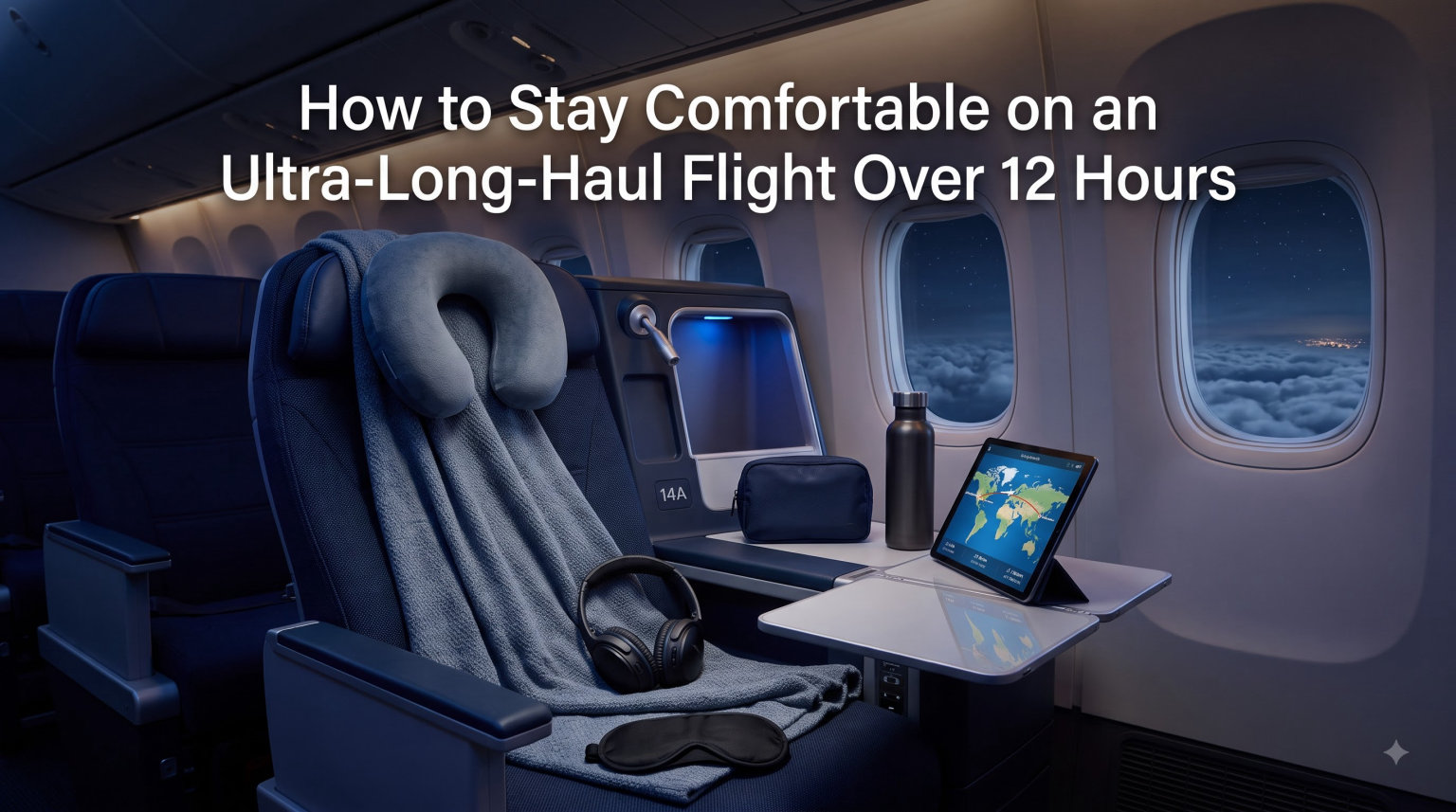
Spending 12 or more hours wedged into an economy seat sounds brutal, but it does not have to be. Learning how to stay comfortable on an ultra-long-haul flight over 12 hours comes down to a handful of decisions you make before you ever reach the gate: which seat you book, what you wear, how you hydrate, and how you handle sleep, food, and movement once airborne.
An ultra-long-haul flight is generally defined as any flight lasting over 12 hours, crossing multiple time zones, and often traversing entire oceans or continents. These routes push the human body to its limits because you are sitting in a pressurized metal tube with cabin humidity lower than the Sahara Desert, breathing recycled air, and going hours without meaningful movement.
I have taken my share of 13, 14, and 15-hour flights in economy, and I have made nearly every mistake in the book. This guide pulls together what actually works based on personal experience, advice from frequent flyers on travel forums, and well-established aviation health guidance. You will find specific, actionable strategies for seat selection, clothing, hydration, sleep, movement, bloating, anxiety, jet lag, and layovers.
By the end, you will have a complete playbook for long flight survival that goes beyond generic advice like “drink water and wear comfy clothes.” Every section here is designed to solve a real problem that passengers face on marathon flights in 2026 and beyond.
Table of Contents
Pre-Flight Preparation: The 24 Hours Before You Fly
Comfort on an ultra-long-haul flight starts the day before departure, not at the boarding gate. Most people focus only on what happens in the air, but your body needs conditioning long before you strap in.
The 24 hours leading up to your flight set the tone for how you will feel at hour 11. This is when you hydrate heavily, adjust your sleep schedule, and assemble your in-flight comfort kit. Travelers who skip this step almost always feel worse halfway through the flight.
Gradually Shift Your Sleep Schedule
Start nudging your sleep and wake times toward your destination timezone two or three days before departure. Even a 30-minute shift per day helps your body clock begin the transition.
If you are flying east, go to bed earlier. If you are flying west, stay up later. This small adjustment can shave a full day off your jet lag recovery once you land.
Begin Hyper-Hydration the Day Before
Cabin humidity on most commercial aircraft hovers between 10 and 20 percent, which is drier than most deserts. Your body loses moisture faster than you realize, and by the time you feel thirsty in the air, you are already mildly dehydrated.
Start drinking extra water 24 hours before your flight. Aim for clear or pale yellow urine by departure time. Add electrolyte tablets to one or two glasses to help your body retain that moisture.
Assemble Your In-Flight Comfort Kit
Pack a small personal bag with everything you need within arm’s reach. The overhead bin is useless to you on a 15-hour flight if your essentials are buried in a carry-on you cannot easily reach.
Your kit should include a travel neck pillow, eye mask, earplugs or noise-cancelling headphones, compression socks, lip balm, moisturizer, a toothbrush and toothpaste, any medications, and a reusable water bottle to refill after security.
Having these items organized before departure means you will actually use them instead of hunting through bags in a dark cabin while your seatmate sleeps.
Follow the 3 3 3 Rule for Flying
The 3 3 3 rule is a simple memory aid some travelers use for flight preparation: arrive 3 hours early for international flights, drink 3 cups of water before boarding, and move at least 3 times during the flight. It is not a medical protocol, but it captures the core habits that make a difference.
The point is to arrive early enough to avoid stress, pre-hydrate so you start the flight in good shape, and commit to regular movement. Stress and rushing before a long flight raise cortisol and make everything harder once you are seated.
How to Choose the Best Seat for a 12+ Hour Flight
Your seat choice is the single biggest factor in how comfortable your ultra-long-haul flight will be. Nothing else compensates for a bad seat on a 14-hour flight, so spend time on this decision.
Use tools like SeatGuru or Aerolopa to check the exact seat map for your aircraft before selecting. Not all seats are created equal, and the differences matter far more on a long flight than on a short hop.
Window Seat: Best for Sleepers
The window seat gives you a surface to lean against, which is invaluable when you are trying to sleep for several hours. You control the window shade, and nobody climbs over you to reach the aisle.
The trade-off is limited bathroom access. If you drink a lot of water, which you should, you will need to disturb your neighbors or time your bathroom trips carefully.
Aisle Seat: Best for Frequent Movers
The aisle seat lets you get up whenever you want without bothering anyone, making it ideal for people who need to walk regularly for circulation. You also have slightly more room to stretch one leg into the aisle.
The downside is that flight carts, passing passengers, and seatmates climbing over you can interrupt sleep. You may get bumped or nudged throughout the flight.
Middle Seat: Avoid If Possible
The middle seat is the least comfortable option on any flight, and on an ultra-long-haul route it can be genuinely miserable. You have nothing to lean on, no easy bathroom access, and you are squeezed between two strangers.
If you cannot avoid a middle seat, choose one closer to the front of the cabin where boarding and deplaning are faster, and bring a quality neck pillow to give your head somewhere to rest.
Exit Row and Bulkhead Seats: More Room With Trade-Offs
Exit row seats offer significantly more legroom, which can transform a long flight. They are often available for a fee or to frequent flyer tier members, and they are worth every penny on a 13-hour flight.
The trade-offs are real, though. Exit row seats sometimes lack under-seat storage, meaning your bag goes overhead for the entire flight. Armrests are often fixed in place, and you must be willing and able to assist in an emergency. Seats directly in front of the exit row typically do not recline.
Bulkhead seats, located at the front of a section, give you legroom but remove the floor storage option during takeoff and landing. They are also where bassinets are sometimes mounted, so you may end up next to an infant.
Last Row: The Seat to Avoid
The very last rows of the cabin often do not recline, are closest to the galley and lavatories with all their noise and foot traffic, and are the last to be served meals. Avoid these on long flights whenever possible.
What to Wear on a Long Flight (And Why Not Jeans)
What you wear on an ultra-long-haul flight directly affects your circulation, comfort, and ability to sleep. The right clothing is loose, layered, and made of breathable fabric.
Why You Should Not Wear Jeans on a Plane
Jeans are one of the worst clothing choices for a long flight. Denim is rigid and restrictive, which becomes a genuine problem when you sit for 12 hours straight. The stiff waistband presses into your abdomen, worsening the bloating that naturally occurs due to cabin pressure changes.
Rigid fabric also restricts blood flow in your legs, increasing the risk of swelling and deep vein thrombosis. When your legs cannot move freely and circulation is impeded, you arrive stiff, uncomfortable, and potentially at health risk.
Wear loose-fitting pants with an elastic or drawstring waist instead. Joggers, leggings, or loose cotton trousers let your body expand naturally as cabin pressure causes gases in your digestive system to swell by roughly 25 percent.
Layer Up for Temperature Changes
Cabin temperatures swing unpredictably during a long flight. You might be sweating during boarding and shivering at cruising altitude, especially when the crew dims everything for the overnight service.
Wear a breathable base layer, a light long-sleeve shirt, and bring a hoodie or cardigan you can remove or add. A scarf or shawl is one of the most versatile items you can carry because it works as a neck pillow, blanket, lumbar support, or head covering.
Wear Compression Socks
Compression socks are one of the few in-flight accessories that genuinely make a medical difference. They apply graduated pressure to your lower legs, promoting blood return to your heart and reducing swelling, ache, and the risk of deep vein thrombosis.
Frequent flyers on travel forums consistently report that compression socks are one of the items that makes the biggest tangible difference. Look for medical-grade graduated compression around 15 to 20 mmHg for long flights.
Choose Slip-On Shoes
Slip-on shoes make security easier and let you remove your footwear during the flight without struggling with laces. Your feet will swell during a long flight, so wear shoes that already have room or bring thick socks for walking around the cabin.
Never walk barefoot in the aisle or lavatory. Cabin floors are not clean, and you do not want to deal with a foot issue on arrival.
Plane Hydration Tips That Actually Work
Dehydration is the hidden enemy of long-haul comfort. It causes headaches, dry skin, fatigue, constipation, and worsens jet lag. Proper hydration is not just about drinking water, it is about strategy.
How Much Water to Drink on a Long Flight
Aim to drink about 8 ounces of water for every hour you are in the air. For a 13-hour flight, that means roughly 100 ounces total, which is a significant amount and requires deliberate effort.
Buy a large bottle after security or bring an empty reusable bottle to fill at a water fountain. Do not rely solely on the small cups the crew passes around, which are nowhere near enough for ultra-long-haul hydration.
Avoid Alcohol and Limit Caffeine
Alcohol is a diuretic, meaning it accelerates fluid loss and worsens dehydration. It also disrupts sleep quality, which is already compromised at altitude. The free wine might be tempting, but frequent flyers overwhelmingly recommend skipping it on flights over 10 hours.
Limit coffee and tea as well, since caffeine is also a mild diuretic and can interfere with sleep. If you need caffeine, time it for early in the flight when you are trying to stay awake to adjust to the destination timezone.
Use Electrolytes Wisely
Plain water alone is not always enough for effective hydration. Electrolyte tablets or powders added to your water help your body absorb and retain moisture more effectively, especially in the extremely dry cabin environment.
Drop one electrolyte tablet into your bottle during the flight and another if you are connecting onward. This is a small step that travelers consistently report reduces post-flight headaches and fatigue.
Protect Your Skin and Lips
Cabin air pulls moisture from your skin aggressively. Bring a travel-sized moisturizer and apply it every few hours, along with lip balm to prevent cracking.
Remove contact lenses before sleeping or for the duration of the flight if your eyes get dry. The low humidity combined with recycled air makes contact lens wear uncomfortable and can lead to irritation. Switch to glasses for the trip.
How to Sleep on a Plane in Economy
Sleeping in an economy seat is difficult but not impossible. With the right approach, you can get meaningful rest that makes the flight feel shorter and helps you arrive functional. Here is a step-by-step method for sleeping on a long flight.
Step 1: Choose the Right Seat and Time Your Sleep
Pick a window seat so you have something to lean against and will not be disturbed. Once seated, set your watch to the destination timezone and plan to sleep during what would be nighttime at your arrival.
Resist the urge to sleep immediately if it is daytime at your destination. Staying awake at the right times is just as important as sleeping at the right times for jet lag management.
Step 2: Build Your Sleep Fortress
Put on compression socks before you settle in. Inflate your neck pillow, pull down your eye mask, insert earplugs, and put on noise-cancelling headphones playing white noise or ambient sound.
Every barrier between you and the cabin environment increases your chances of staying asleep. The combination of an eye mask plus noise-cancelling headphones is what frequent flyers call non-negotiable.
Step 3: Manage Your Body Position
Recline your seat slowly and considerately as the cabin dims. Use a rolled jacket or blanket behind your lower back for lumbar support, since economy seats are notoriously flat in that area.
If your neck pillow does not support your head well, try wearing it backward so the opening is under your chin. This prevents your head from dropping forward when you nod off, which is the most common reason economy sleepers wake up.
Step 4: Block Out Interruptions
Tell the flight attendant you do not want to be woken for meal service if you are in a deep sleep window. Use a blanket over your lap and shoulders to signal that you are resting.
Accept that you probably will not sleep a full eight hours. Even three or four hours of broken sleep in economy is far better than none, and it will make a real difference when you land.
The Neck Pillow Reality Check
Many travelers report that standard U-shaped neck pillows do not work as advertised because they fail to prevent the forward head-drop that wakes you up. Memory foam pillows, horseshoe-shaped designs that clasp in front, or even a firm jacket rolled behind the neck often work better than cheap inflatable versions.
The most effective approach some frequent flyers use is a wrap-around pillow that supports the chin, preventing the head from falling forward. Test what works for your body and neck shape before relying on it for a 14-hour flight.
In-Flight Exercises and Movement
Sitting motionless for hours is the worst thing you can do to your body on an ultra-long-haul flight. Movement is not optional, it is essential for circulation, comfort, and preventing serious health risks.
Walk Every 1 to 2 Hours
Get up and walk the aisle at least once every two hours, even if you do not need the bathroom. A lap or two around the cabin gets your blood moving and relieves the pressure that builds in your lower back and hips.
Time your walks to coincide with trips to the lavatory or stretches in the galley area, where you usually have a bit more space and are not in anyone’s way.
Seated Exercises You Can Do Quietly
Do ankle circles in both directions every hour to keep blood flowing through your lower legs. Alternate with calf raises by lifting your heels while keeping your toes on the floor, holding for a few seconds each time.
Roll your shoulders forward and backward, gently rotate your neck, and do seated spinal twists by turning your torso to each side while holding the armrest. These movements relieve the stiffness that builds from immobilization.
Why Movement Prevents Deep Vein Thrombosis
Deep vein thrombosis, or DVT, is a blood clot that can form in the deep veins of your legs during prolonged immobility. It is a serious medical condition that can lead to a pulmonary embolism if a clot travels to your lungs.
Long flights increase DVT risk because sitting still allows blood to pool in the lower extremities. Regular movement, compression socks, and hydration work together to keep blood flowing and dramatically reduce this risk.
If you have risk factors such as a history of blood clots, recent surgery, pregnancy, or are over 60, consult your doctor before a long flight. They may recommend additional precautions.
Managing Bloating and Discomfort on Long Flights
Bloating is one of the most uncomfortable and least discussed problems on long flights. Understanding why it happens and how to reduce it can save you hours of misery.
Why You Bloat on Planes
As the aircraft climbs to cruising altitude, cabin pressure drops. According to Boyle’s law, the gases already in your digestive tract expand as external pressure decreases. At cruising altitude, those gases can expand by up to 25 percent.
This expansion causes the bloating, pressure, and discomfort that many passengers feel a few hours into the flight. There is nothing wrong with your body, it is simple physics.
Foods to Avoid Before and During the Flight
Avoid gas-producing foods in the 24 hours before you fly and during the trip. Common culprits include beans, lentils, broccoli, cabbage, onions, carbonated drinks, and heavy fried foods.
Salty foods cause water retention, which compounds the bloated feeling. Skip the heavily salted airline snacks when possible and opt for lighter, protein-based options.
How to Relieve Bloating in the Air
Wear loose clothing with a forgiving waistband so your body has room to expand. Walk around periodically, since movement helps gas pass through your system more naturally.
Sip peppermint or ginger tea, both of which are known to soothe the digestive tract. Some travelers keep gas relief tablets in their carry-on for severe discomfort. Stay hydrated, since dehydration actually worsens constipation and bloating over time.
Food and Snack Strategies
Airline food is unpredictable in both timing and quality. Taking control of what and when you eat is a key part of staying comfortable on a long flight.
Bring Your Own Protein-Rich Snacks
Pack snacks that are high in protein and low in sugar to keep your energy stable. Good options include nuts, protein bars, jerky, cheese sticks, and dried fruit in moderation.
Airport food is expensive and often unsuitable for long flights, so stock up before you reach the terminal or bring items from home that will pass security.
Time Your Meals to the Destination
Eat according to the meal schedule at your destination, not your departure city. If it is dinner time where you are going, eat your main meal even if the cabin is serving something else.
This helps your body clock adjust to the new timezone, which is one of the most effective jet lag prevention strategies. Light exposure and meal timing are the two strongest signals your body uses to regulate its internal clock.
Take Advantage of the Galley
Many long-haul aircraft have a self-serve snack area in the galley between meal services. Sandwiches, instant noodles, fruit, and crackers are often available for the asking.
Walk back during a quiet period and politely ask the crew what is available. They are usually happy to help passengers who visit during downtime rather than peak service moments.
Avoid Heavy or Greasy Meals
Heavy, greasy meals sit in your stomach longer and worsen both bloating and the general discomfort of sitting still for hours. Choose lighter options from the airline menu when possible.
If the meal looks heavy, eat half and save the rest. You can always supplement with your own snacks if you are still hungry later.
Entertainment Preparation: Beat the Boredom
Boredom is a major comfort killer on ultra-long-haul flights. Twelve hours is a long time to fill, and relying on the airline’s entertainment system alone is a mistake.
Download Everything Before You Fly
Pre-load your devices with movies, TV episodes, podcasts, audiobooks, and playlists before boarding. In-flight Wi-Fi on ultra-long-haul routes is often expensive, unreliable, or unavailable over oceans.
Vary your content so you can switch between formats when one gets stale. Two movies, then a podcast, then a chapter of an audiobook keeps your brain engaged longer than four movies in a row.
Bring a Power Bank and Charging Cables
Your devices will not survive a 14-hour flight on a single charge. Carry a power bank with enough capacity for at least two full phone charges, plus the correct cables for every device you bring.
Most modern long-haul aircraft have USB ports and sometimes AC outlets at the seat, but they are not guaranteed. A power bank ensures you are never stuck with a dead device and nothing to do.
Do Not Check the Time
Watching the clock makes every flight feel longer. Once you are settled, avoid checking how many hours remain and focus instead on your current activity.
Some frequent flyers cover the flight tracker on the screen with a napkin or switch to a channel without the map. The less you think about time passing, the faster it goes.
Bring a Book or Journal
Screens require power and can strain your eyes after hours of use. A physical book, magazine, or journal gives your eyes a break and offers a different kind of engagement.
Journaling is a surprisingly popular way to pass time on long flights. Writing about your trip plans, reflecting on what you left behind, or simply doodling can make hours disappear.
How to Manage Long Flight Anxiety
Flight anxiety on ultra-long-haul routes is common and often intensified by the sheer duration and the feeling of being trapped far from the ground. Managing it effectively can transform your experience.
Understanding What Triggers Flight Anxiety
For many nervous flyers, turbulence is the primary trigger. The shaking feels dangerous even though modern aircraft are engineered to handle far more stress than any turbulence will produce.
Claustrophobia is another common issue. Being sealed in a metal tube with no exit for 13 hours can trigger panic in people who feel trapped. Recognizing your specific trigger is the first step to managing it.
Choose a Seat That Helps You Feel in Control
Anxious flyers often prefer seats over the wing, where turbulence feels less intense because the aircraft pivots around that point. Aisle seats can help with claustrophobia because they offer a sense of space and easy movement.
Avoid the very back of the aircraft, which tends to bounce more during turbulence. The front and middle sections are generally the most stable.
Use Breathing Techniques
Box breathing is a simple technique that calms the nervous system during anxious moments. Inhale for four counts, hold for four, exhale for four, and hold for four, then repeat the cycle.
Practice this before your flight so it feels automatic when you need it. Slow, controlled breathing physically counteracts the fight-or-flight response that anxiety triggers.
Bring Calming Tools and Distractions
Download a meditation app with guided sessions designed for nervous flyers. Many airlines also offer calming audio channels in their entertainment systems specifically for anxiety.
Distraction is one of the most effective anxiety management tools. A gripping movie or an engaging audiobook pulls your attention away from anxious thoughts. Some travelers find that learning something new, like a language lesson app, keeps the mind too busy to spiral.
Talk to the Crew
Flight attendants are trained to help anxious passengers and have seen it all many times. Let the crew know when you board that you are a nervous flyer, and they will check on you and explain any bumps or noises during the flight.
Simply knowing that someone is aware and watching out for you can take the edge off. For severe anxiety, talk to your doctor before the flight about options that may help you through it.
Jet Lag Prevention: Arrive Fresh
Judging the success of an ultra-long-haul flight by how you feel the day after arrival makes jet lag prevention a core part of staying comfortable. These flights cross many time zones, and ignoring the adjustment process guarantees rough days ahead.
Set Your Watch Immediately
The moment you board, set your watch and phone to the destination timezone. Start living by that clock immediately, eating and sleeping on the new schedule.
This mental commitment is the foundation of jet lag prevention. Your body follows cues from light, food, and activity, so the sooner you align those cues with the destination, the faster you adapt.
Time Your Light Exposure
Light is the strongest signal your body uses to set its internal clock. If you arrive in daylight, get outside into natural sunlight as soon as possible to reset your rhythm.
If you need to stay awake to adjust, bright light helps. If you need to sleep, avoid screens and bright cabin lights, and use your eye mask to simulate darkness.
Adjust Before You Fly
Begin shifting your sleep and meal times toward the destination schedule two to three days before departure. Even partial adjustment before you land reduces the shock to your system.
For eastbound flights that require going to bed earlier, start winding down an hour sooner each night. For westbound flights, push your bedtime later gradually.
Stay Awake Until Local Bedtime
When you arrive, resist the overwhelming urge to nap during the day, no matter how exhausted you are. Push through until at least 9 PM local time before allowing yourself to sleep.
A short 20-minute power nap is acceptable if you absolutely cannot function, but set an alarm. Sleeping for hours during arrival daytime locks in jet lag for days.
Transit and Layover Strategies for Ultra-Long-Haul
Not every ultra-long-haul flight is nonstop. Many involve a connection, and how you handle that layover significantly affects your overall comfort and the smoothness of your trip.
Choose Your Route Wisely
A nonstop flight is almost always the better choice for comfort, but sometimes a well-planned layover can actually improve your experience. Breaking a 17-hour marathon into two shorter segments gives your body a chance to walk, eat a real meal, and reset.
If you do choose a connection, pick one with at least 90 minutes for international transfers. Tight connections add stress and risk missing bags, which undermines all your preparation.
Aircraft Type Matters for Comfort
The aircraft flying your route affects your comfort as much as your seat choice. Modern wide-body jets like the Boeing 787 Dreamliner and Airbus A350 are designed with passenger comfort in mind.
The Dreamliner maintains a lower cabin altitude and higher humidity than older aircraft, which means less dehydration, less fatigue, and fewer headaches. If you have a choice of routing, check the aircraft type and prefer these newer planes.
The Airbus A380 is another comfortable option for long-haul travel, offering a quieter cabin and generally more space. Older aircraft types are not necessarily bad, but they lack the comfort innovations of these newer designs.
Use Layovers Strategically
A layover of four hours or more can be an opportunity rather than a burden. Many major hubs offer day rooms, showers, and lounges where you can rest and freshen up between flights.
If you have a long layover and a visa that allows it, consider leaving the airport for a few hours. A real meal and a walk outside can reset your body and mood before the next segment.
Plan Your Arrival Time
Whenever possible, book flights that arrive at your destination in the late afternoon or early evening. This gives you a few hours to settle in before a natural local bedtime, making it easier to stay awake until an appropriate hour.
Red-eye arrivals in the early morning are the hardest for jet lag because you face a full day fighting exhaustion. If a dawn arrival is unavoidable, plan a light first day with no demanding activities.
Lounge Access Can Transform a Layover
Airport lounges offer quiet seating, decent food, showers, Wi-Fi, and a calm environment away from the terminal chaos. Access through a credit card, frequent flyer status, or a day pass can be worth the investment on a long trip.
If you are flying business class or hold elite status, take full advantage. Eating a real meal in the lounge before a flight means you are not dependent on airline food timing for your hunger.
FAQs
What is the 3 3 3 rule for flying?
The 3 3 3 rule is a simple memory aid for flight preparation: arrive 3 hours early for international flights, drink 3 cups of water before boarding, and get up to move at least 3 times during the flight. It captures the three habits that make the biggest difference: avoiding pre-flight stress, pre-hydrating for the dry cabin, and preventing blood pooling through regular movement.
Why not wear jeans on a plane?
Jeans are rigid and restrictive, which becomes a real problem when you sit for 12 or more hours. The stiff waistband presses into your abdomen and worsens the bloating caused by cabin pressure changes. Denim also restricts blood flow in your legs, increasing swelling and the risk of deep vein thrombosis. Loose, breathable pants with an elastic waist are far better for long flights.
How to survive an ultra long haul flight?
To survive an ultra-long-haul flight, follow these steps: 1) Choose a window or aisle seat using a seat map tool. 2) Wear loose layers and compression socks. 3) Drink 8 ounces of water per hour and avoid alcohol. 4) Walk the aisle every 1 to 2 hours and do seated stretches. 5) Build a sleep setup with a neck pillow, eye mask, and noise-cancelling headphones. 6) Set your watch to destination time and eat on the new schedule. 7) Download entertainment and bring a power bank.
How to sleep on a 13 hour flight in economy?
To sleep on a 13-hour flight in economy, choose a window seat so you can lean against the wall and will not be disturbed. Build a sleep setup with a neck pillow worn backward to prevent head-drop, an eye mask, earplugs, and noise-cancelling headphones. Recline slowly when the cabin dims, add lumbar support with a rolled jacket, and tell the crew you do not need to be woken for meals. Time your sleep to nighttime at your destination for jet lag benefits.
Conclusion
Knowing how to stay comfortable on an ultra-long-haul flight over 12 hours comes down to preparation and smart habits. Choose your seat carefully, dress in loose layers with compression socks, hydrate aggressively, move regularly, and build a proper sleep setup.
The travelers who suffer most on long flights are the ones who show up unprepared and hope for the best. Those who arrive with a plan, the right gear, and realistic expectations turn a grueling ordeal into a manageable part of the trip.
Start your preparation the day before you fly, pack your comfort kit deliberately, and treat the flight as something you can control rather than something you simply endure. Your body will thank you when you land, and your trip will begin on a far better note.