
Spending a week or more living out of your car changes how you think about cleanliness. After three days of hiking, sweating, and sleeping in a confined space, figuring out how to stay clean and shower on a long car camping trip becomes less of a luxury and more of a sanity-saver.
I’ve spent months on the road testing different car camping hygiene methods — from solar shower bags hanging off my hatchback to bucket baths at remote desert campsites. What I learned is that staying clean while car camping isn’t about recreating your bathroom at home. It’s about working with what you have and building a routine you can actually stick to.
The good news is that you have more options than you might think. Between portable camp showers, biodegradable body wipes, public facilities, and a few Leave No Trace best practices, you can stay fresh, comfortable, and socially acceptable for however long your trip lasts.
In this guide, I’ll walk through every shower alternative I’ve tested, the hygiene products that actually work, and the environmental rules you need to follow to keep both yourself and the wilderness healthy. Whether you’re boondocking in the desert or hopping between state parks, you’ll find a method here that fits your setup.
Table of Contents
How to Stay Clean and Shower on a Long Car Camping Trip: Your Main Options
The best approach to staying clean on a long car camping trip combines three strategies: portable showers for full body washes, body wipes for quick daily freshening, and occasional paid facilities when you need a deep reset. No single method covers every situation, so a layered system works best.
I recommend building your routine around the conditions you expect to face. If you’re staying at established campgrounds with shower houses, you may only need body wipes and a quick-dry towel for backup. If you’re boondocking far from facilities for days at a time, you’ll want a portable shower setup plus a reliable wipe-down routine.
The sections below cover each method in detail, starting with the most popular portable shower types and moving through bucket baths, body wipes, sponge baths, lake rinsing, and proven strategies for finding paid showers on the road.
Portable Camp Shower Options
A portable camp shower is the closest thing you’ll get to a real shower while camping remotely. These devices range from simple heated water bags to battery-powered pressurized units, and the right choice depends on your budget, available space, and how much water you can carry.
Solar Shower Bags
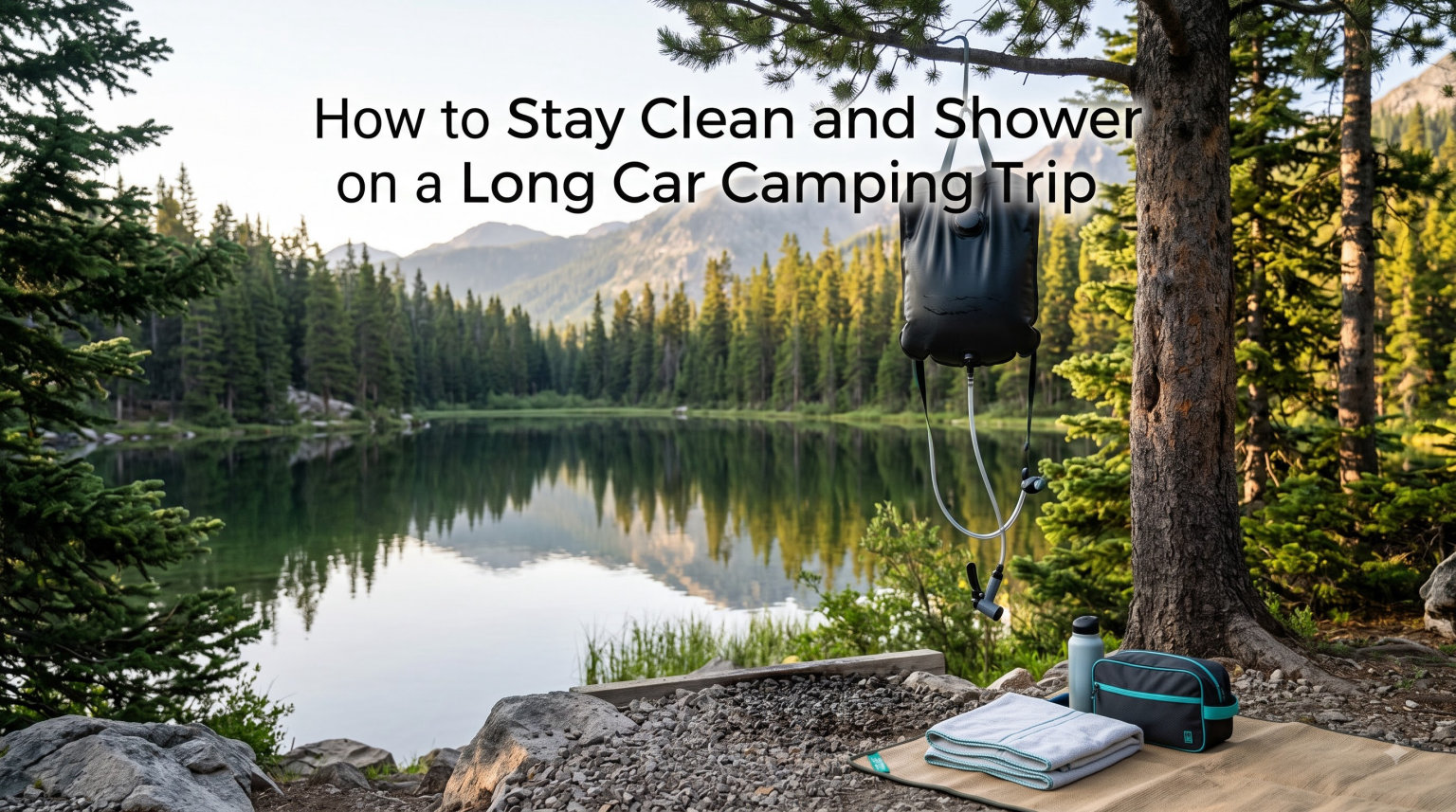
Solar shower bags are the most affordable and widely used option for car campers. You fill them with water, set them in direct sun for two to three hours, and the black material absorbs heat to warm the water to a comfortable bathing temperature — often above 100 degrees Fahrenheit on a sunny afternoon.
Most solar bags hold 3 to 5 gallons and come with a hanging strap, a showerhead with an on/off valve, and a thermometer strip so you know when the water is ready. I’ve used a 5-gallon solar shower on multiple trips, and it reliably delivers about 7 minutes of steady flow. That’s plenty for a full body wash if you’re efficient.
The downsides are real, though. Solar bags depend entirely on sunlight, so cloudy days leave you with cold water. They’re also heavy when full — 5 gallons weighs over 40 pounds — so you need a sturdy place to hang them. A vehicle roof rack, a strong tree branch, or a dedicated pop-up shower tent all work well.
For car campers on a budget, a solar shower bag is the best starting point. Quality models run between $15 and $40.
Pressure Showers
Pressure showers use a foot pump or hand pump to pressurize a water reservoir, forcing water out through a showerhead without needing gravity or electricity. The Nemo Helio is the most well-known example — you step on the pump a few times and get a steady 5 to 7 minute spray.
The advantage over solar bags is flexibility and control. You can place the reservoir on the ground rather than hanging it overhead, which solves the persistent “where do I hang this” problem at sites without trees or tall vehicles. Pressure showers also work in any weather since they don’t depend on the sun to heat water — you simply fill them with warm water heated on your camp stove.
I’ve found pressure showers particularly useful in shaded forest campsites where solar bags struggle to warm up. They typically hold 2.5 to 3 gallons, weigh under 10 pounds empty, and pack down smaller than solar bags when not in use.
Expect to pay $50 to $100 for a quality pressure shower. They cost more upfront but offer more versatility than basic solar bags, especially for campers who frequent varied environments.
Battery-Powered and 12V Portable Showers
Battery-powered portable showers are compact pump units that draw water from any bucket or water jug and spray it through a showerhead nozzle. You charge them via USB or a car’s 12V outlet, and they deliver a surprisingly strong stream for 30 to 60 minutes per charge.
These are popular with van lifers and overlanders because they’re tiny — about the size of a water bottle — and work with whatever water container you already carry. I keep a small rechargeable pump shower in my car kit for situations where I have water on hand but no way to heat or pressurize it.
The tradeoff is that you need to heat the water separately, since the pump only moves water and doesn’t warm it. Pair one with a camp kettle or stove and you have a serviceable shower anywhere you can park.
Battery-powered showers cost $25 to $60 and work best as a backup or supplement to a solar or pressure system rather than your primary shower.
The Bucket Bath Technique
A bucket bath is the simplest no-shower cleaning method, and it works with nothing more than a container, warm water, and a washcloth. I’ve used this technique on dozens of trips when I didn’t have space for a portable shower setup.
Here’s how to do a proper bucket bath, step by step:
Step 1: Heat your water. Warm 1 to 2 gallons of water on your camp stove until it’s comfortable to the touch but not scalding. You can also use solar-heated water if you’ve had a bag out in the sun all day.
Step 2: Pick your spot. Find a location at least 200 feet from any water source — a lake, river, stream, or spring. This is a critical Leave No Trace requirement covered in detail below.
Step 3: Mix your soap. Pour a small amount of warm water into your basin or bucket. Add just a few drops of biodegradable soap such as Dr. Bronner’s or Campsuds. A little goes a long way.
Step 4: Wash from top to bottom. Use a washcloth or sponge to clean yourself starting with your face and working down. Rewet and reapply soap as needed.
Step 5: Rinse with clean water. Use a separate container of fresh, soap-free water to rinse off. Pour it from a bottle or cup, or use a damp clean cloth to wipe away residue.
Step 6: Dry off. Pat yourself dry with a quick-dry microfiber towel.
The whole process uses less than 3 gallons of water and takes about 10 minutes. It’s not luxurious, but after a sweaty day on the trail it feels fantastic. A bucket bath is also the most water-efficient method on this list, which matters when you’re rationing your supply.
Body Wipes for Quick Cleaning
Body wipes are the unsung heroes of car camping hygiene. When you don’t have the time, water, or privacy for a full wash, a thorough wipe-down with a large body wipe handles about 80 percent of what a shower accomplishes in roughly two minutes.
I recommend keeping two types on hand: large biodegradable camping body wipes for full-body use, and smaller antibacterial wipes for your hands and face. Look for wipes that are alcohol-free, unscented or lightly scented, and at least 8 by 12 inches if you want true full-body coverage.
The method is straightforward. Strip down as much as privacy allows, then wipe yourself head to toe. Pay extra attention to your underarms, groin, feet, and the back of your neck. These “funky zones” are where bacteria accumulate fastest and where body odor begins.
One thing I learned the hard way: avoid alcohol-based wipes for full-body use. They dry out your skin badly after just a few days of regular use. Stick with aloe-infused or water-based camping wipes formulated for sensitive skin.
A pack of 24 to 48 body wipes lasts one person about a week with daily use. They’re lightweight, take up minimal pack space, and work in any weather or location — making them a true camp hygiene essential.
The Sponge Bath Method
A sponge bath is essentially a bucket bath without the bucket. You use a damp washcloth, a small amount of water, and a drop of soap to clean yourself with minimal supplies. It’s the most resource-light method on this list.
Fill a 1-liter water bottle with warm water, add a single drop of biodegradable soap to your washcloth, and scrub. Rinse the cloth in clean water and wipe again to remove any soap residue. The entire process uses less than a liter of water.
I use sponge baths primarily for my face, underarms, and feet at the end of each day. It’s not a complete clean, but it prevents the buildup of sweat and bacteria that causes odor and skin irritation over multi-day trips. Combined with body wipes, it keeps you surprisingly fresh between full washes.
Lake and River Rinsing Without Soap
If you’re camping near a lake, river, or stream, a quick rinse is one of the most refreshing ways to clean off. Jumping into cool water after a hot hike feels incredible and removes the bulk of loose sweat and grime from your skin.
Here’s the critical rule: never use soap of any kind in a natural water source, even biodegradable soap. This includes pouring soapy rinse water back into the lake from the shoreline. The bacteria in natural water systems cannot break down soap quickly enough, and even biodegradable formulas harm fish, amphibians, and aquatic plants.
The correct approach is to wade in and rinse off in the water to remove loose dirt and sweat. Then walk at least 200 feet away from the shoreline to soap up and do a proper wash with a separate rinse from a water container you carried away from the source.
This is a non-negotiable Leave No Trace principle that the entire camping community takes seriously. I’ve seen campgrounds post explicit warnings about it, and rangers do enforce soap bans in sensitive watershed areas.
Where to Find Showers on the Road
Even with portable showers and body wipes, most car campers want a real hot shower every few days. Here’s where I’ve reliably found paid and free shower facilities while road tripping across the country.
Campgrounds With Shower Houses
State parks, national parks, and private campgrounds frequently offer shower houses with hot running water. These cost anywhere from included in your campsite fee to a few dollars for a timed shower. If you’re planning a route, check campground websites ahead of time and book sites with shower access for every third or fourth night.
KOA campgrounds are a reliable option across the United States. Most have clean, well-maintained shower facilities, and you don’t always need to book a full campsite to use them. Many KOA locations sell shower-only access for $5 to $10, which is a bargain compared to going days without a proper wash.
Truck Stops and Travel Centers
Truck stops are an underrated shower resource on long road trips. Major chains like Pilot Flying J, Love’s, and TA Petro offer clean, private shower rooms with hot water, fresh towels, and soap for about $12 to $15 per use.
I’ve used truck stop showers on cross-country drives and they’re consistently clean and well maintained. You usually reserve a shower at the fuel desk or through the chain’s mobile app, and you get a private room with a locking door. Some locations even offer loyalty rewards that make showers free after enough fuel purchases.
Gyms and Recreation Centers
Day passes at gyms like Planet Fitness, Anytime Fitness, or a local YMCA branch give you access to hot showers for $10 to $20. Planet Fitness is particularly convenient because their $15 Black Card membership includes access to any location nationwide. Many road trippers sign up specifically for this perk.
Local recreation centers and community pools also frequently sell day passes that include shower access. These are especially useful in small towns where truck stops and campgrounds with showers are sparse or nonexistent.
Public Beaches and RV Parks
In coastal areas, many public beaches have outdoor shower stations for rinsing off sand and salt. These aren’t full showers, but they’re free and great for a quick fresh rinse after a swim. Some RV parks also sell shower access to non-guests for a small fee — it’s always worth calling ahead to ask.
The 200 Rule for Camping: Leave No Trace Soap Rules
The 200 rule for camping means that all washing, bathing, and soap use must happen at least 200 feet — roughly 70 adult steps — from any water source. This includes lakes, rivers, streams, springs, and even seasonal creek beds that appear dry.
This rule exists because soap, even biodegradable varieties, disrupts aquatic ecosystems. The nutrients and compounds in soap alter water chemistry, promote algae blooms, and are toxic to fish and amphibians even at low concentrations.
To follow the 200 rule correctly, set up your washing station well away from water. Pour used wash water into a hole in the ground at least 6 inches deep so it can filter through soil before reaching any water table. This applies to body wash water, dishwater, and even toothpaste spit.
Use only genuine biodegradable soap and use it sparingly. A few drops of Dr. Bronner’s or Campsuds are enough for a full body wash. Never use regular liquid soap, shampoo, laundry detergent, or dish liquid — these contain synthetic ingredients that don’t break down in nature at all.
Can You Use Biodegradable Soap in Rivers?
No, you should never use biodegradable soap directly in a river, lake, or stream. Despite the reassuring label, these soaps require soil and soil-dwelling bacteria to break down properly. In water, the same soap persists far longer and harms aquatic life.
Biodegradable soap is only safe when used on land at least 200 feet from water, with greywater disposed of into soil. The “biodegradable” designation means the soap will eventually decompose in a soil environment — it does not mean it is safe for aquatic use.
This is one of the most common mistakes new campers make. Biodegradable does not mean water-safe. Keep all soap, of any kind, at least 200 feet from any natural water source.
Essential Camping Hygiene Products Checklist
Here’s the kit I recommend for a week-long car camping trip. These items cover nearly every cleaning scenario you’ll encounter on the road.
Biodegradable soap (Dr. Bronner’s or Campsuds) — for body, hair, and dish washing
Body wipes (biodegradable, unscented, 24 to 48 count) — for daily wipe-downs
Antibacterial hand wipes or gel — for hand hygiene after bathroom use and before food prep
Quick-dry microfiber towel (one large body towel plus a smaller hand towel) — microfiber dries in 1 to 2 hours versus 8-plus hours for cotton
Unscented deodorant — unscented matters because fragrances attract insects and wildlife
Toothbrush, toothpaste, and floss — pack out all used floss in a sealed bag
Small collapsible bucket or basin — for bucket baths and dishwashing
Portable camp shower (solar bag, pressure shower, or battery unit) — choose based on your typical camping style
Nail clippers and a small brush — clean nails prevent dirt buildup and bacterial transfer
Lip balm and unscented moisturizer — sun and wind dry out skin quickly outdoors
Hair Care Without a Shower
Washing hair without running water is one of the trickier parts of extended camping. Here are the methods that actually work.
For short hair, a thorough wipe-down with a damp washcloth and a tiny amount of biodegradable soap handles most situations. Massage it into your scalp, then rinse with water poured slowly from a bottle.
For longer hair, try the rinse-and-braid approach. Wet your hair with warm water from a bottle, apply a small dab of soap, scrub your scalp thoroughly, and rinse with at least 1 liter of clean water. Braid or tie your hair back while damp to keep it manageable between washes.
Dry shampoo is a useful supplement. It absorbs oil and adds body without any water. Apply it at the roots, let it sit for a few minutes, then brush or tousle it through. A small travel-size bottle lasts a week or more with careful use.
How often should you wash your hair while camping? For most people, every 3 to 4 days is sufficient. Washing more frequently strips natural oils and uses more water than you likely want to carry or heat.
Foot Care and Chafing Prevention
Foot problems and chafing can end a camping trip faster than bad weather. Here’s how to prevent both.
For your feet, change socks daily and air out your feet whenever possible. Take off your boots during rest breaks and let your feet breathe. Carry at least three pairs of socks so you can rotate while one pair dries on your pack or dashboard.
Apply an anti-chafing balm or powder to hot spots before they become problems. The areas between your thighs, under your arms, and beneath a backpack waist belt are the most common chafing zones. Products with zinc oxide or petroleum-based balms work well in humid conditions.
Treat any blisters immediately with moleskin or blister pads — don’t wait until they become painful. A small blister kit takes up almost no space and saves enormous discomfort down the trail.
Clothes Rotation Tips
Rotating clothes properly reduces how often you need to wash yourself and keeps your gear from getting rank. Here’s the system I use on week-long trips.
Wear base layers — underwear, socks, and t-shirts — for one day each. Pack enough for your full trip plus a spare set. These items accumulate the most bacteria and sweat, so daily changes are non-negotiable for staying fresh.
Outer layers like pants, hoodies, and jackets can be worn multiple days. Air them out overnight by hanging them in your car or on a line strung between trees. Sunlight is a natural sanitizer, so laying clothes in direct sun for an hour helps kill odor-causing bacteria.
Store dirty clothes in a separate sealed bag or stuff sack to keep them away from clean items and prevent smells from transferring into your sleeping area.
Women’s Hygiene While Camping
Menstrual care while camping requires extra planning but is fully manageable with the right supplies. Here’s what experienced long-distance campers recommend.
A menstrual cup is the most practical option for multi-day trips. It’s reusable, takes up minimal space, and produces no waste to pack out. You empty it, rinse it with treated or boiled water, and reinsert. Brands like DivaCup and Lena are popular among thru-hikers and car campers alike.
If you prefer disposable products, pack out all used items in a sealed zip-top bag. Never bury tampons or pads — animals will dig them up, and they don’t decompose quickly in soil. Add a few drops of tea tree oil to the waste bag to control odor over several days.
For cleaning during your cycle, body wipes are ideal for freshening up. Use them at least twice daily for comfort and hygiene when shower access is limited.
Keep Your Gear and Tent Clean
Your shelter and gear accumulate grime just like your body does. A few simple habits keep things manageable over a long trip.
Shake out your tent daily and sweep the floor with a small brush. Keep a dedicated pair of sleep clothes that you only wear inside your sleeping bag — never wear your hiking clothes to bed. This keeps your sleeping bag cleaner for longer and helps you sleep better.
Air out your sleeping bag every morning by draping it over your car or a clothesline. Moisture from your body builds up overnight, and letting the bag dry thoroughly prevents mold growth and musty odors.
Wipe down your cooking gear immediately after each meal. Food residue attracts animals and breeds bacteria, so clean dishes with hot water and biodegradable soap, then rinse and air dry before packing them away.
FAQs
What is the 3 3 3 rule for camping?
The 3-3-3 rule is a camping and RV trip planning guideline: stay no more than 3 nights in one place, drive no more than 300 miles per day, and arrive at your campsite by 3 PM. It helps prevent exhaustion and gives you enough daylight to set up camp comfortably.
How do people shower on long camping trips?
Campers on long trips shower using portable camp showers (solar bags, pressure showers, or battery-powered units), body wipes for daily freshening, bucket baths with warm water and biodegradable soap, and paid facilities at campgrounds, truck stops, or gyms every few days for a full reset.
What is the 200 rule for camping?
The 200 rule requires all washing, bathing, and soap use to happen at least 200 feet from any water source such as a lake, river, or stream. This protects aquatic life from soap contamination, since even biodegradable soap needs soil bacteria to break down properly and is harmful in water.
What is the most forgotten item when camping?
The most commonly forgotten camping items are quick-dry towels, extra socks and underwear, biodegradable soap, and a first aid kit. Body wipes and a portable camp shower are also frequently overlooked by campers who focus mainly on shelter and cooking gear.
Wrapping Up: Your Car Camping Hygiene System
Staying clean on a long car camping trip comes down to layering your methods: body wipes for daily maintenance, portable showers for full body washes, bucket baths when water is scarce, and paid facilities for a proper reset every few days. No single approach does everything, but together they cover every situation the road throws at you.
The system you build depends on your trip style. Boondockers need a robust portable shower setup and plenty of body wipes. Campground hoppers can lean on shower houses with wipes as backup. Road trippers should map out truck stops and gyms along their route for reliable hot showers.
Whatever your style, follow the 200 rule, use biodegradable soap sparingly, and never let soap touch natural water. Knowing how to stay clean and shower on a long car camping trip keeps you comfortable, healthy, and respectful of the wild places you visit.
Pack your kit, plan your water supply, and hit the trail. A little dirt is part of the experience — but you don’t have to marinate in it for a week straight.