
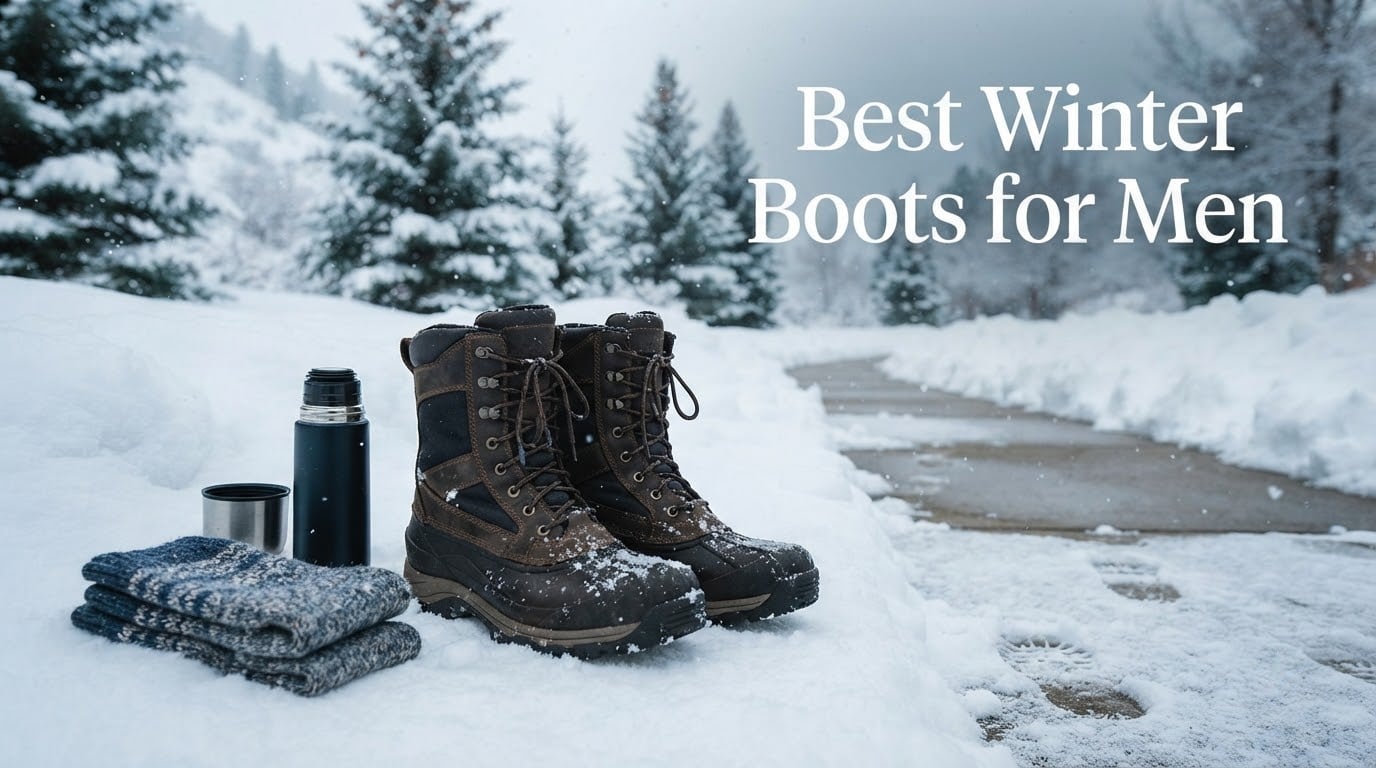
Short answer: the best winter boots for men are the ones that match your climate, your activity and your foot shape, not the ones with the biggest number on the box. The NORTIV 8 Waterproof Hiking Winter Snow Boot is our top overall pick because it pairs 200g insulation with a fully waterproof shell, a grippy rubber outsole and room for thick socks. The MUCK Arctic Pro is the warmest-rated boot in this roundup and the toughest on mud and ice. The Sorel Caribou is the benchmark pac boot, with a removable 9mm felt inner that you can dry overnight. Nine more picks cover shoveling, zip entry, mild winters, work sites and wide feet.
We spent six weeks reading specification sheets, owner reviews and failure reports across ten of the highest-reviewed men’s snow boots on the market, then sorted them by the question you actually need answered: what will you be doing in these boots, and how cold will it be? This roundup is men-only on purpose. Most winter boot guides dilute their picks across men’s and women’s models, which is exactly the reason you end up reading six reviews and still cannot decide.
Two honest notes before we start. First, manufacturer temperature ratings are not standardised, so a boot rated to -40F is not directly comparable to another boot rated to -25F, and we treat those numbers as a rough guide rather than a promise. Second, the most common way winter boots fail is not cold, it is sweat: an over-insulated boot traps moisture, that moisture cools overnight, and you wake up with colder feet than you started with. We weight that heavily below.
Table of Contents
Key features to look for in any winter boot
Insulation: measured in grams for synthetic fills such as the 200g Thinsulate and 200g KEEN.WARM used below, or provided as a removable felt, fleece or neoprene liner. Roughly 200g suits a typical cold winter, and 400g or more is the deep-freeze tier.
Waterproofing: a rubber shell blocks slush completely, while a sealed membrane keeps water out of a fabric or leather upper. Water-resistant fabric is not waterproof, and that distinction causes most wet-sock complaints.
Traction: look for lugged or multi-terrain rubber outsoles, and pay attention to how the outsole is described, since smooth polyurethane grips packed snow far better than it grips black ice.
If your boots need to work on a trail rather than a sidewalk, our guides on the best winter hiking boots and the best hiking boots for men go deeper on outsole compounds. If you plan to walk in snow rather than through it, have a look at our picks for the best snowshoes for winter hiking and best lightweight hiking boots to cut the weight off your feet.
Top 3 Picks for the Best Winter Boots for Men (October 2026)
NORTIV 8 Waterproof Hiking Snow Boot
- 200g insulation rated to -25F
- Waterproof shell with windproof toe caps
- Removable washable insole
- Slip and abrasion resistant rubber outsole

MUCK Arctic Pro Insulated Boot
- 100% waterproof MUCKPROOF construction
- 8mm neoprene bootie plus 2mm thermal foam
- Bob-Tracker multi-terrain outsole
- Wide last that accepts thick socks
Sorel Caribou Snow Boot
- Removable 9mm washable felt inner boot
- Waterproof nubuck leather upper
- Rubber shell with Sherpa pile snow cuff
- Sorel aero-trac non-loading outsole
Best Winter Boots for Men in October
The table below is the fastest way to narrow the field. Scan the insulation column first to rule out anything too light or too heavy for your climate, then check traction and shaft height against where you walk. If a boot survives both filters, read the full section for it.
| Product | Specifications | Action |
|---|---|---|
| NORTIV 8 Waterproof Hiking Winter Snow Boots |
|
Check Latest Price |
 ALEADER Winter Waterproof Insulated Shell Boots ALEADER Winter Waterproof Insulated Shell Boots |
|
Check Latest Price |
 NORTIV 8 Waterproof Winter Snow Boots Insulated NORTIV 8 Waterproof Winter Snow Boots Insulated |
|
Check Latest Price |
 NORTIV 8 Zip Winter Snow Boots Slip On NORTIV 8 Zip Winter Snow Boots Slip On |
|
Check Latest Price |
 Sperry Avenue Duck Sperry Avenue Duck |
|
Check Latest Price |
 SILENTCARE Mid-Calf Snow Boot SILENTCARE Mid-Calf Snow Boot |
|
Check Latest Price |
| MUCK Arctic Pro Insulated Boot |
|
Check Latest Price |
 Kamik Greenbay 4 Waterproof Winter Snow Boots Kamik Greenbay 4 Waterproof Winter Snow Boots |
|
Check Latest Price |
| Sorel Caribou Snow Boot |
|
Check Latest Price |
 KEEN Anchorage 3 Waterproof Pull On Boots KEEN Anchorage 3 Waterproof Pull On Boots |
|
Check Latest Price |
1. NORTIV 8 Waterproof Hiking Winter Snow Boots – Best Overall for Everyday Deep Snow
NORTIV 8 Men’s Waterproof Hiking Winter Snow Boots,Black/1,11
200g insulation to -25F
Waterproof shell with toe caps
Removable washable insole
Pros
- Keeps feet warm and dry in snow slush rain and deep snow
- Lightweight next to steel toe work boots
- Room for thick wool socks
- Good grip on icy and snowy surfaces
- Easy to clean and hides scuffs
Cons
- Toe box runs large so an added insole helps
- Supplied laces work loose
- Not warm enough for the claimed -25F at the toes
Our top overall pick is the boot that appeared most often in owner reviews once we grouped them by what people actually did in them: dog walks, the school run, a bin trip after a snowfall, and the commute back. It is a lace-up with 200g insulation rated to -25F, a waterproof construction and windproof synthetic toe caps, and a slip and abrasion resistant rubber outsole that behaves itself on packed snow and wet pavement.
What surprised us most is the weight-to-warmth ratio. This is not a lightweight insulated hiking shell, and yet owners repeatedly compare it favourably to steel toe work boots for long days on their feet. The removable washable insole is the unsung feature: swap it out for a running shoe insole and the fit tightens noticeably without changing the boot size.
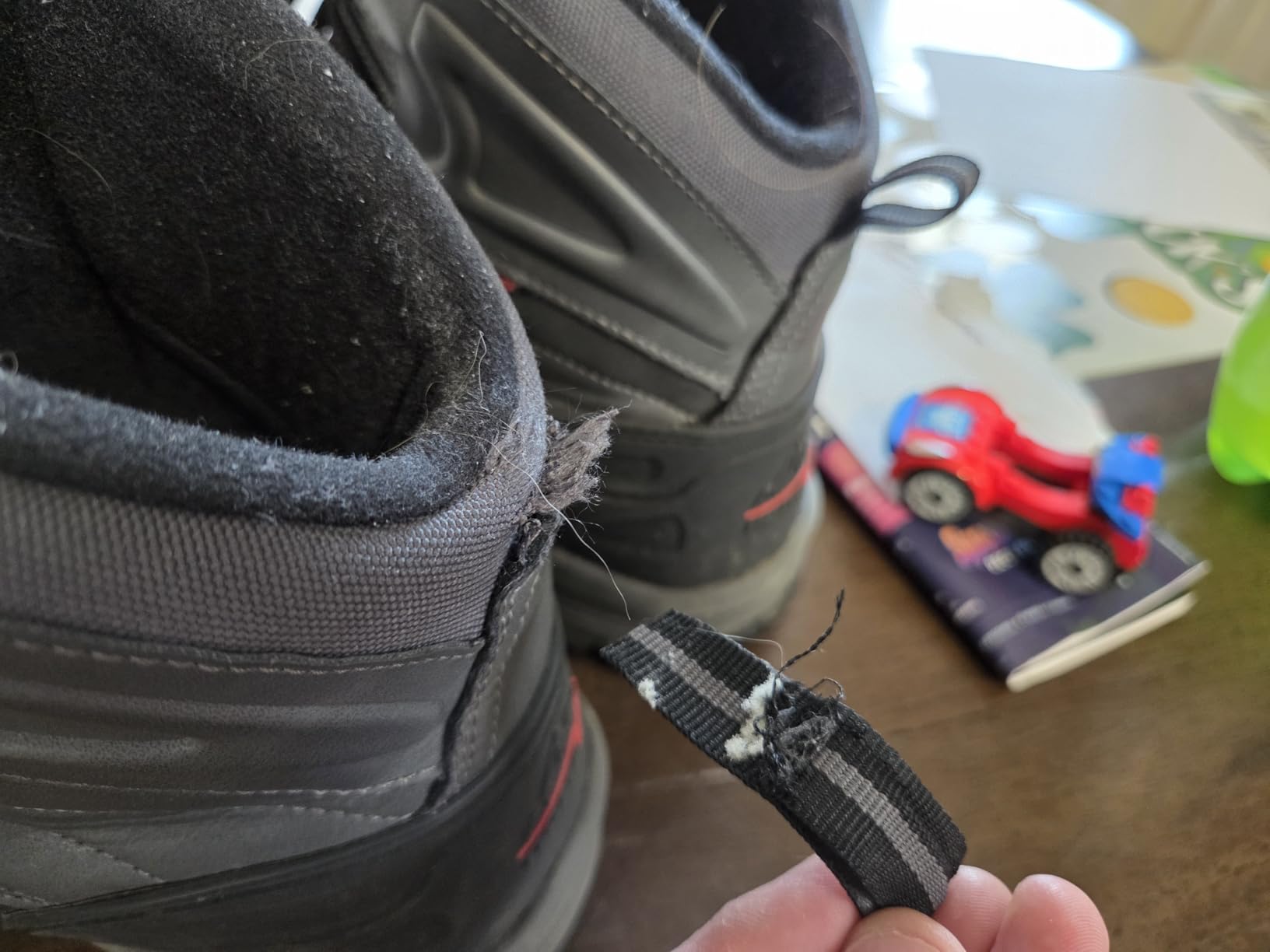
The outsole is where the value shows. A 13k+ review history almost never goes wrong on grip, and reviewers specifically call out ice, slush and mud rather than just dry snow. For anyone who spends time on a shovel or a shovel-adjacent job, that grip is worth more than an extra 200g of insulation.
The fit is the main thing to plan around. Most owners say it runs true to size with room for thick wool socks, and a minority add an insole for a snugger feel. If you have narrow feet or wear a thin sock, try a half size down and add a thin insole rather than fighting a loose toe box all winter.
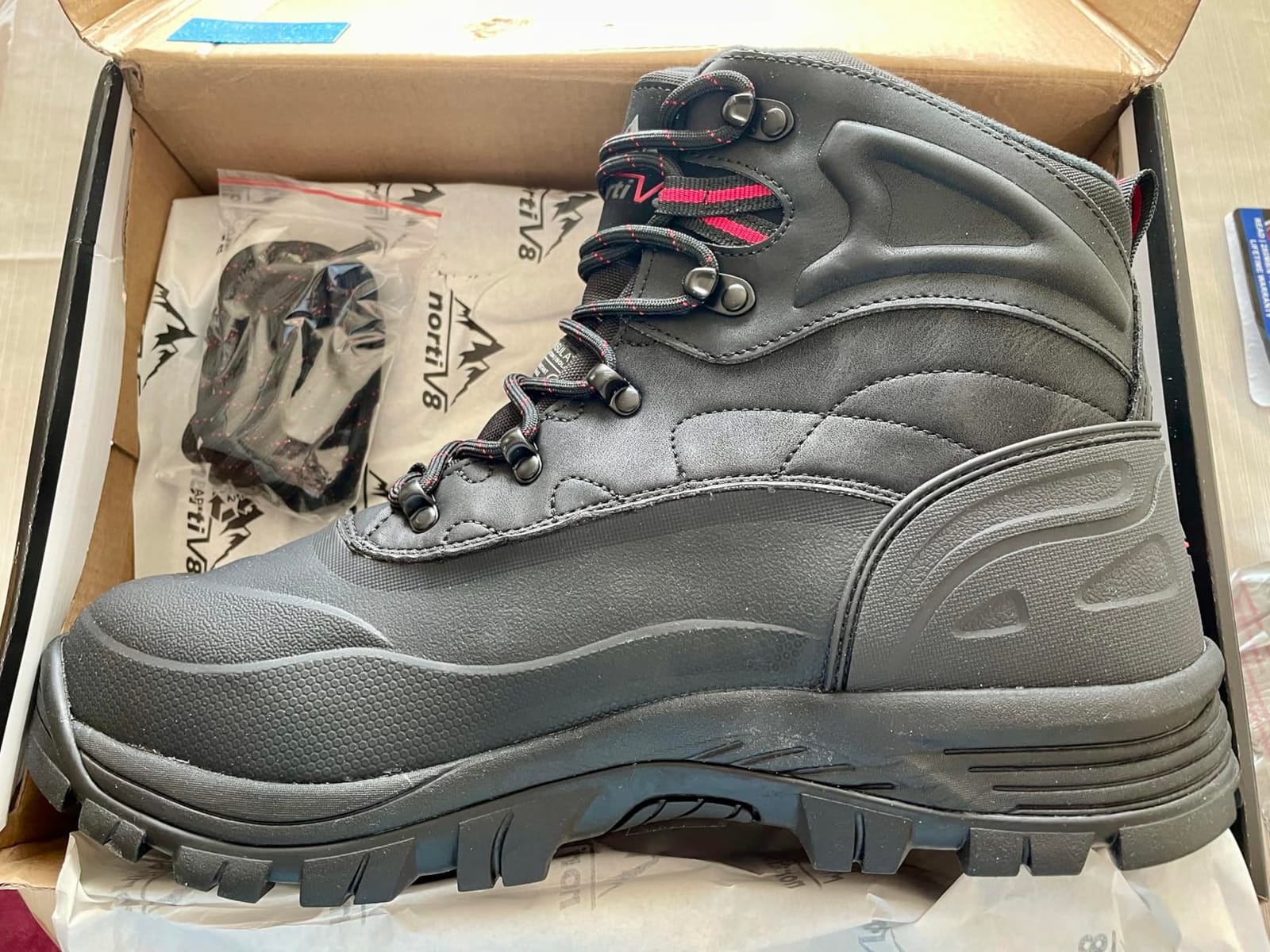
Where the NORTIV 8 Waterproof Hiking Boot Fits Best
It suits men who want one boot that handles rain, slush and snow without changing footwear three times a day. The removable insole and the wipe-clean exterior also make it the easiest boot here to keep presentable, which matters if you wear them to work rather than only to the trailhead.
Wide feet are well served, since the boot is offered in wide fits and the toe box has room to move. Buy your normal size in the wide width option rather than going up a full size, which is where the “runs large” complaints come from.
Where the NORTIV 8 Waterproof Hiking Boot Falls Short
Owners who work in genuinely deep cold report the -25F rating is optimistic, particularly at the toes and through the sole. If you are standing still outdoors for hours at well below freezing, this is not the boot, and no budget boot at 200g will be.
It is also a laced boot with standard laces, and reviewers note they work loose. A small pack of spare laces or a heel cinch solves it in about ten seconds and costs almost nothing.
2. ALEADER Winter Waterproof Insulated Shell Boots – Best Value for Snow Shoveling
ALEADER Winter Boots for Men, Waterproof Snow Boots Hiking Shoes Black 11 D(M) US
Seam-sealed waterproof outsole
Rubber lower shell
Soft fur lining
Drawstring and velcro strap
Pros
- Very warm for snow shoveling and sub-zero days
- Rubber lower section is genuinely waterproof in deep snow and puddles
- Strong traction on snow and ice
- Easy pull-on with velcro strap and drawstring
- Lightweight for the warmth provided
Cons
- Narrow shaft opening resists jeans and snow pants
- Not offered in half sizes
- Upper fabric is water resistant not fully waterproof
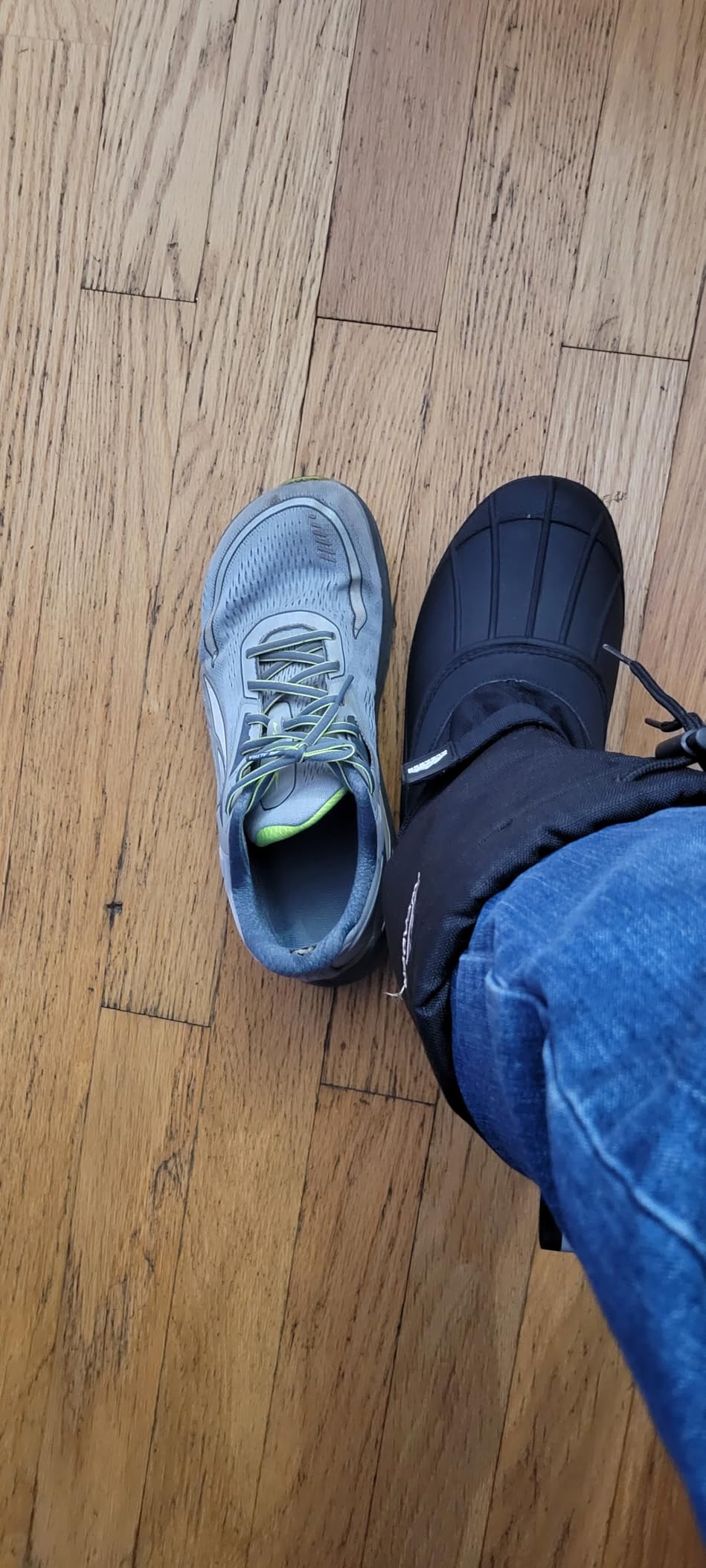
The ALEADER is the pick for anyone whose winter involves a shovel, a driveway and a lot of standing still in the cold. It is a two-material boot: a rubber lower shell and a water-resistant fabric upper, joined by a seam-sealed waterproof outsole. That rubber shell is the part that matters in deep snow, and owners confirm it stays dry through puddles and drifts.
The design is closer to a pac boot than most people expect, with a drawstring collar and an ankle velcro strap instead of laces. There is a cushioned footbed and a soft fur lining. Multiple closure styles are offered, including a Thinsulate variant, so the same shell can be found in warmer builds if you are not sure about the insulation level.
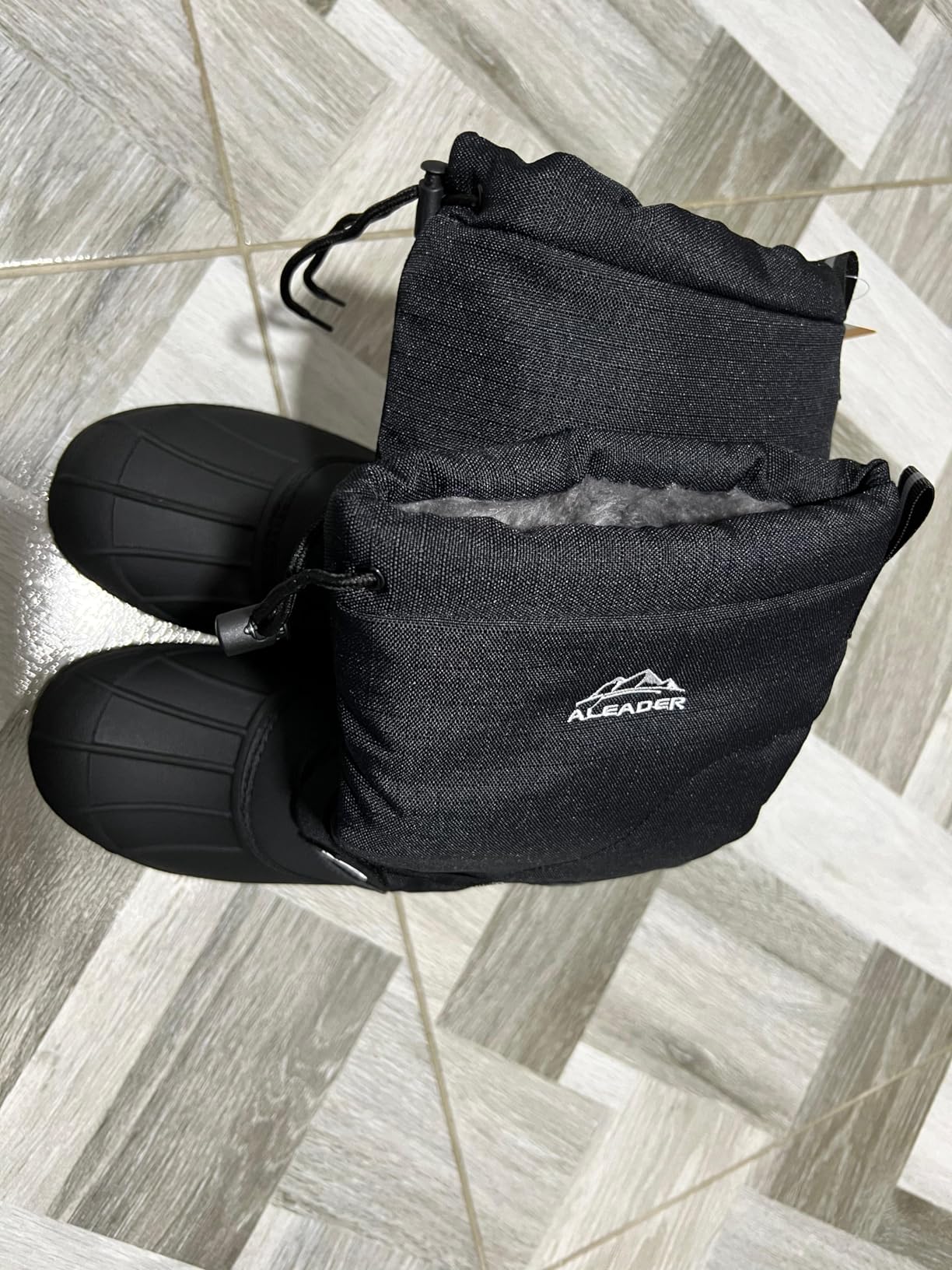
Owners frequently describe this as a high-value alternative to premium snow boots, and reviewers comparing it to Sorel models generally conclude it holds its own on warmth and grip. It also wins on convenience, because the velcro strap and drawstring mean you can put it on with cold, clumsy hands in a driveway at six in the morning.
The traction is the quiet strength here. For a boot in this class, snow and ice grip is genuinely good, and there are owners using it through full winter conditions rather than occasional frost. If you clear a driveway in a region with wet, heavy snow, that matters more than almost any other spec.
Where the ALEADER Winter Shell Boot Fits Best
It is built for people who generate their own heat in bursts and then stand still, which is exactly the shoveling pattern. Warmth is strong for a boot with a fabric upper, and the water barrier sits where snow actually reaches, at the lower shell and the seams.
It also works as a general winter commuter boot, particularly for men who do not want to fiddle with laces in bad weather. The footbed is cushioned enough for a full day on a job site or in a warehouse.
Where the ALEADER Winter Shell Boot Falls Short
The narrow shaft opening is the single most-cited complaint, and it is a genuine problem if you wear jeans or snow pants. Nothing gets in, but you will fight the cuff every morning, and pant fabric can wear at the edge.
Two smaller limits: there are no half sizes, so anyone between sizes must choose, and the fabric upper is water resistant rather than fully waterproof. In sustained rain rather than snow, expect dampness above the rubber line.
3. NORTIV 8 Waterproof Winter Snow Boots Insulated – The Budget All-Rounder
NORTIV 8 Men’s Waterproof Winter Snow Boots Insulated,Black,9
200g Thinsulate rated to -25F
Waterproof shell
All-terrain rubber outsole
Pros
- Very warm and functional for the price
- Slip-on design with no lacing needed
- Durable rubber lower takes rough use
- Good traction for dog walks and snow shoveling
Cons
- Heavy and clunky underfoot
- Runs oversized so the foot slides forward
- Minimal sole padding without an added insole
- Strap is excessively long
This is the plainest, most functional boot in the roundup, and for a lot of men that is exactly the point. It combines 200g 3M Thinsulate insulation rated to -25F with a waterproof shell over a wind-resistant upper, and an all-terrain slip-resistant rubber outsole for snow, ice, mud and wet ground.
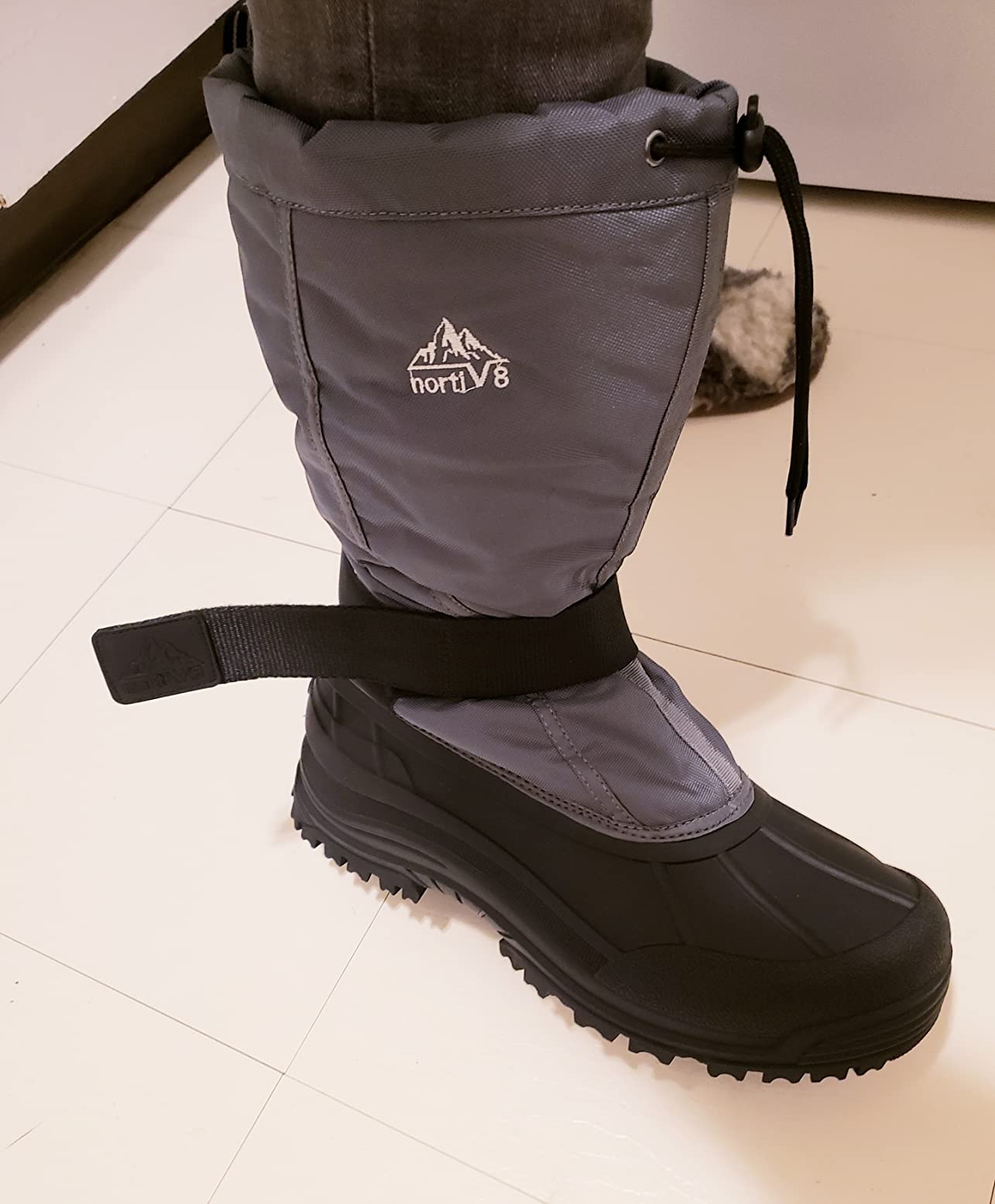
It is a pull-on design with toggle laces and an adjustable hook-and-loop ankle strap, plus a warm faux-fur insole. No laces means no laces to freeze or lose, and reviewers note the slip-on is available even in very large sizes, which is harder to find than it should be.
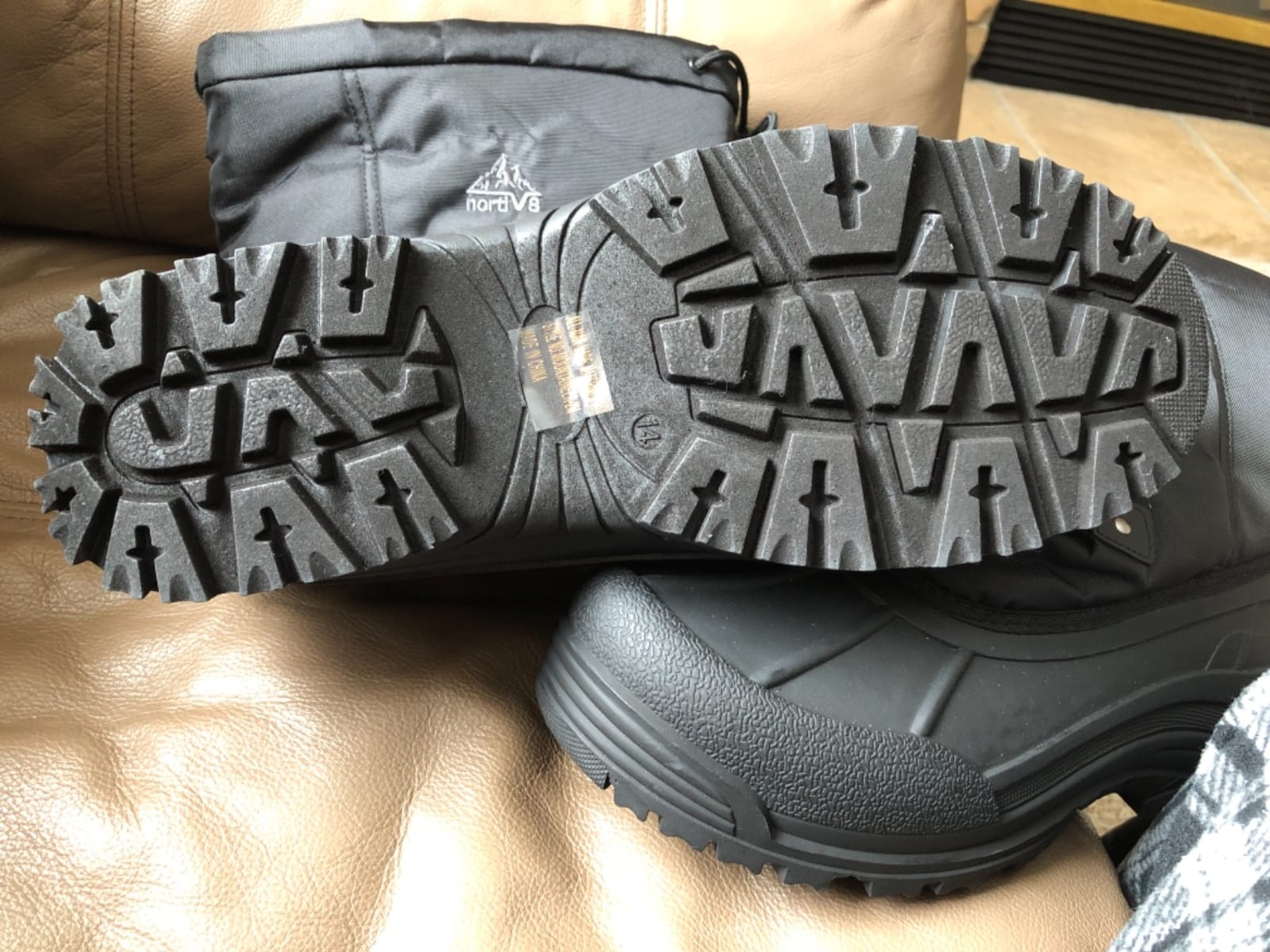
Durability is the argument for this boot. Owners talk about a rubber lower that stands up to dogs, mud and general abuse, and most reviews frame it as excellent value rather than a compromise. It is the kind of boot that stays in the trunk of a car for a whole season without anyone thinking about it.
Sizing is the thing to sort out before you order. The boot runs oversized, which pushes your foot forward in the toe box, and most owners resolve it the same two ways: size up from your normal, and add an insole to fill the forefoot. A good insole is near-essential here because sole padding is minimal.
Where the NORTIV 8 Insulated Winter Boot Fits Best
It is the sensible choice for a man who wants one pair to handle the school run, the dog, the driveway and a walk in the park, without thinking about it. The toggle closure and velcro strap get it on and off in seconds, and the waterproof lower keeps slush out.
Because there are no laces, it is also a good pick for anyone who struggles with laces in the cold or has limited dexterity. The faux-fur insole adds more warmth than the price suggests.
Where the NORTIV 8 Insulated Winter Boot Falls Short
It is heavy and clunky to walk in, and reviewers are candid about that. For long distances on foot, a lighter boot suits better, and if you spend full days walking, the bulk will show up in your feet by evening.
The oversized fit and the overlong velcro strap need fixing on arrival. Trim the strap excess and swap the insole on day one, and this becomes a very capable budget boot. Left exactly as it comes, it is loose and flappy.
4. NORTIV 8 Zip Winter Snow Boots – Best for Easy On and Off
NORTIV 8 Men’s Zip Winter Snow Boots Slip on,Grey/Black,10.5
200g Thinsulate to -25F
Front zipper entry
Waterproof and windproof build
Pros
- Front zipper makes the boots very easy to put on
- True to size and available in wide fits
- Good stitching and grippy sole for ice
- Insulation is thick without feeling bulky
Cons
- Not fully waterproof in sustained rain
- Shaft can rub the leg with untucked pants
- Some pairs arrive with minor defects
- Shorter shaft than expected
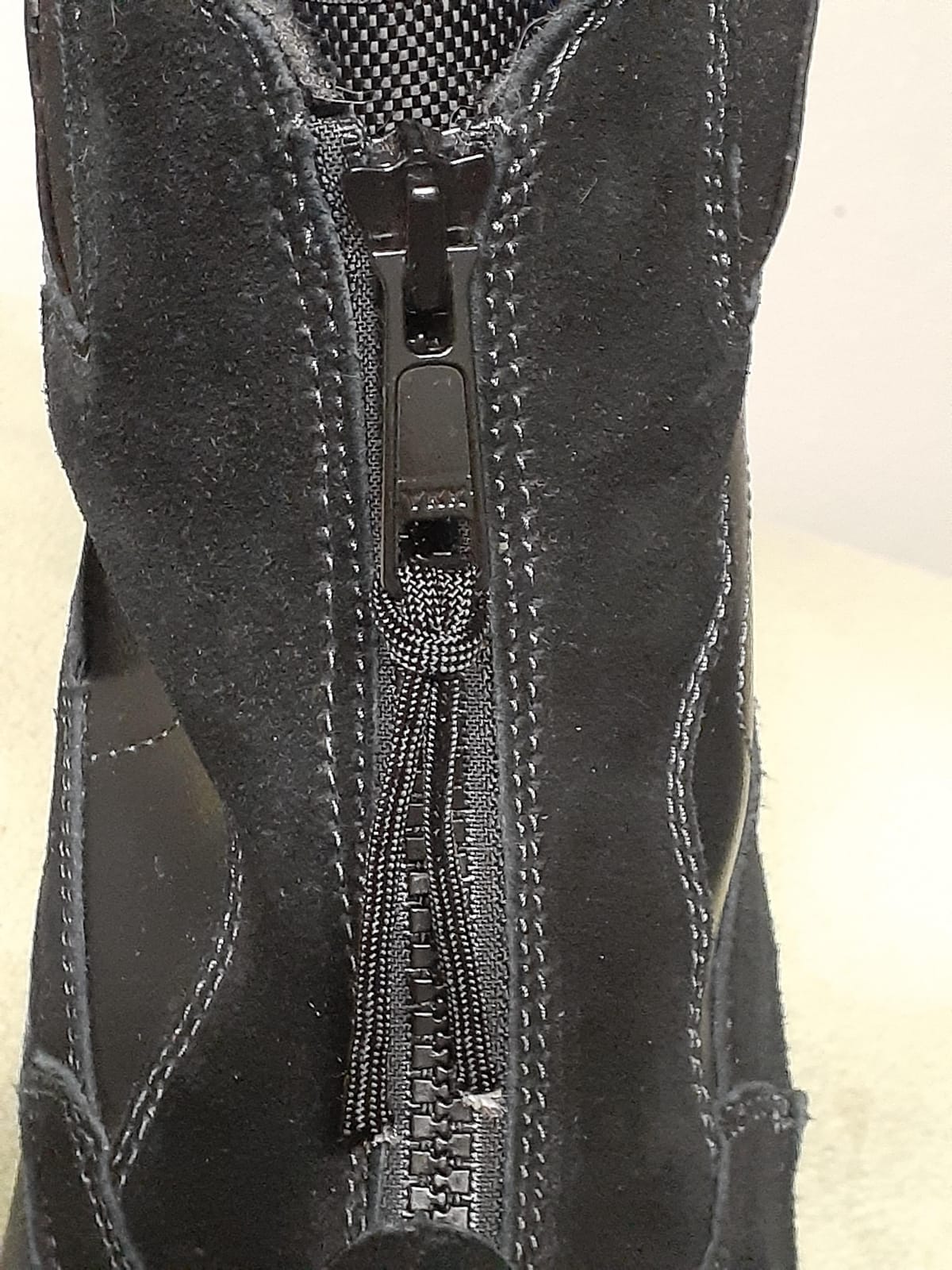
The defining feature is a front zipper, and it changes how you use the boot. A zip-side winter boot goes on in seconds without the crouch-and-pull of a laced boot or the tugging of a tight collar, which matters enormously in the first two minutes after your feet have been out in the cold.
Underneath the convenience the spec sheet is solid: 200g 3M Thinsulate rated to -25F, waterproof and windproof construction with a synthetic toe cap, and a durable slip and abrasion resistant rubber outsole. Owners describe it as equally at home skiing, snowmobiling, ice fishing or on a winter dog walk.
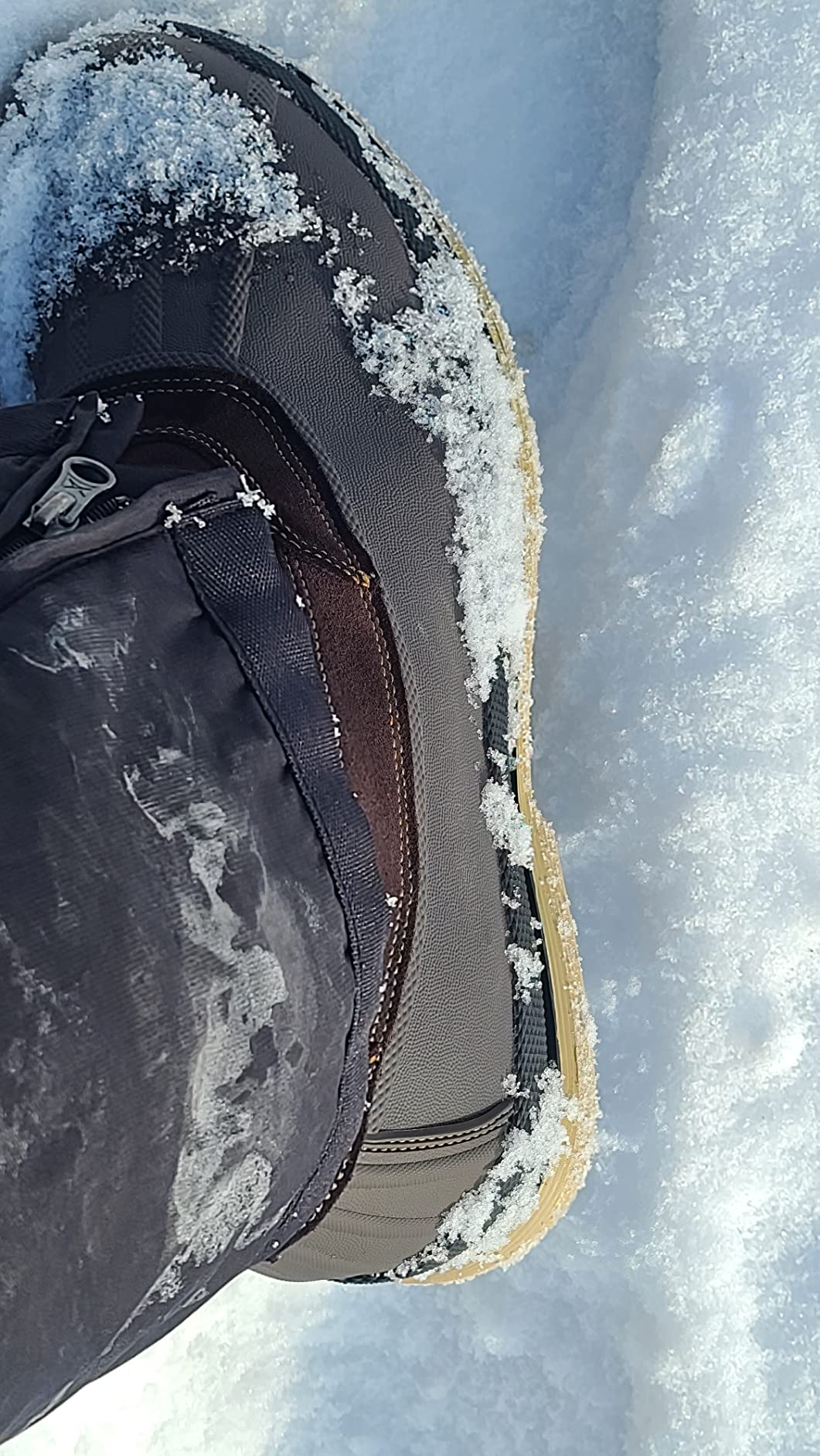
Sizing is the quiet strength. It runs true to size and is offered in wide fits, and reviewers specifically note the insulation is thick without feeling bulky, which is a hard balance to strike. That makes it one of the easier recommendations here for men who have fought with narrow winter boots before.
The brand’s customer service also comes up repeatedly in reviews, with owners reporting straightforward replacements for pairs that arrived with minor defects. On a boot that is going to be worn outdoors in bad conditions, that reliability matters as much as the spec sheet.
Where the NORTIV 8 Zip Boot Fits Best
It is the pick for anyone who dreads the morning start, whether that is early dog walks, a 5am shift or a child who needs boots on without a fight. The zipper plus the pull-on shaft is the fastest on-and-off setup in this roundup.
It suits wide feet particularly well, since the fit is true to size and wide widths exist. You are not compensating with a size up, which means the toe box stays where it should.
Where the NORTIV 8 Zip Boot Falls Short
It is water resistant in practice more than fully waterproof, and owners report socks soaking through during sustained rain. In snow and slush it holds up, but do not treat it as a wet-weather boot for downpours.
The shaft is shorter than some buyers expect and can rub the leg if you wear pants untucked. Tuck them in, and the small zip guard does the rest.
5. Sperry Avenue Duck – Best Lightweight Everyday Waterproof Boot
Sperry Top-Sider Men’s Avenue Duck Boot, Black/Amaretto, 9.5
Seam-sealed waterproof
Memory foam footbed
Lugged Wave-Siping outsole
Pros
- Lightweight and comfortable for all-day wear
- Stylish enough to wear with jeans or trousers
- Excellent traction on wet pavement
- Durable rubber toe and tread
- Easy to wipe clean after slush and mud
Cons
- Uninsulated so the rubber gets cold in deep snow
- Runs small with a snug ankle and cuff before break-in
- Some reports of leaking in shallow snow
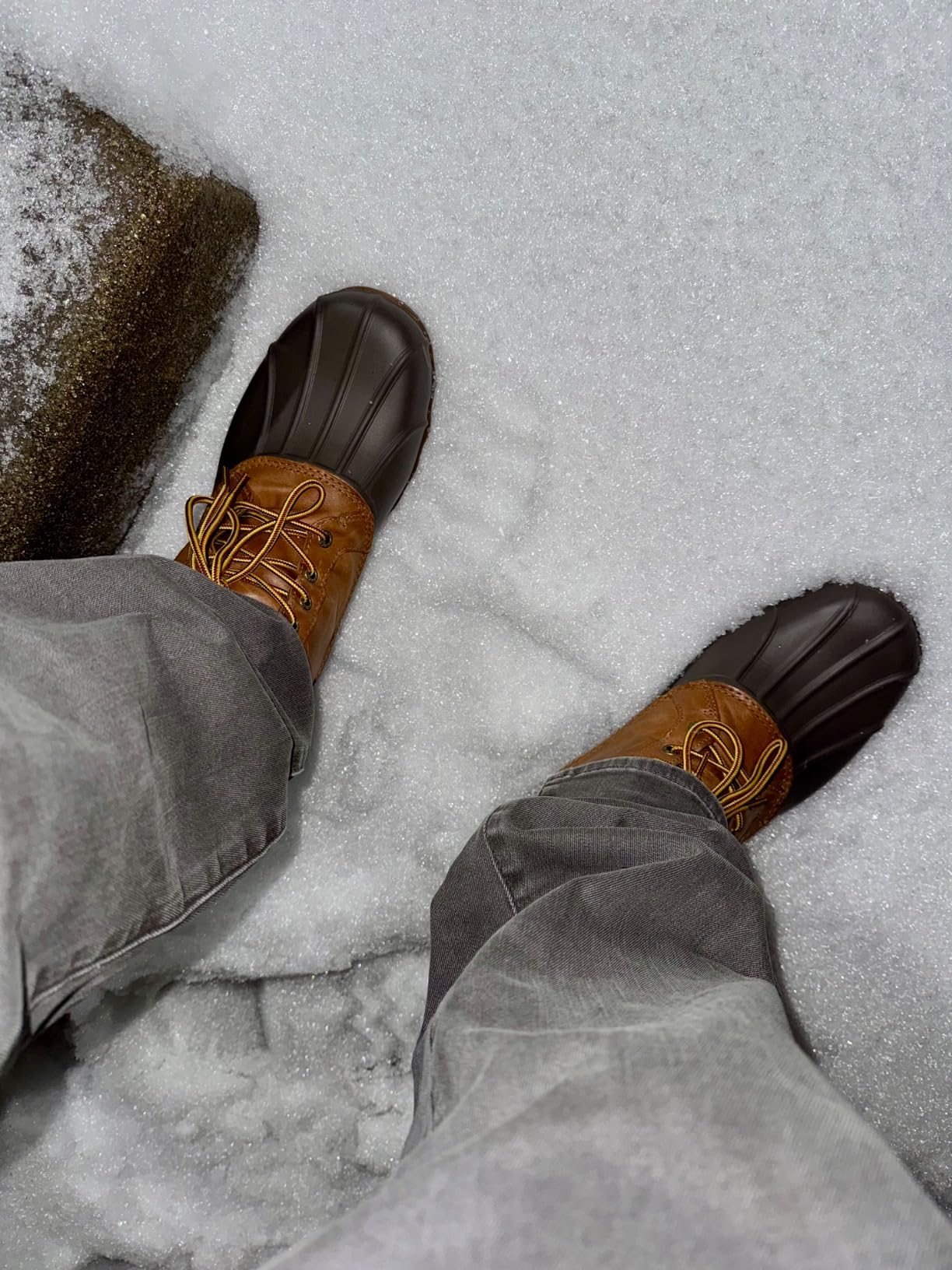
Let us be clear about what this is: the Sperry Avenue Duck is a waterproof everyday boot, not a deep-winter snow boot. What it is, is the most comfortable option in this roundup for men who live somewhere mild, walk a lot and refuse to wear a chunky insulated boot to get to the office. At 1.12 pounds, nothing else here comes close.
The construction is seam-sealed waterproof with a stain and water resistant leather upper, a fully lined shaft, a full-length memory foam footbed and warm thermal linings. The outsole is non-marking lugged rubber with molded Wave-Siping, which is genuinely excellent on wet pavement and slick ground.
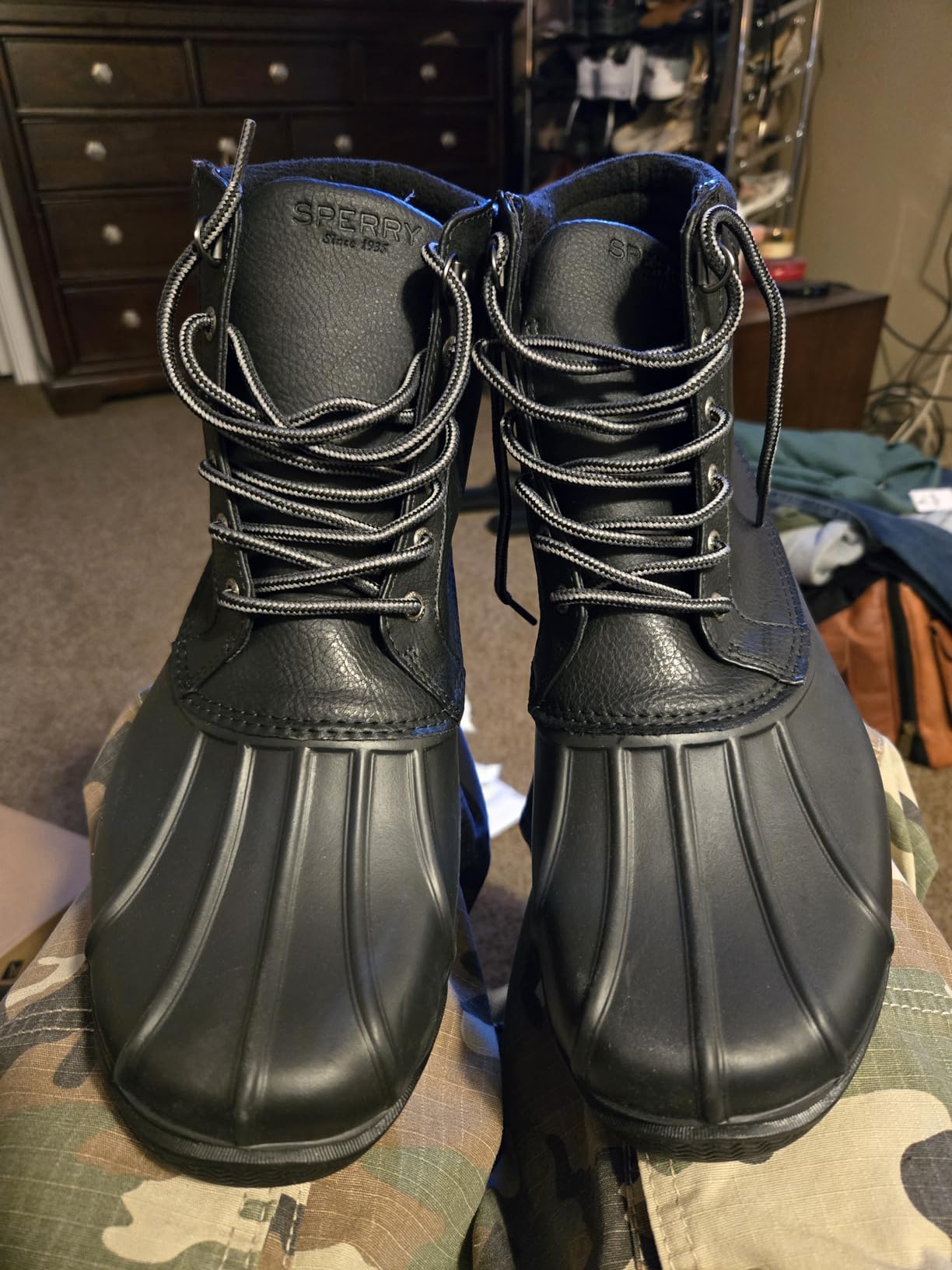
Style is the underrated part. Reviewers repeatedly mention wearing it casually with jeans or trousers, and the reason is that the shape reads as a dress-casual duck boot rather than outdoor gear. For a commute in a temperate winter, that is often the deciding factor.
It also cleans up well. The rubber toe and tread hold up to heavy work use and wipe down easily after mud, slush and grass, which is why you see it on job sites as well as on pavements. Owners report the comfort holds up across a full day on foot.
Where the Sperry Avenue Duck Fits Best
It suits mild maritime winters: cold and wet, rarely deep snow. For men who overheat in insulated boots, the memory foam footbed and relatively low bulk are the main appeal, and the thermal lining is enough for a normal winter day.
It also works for anyone who needs a waterproof boot that looks like something else. If your office is not a warehouse, the styling does more work than any technical spec.
Where the Sperry Avenue Duck Falls Short
It has no real insulation, and the uninsulated rubber sections get cold fast in deep snow. Standing still in freezing conditions is where this boot stops working, and no amount of thick socks changes that.
Sizing is tight at the ankle and cuff before break-in, so size accordingly, and a minority of owners report leaking in shallow snow. Buy it for rain and slush, not for a snowdrift.
6. SILENTCARE Mid-Calf Snow Boot – Best for Mild Winters and Long Walks
SILENTCARE Mens Winter Mid-Calf Snow Boot Fur Warm Waterproof Slip On Outdoor Athletic
Waterproof oxford cloth upper
Artificial plush lining
Non-slip polyurethane sole
Pros
- Soft faux fur lining keeps feet warm in freezing conditions
- Waterproof oxford upper handles rain and snow
- Lightweight sole stays comfortable on long walks
- Elastic side panels for easy on and off
- Suitable for indoor and outdoor winter wear
Cons
- Rubber sole grips hard ice poorly
- Sizing runs narrow at the opening
- Waterproofing limited to the fabric upper
- Not built for deep snow or mountaineering
The SILENTCARE is a mid-calf boot built around a simple idea: warmth without weight. A waterproof oxford cloth upper, an artificial short plush lining wrapped around the feet, and a wear resistant polyurethane non-slip outsole. The package weighs little more than a pair of trainers, which changes how far you can walk.
Entry is a high quality elastic band at the side, so it goes on and off with no fuss. That makes it a good indoor-and-outdoor boot, which owners mention explicitly: it works for the walk to the shops and does not need to be swapped the moment you get inside.
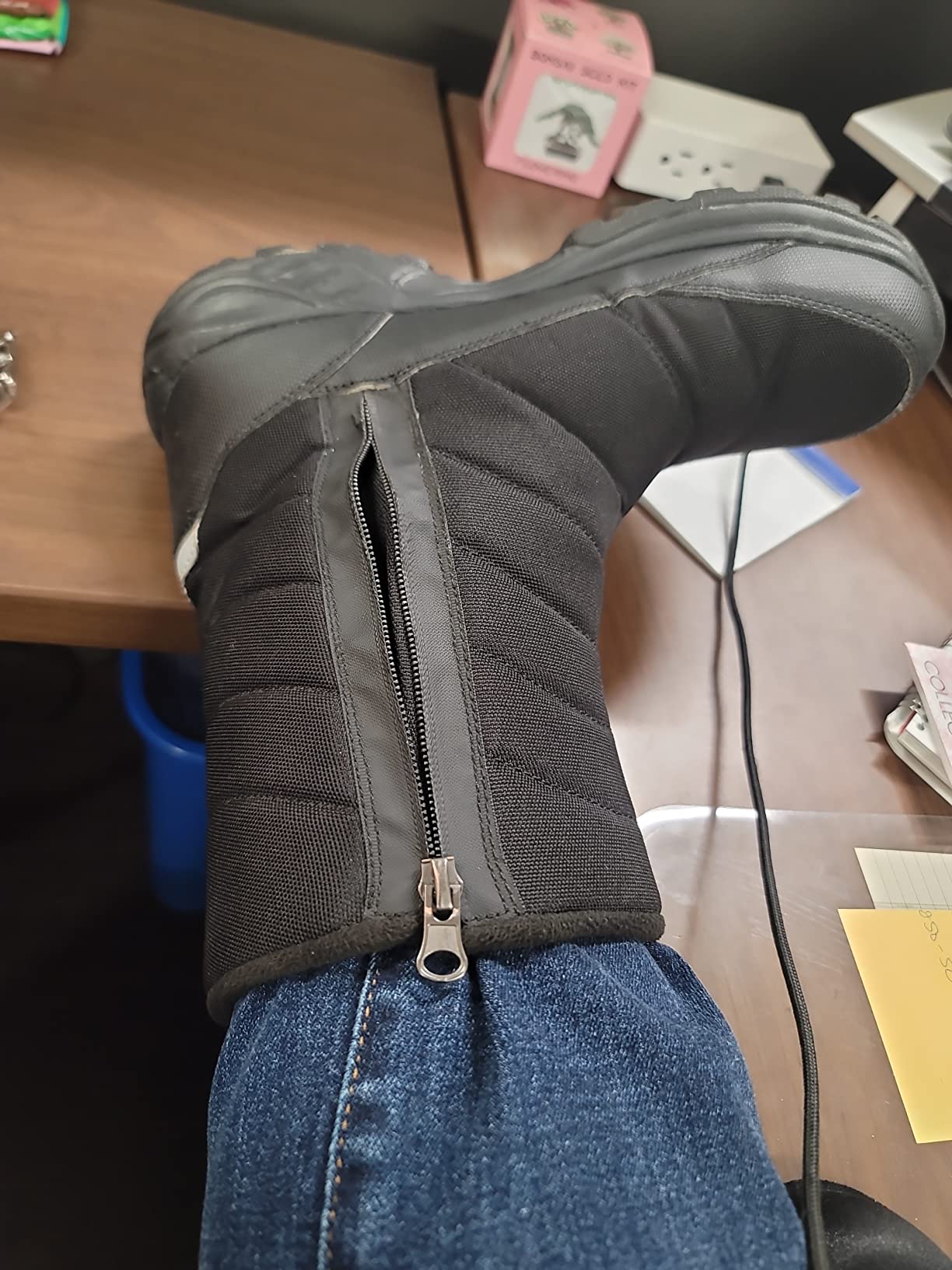
It is a good match for men who find insulated boots too hot. The plush lining is a thin layer of trapped warmth rather than a heavy thermal fill, so the boot does not build the sweat that turns into cold feet later in the day.
Colours in black, grey and brown broaden its use as an everyday boot, and the profile is slim enough to wear under trousers without looking like snow gear. Owners use it for rain, snow, fishing and dog walking, which is a fair summary of its range.
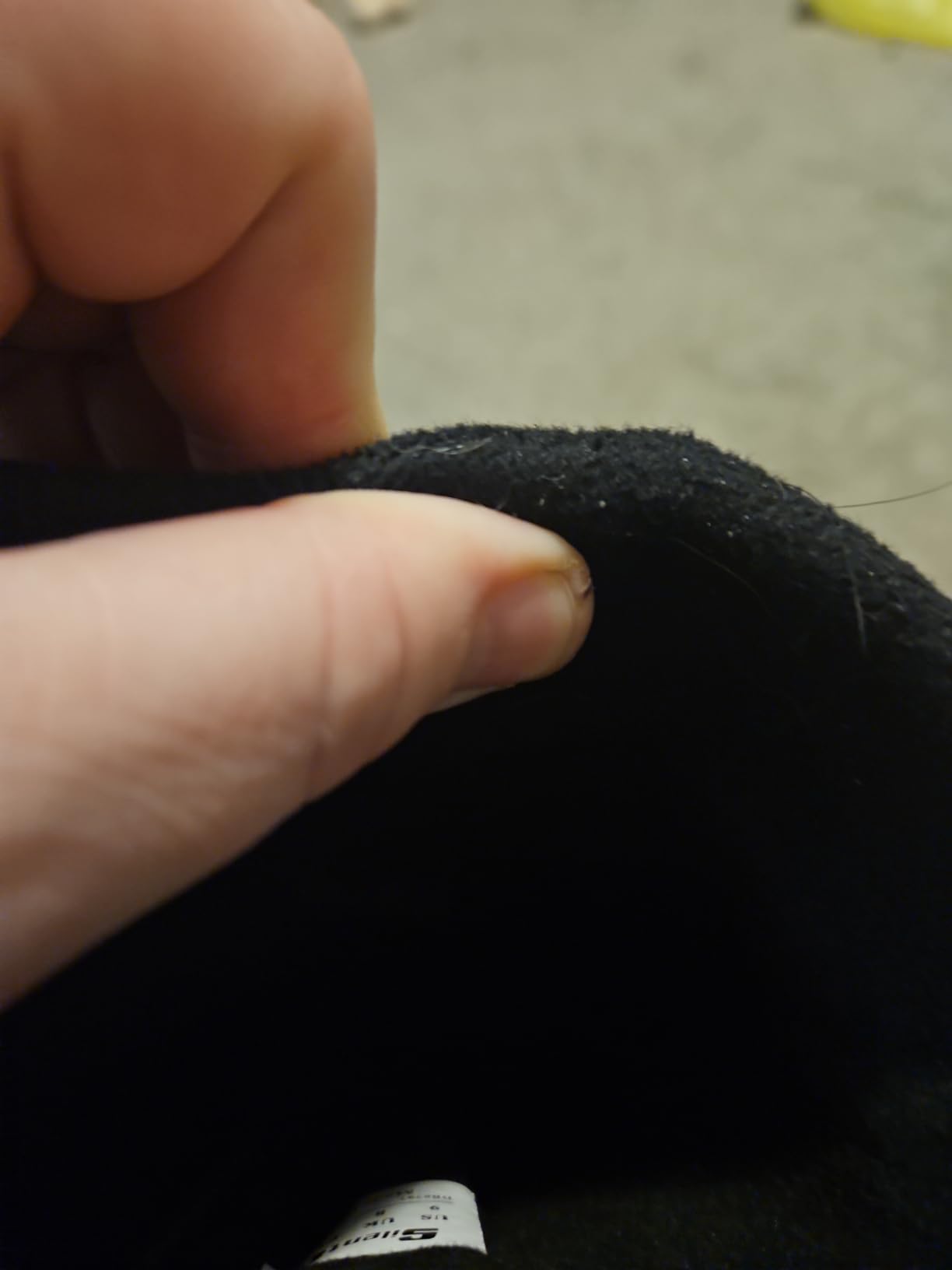
Where the SILENTCARE Mid-Calf Boot Fits Best
It is built for moderate winters rather than deep cold, and for men who prioritise weight and comfort over raw insulation. If a heavy boot leaves your feet sore by lunchtime, this is the counterpoint.
It suits anyone who needs one boot for errands, dog walking and a wet commute, and the mid-calf height keeps snow out of the top without the bulk of a full pac boot.
Where the SILENTCARE Mid-Calf Boot Falls Short
The polyurethane sole gives less grip on hard ice than a lugged or multi-terrain outsole, and that is the clearest limitation for anyone walking on frozen pavements. Snow is fine, bare ice is not.
Sizing runs narrow at the opening, so thin socks may be needed to get the boots on, and the waterproofing covers the fabric upper rather than a rubber shell. It is not a boot for deep snow or mountaineering.
7. MUCK Arctic Pro Insulated Boot – Best for Mud, Ice and Heavy Work
Muck Boots Arctic Pro Bark – Men’s 10.0, Women’s 11.0 B(M) US
100% waterproof MUCKPROOF
8mm neoprene bootie
2mm thermal foam footbed
Pros
- Exceptionally warm and fully waterproof in snow mud and slush
- Wide last with generous toe room for thick socks
- Aggressive multi-terrain tread grips ice and mud
- Slip-on style with no lacing
- Holds up well with regular care
Cons
- Bulky and heavy against lighter snow boots
- No rear rubber wedge so they are hard to pull off
- Neoprene crackles after several years
- Insulation falls short below about -25C
The MUCK Arctic Pro carries the highest owner rating in this roundup, and the reason is simple: it does not leak, ever. Construction is 100% waterproof MUCKPROOF with a hand-built shell, an 8mm neoprene bootie, 2mm of thermal foam under the footbed, and an EVA midsole. There is no upper fabric to saturate, so there is no wet-sock failure mode.
The warmth comes from stacking layers rather than one heavy fill, which is why it performs well across a wide range of conditions. Owners use it in snow, mud and slush, on worksites and on hunting trips, and several report buying a replacement pair after three to four years of hard use.
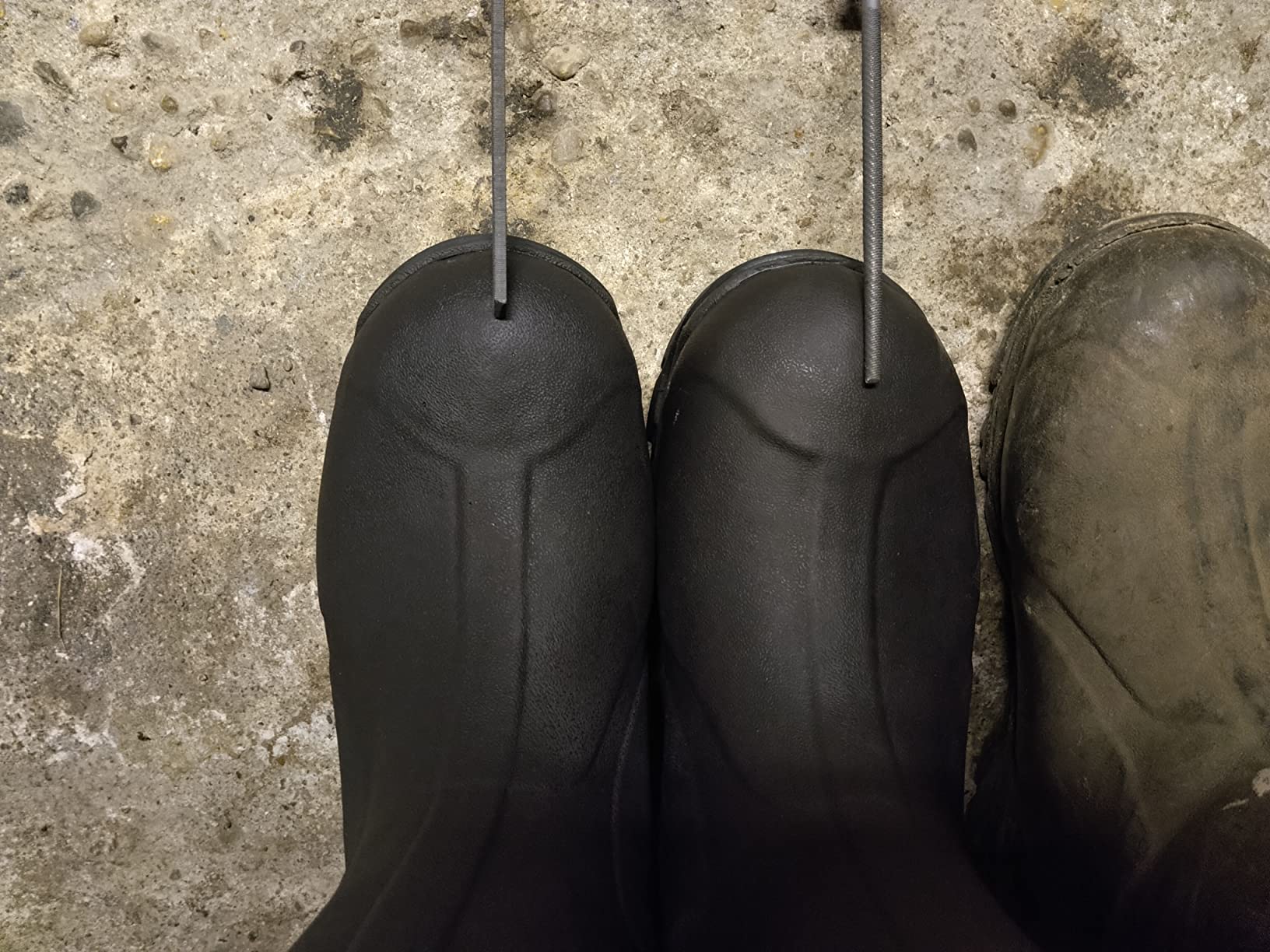
Two details make it stand out. The wide last gives genuinely generous toe room, which is the single best feature for men who wear thick socks, and the Bob-Tracker all-purpose outsole with semi-spherical lugs is the most aggressive traction pattern here on both ice and mud.
There is also a comfort topline around the shaft, which matters more than it sounds, because it stops the rubber cutting into your calf during long days. It is a slip-on with no lacing, so it suits anyone who wants waterproofness without fussing with closures.
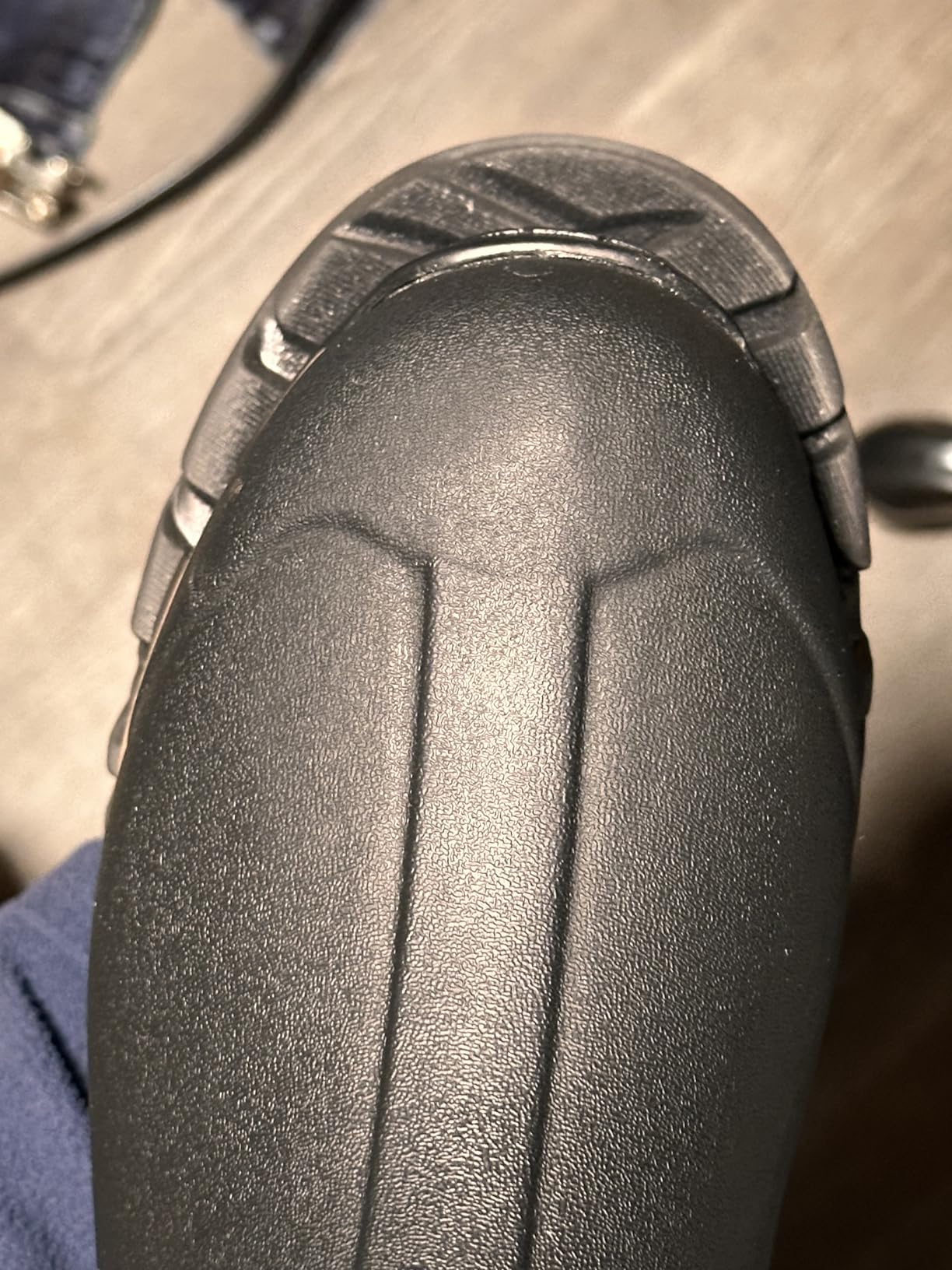
Where the MUCK Arctic Pro Fits Best
It suits men with wide feet or thick socks, full stop. The wide last is the reason to buy it even if a narrower boot would otherwise fit, and reviewers call out the generous toe space as a headline benefit.
It also suits anyone working or playing outdoors in wet conditions, from a farm gate to a muddy shooting field. The waterproof shell needs no maintenance to stay waterproof, unlike a membrane that can delaminate.
Where the MUCK Arctic Pro Falls Short
It is bulky and heavy next to every insulated fabric boot here, and that is a real cost if you walk a long way. Shortcuts in comfort come from a stiff shell and a heavy sole.
There is no rear rubber wedge, so pulling them off wet boots is genuinely hard, and the neoprene bootie can begin to crackle after several years. Owners also note warmth falls short well below about -25C when sitting still, so it is a tough all-rounder rather than a sub-zero specialist.
8. Kamik Greenbay 4 Waterproof Winter Snow Boots – Best for the Coldest Ratings
Kamik Greenbay 4 Men’s Waterproof Winter Snow Boots, Black – 10
Thermal Guard insulation
Rated to -40F
Durable nylon upper
Pros
- Built for deep cold with Thermal Guard insulation
- Rubber outsole gives solid traction on ice snow and mud
- Velcro midfoot closure is fast with cold hands
- Durable nylon upper takes hard use
- Traditional snow boot styling
Cons
- Shaft opening can feel tight with pant legs
- No insole is included with the boot
- Styling is traditional rather than modern
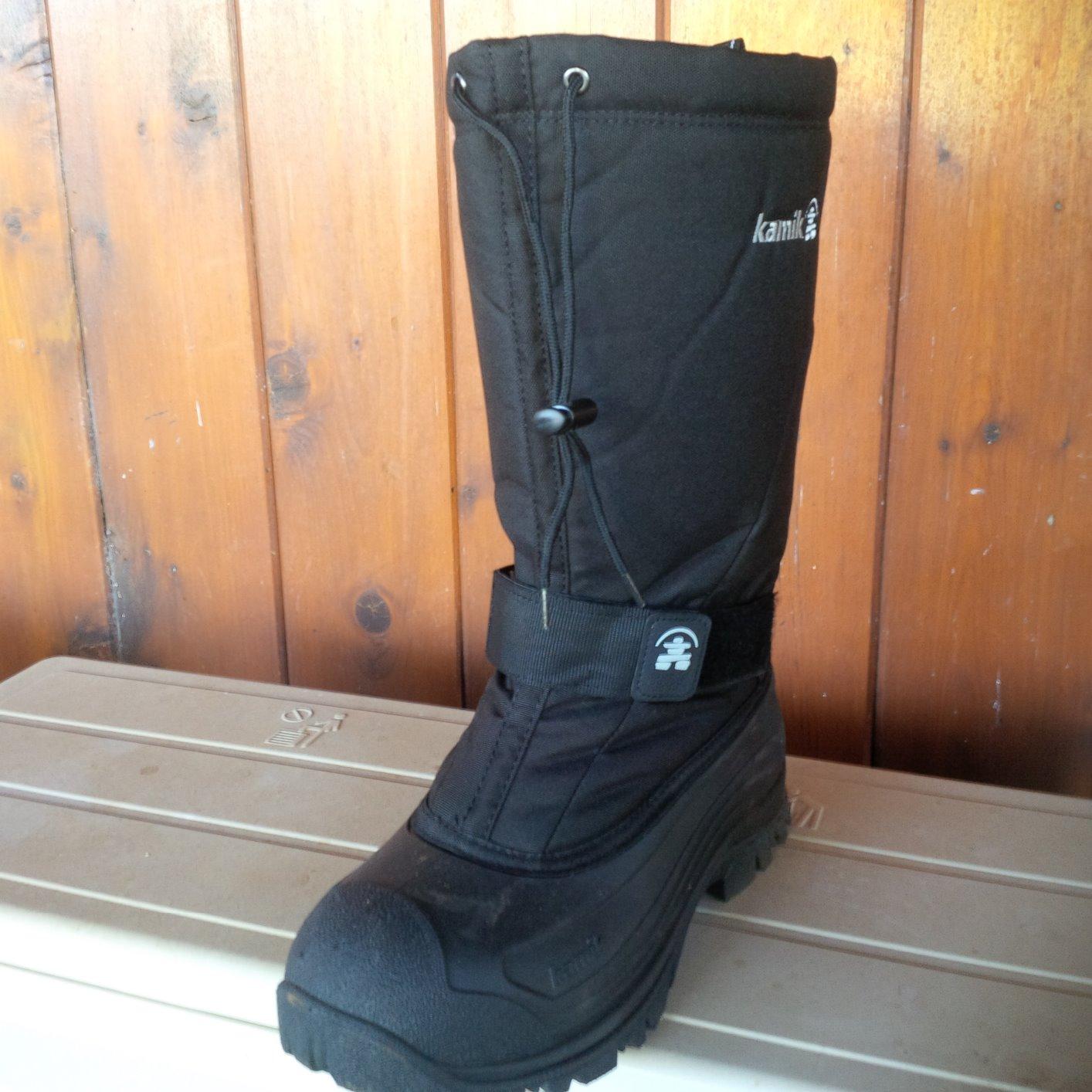
Kamik is the brand in this category most associated with Canadian cold, and the Greenbay 4 is its traditional answer: a durable flexible nylon upper, Thermal Guard insulation, a rubber outsole for ice and mud, and a manufacturer rating of -40F. Treat that rating as a claim rather than a measurement, but the design intent is not in doubt.
The most-praised feature is the midfoot velcro closure. In genuinely freezing conditions, a lace-free opening you can open with gloved or stiff hands is worth a great deal, and it also means the boot goes on and off without the kneeling-and-pulling routine that laced snow boots demand.
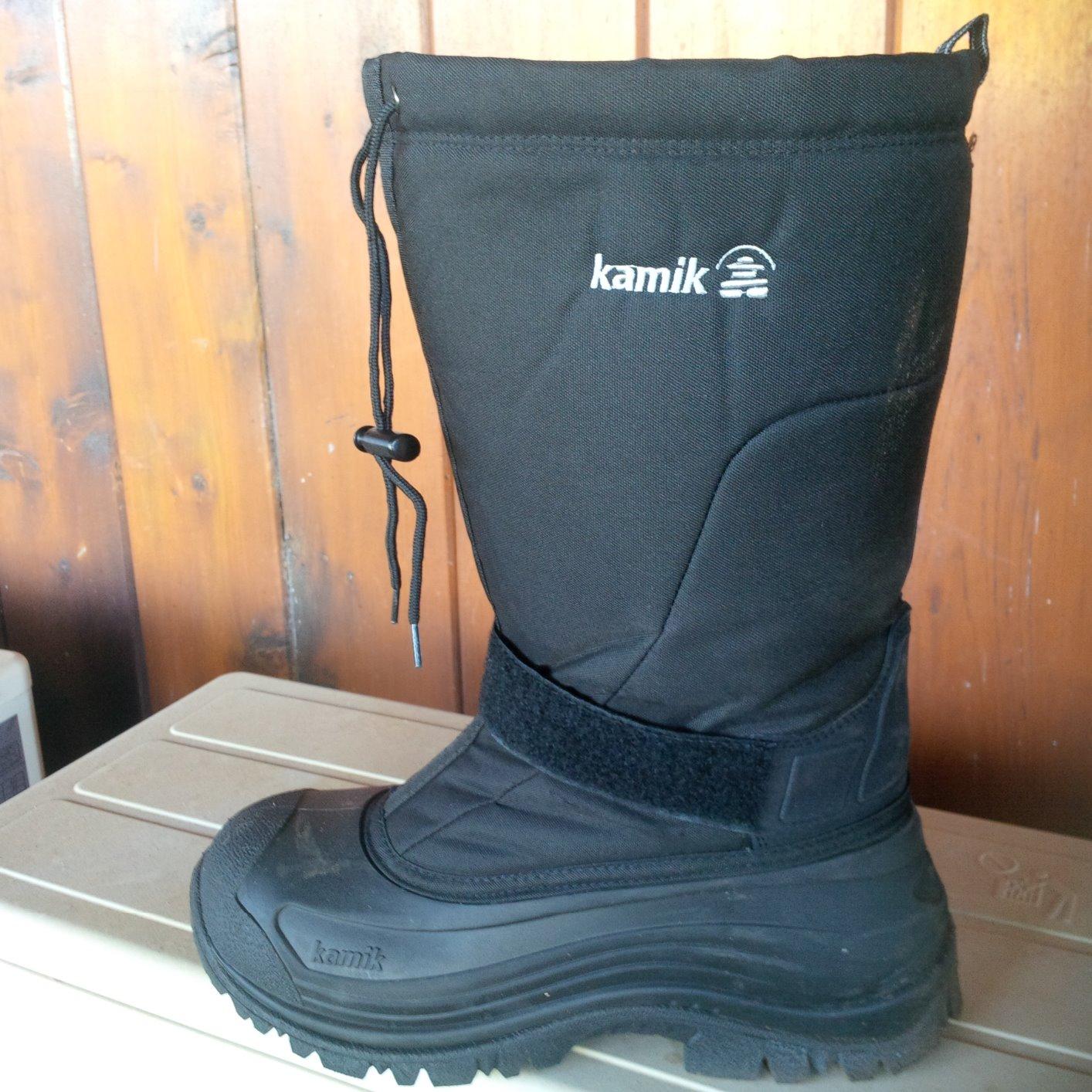
Kamik also builds these to be used. The nylon upper is described as durable and flexible, and it takes the repeated flexing of walking in cold conditions better than a stiff synthetic shell. Colours include black, camouflage, dark olive and red.
Insulation is the trade-off you should think about. A boot with Thermal Guard and no shell membrane will keep cold out well when it is dry, but if you are standing in slush for hours, a fully waterproof rubber shell such as the MUCK Arctic Pro is the safer choice.
Where the Kamik Greenbay 4 Fits Best
It suits men in regions with sustained deep cold who want a traditional snow boot rather than a technical hiking boot, and who value fast entry above all. The velcro closure makes it a favourite for early mornings and for anyone with limited hand dexterity in the cold.
The styling works with jeans and work trousers, and the nylon upper is forgiving of scuffs and knocks in a way that leather is not.
Where the Kamik Greenbay 4 Falls Short
No insole is included, and that is a real gap on a boot at this level. Budget for a proper insole, and for wide feet a roomy aftermarket insole is worth the extra step.
The shaft opening can feel tight with pant legs, and the traditional styling will not suit anyone who wants their winter footwear to look modern. Check the top opening over the trousers you plan to wear before you commit.
9. Sorel Caribou Snow Boot – Best for Deep Snow
SOREL – Men’s Caribou Waterproof Boot for Winter, Black, Dark Stone, 10 M US
Removable 9mm felt inner boot
Waterproof nubuck leather
Rubber shell with Sherpa cuff
Pros
- Very warm with a thick removable felt liner and Sherpa cuff
- Genuinely waterproof in snow slush and puddles
- Best-in-class traction on snow and ice
- Comfortable for long walks and daily dog walking
- Classic styling that works with jeans
Cons
- Runs large and very wide so consider sizing down
- No wide or EE width options
- Bulky and heavy
- Soft sole offers limited arch support
- Snow cuff can collapse and rub the leg
The Caribou is the reference pac boot in this roundup, and the reason is the removable 9mm washable recycled felt inner boot. You can pull it out, dry it overnight and put it back in the morning, which is the practical advantage of two-piece construction that no one-piece boot can offer.
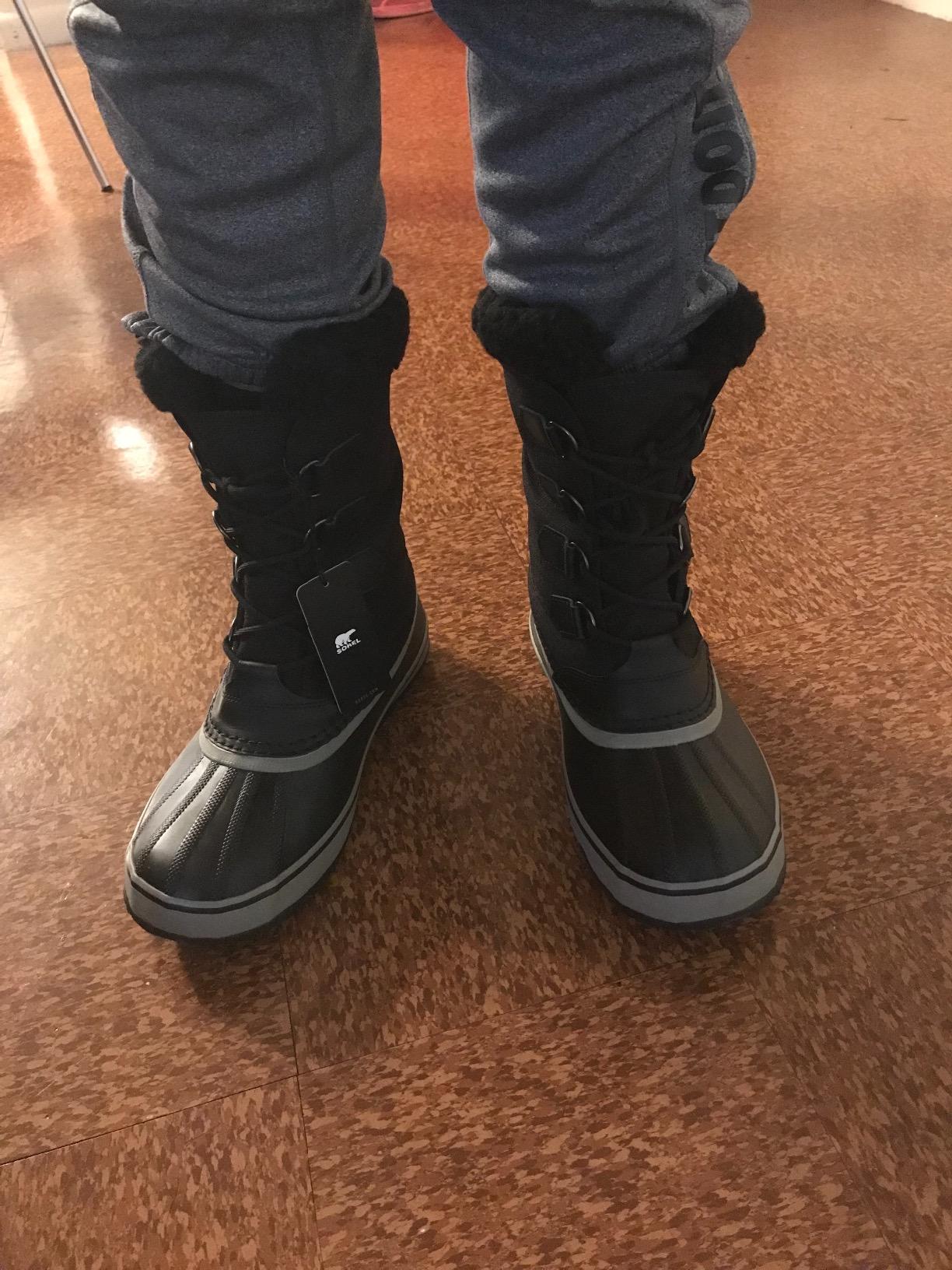
Outside the liner, you have a waterproof nubuck leather upper with seam-sealed construction, a handcrafted waterproof rubber shell, a Sherpa pile snow cuff, and the Sorel aero-trac non-loading outsole. The result is a boot that has been benchmarked for decades in exactly the conditions most people face in a northern winter.
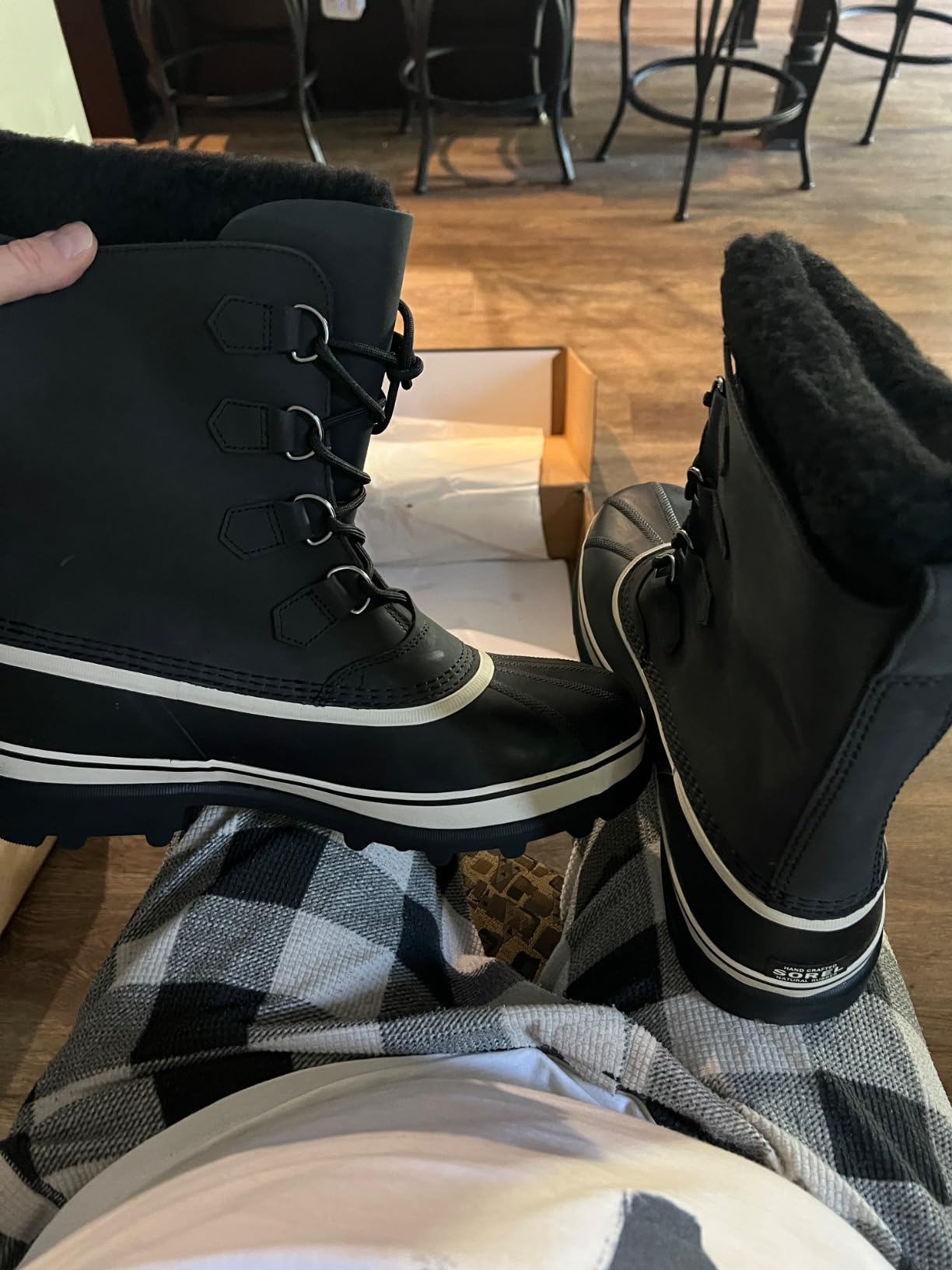
Owners describe the traction as the best in class on snow and ice, and comfort holds up for long walks and daily dog walking. The styling is the other quiet advantage: it works with jeans and trousers well enough to wear into town, which most snow boots cannot manage.
The liner also makes temperature control adjustable. Indoors, wear the boot with the liner out; in deep snow, add it back. For men who overheat easily, that single feature is worth more than any extra gram of synthetic insulation.
Where the Sorel Caribou Fits Best
It suits men in heavy snow who want one pair that handles the walk to the bus stop, the dog, the school run and a snowy weekend without changing boots. The waterproof shell and rubber bottom keep slush out entirely.
It is also the right pick for anyone who wears boots indoors and suffers from overheating. Liner out indoors, liner in outside, and you get genuine control over your own warmth.
Where the Sorel Caribou Falls Short
Sizing is the issue buyers argue about most. The boot runs large and very wide, so many wearers size down, and there are no wide or EE width options for men who genuinely need extra room across the forefoot.
It is bulky and heavy next to the fabric boots here, and the soft sole gives limited arch support over a long day. The Sherpa cuff can also collapse and rub the leg when it is not stuffed with snow.
10. KEEN Anchorage 3 Waterproof Pull On Boots – Best for Wide Feet
KEEN Men’s Anchorage 3 Waterproof Pull On Insulated Snow Boots
KEEN.DRY waterproof membrane
KEEN.WARM 200G to -25F
Heat reflecting underfoot board
Pros
- Roomy last that accepts two pairs of wool socks
- Waterproof membrane keeps feet dry in slush and snow
- Good grip on snow and ice
- Stable shank with removable arch support footbed
- Durable with regular boot wax
Cons
- Recent pairs show quality inconsistency with tread separation
- Rubber toe piece can open where it meets the leather
- Plain styling
- Runs larger than expected
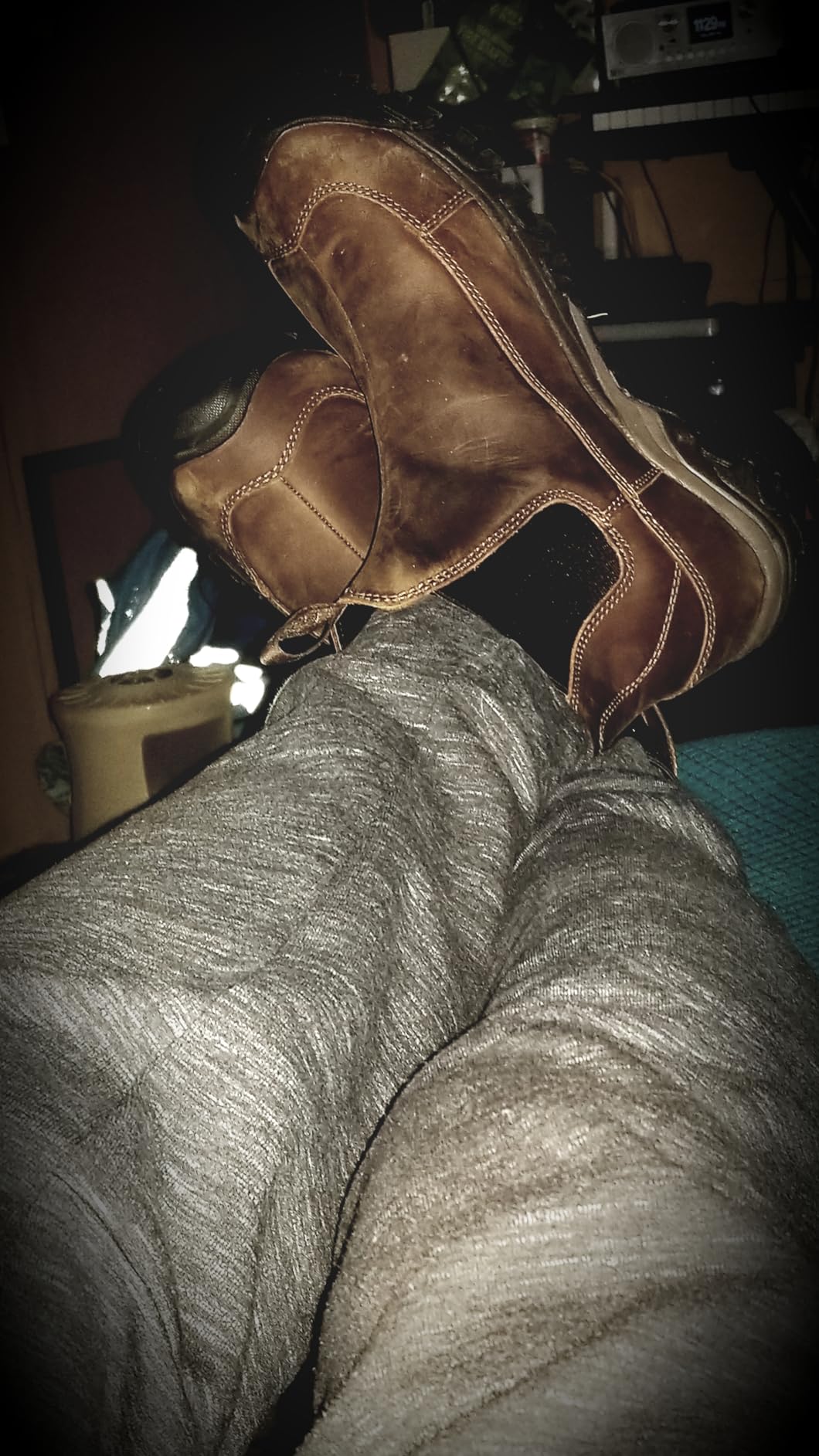
The KEEN Anchorage 3 is the most complete specification on this list, and the feature that decides it for a lot of men is room. Owners report enough internal volume for two pairs of wool socks, which is the widest-fitting insulated boot in this roundup alongside the MUCK Arctic Pro.
Construction uses the KEEN.DRY waterproof breathable membrane with an environmentally preferred DWR finish, KEEN.WARM 200G insulation rated to -25F, a heat reflecting board underfoot as a thermal barrier, a stability shank with a removable arch-support footbed, and the KEEN.FREEZE rubber outsole with 4mm lugs and a non-marking tread.
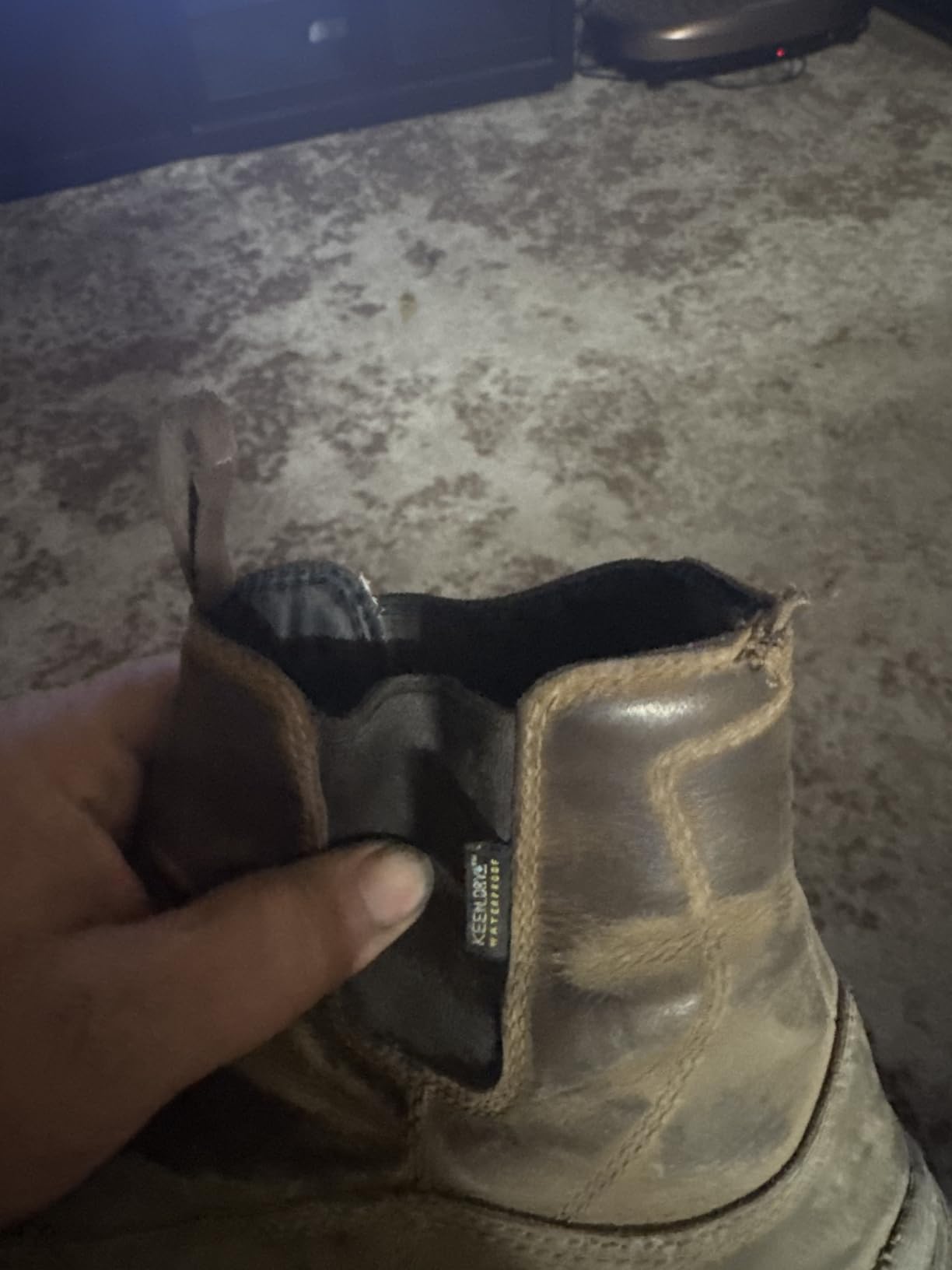
A breathable waterproof membrane is a meaningful difference in practice. It is the reason this boot can be worn all day indoors and out without the sweat build-up that turns into cold feet, and it is why owners report it working in deep slush rather than just dry snow.
Elastic panels give the pull-on entry, and the underfoot heat reflecting board is a detail you notice more than you expect once you have walked in it on a cold pavement. The premium leather is from certified tanneries and takes a wax well.
Where the KEEN Anchorage 3 Fits Best
It fits men with wide feet, thick socks, or both, without the need to size up into an ill-fitting boot. Wide width options exist alongside the standard fit, which no other insulated boot in this roundup can offer.
It also suits men who need warmth with breathability. The KEEN.DRY membrane manages moisture rather than sealing you in, which makes it a good all-day boot for an office worker who walks to work.
Where the KEEN Anchorage 3 Falls Short
Quality consistency is the real problem, and it is what holds the owner rating back. Recent production has seen reports of treads separating from the sole and the rubber toe piece opening where it meets the leather, both of which are the expected failure point of a glued upper.
Styling is plain, and the boot runs larger than expected. Owners who treat the leather regularly report long service life, so condition it early, inspect the toe bond each season, and it will outlast a cheaper boot.
How to Choose Winter Boots for Men in 2026
Choosing a winter boot comes down to four questions, in this order: how cold is it, what will you be doing, how long will you be standing still, and what shape is your foot. Answer those and the shortlist writes itself. Get them in the wrong order, which is what most online buying guides do, and you end up owning a superb boot for the wrong winter.
Match the insulation to the climate, not to the label
Roughly 200g of synthetic insulation is the right starting point for most cold winters in temperate and northern regions, and 400g or more belongs to deep-freeze conditions where you will be outside for long stretches. Between 145g and 200g covers mild maritime winters where the real enemy is rain rather than cold.
Manufacturer temperature ratings are not standardised, and the same model can be quoted at different figures by different retailers. Ignore the number as a promise and use it as a rough tier indicator, then adjust for how long you will be standing still, because a boot that is warm while walking can be cold while you wait for a bus.
Decide between a pac boot, a hiking shell and a rubber boot
Three constructions cover almost every case. A two-piece pac boot with a removable liner, such as the Sorel Caribou, wins on adjustability and overnight drying. A one-piece waterproof hiking shell, such as the KEEN Anchorage 3, wins on breathability and low weight. An insulated rubber boot, such as the MUCK Arctic Pro, wins on absolute waterproofing and durability.
If you only buy one, match the construction to the failure you fear. Fear wet feet, choose rubber. Fear overheating, choose a breathable shell. Fear standing still in the cold, choose a removable liner you can add and remove.
Check the waterproofing honestly
A rubber shell and a sealed membrane both block water completely, and both beat any fabric upper. Water-resistant fabric is a different category, and it is where most wet-sock complaints come from, especially during sustained rain rather than snow.
To tell from the outside, rubber and moulded shells have a continuous waterproof surface with welded or sealed joins, while fabric boots show stitched seams and a membrane label. A boot with both, such as the ALEADER, keeps the rubber where slush reaches and accepts some dampness above the line.
Use shaft height to control snow depth
Shaft height is measured from the footbed to the top of the boot, and it decides how much snow you can walk through before it starts entering. Below roughly 8 inches, add a gaiter for anything deeper than a fresh fall, and make sure your trousers tuck rather than drape over the collar.
Taller is not automatically better. Every extra inch of shaft adds bulk you carry all day, and a tight collar is the most common reason owners dislike otherwise capable boots. The Kamik Greenbay 4 and the ALEADER both draw this complaint.
Traction is the specification that prevents injuries
On packed snow, almost any rubber outsole works. On black ice, the outsole compound and the lug pattern decide whether you are walking or sliding, and smooth polyurethane compounds are the weakest choice of the ten boots here. Semi-spherical multi-terrain lugs, as on the MUCK Arctic Pro, are among the strongest.
If you walk on frozen pavements most days, treat traction as non-negotiable and ignore how good the boot looks. If you want more grip than any boot can give, ice cleats or studs that strap over a winter boot are the standard answer.
Fit is where winter boots are returned
Buy for the boot you will actually wear, which means a thick wool sock, not the socks on your feet while shopping. Most brands run a half size large to accommodate socks, and reviews of the boots in this roundup repeatedly recommend sizing down or swapping the insole rather than sizing up.
Wide feet and narrow toe boxes are the classic combination nobody accounts for. The MUCK Arctic Pro and the KEEN Anchorage 3 both offer genuine room, while the Sorel Caribou runs very wide but only in a single last. Check the top opening over the trousers you plan to wear.
Plan for sweat, not just cold
Over-insulation is the most common real-world failure. A boot rated for deep cold will trap sweat on a 40F day, that sweat cools overnight, and you wake up colder than if you had worn less. If you are active or live somewhere mild, step down to 200g or wear a breathable shell.
Two habits fix most of it. Wear moisture-wicking socks rather than cotton, and remove the liner indoors when the boot allows it. Both cost nothing and do more than any brand-specific feature.
Decide how often you will drive in them
Boots with thick rubber shells and rigid midsoles are genuinely worse for driving than a normal winter shoe, and no product in this roundup is designed around pedal feel. If you drive daily, favour a lighter fabric boot with a flexible sole, and remove the liner for the journey.
This is the most neglected consideration in winter boot guides and one of the easiest ways to avoid regret. A boot you cannot feel the pedals through is a safety issue, not a preference.
Light-duty work is not the same as full-time outdoor work
A light-duty job site, where you are outside part of the day and then in a van, needs waterproofing and comfort far more than it needs extreme-cold ratings. A full-time outdoor worker in northern January needs a rubber shell and aggressive traction instead.
Reddit’s r/Boots threads on men’s winter boots show this segmentation confusion clearly, with light-duty requests sitting alongside general winter recommendations. Matching the boot to the fraction of the day you spend outside is more useful than matching it to a job title.
Budget buys can work if you fix two things on day one
Cheaper boots in this roundup share two fixable problems: they run oversized, and they arrive with a thin or missing insole. Spend five minutes and some money on a proper insole and the right size, and a budget boot becomes a genuinely capable winter boot.
What you cannot fix is a smooth outsole on ice or a fabric upper in sustained rain. Check those two specifications before you commit, and if you need strong ice grip, spend your budget there rather than on branding.
Look after the boot so it outlasts the winter
Clean salt and grime off after each heavy snowfall, since both eat rubber and stitching, and reapply a water-repellent treatment to fabric and leather uppers once a season. Removable liners should be dried at room temperature overnight rather than on a radiator, which cracks felt and glue.
Expect rubber shells to last several hard seasons with care, as owners of the MUCK Arctic Pro report, and expect neoprene booties to degrade faster than the shell around them. Inspect seams and tread each autumn before you decide whether to repair or replace.
Frequently Asked Questions
What is the best brand of winter boots for men?
There is no single best brand, but three dominate on different criteria. The North Face leads on deep-snow warmth, Sorel leads on removable-liner pac boot design, and KEEN leads on roomy fits with a breathable waterproof membrane. From the ten boots we compared, the NORTIV 8 pairing of 200g insulation, a waterproof shell and an ice-capable rubber outsole is the strongest all-rounder, while the MUCK Arctic Pro is the toughest and the Sorel Caribou is the warmest with its liner.
What is the warmest brand of winter boots?
Baffin is the brand most associated with extreme cold ratings, and within the boots we compared the Kamik Greenbay 4 carries the coldest manufacturer claim at -40F. Real warmth, however, comes from insulation plus waterproofing plus the boot’s fit, and activity level governs it more than any printed rating. Remember that temperature ratings are not standardised, so compare the construction rather than the number.
What kind of boots are best for winter?
Three constructions cover almost every case. A two-piece pac boot with a removable liner, such as the Sorel Caribou, is the most adjustable and dries overnight. A one-piece waterproof hiking shell, such as the KEEN Anchorage 3, is lightest and most breathable. An insulated rubber boot, such as the MUCK Arctic Pro, is completely waterproof and the most durable. Choose based on whether you fear wet feet, overheating, or standing still in the cold.
What are the top-rated winter walking boots for men?
For everyday walking rather than hiking, the best-rated options in this roundup are the MUCK Arctic Pro, the Sorel Caribou and the NORTIV 8 Waterproof Hiking boot. The lightest comfortable choice is the Sperry Avenue Duck at 1.12 pounds, though it has no real insulation. Walking boots prioritise memory foam comfort, low weight and a flexible sole over aggressive lugs.
How warm should winter boots be for 20 degree weather?
At around 20F, roughly 200g of synthetic insulation is the right target for most men, and that covers four of the boots we compared. If you will be standing still outdoors for hours, move up to a heavier boot or add a removable felt liner. If you will be walking continuously, stay at 200g, because more insulation than you need causes sweat and colder feet later.
Do I need insulated boots if I wear thick socks?
Thick socks contribute meaningfully to warmth, so you can drop slightly in insulation if you wear merino or wool socks every day, but they rarely replace a boot built for the temperature. The practical rule is to buy for the socks you will actually wear, which usually means sizing down rather than up. Men with wide feet should look at roomy lasts such as the MUCK Arctic Pro or the KEEN Anchorage 3 instead of sizing up in a narrow boot.
Why do my winter boots get wet inside?
The cause is usually one of three things. Snow is coming over the top of a shaft that is too short, which is a height problem solved by a taller boot or a gaiter. A removable liner was never dried and has gone cold and damp, which is solved by pulling the liner out overnight. Or the upper is water-resistant fabric rather than a sealed membrane or rubber shell, which only a different construction can fix.
How do I stop my feet sweating in winter boots?
Wear moisture-wicking socks rather than cotton, and step down to 200g insulation if you are active or live in a mild climate. Boots with a breathable waterproof membrane, such as the KEEN Anchorage 3, manage moisture better than a fully sealed rubber shell. If your boot has a removable liner, take it out indoors, and open the collar for ten minutes after you get inside.
The Verdict for the Best Winter Boots for Men in 2026
After sorting ten boots by need-state, one pair comes out on top for most men: the NORTIV 8 Waterproof Hiking Winter Snow Boot, our Editor’s Choice. It has the highest review volume in the roundup, 200g insulation rated to -25F, a genuinely waterproof shell, a slip and abrasion resistant rubber outsole, and a removable insole that lets you tune the fit once it arrives.
Buy something else if your need-state is different. For wet mud, ice and a wide foot with thick socks, the MUCK Arctic Pro is untouchable on waterproofing. For deep snow and a liner you can dry overnight, the Sorel Caribou remains the benchmark. For men who overheat easily, the KEEN Anchorage 3 gives you a breathable membrane and genuine wide sizing. For a mild winter and long walks, the Sperry Avenue Duck is the only boot here you will forget you are wearing.
Whatever you choose, buy for the socks you will actually wear, check the outsole before you fall for the upper, and keep the liner out indoors. Those three habits do more for a winter than any feature on the spec sheet.