
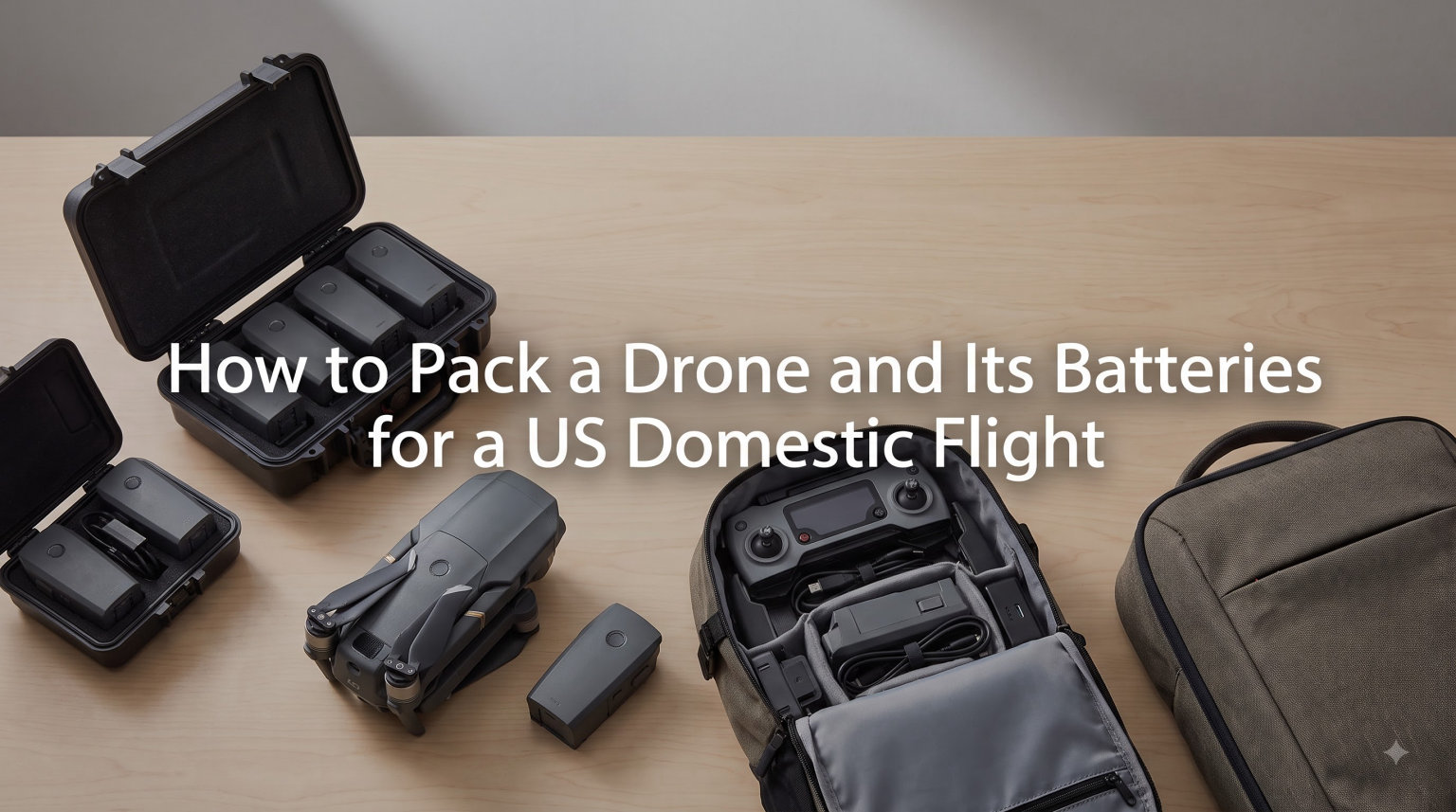
Packing a drone for a US domestic flight sounds simple until you reach the TSA checkpoint with a bag full of lithium batteries. I learned this the hard way on a trip from Denver to Seattle when an agent flagged my DJI Mavic battery because I had packed it next to a power bank. That flight pushed me to research every rule the TSA, FAA, and major airlines publish about drones and lithium batteries.
This guide pulls together everything I wish I had known before that flight. You’ll learn the exact watt-hour limits, where to pack batteries, how to talk to a TSA agent, and which airline policies matter most. By the end, you’ll have a printable checklist you can grab on your way out the door.
Table of Contents
TSA Rules for Bringing a Drone on a US Domestic Flight
Yes, you can bring a drone on a US domestic flight, and TSA does allow drones through the security checkpoint in both carry-on and checked bags. The drone itself is treated like any other piece of electronics, similar to a laptop or camera. TSA officials focus their attention on the lithium batteries that power your drone, not the airframe.
The TSA confirms on its official page that drones are permitted through security screening. However, the agency directs travelers to check with their airline for any extra restrictions. Airlines have the authority to be stricter than the TSA baseline, so even if TSA approves your drone setup, your airline might say no to a particular battery size.
What this means in practice: TSA handles the security checkpoint, and the FAA governs the aviation rules for batteries in aviation. Both agencies point to lithium-ion battery safety as the reason for the rules. Lithium batteries can overheat and catch fire, which is why the limits and packing rules are strict.
Battery Watt-Hour Limits and How to Calculate Them
Drone batteries must follow FAA watt-hour (Wh) limits, and almost every consumer drone battery falls into the safest category. The FAA divides lithium batteries into two carry-on tiers: batteries under 100 Wh and batteries between 100 Wh and 160 Wh. Anything above 160 Wh is forbidden on passenger aircraft without special airline approval, which rarely happens.
For perspective, the DJI Mavic 3 Intelligent Flight Battery is rated at 77 Wh, the DJI Air 3 battery is 82 Wh, and the DJI Mini 4 Pro battery is only 18 Wh. All three are well under the 100 Wh cap and travel freely in carry-on luggage. Most recreational drones ship with batteries in the 20-100 Wh range.
If your battery only shows milliamp hours (mAh) and voltage (V), you can calculate watt-hours with this formula: Wh = (mAh x V) / 1000. For example, a 5000 mAh battery rated at 11.1 V equals 55.5 Wh. If the math puts you between 100 and 160 Wh, you’ll need airline approval before flying.
Quick reference ranges:
- Under 100 Wh: No airline approval needed. Most consumer drones fall here.
- 100-160 Wh: Airline approval required. Limit of two batteries.
- Over 160 Wh: Forbidden on passenger flights.
Carry-On vs Checked Baggage: Where Do Drone Batteries Go?
Lithium drone batteries must go in your carry-on bag, never in checked luggage, according to TSA and FAA rules. The reason is safety: cargo holds are not monitored in real time, and a thermal runaway event in a battery-packed suitcase could go unnoticed until it is too late. Carry-on bags let the cabin crew respond quickly to any smoke or fire.
You can pack the drone itself in either your carry-on or your checked bag. Many pilots prefer carry-on because it keeps the gimbal and camera safer from rough baggage handling. If you do check the drone, remove every battery first and carry those batteries with you on the plane.
Reddit users in r/dji and r/drones have shared that TSA agents occasionally ask them to remove drone batteries from the bag during screening. The trick is to pack batteries at the top of your carry-on so they slide out easily without disturbing your camera gear or laptop.
Step-by-Step: How to Pack a Drone and Its Batteries for a Flight
Here is the exact packing process I use before every flight with my drone. Following these steps has gotten me through TSA screening without any issues, and a printable checklist is included at the end of this guide.
Step 1: Charge Batteries to 30-50%
Most modern smart batteries auto-discharge to about 50% after a few days of inactivity, which is the ideal state for air travel. Lithium batteries ship and travel safest at a partial charge. A fully charged battery is more prone to thermal runaway, and a fully dead battery can drop into a deep discharge state that damages the cells.
Step 2: Remove Every Battery From the Drone
Pull every battery out of the drone body, including any battery inside the remote controller. Install battery terminal covers or place each battery in its own slot inside a fireproof LiPo bag. Exposed terminals can short-circuit against keys, coins, or other metal objects in your bag.
Step 3: Pack Each Battery in a Fireproof Bag
A fireproof battery bag is the single most important accessory for drone travel. These bags use heat-resistant fabric that contains a battery fire if one cell vents. Keep each battery in its own small bag, then place all the bags together in a single pouch inside your carry-on. This is also a smart move for power banks and laptop spare batteries.
Step 4: Cushion the Drone Body
Wrap the drone body in a soft microfiber cloth or place it inside a padded case. The goal is to keep the gimbal from swinging during turbulence or rough baggage transfer. Many pilots use the original manufacturer case, which fits the drone, controller, cables, and a few spare propellers.
Step 5: Keep Batteries Accessible at the Top of the Bag
TSA may ask to see the batteries during screening. Place them in a top pocket or in a small pouch that opens quickly. A tangled mess of batteries at the bottom of your bag can hold up the line and frustrate both you and the agent.
Step 6: Print Your Battery Specs and Airline Policy
Carry a screenshot of each battery’s watt-hour rating on your phone. If a TSA agent questions your battery, you can show the spec sheet right away. Having the airline’s drone policy pulled up on your phone is also helpful if gate agents ask questions at boarding.
Airline-Specific Policies for Drone Batteries
Every major US carrier permits drone batteries under 100 Wh in carry-on bags, but policies on checked drones and 100-160 Wh batteries vary. Here is a quick comparison of the four biggest domestic airlines as of 2026. Always re-check with your airline before you fly, since policies can change.
| Airline | Carry-On Batteries | Checked Drone Body | Notes |
|---|---|---|---|
| Delta | Allowed under 100 Wh | Allowed, batteries must be removed | Spare batteries must travel in carry-on |
| Southwest | Allowed under 100 Wh | Allowed | Spare batteries in carry-on only |
| United | Allowed under 100 Wh | Allowed with airline approval | Some regional jets have stricter rules |
| American | Allowed under 100 Wh | Allowed, batteries removed | 2 spare batteries max between 100-160 Wh |
United and American are usually the strictest about pre-approval for the 100-160 Wh tier. If you fly with industrial or cinema drones, call your airline at least 72 hours before departure to confirm the paperwork.
Battery Safety Tips and TSA Checkpoint Experience
Fireproof battery bags are non-negotiable in our team’s travel kit. We tested several models during a six-month production tour across the western US. The bags from reputable brands contain a single cell venting event without flames escaping, which can buy you the time you need to land the plane or move to a safe area. Skip the cheap unbranded bags. Material quality matters.
At the TSA checkpoint, expect questions. Some agents know drone batteries well and wave you through. Others have never seen a DJI battery and will ask what it is. The easiest answer is short and specific: “These are lithium-ion drone batteries, 77 watt-hours each, under the 100 Wh limit.” Show them the watt-hour label on the battery, and most agents will let you go immediately.
Common mistakes pilots make at security include leaving batteries in the drone body, packing batteries in checked luggage, and forgetting to discharge them below 100% before packing. None of these mistakes will get you arrested, but they can lead to confiscation or a missed flight.
FAA Registration and Remote ID Requirements
If your drone weighs more than 0.55 pounds (250 grams), the FAA requires you to register it before you fly, and the registration must be marked on the airframe. Registration costs $5 and is valid for three years. The Remote ID rule also requires most drones to broadcast identification and location information, although this rule applies to flying, not to packing.
For travel purposes, you do not need to bring your registration certificate with you. The TSA does not ask to see it. But it is a good idea to keep a digital copy on your phone in case a law enforcement officer asks about the drone during a flight or at your destination.
Packing Checklist for Your Drone and Batteries
This checklist is the one I print and stick to my fridge before any trip. Tape it to your drone case or save it on your phone.
- Drone body with gimbal cover on
- All batteries removed and at 30-50% charge
- Battery terminal covers installed
- Each battery inside its own fireproof LiPo bag
- Spare propellers in a small zip bag
- Remote controller with sticks removed or guarded
- Charging hub and cables in a separate pouch
- ND filters and accessories in a soft pouch
- Microfiber cloth for camera and lens
- Screenshot of each battery’s watt-hour rating on phone
- Airline drone policy pulled up on phone
- FAA registration card or digital copy
Frequently Asked Questions
Can I bring my drone and batteries in my carry-on bag?
Yes. TSA allows drones and lithium drone batteries in carry-on luggage. Spare batteries must travel with you in the cabin, never in checked bags.
How many drone batteries can I take on a plane?
Batteries under 100 Wh have no FAA quantity limit, although airlines may cap the number. Batteries between 100 and 160 Wh are limited to two with airline approval.
What happens if I pack drone batteries in checked luggage?
TSA prohibits spare lithium batteries in checked bags. They will be confiscated at the checkpoint, and you may face fines or be denied boarding.
Do I need airline approval for drone batteries?
Approval is only required for batteries between 100 and 160 Wh. Batteries under 100 Wh, which includes most consumer drones, need no pre-approval.
How do I protect drone batteries when flying?
Discharge each battery to 30-50%, install terminal covers, place each battery in a fireproof LiPo bag, and keep them accessible at the top of your carry-on.
Final Thoughts on Flying With a Drone
Packing a drone for a US domestic flight comes down to three habits: keep batteries in your carry-on, stay below 100 Wh, and use fireproof bags. Once you build the routine, the TSA checkpoint stops feeling stressful. You will walk through with confidence, and your gear will arrive safely at your destination.
Save the packing checklist above to your phone before your next trip. It covers everything our team uses on commercial shoots, and it will keep you out of trouble with TSA agents and airline gate staff. Fly safe, and enjoy the trip.