
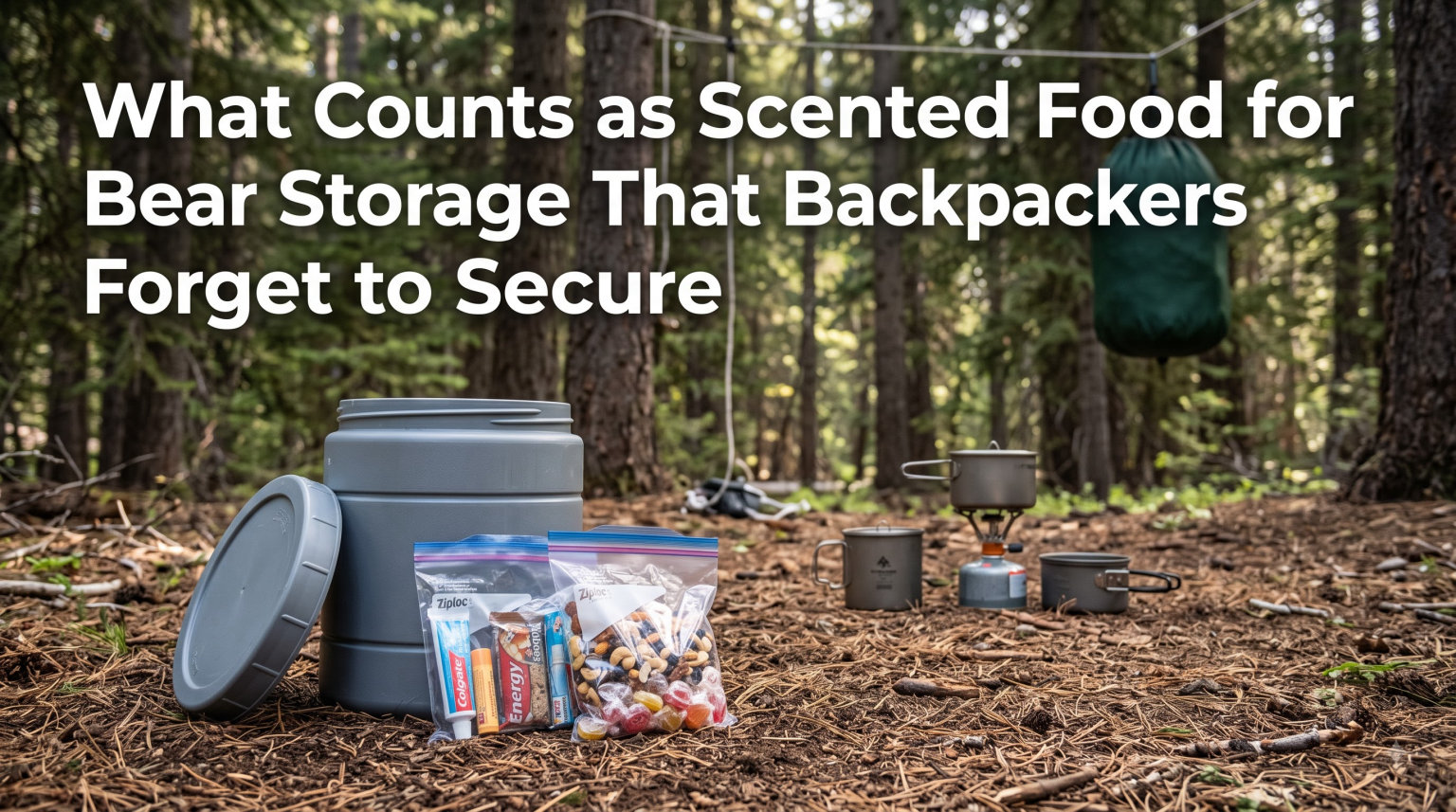
Scented food for bear storage is any item that carries an odor a bear can detect, including obvious food plus toiletries, cooking gear, trash, and even sunscreen. I learned this the hard way on a Section Hike in the Sierra when a ranger flagged the lip balm and toothpaste in my tent pocket as a violation.
Bears have an olfactory system roughly seven times more sensitive than a bloodhound’s, and the U.S. National Park Service (NPS) treats anything with a scent as “food” worth investigating. That definition is broader than most backpackers expect, and it is exactly why improper storage leads to habituated bears and serious consequences for both animals and people.
Our team has researched current NPS, BearWise, and U.S. Forest Service guidance for 2026 to build a complete checklist of scented items backpackers forget to secure. Below is what counts, where to store it, and how to set up camp so a bear never has a reason to come back.
Table of Contents
What Bears Consider ‘Scented’ or ‘Food’
Anything with a scent counts as food to a bear. According to the NPS, bears view food broadly to include human food, beverages, trash, toiletries, cooking utensils, and even gear that has absorbed cooking odors during a trip.
Black bears and grizzly bears both rely on scent more than sight, and they can detect food odors from more than a mile away under the right wind and terrain conditions. The BearWise organization frames it this way: if a human nose can smell it, a bear almost certainly can too, and often from much farther.
This is why a sealed tuna packet feels safe to a backpacker but is a beacon to a bear. The rule I follow in the field is simple: anything that smells, anything that touched food, anything that runs in a tube or jar, gets treated as scented food for bear storage.
The Two Categories That Matter
Bears respond to two scent categories. The first is food scent, including actual meals, snacks, drinks, and wrappers. The second is non-food scent, including toothpaste, sunscreen, deodorant, lip balm, insect repellent, and even unwashed clothing worn while cooking.
Both categories trigger the same investigative behavior. A bear that follows a toothpaste trail learns that campers carry calories, and that bear becomes a problem bear.
The Complete List of Scented Items Backpackers Forget
Here is the comprehensive list of scented items backpackers consistently forget to secure. I have grouped them by where they tend to hide on a typical trip.
Food and Drink Items
Energy bars, gels, and chews left in jacket pockets
Trail mix, nuts, and candy stashed in dry sacks
Instant coffee packets and tea bags
Drink mixes, electrolyte powders, and flavor drops
Alcohol flasks, canned beverages, and wine boxes
Cheese, jerky, and salami in outer mesh pockets
Leftover cooking oil in your pot
Spice containers (garlic powder, curry, hot sauce)
Pet food and treats
Toiletries and Personal Care
Toothpaste and toothbrushes
Deodorant and antiperspirant
Lip balm and sunscreen
Insect repellent and bug spray
Skin lotions, body butter, and perfume
Razors with shaving cream residue
Soap bars and body wash
Feminine hygiene products in scented wrappers
Wet wipes, even “unscented” varieties often carry mild fragrance
Cooking and Camp Gear
Pots, pans, and utensils that cooked fatty food
Dish rags and sponges with grease
Empty food bags and wrappers
Trash bags, even when sealed
Water filters and hydration bladders used with flavored mixes
Camp chairs and clothing worn while cooking
Biodegradable soap (still scented to bears)
Items Most Often Forgotten
The items backpackers forget most often, based on forum reports and ranger citations I have seen over the years, are lip balm, sunscreen, deodorant, hand sanitizer, and anything in a jacket or pants pocket from a roadside stop.
If you wore it while eating on the drive to the trailhead, treat it as scented. Pack a dedicated “cooking clothes” layer that goes straight into the bear canister or hang bag.
Food Storage Requirements in Bear Country
Food storage in bear country is regulated, not optional. National Parks like Yosemite, Yellowstone, and Sequoia require IGBC-certified bear-resistant canisters year-round on most backcountry trails. National Forests often follow state-specific rules, and wilderness areas may require canisters, bear hangs, or both depending on the managing agency.
Fines for improper storage range from roughly 100 to several thousand dollars depending on the jurisdiction. Some parks can revoke your backcountry permit on the spot. The deeper consequence, however, is what happens to the bear.
Bears that obtain human food even once can become conditioned. Wildlife managers may relocate such bears once, but a repeat offense often ends in euthanasia. The NPS is direct on this point: a fed bear is a dead bear.
Where Rules Vary
Regulations vary by location. National Parks and many National Wildlife Refuges mandate hard-sided canisters. National Forests often accept certified hang bags or Ursack Major models. Bureau of Land Management (BLM) lands tend to follow the state wildlife agency rules, which may allow more flexibility.
Always check the specific land manager’s website before your trip. The Interagency Grizzly Bear Committee maintains a current list of approved canisters and a database of regional regulations.
Backcountry Storage Methods: Canister vs Hang vs Ursack
There are three main backcountry food storage methods: bear canisters, bear hangs, and Ursack-style soft containers. None are smell-proof, and all rely on physical barriers plus distance from your sleeping area.
Bear Canisters
Bear canisters are hard-sided, IGBC-certified containers that resist crushing, prying, and biting. They weigh between 2 and 3 pounds empty and typically hold 3 to 7 days of food for one person. The BearVault BV500 and BV450, Bearikade Weekender, and the Garcia Machine Backpackers Cache are common models I have tested on multi-day routes.
Limitations: bear canisters are not smell-proof. A determined bear can still smell the contents, which is exactly why canisters must be stored 100 feet or more from your tent, downwind, and ideally in the open where a bear cannot ambush you when you retrieve food.
Bear Hangs
Bear hangs suspend food 12 to 15 feet off the ground and 4 to 6 feet from the trunk of a sturdy tree. The PCT method and the Marrison hang are two proven techniques. Hangs are lighter than canisters but require suitable trees and practice to set up correctly.
Where trees are sparse, high elevation, or above treeline, hangs simply will not work, and a canister is required.
Ursack and Soft Containers
Ursack Major and similar certified soft containers use bulletproof fabric to resist claws and teeth. They weigh less than hard canisters and pack smaller. Ultralight backpackers like them for the weight savings.
Limitations: Ursacks are not smell-proof and must be tied to a tree or rock to prevent a bear from carrying them away. In heavy grizzly country, some agencies do not accept Ursacks at all. Always verify local approval.
Are Bear Vaults Smell-Proof?
No bear vault is smell-proof. Hard canisters, soft containers, and bear boxes all leak odor to varying degrees. The goal of bear-resistant storage is to make food inaccessible long enough for a bear to lose interest and move on, not to hide the smell entirely.
Some backpackers double-bag strong-smelling items like tuna or jerky in odor-proof bags such as Loksak OPSAK. This reduces scent plume and is a smart practice, but it does not replace proper canister or hang use.
Camp Setup: Cooking, Eating, and Sleeping Zones
Set up three separate zones in camp: a sleeping zone, a cooking and eating zone, and a food storage zone. BearWise recommends at least 70 big steps between the cooking zone and the sleeping zone, which works out to roughly 100 to 200 feet depending on terrain.
I use this rule on every trip. The cooking zone is where I filter water, prepare meals, and wash dishes. The sleeping zone is my tent and any scent-free gear. The storage zone is where the canister or hang lives, ideally downwind.
Nighttime Protocol
At dusk, secure all scented items before you get comfortable. Toothpaste, sunscreen, lip balm, and the day’s snacks go into the canister. Cooking pots get wiped with unscented cloth and stored. Worn cooking clothes go into a separate dry bag or straight into the canister.
Set the alarm on your phone if you tend to forget. The single most common backpacker mistake is the “I’ll deal with it in the morning” approach, which usually means leaving toothpaste or a snack wrapper in the tent vestibule overnight.
Backpacking With Dogs
Dog food is scented food for bear storage. Kibble, treats, and raw food all attract bears just as human food does. Store dog food in your bear canister, not in your dog’s pack or near your tent.
Bears that learn to associate camps with dog food are bears that will investigate every hound they encounter. Plan for one extra canister volume if you travel with a dog on long trips.
What Happens When Bears Become Habituated
Habituated bears lose their natural fear of humans and start treating camps as food sources. Once a bear gets human food, even once, the damage to that bear is usually permanent.
Wildlife managers try relocation first, but relocated bears often travel hundreds of miles to return. Repeat offenders are killed for public safety. The NPS, U.S. Forest Service, and state wildlife agencies are explicit: every incident of improper food storage can shorten a bear’s life.
This is why backpackers carry the responsibility. Your canister or hang is not just protecting your food. It is protecting the bears that live in the country you came to walk through.
FAQs
How do you keep food safe from bears while backpacking?
Use an IGBC-certified bear canister, bear hang, or approved Ursack stored 100 feet or more from your tent, downwind. Cook, eat, and store food in a separate zone from where you sleep, and secure all scented items including toiletries at dusk.
Can bears smell backpacking meals?
Yes. Bears can detect food odors from over a mile away and have a sense of smell roughly seven times more sensitive than a bloodhound’s. Even sealed backpacking meals such as tuna, jerky, or ramen will attract bears if not stored in proper bear-resistant containers.
Are bear vaults smell-proof?
No. Bear vaults and canisters are bear-resistant, not smell-proof. They slow bears down and prevent access, but odor still escapes. Combining a canister with odor-proof bags such as OPSAK reduces scent plume but does not eliminate it.
Can bears still smell food in a bear box?
Yes. Bear boxes at trailheads and campgrounds reduce scent slightly because they are larger metal containers, but they are not airtight. Treat every bear box as a scent-leaking container and keep it at least 100 feet from your sleeping area.
Conclusion
Scented food for bear storage is broader than food alone. It includes anything with an odor that a bear can detect, from toothpaste and sunscreen to dog kibble and grease-stained pot cozies. The safest rule our team uses is this: if a human can smell it, secure it.
Before every trip, walk your pack with this checklist: all human food in the canister, all pet food in the canister, all toiletries and lip balm in the canister, all cooking pots and utensils wiped and stored, all trash bagged and sealed. Confirm your storage method meets the land manager’s rules, set up three camp zones 70 big steps apart, and secure everything at dusk.
Proper storage protects your food, your safety, and the bears that share the trail with you. A fed bear is a dead bear, and one forgotten lip balm can be the meal that starts the cycle.