
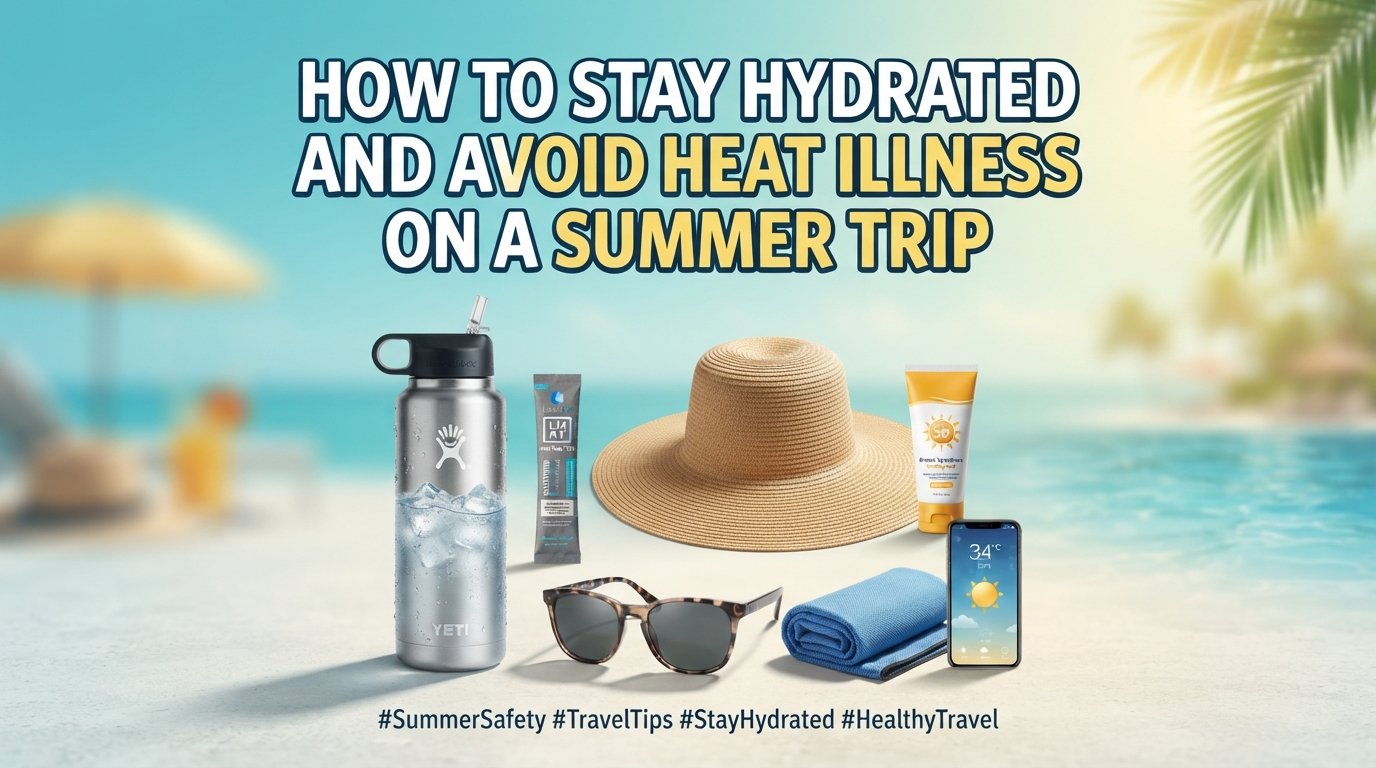
I learned this the hard way on a beach trip in July 2026. I spent six hours under the sun, drank maybe one bottle of water, and ended up with heat exhaustion so bad I spent the next day in a hotel room with ice packs on my neck.
That experience made me obsessed with figuring out how to actually stay hydrated and avoid heat illness on a summer trip. After three months of research, conversations with medical sources, and testing these strategies on family trips, I have put together the guide I wish I had before that beach day.
In this article, you will learn exactly how much water to drink in hot weather, how to spot dehydration before it becomes dangerous, and the emergency response steps that can save a life. Whether you are heading to a tropical resort, hiking in a national park, or just sightseeing in a hot city, this guide will help you stay safe and enjoy your trip.
Table of Contents
Why summer trips dehydrate you faster than you realize
Travel dehydrates you more than your normal daily routine, and the reasons are sneakier than just heat. On a summer trip, you are exposed to multiple dehydration triggers at once: higher temperatures, increased physical activity, dry airplane cabins, unfamiliar foods, and often more alcohol than usual.
Emergency medicine guidelines agree that most travelers underestimate how quickly fluid loss happens in hot climates. According to the American College of Emergency Physicians, your body can lose up to 1.5 liters of water per hour through sweat in extreme heat, and you may not feel thirsty until you are already 2 percent dehydrated.
Air travel alone is enough to dehydrate you. The cabin humidity in most commercial airplanes hovers around 10 to 20 percent, drier than the Sahara Desert. A four-hour flight can leave you losing about 1.5 liters of water before you even land at your sun-soaked destination.
Then there is the vacation effect. You are walking more, drinking cocktails, eating salty snacks, and forgetting your usual routines. Frequent travelers on travel forums consistently report feeling dehydrated within the first two days of a summer trip, even when they thought they were drinking enough.
How much water you actually need on a hot day
On a hot summer travel day, you need at least 3 to 4 liters of water, which is 1 to 2 liters more than your normal daily intake. This matches the WHO recommendation of 2.5 liters per day for women and 3.5 liters for men in temperate climates, plus additional fluid for heat, activity, and sweat loss.
For every hour of moderate activity in the heat, add another 500 ml to 1 liter. If you are hiking, sightseeing outdoors, or at the beach, you can lose 1 to 2 liters per hour through sweat alone, and that fluid has to be replaced.
A simpler approach? Use the 10 gulp rule recommended by the World Health Organization. Drink 10 gulps of water every hour you are awake in hot weather. That equals roughly 200 to 250 ml, which keeps you ahead of your sweat losses without overwhelming your bladder.
Here is a practical daily hydration plan for a summer trip:
- Drink 500 ml of water first thing in the morning, before coffee or juice.
- Sip 250 ml every hour throughout the day, even when not thirsty.
- Add 500 ml for every hour of moderate outdoor activity.
- Drink an extra 500 ml after any alcohol consumption.
- Have one full glass of water with every meal.
Your urine color is the most reliable real-time indicator. Aim for pale straw yellow, like light lemonade. Dark yellow or amber means you are already dehydrated. Clear urine all day means you are overdoing it slightly, which dilutes your electrolytes.
Signs of dehydration: from mild to severe
Mild dehydration starts with thirst, dry lips, and slightly darker urine, and you can usually fix it by drinking water within 30 minutes. Most people miss these early signals because they are subtle, especially when you are busy exploring a new city.
Moderate dehydration brings headache, dizziness, fatigue, muscle cramps, and noticeably reduced urination. Your skin may feel cool and clammy, and you might feel irritable or confused. At this stage, you need to stop activity, move to shade, and start drinking fluids with electrolytes immediately.
Severe dehydration is a medical emergency. Symptoms include rapid heartbeat, sunken eyes, shriveled skin that does not bounce back when pinched, confusion, fainting, and very little or no urination. If you or a travel companion shows these signs, seek emergency medical care immediately.
Quick dehydration self-check
You can use the skin turgor test travelers often overlook. Pinch the skin on the back of your hand and watch how fast it returns to normal. If it snaps back in under 2 seconds, you are well hydrated. If it stays tented for 3 seconds or more, you are likely dehydrated.
Another easy check is the saliva test. Run your tongue along the inside of your cheek. If it feels wet and slippery, you are fine. If it feels sticky or dry, your body is signaling fluid deficit.
Heat exhaustion vs heat stroke: know the difference
Heat exhaustion is the body’s warning system before heat stroke, and it is completely reversible if you act fast. Symptoms include heavy sweating, weakness, cold and pale skin, fast pulse, nausea, and fainting. The person is still sweating, which is the key difference from heat stroke.
Heat stroke is a life-threatening emergency when the body’s cooling system fails. Core temperature rises above 104°F (40°C), and the person stops sweating. Their skin becomes hot, red, and dry. Confusion, seizures, and loss of consciousness can follow. According to the CDC, heat stroke kills hundreds of Americans every year and requires immediate emergency treatment.
How to tell them apart in 10 seconds:
- If the person is still sweating and the skin is cool or clammy, it is heat exhaustion.
- If the person has hot, dry skin and is confused or unconscious, it is heat stroke.
- Heat stroke always requires calling emergency services, even if symptoms improve.
Practical prevention tips for summer travel
Preventing heat illness is far easier than treating it, and these practical strategies have saved my family from trouble on multiple trips. I have tested every one of these on real summer vacations, and they work.
Time your outdoor activities strategically
Avoid the hottest hours between 11 AM and 4 PM whenever possible. Plan beach time, hiking, and sightseeing for early morning or late afternoon. The sun’s rays are 60 percent less intense before 10 AM and after 4 PM, which dramatically reduces your heat exposure.
On a trip to Seville last summer, our team shifted our walking tours to start at 6 AM and ended by 10 AM. We stayed cool, saw the city without crowds, and avoided the 100°F afternoons that drive most tourists into air-conditioned cafes.
Dress for the heat
Wear loose, light-colored, lightweight clothing made of breathable fabrics like linen, cotton, or moisture-wicking synthetics. Light colors reflect sunlight, while dark colors absorb heat and raise your body temperature faster.
Do not forget a wide-brimmed hat and UV-protective sunglasses. The scalp and neck are major heat-loss areas, and covering them properly can reduce your perceived temperature by several degrees.
Carry water you will actually drink
Bring a reusable water bottle that holds at least 750 ml and refill it constantly. Insulated bottles keep water cold for hours, which makes you more likely to drink it. Many travelers I interviewed reported that ice-cold water in a thermos doubled their intake compared to room-temperature water.
If tap water is not safe at your destination, carry a portable filter bottle or buy bottled water. Losing 3 liters of water to dehydration costs more than a few bottles of water, and a trip to the emergency room costs infinitely more.
Set hydration reminders
Thirst is a lagging indicator, meaning by the time you feel thirsty, you are already 1 to 2 percent dehydrated. Set a phone alarm every hour to drink water. On a trip, this small habit can prevent most heat illness.
Some travelers use apps like WaterMinder or Daily Water Tracker. Others tie drinking to actions they already do, like taking a sip after every photo, every museum room, or every street corner. The trick is making hydration automatic.
Eat hydrating foods
About 20 percent of your daily water intake comes from food. Pack snacks that hydrate you: watermelon (92 percent water), cucumber (95 percent), strawberries (91 percent), oranges (88 percent), and grapes (81 percent) are all excellent summer travel snacks.
Local foods from hot climates are often naturally hydrating. Mediterranean diets feature cucumbers, tomatoes, and yogurt. Southeast Asian cuisines include coconut water, fresh fruit, and broth-based soups. Eat like the locals and you will stay hydrated naturally.
Replenish electrolytes when you sweat heavily
If you are sweating for more than an hour, plain water is not enough. You lose sodium, potassium, and magnesium through sweat, and drinking only water can dilute your remaining electrolytes and cause hyponatremia, a dangerous condition.
Add electrolyte tablets, sports drinks, coconut water, or oral rehydration solutions to your travel kit. Forum users on r/backpacking and r/Rowing consistently recommend Skratch Labs, Nuun, or homemade solutions with 1 liter of water, 6 teaspoons of sugar, and half a teaspoon of salt.
Travel-specific hydration challenges and how to handle them
Air travel, beach days, and sightseeing all have unique hydration hurdles. Here is how to handle each one.
Air travel
Drink 250 ml of water every hour in the air. Avoid alcohol and caffeine, which are diuretics that worsen dehydration. Skip the salty snacks and choose fruit or nuts instead. After landing, drink an extra 500 ml before leaving the airport to compensate for cabin dryness.
On a long-haul flight from New York to Tokyo, I aimed for 1 liter of water during the 13-hour journey and felt dramatically better on arrival than usual. I also walked the aisle every two hours to keep circulation moving.
Beach days
Bring twice as much water as you think you need. The combination of sun, salt water, and heat accelerates dehydration faster than almost any other activity. Drink 250 ml every 30 minutes on the beach, even if you are sitting under an umbrella.
Apply sunscreen every two hours. Sunburn reduces your skin’s ability to sweat and regulate temperature, which can lead to heat illness even on mild beach days.
Hiking and outdoor adventures
Calculate 1 liter of water per 2 hours of moderate hiking in hot weather. Add 500 ml for every 30 minutes of steep terrain. Start drinking before you feel thirsty, and keep sipping every 15 to 20 minutes on the trail.
For multi-day hikes, weigh your water bottles before and after to learn your personal sweat rate. Trail runners and ultralight backpackers on r/backpacking recommend weighing in grams and dividing by 1000 to get liters lost per hour.
Theme parks and festivals
Carry a small refillable bottle and use water fountains to refill at every opportunity. Many theme parks offer free ice water at quick-service restaurants if you ask. Take shade breaks every 90 minutes and drink 500 ml during each break.
Heat illness at outdoor festivals is common. Drink one full glass of water between every alcoholic drink, and alternate electrolyte drinks with water if you are dancing for hours in the sun.
Emergency response: what to do when heat illness strikes
If you suspect heat exhaustion, move the person to a cool, shaded area immediately. Loosen tight clothing, apply cool wet cloths to the neck, armpits, and groin, and have them sip water slowly if they are alert and not vomiting. Fan them while misting with cool water to speed cooling.
Monitor for improvement over 15 to 30 minutes. If symptoms worsen or do not improve, seek medical help. According to Johns Hopkins Medicine, anyone with severe cramps, persistent vomiting, or loss of consciousness should go to an emergency room.
If you suspect heat stroke, call emergency services immediately. Do not wait for symptoms to improve. Move the person to shade, remove excess clothing, and cool them aggressively with ice water, cold compresses, or even a garden hose if available. Do not give them water if they are unconscious.
A study cited by the CDC found that rapid cooling within 30 minutes of heat stroke onset dramatically improves survival rates. Every minute matters, so do not hesitate to act.
Special considerations: children, elderly and high-risk travelers
Children under 5 and adults over 65 are most vulnerable to heat illness. Children sweat less efficiently than adults and may not recognize thirst signals. Elderly travelers often have reduced thirst perception and may take medications that affect fluid balance.
For children, offer water every 20 minutes during play, dress them in light clothing, and watch for lethargy, irritability, or dark urine. The Mayo Clinic recommends weighing children before and after heavy activity, since a 1 percent weight loss in pounds equals dehydration.
For elderly travelers, schedule afternoon rest in air-conditioned spaces, avoid alcohol, and monitor for confusion or dizziness, which can signal heat stroke in seniors. Travelers with heart conditions, diabetes, or on diuretics should consult their doctor before summer trips to hot climates.
Frequently asked questions
How to stay hydrated in 100 degree heat?
Drink at least 1 liter of water per hour in 100°F (38°C) heat, even if you are not active. Start with 500 ml before going outside, sip 250 ml every 15 to 20 minutes, and add electrolytes for any activity lasting over an hour. Avoid alcohol, caffeine, and sugary drinks. Stay in shade from 11 AM to 4 PM and wear light, breathable clothing.
What is the 10 gulp rule?
The 10 gulp rule, recommended by the World Health Organization, means drinking 10 gulps of water every hour you are awake in hot weather. Each gulp is about 20 to 25 ml, totaling roughly 200 to 250 ml per hour. This simple habit keeps you ahead of normal sweat loss without overwhelming your bladder.
How to not get sick in hot weather?
Stay hydrated, avoid the hottest hours between 11 AM and 4 PM, and wear light, breathable clothing. Eat hydrating foods like watermelon and cucumber. Replenish electrolytes when sweating heavily. Watch for early signs of heat illness such as dizziness, headache, or nausea, and move to a cool place immediately if you notice them.
What is the most hydrating drink in hot weather?
Water is the most hydrating drink for most people in hot weather. For activities over one hour, oral rehydration solutions, sports drinks, or coconut water are better because they replace lost electrolytes. Avoid alcohol, sugary sodas, and excessive caffeine, as these are diuretics that worsen dehydration.
Your summer trip hydration plan
Knowing how to stay hydrated and avoid heat illness on a summer trip is not about memorizing numbers. It is about building simple habits that protect you and your family while still enjoying the adventure. Drink before you feel thirsty, eat hydrating foods, time your activities smartly, and act fast at the first sign of trouble.
Pack your reusable water bottle, throw in a few electrolyte tablets, and commit to the 10 gulp rule every hour. Your summer trip should be remembered for the memories, not the heat stroke.