
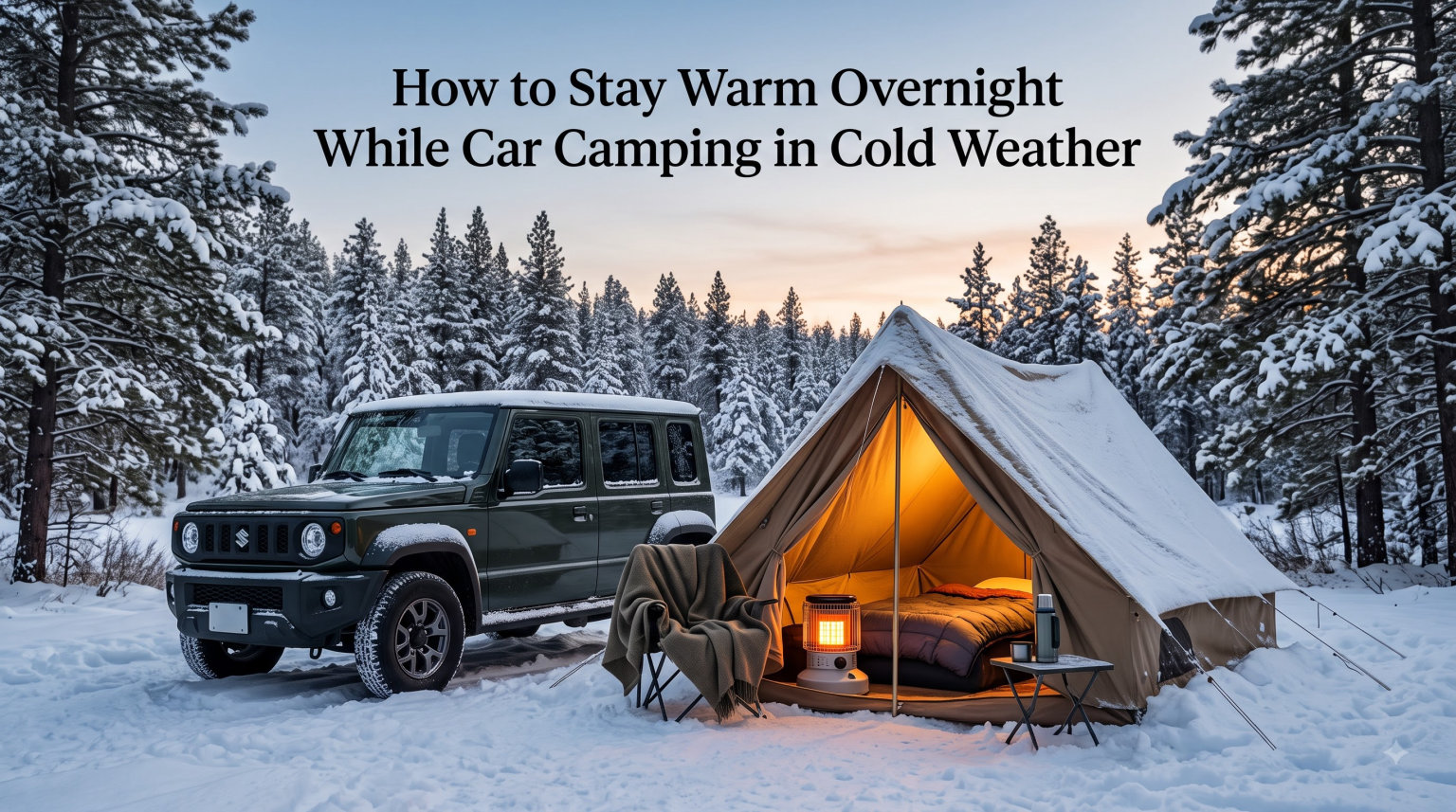
I learned the hard way on a March trip to the North Cascades that a -7°C night inside a sedan with the engine off will quietly drain every bit of warmth you have. By 3 a.m. my breath was fogging inside the sleeping bag and I was already planning the drive home. That trip forced me to figure out how to stay warm overnight while car camping in cold weather, and the lessons I gathered since then – across 30+ winter nights in SUVs, sedans, and a minivan – shape every recommendation in this guide, updated for 2026.
You will learn the temperature thresholds that make car camping risky, the sleeping bag and pad ratings that actually keep you warm, how to insulate a vehicle with cheap DIY materials, the layering system that works, and the safety rules I never break. I also pulled insights from active car camping forums where people trade notes about what really works after a full night of shivering.
Table of Contents
How Cold Is Too Cold for Cold Weather Car Camping?
Cold weather car camping gets risky once nighttime temperatures drop below freezing, and it becomes genuinely dangerous below -10°C (14°F). The vehicle interior will track ambient temperature within a few degrees once the engine is off, so the air around you becomes the same temperature as outside. Most healthy adults can manage 0°C to -5°C (32°F to 23°F) with the right gear, but anything colder demands an expedition-rated sleeping bag, a high R-value pad, and a backup heat source.
The real threshold is not the air temperature. It is the combination of wind, moisture, and your gear. A 0°C night with a 25 km/h wind feels like -10°C because wind strips heat from your face and exposed skin. Damp clothing or a wet sleeping bag amplifies the loss dramatically. If you are new to winter camping, treat anything below 4°C (40°F) as the point where you should start applying the strategies in this guide.
Choosing the Right Sleeping Bag for Cold Weather
Your sleeping bag is the single biggest factor in staying warm car camping in cold weather. Choose a bag rated at least 10°F colder than the coldest temperature you expect. If forecasts call for -2°C, bring a bag rated to -12°C. The “lower limit” rating is the survival number, not the comfort number.
How Temperature Ratings Actually Work
Sleeping bag ratings follow two common standards: the older “comfort/lower limit” system and the newer EN 13537 / ISO 23537 system. The ISO rating you see on the tag lists three numbers: a comfort rating for women, a lower limit for men, and an extreme rating that represents survival-only conditions. For car camping, plan around the comfort number, since comfort is what lets you actually sleep.
Temperature ratings assume you are wearing a base layer and using a sleeping pad. Skip the pad and the rating means nothing, because ground conduction will pull heat out of you faster than the bag can trap it. A common mistake new car campers make is buying a 0°F bag, then sleeping on a thin foam pad and wondering why they freeze.
Down vs Synthetic Insulation for Winter Trips
Down insulation wins on weight, compressibility, and warmth-per-gram, but loses when it gets wet. Synthetic insulation stays warm even when damp, dries faster, and costs less. For dry winter conditions in the Pacific Northwest or Rockies, I reach for down every time. For wet coastal winters or anywhere rain might find the bag, I switch to synthetic.
If you go down, look for 650+ fill power and a responsible down standard certification. Hydrophobic down treatments like DownTek help but are not magic. Synthetic bags in the -7°C range have gotten much lighter over the past few years, and modern PrimaLoft or Climashield fills compress nearly as well as mid-range down.
Sleeping Pads and R-Value: The Ground Is Your Biggest Heat Loss
A sleeping pad is not optional in winter, and a summer pad will not save you. The pad’s R-value measures how well it resists heat flow from your body into the cold ground. Aim for R 4.0 or higher for three-season shoulder camping and R 5.0+ for true winter conditions. Pads in the 3.0 range are fine for summer only.
I have used everything from a cheap closed-cell foam pad (R 2.0) to a thick Exped DownMat (R 6.0). The difference on a -5°C night is dramatic – the cheap pad felt like lying on a block of ice, while the DownMat felt like a warm mattress. When I car camp, I bring two pads stacked: a 3-season inflatable plus a foam pad underneath for both warmth and puncture insurance.
What R-Value Means and Why It Matters
R-value is a thermal resistance rating, just like in building insulation. Higher numbers mean more insulation. The pad is what keeps the ground from stealing your heat – your sleeping bag only insulates the top and sides of your body. Skipping the pad is the #1 reason I see car campers wake up cold.
Self-inflating pads (like the Therm-a-Rest ProLite) combine foam and air for a decent R-value around 3.0 to 4.0. Pure air pads (like the NeoAir) pack smaller but need higher R-values to compensate. For winter car camping where space is not an issue, I prefer a thicker self-inflating pad or a stacked system.
How to Insulate Your Car Windows and Interior
Insulating your vehicle is what separates a shivering night from a comfortable one. Cars lose heat through thin glass windows, the metal body, and the floor pan. A 5 mm Reflectix panel on each window plus a curtain across the windshield can lift interior temperatures by 5 to 10°C overnight.
Reflectix Window Covers and DIY Insulation
Reflectix is a bubble-wrap style foil insulation sold at hardware stores. It reflects radiant heat back into the cabin and blocks cold transfer through the glass. Cut it to fit each window with 1 cm of overlap, secure with magnetic strips or velcro, and you have a reusable insulating cover that rolls up small. Reflectix sunshades are the single most-recommended item on r/carcamping and r/vandwellers for good reason.
For floor insulation, lay a wool blanket or closed-cell foam pad across the footwells and seat platforms. Cold sinks down, and the bare floor of a vehicle pulls heat from your body the same way sleeping on cold ground does. Add a rug or yoga mat on top for comfort and you have a warmer sleep platform.
Where Heat Escapes in a Vehicle
Glass surfaces are the weakest link. A single-pane car window loses heat roughly 8x faster than an insulated wall. The roof and doors have some insulation from the factory but not much. The floor has almost none. Cover the largest glass area first (usually the windshield), then the side windows, and finish with the rear hatch or trunk area.
Crack each window half an inch or so. I know this sounds counterintuitive, but it prevents condensation from building up and freezing on the glass. Sealed tight, your breath and body moisture will coat the inside of every window with frost, and you will wake up damp and cold. A small vent keeps the air dry.
Layering Clothing the Right Way for Cold Nights
Clothing inside your sleeping bag matters more than the jacket you wore all day. Strip down to a dry base layer before getting into the bag. Wearing the same socks and shirt you hiked in traps sweat against your skin, and that moisture will cool you down fast once your body heat drops.
The Cotton Kills Rule
Never wear cotton in cold weather. Cotton absorbs moisture, holds it against your skin, and drains heat rapidly once wet. The old outdoors saying “cotton kills” exists for a reason. Replace cotton with merino wool or synthetic base layers that wick moisture and still insulate when damp. Bring a dedicated sleep base layer you never wear during the day.
For the head, a thin merino beanie or buff adds serious warmth – you lose a disproportionate amount of heat from your head and neck. Down booties keep your feet warm without making your bag too tight. A neck gaiter doubles as an eye mask if morning sun hits the windshield. Keep a pair of dry camp socks inside your bag at night so you have something warm to step into at 6 a.m.
Eating, Hydration, and Hot Water Bottle Tricks
What you eat and drink in the two hours before bed directly affects how warm you sleep. Your body generates heat during digestion, so a calorie-dense dinner with fat and protein keeps your furnace stoked through the first half of the night. I aim for 800 to 1200 calories at dinner when temperatures drop below freezing.
Stay hydrated, but front-load fluids early in the day. Waking up at 3 a.m. to pee in the cold costs you a lot of body heat. A warm drink before bed helps – herbal tea, hot cocoa, or broth all work. Avoid alcohol: it dilates blood vessels and makes you feel warm while actually accelerating heat loss.
The hot water bottle trick is one of my favorites. Boil water, pour it into a wide-mouth Nalgene or a purpose-made hot water bottle, screw the cap on tight, and slide it into your sleeping bag at your feet or against your lower back. A 1-liter bottle at 70°C will slowly release warmth for 4 to 6 hours. Wrap it in a sock to prevent burns and you have a personal radiator for the night.
Ventilation, Condensation, and Carbon Monoxide Safety
Never sleep with the engine running for heat. This is the single safety rule I never bend. Carbon monoxide is odorless and accumulates inside a sealed vehicle faster than you can wake up to a headache. Portable propane heaters like the Mr. Buddy carry the same risk – they have killed campers in tents, vans, and cars. If you use one, you need a battery-powered CO detector inside the vehicle at all times and proper ventilation.
Ventilation and condensation management matter more than most guides admit. Your breath releases about 250 ml of water per night. In a sealed car, that moisture condenses on cold glass, drips onto your gear, and creates a damp chill that saps warmth. Crack two windows on opposite sides of the vehicle by 1 to 2 cm. The cross-flow keeps air moving without losing significant heat.
Wipe down any frost from the windows before it melts. Keep your sleeping bag and clothes from touching the cold glass – even a thin fleece buffer makes a difference. A small microfiber towel inside the car lets you dry condensation quickly in the morning before packing up.
Cold Weather Car Camping Gear Checklist
Here is the gear list I bring on every cold weather car camping trip, refined across more than 30 nights of testing in 2026 conditions:
- Sleeping bag rated 10°F below forecast low – down for dry climates, synthetic for wet ones
- Sleeping pad with R-value 4.0+ (or stack two pads to combine R-values)
- Reflectix window covers for every glass surface plus a windshield curtain
- Merino wool base layer dedicated to sleeping, never worn during the day
- Down booties and beanie for head and foot warmth inside the bag
- Hot water bottle – a 1-liter Nalgene filled with just-boiled water
- Camp socks and dry layers stored inside the sleeping bag at night
- Closed-cell foam pad for floor insulation in the footwells
- Carbon monoxide detector if using any combustion heater
- Headlamp with red mode for middle-of-the-night adjustments
- Microfiber towel for wiping condensation and morning dampness
- High-calorie dinner and warm drink timed 1 to 2 hours before sleep
Frequently Asked Questions
How cold is too cold for car camping?
Below freezing (0°C / 32°F) is where cold weather car camping starts requiring real gear. Below -10°C (14°F) demands an expedition-rated sleeping bag, a pad with R-value 5.0+, and ideally a backup heat source. Healthy adults with proper equipment can handle 0°C to -5°C comfortably, but anything colder without preparation is risky.
What sleeping bag temperature rating do I need for car camping?
Pick a sleeping bag rated at least 10°F colder than your forecast low. If forecasts show -2°C, bring a bag rated to -12°C. Use the comfort rating (not the lower limit or extreme rating) as your reference. A bag rated 0°C will not keep you comfortable at 0°C – it will only keep you alive.
Is it safe to sleep in a car with the heater running?
No. Sleeping with the engine running can cause carbon monoxide poisoning because exhaust can leak into the cabin and the gas is odorless. Portable propane heaters carry the same risk in an enclosed vehicle. If you must use any combustion heater, install a battery-powered CO detector and keep a window cracked for ventilation.
How do I prevent condensation while sleeping in my car?
Crack two windows on opposite sides by 1 to 2 cm to create cross-ventilation. Your breath releases moisture that condenses on cold glass overnight. Wipe down any frost before it melts into your gear. A small microfiber towel stored inside the car helps you dry surfaces quickly in the morning.
What is a good R-value for a sleeping pad in winter?
Use a sleeping pad with R-value 4.0+ for three-season shoulder camping and R 5.0 or higher for true winter conditions. Pads with R-value below 3.0 are summer-only. You can stack two pads to combine their R-values – a 3.0 inflatable plus a 2.0 foam pad equals R 5.0 total.
Final Thoughts on Staying Warm Car Camping in Cold Weather
Learning how to stay warm car camping in cold weather comes down to three habits: respect the temperature rating on your sleeping bag, never sleep without a high R-value pad beneath you, and insulate the vehicle as seriously as you would a tent. Add a hot water bottle, a calorie-dense dinner, and cracked windows for ventilation, and most nights between 0°C and -10°C become genuinely comfortable.
Start your first winter trip on a milder weekend so you can troubleshoot your setup without pressure. Bring spare dry layers, test your insulation at home by sleeping in the car in the driveway, and always pack a backup plan if conditions turn worse than forecast. Once you dial it in, cold weather car camping opens up some of the quietest, most beautiful campsites of the year, well into 2026 and beyond.