
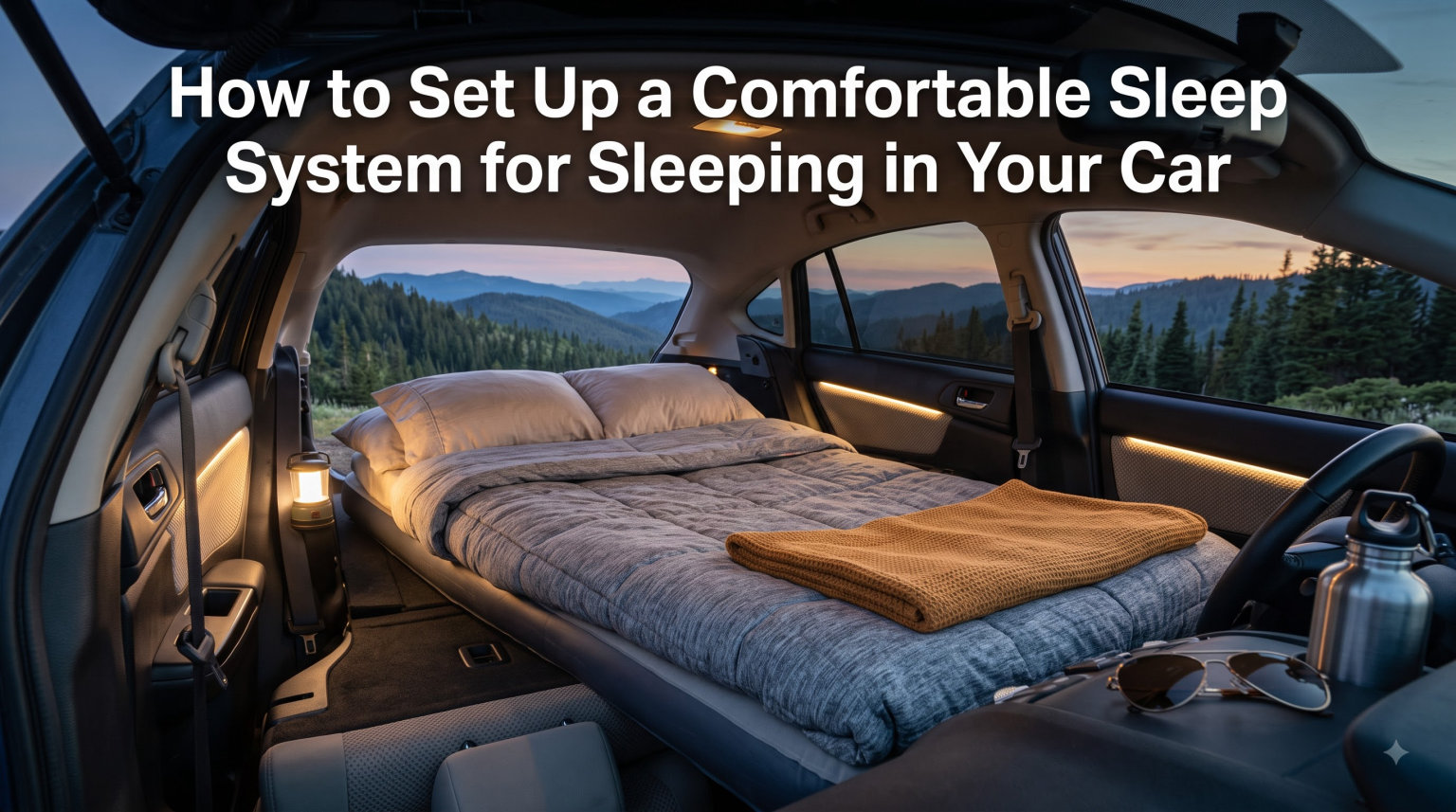
I learned the hard way that sleeping in a car without a plan is a miserable experience. A few summers ago, on a long I-95 road trip, I spent a night curled up across the front seats of my sedan with nothing but a hoodie for a pillow. I woke up with a stiff neck, a sore back, and a vow to never do that again.
Whether you are planning a budget road trip, an overnight stop on a long drive, or a weekend of car camping, building a real sleep system changes everything. In this guide, I will walk you through exactly how to set up a comfortable sleep system for sleeping in your car. You will learn the gear you need, how to arrange it for different vehicles, how to stay safe, and how to handle temperature and privacy.
By the end, you will be able to transform your backseat or cargo area into a sleeping space that rivals a tent, and often beats one. Let us start with the basics.
Table of Contents
What Is a Car Sleep System and Why You Need One
A car sleep system is a layered combination of gear that creates a comfortable sleeping space inside a vehicle. At its core, it includes a sleeping pad for insulation and cushioning, a sleeping bag or blanket for warmth, and a pillow for head and neck support. Add in some thoughtful extras like window covers and ventilation, and you have a reliable setup for any overnight stop.
You need a proper sleep system because car surfaces are hard, uneven, and cold. Metal and fabric seats do not insulate against the ground chill, and your body loses heat fast against them. A good sleep system solves both problems by creating a thermal barrier and a cushioned surface.
I have tested both improvised setups and proper sleep systems, and the difference is night and day. With a real system, I fall asleep faster, stay asleep longer, and wake up without back pain. Without one, every hour feels like a wrestling match with gravity.
Essential Components of a Car Sleep System
Every car sleep system has four core components. Get these right and the rest is fine-tuning.
Sleeping Pad: The Foundation of Comfort
The sleeping pad is the most important piece of your car sleep system. It insulates you from cold surfaces and cushions your body. There are three main types to choose from.
- Closed-cell foam pads are cheap, durable, and never deflate. They are bulky but reliable for occasional trips.
- Self-inflating pads combine foam and air, offering a balance of comfort and packability. Brands like Therm-a-Rest have built strong reputations here.
- Inflatable air pads pack down small and offer the best comfort, but you need to be careful with punctures.
Look at the R-value when choosing a pad. R-value measures insulation, with higher numbers meaning more warmth. For summer, an R-value of 2 to 3 works well. For three-season use, aim for 3 to 4. For winter, you want 5 or higher.
Sleeping Bag or Quilt: Your Warmth Layer
A sleeping bag rated for the temperatures you expect is essential. For summer car camping, a 40°F (4°C) bag usually works. For shoulder seasons, choose a 20°F (-7°C) bag. For winter, go with a true cold-weather bag rated near 0°F (-18°C) or lower.
Quilts are gaining popularity because they are lighter and less restrictive. They work great in cars because you have less space to manage. Down fill offers the best warmth-to-weight, while synthetic fill handles moisture better and costs less.
Pillow: Don’t Skip This
A real pillow makes a huge difference. Compressible camp pillows pack down to the size of a soda can and inflate into a real pillow when you need them. Memory foam travel pillows work well for back sleepers, while inflatable pillows are the lightest option.
I have tried stuffing a jacket into a pillow case, and it does not compare. Spend the money on a proper pillow, even a budget one. Your neck will thank you.
Window Covers and Ventilation Gear
Reflective sunshades and blackout curtains give you privacy and block morning light. Mesh window screens let you crack windows for airflow without letting bugs in. Both are essential for a restful night.
How to Build a Car Sleep System for Comfortable Rest
Here is my step-by-step process for setting up a car sleep system that works. These steps apply whether you are in a sedan, SUV, or van, with vehicle-specific tweaks covered in the next section.
Step 1: Clear and Clean Your Sleeping Area
Remove anything you do not need for the night. Loose items rolling around will keep you awake and could become dangerous if you brake suddenly. Wipe down the surface where you will sleep. A clean base means a clean sleep.
Step 2: Create a Flat Sleeping Surface
Fold down your rear seats if your vehicle allows it. Most sedans let you fold the rear bench flat or nearly flat. SUVs often have a flatter cargo area already. Use a sleeping platform or plywood sheet if you want a true flat surface for multiple nights.
If your seats do not fold flat, sleep diagonally across the backseat with your head in one rear corner and feet in the opposite front corner. This is the classic car-sleeping move, and it works surprisingly well in compact sedans.
Step 3: Add Insulation From the Bottom Up
Lay your sleeping pad directly on the car surface. Even if you use a blanket under you, a proper pad is non-negotiable. Without it, you will lose body heat into the seat material or metal floor. Make sure the pad is fully inflated or laid flat before moving on.
Step 4: Set Up Your Bedding Layers
Place your sleeping bag or quilt on top of the pad. If you run warm, a lighter blanket works in summer. If you run cold, layer two blankets or use a mummy-style bag with a hood.
Step 5: Position Your Pillow and Final Comfort Items
Place your pillow at the head end. Add a sleep mask, a small blanket for your feet, and a layer of soft fabric (like a microfiber sheet) if your bag feels too slippery. Tuck small items into a stuff sack to act as a nightstand.
Step 6: Set Up Privacy and Ventilation
Install window covers on every window you can reach. Crack two windows on opposite sides for cross-ventilation, and add mesh screens to keep insects out. Set your phone alarm and place it where you can reach it without sitting up.
This entire setup takes me about 15 minutes once I have done it a few times. On your first try, budget 30 to 45 minutes.
Vehicle-Specific Configurations: Sedan, SUV, and Van
Different vehicles call for different layouts. Here is how I adapt the same core sleep system to each.
Sedan Sleeping Setup
Sedans are the most challenging because space is tight. The best layout is the diagonal across the backseat. Use a shorter sleeping pad (around 72 inches) and a 3-season bag. You will not have room to sit up, so plan accordingly.
Privacy is harder in a sedan because of the large windows. Quality blackout covers are a must. Park facing away from streetlights or in a quieter area to reduce disturbances.
SUV Sleeping Setup
SUVs offer the best balance of space and accessibility. Fold the rear seats flat to create a cargo-area sleeping platform. A standard 72 to 75-inch pad fits well. You have headroom to sit up partially, and you can keep gear organized in the front seats.
SUVs are also easier on temperature control because you have more interior air volume. A small battery fan helps in summer, and a 12-volt heated blanket works well in winter.
Van Sleeping Setup
Vans are the gold standard for car sleeping. With a flat floor, standing headroom (in high-roof models), and room for a full mattress, you can build a true bed. Many van dwellers use a 4-inch memory foam mattress on a plywood platform, paired with residential pillows and bedding.
For occasional van use, a self-inflating pad plus camping bedding is enough. For full-time van life, invest in a custom mattress. The upgrade in sleep quality is worth every dollar.
Temperature Regulation for Year-Round Comfort
Temperature is the single biggest factor in car sleep quality. Get this wrong and you will toss and turn all night. Get it right and you will sleep like you are at home.
Summer Cooling Tips
Heat builds up fast in a parked car. Park in shade whenever possible, and use reflective window covers to block sunlight. Crack two windows on opposite sides to create cross-ventilation, and consider a small battery-powered fan. A damp cloth on your neck or forehead helps in extreme heat.
Avoid sleeping in direct afternoon sun, even with covers. The interior can reach 130°F or more in under 30 minutes, which is dangerous.
Winter Warming Tips
Insulation is everything in winter. Use a sleeping pad with an R-value of 4 or higher, and layer your bedding. Wear a dry base layer to bed, including socks and a beanie. A hot water bottle inside your sleeping bag adds hours of warmth without any battery.
For extreme cold, run the engine periodically with the heater on, but never sleep with the engine running in an enclosed space due to carbon monoxide risk. A portable battery heater or 12-volt electric blanket is safer for longer stays.
Three-Season Comfort
Spring and fall bring temperature swings. Layer your bedding so you can add or remove as needed. A 40°F bag with a light blanket over it covers most situations. Keep an extra blanket in the car for unexpected cold snaps.
Safety and Ventilation When Sleeping in Your Car
Safety comes first, no matter how comfortable your setup is. These rules are non-negotiable.
Ventilation: Why Cracking Windows Matters
Yes, you need to crack the window when sleeping in a car. Breathing in a sealed car creates condensation, builds up carbon dioxide, and reduces oxygen. Even in cold weather, crack two windows about an inch each. Mesh covers let you do this safely without losing privacy or letting bugs in.
Carbon Monoxide Awareness
Never run your engine for heat in an enclosed space like a garage. Even outdoors, idling for extended periods in a stationary car is risky if exhaust gets trapped. If you must run heat, ensure the tailpipe is clear and there is airflow around the vehicle.
A portable carbon monoxide detector is cheap insurance. Many RVers and van lifers carry one.
Smart Parking Choices
Choose well-lit, populated areas for overnight stops. Walmart stores, Cracker Barrel restaurants, and some casino parking lots often allow overnight parking, but always check local rules. Rest stops are designed for short stays, while BLM land and US Forest Service areas allow dispersed camping for free.
Apps like iOverlander, AllStays, and FreeRoam help you find legal overnight parking spots with reviews from other travelers. Never park somewhere you feel unsafe, and trust your instincts.
Privacy, Window Coverings, and Finding Legal Parking
Privacy is about more than comfort. It is also about safety, because being unseen is often safer than being visible.
Window Cover Options
Static-cling window shades are quick to install and remove. Magnetic covers work on metal frames and stay secure in wind. Custom-fit blackout curtains offer the best coverage and a more permanent solution for frequent sleepers.
Reflectix insulation doubles as a window cover and an extra thermal layer. It blocks light and reflects heat, working well in both summer and winter.
Apps and Resources for Finding Spots
Use these trusted apps to find legal overnight parking and camping spots:
- iOverlander: Global database of camping spots, free parking, and water sources.
- AllStays: Detailed filters for Walmart, Cracker Barrel, and rest stops.
- FreeRoam: Focused on free dispersed camping on public lands.
- Hipcamp: Private land camping, similar to Airbnb for outdoors.
Always check local rules before settling in for the night. Some cities have ordinances against overnight parking, even on private property. A quick search saves a ticket.
Frequently Asked Questions
How to make sleeping in a car more comfortable?
A comfortable car sleep comes from layering a sleeping pad for cushion and insulation, a sleeping bag or quilt for warmth, and a real pillow for neck support. Add blackout window covers for privacy and crack two windows for airflow. Sleeping diagonally across the backseat or on folded-down rear seats gives the flattest surface.
Do I need to crack the window when sleeping in a car?
Yes, always crack at least two windows about an inch each. Sleeping in a fully sealed car causes condensation, reduces oxygen, and increases carbon dioxide from breathing. Mesh window screens let you ventilate safely without letting insects in or sacrificing privacy.
Where to sleep when sleeping in your car?
Safe spots include Walmart parking lots (where allowed), Cracker Barrel restaurants, well-lit rest stops, and 24-hour businesses like gyms or casinos. For a more natural setting, try free dispersed camping on BLM land or US Forest Service areas. Use apps like iOverlander or AllStays to find reviewed spots.
What is the best sleeping setup for car camping?
The best car camping sleep setup combines a self-inflating pad with an R-value matched to the season, a temperature-rated sleeping bag or quilt, and a supportive pillow. Add window covers for privacy and ventilation, and lay everything on a flat surface created by folding down rear seats or using a sleeping platform. This combination delivers restful sleep in any vehicle.
Final Thoughts on Building Your Car Sleep System
Setting up a comfortable sleep system for sleeping in your car does not require a huge budget or a complicated build. Start with the three core pieces, a pad, a bag, and a pillow, then add the right accessories for your vehicle and climate. Test your setup on a short trip close to home before committing to a longer journey.
Once you have a system that works, you will wonder how you ever traveled without it. Safe travels, and sleep well out there.