
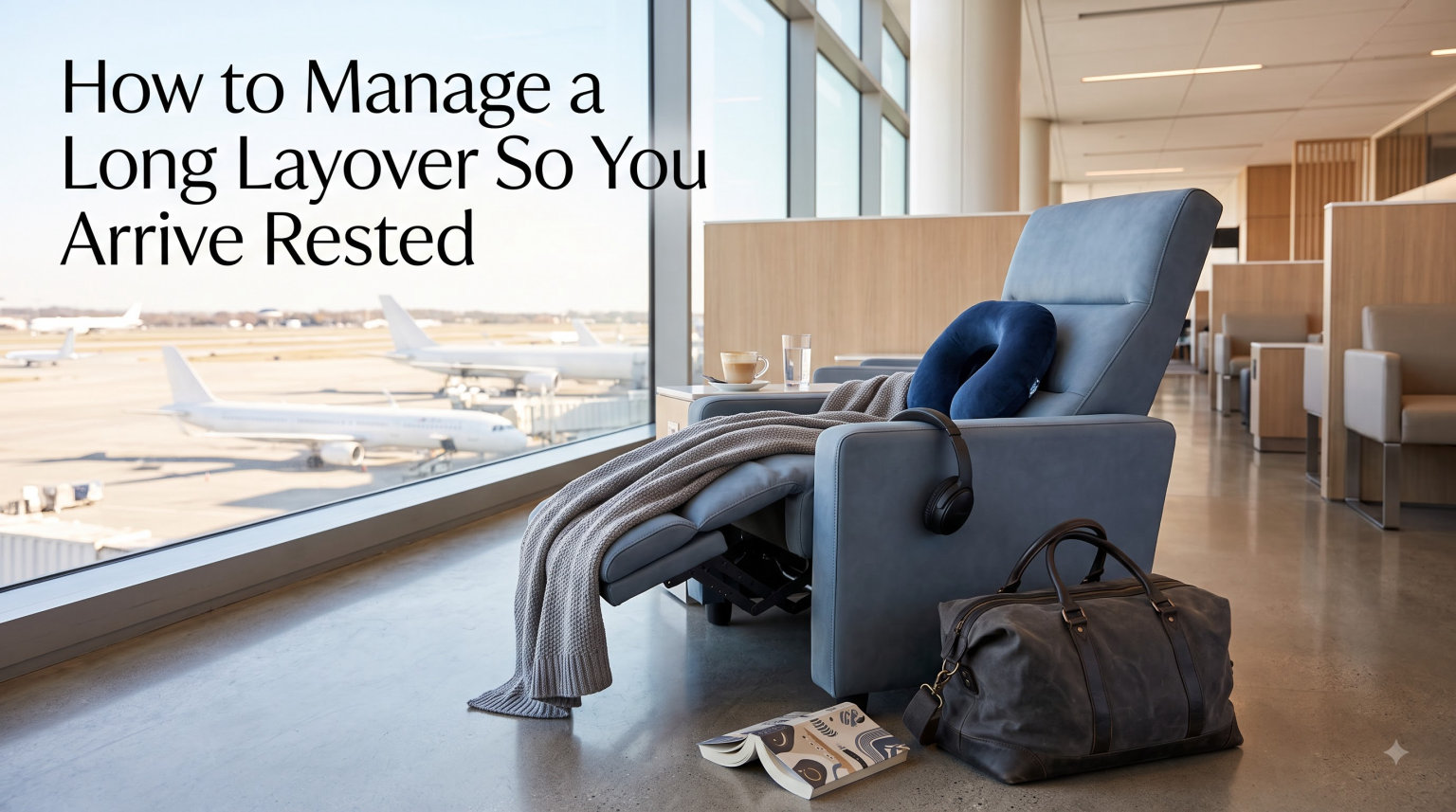
I landed in Doha at 11:40 PM with a 9-hour wait until my next flight. The airport terminal was spotless, the seats were flat, and the Wi-Fi was fast. None of that mattered. What mattered was whether I would walk onto my second flight feeling like a human or a zombie. That night became my first real lesson in how to manage a long layover so you arrive rested, and I have tested those lessons on every trip since.
A long layover does not have to wreck your trip. With the right plan, you can use those hours to sleep, eat well, and reset your body clock. This guide walks through the exact steps I use, plus the strategies I have learned from flight attendants, frequent flyers, and my own dozens of red-eye connections across four continents.
Most layover guides teach you how to survive. This one teaches you how to arrive rested. That single difference is what separates a trip that starts on day two from a trip that starts on day four. Use this guide any time your itinerary shows a wait of more than 4 hours between flights.
Table of Contents
Quick Overview: Match Your Layover Length to the Best Strategy
Not every layover needs the same plan. Use this table to find the right approach for your wait time, then read the matching section below for details.
| Layover Length | Best Strategy | Goal |
|---|---|---|
| 1 to 3 hours | Stay near your gate, walk, hydrate, light snack | Stay alert and connected |
| 3 to 6 hours | Airport lounge or sleep pod | Real rest without leaving the airport |
| 6 to 12 hours | Day-use hotel or city excursion | Full rest and reset |
| 12+ hours (overnight) | Airport hotel or transit hotel | Sleep, shower, and recover |
What Counts as a Long Layover (and Why It Matters)
A long layover is any wait between connecting flights that lasts 4 hours or more. Anything under 2 hours is a tight connection, anything between 2 and 4 hours is normal, and anything beyond that starts to feel like its own travel day. I treat any layover over 6 hours as a destination in itself, because that is how long it takes to actually rest, eat, and reset without rushing.
Defining layover duration categories
Most travelers think a layover is one thing, but it really splits into four categories. Short layovers (1 to 3 hours) are about staying near your gate and avoiding the temptation to wander too far. Medium layovers (3 to 6 hours) are the sweet spot for lounges and sleep pods inside the airport. Long layovers (6 to 12 hours) open up city exploration and day-use hotels. Overnight layovers (12+ hours) deserve a real hotel, even if it is just a 6-hour stay with a quick shower.
Why arriving rested changes the trip
Arriving at your destination exhausted can cost you the first day of your trip. I learned this the hard way on a Tokyo trip where I saved 200 dollars on a 14-hour layover and lost an entire first day in bed sleeping off the damage. Money saved on a bad layover is money wasted on the trip itself. Rest is not a luxury on long travel days; it is part of the journey.
This is the difference between surviving a layover and managing it. Surviving means you white-knuckle through 8 hours of fluorescent lights and bad coffee. Managing means you walk onto your next flight already feeling better, with energy to enjoy your trip instead of recovering from it.
Step 1: Plan Before You Board Your First Flight
Smart layover management starts before you ever take off. The single biggest mistake I see travelers make is treating the layover as something to figure out when they get there. By then, the best lounge spots are taken, the showers are booked, and you are stuck in a plastic chair by Gate B17 counting ceiling tiles.
Check visa and re-entry rules
Before you even look at hotels, check whether you can leave the airport. Some countries require a transit visa even for a short city visit. The UK, for example, requires a DATV (Direct Airside Transit Visa) for many travelers, and missing this can mean you cannot board your first flight. I check the IATA Timatic database before every international booking because rules change every quarter, and embassy websites are often outdated.
Research your terminal and gate early
Knowing your terminal saves time. Look up the airport map, check which lounges are in your terminal, and identify the nearest quiet zones. Most major airports have a dedicated rest area or sleep pods in specific terminals. Changi, Incheon, and Helsinki all have transit hotels inside the secure zone, which means you do not have to clear immigration just to grab a bed.
Pre-book lounge access or a day room
Walk-up lounge access is expensive and often sold out during peak hours. Pre-booking a lounge pass through Priority Pass, LoungeBuddy, or directly with the airline can save you 30 to 50 percent. The same applies to day-use hotels. Platforms like HotelsByDay, DayUse, and Sleeping in Airports let you book a 4 to 8-hour room near most major airports. I have paid as little as 45 dollars for a quiet bed, a shower, and breakfast in a 4-star hotel between flights.
Step 2: Find Real Rest During the Layover
The whole point of managing a long layover is to rest. Not to scroll your phone for 6 hours, not to eat three mediocre airport burgers, and definitely not to push through until you reach your destination. Real rest means either sleep or a deep reset of your body. Here is how to get it, no matter how long your wait is.
Airport lounges and Priority Pass
An airport lounge is the easiest way to upgrade a long layover. Most offer free Wi-Fi, comfortable seating, hot food, snacks, and quiet areas. Priority Pass gives you access to over 1,300 lounges worldwide for a yearly fee of around 99 dollars, and many premium credit cards include this benefit for free. If you do not have a membership, single-visit passes start around 32 dollars at most major hubs.
Even if you do not sleep in the lounge, the calmer environment lowers your cortisol. I have had layovers where I spent 4 hours in a lounge and arrived at my gate feeling more rested than after a night in an airport hotel chair. The trick is to find a quiet corner away from the buffet and to use the lounge shower if they have one. Many lounges also have nap rooms or quiet zones, especially in Asia and the Middle East.
Sleep pods and minute suites
Sleep pods are private cabins inside the airport with a bed, light, and often a small desk. Minute Suites, Yotel, and Aerotel all operate in major airports. Prices range from 30 dollars per hour to 90 dollars for an overnight stay. I try a sleep pod at least once on every long-haul trip because they are great for napping between flights without leaving the secure zone.
Most sleep pods are designed for power naps of 2 to 4 hours. They are not full hotels, but they are perfect for resetting between flights. Book early through the airport’s website or apps like LoungePair, because walk-in prices are higher and the best pods go fast during peak times.
Day-use hotels near the airport
For layovers over 6 hours, a day-use hotel is the gold standard. You get a real bed, a real shower, and quiet. Most day-use hotels include airport pickup and drop-off, which solves the logistics problem. I once had a 10-hour layover in Istanbul and spent 60 dollars on a 6-hour hotel room near the airport. I slept, showered, and ate a proper meal. I stepped on my next flight feeling like I had started a vacation instead of ended one.
Book direct with the hotel or use a day-use booking platform. Always check the cancellation policy, because flight delays happen. Many hotels now offer flexible booking that lets you push the time back by 2 to 3 hours if your first flight lands late.
Step 3: Leave the Airport Safely (If You Have Time)
Leaving the airport is one of the best ways to use a long layover, but it only works if you plan it. You need enough time to clear immigration, get into the city, do something meaningful, and return through security with at least 90 minutes to spare. For most cities, you need at least 7 hours total to make an exit worthwhile.
When leaving the airport makes sense
Leaving the airport makes sense when your layover is 7+ hours, your airline offers luggage storage or transfer, and you have the right visa. Singapore, Seoul, Tokyo, Doha, and Istanbul all have fast, reliable public transit from the airport. A 6-hour layover in Seoul can buy you a tour of the city, a meal in Insadong, and a return to the airport with time to spare.
If you have less than 6 hours, do not leave the airport. The math rarely works, and the stress of running for a flight will undo any rest you got in the city. Stay inside, book a lounge, and reset before the next leg.
How to manage luggage and time
If you have checked bags, confirm they are tagged through to your final destination. If they are not, store them at the airport luggage counter. Most airports charge 5 to 15 dollars per bag per day. Set two alarms on your phone for the return trip, and always have a backup plan in case of traffic. I once missed a connection in Madrid because I trusted one taxi app, and I have never repeated that mistake.
Have a Plan B for your return. If the train is delayed, know the bus schedule. If you are taking a taxi, have the airport address written down in the local language. The 5 minutes you spend on backup plans will save you the 5 hours of regret if something goes wrong.
Step 4: Manage Jet Lag and Time Zones During Your Wait
Arriving rested is about more than sleep. It is about resetting your body clock so you can function at your destination. A long layover is actually a perfect opportunity to start adjusting to your destination time zone, and most travelers waste it entirely on phones and bad food.
Light exposure strategy
Light is the strongest signal your body uses to set its clock. If you arrive at your layover in the morning and your destination is also morning, get sunlight. If your destination is 8 hours ahead and you are arriving at night, avoid bright light and wear blue-light-blocking glasses. I use a free app called Timeshifter to plan my light exposure on long-haul flights, and it has cut my jet lag recovery time in half.
Time your layover naps carefully. A 90-minute nap covers one full sleep cycle and avoids the grogginess of waking from deep sleep. Anything longer than 30 minutes needs a timer or you risk ruining your next night of sleep at the destination.
Hydration and food choices
Travel dehydrates you faster than you think. I aim for 250 ml of water per hour on the ground and avoid alcohol and caffeine entirely during layovers. Both mess with your sleep architecture and make jet lag worse. Eat your last big meal at the time you would normally eat at your destination, not at the time you would eat at home. This single trick has saved me from more bad first days than anything else.
Skip the airport sugary snacks and fried food. Choose protein, vegetables, and slow carbs. Your stomach, like your sleep, needs to be aligned with your destination time zone, not your departure time zone.
Step 5: Pack for Layover Recovery
The right carry-on can turn a 6-hour layover into a small spa day. I have refined my layover kit over 12 years of international travel, and these are the items I refuse to board without.
Carry-on essentials checklist
- Compression socks for swelling on long flights
- Eye mask and earplugs for sleeping in bright, loud terminals
- Reusable water bottle to refill after security
- Lightweight travel blanket or large scarf
- Universal power adapter with multiple USB ports
- Mini toiletry kit with toothbrush, face wipes, and deodorant
- Change of underwear and a clean t-shirt
- Snacks like protein bars, nuts, and dried fruit
- Downloaded movies, podcasts, and offline maps
- A small notebook for journaling or planning
What I always pack
My non-negotiable is a small microfiber towel. Airports charge for towels, and most lounges only have paper towels. A $4 microfiber towel means I can air dry after a shower in any airport gym. I also keep a refillable aromatherapy roller with lavender and peppermint. Two minutes of slow breathing with this scent calms me down faster than any airport bar.
I also pack a small foldable day bag. It weighs almost nothing, fits in my carry-on, and is invaluable when leaving the airport for a city tour. Skip the backpack-style bag because it reads as a hiking pack and slows you down at security.
Layover Duration Guide: Match Time to Best Rest Strategy
Choosing the right layover strategy depends on three factors: how much time you have, whether you can leave the airport, and what your body needs. Here is the decision tree I follow on every long-haul flight.
1 to 3 hours: Stay alert and connected
Use this time to walk, hydrate, and eat a real meal. Do not try to sleep, because waking up groggy in 30 minutes is worse than staying awake. Find a quiet gate, set a phone alarm for boarding, and stretch your legs every 20 minutes. Use the airport yoga room if there is one, even just for 10 minutes of breathing and stretching.
3 to 6 hours: Lounge or sleep pod
Pre-book a lounge or pod before you land. Shower if you can, eat a proper meal, and either nap for 90 minutes or do focused work in a quiet corner. Avoid alcohol and heavy carbs. Your goal is to feel refreshed, not full. A lounge with a shower is always worth the upcharge.
6 to 12 hours: Day-use hotel or city visit
Decide between a hotel and the city based on your energy level. If you have been flying all night, take the hotel. If you arrive fresh and excited, take the city. Either way, plan your return with at least 2 hours of buffer before your next flight. I keep a simple rule: if I have flown more than 8 hours, I take the hotel. If I have flown less, I take the city.
12+ hours overnight: Airport hotel or transit hotel
Book a hotel. This is non-negotiable. Sleeping upright in a chair for 8 hours is the fastest way to ruin your trip. A 6 to 8-hour hotel stay costs less than one night of bad decisions and arrives you feeling human. Many airports have on-site hotels inside the secure zone, which means you do not need to clear immigration.
Common Mistakes That Ruin Long Layovers
I have made almost every layover mistake in the book. Here are the ones I see most often, and how to avoid them on your next trip.
Skipping the lounge or hotel because of cost
A 50-dollar lounge visit feels expensive until you calculate the cost of a wasted first day at your destination. Hotels, food, and tours all cost more when you are exhausted. Rest is part of the trip budget, not a luxury. The cheapest layover is rarely the cheapest trip.
Leaving the airport without a return plan
Every month, I read a story about a traveler who missed a connection because they did not plan their return. Always have a backup. Save offline maps, screenshot the airport transit schedule, and add 30 minutes to every estimate. The 30 minutes you save by rushing is never worth the risk of missing a flight.
Trusting your phone battery
Your phone is your maps, boarding pass, and translator. Charge it every chance you get. Carry a small power bank, and never let your battery drop below 40 percent during a layover. A dead phone in a foreign airport is one of the most stressful travel experiences you can have.
Ignoring your body clock until you crash
Do not wait until you are exhausted to rest. Plan your naps and meals around your destination time zone from the start of the layover. Travelers who do this arrive with energy to spare. Travelers who do not arrive needing two days to recover.
Frequently Asked Questions
What to do when you have a really long layover?
For a really long layover (over 6 hours), the best move is to leave the airport for a day-use hotel or a short city visit. If you cannot leave, book a sleep pod or a transit hotel inside the secure zone. The goal is to get real sleep, a shower, and a proper meal so you arrive at your destination refreshed.
What is too long of a layover?
Any layover over 8 hours is considered too long to just stay at the gate. At that point, you should leave the airport, book a day-use hotel, or take a city tour. Shorter waits stay inside the airport, longer waits deserve a real plan.
Can you leave the airport during a long layover?
Yes, in most countries you can leave the airport during a long layover if you have the right visa, your bags are checked through, and you have enough time. Aim for at least 7 hours total to make the exit worthwhile, and leave 90 minutes to clear security on return.
How to survive a 6 hour layover?
A 6-hour layover is best spent in an airport lounge or a sleep pod. Shower, eat a real meal, and either nap for 90 minutes or do quiet work. Avoid alcohol, stay hydrated, and set a phone alarm so you do not miss boarding.
Final Thoughts on Managing a Long Layover
Knowing how to manage a long layover turns dead time into part of the trip. The next time you book a flight with a long stop, plan the layover the same way you plan the destination. Pre-book a lounge or a day room, pack your kit, and decide before you land whether you are staying or going.
You will arrive rested, your trip will start on the right foot, and you will wonder why you ever white-knuckled through a 9-hour airport wait in a plastic chair. That is the difference between surviving a layover and managing it. Start traveling smarter, not harder, and your body will thank you on every trip after this one.