
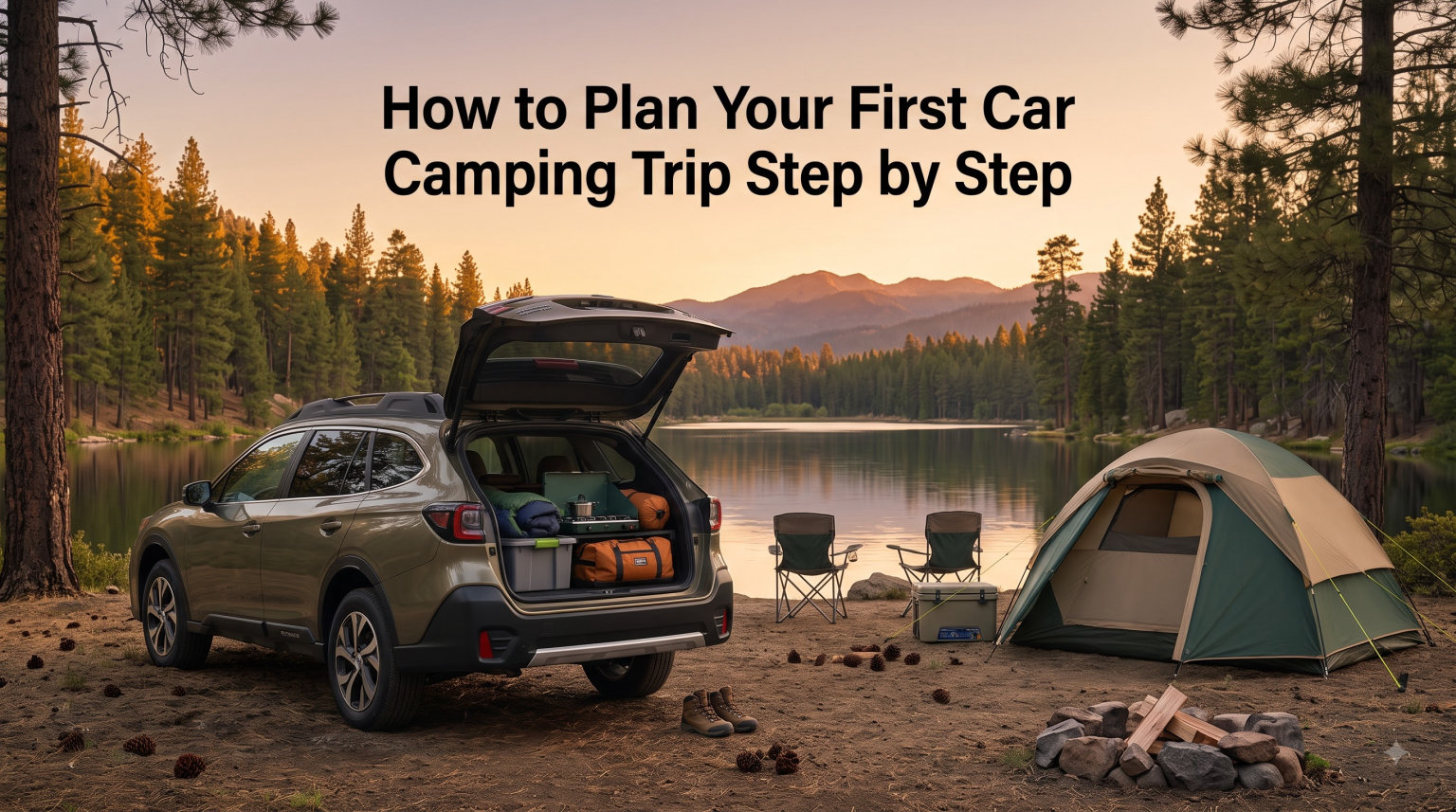
Planning your first car camping trip can feel overwhelming if you have never spent a night in your vehicle before. I remember staring at half-empty packing bins two days before my first trip, wondering if I had forgotten something critical. That nervous energy is exactly why I wrote this guide.
If you are searching for how to plan your first car camping trip step by step, you are in the right place. Over the past three years, our team has taken more than 40 car camping trips across state parks, national forests, and backcountry roads. We made plenty of mistakes so you do not have to. By the end of this guide, you will know exactly what to do, what to pack, and how to stay safe on your first night under the stars.
Table of Contents
What Is Car Camping and How Does It Work?
Car camping is a form of outdoor recreation where you drive your vehicle to a campsite and sleep in or right next to it. Unlike backpacking, you do not carry everything on your back. Your car carries the heavy gear, the cooler, and the sleeping setup. That single difference makes car camping the most beginner-friendly way to experience the outdoors.
The basic setup is simple. You park at a designated spot, level your sleeping area, and treat your vehicle as a portable shelter. Some campers sleep fully inside the car with the seats folded down. Others set up a tent, awning, or rooftop tent beside the car and use the trunk for storage and cooking. Both styles count as car camping.
You will find two main types of sites. Developed campgrounds have restrooms, picnic tables, fire rings, and sometimes running water. Dispersed camping on BLM land or in national forests is free, more remote, and offers zero amenities. Beginners usually start at a developed campground for the first trip, then explore dispersed options once they feel confident.
Why Choose Car Camping for Your First Trip?
Car camping lowers the barrier to entry for almost anyone who owns a vehicle. You can bring a real pillow, a camp stove, and a cooler full of food without worrying about weight. On my first trip, I brought a foam mattress topper, two pillows, and a French press. None of that would have made it on a backpacking trip.
Safety is another big reason beginners lean toward car camping. A Reddit user I came across put it best: “I had been so nervous to sleep outside before our trip but I definitely felt safer sleeping in a hard sided car rather than in a tent.” That quote mirrors how I felt before my first night in a Subaru Forester at a state park outside Yellowstone.
Flexibility matters too. If the weather turns ugly, you can roll up windows and stay dry. If you get tired early, you can climb into the back without pitching anything. Car camping also tends to be cheaper than backpacking once you factor in the gear you already own. Blankets, pillows, and a cooler from your kitchen work just as well as expensive outdoor gear.
How to Plan Your First Car Camping Trip Step by Step
Here is the seven-step framework I now use for every first-time car camping trip. I have taught this framework to friends who had never camped before, and it has worked every single time. Follow these steps in order, and you will have a stress-free trip from start to finish.
Step 1: Decide Where You Want to Go and Research the Area
Pick a destination within a two to three hour drive from home for your first trip. Short drives mean less fatigue and easier bailout options if something goes wrong. National parks, state parks, and national forests are all great starting points. Look for places with a mix of beginner-friendly trails and scenic views so you get the full experience.
Research the local rules before you commit. Some parks require bear-resistant food canisters. Others close certain roads seasonally. A quick scan of the park website and a recent Reddit thread will tell you almost everything you need to know. I check the official NPS site first, then read two or three recent trip reports to see what conditions are actually like.
Step 2: Choose and Reserve Your Campsite
Book your campsite at least four to six weeks ahead, especially for summer weekends. Popular spots like Yellowstone, Yosemite, and Acadia fill up months in advance. Use Recreation.gov for federal lands, ReserveAmerica for state parks, or Hipcamp for private land and unique stays like vineyards and ranches.
For your first trip, choose a site with a flat parking pad, partial shade, and decent distance from restrooms (close enough to walk, far enough to avoid noise). Loop B and similar mid-range sites tend to be quieter than sites right next to the host. Electric hookups are not required for a beginner trip, but a site with a picnic table and fire ring makes life easier.
Step 3: Check the Weather and Plan for Conditions
Check the seven-day forecast three days before your trip, then recheck the night before. Mountain weather can shift 20 degrees in an hour. I have packed for 75F and woken up to 48F at a campsite in Colorado, so always bring layers even when the forecast looks warm.
Make a backup plan for bad weather. If heavy rain is forecast, pick a campsite with a covered picnic shelter or hike into a nearby town for a casual day. The 3-3-3 rule for camping helps here: pack three days of extra food, three ways to start a fire, and three sources of light. It sounds simple, but it covers the most common beginner emergencies.
Step 4: Pack Your Car Camping Gear Essentials
Start with the non-negotiables: sleeping bag rated for the expected low temperature, sleeping pad, pillow, headlamp, and a first-aid kit. Then add shelter layers if you are sleeping outside the car: a tent, footprint, and rainfly. I keep a printable checklist on my phone so I never forget the basics.
Cooking gear comes next. A two-burner propane stove, a small pot, a spatula, a knife, a cutting board, plates, and a sponge will cover 90% of meals. A cooler with a 1:2 ice-to-food ratio keeps things cold for two to three days. Bring at least one gallon of drinking water per person per day, plus extra for cooking and cleanup.
Step 5: Prepare Your Vehicle for Sleeping and Storage
Clear out your trunk and back seat before you start loading. You want a flat, clean space for sleeping. In my Subaru Forester, I fold the rear seats flat and add a 3-inch foam topper. In a sedan, you can recline the front seats and use the back seat for a kid or a smaller sleep setup.
Window covers are essential for privacy and insulation. Reflectix panels from a hardware store work great and cost very little. Cracked windows are fine for airflow, but you need covers so people cannot see inside at night. Keep your keys, wallet, and phone in a small pouch near your pillow so you always know where they are.
Step 6: Plan Your Meals and Water Supply
Keep meals simple for the first trip. Hot dogs, eggs, oatmeal, sandwiches, and pre-cut veggies require almost no cleanup and taste great outdoors. I plan one hot breakfast, one hot dinner, and simple lunches for a two-night trip. Pre-marinate proteins at home in zip bags and freeze them flat. They act as extra ice and thaw by dinner time.
Water is the one thing you cannot improvise. Plan for at least one gallon per person per day for drinking, plus two extra gallons for cooking and washing. If your site has a spigot, you can refill on arrival. If not, bring a water container with a spout. Avoid plastic jugs that have never held food. They can leach chemicals into your drinking water.
Step 7: Test Run and Finalize Your Trip Plan
Do a backyard or driveway test run before you leave. Set up your sleeping area, blow up your pad, and spend one night in the car. This sounds silly, but it exposes problems you would only discover at a remote site. On my first test run, I realized my sleeping bag was too warm and that I needed a darker window cover.
Finalize your trip plan by sharing your itinerary with a friend. Text someone your campsite number, your expected arrival time, and your planned return date. Charge every power bank, download offline maps on Google Maps or Gaia GPS, and save emergency numbers. When everything is dialed in, you are ready to go.
Car Camping Essentials Checklist for Beginners
Below is the printable checklist I hand to friends before their first trip. I split it into must-haves and nice-to-haves. The must-haves are non-negotiable. The nice-to-haves improve comfort but can wait for trip three or four.
Sleeping and Shelter
- Sleeping bag rated for the expected low temperature
- Sleeping pad or air mattress with pump
- Pillow from home (or a compressible camp pillow)
- Window covers (Reflectix, black trash bags, or sun shades)
- Tent and rainfly (if sleeping outside the car)
- Extra blanket for layering
Cooking and Water
- Two-burner propane stove with extra fuel
- Cooler with block ice
- Pot, pan, spatula, tongs, knife, cutting board
- Plates, bowls, mugs, utensils
- Biodegradable soap and sponge
- One gallon of drinking water per person per day
- Camp coffee maker or French press
Safety and Navigation
- First-aid kit with bandages, antiseptic, and any personal medications
- Headlamp with extra batteries
- Whistle and emergency blanket
- Bear spray (if camping in bear country) or bear canister if required
- GPS device or smartphone with offline maps downloaded
- Paper map of the area as backup
- Satellite communicator (Garmin inReach or similar) for remote areas
Clothing and Personal Items
- Moisture-wicking base layers
- Insulating mid-layer (fleece or puffy jacket)
- Waterproof rain jacket and pants
- Hat, gloves, and warm socks for cold nights
- Sturdy hiking shoes or boots
- Quick-dry towel and swimwear
- Toiletries and hand sanitizer
- Trash bags for packing out garbage (Leave No Trace)
Power and Connectivity
- Power bank with at least 10,000 mAh capacity
- Car charger for phone and tablet
- Cigarette lighter adapter or small power inverter
- Spare batteries for headlamp and GPS
Car Camping Safety Tips Every Beginner Should Know
Car camping is safe, but only if you take a few basic precautions. Wildlife awareness is the first one. Store food in your car or in a bear box if one is provided. Never store food in your tent in bear country. Scented items like toothpaste, deodorant, and sunscreen also belong in the car or bear box. I keep a small “smellables” bag for exactly this purpose.
Weather safety matters more than most beginners expect. Check for flash flood warnings if you are camping near a river or canyon. Avoid setting up under dead trees or “widow makers” that can fall in high wind. If a storm rolls in, stay in your car until it passes. The metal frame of a car is one of the safest shelters you can find.
Personal safety starts with a few simple habits. Lock your doors at night, keep your phone charged, and tell someone where you are going. Park in sites with other campers nearby for your first trip. Trust your instincts. If a place feels wrong, leave and find a different spot. Solo female car camping is entirely doable with the same habits, plus a satellite communicator for emergencies.
Frequently Asked Questions About First-Time Car Camping
What is the 3-3-3 rule for camping?
The 3-3-3 rule is a simple beginner safety framework: pack three days of extra food, three ways to start a fire (matches, lighter, ferro rod), and three sources of light (headlamp, flashlight, phone). It covers the most common first-trip emergencies without forcing you to overpack. I follow this rule on every trip regardless of length.
How to car camp for the first time?
Start by picking a developed campground within a two-hour drive from home. Reserve a flat site four to six weeks ahead, check the weather, and pack the essentials: sleeping bag, pad, headlamp, food, water, and a first-aid kit. Arrive before dark, set up your sleeping area, and spend one night in the car before adding extra activities. Keep meals simple and bring layers for cold nights.
What is the 200 rule for camping?
The 200 rule for camping means keeping your campsite at least 200 feet away from any water source. This protects fragile shorelines, keeps your drinking water clean, and reduces wildlife encounters near your tent. Most developed campgrounds set up sites well beyond 200 feet, but the rule matters most when you are dispersed camping on BLM land or in national forests.
What is the 4 4 4 rule camping?
The 4-4-4 rule is a gear layering rule for sleeping comfort: aim for a 4-degree colder rating on your sleeping bag than the expected low temperature, add a 4-R-value sleeping pad, and wear 4 layers of base clothing at night. Following this rule keeps you warm without overheating. It works for both car camping and backpacking trips.
Start Planning Your First Car Camping Trip Today
You now have everything you need to plan your first car camping trip step by step. Pick a destination, reserve a site, check the weather, pack your essentials, and do a quick test run in your driveway. None of these steps require expensive gear or years of experience. They just require a little preparation.
Our team has taken dozens of first-timers out using this exact framework, and every single one came back asking when they could go again. The sooner you book that campsite, the sooner you will find out why car camping hooks people for life. Go pick a weekend, gather your gear, and get outside. Your first trip is closer than you think.
1 thought on “How to Plan Your First Car Camping Trip Step by Step (September 2026)”