
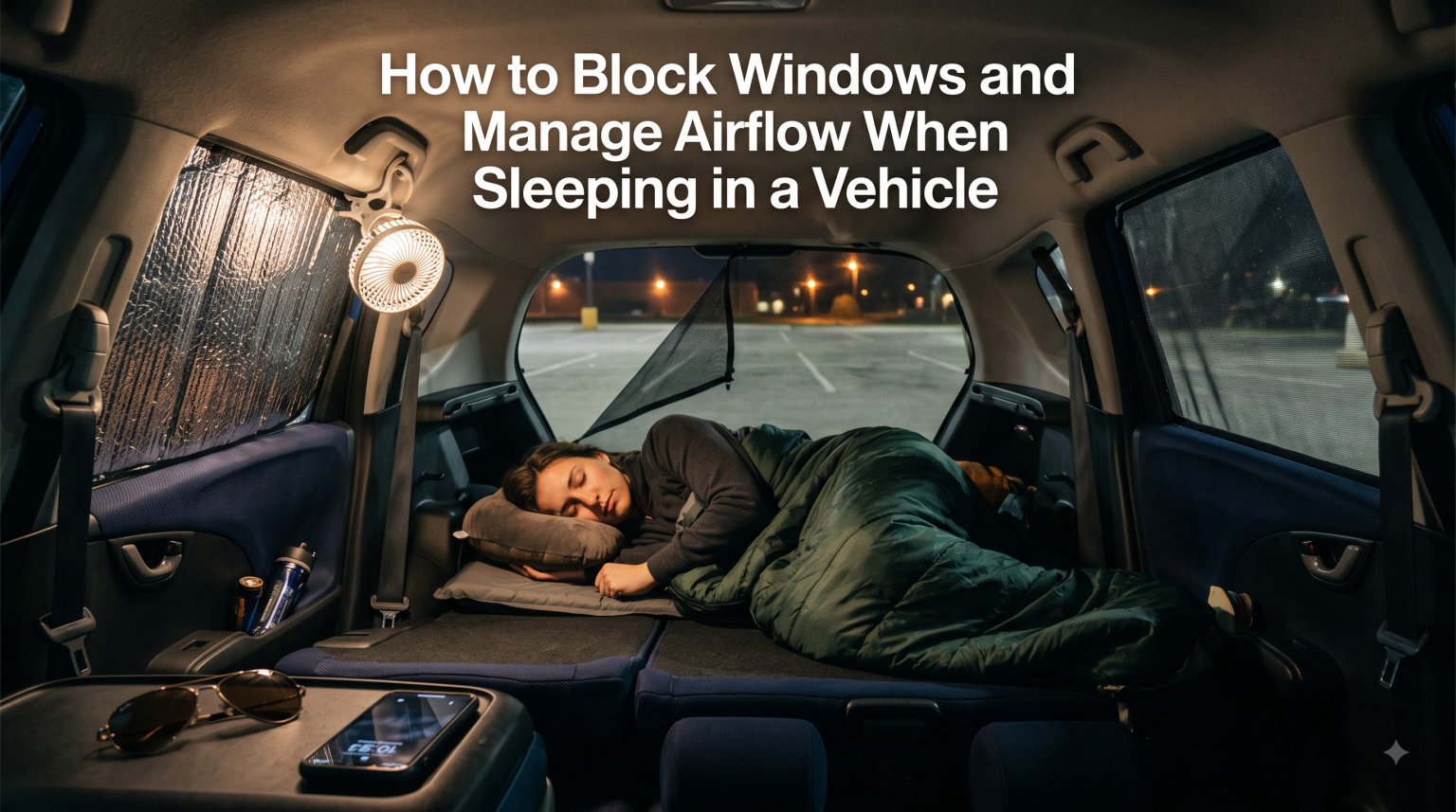
Sleeping in your vehicle should feel restful, not like you are trapped inside a stuffy, insect-filled greenhouse. Whether you are car camping at a trailhead, living the van life, or just catching a few hours on a long road trip, the way you handle your windows determines everything about your comfort. The challenge is that you need to solve three problems at once: blocking light for privacy, keeping bugs out, and letting fresh air in.
In this guide, I will walk you through exactly how to block windows and manage airflow when sleeping in a vehicle, covering every method from budget DIY Reflectix cutouts to commercial mesh shades. You will learn why ventilation matters for your safety, how to prevent the condensation that soaks your windows by morning, and which bug protection strategies actually hold up in the real world. I have pulled together insights from experienced car campers and van dwellers who have tested these methods over multiple seasons, so you are getting field-tested advice rather than theory.
By the time you finish reading, you will have a clear plan for your specific vehicle, climate, and sleeping setup. Let us start with the most important thing that too many guides gloss over: why getting airflow right is not just about comfort, but about safety.
Table of Contents
Why Ventilation Matters When Blocking Car Windows
Ventilation is the single most important factor to get right when you sleep in a vehicle, and it comes down to a mix of safety and comfort. When you seal up a car, van, or SUV with insulated covers and closed windows, the air inside stops circulating. Your body produces moisture and carbon dioxide with every breath, and without an exchange of fresh air, both build up fast.
The human body exhales roughly 2 to 3 pounds of moisture over the course of a full night. In a small enclosed cabin, that moisture has nowhere to go except onto your cold windows, your headliner, and your sleeping bag. This is why people who sleep with every window sealed shut wake up to fogged, dripping glass and damp gear, even on dry nights.
Carbon dioxide buildup is the less visible but more serious concern. While a typical vehicle is not perfectly airtight, cracking at least one window ensures that CO2 levels stay well within safe ranges. Experienced van dwellers on Reddit consistently point out that a van or car leaks more than people assume, so fresh air is rarely the real emergency. The bigger problem is condensation, which leads to mold, rust, and miserable nights.
Good ventilation also regulates temperature. In summer, trapped heat can push cabin temperatures dangerously high within minutes of sunrise. In winter, controlled airflow keeps moisture down without letting in freezing drafts. The goal is always the same: move air through the vehicle while keeping rain, bugs, and prying eyes out.
The Three Problems: Heat, Bugs, and Privacy
Every window solution for vehicle sleeping has to juggle the same three problems. Understanding each one helps you pick the right approach instead of guessing.
Heat and humidity build up fast inside a sealed vehicle. Sunlight through uncovered windows turns a car into an oven within minutes, and your own body heat raises the interior temperature steadily through the night. Without reflective covers and some airflow, summer sleeping becomes genuinely dangerous.
Bugs are the reason most people end up sealing their windows tight, which then creates the ventilation problem. Mosquitoes, flies, and gnats find the smallest gaps. The trick is using a barrier that lets air pass through while physically blocking insects, which is exactly what fine mesh screens are designed to do.
Privacy matters more than many first-time car campers expect. When you are parked at a rest stop, a trailhead, or a residential street, you do not want headlights and curious glances flooding your sleeping area. Opaque window covers signal that someone is inside and create a dark, cave-like environment that helps you sleep deeply.
The tension between these three goals is the core challenge. Seal everything for privacy and you suffocate. Crack windows for air and bugs pour in. The methods in the next section solve all three at once when applied correctly.
How to Block Windows When Sleeping in a Vehicle: All Your Options
There are two broad categories of window blocking solutions: DIY builds you make yourself, and commercial products designed specifically for vehicle sleeping. Each has real trade-offs in cost, effectiveness, and convenience. Here is an honest breakdown of both.
DIY Solutions: Reflectix, Cardboard, and Foam Board
Reflectix is the undisputed king of DIY window covers. It is a roll of reflective bubble insulation available at any hardware store, and it blocks light, reflects heat, and costs a fraction of commercial alternatives. The standard method involves tracing your window shape onto the Reflectix, cutting it out, and pressing the piece snugly into the window frame.
The tight fit is what makes Reflectix work without any fasteners. Cut it slightly oversized so it wedges itself into the rubber window channel. One van dweller on Reddit swears by foam board painted flat black, cut to fit tightly into the window frame for a stealthy, light-blocking finish. Cardboard works in a pinch but offers zero insulation and absorbs moisture, so it sags and smells after a few nights.
The big limitation of DIY solid covers is that they block airflow completely. Reflectix, foam board, and cardboard all seal the window shut. You cannot crack the window behind them without a gap letting in light and bugs. This means DIY solid covers pair best with roof vents, dashboard fans, or a separate screened window elsewhere in the vehicle.
Some builders solve this by cutting ventilation flaps into their Reflectix covers and taping mesh over the openings. This hybrid approach gives you insulation, privacy, and limited airflow in one panel, though it requires more effort to build.
Commercial Solutions: Mesh Shades and Magnetic Screens
Mesh window shades solve the fundamental flaw of solid DIY covers by letting air pass through while blocking light and insects. Sock-style mesh shades slip over the top of your door frame and hang over the window, sealing with the door when you close it. They are made from stretchy spandex or nylon mesh that blocks most light while allowing cross-ventilation.
Magnetic screens are another popular option. These attach to the metal frame around your window with sewn-in magnets and can be removed in seconds. They are ideal for vehicles with metal window frames, though some modern cars use non-magnetic materials that require adhesive strips instead.
Commercial shades cost more than a DIY roll of Reflectix, but they save you hours of measuring and cutting. Many come in vehicle-specific sizes with compatibility charts, which solves the sizing headache that frustrates DIY builders. For anyone who sleeps in their vehicle regularly, the convenience and airflow combination usually justifies the cost.
The honest trade-off is that mesh shades do not insulate as well as solid Reflectix. In freezing winter conditions, you may want solid covers on most windows with a single mesh-screened window cracked for ventilation. In summer, mesh shades on opposite windows create the cross-breeze that keeps you comfortable all night.
Step-by-Step Guide to Setting Up Window Covers
Setting up your window blocking system correctly makes the difference between a restful night and a sweaty, frustrating one. Follow these steps to get it right the first time.
Step 1: Measure every window. Use a tape measure to record the height and width of each window opening at its widest points. Vehicle windows have curved edges, so measure the flat central area where your cover will sit. Write down the dimensions for front, rear, and side windows separately, because they are almost never identical.
Step 2: Choose your material. Decide between solid insulation (Reflectix or foam board) for maximum privacy and heat reflection, mesh shades for ventilation and bug protection, or a hybrid system using both. Your climate and how often you sleep in the vehicle should drive this choice.
Step 3: Cut and test-fit. Trace your window outline onto your material, adding a small margin so the cover fits snugly. Cut it out and dry-fit it into the window frame before committing. Trim small amounts at a time until the cover presses firmly into place without falling out.
Step 4: Plan your ventilation window. Leave at least one window covered with breathable mesh rather than solid material, or build a vent flap into a Reflectix panel. This window is where fresh air enters while you sleep.
Step 5: Create a cross-ventilation path. Open or crack a window on the opposite side of the vehicle from your ventilation window so air flows through rather than pooling. Even a one-inch gap on the far side dramatically improves air circulation.
Step 6: Test overnight before a real trip. Sleep in your vehicle in your driveway or a safe spot to confirm everything fits, airflow is adequate, and no light leaks through. Adjust as needed before you are miles from a hardware store.
Managing Airflow and Cross-Ventilation
Airflow is what turns a sealed, stuffy vehicle into a comfortable sleeping space. The principle is simple: air needs a way in and a way out, and those two openings should be on opposite sides of the vehicle.
Cross-ventilation works by creating a path where fresh air enters one window, travels across the cabin, and exits through another. This continuous movement pushes out stale air, moisture, and heat. Cracking windows just one to two inches on opposite sides is enough to establish this flow, which is why so many experienced car campers report that a small gap handles ventilation and condensation in spring and fall conditions.
For vehicles where natural cross-ventilation is not enough, a small USB-powered fan makes a noticeable difference. One Reddit user reported running a USB fan with rain guards and cracked windows for four years without needing a roof vent fan. Position the fan to pull air in through one window or push stale air out through another, depending on wind direction and temperature.
In rainy weather, the challenge is keeping airflow without letting water in. Sock-style mesh shades that slip over the door frame work well here because the closed door holds them in place while the mesh blocks rain at an angle. You can also cut rain guards from flexible plastic and tape them above cracked windows to deflect water while maintaining airflow.
Dashboard vents and floor vents on many vehicles can be positioned to direct outside air into the cabin even with the engine off, though this varies by model. Experiment with your vehicle to find passive airflow paths that work without any power source.
How to Prevent Condensation When Sleeping in a Car
Condensation is the number one complaint among people who sleep in vehicles, and it is entirely caused by moisture from your own breath and body meeting cold surfaces. The good news is that it is preventable with the right approach.
The most effective strategy is maintaining at least minimal airflow all night. A single cracked window with a mesh screen allows moisture to escape rather than collecting on your windows. This is the single biggest condensation fix, and it costs nothing.
For vehicles in cold or humid climates, add a moisture absorber inside the cabin. Silica gel packs, disposable dehumidifier boxes, or even an open container of crystal kitty litter pull excess moisture from the air overnight. One Reddit contributor built a DIY vent using gutter guard material with mesh screen attached, allowing controlled airflow while blocking bugs and reducing condensation simultaneously.
Avoid drying wet clothes or gear inside the vehicle overnight, since this adds significant moisture to the air. If you must dry items, do it during the day with windows open. Also, crack a window before you fall asleep rather than waiting until you notice condensation, because prevention is far easier than cleanup.
Finally, wipe down windows in the morning if any moisture collects. A small microfiber cloth takes seconds and prevents water from pooling in door panels where it can cause long-term damage.
Bug Protection Strategies That Actually Work
Bugs are the reason most people seal their windows, but sealing them creates every other problem in this guide. The right approach uses physical barriers that stop insects while letting air through.
Fine mesh is the universal solution. Commercial mesh shades with tight weaves block mosquitoes, gnats, and flies while permitting full airflow. If you are building your own, look for no-see-um mesh rather than standard window screen, since the tighter weave stops the tiny insects that slip through ordinary screen material.
For DIY solid covers, cut small ventilation holes and cover them with mesh patches taped or glued in place. This gives you the insulation of Reflectix with a controlled, bug-proof air path. Position these vent patches near the top of the window where warm, moist air naturally rises and exits.
Avoid relying on chemical repellents as your primary defense inside a small enclosed space. Sprays and coils are fine for outdoor use, but concentrated fumes in a sealed cabin can cause headaches and respiratory irritation overnight. Physical barriers are safer and more reliable for sleeping.
Seasonal Adjustments: Summer vs Winter Vehicle Sleeping
Your window blocking strategy should shift with the seasons. What works in July will make you miserable in January, and vice versa.
In summer, prioritize airflow and heat reflection. Use Reflectix covers on windows that face the sunrise to bounce heat away before it builds up. Cover all windows with mesh shades or leave them cracked with screens, and run a USB fan to keep air moving through the night. Parking in shade during the day and venting hot air before you settle in makes a massive difference in overnight comfort.
In winter, the priority flips to insulation and moisture control. Solid Reflectix or foam board covers on most windows trap body heat and block cold drafts. Keep one window covered with mesh and cracked slightly to allow moisture to escape, because condensation is far worse in cold weather when warm interior air meets freezing glass. Winter car camping moisture management is about balancing warmth with enough ventilation to prevent your windows from dripping by morning.
In humid climates, increase ventilation regardless of temperature. High humidity means your body cannot cool itself through evaporation, and moisture builds up faster inside the vehicle. Prioritize cross-ventilation and consider a small fan running overnight to keep air moving even when temperatures drop.
How to Choose the Right Window Blocking Method for Your Vehicle
Picking the right approach comes down to four factors: your climate, your vehicle type, your budget, and how often you sleep in it. Here is how to decide.
Climate first. If you sleep in your vehicle mainly in hot weather, mesh shades with cross-ventilation should be your foundation. Add Reflectix on sun-facing windows for heat reflection. If you camp in cold weather, solid insulated covers on most windows with a single vented mesh window is the proven formula for staying warm without drowning in condensation.
Vehicle type matters. SUVs and minivans give you the most options because rear windows are large and out of sight. Sedans are trickier because the sleeping area is smaller and airflow paths are more limited. Trucks with camper shells have unique needs since the shell windows differ from cab windows. Measure carefully and look for vehicle-specific sizing charts if you go the commercial route.
Budget and effort. A full DIY Reflectix setup for all windows costs under $30 and a few hours of measuring and cutting. Commercial mesh shades run higher but save you the build time and typically come with sizing support. If you sleep in your vehicle regularly, the investment in commercial shades pays off in convenience and durability. If it is a one-time road trip, DIY is the practical choice.
Frequency of use. For occasional use, lightweight removable covers you can store under a seat work best. For full-time van life or frequent car camping, consider a permanent combination of solid covers for privacy plus mesh-screened vent windows for airflow. Many experienced vehicle sleepers run a hybrid system year-round and simply swap which windows are cracked depending on the season.
Whatever you choose, the combination of privacy covers and at least one vented mesh window solves the three core problems of heat, bugs, and privacy without forcing you to compromise your safety or comfort.
FAQs
How to blackout car windows when sleeping in car?
Cut Reflectix insulation or foam board to fit snugly into each window frame, paint flat black for a stealthy look, and press the panels into the window channel for a tight, light-blocking seal. Commercial mesh shades in opaque fabric also block most light while allowing some airflow. For total blackout, combine solid Reflectix covers with a single mesh-screened vent window so you get darkness with enough fresh air to prevent condensation.
How to get ventilation when sleeping in a car?
Crack one to two windows slightly and use mesh screens to keep bugs out. Create cross-ventilation by opening windows on opposite sides of the vehicle so fresh air flows through the cabin. A small USB-powered fan positioned near a cracked window boosts circulation significantly. Sock-style mesh shades let air pass through while blocking insects and maintaining privacy.
How to prevent condensation on windows when sleeping in a car?
Keep at least one window cracked with a mesh screen so moisture from your breath can escape instead of collecting on cold glass. Add a moisture absorber like silica gel or a disposable dehumidifier box inside the cabin. Avoid drying wet gear inside overnight, and wipe any condensation from windows in the morning to prevent long-term water damage to door panels.
Do you have to vent a car window if sleeping overnight?
Yes, you should crack at least one window when sleeping in a vehicle overnight. While cars are not perfectly airtight, a small gap ensures carbon dioxide and moisture stay at safe, comfortable levels. Even a one-inch opening covered with mesh is enough to maintain air quality and prevent the heavy condensation that comes from breathing in a sealed space for hours.
Conclusion
Learning how to block windows and manage airflow when sleeping in a vehicle comes down to balancing three competing needs: privacy, temperature control, and fresh air. Solid covers like Reflectix and foam board give you darkness and insulation, while mesh shades and cracked windows provide the ventilation that keeps you safe and dry. The best setups combine both, using solid panels for privacy and a vented mesh window for the airflow that prevents condensation and stuffiness.
Your next step is simple. Measure your windows, pick a material that fits your climate and budget, and test it overnight before your next trip. A single evening in your driveway will tell you whether your airflow is adequate and whether any light leaks through. Get that right, and every night in your vehicle becomes genuinely comfortable.