
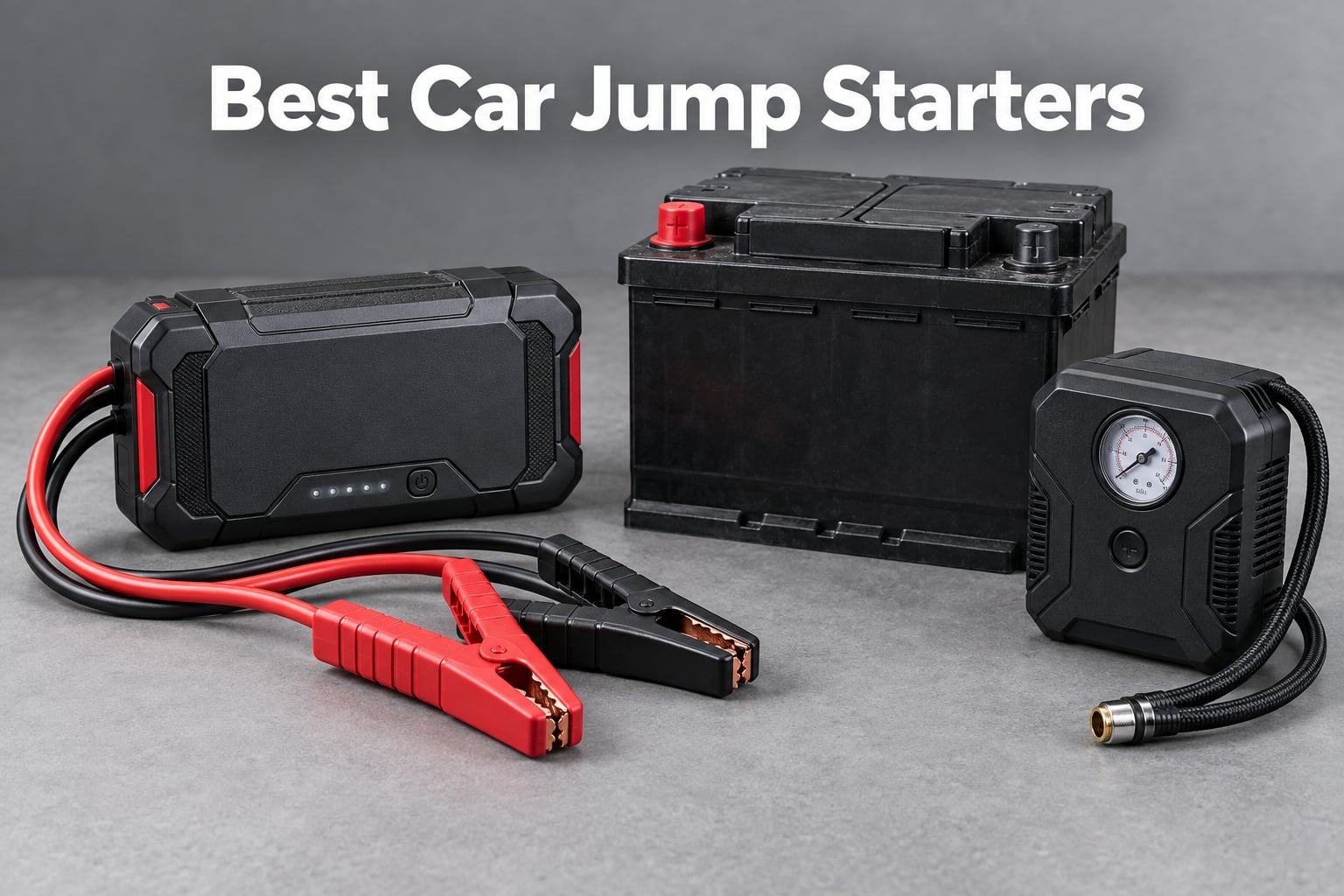
A flat battery is the most common roadside failure there is, and the fix usually takes under two minutes with a portable pack in the trunk. The problem is that “best car jump starters” lists rarely tell you how the picks were chosen, and the loudest complaint in every forum thread is that the ranking is written from spec sheets rather than from use. We built this one differently.
Every product below was picked on published specifications we could verify, on the volume and consistency of owner feedback, and on the two variables that actually decide whether a pack works when you need it: stated engine-displacement support and the protection built into the clamps. Peak amps came last, not first, and we explain why in the buying guide. Last updated for 2026, with every rating and review count copied straight from the current listing.
A portable jump starter is a rechargeable battery with heavy-duty leads built in, small enough for a glovebox or a boot and strong enough to deliver the surge a starter motor needs. If your car is over five years old, parked outdoors, or driven in cold weather, it is basic roadside insurance rather than an accessory. Owners often pair one with a small air pump in the same bag, which raises a fair question we address further down, and it sits neatly alongside the rest of a long road trip mechanical checklist.
Table of Contents
Top 3 Picks for Best Car Jump Starters in 2026

Hulkman Alpha85 2000A
- 2000A peak
- 74Wh 20000mAh
- 8.5L gas and 6.0L diesel
- 3.3-inch smart display
- 65W speed charge
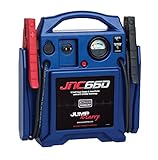
Clore JNC660 1700A
- 22Ah AGM lead-acid
- 1700A peak
- 46 inch #2 AWG cables
- built-in voltmeter
- 18 pounds

The Hulkman Alpha85 takes the top slot because it pairs the highest owner rating in this group with a 74Wh battery, a 3.3-inch display that tells you what went wrong, and a 65W recharge that restores most of the charge in about an hour. The Clore JNC660 is the opposite bet: an 18-pound lead-acid jump box that shrugs off drops and will crank an engine whose battery is completely dead, which matters if you work outdoors. The DBPOWER DJS90 is the value pick, doing the job of a much larger pack at 1.1 pounds.
Best Car Jump Starters in 2026: Quick Comparison
| Product | Specifications | Action |
|---|---|---|
| Hulkman Alpha85 |
|
Check Latest Price |
| Clore Automotive JNC660 |
|
Check Latest Price |
| DBPOWER DJS90 3000A |
|
Check Latest Price |
 AstroAI S8 1500A AstroAI S8 1500A |
|
Check Latest Price |
 GOOLOO GP4000 4000A GOOLOO GP4000 4000A |
|
Check Latest Price |
 S ZEVZO ET03 4000A S ZEVZO ET03 4000A |
|
Check Latest Price |
 WOLFBOX MV24 4000A WOLFBOX MV24 4000A |
|
Check Latest Price |
 Povasee A30 5000A Povasee A30 5000A |
|
Check Latest Price |
 TOPDON JS3000 TOPDON JS3000 |
|
Check Latest Price |
 Acmount W160 Pro Combo Acmount W160 Pro Combo |
|
Check Latest Price |
1. Hulkman Alpha85 – Best Overall Jump Starter for Most Drivers
Hulkman Alpha85 Smart Portable Jump Starter, 2000A Battery Booster Pack with LED Display, Flashlight, 74Wh Power Bank & Jumper Cable, 12V Jump Box for up to 8.5L Gas & 6.0L Diesel, Cars, SUVs & Trucks
2000A peak
74Wh 20000mAh
8.5L gas and 6.0L diesel
3.3-inch smart display
4.5 pounds
Pros
- 4.7 stars across more than 13k reviews
- the strongest sentiment in this group
- 65W charging takes the pack from 0 to 80% in about an hour
- Starts fully dead 8.5L gas and 6.0L diesel vehicles
- 10-layer protection with spark-proof and reverse-polarity guards
- USB-C PD18W plus USB-A QC3.0 and a five-mode flashlight
Cons
- 2000A ceiling sits below the 4000A to 5000A models
- 4.5 pounds is heavy for a glovebox pack
- Needs topping up roughly every three months
The Alpha85 is the pack I would put in my own car, and it earned that spot on the strength of owner feedback rather than a spec sheet. Reviewers consistently point at three things: the display is genuinely readable, the recharge is quick, and it will crank an 8.5-litre petrol engine that has been fully dead. That last claim is the one that separates it from cheaper units, because most budget packs need a battery that still holds some charge.
At 74Wh and 20000mAh it holds enough for roughly 60 jump starts, which means a pack bought in spring can still be useful in autumn. The 65W speed charge path is the feature we would not give up: back to 80% in about an hour, full in around 90 minutes, so topping it up over coffee is realistic rather than aspirational.
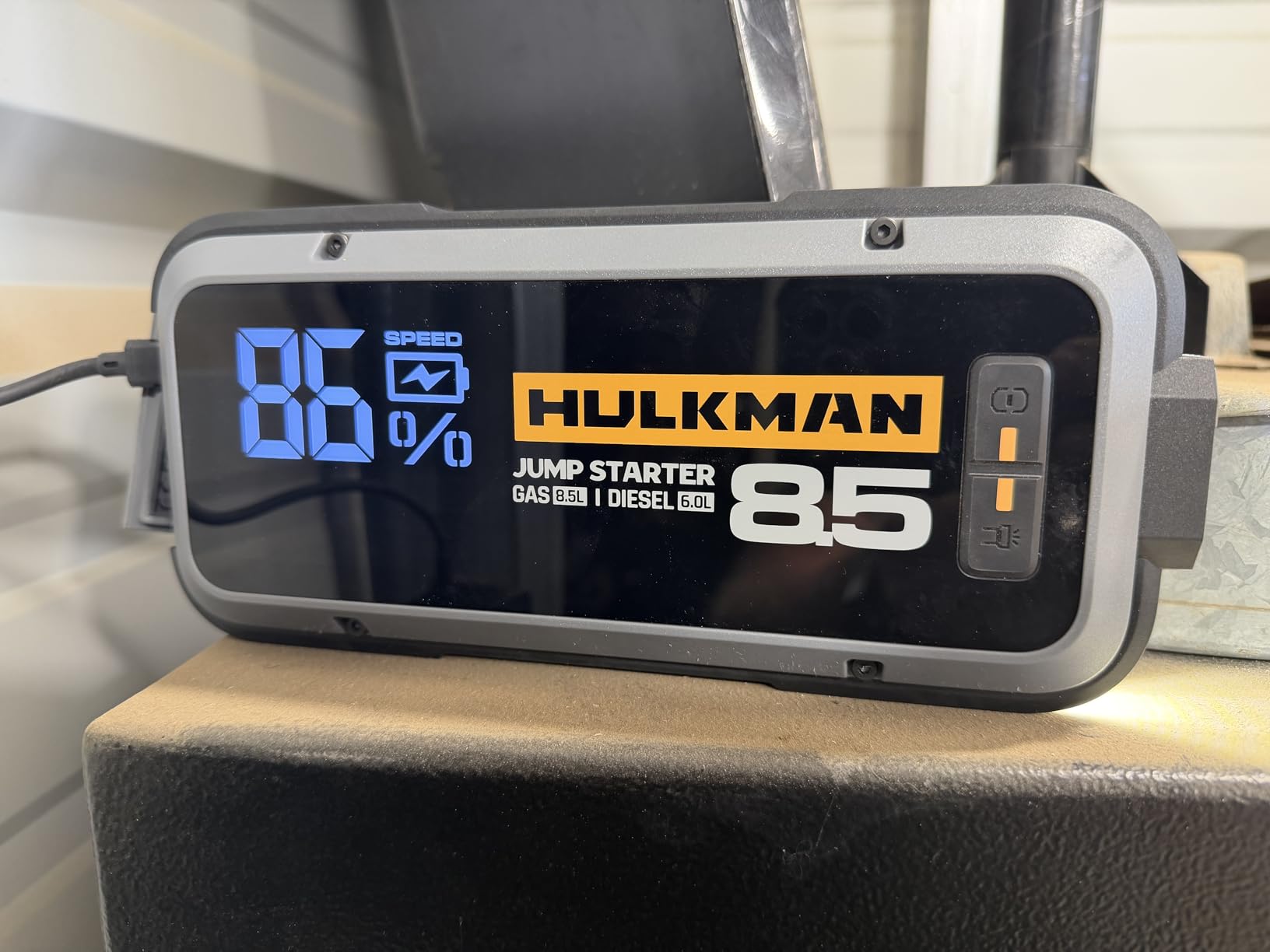
Two more details matter for daily ownership. The USB-C PD18W port and USB-A QC3.0 output turn it into a genuine power bank, and the five-mode LED light has replaced the torch in our bag for roadside work. The shell carries an IP65 rating, so rain and dust are not a concern on a wet shoulder or in a muddy trailer.
The honest limitation is the headline number. At 2000A it carries a lower headline number than the 4000A to 5000A models below, and owners of large diesels should look there instead. It is also 4.5 pounds, which is heavy for something you expect to carry to the bonnet in a downpour, and the manufacturer asks you to top it up every three months to keep the cells healthy.
What you should know before you buy it
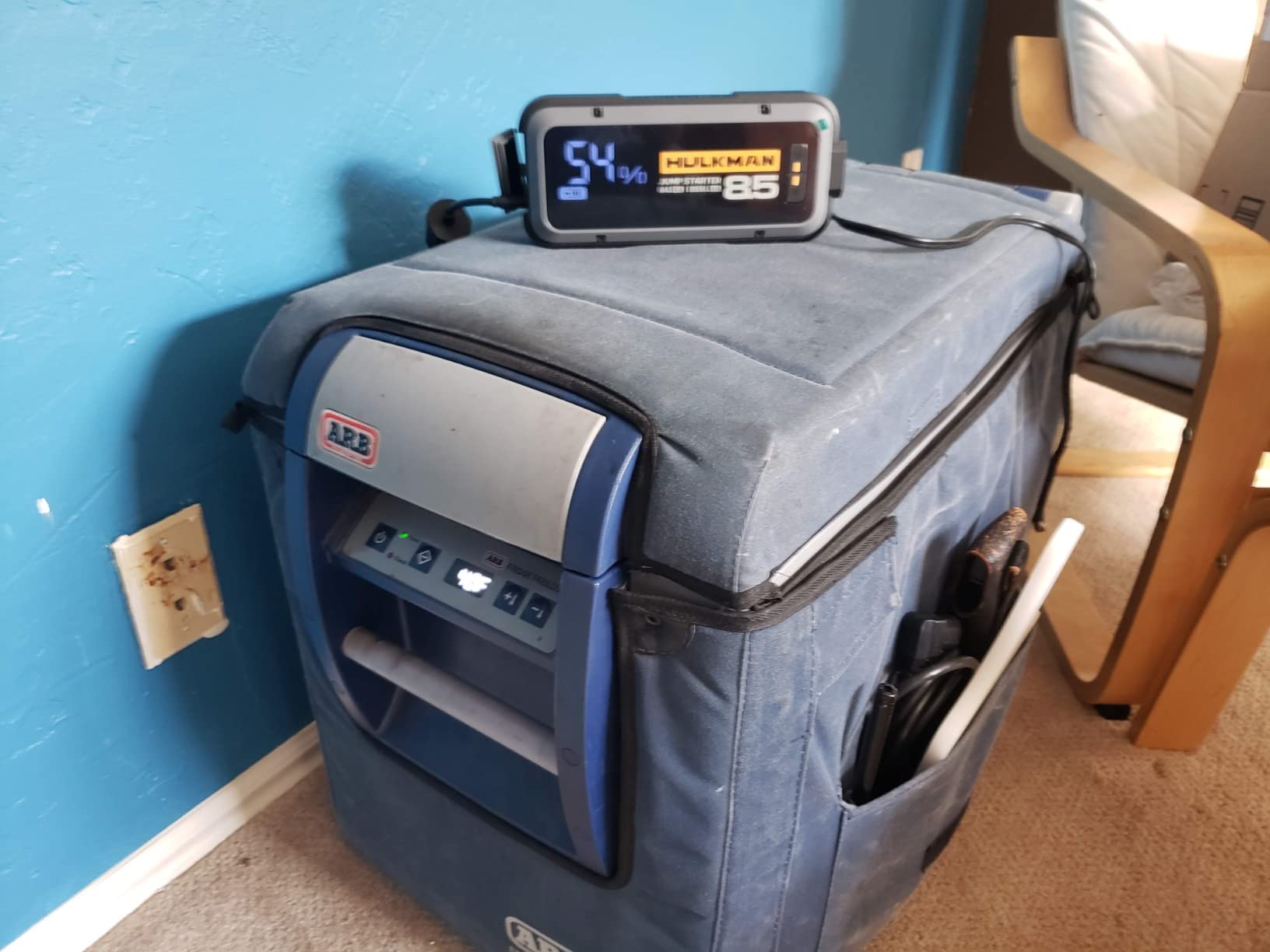
Charge it every eight to twelve weeks, not only when the car looks ill. The display shows remaining power, so a ten-second check in the driveway is enough to catch a pack that has drained.
Stated support runs to 8.5L gas and 6.0L diesel, so it covers everything from a city hatchback to a crew-cab petrol pickup without stress.
Who should skip it
If you tow a heavy diesel or a motorhome, the 2000A ceiling leaves headroom you may need on a freezing morning. If you want something that fits a glovebox rather than a boot, the 4.5-pound body is the wrong shape for the job.
2. Clore Automotive JNC660 – the Rugged Lead-Acid Workhorse
Clore Automotive Jump-N-Carry JNC660 1700 Peak Amp 12 Volt Jump Starter , Blue
22Ah AGM lead-acid
1700A peak
46 inch #2 AWG cables
built-in voltmeter
18 pounds
Pros
- 22Ah AGM battery gives strong repeated cranking on large engines
- 46 inch #2 AWG cables and clamps that grip large battery posts
- Starts vehicles whose battery is completely dead
- Built-in voltmeter reads the on-board battery charge state
- DC outlet runs 12V accessories
Cons
- 18 pounds is heavy for a portable pack
- Recharges in roughly 5 hours or more and needs an extension cord that is not included
- USB connectivity is thin next to modern lithium packs
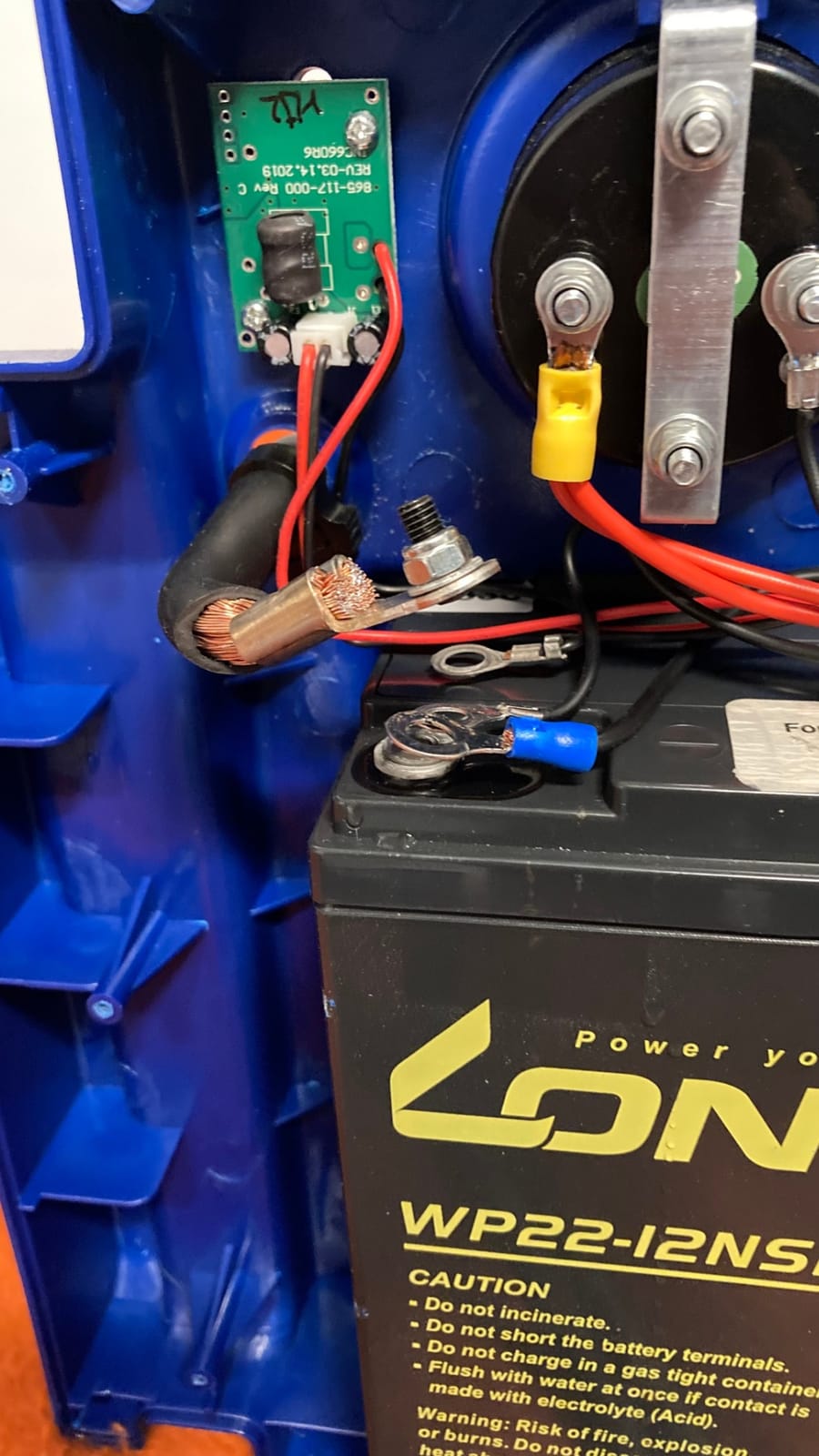
The JNC660 is the only lead-acid pack in this roundup, and that is exactly why it is here. Its 22Ah AGM battery can push cranking current repeatedly without the deep-discharge penalty a small lithium cell suffers, and reviewers report it starting large V8s and vehicles sitting entirely flat. The build is old-school heavy: 46 inch #2 AWG cables and clamps that feel like workshop tools.
It ranks second for a practical reason. It is the hardest pack here to damage, and it is the one that keeps working when a lithium unit is sitting flat because nobody recharged it. For tradespeople, farm equipment, or a boat on a trailer that spends weeks unused, that reliability argument is worth the extra pounds.
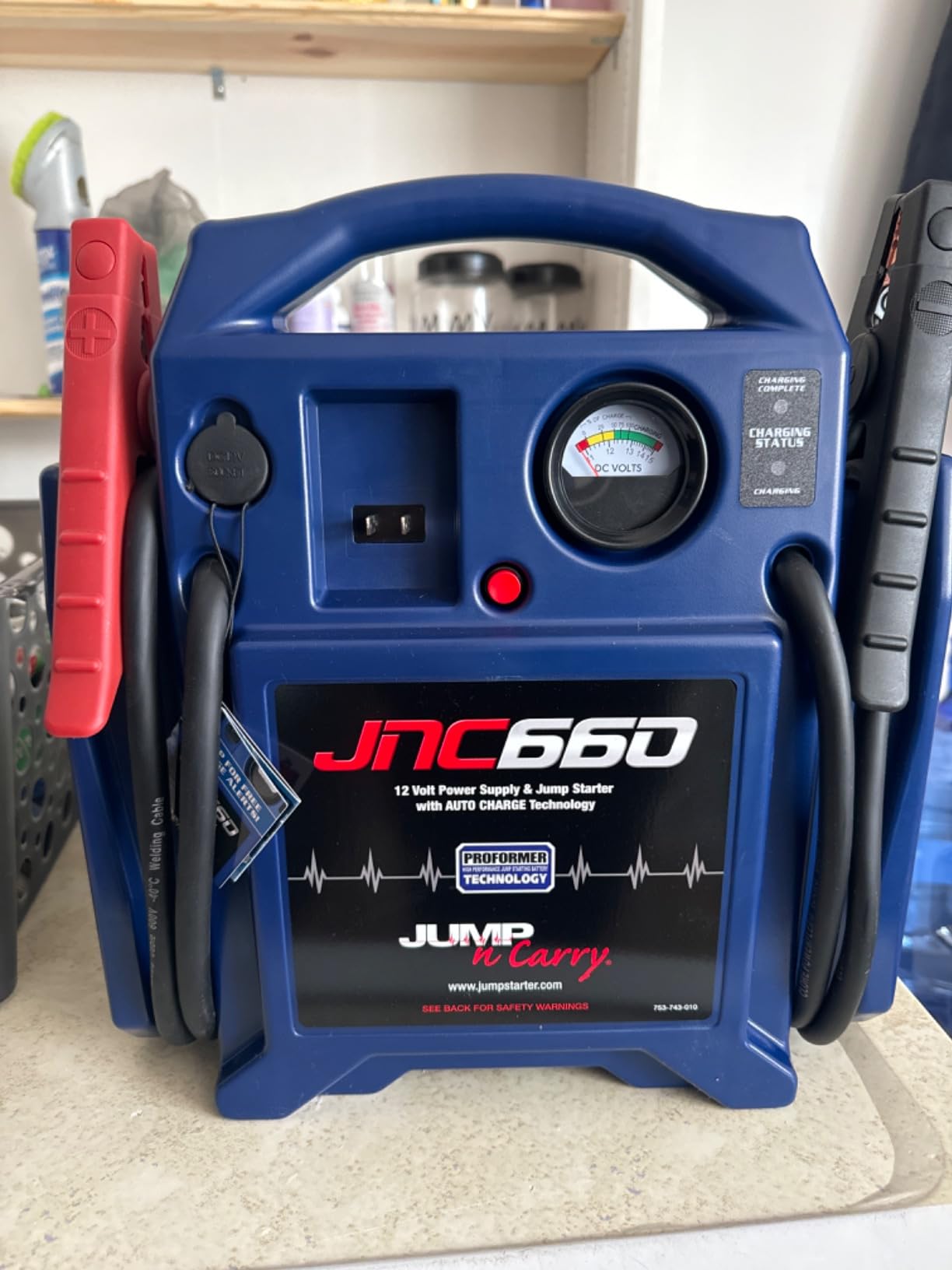
The built-in voltmeter is a small touch that earns its place. Before you even connect anything, you can check whether the dead battery has any voltage left, which tells you whether a jump is even the right call. The DC outlet also runs 12V accessories without draining a separate lead.
None of this is portable in any modern sense. It weighs 18 pounds, recharges in five hours or more, and the charging lead needs a standard extension cord that is not in the box. There is also a documented pattern of units that fail to recover after long storage, so treat it as a garage tool rather than a boot accessory.
What you should know before you buy it
Charge it from a wall outlet on a schedule, not from the car. A 12V socket recharge is slower still and is not what the design expects.
It is listed as compatible with cars, trucks, vans, RVs, tractors, ATVs, buses, lawn mowers and watercraft, which makes it unusually broad for a single box.
Who should skip it
Do not buy it as your only roadside kit if you park on a street regularly. Eighteen pounds is a two-hand carry across a car park, and a sub-two-pound alternative is the modern answer.
3. DBPOWER DJS90 3000A – Best Value Pick
DBPOWER Peak 3000A 18000mAh Portable Car Jump Starter (up to 8.0L Gas, 6.0L Diesel Engine) Battery Booster with Smart Charging Port, Compass, LCD Screen and LED Light (Black/Red)
3000A peak
18000mAh
8.0L gas and 6.0L diesel
LCD with compass
1.1 pounds
Pros
- 1.1 pound body fits a glovebox
- 3000A covers 8.0L gas and 6.0L diesel engines
- LCD screen shows remaining power at a glance
- Smart USB port doubles it as an 18000mAh power bank
- Spray-gold clamps add over-current and short-circuit protection
Cons
- 3000A claim feels optimistic on heavy diesel engines
- 18000mAh trails newer 20000mAh-plus packs
- Some owners report it sitting depleted after long storage
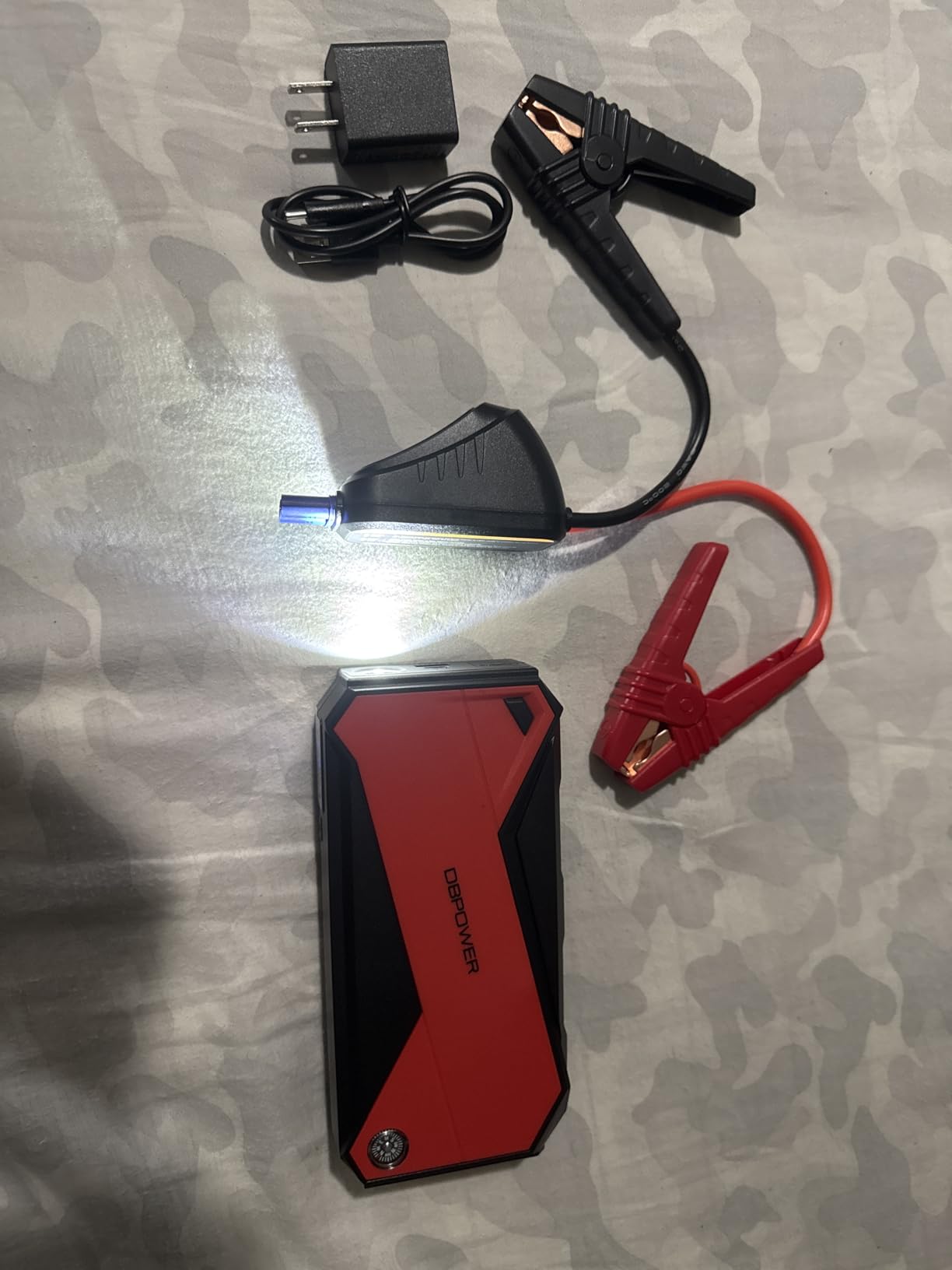
What makes the DJS90 the value pick is the ratio, not the peak number. You get 3000A of claimed output, stated support to 8.0-litre petrol and 6.0-litre diesel, an 18000mAh cell, and a body light enough at 1.1 pounds that a partner or a child could handle it in an emergency. Very few packs at any level give you all four.
Reviewers report it starting everyday sedans and SUVs without drama, and they like the LCD readout, which removes the guesswork of four blinking LEDs. The smart USB charging port means it doubles as a power bank for a phone or tablet, which is how most owners end up using it away from the car entirely.
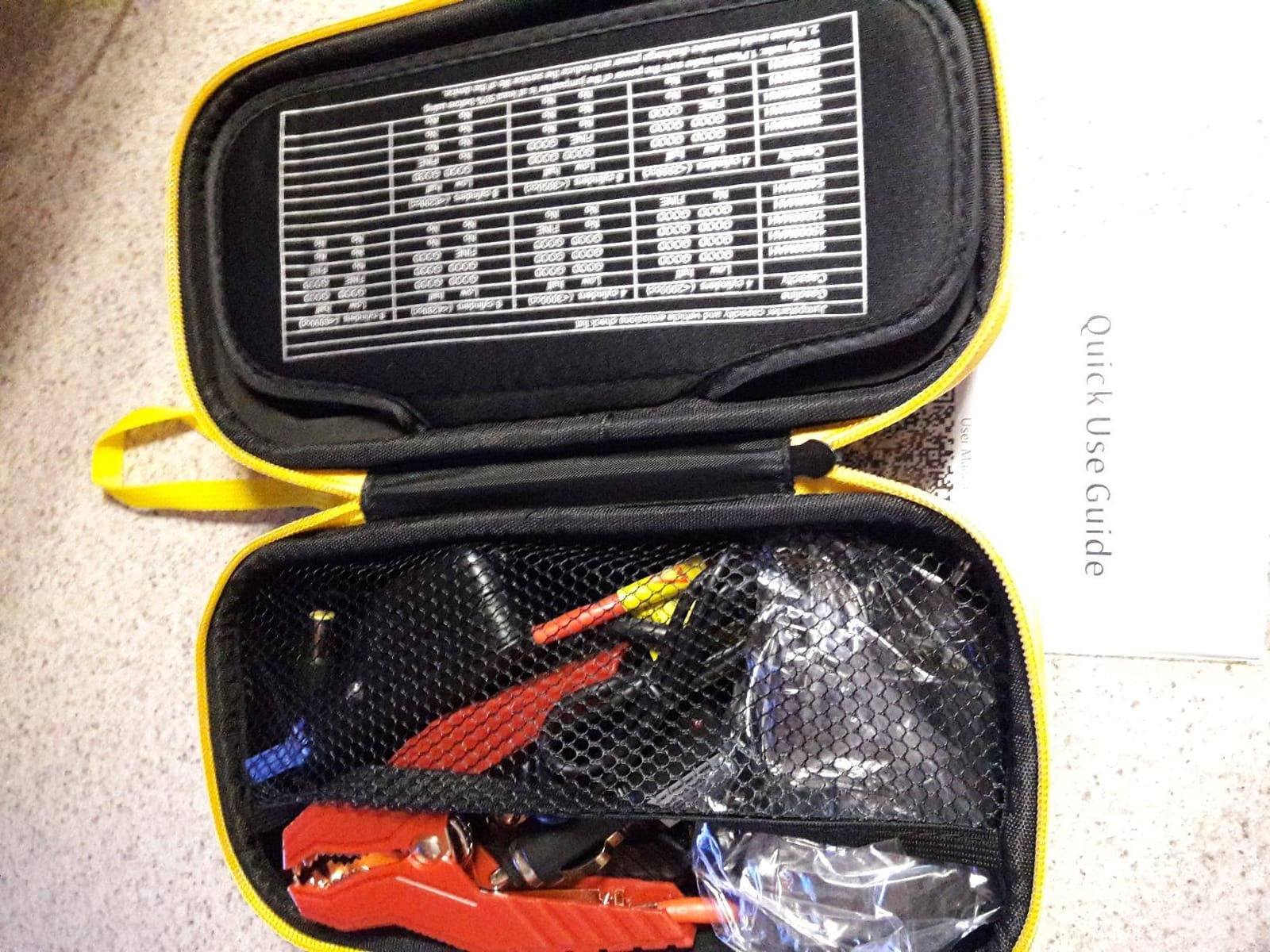
The spray-gold clamps carry multi-layer protection against over-current, short circuit and over-voltage, plus the reverse-polarity guard every pack in this list should have. It comes with a carry case, a USB cable, and a two-year warranty, which is longer than several more expensive packs offer.
Two criticisms recur. Some owners feel the 3000A figure is optimistic when the engine is a large diesel, and 18000mAh is now below the 20000mAh-plus norm, so expect fewer starts per charge than the newest packs. A minority also report units that came out of storage depleted, which is a reminder to check it monthly.
What you should know before you buy it
It is rated for up to 30 starts per charge, so it is sized for occasional emergencies rather than a week of roadside work.
Compatibility is listed across lawn mowers, motorcycles, passenger cars, RVs, tractors and vans, so it covers household machinery as well as the family car.
Who should skip it
Skip it if you run heavy equipment every day and need many consecutive starts on one charge. The lower capacity and the diesel complaints are the reasons to move up to a 24000mAh unit instead.
4. AstroAI S8 1500A – the Lightest Pack in the Group
AstroAI S8 Car Battery Jump Starter 1500A – Portable 12V Lithium Jump Box
1500A peak
8000mAh
6.0L gas and 3.0L diesel
0.95 pounds
3-mode flashlight
Pros
- Under one pound and small enough to forget in the trunk
- Boost mode reliably starts fully drained batteries
- 8000mAh USB-C output is useful for phones and devices
- Three-mode LED flashlight plus a power bank function
- Eight integrated safety protections with metal clamps
Cons
- Lowest output in this roundup at 1500A and 8000mAh
- Each jump uses about 25% of capacity for roughly 3 to 4 starts
- Short cables and a slow 3A USB output with no PD charging
The S8 exists to solve one problem: getting a pack to the bonnet without thinking about it. At 430 grams it is the lightest unit here, and the 4.5 by 7.9 by 3.7 inch body slides into a door pocket, a centre console, or the small bag you already keep in the boot.
Reviewers use it as a backup rather than a primary, and they describe boost mode starting completely drained V6 and V8 engines, sometimes on the second attempt. The 45C high-rate lithium cell is decent for its size, and the three-mode flashlight with strobe and SOS is the sort of detail that matters more at night than the amp figure does.
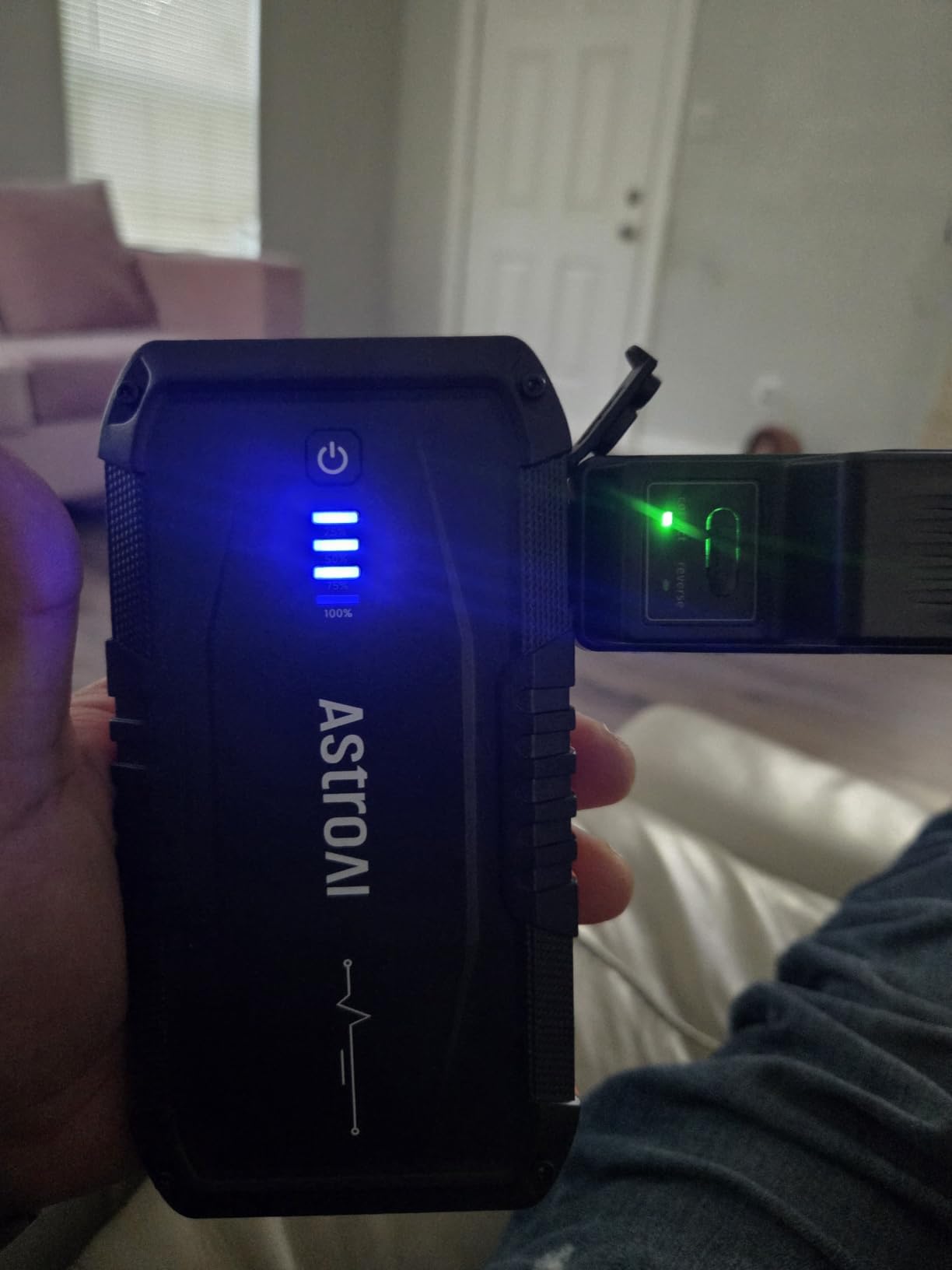
Stated support is 6.0L gas and 3.0L diesel, which covers most family cars, SUVs, pickups, motorcycles, ATVs and lawn mowers. Eight integrated protections cover reverse polarity and short circuit, and the clamps are metal rather than plastic, which is the right call for something handling a few hundred amps.
The compromises are real. Each jump consumes roughly a quarter of the capacity, so plan for three or four starts per full charge, and the leads are short, which can be awkward on a wide battery post. The USB output is a slow 3A at 5V with no Power Delivery, so do not plan to charge a laptop from it.
What you should know before you buy it
Read the boost indicator. When the light flashes green the pack is ready, and forcing a start earlier is the most common cause of a failed attempt.
The 8000mAh cell also charges your phone, which quietly makes it the most used feature for most owners who carry one.
Who should skip it
Skip it if you drive a large diesel, a motorhome, or anything that will need more than one attempt. It is a supplementary pack, and a 4000A unit in the boot is the safer single choice.
5. GOOLOO GP4000 – Best for Diesel Engines
GOOLOO GP4000 Jump Starter – 4000A 12V Car Battery Jumper Starter Portable
4000A peak
24000mAh
all gas and diesel to 10.0L
over 60 jumps per charge
-4F to 140F
Pros
- 4000A covers all gasoline engines and diesels up to 10.0L
- 24000mAh with over 60 jump starts per charge
- Boost button restarts extremely low-voltage batteries
- Dual USB output plus USB-C 5V/3A
- Drop-resistant hardened shell and a rated -4F to 140F operating range
Cons
- Jumper cables detach and the socket is hard to find in the dark
- Wall charger is not included in the box
- Boost mode times out after about two minutes and must be re-pressed
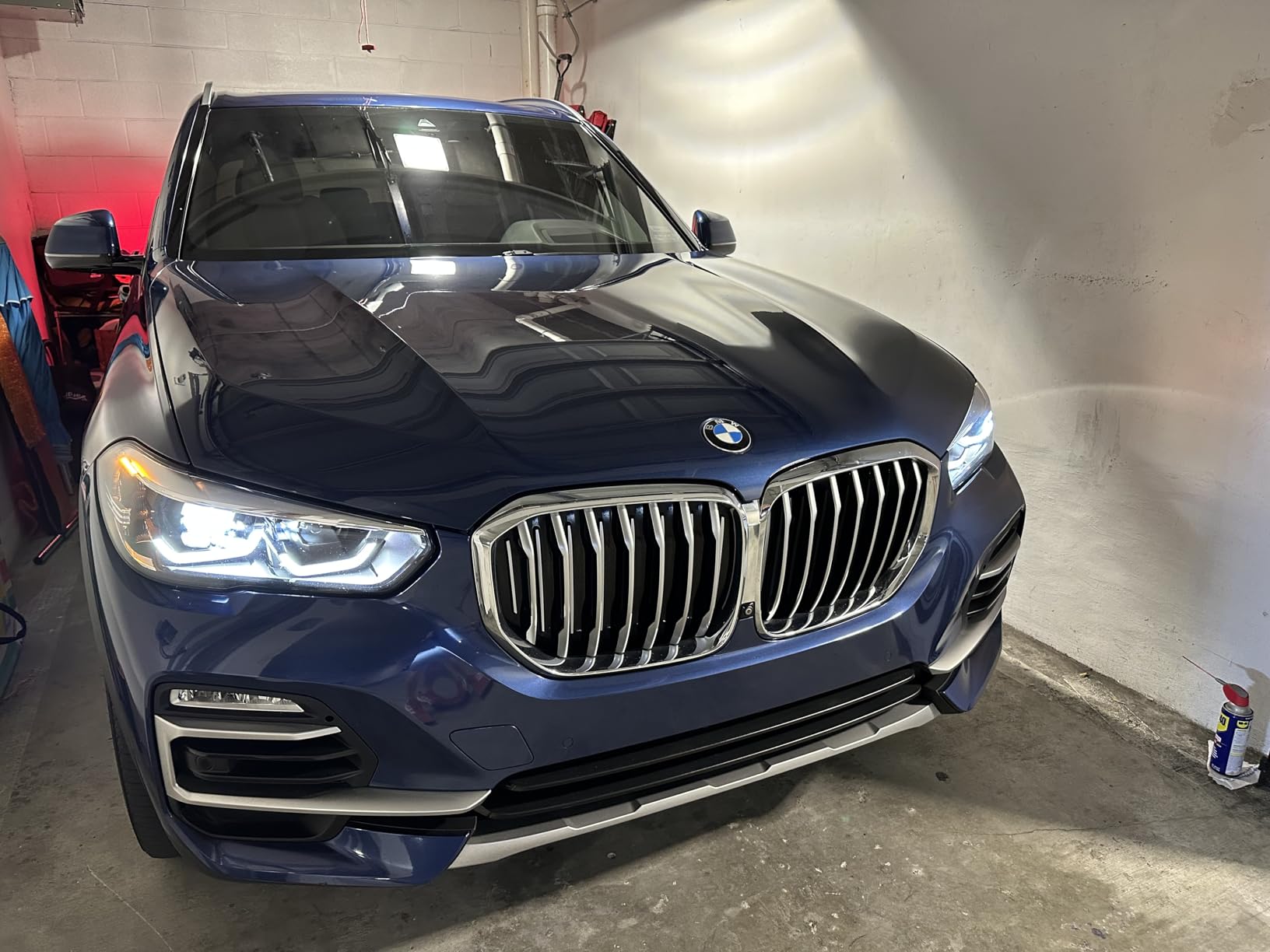
The GP4000 is the most convincing big-engine claim in this roundup, and it is the pack we would trust in a rural breakdown. Reviewers report starting trucks, machinery with dual batteries, and even a Hummer H2 from a nearly flat battery, repeatedly, on the same charge. With 24000mAh and a stated 60-plus starts, that capacity headroom matters more than the headline number.
Its operating range of -4F to 140F is one of the more honest figures in this category, since cold is exactly when a start fails. The metal clamps carry ten built-in protections, and the boost button restarts a battery so low that the smart clip would normally refuse to deliver current.
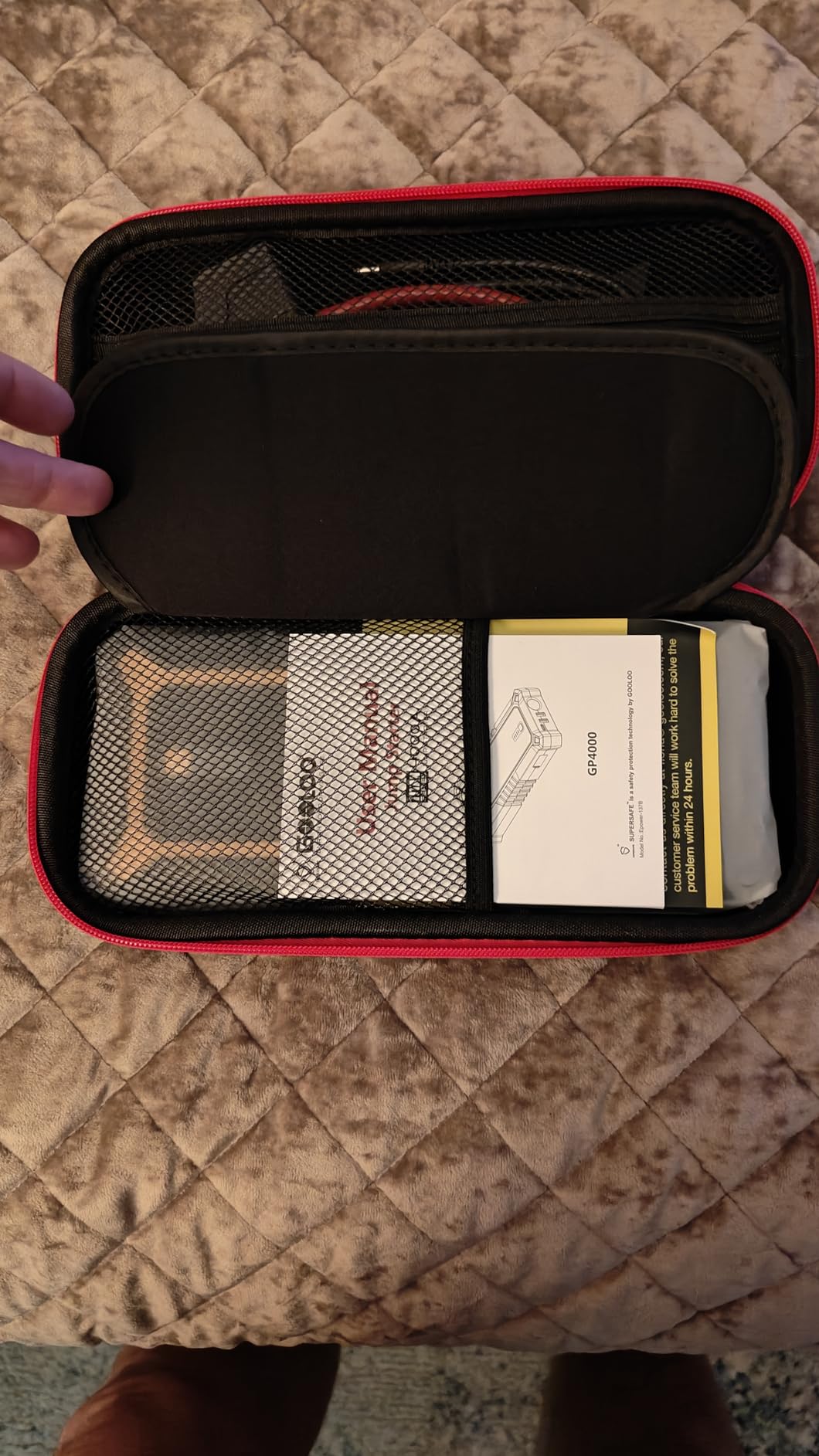
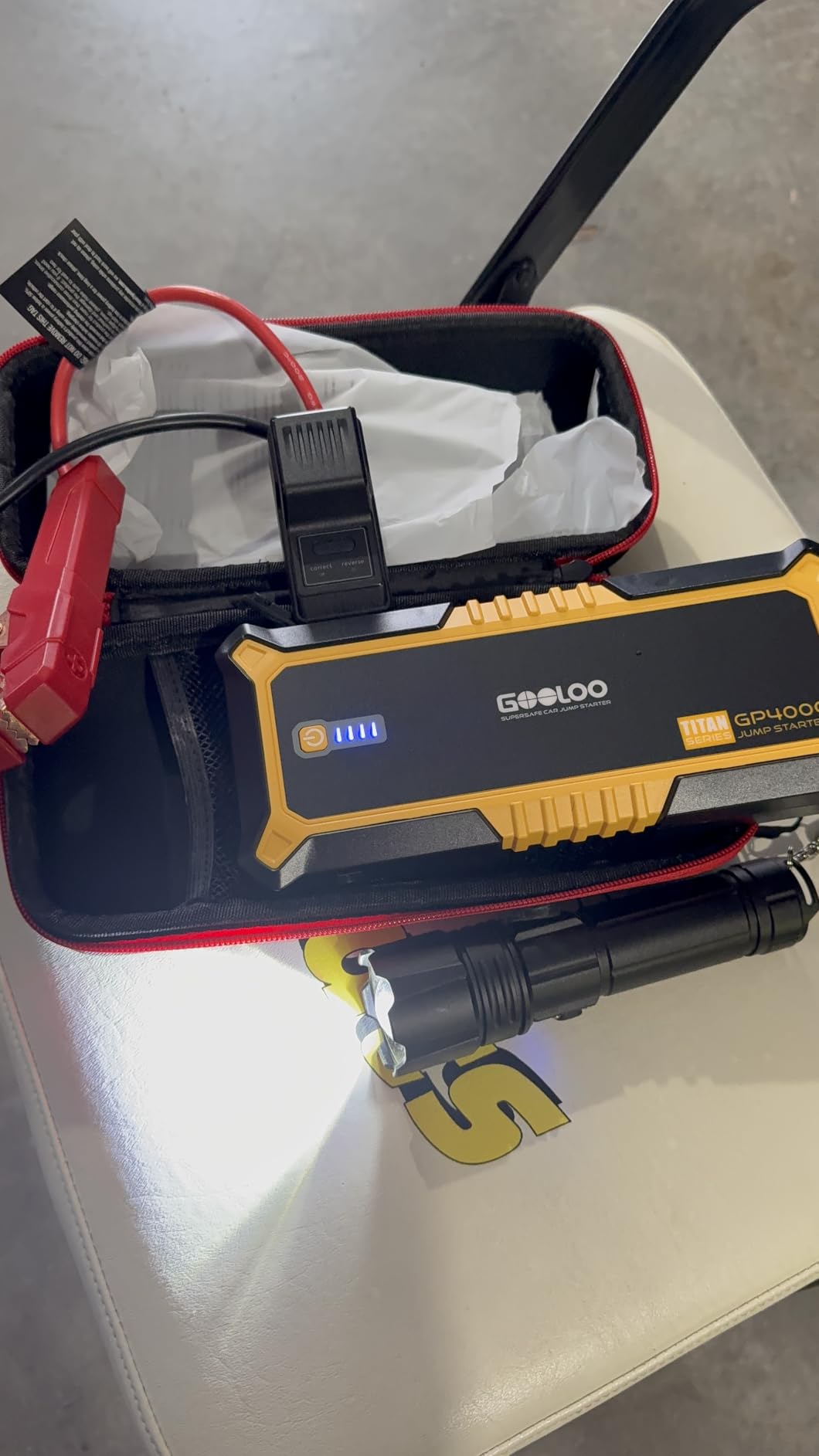
Design choices are where the reviews get blunt. The cables detach from the body and the socket is small and hard to locate in darkness, which is a poor experience at the roadside. The wall charger is not in the box, and the boost mode cuts out after roughly two minutes, so a second attempt needs a fresh press.
One detailed reviewer also found that on a deeply sulfated battery the unit can trickle charge into the cell over time rather than crank it immediately, which is a reasonable behaviour but not the instant rescue you might expect. Recharge from a 50W USB-C charger takes about five hours, so budget an evening.
What you should know before you buy it
Buy a USB-C wall charger at the same time. The absence of one in the box is the most common complaint in the reviews.
Listed vehicle coverage includes ATVs, lawn mowers, motorcycles, passenger cars, RVs, snowmobiles, trucks and UTVs, so it doubles as farm and garden kit.
Who should skip it
Do not buy it for use in a hot parked car year-round. If weight is your constraint, the 4000A packs further down carry a similar rating in a smaller footprint.
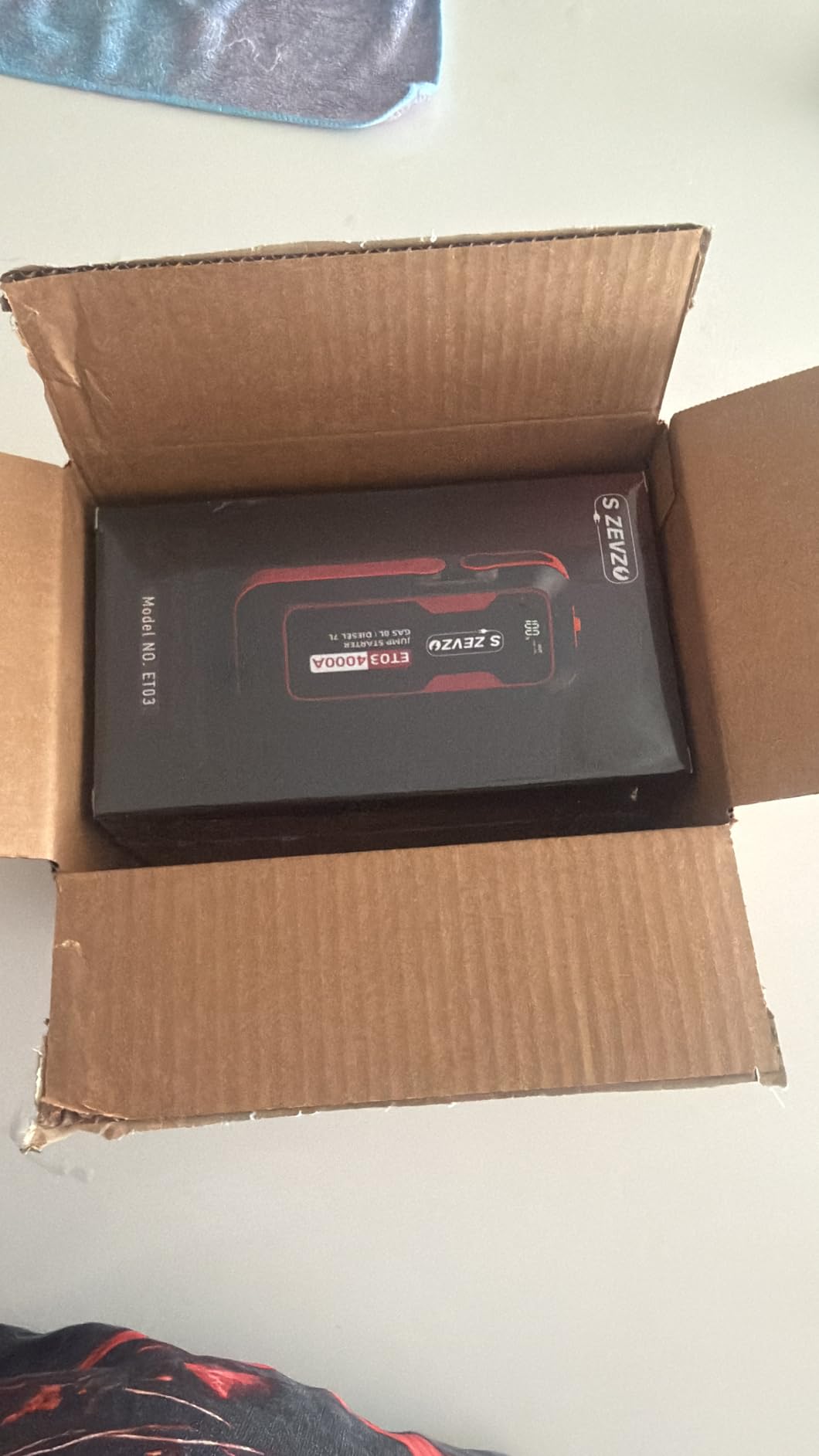
6. S ZEVZO ET03 – Best for Big-Block V8 Engines
S ZEVZO ET03 Car Jump Starter 4000A Jump Starter Battery Pack for Up to 8.0L Gas and 7.0L Diesel Engines, 74Wh Portable 12V Jump Box with USB Ports, LCD Display, Storage Case, and LED Light
4000A peak
74Wh 20000mAh
8.0L gas and 7.0L diesel
1.4 pounds
500-lumen light
Pros
- Starts big-block V8s from a dead battery on a partial charge
- Only 1.4 pounds with a 4000A rating
- Force-start function in the clamps handles 0V batteries
- 500-lumen flashlight with steady
- strobe and SOS modes
- Included storage case fits every component
Cons
- Needs a full recharge above 14V to revive a truly dead battery
- Working range starts at 14F so performance drops in deep cold
- Status and jump capacity are only visible on the LCD
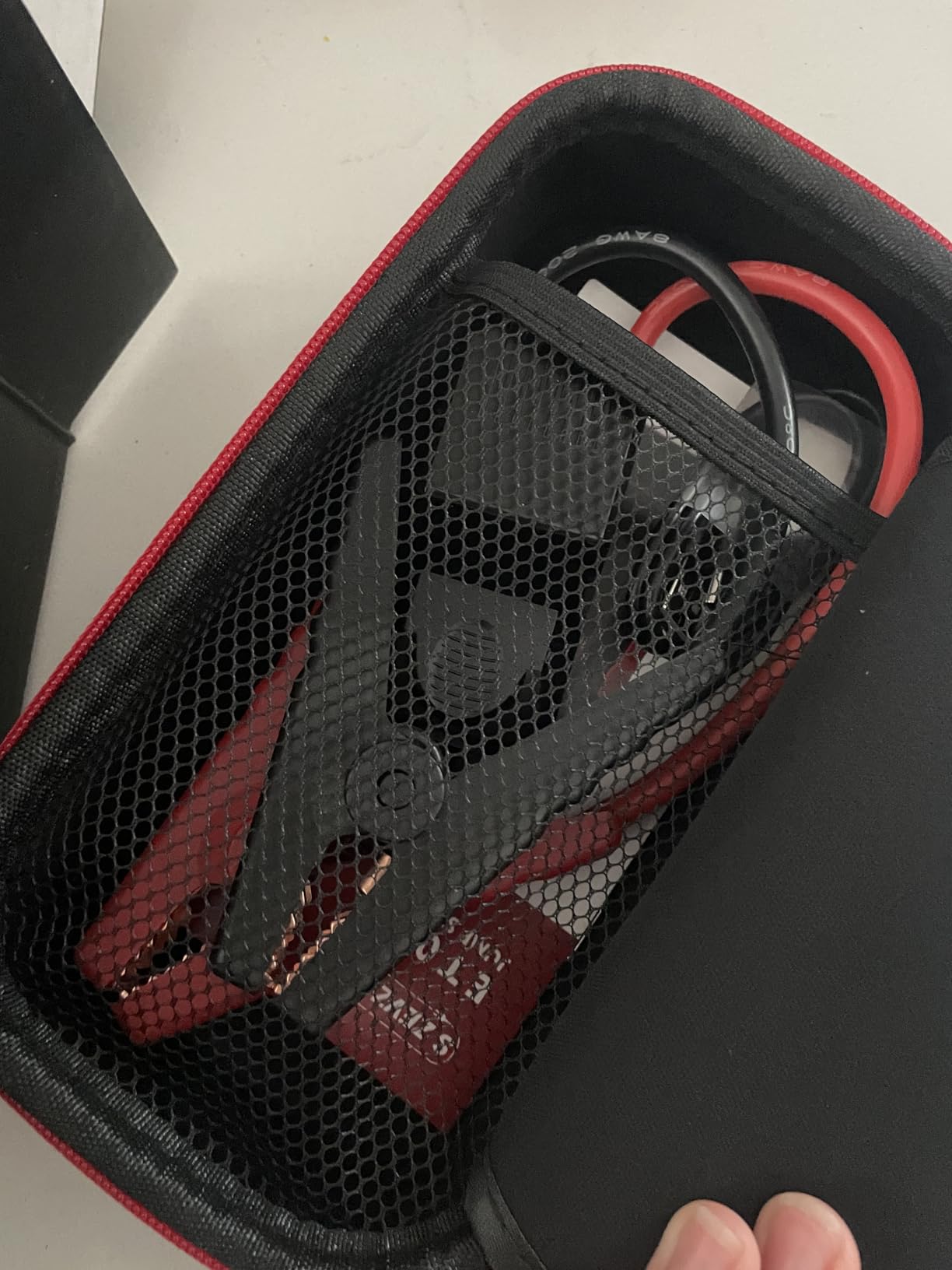
The ET03 punches well above its class, and the reviews show it. Owners report starting a V6 and a big-block V8 straight out of the box at partial charge, and many keep one in each vehicle because the case holds every part neatly. At 1.4 pounds carrying a 4000A rating, the weight-to-output balance here is hard to argue with.
The force-start function in the smart clamps is the feature we would point at. When a battery is at 0V and the pack is at 14V or above, the clamp can force a connection that a normal pack would refuse, which is the difference between a successful start and a walk to the phone.
There is a 500-lumen light with steady, strobe and SOS modes, an LCD status screen, and two simultaneous 5V/2A USB outputs that run roughly half again as fast as a standard charger. Coverage is 8.0L gas and 7.0L diesel, up to about 50 jumps per charge, with a two-year service period behind it.
The recurring caveat is straightforward: the force-start function needs the pack near full, so a unit left at half charge will not revive a completely flat battery. The rated working range also begins at 14F, which is a genuine limitation if your winters are colder than that.
What you should know before you buy it
Keep it above 14V if you want the clamp force-start to work. A monthly top-up is enough for most drivers.
Owners frequently buy a second one for a second vehicle, so consider the cost of two rather than one heavy pack.
Who should skip it
Skip it in extreme cold. If your region sits well below 14F regularly, a pack rated to -4F or -22F is the sounder purchase.
7. WOLFBOX MV24 – Fastest Recharge in the Lineup
WOLFBOX 4000A Jump Starter,12V Car Battery Jumper Starter Portable with 65W Quick Charger,LED Display,88.8Wh Booster Jump Box Pack (10L Gas 10L Diesel Engine) with LED Light,Jumper Cables, MV24
4000A peak
88.8Wh
10L gas and 10L diesel
65W USB-C
full recharge in about 1.3 hours
Pros
- 4000A with 88.8Wh covers 10L gas and 10L diesel engines
- 65W PD charging refills the pack in about 1.3 hours
- 65W Type-C port runs a laptop
- not just a phone
- Clear HD LCD status display with one-touch boost
- IP64 body with UL
- FCC
- CE and CA65 certification
Cons
- Listed 6000mAh rating sits oddly against the 88.8Wh claim
- Wall charger and cable bundle varies by package
- 3 pounds is heavier than the lightest 4000A packs
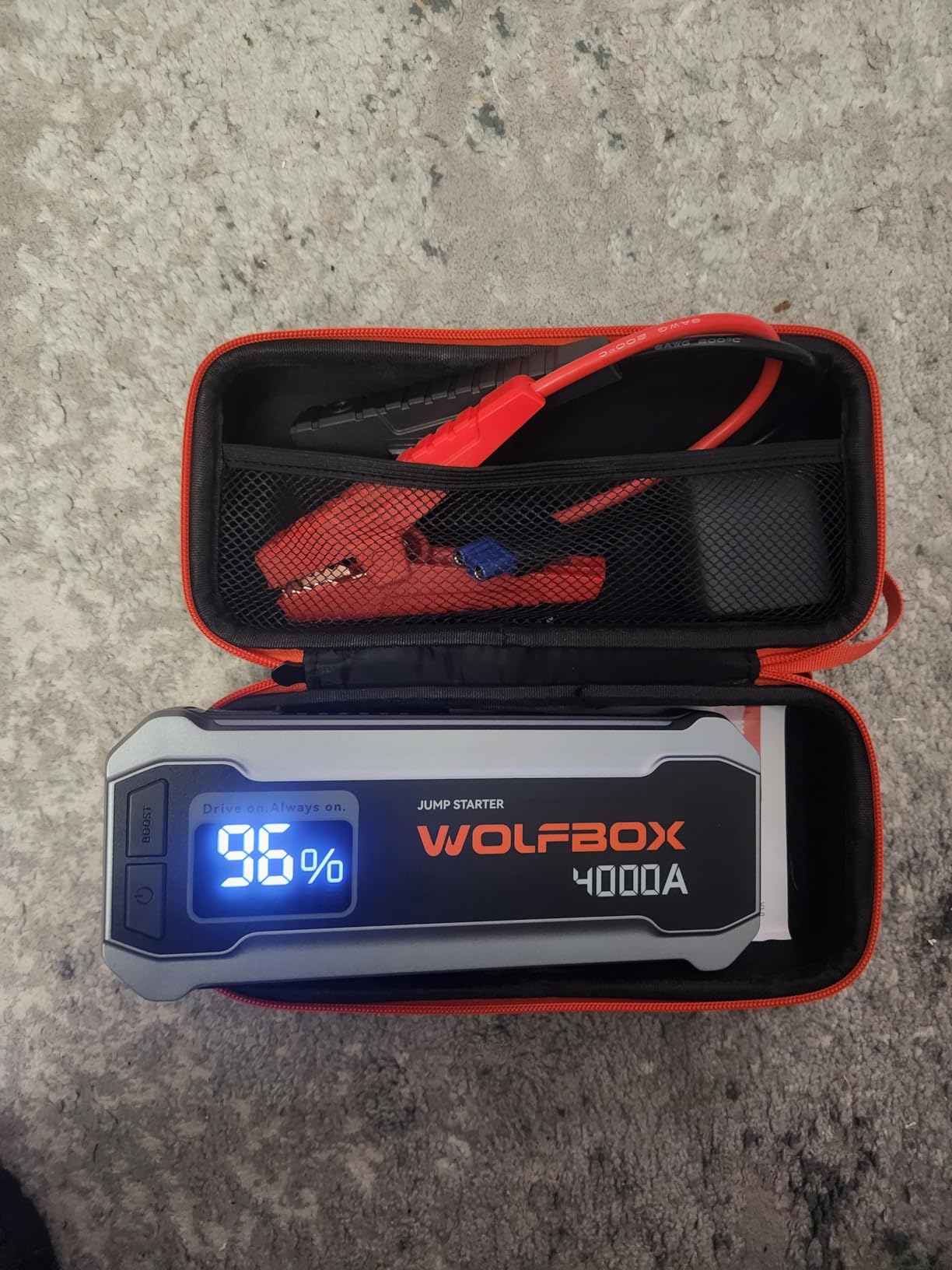
The MegaVolt24 is the pick for anyone who fears a flat pack more than a flat battery. A 65W charger takes it from empty to full in roughly 1.3 hours, so a pack that has sat in the boot for a winter can be ready before you finish a coffee. Owners highlight that turnaround time as the reason they bought it.
The 88.8Wh battery and 4000A output are advertised for 10L gas and 10L diesel engines, and buyers running large diesels report it works on them. The 65W Type-C port is bi-directional, so it can run a laptop or a tablet as well as charge a phone.
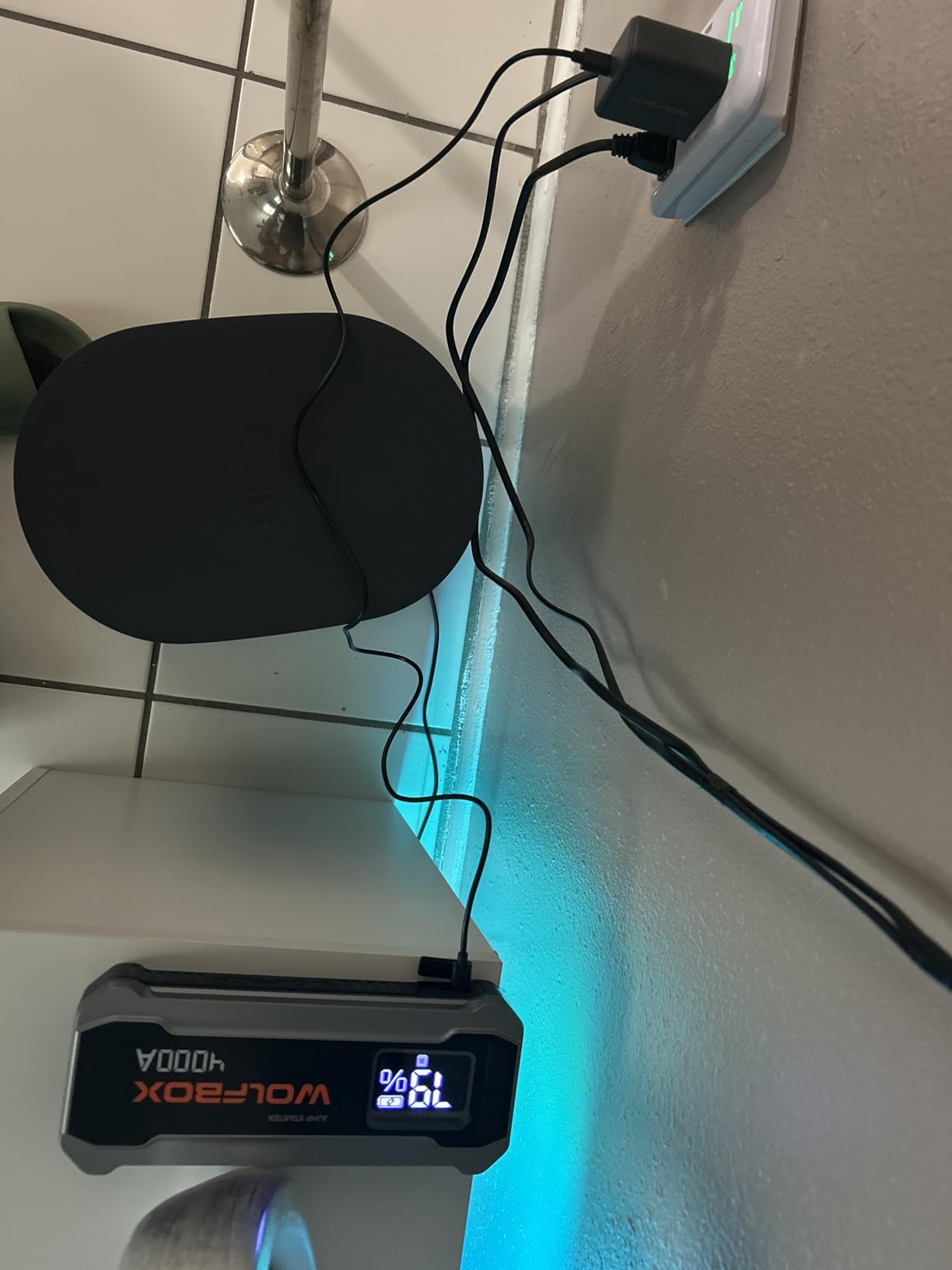
It also carries an HD LCD status display, one-touch boost for low-voltage starts, and an LED flashlight with SOS, strobe and high-beam modes. The IP64 housing and UL, FCC, CE and CA65 certification are unusual detail at this level, and the operating range of -4F to 140F is competitive.
Two things temper the enthusiasm. The listed 6000mAh capacity does not sit comfortably beside an 88.8Wh claim, and reviewers report the packaging of wall charger and cables varies between batches. At 3 pounds it is also heavier than the lighter 4000A options.
What you should know before you buy it
Confirm the charger is included in your box before ordering. It is the most common mix-up on this listing.
Expect strong multi-start capacity from 88.8Wh, which is among the larger cells in this roundup.
Who should skip it
Skip it if you want a glovebox pack or a five-mode work light. This is a boot or shop-bag unit with a charging-first design.
8. Povasee A30 – Best for Large Displacement Engines in a Small Case
Povasee Jump Starter 5000A Car Jumper Starter, Model A30 12V Jump Box for Car Battery up to 10L Gas or 8L Diesel Engine Battery Jumper Starter Portable with USB Dual Output/LED Light/Storage Case
5000A peak
74Wh 20000mAh
10L gas and 8L diesel
1.1 pounds
-22F to 140F
Pros
- 5000A rating for 10L gas and 8L diesel engines
- About 60 jumps per charge with an RST button for sub-9V batteries
- Book-sized body with a protective case
- QC3.0 output on the second port
- Works from -22F to 140F
- the widest cold rating in this group
Cons
- AC wall adapter is not included
- Smart clamp gives no output until correctly seated
- Headline peak figure is a marketing number rather than sustained cranking current
The A30 solves a specific problem: maximum claimed output in a genuinely small box. Roughly the size of a paperback, it is the pack we would choose for a motorhome or a tow vehicle where every kilogram counts and the engine is enormous.
Owners like the combination of a 5000A headline rating and a 74Wh cell, and report it starting trucks and large-displacement vehicles without hesitation. The RST button restarts an engine when the battery voltage has dropped below 9V, and the 400-lumen light covers flashlight, strobe and SOS modes for roadside work.
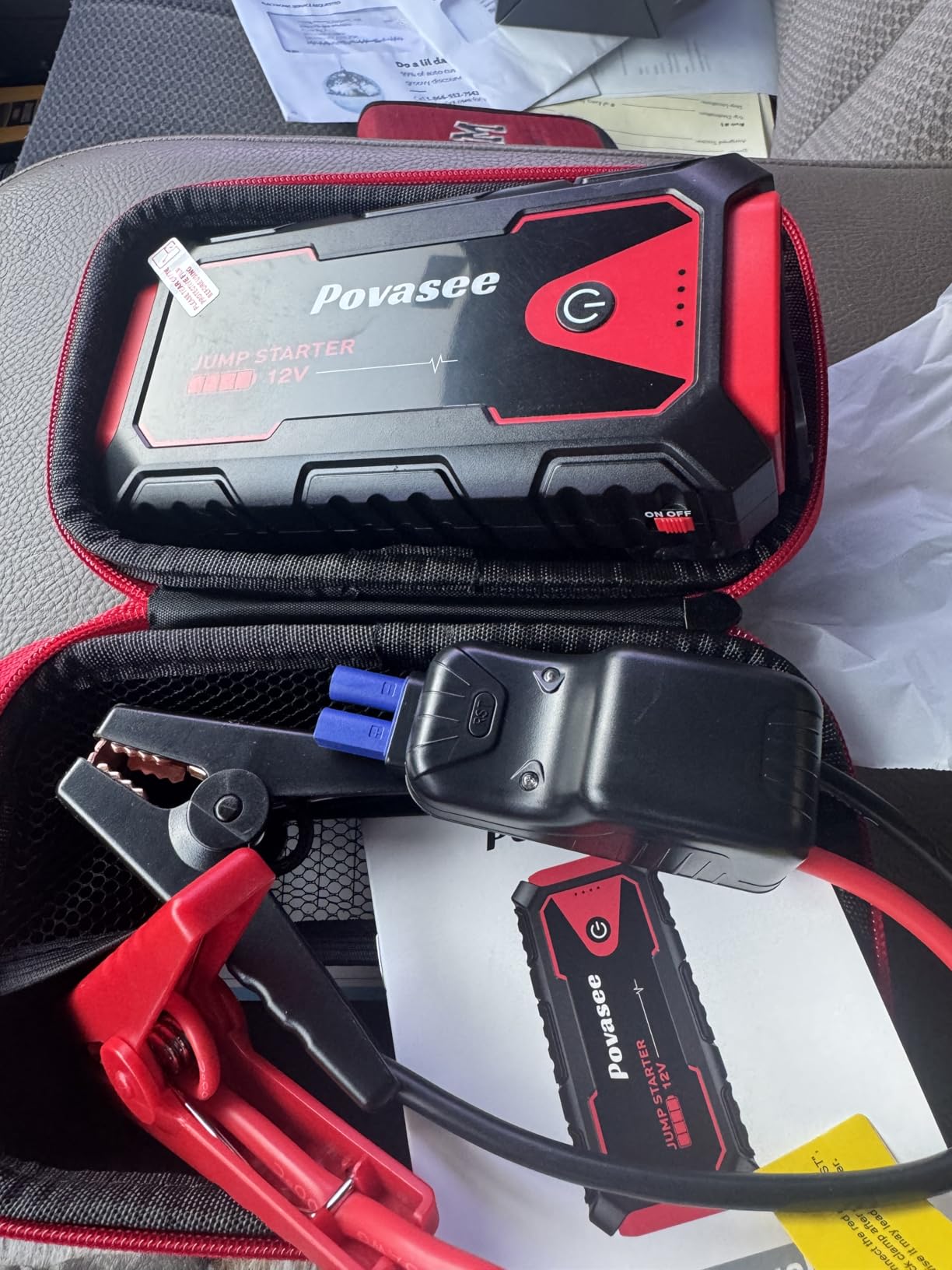
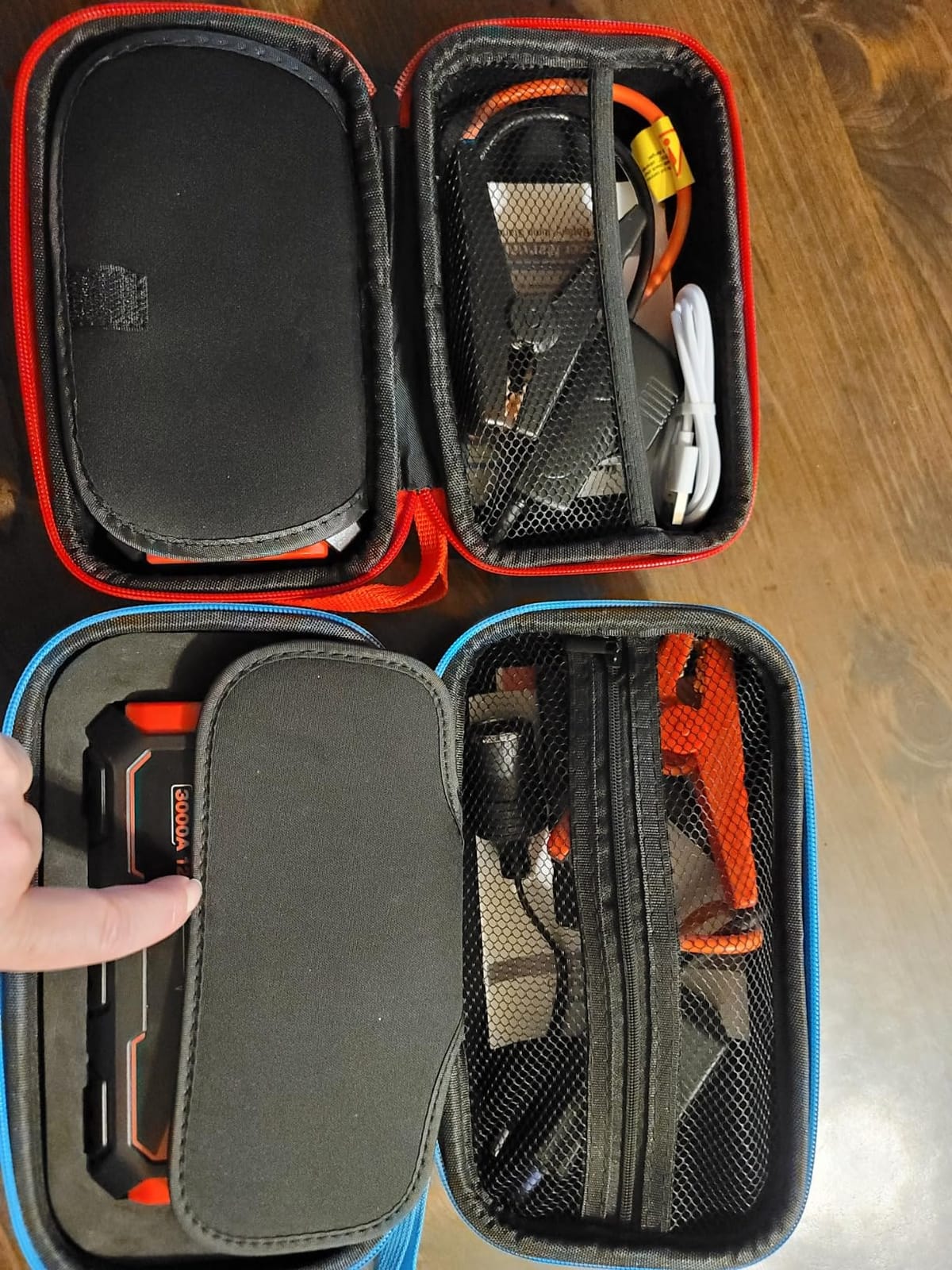
The -22F to 140F operating range is the coldest rating in this group, which makes it the strongest choice for anyone starting a vehicle in deep winter. Two USB outputs run simultaneously, with QC3.0 on the second port, and a protective case is included.
The complaints are mostly about the box contents and the clamp. The AC wall adapter is not included, so budget for a charger, and the smart clamp deliberately gives no output until it is correctly seated, which first-time owners read as a fault. The 5000A figure is a peak claim rather than sustained cranking current.
What you should know before you buy it
Read the clamp connection step before you need it. The no-output-until-connected behaviour is a safety feature, not a broken pack.
Stated coverage of 10L gas and 8L diesel extends past most pickups and into heavy-duty territory.
Who should skip it
Skip it if you want a USB-C fast-charge input for the pack itself, or if you need an air compressor. Neither is what this unit is built for.
9. TOPDON JS3000 – Best Clamp Build for Big Batteries
TOPDON JS3000 Jump Starter, 3000A, Boost Mode, 9L Gas/ 7L Diesel Engines
3000A peak (750A for 2s)
24000mAh
9L gas and 7L diesel
100% copper clamps
IP54 shell
Pros
- 100% copper clamps that fit large top-post batteries
- Starts fully dead 6.7L and 7.3 Powerstroke diesel trucks
- 24000mAh with USB-C PD45W bi-directional charging
- 400-lumen flashlight with up to 30 hours of runtime
- IP54 fireproof enclosure and 10 safety protections
Cons
- Heaviest of the lithium units here at 3.3 pounds
- Boost function cuts out after about 15 seconds
- 3000A works out to 750A for two seconds
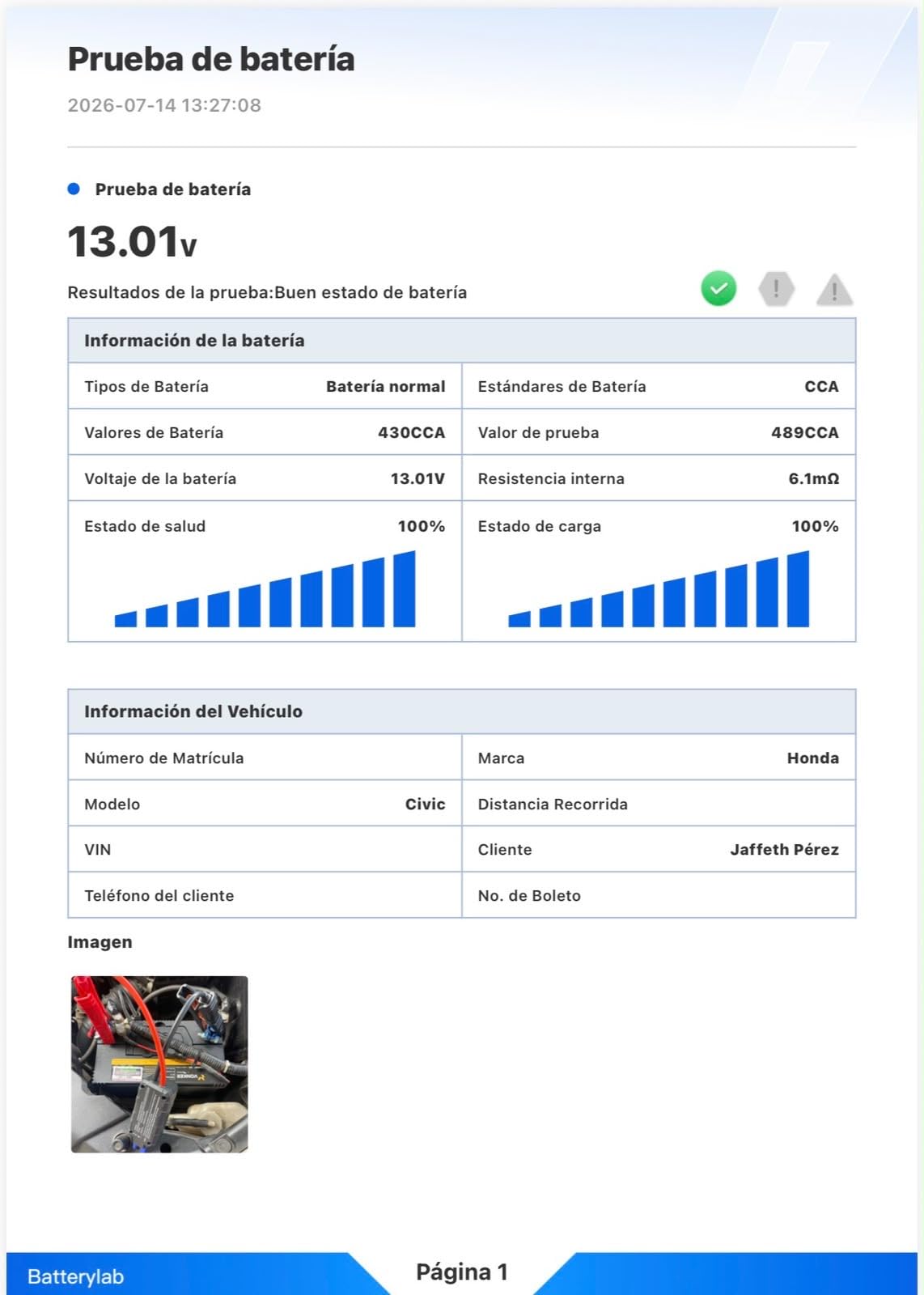
The JS3000 is the pack for diesels, and the reviews make that plain. Owners report it cranking completely dead 6.7 and 7.3 litre Powerstroke trucks, heavy F-450s, and a Mercedes that had sat in a garage for a year. TOPDON builds battery testers, so the charging and monitoring side of this unit is more considered than the headline suggests.
The clamps are the reason we rate it so highly. They are 100% copper, large enough for big top-post batteries, and the enclosure is IP54 fireproof with ten safety protections. The clamp and cable are the last place to economise, and it shows where a brand has chosen not to.
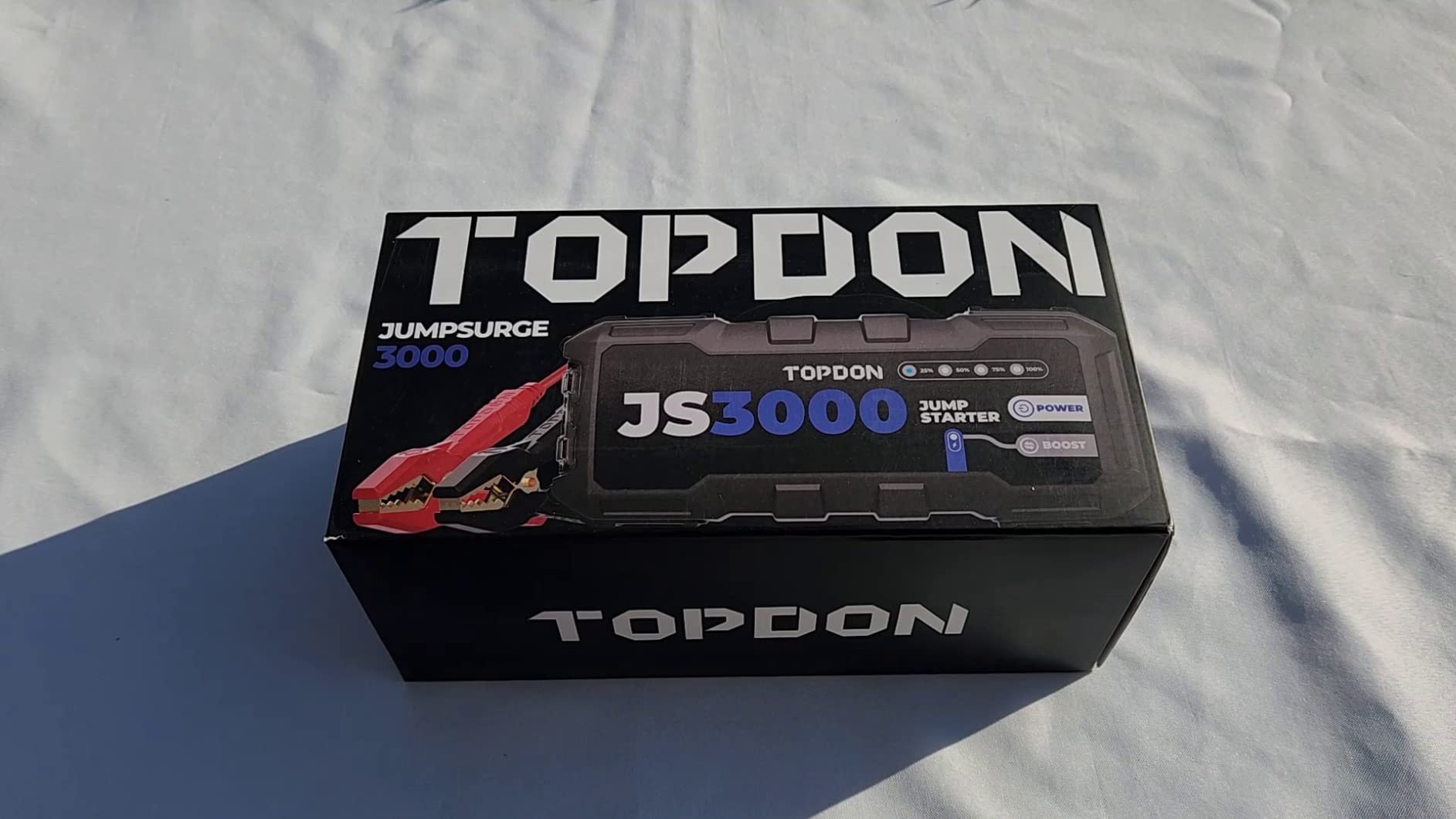
There is a 24000mAh bank with a USB-C PD45W bi-directional port, so it will charge a laptop in about two hours, plus dual USB QC3.0 and a 16.8V DC output. The 400-lumen light runs up to 30 hours and the body folds out into a stand with an extendable hook, which is genuinely useful for a long night on a shoulder.
The drawbacks are weight and a short boost window. At 3.3 pounds it is the heaviest lithium unit here, the boost function lasts about 15 seconds, and the 3000A rating is honestly described as 750A for two seconds. One detailed review reported swollen cells cracking an earlier revision’s case, though the manufacturer replaced it and the owner described the service as excellent.
What you should know before you buy it
Auto-detect means one press of power turns it on, which matters when you are standing in rain reading a manual.
It covers 9.0L gas and 7.0L diesel and delivers up to about 45 starts per full charge.
Who should skip it
Skip it if the pack has to live in a small car or be carried far from the vehicle. Three pounds is a lot to walk with, and lighter 4000A packs exist.
10. Acmount W160 Pro Combo – Best with a Built-In Air Compressor
ACMOUNT W160 5000A Jump Starter with Air Compressor 150PSI, 12V Jump Box
5000A peak
12000mAh
9L gas and 8L diesel
built-in 150PSI compressor
1 kg
Pros
- Only pick here with a built-in 150PSI air compressor
- 5000A for 9L gas and 8L diesel with up to 60 jumps per charge
- Five inflation modes with four nozzles
- Display shows battery power
- mode and real-time tire pressure
- Auto-shutoff after 20 seconds of no operation
Cons
- 12000mAh is small for a 5000A headline rating
- AC adapter is not included
- Only a one-year warranty
- the shortest here
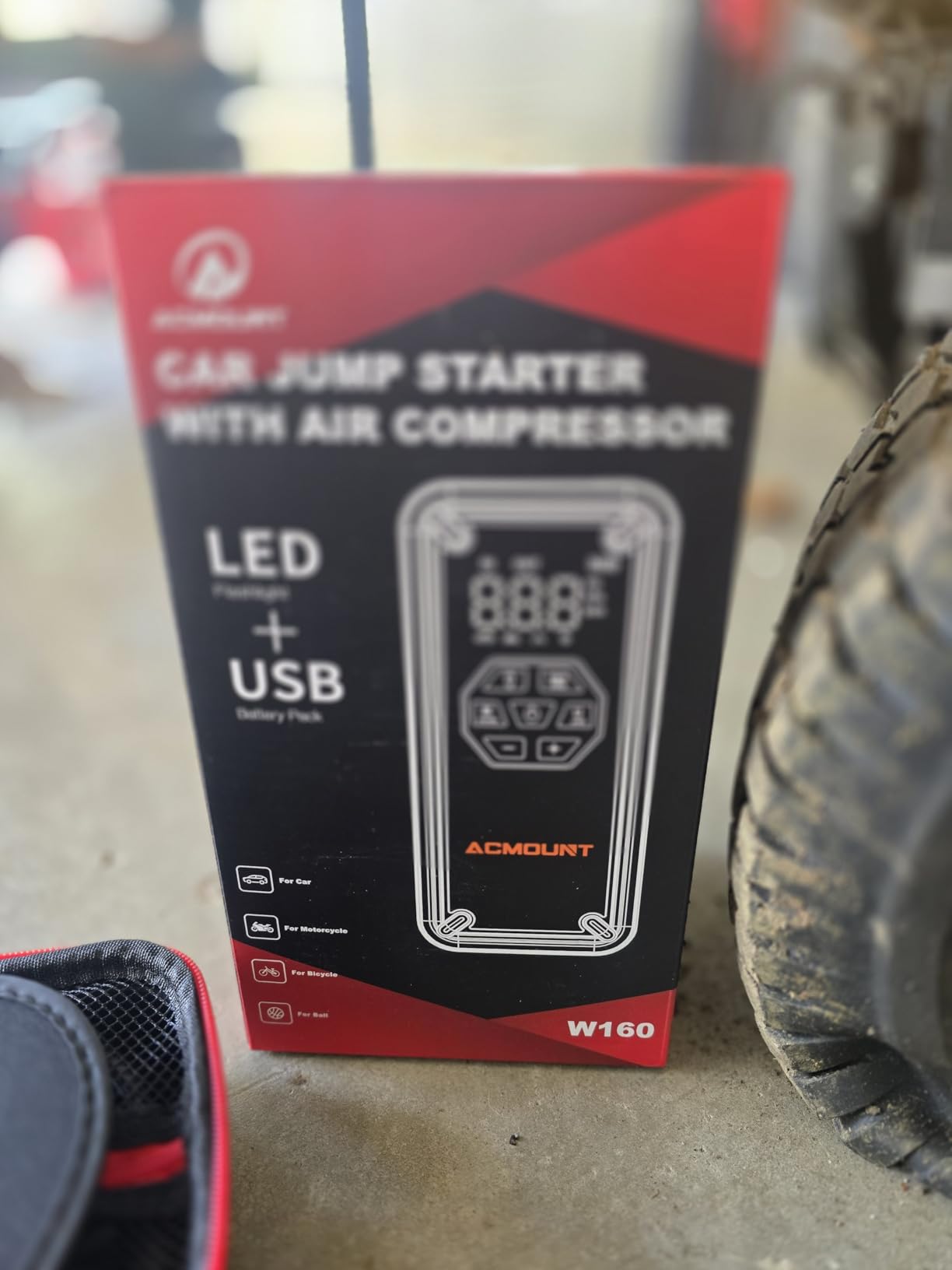
The W160 Pro answers the combo question directly, and it is the only unit in this roundup with a real air compressor built in. The 150PSI pump took a tyre from 29 to 36 PSI in about a minute in owner testing, with a screen showing live pressure and a preset auto-off that removes the guesswork from inflating.
Keeping two devices means one box, one charge, one thing to find in the dark, which is why many owners run a single combined unit in an emergency bag. The jump side is competent: 5000A for 9L gas and 8L diesel, up to 60 starts per charge, and 10 built-in protections.
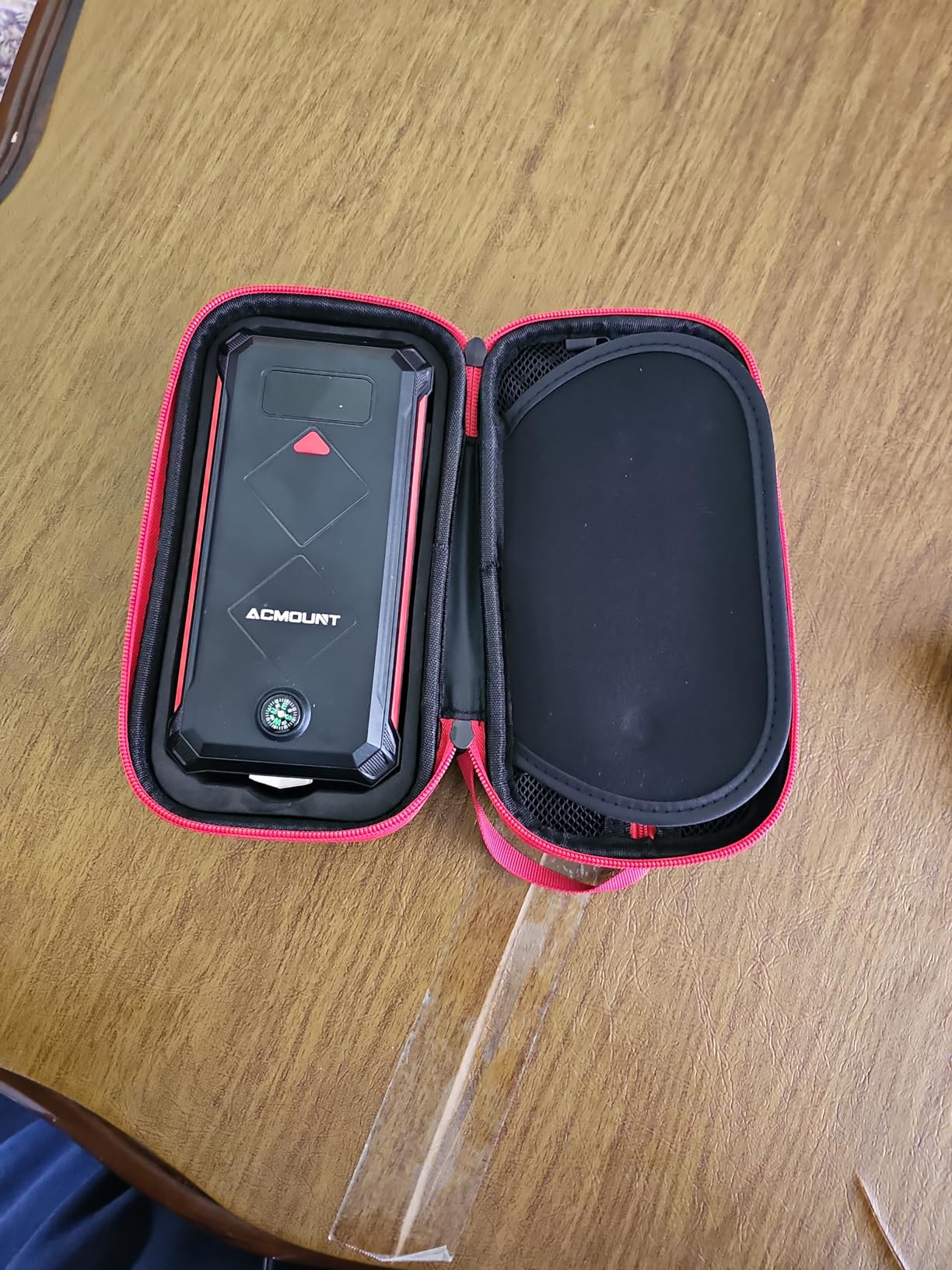
Five inflation modes cover cars, motorcycles, bicycles, basketballs and a custom setting, with four nozzles and switching between PSI, Bar and KPa. There is dual USB output, a three-mode LED flashlight, and a 20-second auto-shutoff that stops the drain if you walk away mid-inflation.
The compromise is real. Its 12000mAh battery is modest for a 5000A headline rating, so expect fewer starts per charge than a dedicated pack of similar power, and the AC adapter is not included. The one-year warranty is also the shortest in this list, which matters more if you plan to store it long-term.
What you should know before you buy it
Reviewers recommend keeping it above half charge before use, since the compressor and the jump function share one cell.
The listed operating range is -4F to 140F, and the listed weight is 1 kg.
Who should skip it
Skip it if you only need one of the two functions. A dedicated jump pack with a 24000mAh cell will start more engines per charge, and a separate inflator does the tyres better.
Why Peak Amps Is Not a Comparable Number
Peak amps is a marketing figure, and the most common complaint in every forum discussion of this category is that owners have been misled by it. A peak rating describes the highest current a pack can deliver for a fraction of a second, measured under lab conditions. What your starter motor demands is sustained cranking current for several hundred milliseconds, repeated until the engine fires.
One product in this roundup demonstrates the gap plainly. The TOPDON JS3000 is listed at 3000A peak but states 750A for two seconds, which is the number that actually matters. A pack claiming 5000A peak and one claiming 2000A may deliver the same usable cranking current, or they may not.
Two other figures carry more weight. Engine displacement support is stated in litres for petrol and diesel separately, and it tells you what the manufacturer has actually tested for. Cold cranking amps, borrowed from battery labelling, is a better proxy for starting difficulty than any peak number, because cold oil is the hardest condition you will meet.
How to Size a Jump Starter to Your Engine
Match the pack to the engine, not to the advertisement. A four-cylinder city car is a genuinely easy start, a V8 is demanding, and a diesel needs more current because compression is higher even before the cold is factored in.
Find your engine displacement in litres. Anything up to 3.0L petrol is light work; 3.0L to 6.0L is moderate; above 6.0L or any large diesel is demanding.
Check the pack’s stated petrol figure first, then its diesel figure. A pack that claims 10L diesel has been tested well past what most owners need.
Ignore the peak number and look for a low-voltage start feature, either a boost button, an RST button, or a force-start function in the clamps.
Add 20% if you live somewhere that sees real frost, since cold cranking demand climbs sharply and a pack near empty will not deliver its rated output.
Check capacity in mAh or Wh if you plan several starts per charge. 20000mAh and above gives roughly 50 or more attempts; 8000mAh gives three to four.
A practical matrix: under 3.0L petrol needs little more than the AstroAI S8. A sedan, crossover, or half-ton petrol truck suits 2000A to 3000A units. A V8, a large SUV, or a diesel pickup is better served by 4000A packs with a stated 8L-plus coverage. Motorhomes and heavy diesels deserve the 10L claims and the largest cells we reviewed.
Safety Features Worth Refusing to Compromise On
Three protections are not optional extras, and the cost of a pack that lacks them is the reason the cheap end of this category produces burnt hands. Reverse polarity protection stops the clamps charging a battery backwards, which is the single most common user error. Spark-proof clamp technology short-circuits the output before a stray spark can ignite hydrogen gas venting from a flat battery.
Over-current, short-circuit and over-temperature protection matter less often but cost the manufacturer nothing to include. Every pack in this roundup lists between eight and ten integrated protections, and we would not buy a portable jump starter that does not say how many.
Clamp and cable build is the third real quality signal, and r/Frugal makes the point well: cables kept in cars are often decades old. Thick cable, a solid hinge, and a clamp that grips a wide battery post without sliding are worth more than an extra thousand amps on the box. The TOPDON’s copper clamps and the Clore’s 46 inch #2 AWG leads are the two best examples here.
Battery Chemistry and Storage Temperature
Almost every pack in this roundup uses lithium-ion or lithium-polymer cells, and that choice carries a storage rule that r/batteries argues about constantly. Lithium cells degrade faster in sustained heat, and a car parked in summer sun can exceed the temperature at which storage is wise. Take the pack out of a hot car and keep it indoors between uses.
LiFePO4 chemistry is safer in heat and tolerates cold better, which is why some owners prefer it, though it costs weight and capacity for the same job. Lead-acid, as used in the Clore JNC660, is the most tolerant of all three and the least portable. None of the packs here rate a specific storage temperature, so treat a cool, dry indoor shelf as the default.
Self-discharge is the other quiet failure mode. A pack stored for months may come out flat, and owners regularly mistake a depleted pack for a broken one. Check the charge level monthly, top it up when it drops below half, and the anxiety disappears. It is a small habit, but it is the difference between a working pack and a costly one.
How to Jump Start a Car With a Portable Pack
Read the clamp labels before you connect anything, because the smart clamp will refuse to deliver current if it is not satisfied. Then work in this order, and the sequence is the safety procedure.
Turn both vehicles off, set the parking brake, and open each hood. On the booster, confirm the charge level is above half.
Attach the red clamp to the positive terminal of the dead battery, which is usually marked with a plus sign.
Attach the black clamp to an unpainted ground point on the blocked vehicle, such as a strut bracket away from the engine. Avoid the negative terminal if the battery is severely swollen or leaking.
Power up the booster and the display should show a connection state. If it beeps or shows an error, reseat the clamp rather than forcing it.
Start the booster vehicle first, give it a minute to settle, then crank the blocked vehicle for no more than 15 seconds at a time.
Disconnect the black clamp first, then the red, then remove the booster. Reversing this order is how people damage electronics.
If it does not crank, the pack is not necessarily the problem. Check that you connected to a ground point and not to a painted surface, let the booster vehicle charge the dead battery for a few minutes, then try again. If the booster refuses to deliver current until you unplug and reseat the clamp, that cut-off is the anti-reverse-charge feature doing its job.
Never connect a dead battery to a live one in reverse, and never let the clamps touch each other. If the engine cranks but will not run, the battery is likely sulfated beyond a jump, and the pack may simply have drained into it over time.
Storage, Recharge Cadence, and What a Flat Pack Means
The simplest routine is a ten-second monthly glance at the charge indicator, and a top-up whenever it drops below half. Most manufacturers in this roundup publish a standing time of between 8 and 18 months, but real storage conditions are harsher than a spec sheet, and a pack in a hot car loses charge far faster than one in a cupboard.
Charge the pack on a proper wall charger where the maker specifies one, because several units here ship without an AC adapter. Where a 65W or 50W USB-C path is supported, a full recharge in one to two hours is realistic. Where the pack accepts only a low-watt port, expect an evening.
If a stored pack reads empty, give it a full charge on the wall before assuming it has failed. A lithium pack that has sat fully depleted for months may recover slowly, and a second full cycle is sometimes needed before it holds a reading again.
Jump Starter vs Battery Maintainer vs Trickle Charger
These three get confused constantly, and they solve different problems. A jump starter is emergency starting power: a big short burst, then months of nothing. A battery maintainer is for a car that sits parked, and it feeds a small current to keep the battery topped up. A trickle charger is the older, more manual version of the same idea.
If your battery is healthy and your car drives regularly, you need a jump starter and no maintainer. If the car sits for weeks at a time, the maintainer prevents the flat battery in the first place, and it is cheaper than any pack. Buying a jump pack hoping it will keep a parked battery alive is the most common expectation mismatch we see in owner questions.
A pattern worth noting from owners is a booster pack plus a separate maintainer for a long-parked vehicle. That is a sensible two-tool setup, and it is worth a line in your mechanical preparation routine before a trip ends with a car that will not crank.
Frequently Asked Questions
Which car battery jump starter is best?
For most drivers the Hulkman Alpha85 is the best car battery jump starter we found. It holds 74Wh, starts vehicles up to 8.5L petrol and 6.0L diesel, recharges to 80% in about an hour, and carries the strongest owner rating in our group. For large diesels, the GOOLOO GP4000 or the Povasee A30 cover more displacement. For weight, the DBPOWER DJS90 does the job at 1.1 pounds.
How many amps is a good jump starter?
Most drivers never need more than 2000A to 3000A. A pack claiming 4000A with stated support for 8L petrol and 7L diesel gives useful headroom for a large V8 or a diesel pickup. Ignore the peak figure on its own and check the stated engine displacement in litres for both petrol and diesel, plus whether it has a boost or force-start function for a battery below 9V.
What is the most reliable portable jump starter?
Reliability comes from owner consistency rather than a spec sheet. The Hulkman Alpha85, Clore JNC660, GOOLOO GP4000 and S ZEVZO ET03 all hold 4.6 stars or better across thousands of reviews with low one-star rates. The Clore is the most rugged, and the Hulkman is the most capable as a portable unit, with a fast recharge that makes a full charge easy to keep on top of.
Is NOCO or Schumacher jump starter better?
We did not instrument-test NOCO or Schumacher packs for this guide, so we do not want to rank them on evidence we do not have. Both are established names with published specifications. Judge either brand the same way we judged ours: check stated engine displacement for petrol and diesel, confirm reverse polarity and spark-proof clamps, and see whether the brand publishes honest limitations rather than only a headline amp number.
How long can you store a jump starter?
Manufacturers in this roundup quote standing times between 8 and 18 months, but a pack stored in a hot car loses charge far faster. Store it indoors, keep it above half charge, and check it monthly. If a stored pack reads empty, give it a full wall charge and a second cycle before assuming it has failed, since a deeply depleted lithium cell can recover slowly.
Why does my jump starter beep but not start the car?
A beeping clamp usually means it is not satisfied with the connection. Check the booster is charged, that the red clamp is on the positive terminal, and that the black clamp is on bare metal rather than paint. Smart clamps also cut output after a successful start to prevent reverse charging, so unplug and reseat before a second attempt. A sulfated battery may absorb charge without cranking.
Verdict: The Best Car Jump Starters to Buy in 2026
After weighing all ten, the Hulkman Alpha85 stays at the top of our best car jump starters ranking. It has the highest owner rating in the group, real capacity at 74Wh, stated support to 8.5L petrol and 6.0L diesel, and a 65W recharge that makes keeping it charged realistic. The Clore JNC660 takes second for anyone who wants a box that cannot be broken, and the DBPOWER DJS90 is the sensible low-weight choice for an ordinary family car.
Go up to a 4000A pack if you drive a large V8, a diesel pickup, or a motorhome, and add a 65W charger to your list because several of these do not include one. Whatever you buy, check the charge level monthly, keep it indoors in summer, and read the clamp connection step before you need it in the rain. For everything else you carry on a long drive, our car camping sleeping bag guide covers the other half of an overnight kit, and where to park legally overnight handles the rest.