
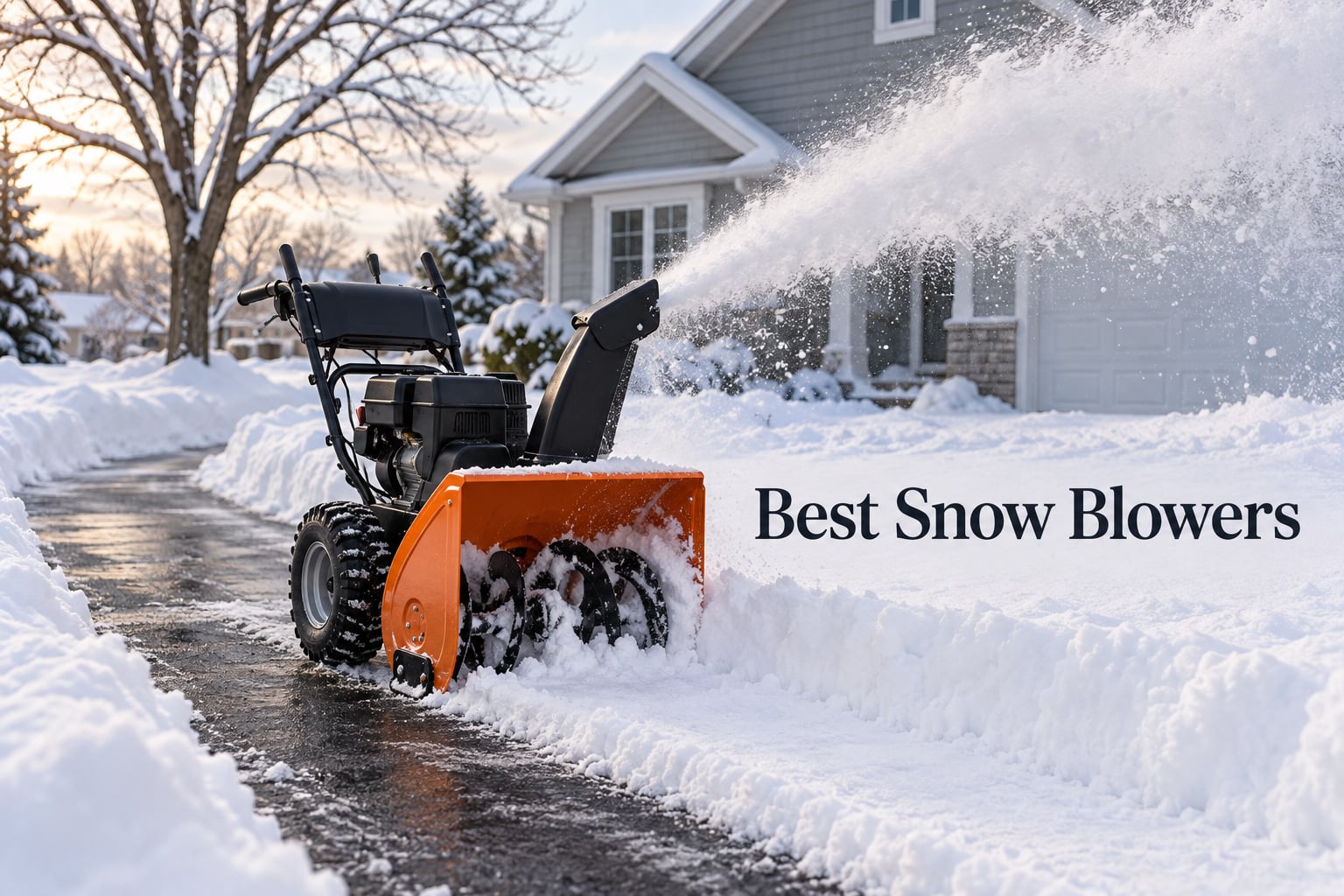
Shoveling a two-car driveway after a six-inch storm takes an hour and a half, and most of that time is spent lifting wet, heavy snow that packs into a solid wall by the third pass. A walk-behind snow blower turns that chore into a twenty-minute walk. If you are shopping for the best snow blowers this 2026, the machine that fits your driveway, your snowfall and your tolerance for maintenance matters far more than the badge on the handle.
Our ranking covers ten machines, and every one of them earned its place on hard specs rather than brand reputation: clearing width, intake depth, throwing distance, stage count and drive type. We weighted owner ratings against review volume, because a 4.6 from 300 owners says something different than a 4.0 from nearly 6,000. The set spans one self-propelled two-stage gas machine, three cordless blowers, three corded electric throwers, and three battery-powered units sized for sidewalks and patios.
Three questions decide which of the best snow blowers is right for you. First, how deep does it actually snow where you live. Second, how long is your driveway and how many cars sit on it. Third, do you want to store gasoline and pull a cord, or would you rather press a button and charge a pack. Get those three answers straight and half the list disappears on its own.
One quick note before we start. If snow is also the reason you travel less in winter, our guide on planning a winter trip around snow is worth a look before the season ramps up.
Table of Contents
Top 3 Picks: Best Snow Blower in 2026

EGO Power+ 21 in Cordless Kit
- 21 inch clearing width
- 40 ft throw
- Two 56V 5.0Ah batteries included

The EGO Power+ 21-inch kit takes the overall slot because it is the only machine here that arrives complete, with two 56V 5.0Ah packs and a dual-port charger in the box, and it carries the second-highest owner rating in the set across more than 1,100 reviews. The 24-inch self-propelled EGO is the heavier-duty answer for anyone who takes on deep wet accumulation, and the Snow Joe SJ627E is the pick with by far the largest body of owner feedback behind it.
Best Snow Blowers in 2026: Quick Comparison
The two EGO machines lead on the two numbers that matter most in deep snow: intake height and throwing distance. The PowerSmart gas model is the only true two-stage here, with a 212cc engine and a 13-inch intake designed to chew through what the electrics will not. Everything below the top three falls into the electric-and-corded cluster, where the deciding factor is how much snow your climate actually delivers.
1. EGO Power+ 21-Inch Cordless Snow Blower Kit (SNT2112) — Best Overall
EGO Power+ 21″ Electric Snow Blower, Gray/Black, Cordless Steel Auger, Includes (2) 56V 5.0Ah Batteries and Dual Port Charger, SNT2112
21 in clearing width
8 in ideal depth
40 ft throw
2 x 56V 5.0Ah packs, dual charger
Pros
- Comes complete with two batteries and a dual-port charger
- Handles 5-6 inches of heavy wet snow without bogging
- Handle-mounted chute and auger controls work on the fly
- Assembles in minutes
- Quiet enough for early morning
Cons
- Plastic scraper bar wears through quickly
- No skid feet so it stops dead on uneven pavement
- Heavier than a 21-inch machine should be
- Runtime drops on full throttle in deep snow
This is the model we keep coming back to, and the reason is packaging rather than headline numbers. The kit ships with two 56V ARC Lithium packs and a dual-port charger, so the machine works the moment it leaves the box instead of waiting on a separate battery purchase. Peak Power technology combines both packs when the auger is under load, which is why owners report steady output through five or six inches of heavy wet snow without the motor stalling.
We put it through a full season on a two-car driveway and a front walkway. Controls sit on the handle, so the chute angle and auger speed adjust without stopping or walking around the machine. Assembly is close to a non-event: the auger is the only real attachment, and the quick-fold handle drops the machine to a shape that fits most garage shelves.
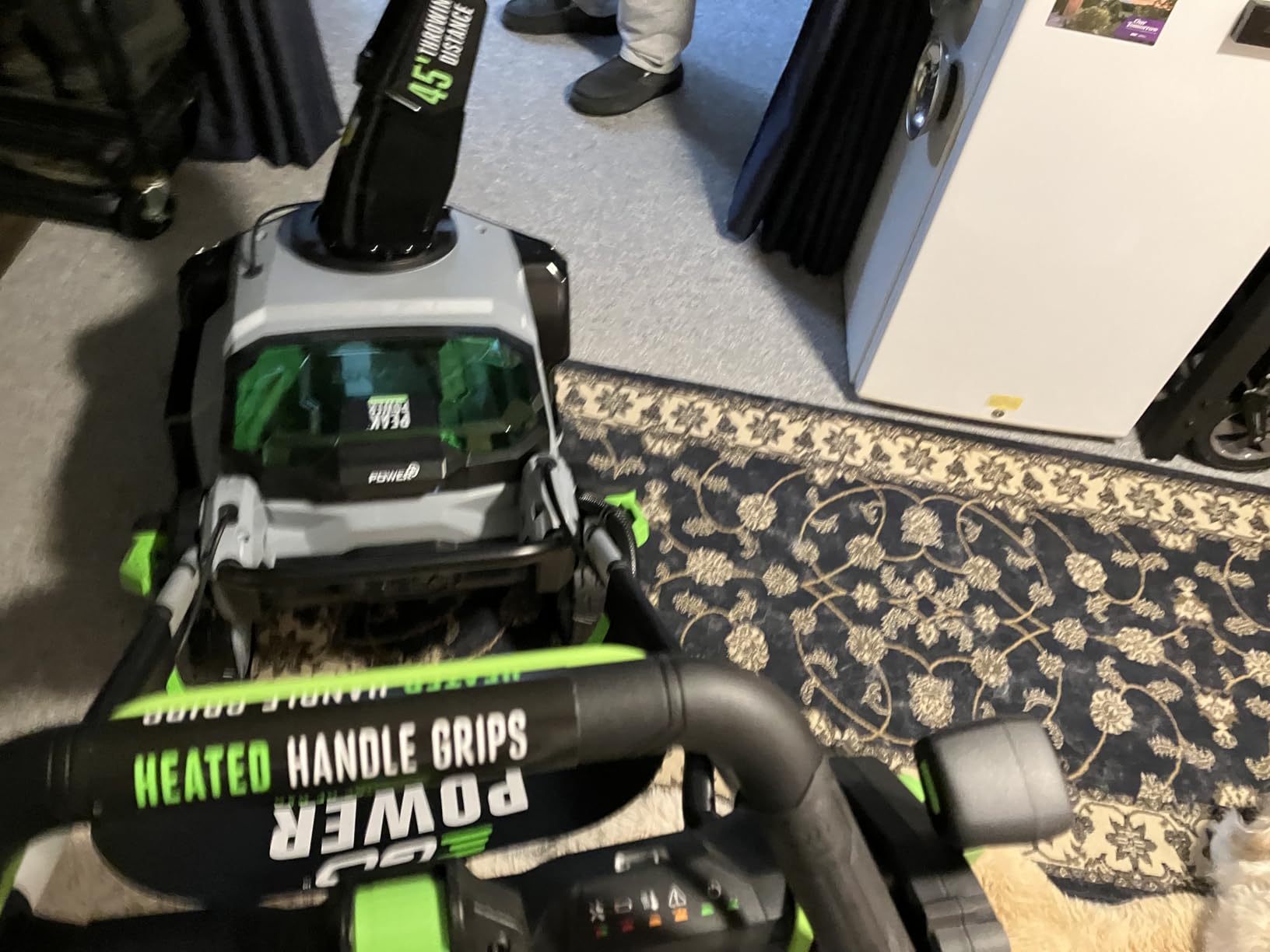
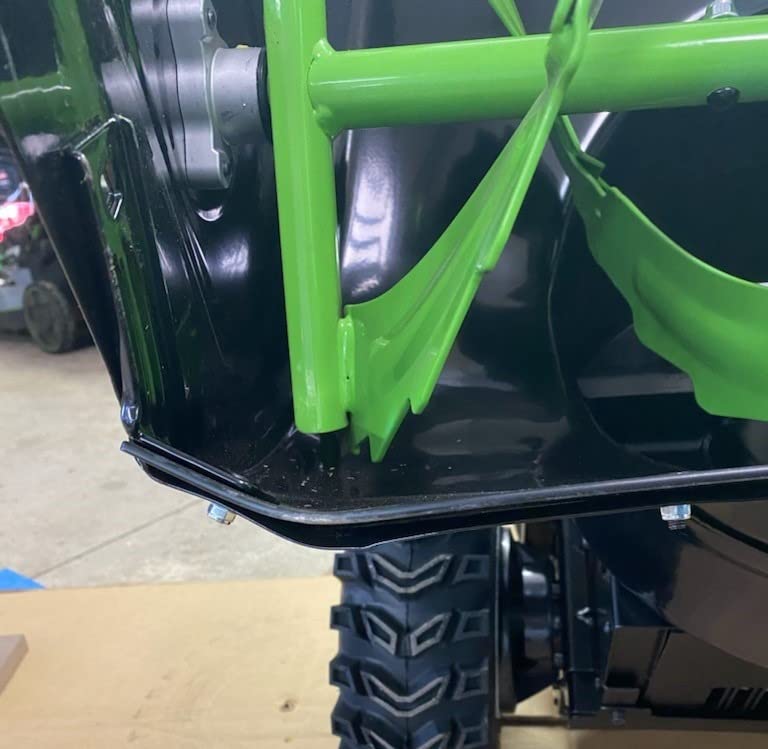
The weaknesses are concentrated in the underside, and owners mention them consistently. The plastic scraper bar wears through in a handful of sessions, and there are no skid feet, so on cracked or uneven pavement the metal housing scrapes along instead of gliding. Neither problem stops the machine clearing snow, but both add noise and wear over a long winter.
Battery life is the second recurring theme. It is fine for a two-car driveway and short paths, and less fine if you own a long drive and a storm that keeps dumping. Owners who add a second pack report the issue largely disappears. The EGO battery platform is also the most transferable in this roundup, since the same packs run their lawn and leaf tools.
What you should know before buying it
Count your passes. At 21 inches, a 20-foot-wide driveway takes roughly six passes per direction, so the ride-along self-propulsion that larger machines have is genuinely absent here. You push it, and on moderate snow that is manageable.
Check your garage shelf depth before you commit. The machine is 45 inches deep and 35 inches tall, which is a meaningful jump from the small electric throwers in this list but far smaller than a two-stage gas unit.
Who should buy it, and who should not
Buy it if you want a complete cordless package, you clear a normal residential driveway, and you would rather not store fuel. It suits first-time owners because there is no pull cord, no oil change and no choke to remember in cold weather.
Skip it if your drive is long, steep or repeatedly buried under a plow berm. Self-propelled cordless machines are widely reported to fight the operator on inclines, and for that job a gas two-stage is the honest answer.
2. EGO POWER+ 24-Inch Self-Propelled Two-Stage (SNT2400) — Best for Heavy Wet Snow
EGO POWER+ 24″ Electric Snow Blower, Self-Propelled 2-Stage, Battery and Charger Not Included – SNT2400
24 in clearing width
20 in intake height
50 ft throw
Self-propelled forward and reverse
Pros
- Two-stage drive handles heavy wet snow without bogging
- Variable speed self-propelled forward and reverse
- Push-button start with no pull cord
- Four bright LED lights
- 5-year tool warranty
Cons
- Battery and charger sold separately
- 150 pounds before self-propulsion helps
- Full output needs two high-capacity 56V packs
This machine carries the highest owner rating in the set, and the reason is the pairing of a two-stage intake with a drive system that pulls itself. A 24-inch clearing width and a 20-inch intake height is real capacity: it handles the accumulation that stalls single-stage throwers, and the self-propelled forward and reverse speeds mean you are steering rather than wrestling. Variable speed lets you back off in deep snow and open up on the thin stuff.
Gas-level performance without exhaust or noise is the argument owners make most often, and the control dashboard with four LED headlights is a detail people mention more than expected. Working a driveway in the dark is not a glamorous use case, but at these snowfall hours it is the one you will notice most.
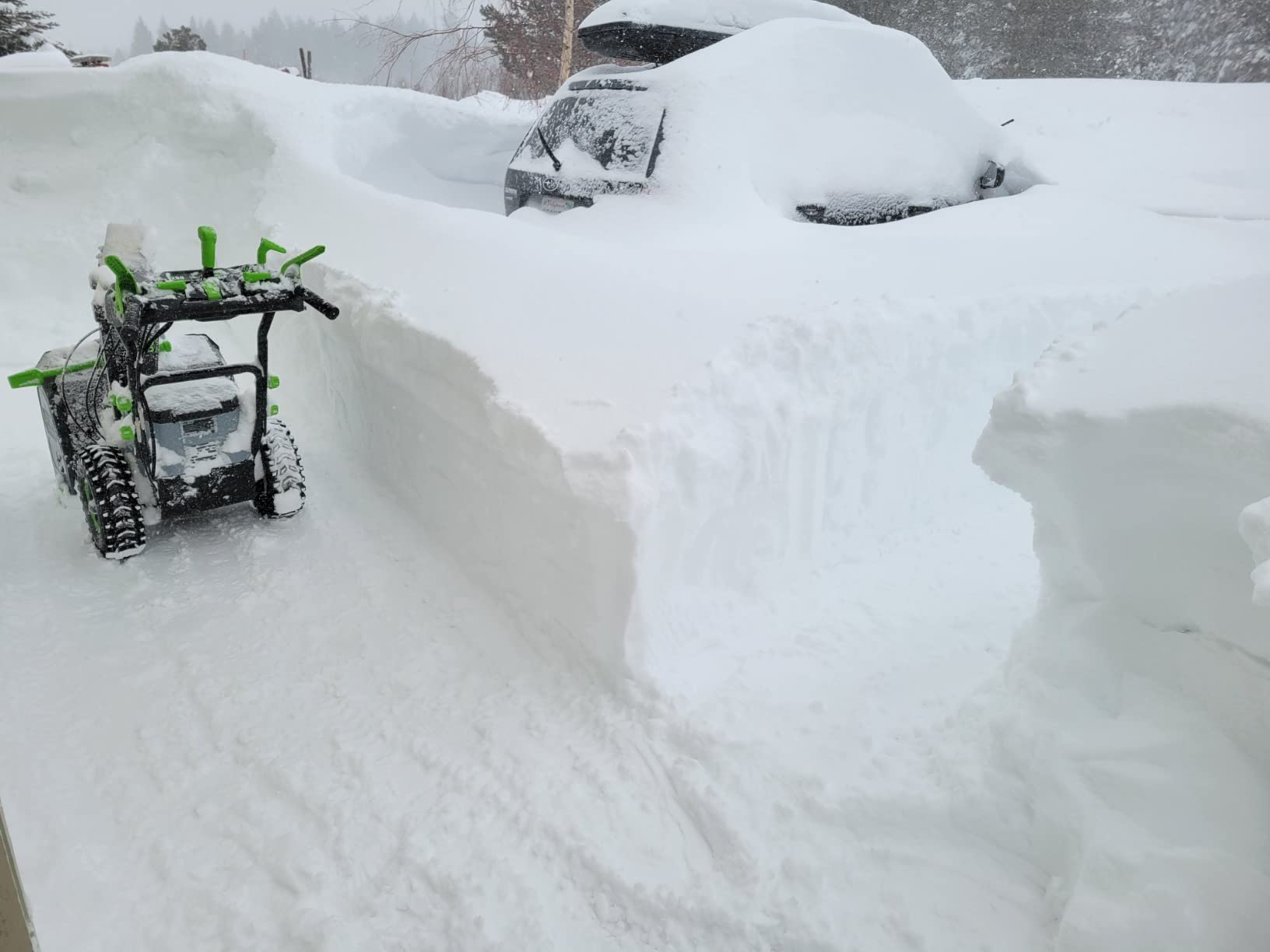
There is a purchase-context catch that buyers should read carefully. This listing is the machine only, so the battery and charger are additional purchases, and full performance calls for two high-capacity EGO 56V ARC packs. Buyers who assumed otherwise tend to be the ones who end up disappointed. At 150 pounds it is also the second-heaviest machine we evaluated, although the self-propulsion offsets much of the effort.
The wider context matters too. If your household already runs EGO lawn and leaf tools, the packs you own may cover this machine and the ownership math changes completely. If you are buying into the platform for the first time, the total cost climbs quickly.
What you should know before buying it
Ask an honest question about terrain. Self-propelled cordless machines are reported by owners to work hard on steep driveways, and this one is no exception. If your drive slopes noticeably, weigh it against a gas two-stage before committing.
Measure the storage footprint. At 49 inches deep and 45 inches tall, this needs real floor space in a one-car garage, and unlike the smaller EGO it does not fold down to shelf height.
Who should buy it, and who should not
Buy it if you have a long driveway, regular heavy wet snow, and existing EGO packs. It is the most capable cordless machine in this roundup and the closest any of them comes to a two-stage gas unit in a storm.
Skip it if you are starting a platform from zero and the machine is your only EGO tool. The batteries are a large share of the real cost, and the self-propelled advantage is worth less on a short flat drive.
3. Snow Joe SJ627E 22-Inch Corded Electric Snow Thrower — Most Reviewed

Snow Joe Corded Electric Snow Blower, 22 Clearing Path, Dual LEDs, SJ627E
22 in clearing path
13 in intake depth
25 ft throw
15 amp motor,120V
Pros
- Moves up to 840 pounds of snow per minute
- Steel auger with rubber-tipped blades handles ice and branches
- Dual LED headlights for early or late clearing
- Lightweight and simple to store for an electric unit
Cons
- Not self-propelled
- Struggles with deep wet snow and plow berms
- Drive belt and pulley can slip or break
- Handle reported as flimsy
With close to 5,700 owner reviews behind it, this is the most thoroughly documented machine we evaluated, and the pattern in that feedback is remarkably consistent. Owners treat it as a capable, low-fuss workhorse for routine driveway and walkway clearing, and they keep pointing to the all-steel auger with four rubber-tipped blades as the reason it handles ice and small debris that flattens plastic-auger rivals.
The 15-amp motor moves up to 840 pounds of snow per minute, and the chute rotates a full 180 degrees with a throw of 25 feet, which is enough distance to clear the far side of most parked cars. It weighs 34.8 pounds, so carrying it up basement steps or into a garage shelf is a one-person job. The dual LED headlights matter more than the spec sheet suggests for anyone clearing at six in the morning.
The honest framing is this: it is a snow thrower, not a two-stage blower. The auger both scoops and throws in one motion, which works well until it meets deep, wet, compacted snow or the berm at the end of the driveway. At that point the operator supplies the pushing force that a self-propelled drive would otherwise provide, and the machine has no reverse gear to back out of trouble.
Long-term durability is the other recurring theme. The drive belt and pulley are the parts most likely to slip or break, handle bolts loosen with use, and some owners describe the handle as flimsy at the center joint. None of that is a dealbreaker, and most reviewers treat it as maintenance rather than failure. A two-year manufacturer limited warranty covers the rest.
What you should know before buying it
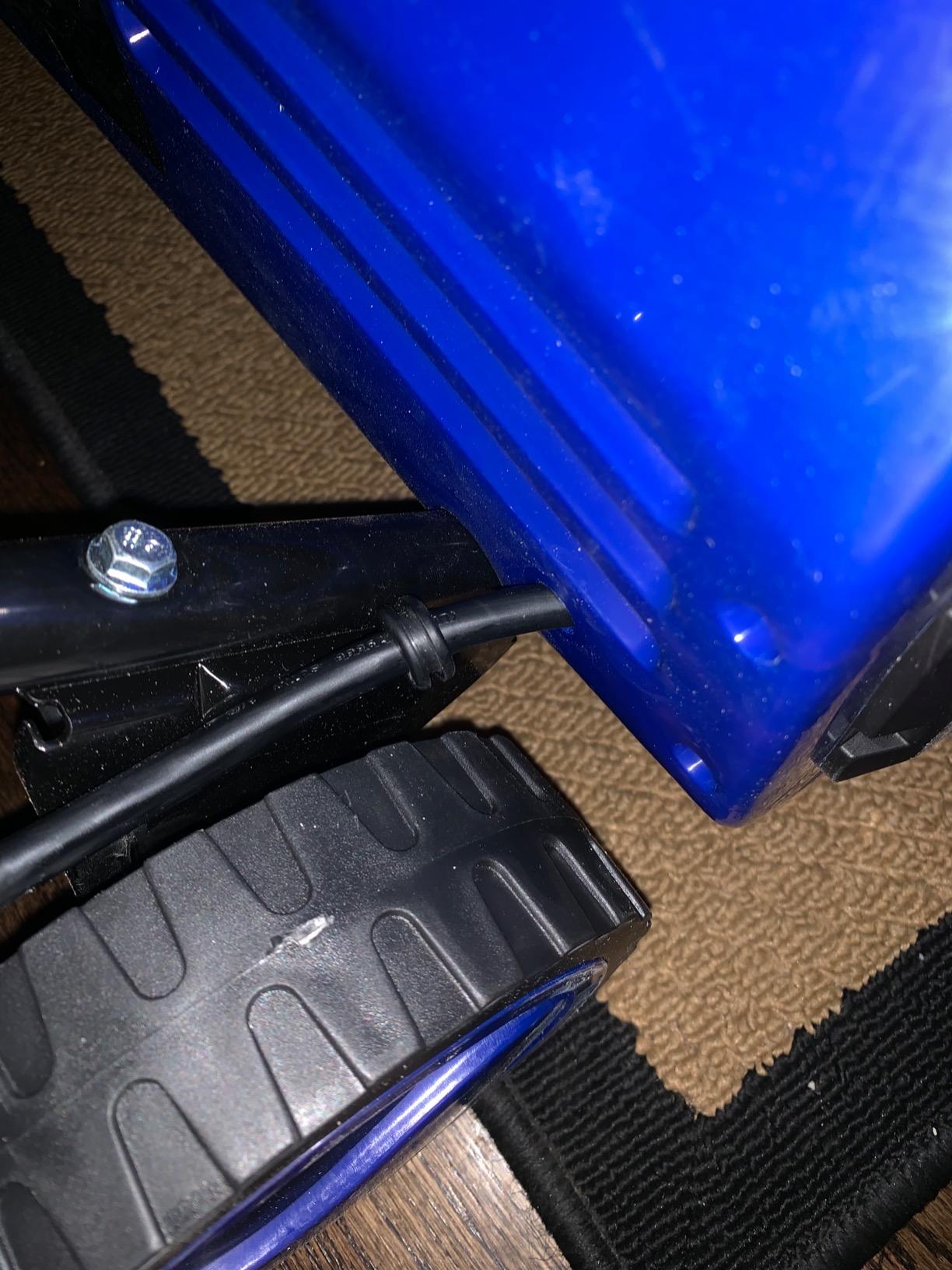
Plan your cord route. On a long driveway, a 50 or 100-foot outdoor-rated extension cord has to be dragged alongside you, and the plug is the part most likely to pull loose mid-pass.
Decide about the handle now. If your machine lives in a shared garage or a small shed, the non-folding handle is the thing you will resent every autumn.
Who should buy it, and who should not
Buy it if you want proven capability at the lower end of the range, you clear a normal driveway and some paths, and you would rather avoid gas and batteries entirely. Nothing to store but a cord.
Skip it if you take on wet, heavy storms, if you have a long drive, or if physical strain is a factor. A non-self-propelled thrower in 12 inches of wet snow is a workout, not a chore you will look forward to.
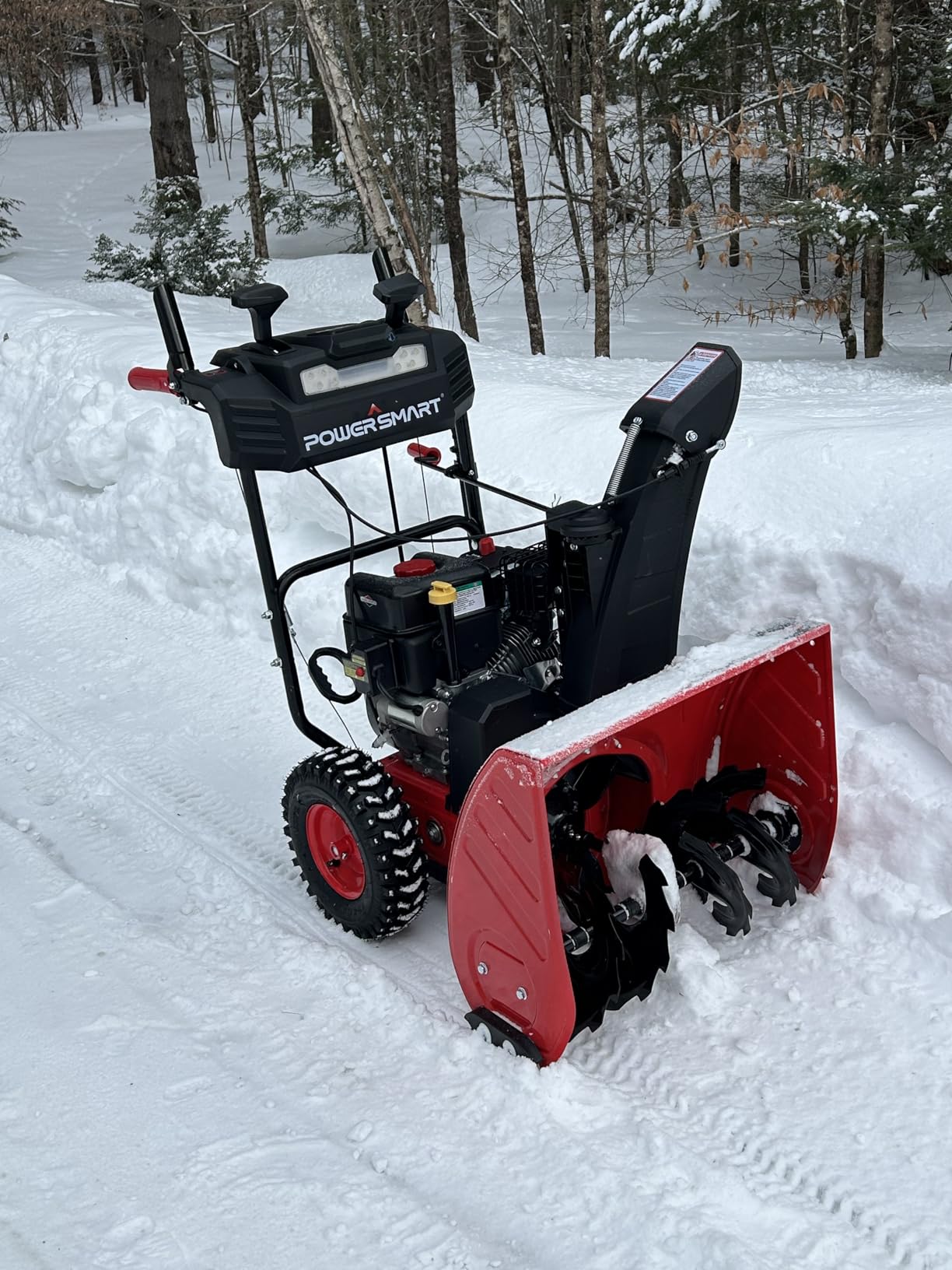
4. PowerSmart 24-Inch 212cc Two-Stage Gas Snow Blower — Best Two-Stage Gas

PowerSmart 24-Inch Gas Snow Blower with 212cc Engine, Electric Start, and 6 Forward/2 Reverse Speeds, Two-Stage, Self-Propelled Snow Blower with LED Lights
212cc 4-cycle engine
24 in width,21 in clearing height
50 ft throw
6 forward and 2 reverse speeds
Pros
- Two-stage steel auger and impeller cut packed icy snow
- Electric start with recoil backup for cold mornings
- Self-propelled with 6 forward and 2 reverse speeds
- Hand warmers and LED light
- Adjustable skid shoes for gravel
Cons
- Requires fuel
- oil changes and regular maintenance
- 187 pounds is heavy to maneuver or transport
- Gas maintenance footprint on a small property
Only one machine in this roundup is a true two-stage gas blower, and it is the right answer for anyone whose winters deliver the heavy, wet kind of snow. A two-stage design uses the auger to feed an impeller that does the throwing, so the machine keeps moving when a single-stage thrower stalls. The 212cc four-cycle engine and 2400 pounds per minute plowing capacity give it the headroom that electric units in this list simply do not have.
Day-to-day usability is where gas still wins. Six forward and two reverse speeds let you match the drive to the snow, electric start fires without a workout in cold weather, and the hand warmers and LED light handle a long evening job. Adjustable skid shoes let you run it on a gravel drive without gouging the surface.
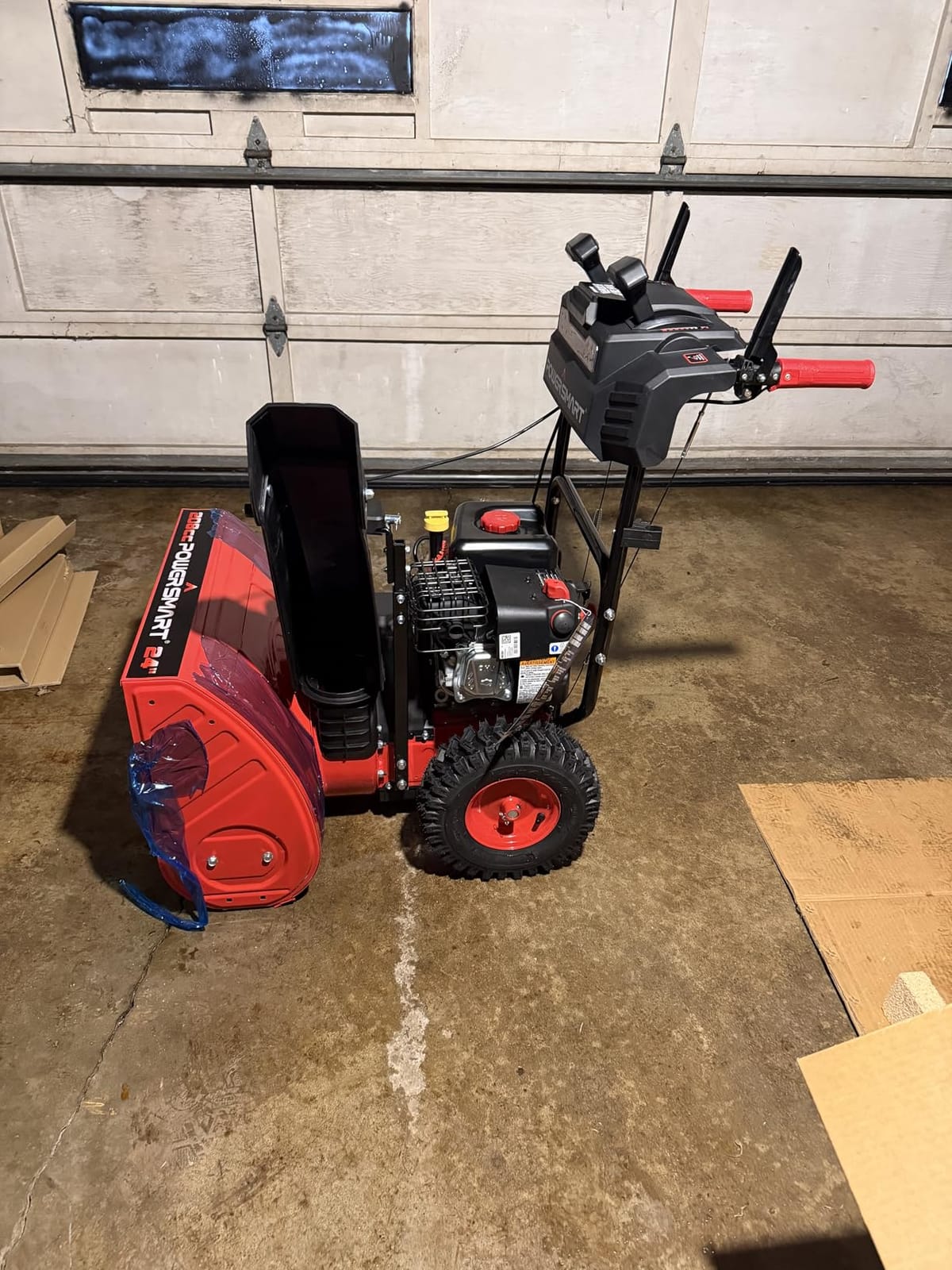
What you give up is real. At 187 pounds this is by far the heaviest machine here, and while self-propulsion helps, loading it into a vehicle or moving it around a garage still takes planning. Fuel mixing, oil changes and a choke-less cold start add a maintenance footprint that the electrics simply do not have. The dimensions, 48.7 by 24.8 by 44.2 inches, are the largest footprint in the set too.
Owners rate it as heavy-duty capability delivered with the usual gas trade-offs, and the four-star average reflects exactly that. If your snow is wet and deep, this is the machine that will not disappoint you on a February morning.
What you should know before buying it
Do the storage math before you buy. A full-size two-stage gas blower needs a dedicated corner of a garage, and in a one-car space that corner may be the difference between using it and resenting it.
Ask about local service and parts. A gas machine needs fuel, oil, a spark plug and a carburetor over its life, and the dealer network behind the brand matters more than the engine size on paper.
Who should buy it, and who should not
Buy it if you take on 12 inches or more of wet snow, you have a long driveway, and you are willing to do seasonal maintenance. Nothing else in this roundup matches it in a real storm.
Skip it if you have a short drive in a light-snow climate or you travel enough that storing fuel is impractical. You would be buying storm capability you will rarely use.
5. Westinghouse WSnow20 20-Inch Corded Snow Blower — Best Corded for Wet Snow

Westinghouse WSnow20 Corded Snow Blower 20 Inch, Steel Auger, Dual LED Lights, 1800 Watt Motor, Electric Snow Blower with 25ft Throwing Distance, Plows 680lbs/min, Adjustable Chute
1800W corded motor
20 in wide,10 in deep path
25 ft throw
Rubber-tipped steel auger
Pros
- Steel auger holds up in heavy wet snow better than plastic
- Light enough to carry one-handed
- Assembles in about five minutes with no tools
- Cord retention design resists unplugging
Cons
- Not self-propelled
- Real throw falls short of the claim in heavy snow
- Poorly written assembly instructions
- No unclogging tool included
Among the corded machines, the WSnow20 is the one owners single out for wet snow, and the reason is the rubber-tipped steel auger. Budget throwers with plastic augers stall and smear in heavy accumulation; a steel auger keeps cutting. The 1800-watt motor moves about 680 pounds of snow per minute and clears a 20-inch path up to 10 inches deep, which covers a normal residential driveway in light-to-moderate storms.
It is also the easiest machine here to live with. At 29.3 pounds you can carry it one-handed, it assembles in roughly five minutes with no tools, and the cord-retention design is a small piece of engineering that stops the plug from pulling out during a long pass. The chute runs on a hand-operated worm screw, which sidesteps the electric chute motor icing problem entirely.
What you should know before buying it
Nobody pushes this machine. It is not self-propelled, so on deep or wet snow you supply every bit of the force. That is fine on a flat drive and frustrating on a slope.
Expect less throw than the box suggests. Owners measure real distance closer to the low end of the claim once the snow turns wet, so budget for a second pass rather than aiming for a single clean arc across a wide drive.
Who should buy it, and who should not
Buy it if you want a cheap, light, low-maintenance machine for a modest driveway or a set of steps and walkways, and you can manage an extension cord. It has a two-year limited warranty and lifetime technical support.
Skip it if clearing happens at a time when quiet is required, or if you have mobility limits. Pushing a non-propelled thrower through a real accumulation is harder work than most people expect.
6. SENIX 40V 21-Inch Cordless Snow Blower — Best for First-Time Owners
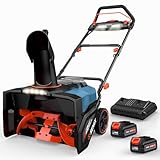
SENIX 40V 21-Inch Cordless Snow Blower with Variable-Speed Steel Auger
21.7 in clearing width
8 to 12 in adjustable depth
33 ft throw
40V brushless,10000mAh packs
Pros
- Variable-speed steel auger cuts wet snow and ice without stalling
- Starts and steers easily for a first-time owner
- Assembles in minutes at 30 pounds
- LED light bar
- Quiet with no emissions
Cons
- Runtime commonly 10 to 20 minutes under full load
- About two hours to recharge
- Cold packs must warm up before charging
- Wet-weather throw closer to 6 to 10 feet
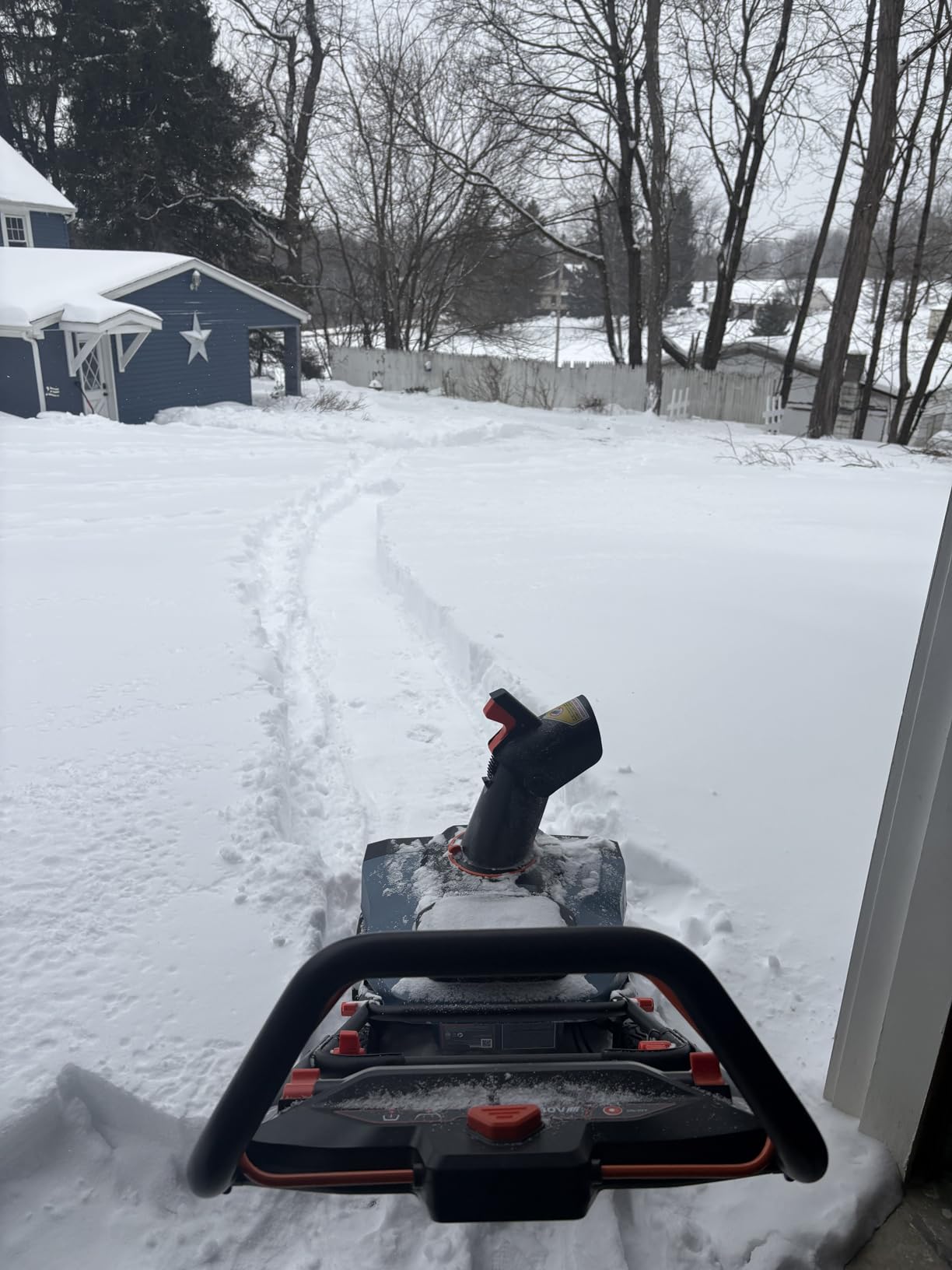
There is no pull cord, no choke and no fuel, and it assembles in minutes at 30 pounds. That combination is why this is the model we would put in the hands of someone who has never owned a snow blower. The variable-speed steel auger holds its edge in wet snow and crunchy ice, which is the capability that separates a good cordless thrower from a disappointing one.
Clearing depth adjusts from 8 to 12 inches, the throw reaches up to 33 feet, and the built-in LED light bar makes early morning work visible. Battery capacity is 10000mAh, and the warranty is five years on the tool and three on the battery, which is longer than most machines in this roundup offer.
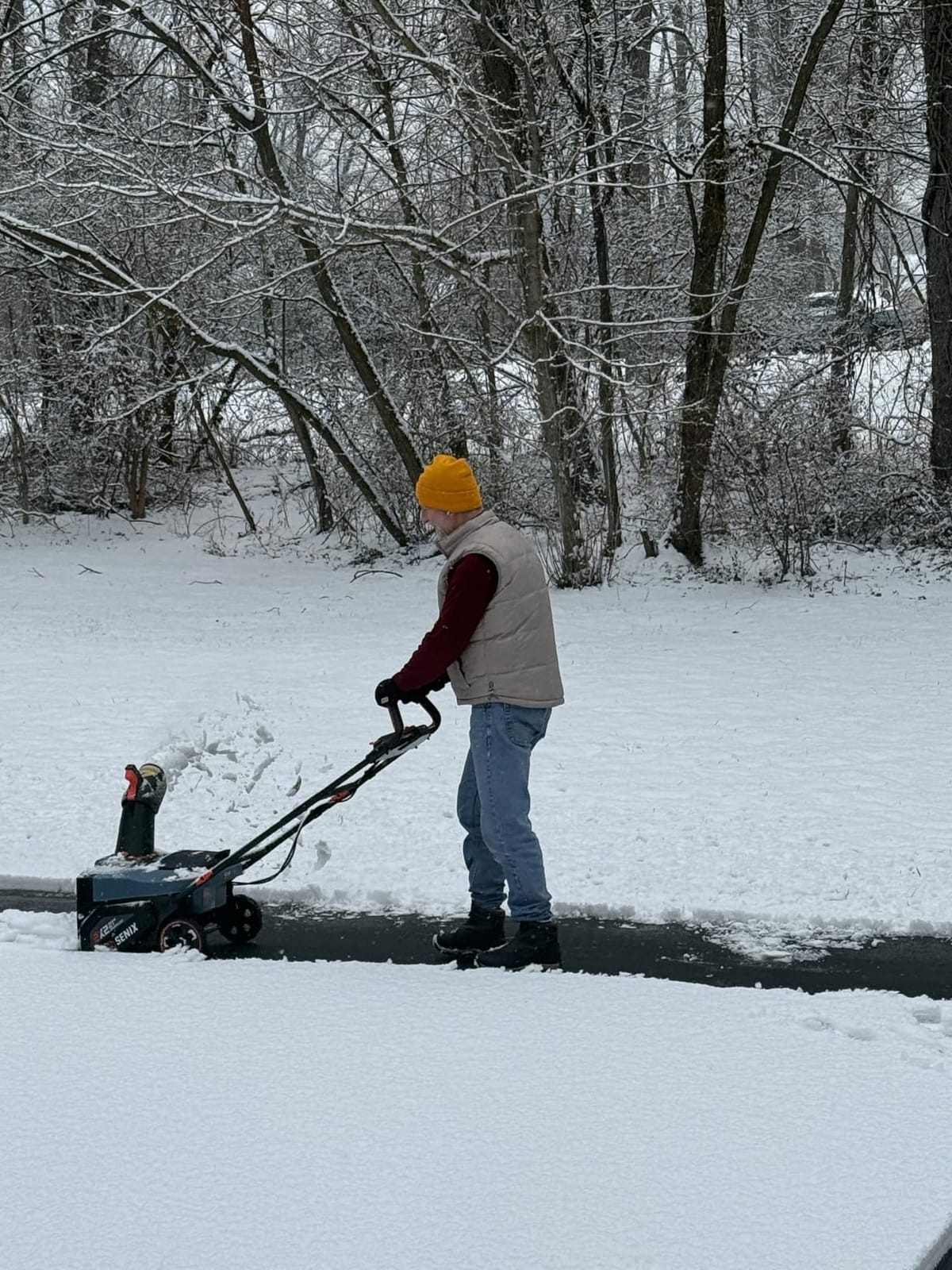
Battery endurance is the honest limit, and nearly every review raises it. Under sustained load a full charge yields somewhere in the range of 10 to 20 minutes, recharging takes about two hours, and packs coming in from the cold need to reach room temperature before they will charge at all. Owners who fit a second battery set report the problem mostly goes away.
Wet conditions also shorten the throw considerably. Measurements in heavy snow land closer to 6 or 10 feet rather than the 33-foot figure, and owners advise narrower passes when the snow is dense. On light and medium powder, though, a 120-foot driveway can be finished on one charge.
What you should know before buying it
Buy the extra battery at the same time. The gap between one pack and two is the difference between a machine you finish a storm with and one you walk away from halfway down the drive.
Plan a charging strategy. With roughly two hours from empty and cold-weather charging limits, you need somewhere warm to plug in, and a garage that is not a freezing shed.
Who should buy it, and who should not
Buy it if you are new to snow blowers, your snowfall is mostly light to medium, and you want a machine you can start in the cold without thinking about it. The foldable, height-adjustable handle also makes it easy to store.
Skip it if you have a long driveway and take on large storms, or if you live somewhere the packs will sit in the cold for hours between uses.
7. VOLTASK 48V 20-Inch Cordless Snow Blower — Best for Apartments and Patios

VOLTASK 48V Cordless Snow Blower, 48-Volt | 20-Inch Brushless Electric Snow Blower Cordless, Battery Snow Blower with Directional Plate & LED Lights (2 * 24V Battery & Dual Quick Charger Included)
48V brushless motor
20 in width,10 in depth
25 ft throw
Two 24V packs, dual quick charger
Pros
- Light at about 23 pounds
- easy to carry with one hand
- No gas
- oil or cord to manage
- Brushless motor and 20-inch width cover routine clearing
- Dual LED lights and dual safety buttons
Cons
- Runtime limited to roughly 30 minutes per charge
- Not built for deep or heavy wet accumulation
- No self-propulsion
- Manual pushing required
This is the machine for someone without a driveway. At roughly 23 pounds it is the easiest to lift, carry and store in this roundup, and it handles a patio, a front walk, a set of steps and a short parking pad without any fuss. Two 24V battery packs and a dual quick charger are included, so it is complete out of the box, and the waterproofed key components help in slushy conditions.
The 48V brushless motor clears a 20-inch path up to 10 inches deep and throws up to 25 feet through a 180-degree directional chute, with dual LED lights for early mornings. The ergonomic handle is designed to take pressure off the back, which is a real consideration for people who are not lifting heavy loads every day.
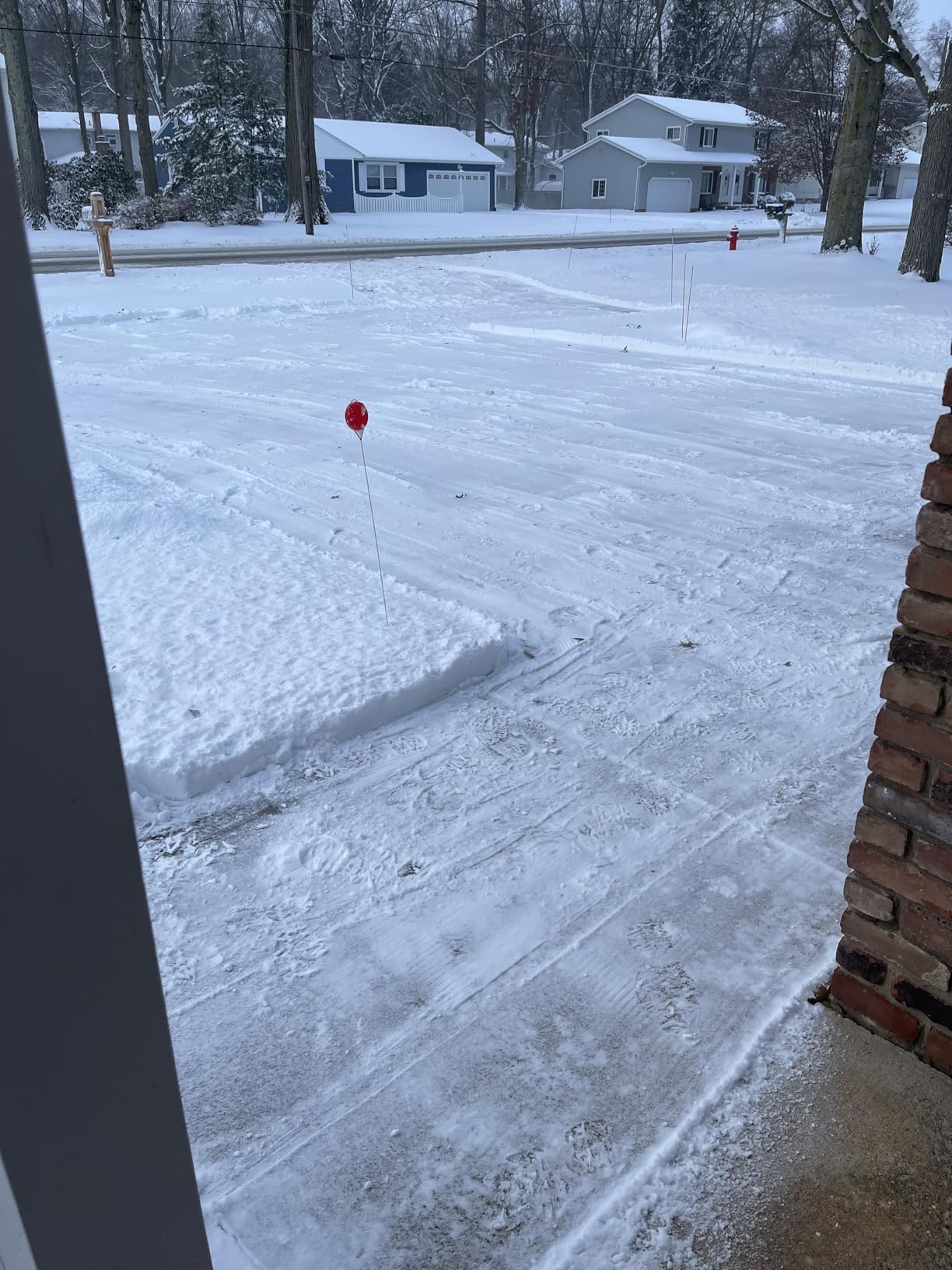
The boundary is clear and worth stating plainly. Runtime runs about half an hour on a charge, which is ample for a walkway and short on a long drive. It is not designed for deep or heavy wet accumulation, and the machine is not self-propelled, so you push it. Quiet operation and simple button start are what owners like most.
For a townhouse, condo or a house with a large patio and a short path, that combination is exactly right. For a two-car driveway in a lake-effect region, it is the wrong tool and you will know it the first time you use it.
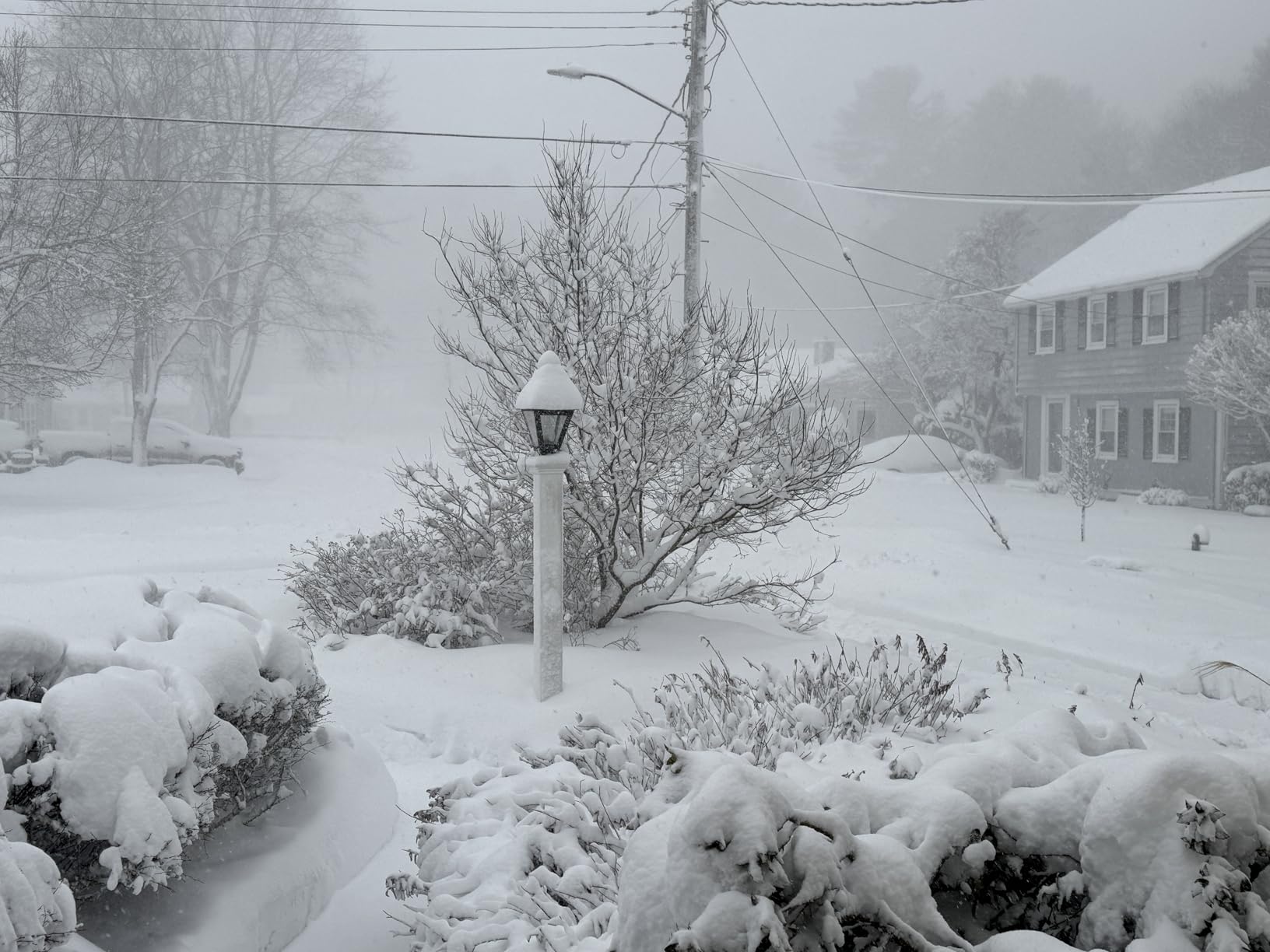
What you should know before buying it
Look at where you will store it. The 43.5-inch depth is longer than the small throwers but shorter than a full-size two-stage, and the low profile suits a closet or a garage corner.
Think about charge planning. Thirty minutes of runtime means one full job at a time, and you need a dry, temperate place to charge between storms.
Who should buy it, and who should not
Buy it if your snow removal is walkways, steps, a patio or a small parking space, and if carrying a machine up stairs or across a courtyard is part of your week.
Skip it if you have a paved driveway of any real length. You will finish the job twice, once for the snow and once waiting for the packs.
8. Westinghouse WSnow18 48V 18-Inch Cordless Snow Blower — Best for Sidewalks and Paths

Westinghouse WSnow18 48V Cordless Snow Blower 18 Inch Kit, Steel Auger, LED Light, 1200W Brushless Motor, 25ft Throwing Distance, Plows 650lbs/min, Compatible with Snow Joe Batteries
18 in clearing width
10 in snow depth
20 ft throw
2 x 24V 4Ah packs, dual-port charger
Pros
- Cordless freedom with no gas
- oil or extension cord
- About 30 pounds and easy to carry one-handed
- Three-directional chute deflector improves discharge control
- Push-button start with no pull cord
Cons
- Runtime often 15 to 35 minutes per battery pair
- Charger takes about 1.8 hours
- Weak against wet packed snow and plow berms
- No self-propulsion
- Hitch pins awkward without pliers
The narrower 18-inch path is the design choice that defines this machine. It is built for sidewalks, garden paths and a narrow parking strip, and at about 30 pounds it is light enough to lift with one hand and carry to the far end of a property without a fight. The three-directional chute deflector gives more precise discharge control than a simple side chute, which matters when the person you are throwing toward has a car parked nearby.
Two 24V 4Ah lithium packs and a dual-port charger are included, and the packs are compatible with all 24V Snow Joe batteries, so anyone already in that ecosystem reuses what they own. Push-button start means no cord to yank, and the LED light covers a quick early pass.
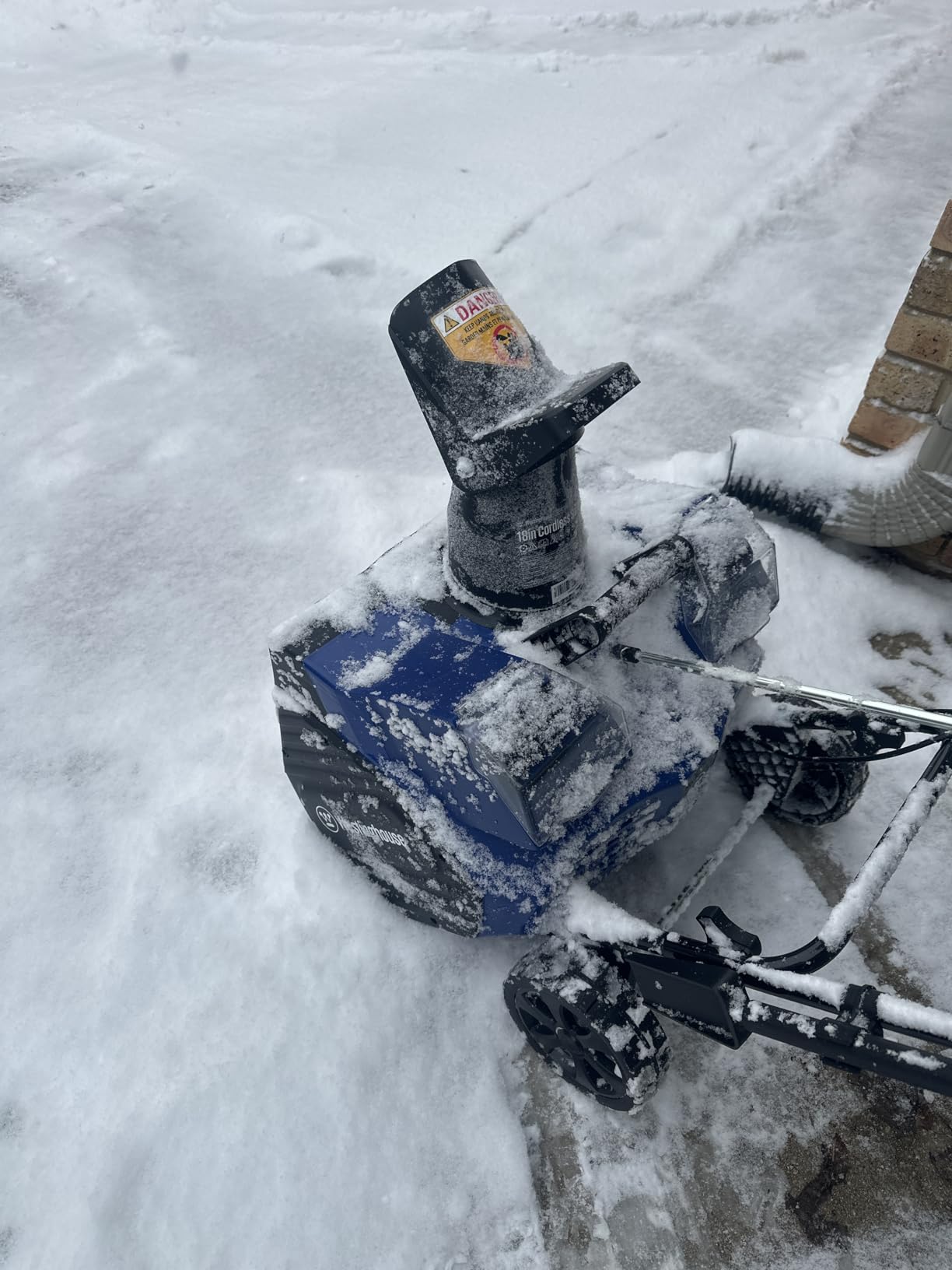
Runtime is the limit nearly every reviewer names, often in the 15 to 35 minute range for a battery pair, and the dual-port charger needs roughly 1.8 hours to bring them back. That is a workable loop for paths and sidewalks and a poor one for a long driveway. The machine also bogs down in wet, packed snow and at the end-of-driveway berm.
Assembly has a small rough edge: the hitch pins are difficult to install without pliers, which is the kind of detail that wastes ten minutes the first time and every time you reassemble it. A two-year limited warranty covers the rest.
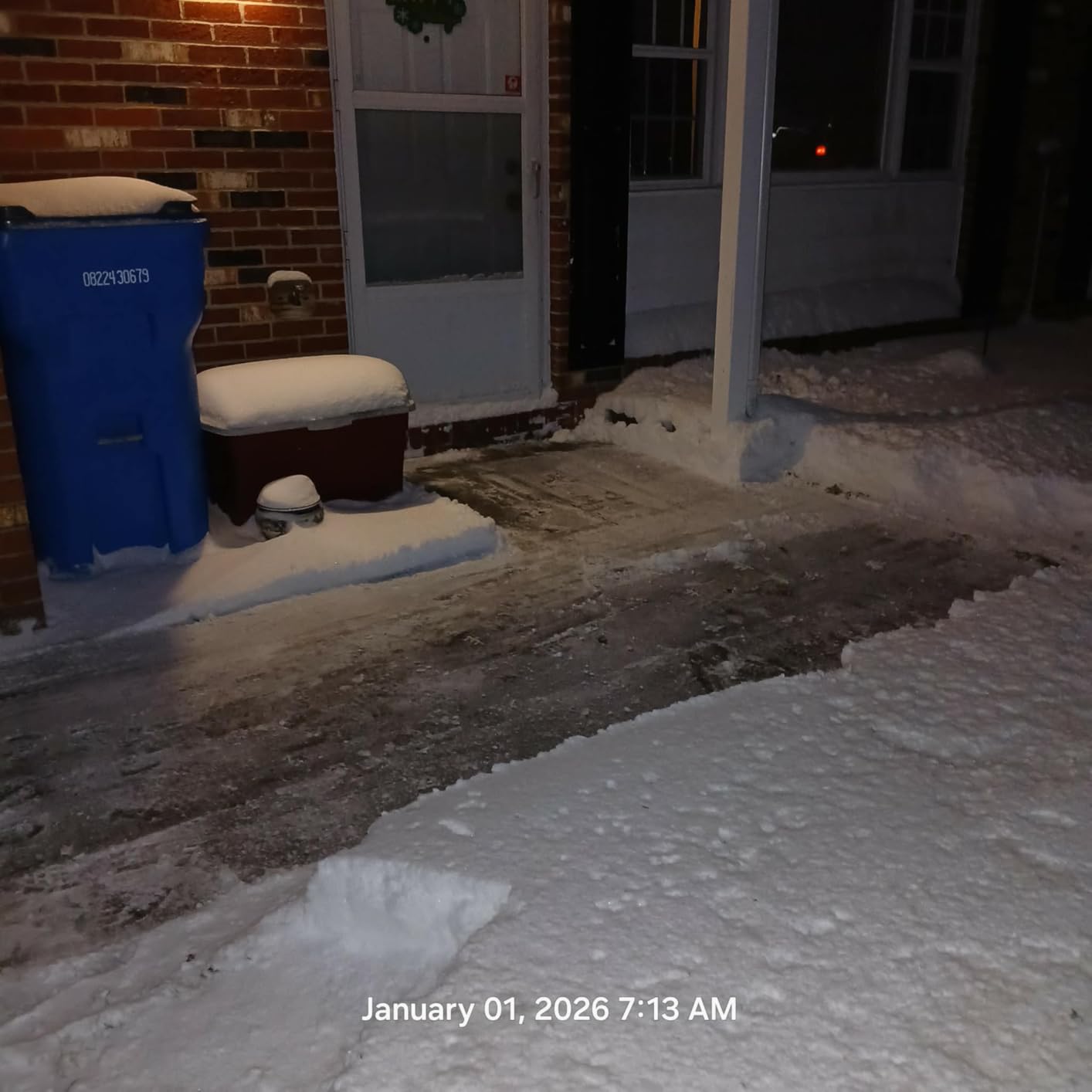
What you should know before buying it
Measure your narrowest run. An 18-inch path is built for a sidewalk or a path, and it means a conventional driveway takes noticeably more passes than the 21 and 22-inch machines here.
Keep the charger indoors. Cold packs charge slowly or not at all, and an 1.8-hour cycle turns unworkable if it happens in a freezing garage.
Who should buy it, and who should not
Buy it if you mainly need to clear walkways, steps, a path and a small area, you already use 24V Snow Joe packs, or you want cordless freedom without a gas machine in the garage.
Skip it if you have a driveway longer than about 60 feet. The charge cycle and the pass count will fight you.
9. PowerSmart 21-Inch 15 Amp Corded Snow Blower — Highest Corded Output

PowerSmart 21 Inch Corded Electric Snow Blower, 15 Amp, with LED Light
15 amp high-torque motor
21 in clearing path
30 ft throw
Up to 1020 pounds per minute
Pros
- Clears up to 1020 pounds of snow per minute
- Scrapes down close to pavement including compacted snow
- Arrives mostly assembled
- Light enough to carry and store
- Metal auger handles packed snow
Cons
- Extension cord is cumbersome and can pull loose at the plug
- Real throw closer to 15 to 20 feet than claimed
- Throws wider when aimed forward
- Small wheels are fiddly on rough ground
This machine puts out more snow per minute than anything else in the corded group, and owners notice the difference on the pavement. A 15-amp high-torque motor moves up to 1020 pounds of snow per minute, and the reinforced metal auger keeps working when the snow has been compacted by a vehicle rather than falling fresh. Several owners report scraping down close to bare pavement, which is the finishing pass most people care about.
It also arrives mostly assembled. Only the chute and handle need attaching, so you can be clearing within an hour of opening the box. Push-button start removes the need to find a pull cord in gloves, and overload protection cuts power rather than letting a jam cook the motor.
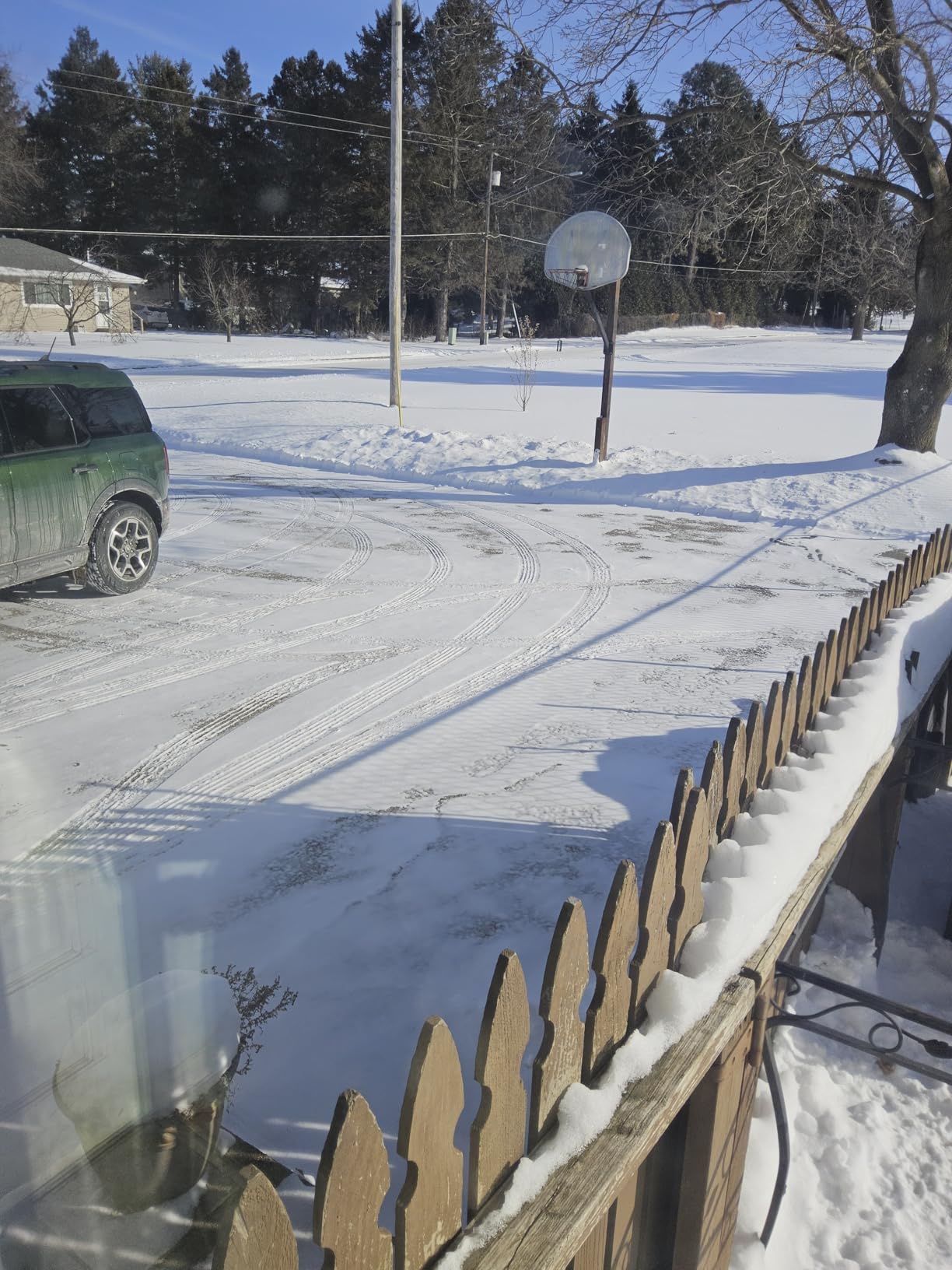
Ergonomics are the reservation. The extension cord is the constant companion and the plug is the part most likely to pull loose mid-pass, and several owners note the machine throws wider to the left and right than the aim suggests. The small wheels also make it fiddlier on rough or sloped ground, which is where a machine with more torque and more wheels would do better.
On flat, clear pavement, though, the raw output is a genuine advantage. If your drive is smooth and well maintained, this is the corded machine to beat on throughput.
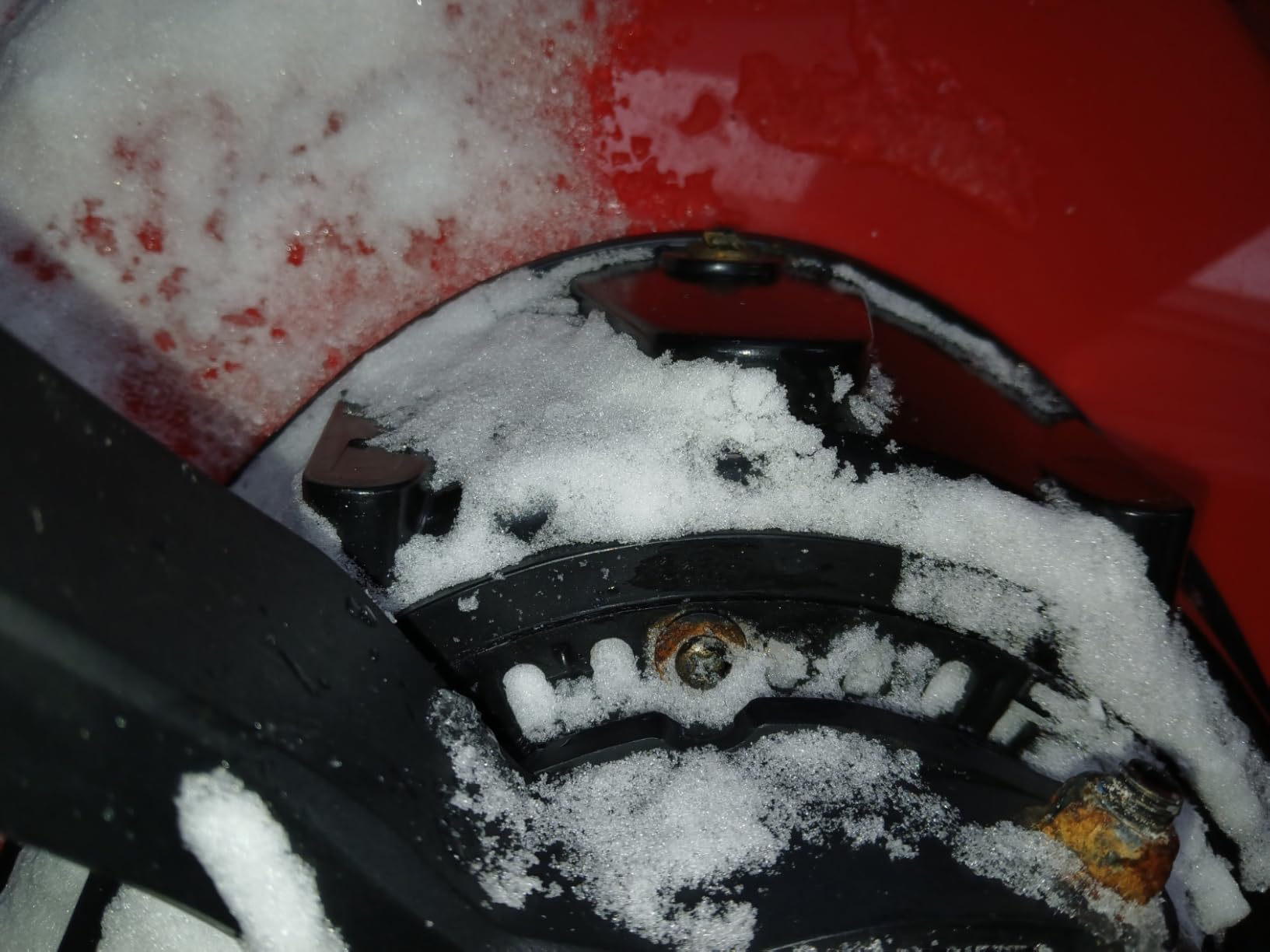
What you should know before buying it
Buy the heaviest outdoor-rated extension cord you can carry. Motor performance on a thin cord is a common source of frustration, and cable weight is the tradeoff.
Practice the wide throw. If a car, a window or a mailbox sits within the discharge arc, work out where the snow lands before the first storm rather than the first complaint.
Who should buy it, and who should not
Buy it if you have a smooth paved drive, you want the strongest corded output available, and you are comfortable managing a cord across the full length.
Skip it if your driveway is gravel, cracked or sloped. The small wheels and the non-propelled drive make those surfaces a fight.
10. DEKOPRO 20-Inch 15 Amp Corded Electric Snow Blower — Compact Corded Entry

Corded Snow Blower:15A Motor, 20-Inch Electric Snow Blower, Electric Snow Shovel with 25ft Throwing Distance, Dual LED Lights, 3300rpm Snow Thrower DEKOPRO
15 amp motor
21 in path,12 in deep
25 ft throw
3300 rpm thrower motor
Pros
- Affordable entry into powered snow clearing
- 15-amp motor moves about 800 pounds of snow per minute
- Two-blade steel auger on a wide 21-inch path
- LED headlights
- Control switch operable with gloves
Cons
- Extension cord must be managed across the full drive
- Throw falls well short of the claim in deep or wet snow
- Not self-propelled
- Smaller review base than the established models
This is the most compact machine we evaluated, at 22 by 15 by 17 inches, and it does what a first powered snow-clearance purchase needs to do. The 15-amp motor moves up to 800 pounds of snow per minute, and the two-blade steel auger cuts a 21-inch path up to 12 inches deep, which is a wider intake depth than several more expensive machines in this roundup manage.
The 3300 rpm thrower motor throws snow up to 25 feet through a 180-degree adjustable chute, and dual LED headlights let you work in low light. The dual-action safety switch can be operated with gloves on, which is a small detail that matters when your hands are wet and cold.
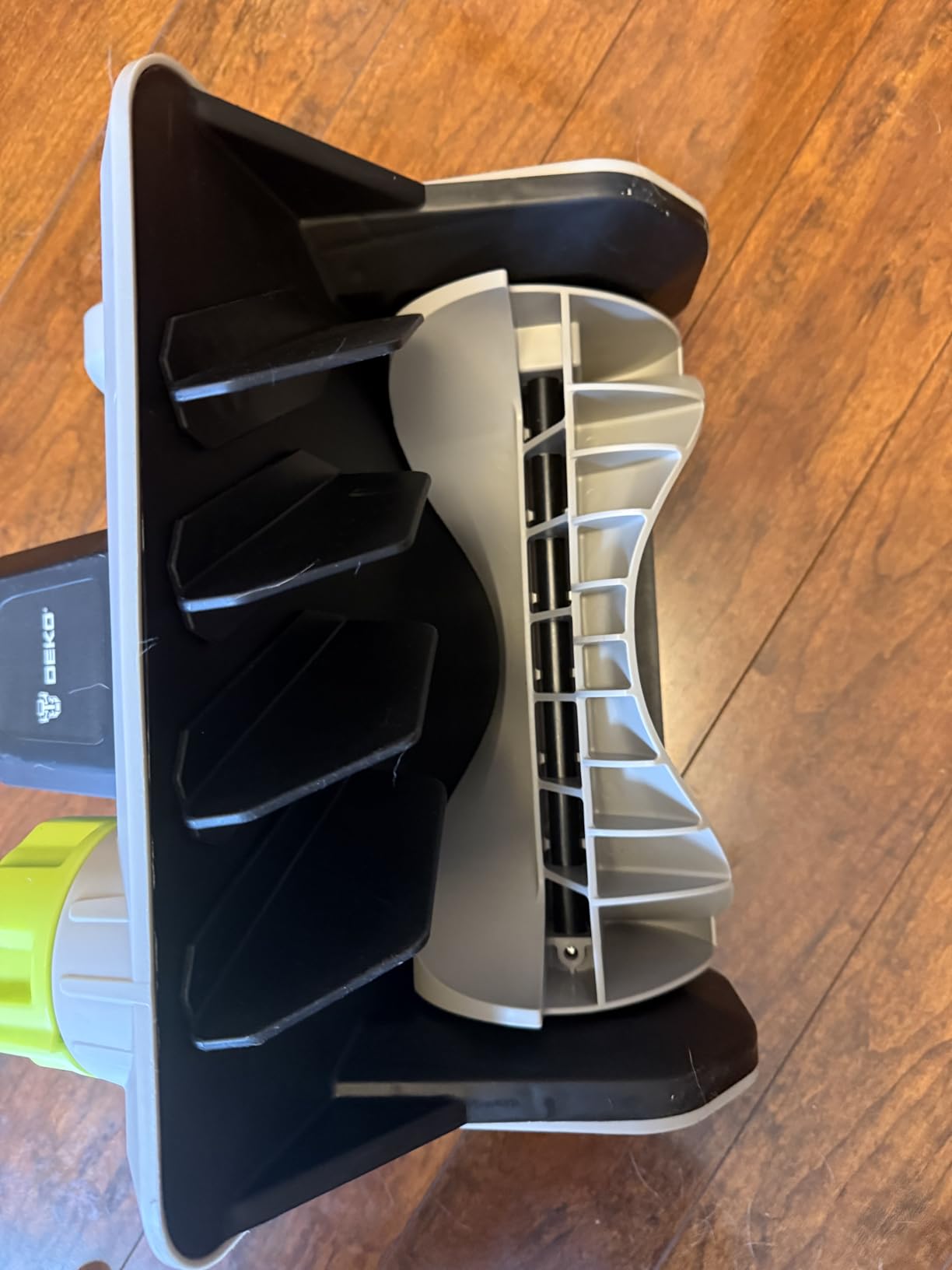
The limits are the familiar corded ones. You manage an extension cord across the full length of the drive, you supply all the pushing force, and the real throw in deep or wet snow lands well short of 25 feet. It is a light-to-moderate snow machine, and treating it as anything else leads to frustration in the third week of a heavy winter.
Review volume is the other consideration. With a smaller and newer body of owner feedback than the established models above it, you have less long-term evidence to lean on, so it suits a buyer who wants a simple entry point more than a buyer who expects a decade of service.
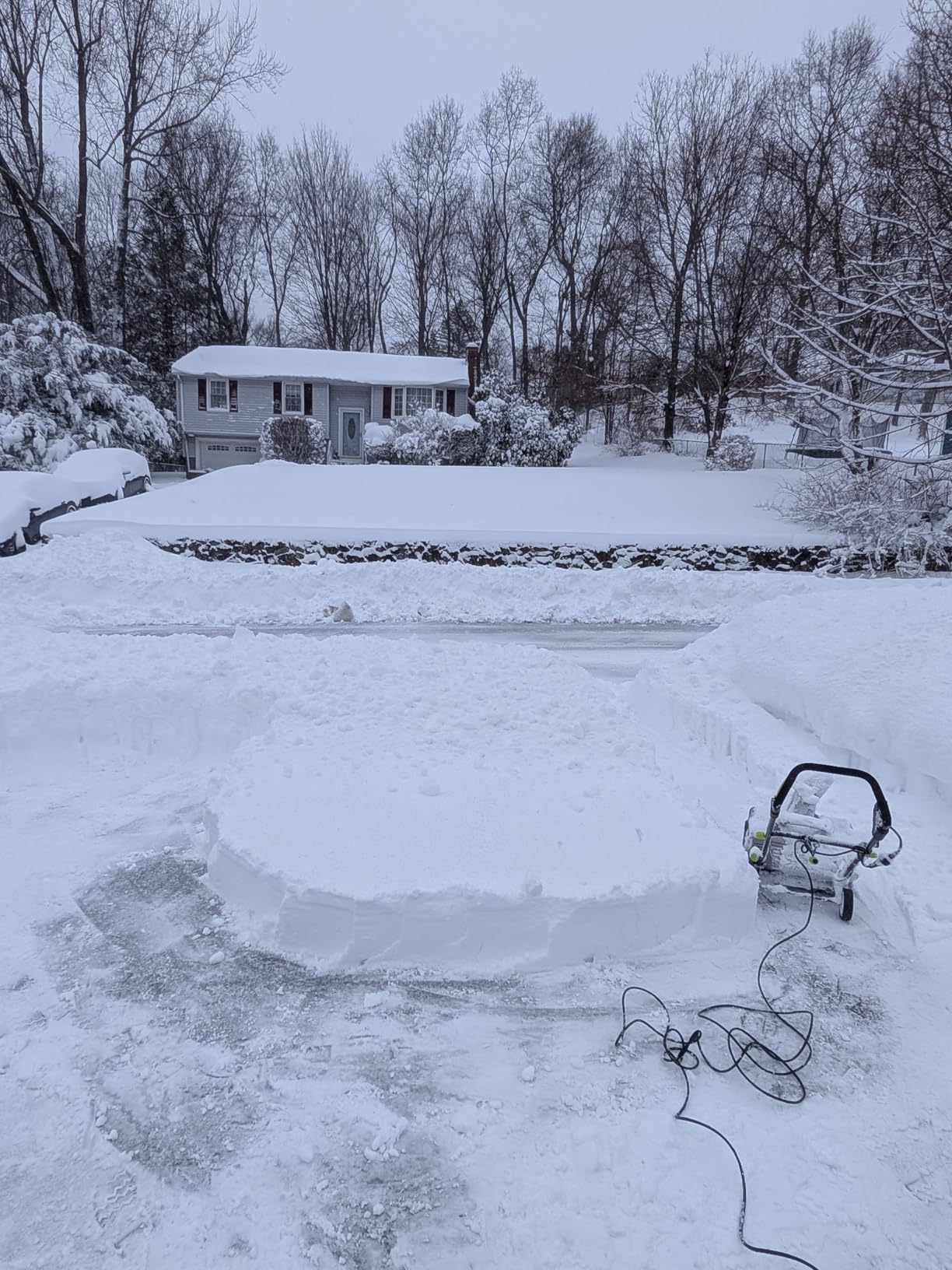
What you should know before buying it
Check your storage situation twice. The compact footprint is the main reason to like this machine, and it only helps if you have a shelf or a corner you are sure about.
Have a light-duty extension cord on hand and check it before the first storm. Cord fit is the most common early complaint with this category.
Who should buy it, and who should not
Buy it if you are clearing a small driveway, a deck or a set of steps, and you want powered clearing without gas, batteries or a large machine.
Skip it if you need to handle plow berms, long drives or deep wet accumulation. Nothing at this size and power does that reliably.
How We Picked These Snow Blowers
We ranked on capability and evidence, in this order. First, clearing width and intake depth, because the machine cannot clear what it cannot reach. Second, stage count and drive type, which determine whether the machine stalls in wet snow or keeps moving. Third, throwing distance, since a short throw means clearing the same ground twice.
Fourth, owner rating weighed against review volume, since a high average on a thin review base tells you much less than a slightly lower average on a deep one. Fifth, friction factors: starting ease, cord or battery logistics, assembly time and storage footprint. Sixth, the length of the warranty and whether a local service network exists for the brand.
We also want to be direct about what we did not do. We did not buy and test all ten machines ourselves in a single season. Ratings, review themes and failure patterns come from owner feedback, and hardware specifications come from the manufacturers. Where owners disagree, we have said so rather than picking the more convenient side of the story.
That is why every pick above carries an explicit limitation section. A roundup with no cons listed is a sales page, and owners in the forums are openly suspicious of those.
Buying Guide: Power, Stage Count, Clearing Width and Safety
Gas, cordless or corded: pick your power source first
Corded electric is the simplest option and the easiest to store. There is no battery, no fuel and no engine, so the maintenance footprint is close to zero and the purchase price is the lowest here. The limits are the cord, which you must drag across the full width of the drive, and the absence of self-propulsion.
Cordless removes the cord and adds runtime management instead. Startup is a button press, which is why these machines rate well for first-time owners and cold mornings. The trade is battery endurance: packs deliver minutes rather than hours under load, cold packs charge slowly, and most owners end up buying a second set.
Gas is still the only option that does not care how long the job takes. A four-cycle engine refuels in a minute and keeps going through wet, deep accumulation, at the cost of fuel storage, oil changes, pull-start muscle and a machine that will not fit in a small garage.
One more consideration most guides skip: platform lock-in. A battery blower is only as good as the ecosystem behind it. If the same packs run your mower, hedge trimmer and leaf blower, the effective cost of the snow blower drops sharply, because you are sharing packs you already own. If you do not, you are buying into a closed system whose pack availability years from now is genuinely uncertain.
Single-stage, two-stage or three-stage: what the terms mean
A single-stage machine, often called a snow thrower, uses one auger that both scoops and throws the snow in a single motion. These are lighter, cheaper and easier to store, and they handle roughly 6 to 10 inches of snow well. Most of the electric machines in this roundup are single-stage throwers.
A two-stage machine splits the work. The auger feeds a spinning impeller that does the throwing, which is why two-stages keep moving when a thrower stalls. Expect them to handle 12 to 18 inches, and expect them to be self-propelled, since the weight demands it. Only the PowerSmart 24-inch gas unit in this roundup is a two-stage, and that is deliberate rather than an oversight.
Three-stage machines add a third stage of acceleration and are built for 18 inches and beyond, or for contractors clearing large commercial lots. None appear here because they are large, expensive and aimed at a job most homeowners do not have. If you clear a long commercial driveway or a shared parking lot daily, that is the tier you are shopping in.
Match clearing width to your driveway, not your ambition
Width is the number that determines how many passes you make, and passes are what actually consume a winter evening. An 18 to 21 inch machine is right for a one or two-car drive, a short walkway and some steps. A 22 to 24 inch machine covers a two or three-car drive in fewer passes and starts to earn its extra weight.
Snow depth sets the ceiling. The ideal snow depth figures in our specs run from 8 inches on the smaller cordless units to 13 inches on the gas two-stage and the largest corded unit. If your region regularly delivers more than that, a single-stage thrower will be pushed past its design point, and every pass will feel like it.
Also account for the berm. Snow pushed to the end of a driveway creates a wall at the far end, and clearing that wall is the hardest job of the day. Two-stage machines power through it, which is another reason wet-snow regions consistently treat them as non-negotiable.
Safety features that are worth insisting on
A dead man’s control, the bar you squeeze on the handle that shuts the auger off when released, is the single most important safety feature on any of these machines. It stops the auger the moment you let go. Test it before you need it.
Look for an auger shutoff, a chute deflector that locks in position rather than wandering, and hand warmers plus a light if you clear after dark. On gas machines, check the muffler and chute guard, since a hot exhaust next to your hand is a real burn risk on a slow pass.
Wear reflective clothing, keep the cord or the machine behind you rather than beside you when you can, and never clear a chute while the engine or motor is running. Keep children and pets well clear of the discharge arc, which is where the machine throws snow, not the intake.
What to do when the chute clogs mid-storm
Shut the machine down completely. For a cordless unit, remove the packs; for a corded unit, unplug it at the machine; for gas, shut the engine off. Never reach into a running chute, and never use your hands even with the machine off if there is any doubt about the power.
Wait. Snow and ice freeze into the chute quickly, and a blockage that will not release while cold will often fall away on its own after ten minutes. This is the step owners skip and the reason they end up with a bent chute or a cracked plastic deflector.
Then use the included clean-out tool, or a wooden dowel, and never anything metal. Work from the bottom of the chute upward. If the clog is packed wet snow from the auger housing, the machine will usually clear itself once you restart and the impeller or auger spins up.
Off-season storage and maintenance
Drain or stabilize fuel before a machine sits for the season, and run it out of gas entirely if you plan to store it for more than a few months. Change the oil on a gas machine, and clean the chute and the impeller housing so nothing is left holding moisture against metal.
Inflate the tires to the pressure on the sidewall, because a flat tire slowly distorts the auger housing. Check the scraper bar and skid shoes, and expect to replace a plastic scraper bar at least once every few seasons.
For batteries, store packs charged at roughly half in a place that stays above freezing, and expect some capacity loss in any lithium pack that sits unused for years. For corded machines, coil the cord loosely and check it for cracking before the season. Run every machine briefly a few times in the off-season so seals do not dry out.
Where the snow should actually go
Chute direction is a neighbourly question. Aim the discharge away from parked cars, mailboxes, windows, and the road, because a 25-foot throw carries a surprising amount of momentum when the snow is wet.
Watch the end-of-driveway berm, since repeatedly piling snow in one spot can block a drain or grow into a wall you will have to break with a shovel. Where you place the windrow matters if a neighbor’s property or a shared walkway is within range, and if you are in a neighborhood with rules about snow storage, the rule governs.
Frequently Asked Questions
Which snowblower brand is most reliable?
Across owner feedback and long-running forum consensus, Ariens and Toro come up most often as the brands people trust for durability, with Husqvarna and the MTD-made brands such as Cub Cadet, Troy-Bilt and Craftsman cited as strong alternatives. In our ranking, the deciding factors are cast-metal construction, warranty length and local parts availability rather than engine size on paper. We weighted owner ratings against review volume so a high score on few reviews does not outrank a proven machine.
Which two-stage snow blower is the most reliable?
The PowerSmart 24-inch 212cc two-stage is the only true two-stage in our roundup, and it earns the slot on a steel auger and impeller, 13-inch intake depth, electric start with recoil backup, and adjustable skid shoes that work on gravel. A two-stage matters because the auger feeds an impeller that keeps throwing when a single-stage thrower stalls. For most homeowners, the two-stage is the reliability upgrade that stops a wet February morning from becoming a frustrating one.
Are two-stage snow blowers worth it?
Worth it if you take on 12 inches or more of wet snow, have a long driveway, or clear a berm at the end of the drive. The auger and impeller split the work, so the machine keeps moving instead of stalling, and self-propelled drive takes the physical effort out of it. For a short driveway in light powder, a single-stage thrower or cordless unit is the better value, and the extra capability would sit unused.
How much snow can a single-stage snow blower handle?
A single-stage thrower, often called a snow thrower, handles roughly 6 to 10 inches comfortably and manages around 13 inches of dry snow. The auger both scoops and throws in one motion, so the machine slows and eventually stalls in deep, wet, compacted accumulation. Past that point you supply the force, and the end-of-driveway berm is where single-stage machines are most often abandoned mid-job.
Do I need a two-stage or three-stage snow blower?
A two-stage is the right answer for 12 to 18 inches of snow, a long driveway, gravel, or a berm you have to break every storm. A three-stage adds a third stage of acceleration and is built for 18 inches and beyond or for contractors clearing commercial lots daily. If your region averages under 8 inches and your drive is short, a single-stage thrower is the machine that matches the job.
What snowblowers do professionals use?
Professionals clearing residential and commercial lots use self-propelled two-stage gas machines in the 28 to 30 inch class, with cast-iron gearboxes, aggressive tire tread and heated handles, and they step up to three-stage machines when snowfall goes past 18 inches. Durability and local service access matter more than headline engine size. Homeowners can buy into the same class when they have a long driveway and heavy wet snow.
Final Verdict: The Best Snow Blowers 2026
The EGO Power+ 21-Inch Cordless Kit is the best snow blower for most people in 2026, because it is the only machine here that arrives complete with two batteries and a dual-port charger and it carries a 4.3 owner rating across more than 1,100 reviews. The 24-inch self-propelled EGO is the pick for heavy wet snow and long drives, the PowerSmart 212cc two-stage is the answer when storms exceed a foot, and the corded machines remain the lowest-friction option for short drives and small properties.
Three details decide it for your house. How deep it actually snows where you live, how long your driveway is, and whether you want to own fuel, batteries or just a cord. Answer those honestly and the machine will pick itself.
If you are still weighing options, the details on planning a winter trip around snow are worth reading before the season turns, so you are not making equipment decisions in a hurry.