
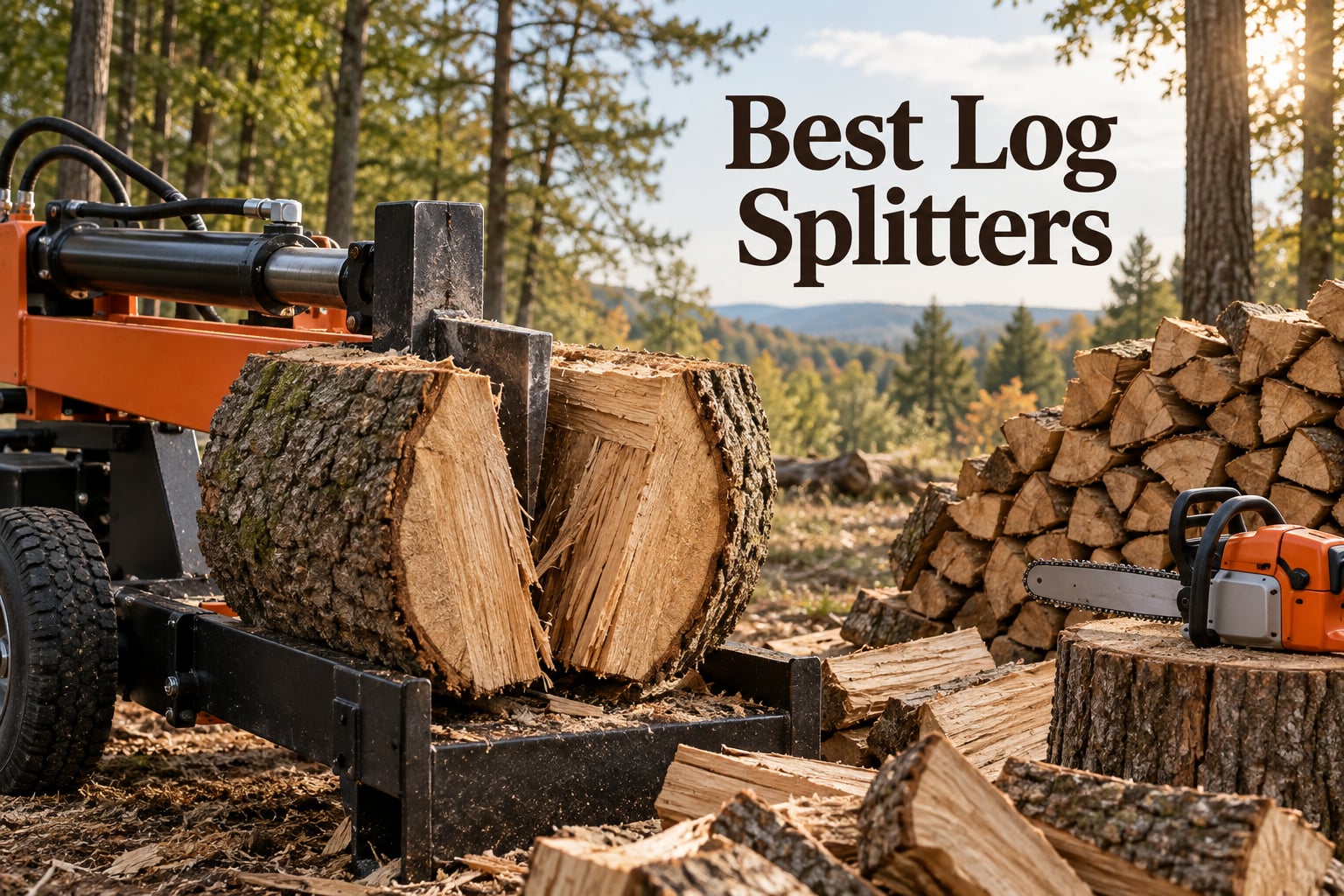
A good log splitter comes down to one number: splitting force, measured in tons. Splitting softwood like pine or a season-old stack of birch? A 5 to 7 ton unit handles it. Working in hardwood country with green oak, hickory or gum straight off the stump? You want 20 tons or more, because a 12-inch green round demands roughly twice the force of the same log dried out.
That is the whole sizing question, and almost every mistake we see in this category comes from answering it wrong in one of two directions. Owners in hardwood regions routinely undersize at 7 or 10 tons and end up with rounds that wedge the splitter and stall the ram. Plenty of softwood-only buyers do the opposite and haul a machine twice the weight they need.
We spent a season comparing the 12 machines below, reading owner reports on splitting forums, and cross-checking every spec against manufacturer data to work out the best log splitters for the money this year. The list deliberately spans every power class: hand tools, manual hydraulic, electric, and gas. We found no reason to make you read three separate roundups to cover a woodstove owner and a farmer clearing land.
Two quick answers before we start. Gas beats electric for anything over about 10 tons, and electric wins under it, because cord gauge and motor cooling become real limits well before the tonnage number does. And tonnage ratings do not track motor size the way most buyers assume, which is why two machines with very different engines can claim the same force.
Table of Contents
Top 3 Picks for Best Log Splitters in 2026
These three cover the widest range of real splitting jobs, from a single winter of kindling to a cord a week of green hardwood. Every other machine in the list is a strong option inside its own class.

Kindling Cracker King XL Cast Iron
- 9 inch cast iron safety ring
- 17 in frame height
- no welds or moving parts
- Made in Australia

YARDMAX YS0650 6.5 Ton Electric
- 6.5 ton ram force
- 20.5 in log length
- 10 in diameter capacity
- Quiet plug-in operation

SuperHandy 25 Ton Gas Log Splitter
- 25 ton splitting force
- 7HP AlphaWorks engine
- 12 second cycle time
- Horizontal and vertical
The Best Log Splitters in October at a Glance
Every splitter we tested against, with the three specs buyers ask about most: force, power source, and log capacity.
| Product | Specifications | Action |
|---|---|---|
| Kindling Cracker King XL Cast Iron Kindling Splitter |
|
Check Latest Price |
| YARDMAX YS0650 6.5 Ton Electric Log Splitter |
|
Check Latest Price |
 BILT HARD 6.5 Ton Log Splitter BILT HARD 6.5 Ton Log Splitter |
|
Check Latest Price |
 Kindling Splitter L Cast Iron Manual Wood Splitter Kindling Splitter L Cast Iron Manual Wood Splitter |
|
Check Latest Price |
| SuperHandy 25 Ton Gas Log Splitter with 7HP Engine |
|
Check Latest Price |
 SuperHandy Hydraulic Log Splitter 20 Ton SuperHandy Hydraulic Log Splitter 20 Ton |
|
Check Latest Price |
 GarveeTech 12 Ton Manual Hydraulic Log Splitter GarveeTech 12 Ton Manual Hydraulic Log Splitter |
|
Check Latest Price |
 PowerSmart 6.5 Ton Electric Log Splitter PowerSmart 6.5 Ton Electric Log Splitter |
|
Check Latest Price |
 Hi Flame Wood Kindling Splitter Hi Flame Wood Kindling Splitter |
|
Check Latest Price |
 KABIN Kindle Quick Log Splitter KABIN Kindle Quick Log Splitter |
|
Check Latest Price |
 Timber Tuff Manual Log Splitter with Steel Slide Hammer Timber Tuff Manual Log Splitter with Steel Slide Hammer |
|
Check Latest Price |
 BAYQISI Cast Iron Kindling Splitter with Sledge Hammer BAYQISI Cast Iron Kindling Splitter with Sledge Hammer |
|
Check Latest Price |
1. Kindling Cracker King XL Cast Iron Kindling Splitter – Best Overall for Kindling and Firewood
Kindling Cracker King XL Cast Iron Kindling Splitter, 9in. Opening
Single-piece cast iron
9 in safety ring opening
17 in frame height
16 oz weight
Made in Australia
Pros
- Patented cast iron ring keeps hands clear of the wedge
- Single piece with no welds or moving parts
- XL ring handles logs about 40 percent larger than the original
- Rated for temperatures as low as -94F
- Over 14000 owner reviews
Cons
- Needs a solid base or screws to a stump to prevent shifting
- Logs wider than the ring can jam between wedge and bottom ring
- Requires a heavy mallet and many strikes per log
This is the tool I recommend to anyone whose wood consumption runs to a few cords a year and who does not want a machine in the garage. There is no engine, no pump, no cord to trip over, and nothing to service. You drive a heavy mallet into a fixed wedge and the log opens.
What separates it from the cheap stamped-steel kindling tools is the ring design. The wedge sits inside a cast iron collar, so your hands stay outside the strike zone entirely. That single feature is why it carries an enormous review history at a very high average rating.
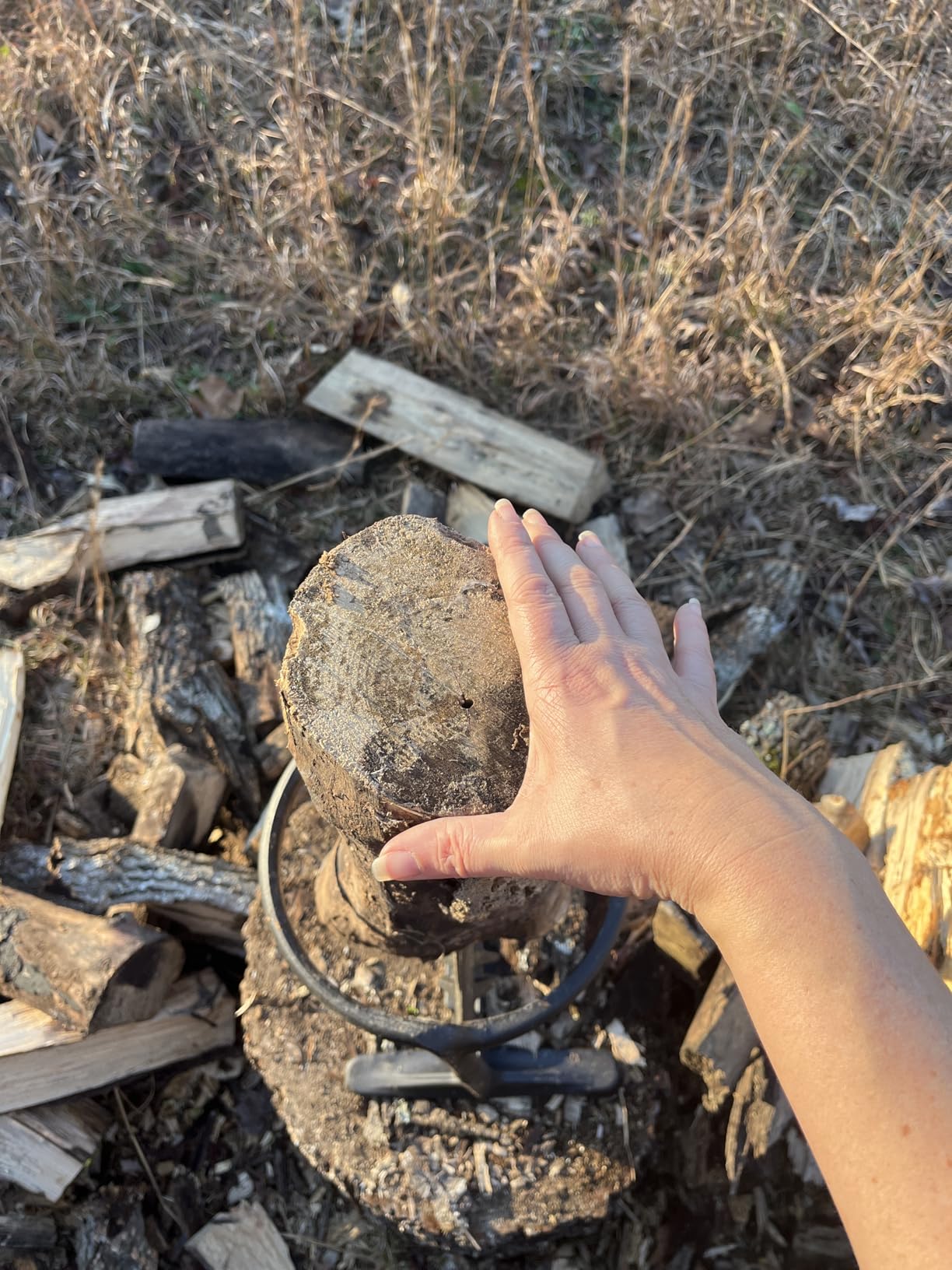
Owner reports describe a full winter of kindling in roughly an hour of striking, and the 9-inch inside diameter on the XL version is wide enough to take rounds that jam smaller units. Builders also point out that the casting works down to minus 94 degrees, so it is not a three-season tool in a cold climate.
The design has one real weakness, and it is setup rather than hardware. On soft ground the whole unit can walk, so most people either bolt it to a stump or set it on a solid block. Get that right and it stays put through heavy blows.
What kind of wood it actually splits
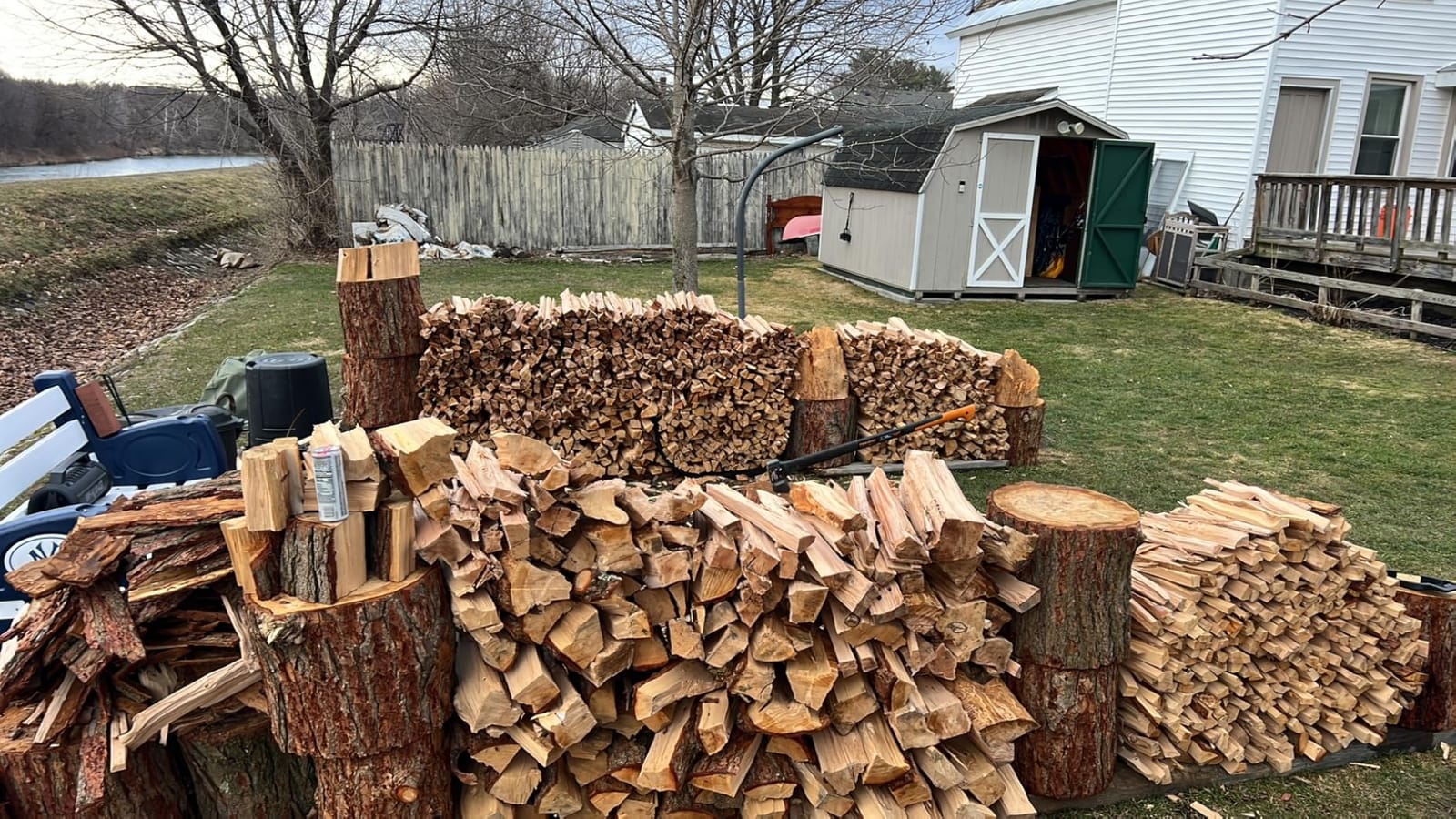
It is built for kindling and small rounds rather than full cords, though owners report it chewing through stubborn knotty mesquite and oak without complaint. The ring opening is the limiting factor, not the strength of the iron.
Because there is no ram, your arm supplies the force. Expect to need a 2 to 5 pound mallet and many strikes per log, which is a very different rhythm from a powered cycle. For a woodstove owner, that rhythm is fine. For someone who burns ten cords, it is not.
What to watch before you buy
Check that you have somewhere solid to mount it. The included variants come in 6 inch and 9 inch ring sizes, and going up to the larger ring costs you nothing in weight since the body is only 16 ounces.
Also plan the mallet separately. It is not included, and the cheap hand hammers most people have in a drawer will not drive this wedge convincingly. Buy a proper sledge and the tool feels like a different product.
2. YARDMAX YS0650 6.5 Ton Electric Log Splitter – Best Value Electric Splitter
YARDMAX YS0650 6.5 Ton Electric Log Splitter
6.5 ton ram force
Electric operation
20.5 in log length
10 in log diameter
104.7 lb
Pros
- 6.5 tons of ram force handles standard firewood rounds
- 20.5 inch log capacity suits home firewood use
- Quiet operation with no exhaust or fuel storage
- Compact enough to store in a normal garage
Cons
- Underpowered for green hardwood over 10 inches
- A 104.7 lb frame is awkward to move without help
- Extension cord gauge limits the site you can work from
This is the splitter I point most first-time powered-splitter buyers toward. Six and a half tons of ram force sounds modest next to the 20 and 25 ton machines, but it matches what a normal stack of season-old firewood actually demands.
Owners describe it as a solid home-duty electric unit with adequate power for typical logs and a quiet, low-fuss alternative to gas. There is no choke to fuss with, no fuel to store, and no exhaust in a residential garage.
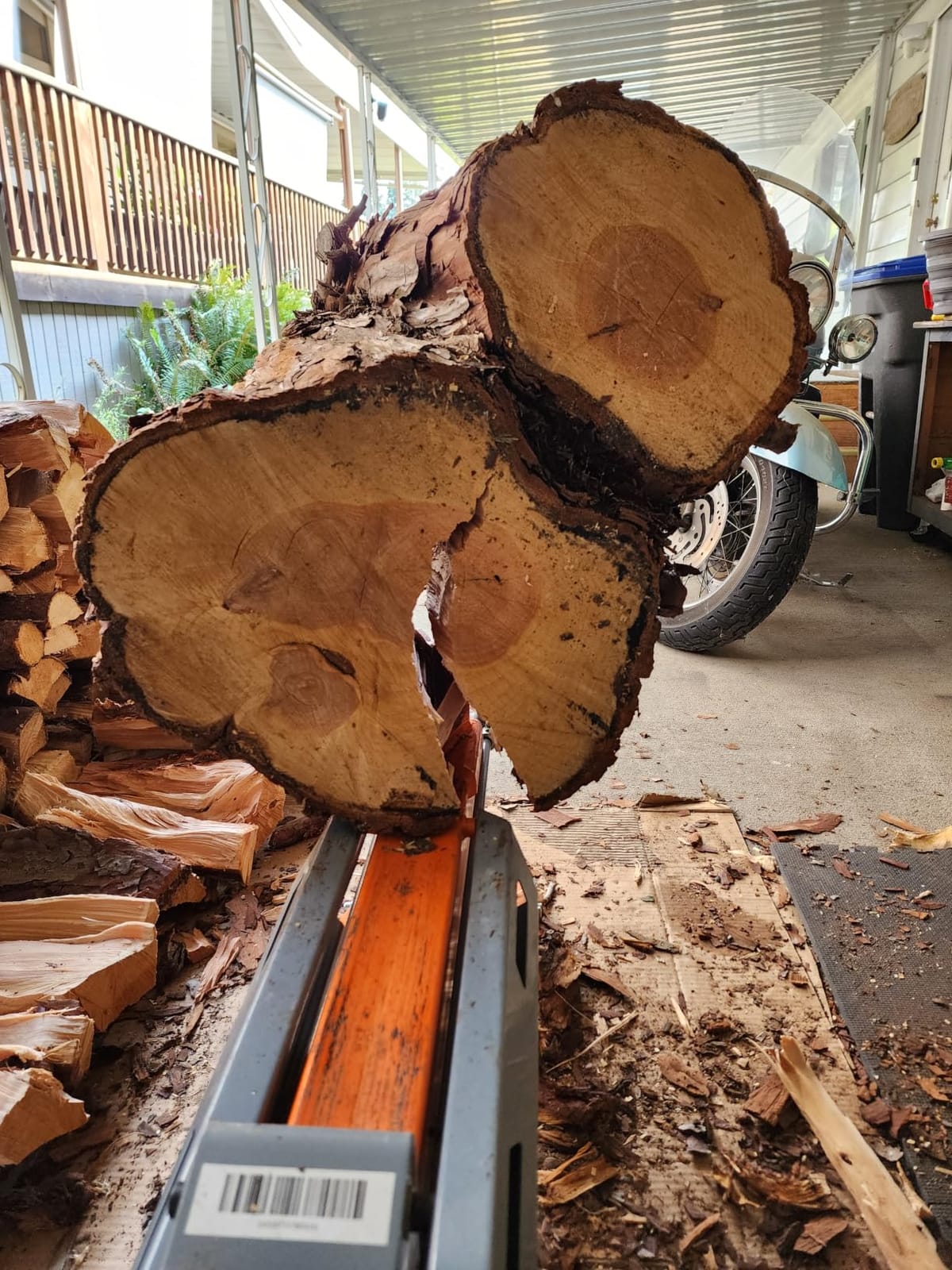
The capacity figures are the useful part. Twenty and a half inches of log length and a 10-inch diameter are honest numbers for split firewood, and the machine fits through a standard door with room to spare in the package dimensions.
Where it stops is green hardwood. A 10-inch oak round straight off the stump will stall a 6.5 ton ram, and the ram has no way to push through it the way a 20-ton machine simply absorbs the stall and keeps going. Size up if your wood comes from hardwood trees.
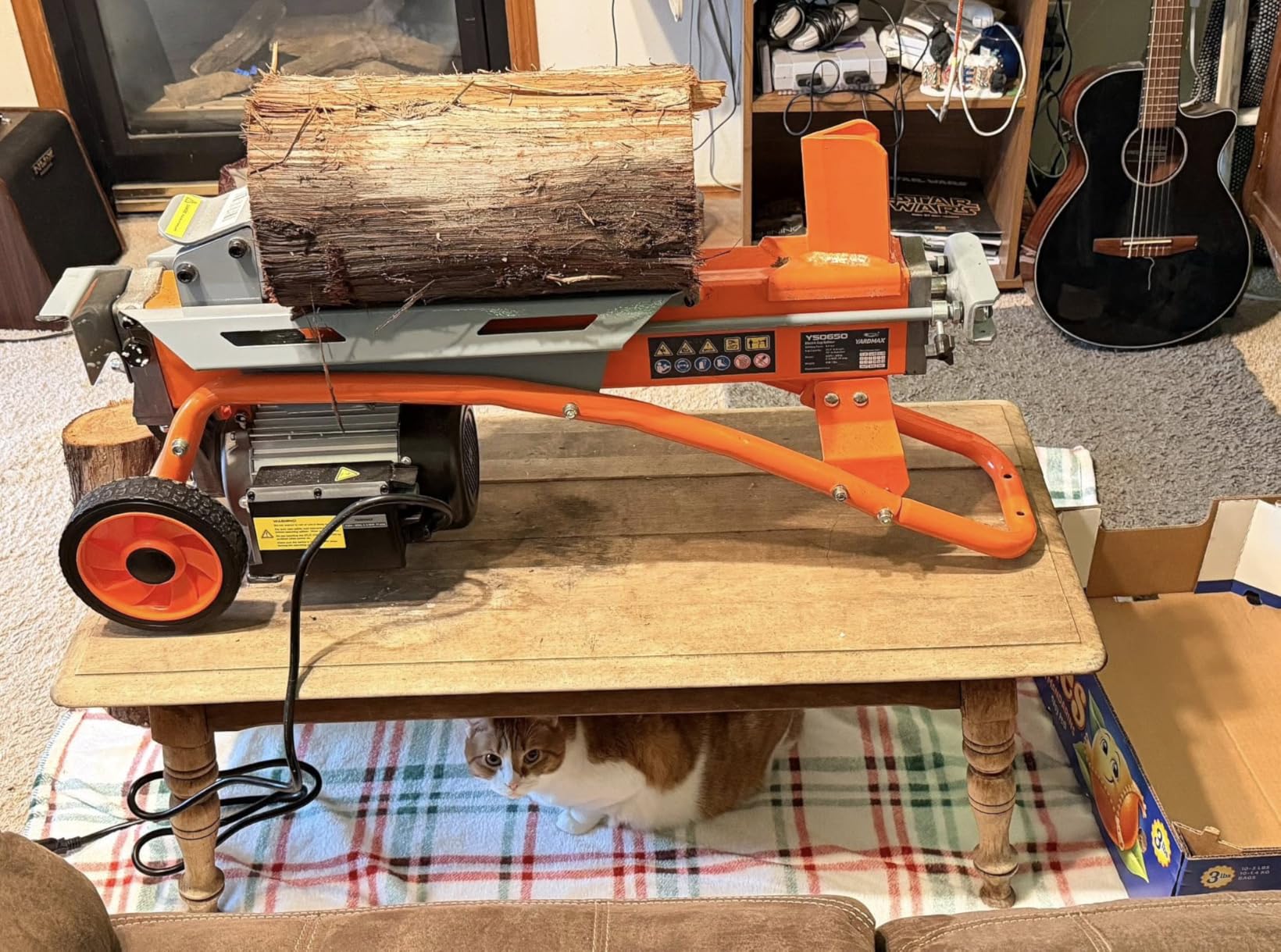
How much wood it can realistically handle
Budget for seasoning before you split, not after. Electric splitters at this tonnage are at their best on wood that has dried for a season, which is where most home firewood piles are by the time people get around to processing them.
Roughly two to four cords a year is a comfortable load for this class. Beyond that, you are spending your time waiting on a machine that has no headroom left.
What to check before buying
Measure your extension cord route. Electric splitters draw serious current over long runs, and a thin gauge cord in a long extension is the most common owner complaint in this category. Buy the heaviest outdoor-rated cord your reach requires.
Also check your working height. Electric splitters sit low to the ground, and owners with back problems consistently report that bending over the beam is harder on them than the splitting itself.
3. BILT HARD 6.5 Ton Log Splitter – Best Home Firewood Workhorse
BILT HARD 6.5 Ton Log Splitter, Wood Splitter, Portable Firewood Splitting Machine
6.5 ton splitting force
Full-beam steel wedge
20.5 in by 9.8 in capacity
5.7 in rear wheels
Pros
- Handles seasoned hardwoods and 12 to 18 inch rounds
- Raised working height saves your back versus squatting
- Two-handed switch operation feels safe
- Backed by responsive company warranty service
Cons
- Two-hand switch is awkward and often replaced with a foot switch
- Small 5.7 inch wheels struggle over rough ground
- Arrives as two boxes and needs a hydraulic fill and bleed before first use
Same tonnage class as the YARDMAX, different priorities. The BILT HARD is a full-beam steel design with a raised working height, and owners who have back problems single that out as the reason their machine does not hurt them the way a low-frame unit does.
Buyers consistently call this a heavy-duty workhorse for dry hardwoods. Eucalyptus, oak and Osage orange come up often in owner reports as woods it has no trouble with once the wood is properly seasoned.
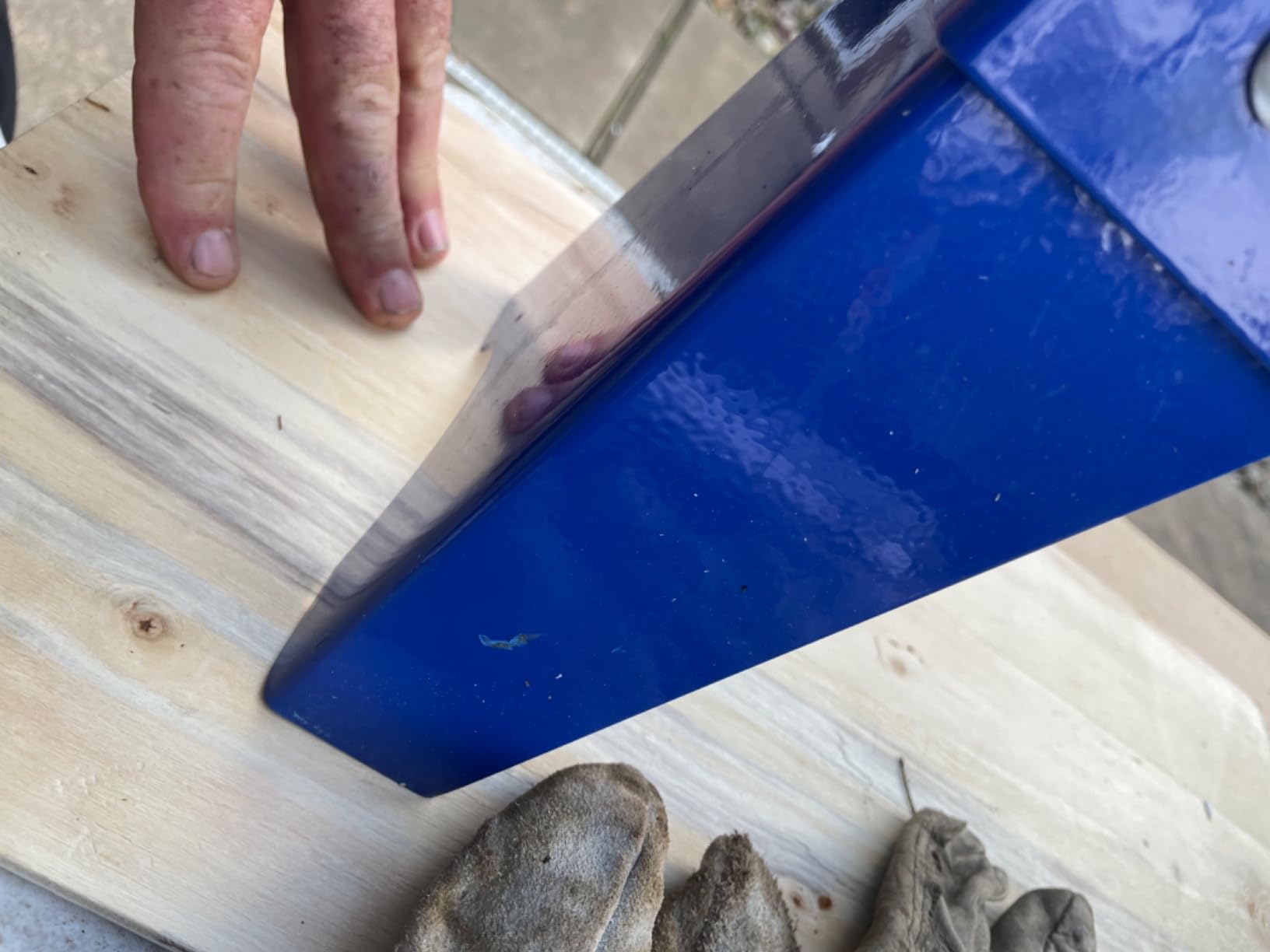
Two-handed switch operation is a genuine safety feature, because it means nothing moves until both hands are on the controls. The catch is ergonomics. Owners find the two switches awkward to work and many end up adding a foot switch, which partly defeats the point.
Assembly is the other friction point. Reviews mention needing a hydraulic oil fill and a bleed of the system before first use, which is a fifteen-minute job but not one the manual makes obvious.
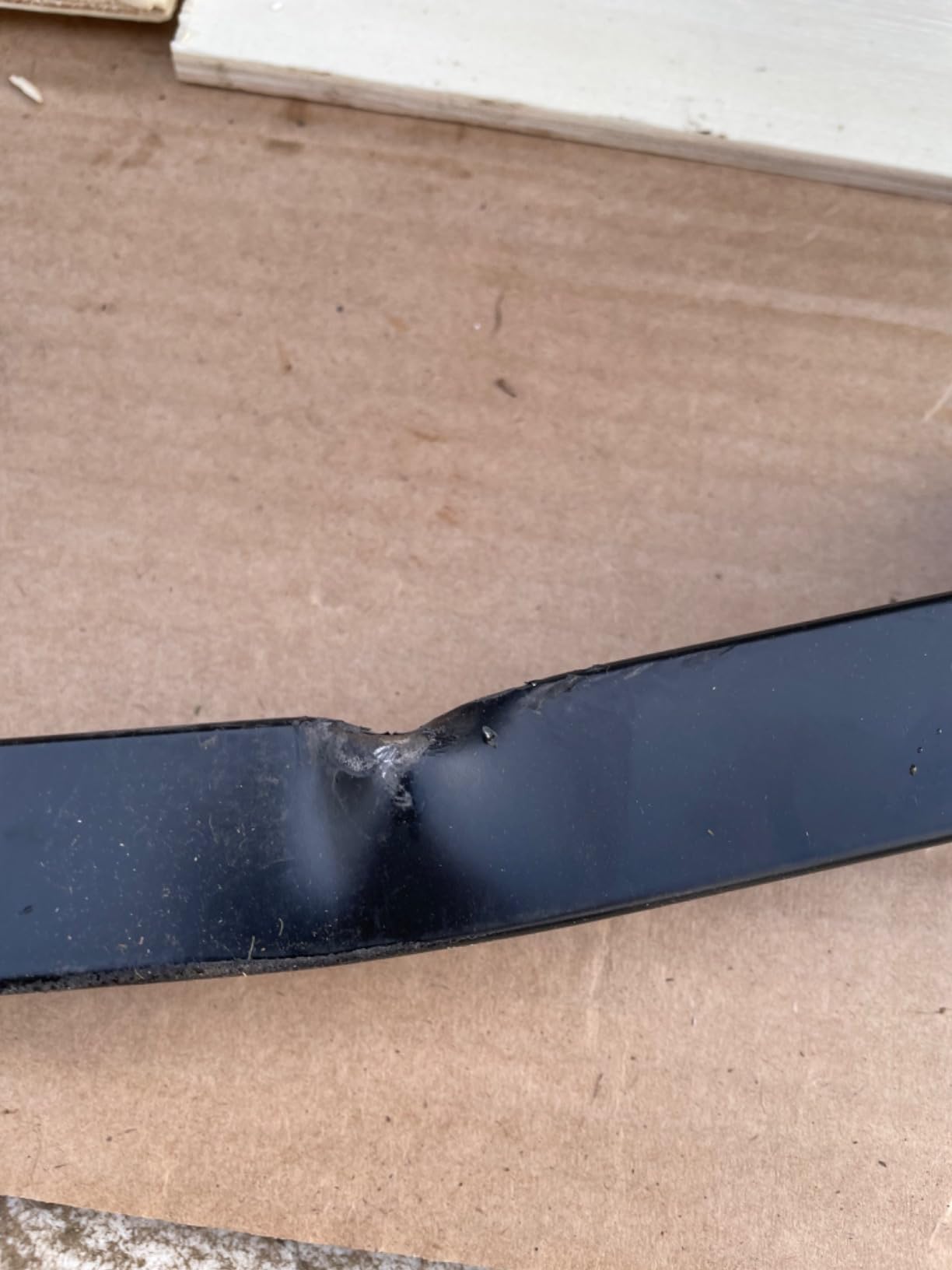
What kind of wood it handles best
Seasoned hardwood is the sweet spot. At 9.8 inches of diameter capacity it will take rounds that would defeat most electric units, provided the wood has had time to dry. Wet green wood in that range is where you will feel the limit of 6.5 tons.
If you burn mostly softwood or mostly well-dried hardwood, this is a comfortable machine. If you pull green rounds weekly from hardwood stands, you will outgrow it within a season.
What to look at before ordering
Consider the wheels seriously. At 5.7 inches they handle a driveway or a smooth lawn and little else, so if your wood pile is at the back of a rough property you will be dragging rather than rolling.
There is no weight listed in the spec sheet, and the package is large. Measure your storage corner before ordering, because the frame is a full beam and it does not fold down the way some half-beam designs do.
4. Kindling Splitter L Cast Iron Manual Wood Splitter – Best Compact Mounted Option
Poffattr Kindling Splitter L, Cast Iron Manual Wood Splitter for Firewood
Hand-ground cast iron blade
Screw-mount base plate
6.1 x 9.8 x 8.3 in
7.3 lb
Pros
- Heavy stable cast iron that works well on hard wood
- Mounting screws let you bolt it to a stump for better height
- Compact and easy to move around
- Includes a leather blade protector and mounting screws
Cons
- Blade often arrives dull and needs filing first
- Listed dimensions may be in centimeters rather than inches
- Only suited to small and medium logs
A casting you can carry in one hand is a rare thing among the splitters we tested. You can take it to a campfire, a workbench, or the far end of a driveway without thinking about it, which no powered machine in this roundup allows.
The mounting plate with four screws is the feature that matters. Bolted to a stump, the blade sits at a height that keeps your back straight, and reviewers with joint problems rate that arrangement very highly.
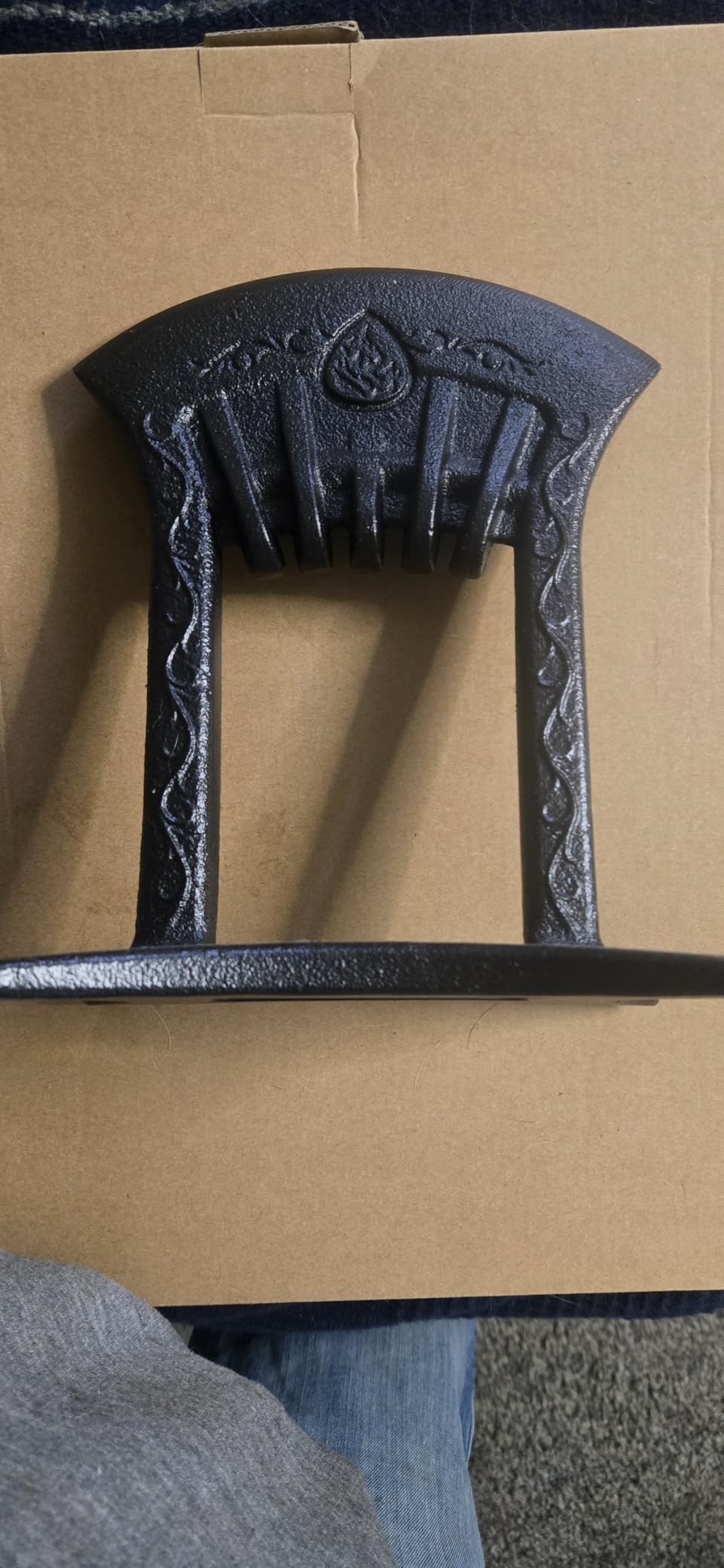
The open construction is a real design choice rather than an omission. It lets longer pieces sit inside the frame, so you are not limited to perfectly short billets the way a closed ring forces you to be.
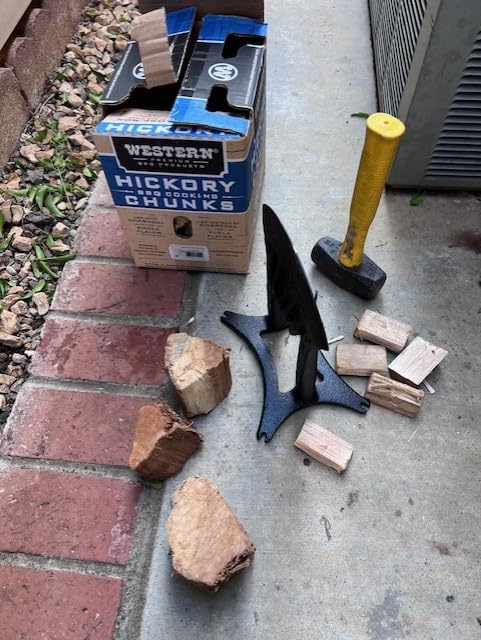
Owners like the solid feel, the included leather blade protector, and the ability to make fine kindling safely without swinging anything. It is listed for fireplace, camping, pizza oven, sauna and barbecue use, which tells you the intended scale.
What it will and will not split
Small and medium logs, dry. This is a finishing tool for kindling and stove-sized pieces, and the recurring owner comment is that it is a poor answer for anything you would normally split with a maul.
Hard dry wood is where it is happiest. Green or wet wood dulls an open cast iron blade quickly and makes the striking harder, so season your wood before reaching for it.
What to check before you order
Plan on sharpening before the first split. The most repeated complaint across reviews is that the edge ships too blunt to bite into wood, and a file and a few minutes solves it permanently.
Bring a mounting plan and your own screws. The plate is designed for four fasteners, and a solid stump or block gives you a working height worth the ten minutes it takes to set up.
5. SuperHandy 25 Ton Gas Log Splitter with 7HP Engine – Best for Green Hardwood
SuperHandy Portable 25 Ton Gas Log Splitter with 7HP Engine, Bucher Gear Pump, and Horizontal/Vertical Half Beam Steel Wedge for Firewood Splitting and Forestry Harvesting
25 ton splitting force
7HP AlphaWorks engine
2-stage Bucher gear pump
12 second cycle time
90 lb
Pros
- Plenty of power for knotty spongy wood that a maul cannot start
- Folds into a compact footprint smaller than most gas splitters
- Easy horizontal to vertical conversion
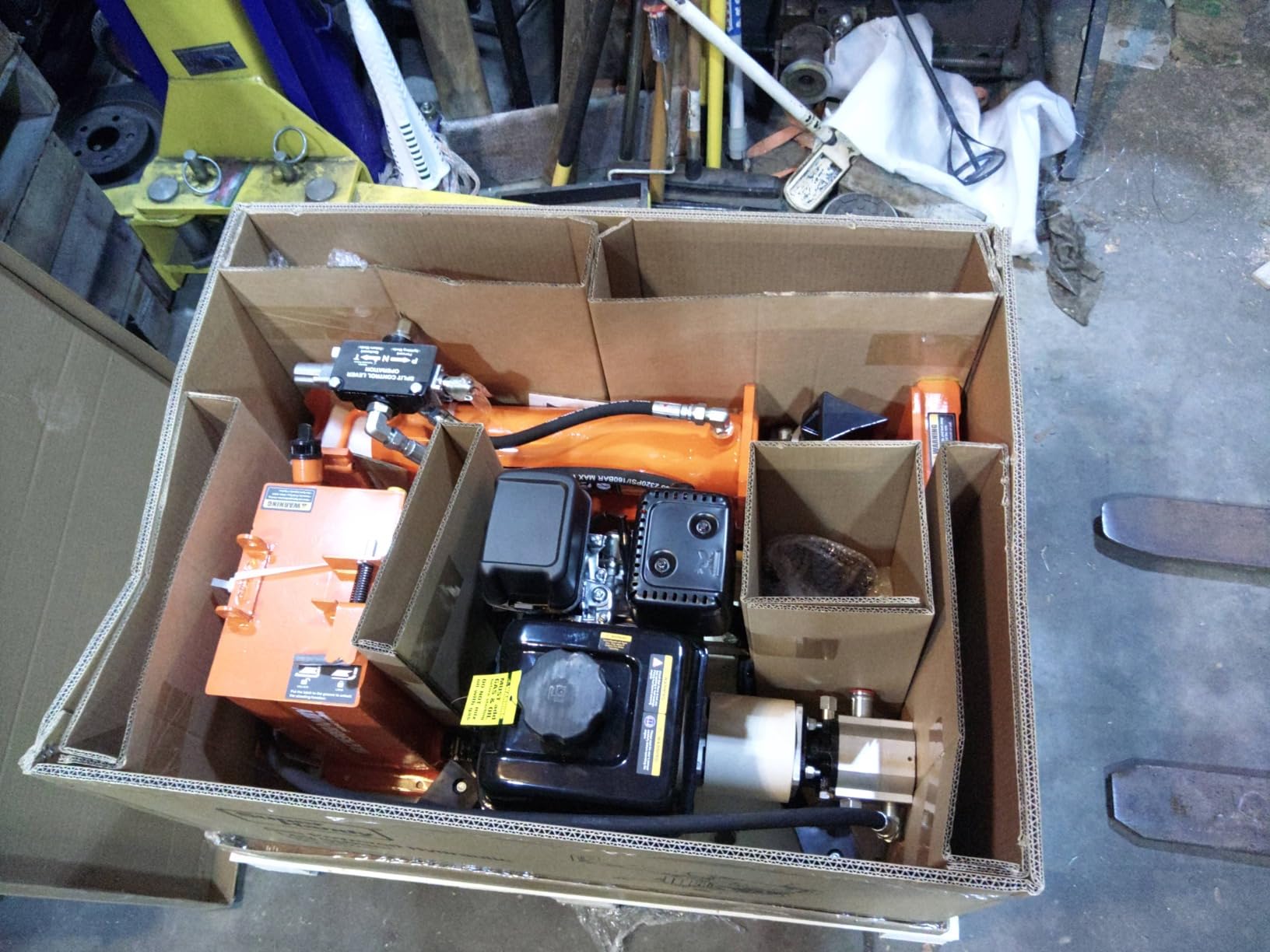
- Well engineered compact shipping crate
Cons
- No return hose filter so debris can shorten pump and seal life
- Suction hose nipple does not fully seal and drips after shutdown
- No fluid level window and hydraulic fluid is not included
Twenty-five tons with a 7HP engine is the combination I would buy for green hardwood work, and the 12-second cycle time is fast enough that the speed of the ram rarely becomes the limiting factor. Owners report it plowing through knotty and spongy wood that hand tools could not start.
The ram-head clamp design gets specific praise from users, who prefer it to the channel-style slides used on cheaper machines. The wedge holds the log without the log walking sideways, which cuts wasted cycles noticeably.
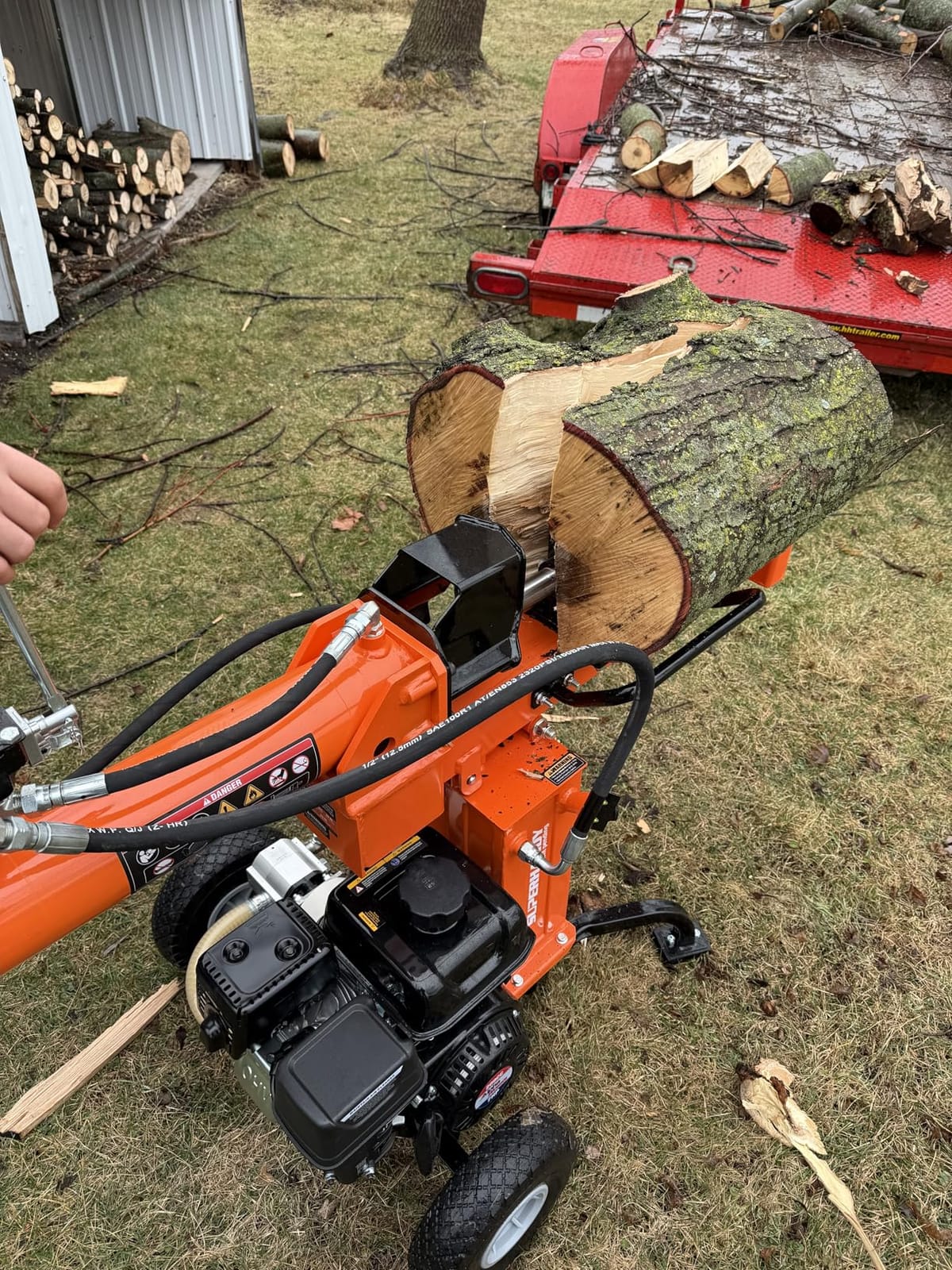
It handles logs up to 20 inches long and 24 inches in diameter, converts between horizontal and vertical splitting, and rides on 10-inch polyurethane wheels. At 90 pounds it is one of the lighter gas machines in this class, which matters more than the spec sheet suggests when you are loading it alone.
The half-beam steel wedge is a reasonable trade for the weight savings. You give up some long-log capacity compared with a full beam, and you gain a machine that fits in a normal pickup bed without a loading ramp debate.
How it handles the hard wood
Green oak, hickory and gum at 16 to 20 inches are squarely in range, and the 2-stage Bucher gear pump is a real hydraulic component rather than a marketing word. Owners splitting multiple cords report steady performance rather than tapering off as the session goes on.
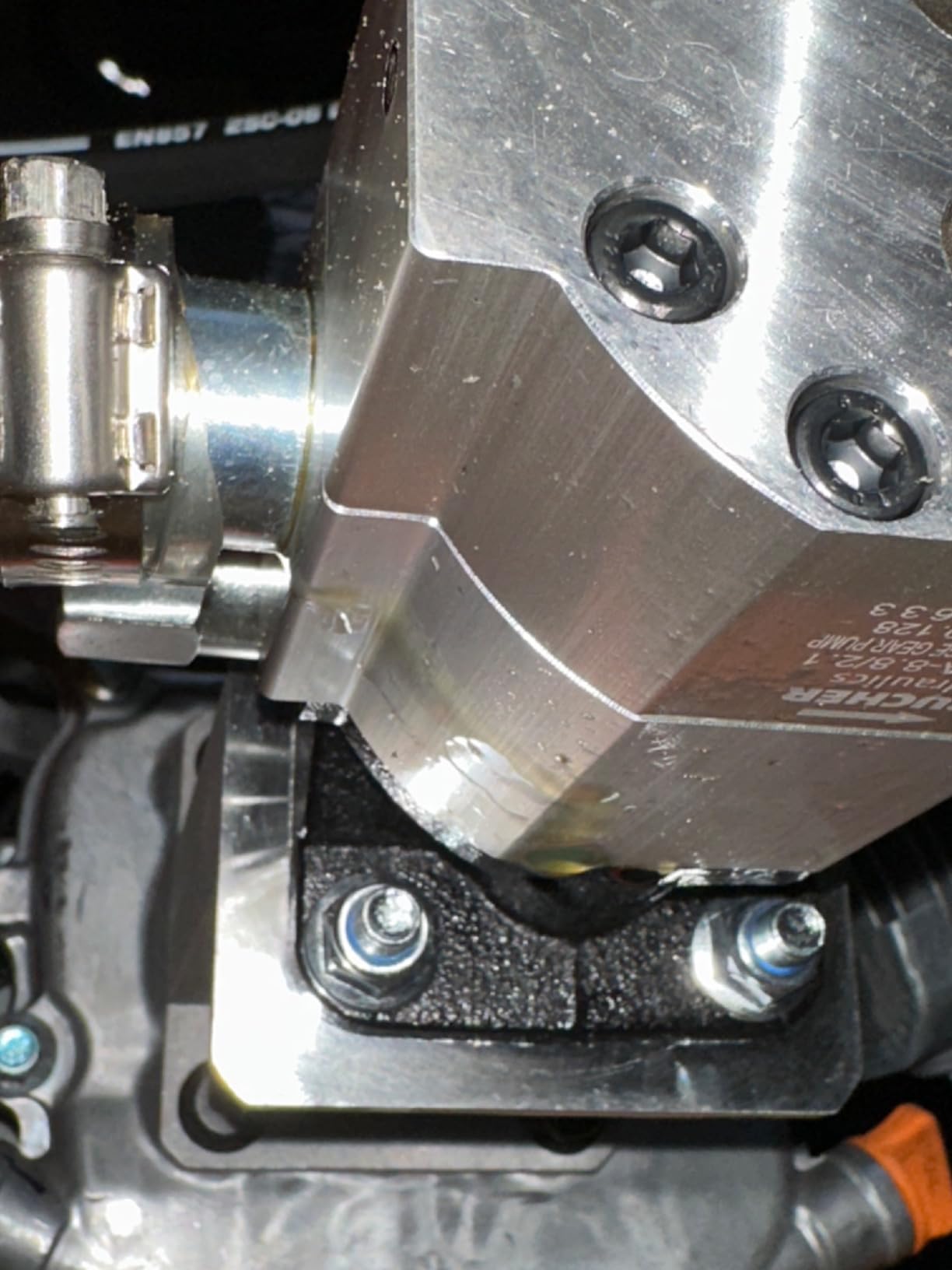
What you give up is longevity of the hydraulics, and this is the most important thing to know before buying. There is no return-hose filter, so debris in the hydraulic fluid can shorten pump and seal life, and the suction hose nipple is reported to drip after shutdown.
What to check before buying
Budget for hydraulic fluid. AW32 fluid is not included, and it is the one consumable you cannot substitute. Check the reservoir during the first few sessions since there is no fluid level window built into this model.
Plan how it moves. There is no towing option, so at 90 pounds you are walking it on the folding handle, and the instructions are an online download rather than a booklet in the box.
6. SuperHandy Hydraulic 20 Ton Log Splitter – Best Heavy-Duty Value
SuperHandy Hydraulic Log Splitter, 20 Ton, Firewood Wood Splitter
20 ton splitting force
7HP 4-stroke OHV engine
7.5 second cycle time
Horizontal full beam
Pros
- Pushes through knots burls and crotch wood reliably
- Assembles in about 30 minutes and starts on the first pull
- Light and easy to move without a trailer hitch
- Owners report splitting multiple cords per session
Cons
- Cylinder top hydraulic hose and filler cap weep slightly
- One cotter pin arrived too short for the hydraulic actuator
- Low to the ground so you work hunched over
The 7.5-second cycle time is the fastest ram in this roundup, and combined with 20 tons of force it means a good hour of splitting produces a genuine stack. Owners credit it with strong, consistent gas power and a favorable comparison against big-box 20 and 30-ton units.
Setup deserves a mention because it goes right. Reports describe about 30 minutes of assembly and a first start on the first pull, which is unusual for a gas splitter in this class and saves an afternoon.
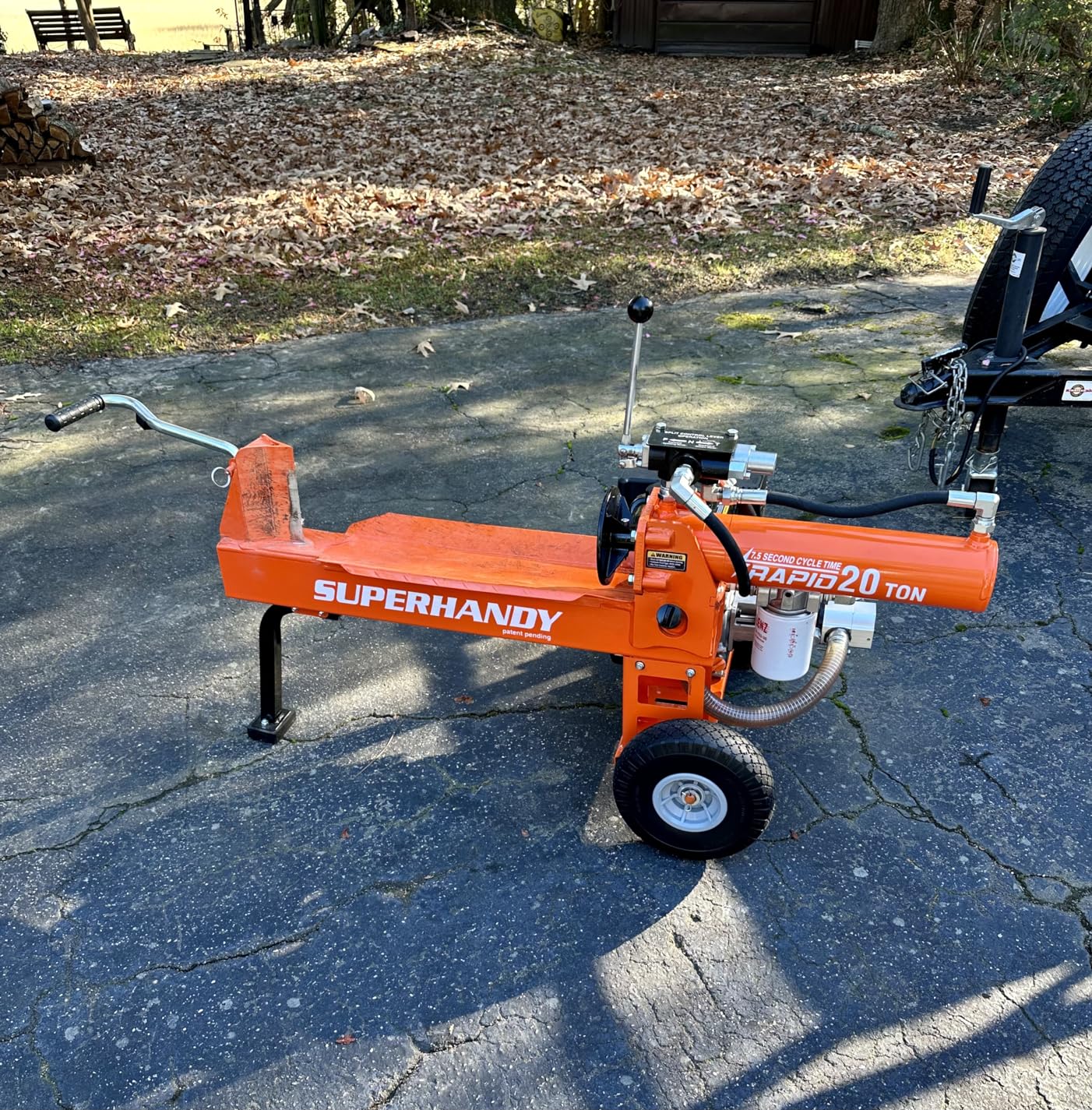
The horizontal full beam and steel wedge give it logs up to 20 inches long and 16 inches in diameter, and it rolls on 10-inch tubeless polyurethane wheels with a folding handle. At just under 149 pounds it is light for a 20-ton machine.
Knots, burls and crotch wood are the words owners use for the material it handles without complaint. That irregular grain is what stalls undersized splitters, and 20 tons clears it where a 6.5-ton unit simply sits and hums.
What real splitting work looks like
Multiple cords per session is the standard owner report, which places this machine comfortably in the 10 to 20 cord per year band. A 7.5-second cycle is genuinely quick once the log is loaded, so the bottleneck becomes loading rather than splitting.
Green hardwood is where the 20-ton rating earns its keep. Post oak and gum are the recurring hardwood complaints from people who previously owned smaller machines and were convinced they needed something even larger.
What to check before buying
Inspect the hydraulic fittings on arrival, and plan to recheck them after the first few hours of use. The cylinder-top hose and the filler cap are the two points owners report weeping, and both are cheap to correct if you catch them early.
Check that the cotter pin supplied is full length for the hydraulic actuator. A short pin is a genuine safety issue on the actuator rod, and a hardware-store trip resolves it in minutes.
Also accept the working height. The frame is low, so splitting means bending forward, and that is the most common ergonomic complaint in owner reports for this machine.
7. GarveeTech 12 Ton Manual Hydraulic Log Splitter – Best Without Fuel or Power
GarveeTech 12 T Hydraulic Log Splitter Wood Cutter, Manual Log Splitter with Horizontal Full Steel Beam & Built-in Wheel
12 ton splitting force
Manual bottle jack hydraulics
18.7 in by 8 in capacity
37 in handles
Pros
- Handles 12 to 18 inch rounds with clean welds and square frames
- No gas oil or electricity needed and no exhaust
- Long handles spare older users shoulders and backs
- Built-in wheels make it movable on hard surfaces
Cons
- Much slower than gas or electric splitters
- Log catchers and bottle jack seals can fail within a short time
- Built-in wheels are useless on grass or uneven ground
This is the machine to buy if you refuse to own a gas engine or run a cord across your property. Twelve tons from your own arms through a bottle jack is real force, and the 37-inch handles give you mechanical advantage without the swing of an axe.
Owners with rotator cuff and back problems rate this arrangement very highly. Because the ram is slow, you place the log exactly where you want it and take your time, which is the opposite trade from a gas machine at full speed.
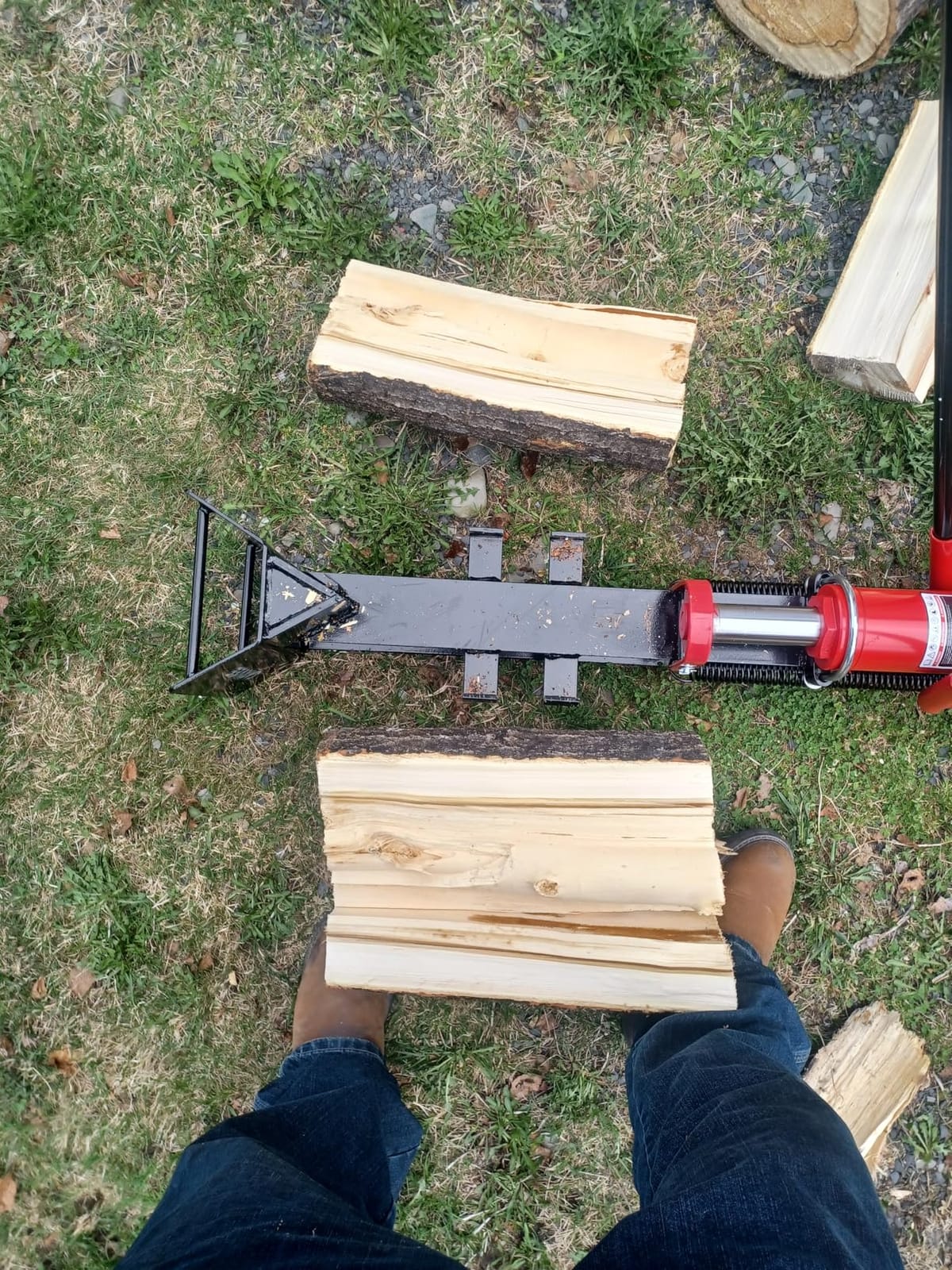
Weld quality is the surprise. Reviewers describe clean welds and a square frame, which matters more than it sounds because the log catchers and dogears are the parts that take the load when a round springs apart.
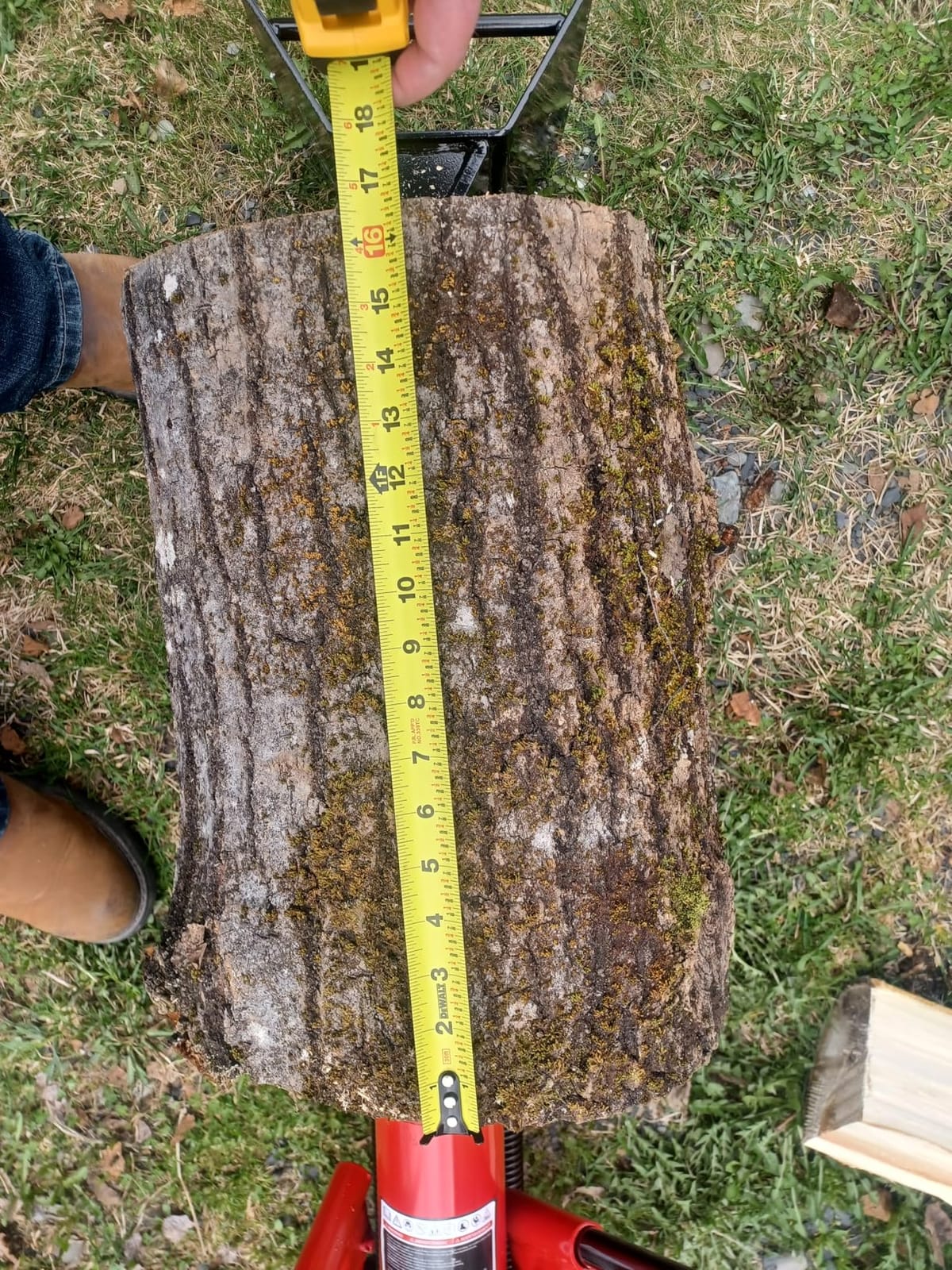
Capacity is 18.7 inches long by 8 inches in diameter on a full horizontal laser-cut steel beam, and the spring-loaded return knob resets the ram quickly for the next round.
How much wood it realistically covers
One to two cords a year comfortably, more if you are not in a hurry. Every split is a deliberate two-handed pump, so the throughput ceiling is your patience rather than the ram.
Green hardwood at 8 inches is within its comfort zone. Anything larger than the 8-inch diameter rating is not, and buyers who ignore that limit end up fighting the log instead of splitting it.
What to check before buying
Ask yourself how much you will actually use it. Durability is the dividing line here. Owners report log catchers tearing off and bottle jack or valve seal failure within a handful of sessions, which is a real cost in a tool designed to last decades.
Plan your ground. The built-in wheels work on a driveway and are effectively useless on grass or uneven ground, so moving this to a wood pile at the edge of a field means carrying it.
8. PowerSmart 6.5 Ton Electric Log Splitter – Best for Small Storage Footprint
PowerSmart Electric Log Splitter, 6.5-Ton, 3450 Motor Speed, 15 Amp, Horizontal Full Beam Design
15 Amp induction motor at 3450 rpm
6.5 ton hydraulic system
20 second cycle time
37.4 in long
Pros
- Steady 3450 rpm motor delivers consistent splitting force
- Quick 20 second reset cycle
- Wide rear wheels and strong handle work on sand and mud
- Compact footprint for storage
Cons
- Rated for light-duty or home use only which limits log size
- A 12 percent share of 1-star reviews signals build quality variance
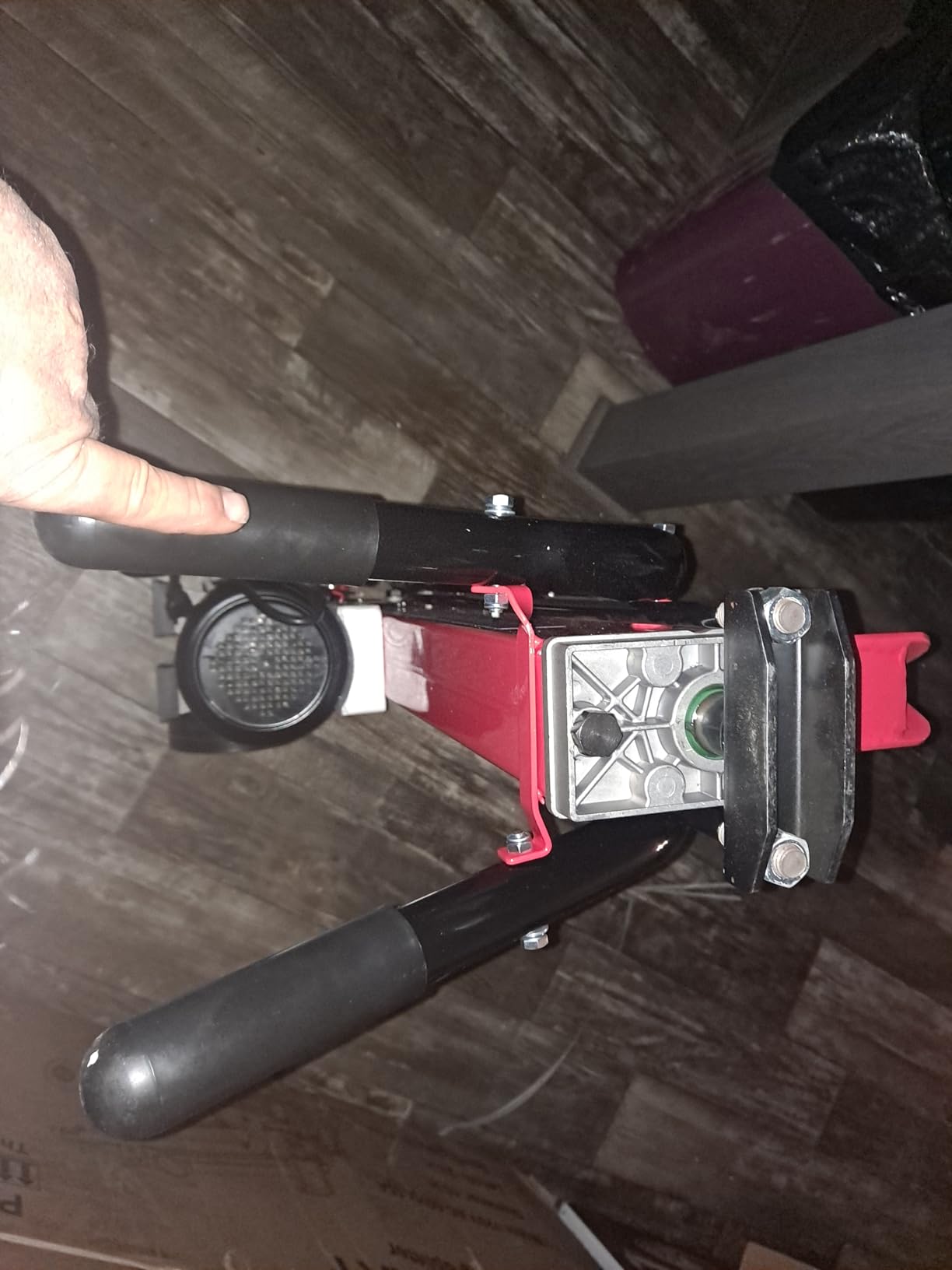
The motor spec is the differentiator in this class. A 15 amp induction motor running at 3450 rpm is a higher-speed, more consistent design than the lower-output motors common in budget electric splitters, and owners notice the difference in how evenly it pushes.
At 37.4 by 10.6 by 18.1 inches, this is the machine to buy if your storage space is a corner of a garage rather than a dedicated bay. Wide rear wheels and a folding handle make it portable over sand, mud and uneven roads.
Cycle time is 20 seconds, which is slower than a gas machine but perfectly reasonable for a home splitter. The reset is predictable, and the full-beam steel design gives it a solid feel under load.
Owners like the steady power, the quick cycle and the easy mobility. The 6.5-ton rating is honest about its limits: it handles logs up to 20 inches long and 10 inches in diameter, and it is explicitly a light-duty home machine.
Which jobs it suits
Seasoned firewood, roughly two to three cords a year, split on a driveway near an outdoor outlet. That is the use case the design supports and the one owners describe it handling without complaint.
It is not a green-hardwood machine. Asking a 6.5-ton ram to take a fresh oak round at its 10-inch diameter rating will leave you waiting on a ram that cannot finish the cut.
What to check before buying
Read the reviews for quality spread rather than headline rating. A 12 percent share of 1-star reviews is high for this category, which tells you there is real variance in build quality between production runs on an entry-level electric unit.
Confirm the two-year warranty is worth something to you, and register the unit. It is one of the few machines here that states a warranty period in the manufacturer data at all.
9. Hi Flame Wood Kindling Splitter – Best Budget Starter Tool
Wood Kindling Splitter – The Firewood Kindling Tool for Wood Stove Fireplace and Fire Pit
Powder-coated steel construction
Four bolt holes for mounting
9.5 in tall
9 lb
Pros
- Light and easy to move and store
- Splits kindling quickly with a simple hammer tap
- Can be bolted to a block for stability and better height
Cons
- Mounting bolts are not included
- Requires an external hammer or mallet to operate
Sometimes the right answer is a stamped steel wedge and a hammer. This one weighs 9 pounds, stands 9.5 inches tall, and turns the kindling portion of a wood pile into something you can produce without swinging an axe at your shins.
Its long owner review history tells the story. Buyers bolt it to a block and tap it with a hammer, and that is exactly what it is designed to do. It is listed for both indoor and outdoor fire-related use.
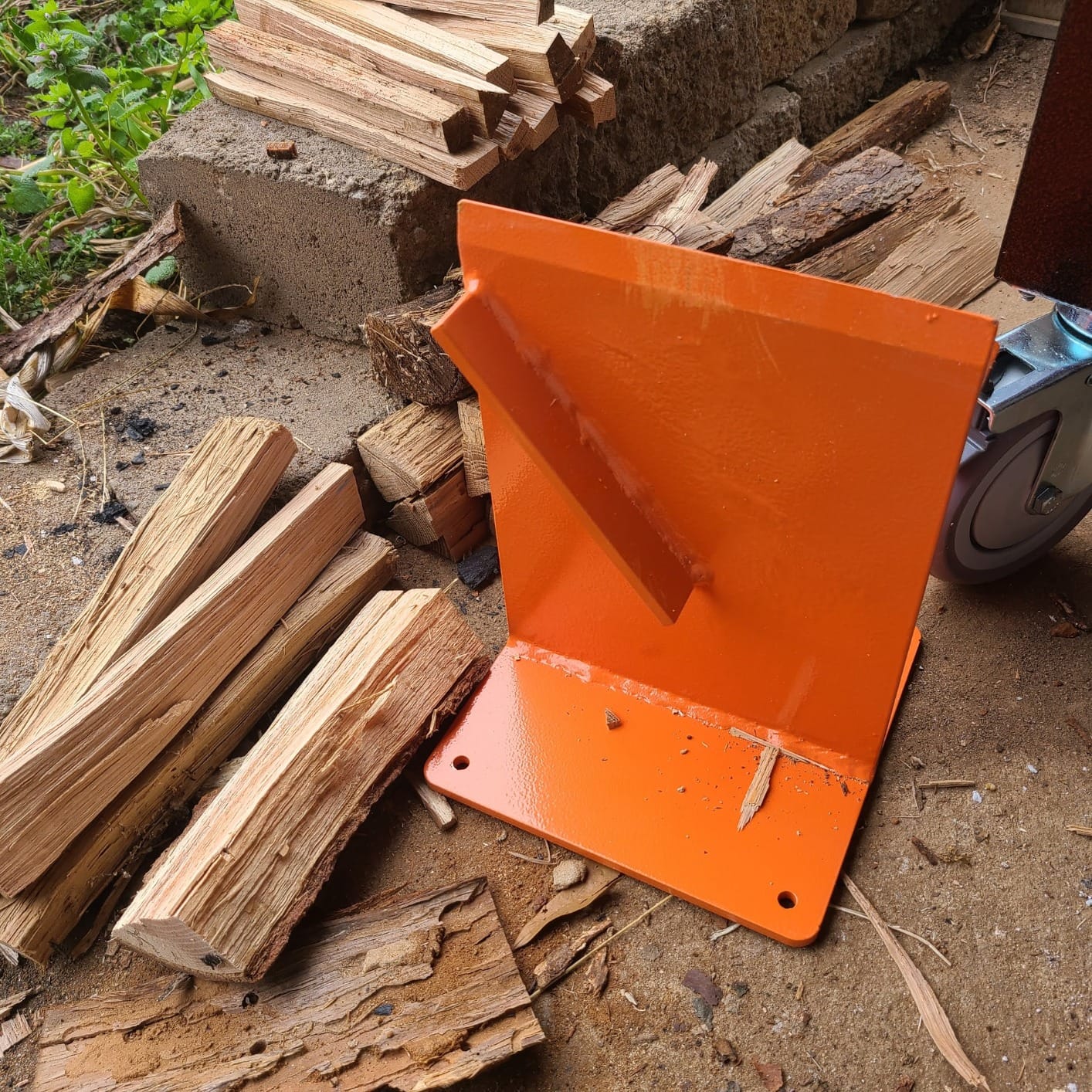
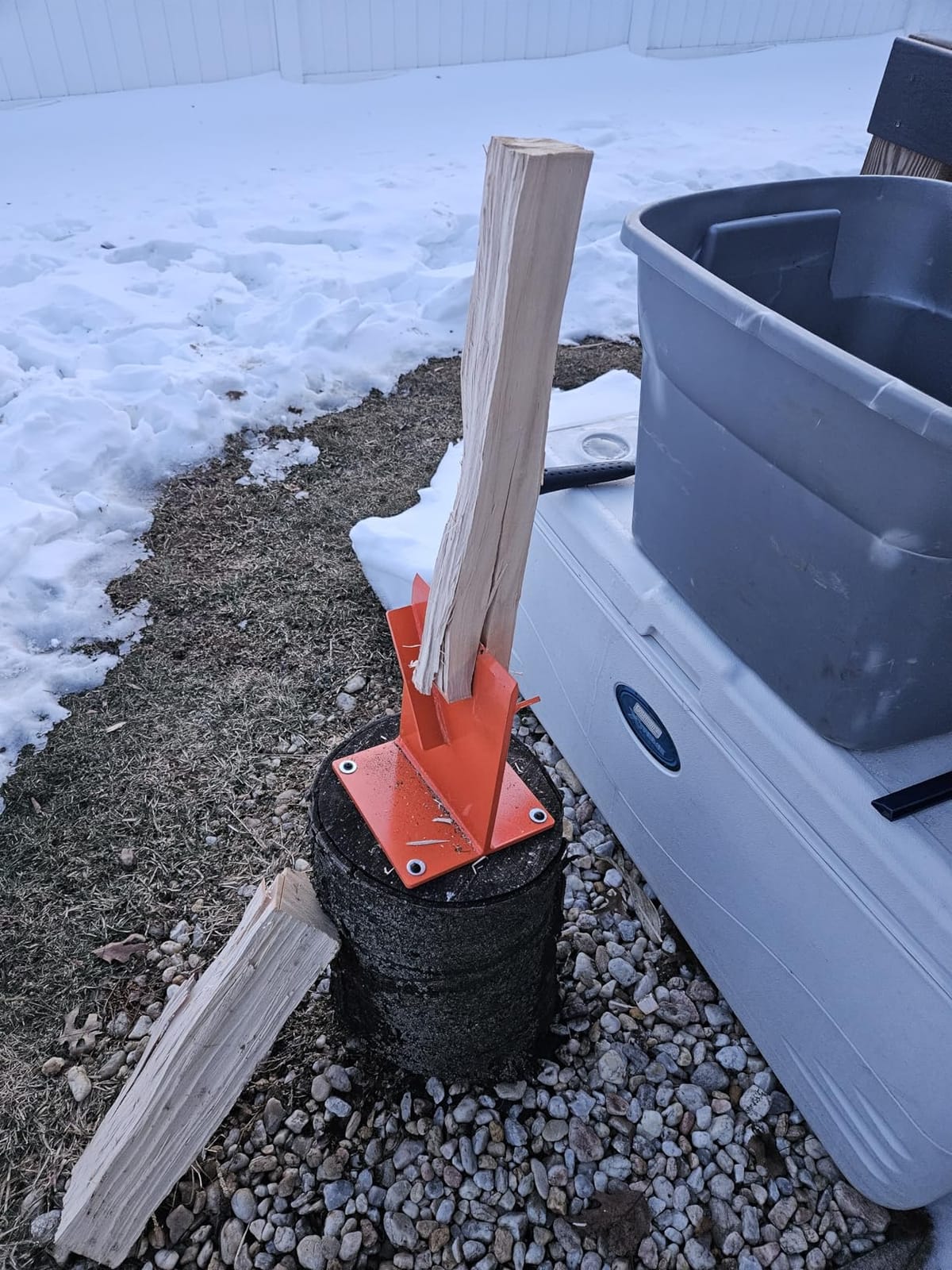
Four bolt holes in the base are the whole mounting system. Screws are not included, so bring your own, and the moment it is fixed to a block of wood the tool becomes far more capable than it looks out of the box.
The balanced striking head is designed for a hammer tap rather than a full swing, which means you can work close to the tool without the same over-strike risk an axe carries. That is the safety argument for this entire category.
What it handles
Kindling and small firewood pieces, dry. This is not a cord-a-season tool and it is not meant to be. Buyers who treat it as the finishing step after a bigger machine get the most out of it.
Pine, birch and any soft, dry split wood is ideal. Anything green will be both harder to split and more likely to leave a rust mark on the powder coat over time.
What to check before buying
Buy a short block of wood and four screws. The difference between this tool sitting loose on a driveway and bolted at a good working height is larger than the price gap between competing kindling splitters.
Make sure you have a hammer or mallet on hand. It is not included, and a lightweight tack hammer will not drive the wedge nearly as well as a short sledge.
10. KABIN Kindle Quick Log Splitter – Best Extra Wide Mouth
KABIN Kindle Quick Log Splitter – Manual Splitting Tool – Steel Wedge Point Splits Firewood Like A Boss Safely & Easily
Extra wide mouth design
Slanted alternating teeth
12 lb cast steel
10.25 x 9 x 15.5 in
Pros
- Cuts through hard wood with far less body strain than an axe
- Extra wide mouth handles more logs than competing kindling tools
- Solid cast steel frame holds up well
- Base doubles as a crate for carrying kindling
Cons
- Only handles logs within a certain diameter and over forcing causes jams
- Occasional reports that the edge is not sharp enough out of the box
Marketed with an extra wide mouth so it accepts more logs than the typical kindling tool, and that single design choice separates it from most of its direct competitors. Owners report turning a 90-minute axe session into roughly 15 minutes once the technique clicks, with noticeably less strain on the back and shoulders.
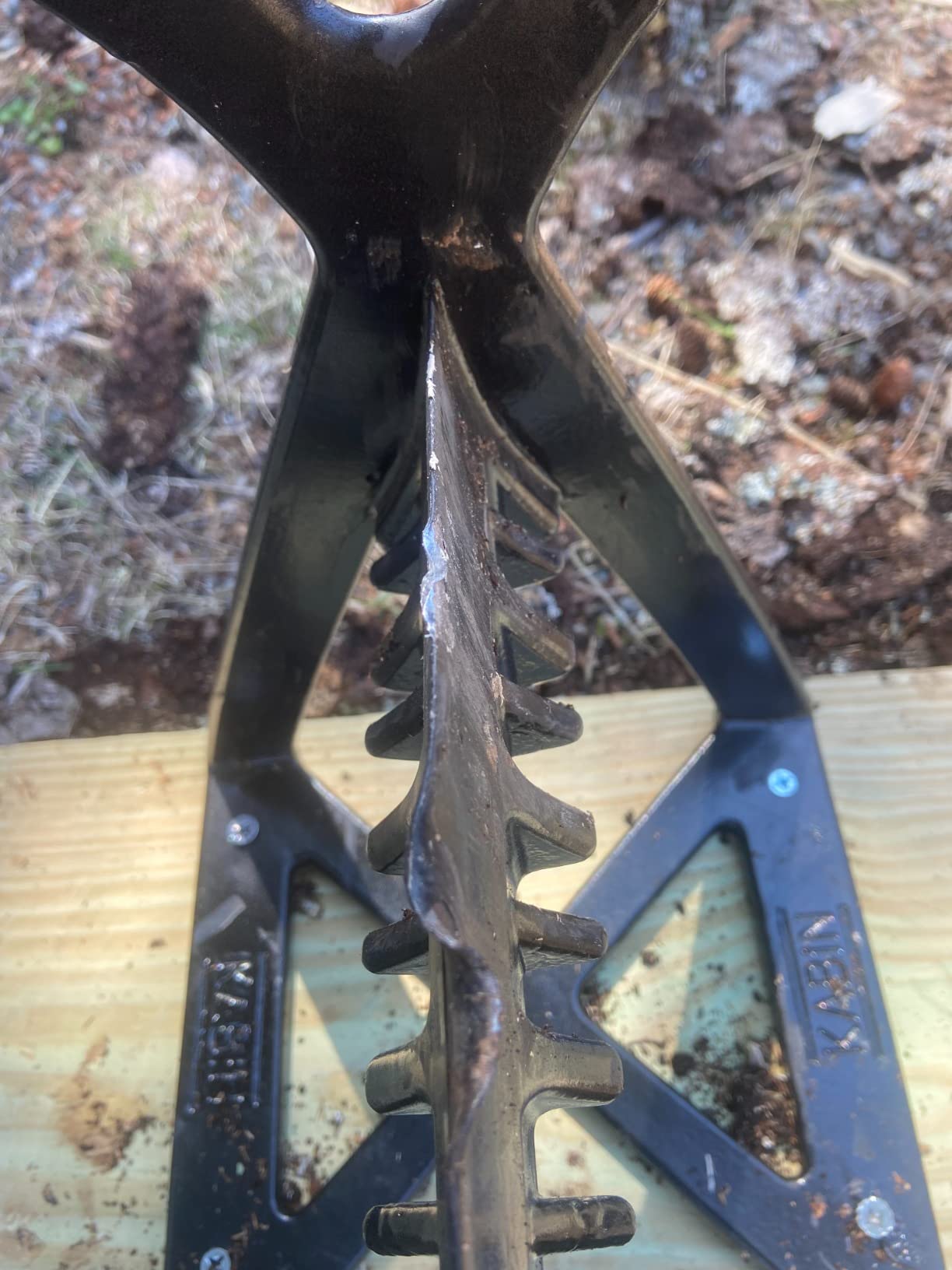
The slanted alternating teeth split on an angle, which is why the tool resists jamming compared with a straight wedge. The pattern shears the log rather than trapping it.
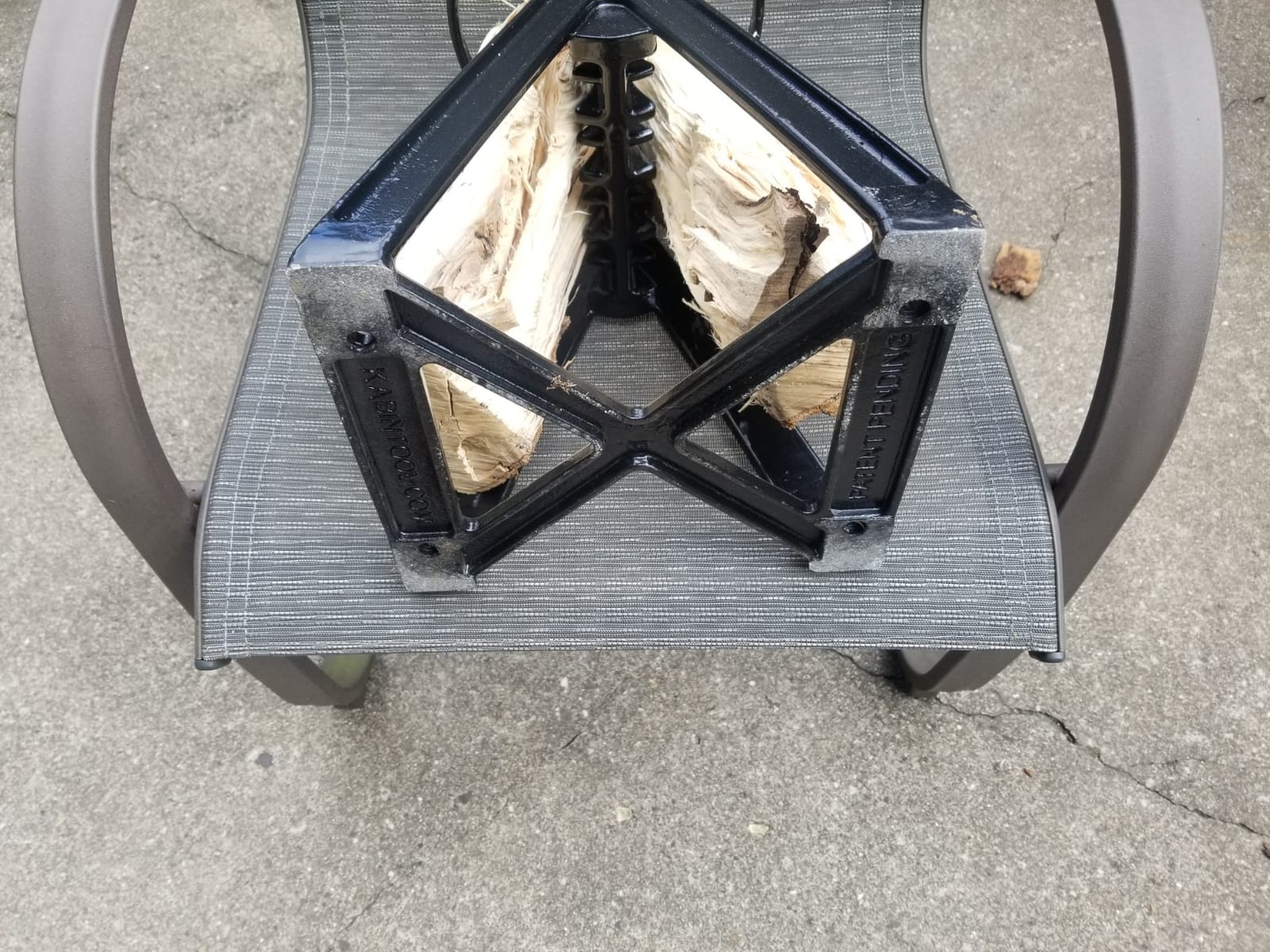
There is no exposed blade to swing at, so the safety profile is good, and the all-weather coating suits an outdoor stump. The cast steel frame at 12 pounds has real mass behind it, which is what makes a sledge tap effective.
Handles and a crate-style base make it easy to carry to a campsite or a campfire, and the base holds the kindling you just made so you are not gathering it off the ground with bare hands.
What it will split
Diameter is the constraint that decides everything. Logs wider than the mouth will not fit, and the consistent owner caution is that pounding them in simply jams the tool and can damage the teeth.
Within that limit, owners say it handles the hardest hardwoods once you learn to set each piece with gentle taps before committing to a full strike. Technique matters more here than with any powered splitter.
What to check before buying
Measure your typical rounds. If most of your wood is over roughly 10 inches across, a manual kindling tool is the wrong category entirely, and you should be reading the electric and gas sections above instead.
Carry a file. A minority of reviews report an edge that is not sharp enough from the factory, and a few minutes of sharpening removes the only recurring complaint about the tool.
11. Timber Tuff Manual Log Splitter with Steel Slide Hammer – Best for Large Knotty Rounds
Timber Tuff Manual Log Splitter with Steel Slide Hammer, 44 Inch, Green
8.8 lb steel slide hammer
44 in overall length
Heat-treated steel
2 in blade length
Pros
- Much lower body impact than swinging a maul or axe
- Vertical slide hammer action drives the wedge with little force
- Reversing the handle frees a stuck wedge
- Works on large knotty rounds when the wedge is set with gentle taps
Cons
- Weld on the end of the handle can break when the tool is driven back to free a jam
- Wedge arrives dull and needs filing before first use
- Can get stuck in very large or wet logs
This one handles rounds that would stop most kindling tools, which is the reason it exists. Long-term owners confirm the design saves substantial back and shoulder strain versus a splitting maul, and report it working on 24-inch oak rounds and heavy knots.
The mechanics are simple and effective. An 8.8 pound steel slide hammer is driven down the 44-inch handle onto a 2-inch blade, and the vertical action converts far more of your effort into forward force than an axe swing does.
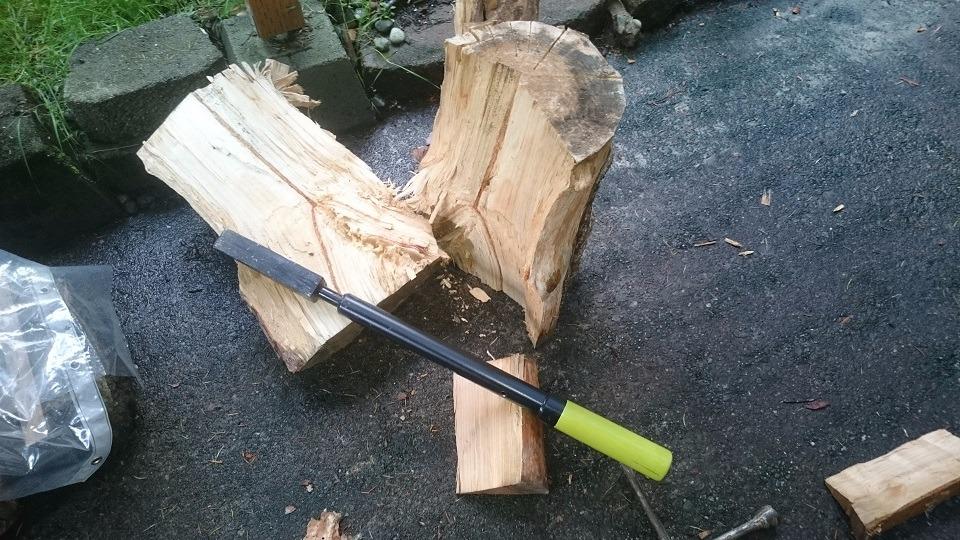
The reversing-handle trick is a genuine convenience. Flipping the handle gives you the opposite motion, and owners use it to free a wedge that has wedged itself tight in a wet round rather than reaching for a second tool.
Durability is where reviews diverge. Several owners report the handle weld or the lock nut failing after a year or two of regular use, and the cushion grip cover cracking over time, on a tool that is otherwise well regarded.

Where it outperforms the other manual tools
Big, gnarly, dry rounds. The stroke length and the weight behind it let the blade travel deep into a 20-inch or larger log, which the lighter kindling splitters in this list cannot do. It is also loud on impact, so plan accordingly.
Very wet or very green large logs are the reported weak spot. A wet round grips the blade and holds it, and you end up needing a second wedge to finish the cut.
What to check before buying
Buy a file and sharpen the wedge before the first use. Owners consistently report the wedge arrives dull, and starting sharp is what prevents the blade from binding mid-log.
Set the wedge with gentle taps rather than full strikes on the first passes. The pattern that works is progressive, and it is also what keeps you from loading the tool hard enough to stress the handle weld.
12. BAYQISI Cast Iron Kindling Splitter with 3 lb Sledge Hammer – Best Complete Starter Bundle
BAYQISI Cast Iron Kindling Splitter with 3Lbs Sledge Hammer,Medium-Sized
One-piece cast iron body
Includes 3 lb sledge and 4 screws
9.8 in tall
10.36 lb total
Pros
- Bundled 3 lb hammer saves a separate purchase
- One-piece cast iron with no welds
- Easy to bolt onto a log for a comfortable working height
- Compact footprint
Cons
- Blade arrives with a coating and is not sharp until filed
- Weak against hardwood with one report of a chipped wedge and bent base
- Included hammer handle quality is poor
The most complete package among the kindling splitters we tested. You get the cast iron splitter, a 3-pound sledge hammer, and four installation screws, which is everything a first-time buyer needs to be splitting kindling the same afternoon.
The one-piece cast iron body has no welds to fail, and at 9.8 inches tall it bolts onto a log for a working height that keeps the striking stroke comfortable rather than ground-level awkward.
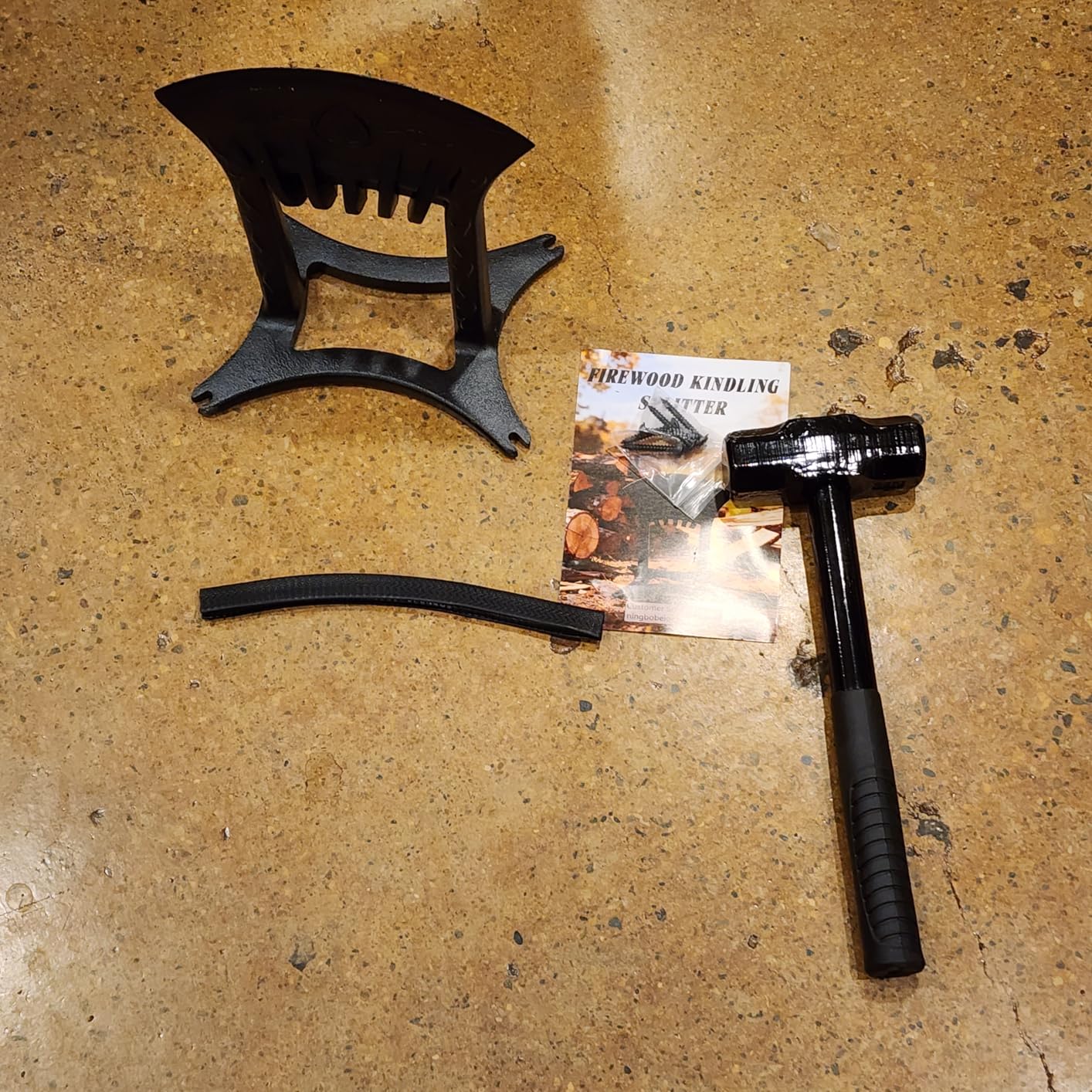
The rubber sleeve on the blade is a sensible safety addition for a tool you strike with a sledge, and the open blade design with a thickened back is a reasonable pattern for kindling work.
Reviews are split on the blade itself. The coating it arrives with is not sharp, so it will do nothing until you file it, and a minority of owners report a chipped wedge and a bent base frame when pushed at hardwood.
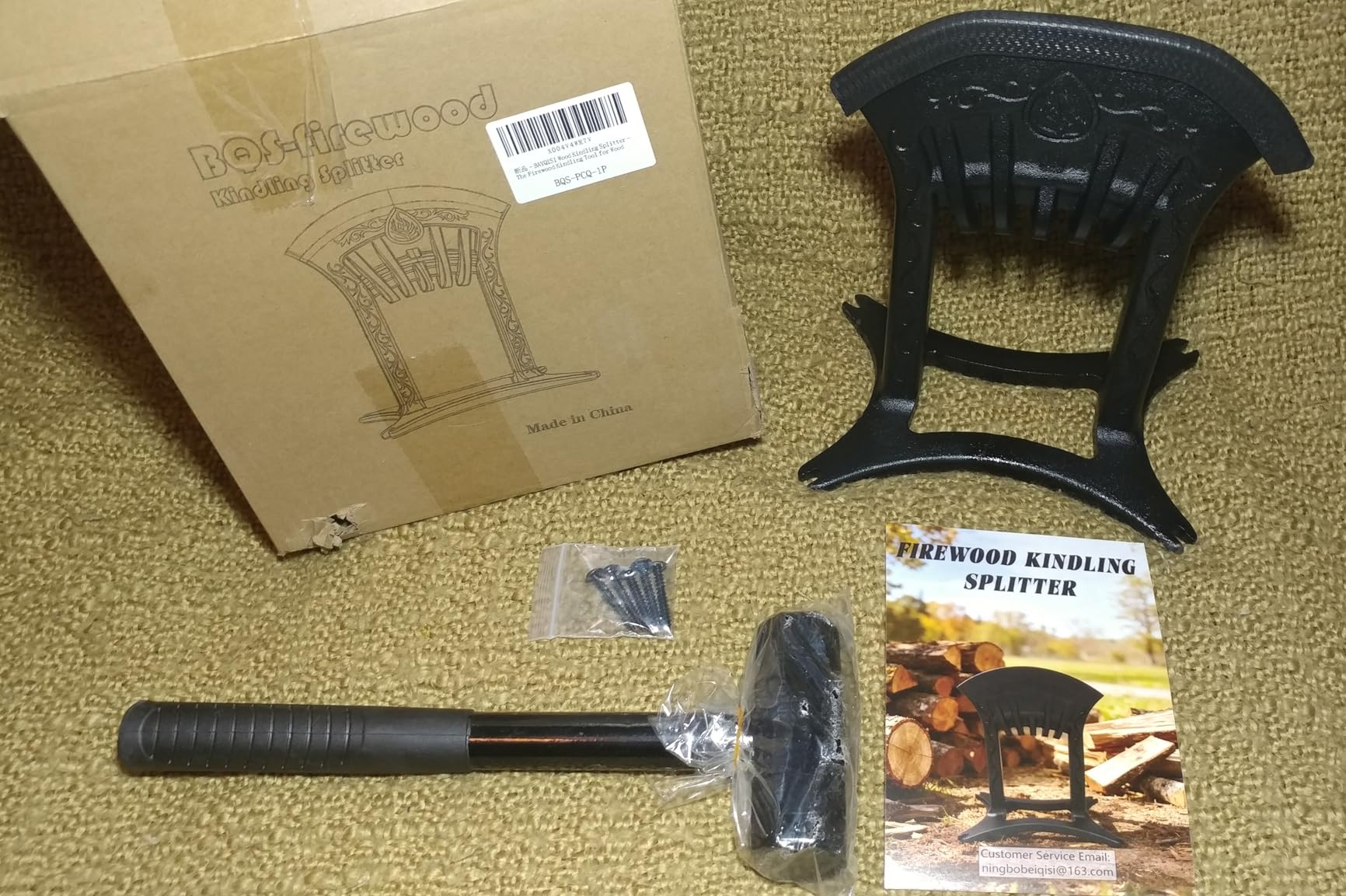
What it suits
Dry kindling and softwood, indoors or out. Owner reports describe it as unsuited to wet logs, with the wedge struggling once moisture is involved.
Think of it as the companion piece to a gas splitter: the big machine makes stove-sized firewood, and this one turns the leftovers into paper-thin kindling for a woodstove or pizza oven.
What to check before buying
Sharpen it first. The coating on the blade is the single most common complaint and the easiest one to fix with a file before you ever set the tool down on a log.
Replace the hammer handle if you care about it. Owners flag the bundled hammer handle as the weakest component in the package, and a replacement handle costs very little compared with the frustration of a loose grip.
How to Pick the Right Log Splitter
Pick by tonnage, then power source, then mounting, in that order. Everything else is preference. Here is the decision framework we use, and the questions buyers most often get wrong.
1. Work out your tonnage from the wood, not the ambition
A 12-inch seasoned round needs roughly 7 tons of splitting force. The same 12-inch log green off the stump needs about 16 tons. That single comparison explains most of the sizing advice floating around online, because people quote the number for dried pine and then wonder why their ram stalls on a wet oak round.
Rule of thumb: softwood or well-seasoned firewood means 5 to 10 tons. Mixed or green hardwood means 20 tons minimum. Regular hardwood work in gum, oak or post oak country means 25 tons and up. Splitting more than about 10 cords a year pushes you into the same territory regardless of wood type.
2. Choose the power source to match the tonnage
Manual tools make sense for kindling and small volumes. Nothing above 5 tons of force comes from a hammer, and no hand tool on this list touches a full cord of firewood in a realistic afternoon.
Manual hydraulic splitters reach 12 tons and fill the gap for people who want force without fuel. Electric splitters cover 5 to 10 tons cleanly and are the best choice for indoor work, apartments and noise-sensitive neighborhoods.
Gas splitters take over from 15 tons upward. They are the only realistic option for green hardwood, and they are also the only ones that can be moved to a wood pile far from an outlet. For most households burning more than four cords a year, gas is the correct answer.
3. Match log capacity to the wood you actually have
Log length and diameter ratings are more informative than tonnage for many buyers. A machine rated 20 inches long and 16 inches in diameter will handle the vast majority of rounds from a normal hardwood stand, while a unit rated for 10-inch diameter is a small-wood machine no matter what its tonnage says.
Check the diameter figure against your largest rounds. A ram that stalls on your biggest log means the cycle time you paid for is wasted on every piece.
4. Decide how the machine moves
Towable units with road-legal wheels go where the wood is. Two machines in this roundup have no towing option at all and must be walked on their handles, which is fine on a driveway and painful at the far end of an acre.
Manual tools and light electric splitters carry by hand. Plan the working distance between your power source or outlet and the pile before you buy, because extension cord gauge and cord length are the quiet limiters in electric setups.
5. Judge build quality by the parts that carry load
Engine brand matters in gas units, where an OHV engine from a known maker outlasts an equivalent from a generic supplier. But the part that decides whether a splitter survives is the hydraulic system, and specifically whether it has a return filter.
Owner reports on several machines in this roundup describe small hydraulic leaks at cylinder hoses, filler caps and suction nipples. None of those are catastrophic, but a machine with no return filter turns ordinary debris into shortened pump and seal life over a decade of use.
6. Check for the parts you cannot add
Most splitters in the 20 to 30 ton class arrive without a usable log table or log cradle. Adding your own can be a straightforward job or can void your warranty depending on how the manufacturer frames it, so check before you drill anything.
Also check the working height. Low electric frames cause back pain that shows up in owner reports again and again, and a raised beam such as the BILT HARD design is the reason some buyers with joint problems prefer one machine over an otherwise identical rival.
Safety Habits That Prevent Most Splitter Injuries
Almost every serious log splitter injury traces back to one rule: never hold a log with your arm or leg while the ram is moving. Your hands belong on the controls or on your body, full stop.
Wear eye protection, cut-resistant gloves and steel-toe or slip-resistant boots. Keep bystanders and children out of the swing zone of a manual tool, since an 8.8-pound slide hammer travels a long way.
For electric units, use a GFCI-protected outlet and the heaviest outdoor-rated extension cord your run length requires. A cord that is too thin is the leading electrical complaint in this category.
Set up on level ground, chock the wheel or the log, and make sure the machine is fully stopped before you reach into the splitting chamber. Gas units need fuel drained before any storage longer than a month, and a splitter should never be run indoors in an enclosed space.
Frequently Asked Questions
How many tons is a good log splitter?
For softwood or well-seasoned firewood, 5 to 10 tons is plenty. A 12-inch seasoned round needs about 7 tons. Green hardwood is a different question entirely: the same 12-inch log fresh off the stump needs roughly 16 tons, so oak, hickory and gum country calls for 20 tons or more.
Is a gas or electric log splitter better?
Gas wins above about 10 tons and is the only realistic option for green hardwood or wood piles far from an outlet. Electric wins below that level because it is quieter, needs no fuel storage and produces no exhaust. Under 4 cords a year, electric is usually the right call. Above 10 cords, gas is.
Are wet logs harder to split?
Yes. Water makes wood fibres pliant rather than brittle, so a wet log absorbs force instead of failing along the grain. Green wood also grips the wedge, which is why manual tools jam in wet rounds and why ram splitters stall. Seasoning first cuts your required tonnage dramatically.
Will a 20 ton log splitter split oak?
For most oak, yes, and 20 tons is the number most owners in hardwood country land on as their minimum. Post oak and gum at 16 inches or larger sit at the edge of what 20 tons handles comfortably, and owners coming from smaller machines frequently move to 25 tons for those species.
Do I need a vertical or horizontal log splitter?
Horizontal-only units are cheaper and simpler but rely on someone holding a round steady, which is the least safe way to load a splitter. Swivel or convertible models let you split vertically, which is faster and safer because the log supports itself. Full-beam designs also take longer logs than half-beam frames.
Our Verdict on the Best Log Splitters in 2026
Start with the Kindling Cracker King XL if you burn a few cords and want nothing to maintain. It has the largest owner history in this roundup and a ring design that keeps your hands away from the wedge entirely.
Move up to the YARDMAX or BILT HARD for 6.5-ton electric splitting of seasoned firewood, and choose between them on working height and control style. For green hardwood and more than 10 cords a year, the SuperHandy 25 ton gives you the headroom, and the 20-ton model covers most hardwood work at a faster cycle time.
Whatever you pick, size the tonnage to the wood you actually have rather than the wood you think you might get. That single decision is the difference between a splitter that gets used all winter and one that sits in the driveway.