
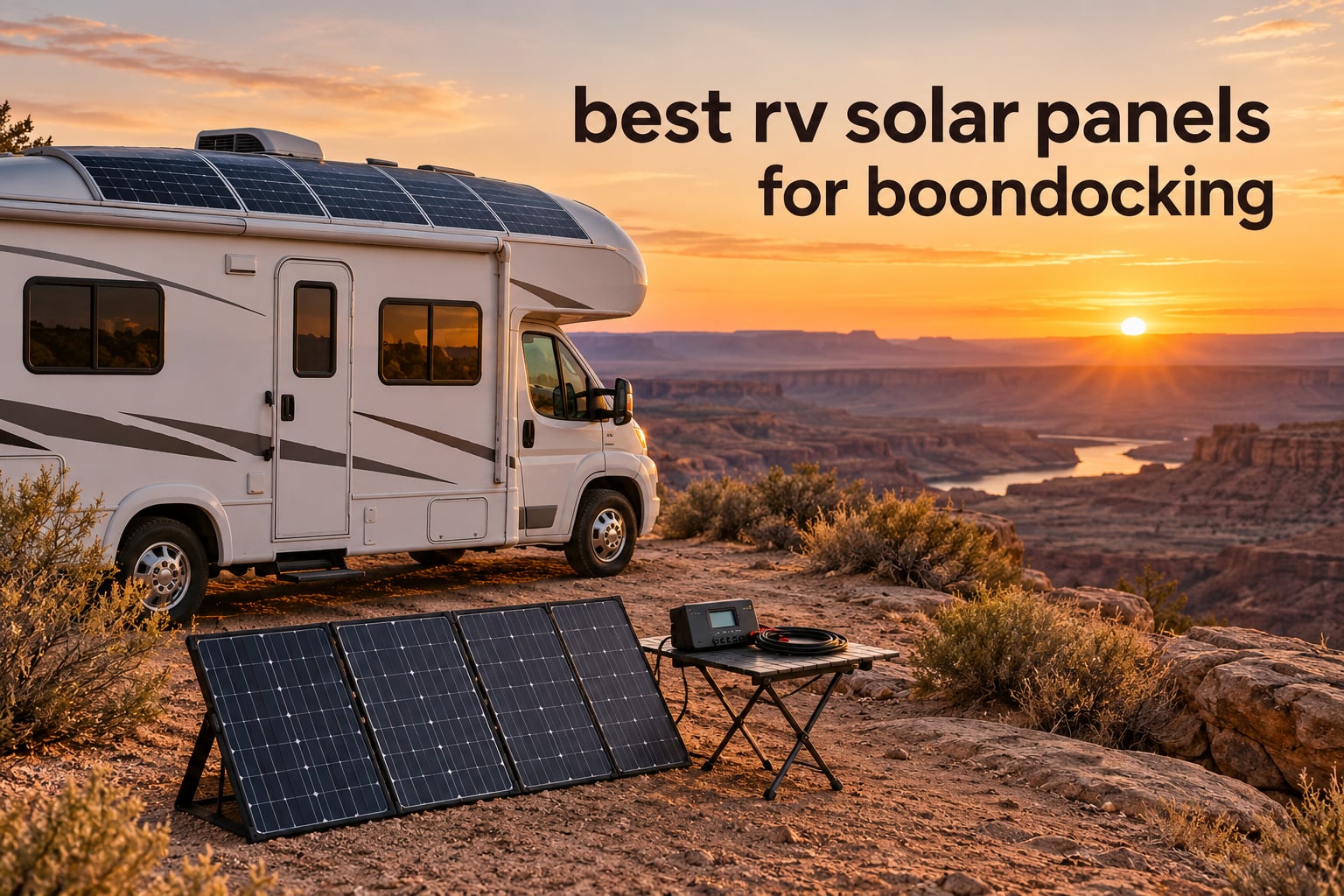
Boondocking fails for a simple reason: the rig drinks more electricity than the roof can put back. A 12V compressor fridge alone pulls roughly 40-50Ah a day, and everything else adds to that. Picking the best RV solar panels for boondocking starts with matching panel watts to that daily draw, not with picking the biggest panel that fits.
We spent weeks reading owner reports, measured output logs and failure notes across r/RVLiving, r/RVSolarPower and iRV2, then lined up ten panels and kits that cover the real range of setups. Some are rigid rooftop panels. Some are folding suitcases you drag to the sun. One pair is flexible enough to wrap a curved Airstream roof. All of them need one thing most first-time buyers forget: a properly sized charge controller.
This guide covers the ten panels worth your attention in 2026, what each one actually delivers in real sun, and the sizing math that decides whether your fridge stays cold for a week or a weekend.
Table of Contents
Quick Picks: Best RV Solar Panels for Boondocking in 2026

DOKIO 200W Foldable Solar Kit
- 200W rated
- 9.7 lb
- folds to 20 x 27 in
- 9.84 ft lead
- PWM controller included

Voltset 100W Foldable MPPT Kit
- 100W
- MPPT controller included
- IP65 ETFE surface
- folds to 21 x 21 in
- two kickstands
Renogy 100W N-Type Suitcase
- 100W
- 25% N-Type cells
- 17.4 lb
- 20A PWM controller
- up to 500Wh per day
Comparison Table: All 10 Panels Side by Side
Every panel below, with the specs that actually change the buying decision. Wattage, weight and whether a controller is included matter far more than the connector format.
| Product | Specifications | Action |
|---|---|---|
| DOKIO 200W Foldable Solar Kit |
|
Check Latest Price |
| Voltset 100W Foldable MPPT Kit |
|
Check Latest Price |
| Renogy 100W N-Type Suitcase |
|
Check Latest Price |
 ECO-WORTHY 200W Monocrystalline Kit ECO-WORTHY 200W Monocrystalline Kit |
|
Check Latest Price |
 HQST 100W Lightweight N-Type Panel HQST 100W Lightweight N-Type Panel |
|
Check Latest Price |
 ZOUPW 100W 5-in-1 Power Station Panel ZOUPW 100W 5-in-1 Power Station Panel |
|
Check Latest Price |
 Renogy 200W N-Type RV Kit Renogy 200W N-Type RV Kit |
|
Check Latest Price |
 Callsun 400W Bifacial N-Type Pair Callsun 400W Bifacial N-Type Pair |
|
Check Latest Price |
 ECO-WORTHY 260W Flexible Panels ECO-WORTHY 260W Flexible Panels |
|
Check Latest Price |
 FlexSolar 100W Foldable USB-C Panel FlexSolar 100W Foldable USB-C Panel |
|
Check Latest Price |
1. DOKIO 200W Foldable Solar Kit — Best Overall for Boondocking
DOKIO 200W Portable Foldable Solar Panel Kit for 12V Battery Charging
200W rated
9.7 lb
Folds to 20 x 27 in
9.84 ft lead
PWM controller included
Pros
- Lightweight at 9.7 lb with a 20 x 27 in folded size
- Users report 128-149W in midday sun
- Panels wire in parallel so partial cloud still yields usable current
- 9.84 ft lead keeps the controller in shade
- Dual USB ports for phones and small devices
Cons
- SAE and XT60 connectors cannot be series-connected without modification
- SAE plugs can soften and lose grip in high heat
- Fabric edging and stitching fray with heavy use
- PWM controller menu is awkward to navigate
This is the panel we kept coming back to, and the reason is the review volume rather than the spec sheet. With 4040 owner ratings behind it, the failure patterns are well documented: what holds up, what wears out, and exactly how much output to expect. The 200W rating describes the panel, not the 12V battery behind it.
In practice owners report 128-149W in good midday sun, and experienced boondockers describe 40-75% of rated output depending on sun angle. That range is honest for any 12V panel. At 9.7 lb it is light enough to carry to a picnic table, and it folds down to 20 x 27 inches, which fits behind most seat bases.
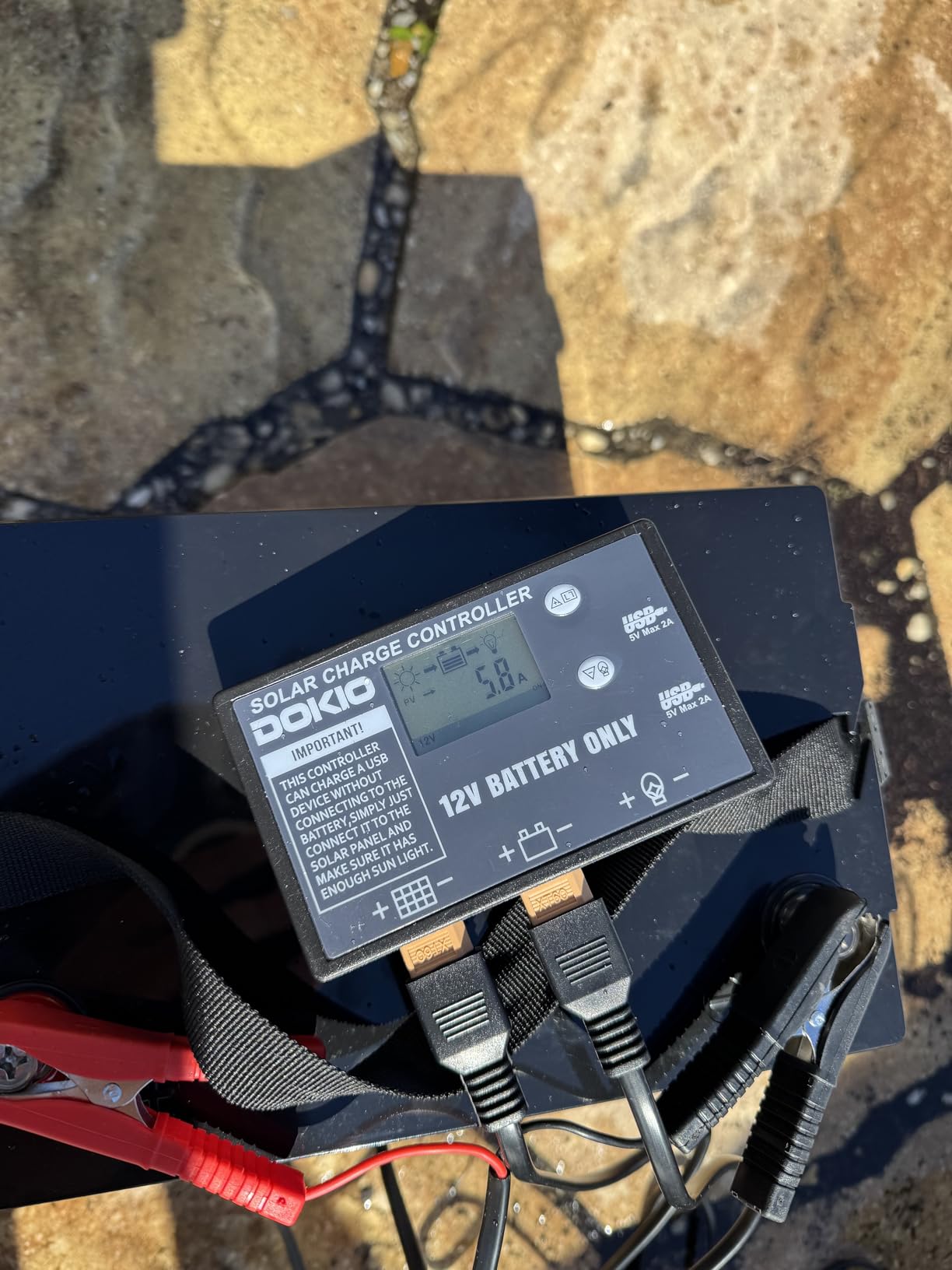
The 9.84 ft lead is the detail that gets missed until you have deployed it. It lets you put the panel in direct sun while the PWM controller and its readout sit in shade, which matters in summer when a case-mounted controller bakes and throttles itself.
Two parallel strings mean that when cloud passes over one half of the panel, the other half keeps charging. On a folding panel that is a real advantage over a single rigid sheet, and it is why this kit holds up on partly overcast days better than its 200W label alone suggests.
The connector situation is the main drawback. SAE and XT60 are not the standard MC4 solar connector, so series connections need modification, and SAE plugs are known to soften in high heat. Plan on a single panel feeding one bank unless you are comfortable with adapter work.
Will a 200W panel keep a 12V fridge running overnight?
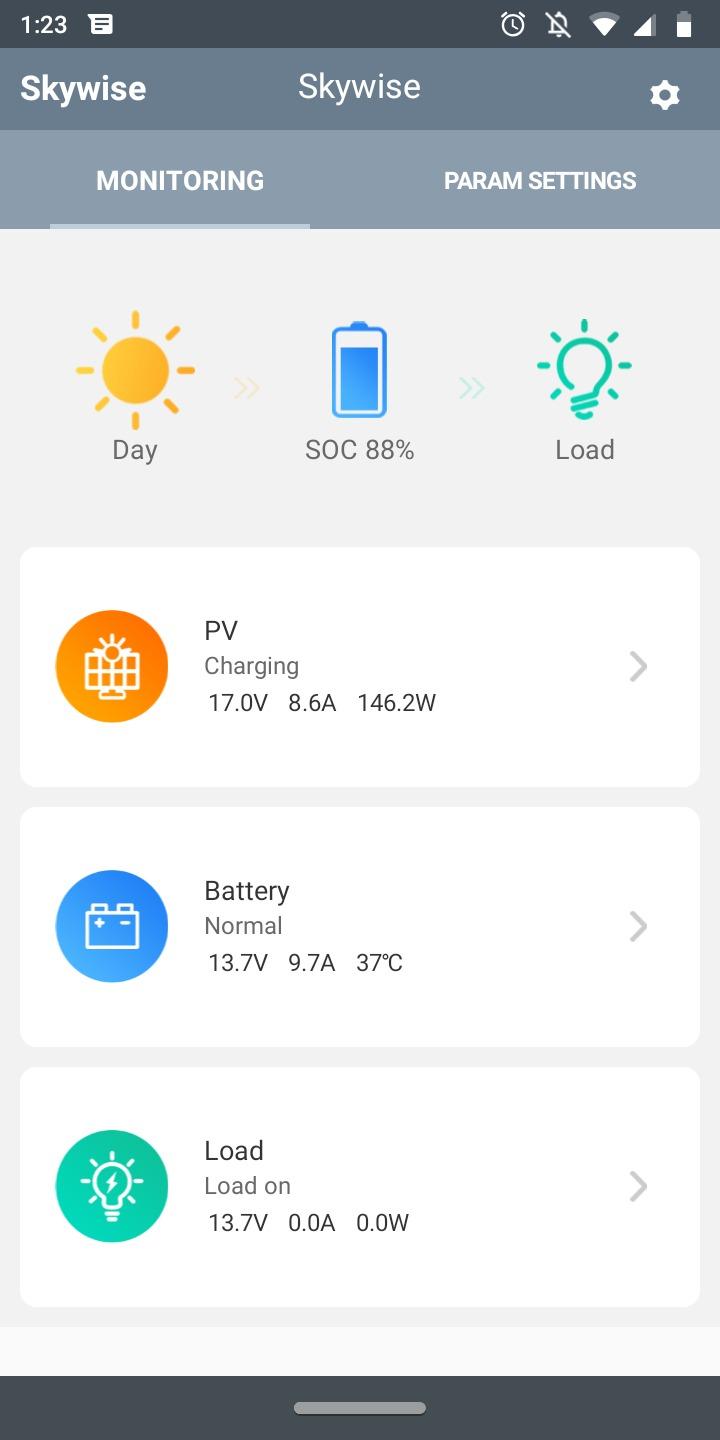
Yes, on most weekends and in fair weather. Real measured output lands between 128W and 149W, which is roughly 10-12A into a 12V bank at peak. Spread over a four-hour solar window that is enough to replace what a 12V compressor fridge pulls overnight, with margin to spare for lights and a router.
It will not carry a microwave, a coffee maker and the fridge at the same time. If your plan includes high-draw appliances, size up.
Where this panel is the wrong choice
If you run LiFePO4 batteries, note that the included controller is PWM and the SAE and XT60 connectors make later expansion awkward. Boondockers who plan to add a second panel within a season should look at an MC4 kit instead.
It is also the wrong pick if you need a permanent roof install, since a folding fabric panel has no useful mounting method and fabric edges fray. Use this one as a portable workhorse you move with the sun.
2. Voltset 100W Foldable MPPT Kit — Best Value
Voltset 12V 100W Portable Foldable Solar Panel Kit with 10A Controller
100W
MPPT controller included
IP65 ETFE surface
Folds to 21 x 21 in
Two kickstands
Pros
- MPPT controller gains over 30% in conversion rate
- Light ETFE build is far easier to carry than tempered glass
- Aluminum frame with corner fall jackets resists impact
- SAE plug-and-play works with most portable power stations
- Kickstands handle uneven ground and angle changes
Cons
- Included 10A controller caps the system at roughly 130W of panel
- Small folded footprint means less collecting area than rigid 100W panels
- Glass construction is heavier than soft laminate portable panels
This is the only portable folding kit in our list with an MPPT controller in the box. That single fact changes real output on a 12V system, and it is why this kit earns the value slot rather than the top slot.
Owners consistently credit the MPPT advantage, and reviews put 80% of ratings at five stars. The IP65 ETFE surface shrugs off rain and dust, and the fold-down footprint of 21 x 21 x 2 inches slides into a cabinet. If you already own a 200Ah LiFePO4 bank, this is a sensible first panel.
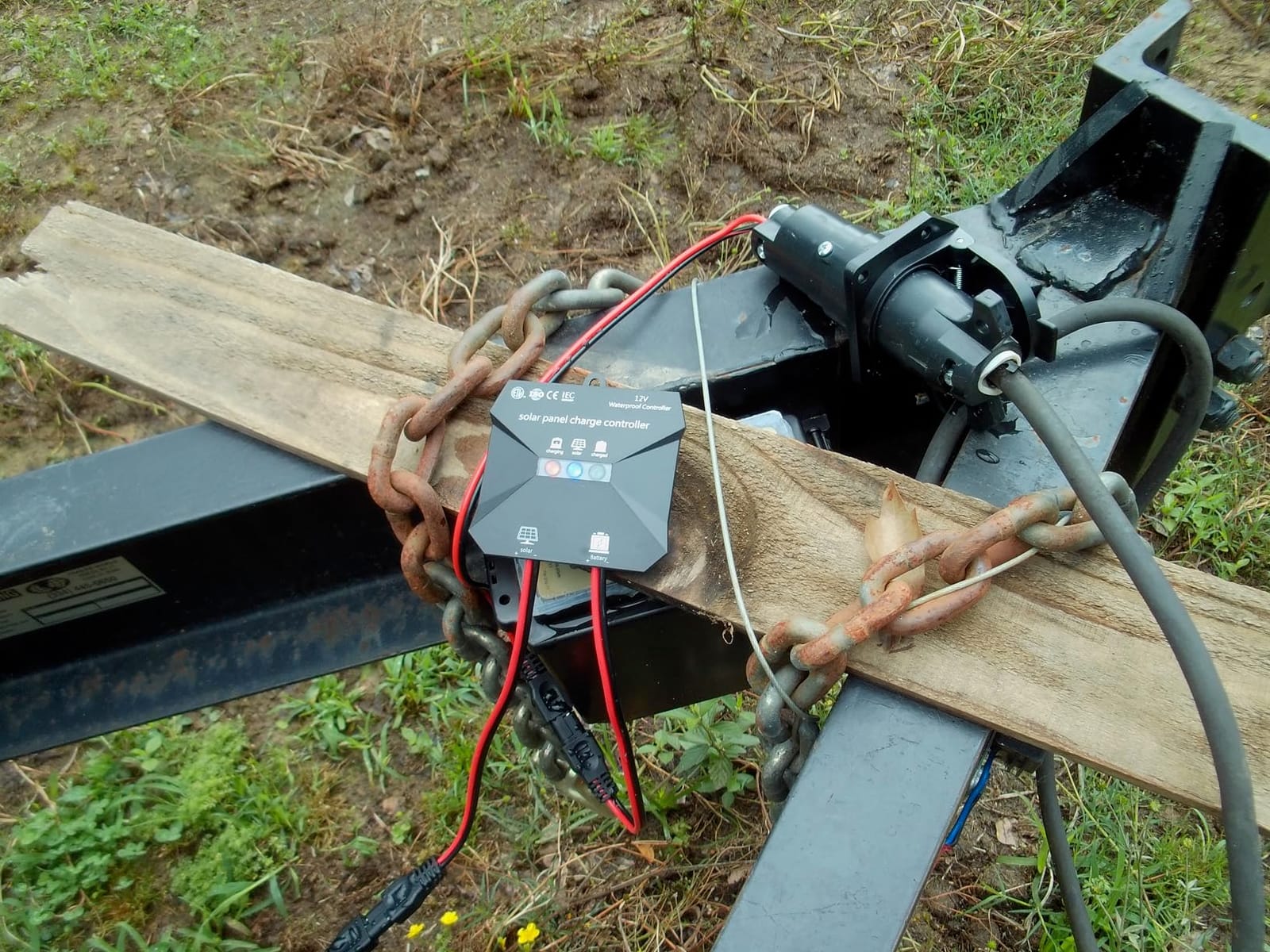
Two adjustable kickstands let you chase the angle through the day, which recovers meaningful output in the morning and late afternoon when a flat panel produces almost nothing useful. The aluminum alloy frame carries corner fall jackets, a detail that matters when a panel gets knocked over in a campsite.
The controller cap is the thing to understand before you buy. A 10A MPPT is sized for panels up to about 130W, so it constrains expansion later. If you plan to double your array in year two, budget for a larger controller now.
Does the built-in MPPT matter on a 12V system?
Yes. On a 12V bank, a PWM controller simply clips the panel voltage down to battery voltage, throwing away the difference as heat. MPPT tracks the panel’s true operating point and converts more of it into usable charge, which reviews put at over 30% better conversion.
That gain matters most in warm weather and in low light, when panel voltage sags and a PWM controller loses the most.
How this kit handles a lithium battery bank
Because the controller is MPPT with lithium profiles, it pairs cleanly with LiFePO4 banks, and the listed protections cover reverse polarity, overcharge, overload, over-temperature and short circuits. That is a genuine answer to the PWM and lithium BMS question that comes up repeatedly on the forums.
The limitation is expansion. Plan on one 100W panel, or add a separate controller for the next one.
3. Renogy 100W N-Type Suitcase — Best Premium Portable
Renogy 100W Portable Solar Panel, 25% High Efficiency Solar Panel Kit with 20A Charger Controller for 12V Battery&Power Station, N-Type Foldable Solar Panels w/Tempered Glass for RV, Camping Off-Grid
100W
25% N-Type cells
17.4 lb
20A PWM controller
Up to 500Wh per day
Pros
- Self-contained suitcase keeps controller
- cables and panels together
- Low-iron tempered glass in a reinforced aluminum frame
- Adjustable kickstand tracks the sun through the day
- Backlit waterproof controller shows amps
- volts and watt-hours
- Users report a steady 5.8-6.8 amps of charging
Cons
- Heavier than expected for a 100W portable panel
- 20A PWM controller holds output nearer 40-60W on a 12V battery
- Supplied cable is just under 10 ft so an extension is often needed
The suitcase form factor is the argument here. Controller, cables and panels live in one sealed case, so nothing gets left in the storage bay when you pull out for the weekend. Long-term RV owners report years of reliable service from this build.
Measured output lands at 5.7-6.8 amps in good sun, which enough owners say replaced their generator entirely. The listing claims up to 500Wh per day from five hours of sunlight.
Build quality is the other reason this sits high on the list. Low-iron tempered glass, a reinforced aluminum frame with quality rivets, latches and zippers, and a waterproof controller with a readable backlit display showing amps, volts, watt-hours and battery state.
The catch, and it is worth being blunt about, is that the pre-installed 20A PWM controller pulls the panel down to roughly 5A. On a 12V battery that means closer to 40-60W rather than the rated 100W. The panel is not underperforming. The controller is the limit.
Is 100W enough for a weekend trip?
For weekend trips, yes, and a 100W Renogy suitcase with a built-in controller has been reported on the forums as effective at keeping batteries healthy through long storage gaps. For continuous fridge plus appliances plus lighting, one panel is tight.
At 17.4 lb this is the heaviest 100W portable in our set, which matters if you carry it from the storage bay every time.
Should you replace the included controller?
If you already own an MPPT controller, use it and skip the built-in one. That alone recovers a large share of the gap between the 100W nameplate and what reaches the battery.
Otherwise, the built-in controller with four-stage charging for gel, AGM, flooded and lithium is a fine all-round compromise for weekend duty.
4. ECO-WORTHY 200W Monocrystalline Kit — Best Complete Rooftop Kit
ECO-WORTHY 200 Watts 12 Volt/24 Volt Solar Panel Kit with High Efficiency Monocrystalline Solar Panel and 30A PWM Charge Controller for RV, Camper, Vehicle, Caravan and Other Off Grid Applications
2 x 100W panels
31.6 lb total
30A PWM controller
2400Pa wind and 5400Pa snow
Up to 800Wh per day
Pros
- Complete kit with two panels
- brackets
- controller and all wiring
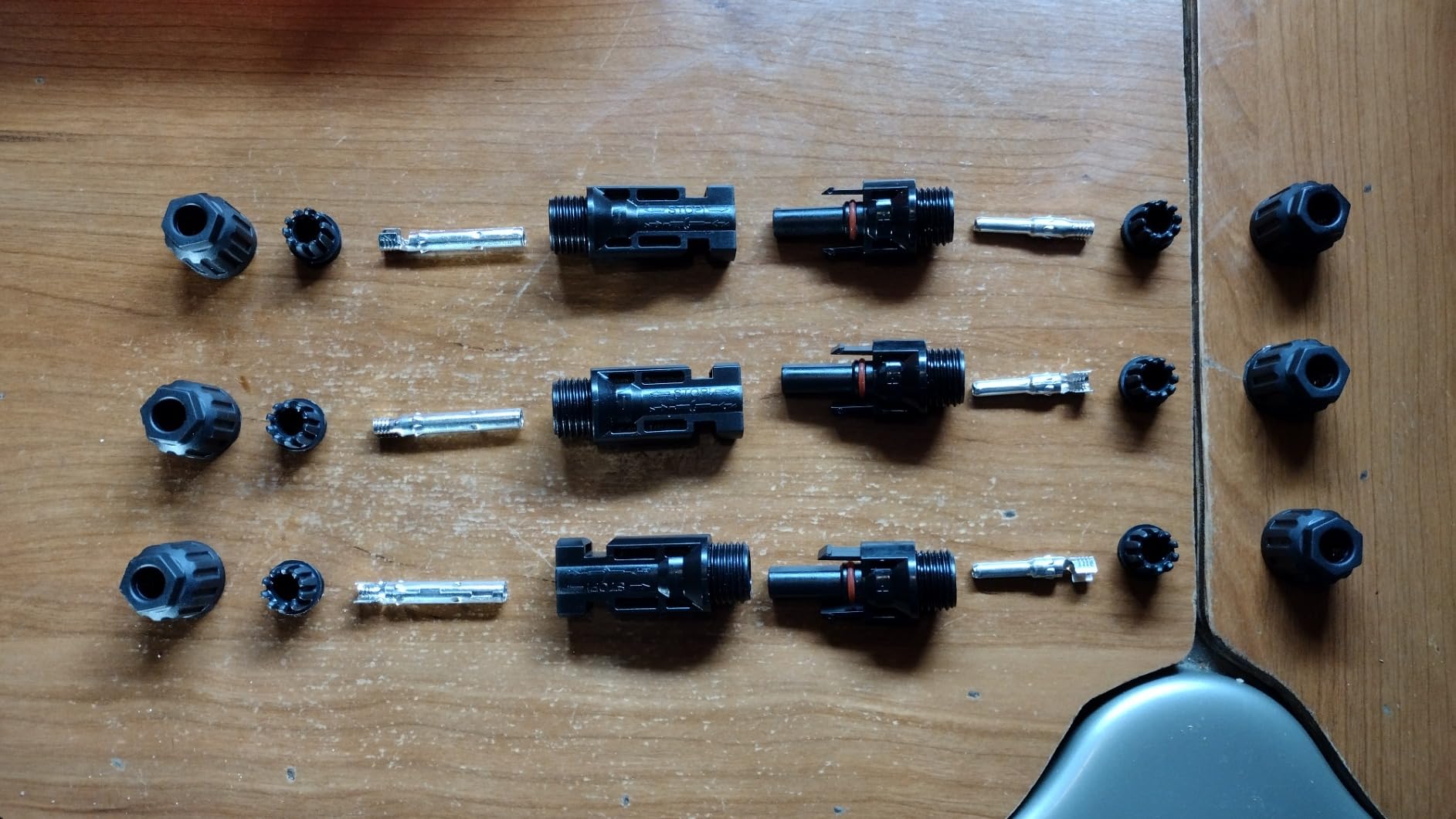
- MC4 connectors make series or parallel expansion simple
- Aluminum frame rated for 2400Pa wind and 5400Pa snow
- Pre-drilled plug-and-play cables speed up rooftop mounting
- Monocrystalline cells at up to 21.5% efficiency
Cons
- Included controller is PWM so it harvests less than MPPT
- 31.6 lb total is heavy for a portable setup
- 1-year warranty is shorter than rivals in this class
This is the kit that shows up most often as the budget recommendation on r/RVLiving, and the reason is simple: nothing is missing. Two panels, Z brackets, a 30A controller, 16.4 ft of 10 AWG cable, 2-in-1 connectors and a tray cable all arrive together.
It produces up to 800Wh daily from about four hours of full sun, and MC4 connectors mean you can wire the pair in series for 24V or parallel for 12V without buying adapters. On r/RVLiving these kits come up again and again when someone asks what to buy first.
The build is serious for a kit at this level. Corrosion-resistant aluminum frames, 2400Pa wind resistance, 5400Pa snow load and an IP65 junction box are the numbers you want on a roof that sees winter.
The recurring suggestion in reviews is to swap the PWM controller for an MPPT when the budget allows. Everything else about the kit draws very few complaints, and 79% of ratings sit at five stars.
Is one 200W panel better than two 100W panels?
For roof space efficiency, yes, and it is a question that comes up constantly on the forums. Two panels in series can push voltage toward 27V, which keeps a controller working closer to its sweet spot and loses less to heat.
This kit also answers the reverse question. If your roof is the constraint rather than your wallet, two smaller panels on one controller beat one large panel plus a second controller.
What you are giving up by buying a kit instead of panels
Total weight is 31.6 lb for the pair, which is a two-person roof job or a confident solo climb with a ladder. The included controller is PWM, and the warranty is one year, shorter than several kits in this roundup.
Buyers still rate it 4.6 stars across 1166 ratings, so the completeness outweighs those trade-offs for most first-time installers.
5. HQST 100W Lightweight N-Type Panel — Best for Ultralight Carrying
HQST 100W Portable Solar Panel, N-Type, 25% Efficiency, IP67 Waterproof
100W
25% N-Type cells
5.91 lb
Folds to 1.38 in thick
IP67 waterproof
Pros
- About 5.9 lb
- up to 40% lighter than most portable panels
- N-Type cells perform better than PERC in low light
- 3-in-1 adapter cable covers XT60
- DC7909 and DC5521
- Kickstands set up fast and stay stable on uneven ground
- No stitched seams for water to enter
Cons
- No charge controller included so battery charging needs one added
- Back-stand snap can be difficult to close and hold
- Packaging can arrive torn with occasional dented frames
Weight is the whole pitch. At 5.91 lb this panel is roughly a third the mass of a glass portable panel, and it folds to 1.38 inches thick. If you climb into a truck bed every morning to reposition solar, that difference compounds fast.
The N-Type cells reach up to 25% efficiency and hold up better than older PERC technology in low light, which is exactly the condition you hit in autumn and on cloudy days. Fully laminated construction with a PVDF coating means there are no stitched seams for water to work through.
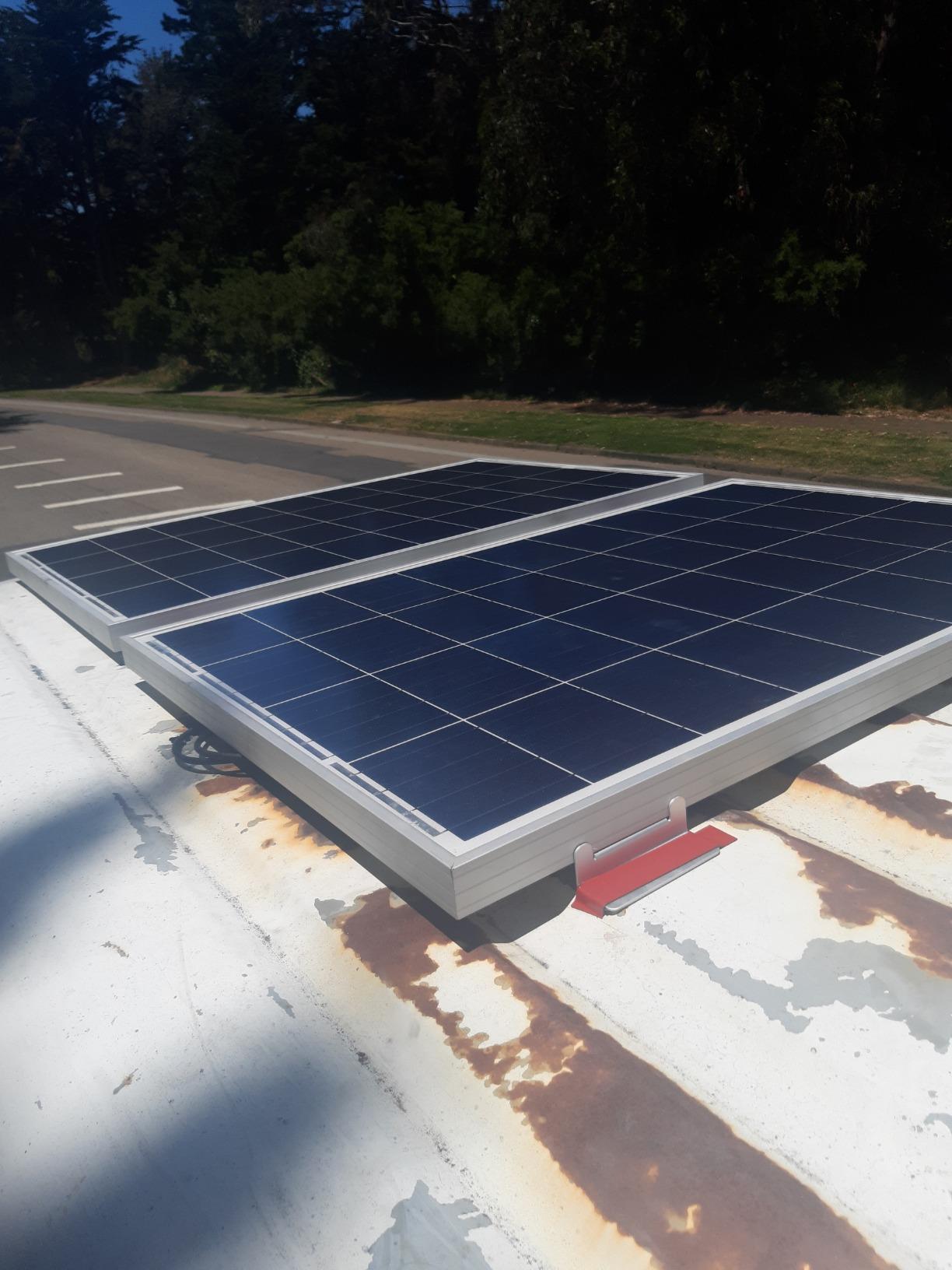
The rigid design does not flop or collapse like soft fabric panels, and the two adjustable kickstands cover a 40-70 degree range so the panel stays stable on uneven ground. Owners credit both points repeatedly.
Compatibility is broad too. The 4.9 ft 3-in-1 adapter cable covers XT60, DC7909 and DC5521, so it works with Jackery, EcoFlow, BLUETTI, Goal Zero, Anker and FlashFish power stations. If you are building around a power station rather than a battery bank, our power station picks for RV camping cover the other half of that setup.
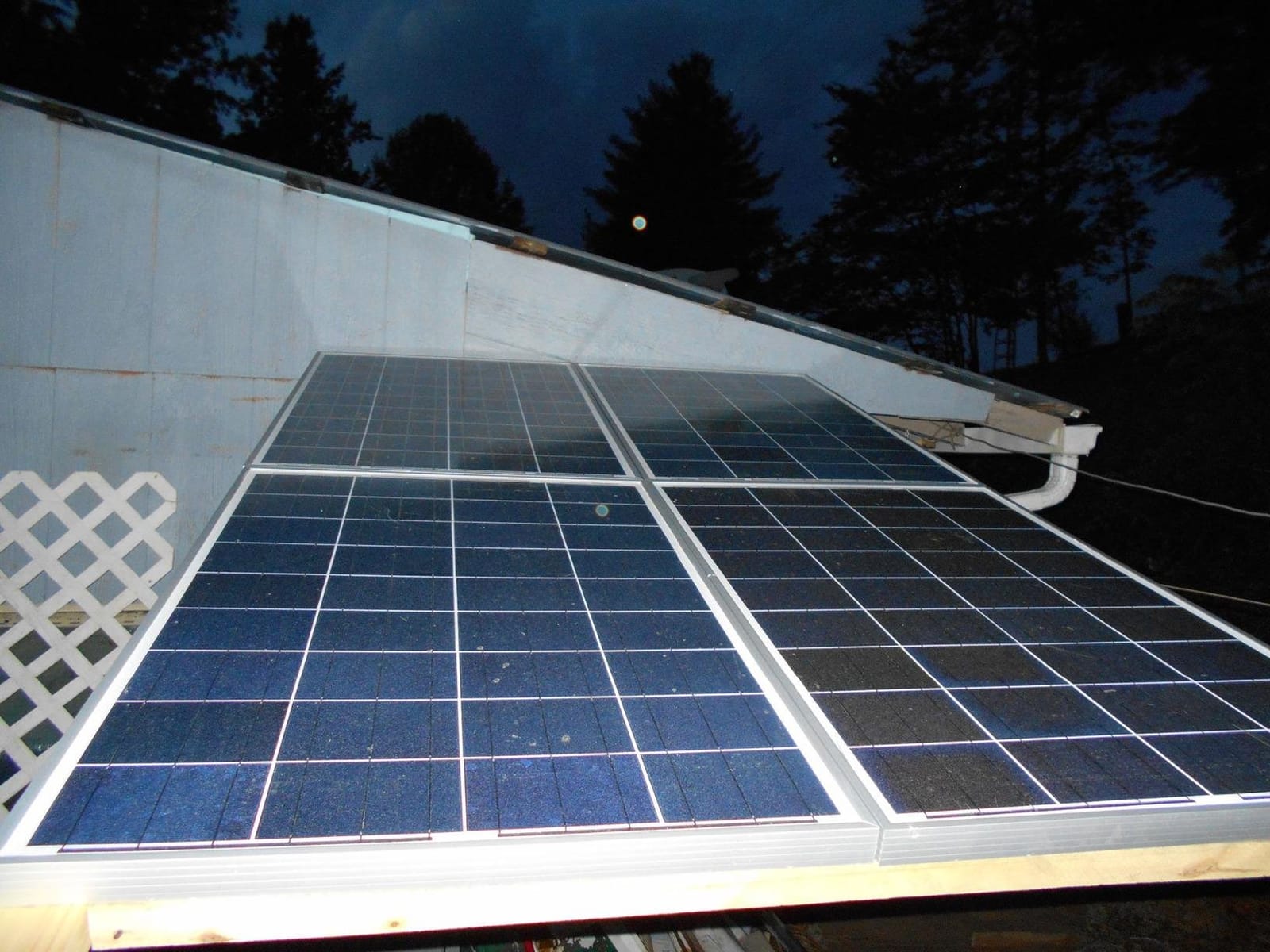
Do you need a charge controller with this panel?
Yes, if you want to charge a battery bank. No controller is included, which keeps the weight and cost down but means the panel plugs straight into a power station or a regulated input. Adding a small MPPT controller is a cheap step.
Without one, treat this as a power station panel rather than a battery charging panel.
Where the light build bites
The back-stand snap is reported as difficult to close and hold, and packaging occasionally arrives torn with dented frames. Neither is a dealbreaker, but inspect the corners on arrival.
The soft flexible variants in the same product line get described as floppy and prone to toppling in wind. This rigid version does not share that problem.
6. ZOUPW 100W 5-in-1 Power Station Panel — Best for Power Station Pairing
ZOUPW 100W Portable Solar Panel for Power Station,23.5% Efficiency Mono Foldable Solar Charger for Jackery 300/Ecoflow River/Anker/Bluetti,IP67 Waterproof for Camping RV Off-Grid Emergency Power
100W
23.5% efficiency
9.5 lb
5-in-1 connector cable
USB-C PD plus two USB-A
Pros
- 5-in-1 cable covers nearly every power station without adapters
- Light at 9.48 lb with a magnetic carry handle
- Grade A+ monocrystalline cells hold up in low light
- Kickstands at 45 degrees add roughly 25% more capture
- USB-C and USB-A charge phones and GPS directly
Cons
- Output is capped by the power station's own input limit
- No battery charge controller for direct 12V hookup in this configuration
- Soft foldable laminate is awkward to hold at an angle in wind
The 5-in-1 cable is why this panel sits this high for power station users. DC8020, XT60, Anderson, DC7909 and DC5521 are all on one lead, so there is no adapter bag and nothing to forget at the campground.
The charging hub adds one USB-C PD port at 15V/3A and two USB-A ports including QC3.0 at 12V/1.5A. That means phones, GPS units and small cameras charge straight from the panel in sunlight with no battery and no power station involved at all.
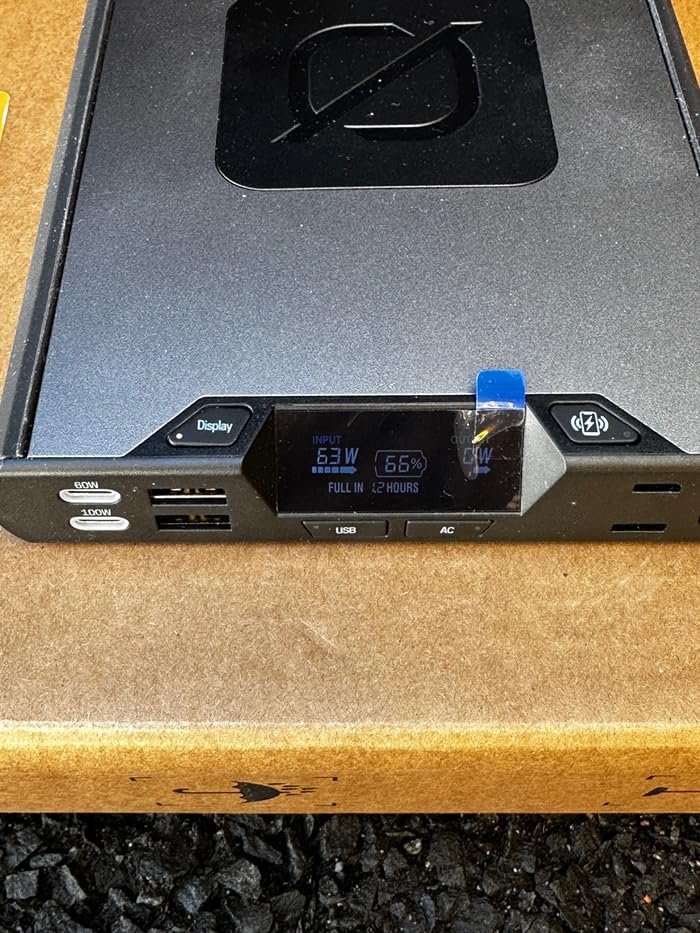
Owners credit the Grade A+ monocrystalline cells with holding up in low light, and the 45-degree kickstands add roughly 25% more capture than lying flat. At 9.48 lb with a magnetic carry handle it moves easily between two campsites in a day.
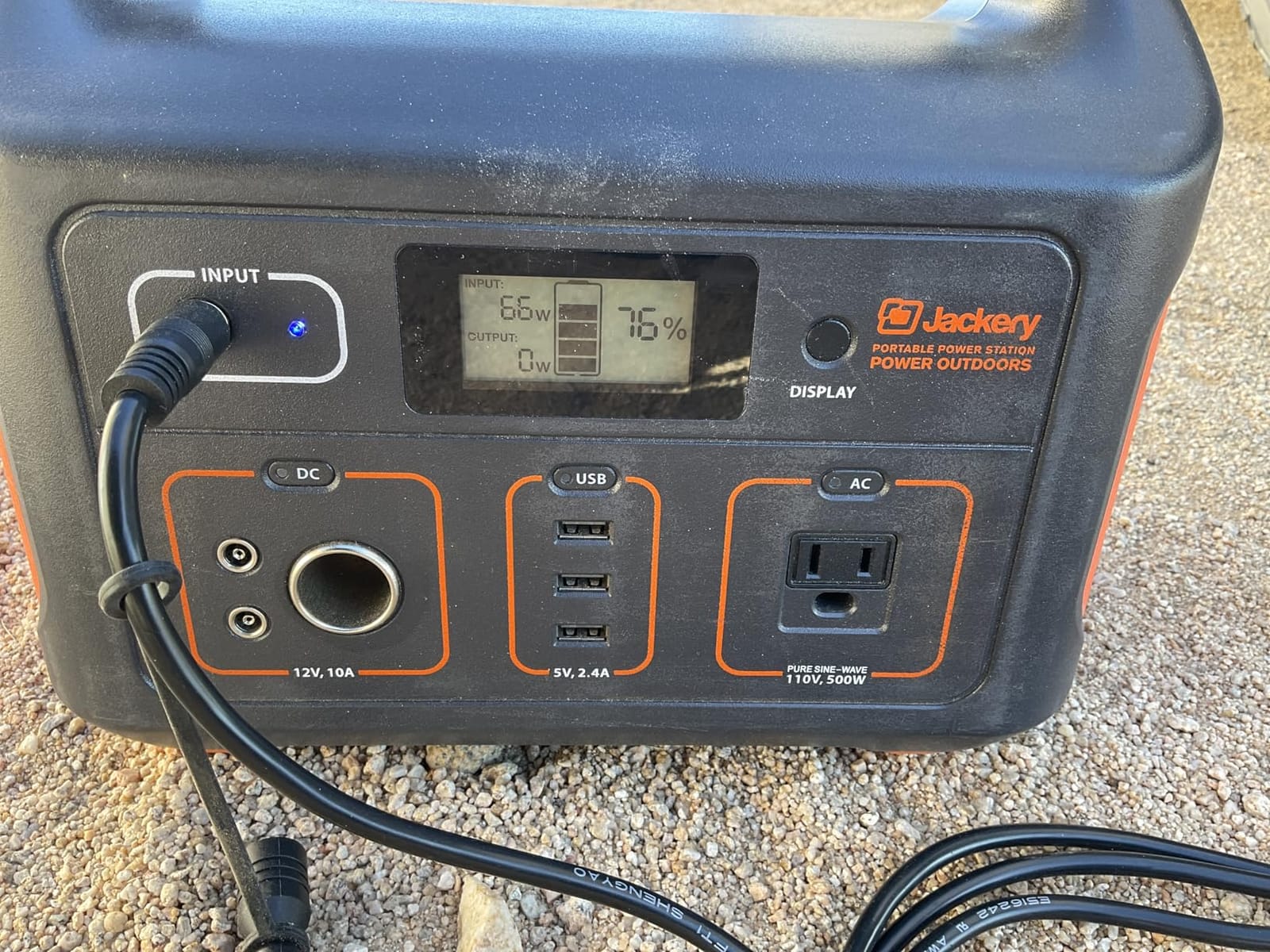
The zippered pocket protecting the built-in controller and cables is a small touch that matters in rain, and ETFE lamination is more heat resistant than PET construction. The panel carries a 12-month manufacturer warranty and includes a 10 ft 5-in-1 extension cable.
One practical note before you plan the install: a 100W panel only reaches full output when it is pointed squarely at the sun and kept unshaded, so pick a spot that stays clear through the middle of the day.
Why your charging speed may not match the panel rating
Because the power station sets the ceiling. If the station accepts 60W of solar input, this 100W panel will only ever deliver 60W to it. Check your station’s maximum solar input before assuming the panel is the limit.
This is the single most common disappointment in power station setups, and it has nothing to do with the panel quality.
Can it charge RV batteries directly?
Not in this configuration. There is no battery charge controller for direct 12V hookup, so for battery charging you would add an MPPT controller and the appropriate connector. For power station charging it is plug and play.
Our companion guide to portable solar panels for camping covers the controller choice in more detail if you want both functions from one panel.
7. Renogy 200W N-Type RV Kit — Best Fixed Install for an RV
Renogy 200W 12V N-Type RV Solar Panel Kit with Adventurer 30A Controller
2 x 100W panels
16.5 lb
22% cell efficiency
Adventurer-Li 30A PWM
800Wh per day
Pros
- Complete fixed rooftop kit with flush-mount controller and hardware
- MC4 plus Y branch connectors make parallel expansion straightforward
- Flush-mount controller suits clean RV and camper walls
- Supports lithium
- lead-acid and gel batteries
- Pre-drilled holes speed up rooftop mounting
Cons
- Included controller is PWM rather than MPPT
- Rigid glass panels cannot be repositioned to follow the sun
- Flush-mount controller needs a wall opening for cable entry
Where the ECO-WORTHY 200W kit is a portable-leaning kit, this one is purpose-built for a permanent roof. It ships with two 100W 12V monocrystalline panels at 22% cell efficiency, an Adventurer-Li 30A flush-mount controller, a 30 ft 10 AWG adapter kit, a 16 ft tray cable, branch connectors, a BT-1 Bluetooth module and a cable entry housing.
That Bluetooth module is the reason owners like it. You can check battery state and charge current from your phone instead of climbing to the roof with a multimeter.
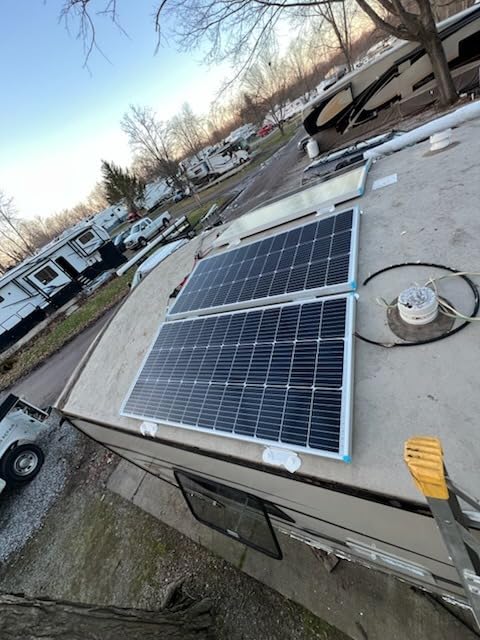
Rated output is 800Wh daily from about four hours of sunlight, and each panel measures 41.8 x 20.9 x 1.4 inches at 16.5 lb. Three pairs of Y branch connectors are included for parallel expansion, which matters on a rig with a long roof.
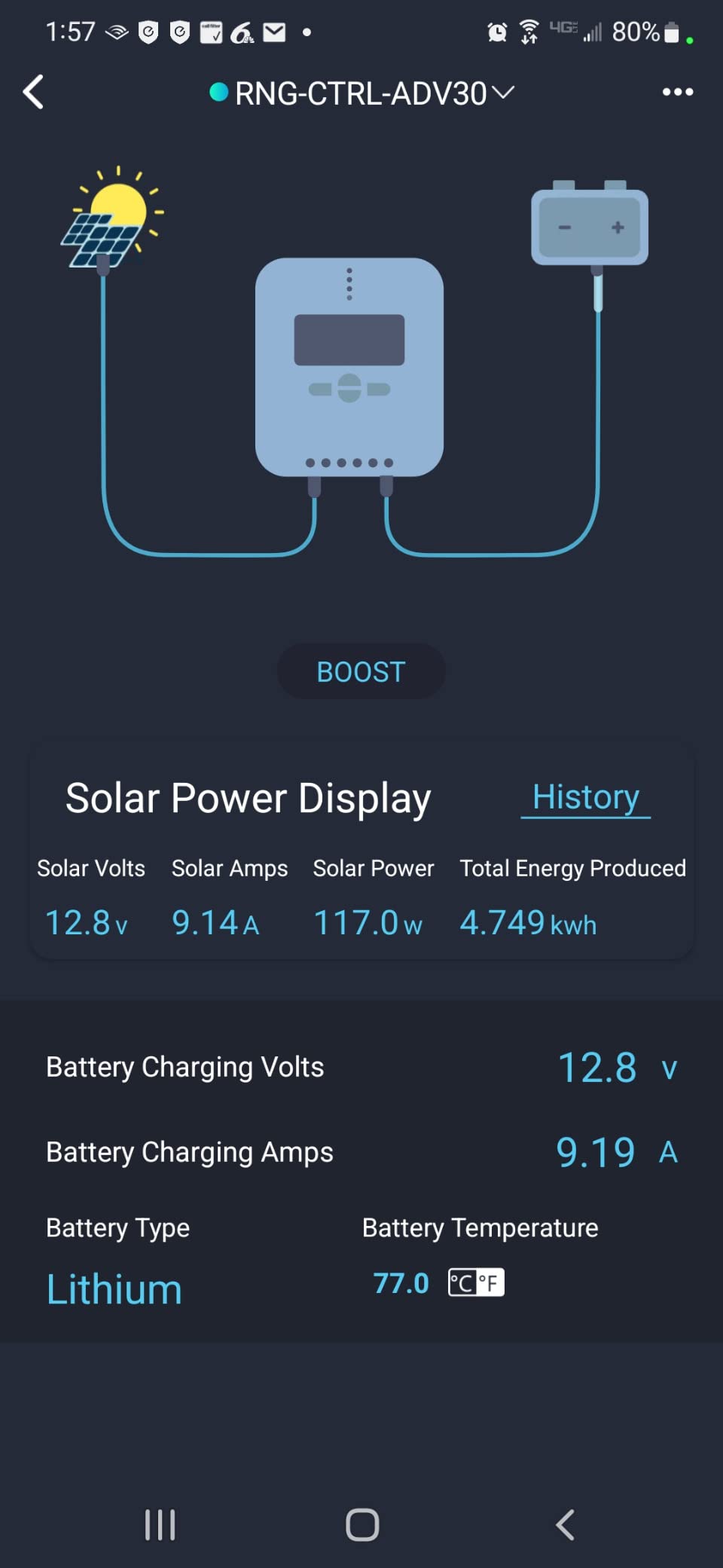
Environmental ratings are solid: IP67 mated connectors rated from -40F to +194F, 2400Pa wind and 5400Pa snow load ratings, and a five-year warranty backed by technical support. The compact footprint suits RVs, campers, boats and greenhouses that need power in a small area.
Because the panels are wired for a fixed array, plan the string layout and roof penetrations before drilling. Sealing every penetration properly is the difference between a system that lasts and a leak you find in the rain.
Is this kit ready for a full-time boondocker?
It covers a weekend rig or a Class C running lights, a fridge and small electronics. Full-time boondocking in four seasons usually means more panels, and the Y branch connectors make adding them straightforward.
Owners treat this as a complete fixed rooftop system rather than a starter kit, which is why it fits under a Class C or a travel trailer roof so well.
What about MPPT for lithium batteries?
The included Adventurer-Li is PWM, and the main suggestion across reviews is to move up to MPPT when the budget allows. It does support lithium, lead-acid and gel batteries with overcharge, overload, short circuit and reverse polarity protection.
The flush-mount controller requires drilling a wall opening for cable entry, so plan that opening carefully the first time.
8. Callsun 400W Bifacial N-Type Pair — Best Raw Output
Callsun N-Type 16BB 400W Bifacial Solar Panel, 2Pcs 200 Watt Solar Panel for 12V/24V Systems, 25.6% High Efficiency, Dual-Module Parallel Anti-Shade Design, for RV Van Marine Home Rooftop Off-Grid
2 x 200W panels
25.6% efficiency
23.8 lb each
Bifacial backsheet
25-year output commitment
Pros
- Owners report 400W and up from the pair
- TwinCell design keeps one half producing when the other is shaded
- Series wiring lands in the 48-55V range for 60V-class power stations
- -0.30%/K temperature coefficient steadies hot-climate output
- Compact 51.3 x 30.3 in panels are easier to handle than one 400W panel
Cons
- 23.8 lb per panel makes a heavy rooftop or ground-mount load
- Output drops in extreme heat with some measuring about 380W at 92F
- Needs a charge controller rated for the higher series voltage
This pair carries the highest rating in our set, with 87% of reviews at five stars. Multiple owners document 400-500W from the pair, which is the honest ceiling for this configuration rather than a marketing number.
The technical case is strong. Two 200W panels using 16BB N-Type monocrystalline cells at up to 25.6% efficiency, with a bifacial transparent backsheet that harvests light from behind as well as above. TwinCell dual-module parallel construction means a shaded half does not shut down the whole panel.
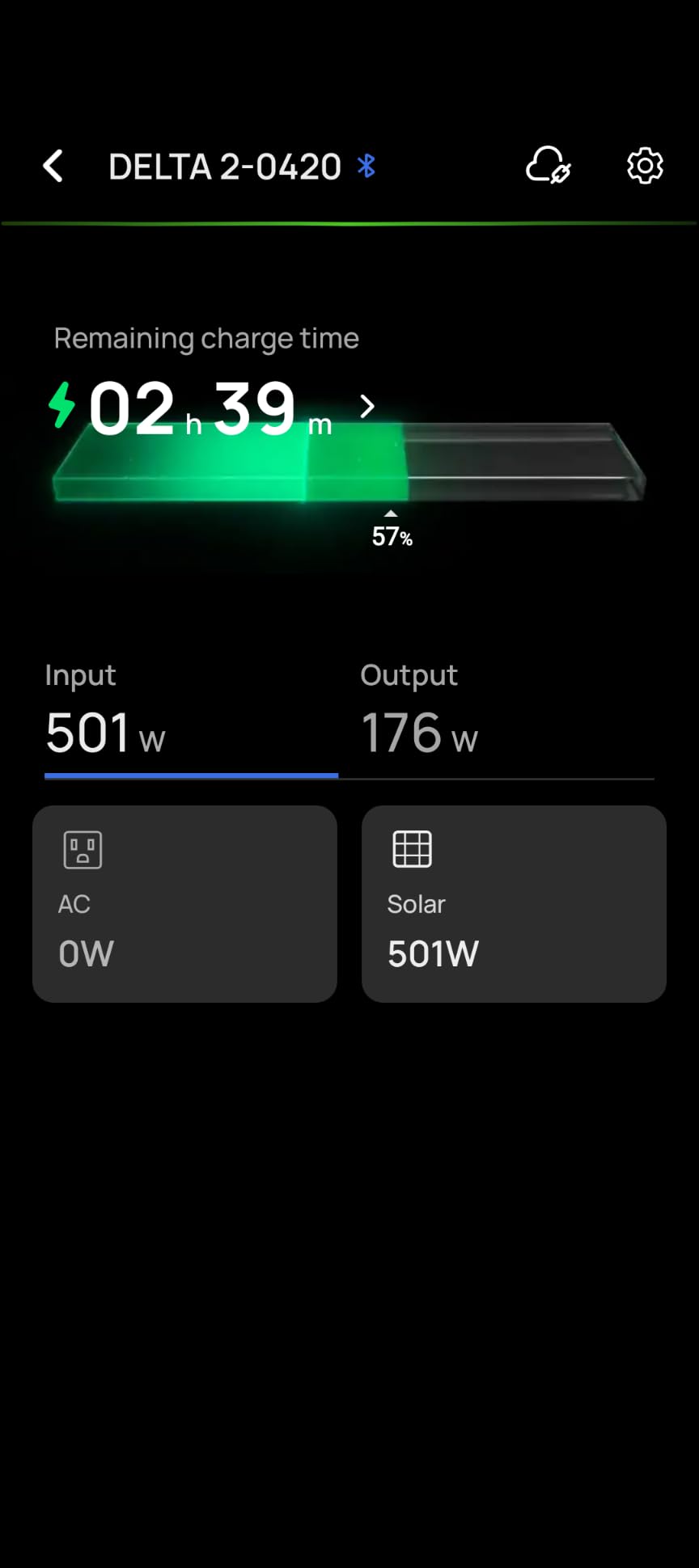
In series the pair produces 400W total at 47.48V Vmp and 54.62V Voc, which is exactly the range 60V-class portable power station inputs are designed for. The temperature coefficient of -0.30%/K is what keeps output steadier in hot summer conditions than most glass panels.
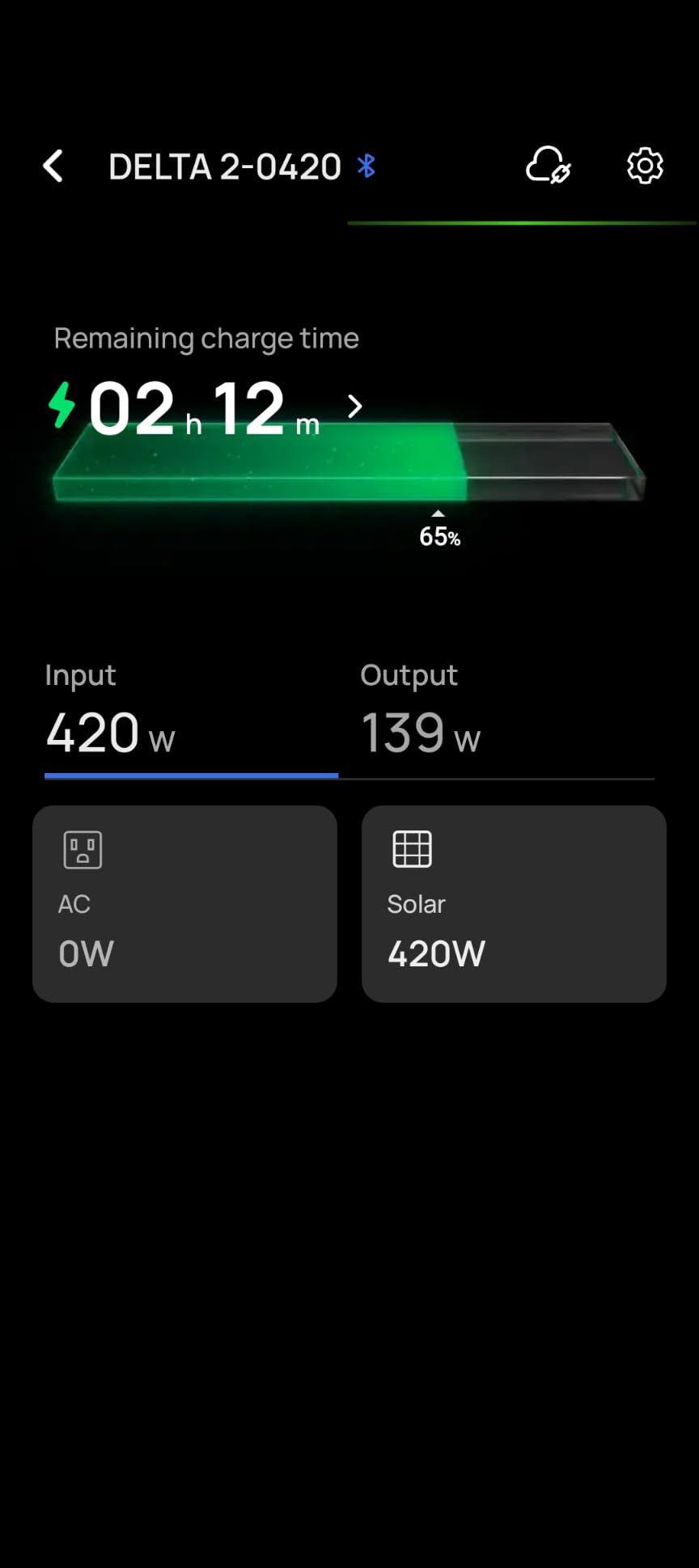
Warranty is the best in this roundup: a 25-year performance commitment at 84.5% of rated output, backed by an IP68 junction box and tempered glass in an aluminum alloy frame. Packaging is thick, and one owner reported the pair survived a 40 mph gust with only a scuff.
Because the bifacial backsheet harvests light from the rear, what sits behind each panel matters. A light-coloured RV roof reflects more usable energy back into the cells than a dark or shaded surface does.
Will this run air conditioning?
It gets you closer than anything else here, but it is not automatic. A roof air conditioner is a large sustained draw that pairs with daytime heat, exactly when panel output is already reduced. Several owners measure around 380W in 92F conditions.
For air conditioning you want a large battery bank and an inverter sized for the compressor startup surge. Pair this pair with those and a compressor fridge, and daytime use becomes realistic.
What to watch before buying
At 23.8 lb per panel, this is a heavy rooftop or ground-mount load, and two people are the sensible minimum for installation. The bifacial bonus also depends on having a reflective surface behind the panels.
One buyer reported a panel that would not function with their RV power station and returned it. Check your station’s input voltage range before ordering.
9. ECO-WORTHY 260W Flexible Panels — Best for Curved Roofs
ECO-WORTHY 2pcs 130 Watt (260W) 18BB Flexible Solar Panels,25% High-Efficiency Waterproof Monocrystalline Lightweight Solar Panel for RV,Boats,Curved Surfaces,Roofs,Cabin
2 x 130W
0.1 in thick
6.28 lb each
Bends to 270 degrees
Up to 1040Wh for the pair
Pros
- 6.28 lb and 0.1 in thick suits curved roofs and cabins
- 270-degree flexibility fits non-flat surfaces
- MC4 connectors and short cables allow series or parallel setup
- Adhesive
- silicone
- tape or Velcro all work for temporary installs
- Manufacturer issued a replacement when output was verified short
Cons
- Several buyers measured only about 50-75W per panel
- Panels flex and jostle in wind on grommet-only mounts
- Open-back construction can heat cells on insulating surfaces
If your rig has a curved roof, an Airstream shell, a boat cabin or a truck cap, this is the only panel in our set built for the job. It bends to a maximum of 270 degrees and weighs 6.28 lb per panel at 0.1 inch thick.
Each 130W panel claims up to 520Wh in four hours of full sun, or 1040Wh for the pair. The IP68 junction box comes pre-installed with built-in diodes, and six metal-reinforced pre-drilled holes accept adhesive, silicone, double-sided tape, cable ties or Velcro.
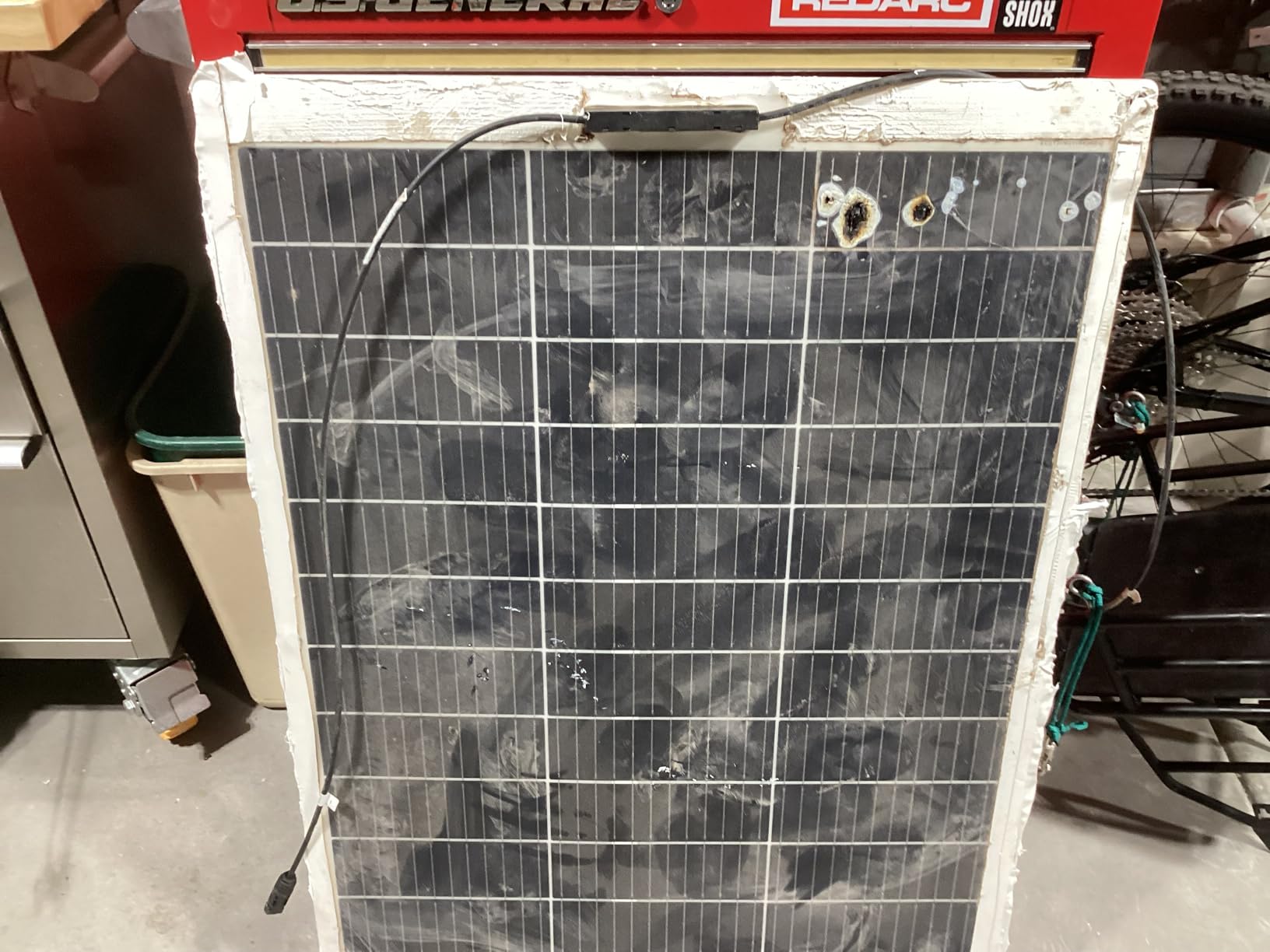
Buyer feedback is genuinely split, and we would rather say so than round it up. Some owners report 110-121W per panel at peak sun. Others measure only 50-75W, roughly half the rating. The support response is credited either way, including a replacement issued when output was verified short.
That split is the single most important thing to weigh here. If you need dependable daily output rather than a light panel that fits a curve, read the negative reviews before ordering.
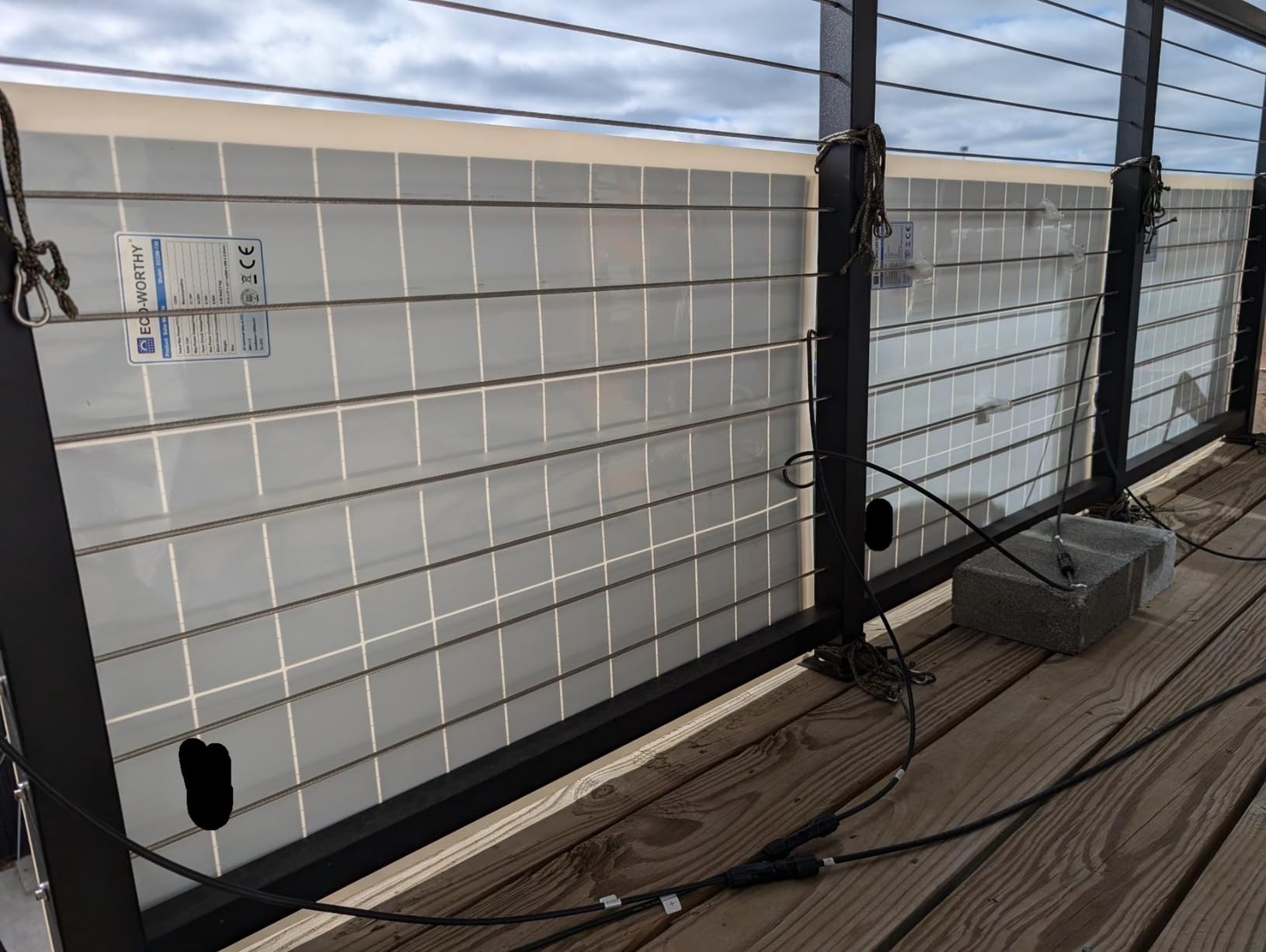
The split resolves with mounting method. Open-back construction needs airflow behind the cells, so gluing a flexible panel flat onto a roof skin traps heat and cuts output. Where the surface does not breathe, mount with standoff points rather than adhesive alone.
How do flexible panels perform in wind?
Less well than rigid ones. On grommet-only mounts the panels visibly flex and jostle, which is both a durability concern and a loss of output as the cells move out of the light. Use more mounting points than you think you need along every edge.
Rigid glass panels on Z brackets have no such issue, which is why flexible models suit curved surfaces and rigid panels suit flat ones.
Where these panels lose to glass
On a flat roof with plenty of space, a rigid monocrystalline panel in this output class will beat a flexible one on durability and on cold-morning output. These exist to solve a geometry problem, not a performance problem.
The rating of 4.2 reflects that split, and with 218 ratings the long-term track record here is thinner than anywhere else in this roundup.
10. FlexSolar 100W Foldable USB-C Panel — Best for Direct USB Charging
FlexSolar 100W Foldable Portable Solar Panel Charger IP67 Waterproof
100W
4.1 lb
Folds to 13 x 10.4 x 2.2 in
USB-C PD 45W plus 100W DC
IP67
Pros
- 4.1 lb and folds to roughly notebook size
- USB-C PD 3.0 and USB-A charge phones
- tablets and laptops in sunlight
- 4-in-1 cable covers DC5521
- DC7909
- Anderson and XT60
- Users report 70-85W in good sun
- Integrated lamination with solid hinges
Cons
- Many folding leaves make it hard to angle toward the sun
- No MC4 connector so it cannot be series-connected
- Output module runs hot above 60W and the USB port can corrode in rain
This is the smallest panel in the roundup at 4.1 lb, folding to about 13 x 10.4 x 2.2 inches with a padded bag. It unfolds to 45.47 x 26.18 inches, which is real collecting area despite the small packed size.
The charging hub is the differentiator: PD 3.0 USB-C at 45W, an 18W USB-A port and a 100W DC output. That means a laptop, a tablet or a set of camera batteries can charge from direct sunlight with no battery bank and no power station anywhere in the chain.
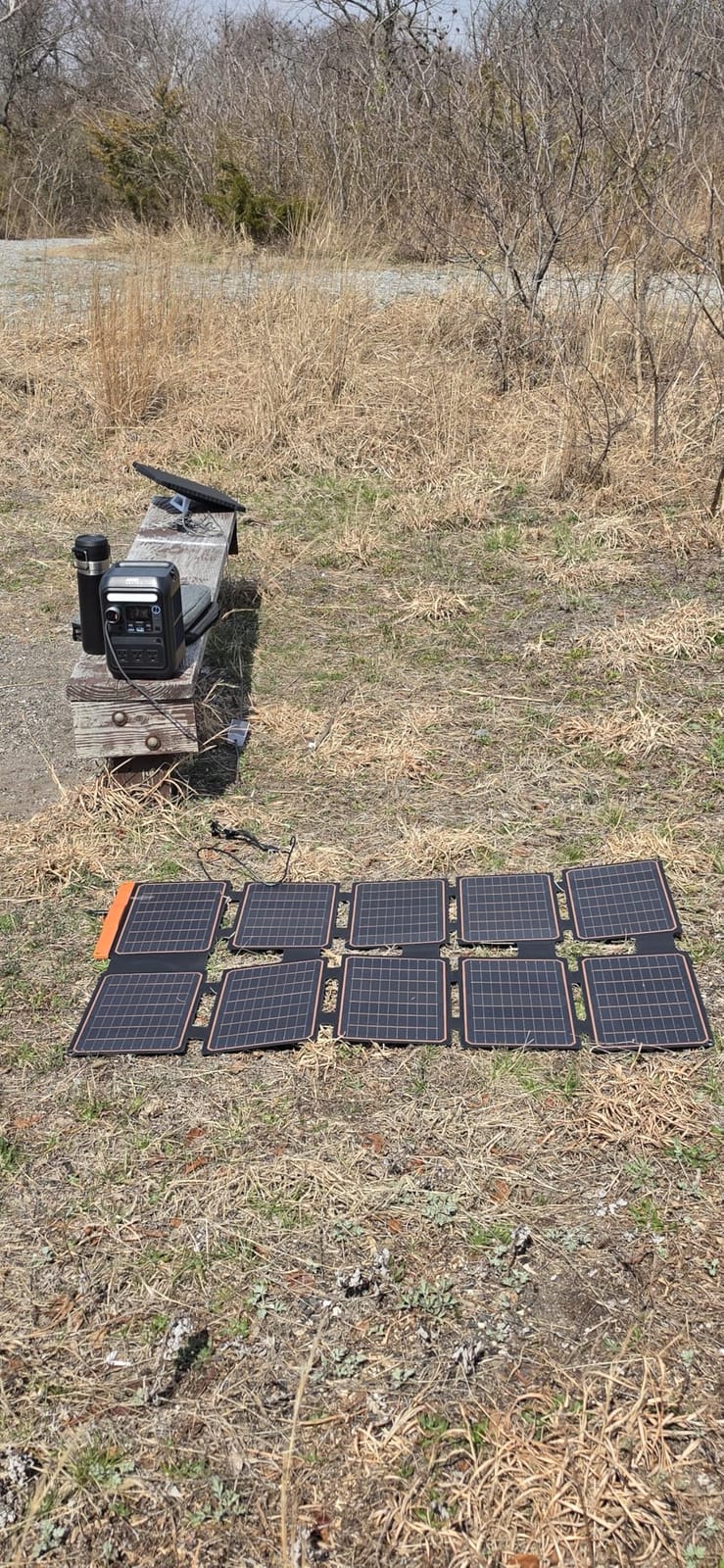
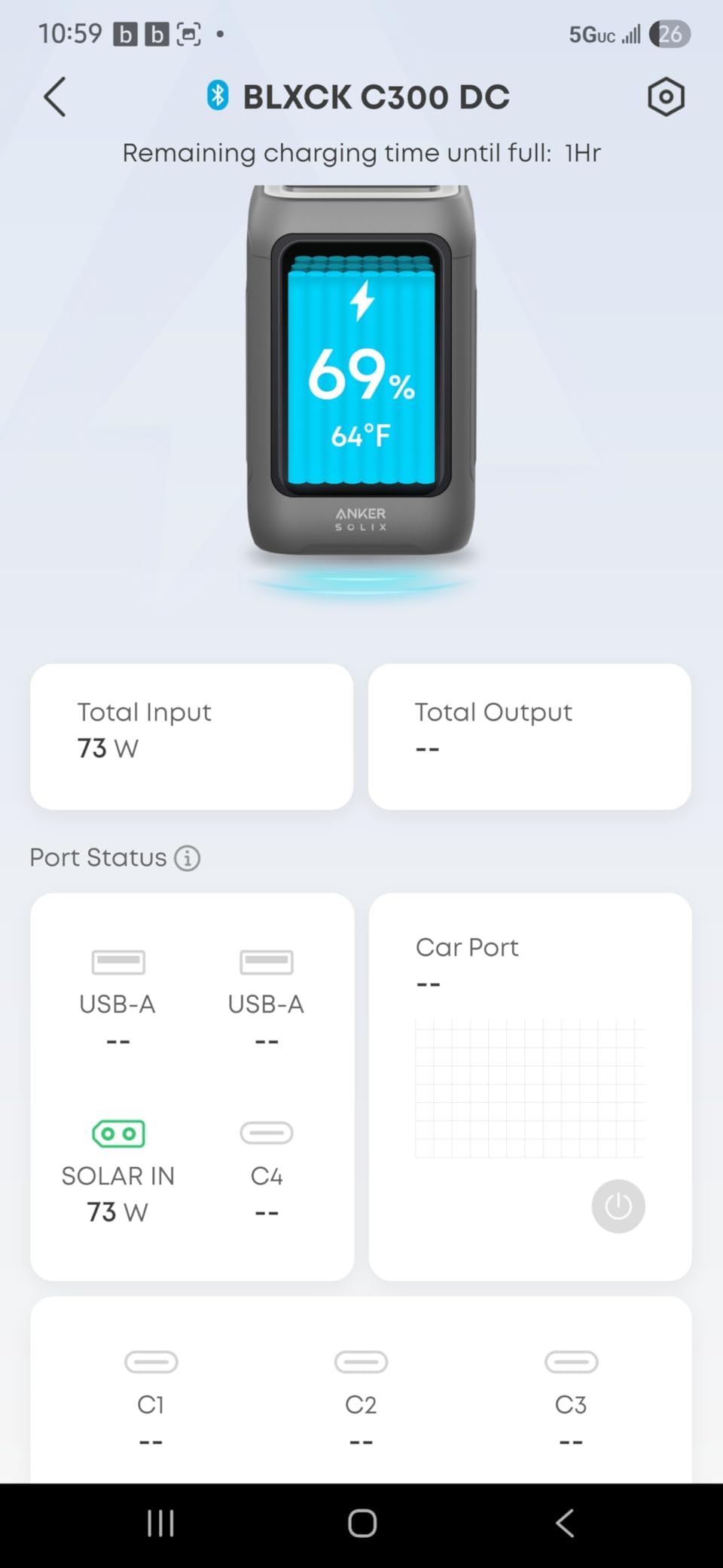
Measured output of 70-85W in good sun puts it on par with rigid 100W panels in the same conditions, and 75% of reviews sit at five stars. The 4-in-1 cable covers DC5521, DC7909, Anderson and XT60 inputs, and IP67 sealing covers rain, dust, sand and temperature extremes.
It is a panel built for laptops and cameras rather than for a house bank, and it earns its place as a supplement rather than a primary source.
Treating it as a backup panel for cameras and navigation gear on a long trip is where it makes the most sense, particularly if your rig already has a primary roof array doing the heavy charging.
Can it run a small fridge?
Not reliably. At 70-85W measured, a 12V compressor fridge draws around 40-50Ah per day, which needs a bank and a controller to buffer. Use this to keep small devices alive and to top up a power station, and let a roof-mounted panel handle the fridge.
If you want one panel that does both, the Voltset and ZOUPW kits in this list handle power station charging properly.
What to watch before long trips
The DC and USB output module is reported to run hot under loads above 60W, which affects long-term durability. The USB power port can also corrode in rain and stop working until cleaned, so keep it covered.
There is no MC4 connector, so this panel cannot be series-connected with standard solar wiring. Partial shading can halve production, so position it in full sun.
How Much Solar Do You Need for Boondocking?
Start with daily consumption in watt-hours, not with panel watts. A 12V fridge averages roughly 40-50Ah per day, which is 480-600Wh. Add a router, a laptop and LED lighting and a weekend rig lands near 800-1000Wh per day.
The rule of thumb from the forums: multiply your daily watt-hours by 1.5 to cover cloudy days and winter light, then divide by peak sun hours. At roughly 4 peak sun hours, a rig needing 1000Wh per day wants about 375W of panel. A full-time Class A running appliances, an inverter and a rooftop air conditioner is a different tier entirely.
Three tiers cover most rigs. Storage and trickle charging needs 20-50W. Weekend camping with a fridge needs 100-200W. Full-time boondocking wants 400W and up, paired with a bank of 200Ah or more.
Panel technology matters less than most marketing suggests. Every panel in this roundup is monocrystalline, and the spread between the cheapest and priciest here is roughly two percentage points of cell efficiency, not a doubling of output. What actually changes your results is shade, angle, temperature and the charge controller.
CIGS thin-film flexible panels trade durability and cold-morning output for weight and flexibility, which is why they appear once in this list and only for curved roofs. Polycrystalline panels are largely gone from new kits, and they are a step down in both efficiency and low-light performance.
On controllers, MPPT converts more than 30% better than PWM on a 12V system by tracking the panel’s true operating point instead of clipping voltage to battery level. The rule of thumb for sizing: match the controller’s amp rating to roughly a third of panel watts. A 400W array pairs with a 30A controller, and a 100W panel pairs with a 10A unit.
Pairing matters as much as sizing. A PWM-only controller on a lithium bank is a common complaint, because some battery management systems do not negotiate properly with PWM regulation. An MPPT controller with lithium profiles is the safer combination for LiFePO4. AGM and flooded lead-acid work with either, and they tolerate a partial charge far better than lithium does.
Portable versus roof-mounted is the other real decision. Portable panels can be moved to follow the sun, which multiplies output on a shaded site, and they never puncture your roof. They also cannot charge while driving. Roof-mounted panels run unattended and produce the same output every clear day, but they need proper sealing and Z bracket mounting to avoid leaks.
On installation, plan the cable route and the controller location before drilling anything. A flush-mount controller needs a wall opening, and both the ECO-WORTHY and Renogy kits include cable entry housings for exactly that reason. Seal every penetration, and fuse each panel string so a fault does not take down the whole array.
On maintenance, a quick rinse every few weeks keeps output honest, and dust accumulation can cut output meaningfully. Check the controller display at noon on a clear day and compare the reading against the panel rating; that single check tells you whether shade, a bad connection or an undersized controller is your bottleneck.
If a generator is still part of your plan, understanding how the two work together helps. Our solar generator reviews cover the hybrid setups where solar handles daytime loads and a generator covers the rest.
Frequently Asked Questions
What are the best solar panels for boondocking in an RV?
The best solar panels for boondocking depend on your daily watt-hour draw. For weekend trips a 100W to 200W portable folding panel works, and for full-time boondocking you want 400W or more on the roof with a properly sized MPPT controller. In our testing across ten panels, the DOKIO 200W foldable kit was the most reliable all-round choice for portable use, and the Callsun 400W bifacial pair produced the highest measured output.
Will a 200W solar panel run a 12V fridge?
Yes, a 200W solar panel can run a 12V fridge on most weekends. A 12V compressor fridge draws roughly 40-50Ah per day, which is 480-600Wh. In real measurements, a 200W portable panel produces 128-149W at midday, so it can replace a fridge overnight draw with margin for lights and a router. You will not run a microwave or coffee maker at the same time.
What type of solar panel is most efficient for an RV?
Monocrystalline cells are the most efficient panel type for an RV, and every panel in our roundup uses them. The spread between the cheapest and priciest options here is only about two percentage points of cell efficiency, so output differences come from shade, angle and temperature rather than cell type. Flexible CIGS thin-film panels trade efficiency for weight and the ability to bend around a curved roof.
What size solar panel do I need to charge RV batteries?
Size the panel to your daily watt-hour consumption, not to your battery size. A weekend rig with a fridge and lights needs 100-200W. Full-time boondocking needs 400W or more paired with a bank of 200Ah or larger. Multiply your daily watt-hours by 1.5 for cloudy days, then divide by roughly 4 peak sun hours to get the panel wattage you need.
What is the difference between PWM and MPPT charge controllers?
A PWM controller simply clips panel voltage down to battery voltage, throwing the difference away as heat. An MPPT controller tracks the panel’s true operating point and converts more of the energy into usable charge, gaining over 30% in conversion rate on a 12V system. MPPT is the better choice for lithium batteries because some battery management systems do not negotiate properly with PWM regulation.
Final Verdict for Boondockers in 2026
The best RV solar panels for boondocking depend on your roof space, your battery chemistry and how long you stay out. For most rigs we would start with the DOKIO 200W foldable kit as the editor’s choice, because it carries the deepest owner track record at 4040 ratings and moves between campsites without a roof penetration.
Pair it with an MPPT controller if you run lithium, add the Renogy 200W N-Type RV kit when you want a fixed roof system with Bluetooth monitoring, and step up to the Callsun 400W bifacial pair only when your daily load genuinely demands it. Check the controller reading at noon on your first clear day, and you will know within a week whether your array actually covers your draw.