
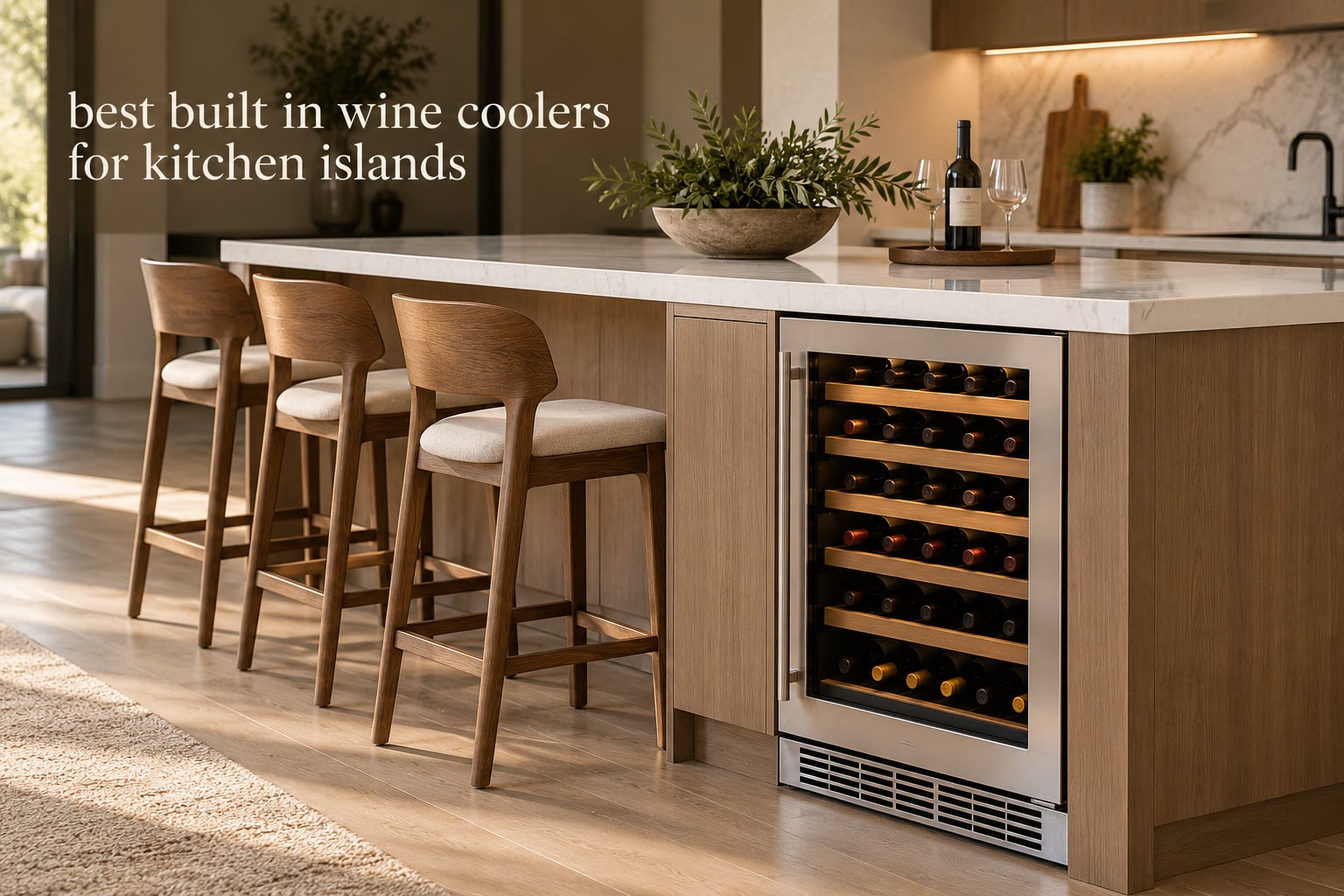
A built-in wine cooler for a kitchen island is a compressor-cooled undercounter cabinet installed inside island cabinetry so the door face sits flush with the cabinets around it, usually a 24-inch-wide unit under a standard 34-inch countertop, holding roughly 20 to 60 bottles at a controlled 41 to 65 degrees. If you are planning a remodel or finishing a new island, the appliance has to clear four things at once: the cabinet opening width, the counter height above it, the door swing against your seating overhang, and the electrical outlet inside the island box.
That last set of constraints is exactly where most wine cooler roundups fall short. They list glass doors and bottle counts and stop there, then the appliance arrives and the cabinetmaker says the opening is 3/4 inch too narrow or the hinge hits the counter overhang. We built this guide around the island instead of around the appliance. Every pick below lists its actual width, height and depth, how it vents, whether the door is reversible, and what it does in real kitchens once it is screwed into a cabinet box.
The lineup covers the four widths that matter in island cabinetry, from a 15-inch slim column for narrow islands up to a 30-inch wine-and-beverage cabinet for a long seating run. It also spans the reliability spread in this category, from a 4.0-star unit with a fifth of its buyers leaving one-star feedback to a 4.6-star model that a small but very satisfied group has run for months without a fault. Every rating and review count below is the live figure from the product page, not an editorial estimate.
If you are still working out which appliance family to budget against, our wine fridge roundup covers the freestanding and countertop options, and our cooler guide covers the portable ice chests for the patio side of things. This page is only about the units that go into cabinetry.
Table of Contents
Top 3 Best Built In Wine Coolers for Kitchen Islands (October 2026)
Tylza 15 Inch 30-Bottle Dual Zone
- 15-inch width fits narrow island openings
- Dual zone 40-55F and 55-65F
- 30 bottles on 6 beech shelves
- Built-in or freestanding

Velieta 24 Inch Wine and Beverage
- Wine zone 41-64F and beverage zone 35-50F
- 20 bottles and 88 cans
- Front vent for built-in use
- Largest review base in the group

ROVSUN 15 Inch 26-Bottle Dual Zone
- 15-inch front-vented body
- 41-64F with 1F accuracy
- 26 bottles in 2.8 cu ft
- Removable beech wood shelves
All 12 Built-In Wine Coolers Compared in 2026
| Product | Specifications | Action |
|---|---|---|
| Tylza 15 Inch 30-Bottle Dual Zone Wine Cooler |
|
Check Latest Price |
 Tylza 30 Inch Dual Zone Wine and Beverage Cooler Tylza 30 Inch Dual Zone Wine and Beverage Cooler |
|
Check Latest Price |
| ROVSUN 15 Inch 26-Bottle Dual Zone Wine Cooler |
|
Check Latest Price |
 BODEGA 15 Inch 30-Bottle Dual Zone Wine Cooler BODEGA 15 Inch 30-Bottle Dual Zone Wine Cooler |
|
Check Latest Price |
 Kalamera 24 Inch 37-Bottle Dual Zone Cooler Kalamera 24 Inch 37-Bottle Dual Zone Cooler |
|
Check Latest Price |
 ORYMUSE 15 Inch 30-Bottle Built-In Cooler ORYMUSE 15 Inch 30-Bottle Built-In Cooler |
|
Check Latest Price |
 Yeego 24 Inch 52-Bottle Dual Zone Cooler Yeego 24 Inch 52-Bottle Dual Zone Cooler |
|
Check Latest Price |
 Antarctic Star 24 Inch Dual Zone Wine Cooler Antarctic Star 24 Inch Dual Zone Wine Cooler |
|
Check Latest Price |
 EdgeStar BWR301BL 15 Inch Single Zone Cooler EdgeStar BWR301BL 15 Inch Single Zone Cooler |
|
Check Latest Price |
| Velieta 24 Inch Dual Zone Wine and Beverage Cooler |
|
Check Latest Price |
 FoMup 30 Inch Dual Zone Wine and Beverage Cooler FoMup 30 Inch Dual Zone Wine and Beverage Cooler |
|
Check Latest Price |
 Velivi 30 Inch Dual Zone Wine and Beverage Cooler Velivi 30 Inch Dual Zone Wine and Beverage Cooler |
|
Check Latest Price |
1. Tylza 15 Inch 30-Bottle Dual Zone Cooler – Best Overall Island Fit
Tylza Mini Fridge 15 Inch Wine Cooler Under Counter, 30 Bottles Dual Zone Wine Fridge with Safty Lock, Wine Refrigerator Freestanding, Built-in Wine Cellars
23.03D x 14.96W x 33.46H
3.6 cu ft, 30 bottles
Dual zone 40-55F and 55-65F
6 beech wood shelves
1 year warranty
Pros
- Dual zone design with independent upper 40-55F and lower 55-65F control
- Holds 30 standard 750ml bottles on 6 sturdy beech wooden shelves
- Compressor cooling with adjustable feet that suppress vibration
- Temperature memory restores the last setting after a power cut
- Double-glazed thermopane glass door with a built-in air filter
Cons
- The two zones can share an air passage and drift toward each other
- No separate beverage compartment so both zones are laid out for wine
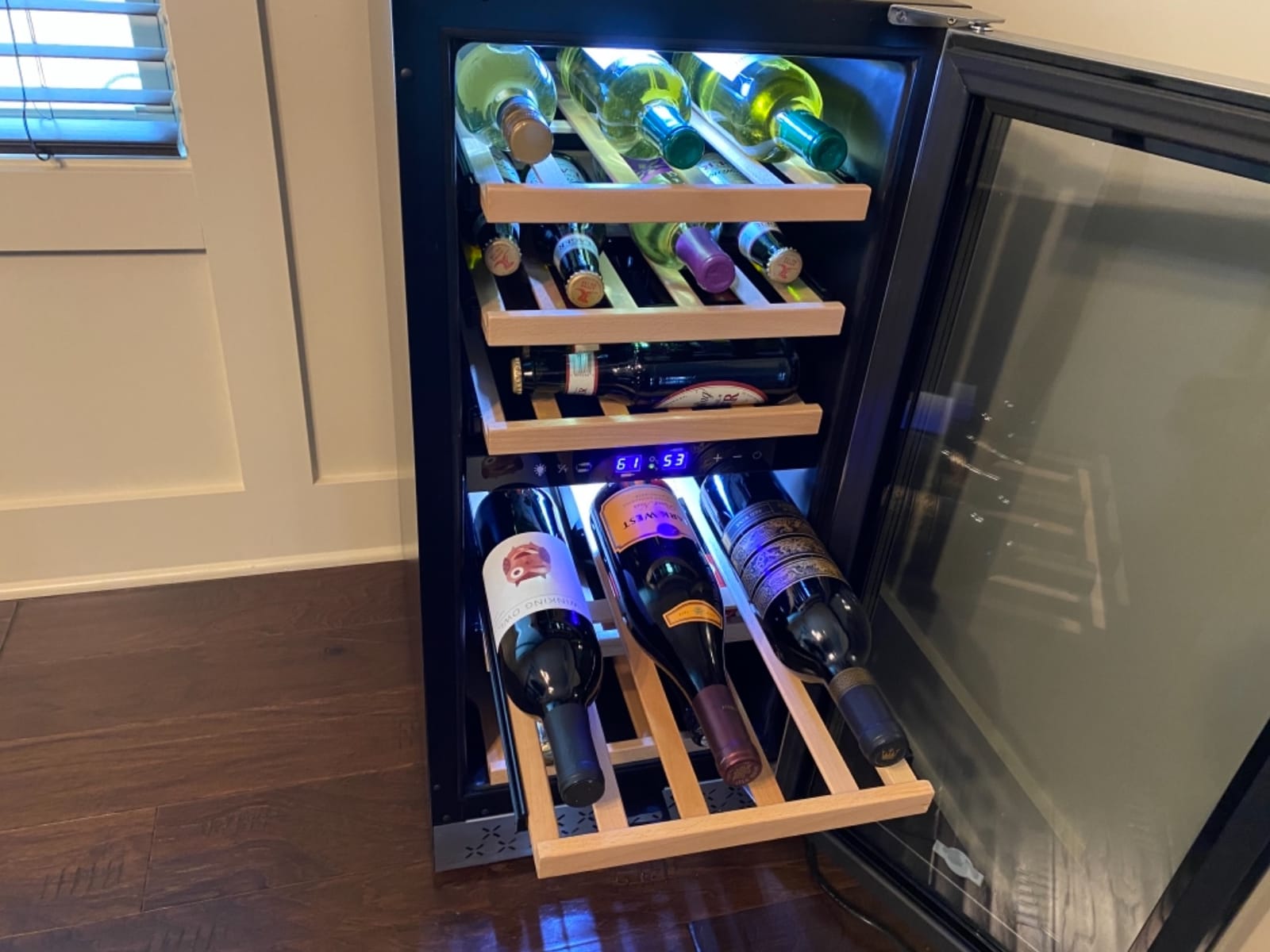
This is the unit we keep coming back to for island work. At 14.96 inches wide and 33.46 inches tall it slides into the kind of 15-inch cabinet opening that shows up constantly in island runs, and the 30-bottle rating is backed by six removable beech wood shelves rather than three wire racks. The glass door is a double-glazed thermopane with a built-in air filter, which matters more in a kitchen than in a basement bar because cooking oil and cabinet dust find their way into everything.
The two zones run 40 to 55 degrees up top and 55 to 65 degrees below, which covers reds and whites in one cabinet without you having to shuffle bottles. Compressor cooling with a rotary scroll compressor holds those numbers far more reliably than a thermoelectric chip, and the adjustable feet damp the vibration that would otherwise travel up through the island cabinet box into the countertop.
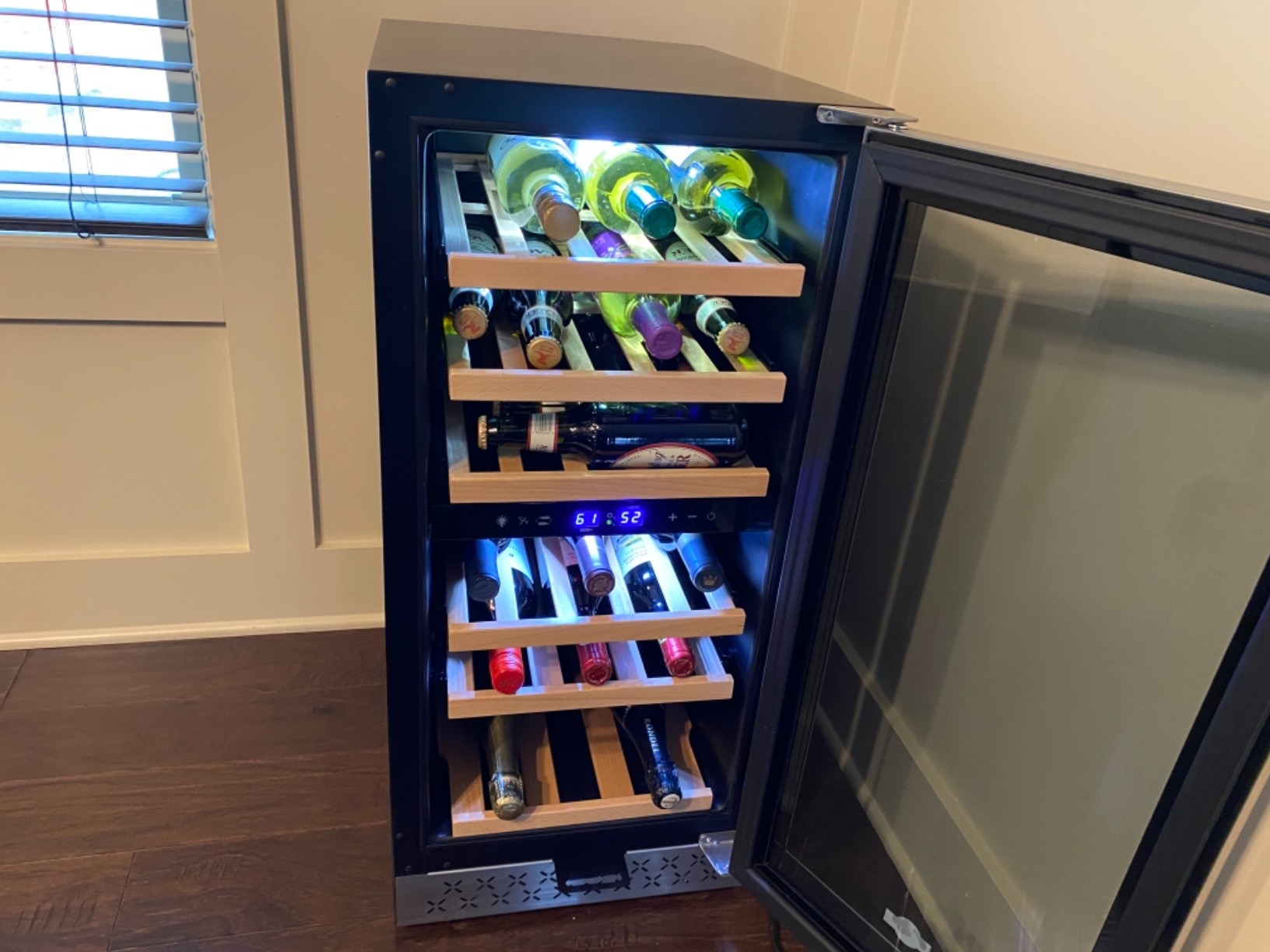
Owner feedback on this model repeats three things: the compressor is quiet, the 15-inch footprint fits standard undercounter cabinetry, and the wooden shelving is well organised. The recurring qualification is that the zone split is not perfectly independent. Buyers who need a genuine cellar-quality partition between red and white storage will want to look at a single-zone cabinet instead.
Temperature memory restores your last setting after a power interruption, and a safety lock with two keys keeps the collection out of reach of curious children on a busy island. The one-year warranty is the shortest meaningful cover in this group, so if the island project runs long, read the terms before the cabinetmaker starts cutting.
Why it works in a narrow island
The 14.96-inch width is the entire reason this unit tops our list. Island cabinetry is usually built in 15-inch, 18-inch and 24-inch modules, and a 15-inch opening is the one people most often fail to plan for. A cooler that measures 15 inches across fits a nominal opening; one that measures 18 inches does not.
Depth is 23.03 inches, which leaves usable space behind the cabinet for the supply line and the plug. Height at 33.46 inches sits just under a standard 34-inch counter, so the door face lands close to flush once the cabinetmaker trims the opening.
Where it falls short
Both zones are arranged for wine, so there is no chilled shelf for cans or bottles of sparkling water. If your island doubles as a beverage station during parties, a wine-and-beverage split will serve you better.
The shared air passage means the upper and lower compartments can drift toward the same reading over a long evening. Independent thermometer checks at your set points are worth doing for the first week.
2. Tylza 30 Inch Dual Zone Wine and Beverage Cooler – Best for Entertaining
Tylza 30″ Dual Zone Wine and Beverage Cooler Quiet Compressor
23.03D x 30.31W x 34.25H
6.2 cu ft, 29 bottles and 110 cans
Under 38 dB
170 kWh per year
Pros
- Two independently controlled zones for wine and cans at different temperatures
- Large 6.2 cu ft cabinet holding up to 29 bottles and 110 cans
- Whisper quiet running under 38 dB with low vibration
- Built-in install allows a 180 degree door opening while freestanding allows 225 degrees
- Double tempered glass doors with soft-close magnetic seals and key locks
Cons
- At 30 inches wide it needs a long cabinet run or a dedicated appliance garage
- Weighs about 120 pounds so moving it for cleaning or servicing is a two-person job
When an island is built for hosting, the wine-only format wastes half the cabinet. This 30-inch model splits a 6.2 cubic foot interior into a wine zone running 35 to 50 degrees and a beverage zone running 41 to 64 degrees, so reds chill on one side and cans, beer and bottles sit cold on the other. It holds up to 29 wine bottles and 110 cans.
The inverter compressor puts noise under 38 dB, which is at the quiet end of everything in this roundup and the reason it works next to a seating overhang. Energy use is listed at 170 kWh per year, roughly half of what the largest 24-inch cabinet in this group draws. Auto-defrost cycles every six hours, and the touch screen handles the rest.
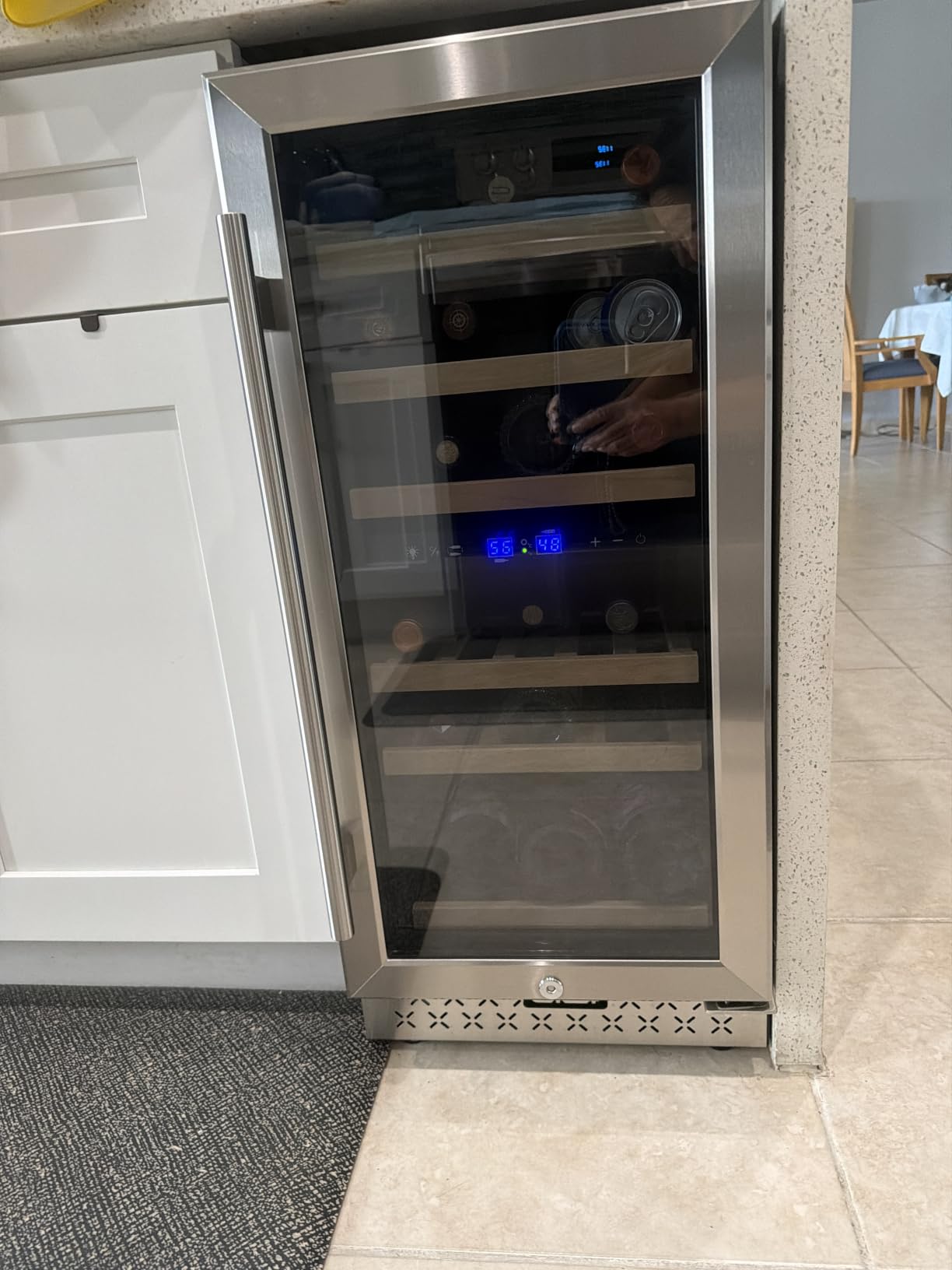
Owners highlight the combination of a wine zone and a beverage zone inside one cabinet, along with the touch screen and the consistency of the temperature control. The flush built-in fit gets called out repeatedly, particularly the wider 180 degree door swing that built-in mode allows, compared with 225 degrees when it runs freestanding.
The soft-close magnetic seals and key locks on both doors are a nice touch for a cabinet that will be opened constantly during a dinner party. The wooden shelves come out for cleaning without tools, and the door locks are a genuine consideration in a house with small children.
What fits in a 30-inch island module
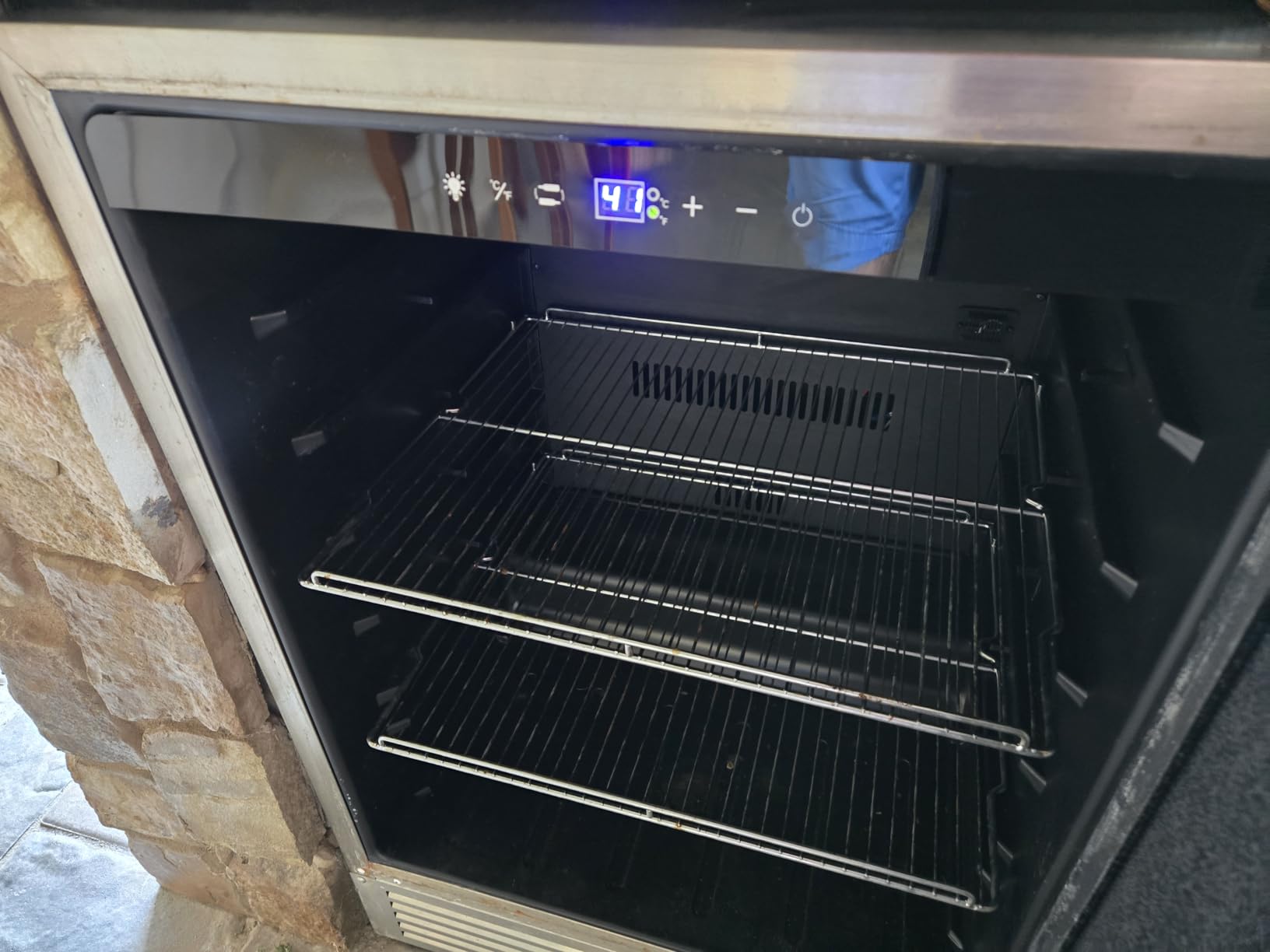
The chassis measures 30.31 inches wide by 34.25 inches tall by 23.03 inches deep. In practical terms you need a cabinet opening a little over 30 inches wide with at least 34 inches of clear height, so this belongs in a purpose-built module rather than squeezed between two standard cabinets.
Front ventilation means air draws in at the base rather than through a toe kick behind the cabinet, which removes one of the more common installation complaints in this category.
Where it falls short
At 120 pounds, this is not a cabinet you slide in on your own or pull out to clean behind. Plan the install with a second person and pick a location you will not need to move later.
A 30-inch footprint limits you to one of these per island run. If the cabinetry budget only allows a single wine appliance, a 24-inch dual-zone model leaves more usable counter on either side.
3. ROVSUN 15 Inch 26-Bottle Dual Zone Cooler – Best for Small Collections
ROVSUN 15 Inch Dual Zone Wine Fridge, 26 Bottle Wine Cooler Refrigerator
23D x 15W x 34.3H
2.8 cu ft, 26 bottles
41-64F with 1F accuracy
Compressor with 360 degree circulation
Pros
- Compressor cooling reaches the low-to-mid 40s
- far colder than thermoelectric models
- Front-vented 15-inch body slides under a standard counter for a flush built-in look
- Digital temperature setting is more precise than a warmer and cooler dial
- Removable beech wood shelves glide out smoothly and help reduce vibration
- Near-silent compressor and a fingerprint-resistant stainless frame
Cons
- Real capacity often falls short of the advertised figure once wider champagne bottles are stored
- A low hum and faint coolant gurgle can be heard in a very quiet room
- Some listings bundle different capacities under the same page
If your island run has one 15-inch opening and you drink rather than collect, this is the honest fit. The 2.8 cubic foot cabinet holds 26 standard 750ml bottles on removable beech wood shelves, and the compressor cooling reaches the low-to-mid 40s rather than the tepid mid-50s that thermoelectric modules settle for. That difference is what makes a real red drinkable instead of merely chilled.
The temperature range runs 41 to 64 degrees with accuracy quoted at plus or minus 1 degree, which is tighter than most units in this price bracket. The body is front-vented, so it installs under a counter for a flush built-in appearance or runs freestanding when the kitchen is still being finished.
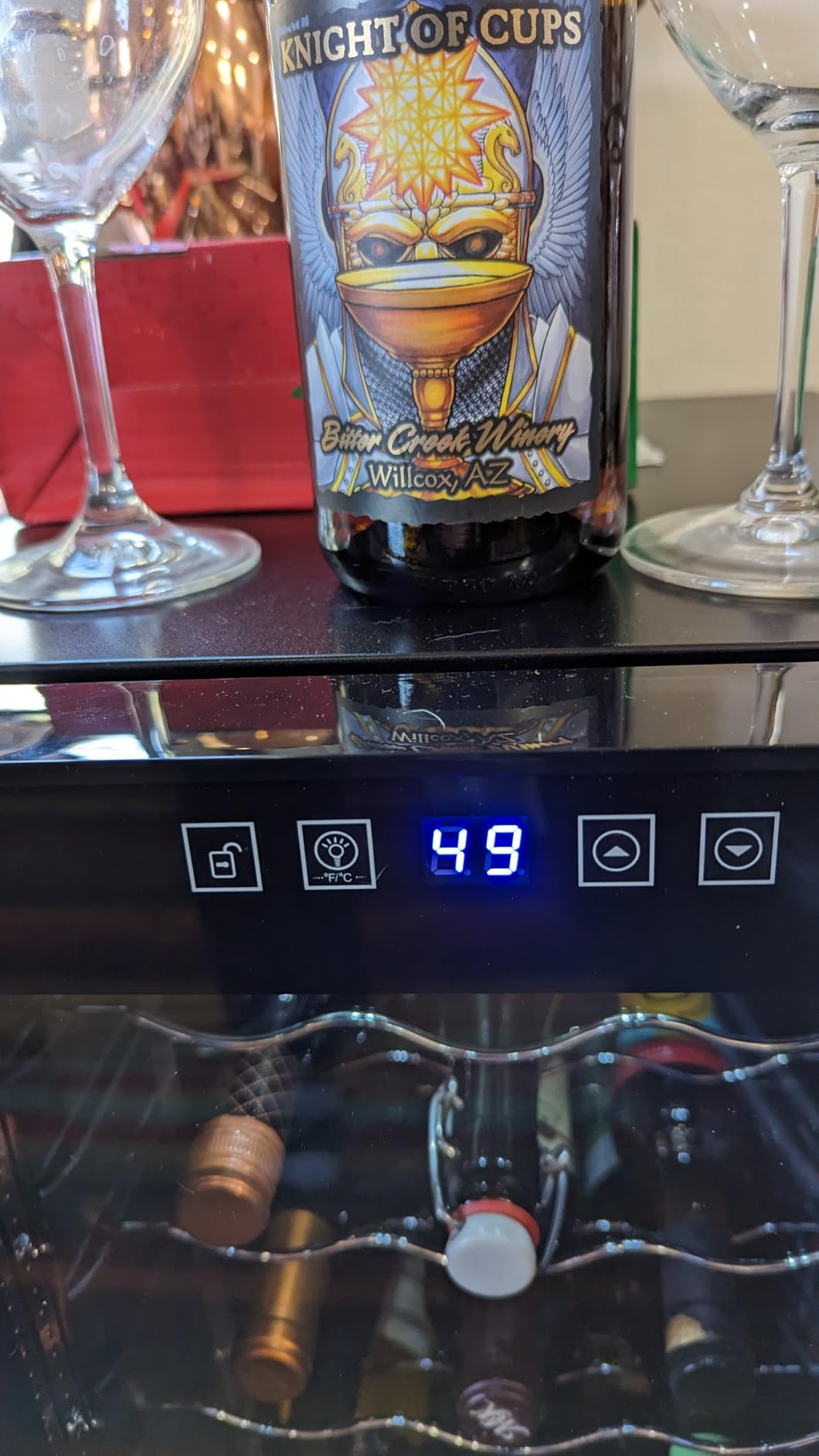
Reviewers consistently call out the value and the genuinely cold compressor performance inside a narrow 15-inch footprint. Several buyers installed the unit under a counter and report a clean built-in appearance, and the beech shelves are singled out for gliding smoothly while also helping damp vibration.
The most common complaint is that realistic capacity sits below the listed figure, particularly once sparkling or Champagne bottles go in, because wider bottles eat shelf depth. A faint compressor hum and occasional coolant gurgle are also mentioned in very quiet rooms. Check the capacity against the bottle formats you actually buy before committing to 26.
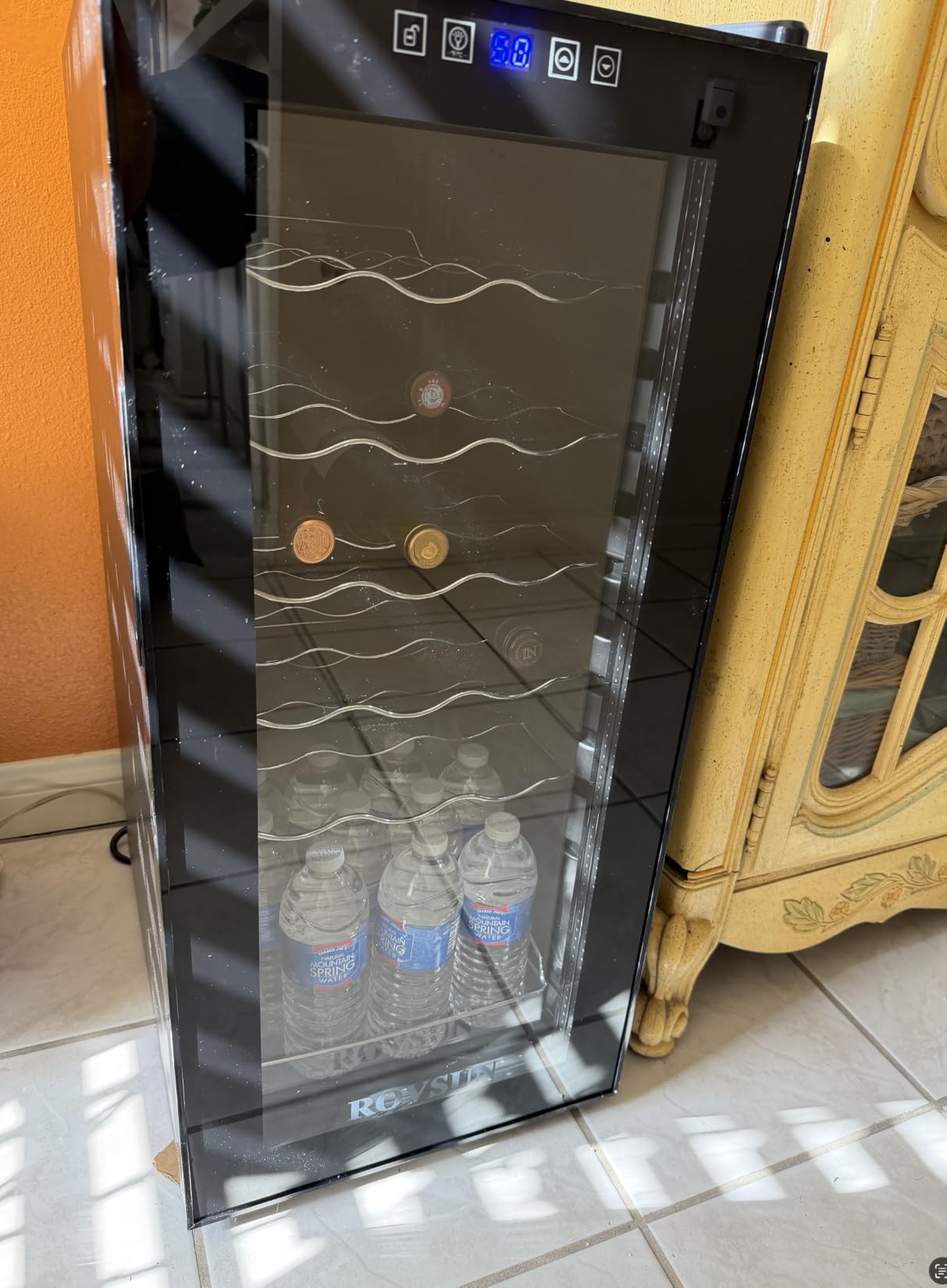
Where the 15-inch opening matters
Island cabinetmakers build in standard increments, and 15 inches is one of the narrowest that still fits a full-height door. This unit is 15 inches wide and 34.3 inches tall, so it matches a nominal 15-inch opening under a 34-inch counter with minimal trimming.
Depth of 23 inches leaves room at the back of the cabinet for the electrical outlet, which is where most island installs get squeezed. Front venting means the toe kick stays closed.
Where it falls short
Advertised capacity assumes uniform 750ml bottles. Owners loading magnums or Champagne report noticeably fewer, so treat 26 as a ceiling rather than a target.
Some listings group different capacities under one product page, which is why measuring the delivered cabinet matters. Confirm the model number before the cabinetmaker cuts the opening.
4. BODEGA 15 Inch 30-Bottle Dual Zone Cooler – Widest Temperature Span
BODEGA 15 Inch Wine Fridge, 30 Bottle Dual Zone Wine Cooler, 41-72℉ Compressor Wine Refrigerator with Tempered Glass Door, Built-in or Freestanding Wine Cooler for Home Kitchen Bar (3.2 cu.ft).
22.44D x 14.96W x 33.58H
3.2 cu ft, 30 bottles
41-72F dual zone
42 dB noise
Pros
- Compact 15-inch width fits standard undercounter cabinetry
- Dual zone control across a wide 41-72F range for reds
- whites and room-temperature wines
- Compressor cooling with built-in air circulation runs quietly
- Double-glazed tempered glass blocks most UV rays
- Five removable wood-look shelves with a security lock and key
Cons
- Rated 4.2 stars with a larger share of one-star feedback than most models here
- Some buyers report the door is not perfectly flush when built in and cooling can be uneven between zones
The reason to look at this one is its 41 to 72 degree span. Every other 15-inch cabinet in this roundup tops out at 64 or 65 degrees, which is a wine range. This one goes warm enough to hold room-temperature reds and natural wines without competing for space, and it does so in a 3.2 cubic foot cabinet with five removable wood-look shelves.
Cooling is compressor-based with front air vents and adjustable feet that extend up to 2 inches, which is genuinely useful on an uneven subfloor or when the cabinet box sits slightly proud of the finished floor. The double-glazed tempered glass carries UV protection, and a security lock with key plus temperature memory comes as standard.
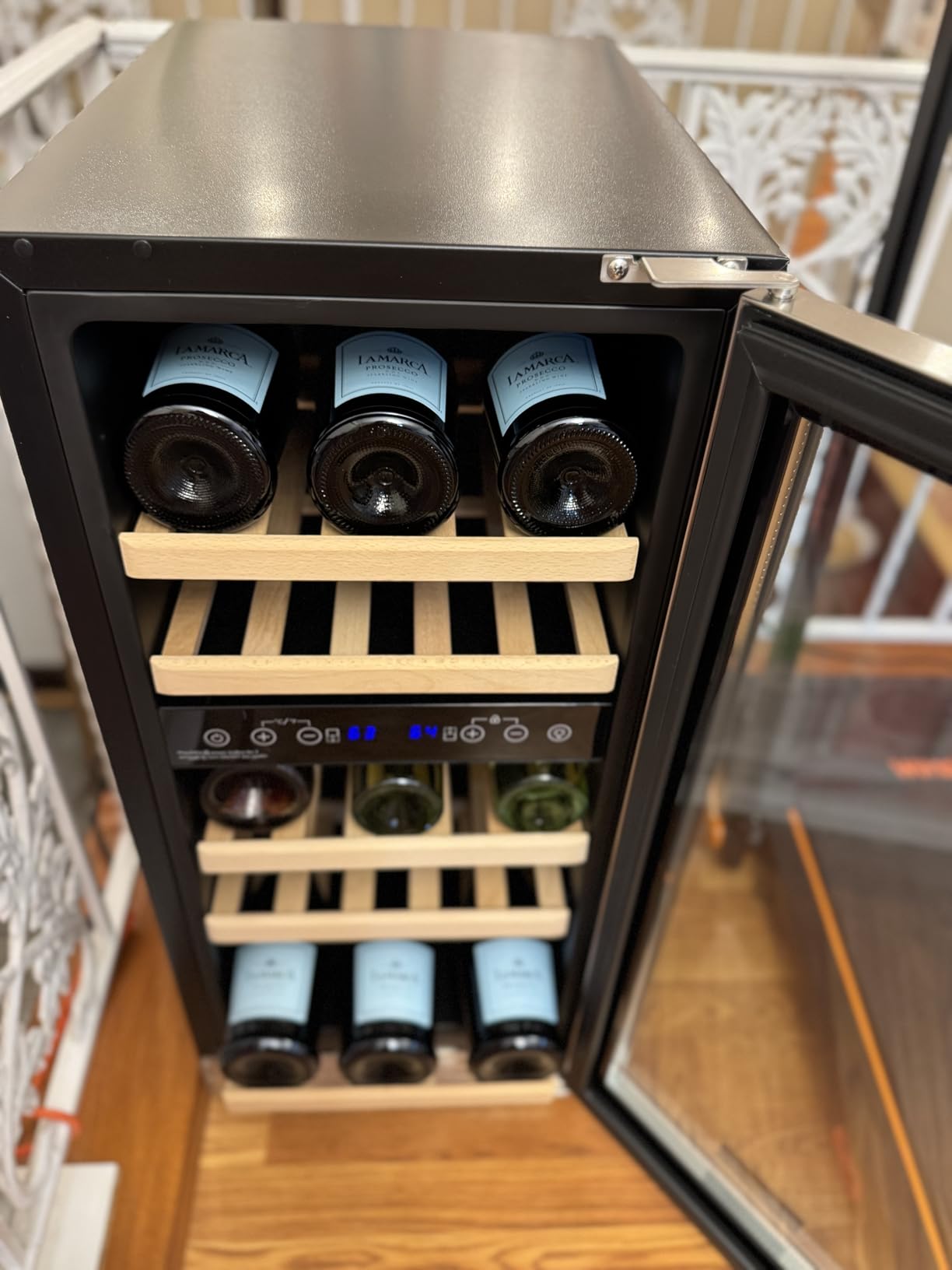
Owners appreciate the narrow footprint, the wide dual-zone temperature span and the front-vent built-in installation. Feedback is more mixed on cooling consistency: some buyers note the display does not always agree with an independent thermometer, and that the two compartments drift toward one another over a long period.
The fit is not always perfectly flush when the unit is built in, according to a share of reviews, which matters in a finished island where the door face is meant to line up with cabinet doors either side. The 4.2 star average across 447 ratings is the lowest in this group, so expect a wider spread of experiences than the headline number suggests.
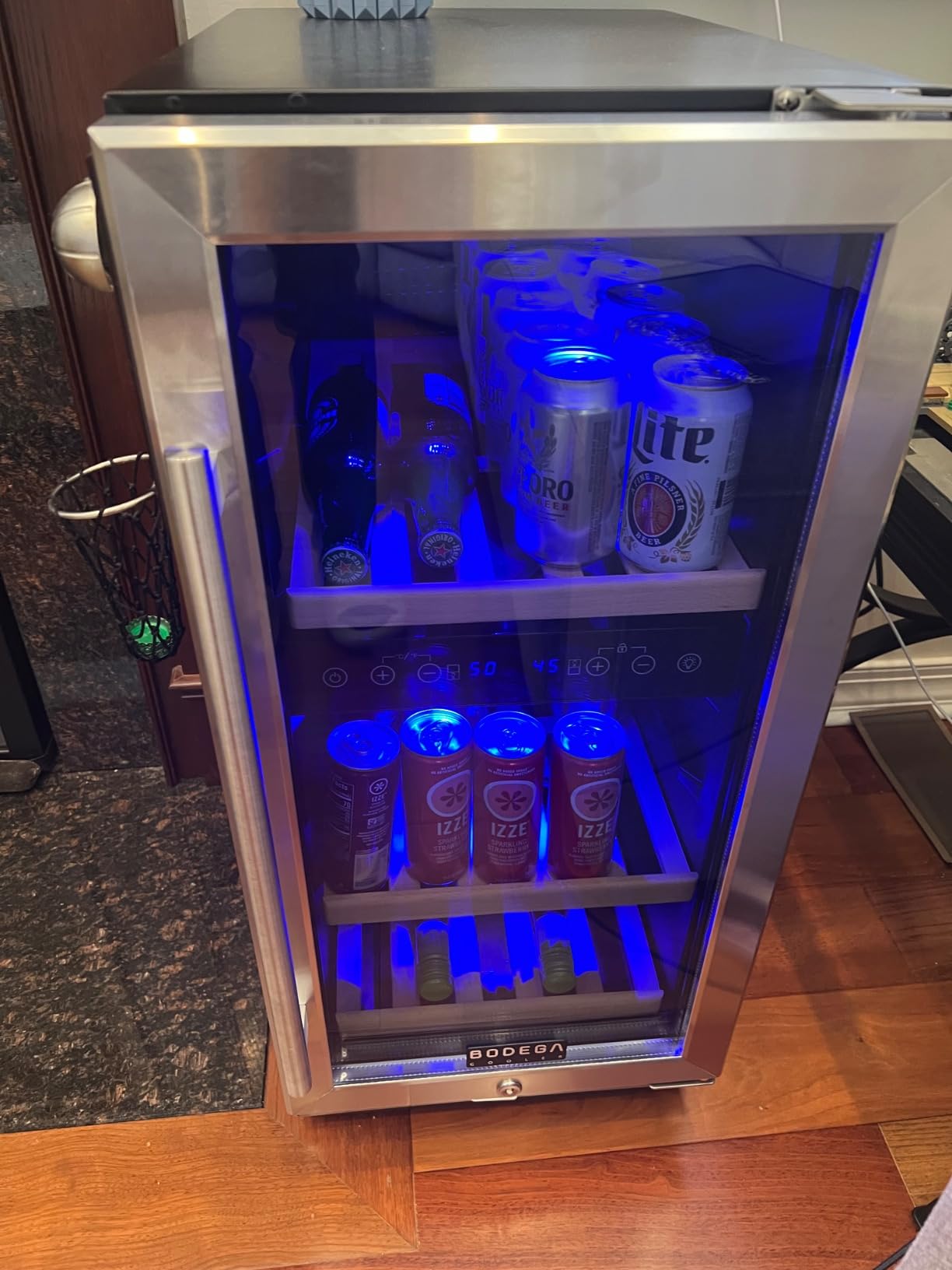
When a wide temperature span pays off
A cabinet that reaches 72 degrees solves a specific problem: natural, low-alcohol and orange wines are stored too cold in most undercounter fridges, and the flavour profile collapses. If your island is the only wine storage in the house, the extra range is worth more than another six bottles of capacity.
The cabinet measures 22.44 inches deep by 14.96 inches wide by 33.58 inches tall, so it fits the same 15-inch openings as the units above it and does not need extra height for the wider door.
Where it falls short
Noise is listed as low as 42 dB, which is the loudest figure among the slim units here. In an open plan where the island sits next to where people talk, that difference is audible.
A larger share of one-star reviews than the rest of this lineup suggests occasional cooling or compressor complaints. If the unit is hard to reach for service once installed, that risk matters more than usual.
5. Kalamera 24 Inch 37-Bottle Dual Zone Cooler – Best Wooden Interior
Kalamera 24 inch Wine Cooler, 37 Bottle Dual Zone Built-in or Freestanding
22.4D x 23.4W x 33H
5.3 cu ft, 37 bottles rated
Upper 40-50F and lower 50-66F
102 pounds
Pros
- FSC-certified wooden frame and shelves reduce vibration and friction on bottles
- Dual zone thermostat with upper 40-50F and lower 50-66F ranges
- Fits under a counter at 23.4W x 33H x 22.4D or runs freestanding
- Removable shelves have side stoppers so bottles do not tip when pulled out
- Sold since 2014 with an LED control display
Cons
- Highest energy consumption in this group at roughly 332 kWh per year
- Capacity claims vary widely and larger bottles reduce the count
- Heaviest one-star share of the 24-inch models here
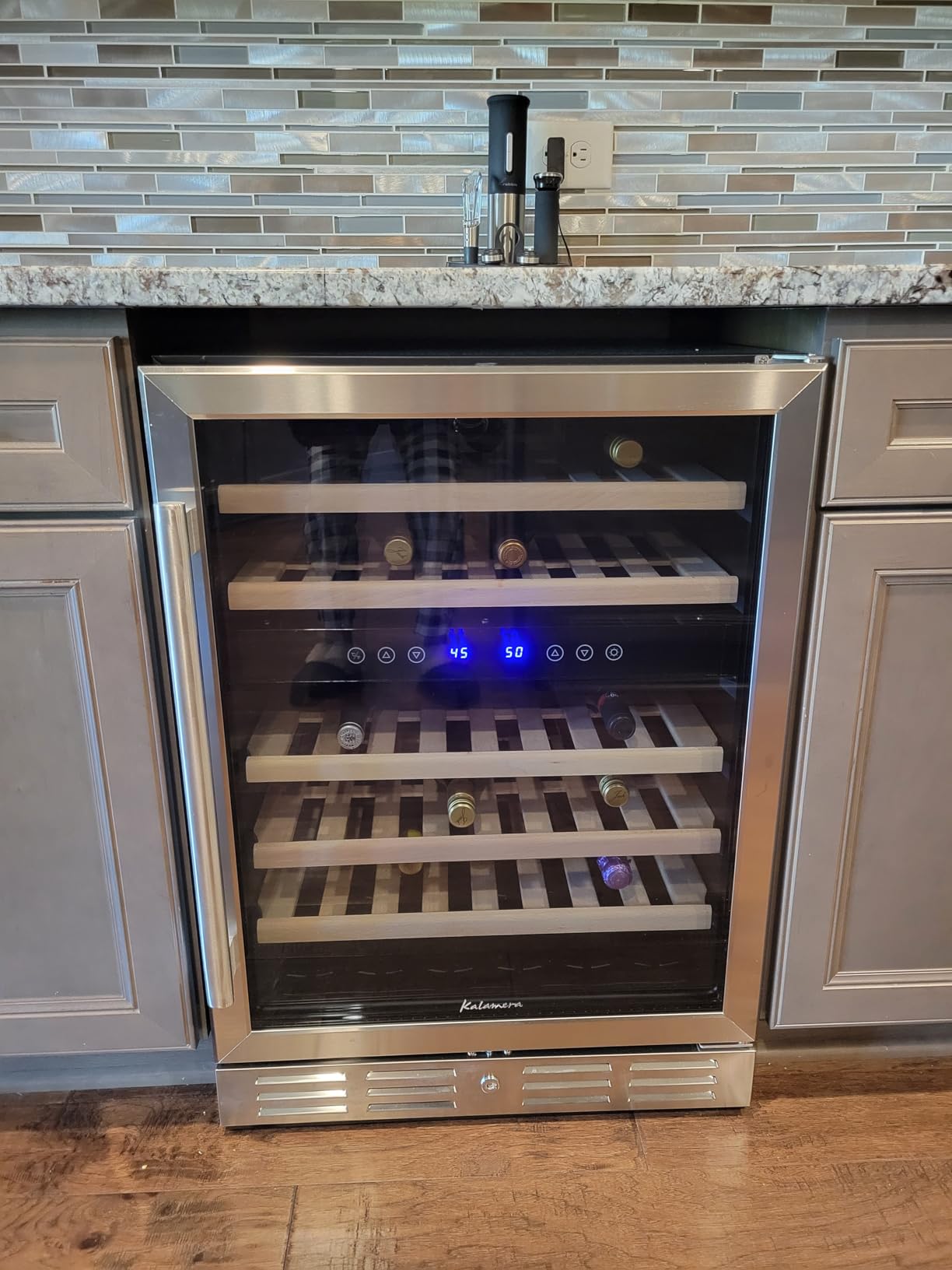
The 24-inch opening is the default island module, and this unit fills it with a 5.3 cubic foot cabinet rated at 37 bottles. What makes it worth a look is the material: an FSC-certified wooden frame and five removable wooden shelves with side stoppers, which dampen vibration and stop bottles tipping when you pull a shelf out in a busy kitchen.
Zone ranges are 40 to 50 degrees above and 50 to 66 degrees below, giving clean separation for reds and whites. A temperature memory function restores your set points after a power loss, and the LED control display handles everything from the front panel. It runs built-in under a counter or freestanding on the same chassis.
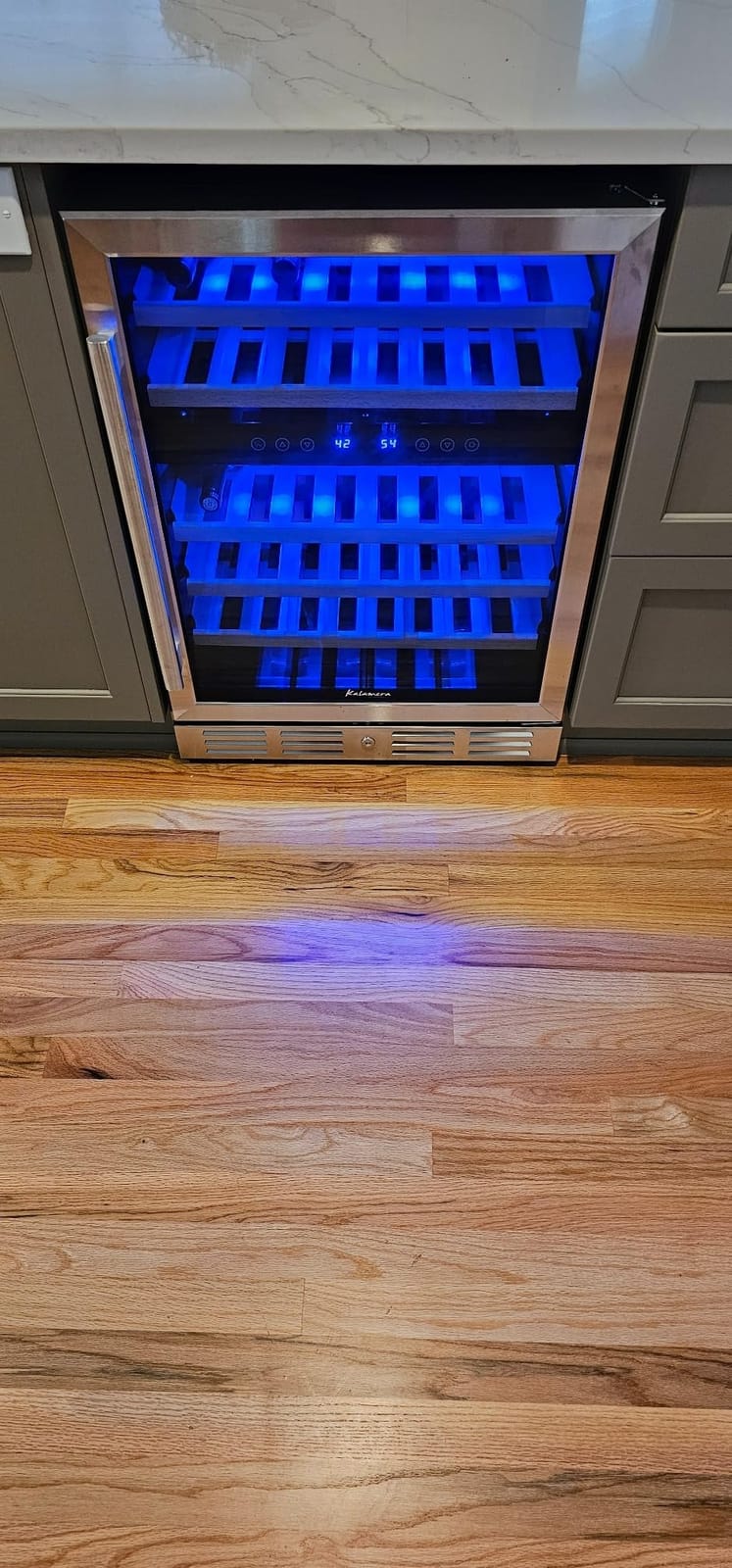
Buyers like the wooden interior, the split temperature zones and the straightforward undercounter footprint at 23.4 inches wide by 33 inches tall by 22.4 inches deep. The side stoppers on the removable shelves get specific mention as a practical detail that prevents the tip-and-pour mess during service.
The main criticisms centre on running cost and on capacity falling short of the stated number once larger bottles go in. A minority of owners report compressor or cooling problems within the first year, and the 4.0 star average across 465 ratings is the lowest here. At 102 pounds, plan on two people for the install.
Wood shelving versus wire racks
Wood shelves cost internal volume that wire racks recover, which is why wire models often claim higher bottle counts on the same cubic footage. What wood buys is friction reduction on the labels and less vibration transfer to the bottles, both of which matter for anything you plan to keep for more than a few years.
The side stoppers are the detail that converts a wooden shelf into an island-friendly one. Without them, a partially pulled shelf sends bottles over the front rail, usually when guests are watching.
Where it falls short
At roughly 332 kWh per year, this is the highest energy consumption in the group by a wide margin. In an open-plan kitchen the compressor runs more often because it works harder, which is the trade for the solid wood interior.
Capacity claims vary widely in reviews, and Pinot and Champagne formats cut the count sharply. If you buy Burgundy-shaped bottles, plan on fewer than 37.
6. ORYMUSE 15 Inch 30-Bottle Built-In Cooler – Easiest to Handle
ORYMUSE 15 Inch Wine Fridge, 30 Bottle Under Counter Wine Cooler Built-In
23.03D x 14.96W x 33.46H
3.1 cu ft, 30 bottles
40-65F with memory
52 pounds
Pros
- Front-vented 15-inch body installs under a counter for a flush built-in look
- Six adjustable beech wood shelves in a compact 3.1 cu ft cabinet
- Quiet compressor cooling at roughly 38 dB
- Temperature memory restores settings after a power interruption
- Built-in door lock and soft blue LED lighting
- Light at 52 pounds for a unit in this class
Cons
- Single temperature zone so reds and whites share one setting
- The door seal is weak and the door can bounce back open if swung shut
- Shelf tips can angle forward when weight is loaded toward the front
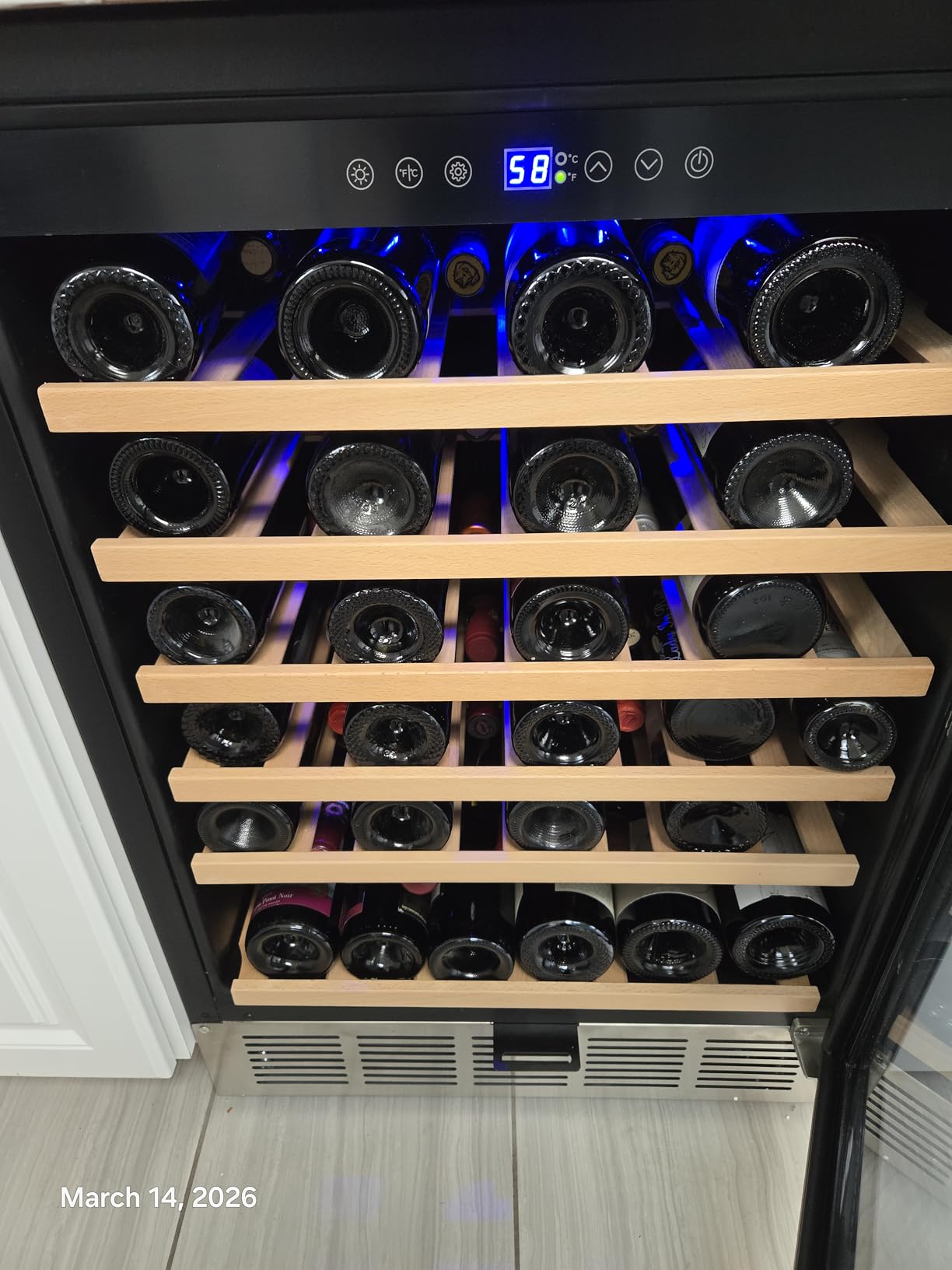
At 52 pounds this is by a wide margin the easiest unit here to lift into a cabinet yourself, which matters if you are fitting the island before the countertop goes on. The 3.1 cubic foot cabinet still holds a rated 30 bottles across six adjustable beech wood shelves, and the 14.96-inch width fits the same narrow openings as the other slim units.
Cooling is compressor-based at roughly 38 dB, on the quiet side for this class, and the digital control runs 40 to 65 degrees with a memory function. Energy consumption is listed at 162 kWh per year, the lowest figure among the units we reviewed, and front ventilation keeps the install flush under a counter.
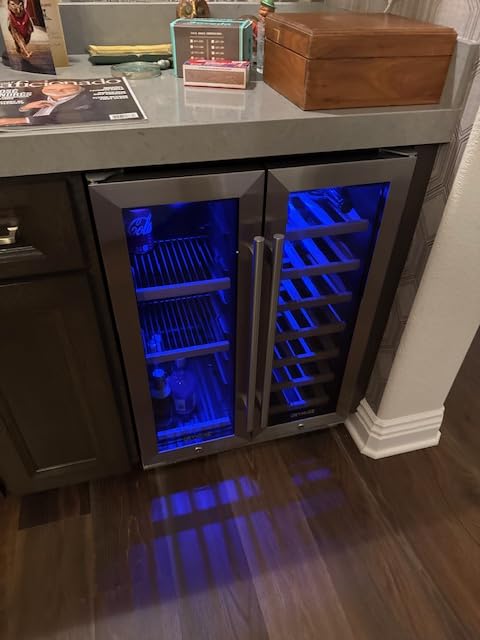
Satisfied buyers describe easy setup, quick cooling, quiet operation and a clean look that suits a kitchen or bar. The door lock and the soft blue LED interior lighting both get positive mentions, and the low weight is appreciated by people installing into an island on their own.
The recurring criticism is build quality at the door. The magnetic seal does not hold firmly and the door can bounce back open if you swing it shut, and the handle hardware does not always line up with the supplied screws. Customer service has been responsive about replacements, which blunts the problem but does not remove the install step.
When one zone is enough
A single zone removes the temperature bleed that affects every dual-zone cabinet in this roundup. If you mostly drink one style, or you rotate bottles rather than storing reds and whites side by side, one accurate setting beats two that drift toward each other.
The 40 to 65 degree range still covers both serving temperatures. You simply change the set point rather than splitting the cabinet, and every bottle sits at the same reading.
Where it falls short
The door seal is the weak point, and on an island where the door opens daily toward seating, a door that springs back open is a real annoyance rather than a minor flaw. Budget time to adjust the hinges after the cabinet is level.
Shelf tips can angle forward when weight is loaded toward the front, so fill from the back of each shelf and check that the unit is level on its adjustable feet.
7. Yeego 24 Inch 52-Bottle Dual Zone Cooler – Highest Rated in the Group
Yeego 24 Inch Dual Zone Wine Fridge with 52 Bottle
22.4D x 23.4W x 32.3H
5.12 cu ft, 52 bottles rated
Dual zone 40-65F
41-43 dB
Pros
- Highest average rating among the cabinets we reviewed at 4.6 stars
- Five wood shelves designed to reduce friction and vibration on sediment
- Dual zone 40-65F control with 1F precision and power failure memory
- Quiet at 41-43 dB once the initial thermal load settles
- Recesses cleanly under a counter with a tidy front grille and adjustable feet
Cons
- The advertised 52-bottle capacity is optimistic and owners typically fit 44-51 bottles
- Zone temperatures can bleed between the upper and lower compartments
- Wood shelves feel thin and do not slide smoothly
- Manual defrost rather than automatic
This cabinet carries the highest average rating in the group at 4.6 stars, though across 110 ratings rather than the hundreds some rivals carry. It is a 24-inch unit measuring 22.4 inches deep by 23.4 inches wide by 32.3 inches tall, with 5.12 cubic feet and five removable wood shelves. The recessed front grille and adjustable feet let it sit cleanly under a counter.
Temperature control is the strongest selling point: dual zone from 40 to 65 degrees at 1-degree precision, with power failure memory. The dual-layer tempered glass includes an insulating layer that blocks over 90 percent of UV rays, and a carbon purification system handles odours from the cabinet box.
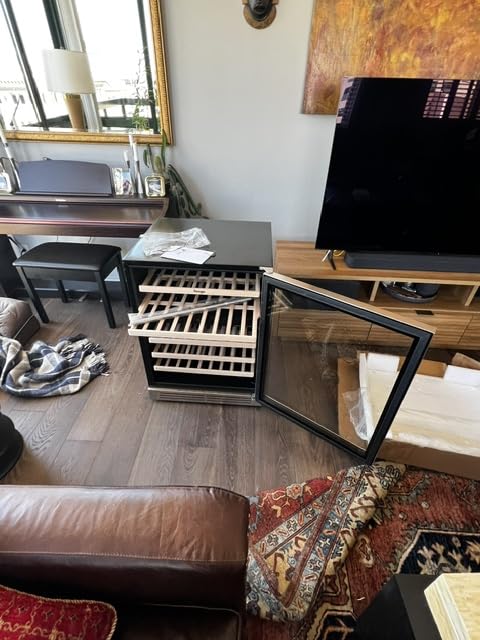
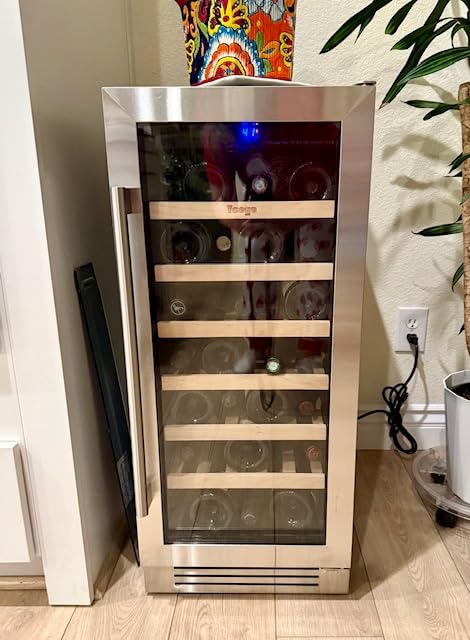
Owners consistently praise the styling, the recessed undercounter fit and the responsiveness of the customer service team. Several buyers single out how neatly the front grille disappears into a finished cabinet run, which is the whole point of a built-in unit.
Against that, the advertised 52-bottle capacity is optimistic and owners typically fit 44 to 51 bottles. Zone temperatures bleed between the upper and lower compartments over time, the wood shelves feel thin and stick when handling larger bottles, and defrosting is manual rather than automatic. At 32.3 inches tall it leaves a small gap under a 34-inch counter.
Reading the 4.6 rating correctly
A 4.6 average across 110 ratings is a strong signal but a thin one, and we would rather say that plainly than treat it as better evidence than a 4.4 across more than a thousand ratings. What it does tell you is that the small group of owners who bought this cabinet have had good experiences.
If you want the highest rated unit here, take it. If you want the strongest evidence of long-term reliability, the units with four-figure review counts carry more information about failure rates.
Where it falls short
Manual defrost means you empty the compartment and let it warm up on a schedule. On a busy island that is an inconvenience that automatic units in this price range have solved.
The 32.3-inch height leaves roughly 1.7 inches of gap under a standard 34-inch counter, so your cabinetmaker needs a filler panel to make the door face line up.
8. Antarctic Star 24 Inch Dual Zone Cooler – Best for a Larger Collection
Antarctic Star 24 Inch Wine Fridge, 52 Bottle Wine Cooler Refrigerator. 39-64°F Dual Zone Wine Refrigerator Glass Door, Built in or Freestanding Under Counter Fridge for Home Bar Office
22.52D x 23.43W x 34.45H
5 cu ft, 46 bottles
Upper 39-50F and lower 50-64F
92.4 pounds
Pros
- Holds the top sales rank in the built-in wine cellar category among these units
- Dual zone range from 39F to 64F for reds and whites
- Six adjustable wood racks sized to hold standard bottles without removing shelves
- Low-vibration compressor and fan circulation that run quietly
- Double-paned tempered glass door with a tight seal and UV filtering
Cons
- Manual defrost
- The 46-bottle capacity is listed under a 52-bottle product name
- Weighs about 92 pounds so two people are needed to lift it into a cabinet
At 34.45 inches tall this is one of the few 24-inch cabinets here that meets a standard 34-inch countertop almost exactly, which removes the filler panel that several rivals need. Width is 23.43 inches and depth 22.52 inches, so it drops into a conventional 24-inch island module.
Inside is a 5 cubic foot cabinet with six adjustable wood racks that hold standard bottles without pulling other shelves out to reach the back row. The zone split runs 39 to 50 degrees above and 50 to 64 degrees below, and the double-paned tempered glass door carries UV filtering with a seal owners describe as tight.
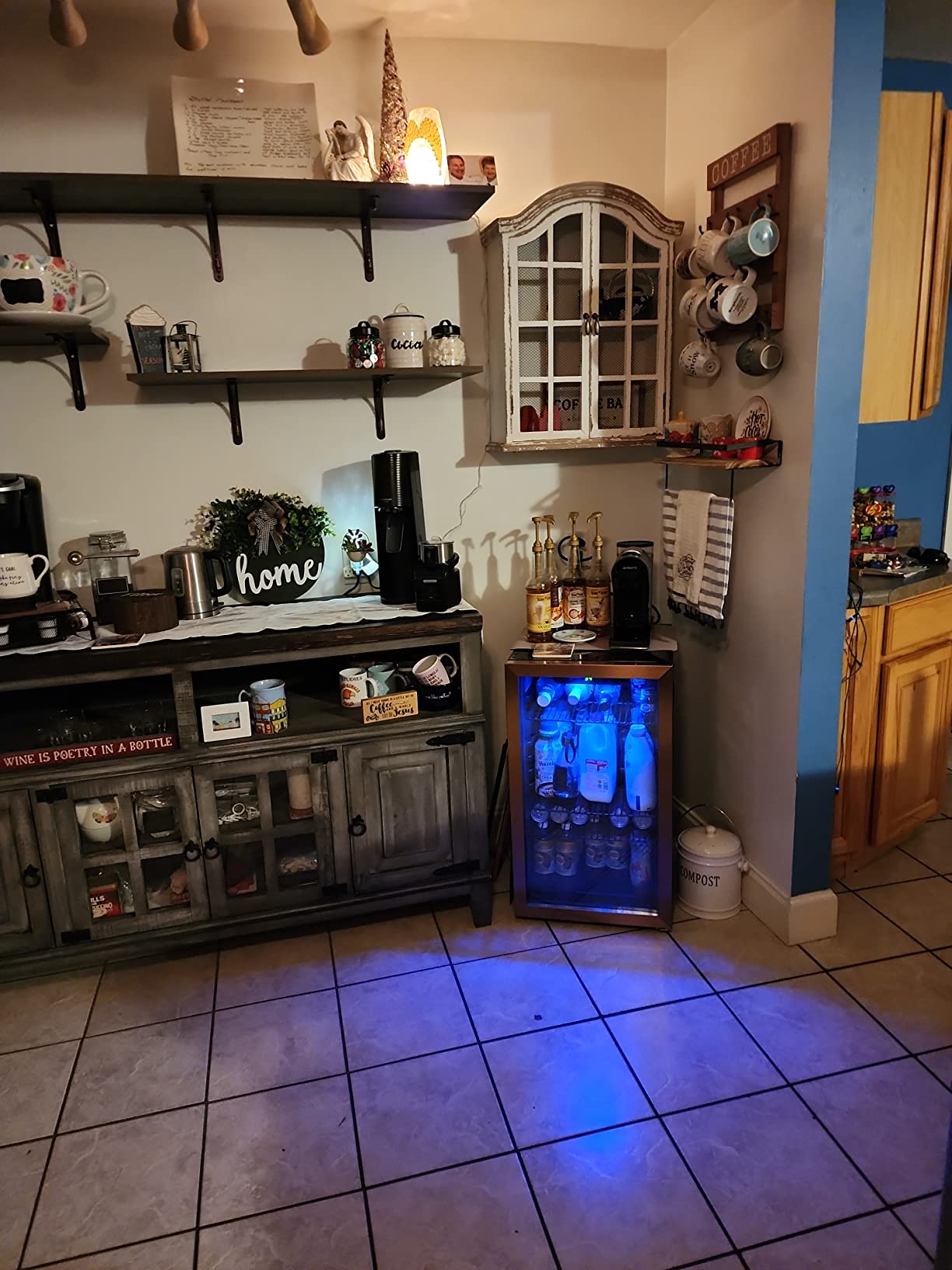
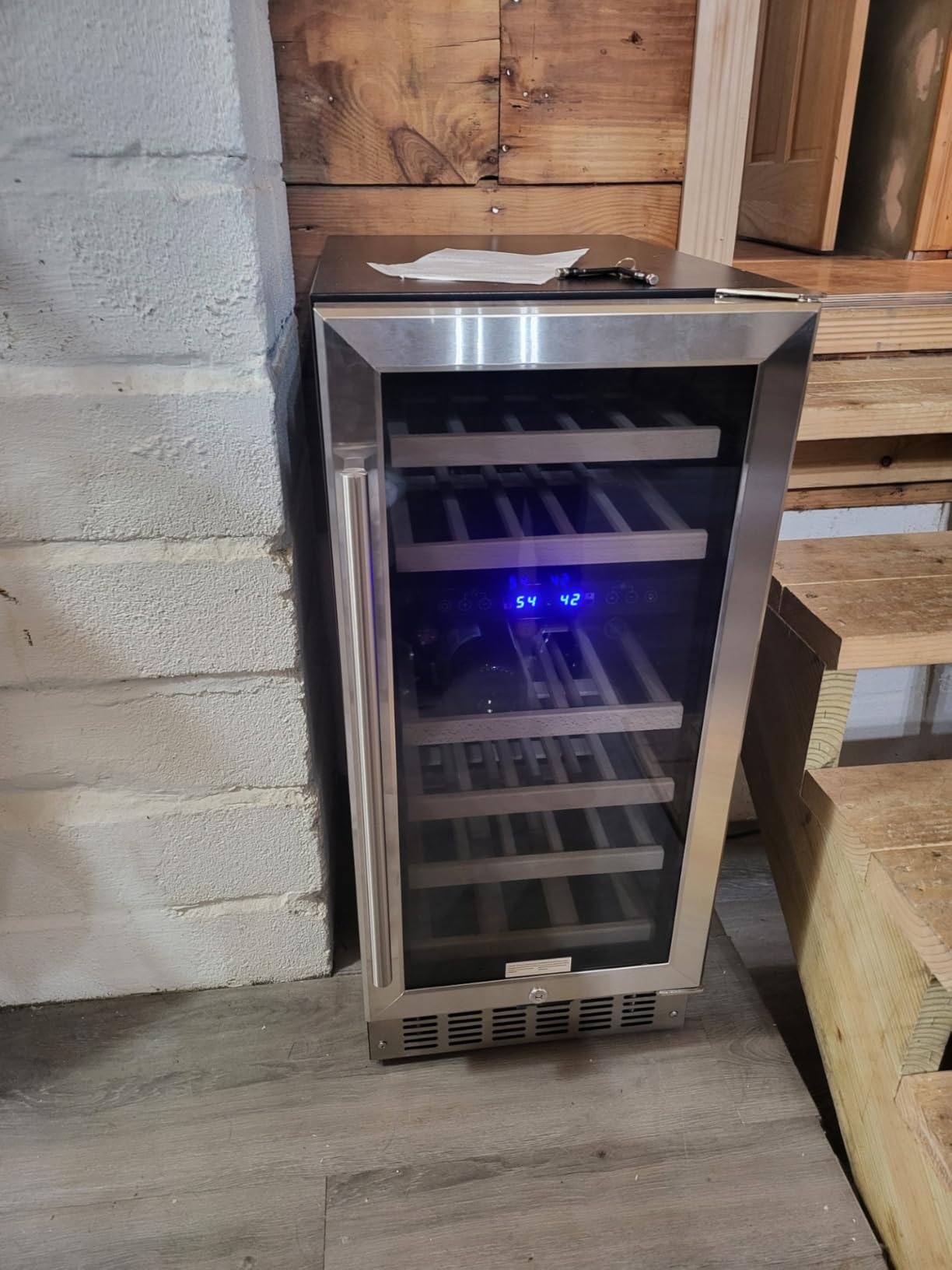
Owners describe a well-built 24-inch cabinet that fits neatly into a kitchen island recess, with quiet running and even cooling from top to bottom. Several mention that the six-rack layout means the back row stays reachable without unloading the shelves above it, which is a real serviceability gain in a tight island cabinet.
Criticism here is light but specific: the product is listed as a 52-bottle unit while the description says 46 bottles, so the honest figure to plan around is 46. Defrost is manual, and at 92.4 pounds the unit needs two people to lift into position.
Why shelf count matters in an island
Six racks in a 5 cubic foot cabinet beats four racks in a similar volume because reach is a function of how many bottles sit in front of the one you want. In an island with seating right in front of the door, you will open that door constantly, and every reachable bottle reduces the need to unload.
The wood racks are adjustable, so you can drop a rack to take magnums, and the blue LED interior lighting helps you see the back row without pulling everything out.
Where it falls short
Manual defrost again, on a unit whose 46-bottle capacity is large enough that a monthly warm-up is a real chore. Check whether that trade is acceptable before committing to a full 24-inch footprint.
The listing title and description disagree on capacity. Confirm the rated figure with the manufacturer before the cabinetmaker orders filler panels around it.
9. EdgeStar BWR301BL 15 Inch Single Zone Cooler – Best Single-Zone Precision
EdgeStar BWR301BL 15 Inch Wide 25 Bottle Built-In Single Zone Wine Cooler with Reversible Door and LED Lighting – Black
24.5D x 15.5W x 32.25H
3.13 cu ft, 25 bottles
Single zone with LED display
1 year parts and labor
Pros
- Single-zone design eliminates the temperature bleed that affects dual zone cabinets
- Uses an LG compressor from a reputable component supplier
- Slide-out racks sized to hold 750ml bottles without conflict
- Handle-less door design keeps the door insulation tight
- On and off switch sits near the temperature controls
- Ferguson Enterprises parent company adds brand confidence
Cons
- Single temperature zone only so reds and whites share one setting
- 32.25 inches tall leaves a gap under a standard 34-inch counter without a riser
- No front mounted handle makes the door hard to open when installed flush
- Internal temperatures vary by several degrees between shelf positions
This is the pick for anyone who has been disappointed by dual-zone cabinets that turn out to share one evaporator. The BWR301BL is a single-zone 15-inch design rated at 25 bottles across seven slide-out racks, and because there is no second compartment to agree with, every bottle sits at the number on the display.
It uses an LG rotary scroll compressor, which is a meaningful detail in a category where the compressor brand is rarely disclosed. The handle-less door keeps the door insulation tight, the swing is reversible for either hinge side, and a key lock is included. Energy use is listed at 179 kWh per year.
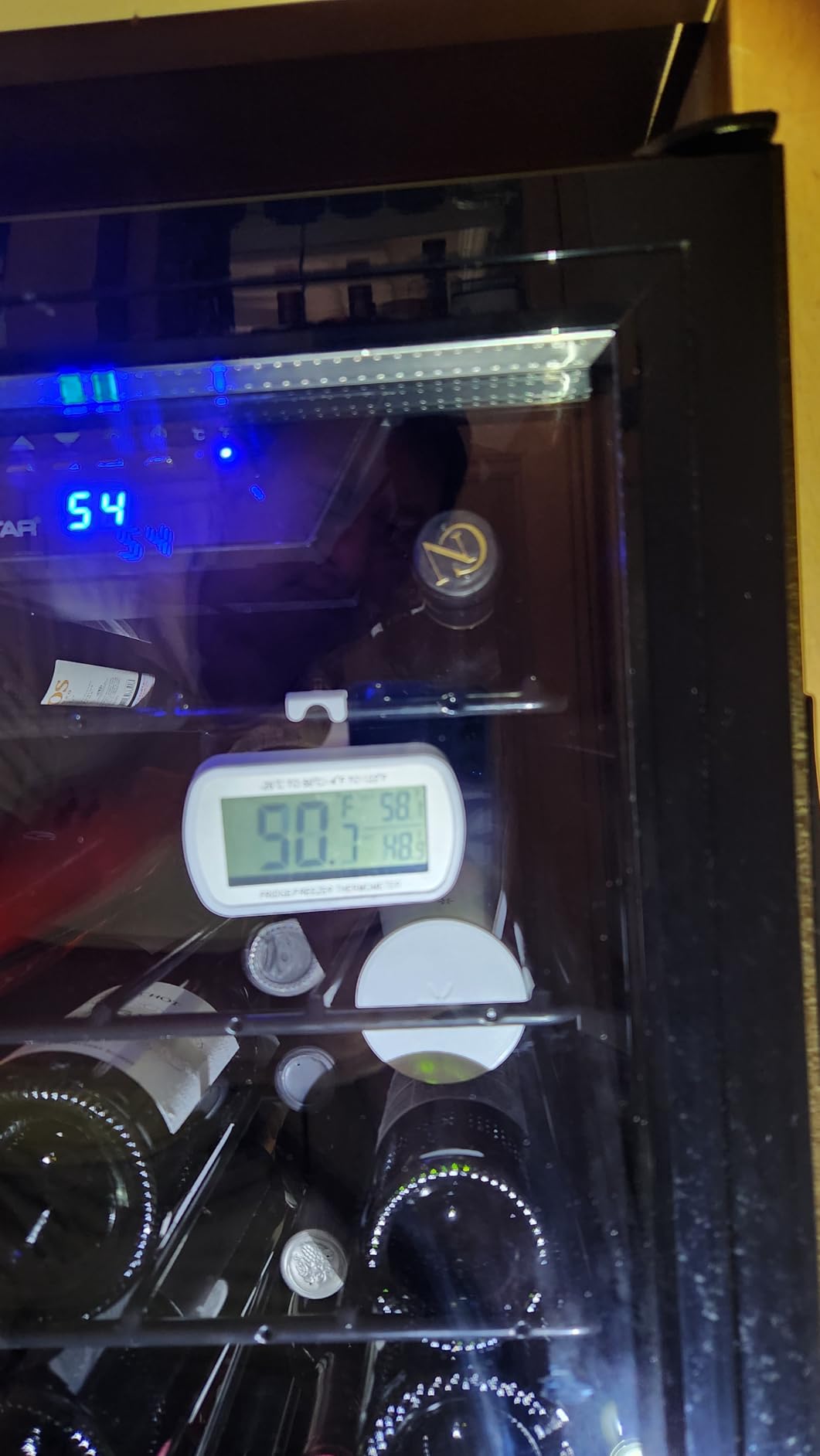
Long-term owners report the unit runs quietly, reaches set temperature quickly and has proven durable over several years, with one reviewer replacing an identical cooler after seven years of service. That kind of multi-year ownership report carries more weight than a large star average in our view, which is why this cabinet earns a place despite only 60 ratings.
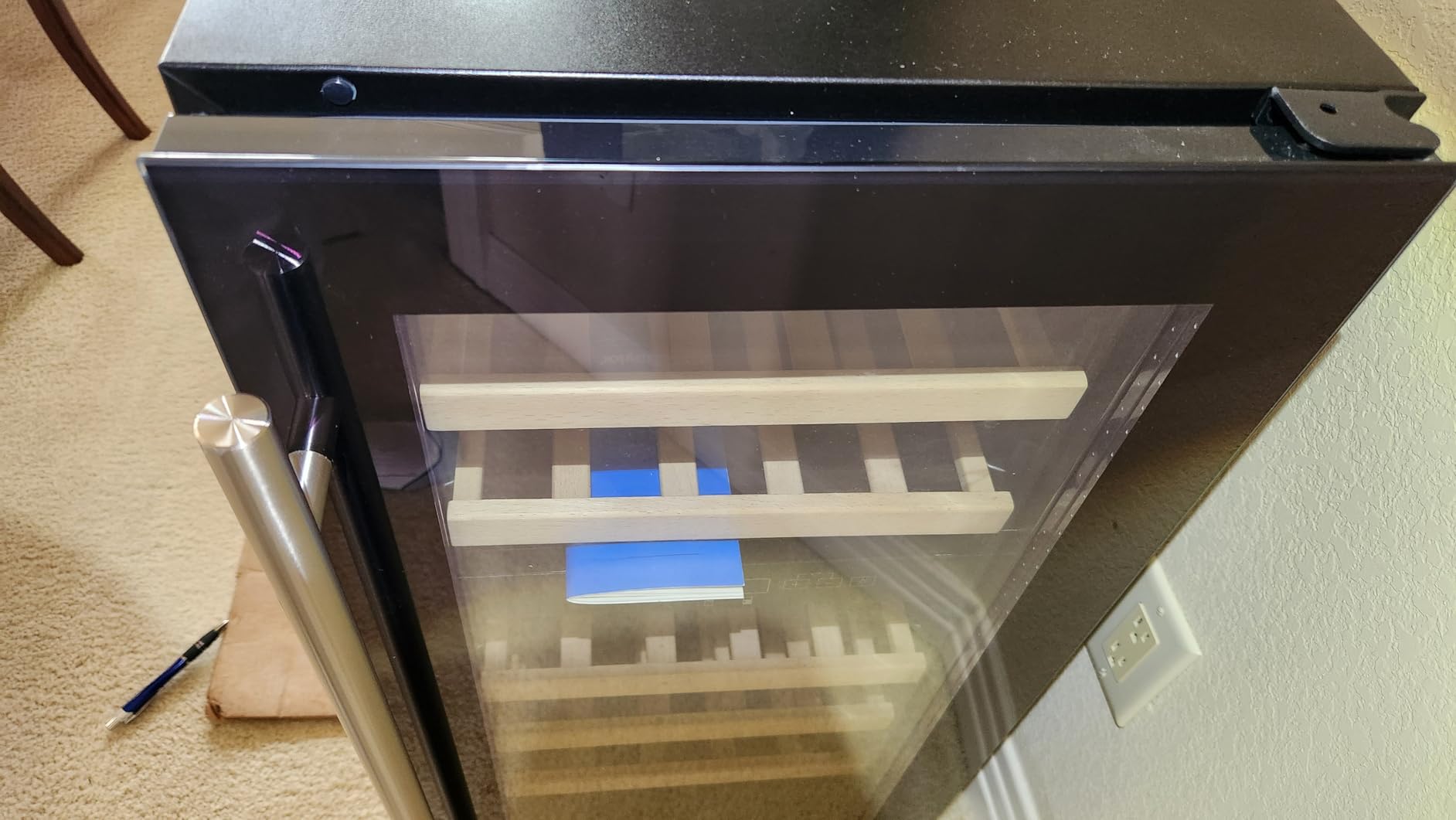
The common fit-and-finish complaints concern the counter rather than the appliance. At 32.25 inches tall it leaves roughly 1.75 inches of gap under a standard 34-inch counter, and the absence of a front handle makes the door hard to open once it is installed flush. Internal temperatures also vary by several degrees between shelf positions.
What single zone gives up and gains
You give up the ability to hold a red at 60 degrees and a white at 48 degrees at the same time, and with it most of the wine-for-dinner convenience that pushes people toward dual-zone. In exchange you get one honest reading, one evaporator and a cabinet that does not drift over a long evening.
For a collection stored rather than served daily, that trade usually works. Set one temperature for the range you keep and stop adjusting it.
Where it falls short
With no front handle, a flush install leaves you gripping the door edge, which is awkward next to a seating overhang where people brush past. Ask your cabinetmaker about a pull or a routed finger recess if this bothers you.
The 32.25-inch height needs a riser or filler to sit flush under a 34-inch counter. Confirm that with the cabinetmaker before the countertop template is cut.
10. Velieta 24 Inch Wine and Beverage Cooler – Best Dual-Zone Value
Velieta Wine and Beverage Refrigerator, 24 Inch Dual Zone Fridge with Glass Door, Built-In Cooler with Powerful and Quite Cool System/18 Bottles and 88 Cans Capacity Bverage Cooler
4.24 cu ft, 20 bottles and 88 cans
Wine zone 41-64F and beverage zone 35-50F
Front vent, 9 shelves
162.2 kWh per year
Pros
- Largest review base in this group with more than 1100 ratings
- Independent dual zones at 35-50F and 41-64F for cans and wine side by side
- Front vent design supports both built-in and freestanding placement
- Fan circulation keeps the interior free of odours
- Smart touch screen with blue LED ambient lighting for finding bottles in the dark
Cons
- Listed dimensions appear inconsistent between listings so measure the opening carefully
- Wire shelves are spaced too far apart for upright cans which tip while loading
- The blue interior light switches itself off after a few minutes
- Some cabinets arrive with transit dents and temperature varies between them
More than 1,100 ratings makes this the most evidenced cabinet in the roundup, and in a category where reliability is the main question, that volume matters more than a marginally higher average somewhere else. It is a 24-inch format with a 4.24 cubic foot interior split into a wine zone at 41 to 64 degrees and a beverage zone at 35 to 50 degrees.
Capacity is 20 standard Bordeaux bottles and 88 cans, and the front vent design supports built-in or freestanding placement. Fan circulation moves air around the interior, the smart touch screen handles the set points, and blue LED ambient lighting helps you find a bottle without opening the door at full brightness. Energy use is listed at 162.2 kWh per year.
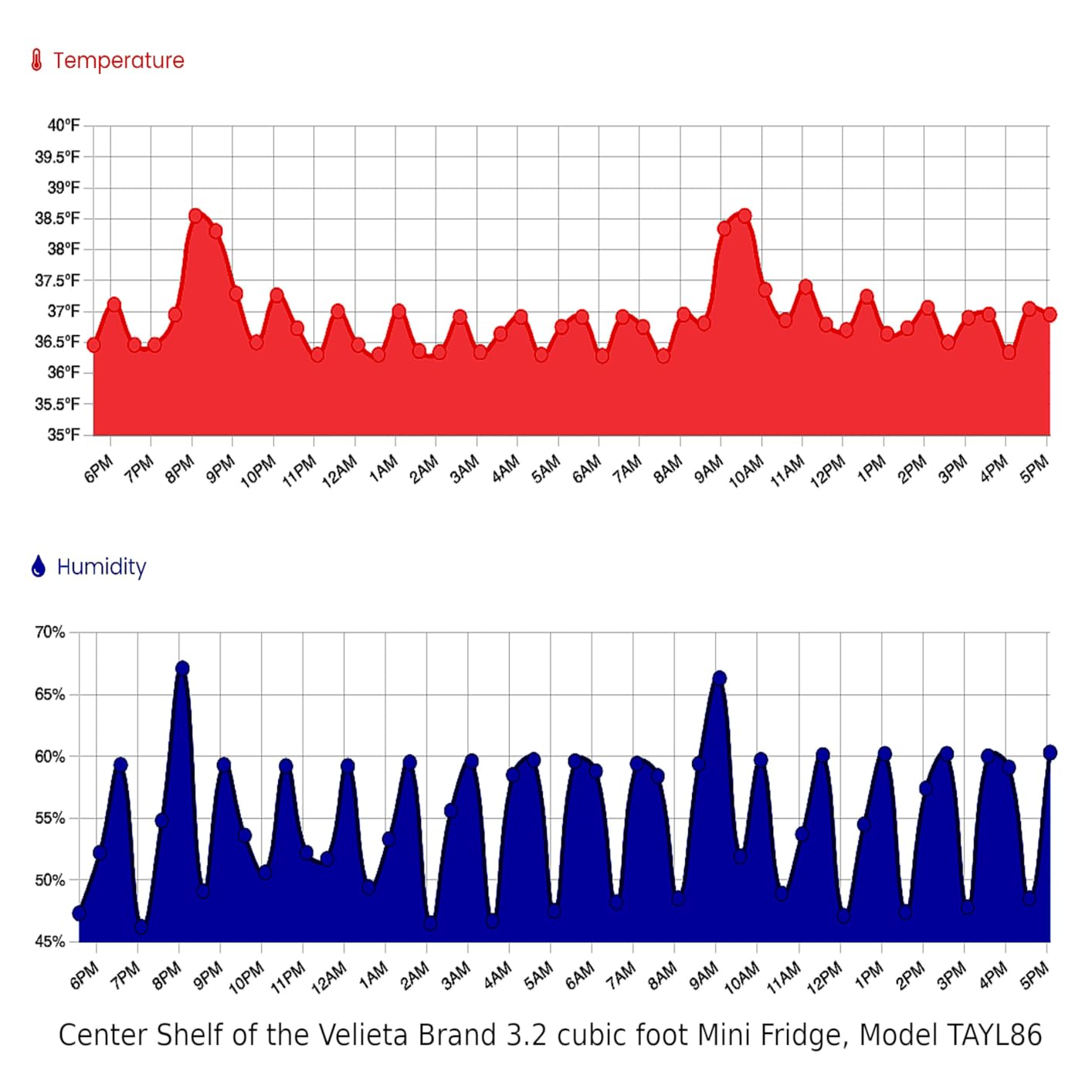
Reviewers generally find it quiet, good looking and capable of holding wine and cans in separate temperature zones, with shelving that suits 750ml bottles. The independent zone split is the feature that gets the most positive mention, and the touch screen gets called out as easy to learn.
Complaints centre on transit damage, with some cabinets arriving dented, and on cans tipping over on the widely spaced wire racks while you load them. The blue interior light also times itself out after a few minutes. Most importantly for an island install, listed dimensions appear inconsistent between listings, so measure your opening rather than trusting the page.
Wine and beverage in one cabinet
A split zone gives you a chilled side for beer, soda and canned water alongside the wine, which is exactly what an island that hosts does. Most 24-inch wine-only cabinets give you a second zone that is still set up for bottles, so you end up chilling cans in a rack meant for something else.
The trade is bottle capacity. Twenty Bordeaux bottles is modest for a 24-inch cabinet, and if your island is wine-only in practice, a dedicated wine cabinet holds roughly twice as many bottles in the same footprint.
Where it falls short
The wire shelves are spaced too far apart for upright cans, which tip over while you load them. If cans matter, plan to lay them down or add a rack.
Inconsistent listed dimensions across listings mean you must measure the delivered unit against the cabinet opening before the countertop is templated. This is the single most important pre-install step on this whole list.
11. FoMup 30 Inch Dual Zone Wine and Beverage Cooler – Best for Wine and Beverage Pairing
30″ Dual Zone Wine and Beverage Refrigerator, Under Counter or Freestanding
23.03D x 30.31W x 34.25H
6.2 cu ft, 29 bottles and 110 cans
Wine 41-64F and beverage 35-50F
170 kWh per year
Pros
- Full 6.2 cu ft split between a wine zone and a beverage zone in one cabinet
- Runs very quietly even next to a generator in a mobile coffee trailer
- Interior LED strip can be switched on and off and lights the space well
- Shelves pull out easily and racks hold mixed stock including large bottles
- Metal frame and double glass doors feel sturdy and stable
- One reviewer cited five months with no faults and called cooling immediate
Cons
- Heaviest unit here at about 121 pounds needing a two-person move
- On and off and light controls are on the interior so the door must be open to use them
- Some cabinets have leaked condensate and stopped cooling after about a year and a half
- Very heavy duty is required to move it once positioned
This is the 30-inch alternative to the earlier Tylza cabinet, and the differences are worth weighing. Same 6.2 cubic foot interior and the same 29-bottle plus 110-can capacity, same 41 to 64 degree wine zone and 35 to 50 degree beverage zone, and the same 170 kWh annual consumption figure.
What differs is the shelving count, nine against eight, and the control layout. The FoMup puts the on and off switch and the light control on the interior, so the door has to be open to reach them. That is inconvenient at the start of a party and convenient for anyone who wants to confirm the compressor is running.
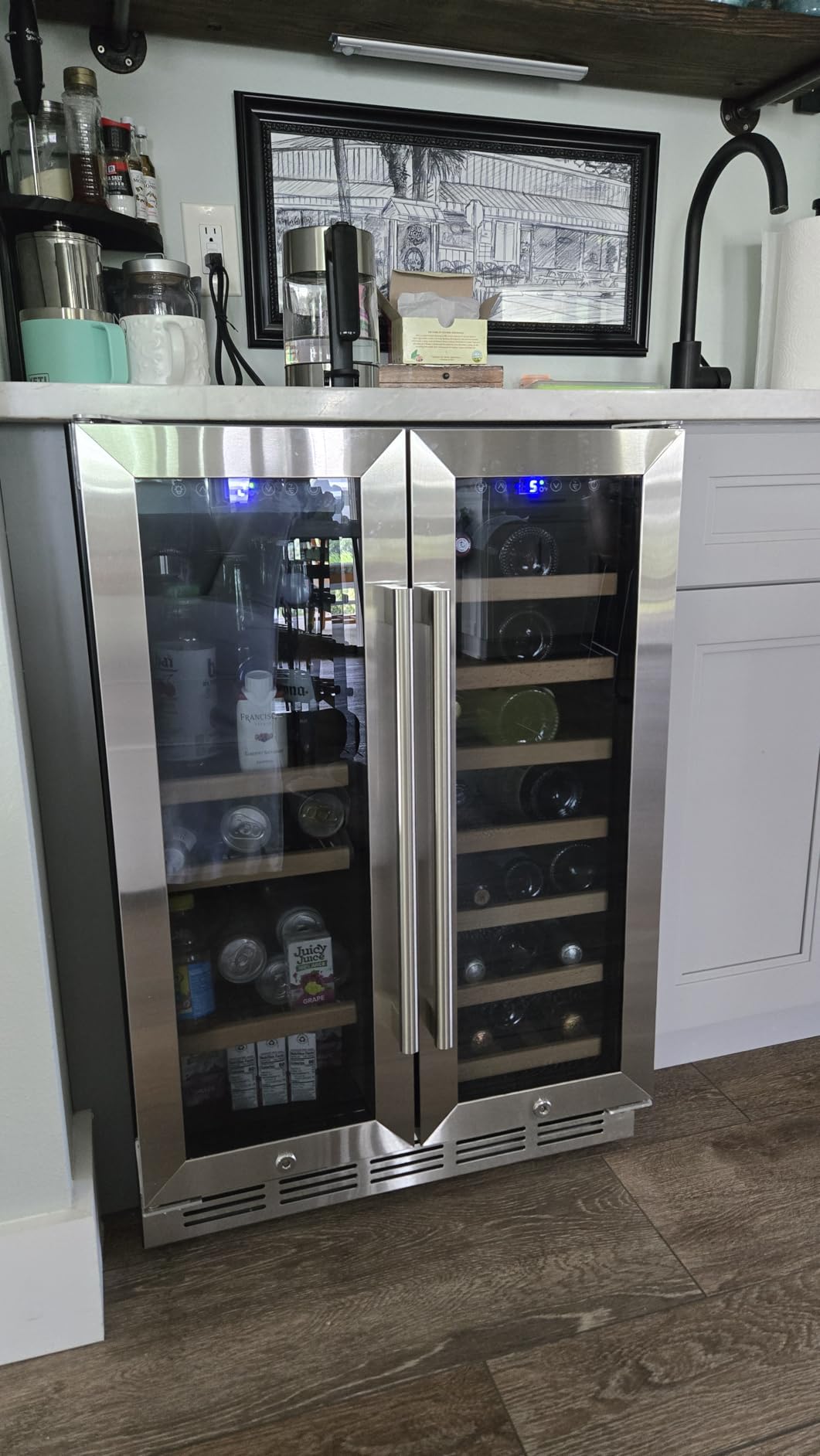
Owners frequently describe the cooler as quiet, well built and roomy, with particular praise for the blue LED strip and the double glass doors. One buyer reported it as a large upgrade from two mini fridges in a mobile coffee trailer, and cited five months with no faults and cooling that was immediate. That is a demanding test for any cabinet and it passed.
Against that, it is the heaviest unit here at about 121 pounds and needs very heavy duty to move once positioned. Isolated reports describe condensate leaks followed by failure around eighteen months with little support response afterwards, which is worth weighing against the one-year warranty on a heavy appliance that is awkward to service in place.
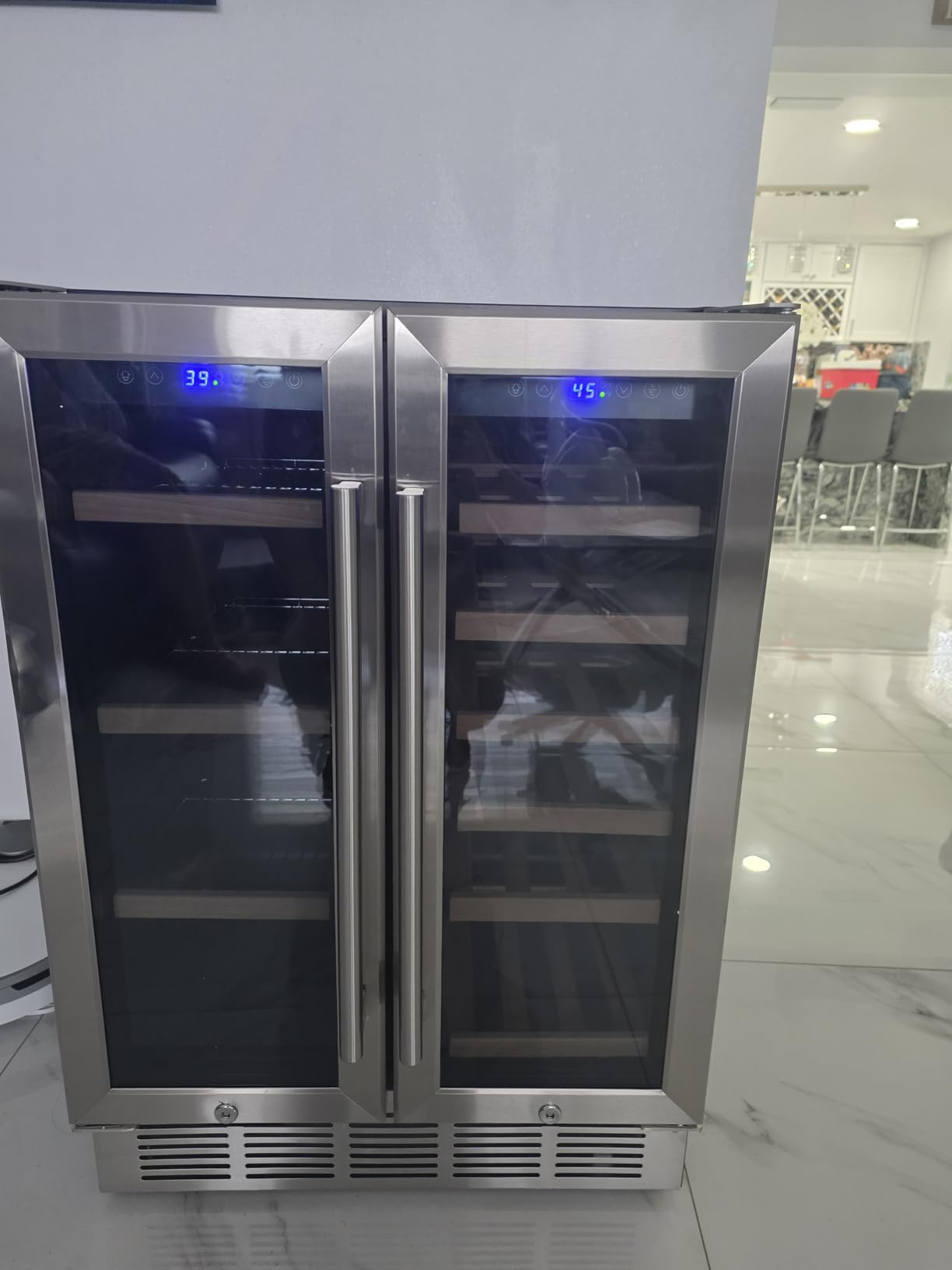
Two 30-inch options, side by side
Both 30-inch cabinets in this roundup share the same 30.31-inch width, 34.25-inch height and 6.2 cubic foot interior, and both hold 29 bottles and 110 cans with identical zone temperatures. Choosing between them comes down to weight and controls rather than capacity.
The FoMup weighs about 121 pounds and puts controls behind the door. The Tylza 30-inch alternative weighs about 120 pounds, runs a listed 38 dB ceiling, and puts a touch screen on the front. For an island that will be opened all evening, front controls are easier to live with.
Where it falls short
At 121 pounds this needs a two-person lift into position, and the weight makes any future service call expensive. Install it where you will be happy to leave it.
The one-year warranty is short for an appliance this size, and at least one owner reports a failure around eighteen months with limited support afterwards. If you intend to keep this a decade, factor replacement into the plan.
12. Velivi 30 Inch Dual Zone Wine and Beverage Cooler – Lightest 30-Inch Option
Velivi 30”Wine and Beverage Refrigerator-Dual Zone Under Counter Fridge
23.03D x 30.31W x 34.25H
6.2 cu ft
Beverage 35-50F and wine 41-64F
Below 38 dB
90 pounds
Pros
- Best five-star share among the 30-inch models here at 78 percent
- Dual independent zones at 35-50F and 41-64F for wine
- beer
- soda or dairy
- Scroll compressor runs below 38 decibels with low vibration
- Built-in or freestanding in the same 30-inch chassis
- LCD touch control panel with a built-in warm light and temperature memory
- Lightest of the 30-inch cabinets here at 90 pounds
Cons
- Largest and heaviest cabinet category on this list
- Only three shelves are listed which is fewer than comparable 30-inch models
- The wide 30.31-inch footprint demands a long island cabinet run
Weight is the practical headline here. At 90 pounds this is 30 pounds lighter than the other 30-inch cabinet in this roundup, which is the difference between installing an island cooler with one person and needing two. The chassis still measures 30.31 inches wide by 34.25 inches tall by 23.03 inches deep with 6.2 cubic feet inside.
The scroll compressor runs below 38 decibels with low vibration, and the zone split is 35 to 50 degrees for beverages and 41 to 64 degrees for wine. An LCD touch panel with a built-in warm interior light handles control, and temperature memory restores your settings after a power cut. It installs built-in, undercounter or freestanding on the same chassis.
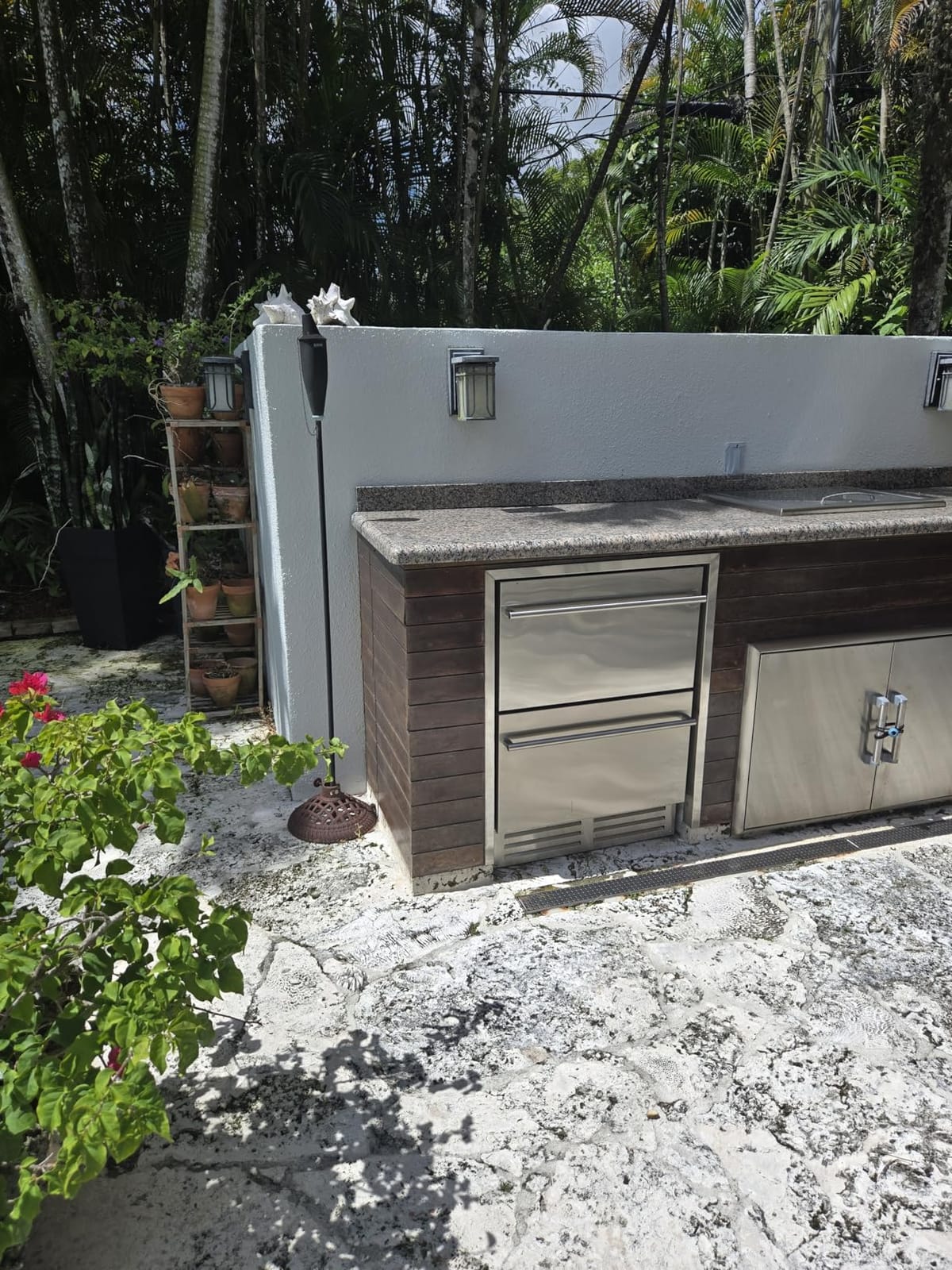
Satisfied buyers point to the low operating noise, the clean LCD interface and the flexibility to install the unit under a counter or run it freestanding, and the proportion of five-star reviews is the strongest in the 30-inch group here. The warm interior light gets specific mention as more pleasant than cool blue light at the end of a dinner.
Reservations centre on the wide footprint, the premium positioning against the rest of the lineup and the relatively small listed shelf count of three. The front ventilation keeps the install clean under a counter, which is where most buyers put it.
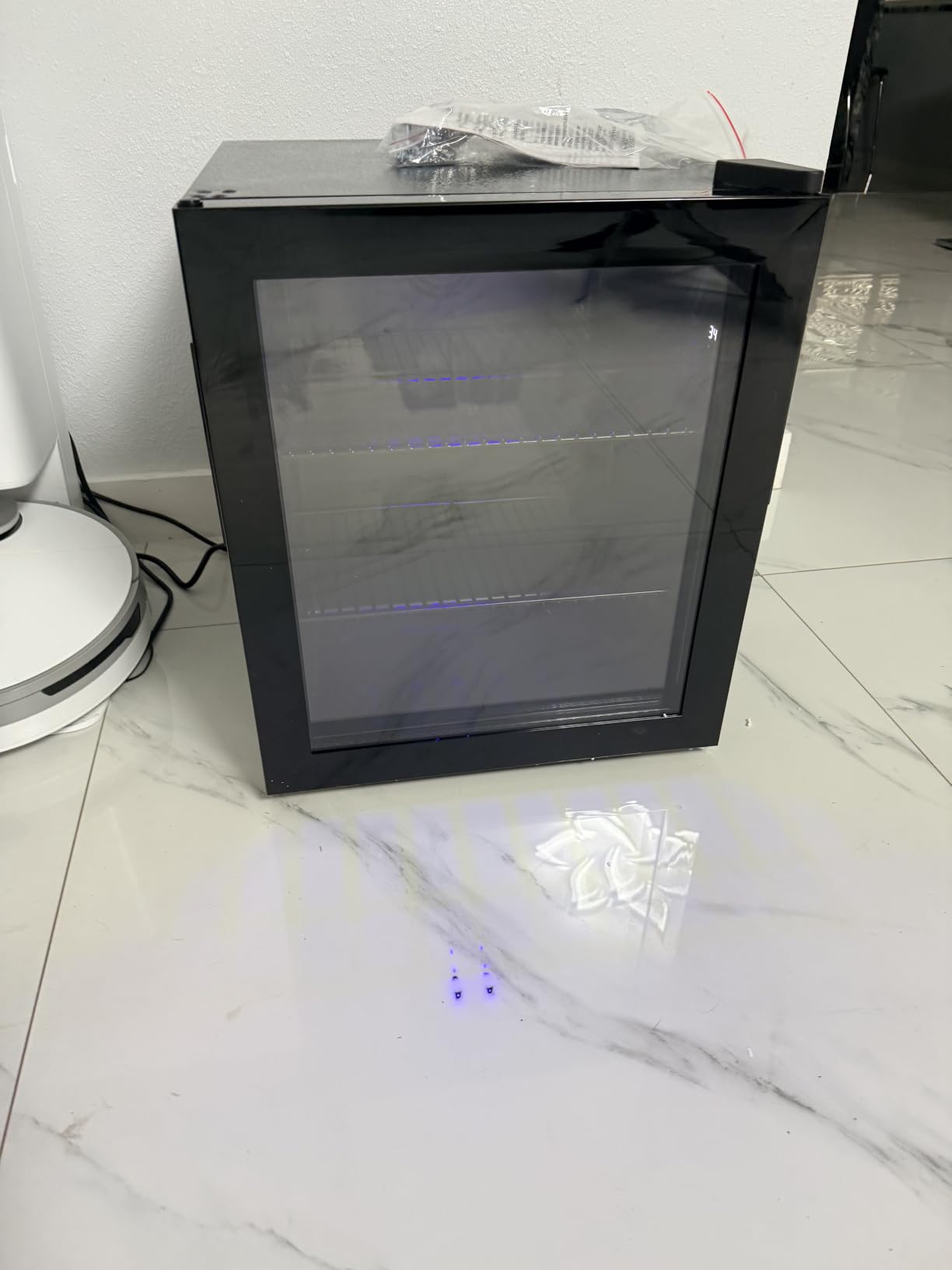
What a 30-inch cabinet buys you
Moving from 24 inches to 30 inches roughly adds half again the internal volume and, more usefully, gives you two full-height zones instead of two shelves of bottles. A wine zone that reaches 41 degrees at the bottom of the compartment is what makes long-term storage plausible; a wine zone confined to the top two shelves is not.
The cost is footprint. Thirty inches is a third of a ten-foot island, so this is the right pick only if the cabinet run was planned around it rather than squeezed into a gap.
Where it falls short
Three listed shelves is fewer than comparable 30-inch cabinets carry, so you may need to add shelving to make full use of a 6.2 cubic foot interior. Ask what ships in the box before the cabinetmaker orders filler panels.
At 30.31 inches wide this demands a long island run. In a small island, a 24-inch dual-zone cabinet gives you most of the capacity for a third less of the counter.
Island Fit Checklist: Six Measurements to Confirm Before You Order
Most built-in wine cooler returns and most install delays trace back to a measurement that was assumed rather than taken. Before you order anything, walk through these six numbers with your cabinetmaker and write them down. It takes half an hour and it decides whether the install goes smoothly.
1. The cabinet opening width. Measure the empty opening between cabinet boxes, not the nominal cabinet width and not the appliance width. A unit listed at 14.96 inches needs an opening that gives it room to sit square, which in practice means measuring the finished opening after the cabinet boxes are installed. Several units on this list measure 23.4 inches against a nominal 24-inch module, which is normal and fine. A unit measuring 30.31 inches against a nominal 30-inch module is not, and it is why the two 30-inch models here need a wider cut.
2. The clear height under the countertop. The standard countertop height is 34 inches, and almost no cooler on this list is exactly 34 inches tall. Heights range from 32.25 inches for the EdgeStar cabinet to 34.45 inches for the Antarctic Star. Anything under 33 inches needs a riser or filler panel so the door face lines up with the cabinet doors either side of it. This is a small job for the cabinetmaker and an expensive one if you discover it after the stone is templated.
3. The ventilation path. Every unit here uses compressor cooling, which dumps heat. Front-vented models such as the ROVSUN, ORYMUSE, Velieta and both 30-inch cabinets pull air in at the base, which lets you keep the toe kick closed and is the arrangement we recommend for an island. Rear-vented installations need the back of the cabinet box open to the room and enough clearance behind the unit, which is often not available in a shallow island. Confirm the vent direction with the manufacturer rather than inferring it from the photo.
4. The door swing against your seating. A door that opens 90 degrees and hits a counter overhang, a seating return or a walkway is the most common island-specific complaint we found. Many units allow a wider opening when built in than when freestanding, and some offer a reversible hinge, so check the maximum door angle and the hinge side before ordering. If the island has a seating overhang on two sides, a single-hinge door may suit the layout better than a French door.
5. The electrical outlet position. Compressor units in this list run on standard 115 volts, but the outlet has to sit inside the island box, reachable without removing the countertop and not behind a finished panel you cannot unscrew. Have the electrician place it during the rough-in, and leave the plug accessible, because a unit that has to be pulled forward to reach its plug will not get serviced promptly.
6. The transport and rest rule. Built-in cabinets are heavy and are often moved on their side. Retailer Q&A on units in this category repeatedly recommends standing a unit upright for 24 hours before plugging it in after any laydown transport. Build that into your install schedule, and plan the path from the door to the island cabinet before the countertop goes on.
Built-In vs Built-Under vs Panel Ready vs Freestanding
The terminology in this category is inconsistent across brands, and that inconsistency causes real purchasing errors. Here is how we use each term in this guide.
Built-in means the appliance is installed into a cabinet opening with its frame and door sitting inside the cabinet line. The unit may still show a stainless or black face. This describes most of the cabinets in our roundup, including every 15-inch and 24-inch model here, and it is what gives the flush fit people want in an island.
Built-under means the appliance slides under a worktop without a cabinet box around it, usually with a plinth kit or a trim kit covering the sides and top. It suits retrofit situations where you are adding a cooler to an existing run without rebuilding the cabinetry.
Panel ready means the appliance is supplied as a cabinet-ready chassis that accepts a custom wood panel on the door face, so the cooler matches your cabinetry exactly and disappears into the island. Panel-ready units are often sold without the panel itself, which is the single most common surprise cost in this category. Confirm with the manufacturer or dealer whether the panel is included, and if not, have your cabinetmaker build it to the appliance panel dimensions.
Freestanding means the appliance stands on its own feet or an adjustable base and can be pulled out. Nearly every unit in this roundup is rated for both built-in and freestanding installation, which gives you flexibility, but a freestanding placement next to a 34-inch counter will usually need a leveling shim or filler to stop the door face sitting proud.
Wine Storage Basics: Temperature by Style and Humidity
A built-in wine cooler is a serving appliance first and a storage appliance second. Understanding that distinction prevents the most common buying mistake, which is oversizing the cabinet for a collection that gets opened every week.
Red wine serves best around 55 to 65 degrees. Below 50 degrees you suppress the tannins and the wine tastes flat and closed; above 70 degrees the aromatics start to smell of fruit leather and the alcohol reads hot. Most cabinets in this roundup handle the red end of that range comfortably, and the BODEGA model reaches 72 degrees if you want to store natural wines that should be closer to room temperature.
White wine and rosé serve well between 45 and 55 degrees. This is where a second zone earns its place, because a white that sits at red temperature for an hour before dinner is not ready to pour.
Sparkling wine wants 38 to 45 degrees. That is colder than any standard serving range, and it is the main reason to look for a compressor unit rather than a thermoelectric one. The Antarctic Star cabinet reaches 39 degrees in its upper zone, and the Kalamera reaches 40.
Humidity matters more than most buyers expect. Around 70 percent relative humidity keeps corks from drying out and labels from sticking to the glass. Compressor cabinets with fan circulation, such as the Yeego with its carbon purification system, hold humidity more consistently than static units, and a sealed cabinet box helps more than any single feature.
For long-term aging, a wine fridge is not a wine cellar. An island cooler handles the bottle to bottle service of a household collection. Aging needs stable humidity, no vibration, darkness and years of consistent temperature, which is a different appliance at a different level of spend.
Noise and Vibration in an Open-Plan Kitchen
Noise is the concern we hear most from people who have installed a wine cooler in an island, and it is different from the noise concern in a home bar. An island is not a dead end; it sits between the kitchen and the living space, opposite the seats where people talk. Compressor noise that would be inaudible in a basement becomes a background hum at a dinner table.
Published figures help, with caveats. The quietest cabinets in this roundup sit below 38 dB: the Tylza 30-inch, the ORYMUSE 15-inch and the Velivi 30-inch. The BODEGA 15-inch is listed as low as 42 dB, and the Yeego at 41 to 43 dB. Real performance depends as much on the cabinet box as the appliance, since an island carcass can amplify or absorb sound.
Three practical measures make more difference than the decibel number. Isolating feet or a foam gasket under the cabinet box stops compressor vibration transmitting into the countertop, which is what people feel through the stone. A closed toe kick with acoustic material behind it dampens the front vent path. And avoiding a rigid metal plinth directly under the unit, where the compressor body can bridge into the frame, removes the most common vibration complaint.
Owners of the slim units also mention a faint coolant gurgle in very quiet rooms, which is normal compressor behaviour and not a fault. If your island sits directly opposite a seating area and you are highly sensitive to background hum, prioritise the sub-38 dB cabinets even at the cost of capacity.
Installation Timing: When to Order During a Remodel
The most expensive mistake in this category is specifying the cooler after the cabinetry is fabricated. Once the cabinet boxes and countertop are templated, the appliance dimensions are fixed by someone else’s measurements, and an appliance that does not fit is a cabinet that has to be rebuilt.
The sequence that works is simple. Choose the appliance first, then give your cabinetmaker the exact cutout width, height and depth, plus the required clearance around the unit. Have the cabinet box built to those numbers and the countertop cutout templated around them. Install the appliance before the countertop goes on, connect power, and let it run empty for 24 hours so any transport vibration settles.
On electrical, place the 115 volt outlet inside the island box during rough-in, with the receptacle reachable from inside the cabinet rather than from behind a finished panel. If the island has a seating overhang or a raised bar, this is easier to do before the base is closed in than after.
On the panel question, if your unit is panel ready, the panel dimensions should be in the cabinetmaker’s hands at the same time as the cutout. Panels are typically built from the same stock as the surrounding doors, and the reveal gap around a panel is what separates an integrated look from a fitted-on look. Agree the reveal width before fabrication.
Frequently Asked Questions
Which built-in wine cooler is the best?
For most kitchen islands, the Tylza 15-inch 30-bottle dual zone cabinet is the strongest all-round choice. It measures 14.96 inches wide and 33.46 inches tall, so it fits narrow island openings under a standard 34-inch countertop, and it holds 30 bottles across six beech wood shelves. It carries a 4.5 star average across 999 ratings. If your island has a 24-inch opening, step up to a dual-zone 24-inch cabinet instead.
What is the best 24 inch undercounter wine cooler?
Among the 24-inch models reviewed, the Yeego dual zone cabinet leads on rating at 4.6 stars, with 5.12 cubic feet, five wood shelves and 40 to 65 degree control at 1 degree precision. The Kalamera offers the best wooden interior and side stoppers, and the Antarctic Star holds the tallest profile at 34.45 inches, which suits a standard counter without a filler panel.
Which brand is the most reliable for wine coolers?
Reliability in this category tracks review volume more than brand name. The Velieta 24-inch cabinet carries more than 1,100 ratings at a 4.4 average, giving the widest evidence base. Long-term ownership reports are strongest for EdgeStar, where owners describe multi-year service and one reviewer replacing an identical unit after seven years. Check compressor warranty length, not just the unit warranty, before buying.
How much clearance does a built-in wine cooler need under a kitchen island counter?
Most compressor units need the cabinet opening to give a little clearance around the body, and the countertop must sit above the appliance height. Front-vented models pull air in at the base so the toe kick can stay closed. Rear-vented models need open space behind the unit. Measure the finished opening after the cabinet boxes are installed, and confirm the vent direction with the manufacturer.
Are built-in wine coolers noisy enough to bother an open-plan kitchen?
Quiet compressor cabinets run below 38 dB, which is generally unnoticeable at an island seating area. Several models in this roundup are rated in that range, including the ORYMUSE 15-inch and the Velivi 30-inch. A faint coolant gurgle in a very quiet room is normal. Fit isolating feet under the cabinet box and acoustic material behind the toe kick to stop vibration reaching the countertop.
What is a good wine fridge that can be built into a cabinet?
A good built-in wine fridge is a compressor-cooled cabinet with front ventilation, a flush-fitting door face and adjustable wood shelves. The ROVSUN 15-inch and the ORYMUSE 15-inch both fit narrow island openings and reach the low 40s, far colder than thermoelectric models. Choose a single-zone design such as the EdgeStar if you want one accurate reading rather than two zones that drift together.
Should I buy a dual zone or single zone built-in wine cooler?
Buy dual zone if you drink both reds and whites and want both ready at once, and accept that some units share an air passage so the zones can drift toward each other. Buy single zone if you store one style, rotate bottles, or want a single honest temperature reading. Single-zone designs avoid the temperature bleed that owners most often complain about in dual-zone cabinets.
Which Built-In Wine Cooler Fits Your Island?
Start with the opening width, because it eliminates most options in one step. A 15-inch opening points to the Tylza 30-bottle dual zone as the best overall fit, with the ROVSUN 26-bottle for smaller collections and the ORYMUSE if you plan to install the island yourself. A 24-inch opening gives you the Yeego for the highest rating, the Kalamera for the wooden interior, or the Velieta if you want cans chilled beside the wine. A 30-inch opening belongs to a wine-and-beverage cabinet, and the Velivi is the lighter of the two.
If your island seats people on more than one side, prioritise a reversible hinge or a single-hinge door over maximum bottle capacity, and check the door angle against your counter overhang. If noise matters at your table, stay with the sub-38 dB cabinets. If you are still weighing the appliance against the rest of your kitchen storage, our wine fridge guide covers the freestanding formats that suit a garage or a pantry instead.
Whichever you choose, measure the finished cabinet opening before anything is ordered, and stand the unit upright for 24 hours after any transport before you plug it in. Those two steps prevent most of the problems we heard about from owners in 2026.