
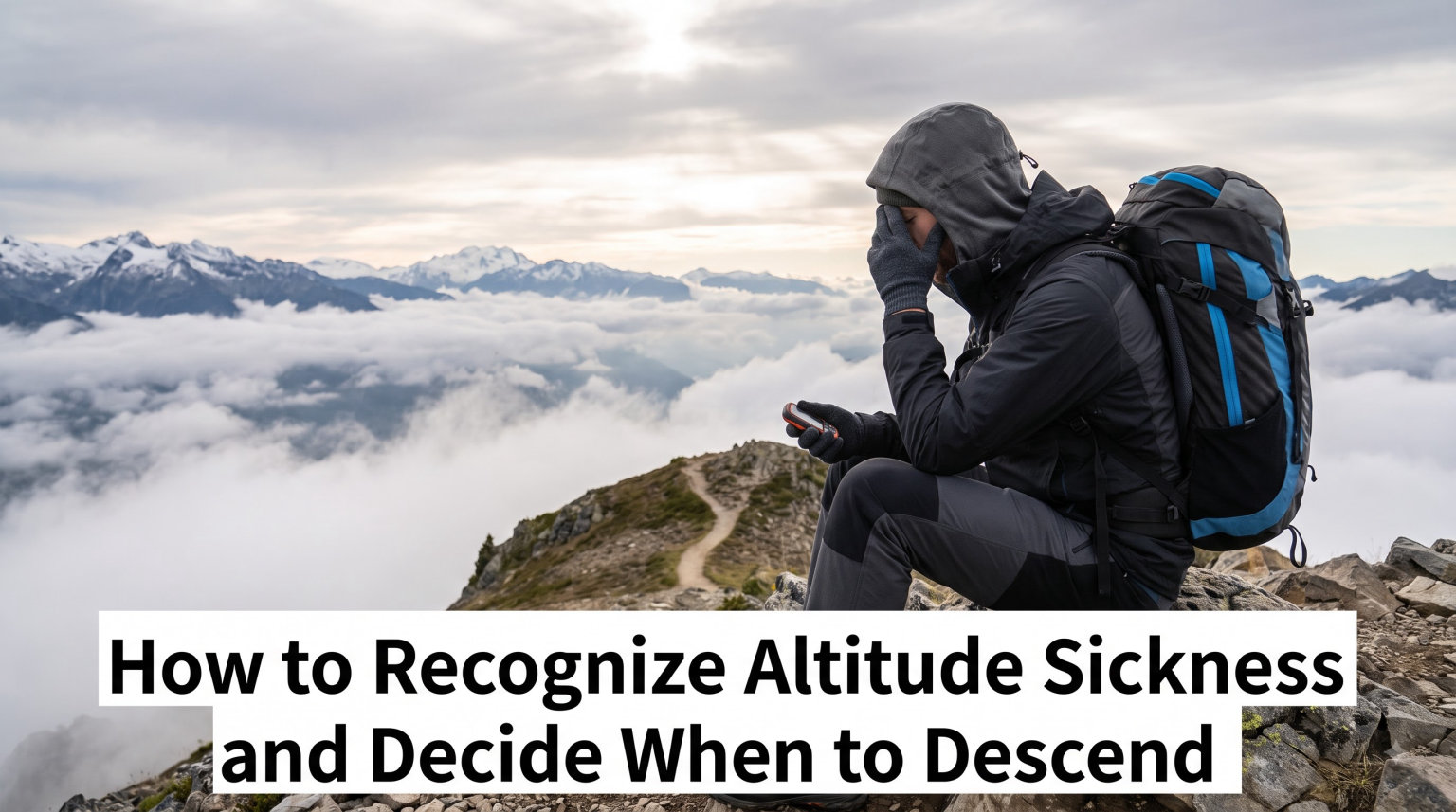
Altitude sickness kills trekkers every year on mountains around the world, and most of those deaths are preventable. The problem is not that the condition is untreatable. The problem is that people do not recognize the warning signs in time, or they push through symptoms when they should be heading downhill.
I have watched climbers argue about whether a headache was “just dehydration” at 4,000 meters while their teammate was already showing signs of cerebral edema. That delay is the real danger. Knowing how to recognize altitude sickness and decide when to descend is the single most important skill for anyone traveling above 2,500 meters.
This guide breaks down every symptom you need to watch for, the three severity levels of altitude illness, and a clear decision framework for when to stop, rest, or turn around immediately. Whether you are planning a Rinjani summit push in Indonesia, a Kilimanjaro trek, or a weekend hike in the Rockies, this information could save your life or the life of someone in your group.
Table of Contents
What Is Altitude Sickness
Altitude sickness is your body’s reaction to lower oxygen levels at high elevation. As you climb higher, barometric pressure drops, which means each breath delivers fewer oxygen molecules to your lungs. Your brain and muscles suddenly have less fuel to work with.
This condition, also called acute mountain sickness or altitude illness, typically begins above 2,500 meters (8,200 feet). However, some sensitive individuals experience symptoms as low as 2,000 meters, especially when arriving by flight or driving directly to altitude without gradual ascent.
The core issue is hypoxia, a state where your tissues are starved of oxygen. Your body can adapt to lower oxygen through a process called acclimatization, but that adaptation takes time. When you ascend faster than your body can adjust, altitude sickness sets in.
Think of it this way. At sea level, the air is about 21% oxygen. At 3,000 meters, the effective oxygen available to your body drops to roughly 14%. At 5,000 meters, you are working with around 11% effective oxygen. Your body feels the difference even if you cannot see it in the air around you.
The Three Types of Altitude Sickness
There are three distinct forms of altitude illness, each with different symptoms, risks, and urgency levels. Understanding all three is essential because they can overlap, and severe forms can develop from mild cases within hours.
1. Acute Mountain Sickness (AMS)
AMS is the mildest and most common form of altitude sickness. It feels like a bad hangover combined with exhaustion. Symptoms typically appear 6 to 12 hours after arriving at altitude and include headache, nausea, fatigue, dizziness, and difficulty sleeping.
Most cases of AMS resolve with rest and hydration at the same elevation. However, AMS is a warning sign. If you ignore it and keep climbing, it can progress to the life-threatening forms below.
2. High Altitude Pulmonary Edema (HAPE)
HAPE occurs when fluid accumulates in your lungs at high altitude. This is a medical emergency. Symptoms include severe shortness of breath (even at rest), a persistent wet cough that may produce pink or frothy sputum, chest tightness, and extreme fatigue.
HAPE can develop quickly, sometimes within hours. A person who was walking fine in the morning can be gasping for air by afternoon. Without immediate descent and oxygen, HAPE can be fatal within 24 hours.
HAPE is the most common cause of altitude-related death. It accounts for the majority of fatal altitude sickness cases worldwide.
3. High Altitude Cerebral Edema (HACE)
HACE happens when fluid leaks into brain tissue, causing swelling. This is the most severe and rapidly fatal form of altitude illness. Symptoms include confusion, severe headache that does not respond to medication, loss of coordination (ataxia), hallucinations, and eventually loss of consciousness.
The hallmark sign of HACE is ataxia, an inability to walk in a straight line. If someone cannot walk heel-to-toe on a flat surface, assume HACE and descend immediately. HACE can kill within hours if untreated.
AMS vs HAPE vs HACE: Severity Comparison
The three types of altitude sickness differ in which organs they affect and how quickly they become dangerous. Here is a direct comparison to help you identify what you or a teammate might be experiencing.
| Condition | Affected Area | Key Symptoms | Severity | Action Required |
|---|---|---|---|---|
| AMS | General | Headache, nausea, fatigue, dizziness, poor sleep | Mild to Moderate | Stop ascending. Rest and hydrate. Descend if no improvement in 24 hours. |
| HAPE | Lungs | Shortness of breath at rest, wet cough, gurgling chest, blue lips | Severe (Life-threatening) | Descend immediately. Oxygen if available. Seek emergency medical help. |
| HACE | Brain | Confusion, loss of coordination, severe headache, altered consciousness | Severe (Life-threatening) | Descend immediately. This is a dire emergency. Minutes matter. |
One critical point: a person can have AMS and HAPE at the same time, or AMS progressing into HACE. Never assume that because a headache is present, the situation is only mild AMS. Check breathing and coordination continuously.
How to Recognize Altitude Sickness: Symptom Checklists
The most important step in managing altitude sickness is early recognition. Here are checklists organized by severity so you can quickly assess yourself or a teammate.
Early Warning Signs (First 6 to 12 Hours)
The earliest symptom of high altitude illness is usually a headache that develops within hours of arriving at altitude. This is your first signal to pay attention.
- Headache (typically throbbing, worse at night or early morning)
- Loss of appetite
- Feeling unusually tired for the activity level
- Mild dizziness when standing up quickly
- Difficulty falling asleep or frequent waking
- Needing to urinate more frequently than usual
Mild to Moderate AMS Checklist
If you have a headache plus at least one of these symptoms, assume you have AMS:
- Nausea or vomiting
- Persistent headache that does not improve with rest or simple painkillers
- Feeling exhausted despite minimal exertion
- Dizziness or lightheadedness
- Shortness of breath with mild exertion (normal at altitude, but worsening is a concern)
- Disturbed sleep or vivid, anxious dreams
- Mild swelling of hands, feet, or face
Mild AMS is common and usually manageable. The rule is simple: do not go higher until symptoms resolve. If symptoms worsen over 24 to 48 hours of rest, you must descend.
Severe Symptoms: Immediate Descent Required
These symptoms indicate HAPE, HACE, or both. Any one of them means descend right now. Do not wait for morning. Do not wait for symptoms to improve. Every hour of delay increases the risk of death.
- Shortness of breath at rest, not just during activity
- Cough producing pink, frothy, or blood-tinged sputum
- Gurgling or rattling sound when breathing
- Blue or gray tint to lips, fingertips, or face (cyanosis)
- Inability to walk in a straight line, staggering, or falling
- Confusion, bizarre behavior, or inability to think clearly
- Severe headache that does not respond to any medication
- Hallucinations or seeing things that are not there
- Loss of consciousness, drowsiness, or inability to stay awake
- Chest tightness or a feeling of crushing pressure
If you observe any of these signs in yourself or a teammate, initiate descent immediately. This is not negotiable.
How to Recognize Altitude Sickness and Decide When to Descend
This is the section that matters most. Many trekkers struggle with the decision to turn around. They have invested time, money, and effort into reaching a summit. But altitude sickness does not care about your plans, and the mountain will still be there next time.
Here is a clear decision framework to help you determine when to stop, rest, or descend.
The Descent Decision Flowchart
Follow these steps in order. Each step asks a question, and the answer determines your next move.
Step 1: Do you have a headache plus nausea, dizziness, or fatigue?
If yes, you likely have mild AMS. Stop ascending immediately. Rest, hydrate, and take ibuprofen or paracetamol for the headache. Do not climb higher until all symptoms resolve. If symptoms worsen within 12 to 24 hours, proceed to Step 3.
Step 2: Have symptoms improved after 24 hours of rest at the same elevation?
If yes, you may continue ascending slowly. If no, descend 300 to 500 meters (1,000 to 1,600 feet) and reassess. Often a modest descent resolves symptoms within hours.
Step 3: Are any severe symptoms present?
Check for the red-flag symptoms listed above. If you see shortness of breath at rest, confusion, ataxia, or a wet cough, skip all other steps. Descend immediately by at least 500 to 1,000 meters (1,600 to 3,300 feet). The faster and further you descend, the better.
Step 4: Can the affected person walk?
If the person can walk, descend on foot with support from teammates. If the person cannot walk or is losing consciousness, they need to be carried or evacuated. If available, administer oxygen and consider medications like dexamethasone (for HACE) or nifedipine (for HAPE) while descending. Use a Gamow bag if one is available and you are trained to use it.
Step 5: Have you reached an altitude where symptoms resolve?
Keep descending until symptoms significantly improve or disappear. The general rule is to descend to the last elevation where the person felt well. For severe cases, descend below 2,500 meters if possible.
Specific Descent Distance Recommendations
The medical consensus is that descending 500 to 1,000 meters provides significant relief for most altitude sickness cases. Even a descent of 300 meters can dramatically improve mild to moderate AMS. For HAPE and HACE, descent is the single most effective treatment available.
If you cannot descend (due to weather, terrain, or darkness), use supplemental oxygen, medications, and a portable hyperbaric chamber if available. But make no mistake: these are stopgap measures. Descent is the only definitive treatment.
The Golden Rules of Altitude
Every mountaineer should memorize these three rules:
- If you feel unwell at altitude, assume it is altitude sickness until proven otherwise.
- If you have symptoms of altitude sickness, do not go higher until they resolve.
- If symptoms are worsening or severe, descend immediately. No exceptions.
These rules have saved countless lives. Breaking them has ended many.
Who Is at Risk
Altitude sickness does not discriminate based on fitness, age, or experience. A marathon runner can get sick while a sedentary traveler feels fine. Physical conditioning offers zero protection against altitude illness.
The odds of getting altitude sickness depend largely on your ascent rate and the altitude reached. At 2,500 meters, roughly 25% of people experience some symptoms. Above 3,000 meters, that number jumps to 40% or higher. Above 4,500 meters, nearly everyone experiences at least mild effects without proper acclimatization.
Risk factors that increase your chances include ascending faster than 500 meters per day above 3,000 meters, flying directly to a high-altitude destination without time to adjust, having had altitude sickness before, and exerting yourself heavily in the first 24 hours at altitude.
Some people are simply more susceptible. We do not fully understand why, but genetics play a role. If you have had altitude sickness before, you are more likely to get it again. Being honest about your personal risk is part of being a responsible traveler.
What to Do When Symptoms Hit
If you or a teammate develop symptoms, take these steps immediately. Speed matters.
First, stop ascending. This is non-negotiable. Going higher with symptoms is the most dangerous thing you can do at altitude. Set up camp or find a place to rest at your current elevation.
Hydrate aggressively. Altitude increases fluid loss through respiration and urination. Drink water with electrolytes, not plain water alone. Avoid alcohol entirely, as it worsens dehydration and suppresses breathing during sleep.
Take medication for the headache. Ibuprofen or paracetamol can help manage pain. For nausea, anti-nausea medication can make it easier to keep fluids down. If you have acetazolamide (Diamox), this is the time to use it, as it speeds acclimatization.
If symptoms are moderate and you have supplemental oxygen, use it. Even a few hours on oxygen can dramatically improve how you feel. Many trekking lodges in Nepal, Indonesia, and Peru now have oxygen available for guests.
Eat light, easily digestible food. Carbohydrates are easier to digest at altitude than fats or heavy proteins. If you cannot eat, focus on getting fluids with sugar and electrolytes.
Most importantly, monitor symptoms continuously. Check on teammates every few hours, including during the night. Symptoms often worsen during sleep because breathing slows down naturally, dropping oxygen saturation further. A person who seemed fine at dinner can be in crisis by 2 a.m.
How to Prevent Altitude Sickness
Prevention is always better than treatment. The most effective prevention strategy is gradual ascent, giving your body time to acclimatize to lower oxygen levels.
Follow the Gradual Ascent Rule
Above 3,000 meters, increase your sleeping altitude by no more than 300 to 500 meters per day. Every 1,000 meters of gain, take a rest day at that elevation before going higher. This schedule allows your body to produce more red blood cells and adjust to the thinner air.
The saying in mountaineering is “climb high, sleep low.” You can climb higher during the day for acclimatization, but return to a lower elevation to sleep. This approach is proven to reduce AMS incidence significantly.
Consider Medication
Acetazolamide (Diamox) is the most widely used and recommended medication for altitude sickness prevention. Taken prophylactically, starting one to two days before ascent, it helps your body acclimatize faster and reduces AMS risk by about 50%. The standard dose is 125 mg twice daily.
Dexamethasone is used for treatment of HACE, and nifedipine for HAPE. These are prescription medications. Talk to your doctor before your trip, especially if you have had altitude sickness before or are planning a high-altitude expedition.
Note: Always consult a healthcare professional before taking any medication. This information is for educational purposes and is not medical advice.
Hydrate and Eat Well
Drink 3 to 4 liters of fluid per day at altitude. Add electrolyte tablets or powder to maintain sodium and potassium levels. Dehydration worsens altitude sickness symptoms and makes them harder to distinguish from AMS itself.
Eat regular meals even if you lose your appetite, which is a common altitude effect. Prioritize carbohydrates, which require less oxygen to metabolize than fats or proteins.
Avoid Alcohol and Sedatives
Alcohol suppresses breathing and worsens dehydration. Sedatives, including sleeping pills, can dangerously lower your breathing rate during sleep. Many altitude sickness deaths occur at night when breathing naturally slows.
This is also why some guides recommend avoiding hot showers at high altitude. The combination of vasodilation from hot water and the effort involved can worsen symptoms in someone already struggling to acclimatize. A warm sponge bath is a safer option.
Indonesian Mountain Context
If you are trekking in Indonesia, popular high-altitude peaks present real altitude sickness risks. Mount Rinjani (3,726 meters) on Lombok sees many cases of AMS among trekkers who ascend too quickly. Mount Semeru (3,676 meters) in East Java and Mount Kerinci (3,805 meters) in Sumatra also pose significant risks.
Many Indonesian trekking routes involve rapid ascent profiles, sometimes gaining over 1,500 meters in a single day. This is well above safe limits. If you are booking a guided trek, ask about the ascent schedule. A reputable operator should build in acclimatization time rather than rushing to the summit.
If you live at sea level in Jakarta, Surabaya, or another lowland city, your body has zero acclimatization when you arrive at altitude. Plan extra time for adjustment. Flying into Bali or Lombok and immediately starting a Rinjani trek the next day is asking for trouble.
Real Stories: What Altitude Sickness Actually Feels Like
Medical descriptions are important, but sometimes real experiences make the danger click. Here is what altitude sickness actually feels like, based on accounts from mountaineering forums and traveler communities.
One Reddit user on a Kilimanjaro trek described the onset: “I was fine, joking around at camp. Two hours later I could not hold down water, my head felt like it was being squeezed in a vice, and I could not string a sentence together. It went from zero to terrifying faster than I thought possible.”
A trekker on the Annapurna Circuit shared: “Above 3,500 meters without Diamox, I felt like I was dying. Every step was exhausting. My vision went slightly fuzzy. I could not sleep at all. Descending 400 meters the next morning fixed 80% of my symptoms within hours.”
Many experienced mountaineers emphasize that the rapid onset is what catches people off guard. You can feel completely normal and then deteriorate within hours. This is why continuous monitoring of yourself and your group is essential.
Forum users consistently report that hydration, electrolytes, and acetazolamide (Diamox) are the most effective tools they have used. Nearly all experienced trekkers who have suffered severe altitude sickness say the same thing: they wish they had descended sooner.
Frequently Asked Questions
Why can’t you shower at high altitude?
Hot showers at high altitude cause your blood vessels to dilate, which can worsen altitude sickness symptoms by lowering blood pressure and reducing oxygen delivery to your brain. The effort and heat can also increase dehydration. Many guides recommend avoiding hot showers during your first 24 to 48 hours at altitude and using warm sponge baths instead.
What are the three stages of altitude sickness?
The three types of altitude sickness are Acute Mountain Sickness (AMS), High Altitude Pulmonary Edema (HAPE), and High Altitude Cerebral Edema (HACE). AMS is the mildest form, causing headache, nausea, and fatigue. HAPE involves fluid buildup in the lungs. HACE involves brain swelling. HAPE and HACE are both life-threatening emergencies requiring immediate descent.
What are the odds of getting altitude sickness?
Approximately 25% of people experience symptoms above 2,500 meters (8,200 feet). Above 3,000 meters, the rate rises to about 40%. Above 4,500 meters, nearly everyone experiences at least mild effects without proper acclimatization. Your individual risk depends on your ascent rate, prior history, and genetics.
What is the earliest symptom of high altitude illness?
A headache is typically the earliest and most common symptom of altitude sickness, usually appearing 6 to 12 hours after arriving at altitude. It is often accompanied by loss of appetite, fatigue, and difficulty sleeping. If you develop a headache at altitude along with any other symptom, treat it as potential altitude sickness and stop ascending.
Does altitude sickness go away when you descend?
Yes, in most cases altitude sickness symptoms improve rapidly once you descend. Mild AMS often resolves within hours of dropping 300 to 500 meters. Severe cases of HAPE and HACE also improve significantly with descent, though recovery may take longer and medical follow-up is recommended. Descent is the single most effective treatment for all forms of altitude illness.
Can altitude sickness kill you?
Yes, altitude sickness can be fatal. HAPE (fluid in the lungs) and HACE (brain swelling) are life-threatening conditions that can kill within hours if not treated. The key danger is delayed descent. Most altitude sickness deaths occur because people ignore severe symptoms or wait too long before heading downhill. Immediate descent at the first sign of severe symptoms saves lives.
Key Takeaways: Recognizing and Responding to Altitude Sickness
Learning how to recognize altitude sickness and decide when to descend is a skill that every high-altitude traveler needs before they set foot on a mountain. The summary is straightforward: watch for headache, nausea, and fatigue as early warning signs, treat any severe symptom as an emergency, and descend the moment red flags appear.
Altitude sickness is predictable, preventable, and treatable when you respond quickly. The three golden rules never change: if you feel unwell, assume altitude sickness; if you have symptoms, do not climb higher; if symptoms are severe, descend immediately. Follow these rules and you give yourself and your teammates the best chance of coming home safely.
Before your next high-altitude adventure, talk to your doctor about acetazolamide, plan a gradual ascent schedule, and make sure every person in your group knows the warning signs. The summit is optional. The descent home is not.