
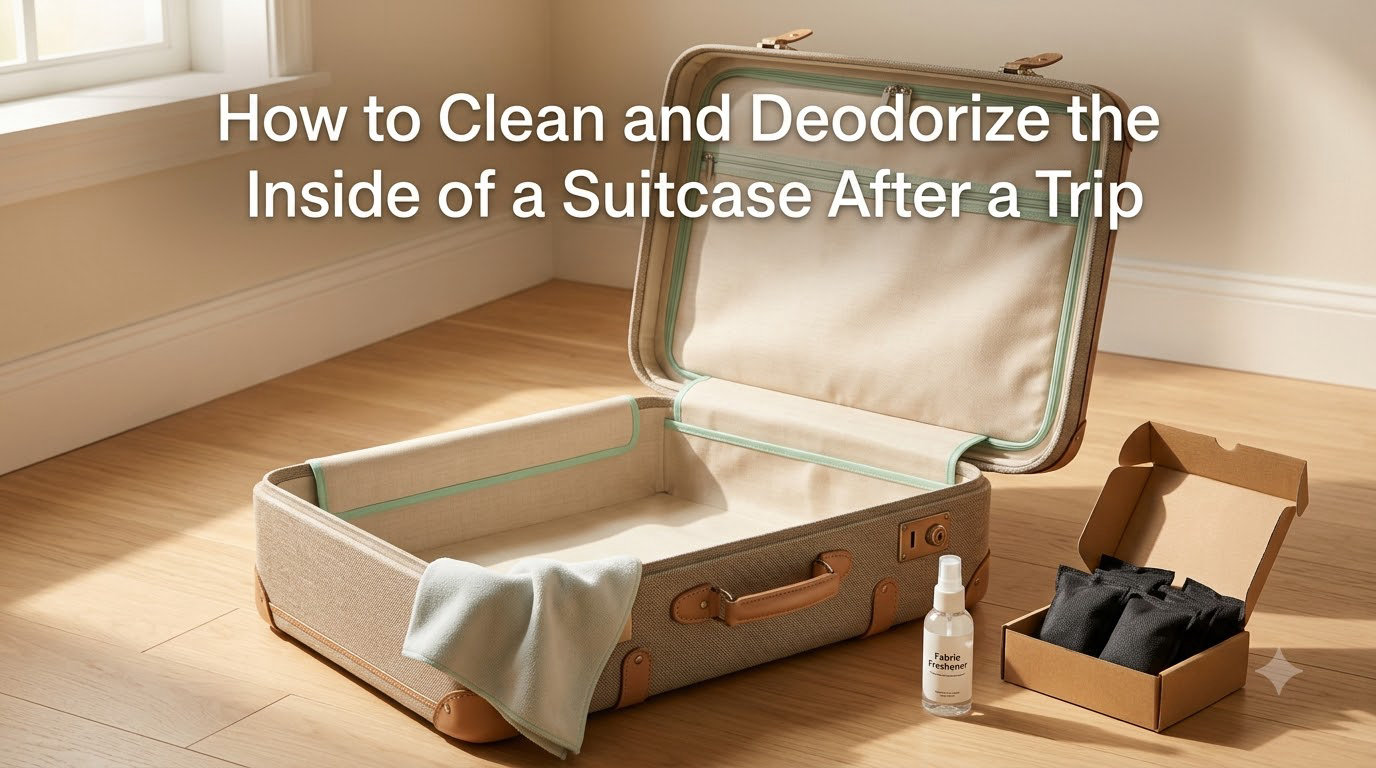
I have unpacked from a 10-day beach trip and been hit with that unmistakable musty suitcase smell more times than I want to admit. After years of trial and error, I finally cracked the routine that keeps my luggage fresh trip after trip. In this guide, I will walk you through exactly how to clean and deodorize the inside of a suitcase after a trip, using nothing more than common household items.
By the end, you will know which cleaning method works best for your luggage type, how to neutralize stubborn odors, and how to store your suitcase so it stays fresh until the next adventure.
Table of Contents
Why Suitcases Develop Odors After a Trip
Suitcases smell musty after travel because moisture, bacteria, and trapped organic matter collect inside during your trip. The dark, enclosed interior of a closed suitcase creates a perfect environment for odor-causing bacteria and even mold to grow.
I have noticed three main culprits in my own luggage. First, damp clothes and towels that get packed before they fully dry. Second, food spills or crumbs hidden in zippered pockets. Third, the stale recirculated air inside airplane cargo holds, which can leave a faint sour smell on soft fabrics.
Hard-shell polycarbonate cases can trap condensation when you move between climates, like a humid beach and an air-conditioned hotel room. Soft-side fabric cases absorb more moisture and hold onto smells longer if not aired out quickly. Knowing the cause helps you choose the right cleaning approach.
Quick Post-Trip Clean Routine You Can Do in 15 Minutes
A quick post-trip clean is enough if you only need to freshen things up between short trips. I use this routine after every domestic trip where nothing spilled inside the bag.
Step 1: Empty everything. Remove all clothes, shoes, toiletries, and loose items. Shake the suitcase upside down over a trash can to dislodge crumbs, sand, and debris from corners.
Step 2: Wipe down the interior lining. Dampen a microfiber cloth with warm water and a few drops of dish soap. Wring it out well so it is damp, not dripping. Wipe every interior surface, including mesh pockets and zipper flaps.
Step 3: Air it out. Prop the suitcase open in a well-ventilated area for at least 30 minutes. If the weather is nice, place it in indirect sunlight. UV rays help kill odor-causing bacteria.
Step 4: Add a deodorizer. Drop in a dryer sheet, a small bowl of baking soda, or a charcoal sachet before closing the lid. Your suitcase will smell noticeably fresher the next time you open it.
This 15-minute routine works for 80 percent of post-trip situations. For deeper smells, you will need the full cleaning method below.
How to Clean the Inside of a Suitcase Step by Step
A deep clean takes about 45 minutes of hands-on work plus 24 hours of drying time. I run through this process two or three times a year, especially after international trips or beach vacations.
Step 1: Vacuum every interior surface. Use a vacuum cleaner with an upholstery or crevice attachment to remove dust, lint, hair, and crumbs. Pay special attention to seams, corners, and mesh pocket interiors where debris loves to hide.
Step 2: Mix your cleaning solution. Combine equal parts warm water and white vinegar in a spray bottle. For stronger stains or smells, add a teaspoon of mild dish soap. Vinegar is a natural deodorizer and disinfectant that is safe on most suitcase linings.
Step 3: Spray and scrub. Lightly mist the interior lining with your vinegar solution. Avoid soaking the fabric. Use a soft-bristled brush or microfiber cloth to scrub stained or smelly areas in circular motions.
Step 4: Wipe down with a clean damp cloth. Go over the surfaces again with a cloth dampened with plain water to remove any soap or vinegar residue. This step prevents streaks and stops the vinegar smell from lingering.
Step 5: Disinfect high-touch areas. Spray a small amount of rubbing alcohol on a cloth and wipe down zippers, handles, and the top edge of the lining where hands rest. Alcohol evaporates quickly and kills germs without leaving moisture behind.
Step 6: Dry completely. Leave the suitcase open in a ventilated space for at least 12 to 24 hours. Moisture trapped inside is what causes musty smells to return, so do not rush this step.
Materials You Will Need
Vacuum with crevice tool
Microfiber cloths (two or three)
Soft-bristled brush or old toothbrush
White distilled vinegar
Warm water
Mild dish soap
Spray bottle
Rubbing alcohol (optional)
Best Methods to Deodorize a Suitcase Naturally
Deodorizing is different from cleaning. Cleaning removes dirt and germs. Deodorizing neutralizes the smell molecules that remain. I have tested five natural methods over the years, and these are the most reliable.
Baking Soda
Baking soda is my go-to deodorizer for mild to moderate suitcase odors. Sprinkle a generous layer (about half a cup for a carry-on, a full cup for a large checked bag) across the interior lining. Close the suitcase and leave it for 24 to 48 hours. Vacuum or shake out the residue before your next use.
White Vinegar Solution
Vinegar works faster than baking soda for strong odors. Mix equal parts water and white vinegar in a spray bottle, mist the interior lightly, and let it air dry. The vinegar smell fades within a few hours, taking the musty smell with it.
Activated Charcoal
Activated charcoal sachets are excellent for ongoing maintenance. Place one or two inside the suitcase between trips. The charcoal continuously absorbs odor and moisture. Replace the sachets every 30 to 60 days for best results.
Sunlight and Fresh Air
Never underestimate the power of UV light and airflow. I set my suitcase in a sunny spot near an open window for a few hours whenever possible. Sunlight is a natural disinfectant, and fresh air prevents moisture buildup.
Dryer Sheets or Coffee Grounds
Dryer sheets leave a light fresh scent and work well for light odors. Used coffee grounds in a small open container absorb smells overnight. Both are good quick fixes but do not match baking soda or charcoal for heavy mustiness.
Baking Soda vs Charcoal vs Vinegar: Which Odor Absorber Works Best?
I get this question a lot, so here is the breakdown based on my own testing across three different suitcase types. Each method has a sweet spot.
Baking Soda: Best for Mild to Moderate Smells
Baking soda absorbs odor molecules through a chemical reaction. It is cheap, safe on all fabrics, and effective for smells caused by moisture and stale air. The downside is the messy residue that requires vacuuming.
Activated Charcoal: Best for Long-Term Storage
Charcoal absorbs both odor and moisture, making it ideal for suitcases stored in basements, closets, or garages. It is reusable when you dry it in the sun monthly. It works slower than vinegar but lasts longer.
White Vinegar: Best for Strong, Lingering Smells
Vinegar chemically neutralizes odor compounds rather than just masking them. It works fastest on sour or moldy smells. The downside is the temporary vinegar scent during application, which fades as it dries.
For most travelers, I recommend starting with vinegar for the initial clean, then maintaining freshness with baking soda or charcoal between trips.
How to Deep Clean Hardside and Softside Luggage
The cleaning method changes slightly depending on your luggage material. I have broken down the differences below.
Hard-Shell Luggage (Polycarbonate or ABS Plastic)
Hard-shell cases have a smooth interior lining that wipes clean easily. Use the vinegar solution spray and a microfiber cloth for routine cleaning. For scuffs or sticky residue on the inside shell, use a melamine foam eraser (like a Magic Eraser) lightly dampened.
Avoid harsh abrasives that can scratch the interior finish. Pay attention to the rubber seal around the zipper, where mildew can develop if moisture gets trapped.
Soft-Shell Luggage (Nylon or Polyester Fabric)
Soft-side luggage needs more care because the fabric absorbs odors and stains. Vacuum thoroughly before any wet cleaning. Test your vinegar solution on a hidden corner first to check for color bleeding.
For stubborn stains, make a paste of baking soda and water, apply it to the stain, let it sit for 15 minutes, then scrub gently with a soft brush. Wipe clean with a damp cloth and dry completely.
Vintage or Leather Suitcases
Older or leather suitcases need a gentler touch. Skip vinegar and use a leather-specific cleaner and conditioner. Wipe the interior with a barely damp cloth and condition the exterior to prevent cracking. Store in a breathable cotton bag, never plastic.
Cleaning the Wheels, Handles, and Zippers Most People Skip
The dirtiest parts of any suitcase are the ones travelers forget about: the wheels, telescoping handle, and zipper tracks. I clean these every few trips because they collect dirt, hair, and bacteria that can transfer to your clothes and hands.
Cleaning the Wheels
Pull out any visible hair or lint wrapped around the wheel axles using tweezers or a seam ripper. Wipe the wheels with a cloth dampened with rubbing alcohol. For stuck-on grime, use an old toothbrush dipped in soapy water. Dry the wheels completely to prevent rust.
Cleaning the Telescoping Handle
Wipe the telescoping handle with a disinfecting wipe or a cloth sprayed with rubbing alcohol. Pay attention to the grip area where hands rest. Slide the handle up and down a few times to access all sides.
Cleaning the Zipper Tracks
Zipper tracks trap lint, crumbs, and sometimes mold. Run a vacuum crevice tool along the entire zipper length. Then wipe with a cloth dampened with rubbing alcohol. For sticky zippers, rub the teeth lightly with a graphite pencil tip to lubricate them.
Drying and Storing Your Suitcase the Right Way
Improper storage is the number one cause of recurring musty smells. I learned this the hard way after leaving a suitcase in my basement for a few months and finding it smelling worse than when I stored it.
Always dry before storing. After cleaning, leave the suitcase open in a ventilated area until the interior is completely dry to the touch. Even slight dampness invites mold.
Use a breathable storage bag. Skip the plastic bags that some luggage brands include. Use a cotton dust bag or an old pillowcase instead. Plastic traps moisture and causes mustiness.
Add a long-term deodorizer. Place a charcoal sachet or an open box of baking soda inside before storing. Refresh or replace it every two months.
Store in a climate-controlled area. Avoid basements, garages, and attic spaces where humidity fluctuates. A climate-controlled closet under the bed is ideal.
Keep it off the ground. Store the suitcase on a shelf or hanging hook rather than directly on the floor where cold air and moisture collect.
Common Mistakes That Make Suitcase Odors Worse
I have made most of these mistakes myself. Avoiding them will save you from repeat cleaning sessions.
Closing the suitcase while it is still damp. Even slightly damp linings will develop mildew within 24 to 48 hours inside a closed case. Always air dry fully.
Using too much water. Saturating fabric linings creates more problems than it solves. Always use a damp cloth or light mist, never pour water directly inside.
Skipping the wheels and handles. Germs and grime on high-touch areas transfer back to your hands and clothes. Wipe these every few trips.
Storing in plastic bags. The included plastic luggage covers trap moisture and create the perfect conditions for mold and odor.
Masking smells with perfume. Spraying perfume or air freshener inside the suitcase only mixes the musty smell with fragrance. It does not solve the underlying problem.
Ignoring the source. If your suitcase smells after every trip, the cause is usually a habit (packing damp clothes, food crumbs, or storing in a humid area). Fix the habit, not just the smell.
FAQs: Common Questions About Cleaning and Deodorizing a Suitcase
How do I get rid of smell inside a suitcase?
Empty the suitcase, vacuum the interior, then wipe down all surfaces with a mixture of equal parts white vinegar and warm water. For stubborn odors, sprinkle baking soda inside, close the lid, and leave it for 24 to 48 hours before vacuuming it out. Air dry the suitcase completely in a well-ventilated space before storing.
How can I freshen up the inside of a suitcase quickly?
Wipe the interior with a damp microfiber cloth, then tuck in a dryer sheet, a small bowl of baking soda, or a few drops of essential oil on a cotton ball. Close the lid for a few hours or overnight. The suitcase will smell noticeably fresher the next time you open it.
How do I disinfect luggage after a trip?
Spray the interior lining with a solution of equal parts water and white vinegar, then wipe down high-touch areas like zippers, handles, and the top edge with rubbing alcohol on a cloth. Let the suitcase air dry fully in indirect sunlight, which also helps kill bacteria with UV light.
What can I put in my suitcase to make it smell good?
The most effective options are baking soda, activated charcoal sachets, and dryer sheets. Baking soda absorbs odors for 24 to 48 hours, charcoal works for ongoing maintenance between trips, and dryer sheets provide a quick light scent. For a natural option, place a few drops of lavender essential oil on a cotton ball.
Final Thoughts: Keep Your Suitcase Fresh Trip After Trip
Learning how to clean and deodorize the inside of a suitcase after a trip is one of those small habits that pays off every single time you travel. A clean suitcase means fresh-smelling clothes, fewer germs in your closet, and luggage that lasts longer.
Start with the 15-minute quick clean after every trip, then schedule a full deep clean a few times a year. Pair it with smart storage habits and you will never deal with a musty suitcase again. For 2026, I am committing to a quick wipe-down the day I get home from every trip. Your future self, packing for the next adventure, will thank you.