
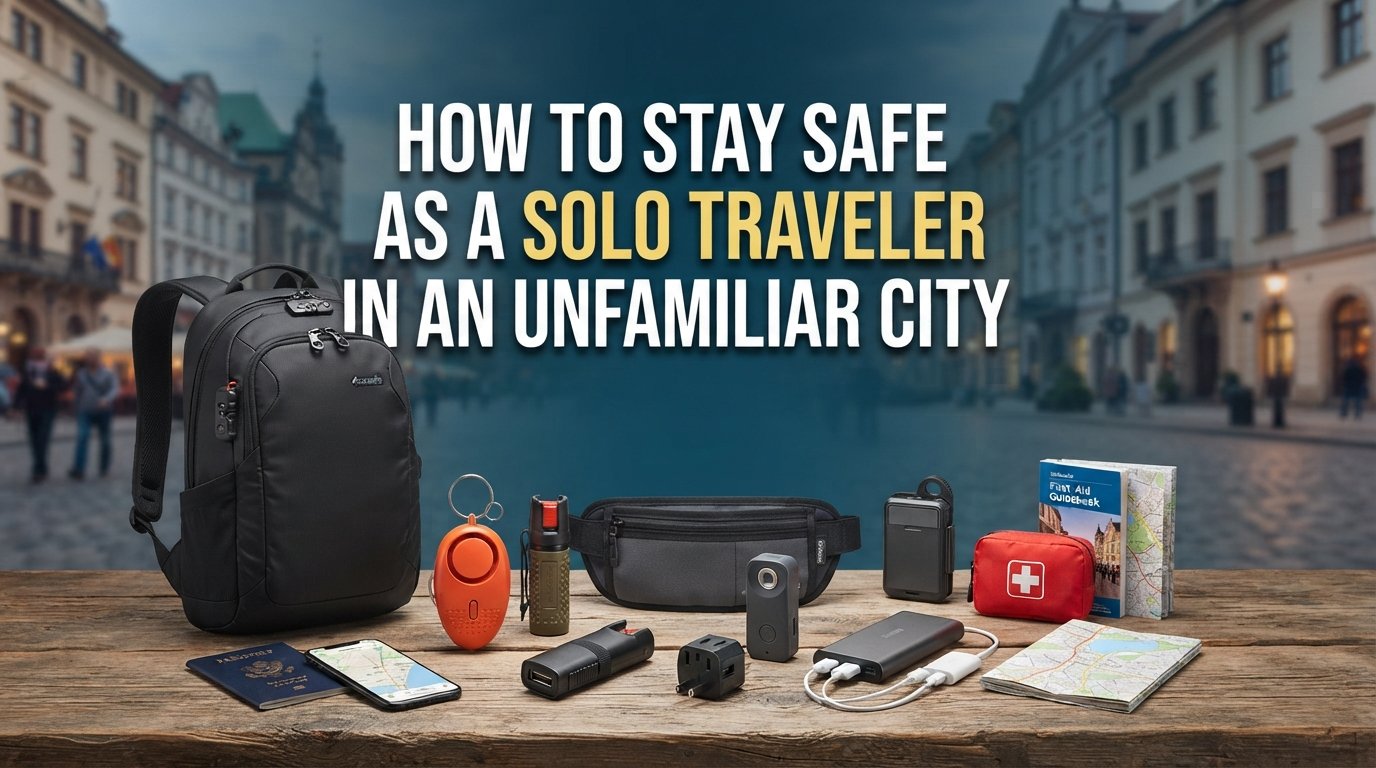
Traveling alone is one of the most freeing experiences you can have. But the first time I stepped off a train in a city where I did not speak the language, my phone was at 12 percent, and my hotel was a mile away, I understood why solo travel safety sits at the front of every traveler’s mind.
That moment taught me something important. Safety is not about staying home or being paranoid. It is about preparation, awareness, and having a plan so you can actually enjoy the trip you worked so hard to take.
In this guide, I will walk you through everything I have learned (and everything experienced travelers and security professionals recommend) about how to stay safe as a solo traveler in an unfamiliar city. You will get step-by-step preparation strategies, street-smart tips for getting around, technology recommendations, emergency protocols, and answers to the questions solo travelers ask most.
Whether you are planning your first solo trip or your fiftieth, these solo travel safety tips will help you travel with more confidence and less anxiety.
Table of Contents
Research and Prepare Before You Go
Solo travel safety starts long before you board a plane. The work you do at home determines how smoothly things go on the ground.
Study Your Destination Thoroughly
Learn which neighborhoods are safe and which ones to avoid, especially after dark. Read recent travel forums, government advisories, and blog posts from solo travelers who have been there in the last year.
Pay attention to specific concerns, not just general safety ratings. Some cities are perfectly safe during the day but require extra caution at night. Others have certain transit lines or districts that travelers should skip entirely.
I always search for my destination plus phrases like “solo travel safety,” “areas to avoid,” and “common scams” to find the most relevant, up-to-date information.
Check Government Travel Advisories
U.S. citizens should enroll in the Smart Traveler Enrollment Program (STEP) through the State Department. It is free, takes five minutes, and sends you real-time safety alerts for your destination.
If you are not American, your country likely has an equivalent service. The UK Foreign Office, Global Affairs Canada, and Smartraveller (Australia) all publish detailed, country-by-country safety assessments.
These advisories tell you about political instability, crime trends, health risks, and even expected demonstrations. Check them both before booking and again right before departure.
Get Travel Insurance That Actually Covers You
Solo travelers need insurance more than anyone because there is no companion to help if something goes wrong. Look for policies that cover medical emergencies, evacuation, theft, and trip cancellation.
Read the fine print on what counts as a covered event. Some budget policies exclude “adventure activities” that might include things you would not expect, like renting a scooter.
Save your insurance details, policy number, and emergency assistance number in your phone and on paper. You will not want to search for them during a crisis.
Save Key Information Offline
Write down your accommodation address, embassy location, and emergency numbers in a notebook or on paper stored separately from your phone. If your phone dies, gets stolen, or loses service, you still need to find your way back.
I keep a physical card in my wallet with my hotel address printed in the local language. Handing that to a taxi driver has saved me more than once.
Pack Smart for Safety
What you carry affects how safe you are. The goal is to minimize what you can lose and organize what you need.
Secure Your Documents
Make digital copies of your passport, visa, driver’s license, insurance policy, and credit cards. Email them to yourself and store them in a secure cloud folder.
Also make physical copies and keep them in a different bag from your originals. If your day bag gets stolen, your backup copies in the hotel safe keep you operational.
Some travelers carry a certified passport photo or two for visa-on-arrival situations or emergency replacements.
Use a Dummy Wallet
This is a technique borrowed from executive protection professionals. Carry a secondary wallet with a small amount of cash, an expired credit card, and some random cards.
If someone targets you for a mugging, you hand over the dummy wallet. They get something, and you keep your real cards and primary cash hidden elsewhere on your body.
It sounds dramatic, but experienced travelers in high-crime areas swear by it. The goal is de-escalation, not heroics.
Carry a Tracking Device
Apple AirTags or similar Bluetooth trackers placed in your luggage, backpack, or purse let you locate your belongings if they go missing. They have helped travelers recover stolen bags within hours.
Tuck one inside each major bag. The peace of mind alone is worth the small investment.
Pack a Basic First Aid Kit
Include bandages, antiseptic wipes, pain relievers, any prescription medications (in original packaging), and anti-diarrheal medicine. When you are alone in an unfamiliar city at midnight, you do not want to hunt for a pharmacy.
Add a small flashlight or headlamp too. Power outages and dim alleyways happen, and your phone flashlight drains battery fast.
Use Technology to Stay Safe
Technology is a solo traveler’s best friend when used correctly. The key word is correctly, because the wrong setup can create new vulnerabilities.
Get an eSIM for Immediate Connectivity
An eSIM lets you activate a local data plan the moment you land, without hunting for a physical SIM card at the airport. Apps like Airalo, Nomad, and Holafly offer affordable short-term plans for dozens of countries.
Having data from minute one means you can call a ride, load maps, and look up your hotel without depending on sketchy airport Wi-Fi. It also means you can share your live location with someone back home right away.
I never travel internationally without an eSIM now. The convenience and safety benefit far outweigh the cost.
Download Offline Maps
Before you leave your hotel each day, download the area map in Google Maps for offline use. You can search, find your way, and get directions even without cell service.
This solves one of the biggest pain points solo travelers report: getting lost with no signal. With offline maps, you always have a backup system for getting around.
Mark your hotel, the nearest embassy, and a hospital on the map so they are one tap away in an emergency.
Use Safety Apps Built for Travelers
GeoSure provides neighborhood-level safety scores for cities around the world, updated in real time. It rates areas on factors like physical harm, theft, and health risks.
NomadHer is designed for solo female travelers and includes safety ratings, community advice, and location sharing. Apps like bSafe and Life360 let you share your location with trusted contacts and trigger an SOS with your GPS coordinates.
Pick one or two that fit your needs and set them up before you travel. Trying to configure them during a stressful moment defeats the purpose.
Share Your Location With Someone Trusted
Set up live location sharing with a family member or close friend back home. Google Maps, WhatsApp, and Find My all support this feature.
This is one of the simplest and most powerful solo travel precautions you can take. If something happens and you cannot reach out, someone knows exactly where you were last tracked.
Send a quick message each morning with your rough itinerary for the day. It takes ten seconds and creates a safety net that costs nothing.
Choose and Secure Your Accommodation
Where you sleep matters. Your accommodation is your safe base, and you want it to actually feel safe.
Research Before You Book
Read reviews specifically from solo travelers. They tend to flag safety concerns that couples or families might not notice or mention.
Look for comments about neighborhood safety, front desk availability, lock quality, and whether the property is in a well-lit, busy area. A cheap room in an isolated part of town is a false economy.
Check whether the building has 24-hour reception or security. For solo travelers, knowing someone is always at the front desk adds a layer of protection.
Watch for Red Flags
Forum travelers on Reddit and other communities have flagged common hotel red flags: broken or flimsy door locks, windows that do not latch, peepholes missing or covered, and rooms accessible from the street rather than an interior hallway.
If you arrive and something feels off, trust that feeling. Ask to change rooms or find alternative lodging. You are not being difficult by prioritizing your safety.
Other red flags include staff who seem surprised by your arrival, accommodations with no online presence, and listings that pressure you to communicate outside official platforms.
Keep Your Accommodation Details Private
Do not share the name or location of your hotel with strangers. If someone asks where you are staying, give a vague answer like “near the center” or “a short walk from here.”
This advice comes directly from experienced solo travel safety experts. Predators and scammers use casual conversation to learn where you are staying and whether you are alone.
Secure Your Room Every Time
Use every lock your room provides. The deadbolt, the chain, the peephole, all of it. Before opening the door for anyone, including staff, verify through the peephole first.
If someone claims to be hotel staff and you did not request service, call the front desk to confirm before opening the door. This simple step prevents a range of entry-based crimes.
Stay Safe While Using Transportation
Getting from place to place is when solo travelers are most exposed. Every ride, walk, and transit transfer is a moment to stay sharp.
Use Rideshare Services Safely
Always verify the license plate, car make and model, and driver name before getting in. Match these to what the app shows you.
Before the driver starts, ask “Who are you here to pick up?” Let them say your name rather than you offering it first. This confirms you have the right driver and not someone impersonating one.
Sit in the back seat. Share your trip status with a trusted contact through the app so they can follow your route in real time.
Take Licensed Taxis With Caution
In many cities, official taxis are safer than unlicensed ones, but you still need to be alert. Ask your hotel or restaurant to call a taxi for you rather than hailing one on the street.
Agree on the fare or confirm the meter is running before you move. In some countries, taxi scams target tourists by inflating prices or taking unnecessarily long routes.
Know roughly how long the ride should take and approximately how much it should cost. A quick search before you travel gives you a baseline so you can spot when something is off.
Ride Public Transit Smartly
Keep your belongings close and in front of you, especially in crowded cars where pickpockets operate. A crossbody bag worn across the chest with a hand resting on it is harder to snatch than a backpack or shoulder bag.
Be aware of who gets on and off around you. If someone makes you uncomfortable, move to another car or wait for the next train.
Avoid sleeping on public transit when traveling solo. You need to stay alert enough to catch your stop and protect your belongings.
How to Get Around Unfamiliar Streets Safely
Walking through a new city is the best way to experience it. But moving through unfamiliar streets on your own requires a different mindset than traveling with a group.
Maintain Situational Awareness at All Times
Situational awareness is the practice of actively noticing what is happening around you. It means keeping your head up, scanning your environment, and identifying potential risks before they become problems.
Put your phone away when walking. Looking down at a screen signals distraction and makes you an easier target. If you need directions, step into a cafe or shop, check your map, then continue.
Notice who is around you and whether the crowd feels right. If a street empties suddenly or the vibe shifts, that is information worth heeding.
Blend In With the Local Crowd
Tourists stand out, and standing out makes you a target. Dress in a way that matches the local style rather than obvious tourist gear. Avoid logo-heavy clothing, expensive jewelry, and items that scream “I am not from here.”
Walk with purpose even when you are lost. Stopping in the middle of the sidewalk, spinning around, and looking confused draws attention. If you need to reorient, step aside, lean against a wall, and take a moment.
Blending in is not about hiding your identity. It is about not painting a target on your back.
Trust Your Instincts Every Time
If a situation, a person, or a street feels wrong, leave. Your brain picks up on subtle cues that your conscious mind has not processed yet. That uneasy feeling is data, and you should treat it as such.
I cannot count the number of travelers who ignored a gut feeling because they “did not want to be rude” or “felt paranoid,” only to end up in a bad situation. Being wrong about a feeling is a small inconvenience. Being right about it could save you from harm.
It is always acceptable to walk away, say no, or change your plans. You do not owe anyone an explanation.
Know What to Do If You Are Being Followed
If you suspect someone is following you, do not go to your accommodation. Instead, cross the street and see if they cross too. Make four right turns, which brings you in a circle. If they are still there, you are likely being followed.
Head immediately to a well-lit, populated place: a restaurant, a hotel lobby, a police station, a convenience store. Tell an employee what is happening and ask them to call you a taxi or help you contact authorities.
Do not confront the person. Do not try to lose them in unfamiliar alleys. Get to safety and let professionals help.
Stay Safe After Dark
Night changes the safety calculus in almost every city. The strategies that work at noon need adjustments after sunset.
Plan Your Evening Route Before Dark
Know where you are going and how you will get back before the sun sets. Walk your route during daylight hours so it feels familiar when you retrace it later.
Identify well-lit main streets and avoid shortcuts through parks, alleys, or quiet residential blocks. The fastest route is not always the safest one at night.
Arrange Transportation in Advance
Book your ride home before you go out for the evening. If you are at a restaurant or bar, ask the staff to call a trusted taxi service.
Have a backup plan in case your first option falls through. Save the number of a reliable local taxi company in your phone.
Avoid waiting alone at bus stops or on empty streets at night. Wait inside a shop or restaurant if you have time before your ride or transit arrives.
Solo Female Travel Safety Tips
Women traveling alone face additional considerations. That does not mean solo travel is off-limits, but it does mean layering your safety strategies.
Manage Unwanted Attention
Unwanted attention is one of the most common concerns solo female travelers report in forums. Strategies range from wearing a fake wedding ring to firmly saying no to avoiding eye contact with persistent strangers.
In some cultures, a polite but firm “no” works. In others, ignoring the person entirely is more effective. Research what local women do and mirror their behavior.
Carry a personal safety alarm. These small devices emit a loud siren when activated and can startle an aggressor while drawing attention from people nearby.
Respect Local Dress Codes
In many countries, dressing conservatively is both a cultural respect issue and a safety one. Research what is appropriate before you pack.
Covering shoulders, knees, or hair in certain destinations reduces unwanted attention and helps you blend in. A lightweight scarf is one of the most versatile items a solo female traveler can carry.
Choose Solo-Friendly Destinations
Some destinations are consistently rated as safer and more welcoming for solo female travelers. Iceland, Japan, New Zealand, Portugal, and Canada frequently top these lists.
That said, women travel solo safely to countries all over the world. The key is matching your destination choice to your experience level and comfort with managing risk.
Forum data shows that some destinations, like parts of Egypt and India, present significant challenges for solo women. Many travelers in these regions opt for organized group tours after initial solo attempts. Research honestly and plan accordingly.
Protect Your Digital Security and Money
Physical safety gets most of the attention, but digital and financial security matter just as much when you are on your own.
Use Caution on Public Wi-Fi
Public Wi-Fi networks in airports, cafes, and hotels are convenient but insecure. Avoid accessing banking, entering passwords, or transmitting sensitive information on unsecured networks.
Use a VPN (virtual private network) to encrypt your connection when you must use public Wi-Fi. Services like NordVPN, ExpressVPN, and Surfshark offer affordable travel plans.
Turn off automatic Wi-Fi connecting on your phone so it does not silently join unknown networks.
Withdraw Cash Safely
Use ATMs inside banks during business hours when possible. Avoid standalone ATMs on the street, especially at night.
Shield the keypad when entering your PIN. Cover it with your free hand even if no one appears to be nearby. Skimming devices and hidden cameras target distracted travelers.
Carry only what you need for the day and leave the rest in your hotel safe. Distribute cash across different pockets and bags so a single theft does not leave you empty-handed.
Limit Social Media Sharing
Do not post your real-time location on social media while you are there. Share photos and updates after you have left a location.
Broadcasting that you are alone in an unfamiliar city and where you are staying right now creates unnecessary risk. Enjoy the moment, and post about it later.
Emergency Preparedness for Solo Travelers
No amount of preparation eliminates all risk. What separates safe travelers from vulnerable ones is knowing what to do when something goes wrong.
Know Local Emergency Numbers
Emergency numbers differ by country. The U.S. uses 911, the EU uses 112, Japan uses 110 for police. Save the local equivalents in your phone before you need them.
Also save the number for your embassy or consulate in the country you are visiting. They can help with lost passports, legal issues, and medical emergencies.
Have an Emergency Response Plan
Think through your response to common scenarios before they happen. What will you do if your phone is stolen? If you lose your passport? If you have a medical emergency?
Having a mental script reduces panic and speeds your response. Know where the nearest hospital is, how to get there, and how to pay for care.
Keep emergency cash (in local currency) separate from your wallet. Enough for a taxi, a meal, and a phone call can be a lifeline.
Register With Your Embassy
STEP enrollment (for U.S. citizens) means the embassy knows you are in the country and can reach you during natural disasters, civil unrest, or other emergencies.
Other countries have similar programs. Take five minutes to register before you travel. It costs nothing and provides a direct line to consular assistance if everything else fails.
Overcoming Fear and Anxiety About Solo Travel
Fear is normal. Every solo traveler feels it, especially the first time. The goal is not to eliminate fear but to manage it so it does not control your experience.
Start Small and Build Confidence
If you have never traveled solo, do not start with a month-long trip across three continents. Try a weekend in a nearby city first. Build your confidence in lower-stakes environments.
Each successful solo trip teaches you that you can handle unexpected situations. That accumulated confidence makes the bigger trips feel manageable.
Manage Anxiety With Routine
Establish small daily routines that anchor you. Morning coffee at the same cafe, a daily check-in text with someone at home, a set time to review your plans for the next day.
These rituals reduce decision fatigue and give you a sense of control in an unfamiliar environment.
Combat Loneliness Safely
Solo travel can get lonely, and loneliness can lead to unsafe decisions like trusting the wrong person too quickly. Join group walking tours, take day trips with other travelers, or connect through apps designed for travelers.
Hostels with common areas, cooking classes, and language exchanges are natural ways to meet people. The connections you make can enhance your trip without compromising your safety.
Be selective about who you share personal information with. Friendly does not mean trustworthy, and a few hours of conversation does not equal a vetted friend.
Frequently Asked Questions
How do you stay safe while traveling solo?
To stay safe while traveling solo, research your destination thoroughly, share your itinerary and live location with someone you trust, maintain situational awareness at all times, use licensed transportation, secure your accommodation, carry backup copies of documents, and know local emergency numbers. Combining preparation with ongoing awareness is the most effective approach to solo travel safety.
What should I avoid when traveling solo?
Avoid walking alone in unfamiliar or poorly lit areas at night, flashing expensive items, sharing your accommodation details with strangers, using unlicensed taxis, carrying all your cash and cards in one place, oversharing on social media in real time, and ignoring your instincts. Also avoid looking lost or distracted while walking, as this signals vulnerability.
What is the riskiest destination for solo travellers?
Risk varies by individual and circumstances, but countries experiencing political instability, high violent crime rates, or limited infrastructure tend to pose greater risks. Always check your government’s current travel advisories for the latest assessment. Some regions may be fine in groups but challenging alone, particularly for women. Research honestly and adjust your plans based on real, current data.
How do I avoid loneliness when traveling alone?
Join group day tours or walking tours, stay in social accommodations like hostels with common areas, take cooking or language classes, use traveler meetup apps, visit cafes and markets where interaction feels natural, and maintain regular contact with friends and family back home. Building small daily routines also helps you feel grounded and connected.
Where is the safest place to go on a solo trip as a woman?
Iceland, Japan, New Zealand, Portugal, Norway, Canada, and Switzerland are consistently ranked among the safest destinations for solo female travelers based on low crime rates, strong infrastructure, and cultural attitudes toward women. However, women travel solo safely to countries worldwide with proper preparation. Choose a destination that matches your experience level and comfort with risk management.
Is solo travel safe for beginners?
Yes, solo travel is safe for beginners when you choose a low-risk destination, prepare thoroughly, and follow basic safety practices. Start with a short trip to a country where you speak the language or that has a strong tourism infrastructure. Build your confidence gradually, and each trip will feel easier and safer than the last.
Travel Solo With Confidence
Learning how to stay safe as a solo traveler in an unfamiliar city is not about being afraid. It is about being prepared so you can explore freely, meet new people, and fully experience the places you came to see.
The solo travel safety tips in this guide all share one principle: small, consistent habits add up to real protection. Research before you go. Stay aware on the ground. Use technology wisely. Trust your instincts. And always have a plan for when things do not go as expected.
Every solo traveler started somewhere nervous and unsure. With preparation and practice, that nervousness transforms into confidence. Your next trip is waiting, and now you have the tools to make it safe and unforgettable.