
Most players show up to their first game in whatever sneakers they wear to the grocery store, then spend a season wondering why their ankles feel shaky after every serve. Pickleball asks your feet to do something running shoes never trained them for: shuffle several steps sideways, plant hard, and reverse direction before the ball is even back over the net. A court shoe handles that side-to-side load; a running shoe does not.
We spent the last several weeks comparing twelve of the highest-rated pickleball shoes currently on the market, reading owner reviews closely and cross-checking what players actually post about them. This guide covers the best pickleball shoes for wide feet, indoor floors, outdoor concrete, competitive doubles, and casual weekend play, so you can match a shoe to your court and your foot instead of buying the most popular pair on the shelf. Every pick below is a current-generation model, which matters because most older roundups still recommend shoes that have been replaced.
If you want the short version, start here:
Best overall: ASICS Gel-RENMA, the most-proven grip and support combination in this group, backed by the largest owner base of any shoe we reviewed.
Best for wide feet: FitVille Wide, the only model in the set with genuine wide and extra-wide width options built into the last.
Best for indoor courts: K-Swiss Women’s Court Express, a high-density non-marking outsole that will not scuff a gym floor.
Best for light feet: Skechers Viper Court Smash, 12.3 ounces per shoe and machine washable after dusty outdoor sessions.
Best for competitive players: K-Swiss Pickleball Supreme, a stability platform aimed squarely at players on court five to seven days a week.
New to the sport and still picking a paddle? Our best pickleball paddles guide covers the gear that goes in your hand, which is the other half of your setup.
Table of Contents
Top 3 Pickleball Shoes in 2026

ASICS Gel-RENMA
- TRUSSTIC support system
- Wrap-up outsole with wider gauge
- Flex grooves for multi-directional movement

Skechers Viper Court Reload
- Hands Free Slip-ins heel pillow
- Podiatrist-certified arch insole
- Goodyear Performance Outsole

Skechers Viper Court Pro
- Podiatrist-certified arch support
- Goodyear Gold compound outsole
- ULTRA FLIGHT cushioning
Best Pickleball Shoes in October
| Product | Specifications | Action |
|---|---|---|
| ASICS Men’s Gel-RENMA Pickleball Shoes |
|
Check Latest Price |
| Skechers Men’s Slip-Ins: Viper Court Reload |
|
Check Latest Price |
| Skechers Women’s Viper Court Pro Pickleball Shoe |
|
Check Latest Price |
 FitVille Wide Pickleball Shoes FitVille Wide Pickleball Shoes |
|
Check Latest Price |
 WILSON Pickle Pro WILSON Pickle Pro |
|
Check Latest Price |
 Reebok Nano Court Sport Men’s Pickleball Shoes Reebok Nano Court Sport Men’s Pickleball Shoes |
|
Check Latest Price |
 K-Swiss Women’s Pickleball Supreme Shoe K-Swiss Women’s Pickleball Supreme Shoe |
|
Check Latest Price |
 ASICS Women’s Game FlyteFoam Pickleball Shoes ASICS Women’s Game FlyteFoam Pickleball Shoes |
|
Check Latest Price |
 K-Swiss Women’s Court Express Pickleball Shoe K-Swiss Women’s Court Express Pickleball Shoe |
|
Check Latest Price |
 K-Swiss Men’s Court Express Pickleball Shoe K-Swiss Men’s Court Express Pickleball Shoe |
|
Check Latest Price |
 Skechers Men’s Viper Court Smash Pickleball Shoe Skechers Men’s Viper Court Smash Pickleball Shoe |
|
Check Latest Price |
 Ryka Women’s Courtside Pickleball Shoe Ryka Women’s Courtside Pickleball Shoe |
|
Check Latest Price |
1. ASICS Men’s Gel-RENMA Pickleball Shoes: Best Overall
ASICS Men’s Gel-RENMA Indoor Court Shoes, 11, White/Classic RED
TRUSSTIC support system
Wide-gauge wrap-up outsole
Flex grooves for lateral movement
Pros
- Dependable traction on indoor wood and outdoor courts
- Strong ankle and midfoot support
- Low-profile connected court feel
- Minimal break-in before the shoe plays well
Cons
- Narrow last that bothers wide feet
- Outsole can wear smooth in about three months of regular play
This is the shoe we kept coming back to. The Gel-RENMA has been on the market longer than anything else in this roundup, and with 2678 owner reviews behind it, the pattern in that feedback is unusually consistent: grip that holds on stops, midfoot and ankle support that several players credit with reducing soreness after long sessions, and a low profile that keeps you feeling connected to the court.
The build is unshowy in the best way. TRUSSTIC technology stiffens the midfoot and reduces twisting under load, a wrap-up outsole with a wider gauge creates a larger platform for lateral push-off, and flex grooves in the outsole let the shoe move in multiple directions instead of resisting them. Owners also report very little break-in: playable after a few hours and comfortable after that.
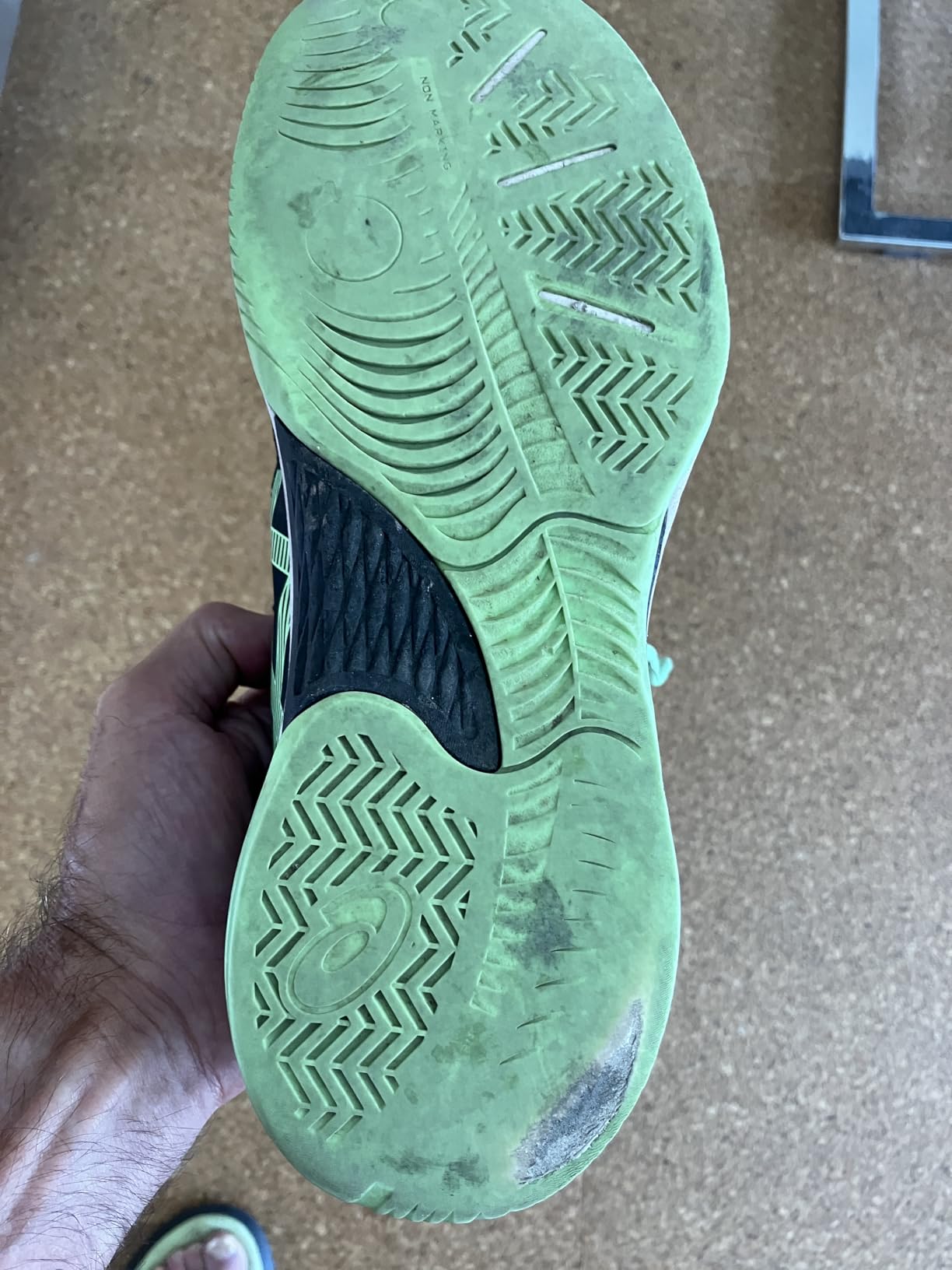
Two things temper the recommendation. The last runs narrow, and wide-foot players report rubbing that does not resolve with wear. The outsole also wears faster than you would hope at three to four sessions per week, with tread going smooth in roughly three months. Neither is a dealbreaker for most recreational players, but if you play daily outdoors, expect a replacement cycle rather than a multi-year shoe.
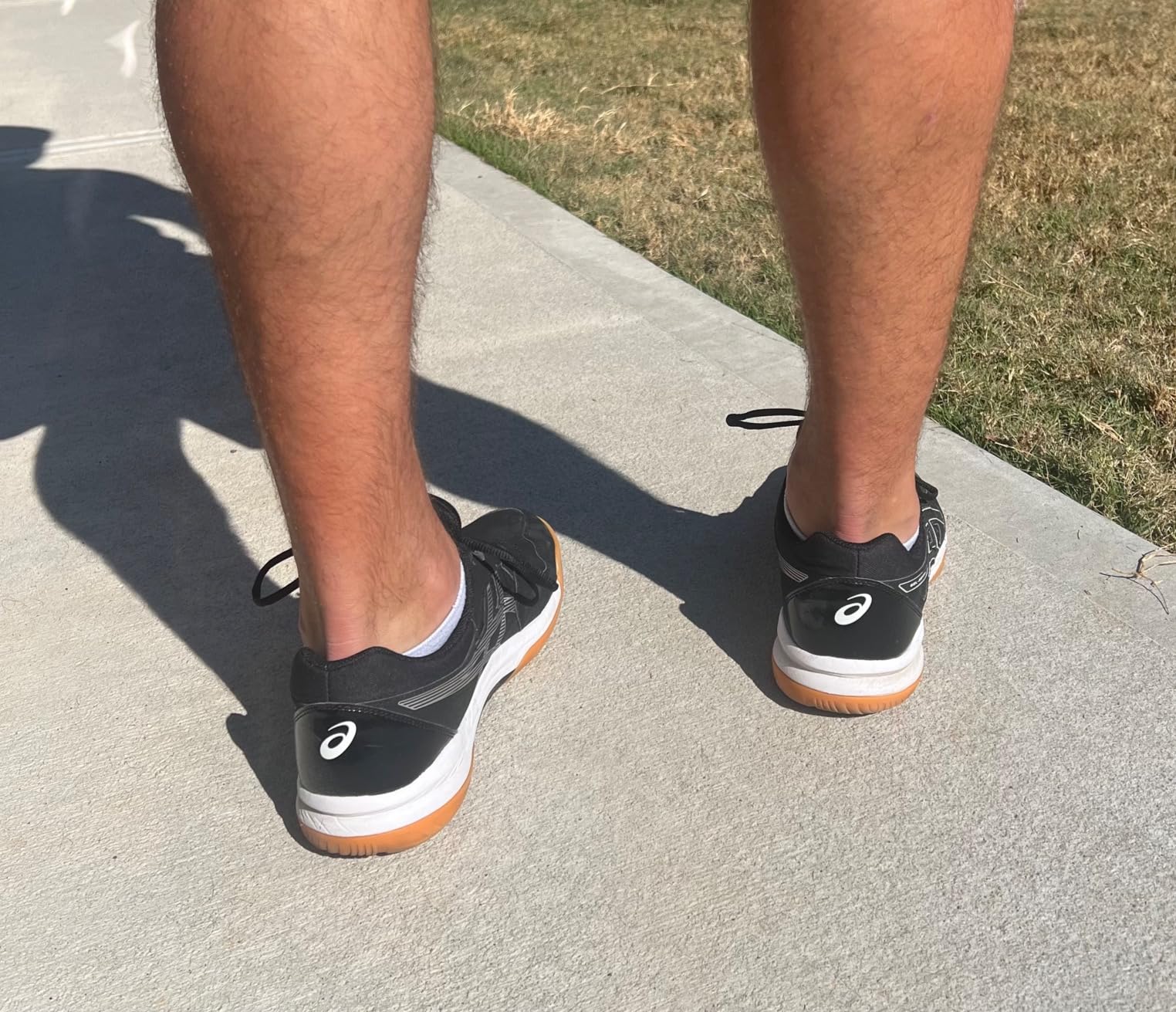
When the Gel-RENMA is the right call
Choose it if you want one shoe that handles both indoor wood and outdoor concrete without a change of footwear, and if you already know you land inside a standard width. The 1.44-pound weight and low profile suit players who rely on quick starts and direction changes rather than sheer cushioning.
It is also the safest pick for anyone who is new to court shoes. Support is present everywhere it matters, cushioning is moderate rather than plush, and there is no stability platform to adapt to. You put it on and play.
When to pick something else
Skip it if you have genuinely wide feet and cannot find your size in a wide width elsewhere, since no amount of breaking in will widen that last. Also consider an alternative if you play four or more times a week outdoors, because the tread wear will arrive sooner than the three-month mark that most owners describe.
2. Skechers Men’s Slip-Ins: Viper Court Reload: Best for Hassle-Free Entry
Skechers Men’s Viper Court Reload Hands Free Slip-Ins Pickleball Sneaker, Navy/Yellow, 8 X-Wide
Hands Free Slip-ins heel pillow
Removable APMA-certified arch insole
Goodyear Performance Outsole
Pros
- Slip-in design needs no laces between games
- Roomy relaxed fit for long sessions
- Removable certified arch support insole
- Strong lateral traction on court
Cons
- Less adjustable than a laced shoe
- Bulkier profile than low-profile court shoes
This is the highest-rated shoe in the group, and the appeal is obvious the first time you put it on. The Slip-ins construction steps into a heel pillow that holds your foot in place, which means no laces to retie between games, no laces loosening in the third game of a rotating doubles session, and no wet laces in July.
Under the shell, the support story is genuine. The removable insole is built on two decades of data and 120000 unweighted foot scans and carries the APMA Seal of Acceptance, and the Goodyear Performance Outsole is rated for lateral traction across pickleball, padel, and tennis. Owners report roughly a 73 percent five-star share, with the arch support and entry convenience driving most of that.
What gives the Reload its edge
The fit is relaxed through the toe and forefoot, so it works well for players who feel pinched by court shoes. The midsole is ULTRA FLIGHT, which keeps the shoe light and responsive rather than soft and slow, and the relaxed fit holds up across a full session without the pressure points we hear about with narrower lasts.
If you play multiple racket sports, that cross-sport rating matters. One shoe covers pickleball, padel, and tennis without a compromise in traction or support.
Where it falls short
The trade-off is adjustability. A slip-in relies on the shape of the last and the heel pillow rather than a lacing pattern, so if you need to cinch down for a narrow midfoot, this is not the shoe. It also sits bulkier than a low-profile court shoe, which some quick players dislike for toe clearance during serves.
3. Skechers Women’s Viper Court Pro Pickleball Shoe: Best Value
Skechers Women’s Viper Court Pro Pickleball Sneaker, Light Pink, 6
Podiatrist-certified arch support
Goodyear Gold compound outsole
ULTRA FLIGHT cushioning
Pros
- Arch support built from 120000 foot scans
- Roomy relaxed fit avoids toe pinch
- Lightweight cushioning absorbs court impact
- Reliable grip indoors and out
Cons
- Mesh upper less supportive on wet or dusty courts
- Runs slightly large for some wearers
The Viper Court Pro is the shoe that comes up most in player conversations about comfort, and the fit is the reason. The toe box and forefoot are cut generously, so the common complaint about court shoes pinching at the fifth toe simply does not show up here for most wearers.
Support is not an afterthought either. The arch system is podiatrist-certified and developed from 20 years of data and 120000 foot scans, the Goodyear Gold compound outsole delivers traction for quick lateral movement, and ULTRA FLIGHT cushioning absorbs impact without dragging the shoe down. Players on r/Pickleball describe the Viper Court Pro line as a strong all-rounder with a wide toe box and hard-cut support, and that description holds up.
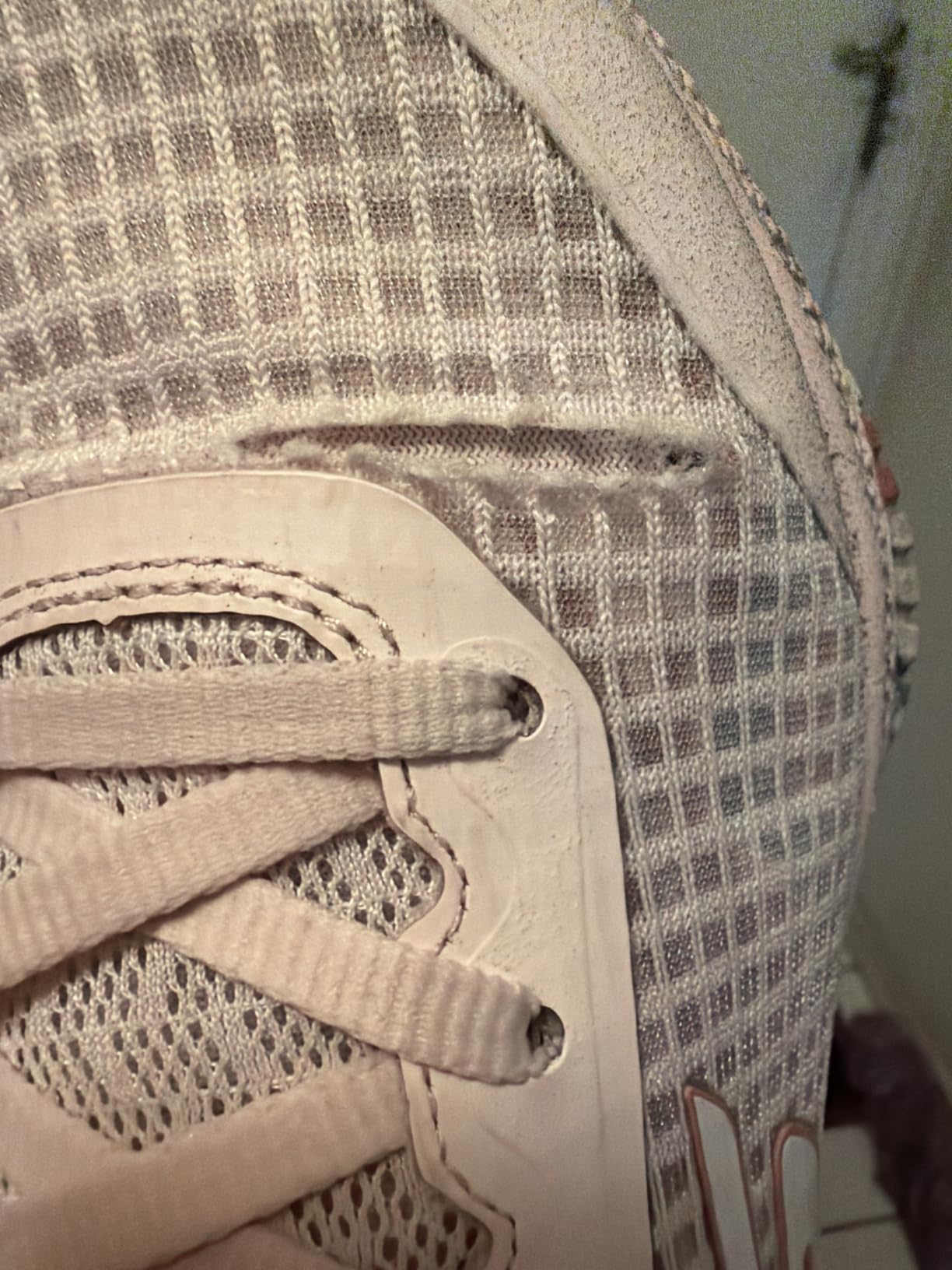
At 2.1 pounds this is not the lightest shoe here, but the weight sits mostly in the cushioning, and owners would rather absorb a serve in their knees and ankles than in their feet. Traction draws praise on both indoor and outdoor surfaces.
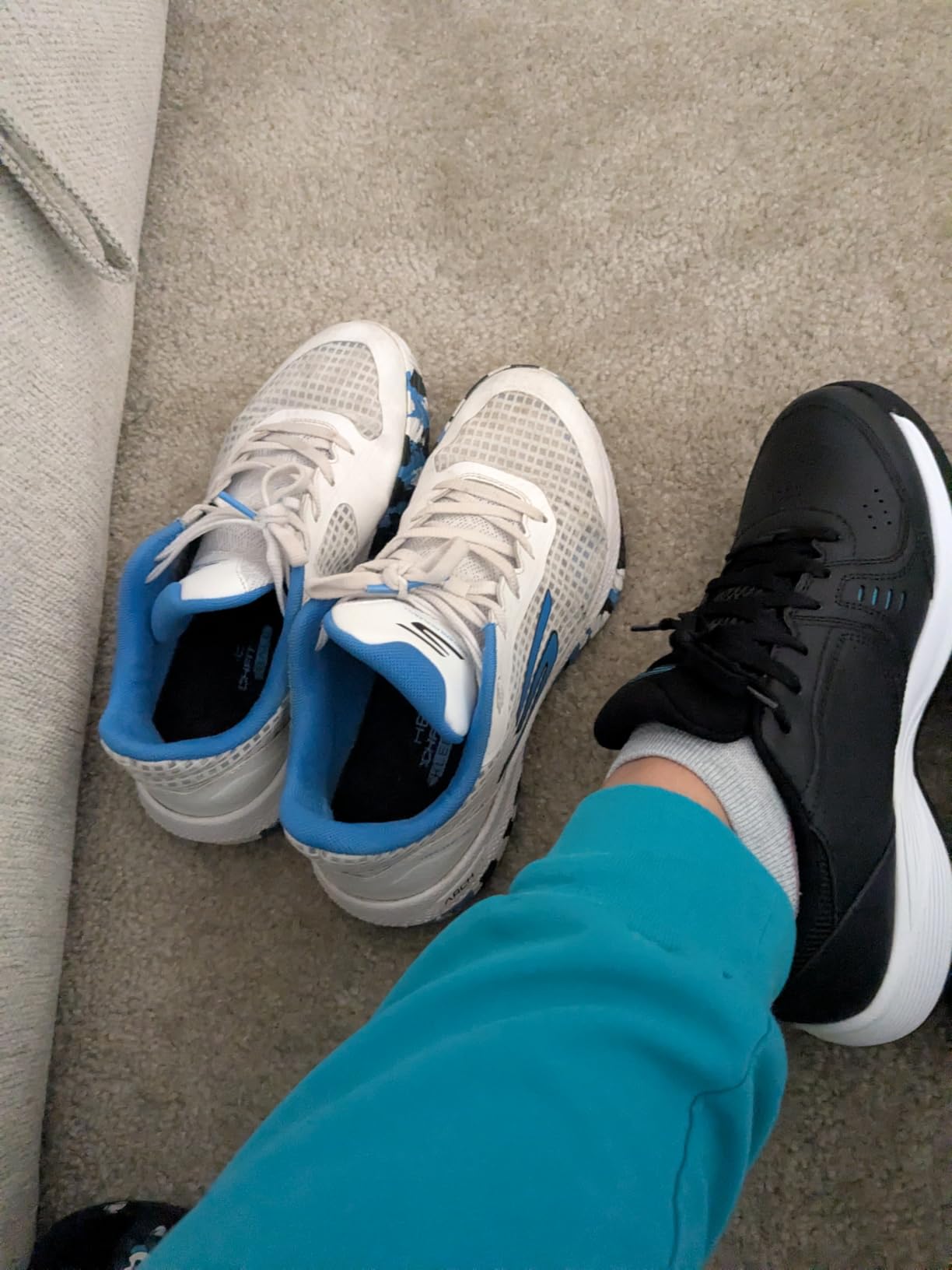
Best for players who hate a tight toe box
If you have given up on court shoes because of pinching, this is the pair to try first. The relaxed fit is the feature that earns the recommendation, and it is consistent across the width rather than generous only in the toe.
It suits a broad range of levels, from a beginner learning split steps to a regular club player playing three or four times a week, without the learning curve that stability shoes can bring.
When to look elsewhere
Pick a different shoe if you play on wet outdoor courts or dusty courts where a mesh upper can let grit in. Sizing also runs slightly large for some wearers, so if you are between sizes, try the smaller option first. Serious tournament players chasing a minimalist profile may find the silhouette too substantial.
4. FitVille Wide Pickleball Shoes: Best for Wide Feet
FitVille Wide Pickleball Shoes for Men White Tennis Shoes Sneakers for All Court Racquetball Athletic Shoes for Racquet Sport | Arch Support & Wide Toe Box (12 Wide, Royal Blue & White)
Wide and X-Wide width options
Dual-density EVA with anti-torsion TPU
OrthoLite ergonomic insole
Pros
- Roomy toe box with real wide sizing options
- Anti-torsion TPU resists twisting on lateral moves
- OrthoLite insole cushions long sessions
- Breathable upper keeps feet dry
Cons
- Support is adequate rather than performance-grade
- Bulkier silhouette than dedicated court shoes
Wide-fit complaints are the most common thread on pickleball forums, and most of the popular tennis-derived court shoes make them worse because the last is built narrow. FitVille is the exception here because the width is built into the shoe rather than faked with a stretched upper, with genuine wide and extra-wide options across many sizes.
The stability hardware is real court-shoe hardware. A dual-density EVA midsole absorbs impact from lunges, an anti-torsion TPU resists the twisting that causes lateral foot pain, and the OrthoLite insole supports natural foot motion. The upper is breathable enough that feet stay cool through a long rally. With 1931 reviews, this is the second most-tested shoe in the group.
Why the width matters more than the cushioning
A cramped forefoot forces your foot to work against the shoe on every direction change. That is the mechanism behind both the rubbing and the lateral soreness that many players report from narrow court shoes, so a true wide last is not a comfort feature, it is a performance feature.
If you have a hard time finding a court shoe that does not pinch, start your search here rather than sizing up in a standard narrow model.
When it is not the answer
This is a comfort-first athletic sneaker more than a highly specialized court shoe, so if you compete and want aggressive torsional rigidity under load, look at a stability platform instead. The bulkier silhouette is also a compromise for players who like a low profile against the court. Check the width chart before ordering, because the sizing across the wide range is not identical to the standard range.
5. WILSON Pickle Pro: Best for Plush Underfoot Cushioning
WILSON Pickle Pro Men’s Pickleball Shoe – Déjà Vu Blue/White, Size 10.5 US
Pickleball-specific contoured fit
Plush ankle-securing collar
OrthoLite EVA molded sockliner
Pros
- Contoured pickleball-specific fit holds through lateral play
- Plush collar secures the ankle
- Stable midfoot with a wider toe area
- High-density OrthoLite foam holds longevity
Cons
- Bulkier than minimalist court shoes
- Wider toe box can feel loose for narrow feet
The Pickle Pro is one of the newer releases in this group and carries the highest rating in the set at 4.4 out of 5. The design is explicitly pickleball-shaped rather than adapted from tennis, with a contoured fit that follows the foot to keep you stable through side-to-side movement.
What sets it apart is the amount of underfoot cushioning. A large heel-to-toe drop adds padding where you land on serves and drops, a plush collar holds the ankle with snug comfort, and a high-density OrthoLite EVA molded sockliner is built for both cushioning and longevity. Extra midfoot reinforcement is placed exactly where lateral pushes load the shoe.
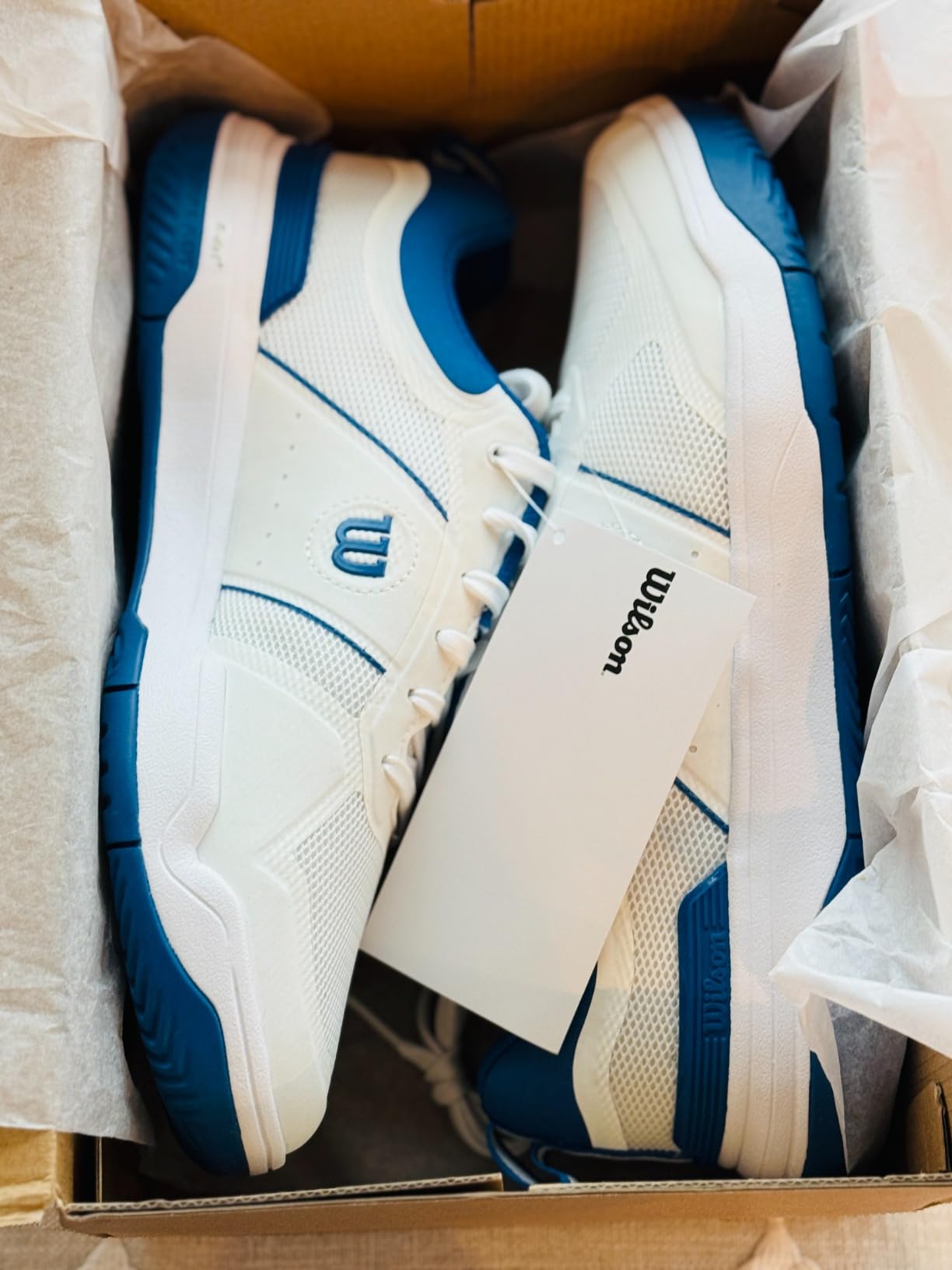
Owners single out secure lateral stability and plush underfoot cushioning as the standouts. The model holds a strong owner satisfaction rate for a newer launch, which is encouraging given how many recent releases disappoint within a season.
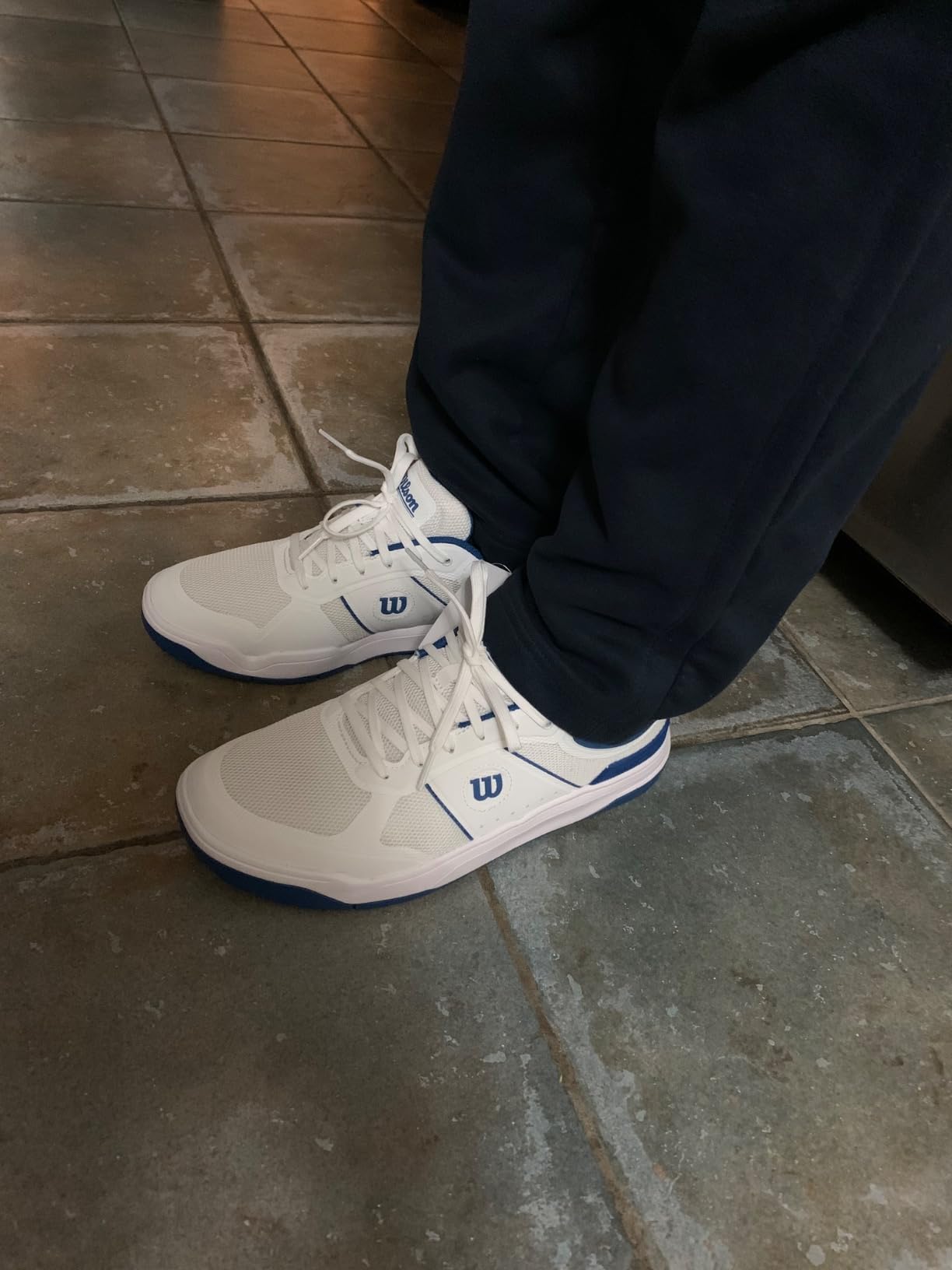
Who this cushioned profile suits
It works best for players who land hard on serves, play doubles where you cover a lot of court behind a partner, or simply prefer a padded ride over a ground-feel ride. The elevated drop also softens the transition into a lunge compared with a flatter court shoe.
Beginners who are still building footwork get a shoe that is forgiving on landings while still holding the foot in place laterally.
Where the fit may frustrate you
If you have narrow feet, the wider toe area can feel loose enough to compromise precision on quick direction changes. The bulkier silhouette also has more material through the midsole than a minimalist court shoe, which some quick doubles players feel through the transition.
6. Reebok Nano Court Sport: Best for All-Court Versatility
Reebok Nano Court Sport Men’s Pickleball or Tennis Shoes for Men, White/Black/Grey 1, 11.5
Herringbone Griptonite outsole
TPU heel clip for stability
ToeTection drag protection
Pros
- Herringbone outsole grips in every direction
- Wrap-up rubber and TPU heel clip hold the foot stable
- ToeTection resists wear from toe drags
- Bootie construction locks the foot in
Cons
- One of the higher-priced shoes in this group
- Bootie fit offers less midfoot adjustability
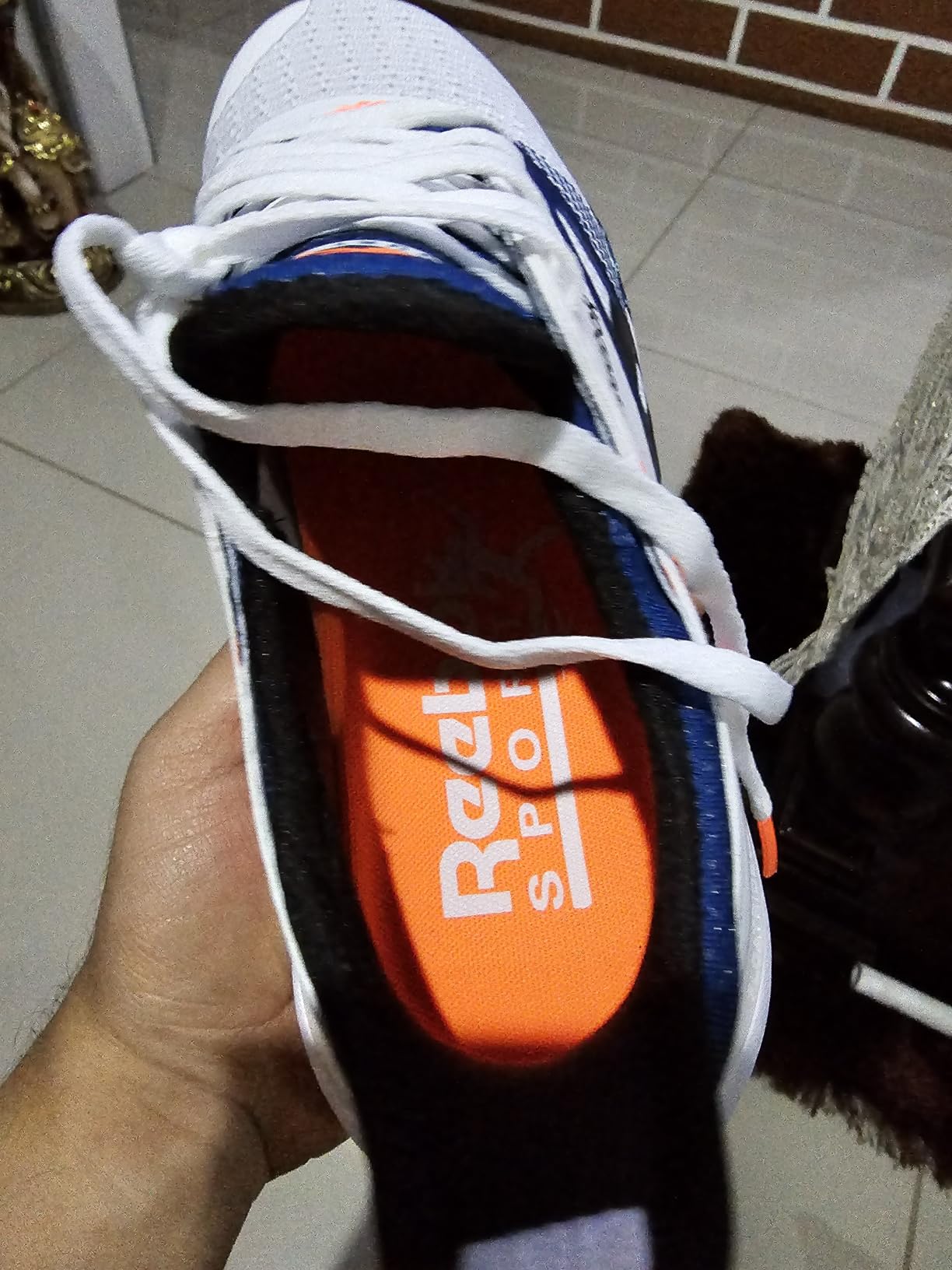
The Nano Court Sport is the shoe in this roundup that most obviously earns its place in a multi-sport rotation. It is rated for tennis, pickleball, padel, racquetball, volleyball, and badminton, and the traction design does not change depending on which of those you show up to play.
The outsole is a full herringbone Griptonite rubber compound, which gives multidirectional grip rather than the directional grip of a straight-lug pattern. A TPU heel clip adds stability at the rear foot, the durable rubber outsole wraps up the sides for lateral containment, and ToeTection reinforcement in the toe guards against the wear that comes from repeated toe drags. Cushioning comes from Floatride Energy Foam under a breathable Flexweave upper, and the bootie construction gives a locked-in feel. Sizes run from 7 to 14.
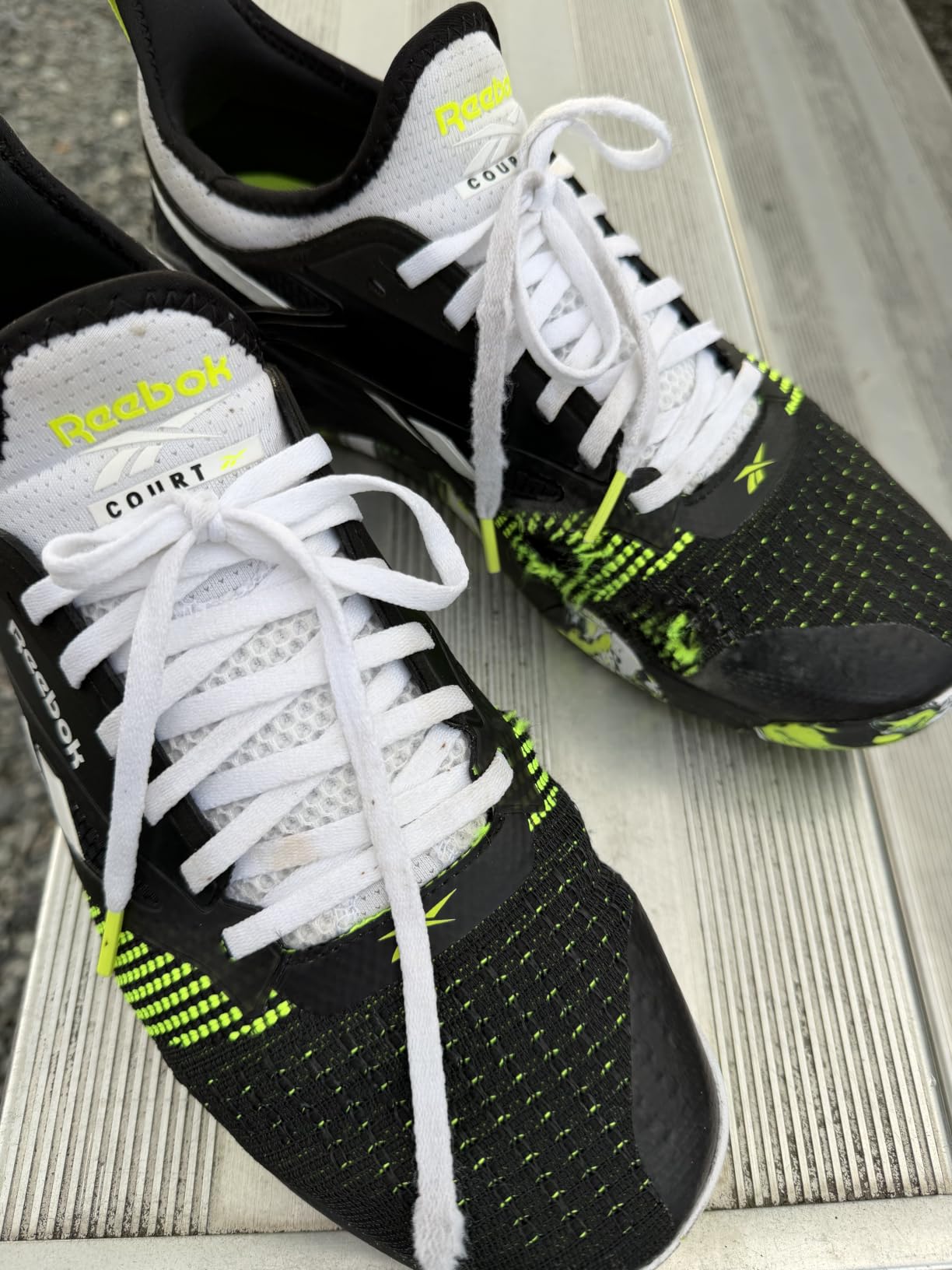
Owners report a 72 percent five-star share, with traction, heel stability, and durability the most common strengths cited. If you also play tennis or padel, this single shoe replaces two pairs in your bag.
Where a full herringbone outsole pays off
A full herringbone pattern places small angled rubber elements across the entire sole, so you grip whether you are pushing forward, sliding sideways, or braking. That is why this outsole works across six sports without adjustment, and why it holds up on indoor and outdoor surfaces alike.
It is also a good choice for players who rotate positions in doubles, since the wide, stable platform reduces the foot rolling inward when you lunge for a short ball.
When it is more than you need
If you play only pickleball a couple of times a week, you will not get full value from the multi-sport engineering. The bootie construction also fits snugly, with less midfoot adjustability than a laced court shoe, and it sits at the expensive end of this group.
7. K-Swiss Women’s Pickleball Supreme Shoe: Best for Competitive Play
K-Swiss Women’s Pickleball Supreme Shoe, Asphalt/White/Peach Amber, 7 M
DRAGGUARD 7.0 outsole reinforcement
180 PSC stability chassis
Targeted at 5-7 days per week play
Pros
- Stability build handles regular lateral loads
- DRAGGUARD 7.0 reinforcement at toe and heel
- Plantar support chassis steadies the midfoot
- Made for competitive weekly volume
Cons
- Stability feel takes adjustment from neutral shoes
- Brand recommends sizing up a half size
- Heaviest shoe in this roundup
This is the only shoe here designed explicitly for someone putting in five to seven days a week, and the engineering follows from that brief. The K-Swiss Pickleball Supreme is a stability shoe, meaning the platform under your foot is firmer and less forgiving than a neutral court shoe, which is exactly what a high volume of sudden direction changes calls for.
Two details do most of the work. DRAGGUARD 7.0 places extra outsole material in the two highest-wear zones, the toe and the heel, so the areas that normally wear through first get reinforcement first. The 180 PSC is a thermal plastic plantar support chassis that stiffens the midfoot across a full degree of rotation, which is the direction that hurts when you lack support.
Why a stability platform pays off at high volume
A neutral shoe lets the foot move freely, which feels good once and gets uncomfortable over hundreds of hours. A stability chassis limits unwanted midfoot motion, and the payoff shows up in the second half of a long session when tired feet start rolling inward on every cut.
If you already own comfortable court shoes and want to upgrade, this is the logical next step rather than a different brand of the same neutral ride.
The adjustment period is real
Stability shoes feel unfamiliar for the first few games, and players coming from neutral athletic shoes sometimes describe the platform as stiff before it clicks. K-Swiss also recommends ordering a half size up from your normal street shoe size. It is the heaviest shoe in this roundup at 2 pounds, so if you chase quick court coverage over plush landings, look at a lighter option instead.
8. ASICS Women’s Game FlyteFoam Pickleball Shoes: Best for Breathability
ASICS Women’s Game FF Pickleball Tennis Shoes, 8.5, White/Calm Indigo
FLYTEFOAM lightweight cushioning
TRUSSTIC stability technology
Breathable PU and mesh upper
Pros
- Lightweight responsive cushioning for long sessions
- TRUSSTIC adds lateral stability on transitions
- PU and mesh upper moves heat and moisture
- Reliable ASICS fit and durability
Cons
- Less lateral support than dedicated stability shoes
- Slimmer cushioning feels less plush than premium rivals
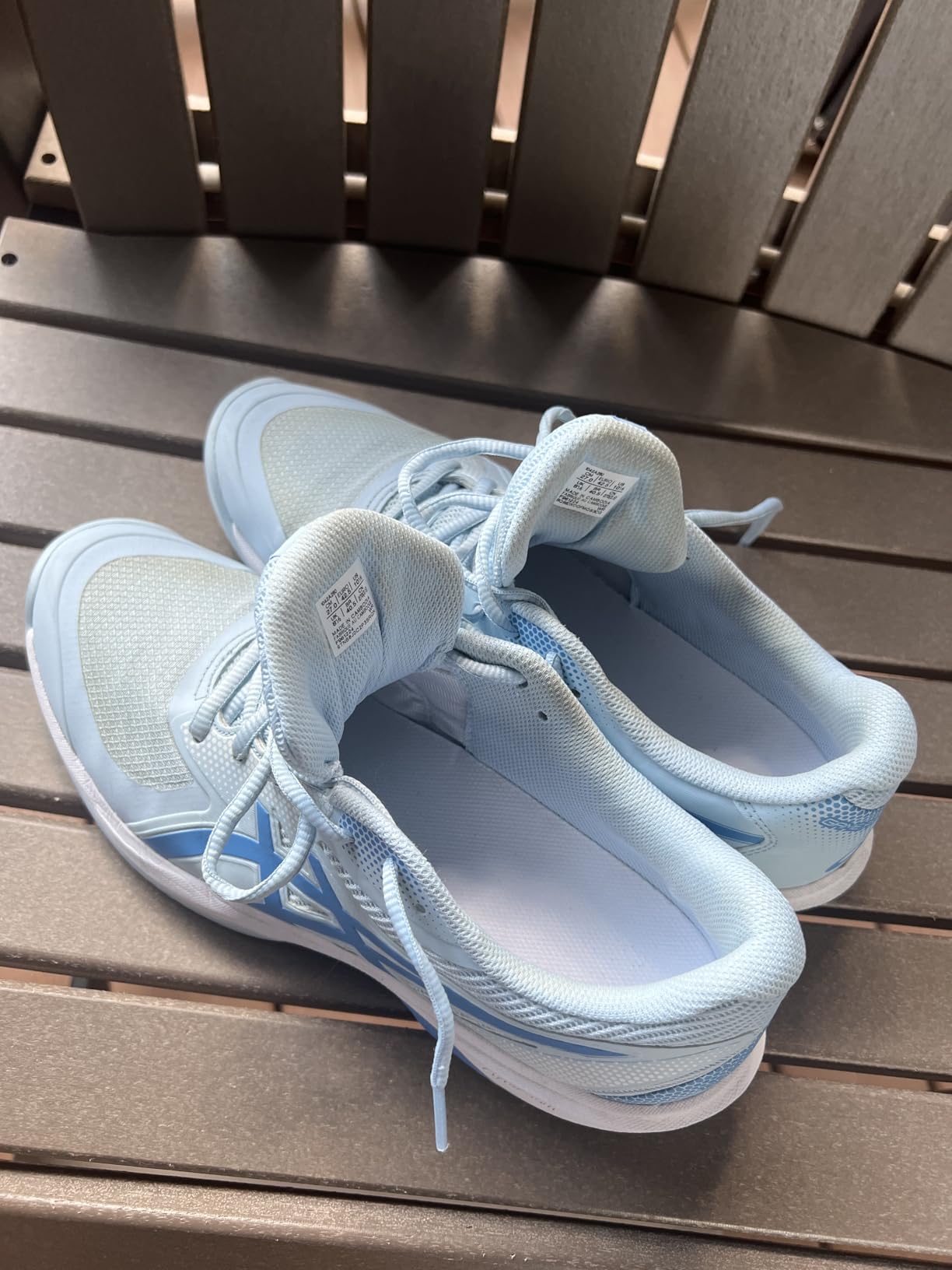
If you play in a hot climate and your feet are the reason you quit early, this is the ASICS to consider. The PU and mesh upper is built for airflow, and it is the first thing reviewers mention about the shoe on warm outdoor courts. At 1.44 pounds, it is also one of the lighter options here.
Cushioning is FLYTEFOAM, which keeps the response quick rather than plush, and TRUSSTIC technology handles stability, improving the platform as your foot loads during a lateral push. The combination suits a player who values a light, breathable shoe over maximum impact padding.
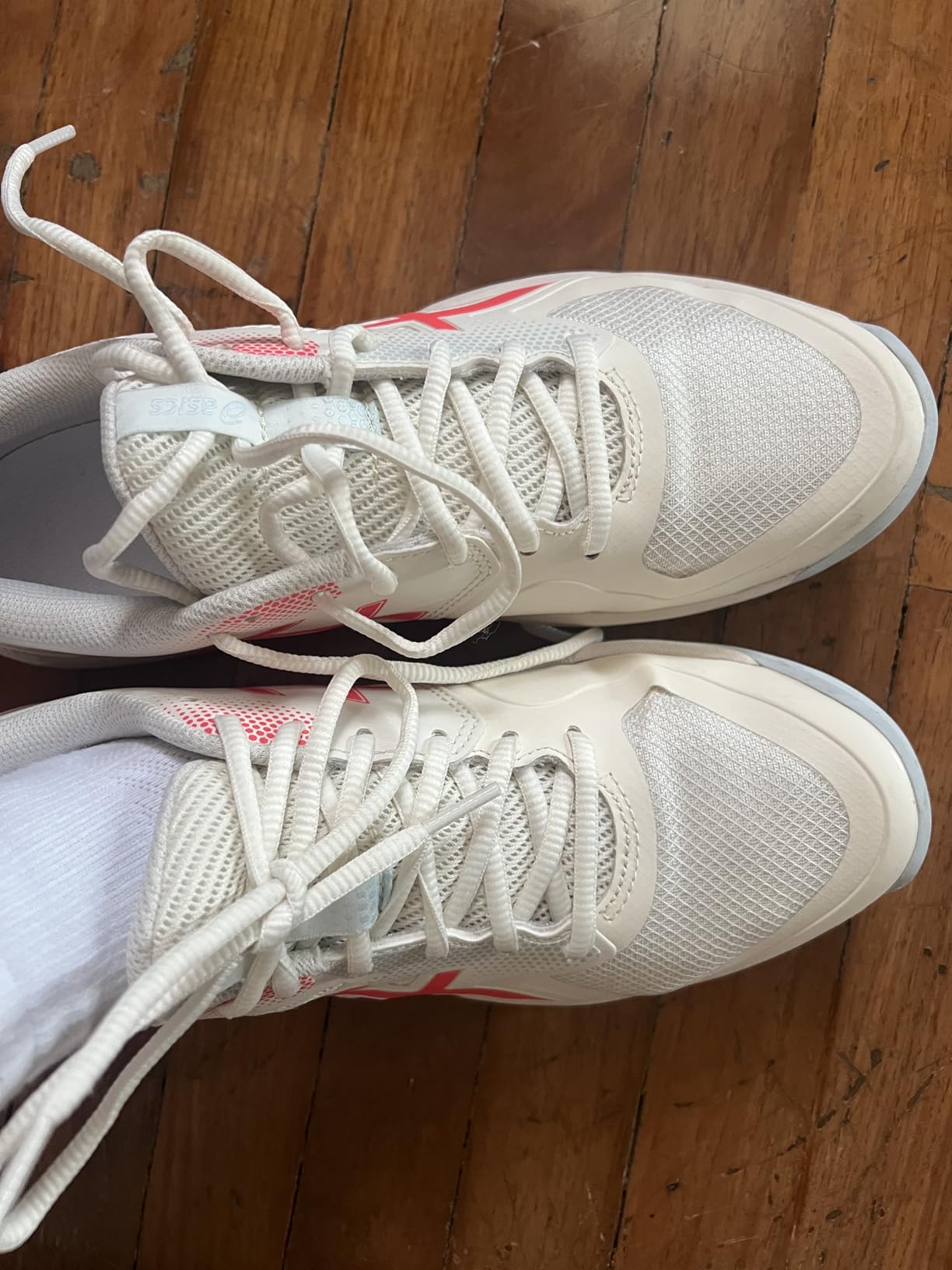
Owners describe steady satisfaction with a responsive, breathable feel, and a mid-tier position in the ASICS range that pairs well with regular recreational play. The shape of the shoe works well for players who want court stability without a heavy stability chassis.
When breathability beats plushness
On outdoor concrete in summer, heat management matters more than a thick midsole, because a thick midsole traps heat as well as absorbing impact. This shoe is built for that trade, and the mesh upper keeps air moving across the foot through long matches.
It is a good fit for doubles players who move a lot and stand less, where responsiveness compounds over a long session.
Where you will notice the trade
Compared with a dedicated stability court shoe, the lateral support here is more modest, so if you have a history of rolling an ankle on lunges, a firmer platform would serve you better. The slimmer cushioning profile also feels less soft under a heavy serve than the K-Swiss Supreme or the WILSON Pickle Pro.
9. K-Swiss Women’s Court Express Pickleball Shoe: Best for Indoor Courts
K-Swiss Women’s Court Express Pickleball Shoe, Ice/White/Honeydew, 8 M
AOSTA II non-marking outsole
K-EVA cushioning midsole
OrthoLite sock liner
Pros
- High-density non-marking outsole protects gym floors
- Leather upper and K-EVA midsole for casual play
- OrthoLite sock liner reduces perspiration
- Light at 9.1 ounces
Cons
- Built for entry-level and part-time players
- Upper stitching can weaken before the outsole
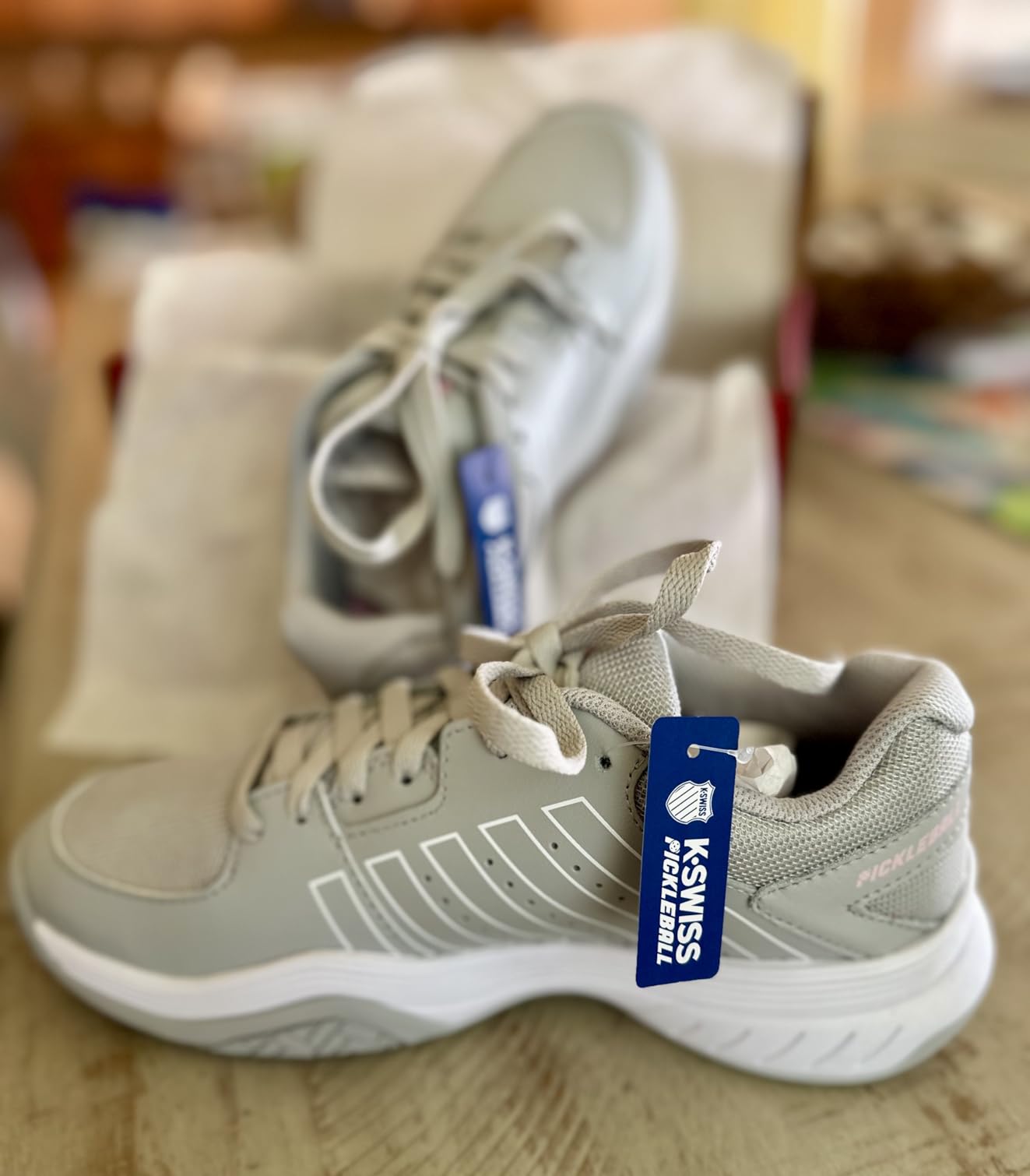
If your indoor facility cares about its hardwood, a non-marking outsole is not optional, and this shoe has one. The AOSTA II rubber compound is high-density and explicitly non-marking, which makes the Court Express a safe choice for community centers, gym floors, and club courts where a marking sole is a genuine problem.
K-Swiss positions the model for the entry-level, part-time, weekend player, and the design matches that brief. A leather upper resists abrasion, K-EVA midsole foam is tuned for cushioning and midsole durability, and an OrthoLite sock liner keeps feet cool and limits perspiration. At 9.1 ounces, it is the lightest shoe in the roundup.
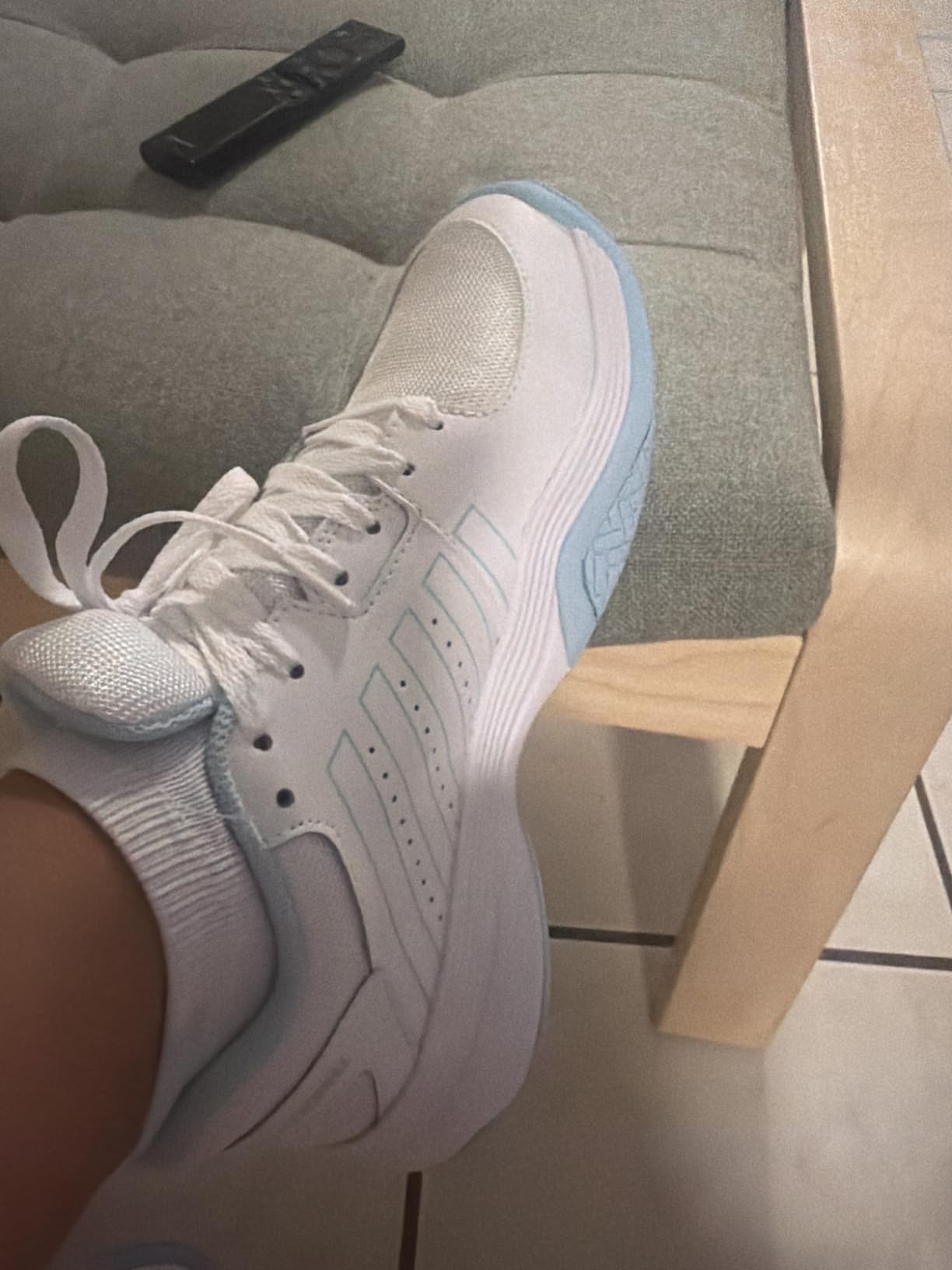
Owners like the affordable leather build and reliable grip, and the wide toe box gives good floor contact and freedom to move laterally. The tradeoff is the durability ceiling you would expect from a part-time player shoe.
Why non-marking matters indoors
Marking soles transfer rubber to the finish, which scuffs the court and, in some facilities, gets you asked to stop playing. Non-marking rubber is formulated to grip without leaving that residue, so it protects the floor and keeps you welcome back.
It is also the reason indoor-only shoes wear out so quickly outdoors, since the same soft compound that spares the hardwood gets destroyed by concrete.
When it is the wrong tool
Do not use this on outdoor concrete as your primary shoe. The upper stitching is the weak link that can fail before the outsole does, and the construction is not aimed at daily play. If you play four or more times a week on hard courts, spend your hours on a shoe with toe and heel reinforcement instead.
10. K-Swiss Men’s Court Express Pickleball Shoe: Best for Entry-Level Play
K-Swiss Men’s Court Express Pickleball Shoe, White/Highrise/Black, 10 M
AOSTA II non-marking outsole
K-EVA cushioning midsole
Wide toe box with reinforced heel
Pros
- Solid traction with no wet-court slippage
- Wide toe box and reinforced heel hold well
- Comfortable on indoor and outdoor courts
- Light on foot for aggressive movement
Cons
- Upper stitching can fail within months
- Runs slightly narrow and heavy for wide feet
- Outsole flattens in four to six months of frequent play
The men’s Court Express shares the same foundation as its women’s counterpart, including the AOSTA II non-marking outsole, the K-EVA midsole, and the OrthoLite sock liner, and it adds a reinforced heel and a wide toe box for a secure hold. Owners consistently report good traction right out of the box, with no slippage even on wet courts, which is the first thing you want to confirm on any new court shoe.
At 10.9 ounces, it stays light on the foot, and comfort holds up for long sessions on both indoor and outdoor courts. K-Swiss designs it for the entry-level, occasional player, and that positioning shows up in what the reviews praise and what they criticise.
A sensible first court shoe
If you are a few months into the sport and playing once or twice a week, this is a low-risk introduction to court-specific footwear. You get non-marking grip, a toe box that allows lateral movement, and a reinforced heel that holds the rear foot down during a stop.
The sock liner also keeps perspiration down, which matters more than people expect in a shoe you wear for ninety minutes at a time.
Know the durability limits
Two weaknesses show up repeatedly. Upper stitching is the first thing to fail, with one owner reporting a blowout inside two months, and the outsole can flatten after roughly four to six months of frequent play. It also runs slightly narrow and can feel heavy for wide feet, so if you have width concerns, go to a real wide last instead of compensating here.
11. Skechers Men’s Viper Court Smash Pickleball Shoe: Best for a Lightweight Feel
Skechers Men’s Viper Court Smash Pickleball Sneaker, Grey/Lime, 12
12.3 ounces per shoe
Non-marking indoor and outdoor outsole
Machine washable vegan construction
Pros
- Very light at 12.3 ounces per shoe
- Non-marking outsole works indoors and out
- Roomy toe box for long sessions
- Machine washable after dusty courts
Cons
- Cushioning is lighter than premium court shoes
- Less midfoot stabilization than stability models
At 12.3 ounces per shoe, the Viper Court Smash is the shoe to consider if you dislike the heavy, grounded feel of a stability platform. It is the lightest option in this roundup and it moves the way most players want a doubles shoe to move: quickly, and without dragging a thick midsole through every direction change.
The outsole is non-marking and rated for both indoor and outdoor traction, so one pair covers a week that includes gym night and outdoor league. ULTRA FLIGHT cushioning with a molded EVA insole gives responsive support rather than a sink-in feel, and the relaxed fit leaves room through the toe and forefoot.
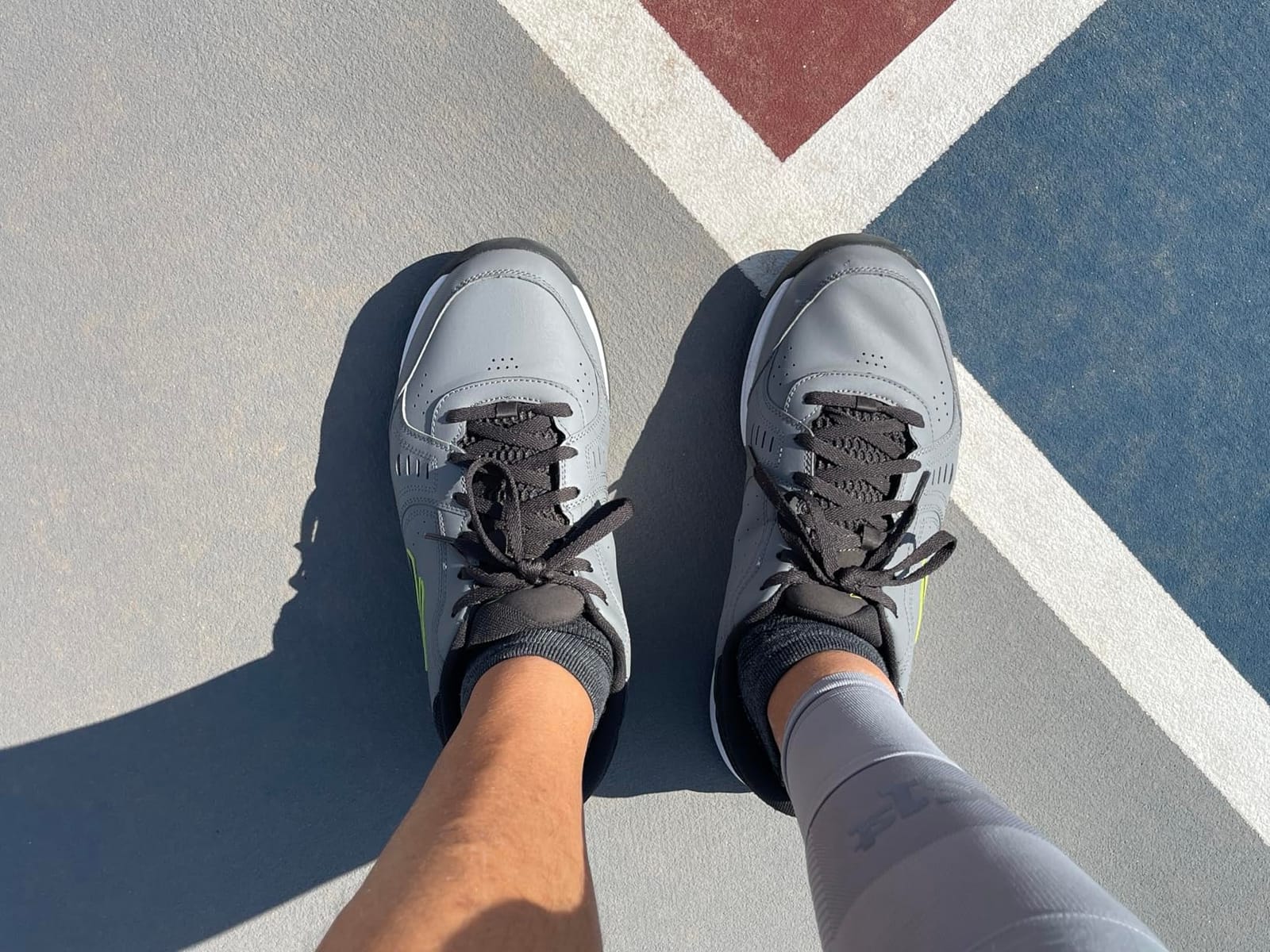
Two practical details separate it from most of the field: the shoe is machine washable, which matters after dusty outdoor sessions, and the construction is entirely vegan with a durable synthetic upper. Players rate it as an easy everyday court shoe.
Who appreciates a light shoe
Multi-sport athletes who play several racket sports in a week tend to gravitate here, because lightness compounds across repeated sessions. The relaxed fit and roomy toe box also suit players who spend time walking and standing between games.
If you are moving from running shoes, this is a comfortable bridge: familiar lightness and flexibility with proper court traction.
The stability trade-off
Limited midfoot stabilization is the honest drawback, and it is the reason we placed this below stability models. Players with a history of ankle rolls on lunges get more protection from a firmer platform. The cushioning is also thinner than what you would feel in a premium court shoe, so if you land hard on every serve, that is where you will feel it.
12. Ryka Women’s Courtside Pickleball Shoe: Best for Casual Recreational Play
Ryka Womens Courtside Pickleball Sneakers Brilliant White 10 M
Perforated leather upper
Women's-specific last
Padded collar and lace-up closure
Pros
- Comfortable for casual and recreational play
- Women's last with a narrower heel and roomier toe
- Perforated leather adds breathability
- Secure adjustable lace-up fit
Cons
- Leather takes longer to break in than mesh
- Cushioning is comfort-oriented rather than responsive
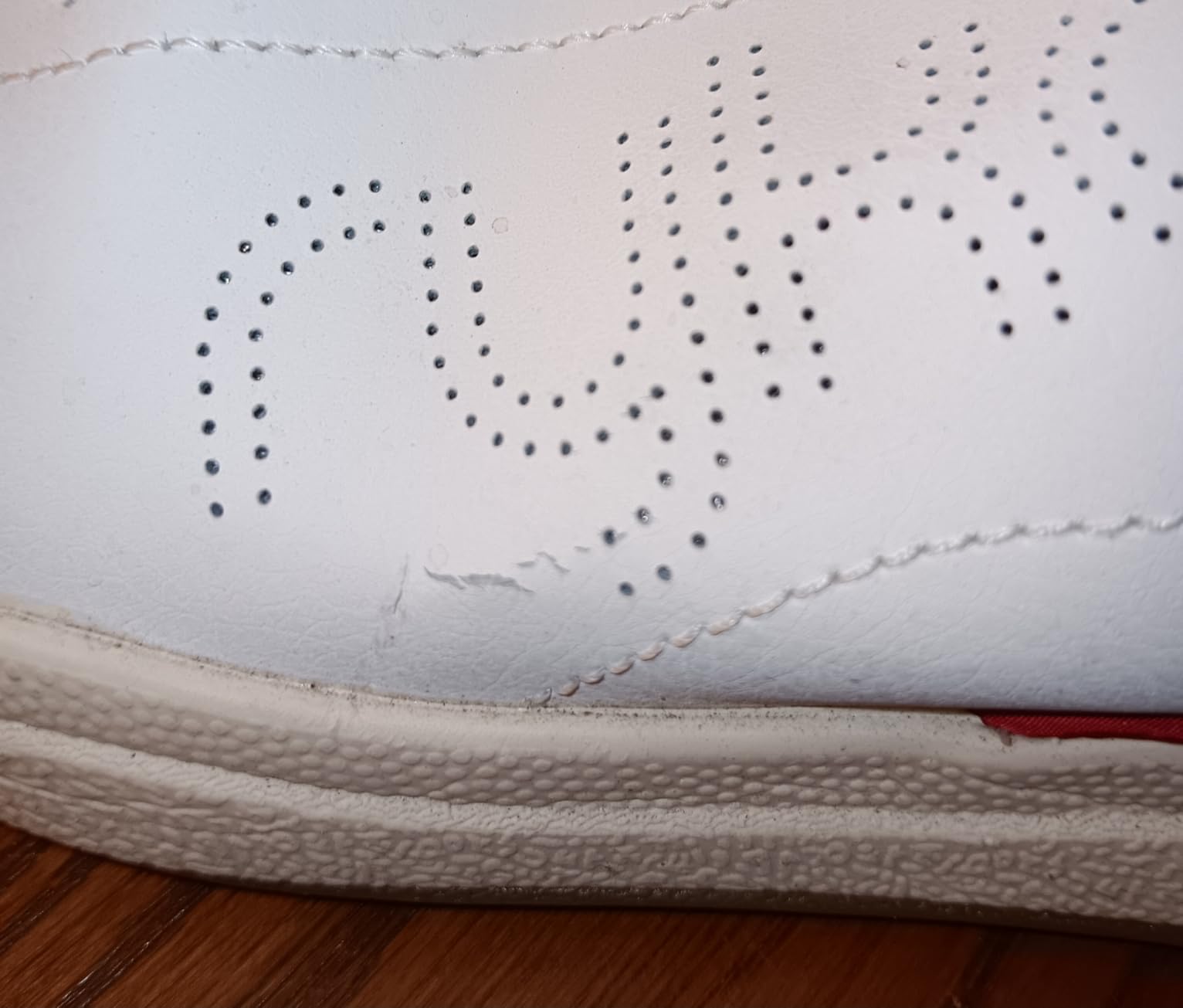
Ryka positions the Courtside for casual performance and pickleball, and that is exactly what it delivers. The cushioning runs thick and comfortable through the whole foot, which suits a recreational player who plays a couple of times a week and wants to walk off the court feeling fine rather than analysing their footwork.
The last is built for women, with a narrower heel to stop the foot sliding and a roomier toe for comfort, and the upper is perforated leather with a padded collar that breathes better than solid leather in warm weather. A lace-up front gives you proper adjustability, which several slip-on and slip-in designs cannot offer.
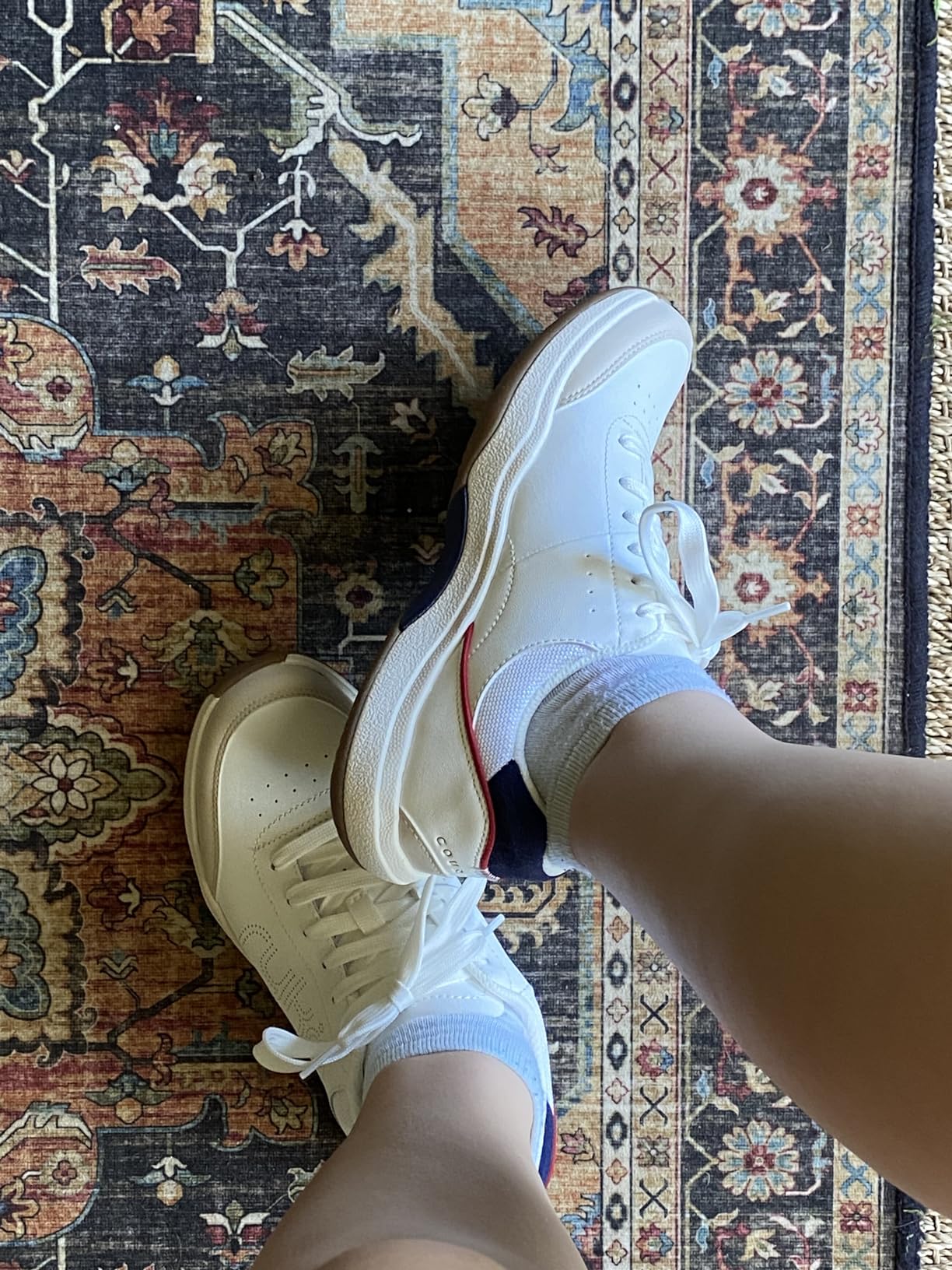
At 1.5 pounds, it is not the lightest shoe here, and the trade is for the padded ride. Owners treat it as a value pick, and the women’s-specific fit is the part they single out most often.
When a comfort-first court shoe is right
This is a good match for a beginner, a senior player, or anyone whose knees would rather have padding under them. The narrower heel and roomier toe combination is worth the effort of trying on, because it stops the heel slippage that pushes your toes forward into the box over a long game.
The lace-up closure also makes it easy to dial the fit down through the midfoot for a secure lateral hold.
Where performance players will want more
Leather is less flexible than mesh, so this needs a real break-in period before it moves with your foot. The cushioning is built for comfort rather than quick response, which means it feels softer and slower under explosive pushes. If you play competitively or run hot courts all summer, a mesh-upper court shoe breathes and flexes better.
Indoor or Outdoor: Which Outsole You Actually Need
This is the single most damaging mix-up in pickleball footwear, and the forum threads about it repeat constantly. A player buys a soft non-marking shoe for the gym, wears it on outdoor concrete a few times, and destroys the outsole in a season. The soft gum-style compound that spares a hardwood floor has nowhere to hide against rough concrete.
Non-marking indoor soles use softer rubber that grips polished wood without leaving residue. They feel more comfortable and give better court feel on a clean floor, but they wear out fast on asphalt and concrete, and some facilities will ask you to stop using a marking sole. The K-Swiss Court Express models are the clearest example of this category in our list.
Durable outdoor soles use harder, higher-abrasion rubber compounds, sometimes with a herringbone pattern, that survive concrete but can mark a finished wood floor. If your club has a strict no-marking policy, confirm before buying an outdoor-only shoe, and keep a separate indoor pair.
Tread pattern matters within each category. A full herringbone places angled rubber elements across the entire sole for multidirectional grip, which suits a player who moves in every direction on the same shoe. A partial herringbone concentrates rubber in the high-wear heel and forefoot zones, preserving a smooth center for pivots and serving. Players who rotate positions constantly benefit from full coverage; players with a repetitive stance can save weight with a partial pattern.
Our practical advice is simple. If you split your week between a gym and an outdoor park, buy two pairs rather than compromising one. If you only play one surface, pick the outsole built for that surface, and accept that you will replace outdoor shoes sooner.
How to Choose Pickleball Shoes That Fit Your Game
Here is the checklist we use when narrowing the field, in the order that matters most.
1. Get the width right before anything else. Narrow-fit complaints are the most common complaint on pickleball forums, and tennis-derived lasts are often the cause. If a shoe pinches at your fifth toe, no amount of breaking in fixes it. Look for genuine wide or extra-wide options, and only size up in a narrow model as a last resort. A half size up is a length fix, not a width fix.
2. Match the platform to your play volume. A neutral cushioning shoe suits recreational play and feels better from day one. A stability platform with a firmer midfoot chassis suits players on court five or more days a week, though it takes a few games to adapt. Over-buying stability is a real mistake if you only play monthly.
3. Check whether the outsole suits your surface. Non-marking for indoor wood that must stay unmarked, durable hard rubber for concrete. This is the decision described in the previous section, and getting it wrong shortens the life of the shoe faster than any other factor.
4. Think about the upper and the break-in. Mesh breathes and flexes immediately, which suits hot weather and long sessions. Leather lasts longer but needs several games before it moves with your foot. Slip-ins and slip-ons are convenient between games but give you less adjustability through the midfoot.
5. Look for wear reinforcement where you need it. Toe drags and heel wear are what end court shoes. DRAGGUARD reinforcement at the toe and heel, or ToeTection in the forefoot, extends shoe life noticeably for players who lunge and push off hard. It is one of the most overlooked features in this category.
On the injury question players keep asking about
Pickleball generates more repeated lateral loading than almost any other racket sport, and the three complaints that come up are lateral foot pain, rolled ankles, and knee impact. They usually share a cause: a shoe that is not holding the foot through a direction change. A wider platform, a firmer midsole, and a secure heel counter reduce the inward roll that drives all three. Persistent lateral foot pain in particular is worth taking to a clinician rather than buying another pair of shoes, because it can point to peroneal tendon irritation that rest solves faster than shopping does.
What the pros wear, and where these shoes come from
Tour-level pickleball has no separate footwear category, so elite players wear shoes drawn from tennis, badminton, and volleyball lines, and the same families dominate tournament bags. That is a useful shortcut when you are choosing: a tennis or badminton court shoe already has the herringbone traction and lateral chassis you need, and a volleyball shoe already has a wide stable base for quick stops. The dedicated pickleball models in our list add pickleball-specific fit details, most obviously a contoured last and toe-drag reinforcement.
Many players add a third-party insole to a court shoe rather than hunting for a high-arch model, and that is a reasonable fix for a narrow fit as long as the base width works. If you are still deciding on a paddle to match, our pickleball paddle roundup breaks down the same way.
When to replace your shoes
Replace a court shoe when the tread smooths out, when the toe cap begins to flex freely, or when the midsole stops returning after a session. Owners report outsole wear windows anywhere from three months at three to four sessions a week on outdoor concrete to four to six months at a more moderate pace. A useful test: if you can no longer read the tread pattern or you feel your foot sliding slightly on a stop, the cushioning is still fine and the outsole is finished.
For players who want a completely different kind of footwear recommendation, our guides to trail running shoes and hiking shoes cover very different terrain, while our walking shoes guide is the one to read if court time is low and general comfort is the priority.
Frequently Asked Questions
What shoes do pickleball pros wear?
Tour-level pickleball has no separate footwear category, so professionals wear shoes built for tennis, badminton, and volleyball. Those shoes already deliver the full herringbone traction and lateral chassis the game needs. Dedicated pickleball models add a contoured last, toe-drag reinforcement, and a slightly lower profile for the serve motion. Pick a current model rather than an older release, because most published roundups still recommend shoes that have since been replaced.
What shoes do podiatrists recommend for pickleball?
The recommendation is usually a well-fitting court shoe with a wide toe box, a firm midsole that resists twisting, and a secure heel counter, not a specific brand. Those three features reduce the inward foot roll that drives lateral foot pain, rolled ankles, and knee impact. Players with a history of ankle rolls should look for a stability platform, and anyone with persistent lateral foot pain should see a clinician instead of shopping for a fix.
Is there a difference between a tennis shoe and a pickleball shoe?
The traction science is largely the same, since both games demand side-to-side movement on a hard surface. Pickleball shoes tend to differ in a flatter profile for quicker reaction, a contoured last shaped for the sport, and reinforcement in the toe and heel for the toe drags common in pickleball. A current tennis court shoe works well for most recreational players, which is why several shoes in our list are built for both sports.
What are the best sport shoes for pickleball?
Tennis, badminton, squash, and volleyball shoes all translate to pickleball because each was built for lateral court movement. Tennis and badminton shoes bring herringbone traction and a firm midsole, while volleyball shoes bring a wide, stable base for repeated hard stops. Volleyball shoes are usually the most forgiving fit, which helps players with wide feet. Dedicated pickleball models are the best choice only when you want sport-specific fit details or toe-drag protection.
Should I size up in pickleball shoes?
Only when a brand tells you to or when you sit between sizes on a narrow last. Most players with wide feet should look for a genuine wide or extra-wide width instead, because sizing up adds length to the toe box rather than width to the forefoot. Check each brand’s sizing chart, read owner reports for that specific model, and remember that relaxed-fit styles often already run large.
The Best Pickleball Shoes for the Way You Play
After working through twelve pairs, the ASICS Gel-RENMA is still the pick we recommend most often, because dependable grip, real midfoot and ankle support, and the largest body of owner feedback in the group all point to the same conclusion. Players who need a genuine wide last should start with the FitVille, and anyone who would rather not deal with laces at all will find the Viper Court Reload’s slip-in design hard to argue with.
Match the outsole to your surface before anything else, and buy the width you actually need rather than a length you can grow into. That two-minute check will do more for your game than any upgrade in midsole technology.