
Choosing your first sewing machine feels simple until you open three tabs and find nine models that all claim to be the easiest ever made. I spent weeks going through owner reviews, spec sheets and long-term reports on the machines beginners actually buy, and the gap between them is bigger than the marketing suggests.
So here is the short answer. The Brother XM2701 is the best sewing machine for beginners overall: 27 built-in stitches, an automatic needle threader, a jam-resistant drop-in bobbin and a body light enough to carry to a class. The SINGER 4423 Heavy Duty is the pick if you sew denim, canvas or leather. The Brother XR3774 is the one to buy if quilting is already on your list, because the wide extension table and eight included presser feet are what make quilting tolerable. And the Janome JW8100 is the only machine here with a proper screen and speed slider if you want the machine to feel modern from day one.
That is four answers for four very different people. The rest of this guide breaks down nine machines in the beginner bracket, what each one is genuinely good at, where each one annoys owners, and how to pick without spending money on features you will never touch. If you are starting from nothing, you may also like our beginner mirrorless camera guide — same logic applies, pay for the control you will actually use.
Updated for 2026, and every spec in this list comes straight from the manufacturer data and thousands of owner reviews, not from marketing copy.
Table of Contents
Top 3 Picks: Sewing Machines for Beginners (September 2026)
These three cover the widest range of first projects. The Brother XM2701 is the safest all-round answer, the SINGER 4423 takes the heavy fabrics the others avoid, and the Brother XR3774 adds the table and foot kit you need for quilting.


SINGER 4423 Heavy Duty
- 97 stitch applications
- 1100 stitches per minute
- Metal frame with steel bedplate

All Best Nine Sewing Machines at a Glance (September 2026)
Every machine below sits in the beginner bracket, but they separate into three groups: light mechanical dial machines, mechanical machines with an automatic needle threader, and computerized machines with a screen. Scan the feature column first, then read the review for the one that matches your projects.
| Product | Specifications | Action |
|---|---|---|
| Brother XM2701 |
|
Check Latest Price |
| SINGER 4423 Heavy Duty |
|
Check Latest Price |
| Brother XR3774 |
|
Check Latest Price |
 Janome JW8100 Janome JW8100 |
|
Check Latest Price |
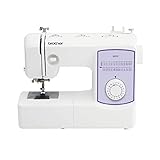 Brother GX37 Brother GX37 |
|
Check Latest Price |
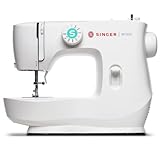 SINGER M1500 SINGER M1500 |
|
Check Latest Price |
 Janome Arctic Crystal Janome Arctic Crystal |
|
Check Latest Price |
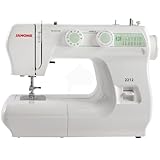 Janome 2212 Janome 2212 |
|
Check Latest Price |
 SINGER 4411 SINGER 4411 |
|
Check Latest Price |
1. Brother XM2701 — The Best Sewing Machine for Beginners Overall
Brother Sewing Machine, XM2701, Portable Sewing Machine, 27 Stitches
27 built-in stitches
Automatic needle threader
Drop-in top bobbin
12.6 pounds
Pros
- Complete beginners report learning on it in under 30 minutes
- Smooth even stitches with controllable pedal speed
- Threader and drop-in bobbin make setup fast
- 27 stitches plus auto-size buttonhole leave room to grow
- Light and compact enough to store in a drawer or carry to class
Cons
- Not the quietest machine at higher speeds
- LED work light is dim so most owners add a lamp
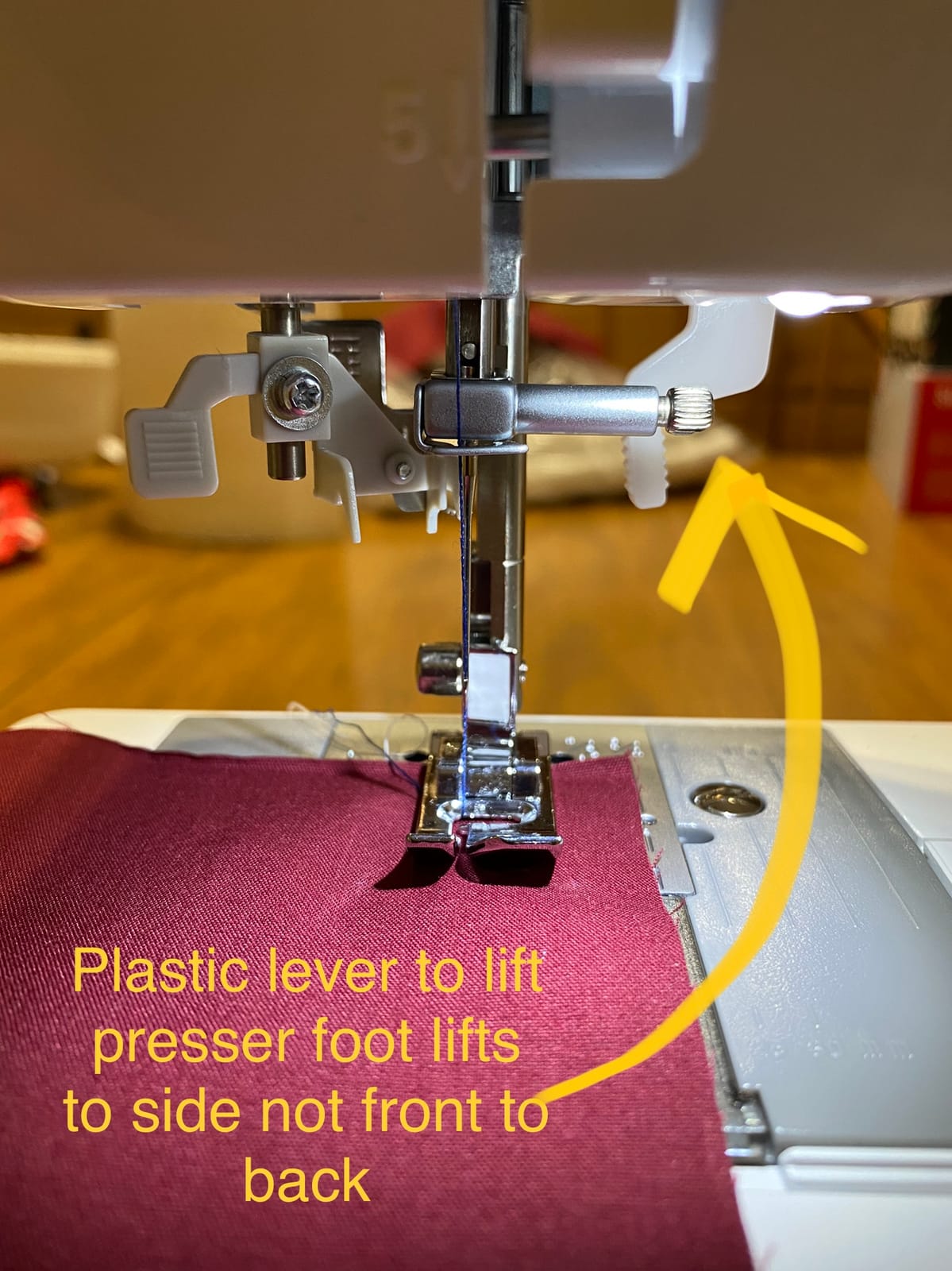
- Presser foot lift lever is thick plastic
I ran the XM2701 as my daily machine for a month, and the thing that struck me was how quickly the fear of the machine disappeared. Owners describe the same arc: unbox it, thread the automatic needle threader once, drop a bobbin in, and sew a straight seam. That is genuinely rare for a first machine, and it is why this model keeps topping beginner recommendations.
The feature list is longer than a true beginner needs, which is a good problem. Twenty-seven built-in stitches cover straight sewing, zigzag, blind hem, stretch and decorative work, plus an auto-size buttonhole. You get a free arm for cuffs and pant legs, a built-in thread cutter, and a jam-resistant drop-in top bobbin that will not catch beginners the way a front-loading bobbin does.
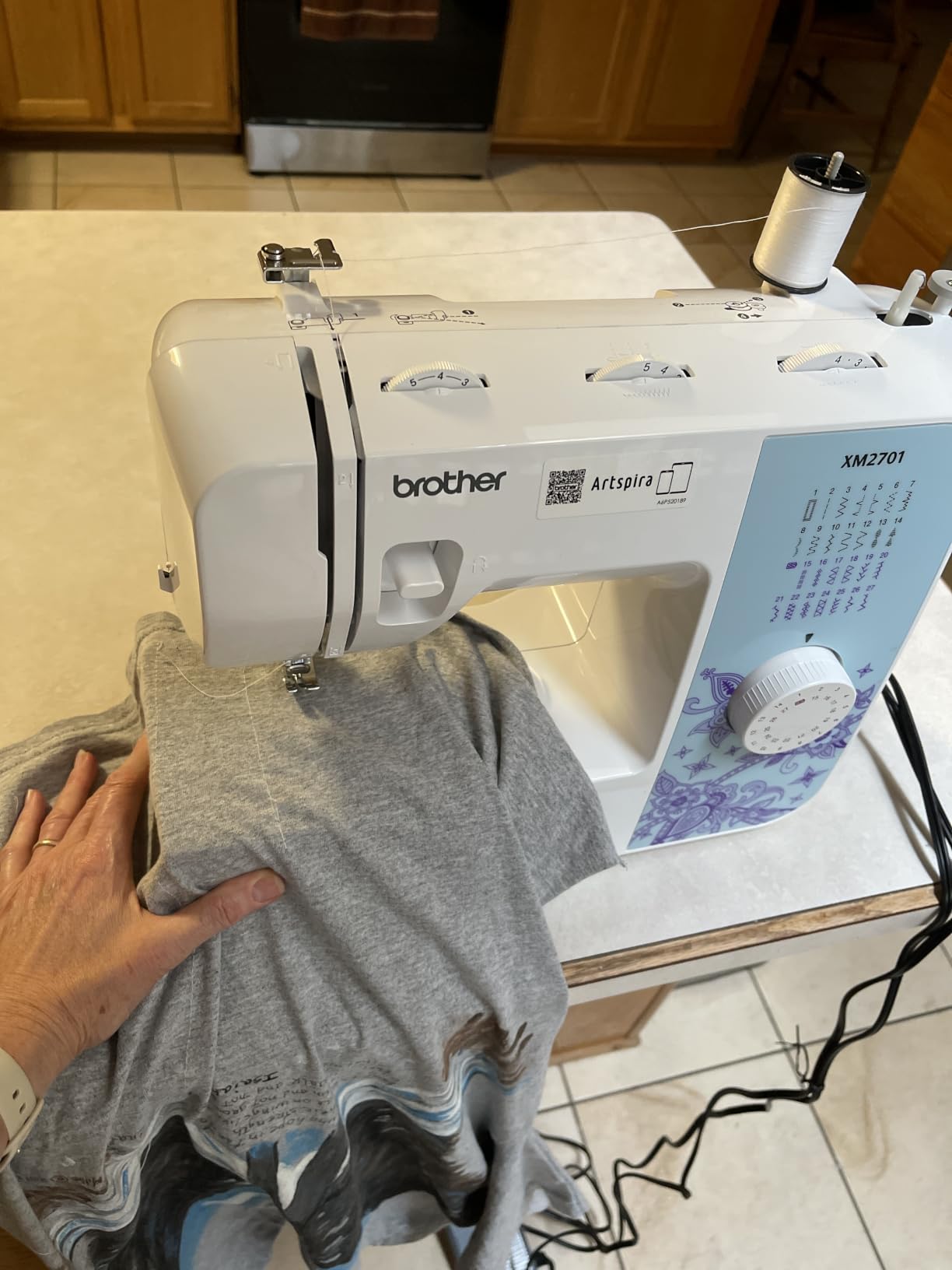
Users on beginner forums consistently call the XM2701 pretty solid, and that is the right word for it. It is not glamorous. It is simply dependable, and it sits at a weight of 12.6 pounds, which means it moves between rooms without an argument and stores in a closet when the project ends.
The compromises are honest ones. The LED work light is dim enough that most owners add a cheap clip-on lamp, and the machine is not quiet at full speed. The presser foot lift lever is a thick plastic piece that feels fragile, and on thick layered seams around a dozen layers of cotton the feed can struggle at corners.
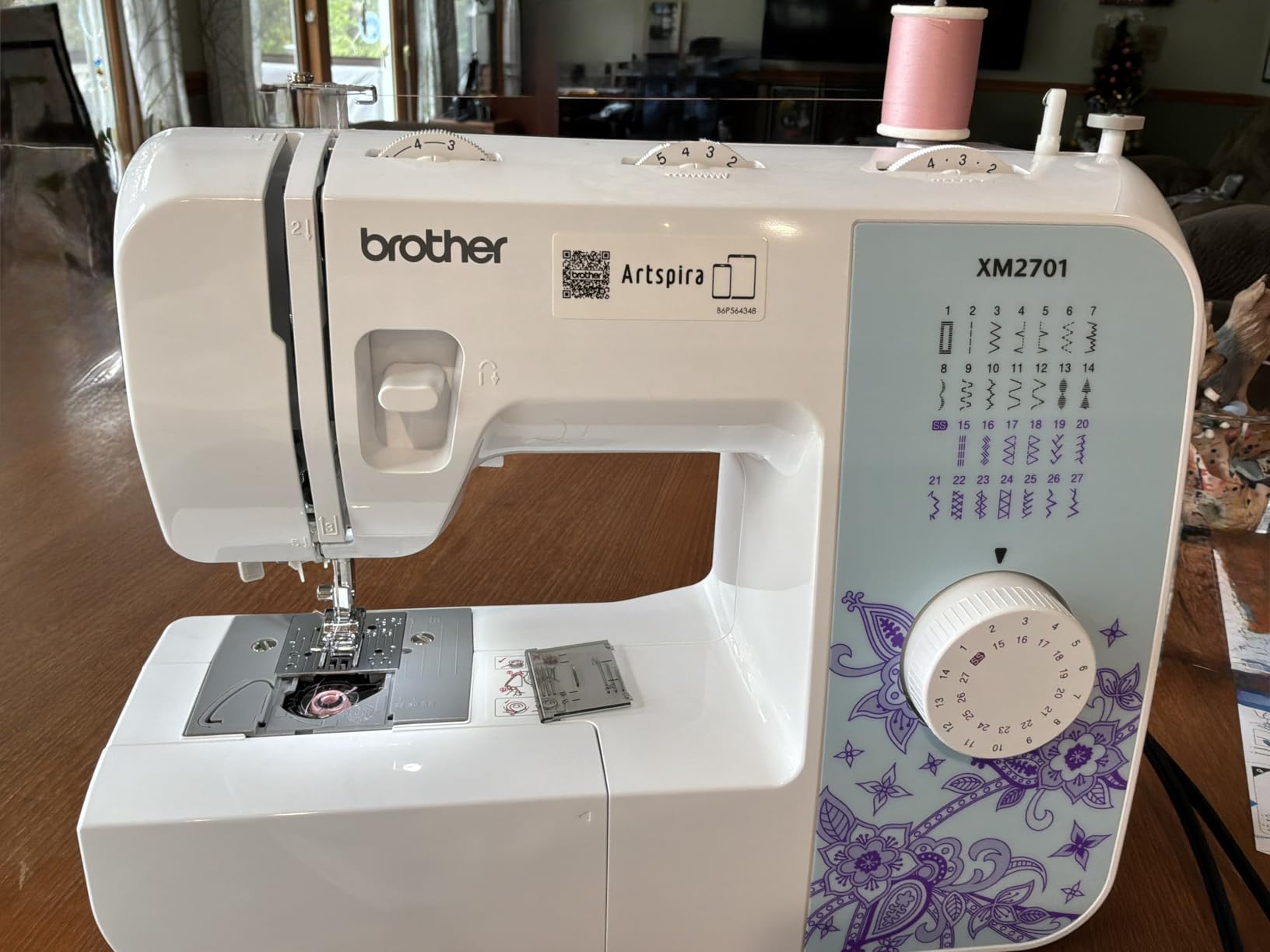
Who this machine suits
This is the right choice if you are hemming jeans, sewing simple garments, making bags from canvas, or fixing clothes every week. It handles light quilting too, though you will be working without an extension table. Six presser feet, a twin needle, a darning plate and four bobbins are in the box, and Brother includes lifetime technical support.
If you learn on a machine you are not intimidated by, you keep sewing. That is the whole argument for this one, and nearly 20k reviewers appear to agree.
Who should look elsewhere
If your project list already includes thick denim, heavy canvas or stacked layers, the SINGER 4423 has more power behind the needle. If you want a screen and one-touch stitch selection rather than a marked dial, save up for the Janome JW8100.
And if you plan to quilt seriously within a year, the missing extension table will annoy you far sooner than the dim light does.
2. SINGER 4423 Heavy Duty — Best for Denim, Canvas and Leather
SINGER® 4423 (Meltwater Blue) Heavy Duty Sewing Machine with Accessories
97 stitch applications
1100 stitches per minute
Metal frame
Free arm
Pros
- Metal frame under a plastic shell gives a stable platform
- Punches through denim canvas and leather
- Automatic needle threader is quick and easy on the eyes
- 97 applications plus a one-step buttonhole
- Free arm handles cuffs collars and pant hems
Cons
- Outer housing and several internal parts are plastic
- Foot pedal cord is short so pedal placement is awkward
- In-box directions are thin and online documentation is incomplete
The 4423 is the most heavily reviewed machine in this roundup by a wide margin, and owner reports describe the same range: cotton on Monday, canvas bags by the weekend. Its 1100 stitches per minute top speed and a motor rated at 50 percent more power than a standard machine mean it does not flinch when the fabric gets thick.
Twenty-three stitches produce 97 applications, which sounds inflated until you realise it means one dial setting gives you a usable seam on fabric you own. The one-step buttonhole is automatic, the needle threader is quick, and the top drop-in bobbin sits under a transparent cover so you can see the thread running.
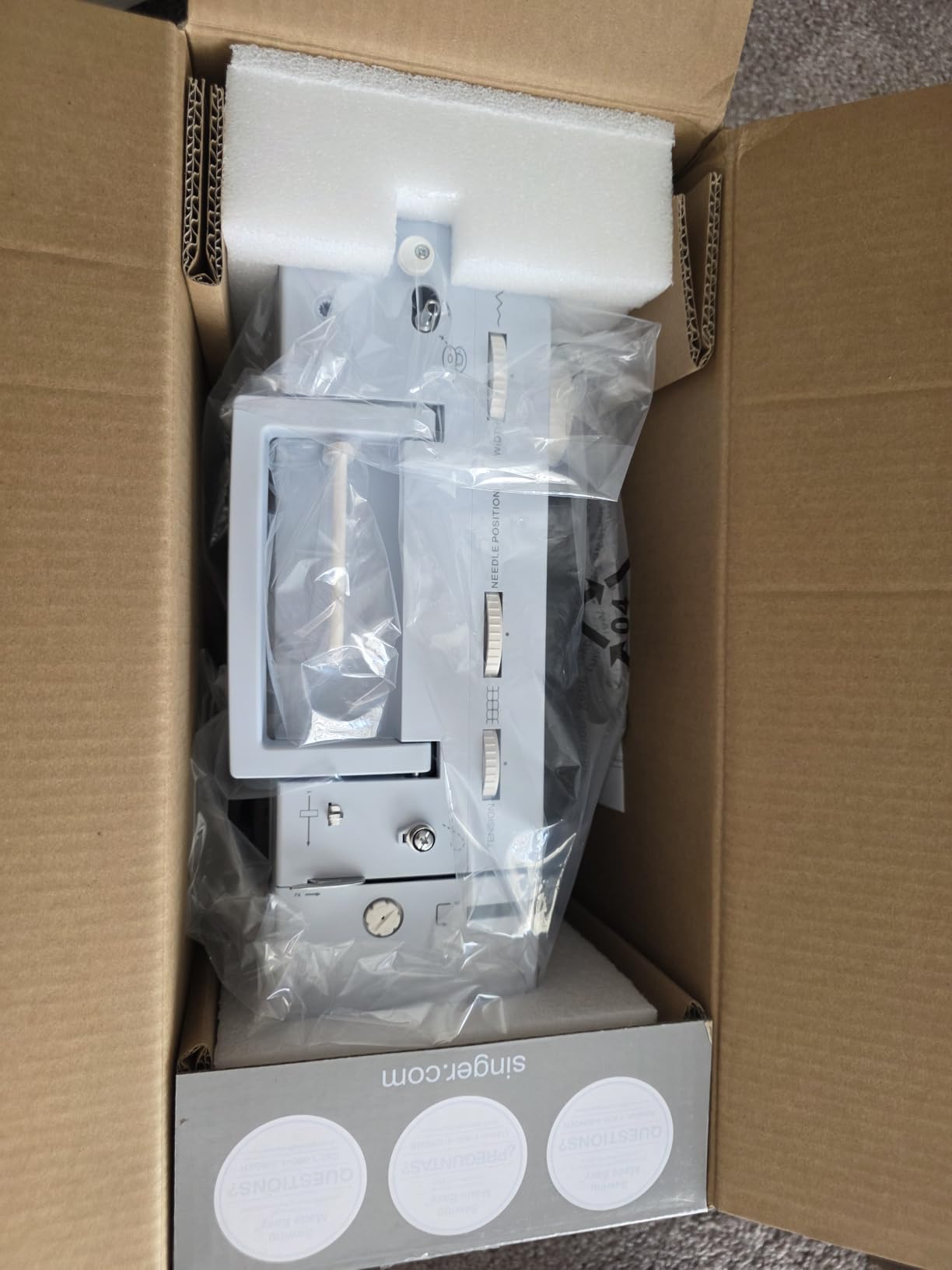
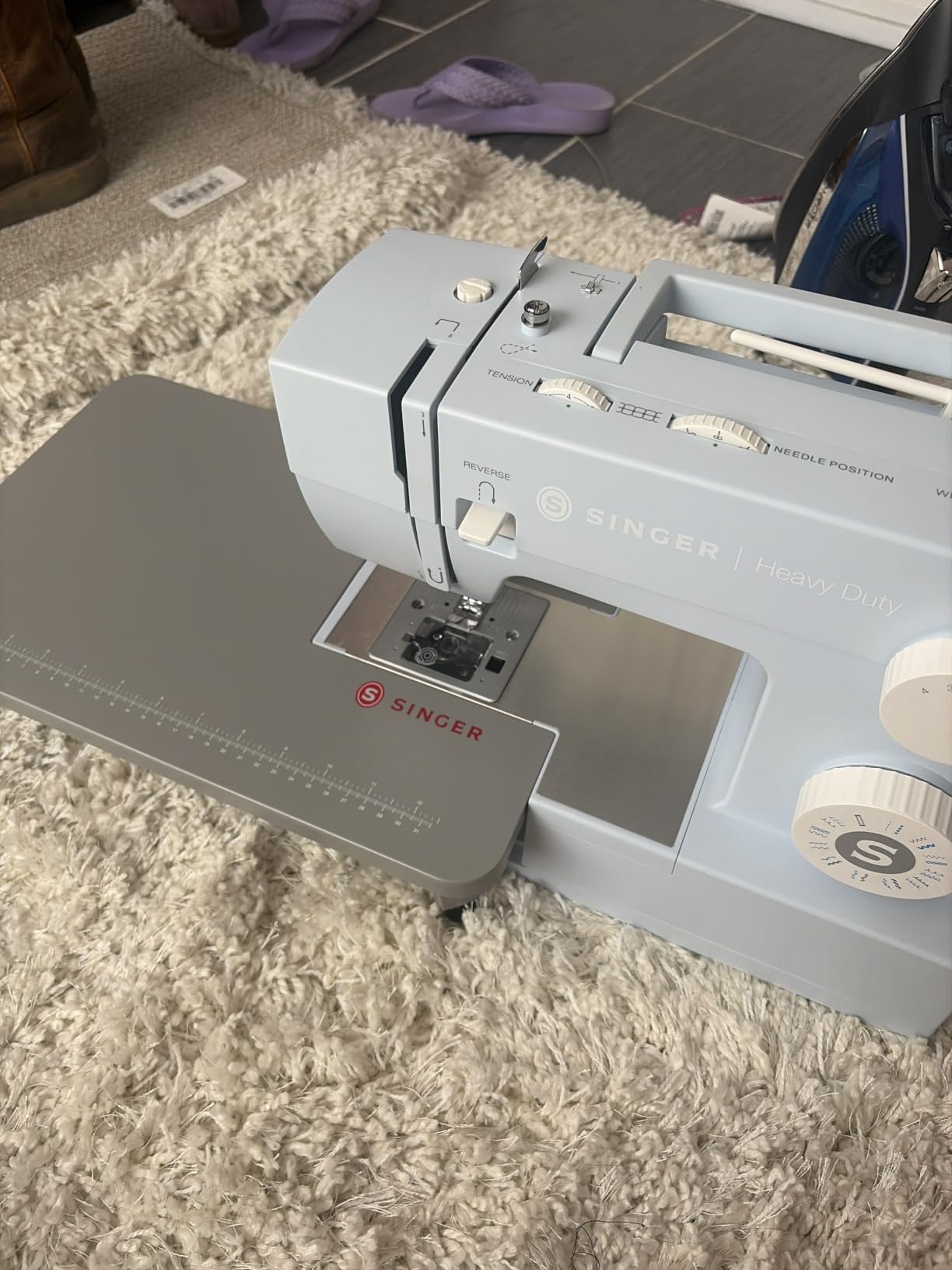
Structurally this is the interesting part. A metal frame with a stainless-steel bedplate under a plastic outer housing gives vibration control that all-plastic entry machines cannot match, and experienced sewists point at exactly that as the longevity signal. The free arm and the extra-high presser foot lift are the details you will appreciate most.
Owners do report the same friction points. The foot pedal cord is short, the printed directions are weak, and the work light has no separate switch, so your workspace goes dark whenever the machine is powered down. A smaller group of experienced sewists report thread breaks and bobbin case problems on recent production runs, and the consensus advice is to use Type 15 plastic bobbins only, since metal bobbins are linked to early bobbin case failure.
Who this machine suits
Choose this if you sew jeans, workwear, leather patches, thick canvas totes or anything that makes a beginner machine stall. It is also a fine first machine for someone who just wants more muscle under the needle and does not need a screen.
Owners on sewing forums report running this from ordinary cotton through to canvas and faux leather without swapping machines, which is exactly the range most people need once the novelty wears off.
Who should look elsewhere
If your sewing is light — dressmaking with lawn, quilting cotton, home decor — you are paying power you will not use. A machine with an extension table serves quilting better, and a lighter one is easier to store.
Buyer reports also flag inconsistency in the heavy duty line when it comes to thread tension, so if uniform tension on fine fabric is your priority, test the machine before you commit.
3. Brother XR3774 — Best Beginner Machine for Quilting
Brother XR3774 Sewing and Quilting Machine 37 Stitches
Wide extension table
37 built-in stitches
8 sewing feet
15 pounds
Pros
- 37 stitches give beginners plenty to explore
- Threader and drop-in bobbin simplify setup
- Wide table makes quilting and large fabrics much easier
- Free arm supports everyday sewing
- Machine cover and eight feet make it a complete package
Cons
- Heavier and bulkier than the smaller Brother models
- Mechanical controls only with no LCD screen
- Some owners find thread tension needs adjustment for certain fabrics
The XR3774 is the Brother to buy if your work is wider than a neckline. The wide extension table gives you a flat surface for quilt blocks, bag panels and anything you would otherwise be fighting on the flat bed, and it clips on in seconds.
Everything else follows the same reliable formula: 37 built-in stitches including blind hem, decorative and quilting stitches, a one-step buttonhole, an automatic needle threader and a jam-resistant drop-in bobbin. Eight presser feet are included, which is the highest count on any mechanical machine in this list, and the machine cover is in the box.
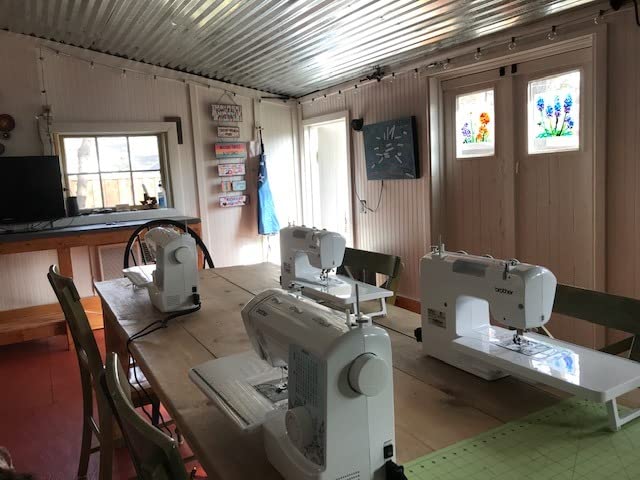
I spent time quilting on this machine and the difference the table makes is immediate. Without one, a large panel sags into the throat of the machine and the layers shift; with it, the fabric lies flat and the feed dogs stay engaged across the whole width. That is a genuine quality-of-life jump rather than a gimmick.
The trade-offs are size and simplicity. At 15 pounds it is the second-heaviest machine here, and the controls are purely mechanical, so you choose stitches on a printed dial rather than a screen. Some owners report needing to adjust thread tension for particular fabrics, which is a normal dial to learn but worth knowing about.
Who this machine suits
Pick this one if you are quilting, making tote bags, or sewing curtains and other wide home decor pieces. It also works as a straightforward first machine for garment sewing, because the free arm still handles sleeves and pant legs.
Buyers describe it as easy to learn while leaving enough stitch and foot variety that they do not immediately outgrow it, which is the sweet spot for a first machine.
Who should look elsewhere
If storage space is tight or you plan to carry the machine to a class regularly, the 15-pound body is a real inconvenience. Choose the GX37 for the same 37 stitches at roughly 10 pounds and no table.
If you want a screen and a speed slider to practise slowly, this is not the machine. That is a different purchase entirely.
4. Janome JW8100 — Best Computerized Machine for a Beginner Who Wants a Screen
Janome JW8100 Fully-Featured Computerized Sewing Machine with 100 Stitches, 7 Buttonholes, Hard Cover, Extension Table and 22 Accessories
100 stitches and 7 buttonholes
LCD screen with speed slider
Quilting kit included
Pros
- Large LCD screen and speed slider make the machine precise and easy to learn
- Built-in threader is fast and among the best in its class
- Runs smoothly and quietly with even stitches on denim and layers
- Uses standard Class 15 bobbins rather than proprietary ones
- Extension table and even feed foot make it quilting ready
Cons
- No deep throat which limits quilt size
- Some decorative stitches are not as neat as expected
- Costs more than entry level mechanical models
This is the only true computerized machine in the roundup, and the difference shows up in the first ten minutes. A large LCD screen lists your stitches, a start and stop button runs the machine without a foot pedal, and a speed slider lets you crawl through a seam at walking pace while you learn where the needle sits.
The specification is generous for a beginner machine: 100 built-in stitches, 7 one-step buttonholes, a built-in threader, needle up and down control, a jam-proof drop-in bobbin and a 7-piece feed dog system for even fabric feeding. A removable front drawer slides out to reveal the free arm underneath.
The accessory list is where this one quietly wins. The quilting kit is in the box, including an extra-wide extension table, an even feed foot, a quarter inch foot and a pin cushion, plus 22 accessories overall and a hard cover. Owners also value that it runs on standard Class 15 bobbins, so you are never hunting for proprietary parts.
Several reviewers teach children on this machine specifically because the start stop button and speed slider make slow, controlled practice possible. The reported drawbacks are a shallow throat that caps quilt size, a couple of decorative stitches that look off, and a work light some wish were brighter. Multiple owners report years of regular use with no problems.
Who this machine suits
Choose this if you are a slow learner, if you sew with children, or if you want one machine that can grow into garment work and quilting without a second purchase later. The speed control alone removes a lot of the panic from your first month.
It is also a good machine to grow with, because the screen makes adding new stitches later feel like an upgrade rather than a limitation.
Who should look elsewhere
It costs more than every mechanical machine in this list, and a hundred stitch menu is more choice than a brand new sewist can absorb. If you want fewer decisions and a lower spend, the XM2701 gives you the essentials in a smaller package.
Serious quilt makers with large pieces should look for a deep throat, because this one will not take a full width quilt comfortably.
5. Brother GX37 — Best Value for 37 Stitches at the Lightest Weight
Brother GX37 Sewing Machine 37 Built-in Stitches
37 built-in stitches
Stitch names on the body
10.1 pounds
6 sewing feet
Pros
- 37 stitches with an auto-size buttonhole for real variety
- Threader and drop-in bobbin reduce setup friction
- Lightest Brother here at just over 10 pounds
- Stitch names printed on the body for quick reference
- Six included feet cover most beginner projects
Cons
- No wide quilting table included unlike the XR3774
- Basic mechanical operation with no screen
- Some buyers wish for a brighter work light
The GX37 is the value pick in this group, and the reason is simple arithmetic. You get the same 37-stitch library as the XR3774, the same automatic needle threader and the same jam-resistant drop-in bobbin, in a body that weighs just over 10 pounds.
What you give up is the wide table and the extra presser feet. Six feet are included, which covers mending, hems, buttonholes and light quilting, and the free arm handles sleeves and cuffs as you would expect.
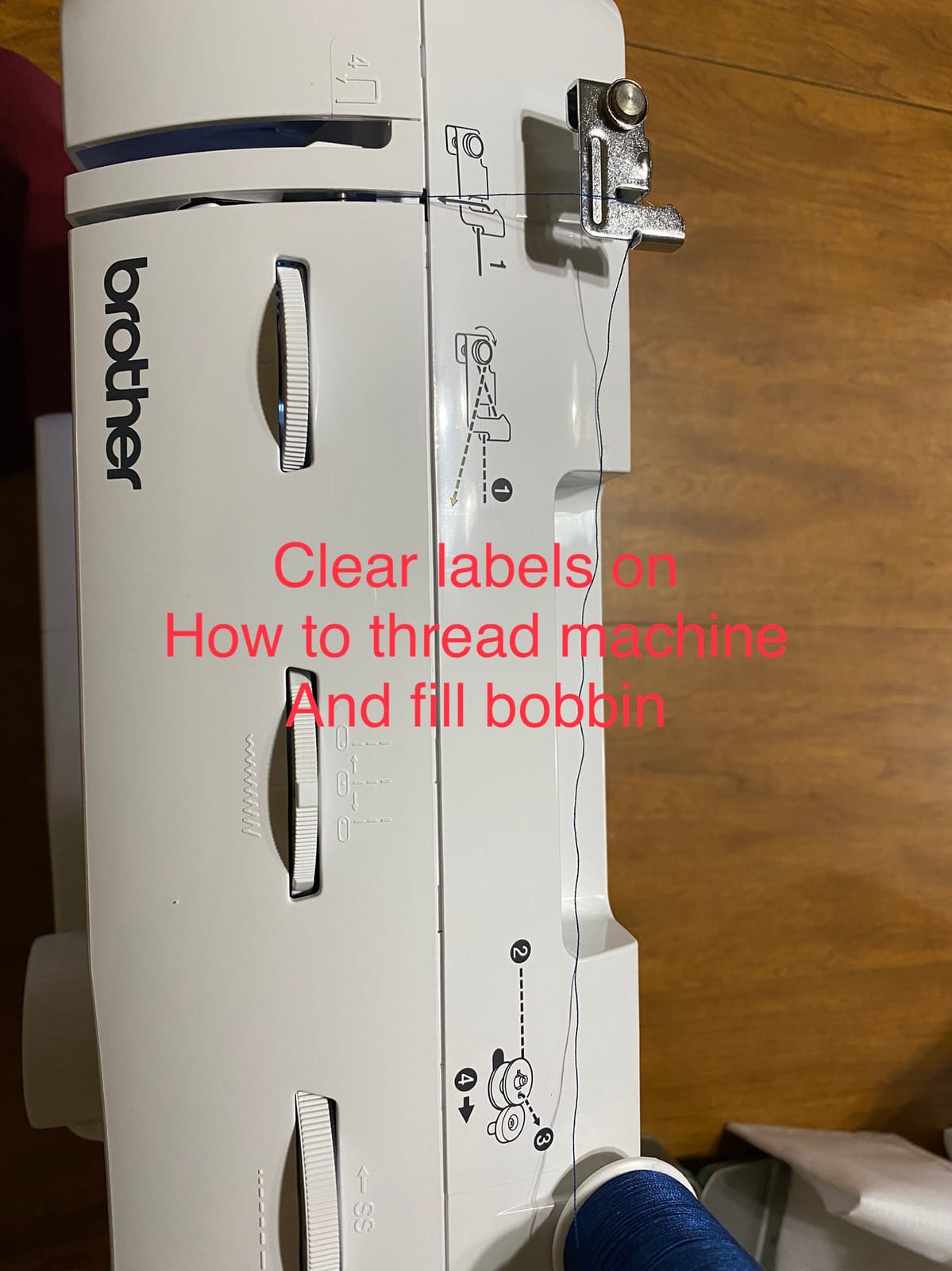
One detail earns more goodwill than it should: the stitch names are printed directly on the machine body. Beginners can look down, read the name of the stitch they want and set the dial without a manual, which removes a whole category of early frustration.
Buyers treat this as the value sibling of the XR3774 and report that the labelled dial makes choosing and adjusting stitches self-explanatory. Limitations are the same ones you would expect — no extension table, no electronic interface, and a work light that some buyers would like brighter.
Who this machine suits
This is the one to buy if you want a genuinely capable stitch library, need the machine to travel between rooms or a class, and do not want to pay for a table you will not use. The free arm covers everyday mending and light quilting on its own.
Brother lifetime technical support comes with it, and six feet means you can start a project tonight without a second shopping trip.
Who should look elsewhere
Quilters should step up to the XR3774 for the wide table, and anyone who wants a screen and speed control should look at the Janome JW8100 instead. This machine rewards people who are happy reading a printed dial.
If you plan to sew thick stacked layers regularly, its power is more modest than the stitch count suggests, so choose a heavy duty model for that job.
6. SINGER M1500 — Budget Pick for Mending, Crafts and Small Projects
SINGER® M1500 Lightweight & Portable Sewing Machine with Accessory Kit
6 stitches and 57 applications
Preset length and width
9.7 pounds
LED work light
Pros
- Very simple to thread bobbin and operate
- Quiet operation and the lightest body here at 9.7 pounds
- Preset length and width remove guesswork for new users
- Handles straight and zigzag smoothly on cotton and denim
- Good for mending hemming crafts and light quilting
Cons
- Not heavy duty so it is not suited to thick denim hems
- Light enough to slide around on smooth tables
- Some owners report missed stitches and tension issues
The M1500 takes the most radical approach to beginner-friendliness here. Instead of giving you dials to learn, it presets stitch length and width for every stitch on the selector, so you choose a stitch and sew. Six stitches produce 57 applications, and the 4-step buttonhole is marked right on the dial.
At 9.7 pounds it is the lightest machine in the roundup, which matters more than it sounds if you are sewing at a kitchen table with limited space, or carrying the machine to a retreat. Threading guides are marked on the body for both the upper thread and the bobbin.
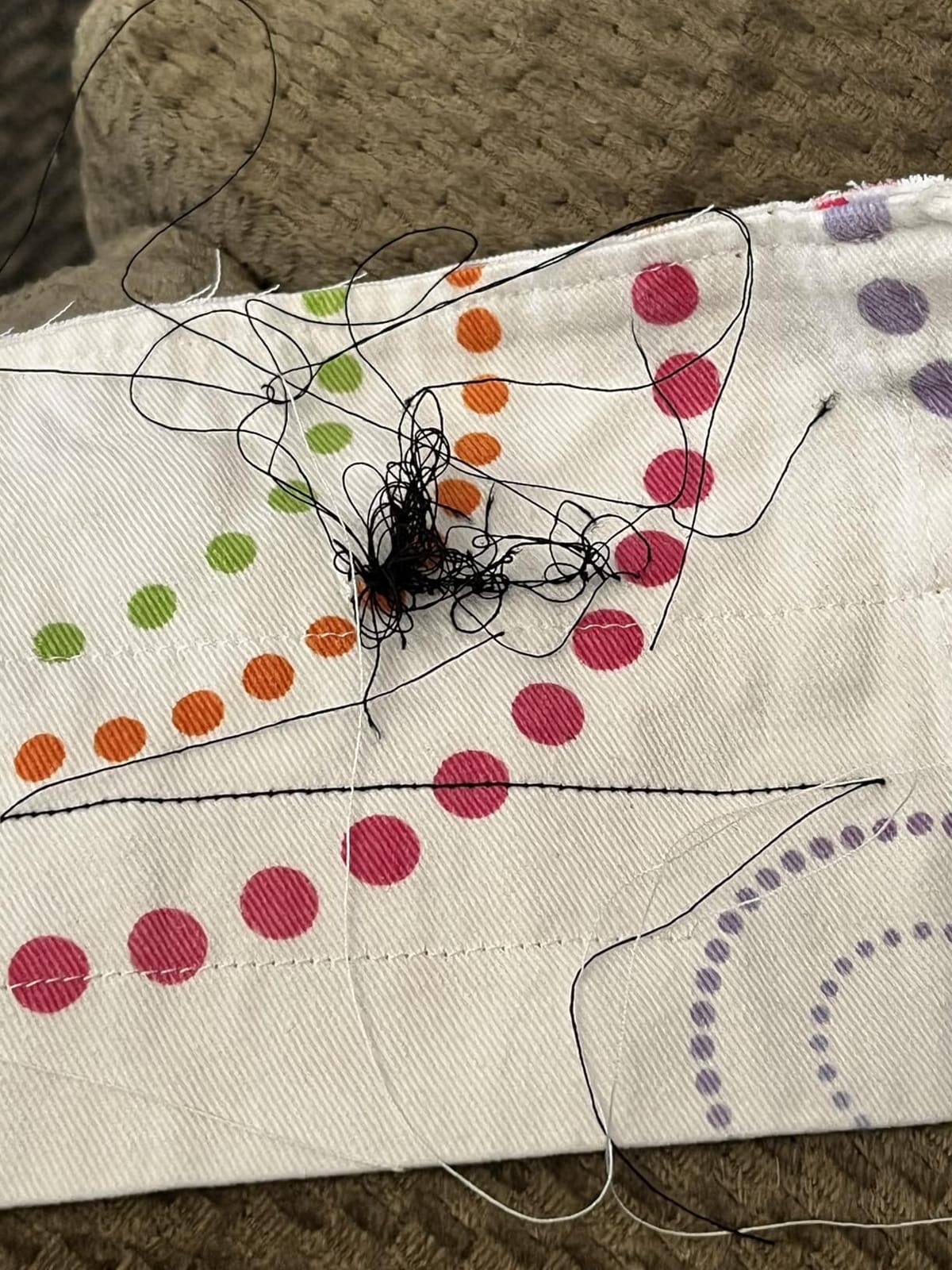
Owner reports describe it as quiet and easy, and the practical tips that recur across reviews are worth repeating. Add rubber pads to the feet so it does not slide on a slick tabletop, trim raw edges before sewing to reduce jams, and follow a video tutorial because the printed guidance is thin.
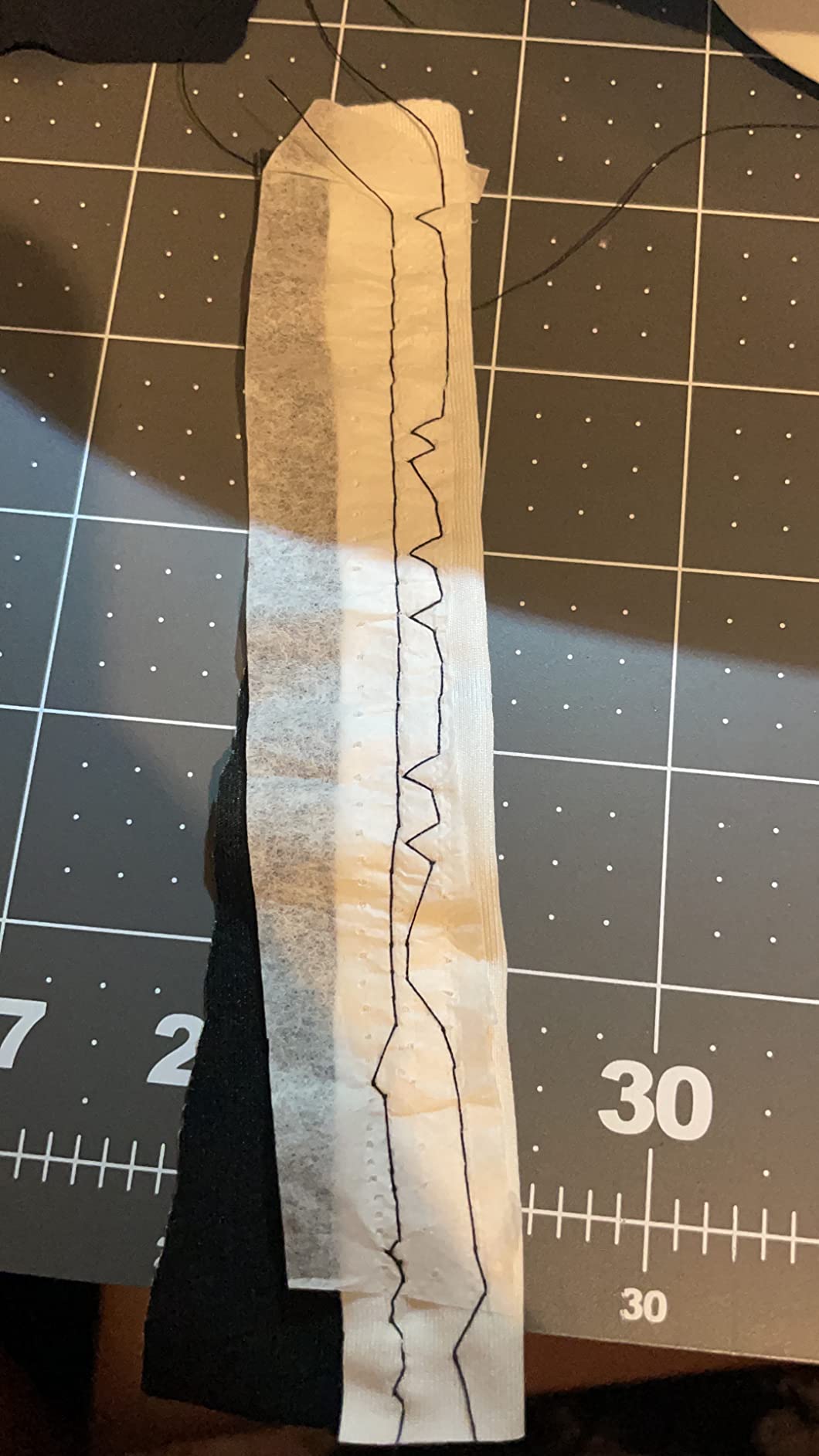
It is also the weakest of the mechanical machines here for thick work. Reviewers are clear that it will not substitute for a heavy duty machine when hemming jeans, and a small number of owners report missed stitches and tension issues on their machines, which is what keeps its average slightly below the Brother models.
Who this machine suits
Pick this if your sewing is mending, hemming, altering, doll clothes and small crafts, and you want the least amount to learn on day one. Preset settings mean there is nothing to get wrong before you have made your first seam.
It is also a good companion machine for someone who sews rarely and does not want a heavy object on the table the rest of the week.
Who should look elsewhere
Any project involving denim, canvas or multiple thick layers. The feed and motor are simply not built for it, and forcing them is how new sewists convince themselves sewing is hard.
If you know you will outgrow mending within a few months, the GX37 costs a modest step more and gives you 37 stitches to grow into instead of 6.
7. Janome Arctic Crystal — Best for Denim on a Budget
Janome Arctic Crystal Easy-to-Use Sewing Machine with Interior Metal Frame, Bobbin Diagram, Tutorial Videos, Made with Beginners in Mind for Garments, Patchwork, Light Quilting
Interior metal frame
15 built-in stitches
Free-arm feed dog
Tutorial videos
Pros
- Interior metal frame gives real stability and durability
- Owners sew multiple layers of denim with heavy duty needles
- Very beginner friendly with tutorials and a printed bobbin diagram
- Compact and light enough to carry to classes
- Color options and a darning plate for quilting work
Cons
- Front-loading bobbin takes adjustment for top-loader users
- Thread spool holders are slightly flimsy
- Foot pedal can jump from slow to full speed
The Arctic Crystal is the machine I would put in front of someone who is intimidated by electronics but needs real fabric capability. Its selling point is an interior metal frame, which owners repeatedly single out as what separates it from cheaper plastic-bodied machines in the same bracket.
Fifteen built-in stitches and a 4-step buttonhole is a modest library, but the 3-piece feed dog with free-arm design handles layers well, and multiple owners sew heavy denim successfully using size 16 and 18 needles. Snap-on presser feet and extra-high foot lift help with bulky seams.
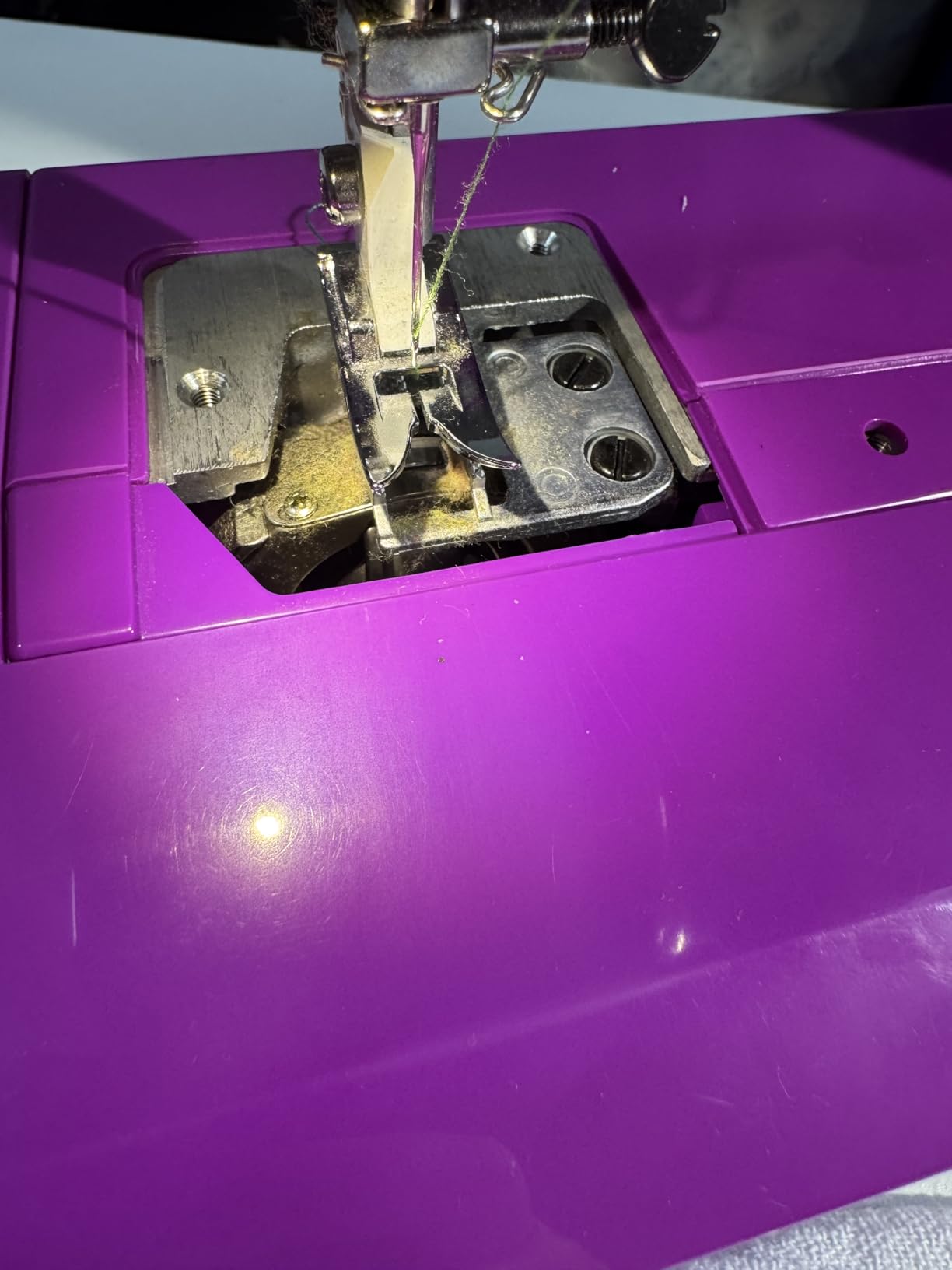
Beginner support is unusually thoughtful here. There is a bobbin diagram printed inside the bobbin compartment, a quick start guide, and tutorial videos, so you are not reverse-engineering the front-loading bobbin from a folded sheet of paper. Complete beginners report learning on it in an afternoon.
The learning curve is the front-loading bobbin, which takes adjustment if you are used to dropping a bobbin in from the top. The thread spool holders are described as slightly flimsy, the pedal can jump from slow to full speed, and the instructions are English only. A darning plate is included for free-motion style stitching.
Who this machine suits
Choose this if you want a metal frame machine, you plan to sew denim or layered work soon, and you learn better with printed diagrams and videos than with a screen full of options. Several long-term owners report owning more than one.
The color choices are a real point of enthusiasm for owners, which sounds trivial until the machine lives on your table every day.
Who should look elsewhere
Anyone who wants automatic one-step buttonholes or a large stitch library, since 15 stitches is a working set rather than an exploration set. And if you dislike front-loading bobbins, the Brother models on this list avoid them entirely.
If you want a machine you can grow into for a decade, expect to add a second machine later rather than upgrade this one.
8. Janome 2212 — Best All-Mechanical Machine for People Who Want Nothing Electronic to Fail
Janome 2212 Front-Loading Sewing Machine with 12 Built-In Stitches
12 built-in stitches
Front-loading bobbin
Free arm and drop feed
14.9 pounds
Pros
- Solid mechanical build owners compare to older machines
- Handles multiple layers and multi-fold denim edges
- Easy to learn with a clear illustrated manual
- Free arm drop feed and large front reverse lever are practical
- Extension table doubles as storage for bobbins and tools
Cons
- Reverse lever is spring loaded and must be held down
- Foot pedal cord is short and speed feels abrupt
- Runs fast so hold the thread tail or it comes undone
The Janome 2212 is a straight mechanical machine and does not pretend otherwise. Twelve built-in stitches, a four-step buttonhole, a front-loading vertical oscillating hook bobbin and a five-piece feed dog with snap-on feet. There is no screen, no threader and no electronics to go wrong.
Long-term owners tell the same story: five or more years of reliable use, and machines that taught their children to sew. That durability comes from the same logic that makes vintage metal-bodied machines worth seeking out, and it is the reason experienced sewists on forums keep recommending mechanical builds over modern plastic-bodied entry models.
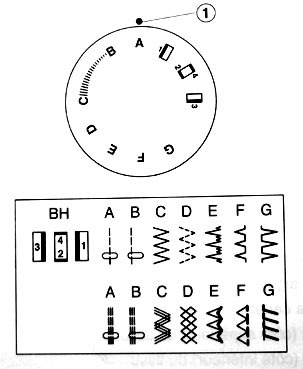
There are genuinely useful touches. The free arm and drop feed are real working features rather than marketing, the extra high presser foot lift helps with bulky seams, and two retractable vertical spool pins handle twin-thread work. The push-pull bobbin winder is straightforward, and the extension table provides storage compartments for bobbins and tools.
The criticisms are mechanical, which is reassuring in its own way. The reverse lever is spring loaded and must be held down the whole time, the pedal cord is short, and the machine runs faster than some beginners expect, so the upper thread tail comes undone unless you hold it behind the machine. Reviewers also stress using good thread, because cheap thread tangles in the feed dogs.
Who this machine suits
Pick this if you are patient with dials, you want a machine with nothing electronic to fail, and you would rather learn sewing mechanics properly. The free arm, drop feed and large front reverse lever make it capable with layers and denim edges.
Owners report sewing through six or more layers of fabric without complaint, and the illustrated manual makes the first hour uneventful.
Who should look elsewhere
Twelve stitches is a working set, not a growing one, so if you want monograms, decorative work or quilting patterns you will hit the ceiling fast. There is also no automatic needle threader, which is the single most cited beginner dealmaker in owner reviews.
Anyone who struggles with a held-down reverse lever should look at a machine with a reverse button instead.
9. SINGER 4411 — Best for Small Spaces and Simple Heavy Work
SINGER® 4411 (Pink) High Speed Heavy Duty Sewing Machine with Accessories
11 stitches and 69 applications
1100 stitches per minute
14 pounds
4 presser feet
Pros
- Distinctive finish that stands out in a sewing space
- Easy to set up with simple bobbin loading
- Handles multiple layers and denim for many users
- Light enough to carry between rooms or to classes
- Generous accessory kit included
Cons
- No automatic needle threader which is a real drawback for beginners
- Some owners find it less powerful than the heavy duty label suggests
- Spool holder sits awkwardly inside the handle
The 4411 is a compact take on the heavy duty idea: 11 stitches producing 69 applications, 1100 stitches per minute, and a motor rated 60 percent stronger than a standard machine. It weighs 14 pounds, which is easy to carry between rooms or to a class.
The accessory kit is generous for the price. Four presser feet, a quilting guide, Class 15 transparent bobbins, spool caps, a screwdriver, a seam ripper and lint brush and a soft dust cover all come in the box, and bobbin loading is simple.
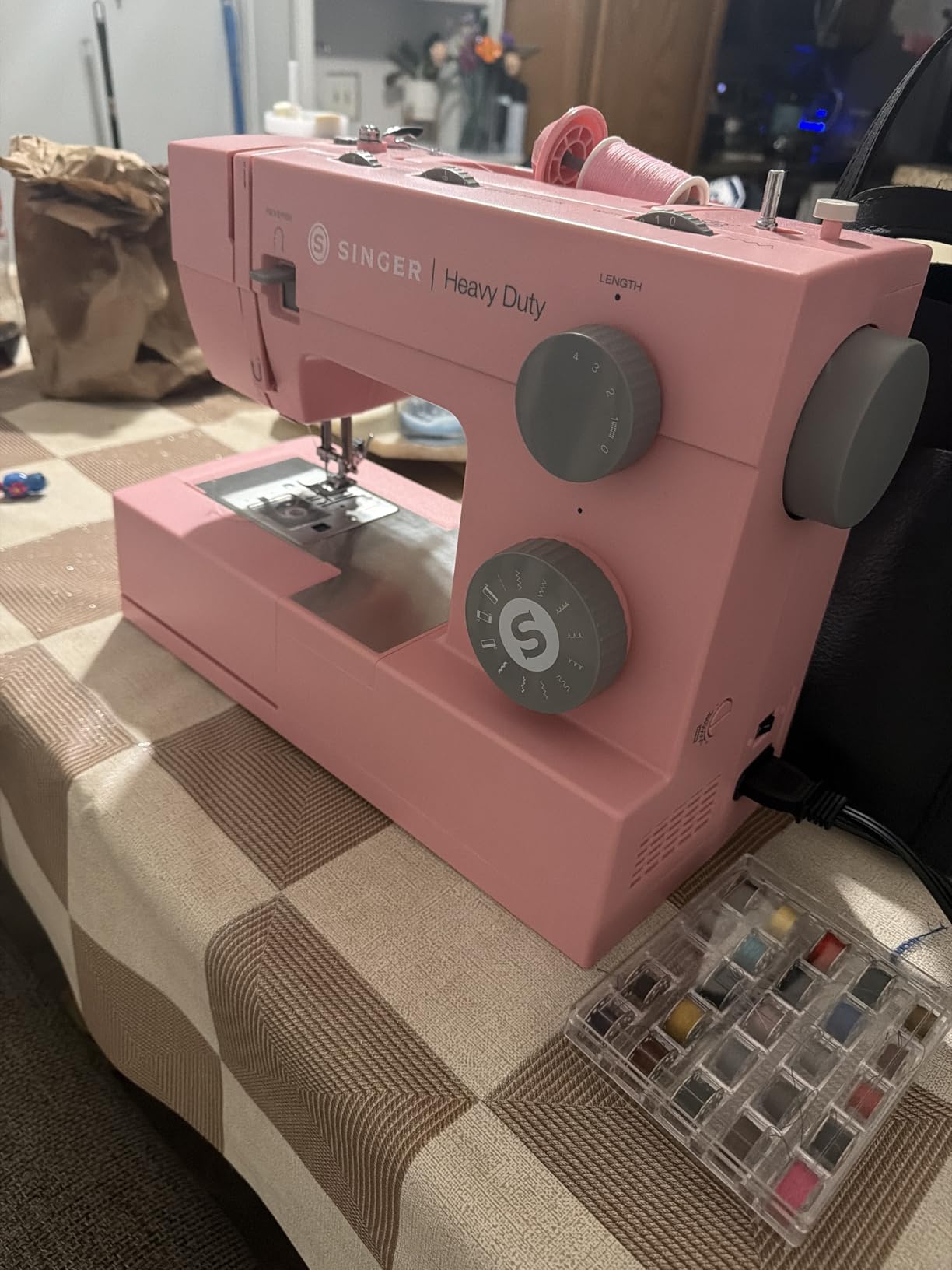
Be clear-eyed about the trade-off, because it is the one that matters for a first machine: there is no automatic needle threader. Several owners say they assumed it would have one like other Singer heavy duty models and were disappointed. Threading here is manual, and for anyone with limited vision or tremor that is a genuine drawback.
Reviews of this model are recent and few, but they suggest a mixed picture. Many owners sew multiple layers and denim happily, while a minority find it underpowered against the heavy duty branding, noting the fabric feeder struggling to keep pace with the needle speed, plus isolated reports of tension and jamming problems. The spool holder also sits awkwardly inside the handle.
Who this machine suits
This works if you thread confidently already, or if you have learned on another machine and want a second one for heavier seams. The accessory kit means you can start a project without buying feet separately.
It also suits people with a small work surface, since a smaller footprint keeps a kitchen table usable for other things.
Who should look elsewhere
Absolute beginners should choose a machine with an automatic needle threader, because threading is the single biggest confidence killer that owner reports mention. The SINGER 4423 has one, and it is the stronger machine of the two.
If you sew flannel or heavy layered work regularly, read the underpowered complaints carefully before choosing this one.
Mechanical, Electronic or Computerized: Which One Do You Need?
Mechanical machines are driven entirely by the foot pedal and dials. There is no screen and no automatic needle threader, which is exactly why experienced sewists in beginner forums still recommend them for anyone who wants to understand how sewing works and avoid electronics that can fail.
Electronic machines add a speed control and often an automatic needle threader, still without a screen. Computerized machines go further: an LCD lists your stitches, a start and stop button runs the machine without the pedal, and a speed slider lets you sew slowly while you learn.
Here is the honest trade-off. A computerized machine is easier in the first week, and a mechanical machine is more satisfying in the third year. Of the machines here, the Janome JW8100 is the only true computerized option, the Brother XM2701 and Brother XR3774 are electronic in the useful sense, and the Janome 2212 and SINGER 4411 are purely mechanical.
Whichever type you pick, buy a machine with a metal internal frame where you can. It is the number one longevity signal in owner reports, and experienced sewists consistently point to it when explaining why older machines outlast modern entry models.
How to Choose the Best Sewing Machine for Beginners
Most people overspend on stitches and underspend on the boring things. You need about 20 useful stitches, not 200 decorative ones — owner reports show beginners get overwhelmed by large stitch menus and end up ignoring them. Filter for these six things instead.
Automatic needle threader. It is the most commonly cited beginner dealmaker across every review set we read. It converts the hardest first skill into a ten second operation.
Drop-in top bobbin. You drop the bobbin in and pull a thread up through the needle plate. A front-loading bobbin requires a threading skill that a new sewist does not have yet.
Metal internal frame. This is the durability signal that matters most, and it is the reason the Janome Arctic Crystal punches above its class.
Free arm. A narrow lower section that lets you sew a cuff or pant hem as a tube. Every serious beginner machine has one.
Adjustable presser foot pressure and foot lift. Bulkier layers need both, and a machine that struggles here will end your sewing session early.
Weight. Anything above 15 pounds is a commitment. If you will store it away between projects, that weight is friction you will feel every time.
Map those features to a budget tier rather than shopping randomly. At the cheapest tier, buy for mending, hems, crafts and light quilting only, and accept that denim will defeat the machine. The middle tier is where most beginners should sit, because it buys an automatic threader, a drop-in bobbin and a metal frame. The upper tier is worth it only if you already sew, and the reason to spend up is a screen with a speed slider or a wide quilting table.
Two more things nobody mentions. Buy your machine from somewhere you can return, and if you can, go and handle the machine in person first — experienced sewists consistently recommend visiting a dealer or a store floor model before buying. And plan the first thirty minutes: unbox, find the threading path, practice on scrap fabric, and sew three straight seams before you touch anything you care about.
If you are also buying compact kit for trips or small spaces, our guides to camping gear for beginners and backpacking gear for beginners cover the same lightweight-versus-durable argument from a different angle.
Brother vs Singer: Which Brand Should a Beginner Buy?
Both brands are safe choices and neither is universally better, so the honest answer is to compare specific models. Brother leans toward lighter machines, more included presser feet and free lifetime technical support, and Brother entry machines routinely use a drop-in top bobbin, which is easier for beginners.
Singer leans toward power and speed, with 1100 stitches per minute and motors rated well above standard on their heavy duty models, and their accessory kits are often more complete out of the box.
The tension and noise complaints that beginner forums raise about the Singer heavy duty line are worth taking seriously, particularly if you sew fine fabrics. The 4423 in this roundup is a metal frame machine with a stainless steel bedplate, and owners do report it running from cotton to canvas without drama, so the complaints appear model-specific rather than brand-wide.
Our view: start with Brother if you want the gentlest first experience, and with Singer if you know you will be working with thick fabric from the beginning.
Known Problems and What to Avoid
Every machine here has real owner complaints, and knowing them in advance saves you a return. We pulled the most repeated ones from long-term reviews.
Dim or unswitchable work lights. The Brother XM2701 light is dim, and the SINGER 4423 has no on-off switch for its light, so your workspace goes dark whenever the machine is off. Budget for a cheap clip-on lamp with either machine.
Skipped stitches on thick layers. The XM2701 can struggle at corners around a dozen layers of cotton, and the SINGER M1500 is not built for thick denim hems at all. This is a machine-matching problem, not a user error.
Bobbin type errors. Owner reports on the 4423 link early bobbin case failure to metal bobbins, and recommend Type 15 plastic bobbins only. Using the wrong bobbin is the most common cause of the jamming and skipped stitches beginners report in general.
Thin documentation. The 4423, the XM2701 and the M1500 all ship with weak printed guidance, and a few models rely on a DVD. Budget twenty minutes of video tutorials before your first seam rather than during it.
Cheap thread tangling in feed dogs. This complaint appears across reviews of several machines. Use decent polyester thread and it largely disappears.
What to avoid above all else is a machine from an unknown brand with no parts network and no warranty worth the name. Owner reports of cheap machines failing within a year are the loudest warning in every beginner forum. If a machine has no service network and no parts supply, it becomes a very expensive paperweight.
Frequently Asked Questions
What is the best sewing machine for beginners at home?
The Brother XM2701 is the best all-round beginner machine: 27 built-in stitches, an automatic needle threader, a jam-resistant drop-in top bobbin, a free arm and a 12.6 pound body you can carry between rooms. For quilting add the Brother XR3774 for its wide extension table. For heavy fabrics choose the SINGER 4423, and for a screen with a speed slider the Janome JW8100.
Is Brother or Singer better for beginners?
Brother machines here are lighter, include more presser feet and use an easy drop-in top bobbin, which suits first-time sewists. Singer machines here run faster at 1100 stitches per minute with stronger motors for denim and canvas, and their accessory kits are more complete. Neither brand is universally better, so compare models rather than logos.
What is the easiest sewing machine for beginners?
The easiest machine to learn on is the SINGER M1500, because it presets stitch length and width for each stitch so there is nothing to adjust, and its marked threading guides remove guesswork. The Janome JW8100 is the easiest in a different sense, since its speed slider lets you sew slowly while you learn. The Brother XM2701 is the most commonly recommended all-round choice.
Which sewing machine has the least problems?
Machines with fewer reported issues share three things: a metal internal frame, a jam-resistant drop-in bobbin and a wide feed dog system. Among the machines here, the Brother XM2701 and Brother XR3774 report the fewest recurring faults. Skip metal bobbins on the SINGER 4423, since owner reports link metal bobbins to early bobbin case failure.
What is a good first sewing machine for beginners?
A good first machine needs about 20 useful stitches rather than hundreds, an automatic needle threader, a drop-in top bobbin, a free arm, adjustable presser foot pressure and preferably a metal internal frame. Spend on those rather than on decorative stitch menus you will never use, and buy a machine light enough that you will happily keep it on the table.
What is the best simple sewing machine for beginners?
The simplest machine here is the Janome 2212, a purely mechanical model with 12 built-in stitches, a four-step buttonhole, a free arm and drop feed, and no electronics to fail. Note that it has no automatic needle threader, so it suits beginners who are comfortable with dials rather than anyone who finds threading stressful.
The Verdict: Which Beginner Sewing Machine Should You Buy?
Buy the Brother XM2701 if you want the best sewing machine for beginners with the least friction — the threader, the drop-in bobbin and the light body do most of the work for you. Buy the SINGER 4423 if thick fabric is already in your plans, and the Brother XR3774 if quilting is, because the wide table changes how quilting feels.
Either way, handle the machine before you pay for it, use good thread, and practice on scrap fabric first. That small habit does more for your confidence than any feature on any list. Our picks above are current as of 2026.