
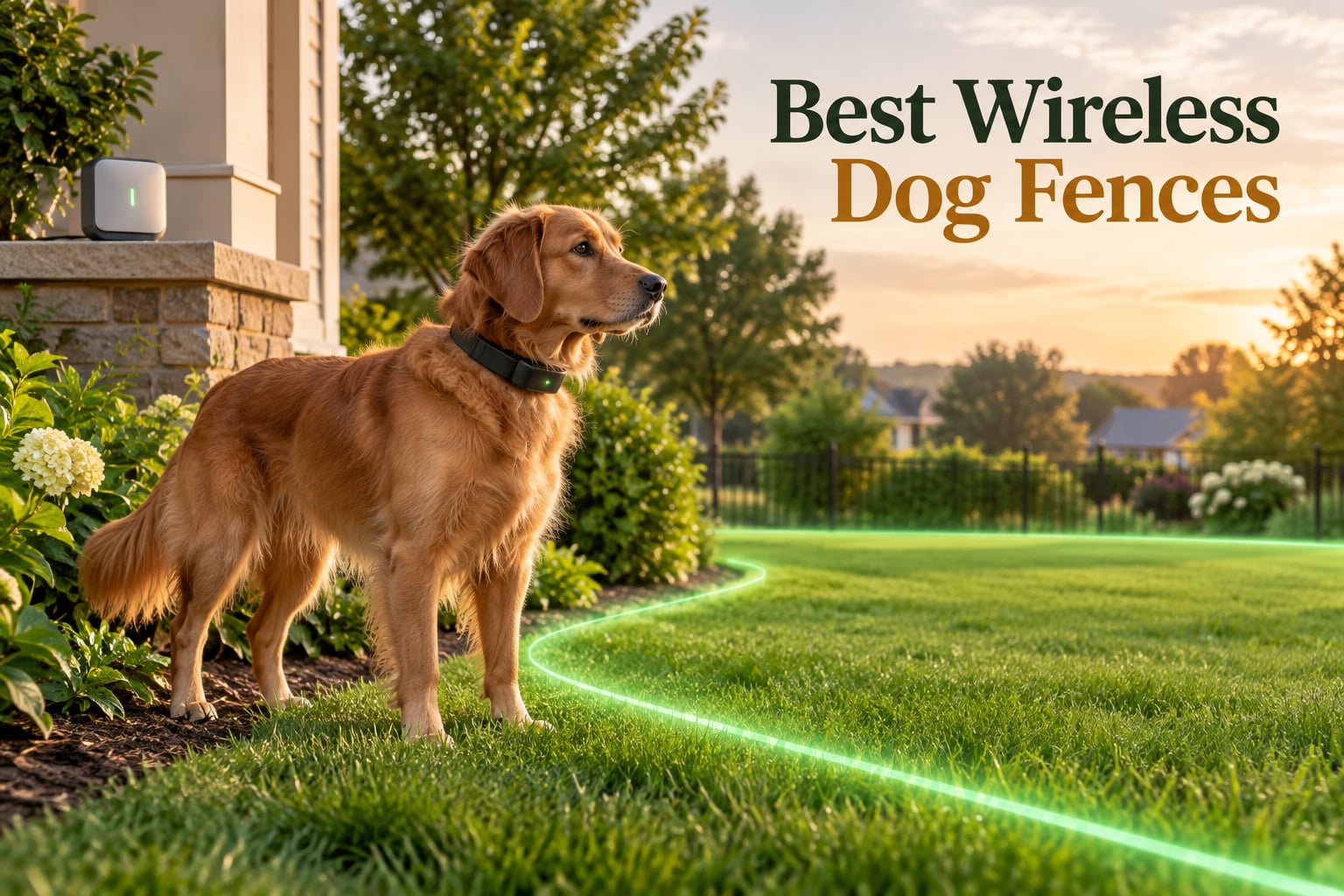
The best wireless dog fence for most households is the PetSafe Wireless Pet Containment System, because it holds a boundary without a monthly fee, fits dogs from 8 lb upward, and has been proven by more reviews than anything else in this group. We compared eight wireless dog fences across two technology families to find the one that actually suits your yard, your dog, and your tolerance for monthly plans.
That last part matters more than it sounds. Owners in the r/DogAdvice thread on small dogs in large yards are blunt about the limits: wireless fences are not fool-proof, and a dog locked onto a scent will cross the boundary anyway. r/Dogtraining regulars reach the same conclusion from the other direction, arguing that a solid physical fence is the only thing that works on a determined animal. We took that seriously, and it shapes how we ranked everything below.
Two things we refused to do: pad this list with buried-wire systems that are not wireless, and pretend a subscription collar is a fair comparison to a plug-in transmitter. What follows is eight wireless dog fences that need no trenching, ranked on coverage, correction control, collar build, battery behaviour, and how honest owners are about the compromises. Last updated September 2026.
Table of Contents
Top 3 Picks for Wireless Dog Fences in 2026
PetSafe Wireless Dog Fence
- 1/2 acre circular coverage
- Waterproof collar for dogs 8 lb and up
- 5 correction levels plus tone-only mode
- Static-free re-entry

PATPET GPS Wireless Dog Fence
- 9999-yard GPS range
- No app and no subscription
- IP67 waterproof collar
- 3 training modes

Htcuto Wireless Fence for 2 Dogs
- Two collars included
- Boundary and trainer in one unit
- Up to 3500 ft adjustable boundary
- IPX7 waterproof
Do Wireless Dog Fences Actually Work?
They work, with one condition: the dog has to respect the boundary. A wireless fence pairs a receiver collar with either a plug-in radio transmitter or GPS satellites. When your dog nears the edge, the collar beeps first, then vibrates, and only escalates to static if the dog keeps pushing. Nothing physically stops a determined dog, which is exactly the criticism raised in the r/DogAdvice small-dog thread, where owners describe dogs crossing the line while chasing something. A r/Dogtraining consensus puts it more bluntly: invisible fences work by creating a consequence for crossing a threshold, and no consequence survives real prey drive. Buy one as a well-trained tool, not as a substitute for a six-foot fence.
All 8 Best Wireless Dog Fences Compared in 2026
Three of these are GPS-collar fences and five are base-transmitter systems, and they fail in completely different ways. GPS collars draw a boundary on a map; transmitter systems cast a circle from a box in your house.
| Product | Specifications | Action |
|---|---|---|
| PetSafe Wireless Pet Containment System |
|
Check Latest Price |
 PetSafe Stay & Play Wireless Fence PetSafe Stay & Play Wireless Fence |
|
Check Latest Price |
 Lilyeel GPS Collar Fence System Lilyeel GPS Collar Fence System |
|
Check Latest Price |
| PATPET GPS Wireless Dog Fence |
|
Check Latest Price |
 Htcuto 2-in-1 Wireless Dog Fence System Htcuto 2-in-1 Wireless Dog Fence System |
|
Check Latest Price |
 SpotOn Nova GPS Dog Fence Collar SpotOn Nova GPS Dog Fence Collar |
|
Check Latest Price |
 PetSafe Stay & Play Compact PetSafe Stay & Play Compact |
|
Check Latest Price |
| Htcuto Wireless Fence for 2 Dogs |
|
Check Latest Price |
1. PetSafe Wireless Pet Containment System – Best Overall
PetSafe Wireless Pet Containment System, Up to 1/2 Acre
1/2 acre circular coverage
Collar fits dogs 8 lb and up
5 correction levels and tone-only mode
Pros
- No digging or buried wire
- Static-free re-entry
- Collar battery lasts up to about 2 months
- Portable for camping and second homes
- Suits dogs from 8 lb upward
Cons
- Circular boundary only
- Transmitter must be mounted high away from metal
- Half acre needs a second transmitter for bigger yards
This is the system we kept coming back to. It has been on the market since 2002 and still holds the number one position in its category, with 9502 reviews averaging 4.1 stars. That combination of age and volume matters: a product with this many owners has been debugged by people who have already made every mistake you are about to make.
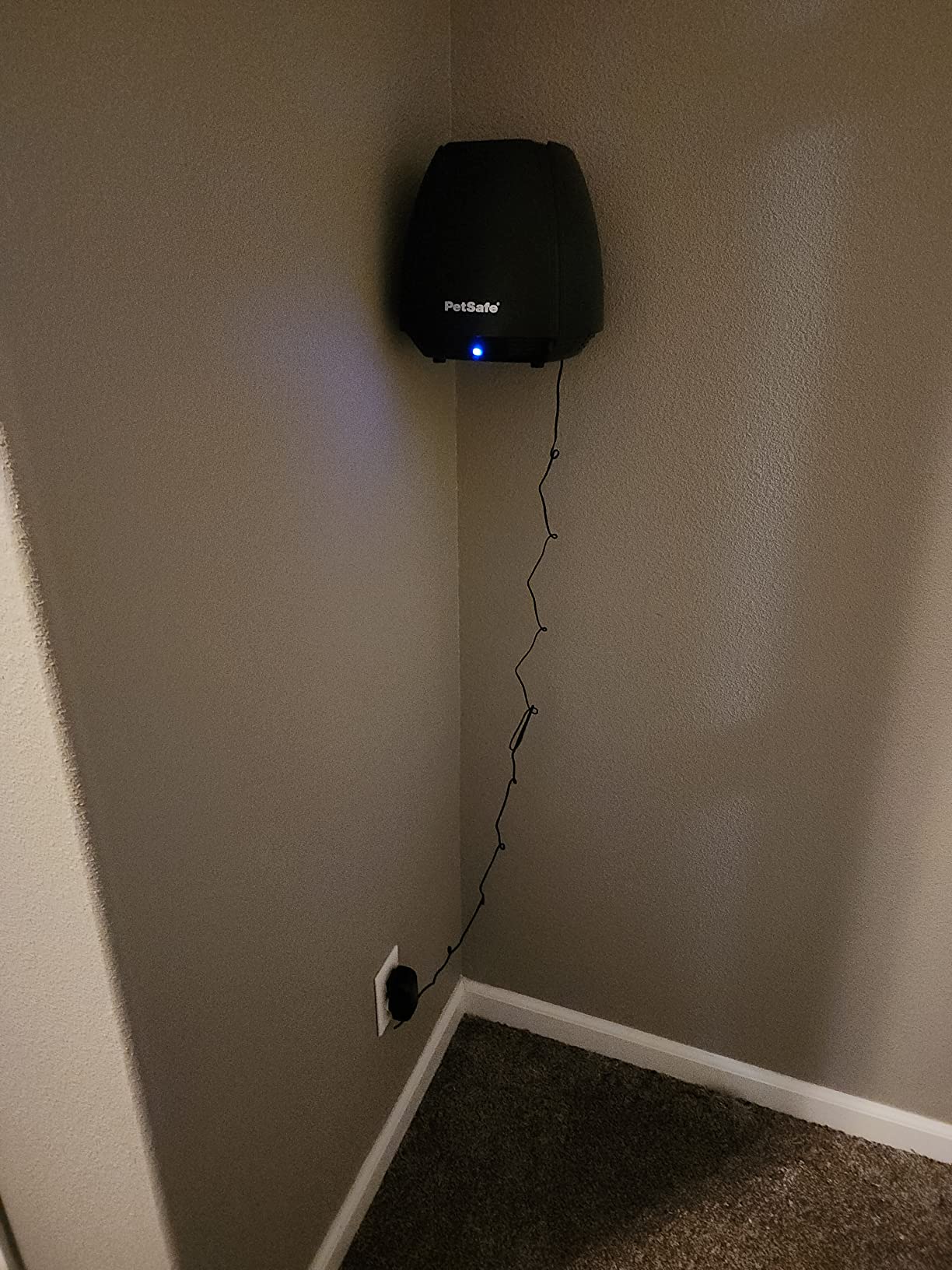
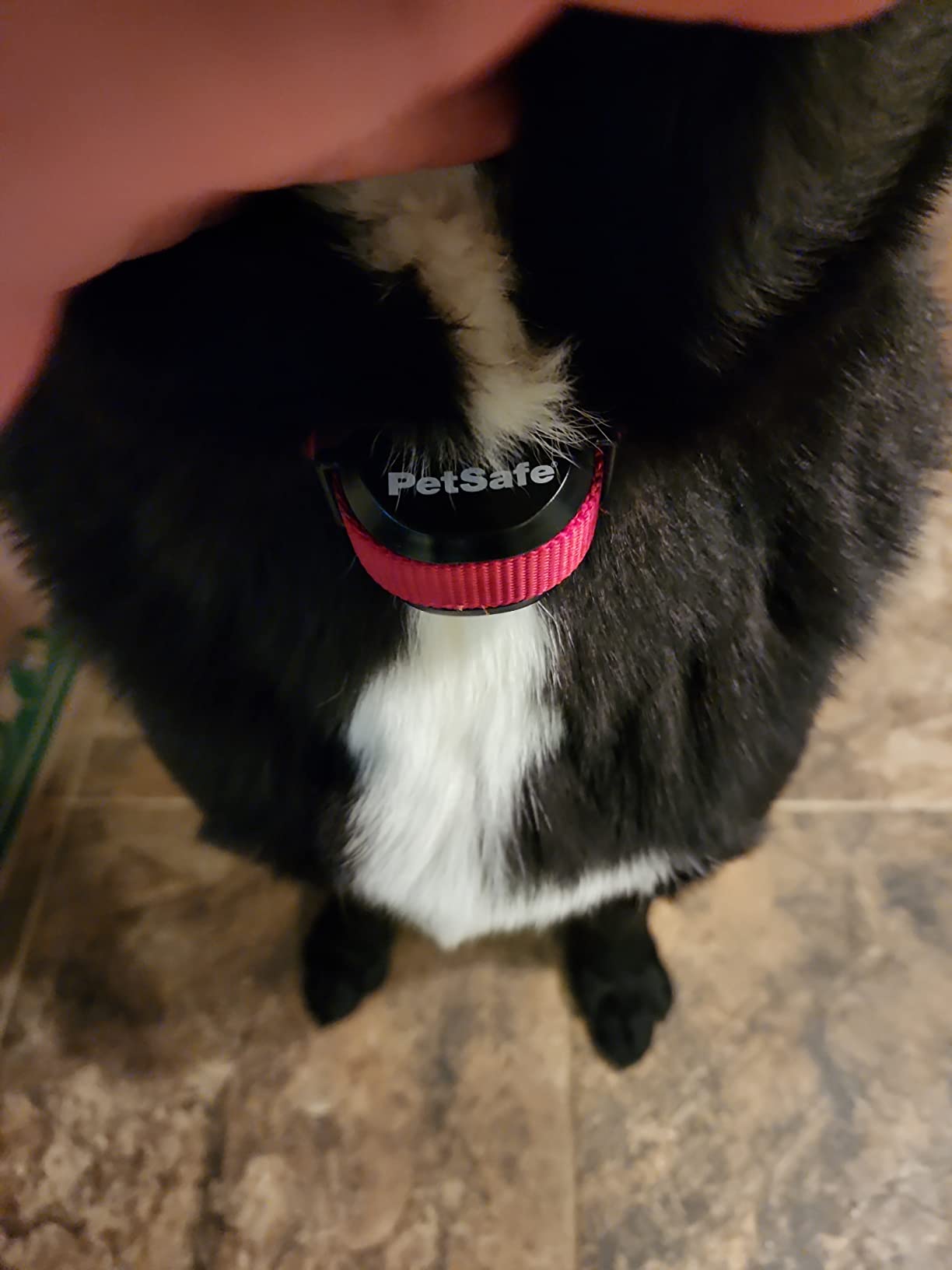
The plug-in indoor transmitter throws a circular signal out to about half an acre. The collar is waterproof, fits necks from 6 to 28 inches, and works on dogs from 8 lb upward, which covers most household dogs in one purchase. There are five static levels plus a tone-only mode, so you can start gentle and work up.
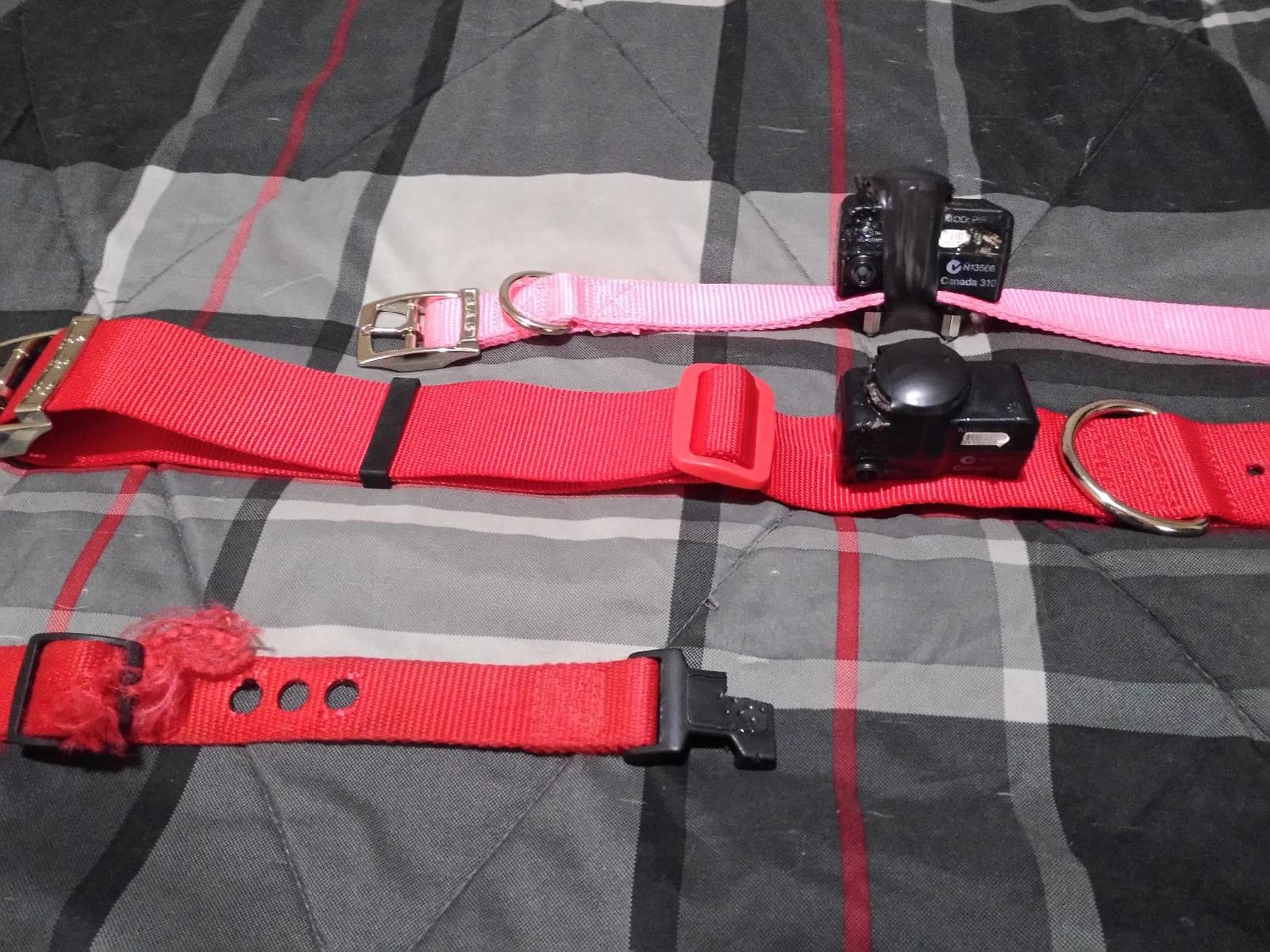
Owners consistently report that the system trains quickly and holds breeds that are usually difficult. The static-free re-entry feature is the quietly excellent part: once the dog turns around and comes back inside, the collar stops punishing it. Without that, a dog gets zapped every time it comes home, and learns to associate your property with fear.
Battery life is the other quiet win. The collar runs on a replaceable lithium battery that lasts up to about two months, which means no charging routine and no dead collar at the gate. Compare that with the rechargeable GPS collars further down, and the maintenance difference is stark.
What to check before you buy
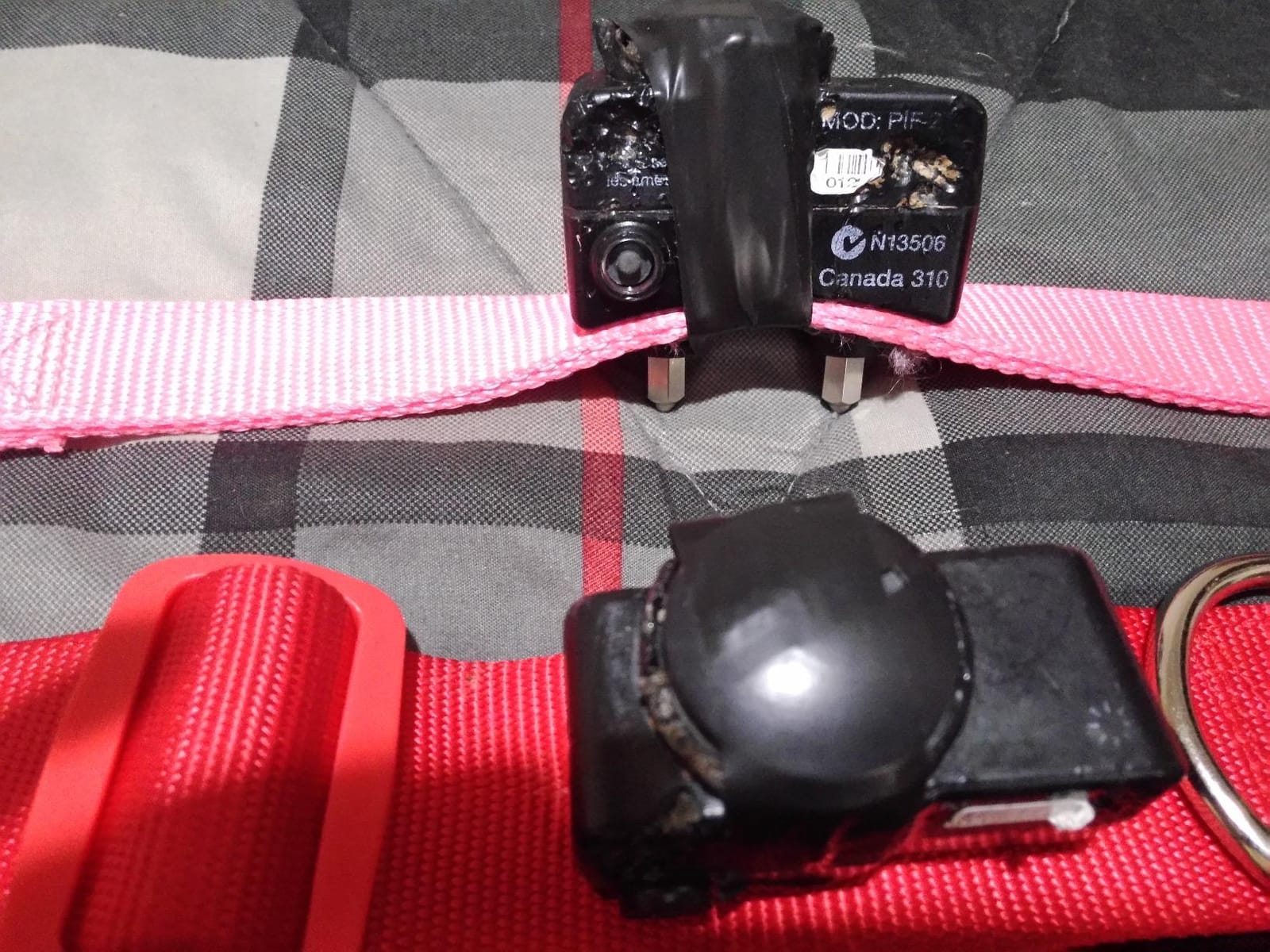
Half an acre is genuinely small. A circle with a 22.5 ft radius covers roughly a circular yard and nothing more. If your property is wider or you need to exclude a pond, a driveway, or a neighbouring fence line, this single unit will not do it without a second transmitter.
Mount the transmitter high and centrally. Metal buildings, appliances, and vehicles distort the signal, and owners regularly report stray beeping or hot spots when the unit sits low or next to a metal structure. The boundary then is not a clean circle, which is confusing during training.
Who it suits and who it does not
This is the right pick for a standard suburban yard, a rental where digging is not allowed, a second home, and anyone who wants zero ongoing cost. It suits first-time fence owners because the training is straightforward and the correction levels are easy to dial.
It is the wrong pick for acreage, for shaped boundaries, and for a dog with serious prey drive. In the r/StaffordBullTerriers community, owners of strong, high-energy breeds are consistent: those dogs need a solid physical fence, because no wireless system will stop a dog that has decided to leave. It is also an outdoor tool: the signal radiates from an indoor unit, so it is not designed to define behaviour inside the house.
2. PetSafe Stay & Play Wireless Fence – Best for Stubborn Dogs
PetSafe Stay & Play Wireless Fence for Stubborn Dogs, Up to 3/4-Acre
3/4 acre circular boundary
Rechargeable collar for dogs 5 lb and up
22.5-105 ft range
Pros
- Handles persistent high-drive breeds
- About 3/4 acre from one indoor transmitter
- Rechargeable waterproof collar
- Static-free re-entry
- No trenching needed
Cons
- Circular boundary only
- Metal structures cause random beeping
- Only one receiver collar included
Same engineering philosophy as our top pick, tuned for dogs that ignore the first lesson. This version pushes coverage to about three-quarters of an acre and expands the static range to five levels aimed at harder cases, with 4303 reviews averaging 4.1 stars behind it.
Owners of Huskies, Shepherds, Pointers, and Saint Bernards report that it trains in two to three sessions and holds athletic dogs. The adjustable range of 22.5 to 105 ft in every direction from the transmitter gives you some control over how wide the play area is, which matters on a long rectangular lot.
The collar here is rechargeable and waterproof rather than battery-replaceable, and it fits dogs from 5 lb up with 6 to 28 inch necks. Runtime is around two weeks per charge, so you will build it into a routine. The benefit is that a dead collar is a visible charger-shaped object rather than a surprise failure at the gate.
Tone-only mode is properly implemented, and the tone is loud and clear enough to give a dog time to turn back before any static is applied. That sequence is what makes fast training possible with a stubborn dog. Static-free reentry is present here too.
What to check before you buy
Only one receiver collar comes in the box. Multi-dog households need to budget for additional collars, and they are sold separately, so the per-dog economics change quickly in a two or three dog home.
Metal remains the enemy. Owners with metal barns or metal-sided buildings report random beeping and boundary hot spots, and a few report the collar buzzing indoors near the transmitter. Also expect the same fixed circle as every base-transmitter system; you cannot carve out a pool or follow a property line.
Who it suits and who it does not
Choose this if your dog has previously blown through a lighter wireless fence, or if you have a larger breed that needs more reach than half an acre. It is also a good fit for a camping or vacation property where you can plug the transmitter into an outlet.
Skip it if you need shaped boundaries, if you cannot mount the transmitter away from metal, or if your dog is a true escape artist. Owners also flag long-term transmitter durability as the weak point on kits that run for years, so treat the base unit as a replaceable component rather than a lifetime purchase.
3. Lilyeel GPS Collar Fence System – Best Custom Boundary With No Monthly Fee
GPS Wireless Dog Collar Fence System – No Monthly Fee App Control, Custom Polygon Boundary & Remote Training, Free Phone Tracker for Up to 5 Pets, Virtual Electric Fence for Dogs
No monthly subscription
Custom polygon boundary drawn in a free app
Supports up to 5 pets
Pros
- No recurring fee for the fence function
- Custom polygon follows your actual yard
- Activity monitoring included in the app
- Per-dog intensity settings
- Training remote in the box
Cons
- Needs a stable phone connection
- GPS accuracy drops in heavy tree cover
- Not suitable indoors
Most app-driven GPS fences charge a monthly plan for the containment feature. This one does not. The boundary lives on the collar, the app is free, and activity monitoring is bundled in, which makes it the rare GPS fence that behaves like an owned device rather than a rented one. It holds 4.3 stars across 247 reviews, with about 75 percent of those at five stars.
The real advantage is geometry. You draw a polygon on a map, so the boundary can follow a property line, run along a driveway, or stop short of a street. No other affordable system in this list gives you that, and it is the feature that separates a GPS fence from a very long rope.
Multi-dog support covers up to five collar devices in one account, with tone, vibration, and static intensity set per dog. That per-dog control matters in a household with a sensitive small dog and a heavy-footed larger one, because a single global level either under-corrects one or over-corrects the other. A handheld remote for initial boundary training is included and switches between two dogs.
Setup takes minutes. No base station, no wiring, no trenching. The app also doubles as a daily exercise monitor, which is a genuine bonus for owners who were already curious how much their dog actually moves. The polygon can be drawn on a tablet or a laptop browser too, so owners who set boundaries from a home office are not stuck on a small phone screen; our wireless keyboard picks cover the rest of that desk-side setup.
What to check before you buy
The fence depends on a phone or app connection, and some owners report the app map dropping out beyond short distances from the phone. Test it in your actual yard before you commit, ideally at the far corner, before relying on it as a containment layer.
The manufacturer states plainly that this is built for outdoor open areas with a strong GPS signal, and not for dense woods or indoor use. If your property is heavily treed, the boundary will move with the signal. Owners also note the correction can feel too strong for a very sensitive dog, so start on tone-only and vibration.
Who it suits and who it does not
This is the fit for a shaped yard, a household with three or more dogs, and anyone who objects to a recurring fee for a containment function. It is also attractive if you want off-leash yard time on a property you rent and cannot dig on.
It is not the choice for wooded acreage, for indoor or basement use, or for a dog that needs a hard correction you do not have to think about. Because the app carries part of the logic, a phone failure or an app update is a risk that base-transmitter systems simply do not carry.
4. PATPET GPS Wireless Dog Fence – Best Budget Pick for Acreage
PATPET GPS Wireless Dog Fence | No-Dig & No-App, 9999-Yard Range | IP67 Waterproof Collar, 3 Modes for Medium & Large Dogs
9999-yard circular range
No app and no subscription
IP67 sealed waterproof collar
Pros
- Enormous range for open acreage
- No app
- no subscription
- no digging
- Multi-constellation GPS with signal filtering
- Boundary survives a full power-off
Cons
- Circular boundary set from the collar
- Determined dogs can pull the collar off
- Durability concerns reported at around one year
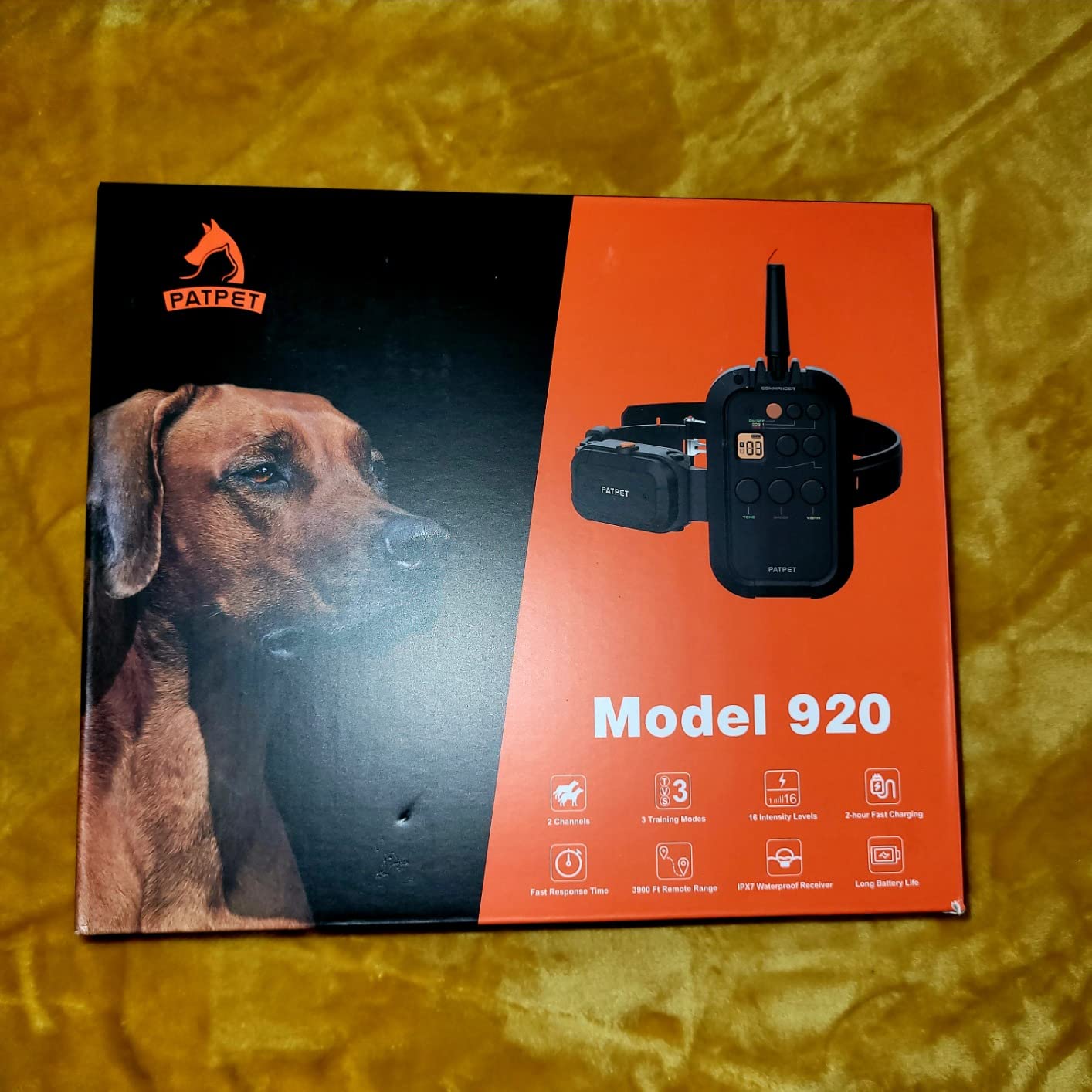
If you have land rather than a yard, this is the pick. A circular range of up to 9999 yards is the largest containment area in this group by a wide margin, and there is no base station, no app, and no subscription to go with it. It holds 4.2 stars from 286 reviews.
Owners of hunting breeds and high-drive working dogs report that it works after a short training period and holds a long battery charge. The multi-constellation GPS and GNSS signal with filtering is designed specifically to prevent false triggers, which is the usual failure mode for cheap satellite collars in open country.
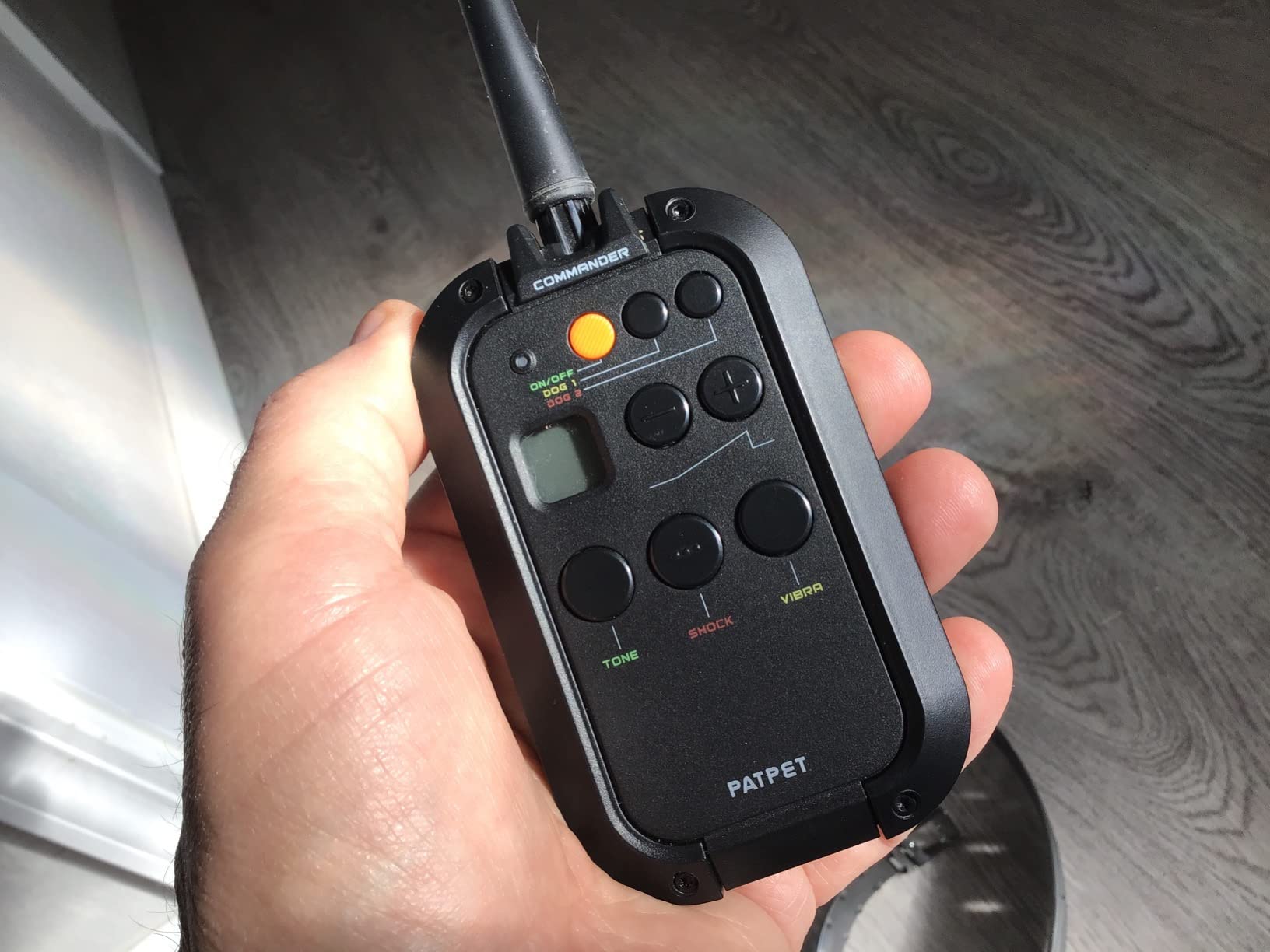
Two details make it practical day to day. Settings are stored in onboard memory and survive a full power-off, so a flat battery does not mean recalibrating the boundary at the edge of a field. And the IP67 sealed receiver handles rain, puddles, and wet grass without complaint.
There are three training modes: no-shock with beep and vibration, a gentle static level, and a firm static level. Starting a hard dog on the first mode and working upward is the right order, and the no-shock mode means you can train a sensitive dog without using static at all.
What to check before you buy
The boundary is a circle set from the collar, not a custom shape. On acreage that is workable, since you can position the circle around a work area, but it cannot follow a fence line or exclude a single paddock.
Durability is the recurring criticism. One reviewer reported a collar that stopped working after roughly ten months, and a replacement whose shock function failed. Only two shock prongs are included and are described as fragile. For a dog that chews collars or works hard every day, plan on replacement.
Who it suits and who it does not
Farm, ranch, and acreage owners get the most from this one, especially if they want a containment collar that does not care about cell coverage. It is also a strong first wireless fence for an adult dog that already has solid boundary awareness.
It is a poor match for toy breeds, for a dog that can slip a collar, and for anyone who needs a boundary that follows an irregular property shape. The two-prong static contact is the weak point, so check fit carefully on a dog with a thick or long coat.
5. Htcuto 2-in-1 Wireless Dog Fence System – Boundary Plus 6000 ft Trainer
Htcuto Wireless Dog Fence for 2 Dogs – Multi-Mode Electric Dog Fence
2-in-1 fence plus 6000 ft trainer
Beep and vibration at the boundary
Fits dogs 10-130 lb
Pros
- Fence and training functions in one unit
- 4.7 stars is the highest rating in this group
- Up to 185 days standby and about 84 hours in fence mode
- Quick setup with no app or subscription
- Keypad lock and LED flashlight
Cons
- Static at the boundary must be triggered from the remote
- Circular boundary around the transmitter
- Bulky module on small dogs
This is the highest-rated system we tested, at 4.7 stars from 132 reviews, with 83 percent of those at five stars. It is not a GPS collar. It is a radio-frequency fence transmitter paired with a handheld remote, and the two functions share one collar.
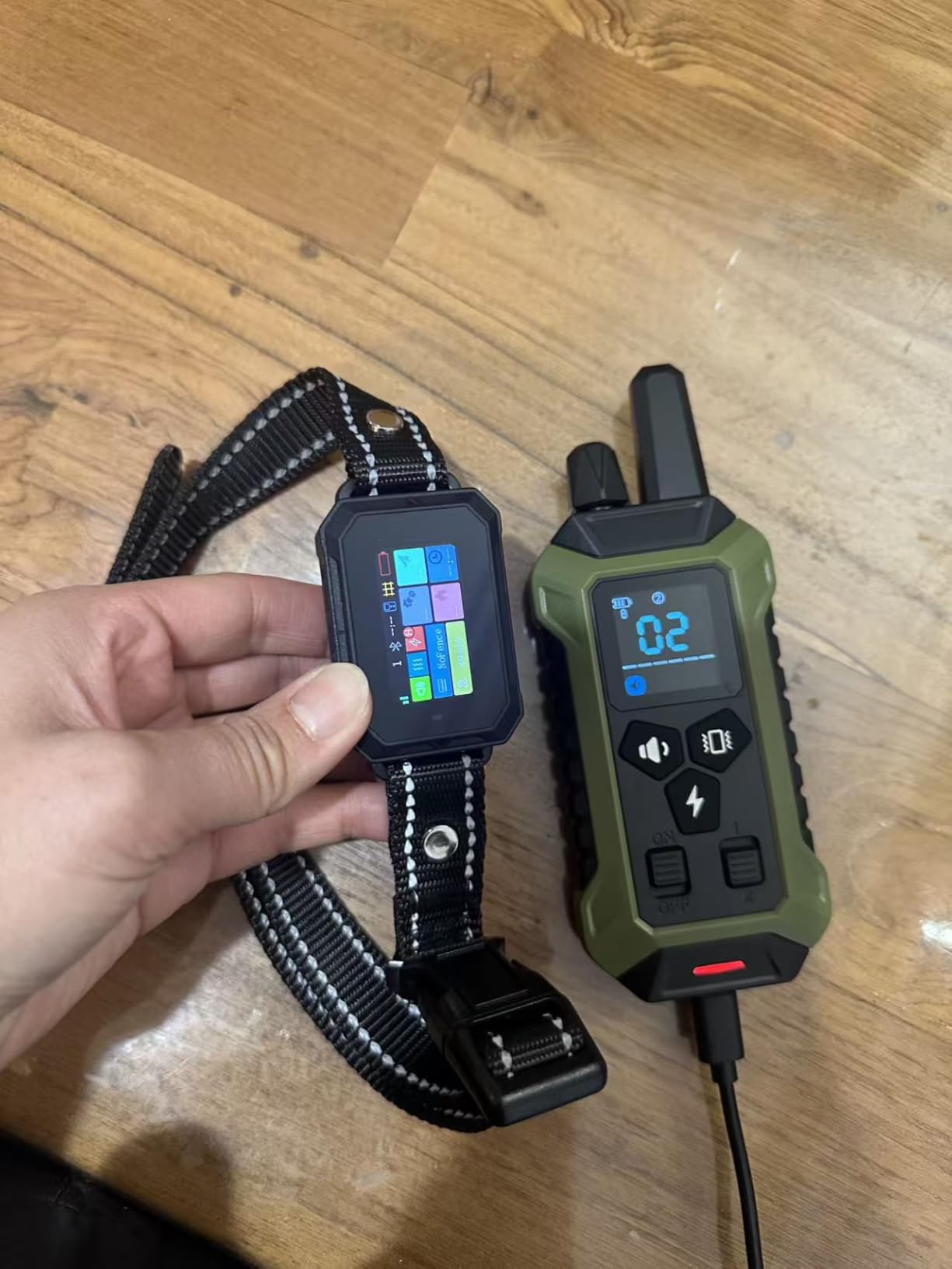
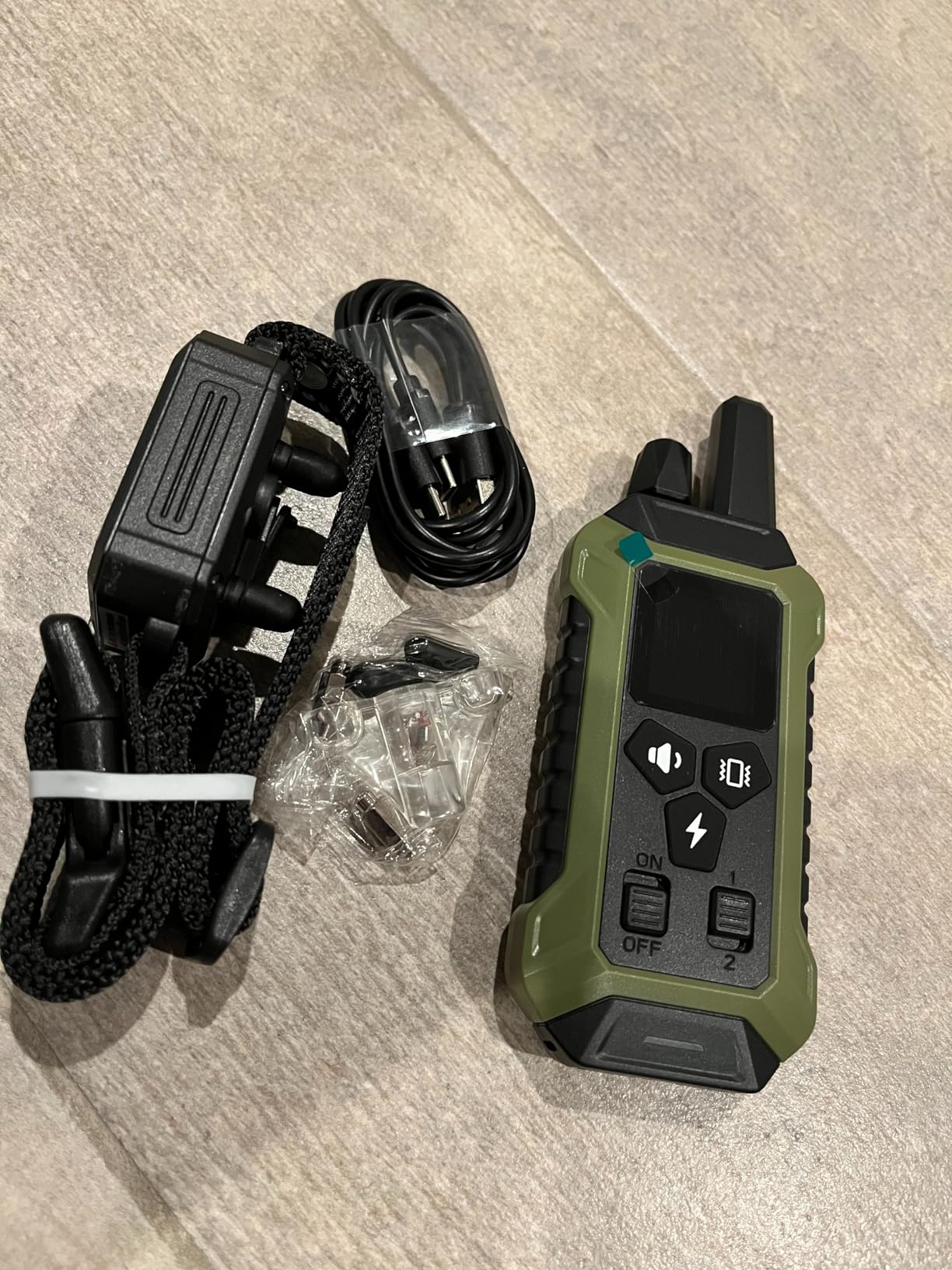
The boundary runs up to 3500 ft and adjusts across 14 levels. The remote works out to 6000 ft with ultrasonic, beep, vibration, and static modes. Training levels run beep from 0 to 1, vibration from 0 to 9, and safety static from 0 to 30, which is a wider static range than anything else here.
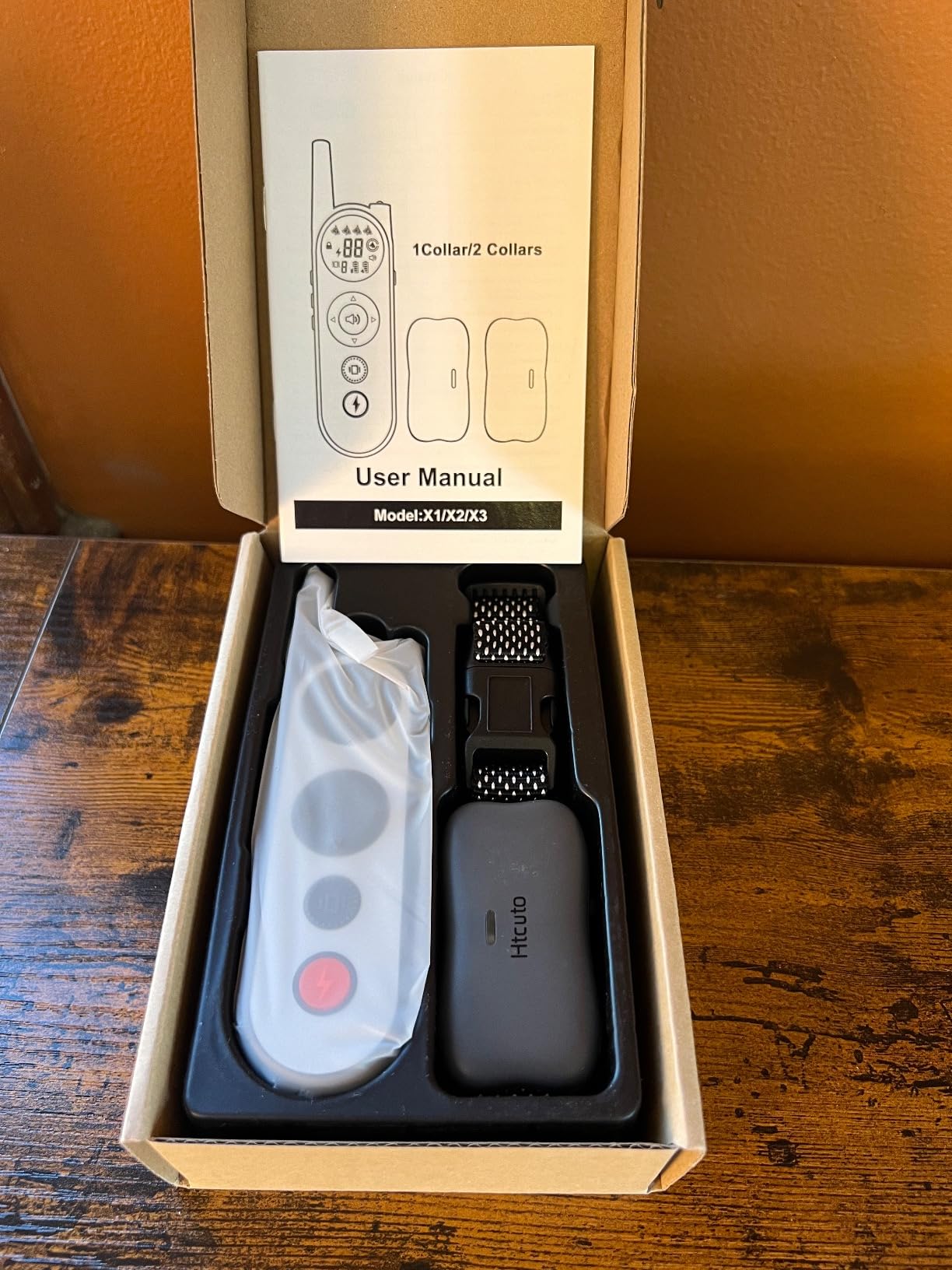
Battery numbers are the standout. Up to 185 days on standby and roughly 84 hours of continuous fence-mode use, with a full charge in about 2.5 hours for both the remote and the collar. The IPX7 collar handles rain, beach, and pool use. A keypad lock stops accidental activation and a dual-mode LED light handles night walks.
Fitting is generous: dogs from 10 to 130 lb with necks up to 23.6 inches. The remote can drive up to four dogs by channel, though this specific package is a two-dog configuration with a one-two fence channel switch.
What to check before you buy
Read the boundary behaviour carefully. Crossing the boundary gives a beep and a vibration, and any static has to be sent manually from the remote. For a dog already trained on a tone warning, that is plenty. For a dog that has never seen a boundary, the automatic escalation other systems provide is genuinely helpful.
Coverage is a circle around the transmitter, so the unit placement defines your play area. The module is also bulky, and owners of small dogs report it still looks heavy after trimming the strap. Both the remote and the collar need charging before first use.
Who it suits and who it does not
This suits owners who want boundary containment and a long-range trainer in one piece of kit, particularly for recall work across a large property. It suits large and medium dogs firmly, given the 10 lb floor.
It is the wrong tool for small and toy breeds, for anyone who needs a mapped or shaped boundary, and for a dog that must be corrected automatically without you pressing a button. Buyers who want a single collar that draws a map boundary should look at the GPS options instead.
6. SpotOn Nova GPS Dog Fence Collar – Best for Dense Tree Cover
SpotOn Nova GPS Dog Fence Collar, App-Controlled Wireless Fence
Unlimited custom fences
Keep-out zones with no correction
Dual-band GPS for tree cover
Pros
- Boundary can be any shape
- not just a circle
- Dual-band GPS holds accuracy in woods
- Keep-out and correction-free zones
- Real-time containment monitoring in the app
- Certified 1:1 trainer support
Cons
- The most expensive system in this group
- 10-26 in neck range excludes very small and very large dogs
- Tighter dependence on the app ecosystem
Among the GPS collars on this list, this is the one engineered not to lose accuracy where the sky is blocked. The SpotOn Nova uses dual-band, dual-feed GPS for both the collar and the fenceline, and the manufacturer rates escape prevention at 99.3 percent from aggregate user data, with containment activity viewable in the app.
That engineering shows up in the reviews, where owners cite dependable signal in tree cover and on uneven terrain as the deciding factor. The app supports unlimited custom fences of any shape, plus keep-out zones where the collar gives no correction at all. That correction-free zone feature is the one we would point a first-time owner to: it lets you mark a safe area your dog is allowed to cross without penalty.
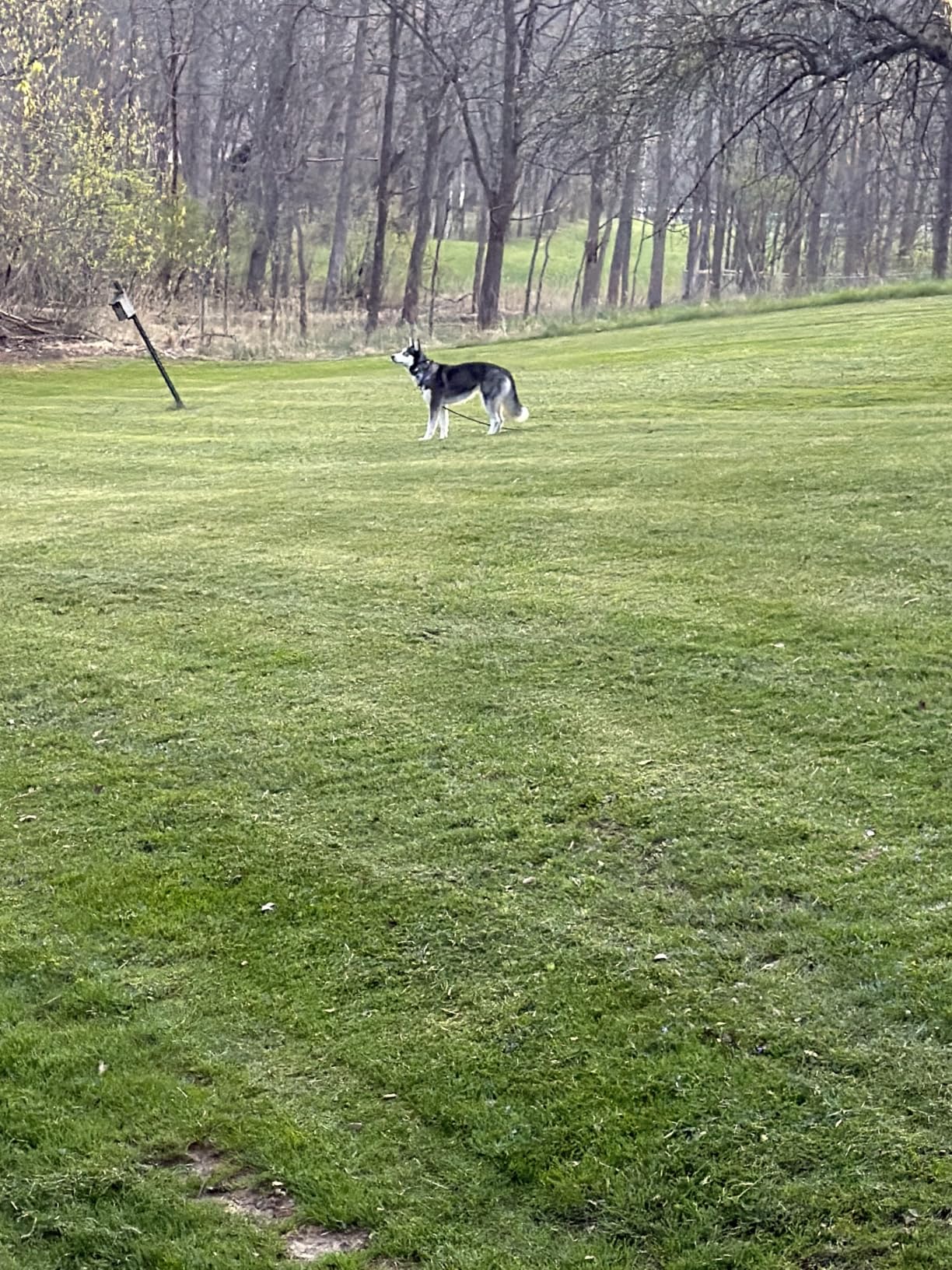
Certified one-to-one trainer support is included, which is unusual in this category. For a first-time wireless fence owner, having someone walk you through boundary protocol by phone removes most of the guesswork from the first fortnight.
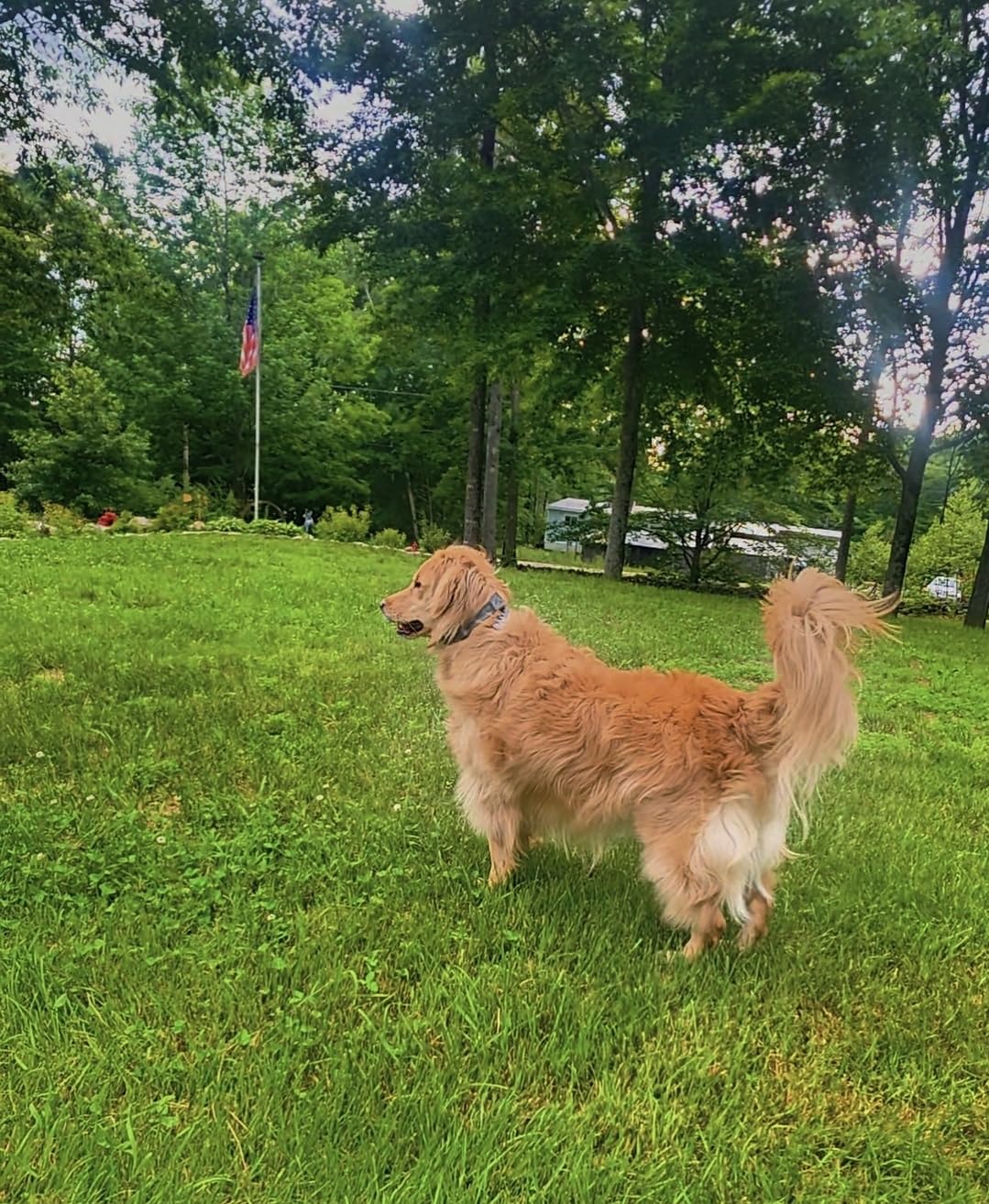
Neck sizing runs from 10 to 26 inches. That is narrower than the PetSafe kits and worth measuring before you commit, especially for a very small or very large dog. The rating is 4.0 stars from 121 reviews, an even spread that reflects a device people like and a price point they think about.
What to check before you buy
Cost is the dominant reservation in reviews, and it is the honest reason this is not our top pick. A premium collar is a large outlay for a yard where half an acre would do the job, and the reviews make clear that owners are comfortable with the performance and hesitant about the spend.
The system is also less self-contained than a plug-in transmitter. More of the function lives in the app and its ecosystem, so it asks more of your phone and more of the company staying in business. Neck range is the other practical limit.
Who it suits and who it does not
Buy this if your property is wooded, on a slope, or otherwise hostile to satellite signal, and if you want a boundary that follows your actual land rather than a circle. It is a strong choice for a dog with a lot of acreage to cover and an owner who values trainer support.
It is a poor fit for a small suburban yard where a base transmitter would do the job for a fraction of the outlay, and for dogs outside the 10 to 26 inch neck range. Anyone averse to a monthly plan for live tracking should read the next section before committing.
7. PetSafe Stay & Play Compact – Best for Expandable Yards
PetSafe Stay & Play Compact Wireless Dog Fence, Up to 3/4 Acre
3/4 acre circular coverage
LCD shows range and system errors
Expandable with extra transmitters
Pros
- Sets up in about an hour
- Handles Huskies
- Shepherds and Border Collie mixes
- Rechargeable waterproof collars
- Multiple transmitters can be combined
- Static-free re-entry
Cons
- Receiver collar durability is the biggest complaint
- Metal causes inconsistent boundary warnings
- Overlapping transmitters can create odd zones
This is the version to buy if you might outgrow one transmitter. Unlike the fixed kits, multiple transmitters can be combined to cover irregular or larger yards, and the coverage is adjustable between roughly 22 and 105 ft in every direction. It carries 6756 reviews at 4.0 stars, the second-largest owner base here.
Owners of difficult breeds report that it works on Huskies, German Shepherds, and Border Collie mixes, and that the training period is short. The LCD display on the base unit is a small touch that matters in practice: it shows the play-area size and warns you when something is wrong with the system, rather than leaving you to guess why the dog is not being contained.
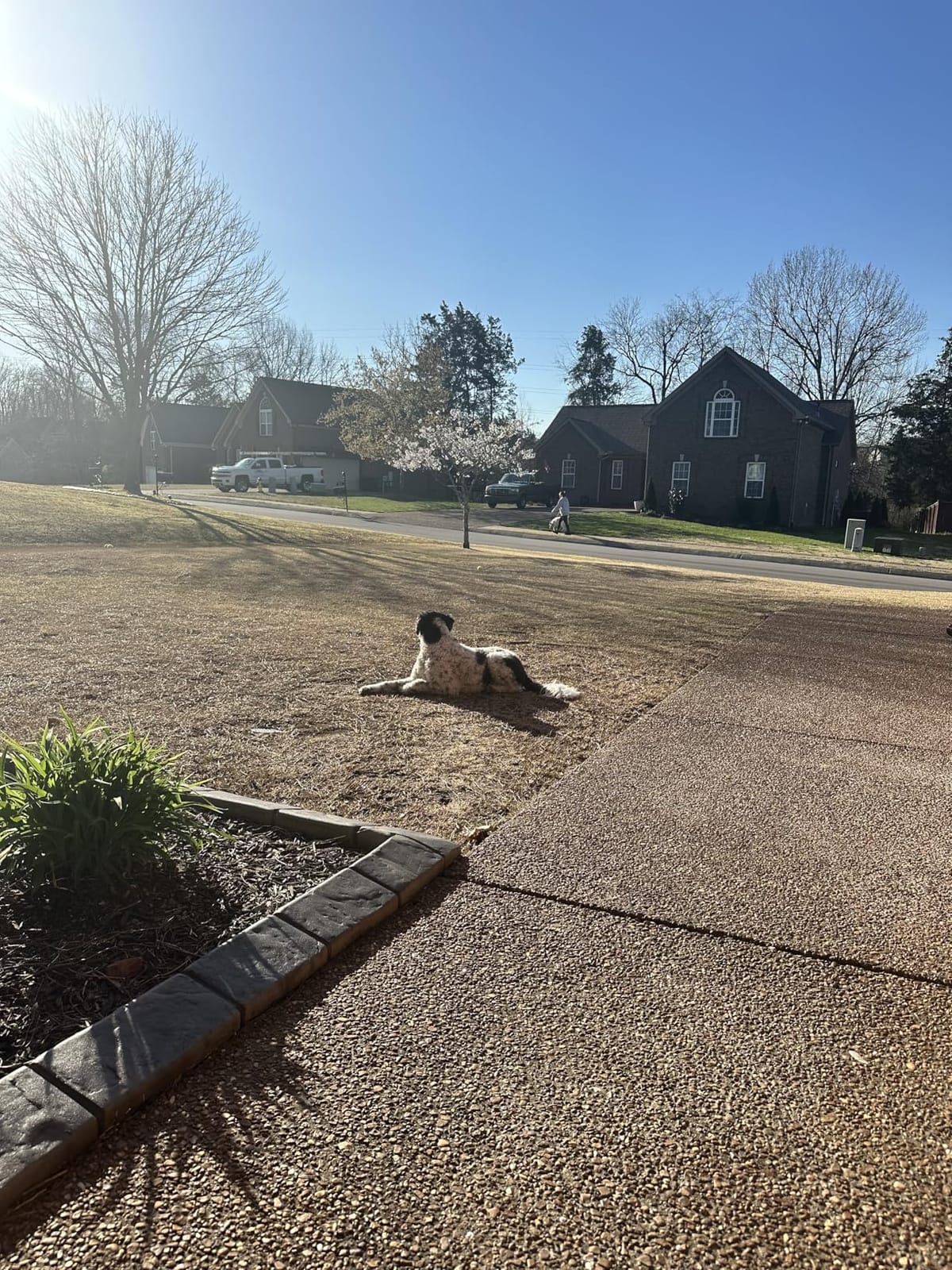
The collar is rechargeable and waterproof, fits dogs from 5 lb up, and adjusts from 6 to 28 inches. Static-free reentry is standard. And because the base unit is a radio transmitter rather than a satellite receiver, it works without cell coverage, which matters on rural land.
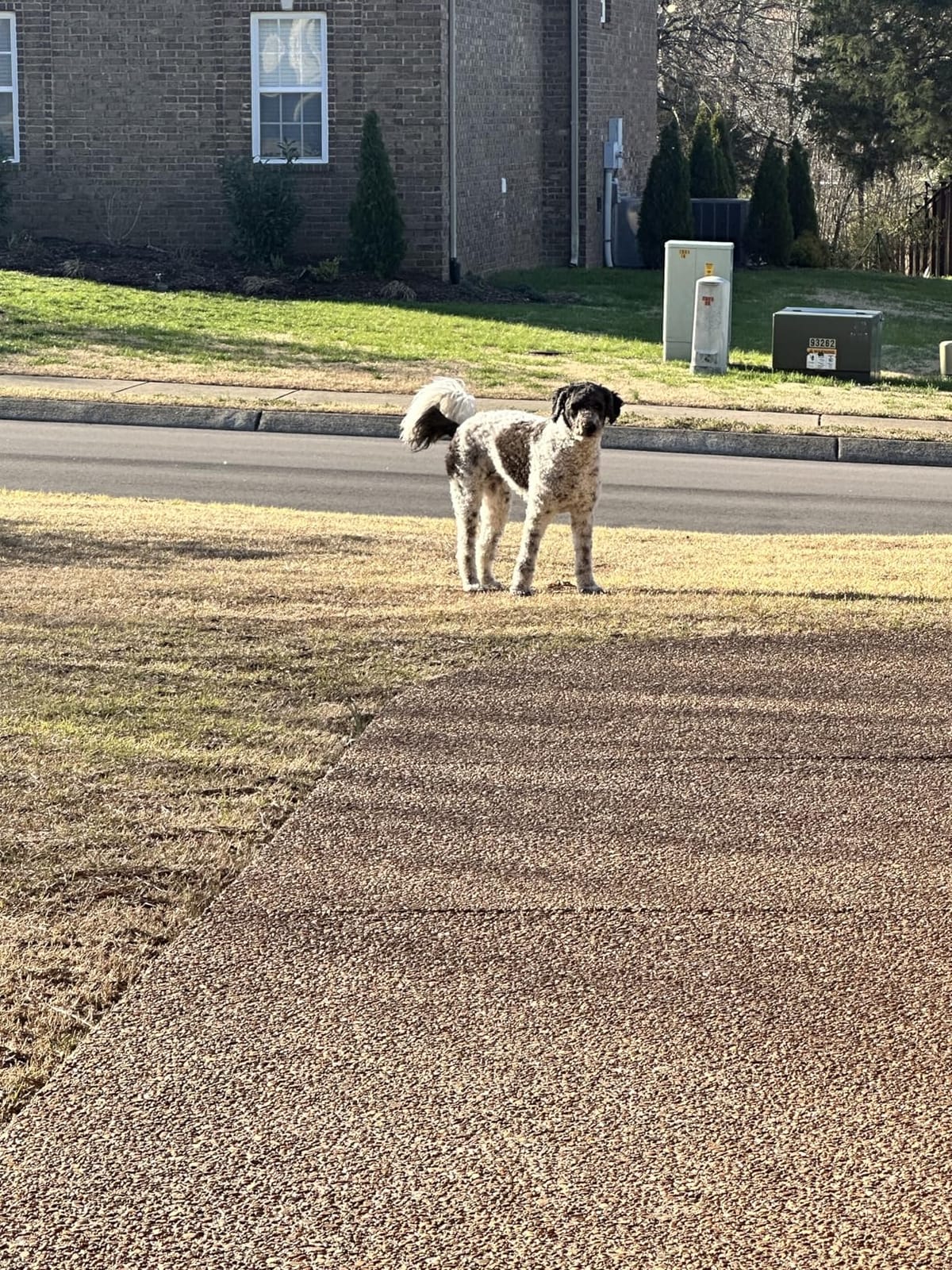
One honest note on the signal shape: the boundary is spherical in radio terms, so sloped terrain can make the perimeter uneven. A yard that drops away toward the street may effectively contain a slightly different area at the bottom of the slope than at the top.
What to check before you buy
Receiver collar longevity is by far the most common complaint. Owners describe going through three or four collars over a few years, which makes the total cost of this kit higher than the sticker suggests if you keep it for a decade. Budget for replacement collars rather than treating the first one as permanent.
Two more practical issues. Metal buildings, appliances, and vehicles produce inconsistent boundary warnings. And a power outage sets off an alarm that sounds for 30 minutes, after which the units can need re-syncing before they will contain again.
Who it suits and who it does not
This suits owners on a larger or oddly shaped lot who want to grow coverage with extra transmitters rather than replacing the whole system. It also suits rural properties with no reliable cell service, since the fence logic does not depend on a network.
It is the wrong choice if you want a shaped boundary that follows your property line, if your yard is full of metal structures, or if you are bothered by a base unit that runs warm and hums at higher range settings. For a single small yard, our top pick covers the same ground with a replaceable-battery collar.
8. Htcuto Wireless Fence System for 2 Dogs – Best for Multi-Dog Homes
Htcuto Wireless Dog Fence System for 2 Dogs Electric Dog Fence
Two collars included
Boundary and trainer in one unit
Fits dogs 10-130 lb
Pros
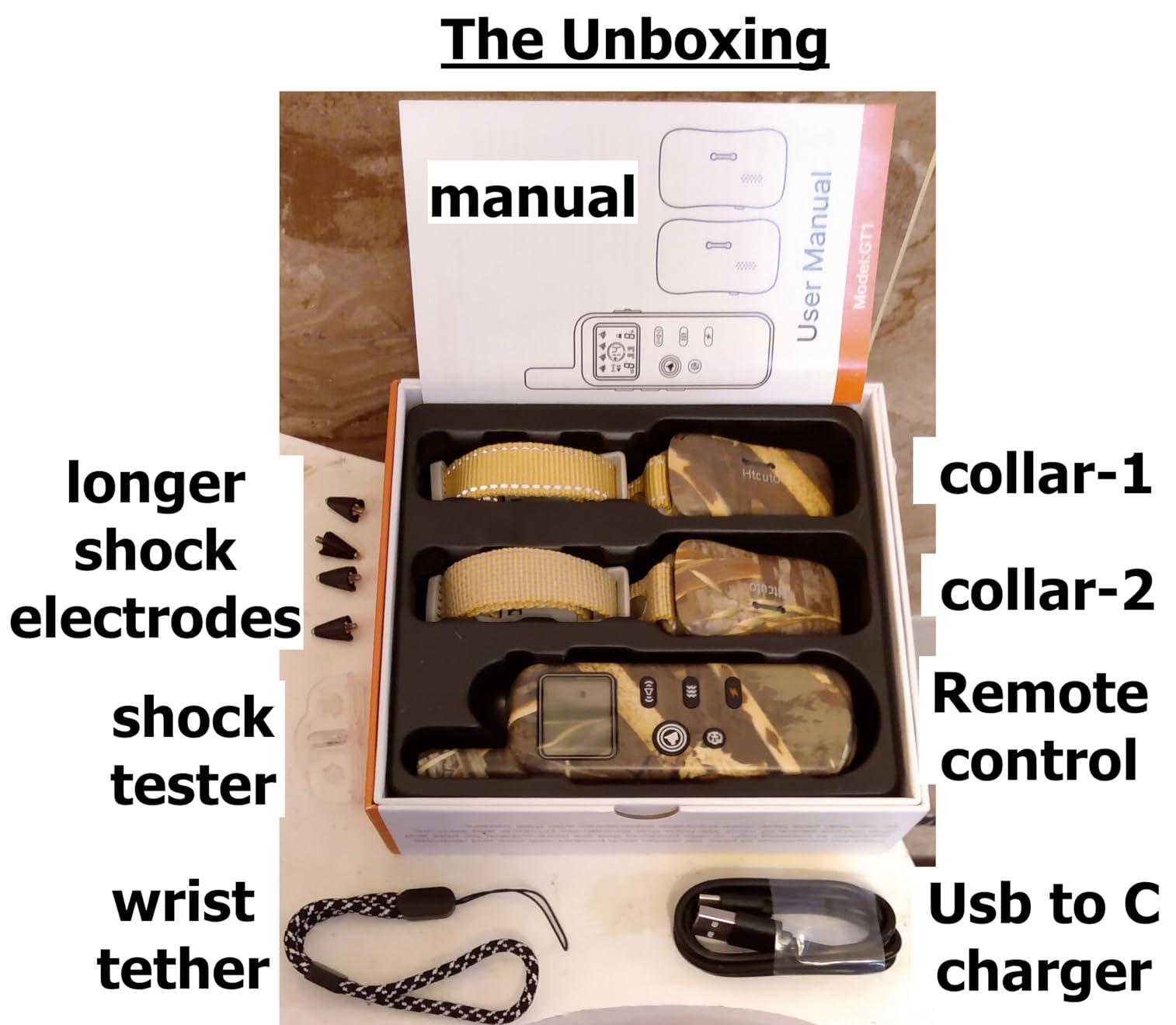
- Two collars in the box
- Boundary and 6000 ft remote training in one unit
- Up to 365 days standby
- Beep and vibration modes need no static
- No app
- no WiFi and no subscription
Cons
- Programming takes practice
- Static level can feel stronger than needed
- Remote is not waterproof
Two collars in the box changes the economics of a multi-dog household, and that is why this system sits here rather than as a single-dog option. It holds 4.4 stars from 131 reviews, with 74 percent at five stars, and owners of energetic multi-dog homes rate the quick setup and the adjustable boundary highly.
The boundary adjusts from 25 to 3500 ft across 14 levels, and you can choose between two fence modes: beep, vibration, and static together, or beep and vibration only. That static-free option is the reason many owners never use static at all on this kit, which is a better default for most dogs.
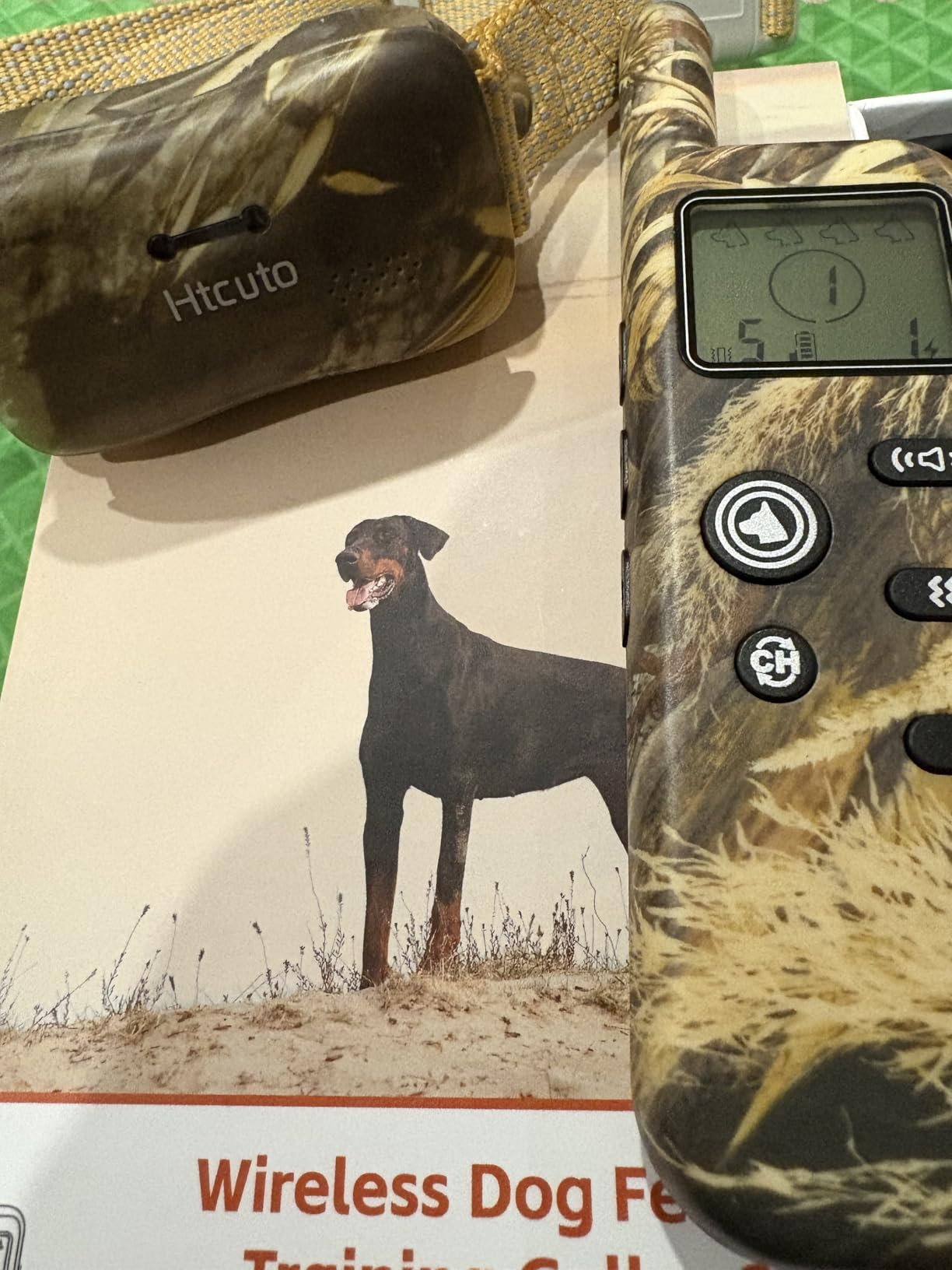
The remote reaches 6000 ft with ultrasonic, beep, vibration, and static modes, and vibration and static can run up to eight seconds continuously. There is also an ultrasonic bark-control mode at 25 to 30 kHz, which is unusual for a containment kit and useful in a household with a barking dog.
Two dogs run in fence mode and up to four dogs in remote training mode, across dogs from 10 to 130 lb. Charging takes about two hours, and the standby figure is listed at up to 365 days with roughly 84 hours of continuous fence use. The collar is IPX7 waterproof, and there is a slide safety lock plus a lost-dog alert.
What to check before you buy
Programming takes practice and the instructions are not always clear, so budget an hour to set it up properly. Owners also report that the trigger sometimes lags or takes a few seconds to reset, and that distance can vary a little from the setting.
The static level can feel stronger than necessary, which is a separate complaint from the boundary behaviour. If your dog is sensitive, use the beep and vibration mode and leave the static off. Note also that only the receiver collar is waterproof, not the handheld remote, so do not leave it in the rain on a training trip.
Who it suits and who it does not
This is the pick for two-dog households that want a spare collar charging while the other is in use, and for anyone who wants a bark-control mode alongside containment. It suits owners who want a trainer and a fence in one remote without any app setup.
It does not suit dogs under 10 lb, owners who need a shaped or mapped boundary, or anyone who wants to see a mapped perimeter or track a dog’s position. The circle-only shape remains the constraint that affects every base-transmitter system on this list. If you want live location on a phone, add one of our wireless security cameras to cover the yard while you are out, since a containment collar is not a monitoring tool.
How GPS Fences and Base-Transmitter Fences Differ
Every product above is wireless, and that phrase hides two technologies that behave nothing alike. Understanding the difference before you buy will save you from picking a system that fights your property.
A base-transmitter fence is a box plugged into an indoor outlet that broadcasts a radio signal. The collar carries a receiver. The boundary is a circle centred on the box, the range is measured in feet, and the signal is a physical wave that gets distorted by metal structures and can weaken through walls. It needs no subscription, no phone, and no network, and it works on rural land with no cell coverage. A single unit covers half an acre to three-quarters of an acre in the systems below, and extra transmitters extend it.
A GPS-collar fence puts a satellite receiver in the collar. The boundary is drawn on a map, so it can be any shape and can cover unlimited ground. There is no base unit and no wires, and the collar is fully portable, which makes it the family that travels to a second home or a campsite. The tradeoff is that satellites need a clear view of the sky, so accuracy degrades under dense tree cover, in deep ravines, and next to tall buildings. Some of them also tie live tracking to a paid plan rather than selling the full feature set with the hardware.
The third option people confuse with these is buried wire. It is accurate and shaped, but it is not wireless, needs trenching, and is not covered here. Renters often cannot install it, which is the main reason people search for wireless systems in the first place.
One practical note on charging: GPS collars are rechargeable and need power, so if you are off-grid or camping, check your charging plan before you leave.
How to Choose a Wireless Dog Fence
Start with the shape of your yard, not the price of the collar. If your property is roughly circular and under half an acre, a base transmitter is the simple answer and it will never ask you for a subscription. If you have an irregular lot, a road you must not cross, or more than a couple of acres, you need a GPS collar and you need a clear view of the sky.
Next, measure the dog’s neck. Getting this wrong is the fastest way to turn a well-reviewed fence into a bad fit. The PetSafe kits run 6 to 28 inches, the SpotOn collar runs 10 to 26 inches, and the Htcuto systems cap at 23.6 inches with a 10 lb weight floor. Toy breeds have the fewest options in this entire category, and small dogs in large yards usually need a two-part answer: a GPS collar sized for them plus a large-coverage system, rather than one product doing both jobs.
Then set correction deliberately rather than by guessing. Start in tone-only or vibration mode, walk the boundary on a leash for several days, and only add static once the tone reliably stops the dog. Owners on r/DogAdvice repeatedly report small dogs with thin coats getting over-corrected at factory defaults, so lower levels are almost always the right starting point for a small or senior dog.
Terrain and interference deserve their own check. Radio transmitters want to sit high, central, and away from metal buildings, appliances, and vehicles. GPS collars want open sky, so walk your property line and look for the corners where the signal will struggle. If you have a ravine, a dense treeline, or a long straight wall, note those before you buy rather than after training fails.
Think about how many dogs and how much travel. Multi-dog homes pay per extra collar, so a two-collar kit is usually the cheaper route. Portable use is the other quiet win of GPS collars: pack the collar, the charger, and a tested portable power bank, and the boundary travels with you to a campsite or a rental. If you also want to see the yard while you are away, our wireless security camera picks cover the gaps a collar cannot.
Finally, be honest about your dog. If your dog digs under fences, climbs six feet of privacy fence, or chases deer across open country, no system here will hold it, and a solid physical fence is the correct purchase. The r/StaffordBullTerriers consensus on strong, high-energy breeds is unambiguous on this point. A wireless fence is a complement to a good fence, and a very good tool for a dog that respects boundaries.
Subscription vs No-Subscription Wireless Dog Fences
Every GPS collar in this roundup is sold on a distinction that trips people up: the fence may work without a plan, while the live tracking and history may not. The fee does not pay for containment. It pays for location data over a network, and a company shutting down is a real risk to the parts of the product that depend on a server.
Our no-subscription picks are the Lilyeel collar, where the app, boundary, and activity monitoring are all free, and the PATPET collar, which has no app at all. Both store the boundary on the device. A power-off does not lose your settings, and a lapsed payment does not uncontain your dog.
The premium GPS option, the SpotOn Nova, places more of its function in the app and its tracking ecosystem. Treat the hardware purchase and any recurring plan as two separate decisions. If you only need the dog to stay in the yard, you may never touch the tracking features, and paying for them monthly is a poor trade for a fence you expect to run for a decade.
Every base-transmitter kit here, all three PetSafe systems and both Htcuto units, is a one-time purchase with nothing recurring. That is the quiet argument for them, and it is why our top pick is not a GPS collar despite GPS being the newer technology.
One more thing worth watching. If you want to know what is happening in your yard while you are away, a containment collar is the wrong instrument, because it tells you where the dog is not, only when the dog has already crossed. Pair the collar with a camera and you get both the boundary and the footage.
Frequently Asked Questions
Do wireless dog fences actually work?
They work when the dog respects the boundary. A receiver collar beeps first, then vibrates, then applies static only if the dog keeps approaching, and static-free re-entry stops correction once the dog turns back. Nothing physically blocks a determined dog, so a wireless fence is a complement to a physical fence rather than a replacement, especially for high-prey-drive breeds.
Which wireless dog fence is the most accurate?
Accuracy depends on the technology and the terrain. Under tree cover, next to tall buildings, or in a ravine, a dual-band GPS collar such as the SpotOn Nova is the most accurate option because it is engineered for consistent signal in low-signal terrain. In open ground with no obstructions, a base-transmitter system holds a very clean edge and is easier to set up.
What is the best GPS dog fence without a subscription?
The Lilyeel GPS collar fence system is the strongest no-subscription pick in this roundup, because the app, the custom polygon boundary, and activity monitoring are all free and the boundary lives on the collar. The PATPET GPS Wireless Dog Fence is the other no-fee option, with no app at all and settings that survive a power-off. Both avoid the recurring cost that usually attaches to app-driven GPS fences.
What is the best wireless dog fence on a budget?
The PATPET GPS Wireless Dog Fence is the lowest-cost entry in this group and covers up to 9999 yards with no app, no subscription, and no digging. For a standard yard under half an acre, a base-transmitter kit is often the cheaper long-term choice because the collar battery is replaceable rather than rechargeable, which is a small but real saving on a system kept for years.
Can I use one wireless fence for two dogs?
Two-dog households have two options. The Htcuto Wireless Fence System for 2 Dogs ships with two receiver collars and runs two dogs in fence mode. With any single-collar kit, additional receiver collars are sold separately for base-transmitter systems, while GPS systems usually add devices to the same app account at no extra collar hardware cost.
How long does it take to train a dog to a wireless fence?
Owners of difficult breeds report two to three sessions for many dogs, but treat two weeks as the realistic minimum before you trust the boundary off-leash. Start in tone-only or vibration mode, walk the boundary on a leash for several days, add static only once the tone reliably stops the dog, and only then increase correction gradually for thick coats or hard heads.
Final Verdict
For a standard yard, the PetSafe Wireless Pet Containment System is the best wireless dog fence we found in 2026. Half an acre, no monthly fee, a replaceable-battery collar that lasts up to two months, and a static-free re-entry that keeps your dog from being punished for coming home. If your dog is harder, move up to the PetSafe Stay & Play Wireless Fence. If you need acreage, a shaped boundary, or no recurring cost on a GPS system, take the Lilyeel collar, and if you need a trainer in the same kit, take the Htcuto 2-in-1.
And if your dog is an escape artist, buy a solid physical fence. Every owner we read on r/DogAdvice and r/Dogtraining said the same thing, and they are right. A wireless fence is the best tool we have for off-leash yard time without digging, but it works because your dog chooses to respect it.