
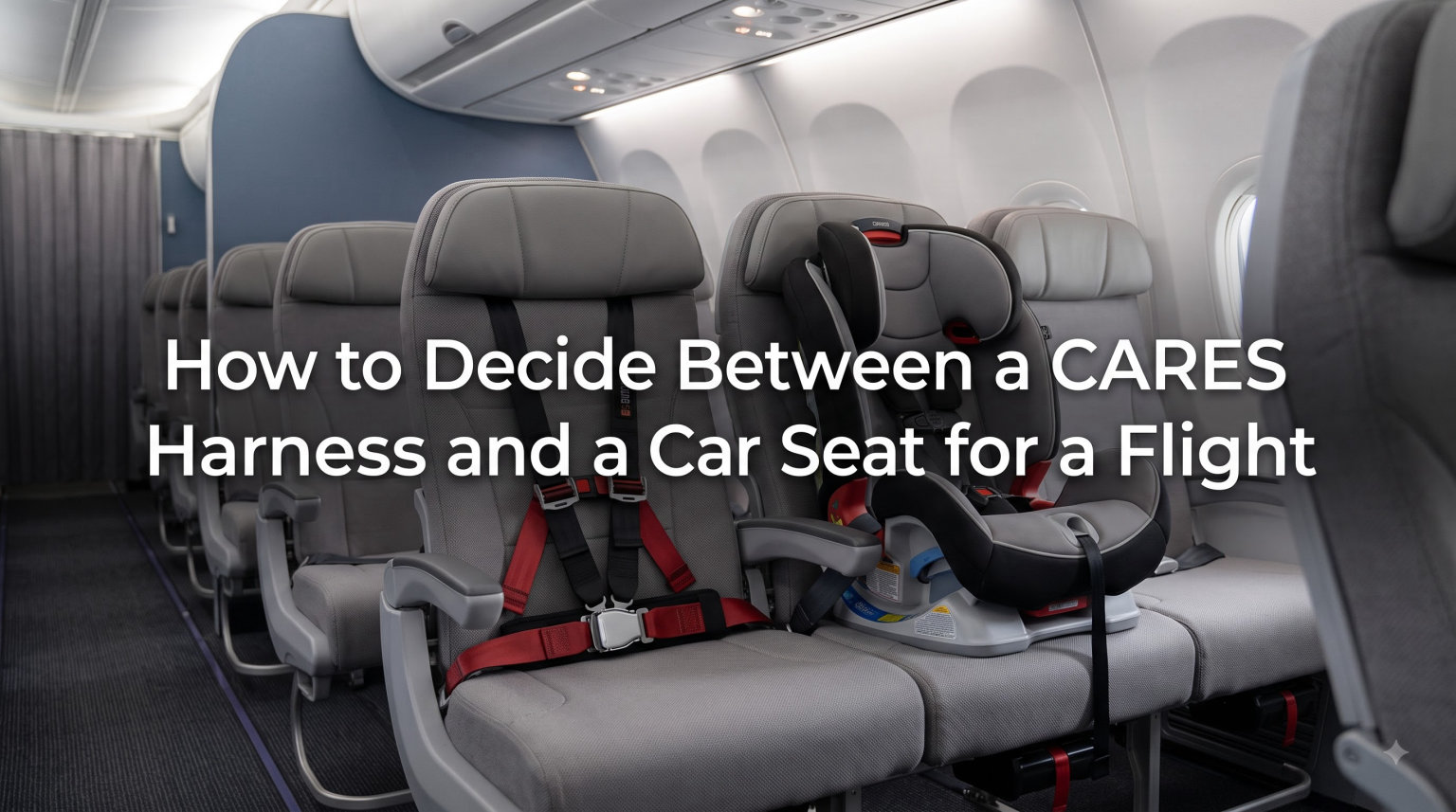
Flying with a toddler means juggling gear, boarding passes, and a hundred what-ifs before you even reach the gate. The biggest question I hear from parents is always the same: should I lug a car seat onto the plane, or is the CARES harness the better move? It is the classic CARES harness vs car seat for flight debate, and the answer genuinely depends on your specific trip.
I have talked with dozens of parents on Reddit parenting forums and travel groups who have tried both options. Some swear by the harness for short domestic hops. Others would never fly without their car seat for long-haul international routes. The split is real, and it makes sense once you understand what each device does best.
This guide breaks down everything you need to make that call with confidence. I will cover what the CARES harness actually is, how it compares to a car seat in safety and convenience, what the FAA and individual airlines say, and a practical decision framework you can apply to your next trip. By the end, you will know exactly which option fits your family’s travel style.
Table of Contents
What Is the CARES Harness?
The CARES harness (full name: Child Aviation Restraint System) is an FAA-approved flight restraint designed specifically for airplane travel. It is the only harness-type device certified by the FAA for use on commercial aircraft. Unlike a car seat, it is built exclusively for planes and cannot be used in a vehicle.
Here are the key specifications every parent should know. The CARES harness is approved for children weighing between 22 and 44 pounds, which typically covers ages 1 through 4. It weighs under one pound and packs into a small pouch about the size of a sunglasses case. The system uses a 5-point harness that wraps around the back of the airplane seat and secures underneath the tray table of the seat behind you.
Installation takes about one minute once you know what you are doing. You slide the red loop over the seat back, route the airplane seat belt through the bottom, and buckle your child in using the shoulder straps. No LATCH system, no base, no 30-pound shell to drag through security.
The design is brilliant for what it does. It converts a standard airplane lap belt into a 5-point harness that keeps small children properly positioned during taxi, takeoff, landing, and turbulence. For parents who have watched a toddler slip sideways under a loose lap belt, that alone is worth the investment.
CARES Harness vs Car Seat for Flight: Head-to-Head Comparison
When you weigh the CARES harness vs car seat for flight travel, the comparison comes down to portability versus containment. Each option has distinct advantages and real limitations. Let me break them down side by side.
CARES Harness Pros
The single biggest advantage is weight. At under one pound, the CARES harness disappears into your carry-on bag. You will not feel it, and you certainly will not be that parent struggling through the terminal with a car seat balanced on a stroller while wrangling a suitcase and a toddler.
Setup is fast and simple once you have practiced. Most parents report getting it installed in under two minutes, even on their first real flight. There is no learning curve about rear-facing angles or recline positions.
The harness works on every forward-facing airplane seat with a tray table behind it. That means economy, premium economy, and most business class configurations. You do not have to worry about whether your specific seat is wide enough or has the right anchor points.
It does not interfere with the tray table of the passenger behind you. This is a big deal. Anyone who has flown with a car seat knows the awkward moment when the person behind you cannot use their tray because your seat blocks it. The CARES harness routes under the tray table, so the passenger behind you is unaffected.
At the end of the flight, you unclip, fold, and pocket it. No gate-checking, no waiting at the jet bridge, no damage from baggage handlers.
CARES Harness Cons
The CARES harness provides no side-impact containment. Your child is secured by the harness straps, but there are no rigid side walls. During turbulence, a small child can still lean or slump sideways.
Slouching is a real complaint I have seen repeatedly in parent forums. Without the structured shell of a car seat, some toddlers slide down in the harness over a long flight. Parents report having to readjust their child every 30 to 45 minutes on longer routes.
Napping is harder. A car seat has a recline and side supports that cradle a sleeping child. The CARES harness holds your child upright against the airplane seat, which is not ideal for a three-hour snooze on a long-haul flight.
The harness is also useless once you land. If you need a car seat at your destination for taxis, rental cars, or rideshares, you still have to bring one. In that scenario, the CARES harness becomes an extra item rather than a replacement.
Finally, the weight range is narrow. Once your child exceeds 44 pounds, the CARES harness is no longer certified for use. Some kids hit that mark before age 4, leaving parents without the harness option sooner than expected.
Car Seat Pros
A car seat offers full structural containment. Rigid side walls keep your child positioned correctly during turbulence, hard landings, and unexpected jolts. For safety purists, this is the gold standard for in-flight child protection.
Sleeping is dramatically easier. The recline angle and side bolsters of a car seat mimic the environment your child is used to from daily car rides. Parents consistently report longer, more comfortable naps in a car seat compared to the CARES harness.
You need a car seat at your destination anyway. If you are renting a car, taking taxis, or staying somewhere without reliable child restraint options, bringing your own seat solves two problems at once. The CARES harness cannot help you on the ground.
Familiarity matters. Your child already knows their car seat. They have napped in it, snacked in it, and settled into it hundreds of times. That familiarity can reduce in-flight anxiety and resistance, especially for sensitive toddlers.
Car Seat Cons
Weight and bulk are the obvious drawbacks. Even the lightest travel car seats weigh 8 to 12 pounds. Full-size convertible seats can push 25 pounds. Carrying one through the airport, through security, and down the narrow aisle of a plane is genuinely exhausting.
Not all airplane seats accommodate every car seat. Width matters. A wide car seat may not fit in an economy seat, or may spill over into the neighboring passenger’s space. You have to research your specific aircraft and seat dimensions before you fly.
The car seat blocks the tray table of the passenger behind you. This is a frequent source of tension. Some airlines require car seats to be installed in window seats specifically to avoid this problem, which limits your seating options.
Installation on a plane can be tricky. Airplane seat belts are different from car seat belts, and threading them through the correct path takes practice. If you get it wrong, the seat is not properly secured.
Side-by-Side Comparison
| Feature | CARES Harness | Car Seat |
|---|---|---|
| Weight | Under 1 pound | 8-25 pounds |
| Approved weight range | 22-44 lbs | Varies by seat model |
| FAA approved | Yes | Yes (if labeled) |
| Side-impact containment | No | Yes |
| Napping comfort | Limited | Good |
| Tray table interference | None | Blocks rear tray |
| Installation time | 1-2 minutes | 3-5 minutes |
| Usable at destination | No | Yes |
| Business class compatible | Yes | Depends on seat width |
Safety Considerations: Which Is Actually Safer?
Both the CARES harness and FAA-approved car seats are safe for air travel. The FAA certifies both devices, and both provide significantly better protection than a lap belt alone or holding your child on your lap. The real question is which offers better protection for your specific child and situation.
A car seat provides superior overall protection because it adds a rigid shell around your child. During severe turbulence or a hard landing, the side walls prevent lateral movement. The structured design keeps your child in the correct position regardless of what happens. For parents who prioritize maximum structural protection, the car seat wins.
The CARES harness is still far safer than relying on the airplane lap belt alone. Small children can slip under or out of a standard lap belt during turbulence. The 5-point harness of the CARES system keeps the restraint on the child’s shoulders and hips where it belongs. Many parents on Reddit note that the CARES harness is absolutely worth it for air travel alone, simply because it prevents that slippage.
One safety nuance to consider is slouching. Without rigid side support, a child in a CARES harness can slump forward or sideways if they fall asleep or during extended periods of sitting. This does not make the harness unsafe, but it does mean the restraint is not perfectly positioned until you readjust. Parents of very small or very wiggly toddlers should factor this in.
Turbulence is the most common in-flight safety concern, and both devices handle it well. The 5-point harness on both systems keeps the child secured to the seat. The difference is that a car seat adds a protective shell around that harness, while the CARES harness relies on the harness straps alone to keep the child positioned.
The FAA’s official position is that both options are approved and acceptable. They recommend using an approved child restraint system but leave the specific choice to parents based on their needs.
FAA Rules and Airline Policies
Both the CARES harness and FAA-approved car seats are legal on all US commercial flights. The FAA certifies both device types for use during all phases of flight including taxi, takeoff, turbulence, and landing. However, knowing the rules and navigating individual airline policies are two different things.
For car seats, the FAA requires the seat to be labeled with the words “This restraint is certified for use in motor vehicles and aircraft.” If your car seat does not have this label, the airline can refuse to let you use it on board. Most US car seats manufactured in the last decade carry this certification, but always check before you fly.
Most airlines require car seats to be installed in a window seat so they do not block other passengers from reaching the aisle. Some also require the seat to be forward-facing on the aircraft. Check your specific airline’s policy page before selecting your seats.
Here is where it gets complicated. Even though the CARES harness is FAA-approved, flight attendants on individual flights sometimes challenge its use. I have read numerous Reddit threads from frustrated parents on r/daddit, r/Mommit, and r/Travelwithkids who were told by crew members that they could not use the CARES harness despite presenting the FAA approval documentation.
If a crew member questions your CARES harness, stay calm and polite. Show them the “FAA Approved” text printed directly on the harness strap and the approval documentation that comes in the package. You can also reference FAA Advisory Circular 120-87C, which specifically authorizes the CARES harness. Most flight attendants will accept this once they see the documentation, but some may still ask a supervisor.
Individual airline policies are worth checking before you book. American Airlines, Delta, Southwest, JetBlue, and Alaska Airlines all officially accept the CARES harness. However, crew training and awareness vary. International carriers may have different policies, so always verify with your specific airline, especially on codeshare flights operated by partner carriers.
One tip from experienced parents: carry a printed copy of the FAA approval. Phone screenshots are less convincing when you are standing in the aisle with a line of passengers behind you. A physical document feels official and is harder to dismiss.
How to Decide: Key Decision Factors
The CARES harness vs car seat for flight decision comes down to five practical factors. Walk through each one for your specific trip, and the right choice usually becomes obvious.
Factor 1: Will You Need a Car Seat at Your Destination?
This is the single most important question. If you are renting a car, taking taxis, or using rideshares at your destination, you need a car seat regardless. Bringing your own from home means it serves double duty on the plane and on the ground. The CARES harness cannot help you after you land, so it becomes redundant gear.
If you are traveling to a walkable city, using public transit, or staying somewhere car seats are provided, the CARES harness frees you from carrying a bulky seat for no reason.
Factor 2: How Long Is the Flight?
For short domestic flights under three hours, the CARES harness is hard to beat. Your child will likely stay awake, and the light weight makes airport navigation easy. For long-haul or international flights over five hours, the car seat’s napping advantage becomes significant. A sleeping child in a reclined car seat is far more comfortable than one slumped against an upright airplane seat in a harness.
Parents on Reddit consistently echo this pattern. Short flights favor the harness. Long-haul flights favor the car seat.
Factor 3: How Much Other Gear Are You Already Carrying?
Be honest about your total load. If you are already traveling with a stroller, diaper bag, carry-on suitcase, and personal item, adding a 15-pound car seat may push you past your physical and mental limit. The CARES harness adds essentially nothing to your load.
Solo parents should weight this factor heavily. Managing a car seat alone while also handling a toddler and luggage is genuinely difficult. The harness eliminates that struggle entirely.
Factor 4: How Old Is Your Child and What Is Their Temperament?
The CARES harness works for children 22 to 44 pounds. If your child is on the smaller side or particularly wiggly, the lack of side support may be frustrating. Kids who tend to slump, slide, or resist staying upright will do better in a structured car seat.
For a calm, cooperative toddler who sits well, the harness is perfectly adequate. You know your child better than any guide can tell you.
Factor 5: What Class of Service Are You Flying?
In economy, both options work but space is tight. In business class or first class, car seat compatibility becomes a real question. Lie-flat seats, suites with doors, and non-standard seat belt configurations may not accommodate a car seat at all. The CARES harness is generally more adaptable to premium cabin configurations because it simply wraps around the seat back.
Always verify with your airline if you are flying premium and planning to bring a car seat. Some business class seats have airbag seat belts that are incompatible with car seat installation.
Tips for Using Either Option Successfully
Whatever you choose, a little preparation goes a long way. These tips come straight from experienced traveling parents who have learned the hard way.
Practice at home before your flight. If you are using the CARES harness, install it on a dining chair and let your child sit in it for 15 minutes while watching a show. If you are using a car seat, practice installing it with a lap belt so you are not fumbling on the plane. Familiarity reduces stress for both you and your child.
Board early. Most airlines offer early boarding for families with young children. Use it. Installing a car seat or CARES harness is much easier when the aisle is empty and you are not being rushed by a line of impatient passengers behind you.
If your toddler resists the harness, do not force it in the moment. Bring a favorite snack or toy as a distraction during the first few minutes of wearing it. Once they are settled and distracted, most children forget they are even wearing it.
For long flights, bring a small neck pillow or rolled blanket. This helps with the slouching issue in the CARES harness and adds comfort in a car seat. It is a small addition that makes a big difference in sleep quality.
FAQs
Is the CARES harness safer than a car seat for flying?
Both the CARES harness and an FAA-approved car seat are safe for flying. A car seat offers better overall protection because it provides a rigid shell with side-impact containment, while the CARES harness relies on its 5-point harness straps alone. However, the CARES harness is significantly safer than using just the airplane lap belt, which small children can slip out of during turbulence.
Do airlines provide CARES harness?
No, airlines do not provide CARES harnesses. You must bring your own. The CARES harness is a privately purchased device that parents buy before traveling. Airlines do provide standard lap belts for all passengers, but these are not designed for small children, which is why parents bring their own CARES harness or car seat.
What is the weight limit for CARES harness?
The CARES harness is FAA-approved for children weighing between 22 and 44 pounds. This typically covers children from about 1 to 4 years old. Once your child exceeds 44 pounds, the harness is no longer certified for use and you would need a different restraint option.
Can a 2 year old use a CARES harness on a plane?
Yes, a 2 year old can use a CARES harness on a plane as long as they weigh between 22 and 44 pounds. Most 2 year olds fall within this weight range. The harness is specifically designed for this age group and is FAA-certified for forward-facing airplane seats.
Is it worth getting a CARES harness?
The CARES harness is worth it if you fly frequently with a child aged 1-4 and do not need a car seat at your destination. It is especially valuable for short domestic flights, solo parents managing gear alone, and trips where you will not be driving. If you need a car seat on the ground anyway, bring the car seat instead.
Conclusion
The CARES harness vs car seat for flight decision does not have a universal right answer, and that is okay. The best choice is the one that fits your trip, your child, and your tolerance for carrying gear through an airport.
If you are flying short domestic routes, traveling light, and will not need a car seat on the ground, the CARES harness is a lightweight, FAA-approved solution that most parents love. If you are facing a long-haul flight, your child needs structural support for napping, or you need a car seat at your destination, bring the car seat.
Walk through the five decision factors above for your next trip. The right answer will reveal itself quickly once you match your specific situation to what each option does best.