
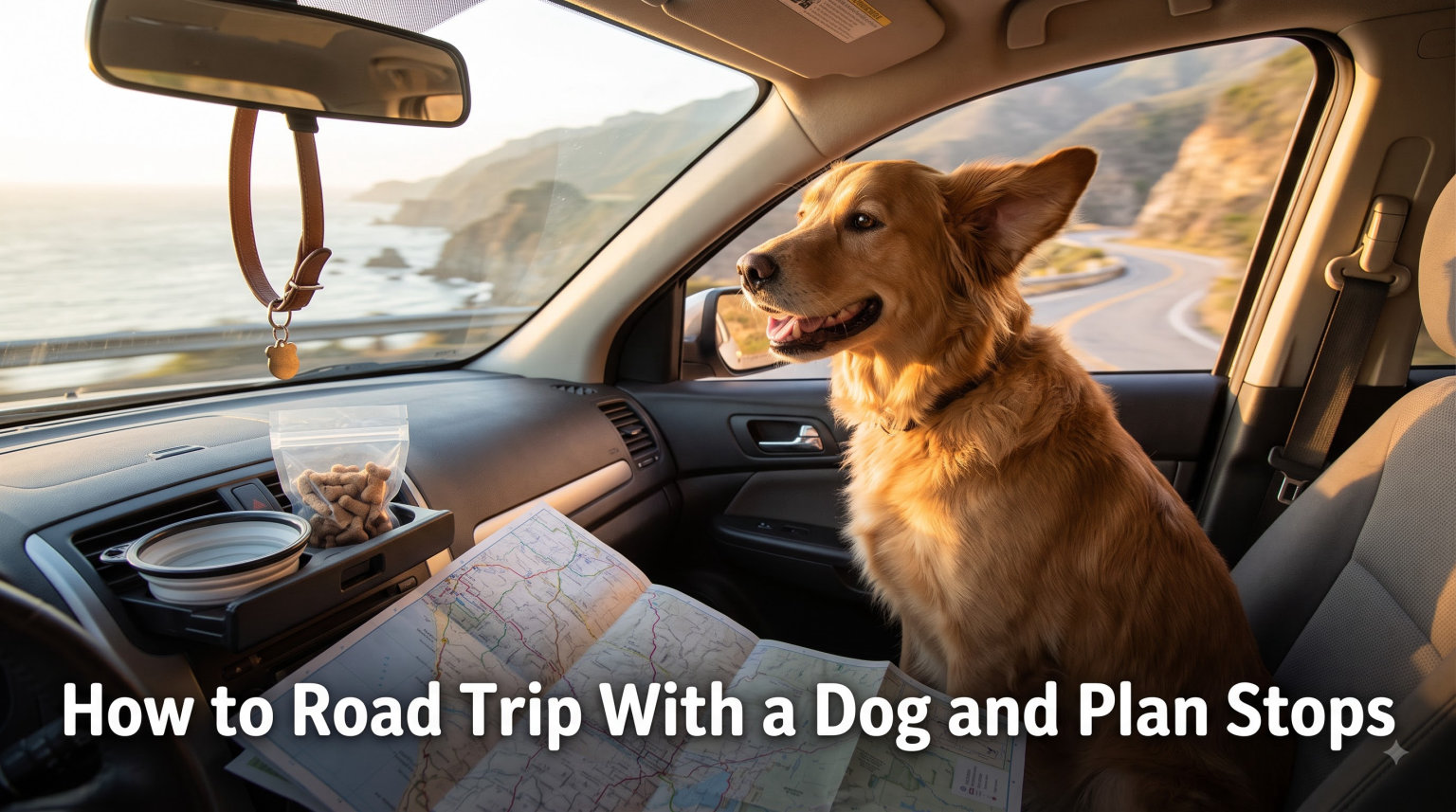
I have taken my Labrador, Cooper, on three cross-state drives over the past two years, and I learned more from the first 800 miles than from any article I read. A road trip with a dog is equal parts logistics and patience, and a little planning goes a very long way.
This guide pulls together everything I wish I had known before that first trip: the pre-trip paperwork, the crash-tested gear that actually works, how often to stop, what to pack, and how to handle motion sickness, anxiety, and the occasional hotel meltdown. If you are planning a road trip with a dog in 2026, this is the playbook I built the hard way so you do not have to.
Road trips with dogs are surging in popularity, and it is easy to see why. Dogs make better travel companions than most humans: they are happy with the destination, thrilled by the snacks, and content to nap through the boring middle miles. With the right prep, your dog can handle a 10-hour drive as calmly as you do, and you will both come home with stories worth telling.
Below you will find a step-by-step plan covering pre-trip paperwork, in-car safety, motion sickness, packing, stop frequency, dog-friendly lodging, and emergency planning. I have folded in lessons from veterinary sources, real owners on Reddit and travel forums, and the most common People Also Ask questions for this topic, including the 7 7 7 rule and how often to stop with a dog on a long drive.
Table of Contents
Pre-Trip Preparation: Documents, ID, and the 7 7 7 Rule
Pre-trip preparation is the single biggest difference between a stressful drive and a smooth one. Before you load the car, lock down three things: identification, paperwork, and your dog’s baseline health. I now spend a full week on this phase before any road trip, and the payoff on the road is huge.
Update ID Tags and Microchip
A recent ID tag is your fastest path home if your dog slips out at a rest stop. Make sure the tag lists a current phone number, your dog’s name, and any urgent medical notes like “diabetic” or “reactive.”
I also log into my microchip registry before every trip to confirm my contact details and the backup emergency contact. A microchip only works if the registration is current, so a quick login the week before you leave is cheap insurance.
Add a second tag or a plate on the collar with your destination cell number for the trip. If something happens while you are away from home, the local finder can reach the right person immediately.
Vaccination Records and Health Certificate
Carry a printed copy of your dog’s rabies and core vaccination records, even for domestic trips. Many dog-friendly hotels ask to see them, and an emergency vet may refuse treatment without proof of rabies status.
For trips crossing state lines or entering national parks, your vet can issue a health certificate, usually valid for 10 to 30 days. Call your vet two weeks ahead of travel so there is time to fit the exam in.
Keep digital copies of every record in a “Dog Travel” album on your phone. Cloud storage survives a lost wallet, and a vet clinic can pull up the file in seconds in an emergency.
The 7 7 7 Rule Explained
The 7 7 7 rule is a simple framework trainers use to build a dog’s confidence with new experiences. By the time your dog is 7 weeks, 7 months, and 7 years old, you should have introduced them to 7 new environments, 7 new people, and 7 new situations.
A road trip is one of the biggest batches of new stimuli your dog will ever face, all stacked into a few days. The 7 7 7 rule is a useful gut check: if your dog has handled a lot of novelty already, they will roll with the trip better. If they have not, plan extra time for acclimation.
If your dog is light on prior experiences, do not force a 12-hour drive right out of the gate. Start with shorter overnight trips and build up to a longer adventure, the same way you would train for a marathon.
How to Road Trip With a Dog: Car Safety and Restraint Systems
Car safety is not optional on a long drive. An unsecured 60-pound dog becomes a 2,700-pound projectile in a 30 mph crash, which is why every veterinary source I trust insists on a proper restraint.
Crash-Tested Crates vs. Harnesses vs. Seatbelts
Crash-tested crates are the gold standard for safety and the easiest way to keep a crate-trained dog calm. Look for crates certified by the Center for Pet Safety (CPS) and rated for your dog’s weight.
Crash-tested harnesses are the second-best option and far safer than a basic seatbelt tether. Brands that publish CPS test results are worth the upgrade, especially for dogs over 30 pounds.
Basic seatbelt tethers that clip to a harness are better than nothing, but they are not crash-tested. Use them only for short, low-speed drives or as a backup to a primary restraint.
Skip any harness that only loops around the neck. A proper car harness has a wide chest plate and a structural back panel that distributes force across the rib cage, not the throat.
Securing the Backseat Area
Anchor the crate or harness to a backseat anchor point, never to the headrest or door latch. A tether that snaps under crash loading is the same as no tether at all.
I also lay a waterproof seat cover under the crate. It catches shedding, drool, and the occasional upset stomach, and it keeps the leather intact for resale later.
Secure loose items in the cargo area too. A flying water bottle at 60 mph can break a dog’s leg just as easily as a crash can. Think of the car the same way you would for a toddler.
Why the Front Seat Is Off-Limits
Never let your dog ride in the front passenger seat. Airbags deploy at over 200 mph and will seriously injure or kill a dog, even a large one.
If your dog must ride up front for medical reasons, disable the passenger airbag according to your vehicle manual. Most rear-seat setups are safer and easier to manage.
In an SUV, the cargo area behind the second row is the next-best option if it is properly secured and you have a barrier to prevent the dog from being thrown into the back of the seats.
Acclimating Your Dog to Car Rides Before the Trip
Acclimation is what separates dogs that nap through a road trip from dogs that drool, whine, and try to climb into your lap. Start small, reward often, and never force a long drive on an unprepared dog.
Short Practice Drives
Begin with 10-minute drives to a fun destination, like a park or a pup-friendly café. Pair the drive with something your dog already loves, and end on a high note every time.
Over two to three weeks, build up to 45-minute drives on highway speeds. If your dog handles that calmly, they will likely cope with a full travel day broken into shorter stretches.
Keep a small log of how your dog reacted after each drive. Patterns emerge quickly, and you will spot the cues that tell you when your dog is starting to stress before the whining hits.
Positive Association Techniques
Toss high-value treats into the crate or backseat area during the drive, not just at the end. This keeps your dog focused on the crate as a rewarding place rather than something to dread.
Calming music designed for dogs, played at low volume, also helps. Studies from the University of Glasgow showed classical and soft reggae lowered stress behaviors in shelter dogs.
A frozen KONG stuffed with peanut butter and banana takes a solid 30 minutes to finish, which is exactly the right length for one highway stretch. Rotate among a few flavors so your dog does not get bored.
Crate Training at Home
If you plan to use a crate in the car, your dog needs to love the crate at home first. Feed meals inside it, drop treats in randomly, and never use the crate as punishment.
A dog that walks into the crate on command is a dog that will rest quietly for hundreds of highway miles.
If your dog panics in the crate, switch to a crash-tested harness instead. Forcing a crate on a stressed dog is a fast way to make every future car ride worse.
Managing Motion Sickness and Anxiety in Dogs
Motion sickness and anxiety are the two biggest reasons road trips with dogs go sideways. Both are manageable, but only if you tackle them before you pull out of the driveway.
Recognizing Motion Sickness Symptoms
Early signs of motion sickness include lip licking, drooling, yawning, and restlessness. Whining and pacing usually follow within 15 to 30 minutes if the ride continues.
Vomiting is the late stage. If your dog has a history of car sickness, take a 10-minute walk before loading up and avoid feeding a full meal within two hours of driving.
Puppies are more prone to motion sickness than adults because their inner ear is still developing. Most outgrow it by 12 to 18 months, but a few sensitive dogs need medication for life.
Natural Calming Strategies
Travel with the windows cracked an inch or two to balance air pressure and reduce queasiness. Facing your dog forward, in the direction of travel, also helps some dogs.
A weighted anxiety wrap like a Thundershirt can lower heart rate in nervous dogs, though results vary. Pheromone sprays, CBD oil formulated for pets, and a favorite blanket all contribute to a calmer ride.
Take a 5-minute walk during every stop, even if your dog does not need to pee. Movement helps the digestive system reset and reduces the queasy feeling that builds up over hours of straight driving.
When to Talk to Your Vet About Medication
If your dog has vomited on more than one car ride, call your vet at least a week before the trip. They may prescribe Cerenia for nausea or a mild sedative for severe anxiety.
Never give Benadryl without veterinary guidance. The correct dose depends on weight, and some formulations contain ingredients toxic to dogs. Your vet can tell you if it is appropriate and at what dose.
Do a trial dose at home before the trip. Some sedatives have a paradoxical effect and make dogs more anxious, and you want to find that out in your living room, not on I-80.
The Complete Packing List for a Road Trip With a Dog
Aim for one bag of dog-specific gear that lives in the car for the whole trip. The list below covers everything we bring for a 7 to 10 day drive, and you can scale it up or down from there.
Food, Water, and Feeding Gear
Pack enough food for the full trip plus three extra days in case of delays. Switch foods abruptly and you risk diarrhea, so bring what your dog already eats.
Add a collapsible silicone water bowl, a portable food container with a scoop, and a gallon of water from home. New water can upset sensitive stomachs, so I rinse and refill rather than switching sources mid-trip.
Pre-portion each meal into labeled zip bags. It sounds fussy, but it cuts feeding time at rest stops from 5 minutes to 30 seconds, and you will thank yourself on day four.
Safety and Comfort Essentials
The non-negotiables are a fitted harness with seatbelt loop, a backup leash and collar, and a recent photo of your dog on your phone. The photo helps if you need to print lost-pet flyers.
Bring a familiar blanket or bed that smells like home, plus one durable chew toy and one food-dispensing toy. The chew toy calms stressed dogs, and the food toy keeps them busy during long highway stretches.
A dog seat cover with side flaps protects your doors from claw scratches and keeps your dog from falling into the footwell during sudden stops. Look for waterproof, machine-washable fabrics.
Cleanup and First Aid Supplies
Pack a roll of poop bags, paper towels, a small bottle of enzymatic cleaner, and wet wipes for paws. Trust me, the cleaner earns its space within the first day.
A travel first aid kit for dogs should include gauze, vet wrap, antiseptic wipes, tweezers, a digital thermometer, and your dog’s regular medications. Add the phone number of an emergency vet clinic at every overnight stop.
Keep a spare towel dedicated to muddy paws and post-rain dogs. Rotate it with a dry one so you always have a backup when the car is parked overnight.
How Often to Stop on a Road Trip With a Dog
Plan to stop every 2 to 3 hours for a dog on a long drive. That gives them time to relieve themselves, drink, stretch, and burn off a little nervous energy.
The 2-3 Hour Rule
Most healthy adult dogs can hold their bladder for 4 to 6 hours, but waiting that long in a moving car is uncomfortable. A 15 to 30 minute stop every 2 to 3 hours is the sweet spot.
On a 10-hour drive, that works out to three or four real stops plus a quick gas-and-go. Build the stops into your ETA rather than bolting them on when the whining starts.
Use a dog-specific stop schedule when you plan your route. Most GPS apps let you add custom waypoints, and seeing your “Dog Stop 1” on the map keeps you accountable.
What a Good Stop Looks Like
A good stop has grass or dirt for pottying, shade for hot days, and enough room for a short on-leash walk. Rest areas with a dog walk area, highway-adjacent parks, and truck stops with pet areas all work well.
Always leash your dog before opening the car door. Even dogs with perfect recall can bolt in an unfamiliar place with new smells, and a parking lot is one of the most dangerous environments for a lost dog.
Bring a long line (15 to 30 feet) for parks so your dog can sniff and explore without dragging you across the grass. A tired dog is a quiet dog for the next stretch of highway.
Adjusting Stops for Puppies and Senior Dogs
Puppies under 6 months need a stop every 1 to 2 hours, and many need a midnight bathroom break at hotels. Plan shorter driving days and book pet-friendly hotels with easy outdoor access.
Senior dogs often need more frequent stops too, especially those with arthritis or incontinence issues. Add an extra 10 minutes of walking time at each stop to keep joints loose.
Brachycephalic breeds like bulldogs, pugs, and Frenchies overheat faster and need extra cooling breaks in summer. Carry a cooling mat and a small spray bottle to mist them at every stop.
Finding Dog-Friendly Stops, Rest Areas, and Activities
The trick to a fun road trip with a dog is lining up the stops before you leave the driveway. With the right apps and a little planning, you can turn a long drive into a series of mini-adventures.
Using Google Maps and Apps to Plan
In Google Maps, search for “dog park,” “pet store,” or “veterinarian” along your route to drop pins at future stops. The free BringFido app also lists dog-friendly restaurants, hotels, and hiking trails nationwide.
I build a custom map a few days before each trip, then star the stops in order of travel. That way I am never scrambling for a rest area 30 miles before the next exit.
AllStays and Togo RV are also worth a look for major highways. They flag pet-friendly gas stations, rest areas, and overnight stops that other apps miss.
Dog Parks and Hiking Trails
Look for fenced dog parks within 5 miles of your route for proper off-leash time. A 20-minute play session burns more energy than an hour of highway driving, which helps your dog settle in the car for the next stretch.
For hiking breaks, AllTrails shows trail length, elevation, and whether dogs are allowed on-leash. National forests usually allow dogs, but national parks often restrict them to specific trails and parking lots.
Check the weather before each hiking stop. Hot summer pavement can burn paw pads in under a minute, and a shaded dirt trail is a much safer bet than an open asphalt path.
Pet-Friendly Restaurants and Convenience Stops
Many chains like Starbucks, Cracker Barrel, and Sonic welcome dogs on outdoor patios. Some travel centers, including Pilot Flying J and select Loves locations, have dedicated dog walking areas with poop bag stations.
Always bring a portable water bowl and a shade mat. Patio surfaces heat up fast, and paw pad burns are a common summer travel injury.
Travel with a packed picnic for true rest stops with no nearby restaurants. A cooler with ice, water, your dog’s food, and a human lunch eliminates the need to leave the rest area at all.
Booking Dog-Friendly Hotels and Lodging
Pet policies vary widely, even within the same hotel chain. A few minutes of research before you book can save you a $250 cleaning fee or a night sleeping in the car.
Pet Fees and Policies to Watch For
Most chains that allow dogs charge a non-refundable cleaning fee of $25 to $150 per stay, plus a weight or breed limit. Read the fine print before you reserve, and email the property directly to confirm.
Airbnb and Vrbo rentals are often more dog-friendly than hotels, and many allow pets in larger or older dogs. Look for listings with a fenced yard if your dog needs outdoor time.
Always check the cancellation policy. Some properties offer pet-friendly rooms that are non-refundable, which can be a problem if your dog gets sick the day before you leave.
Setting Up a Calm Hotel Space
Set up the hotel room the moment you walk in: crate or bed in a corner away from the door, water bowl in the bathroom, and a potty pad on the balcony if you have one.
Hang the “Do Not Disturb” sign so housekeeping does not let your dog slip out. Leave the TV on low or play the calming playlist you used in the car for a familiar routine.
Walk the room for hazards before letting your dog loose. Chargers, trash bins, and the small bottle of mouthwash on the counter can all become veterinary emergencies in a curious dog’s mouth.
Solo Road Tripper Tips
If you are road tripping solo with a dog, never leave your dog alone in a hotel room that is not crate-trained to handle it. A stressed dog can destroy furniture, bark for hours, or hurt itself.
Look for hotels within walking distance of a drive-through or restaurant so you can take meals to go. It is the easiest way to keep a solo dog safe while still eating regular meals.
Some solo travelers use a dog-walking service through Rover to handle longer meal breaks or morning runs. It costs a few dollars but removes the worry of leaving a nervous dog alone.
Emergency Planning: Vets, Pharmacies, and Backup Plans
Hope for the best, plan for the worst. A small amount of emergency prep before the trip can turn a scary moment into a manageable one.
Vet Contacts Along Your Route
Before you leave, search for 24-hour emergency vet hospitals in every major city along your route. Save their addresses and phone numbers in your phone, and screenshot them in case you lose signal.
Your regular vet can also fax records to an out-of-state clinic if needed. Call ahead and ask for a digital copy of your dog’s file to email if an emergency hits.
Note the closest pet pharmacy to each overnight stop. Running out of heartworm or anxiety medication 200 miles from home is a solvable problem if you know where to go.
Building a Travel First Aid Kit
A travel first aid kit for dogs should include gauze, non-stick pads, vet wrap, saline rinse, an instant cold pack, and a tick remover. Add a copy of your dog’s vaccine history and any medications they take.
Keep the kit in the cabin, not the trunk, so it is reachable without unloading the car. A small LED flashlight and a spare leash round out the essentials.
Take a 30-minute pet first aid video before the trip. The Red Cross offers free online courses, and the few minutes you spend on it can save your dog’s life at a remote rest stop.
Heat Safety in a Parked Car
A parked car heats up 20 degrees in 10 minutes, even with windows cracked. On any day over 70 degrees Fahrenheit, skip the in-car wait and bring your dog with you, even on quick stops.
If you must leave your dog briefly, park in full shade, leave the engine and AC running with a spare key fob secured in place, and lock the doors. Never leave a dog in a car in summer heat.
Watch for signs of heatstroke: heavy panting, drooling thick saliva, glassy eyes, or stumbling. If you see any of these, cool your dog with cool water and head to the nearest emergency vet immediately.
Post-Trip: Helping Your Dog Decompress
The decompression window after a long road trip is skipped by most guides, and it matters. A dog that has spent 3 days in a car, a hotel, and a new routine is often wound up for the first 24 hours back home.
Give your dog a quiet space with their bed, fresh water, and a familiar toy. Skip the dog park reunion for a day and stick to short walks in known territory.
Watch for travel-related issues like ear infections (from water in ears), sore paw pads, and digestive upset. Most clear up in 48 hours, but call your vet if anything persists.
Reward calm behavior with treats and quiet praise. Your dog will read your energy, so a low-key first day home pays off in a faster reset to your normal routine.
FAQs
What is the 7 7 7 rule for dogs?
The 7 7 7 rule is a socialization framework that says by 7 weeks, 7 months, and 7 years old, your dog should have experienced 7 new environments, 7 new people, and 7 new situations. It helps build a confident, well-adjusted dog and serves as a gut check before a road trip. If your dog has handled a lot of novelty already, they will adapt to travel better.
How long can a dog go on a road trip?
Healthy adult dogs can handle 8 to 10 hours of driving per day if you stop every 2 to 3 hours for a 15 to 30 minute break. Puppies and senior dogs need shorter days with more frequent stops. Never exceed the longest stretch your dog can hold their bladder without distress.
How often should you stop on a road trip with a dog?
Plan a stop every 2 to 3 hours for a healthy adult dog. Each stop should include a leash walk, water, and a chance to relieve themselves. Puppies and seniors need stops every 1 to 2 hours.
Can you use Benadryl to calm a dog in the car?
Only under veterinary guidance. The correct dose depends on your dog’s weight, and some Benadryl formulas contain ingredients like pseudoephedrine that are toxic to dogs. Your vet can confirm the right product and dose, or suggest alternatives like Cerenia for motion sickness.
How do you acclimate a dog to long car rides?
Start with 10-minute drives to fun destinations, then build up to 45-minute highway drives over 2 to 3 weeks. Pair the car with high-value treats, calming music, and a comfortable crate. End every practice drive on a positive note, and never force a long trip on an unprepared dog.
Final Thoughts on Road Tripping With a Dog
A road trip with a dog is one of the best things you can do together, and the prep is what makes it work. Update the ID and microchip, secure a crash-tested restraint, acclimate your dog to the car, and pack the right gear. Then build in stops every 2 to 3 hours and book dog-friendly lodging before you leave.
Use 2026 as the year you set out on your adventure, plan ahead, and enjoy the ride. Your dog will thank you with every sleepy head on your shoulder at the next rest stop.