
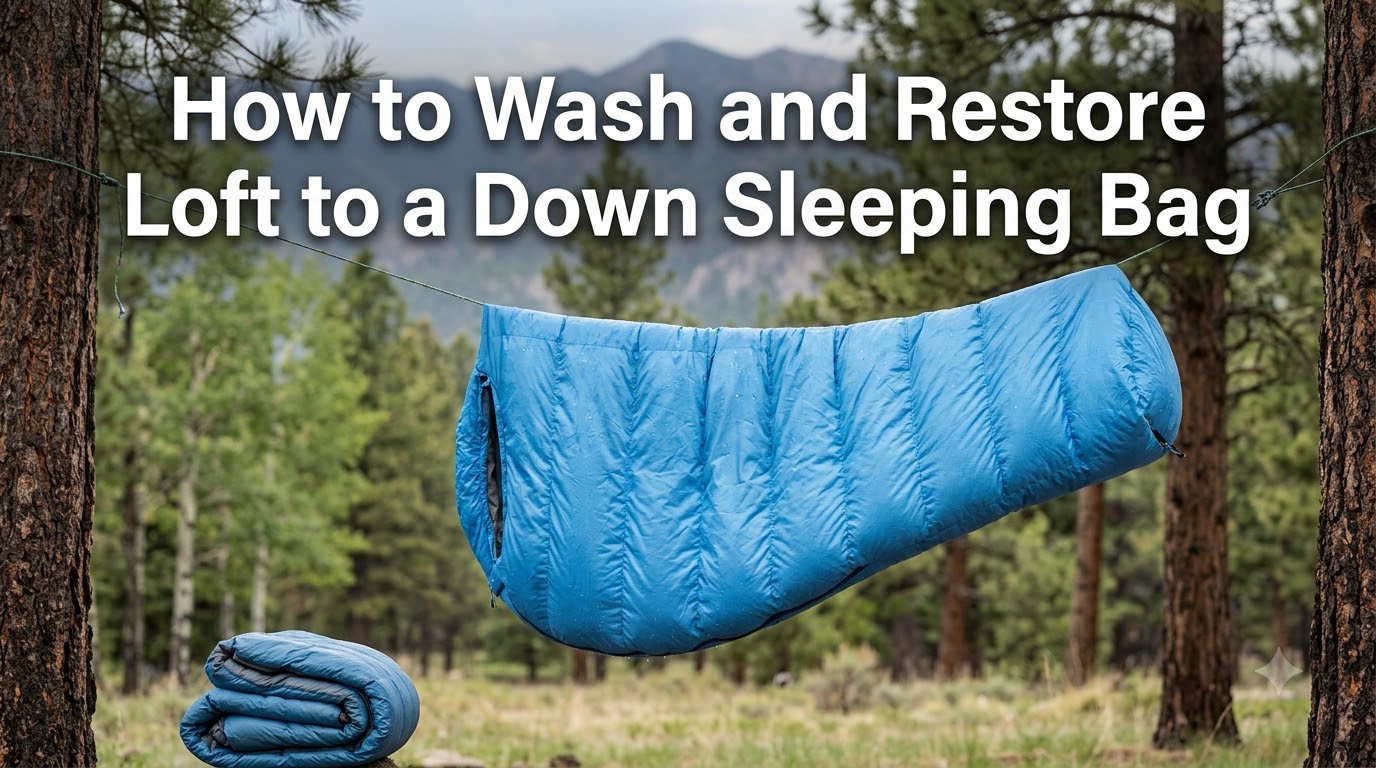
I learned the hard way that a dirty down sleeping bag is basically a cold sleeping bag. After ten years of backpacking, I have washed, dried, and rescued enough down bags to know exactly what works and what ruins them.
This guide on how to wash and restore loft to a down sleeping bag walks you through the entire process. I cover assessment, washing, drying, and long-term care so your bag keeps you warm for years.
Table of Contents
What Is Loft and Why Does It Matter in a Down Sleeping Bag
Loft is the fluffiness of down that traps warm air next to your body. When loft is high, your bag feels thick and puffy. When loft is low, the bag feels flat, and you feel cold at night.
Down loses loft for three main reasons: body oils and sweat clog the clusters, moisture causes clumping, and long-term compression flattens the feathers. A bag with reduced loft can lose up to 50% of its insulating power. That is the difference between a comfortable night at 20°F and a miserable one.
Restoring loft means washing away the contaminants, then drying the down so each cluster regains its natural spring. The good news is that most down responds well to proper care. Even bags stored compressed for years can often come back to life.
Step 1: Assess the Condition of Your Sleeping Bag
Before you soak your bag, spend five minutes checking what you are working with. Skip this step and you risk turning a fixable problem into a permanent one.
Spot the Obvious Warning Signs
Lay the bag flat and look for bare spots where down has shifted away. Run your hand across the surface and feel for hard clumps that do not move. Press into the baffles and see how long the loft takes to bounce back. Quick recovery means the down is still healthy.
Smell the bag. A musty or sour odor usually signals mildew from stored moisture. Mildew smells mean the bag needs washing right away to prevent permanent damage.
Look closely at the shell for rips, worn baffles, or seam separation. Fix these before washing, because water turns small holes into big ones. A $2 patch now saves a $400 bag later.
Decide Whether the Bag Is Worth Saving
After years of compression in a stuff sack, some down simply breaks down. The feathers lose their structure and turn into dust. If your bag has flat spots that stay flat even after fluffing, the down may be at the end of its life.
A good rule of thumb I use: if the bag is more than 15 years old and has never been washed, there is a 50% chance it cannot fully recover. Newer bags with quality down almost always bounce back with proper care.
Step 2: How to Wash a Down Sleeping Bag (Machine and Hand Methods)
Washing down is not hard, but it requires the right detergent and the right machine. Regular laundry detergent strips the natural oils from down and leaves it flat for good.
Machine Washing (The Easier Method)
Use a front-loading washer only. Top-loaders with a center agitator shred baffles and tear stitching. I have seen a brand-new bag destroyed in ten minutes in the wrong machine.
Here is the process I use on my own bags and recommend to friends.
- Close all zippers and turn the bag inside out. This protects the face fabric.
- Set the machine to a delicate or gentle cycle with cold water.
- Add one capful of Nikwax Down Wash or Revivex Down Cleaner. Both are designed for down and rinse clean.
- Run an extra rinse cycle to remove all soap residue. Leftover detergent is the #1 cause of post-wash clumping.
- Gently press out excess water. Never wring a down bag. The twisting tears the baffles.
Hand Washing (For Bags That Cannot Go in the Machine)
Some ultralight quilts and vintage bags do not survive machine washing. Hand washing takes longer but gives you full control.
- Fill a bathtub with lukewarm water and mix in down-specific detergent.
- Submerge the bag and gently press it up and down. Let the water move through the down.
- Soak for one hour, then drain the soapy water.
- Refill with clean water and press the bag repeatedly until the water runs clear.
- Press out water between two towels. Roll the towels like a sushi mat and stand on them if needed.
Both methods work well. I prefer the machine because the spin cycle removes more water, which shortens drying time. Less time in the dryer means less risk of heat damage.
What Detergents Are Safe for Down
Use Nikwax Down Wash, Revivex Down Cleaner, or Grangers Down Wash. These are pH balanced and leave no residue. Regular detergents like Tide or Woolite leave a film that prevents down from lofting.
I have tested Woolite on an old bag and the result was poor. The down clumped badly and took three washes to recover. Stick with products made specifically for down.
Step 3: How to Dry and Restore Loft to a Down Sleeping Bag
Drying is where the magic happens. This is the step that actually restores loft. A clean bag with no drying will still feel flat and useless.
Use a Dryer on Low Heat
Tumble dry on the lowest heat setting your dryer offers. Air-fluff or no-heat cycles work, but low heat helps break up clumps faster. Expect this step to take 2 to 4 hours for a full bag.
Add three to four clean tennis balls or wool dryer balls to the drum. The balls bounce around and beat the down clusters apart. Without them, the down stays clumped and your loft restoration fails.
Pull the bag out every 30 minutes and fluff it by hand. Break apart any clumps you feel. Then put it back in. Patience here pays off in the long run.
Drying Without a Dryer
If you do not have a dryer, lay the bag flat on a drying rack in a sunny, breezy spot. Fluff and rotate it every hour. Air drying takes 24 to 48 hours and rarely restores full loft on its own.
For the best results without a dryer, hang the bag over two parallel clotheslines. Shake it aggressively every few hours. Gravity helps redistribute the down, and shaking breaks up clumps.
How to Know the Bag Is Fully Dry
Press deep into the baffles. Any cool spots mean moisture is still hiding inside. Down that feels even slightly damp will mildew within days.
Break apart every clump you find. A truly dry bag should feel uniformly fluffy with no hard sections. If you find clumps, return the bag to the dryer for another cycle.
Preventing Loft Loss: Maintenance Habits That Work
The best way to restore loft is to never lose it in the first place. These habits keep your bag performing for the long haul.
Airing Out After Every Trip
Hang your bag outside for a few hours after each trip. Direct sunlight kills bacteria and lets trapped moisture escape. Skip this and you invite mildew into the baffles.
Spot Cleaning Small Stains
For small dirt spots, use a soft brush and a tiny amount of down wash. Work the soap in gently, then wipe with a damp cloth. Local cleaning means fewer full washes, and fewer full washes mean longer down life.
When to Wash Your Down Sleeping Bag
Most backpackers wash their bag once per year or after every 30 nights of use. Over-washing is a real problem. Each wash strips a small amount of natural oil from the down.
I wash my personal bag once every two seasons. It still has full loft after six years of regular use.
How to Store a Down Sleeping Bag the Right Way
How you store your bag between trips matters more than how you wash it. Compression kills loft faster than dirt does.
Never store a down bag compressed in its stuff sack. The constant pressure crushes the down clusters and prevents them from springing back. Even a week of compression storage can flatten your bag.
Store your bag loose in a large cotton or mesh storage sack. Hang it in a closet, drape it over a shelf, or stuff it under your bed. The goal is to keep the down expanded and uncompressed for months at a time.
Keep the storage area dry and out of direct sunlight. A damp closet causes mildew. A sunny spot fades the shell fabric and weakens the DWR coating over time.
DIY Washing vs Professional Cleaning: When to Make the Call
DIY washing costs about $15 in detergent and electricity. Professional cleaning services like Rainy Pass Repair charge $50 to $90 depending on bag size.
DIY makes sense for routine annual washes and most loft issues. The process is straightforward, and the gear investment is small. I recommend every backpacker learn to do this at home.
Professional cleaning is worth the cost when the bag is heavily soiled, has mildew inside the baffles, or is made of delicate materials like vintage down. A pro has industrial machines that handle water and heat more gently than home equipment.
If your bag is still under warranty, professional cleaning keeps the warranty valid. Many manufacturers void coverage for self-wash damage.
Frequently Asked Questions
Can a down sleeping bag be washed?
Yes. A down sleeping bag can be washed in a front-loading washing machine using a down-specific detergent like Nikwax Down Wash. Use cold water on a gentle cycle, run an extra rinse, and tumble dry on low heat with tennis balls to restore loft.
How to revive compressed down?
To revive compressed down, wash the bag with a down-specific detergent, then tumble dry on low heat for 2 to 4 hours with three or four clean tennis balls. Pull the bag out every 30 minutes to break up clumps by hand. Air drying alone rarely restores full loft.
What is the life expectancy of a down sleeping bag?
A well-cared-for down sleeping bag lasts 10 to 20 years. Bags stored uncompressed, washed once a year with down-safe detergent, and dried thoroughly on low heat reach the higher end of that range. Cheap down bags with low fill power degrade faster than premium ones.
Can I use Woolite to wash a down sleeping bag?
Woolite is not recommended for down sleeping bags. It leaves a residue that coats the down clusters and prevents them from lofting properly. Use Nikwax Down Wash, Revivex Down Cleaner, or Grangers Down Wash instead. These products rinse clean and preserve down performance.
How often should you wash a down sleeping bag?
Wash a down sleeping bag once per year or after every 30 nights of use. Over-washing strips natural oils from the down and shortens its lifespan. Spot clean small stains with a soft brush and down wash between full washes.
Final Thoughts on How to Wash and Restore Loft to a Down Sleeping Bag
Washing and restoring loft to a down sleeping bag is simpler than most guides make it sound. Assess the bag, wash with the right detergent, dry on low heat with tennis balls, and store it uncompressed.
Follow these steps once a year and your bag will outlast cheaper options by a decade. I have used the same down bag for six seasons now and it still feels as warm as the day I bought it.
Start with a clean bag, keep it dry, and never store it compressed. Your future self will thank you on every cold night in the backcountry.
2 thoughts on “How to Wash and Restore Loft to a Down Sleeping Bag (September 2026)”