
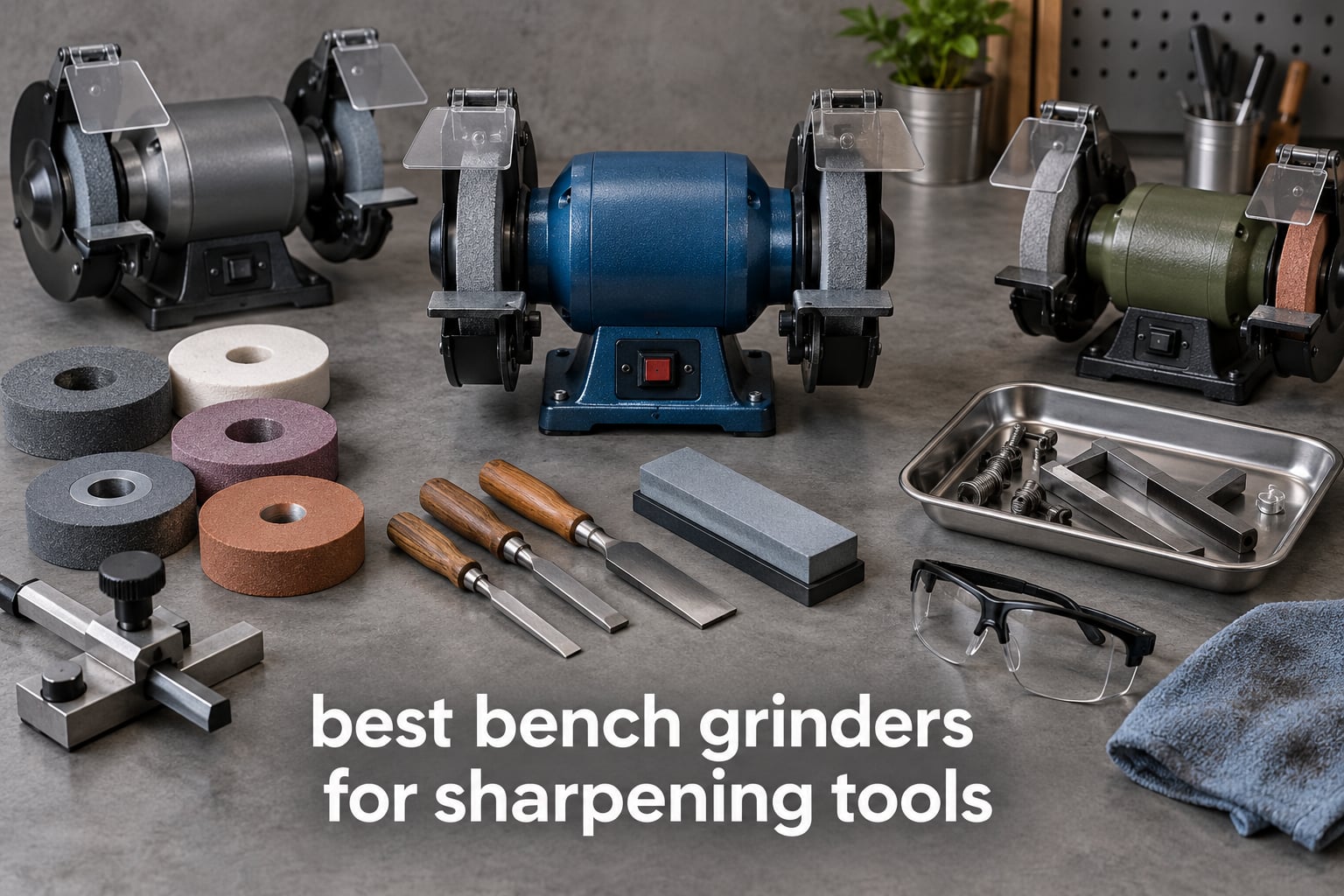
A bench grinder is the fastest way to put a working edge back on a dull chisel, plane iron or knife, but it is also the fastest way to ruin one. The right machine for sharpening tools does three things well: it runs slow enough or variable enough to avoid burning your steel, it has a rigid tool rest you can hold a consistent angle against, and it sits heavy enough that it does not walk across the bench mid-pass.
We spent weeks reading user feedback and comparing published specs on the eight grinders below, then lined them up against what sharpening forums actually argue about. Horsepower gets most roundups started, and it is close to the least important number. Wheel speed, wheel balance and rest rigidity decide whether the edge survives.
This guide covers the best bench grinders for sharpening tools in 2026, from entry 6-inch models to a wide-wheel grinder built to take CBN wheels. We also cover which abrasive to buy, because a grinder is only as good as what you mount on it, and how to fix the out-of-true wheels that arrive in the box more often than they should.
Table of Contents
Top 3 Best Bench Grinders for Sharpening Tools (October 2026)

Best Bench Grinders for Sharpening Tools at a Glance in 2026
| Product | Specifications | Action |
|---|---|---|
| DEWALT DW758 |
|
Check Latest Price |
 WEN BG4276 WEN BG4276 |
|
Check Latest Price |
 RIKON 80-805 RIKON 80-805 |
|
Check Latest Price |
 BUCKTOOL TDS-200C4HL BUCKTOOL TDS-200C4HL |
|
Check Latest Price |
 WEN BG4286 WEN BG4286 |
|
Check Latest Price |
 Woodskil TDS-150CL-A Woodskil TDS-150CL-A |
|
Check Latest Price |
 WEN BG625V WEN BG625V |
|
Check Latest Price |
 SKIL BI9502-00 SKIL BI9502-00 |
|
Check Latest Price |
1. DEWALT DW758 – Best Overall Bench Grinder for Sharpening Tools
DEWALT DW758 8-Inch Bench Grinder
3/4 HP induction motor
3600 RPM
0.75 hp cast iron construction
12.5 inch between wheels
Pros
- Motor has real headroom and can be bogged under load without stalling
- Cast iron base and housing that stay put under pressure
- Precision-machined aluminum tool rests for repeatable angles
- 12.5 inches between wheels handles long stock
Cons
- Shipped wheels frequently arrive unbalanced and make the grinder walk
- Thin sheet metal guards can strip their threads if overtightened
- Assembly paperwork is hard to read and bolts need a metric wrench
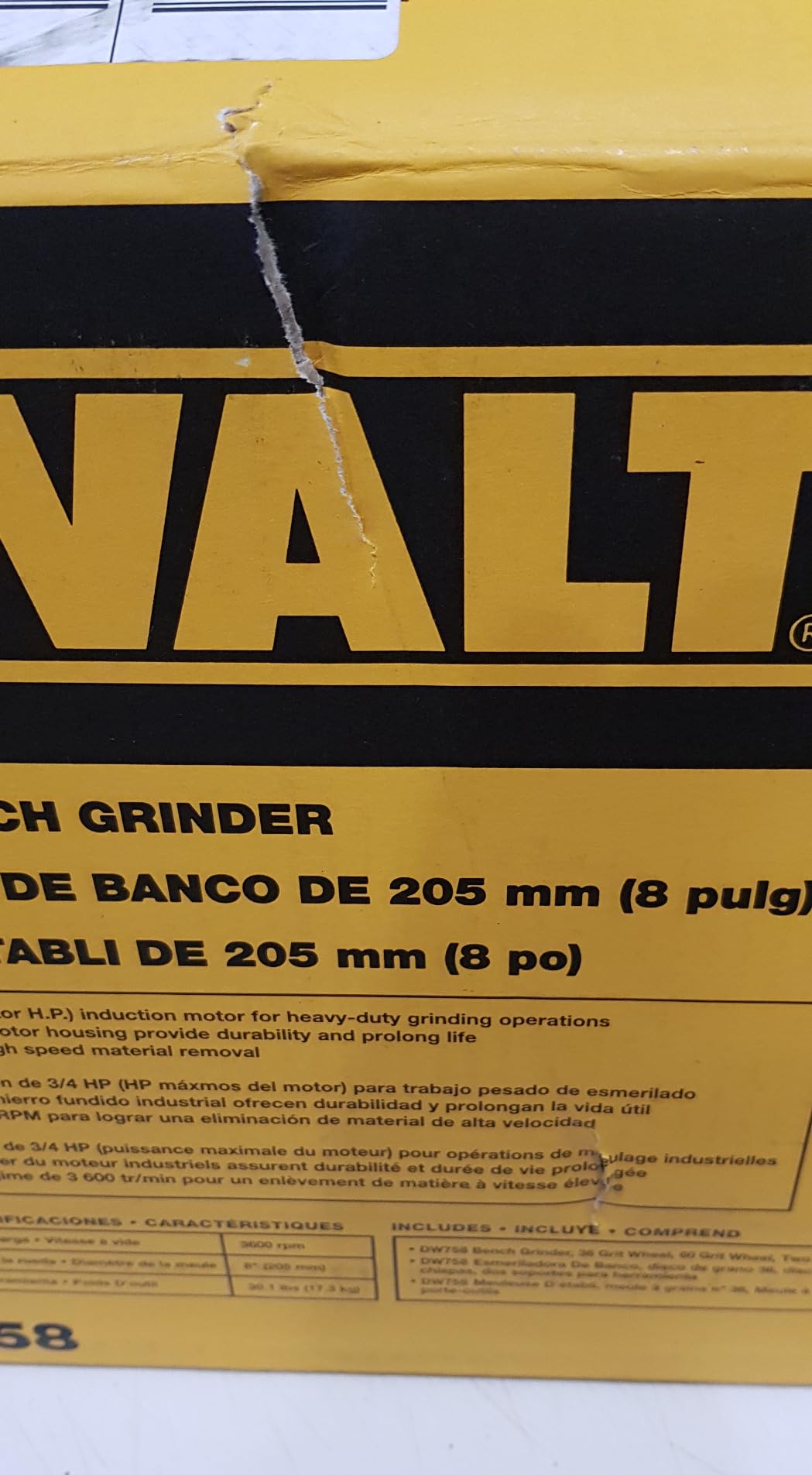
The DW758 has been the default answer in woodworking forums for years, and the numbers back it up. At 4.7 stars across 2644 reviews it holds the highest rating and the largest review base in this group, and the 3/4 hp induction motor is the reason: it can be pushed into a heavy bevel grind without browning the workpiece or stalling.
That motor is the wrong speed for fine sharpening, though. At 3600 RPM it will take a hardened edge from sharp to blue in a couple of careless seconds, so this is a grinder to use for setting bevels, cleaning up rust and shaping stock, then hand off the last few microns to a stone or a honing guide. Owners who pair it with a CBN wheel get noticeably better results, which is exactly the forum consensus we kept running into.
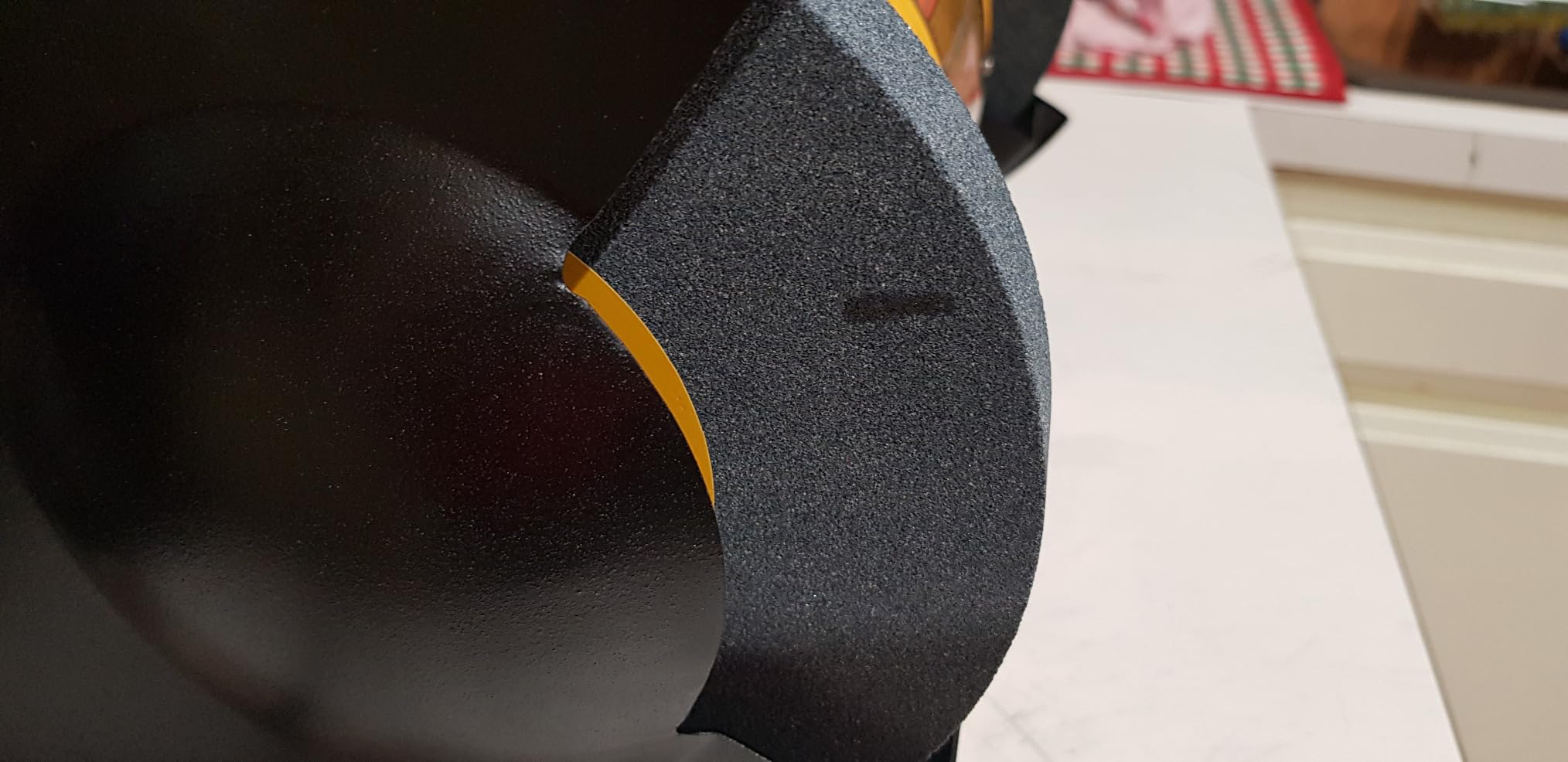
The cast iron base is not a marketing line. It weighs enough that the machine barely shifts when you load a wheel, and the machined aluminum rests hold an angle once you set them. Reviewers also note it runs quietly enough to talk over, and the rear exhaust ports in the guards keep it smooth at speed.
The recurring complaint is the wheels in the box, not the motor. Out-of-balance factory wheels cause vibration and let the unit wander, and owners consistently report that swapping in a properly trued wheel fixes nearly everything they disliked on day one. Assembly instructions are genuinely poor, and the guard screws strip if you overtighten them with the wrong driver.
What the DW758 does well that lighter grinders cannot
The 12.5 inches between the wheels is a real advantage for full-width tools. You can grind a plane blade or a drawknife across a single wheel without repositioning, which keeps the bevel flat along its length rather than following a curve.
Because the motor is sealed and induction-cooled, it tolerates the long stock-removal sessions that a smaller 6-inch machine simply bogs down in. For anyone who sharpens woodworking edges as part of a bigger build rather than as a hobby, that headroom is worth more than any variable-speed dial.
Where the DW758 will disappoint you
If your sharpening load is mostly knives and fine chisel work, the full 3600 RPM works against you. You have to be disciplined about light passes, and beginners often are not. A slow-speed grinder removes that temptation entirely.
The wheels are consumables and the ones supplied are the weak link. Budget for a trued 60-grit and a CBN or diamond wheel from the start, and expect the guards to feel thin when you take the wheels off for the first time.
2. WEN BG4276 – Best Budget Bench Grinder for Sharpening Tools
WEN BG4276 2.1-Amp 6-Inch Single Speed Bench Grinder with Flexible Work Light, Black,orange
2.1 amp motor
3450 RPM
6 x 3/4 inch wheels
16 pounds
Pros
- Least expensive route into a dedicated sharpening machine
- Quiet running with smooth bearings
- Soft spin-up ramp stops it jumping at power on
- Rubber feet hold it steady without bolting down
Cons
- Factory wheels are low quality and can arrive out of balance
- No bulb supplied for the work light
- Spins down slowly because there is no motor brake
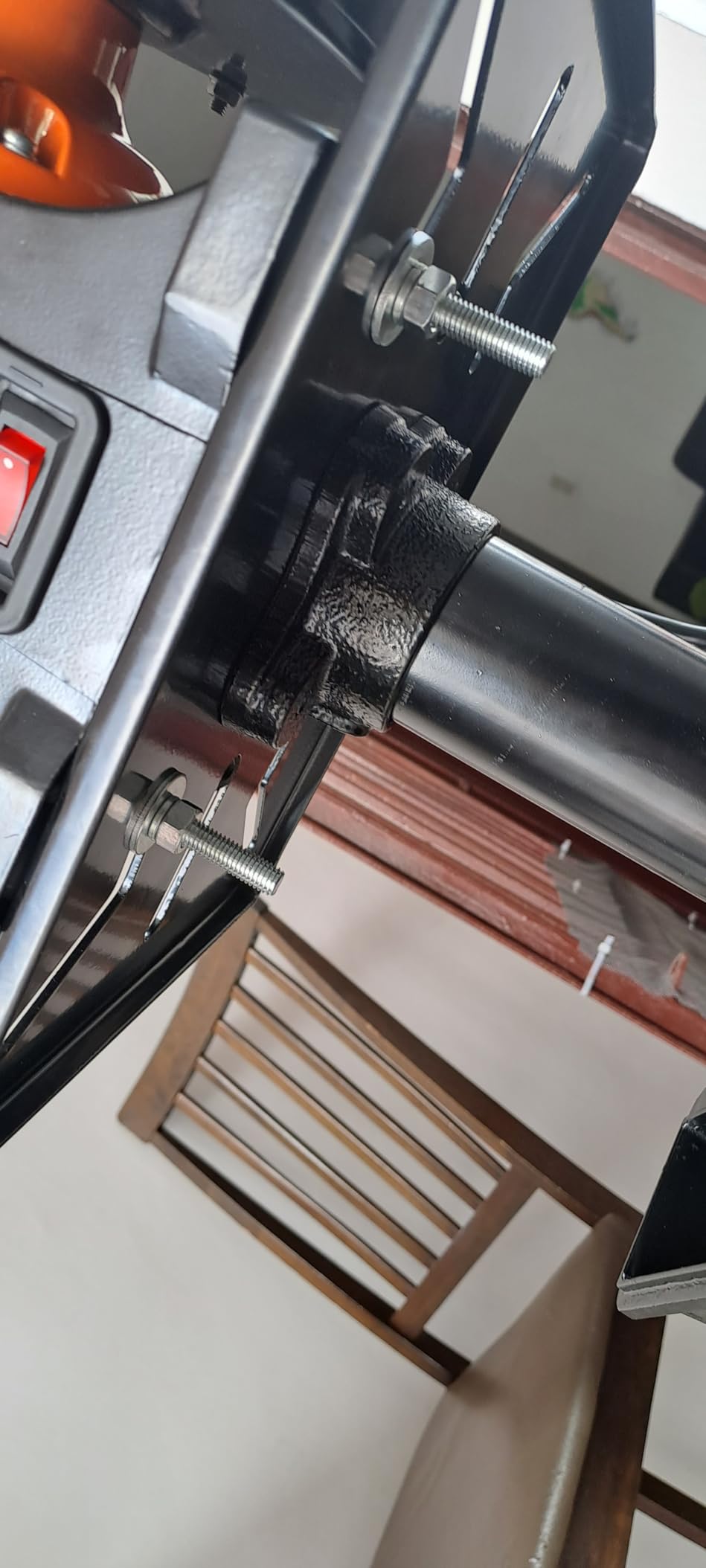
- Mounting holes sit under the motor plate
If sharpening dull tools is the whole job rather than a side task, the BG4276 is the cheapest sensible way in. It scores 4.6 stars on 1791 reviews, and owners consistently describe it as enough machine to restore chisels, drill bits, axes and hoe blades that have been sitting in a shed for years.
The 6 x 3/4 inch wheels are small, which means less contact area and more passes on a long blade, and the 3450 RPM runs hot on thin steel. Treat it as a roughing and edge-setting machine and it is excellent value. Treat it as a finishing machine and you will spend the savings on stones instead.
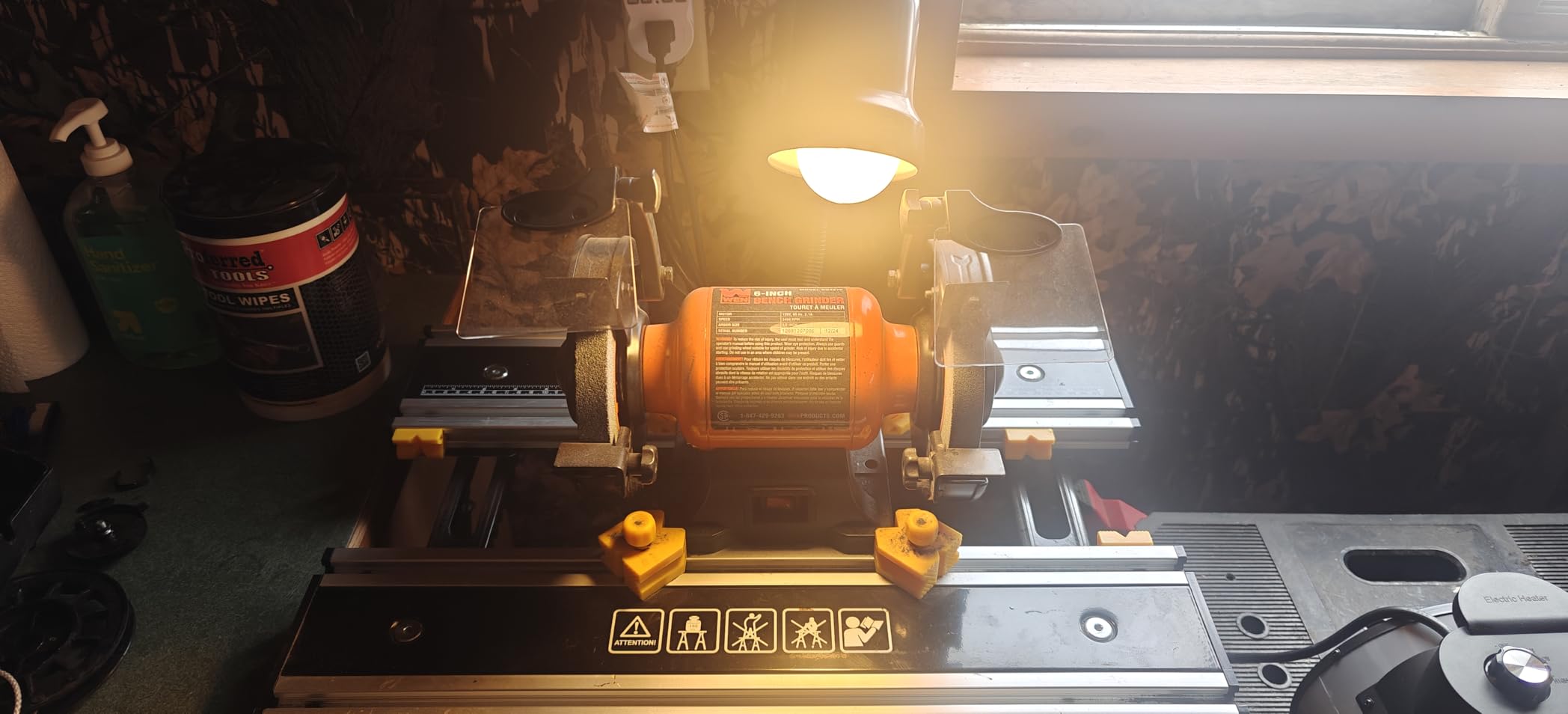
Two details separate it from the truly disposable tier. The soft spin-up ramp means it does not leap across the bench when you hit the switch, and the smooth bearings keep it quiet with very little vibration, which reviewers repeatedly single out as unusual at this level.
The work light on a bendable arm is genuinely useful for detail work, though the bulb is not included, and there is no motor brake, so the wheels coast for a while after you switch off. If you plan to bolt it down permanently, note that the mounting holes are in the middle of the plate under the motor shaft, which makes top-down fixing awkward.
Why this is the right starter machine
It does the two things that matter on a budget grinder: it starts predictably and it stays where you put it. Rubber feet handle the vibration well enough that most owners never bolt it down, and the 36-grit and 60-grit wheels cover everything from heavy rust removal to a set bevel.
Two-year coverage is included, and long-term owners report these units remain serviceable for years once you learn how to change a wheel. That long service life is what makes a low-cost machine a reasonable first step rather than a throwaway.
Where the low price shows up
The supplied wheels are the weak link, exactly as with the larger machines. Several reviewers note that a bad experience out of the box is almost always an out-of-balance wheel rather than a motor fault, so check that first before ruling the machine out.
The small 3/4 inch face also makes the machine slower on long workpieces than a full 1 inch face, and the missing light bulb is an annoying first-afternoon irritation. Budget a few dollars for a proper 80-grit or CBN wheel and this becomes a genuinely useful shop tool.
3. RIKON 80-805 – Best Slow Speed Bench Grinder for Sharpening Tools
RIKON 80-805 Professional 8-Inch Low Speed Bench Grinder, 1/2 HP, 1750 RPM
1/2 HP at 1750 RPM
8 inch wheels
60 and 120 grit aluminum oxide
Five year warranty
Pros
- Low speed builds almost no heat in the workpiece
- Cast iron base and anti-vibration feet hold steady
- Included diamond sharpener for cleaning the wheels
- Built-in groove for drill bits
Cons
- Much slower removal on heavy stock grinding
- Only one wheel of each grit for very different jobs
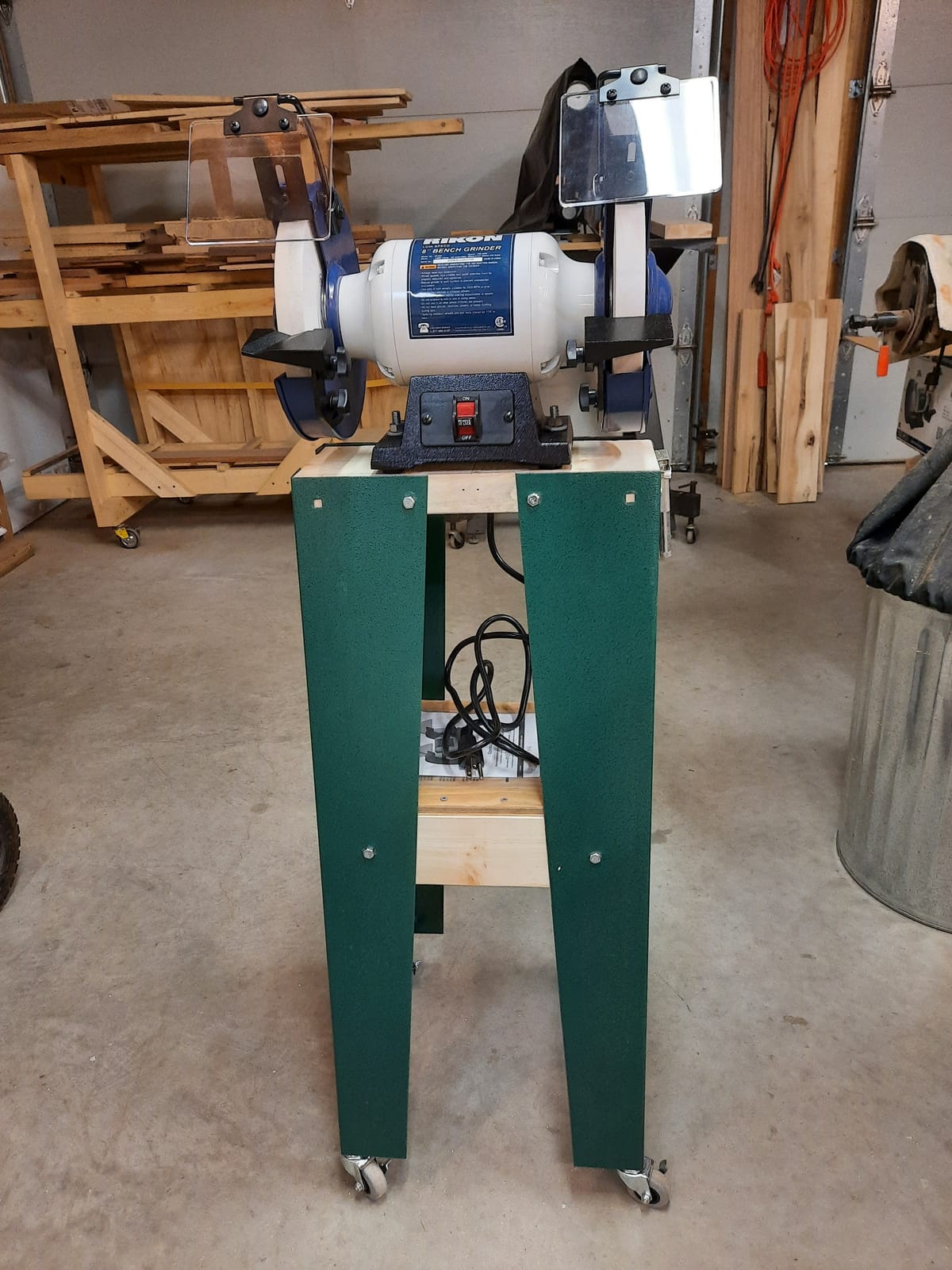
This is the machine that comes up most often when sharp people argue about slow-speed grinders, and the 1750 RPM figure is the entire reason. Roughly half the speed of a standard bench grinder, it grinds hardened tool steel without the blue temper colors or the burnt smell that ruin fine edges.
At 4.6 stars on 848 reviews with a five-year warranty behind it, the 80-805 also carries the longest stated coverage among these machines, which tells you something about how the manufacturer expects it to be used. Chisels, plane irons, lathe tools and carving gouges are all jobs the owners describe this grinder as being built for.
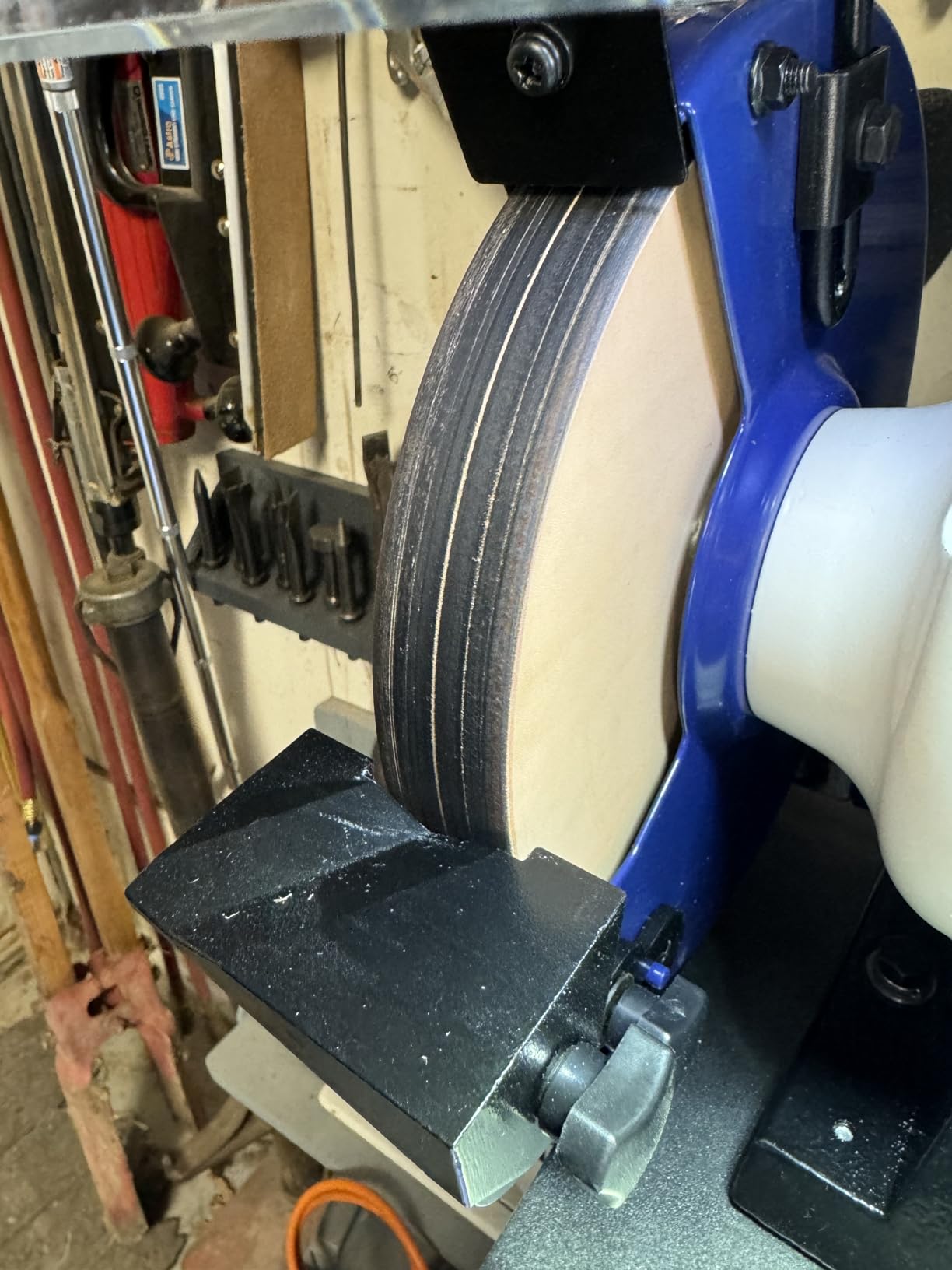
The included white aluminum oxide wheels at 60 and 120 grit are a sensible pairing for sharpening work, and the diamond wheel sharpener in the box lets you restore the wheel face when it glazes over. The cast iron base with anti-vibration rubber feet keeps it planted, which matters more than usual because low-speed grinding puts steady downward pressure on the rest.
Other details worth knowing: an adjustable safety eye shield with spark resistors, and a built-in groove for sharpening drill bits that saves you from improvising a jig. The diamond sharpener is specifically there to reduce heat build-up on the wheels during long sessions.
Why slow speed changes the result on a chisel
At half the surface speed, the wheel glazes less and cuts with less friction, so a light pass removes less heat than the same pass on a full-speed machine. You can almost hear the difference: the grind is quieter and the sparks are fewer.
That makes it far easier to keep a flat secondary bevel and to avoid thinning the blade past its useful thickness. For anyone who sharpens the same hand tools every week in a small shop, that control is worth more than raw removal power.
Where the slow speed costs you
Material removal. Users are explicit that heavy stock grinding is noticeably slower here, and if you also need to clean up thick plate or reshape worn tool steel in bulk, you will want a second machine or a faster abrasive.
The single 3/4 horsepower motor is also modest for long sessions. It will not bog down the way a small high-speed machine does, but it is not built for hours of continuous heavy grinding, and the two-wheel format means no stropping wheel unless you mount one yourself.
4. BUCKTOOL TDS-200C4HL – Best Bench Grinder for CBN Wheels
BUCKTOOL 8″ 3/4HP Low Speed Bench Grinder fit CBN Wheel,Wobble Free Wheels
1750 RPM low speed
1.5 inch wide wheel face
0 to 45 degree tool rests
Keyed safety switch
Pros
- Extra wide 1.5 inch face accepts 1.5 inch CBN wheels
- Vibration-free running on a cast iron base with rubber feet
- Tool rests pivot through 45 degrees for angled work
- Magnifying eye shield plus a dedicated 3 watt LED
Cons
- Slow on heavy stock removal
- Only a two year limited warranty
CBN, or cubic boron nitride, is the abrasive forum users recommend most often for a reason: it runs cooler than a conventional grinding wheel, holds its shape longer, and turns more true. The problem is that most stock wheels are only 1 inch wide, and CBN wheels come in wider formats. This grinder is built around the wider wheel.
The left wheel is an 8 x 1 inch 80-grit white aluminum oxide for shaping and bevel setting, and the right is an 8 x 1.5 inch 120-grit wheel that will take a matching 1.5 inch CBN wheel. Owners report noticeably steady running, with the cast iron base and rubber feet producing very little vibration even at speed.
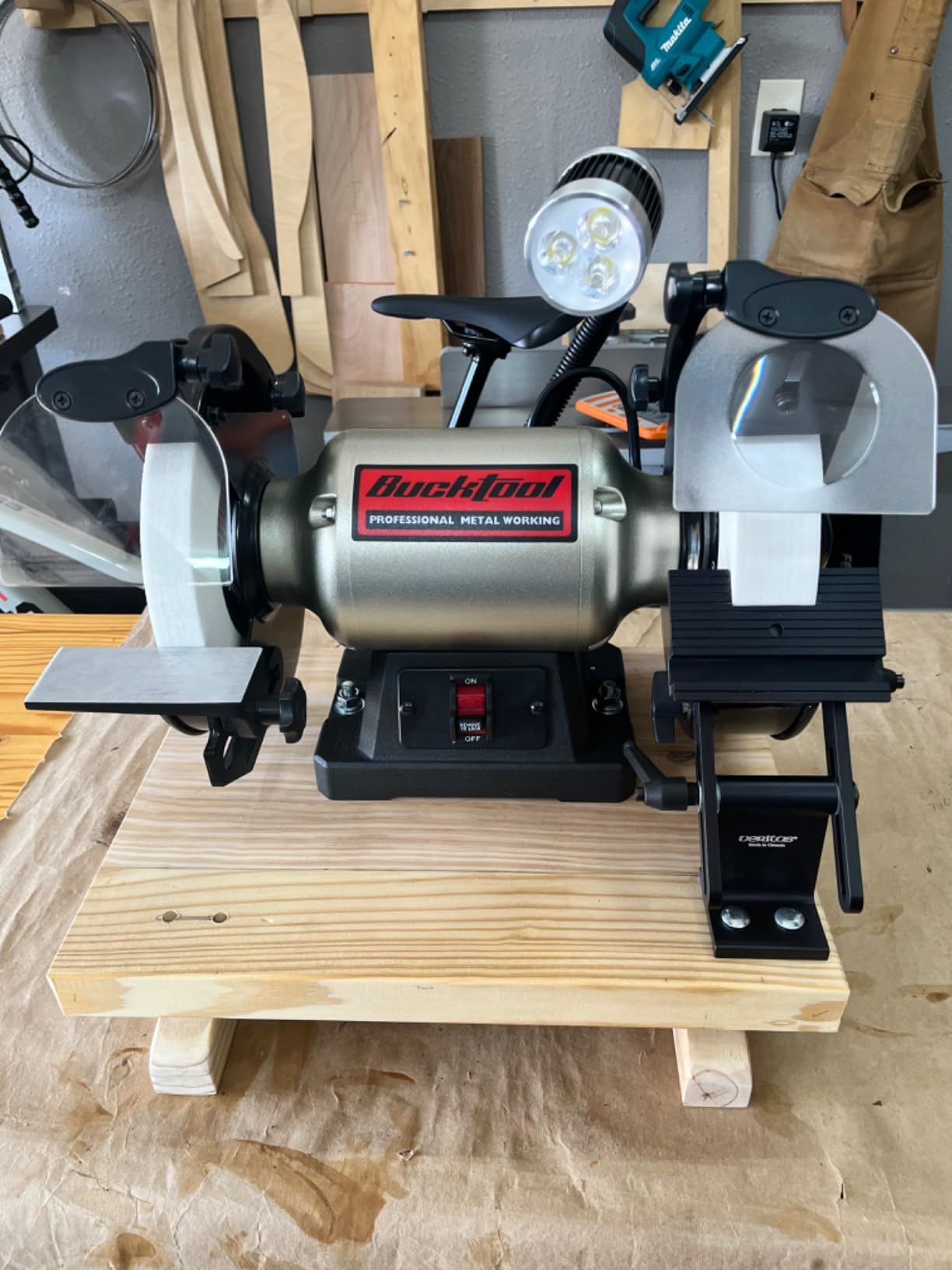
Two features here are unusual. The cast aluminum tool rests adjust through a full 0 to 45 degrees, which matters if you sharpen skew chisels, block planes or bevel-up gouges where a fixed rest will not hold the angle. The eye shield is angle-adjustable with a 3x magnifying lens, and the 3 watt LED is on its own switch so you can leave it on while you handle a workpiece.
There is also a keyed safety switch so the machine cannot be started by anyone who does not have the key, which is a real consideration in a shared shop or a family with curious children. The motor is rated 3/4 hp at 1750 RPM with a peak figure higher than that, so there is some reserve for a steady sharpening load.
When a 1.5 inch wide wheel actually helps
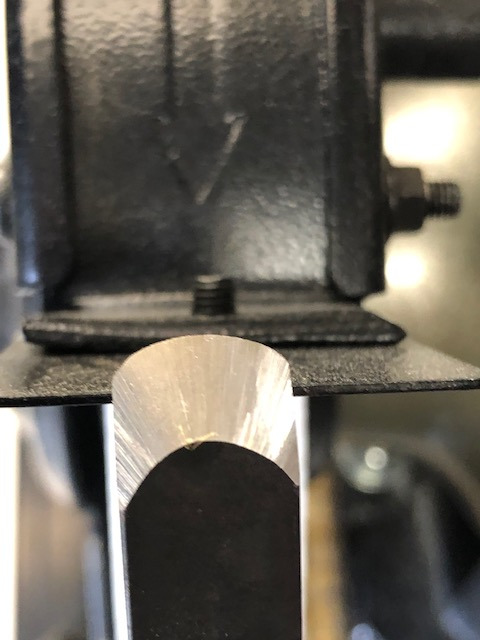
A wider face means more contact area per pass, so you remove material with fewer strokes and the grind line stays flatter across a wider bevel. For a wide chisel or a plane blade, that reduces the number of separate passes needed to cover the edge.
It also opens the door to CBN, which is where this platform separates from the pack. If you are willing to buy one extra wheel, this is the machine in the group most likely to reward that upgrade with a cooler, more consistent grind.
Where you will feel the compromise
At 1750 RPM it inherits every slow-speed limitation: heavy stock removal drags, and the 3/4 hp rating is not a heavy grinding motor. If reshaping and cleanup are half of what you do, look elsewhere.
Coverage is two years, which is the shortest here next to the WEN machines and well short of the RIKON. Reviewers accept that trade without much complaint, so if warranty length matters to you, this is where the compromise lands.
5. WEN BG4286 – Best Slow Speed Grinder for Small Shops
WEN BG4286 3-Amp 8-Inch Slow Speed Bench Grinder, Orange,black
3 amp soft-start motor
1750 RPM
8 x 1 inch wheels
60 and 120 grit included
Pros
- Low 1750 RPM gives precision with minimal heat
- Both a 60-grit and a 120-grit wheel ship in the box
- Soft-start motor ramps up without jumping
- Pre-drilled base makes bolting down straightforward
Cons
- Slower removal than a full speed machine
- Some units report wheel imbalance out of the box
The BG4286 is the compact answer for a bench that does not have room for a full-width machine. It comes in at 4.5 stars across 221 reviews, with a soft-start 3 amp motor driving 8 x 1 inch wheels at up to 1750 RPM, and owners call out the low speed as the reason it handles knives and chisels well.
Both a 60-grit general purpose wheel and a 120-grit fine finish wheel are included, which is a better pairing for sharpening than the coarse wheels most machines ship with. Pivoting tool rests and adjustable eye guards round out a sensible package for the money.
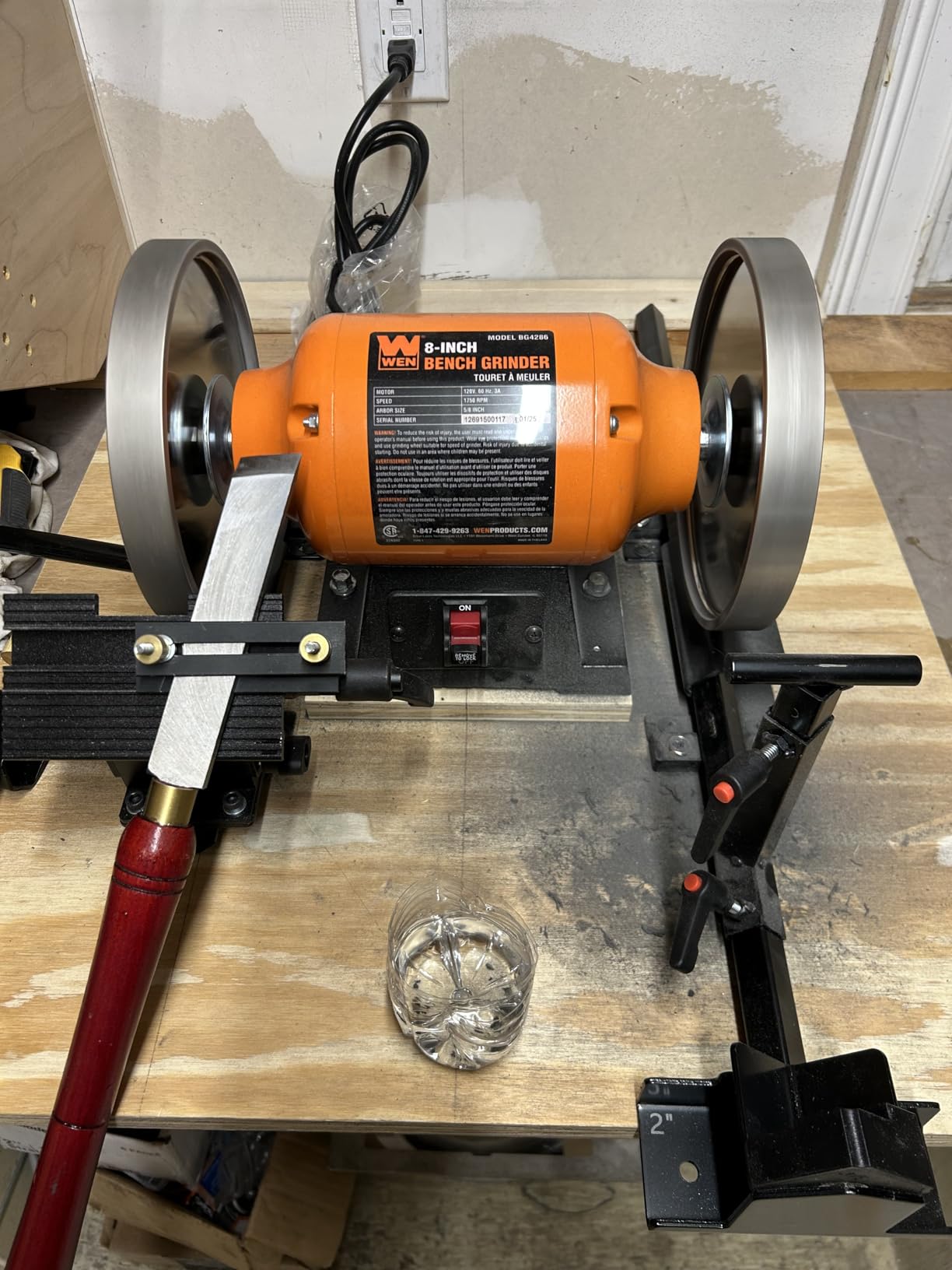
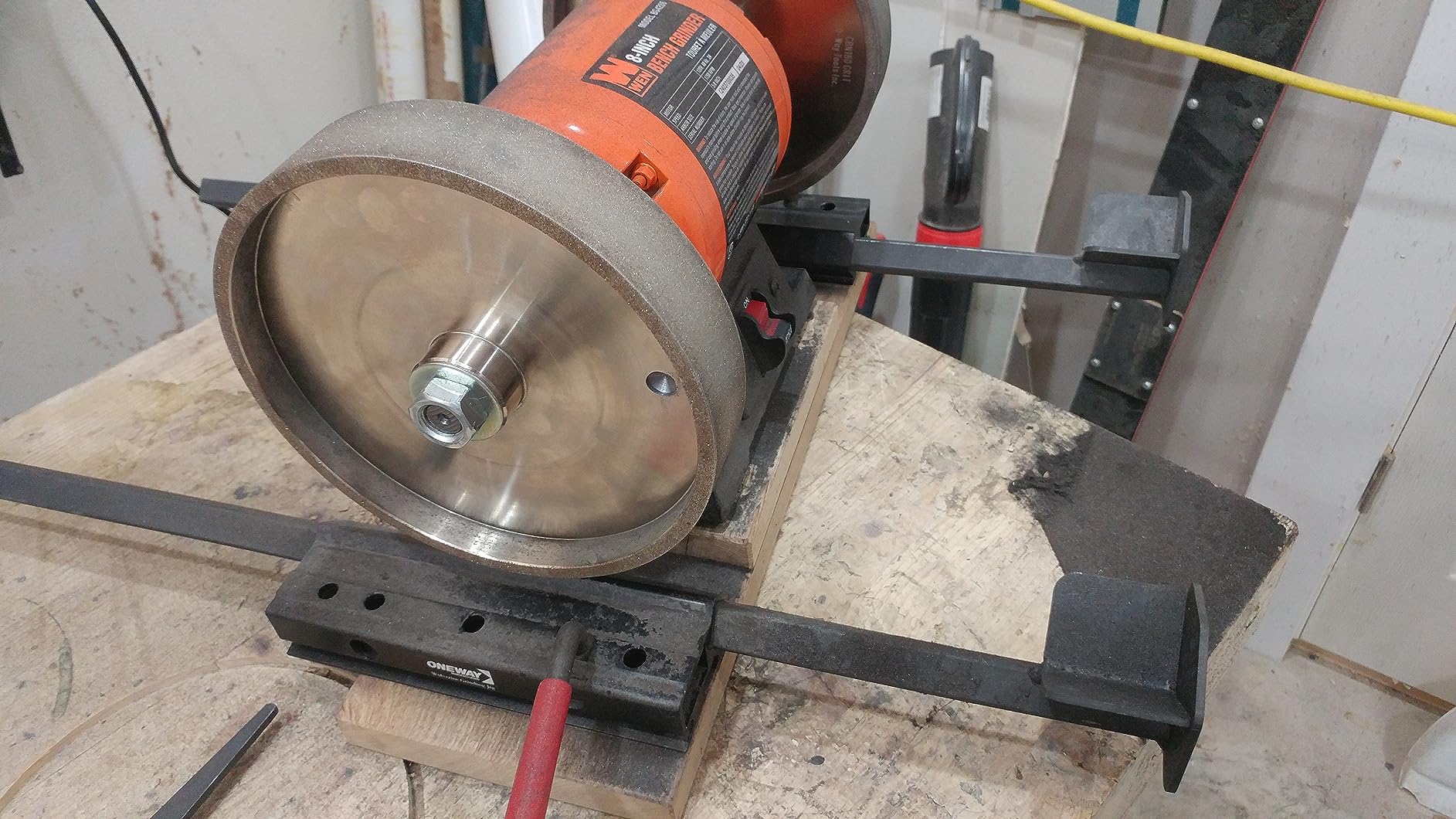
The detail that matters most in a small shop is the pre-drilled base with mounting holes. It bolts down in a couple of minutes, and once it is fixed you never think about it again. For anyone who has chased a walking grinder across a bench mid-pass, that alone justifies the machine.
Vibration and noise complaints in reviews tend to trace back to the supplied wheels rather than the motor, and the soft-start ramp keeps the initial spin-up controlled. On a 1750 RPM machine you are already working at low heat, so the reduced sparks are a noticeable improvement in a confined space.
Why it fits a tight bench
The 8 x 1 inch wheel format and compact footprint give you sharpening capability without the depth a full-size cast iron machine needs behind the bench. If your workspace is the constraint rather than your budget, this is the practical choice.
Two wheels at the two grits you actually need for sharpening means you can set a bevel on one and finish on the other without stopping to change wheels, which is the single biggest time saver in a sharpening session.
Where it falls short
The lower speed means slower material removal, so it is not the machine for reshaping and stock cleanup. And with only 221 reviews, there is less long-term owner history on this model than on the DW758 or the WEN 6-inch, so you are buying on features more than on proven longevity.
Some units also arrive with out-of-balance wheels. Check the runout before your first real sharpening job rather than assuming the vibration is normal.
6. Woodskil TDS-150CL-A – Best High-Speed Grinder for Shaping and Deburring
Woodskil 6″ 1/2HP High Speed Bench Grinder for sharpening,CSA Listed
1/2 HP at 3450 RPM
6 x 3/4 x 1/2 inch wheels
36 and 60 grit aluminum oxide
CSA certified
Pros
- Half horsepower at 3450 RPM for fast material removal
- Pre-drilled steel base resists wobbling
- 36 and 60 grit wheels cover shaping and polishing
- CSA certified with eye shield and spark arrestor
Cons
- 3450 RPM builds more heat than a slow speed machine on fine edges
- Steel base feels less rigid than cast iron under hard pressure
Not every sharpening job needs a slow wheel. Deburring a drilled hole, cleaning rust off a hinge, squaring up a punch or taking a bevel down in two fast strokes are all high-speed jobs, and this 1/2 hp 3450 RPM machine is built for them. It holds 4.6 stars on 212 reviews.
The dual-grit pairing of 36 and 60 grit aluminum oxide wheels covers rough shaping and finer work from the same machine, and the pre-drilled heavy-duty steel base is a rarity at this level. It resists wobbling well enough that most owners never mount it permanently.
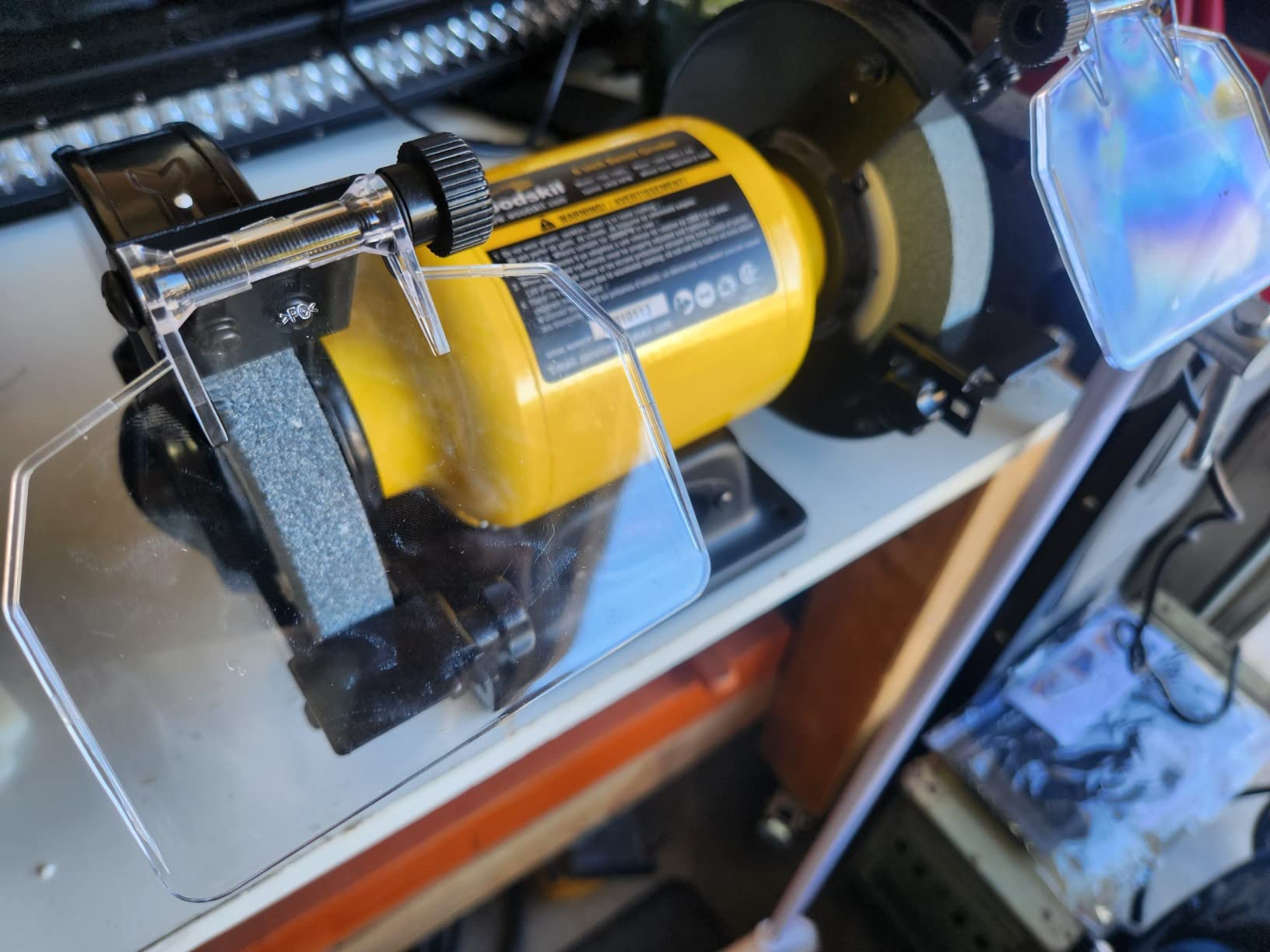
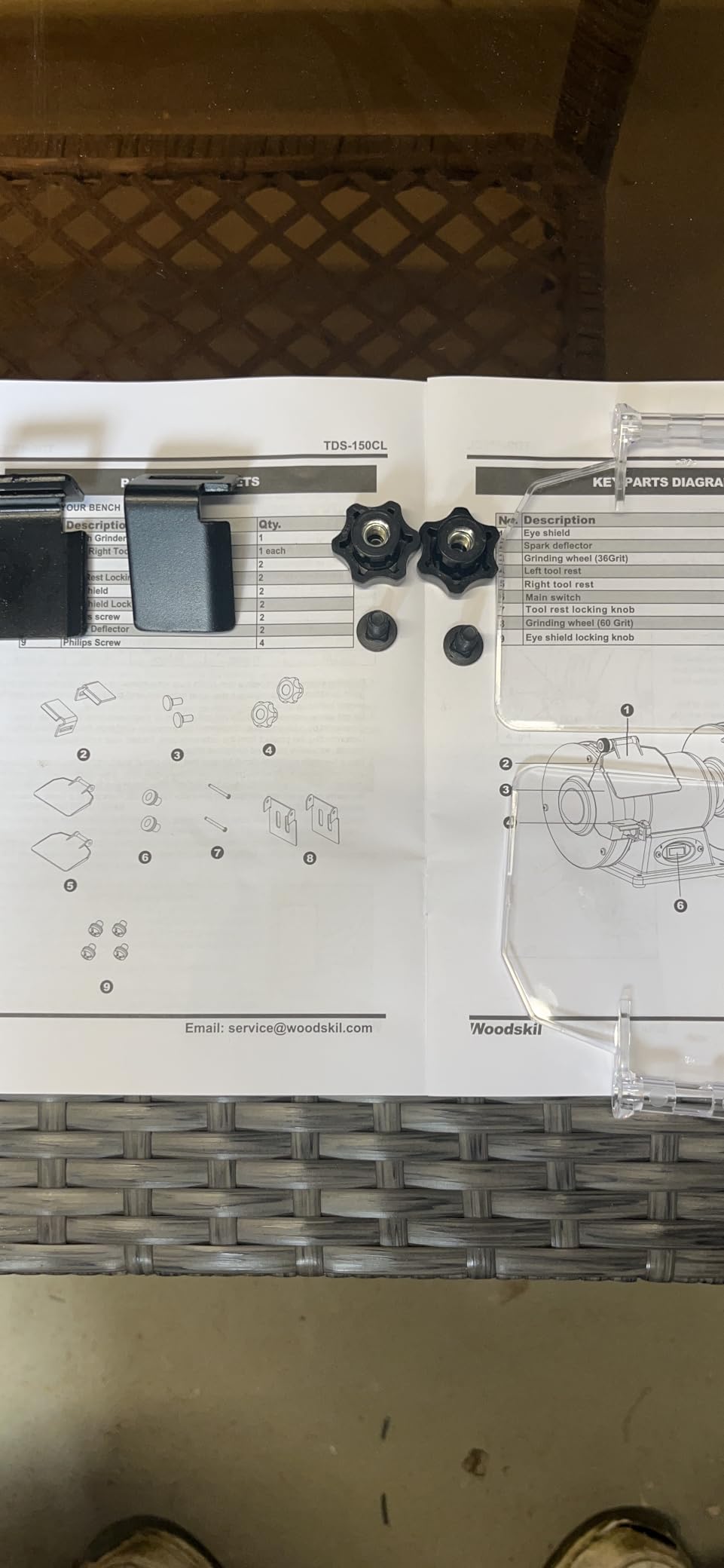
The safety hardware is a genuine strength here. It is the one machine in this lineup listed as CSA certified, and the transparent eye shield with spark arrestor is part of the package rather than an add-on. The compact 6-inch footprint and two-year limited warranty round out an unflashy but competent design.
At 6 x 3/4 inch wheels with a 1/2 inch arbor, it takes smaller wheels than most of the machines here, so check the format before you plan on mounting a CBN or diamond wheel. The available wheel sizes for that bore are narrower than on the 8-inch units.
When high speed is the right tool
Speed becomes an advantage when you need to remove a lot of metal quickly or work on soft materials like brass or aluminum. Deburring, cleaning mill scale and setting a rough bevel on a badly damaged edge are all faster here than on a 1750 RPM machine.
For low-carbon tool steel and general shop cleanup, the extra wheel speed translates directly into shorter sessions. Just keep the wheel dressed and use light passes when the workpiece is hardened.
Where full speed hurts a fine edge
Users note that the 3450 RPM produces noticeably more heat on delicate edges than the low-speed machines, and that is the trade you are making. Keep the steel moving, use the 60-grit wheel for finishing rather than the 36-grit, and stop before the edge colors.
The steel base is also less rigid than cast iron, so under heavy lateral pressure the machine can move more than a heavier chassis would allow. For heavy shaping that matters; for light finishing passes it does not.
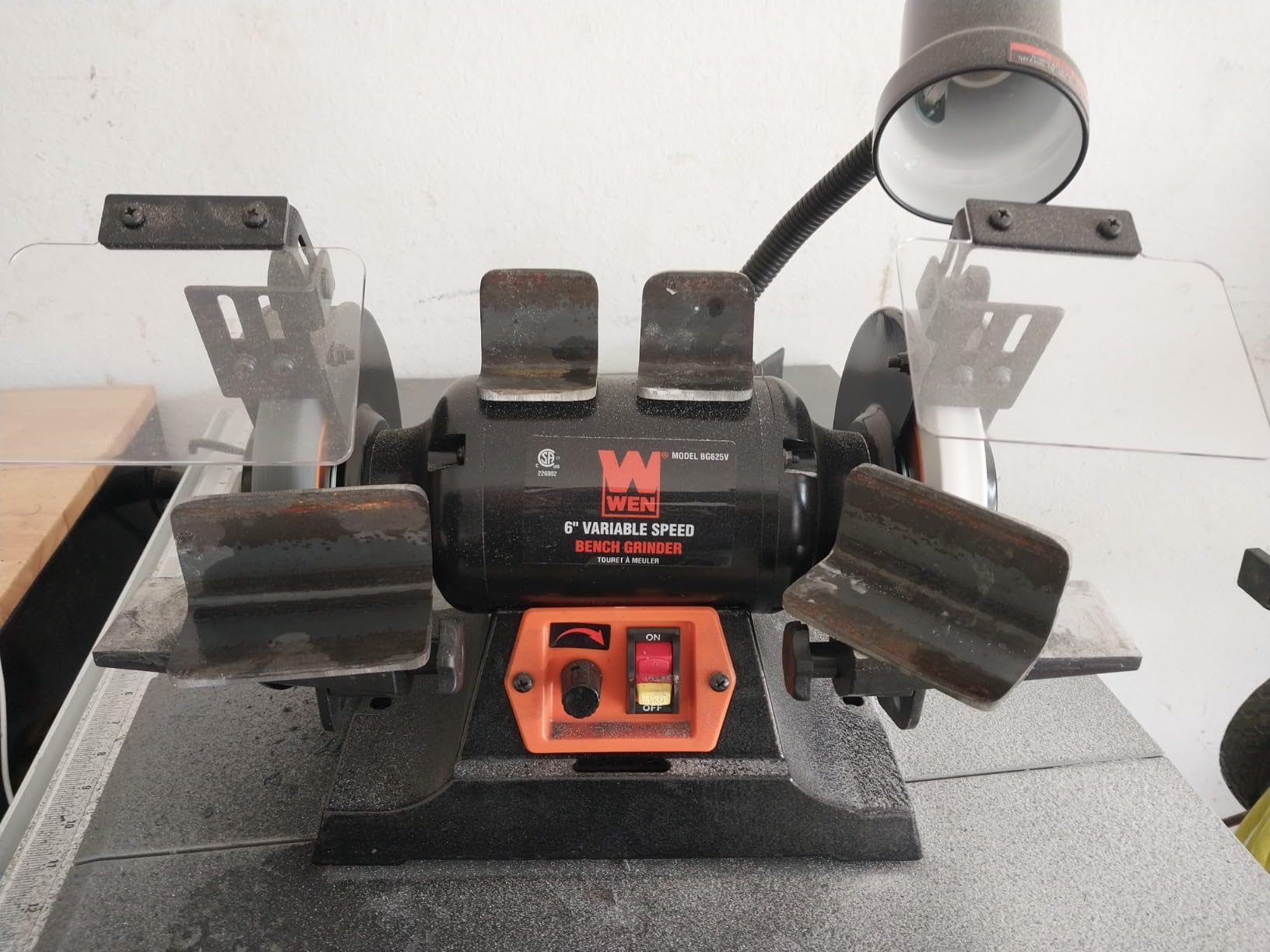
7. WEN BG625V – Best Variable Speed Bench Grinder for Sharpening Tools
WEN BG625V 2.5-Amp 6-Inch Variable Speed Bench Grinder with Flexible Work Light , Black
2.5 amp variable speed motor
2000 to 3400 RPM
6 inch format
80 and 36 grit wheels
Pros
- Speed dial from 2000 to 3400 RPM lets you tune to the job
- Dial down for knife edges and up for chisels and cleanup
- Flexible work light sits well over the wheels
- Pivoting tool rests and adjustable eye guards aid control
Cons
- Shorter cooldown time than fixed speed WEN grinders
- Included wheels are basic and need dressing sooner
- No bulb supplied for the work light
A variable speed grinder is the compromise that avoids choosing between fast removal and cool sharpening. The BG625V runs 2000 to 3400 RPM from a single dial, and owners describe the routine as obvious once you have it: low speed for a knife edge, higher speed for chisels and heavier cleanup.
It scores 4.4 stars on 165 reviews, which puts it slightly below the other WEN models here, and the reason is mostly about the consumables rather than the machine. The 80-grit and 36-grit wheels that ship with it are basic and need dressing sooner than higher-grade wheels.
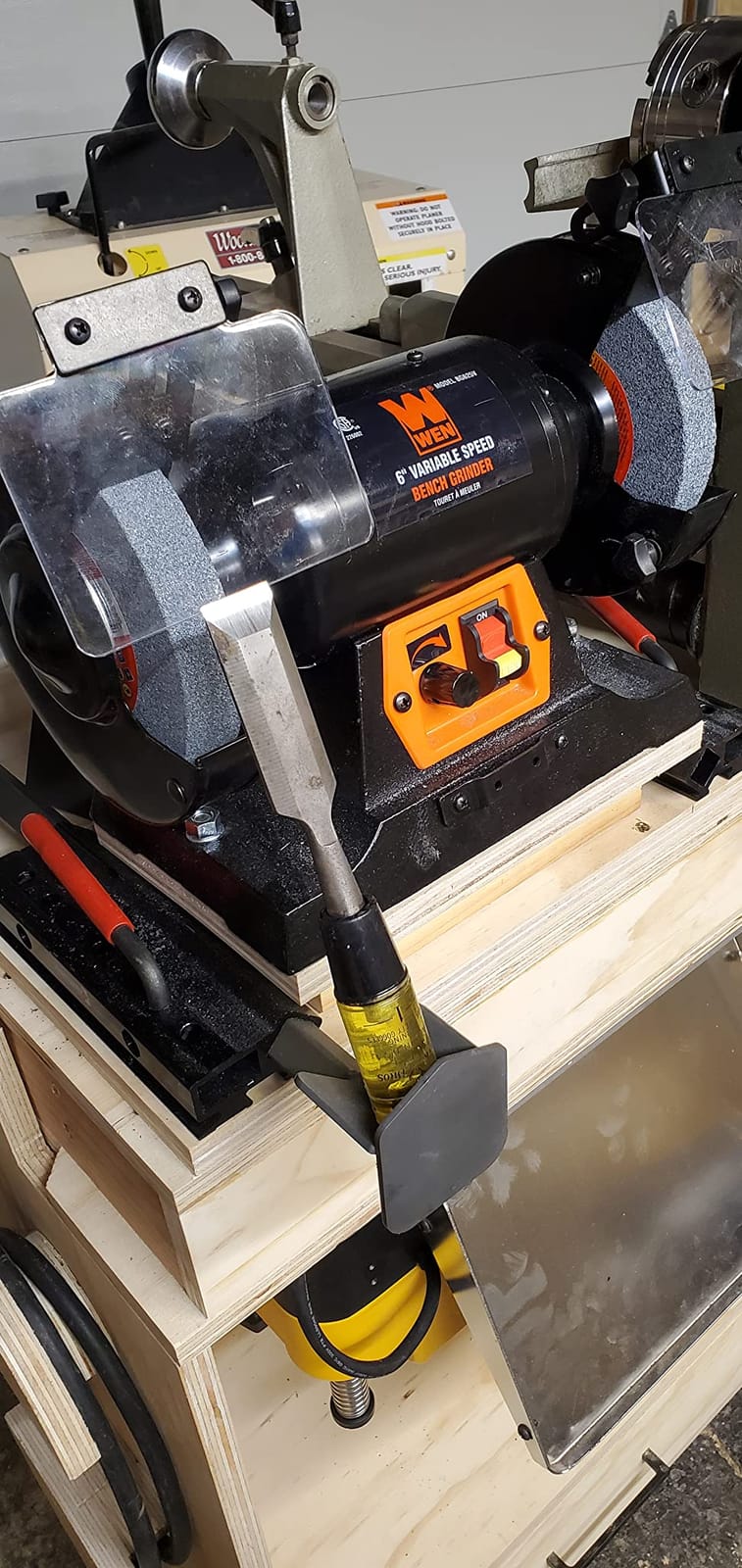
The flexible work light on a bendable arm sits well positioned over the wheels, and the pivoting tool rests plus adjustable eye guards give you a workable setup for close work. The 2.5 amp motor drives the 6-inch format without complaint on normal sharpening loads.
At 4.4 stars this is not the highest rated machine here, but the variable range is the feature most directly tied to sharpening quality. If you alternate between knives and chisels regularly, the dial is worth more to you than raw horsepower would be.
How variable speed compares with slow speed
Slow speed grinders win on control and cool cutting but drag on removal. A variable machine covers the range in one unit, so you can drop to roughly 2000 RPM for a fine edge and climb to 3400 RPM for a chisel that needs material gone.
The compromise is that 2000 RPM is not the same as 1750 RPM. It is a real improvement over a fixed high-speed grinder and a real improvement over nothing, but it does not eliminate the risk of burning steel the way a dedicated slow-speed machine does.
Where the flexibility has a cost
The variable speed motor design gives this machine a shorter cooldown time than the fixed-speed WEN grinders, which matters if you plan to run long sessions without pausing. Budget for a pause every half hour or so on heavy work.
There is still no bulb for the work light, and the supplied wheels are the kind you will replace early anyway. Plan on buying a proper 80-grit or a CBN wheel for the left side once you know how you use it.
8. SKIL BI9502-00 – Best Bench Grinder With a Water Cooling Tray
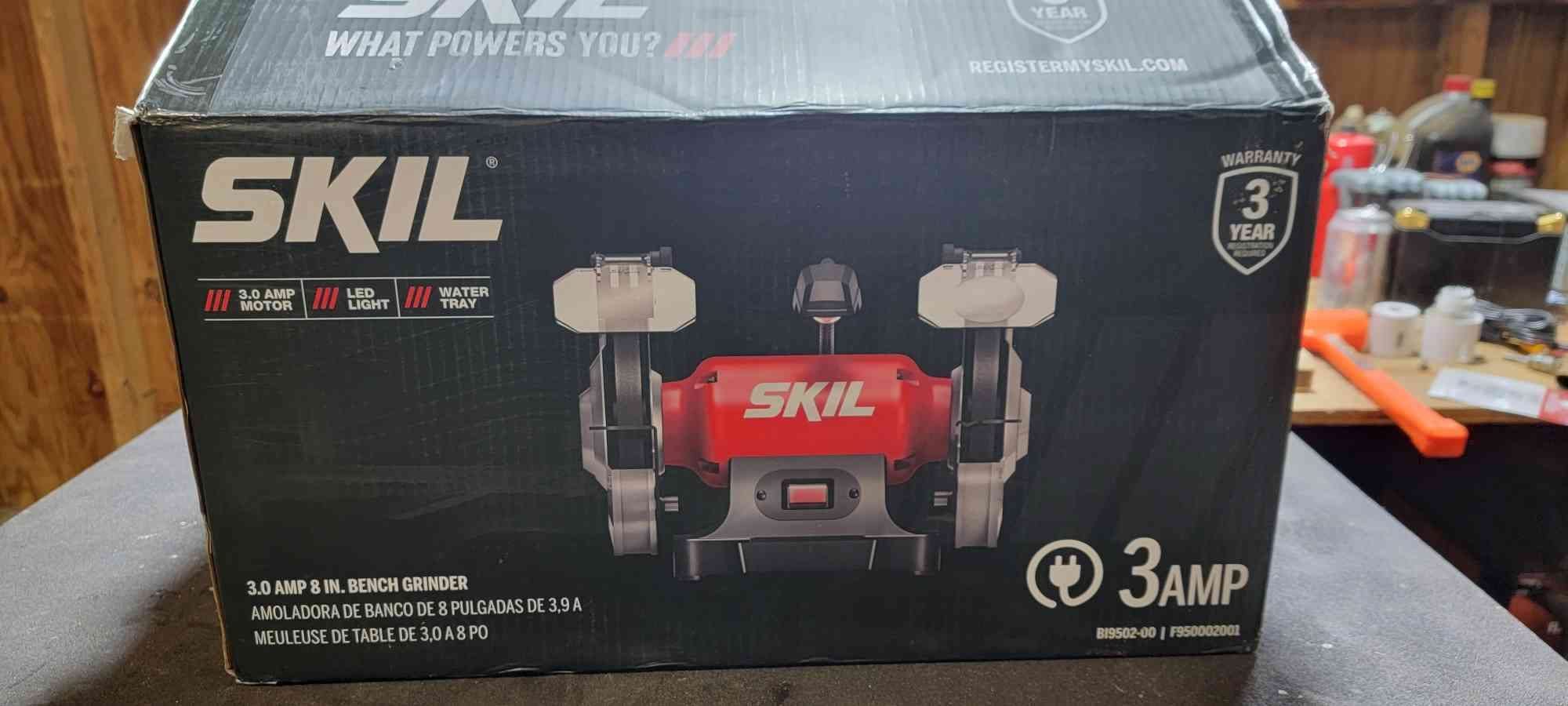
SKIL 3.0 Amp 8 In. Bench Grinder with Built-in Water Cooling Tray & LED Work Light – BI9502-00
3.0 amp at 3450 RPM
Built-in water cooling tray
LED light over both wheels
Magnified eye shields
Pros
- Built-in water tray lets you wet the face to control heat
- LED light illuminates both wheels
- Variable V-grooved tool rests support chisels and plane irons
- Pre-drilled base for bench or stand mounting
Cons
- 3.0 amp motor is modest against the 3/4 hp models
- Full 3450 RPM builds more heat than a low speed machine
- Manufacturer dimensions listed as 1 x 1 x 1 inches
The SKIL is the one machine in this lineup that solves the heat problem with water instead of with a slower motor. The built-in cooling tray sits under the wheels, so you can wet the abrasive face and keep the workpiece temperature down while still running at full speed.
At 4.4 stars across 114 reviews it is the least reviewed grinder here, and that rating reflects two specific gripes: the 3.0 amp motor lacks headroom for sustained heavy work, and the manufacturer lists item dimensions of 1 x 1 x 1 inches, which is obviously not a usable measurement. Neither complaint is about the feature set itself.
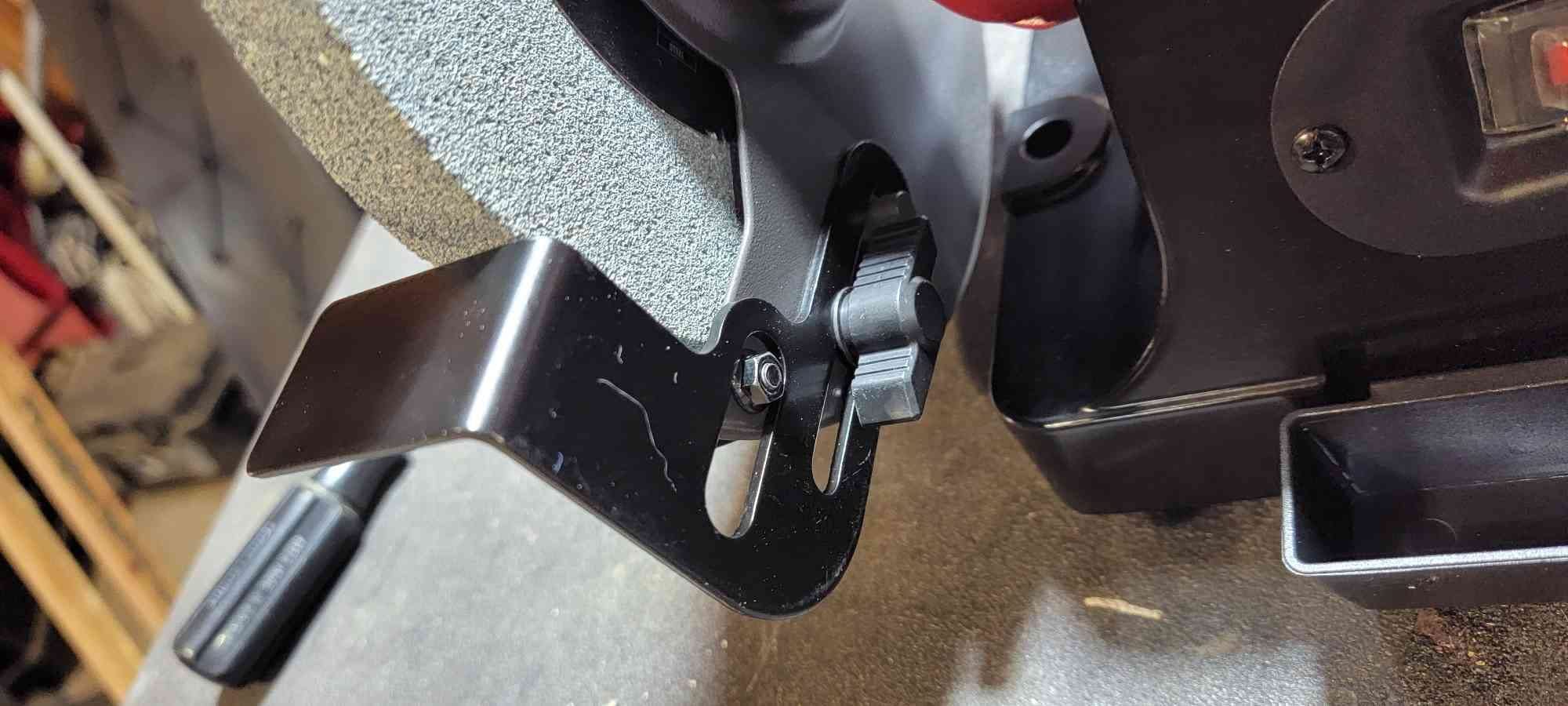
The rest of the package is unusually generous. There is an LED work light mounted over both wheels rather than a clip-on lamp, magnified eye shields so you can see the grind line while staying protected, and adjustable V-grooved tool rests that support the back of a chisel or plane blade instead of letting it rock.
That groove detail is more useful than it sounds. On a V-grooved rest a chisel indexes consistently, which means you can repeat the same bevel angle across several blades in a row without setting a jig for each one.
What a water tray actually does
Wetting the wheel face lubricates the contact point and carries heat away from the grind zone rather than into the workpiece. On a full-speed machine that is the difference between a spark shower and a controlled stream, and it is the closest thing here to the low-friction feel of a wet sharpening system.
The 8-inch format with medium and coarse wheels included gives you real contact area, and it carries a three-year limited warranty. Pre-drilled mounting holes let you bolt it to a stand or directly into a bench.
Where the water tray does not replace a slow wheel
Water controls temperature but does not reduce the removal rate, so you are still moving fast relative to a 1750 RPM machine. For thick hardened steel, the combination of speed and limited motor power can work against you.
The 3.0 amp motor is the honest limitation here. It handles hobby sharpening and general cleanup without complaint, but sustained heavy work leaves it with less headroom than the 3/4 hp induction motors in this group. Verify the real dimensions yourself before you plan the bench space.
How to Choose a Bench Grinder for Sharpening Tools
The forum consensus, repeated across woodworking and knife-sharpening communities, is that speed control matters more than horsepower. A two-horsepower machine at 3600 RPM will burn through hardened steel faster than you can react. A one-half horsepower machine at 1750 RPM will let you take the pass you meant to take.
That is why three of the eight machines here run at 1750 RPM and two more offer variable speed. Only two run flat out at full speed, and both are positioned as shaping and deburring tools rather than finishing machines.
Speed beats horsepower when you are sharpening
Horsepower tells you how much material a grinder can remove in a minute. It does not tell you how much heat that removal puts into the workpiece. Surface speed, measured in RPM, decides how fast the abrasive is dragging across your steel and therefore how aggressively it generates friction.
The practical rule sharp people use is simple: if you are sharpening hardened steel, slow is safer. Around 1750 RPM is the common slow-speed figure in this class, and it leaves enough of a gap between the wheel and the tool for you to lift the workpiece away the instant you see color change.
Wheel size and arbor size
Bigger wheels mean more contact area and fewer passes to cover a wide edge. The trade is depth: a 10-inch wheel needs a longer arm swing and more clearance behind the machine, which is why most home shops settle on 8 inch. The 6-inch machines here are compact and cheap, and they are noticeably slower on long blades.
Arbor size is the detail that catches people out. Most 8-inch wheels use a 5/8 inch arbor, while several of the smaller machines here take a 1/2 inch bore. Check the arbor before you order a replacement wheel, because a wheel in the wrong bore will not mount and the adapter kits that fix it are rarely included.
Base, mounting and balance
Weight is the underrated spec. A cast iron base resists the steady downward and lateral pressure that fine bevel work produces, while a lighter steel chassis moves when you lean on the tool. Some of the machines here are drilled from the factory so you can bolt them down permanently, and on any machine a set of bolts through the base is worth doing within the first hour.
Balance is the other one. Reviews across every machine in this list mention wheels arriving out of true, and the symptom is always the same: vibration, a grinding sound at one point in the rotation, and a machine that creeps across the bench. It is fixable in an afternoon, and we cover the steps below.
Which Grinding Wheel Should You Buy?
The grinder is only half the decision. The abrasive decides how clean your grind line is, how much heat it puts into the steel, and how long before you dress or replace it. Four wheel families cover essentially all sharpening work.
Aluminum oxide is the general-purpose workhorse and is what most of these machines ship with. It is the right choice for hardened tool steel and for general grinding, and 36 grit for shaping with 60 or 80 grit for setting a bevel.
Silicon carbide is softer and sharper than aluminum oxide and cuts non-ferrous metals and stone more effectively, but it wears faster on hard steel. Reserve it for brass, aluminum and sharpening carbide-tipped tools.
CBN, or cubic boron nitride, is a synthetic abrasive that stays sharp under heat and holds its shape far better than a conventional wheel. Forum users describe these wheels as running cool, turning true and lasting a long time, and they are the most common single upgrade recommended to anyone with a serviceable grinder. The catch is width: CBN wheels come in wider faces, which is why the BUCKTOOL in this lineup is built around one.
Diamond wheels are the hardest, most expensive option and last the longest of the four. They load up with metal quickly, so they need more frequent dressing, but for a shop that sharpens every day and does not want to keep spares, the cost per use is often lower than it looks.
Grit numbers, decoded
Grit is a particle size, so a higher number is a finer, slower cut. 36 grit removes material quickly and is for shaping and heavy cleanup. 60 grit is the general purpose sharpening wheel. 80 and 120 grit are finishing grits that produce a cleaner line and less bevel work, and a 120 grit wheel is where you would leave a chisel before honing.
Whatever you mount in the shop, keep something else for the field. We covered the best multi-tools for camping separately, and a folding blade with an integrated hone is the only realistic sharpener on a camping trip.
Bench Grinder vs. Tormek vs. Belt Grinder
The most common question in sharpening forums is whether to spend the money on a bench grinder or a dedicated slow-wheel system like a Tormek. The honest answer is that they solve different problems, and most serious sharpeners end up owning both eventually.
A bench grinder is faster, removes more material and takes abuse. It is the right tool for a dull chisel that needs three millimeters of steel taken off, and the wrong tool for putting the final two microns on a good knife. It also has no jig, so angle consistency depends entirely on your hands.
A Tormek-style system runs at a fraction of the speed with a water bath, which means near-zero heat and a controlled edge, but it is slow at material removal and unforgiving of impatience. A belt grinder sits between the two: variable speed, an abrasive belt cooled by the operator dipping it in water, and good for shaping and profiling knives.
Our rule of thumb: if your work is chisels, plane irons and shop tools, buy a slow-speed bench grinder. If your work is mostly kitchen knives with edges you care about, a wet system suits you better. If you do both, the grinder first and the wet system when the grinder is not enough.
How to Sharpen a Chisel on a Bench Grinder
Before you start, put the tool in a household oven at 300 to 350 degrees and leave it for a few minutes. Warming the steel first reduces the thermal shock that causes stress cracks and is standard advice in sharpening communities.
Set the tool rest so the gap between the wheel and the rest is about 1/8 inch, or roughly the thickness of a coin. Never hold a chisel directly against the wheel by hand, and never clamp it in a vise, because a localized clamp point creates a hollow grind that no amount of honing will fix.
Rest the tool on the tool rest with the bevel flat against the face of the wheel and light fingertip pressure only.
Touch the corner of the edge to the wheel at roughly a 25-degree angle to establish the bevel, then lift away immediately.
Take light passes along the full length of the bevel, moving left to right, and lift after every one or two strokes.
Check for even color along the bevel. A patch of gray or blue means you are dwelling in one spot, so even out your stroke.
Move to the next grit wheel when a continuous burr runs the full width of the edge, then hone or strop to remove it.
How to Fix a Wobbling Grinding Wheel
Every product in this list draws at least one review mentioning out-of-balance wheels, so this is the most common first-day problem you will meet. The good news is it is a fifteen-minute fix in most cases and a wheel dresser handles most of it.
First, mount the wheel and run the grinder empty for a couple of minutes. A wheel that settles into a steady hum was only out of true on cold start. If the hum comes and goes as it rotates, the wheel is genuinely out of balance.
Second, put a dresser diamond against the spinning wheel and sweep it slowly across the face. This knocks off the uneven outer skin that new wheels carry, and it solves glazing as a side benefit.
Third, if vibration persists after dressing, check whether the wheel is cracked. Any wheel with a visible fracture, or one that was stored on its side, should be replaced rather than dressed further. A balancing nut on the arbor is the last resort and rarely worth the effort on a consumer wheel.
Safety Rules That Matter Before You Switch It On
Wear eye protection every single time. The eye shields and magnifying lenses on these machines are a second layer, not a substitute for safety glasses, because a chipped wheel sends fragments past any shield.
Keep the tool rest gap at about 1/8 inch from the wheel. A wide gap is how small tools get pulled into the abrasive, and that is the accident that sends people to emergency rooms.
Nothing loose: no gloves near a running wheel, no loose sleeves, no long hair, no apron strings. A cotton shirt is fine, a sweatshirt is not. Stop the wheel completely before you take your hands anywhere near it, and never spin a wheel that is not mounted correctly.
Keep the area around the grinder clear so you can step back, and remember that a wheel that has been standing still can be damaged by a dropped tool. Check before you start.
Frequently Asked Questions
What is the best bench grinder wheel?
For general sharpening of hardened tool steel, white aluminum oxide is the standard choice, typically 60 grit to set a bevel and 120 grit to finish it. If you want the coolest grind and the longest wheel life, a CBN wheel is the upgrade most sharpening forums recommend. Match the wheel to your machine’s arbor size, usually 5/8 inch on 8-inch grinders.
Is a bench grinder good for sharpening knives?
A bench grinder is good for knives that need a full bevel reset or major metal removal, but a high-speed single-speed machine can overheat a hardened edge in seconds and turn it blue. For routine knife sharpening, a variable speed or slow speed grinder running near 2000 RPM, or a wet stone system, gives you far more control over the final edge.
Is CBN better than diamond for sharpening?
They suit different needs. CBN cuts faster on hardened tool steel, stays sharper under heat and needs less frequent dressing, but it costs more per wheel. Diamond lasts considerably longer and is cheapest per use over years, but it loads up with metal quickly. Most sharpeners start with CBN and only move to diamond if they sharpen daily.
What is a bench grinder’s main disadvantage?
The main disadvantage is the total absence of a jig or guide. You set the bevel angle by hand and by eye, which makes results inconsistent between sessions. The second disadvantage is heat: a fast single-speed wheel will burn the temper off hardened steel in a few seconds if you dwell. Neither problem exists on a Tormek or a bench grinder with a jig fixture.
Can you grind wood on a bench grinder?
No. A bench grinder is a metalworking machine and grinding wood on it will clog the abrasive, ruin the wheel and create a serious fire and kickback hazard. Use a disc sander or a belt sander for wood. The one exception is a machine sold with a dedicated wood sanding disc, and even then you should never use a grinding wheel on timber.
How long does a CBN grinding wheel last?
Lifespan depends far more on how you use it than on any published figure. A CBN wheel used for sharpening hardened tool steel at low speed with regular dressing can stay serviceable for years. Used for heavy grinding or steel stock removal it will load and break down much faster. Dressing the wheel every few sessions roughly doubles its useful life.
Final Verdict on the Best Bench Grinders for Sharpening Tools
The DEWALT DW758 is our pick for the best bench grinders for sharpening tools overall, because the 3/4 hp induction motor and the cast iron base give you a machine that will still be there in ten years, and 2644 reviews at 4.7 stars is the strongest track record in this group. Buy it for bevel setting and shop work, and treat the wheels as consumables you will replace.
If your priority is edges rather than metal removal, buy slow. The RIKON 80-805 runs at 1750 RPM with a five-year warranty and is the reference machine for chisel and plane iron work, while the BUCKTOOL adds the wide face that lets you fit a CBN wheel. For a tight bench, the WEN BG4286 does the same job in a smaller footprint.
Whichever one you choose, replace the wheels that ship with it, bolt the machine down, and keep a can of water nearby. We still use an angle grinder for shaping and heavy stock removal where a bench grinder is the wrong tool, and a good sharpening setup works best when each machine has one job. That approach has held up as the best bench grinders for sharpening tools have changed very little in 2026, and it will hold up next year too.