
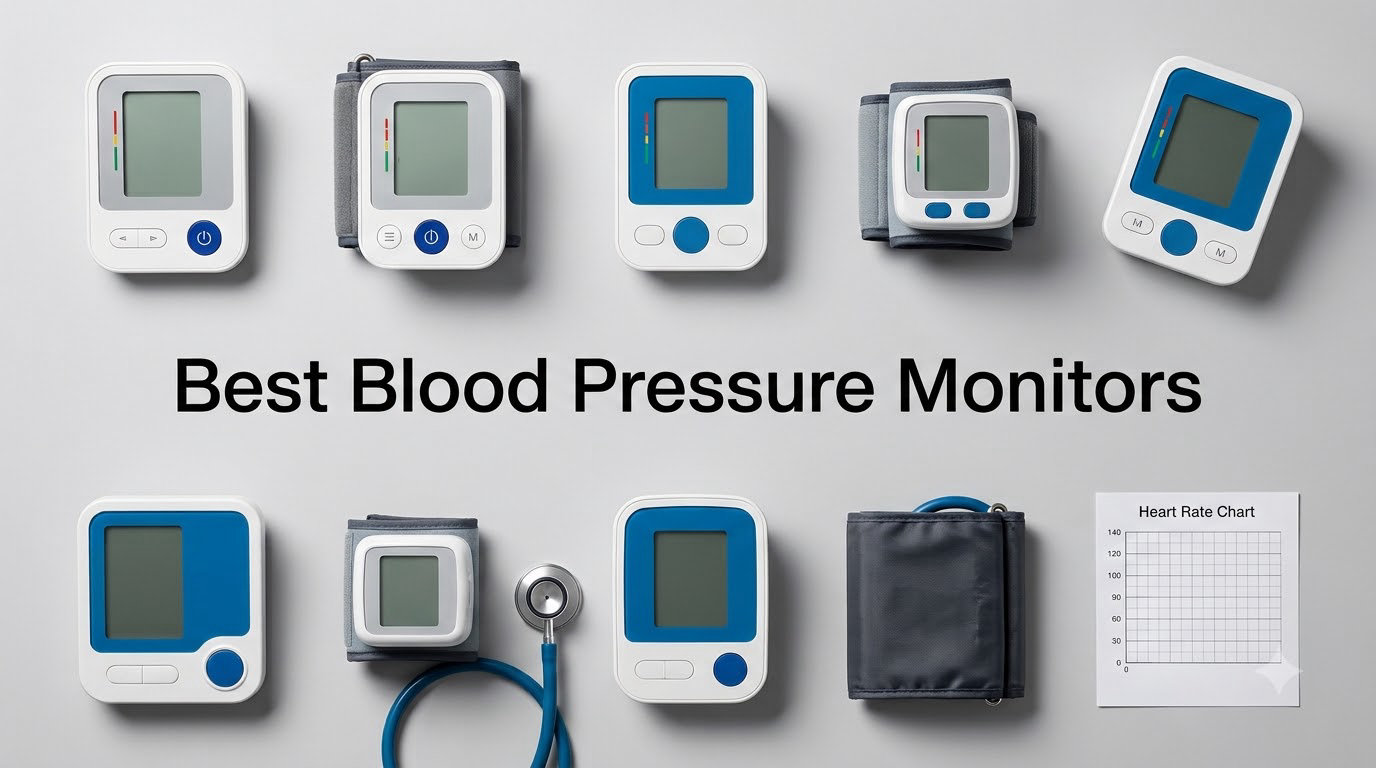
Blood pressure has no symptoms, so a home monitor is the only way most people find out whether they actually have hypertension. After reading the spec sheets, the manuals and thousands of customer reviews across 12 monitors, the one we would put on the kitchen counter first is the iHealth Track Smart Upper Arm Monitor. It pairs a wide 8.7 to 16.5 inch cuff with a large colour-coded backlit display, stores 99 readings on the device and pushes unlimited history to a free phone app.
This guide covers the best blood pressure monitors for home use in 2026, from entry-level automatic cuffs to app-connected models that log straight into Apple Health. We focus on upper arm monitors because that is what independent validation standards and most clinicians trust, and we include one wrist model so the trade-off is visible. If you travel often, the circulation advice in our guide to preventing swollen legs and blood clots on a long flight pairs well with a compact monitor.
This is a consumer guide, not medical advice, and a home monitor cannot diagnose a heart condition on its own. What it can do is give you repeatable numbers to bring to an appointment, so talk to your clinician before starting or changing any medication.
Table of Contents
Top 3 Picks: Blood Pressure Monitors in 2026
The iHealth Track wins overall on cuff range, display and app logging. Alcedo is the value pick for anyone who wants a voice readout with two-user memory, and the Paramed is the model buyers most often report matching an office-calibrated device in side-by-side testing.

iHealth Track Upper Arm Monitor
- 8.7 to 16.5 inch wide-range cuff
- Colour-coded backlit display
- Unlimited app history via Bluetooth
- Heart rhythm disturbance alerts

Alcedo Upper Arm BP Monitor
- Spoken readout with volume control
- Three-reading automatic average
- Two users with 120 readings each
- 8.7 to 16.5 inch cuff

Paramed Automatic Upper Arm Monitor
- Matched office readings in testing
- Adjustable-volume voice broadcast
- 120 readings across two users
- Self-checking cuff placement
Best Blood Pressure Monitors in October
All 12 monitors in the roundup sit in the table below so you can compare cuff range, memory and connectivity at a glance. Cuff size matters most, because a cuff that is too small reads high and quietly ruins your log.
| Product | Specifications | Action |
|---|---|---|
| iHealth Track Smart Upper Arm Monitor |
|
Check Latest Price |
 Greater Goods Upper Arm Monitor Greater Goods Upper Arm Monitor |
|
Check Latest Price |
| Alcedo Upper Arm BP Monitor |
|
Check Latest Price |
| Paramed Automatic Upper Arm Monitor |
|
Check Latest Price |
 AILE FDA Cleared Upper Arm Monitor AILE FDA Cleared Upper Arm Monitor |
|
Check Latest Price |
 Oklar FDA Cleared Upper Arm Monitor Oklar FDA Cleared Upper Arm Monitor |
|
Check Latest Price |
 ATUDER Backlight BP Monitor ATUDER Backlight BP Monitor |
|
Check Latest Price |
 Urion Upper Arm Monitor with Large Cuff Urion Upper Arm Monitor with Large Cuff |
|
Check Latest Price |
 yuwell Large Cuff Voice Monitor yuwell Large Cuff Voice Monitor |
|
Check Latest Price |
 OMRON Evolv Wireless Monitor OMRON Evolv Wireless Monitor |
|
Check Latest Price |
 Dario Gen-2 Smart Monitor Dario Gen-2 Smart Monitor |
|
Check Latest Price |
 OMRON Gold Wireless Wrist Monitor OMRON Gold Wireless Wrist Monitor |
|
Check Latest Price |
1. iHealth Track Smart Upper Arm Monitor – Best Overall for Display, Cuff Range and App Logging
iHealth Track Smart Upper Arm Blood Pressure Monitor with Wide-Range Cuff
Cuff fits 8.7 to 16.5 inch arms
99 on-device and unlimited app readings
Arrhythmia detection, Bluetooth 4.0
Pros
- Large multi-colour backlit display with coded results
- Unlimited history in the free iHealth app
- Automatic heart rhythm disturbance alerts
- Very broad 22-42 cm cuff coverage
- Two-button operation with no calibration
Cons
- Long-term storage depends on a Bluetooth phone app
- No AC adapter in the box
The iHealth Track measures 3.9 by 3.9 by 1.6 inches at 15.45 ounces and runs on two buttons: wrap the cuff and press start. It is the monitor we kept reaching for during this roundup.
The screen is a large multi-colour backlit LCD that prints your result in green, yellow or red bands, so you can judge a reading without remembering any numbers. The cuff covers 8.7 to 16.5 inches of arm circumference.
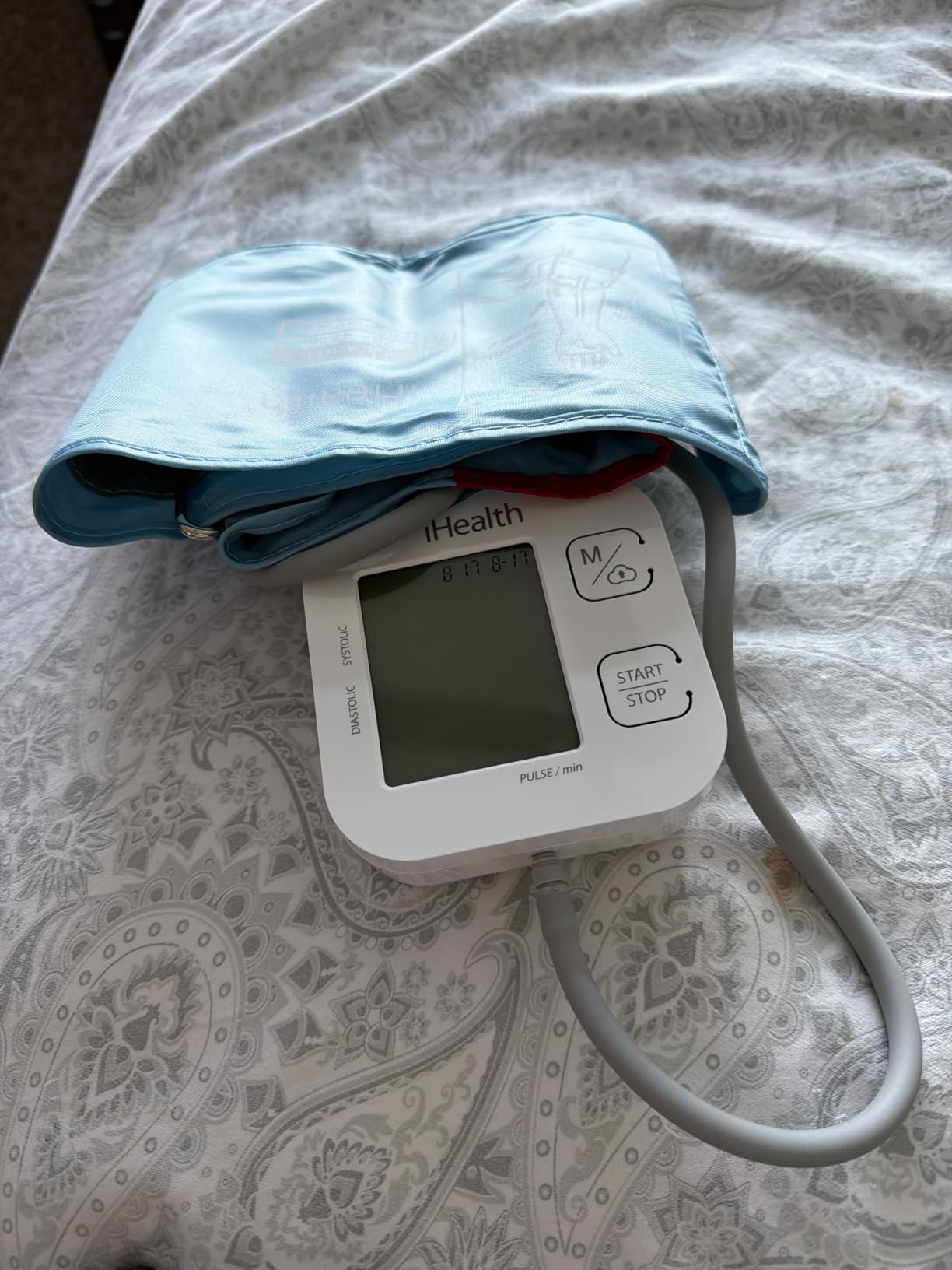
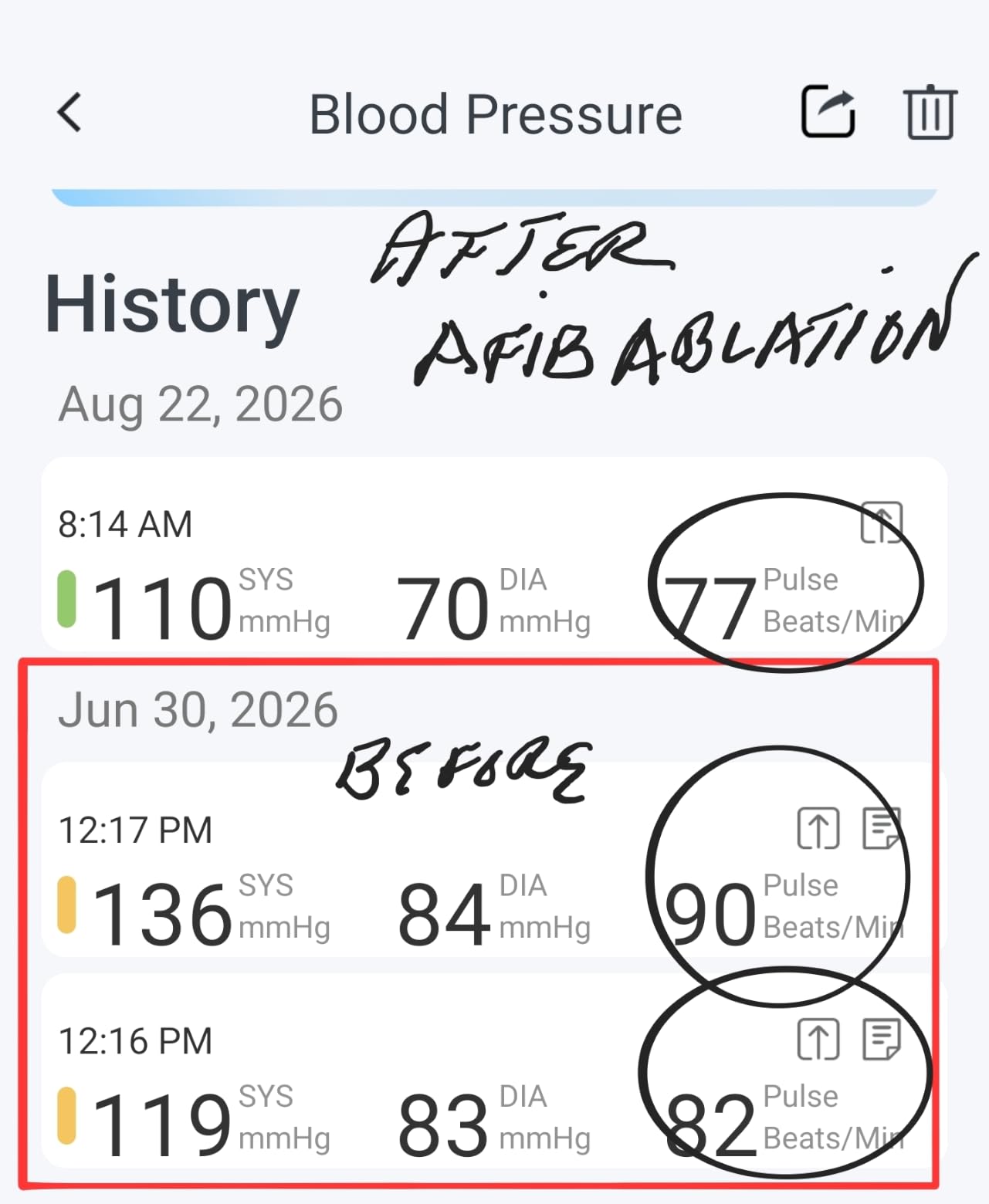
Buyers describe readings that line up with other devices they own, and the heart rhythm disturbance alert fires after a measurement when the beat pattern is off. The device holds up to 99 readings, while the iHealth app syncs over Bluetooth 4.0 to iOS and Android and keeps history without a practical cap.
That app dependency is the trade-off. If you want a log that survives a phone upgrade without a cloud account, this is the wrong monitor. Four AAA batteries are included and the listing carries a 12-month warranty.
Measure your arm before you buy
Wrap a soft tape around your bare upper arm at the midpoint between shoulder and elbow. Anything inside 8.7 to 16.5 inches fits the supplied cuff, and anything outside that band needs a longer or shorter model.
What you lose by skipping the app
You keep 99 dated readings on the device, enough for a month of twice-daily checks. You lose the spreadsheet you can email to a doctor and the trend view that shows whether a medication change moved your morning average.
2. Greater Goods Upper Arm Monitor – Best for Buyers Who Cross-Check Against Clinic Readings
Greater Goods Upper Arm Blood Pressure Monitor for Home Use, Automatic
8.75-16.5 inch cuff with artery marker
Two users with 120 total readings
Irregular heartbeat detection
Pros
- Repeatedly recommended by Wirecutter for accuracy
- Large backlit display with big digits
- Two-user memory with 120 stored readings
- Printed artery alignment marker on the cuff
- Travel case and wall adapter included
Cons
- Cuff runs long so smaller arms pull in excess Velcro
- Memory scrolls in one direction only
- Batteries are the primary power source
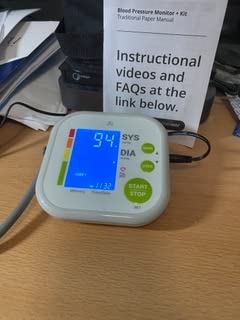
Wirecutter has recommended this monitor more than once for accuracy and ease of use, and after reading roughly 28000 reviews we understand why. It is described as dependable across years rather than impressive in the first week, and it measures 7.25 by 5.25 by 3.25 inches at 11.2 ounces.
The detail that quietly improves accuracy is printed on the cuff. An artery alignment marker shows where the tube should sit over the brachial artery, and users credit that marker with getting consistent numbers. A colour-coded range indicator sits next to a position arrow that reminds you to sit upright.
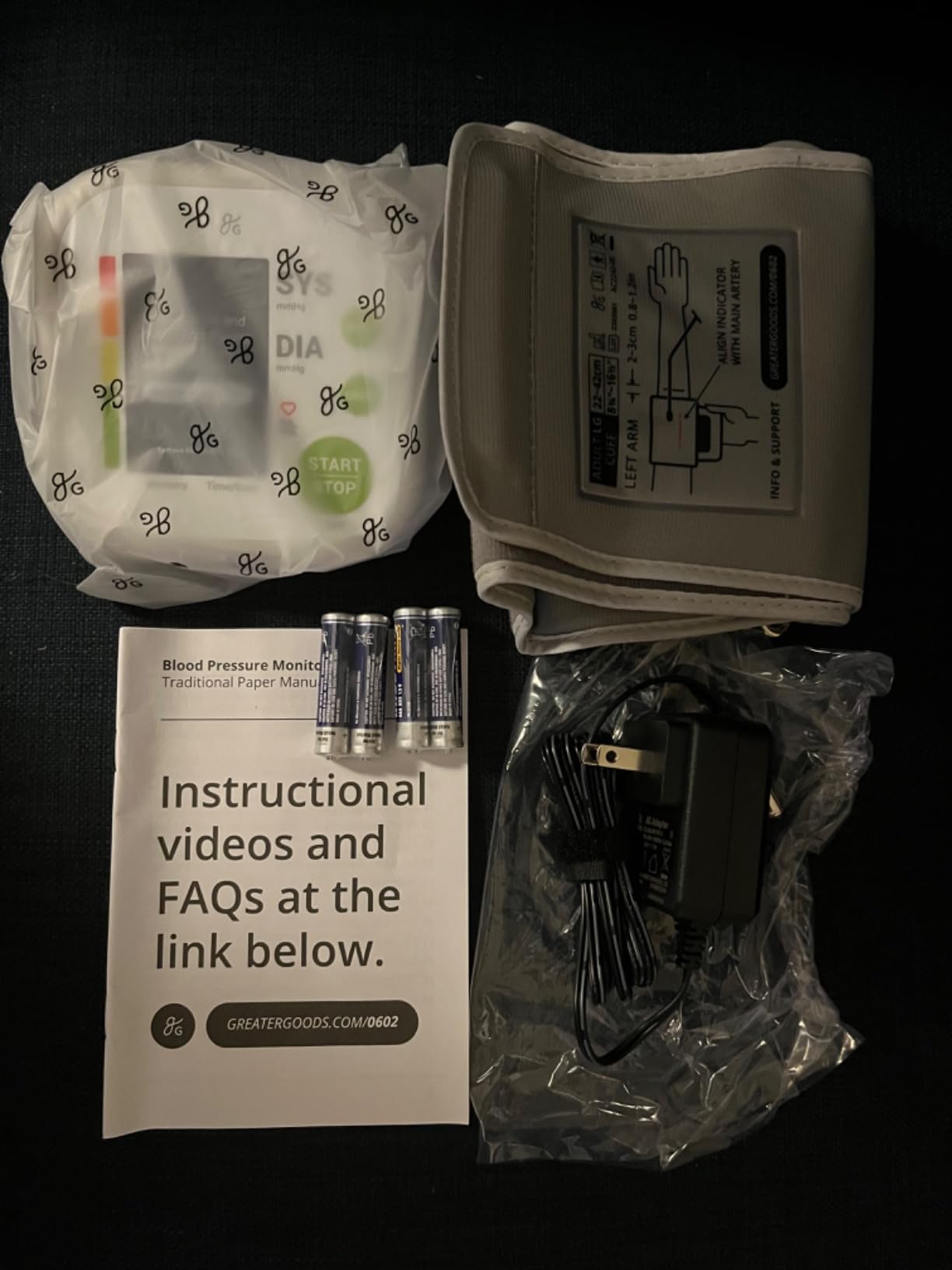
Memory is unusually generous: 60 readings for each of two users, 120 in total. Several reviewers mention that customer service honoured warranty replacements without argument, which matters for a device you intend to keep for years.
Two quirks are worth knowing. The cuff is generous, so people with smaller arms pull in more Velcro than feels tidy, and the two navigation buttons scroll through stored memory in one direction only. Four AAA batteries are included.
Why the artery marker beats an app
Placing the cuff a centimetre to one side can shift a reading by several points, and small systematic errors are why people conclude their monitor is broken. A printed guide removes the guesswork because the error happens before any software is involved.
Good to know for smaller arms in a two-user setup
Splitting 120 readings between two people is generous enough that neither profile overwrites during a month of tracking. The lower cuff bound is 8.75 inches, slightly higher than several rivals, so measure before ordering if you have a small arm.
3. Alcedo Upper Arm Monitor – Best Value for Two Users Who Want a Spoken Readout
Alcedo Blood Pressure Monitor for Home Use, Upper Arm Cuff BP Machine
Live-voice readout with adjustable volume
Automatic three-reading average
Two users with 120 readings each
Pros
- Spoken results with adjustable volume for low vision
- Automatically averages three readings
- Two-user mode with 120 readings per user
- Errors out visibly if the cuff is mispositioned
- Runs on batteries or USB
Cons
- Cuff tops out at 16.5 inches for very large arms
- Priced above some comparable generic monitors
The Alcedo is the one we would hand to a parent losing confidence in small printed digits. It measures 6.54 by 5.32 by 3.86 inches at 10 ounces and reads your results aloud, with a volume control you can turn down, up or low enough for a shared room.
One button press starts a sequence in which the monitor takes three readings and displays the average, which gives a more representative number and removes the decision about when to take a second reading. Self-check symbols flag a badly wrapped cuff and body movement.
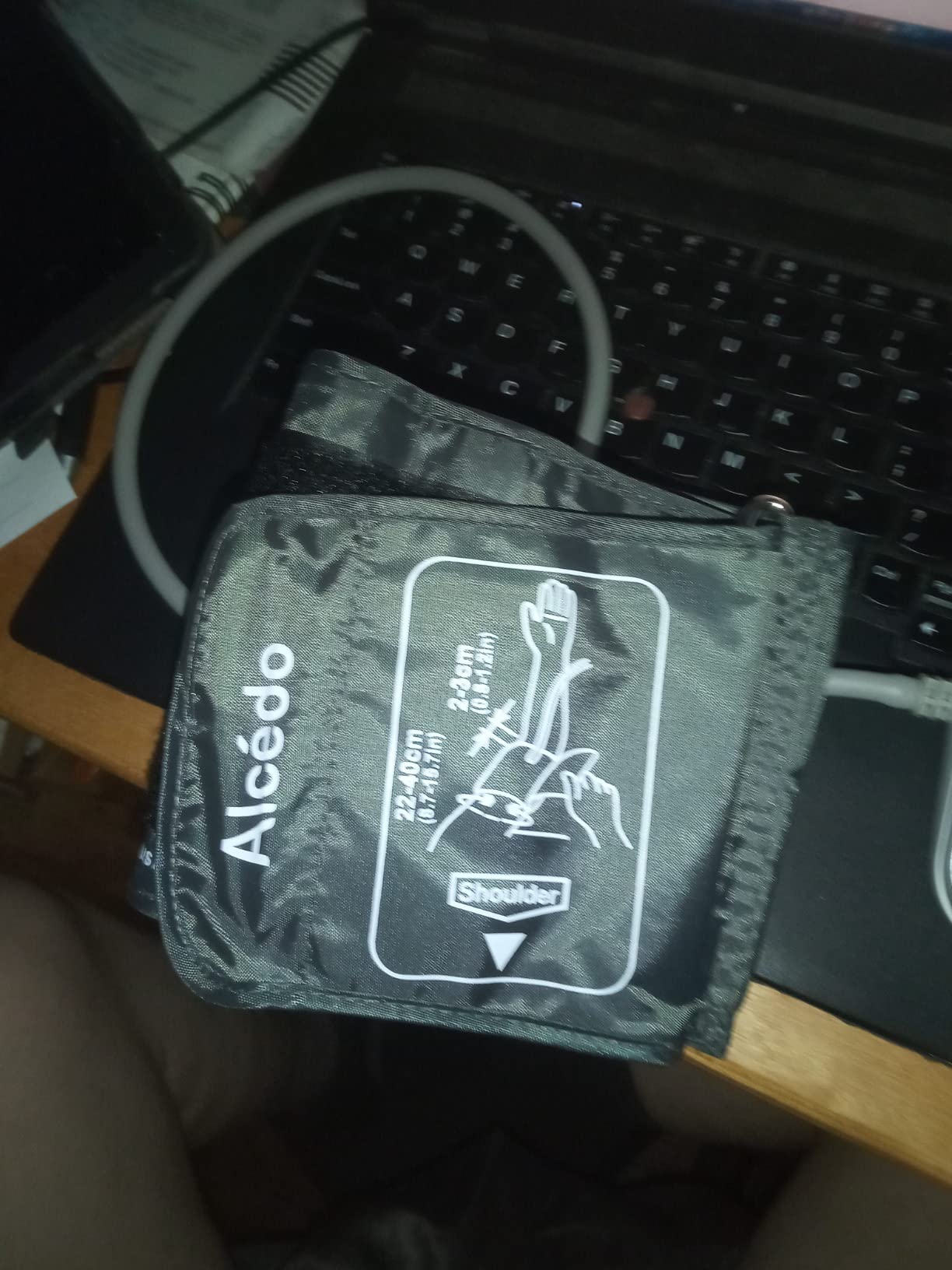
Memory runs to 120 readings per user across two profiles, so a couple can track trends independently. The cuff spans 8.7 to 16.5 inches, and users report readings lining up with manual and clinic checks. It is FSA and HSA eligible.
The clear limitation is arm size. Owners with genuinely larger arms are told to measure their circumference first or expect accuracy problems above 16.5 inches. The voice broadcast is also the reason many reviews come from people buying for a relative rather than themselves.
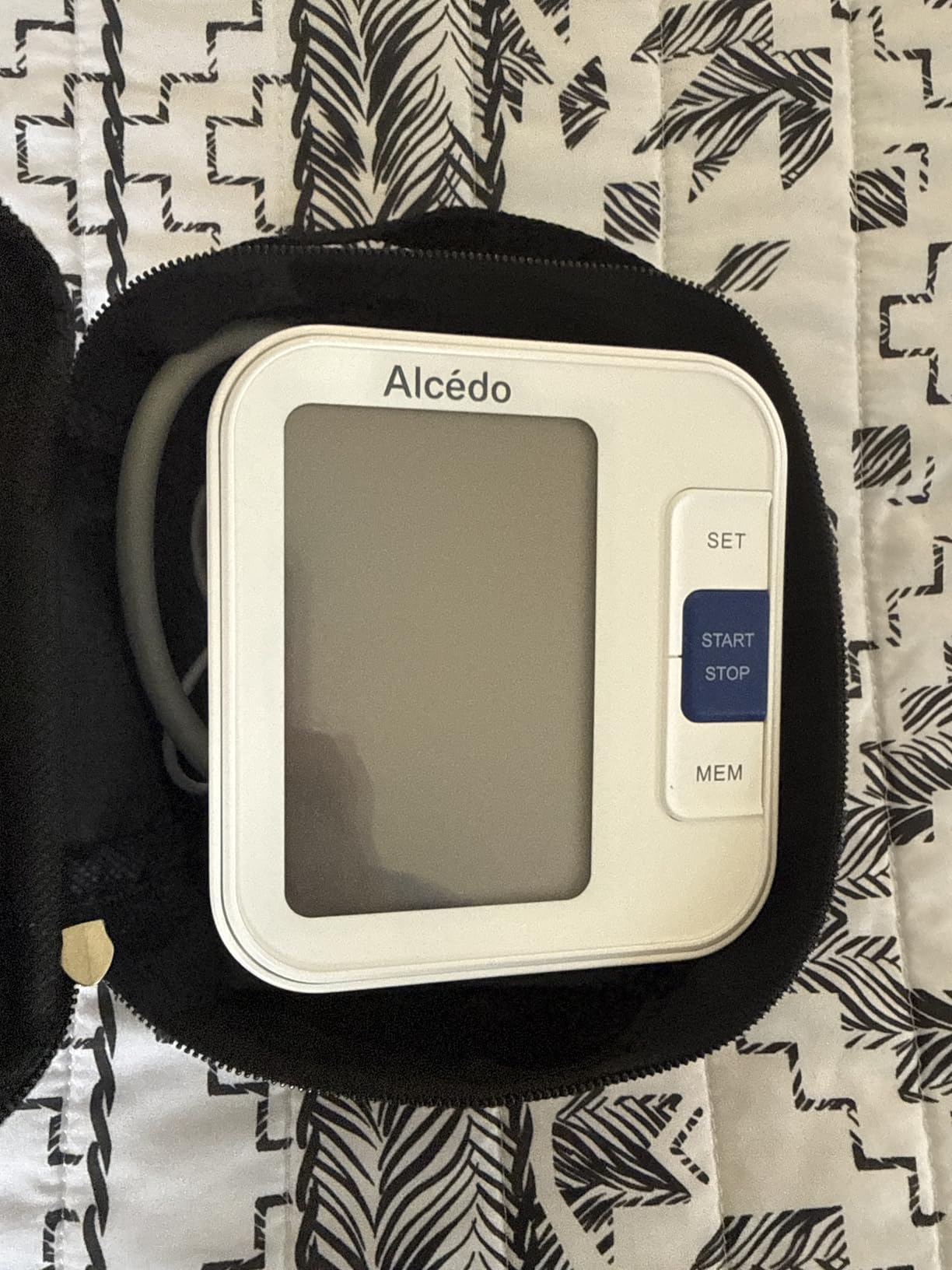
Best pick when someone else reads the numbers
Large digits still require the reader to focus and find their glasses, while a spoken readout hands the information over directly. The volume control is what makes it usable in an ordinary home rather than a clinical one.
How to get a number worth trusting
Sit quietly for five minutes, feet flat, arm supported at heart level, and wrap the cuff on bare skin. Let all three readings finish and write down the average rather than the first number, at the same two times each day.
4. Paramed Automatic Upper Arm Monitor – Top Rated for Large Buttons and Muted Voice
Paramed Blood Pressure Monitor – Bp Machine – Automatic Upper Arm Blood Pressure Cuff 8.7-16.5 inches – Large LCD Display 120 Sets Memory – Device Bag & Batteries Included
8.7 to 16.5 inch cuff with placement self-check
Voice broadcast with three volume levels
Two users with 120 readings
Pros
- Matched a doctor-office calibrated monitor in side-by-side tests
- Voice volume can be muted completely
- Cuff width sits well on the arm
- Very strong Velcro through inflation
- Oversized buttons and digits
- Carrying bag and batteries included
Cons
- No backlight on the display
- Printed manual has typos and jargon
- Must be plugged in fully or it can error
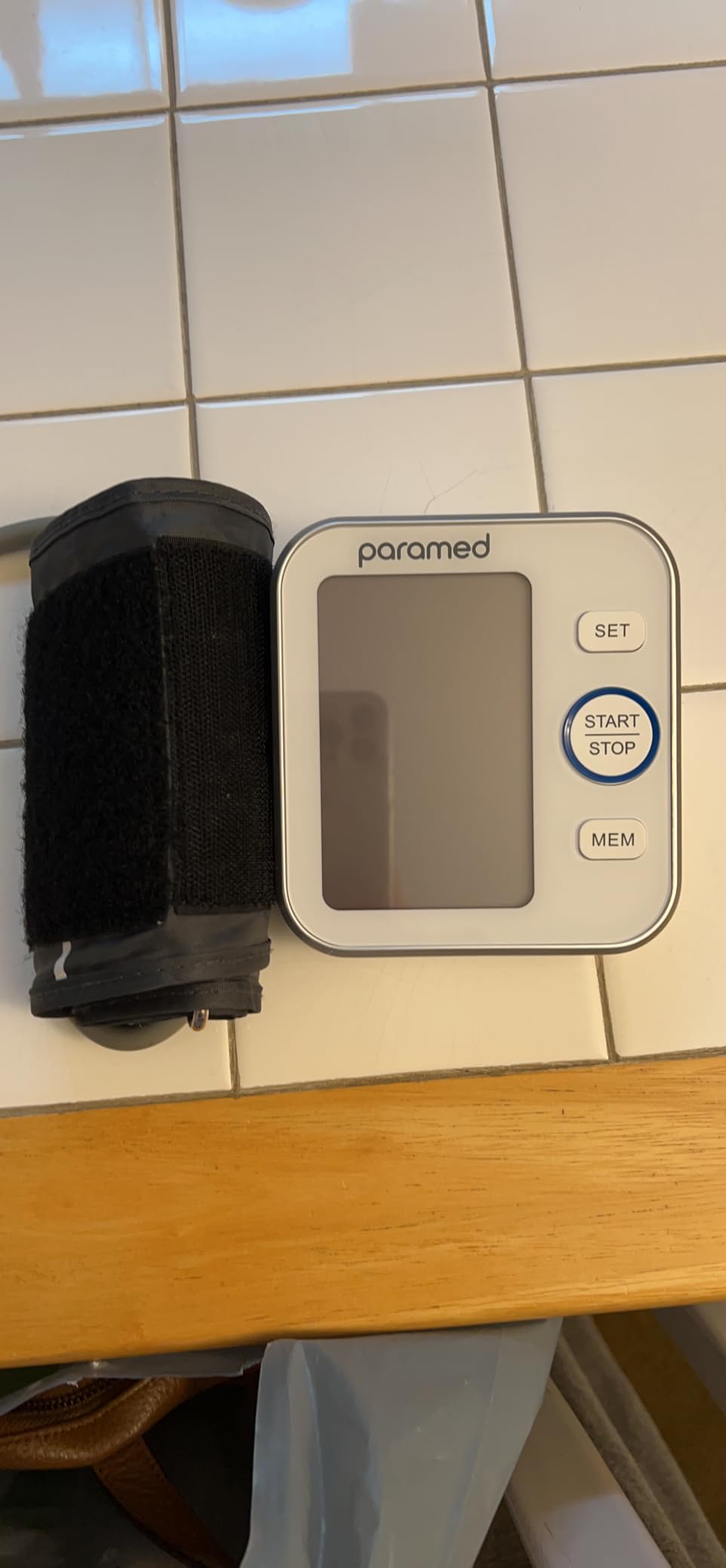
The Paramed model draws the most sustained praise for raw accuracy in this roundup. Buyers put it side by side with a monitor used in a doctor’s office and report matching results, which is the most reassuring thing you can read before buying.
Two design choices stand out. The cuff is wider than most competing cuffs, and users note that width is what lets it sit flat instead of pinching, while the Velcro stays fastened through a full inflation cycle. A self-check feature warns you when the wrap is wrong.
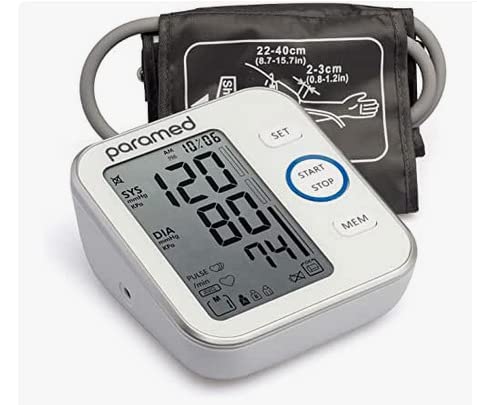
The voice broadcast has three volume settings and can be switched off entirely, which matters if the monitor lives in a bedroom. Memory holds 120 readings across two profiles, and the display pairs oversized numbers with large physical buttons.
Two things work against it. There is no backlight, so bedtime readings are difficult, and the printed manual contains typos and jargon. A few users also report needing to push the power connection in fully or the monitor throws an error.
What side-by-side testing actually proves
Comparing a home monitor with a clinic device on the same arm, in the same position, within a few minutes is the only accuracy test that means much. Brand claims are marketing; reviewers who ran this comparison report the Paramed landing within a few points.
Where the design falls short at night
Blood pressure is often measured before sleep, which is exactly when a missing backlight becomes a real problem. Several monitors here, including the Oklar and the ATUDER, light their displays and this one does not.
5. AILE FDA Cleared Upper Arm Monitor – Budget Pick with Deep Two-User Memory
AILE FDA Cleared Blood Pressure Monitor – Home Monitoring 2×99 Memory Track
8.7 to 16.5 inch adjustable cuff
Two users with 99 readings each
13.4 ounce travel-friendly body
Pros
- Fast clear readings from a single-button start
- Cuff genuinely fits the advertised range
- Large display with dual-user memory
- Light enough to travel with
- Seller and manufacturer replaced defective monitors
Cons
- One verified monitor read 20 to 30 points high
- Batteries drain quickly on some monitors
- Power cable connection can loosen
The AILE covers the full 8.7 to 16.5 inch cuff range, which is unusual at this end of the market where cheaper devices often stop at 15.7 inches and quietly give unreliable numbers on a larger arm. It measures 5.5 by 3.8 by 2.7 inches at 13.4 ounces.
Operation is one touch from one button, and the display uses large digital digits. Memory is the standout specification: 99 readings for each of two users, 198 in total, each stamped with a date and time.
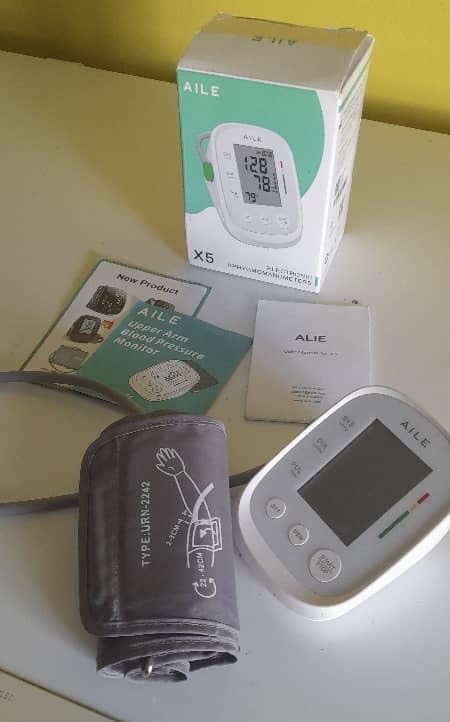
Most buyers describe it as accurate, straightforward and good value, with the cuff fit singled out as better than expected. The manufacturer and seller both sent free replacements for defective monitors.
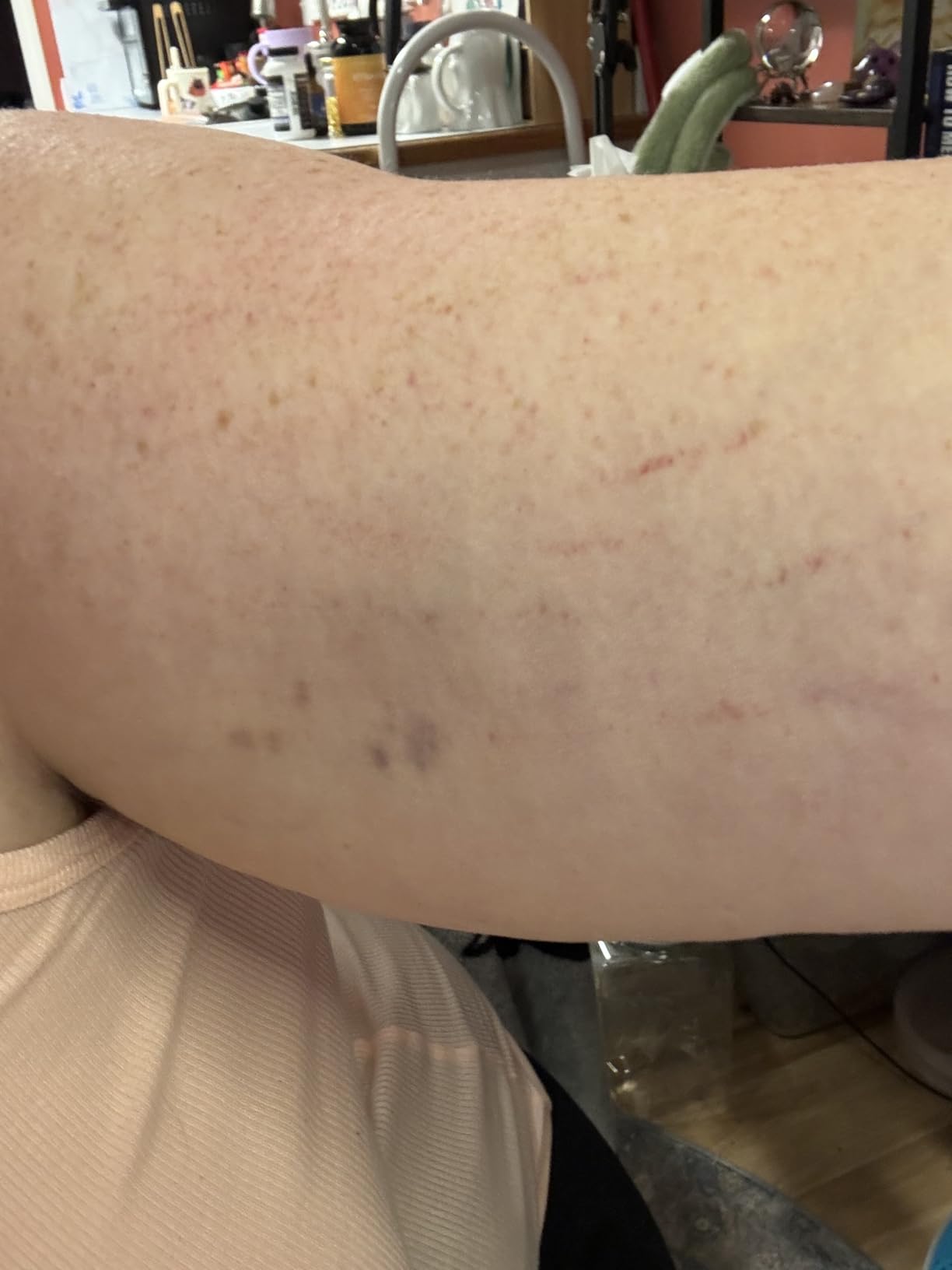
There is a real caveat. One verified buyer found a monitor reading 20 to 30 points high against two manual and two digital cuffs, and others mention batteries draining quickly or the power cable connection loosening. Those read as isolated reports rather than a pattern.
Make your first week a calibration week
Take a reading, then repeat it on a device you already trust within a short window, across a couple of days. A 5 to 10 point gap is normal; a consistent 20 point gap points to fit, placement or the monitor itself.
What 198 stored readings buys you
At two readings a day each user gets about six weeks of dated history before the oldest entries are replaced, enough to show a doctor whether your morning average has moved since a medication change without opening an app.
6. Oklar FDA Cleared Upper Arm Monitor – Best for Travel and Small Spaces
Oklar FDA Cleared Blood Pressure Monitor Upper Arm BP Machine for Home Use
5.28 ounce body, USB-C or 3 AA power
Backlit LED screen with large digits
Two users with 240 readings
Pros
- Compact and light enough for a purse or scrub pocket
- Large backlit display readable without glasses
- Completed readings in under a minute
- Battery or USB-C so it runs off a power bank
- Sturdy build for the money
Cons
- Date and time flash by too fast to read
- Power bank use resets the clock to defaults
- Inflation is slow and loud at high readings
- Cuff tops out at 15.7 inches
The Oklar is the most compact upper arm model in the roundup, at 4.96 by 3.34 by 1.1 inches and 5.28 ounces, and buyers carry it in a purse or a scrub pocket. It also ranks number two in its category on the product listing we reviewed.
It runs on three AA batteries or a USB-C cable, and because that USB-C input is not for charging, you can power it from a power bank while travelling. Buyers report a reading in under a minute that landed within a couple of points of older reference monitors.
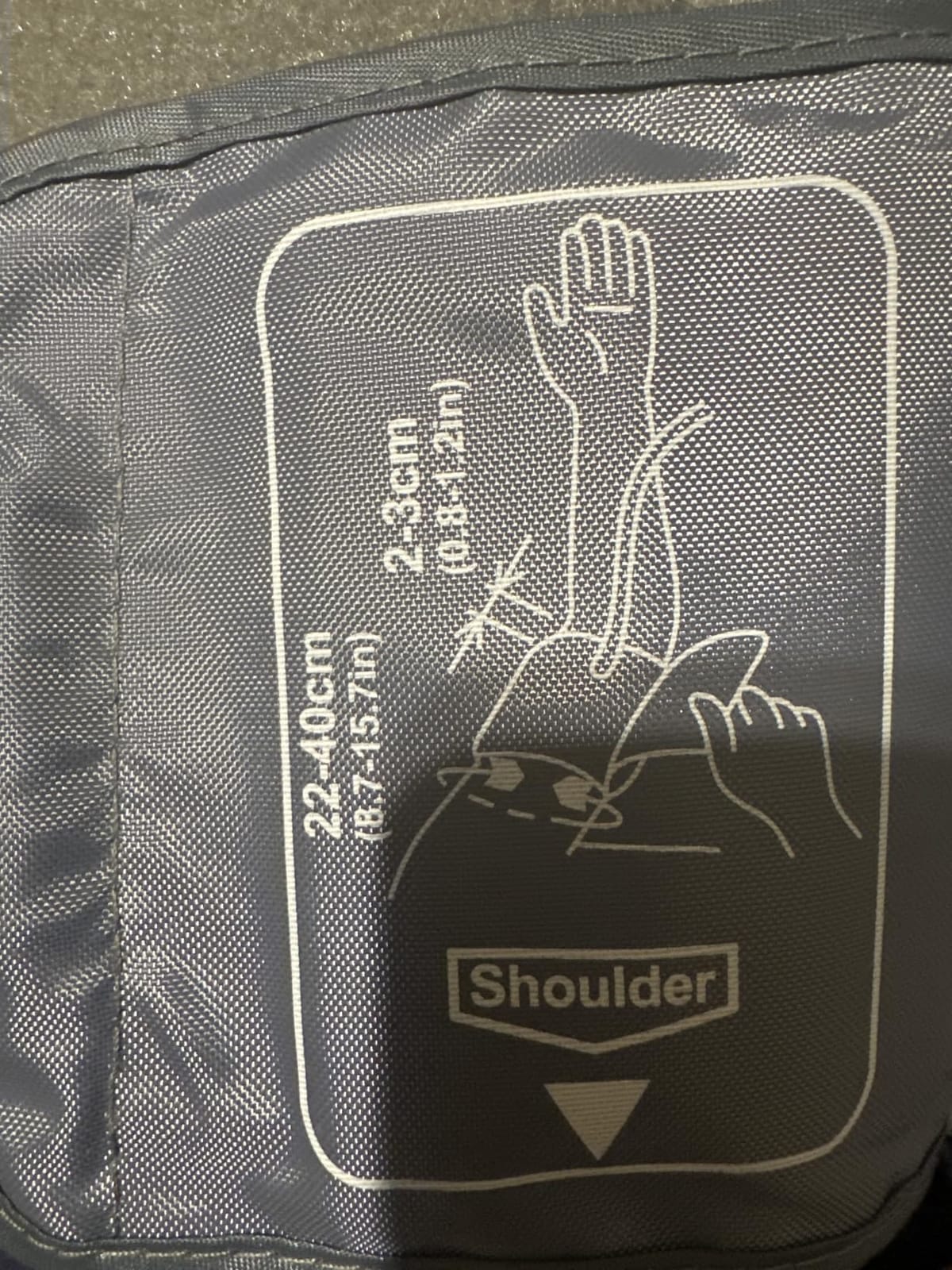
The backlit LED screen with large digits is readable without glasses, which is the feature most often praised. Memory is 120 readings for each of two users, 240 in total, and the build feels more substantial than the price suggests.
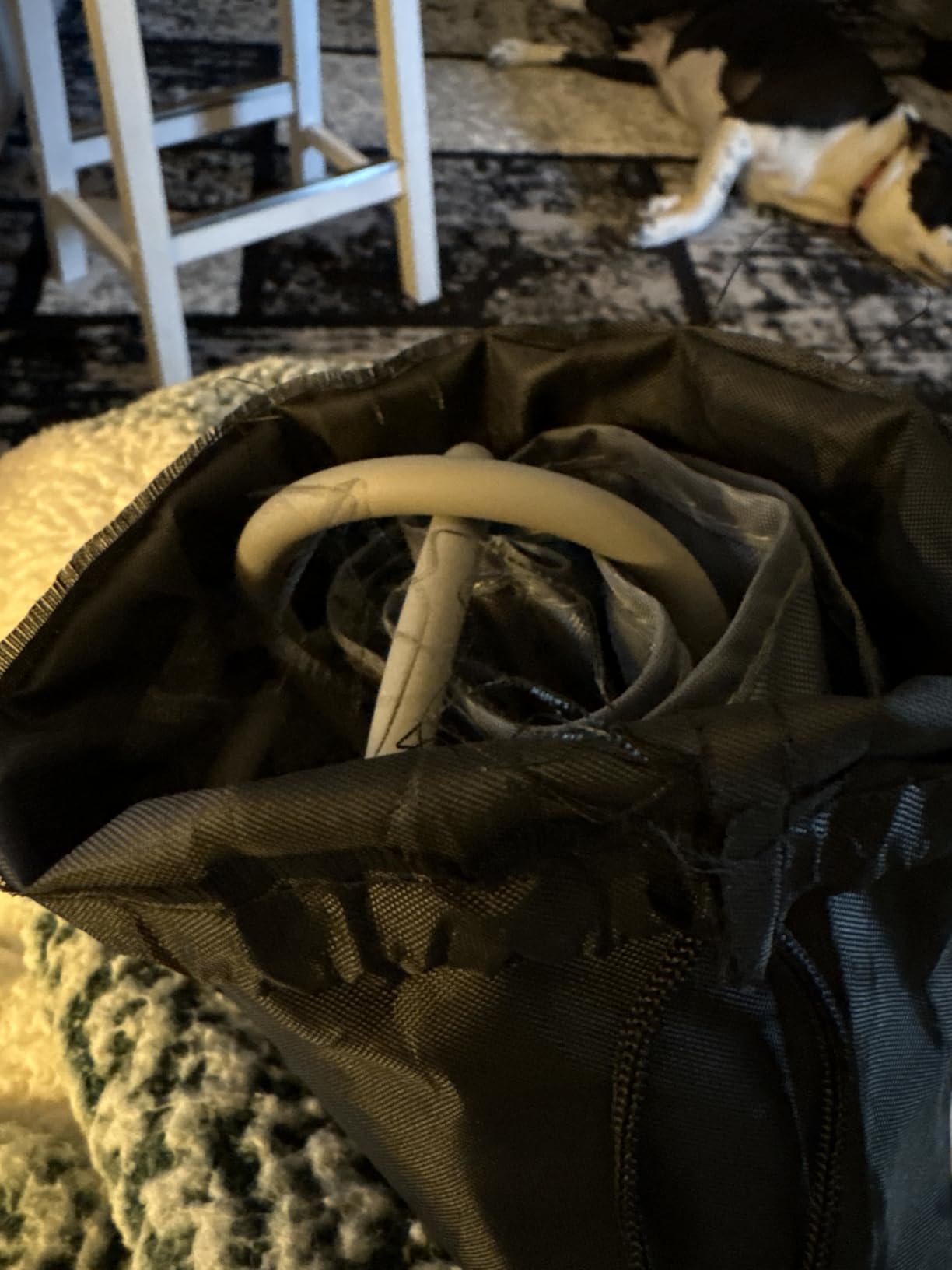
The data handling is the weak point. The date and time flash past too quickly to read, and powering from a power bank resets the clock to its default date, which quietly corrupts timestamps. Inflation is slow and loud at high numbers, and the cuff stops at 15.7 inches.
Plan around the clock reset
Set the date and time immediately after any power bank session, and keep a spare set of batteries so the unit holds its settings from one day to the next. Batteries also avoid the loud inflation in a quiet room.
Where portability beats screen size
No other upper arm model here is this small, and that changes what you can do with it. A monitor you will actually pack beats a better display left in a drawer, though the 15.7 inch cuff ceiling rules it out for larger arms.
7. ATUDER Backlight Monitor – Best for Two Users Who Want Averaging and Heart Rate
Blood Pressure Monitors for Home Use Upper Arm, Accurate Cuff 8.7”-15.7” Monitor with Large Backlight Display 2 Users 240 Sets Memory & HR Detection, Digital BP Machine with Carrying Case
240 records across two users with averaging
Large reverse backlight display
8.7-15.7 inch cuff with arm detection
Pros
- Readings matched a doctor's office in side-by-side checks
- Large reverse backlight with enlarged font
- Long battery life under daily use
- Cuff fit well on a smaller arm
- Three-reading average
- Carrying bag included
Cons
- Cuff must be tightened before starting or it errors
- Pump inflates slowly on some monitors
- Occasional error messages on first attempts
The ATUDER is specification-dense, and buyers confirm the accuracy behind the feature list, with multiple reviews reporting a match with a doctor’s office reading. It uses a FitAccu chip with algorithms trained by more than 1000 testers and measures pressure and heart rate together.
The display is why most people single it out. A large reverse backlight with an enlarged font is easy on the eyes in both a bright kitchen and a dim bedroom, and people who struggle with ordinary LCD digits often find reverse lettering clearer.
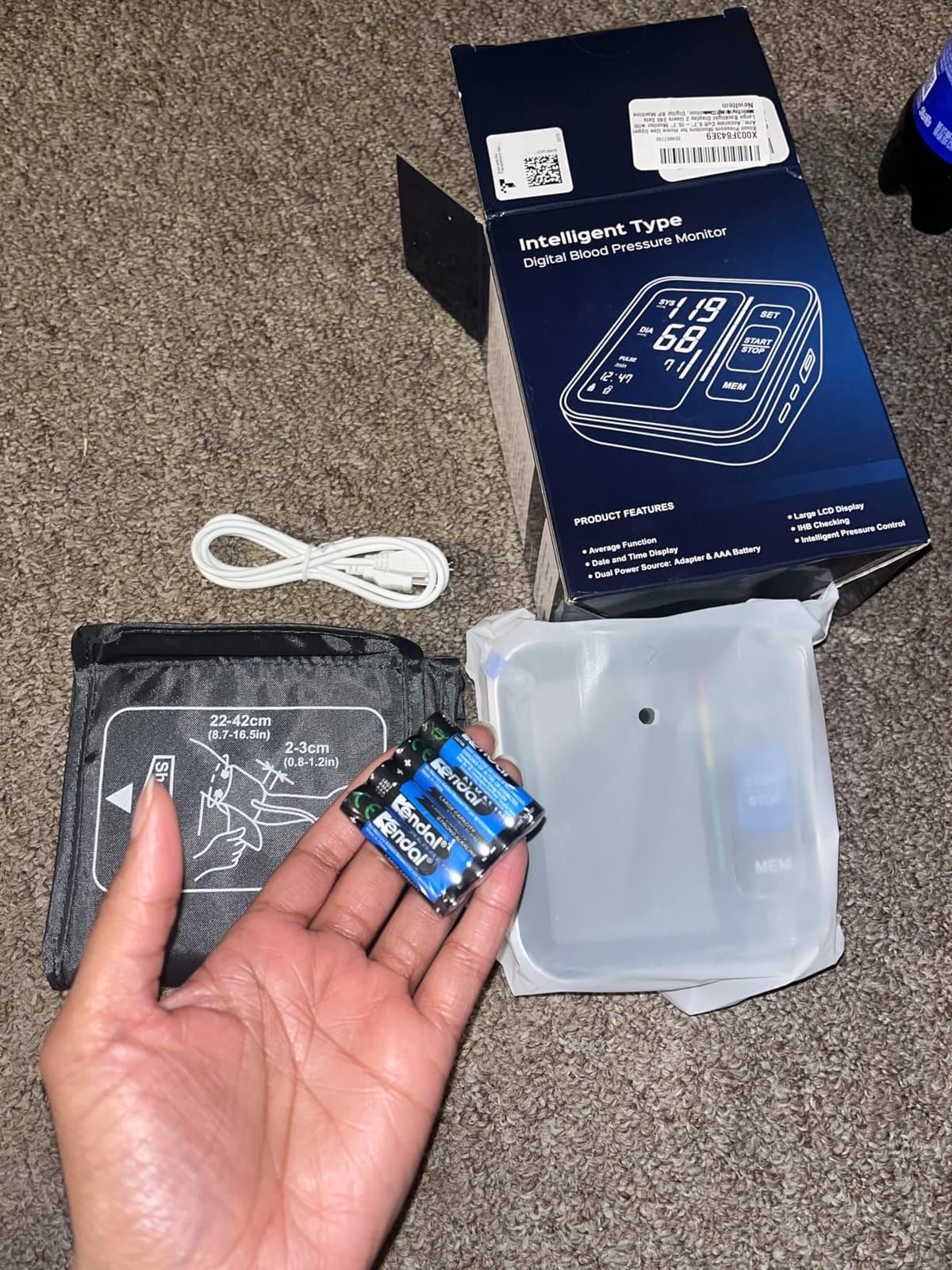
Memory holds 240 records across two users at 120 each, and the monitor automatically averages three consecutive readings. The cuff is adjustable from 8.7 to 15.7 inches with auto arm-detection error indicators.
That detection feature is also the main source of friction. The cuff must be snug before you start or the monitor errors out, the pump inflates slowly on some models, and a few owners hit error messages on early attempts. Long battery life is a genuine strength.
Why a three-reading average is worth having on
Talking, crossed legs or a full bladder can move a number by ten points or more, so the average of three readings is the standard workaround. Space them a minute apart, since back-to-back readings inherit the calming effect of sitting still.
Getting the cuff tight enough first time
The arm-detection error fires when the cuff is loose enough to lose track of the arm, which is the condition that produces unreliable readings anyway. Pull the Velcro snug, centre the artery marker and start again. Check the 15.7 inch ceiling against your arm.
8. Urion Upper Arm Monitor with Large Cuff – Best for Deep On-Device Logging
Blood Pressure Monitor Upper Arm with Large Cuff
Two users with 500 readings each
8.7 to 16.5 inch long upper arm cuff
About 30 second one-touch readings
Pros
- Fast one-touch operation with 30 second readings
- Very deep 2 x 500 set memory
- Readings compared favourably to a clinic device
- Works out of the box with simple setup
- Lightweight with a carry case
Cons
- Cuff is hard to secure on a 14 inch arm
- High pump pressure caused bruising on a smaller arm
- Some users report drifting high over time
The Urion’s selling point is memory depth: two users with 500 sets each, which at two readings a day is well over seven months per profile. It is a 3.94 inch cube weighing 10 ounces and comes with a carry case.
Otherwise it does the fundamentals well. A one-button start produces a reading in about 30 seconds, and three colour health-status lines sit beside the numbers so the result is legible at a glance. Buyers report readings that compared favourably with what their doctor uses.
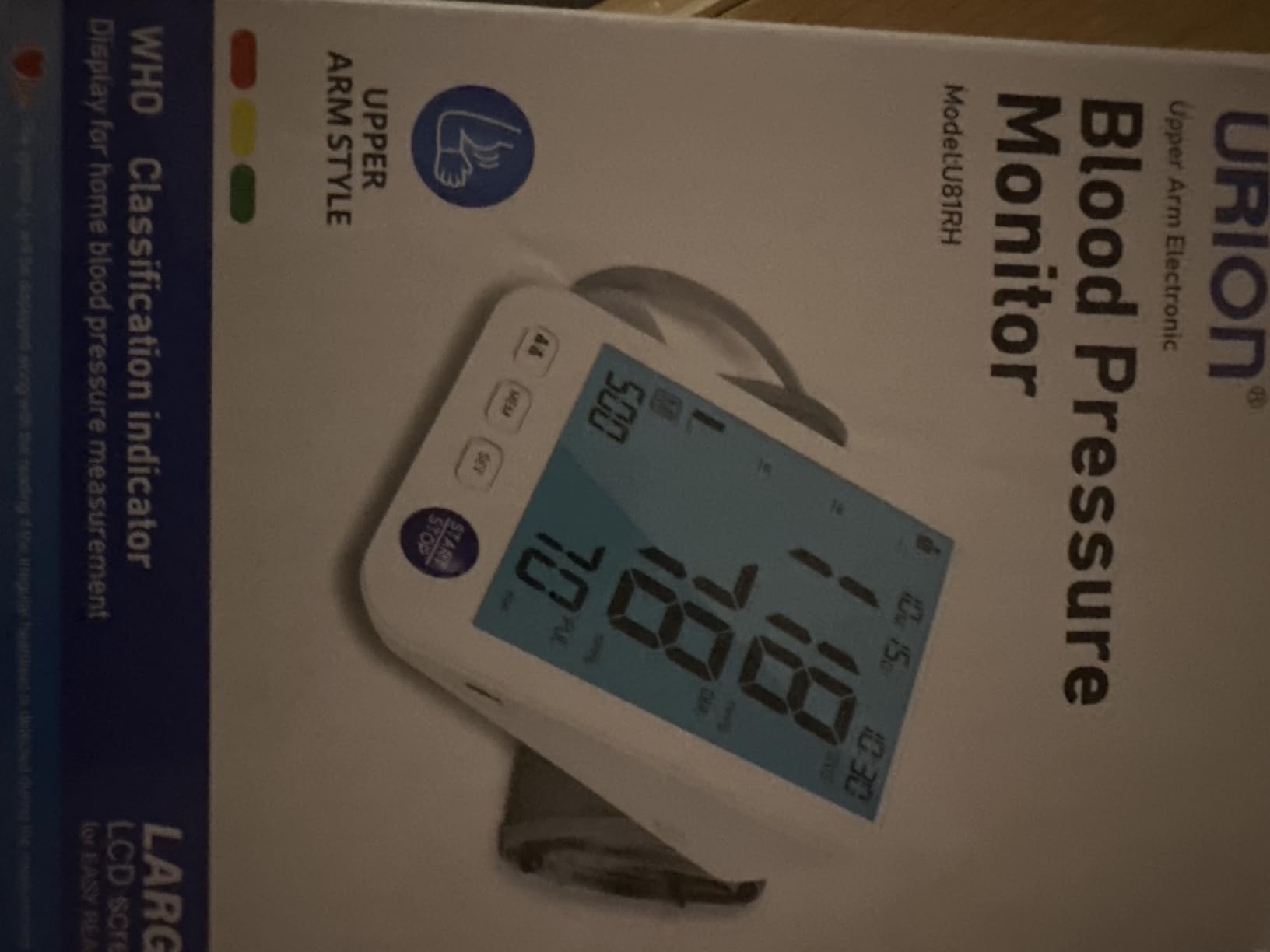
The long cuff is the reason to look closely before buying. It spans 8.7 to 16.5 inches, generous at both ends, and that generosity is the problem for smaller arms. One detailed review documents the pump inflating to 200 mmHg on a 14 inch arm, causing bruising and tingling.
Other owners with smaller arms report difficulty securing the cuff at all, and a minority describe the monitor drifting toward higher readings over time. If your arm is near the small end, choose a model with a lower minimum instead.
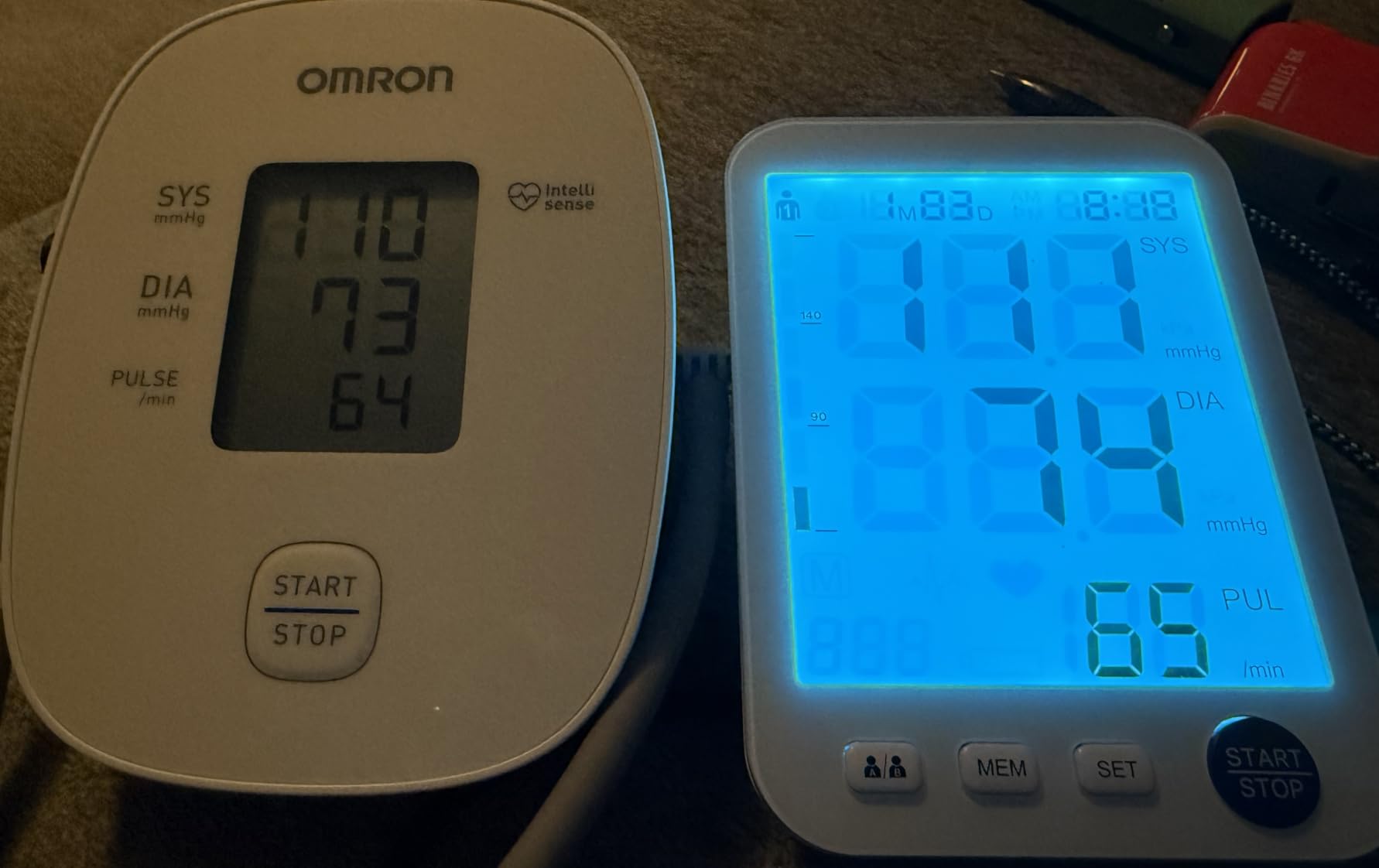
Measure your arm twice before ordering
Relax your arm completely and measure the midpoint of the bare upper arm, then measure again with the arm slightly flexed. If the flexed number is close to 9 inches, this cuff is too long for you and can over-inflate rather than read low.
What 500 sets per user makes possible
Deep memory changes what you can learn. Monitors with 30 or 60 slots silently overwrite history, so by the time you want to compare two seasons apart the earlier data is gone.
9. yuwell Large Cuff Monitor – Best for Larger Arms and Wide Cuff Coverage
yuwell Blood Pressure Monitor, Large Upper Arm Blood Pressure Cuff, Digital Blood Pressure Machine for Home Use, Large Display, Stores 99 Readings, Voice Broadcasting with Power Adapter and Batteries
Soft 8.7 to 17.7 inch cuff with metal bar
ESH accuracy standard, voice broadcast
99 readings with a 3-reading average
Pros
- ESH standard accuracy matching office readings
- Soft wide cuff with a metal bar that aids self-application
- Covers a very wide range of body sizes
- Voice broadcast plus hypertension indicator
- Power adapter and storage bag included
Cons
- Voice broadcast is hard to disable
- Cuff is very long and wraps more than once on smaller arms
- Short cuff tube forces the unit to rest in the lap
The yuwell solves the problem that ends most monitors for larger arms. Its soft cuff spans 8.7 to 17.7 inches, the widest range in this roundup, and it meets the ESH accuracy standard with an algorithm trained on clinical data from hypertension patients.
The cuff design is the standout. A metal support bar lets you wrap it one-handed and hold it in place while it inflates, turning a two-person job into a one-person job. Buyers highlight how much easier that makes self-application on a big arm.
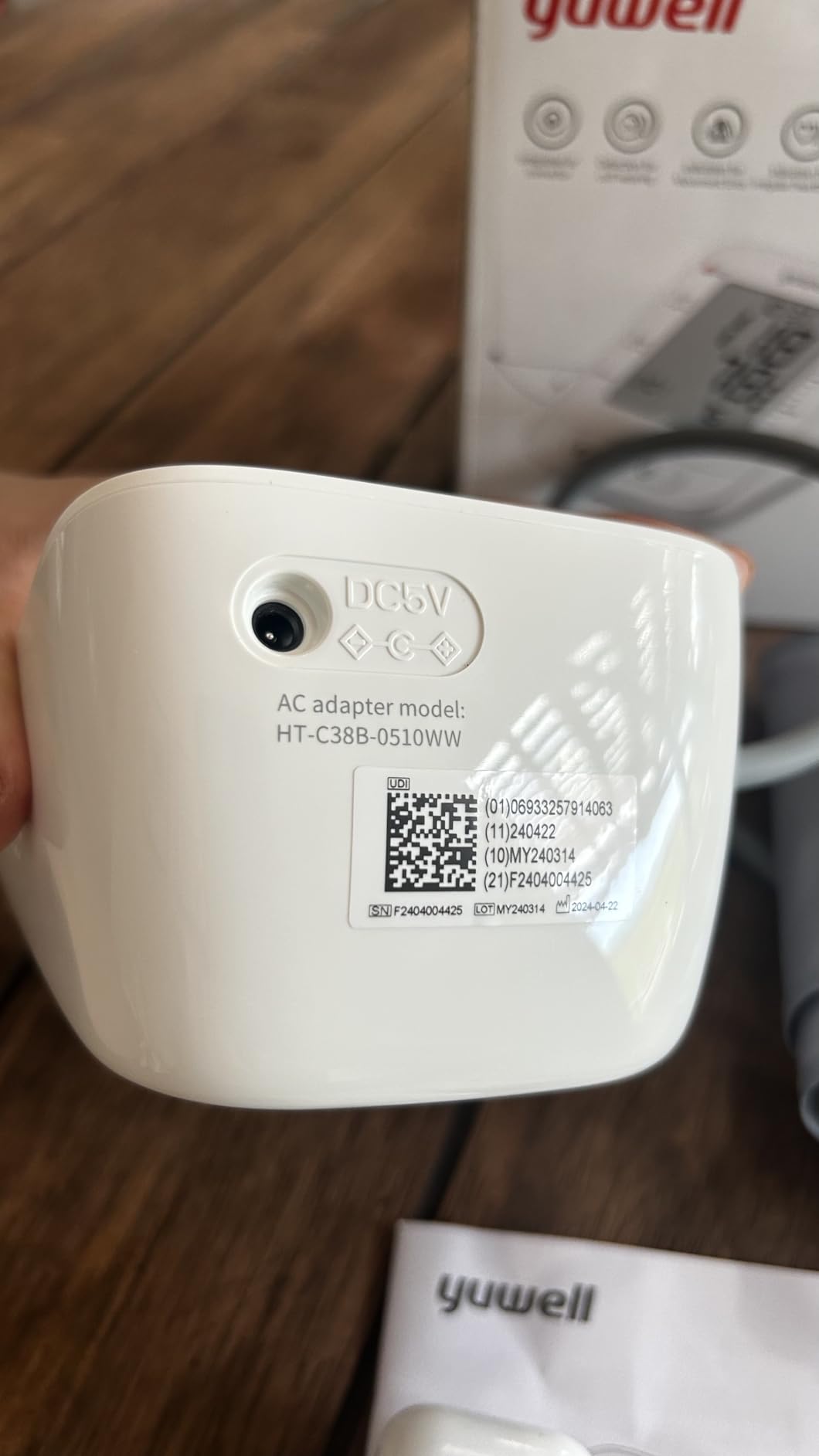
Useful extras include a self-test function, mis-operation reminder, movement detection, a posture reminder, an irregular heartbeat alert, and 99 stored readings that can average the last three measurements. A power adapter and storage bag are included.
Two design complaints recur. The voice broadcast is difficult to switch off, and the cuff is long enough to wrap more than once on smaller arms. Only large and extra-large cuff sizes are offered, and the short connecting tube means the monitor rests in your lap.
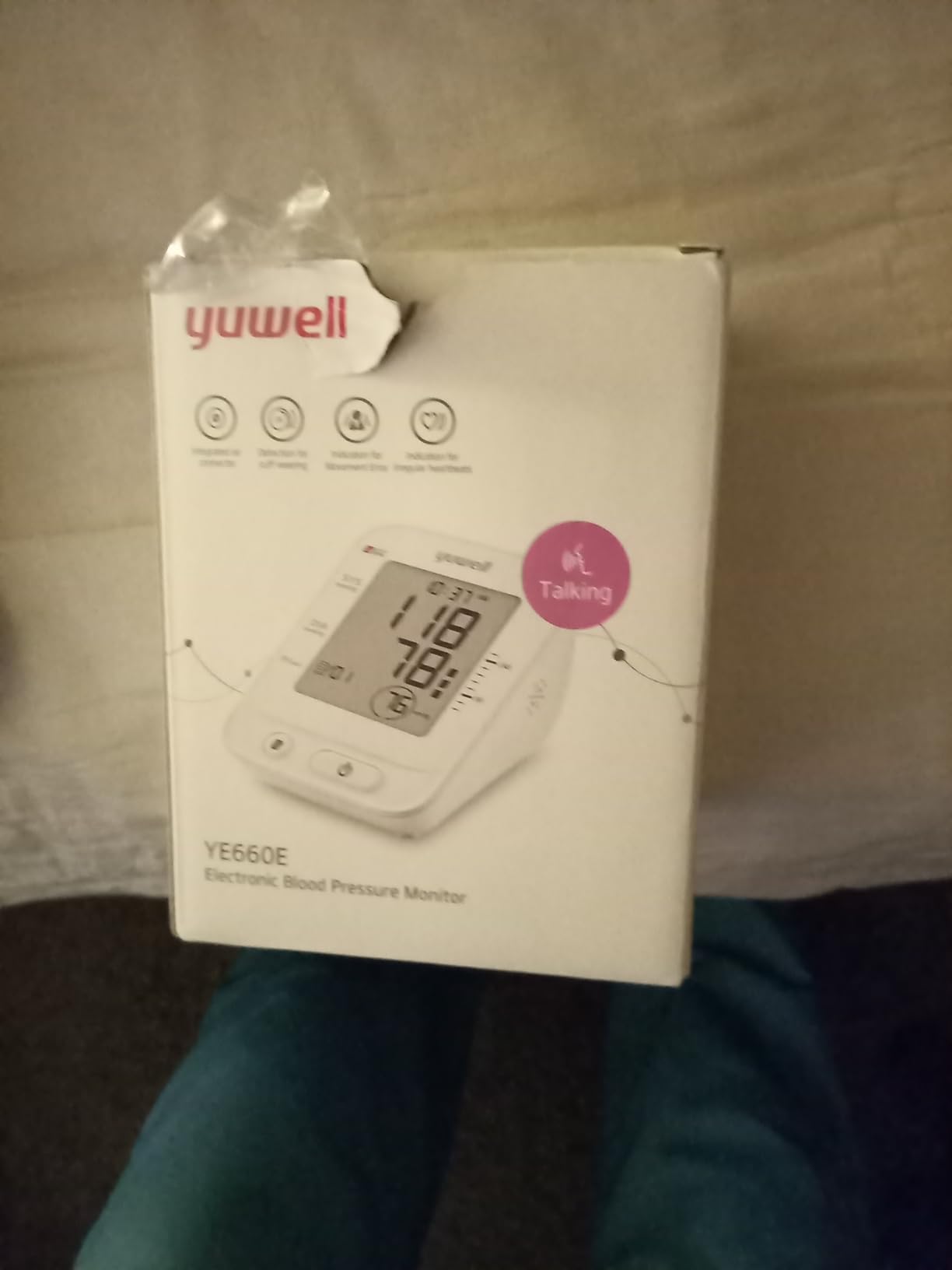
When an arm is too big for a standard cuff
Most consumer monitors stop around 16.5 inches of arm circumference, and a cuff that is too small for a large arm does not merely feel tight, it reads falsely high. Above that, you are looking for a longer cuff rather than a better monitor.
Dealing with a voice feature you cannot fully mute
If you share a flat or a bedroom, an announcement of your blood pressure first thing is not a small annoyance. Test it in the room where the monitor will live before you commit, because some people rely on the readout entirely.
10. OMRON Evolv Wireless Monitor – Best for App Syncing Without a Hose
OMRON Evolv Wireless Blood Pressure Monitor & Upper Arm Blood Pressure Cuff
Cordless one-piece body with attached cuff
9-17 inch ComFit cuff
Bluetooth to Apple Health and Google Fit
Pros
- Fully cordless with no hose to snag or misroute
- Bluetooth syncs to the app
- Apple Health and Google Fit
- App stores unlimited readings and emails reports
- Cuff fits muscular arms
- LED still shows readings without the app
Cons
- Frequently throws a Code 4 motion error
- Unclear cuff placement markings
- Fixed cuff covers one arm size range
- Small dim digits and flush buttons
The Evolv comes from the brand most often named first when people ask which blood pressure monitor is the most reliable, and its defining feature is that there is no hose at all. The body measures 1 by 3.5 by 4.63 inches and weighs 8 ounces.
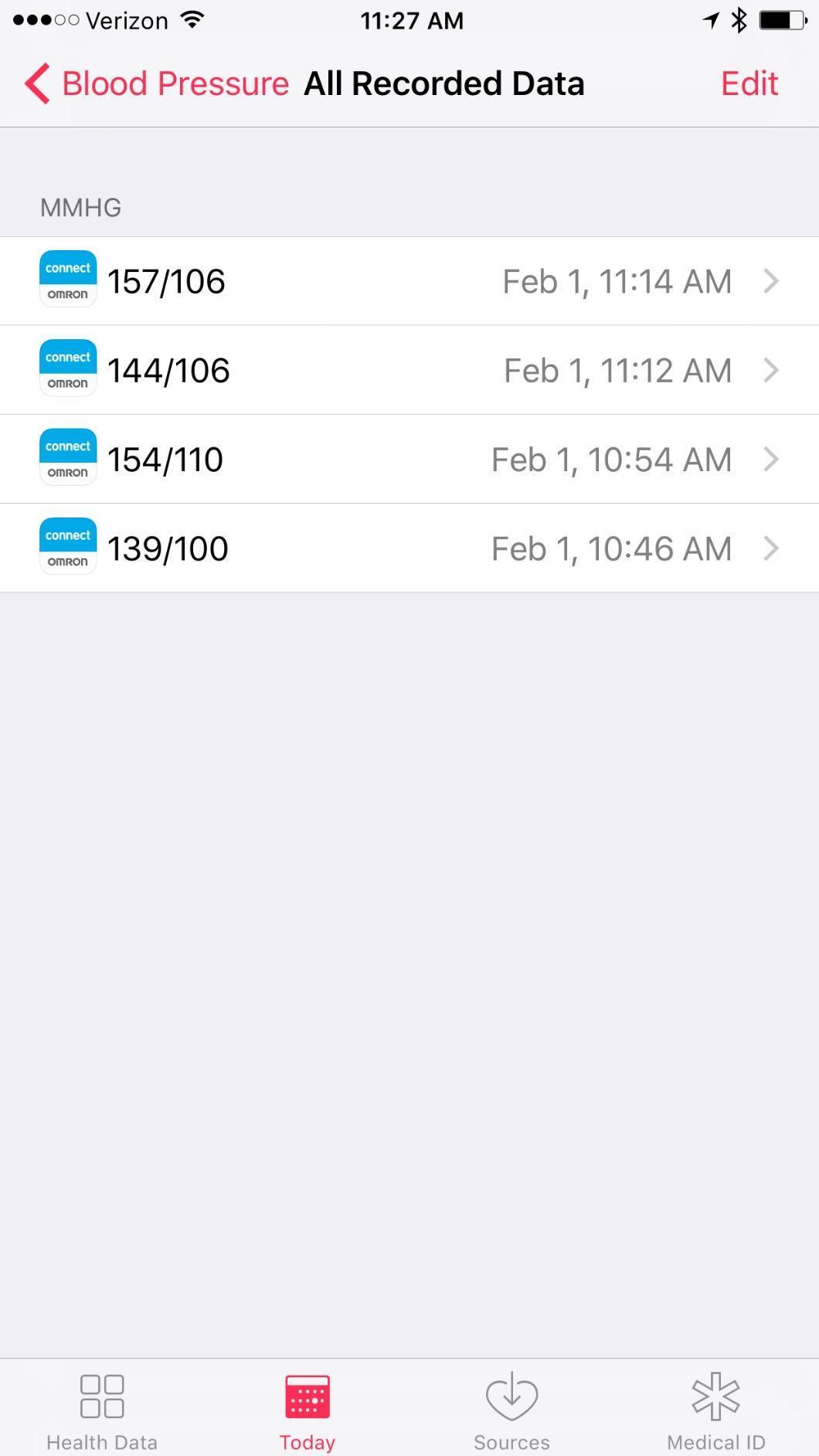
That design removes the most common user error in this category, which is routing a hose awkwardly and getting a bad wrap. Bluetooth runs to the OMRON connect app, which pushes readings into Apple Health and Google Fit and can email a report to a doctor.
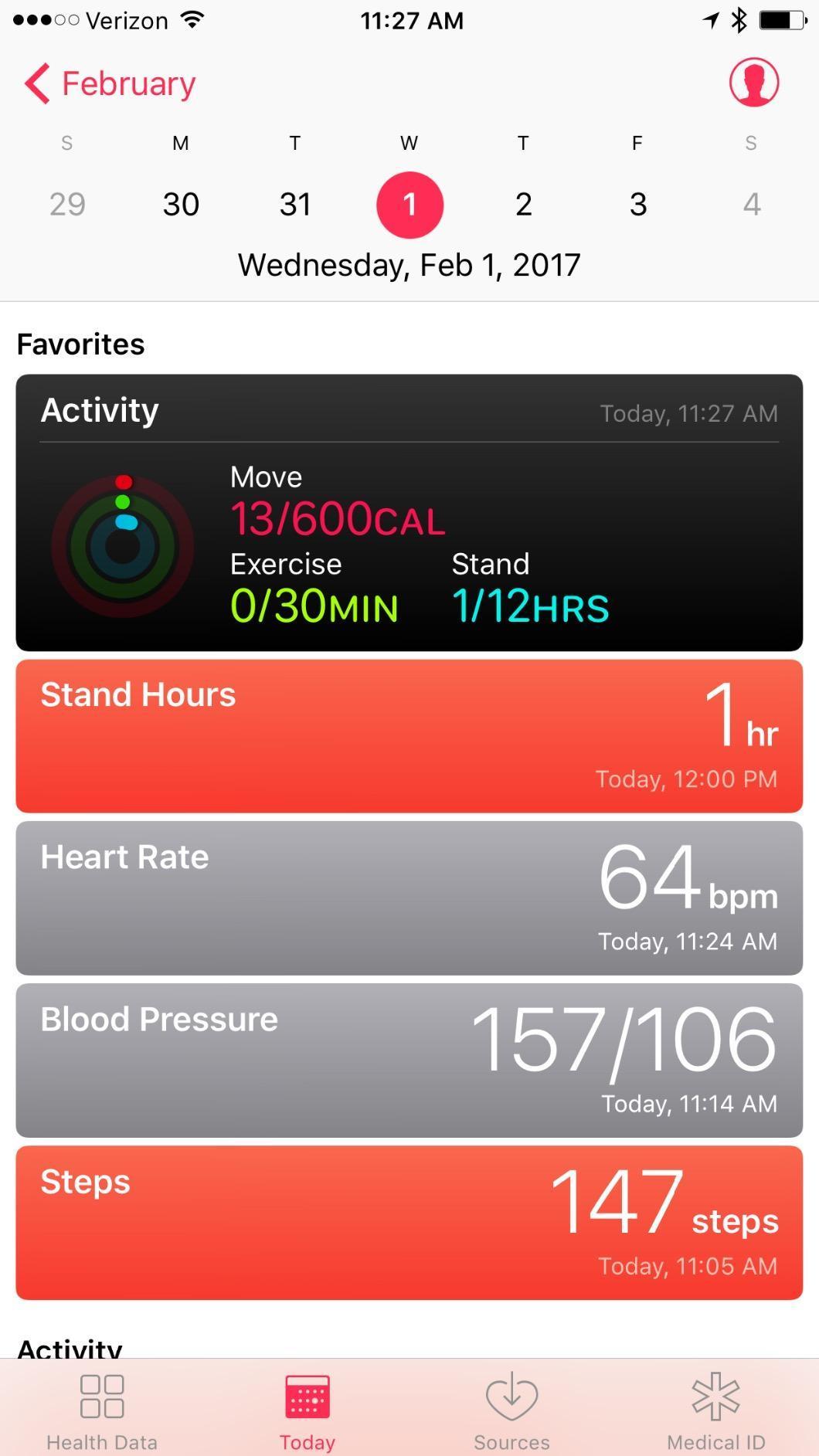
Advanced Accuracy Technology with up to 100 stored readings sits underneath, with irregular heart beat detection during standard measurements. The attached ComFit cuff fits 9 to 17 inch arms, and buyers praise it for muscular arms where many cuffs fail. The LED still shows your numbers without the app.
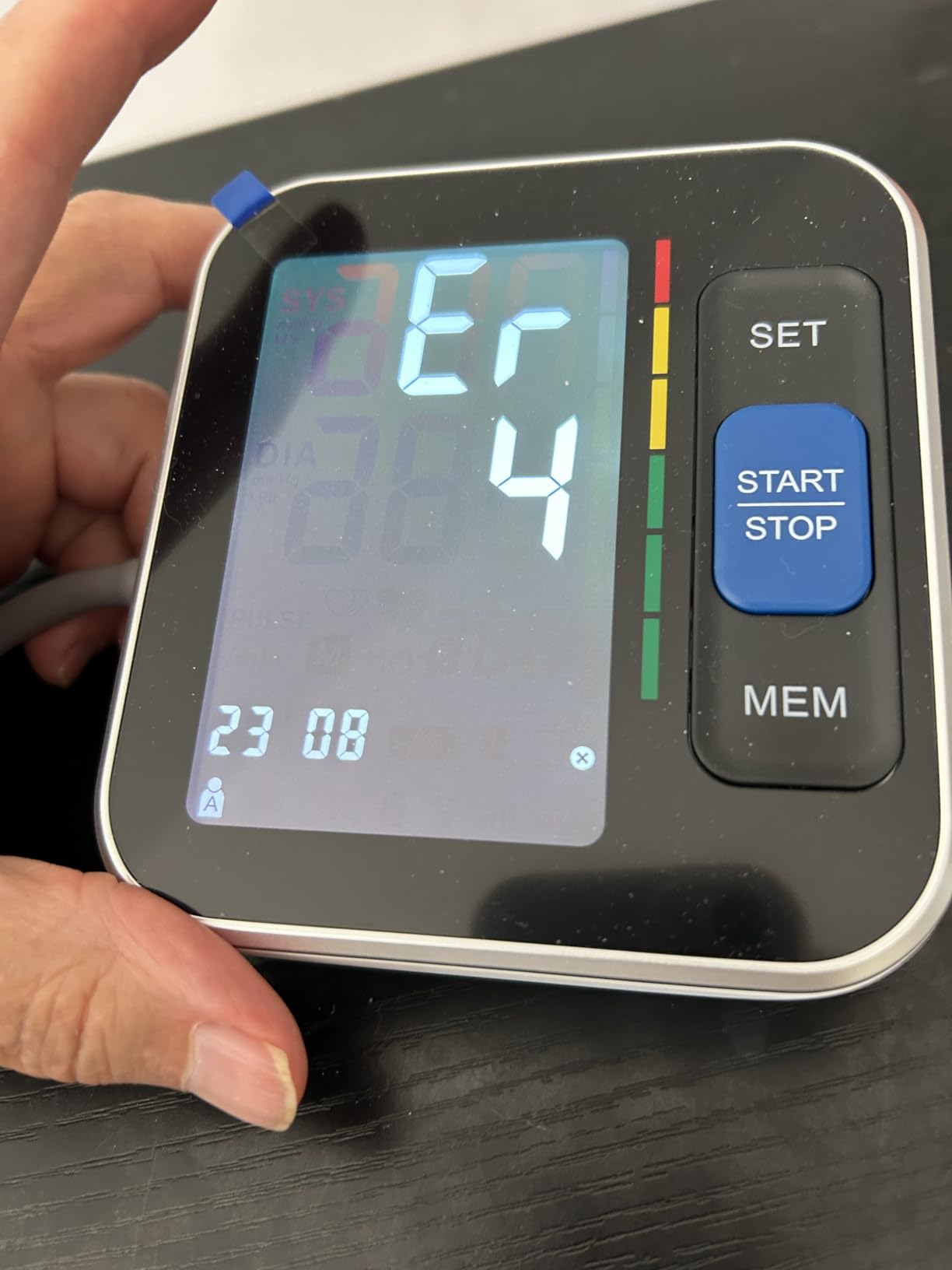
One complaint recurs loudly. The monitor frequently throws a Code 4 motion error because the unit itself vibrates during inflation and reads that as movement. Cuff placement markings are also unclear and the digits are small and dim with flush buttons.
Why a hose-free design reduces bad readings
Most measurement errors trace back to cuff placement, and placement is partly a hose problem. When the tube exits the cuff at an angle it pulls the wrap sideways, so the artery marker ends up off-centre even though the cuff looks straight.
What to do about the Code 4 error
Rest your forearm on a table so the monitor is not held in mid-air, keep the cuff at heart level, and start again without shifting. If it repeats, check that the cuff is genuinely snug before assuming the monitor is faulty.
11. Dario Gen-2 Smart Monitor – Best for a Large On-Device Log with App Backup
Dario Gen-2 Blood Pressure Monitor for Home Use | Smart App & Carry Case
400 on-device records with date and time
Dual user mode and Bluetooth app
FDA-cleared, FSA and HSA eligible
Pros
- Fast accurate readings with a large bright screen
- Colour-coded indicator readable at a glance
- Comfortable cuff that fits securely
- 400 records stored on the device
- Simple single-button operation
Cons
- App forces health questions with no skip option
- Account setup needs a mobile phone number
- Readings cannot be deleted individually
- Cuff is single size
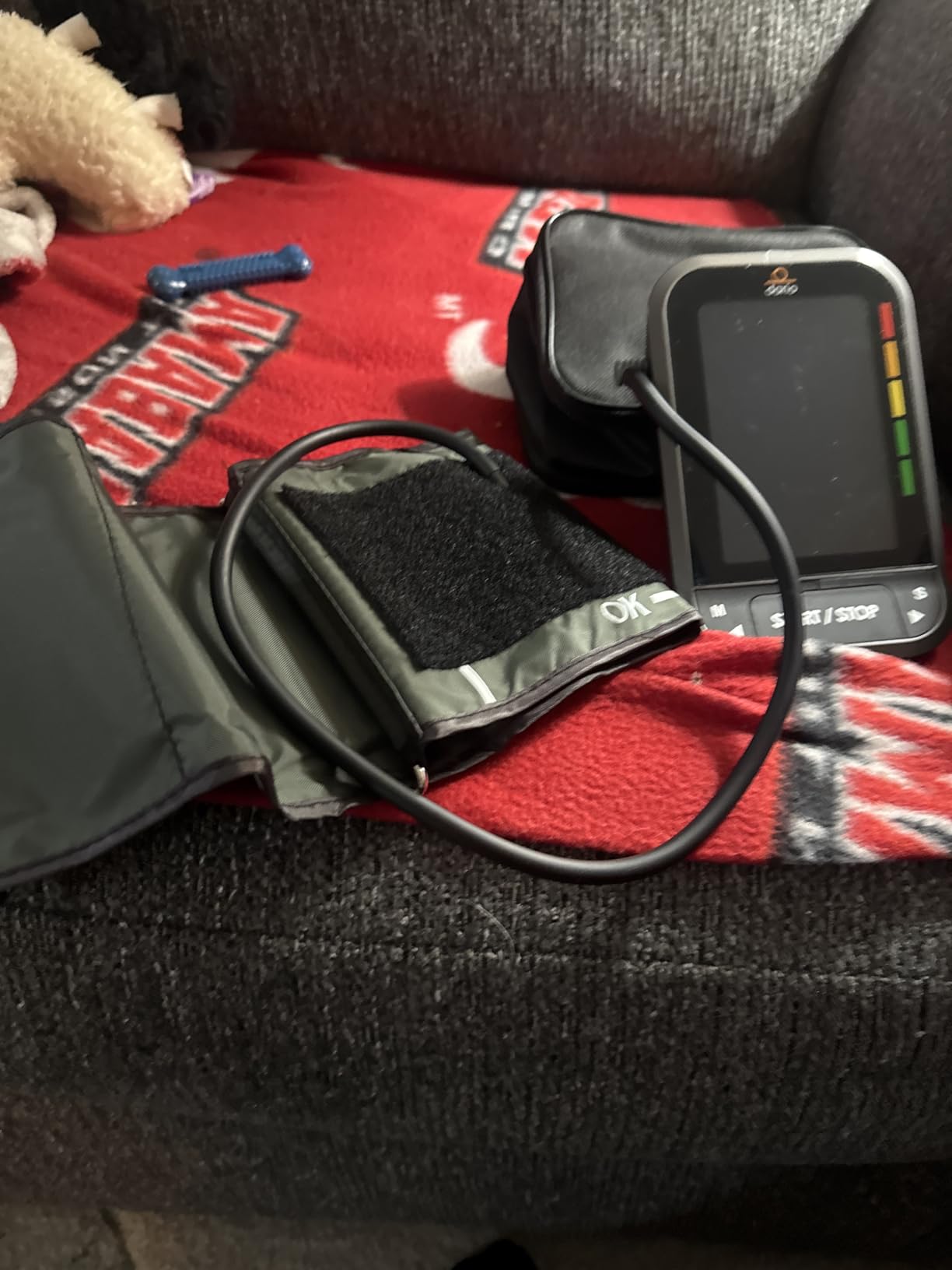
The Dario does not make you choose between deep local storage and app backup. Up to 400 readings sit on the device with a date and time stamp, and Bluetooth then copies everything to the Dario app for storage and sharing. It measures 7.63 by 5.13 by 3.13 inches at 9.95 ounces.
Owners describe fast, accurate results on a large, bright screen, with a colour-coded indicator that turns the number into an obvious verdict. The cuff fits securely, dual user mode works on the device, and irregular heartbeat detection is included.

The app is where the criticism lives. Setup forces you through personal health and lifestyle questions with no option to skip, account creation requires a mobile phone number for a verification code, and individual readings cannot be deleted from the app at all.
Deleting your account requires contacting support. Smaller notes: no AC adapter is included, only four AAA batteries, and a few users find the readings less accurate than other monitors they own. A carry bag is in the box.
Read the data demands before you connect
The 400 on-device records mean you do not have to use the app at all. Two readings a day fills around seven months of local history, so treat the app as optional backup and keep your own written log alongside it.
Who this monitor suits
The fit is a single standard cuff, so it is not the choice for an unusually large or small arm. For an average arm and a household where two people are both tracking, the on-device log keeps it usable for everyone.
12. OMRON Gold Wireless Wrist Monitor – Best Wrist Option When an Upper Arm Cuff Will Not Work
OMRON Gold Wireless Wrist Blood Pressure Monitor for Home Use
Wrist monitor, 5.3-8.5 inch attached cuff
Two users with 200 readings each
High morning average indicator, Bluetooth app
Pros
- No need to roll up a sleeve
- which suits larger arms
- Dual-user memory of 200 readings each
- High morning average indicator flags morning spikes
- Bluetooth logging to app
- Apple Health and Google Fit
- Only 3.17 ounces and a storage case included
Cons
- Wrist readings are position-sensitive and less trusted by clinicians
- Attached cuff limited to 5.3-8.5 inch wrists
- Two AAA batteries give less runtime
- Highest one-star share in the roundup
We include one wrist monitor on purpose, so the trade-off is visible rather than hidden. This one weighs 3.17 ounces, measures 3.58 by 0.52 by 2.49 inches, and needs no sleeve at all, which makes it the practical answer when an upper arm cuff is not possible.
On paper the software is strong. It stores up to 200 readings for each of two users, detects an irregular heartbeat during measurement, and adds a high morning average indicator that surfaces morning spikes, which are linked to higher cardiovascular risk.
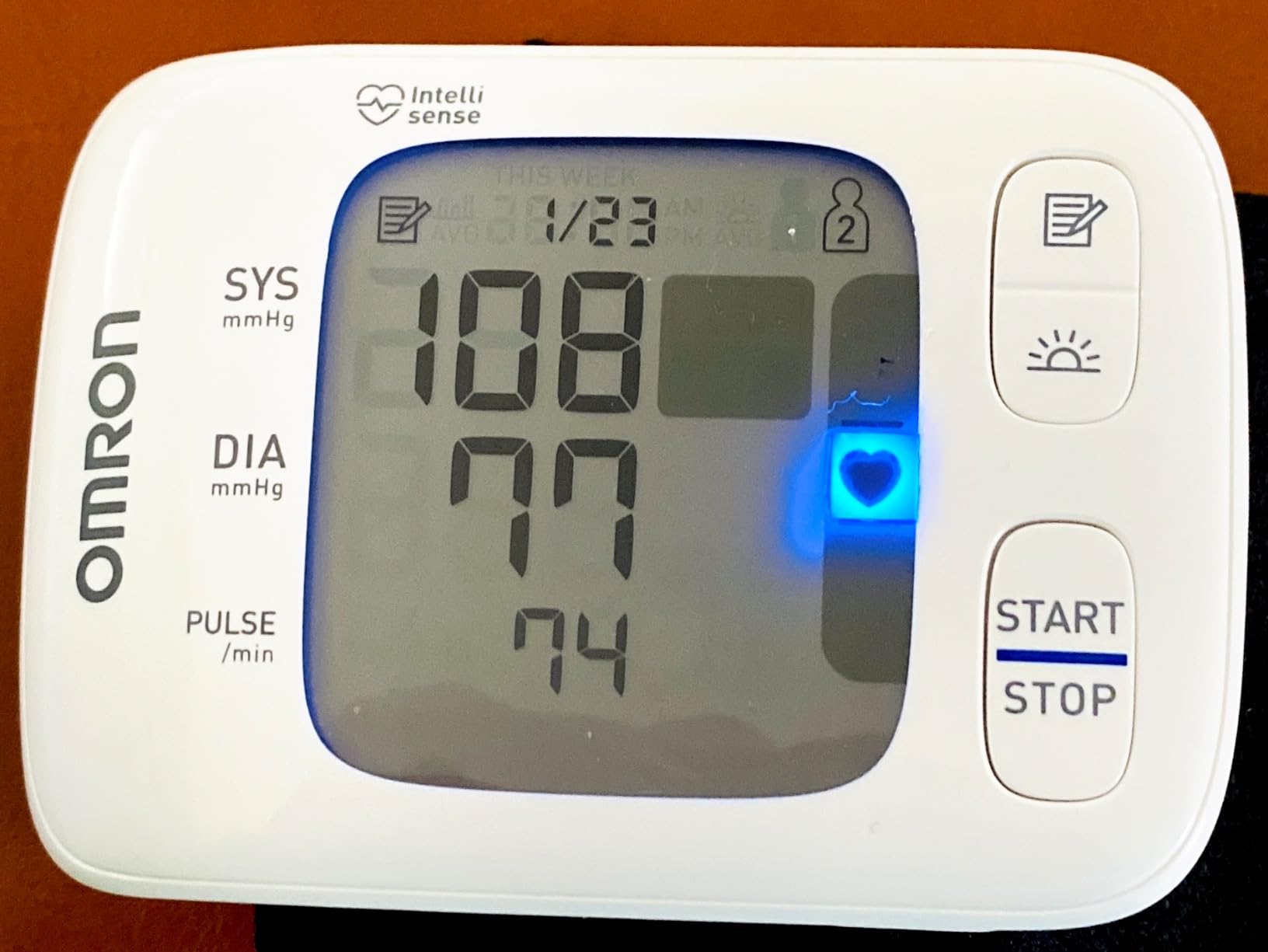
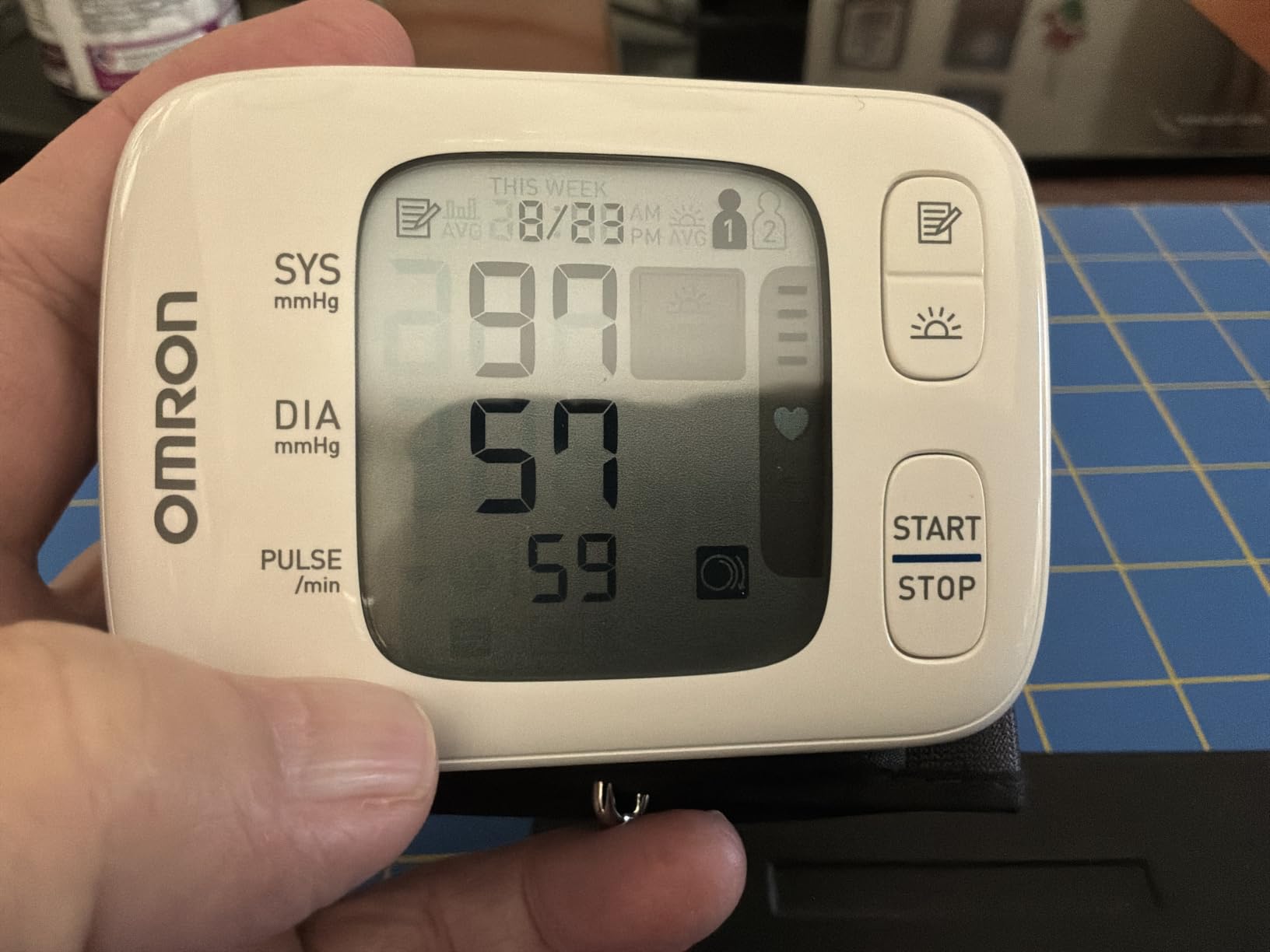
What holds it back is measurement physics rather than build quality. Wrist monitors must hold your arm at exactly heart level while they inflate, and any deviation shifts the reading, so clinicians treat wrist numbers as a trend tool rather than a diagnostic measurement.
The ratings reflect that split, with 66 percent five-star and 11 percent one-star reviews, the widest spread of any pick here. The attached cuff is limited to 5.3 to 8.5 inch wrists, two AAA batteries give less runtime than four-battery models, and the cuff cannot be swapped.
Get the wrist position right or the number is meaningless
Sit with your back supported and feet flat, rest your forearm on a table so the wrist is level with your heart, palm up, with the cuff an inch above the bony bump inside the wrist. Prop your chin on your other hand if holding still is difficult.
When a wrist monitor is the right call
Choose it if an upper arm cuff is physically impossible: very large arms, a recent injury, a restricted arm after a hospital stay, or a caregiver who cannot wrap one. If an upper arm monitor fits you, it is more accurate and none of the app features change that.
How to Choose a Blood Pressure Monitor That Fits You
Almost every wrong purchase in this category comes down to four things: monitor type, cuff size, memory and users, and whether you need connectivity. Get those right and the brand matters far less than the packaging suggests.
Upper arm, almost always. Upper arm monitors measure at the brachial artery, where pressure is highest and most reproducible, and that is the format independent validation programs assess. Wrist monitors work but are position-sensitive, finger monitors are not recommended for home use, and manual mercury sphygmomanometers have no place in a modern home.
Cuff size decides whether the number means anything. Wrap a soft tape around your bare upper arm at the midpoint, relaxed and then slightly flexed. A cuff that is too small reads falsely high, and one that is far too wide inflates harder than it should. Most monitors here cover 8.7 to 15.7 or 16.5 inches, which is most adult arms, but check if you are at either extreme.
Memory and user profiles. Any monitor holds a couple of readings; what matters is whether it holds a month of them and can keep two people apart. Look for at least 60 slots per user, and dual-user mode if anyone else in the house will use it.
Connectivity, only if it earns its place. Bluetooth logging is useful when your clinician asks for a log, because several monitors here can email a report or push readings into Apple Health. It is a liability when the app demands an account, asks personal health questions with no skip option, or will not let you delete a reading.
Validation and clearances. Look for independent validation against the AAMI/DIN SP10 standard or ISO 81060-2, and for a genuine FDA 510(k) clearance rather than a listing that only means the manufacturer registered the device. Stated ESH standard compliance is a reasonable signal too, since ESH protocols are recognised internationally. Our roundup of the best ultrawide monitors tested and reviewed covers larger screens if display size is part of your decision.
How to Take an Accurate Reading at Home
Even a well-chosen monitor gives a misleading number if you use it badly, and the gap between a good and a bad reading is routinely larger than the gap between monitors in this roundup.
1. Sit quietly for five minutes first, with no caffeine, exercise or smoking in the previous 30 minutes, and empty your bladder before you start.
2. Sit with your back supported and both feet flat on the floor. Do not cross your legs or talk during the reading, since both move the number.
3. Rest your bare arm on a table so the cuff sits level with your heart. A rolled-up sleeve under the cuff adds thickness and distorts the reading.
4. Wrap the cuff on bare skin with the artery marker over the inside of the arm, snug enough to slip one finger underneath, then start.
5. Keep still and quiet through inflation and deflation. On a wrist monitor, hold the arm at heart level throughout, which is the hardest part of that format.
6. Take two readings a minute apart and record both, or use the automatic three-reading average several monitors here offer. Write down the average rather than the first number, which is usually the most reactive.
7. Measure at the same times each day, morning before breakfast and medication and again in the evening, and average a week before drawing conclusions.
If your home numbers consistently disagree with an office reading, do not assume the monitor is broken. Check cuff size and placement first, then bring the monitor to an appointment and compare it against a clinic device on the same arm. A persistent gap of more than about 10 points after that is worth raising with your clinician.
Frequently Asked Questions
What is the most accurate BP monitor for home use?
Among the 12 monitors we reviewed, the Paramed model drew the most consistent reports of matching a doctor’s office device in side-by-side testing, while the iHealth Track offers the widest useful feature set. The most accurate monitor for you is the one whose cuff genuinely fits your arm, because a cuff that is too small reads high no matter how good the electronics are. Measure your arm circumference, then confirm the reading against a device you trust within the first week.
Which brand of blood pressure monitor is the most reliable?
Reliability is easier to judge from independent validation and long-term consistency than from brand reputation. Look for a monitor validated against the AAMI/DIN SP10 standard or ISO 81060-2, or one stating ESH standard compliance, and favour a model with thousands of reviews spanning several years. The OMRON Evolv is the pick here from the most frequently recommended brand, and the Greater Goods model has been recommended repeatedly for accuracy over a long period.
Which is the best blood pressure monitor on the market?
The iHealth Track Smart Upper Arm Monitor is our overall pick for 2026, because it combines a wide 8.7 to 16.5 inch cuff, a large colour-coded backlit display, 99 readings stored on the device and unlimited history in a free app. The Alcedo is the better value if you want a spoken readout, and the Paramed is the one to consider if matching clinic readings is your top priority.
Which brand of blood pressure monitor is considered the best?
There is no single winning brand, because cuff fit matters more than the name on the case. Across the monitors we looked at, OMRON is the most frequently recommended name in buyer discussions, iHealth leads on display and app logging, and clinically validated budget models are frequently called out as the value choice. Pick the brand whose cuff range covers your arm circumference and whose validation documentation you can find.
Should I buy an upper arm or wrist blood pressure monitor?
Buy an upper arm monitor unless an upper arm cuff is physically impossible for you. Upper arm models are more accurate and far more widely trusted by clinicians, while wrist monitors depend on holding the arm exactly at heart level and shift noticeably when you do not. A wrist monitor makes sense for very large arms, an injured arm, or a caregiver who cannot wrap an upper arm cuff, and is best used for tracking trends rather than single absolute readings.
How do I know my blood pressure monitor is accurate?
Three checks. First, look for independent validation against AAMI/DIN SP10 or ISO 81060-2, or ESH standard compliance, plus a real FDA 510(k) clearance rather than simple registration. Second, measure your arm circumference and confirm the cuff range covers it. Third, in your first week take a reading with the new monitor and repeat it with a device you already trust within fifteen minutes, twice on two different days. Agreement within about five points each time means the monitor is working for you.
Our Final Verdict on the Best Blood Pressure Monitors in 2026
The iHealth Track Smart Upper Arm Monitor takes the top spot among these best blood pressure monitors because it solves the three things that decide whether a home monitor gets used at all: a cuff covering a genuinely wide range of arms, a display you can read at a glance, and a log that goes further than the box it came in.
If the app is a problem for you, the Alcedo gives you a spoken readout and two-user memory with no account at all, and the Paramed is the pick if matching an office device is what convinces you. Measure your arm first, sit quietly for five minutes, and take two readings a minute apart, because a week of consistent home numbers is the most useful thing you can carry into your next appointment.
Medical note: This article is general information, not medical advice. Home blood pressure monitors cannot diagnose hypertension, heart rhythm problems or any other condition, and you should not start, stop or change medication based on a consumer device reading. If your readings are consistently high, if an irregular heartbeat alert appears repeatedly, or if you feel unwell, speak to a qualified clinician. Seek urgent care for chest pain, severe headache, shortness of breath or any other acute symptom.