
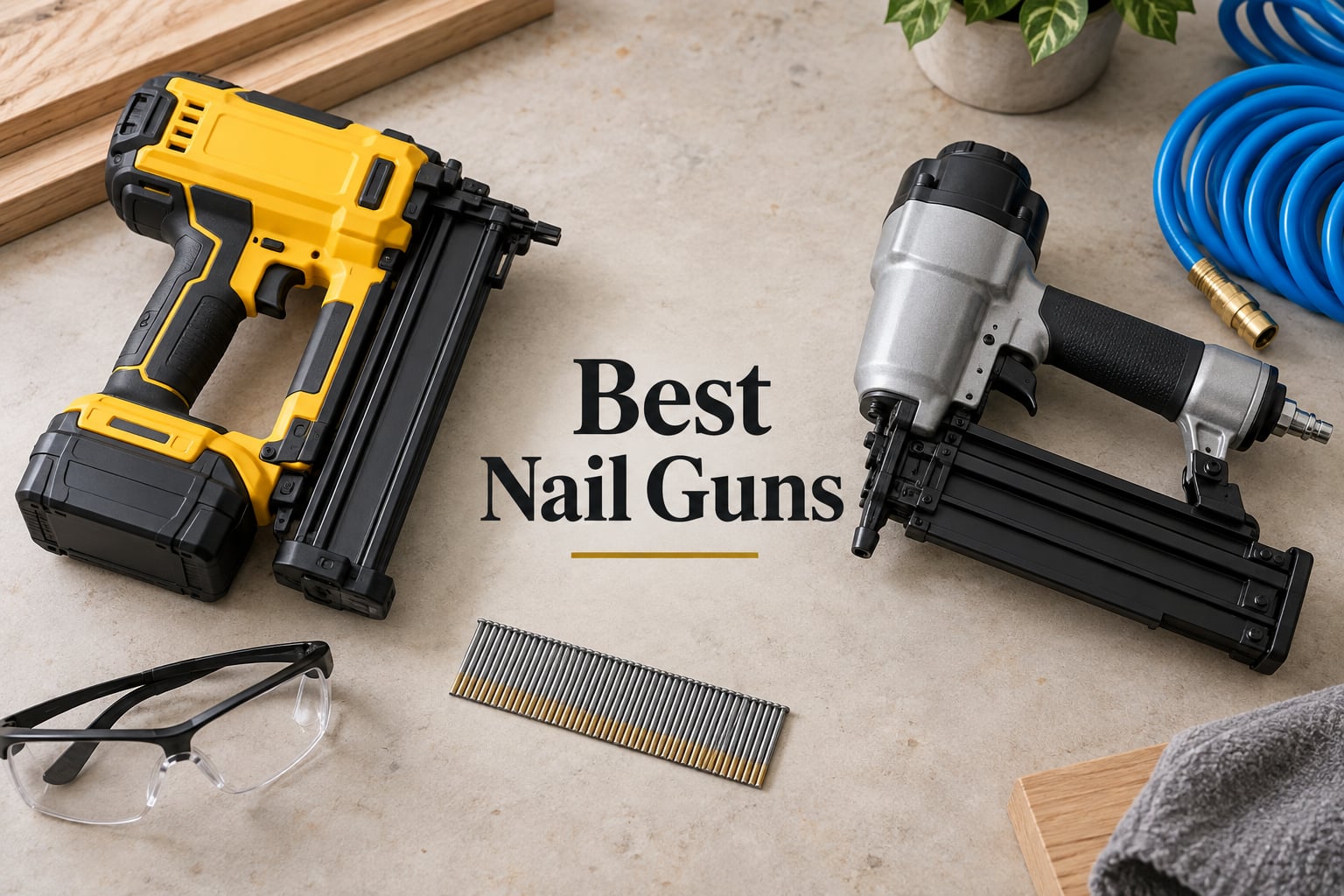
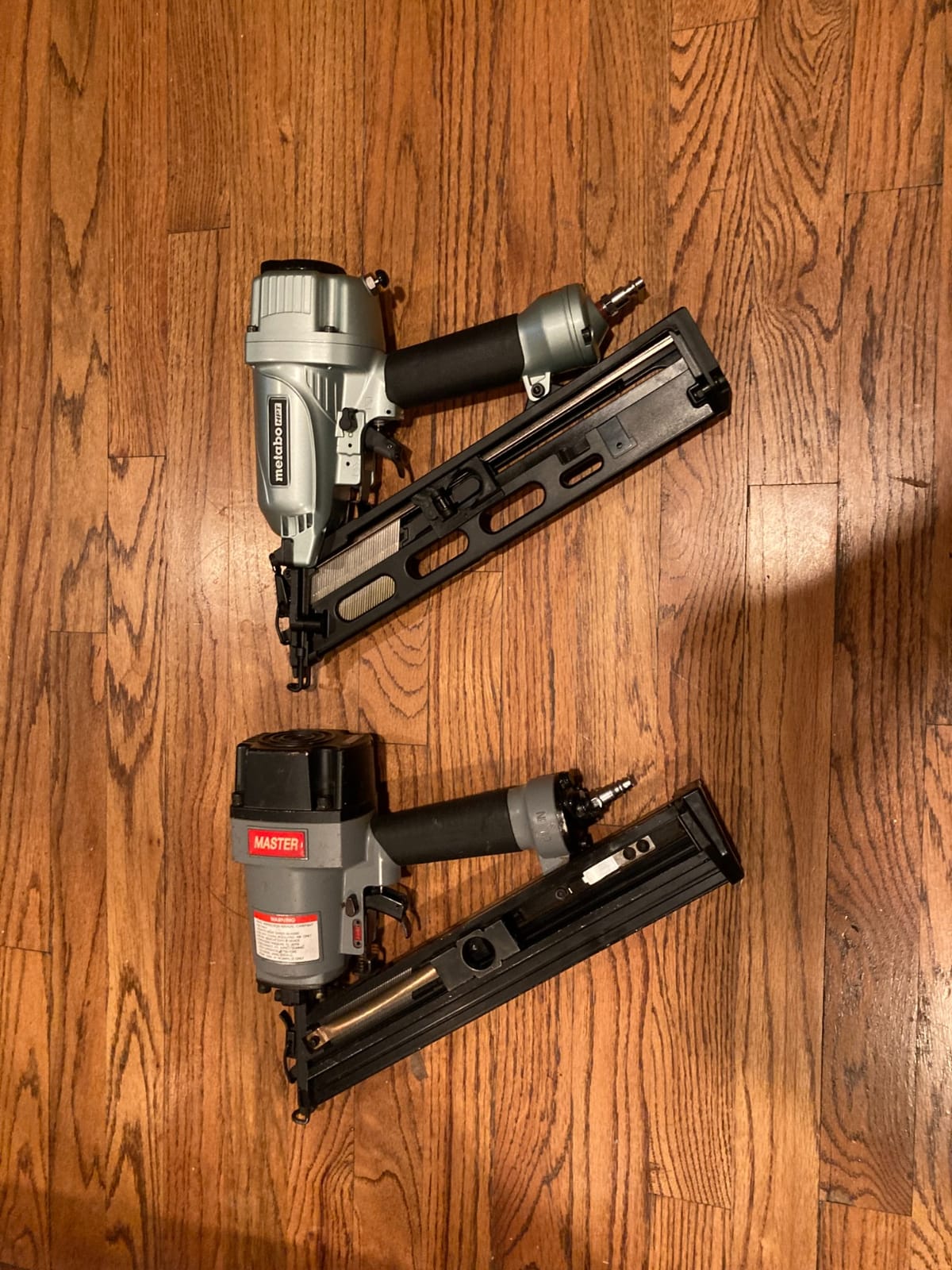
A nail gun, or nailer, is a power tool that drives nails into wood using compressed air, a battery, or mains electricity instead of a hammer swing. It replaces manual nailing on framing, subfloor, roof decking, trim, baseboards, and fine carpentry. This roundup covers the ten nail guns we rate highest in 2026, sorted by the job they do best.
That distinction matters. A brad nailer, a finish nailer, a pin nailer, and a framing nailer are not interchangeable, and the wrong one wastes an afternoon. The framing guns here drive nails up to 3-1/2 inches into dimensional lumber. The finish and brad guns top out around 2 inches because thinner nails are the right size for trim. The pin nailer is for cabinetry and crafts, where a visible hole is a defect.
We picked these using the same criteria we apply to every tool: magazine capacity, power source, tool weight, drive power, jam-clearing design, and the depth control that decides whether a nail ends up flush or sunk into the face of the wood. Ratings and review counts come from the listing data, and we cross-checked owner feedback on the failure points that matter after month two rather than month one.
If you want the short version, the best massage guns roundup sits next door to this one, and both follow the same approach: we tell you who each tool is for and where it stops being the right answer.
Table of Contents
Top 3 Picks For Nail Gun in 2026

DEWALT DCN680B 18 GA Cordless Brad Nailer
- 100% battery powered
- Brushless motor
- Tool-free depth and jam release
- LED work lights

DEWALT DWFP12231 18 GA Pneumatic Brad Nailer
- Drives 5/8 in to 2 in nails
- Tool-free depth of drive
- Maintenance-free motor
- 2.65 lb body

Metabo HPT NT50AE2 18 GA Brad Nailer
- 2.2 lb body
- Bump or sequential firing
- Tool-less depth dial
Best Nail Guns at a Glance in October
All ten picks, with the specification that decides whether the tool fits your work. Scan the power source column first, because that choice is harder to reverse than the gauge choice.
| Product | Specifications | Action |
|---|---|---|
| DEWALT DCN680B 20V MAX XR 18 GA Cordless Brad Nailer |
|
Check Latest Price |
| DEWALT DWFP12231 18 GA Pneumatic Brad Nailer Kit |
|
Check Latest Price |
| Metabo HPT NT50AE2 18 GA Pneumatic Brad Nailer |
|
Check Latest Price |
 Metabo HPT NT65MA4 15 GA Angled Finish Nailer Metabo HPT NT65MA4 15 GA Angled Finish Nailer |
|
Check Latest Price |
 DEWALT DCN660B 20V MAX 16 GA Cordless Finish Nailer DEWALT DCN660B 20V MAX 16 GA Cordless Finish Nailer |
|
Check Latest Price |
 Metabo HPT NP35A 23 GA Pneumatic Pin Nailer Metabo HPT NP35A 23 GA Pneumatic Pin Nailer |
|
Check Latest Price |
 Metabo HPT NR90AES1 21 Degree Framing Nailer Metabo HPT NR90AES1 21 Degree Framing Nailer |
|
Check Latest Price |
 NuMax SFR2190 21 Degree Framing Nailer NuMax SFR2190 21 Degree Framing Nailer |
|
Check Latest Price |
 Makita AN924 21 Degree Full Round Head Framing Nailer Makita AN924 21 Degree Full Round Head Framing Nailer |
|
Check Latest Price |
 BOSTITCH BTFP12233 18 GA Smart Point Brad Nailer Kit BOSTITCH BTFP12233 18 GA Smart Point Brad Nailer Kit |
|
Check Latest Price |
1. DEWALT DCN680B 18 Gauge Cordless Brad Nailer – Best Overall Nail Gun for Most Homes
DEWALT DCN680B 20V MAX* XR® 18 GA Cordless Brad Nailer (Tool Only)
18 GA brad nailer
20V MAX battery
Brushless motor
6.2 lb tool-only body
Pros
- 100% battery power with no gas compressor or hose
- Brushless motor for runtime and durability
- Tool-free depth adjustment and tool-free jam release
- Multi-functional LED work lights
- Selectable sequential or contact trigger
Cons
- Tool only so battery and charger are separate purchases
- Costs more than a comparable pneumatic brad nailer
- Drives 18 gauge brads only
My first pick for almost anyone is the DCN680B, and the reason is simple: it removes the single biggest objection to buying a pneumatic nailer. If you do not own a compressor, a pneumatic brad nailer is not a tool, it is a two-tool purchase with a hose between them. The DCN680B is one tool and a battery you may already have.
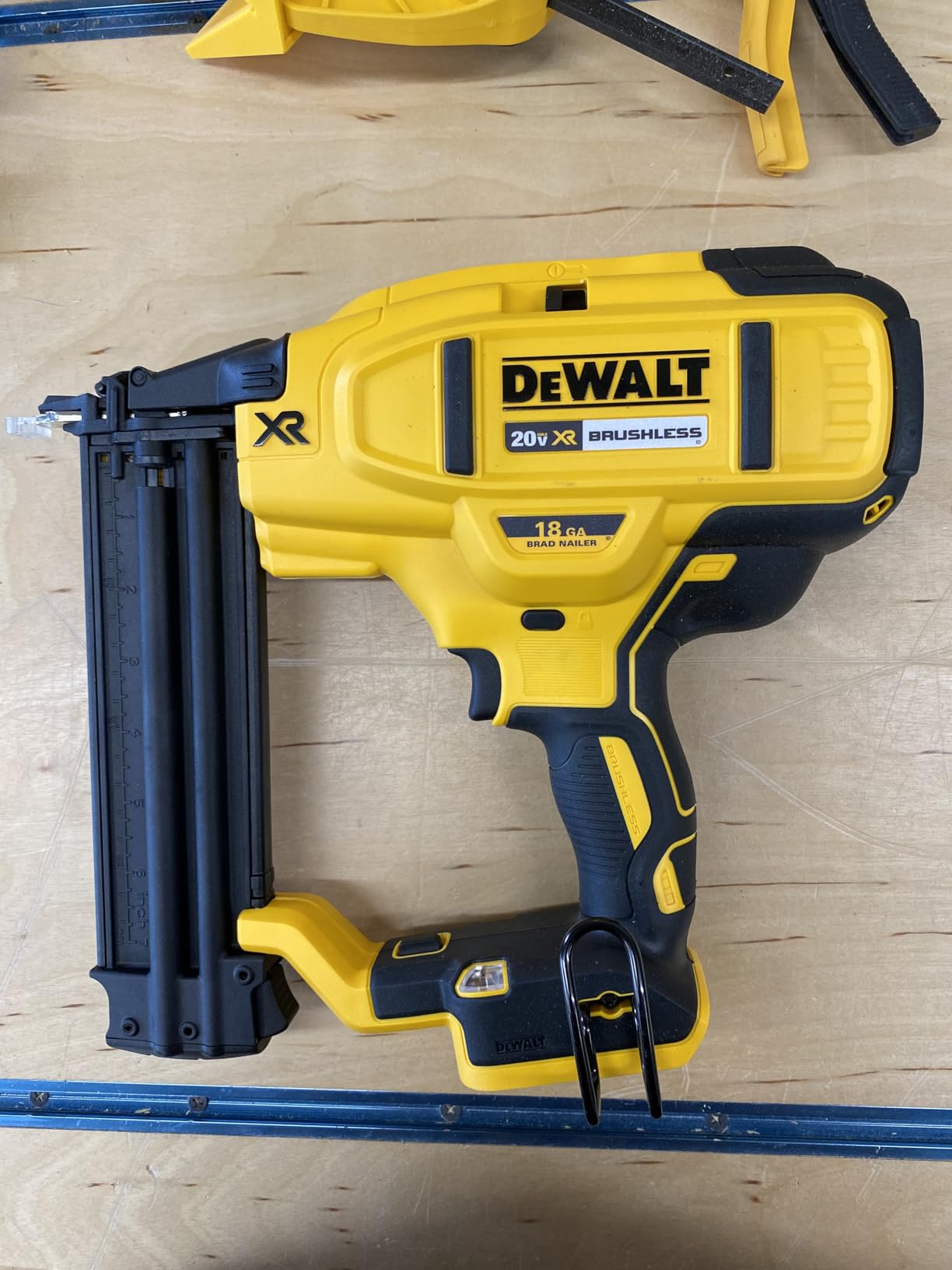
It came into my rotation for trim work on a remodel where a hose was simply not an option on a stair landing. The 18 gauge brad range covers baseboards, casing, and cabinet parts, and the micro nose gives you a line of sight down the nose of the tool that older brad nailers simply do not have. I could see the contact point without leaning over the top of the magazine.
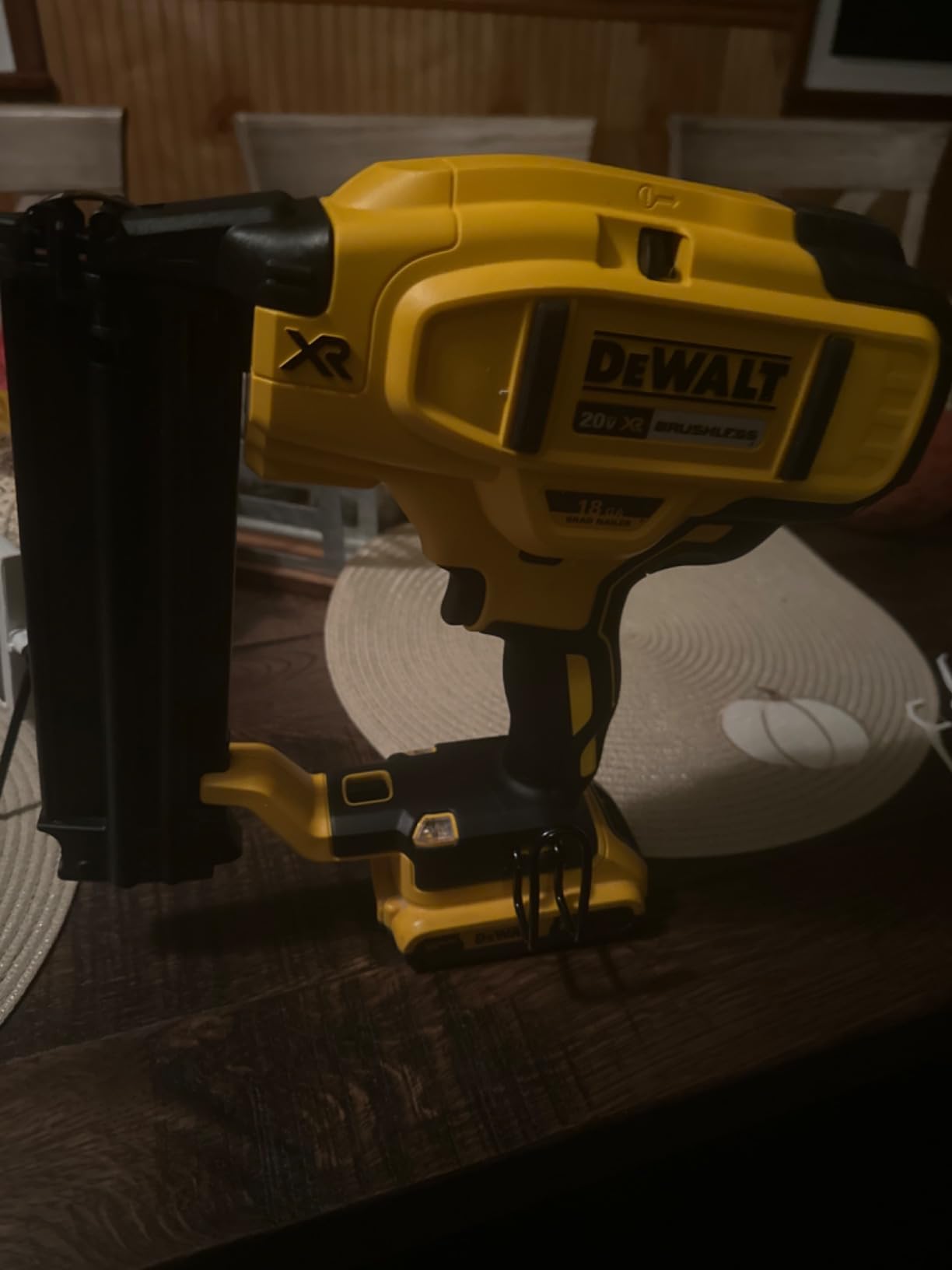
The tool-free controls are where this gun separates itself. Depth is a dial rather than a screwdriver adjustment, so I reset the countersink between a painted baseboard and a raw fir casing without hunting for a driver bit. The jam release is a lever, not a disassembly, and the integrated stall release resets the driver blade in place if you hit a knot or a hardwood edge.
Owners report a 4.8 star average across more than 3700 ratings, with 88 percent of those ratings at five stars. The recurring note in owner feedback is the tool-only packaging: you need a 20V MAX battery and a charger before the gun does anything, and that is the one detail that catches new buyers out.
Who the DEWALT DCN680B suits
It suits a homeowner or remodeler who already runs DEWALT 20V MAX batteries, or who refuses to buy a compressor for a single gun. It also suits a trim carpenter working inside a finished house where dragging a hose through a hallway is the real cost, not the tool.
Because it is 18 gauge, it is a trim and cabinetry gun, not a framing gun. If your project involves sheathing, subfloor, or roof decking, look at the framing picks further down instead of trying to make this one work.
Where it stops being the right answer
It stops being right the moment you own zero DEWALT 20V MAX packs, because the battery and charger are a real added cost on top of the tool. It also stops being right on a framing schedule, where 18 gauge brads lack the length and holding power of framing nails.
One more limit worth naming: the cordless approach is a genuine convenience trade, not a free win. If you already have a compressor and a hose, the pneumatic brad nailer below gives you the same gauge for a fraction of the outlay.
2. DEWALT DWFP12231 18 Gauge Pneumatic Brad Nailer Kit – Best Value Nail Gun
DEWALT Brad Nailer Kit, 18GA, 5/8-Inch to 2-Inch, Pneumatic (DWFP12231)
18 GA pneumatic brad nailer
5/8 in to 2 in nails
2.65 lb
Carrying case included
Pros
- Maintenance-free motor keeps oil off finished work
- Tool-free depth-of-drive adjustment with detents
- Tool-free jam release for quick nail removal
- Rear exhaust keeps contaminants away from the work
- Removable non-marring nose tip
Cons
- Needs a separate compressor and hose
- Non-marring nose tip is reported to detach occasionally
- 18 gauge only and tops out at 2 in
The DWFP12231 is one of the most-reviewed nailers in this group, with more than 5000 ratings at a 4.7 star average. It is also the gun I recommend most often to someone who already owns a compressor and just wants the best 18 gauge brad nailer for the money.
At 2.65 pounds it is light in the hand, and the sequential-style trigger means you fire one nail per pull. That is slower than bump firing on a production run, but on finish trim it is exactly the behavior you want, because you get a chance to reposition the nose between shots rather than placing two nails in the wrong spot.
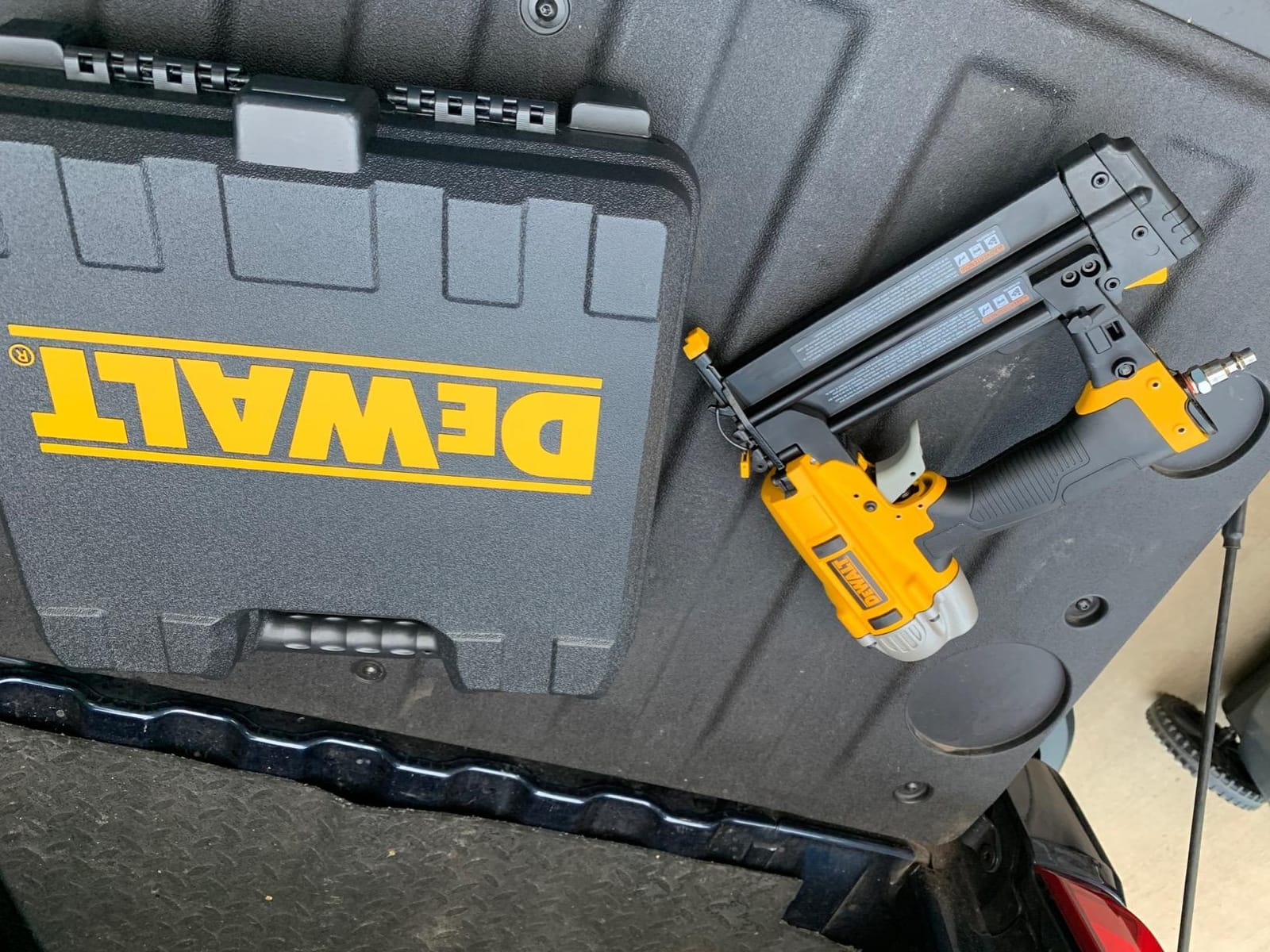
Two design decisions stand out. The maintenance-free motor is a genuine convenience on visible work, because there is no oil to keep off a painted or stained surface. And the depth-of-drive adjustment uses detents, so the setting holds where you put it instead of creeping over a long afternoon.
The rear exhaust is a small thing that matters more than it sounds. Air directed down at the workpiece blows sawdust off the line you just nailed, and on white trim you will see it immediately.
Who the DWFP12231 suits
It suits anyone with a compressor in the garage who needs a dependable 18 gauge brad nailer for casing, baseboards, and cabinet work. It also suits a small shop that runs one hose and does not want a battery platform decision.
If you already own 20V MAX packs and no compressor, this is still a fine gun, but you are buying a second power system to do a job the cordless gun does without one.
Where it stops being the right answer
It stops being right at two-inch nail lengths and below-gauge jobs, and it stops being right for anyone without a compressor. Owners also report the removable non-marring nose tip detaching now and then, which is annoying rather than dangerous.
It is 18 gauge, so it will not drive 15 gauge or 16 gauge nails. If your project is baseboards and casing, that is fine. If it is heavier trim in thicker hardwood, move up the gauge list.
3. Metabo HPT NT50AE2 18 Gauge Brad Nailer – Best Budget Nail Gun for Trim
Metabo HPT Brad Nailer, Pneumatic 18 Gauge Adjustable Depth, NT50AE2
18 GA pneumatic brad nailer
5/8 in to 2 in nails
2.2 lb
5 year warranty
Pros
- Very light at 2.2 lb for all-day use
- Selective actuation switch for bump or sequential firing
- Tool-less depth of drive dial and reload indicator
- No-mar tip protects finished surfaces
- 360 degree adjustable exhaust
Cons
- Requires a compressor and hose
- Limited to 18 gauge brads up to 2 in
- Owners occasionally report the tip or nose parts loosening
The NT50AE2 is the lightest brad nailer in this roundup at 2.2 pounds, and that weight is the whole argument. If you are hanging trim overhead, or working on a ladder, or doing a full house of casing over several days, the difference between a 2.2 pound gun and a 5 pound gun is the difference between finishing the day and not.
It is also the lowest-cost serious brad nailer here, which makes it the value pick in a category where value is usually about build quality rather than price. The 5 year warranty is longer than several more expensive tools in this list, and the box includes the carrying case, safety glasses, an air fitting, a no-mar tip, and hex wrenches.
The selective actuation switch is the feature I would not give up. Flip it to bump and you can place a run of casing nails quickly; flip it to sequential and you get one nail per pull for careful work at a visible end. Having both on one gun removes the argument about which mode to buy.
The reload indicator on the magazine is a quieter feature that prevents the empty-fire cycle that dulls driver blades on cheaper guns. The 360 degree adjustable exhaust is genuinely adjustable, so you can point the air away from your face and off a finished surface.
Who the NT50AE2 suits
It suits the DIYer and remodeler who already has a small compressor and wants a brad nailer that disappears in the hand. It is the one I recommend for furniture assembly, because the 2.2 pound body reduces the fatigue that ends a build halfway through a table.
Users on woodworkingtalk.com make a related point about small brad and pin nailers: they draw little air volume, so a small pancake compressor is enough. That is true of this gun, and it means the compressor decision is much cheaper than it is for a framing nailer.
Where it stops being the right answer
It is 18 gauge brads, capped at 2 inches, and that is a hard ceiling. Heavy baseboards, thick casing, or anything structural needs a 15 or 16 gauge gun. Owners also report that the no-mar tip and nose parts can loosen over time, so retighten them periodically.
Like every pneumatic gun here, it is dead weight without a compressor. If you do not own one and do not plan to, buy the cordless gun instead.
4. Metabo HPT NT65MA4 15 Gauge Angled Finish Nailer – Best Nail Gun for Heavy Trim
Metabo HPT 15 Gauge Angled Finish Nailer, Selective Actuation, NT65MA4
15 GA angled finish nailer
1-1/4 in to 2-1/2 in nails
4.2 lb
5 year warranty
Pros
- Well balanced at 4.2 lb for long finish jobs
- Angled magazine helps in tight corners
- Selective actuation switch and tool-less depth adjuster
- 360 degree adjustable exhaust redirects air
- Integrated air duster clears debris
Cons
- Pneumatic operation requires a compressor and hose
- Angled magazine will not take straight-collated nails
- Limited to 15 gauge angled nails up to 2-1/2 in
The NT65MA4 is the 15 gauge gun in this roundup, and 15 gauge is the gauge that carpenters argue about most. On r/Carpentry the recurring view is that 15 gauge is the best all-around gun because these are the smallest nails you can genuinely trust in structural trim, and you do not need to be timid with them. That is the right read if baseboards, casing, and stair parts are in scope.
At 4.2 pounds this gun sits in a useful middle. It is heavier than the brad nailers because it is driving a heavier nail, and lighter than the framers by a wide margin. On a long trim day the weight is manageable, and the balance is the reason finish carpenters like it.
The angled magazine is the practical hero here. On a straight magazine, driving a nail at a 90 degree corner means the body of the gun fouls the adjacent wall. The angle lets you get the nose into a tight corner where a straight magazine will not physically go, which is most inside corners of baseboard and some casings.
Depth is a tool-less adjuster, and the 360 degree exhaust plus the integrated air duster handle the two finish-nailing annoyances: dust landing on a fresh coat of paint, and a line you cannot see. The box includes safety glasses, a no-mar tip, a fitting, and a carrying case.
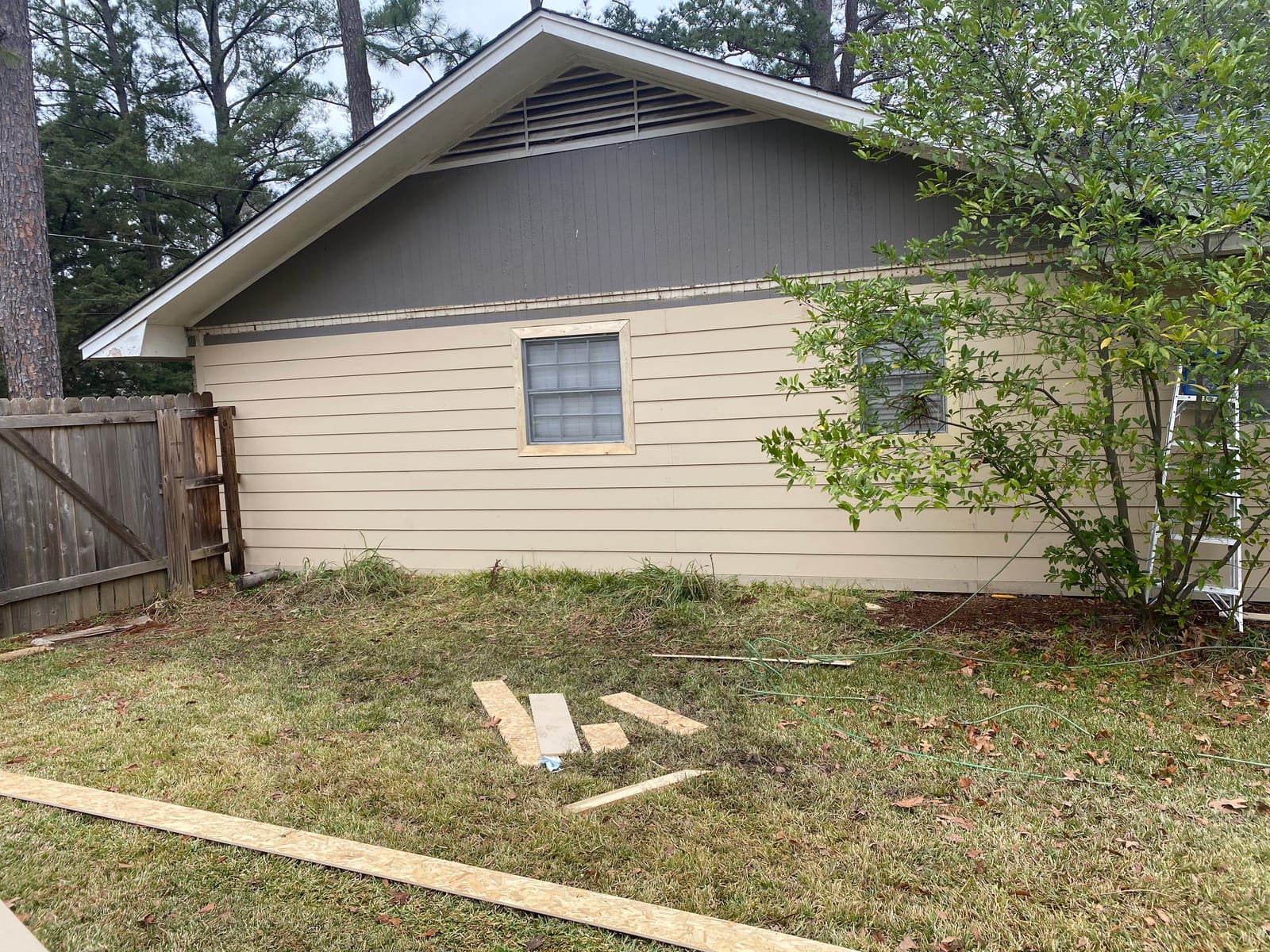
Who the NT65MA4 suits
It suits a finish carpenter or a serious DIYer installing baseboards, thick casing, and stair parts in hardwood or dense softwood. It is the gun I would reach for when an 18 gauge brad is sinking too deep or splitting the molding.
It also suits anyone who wants one gun that covers most finish work without stepping up to a framing nailer. Nail range runs from 1-1/4 inch to 2-1/2 inches, which spans most residential trim.
Where it stops being the right answer
The angled magazine is a commitment. Straight-collated nails will not fit, so buy 15 degree angled nails and keep the box. If your supplier carries only straight-collated 15 gauge nails, this is the wrong gun regardless of how well it performs.
It is still pneumatic, so the compressor requirement applies, and it is not a framing gun. Anything structural is outside its envelope.
5. DEWALT DCN660B 16 Gauge Cordless Finish Nailer – Best Cordless Nail Gun for Baseboards
DEWALT 20V MAX* Finish Nailer, Angled, 16GA, Tool Only (DCN660B)
16 GA cordless finish nailer
20V MAX battery
Brushless motor
Inline magazine
Pros
- Cordless operation removes compressor hose and gas cartridges
- Brushless motor for runtime and durability
- Tool-free trigger depth adjustment and jam release
- Multi-functional LED work lights
- Inline magazine works in tight orientations
Cons
- Tool only so battery and charger are separate
- Highest cost finish nailer in this roundup
- 16 gauge only and one-star reviews are the most common here
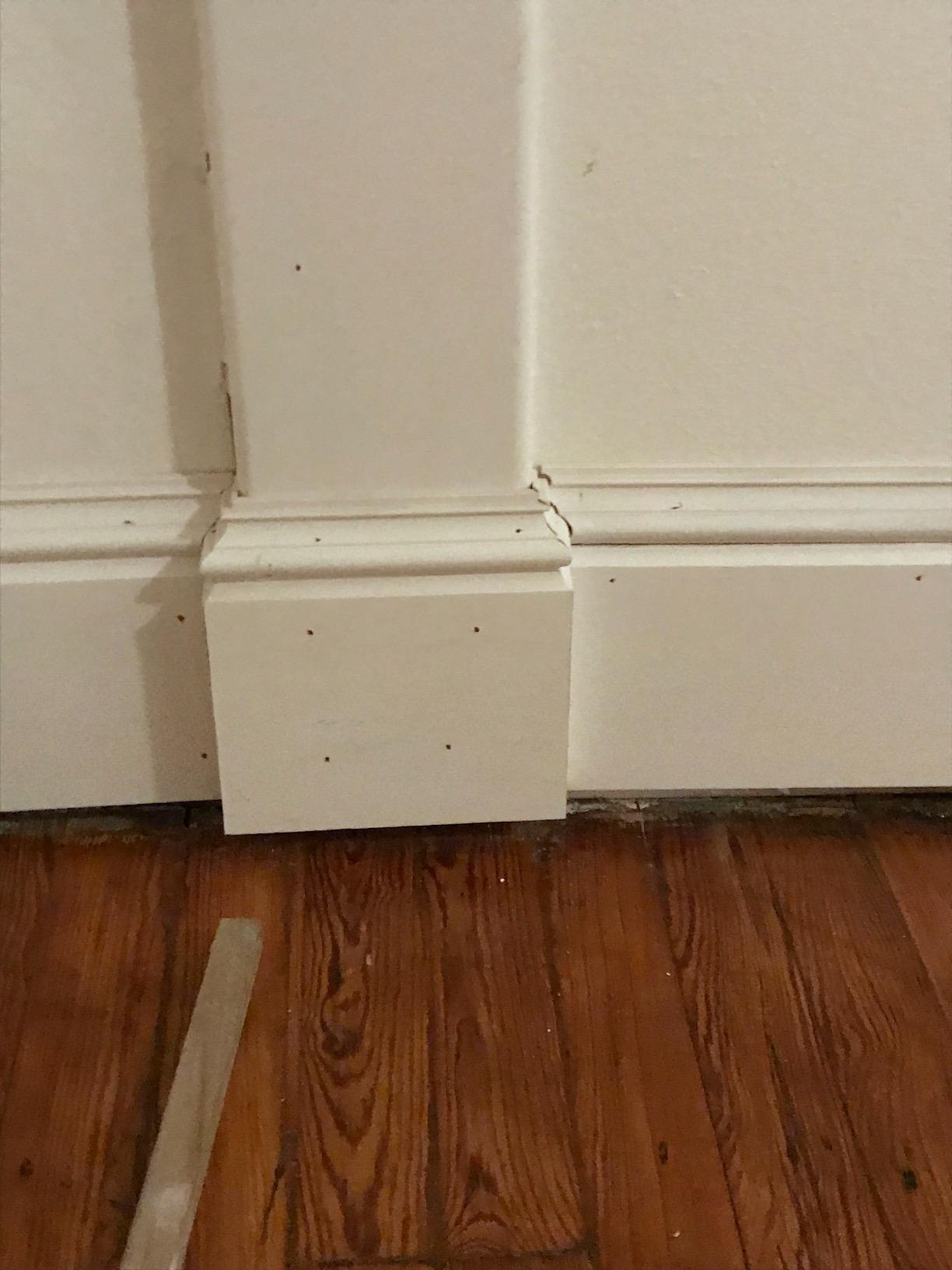
The DCN660B answers a fair criticism of cordless nailers: most of them are brad nailers, and most trim work is not brad work. A 16 gauge finish nailer covers the baseboard, casing, and door trim range that an 18 gauge brad is too light for, and this one does it on a battery.
The inline magazine is the design choice I appreciate most. Because the magazine sits in line with the body rather than at an angle, the gun holds the same control in any orientation, which makes overhead work and tight corners far less awkward than a conventional finish nailer.
The rest of the platform is the familiar DEWALT tool-free system: a selectable trigger for sequential or contact actuation, tool-free depth adjustment for countersinking, tool-free jam release, and an integrated stall release lever that resets the driver blade without taking the tool apart. LED lights do double duty as workspace lighting and as a diagnostic readout.
It works with any DEWALT 20V MAX battery, so if you own a drill or an impact driver from the platform, the marginal cost of this gun is the tool itself. The brushless motor is there for the same reason it is on the brad nailer: runtime and durability, not headline power.
Who the DCN660B suits
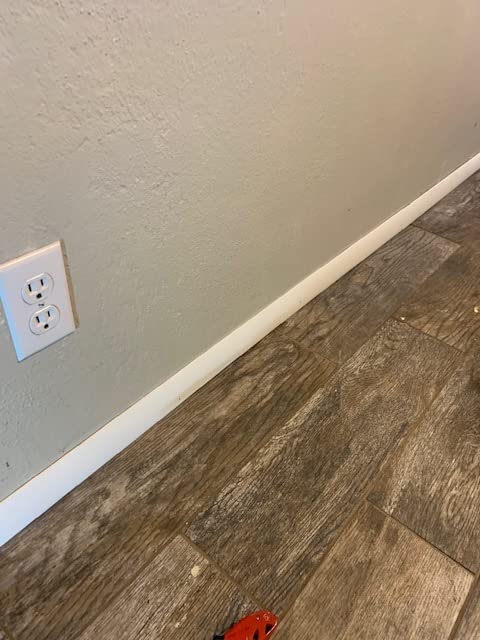
It suits a homeowner installing a full run of baseboard and casing in a house with no compressor, and it suits a trim carpenter working interior renovation where a hose is in the way. It is the only cordless finish nailer in this roundup, and that is a real gap in the market rather than an oversight.
Choose it when 18 gauge feels light and 15 gauge feels like more tool than you need. Sixteen gauge is the middle answer, and the most common regret among owners is buying a brad nailer and finding out mid-project.
Where it stops being the right answer
It is the most expensive finish nailer here, and the tool-only packaging means the battery and charger are on top of that. It is also a 16 gauge gun only, so it will not take 15 gauge or 18 gauge nails, and one-star reviews run higher here than on the other DEWALT models in this roundup.
If you already own a compressor, the pneumatic 15 gauge gun is the more capable tool for less money. This one wins on freedom, not on capability.
6. Metabo HPT NP35A 23 Gauge Pin Nailer – Best Nail Gun for Pin Nails and Crafts
Metabo HPT 23 Gauge Pin Nailer, Pneumatic Lightweight, NP35A
23 GA pneumatic pin nailer
Five pin lengths
2.0 lb
5 year warranty
Pros
- Leaves virtually invisible holes with headless pins
- Very light at 2.0 lb for precise work
- Automatic pin length adjustment across five sizes
- Quiet operation with clean flush drives
- Case spare no-mar tips and glasses included
Cons
- Pneumatic operation requires a compressor and hose
- Dual safety trigger takes practice to operate
- 23 gauge headless pins will not hold structural loads
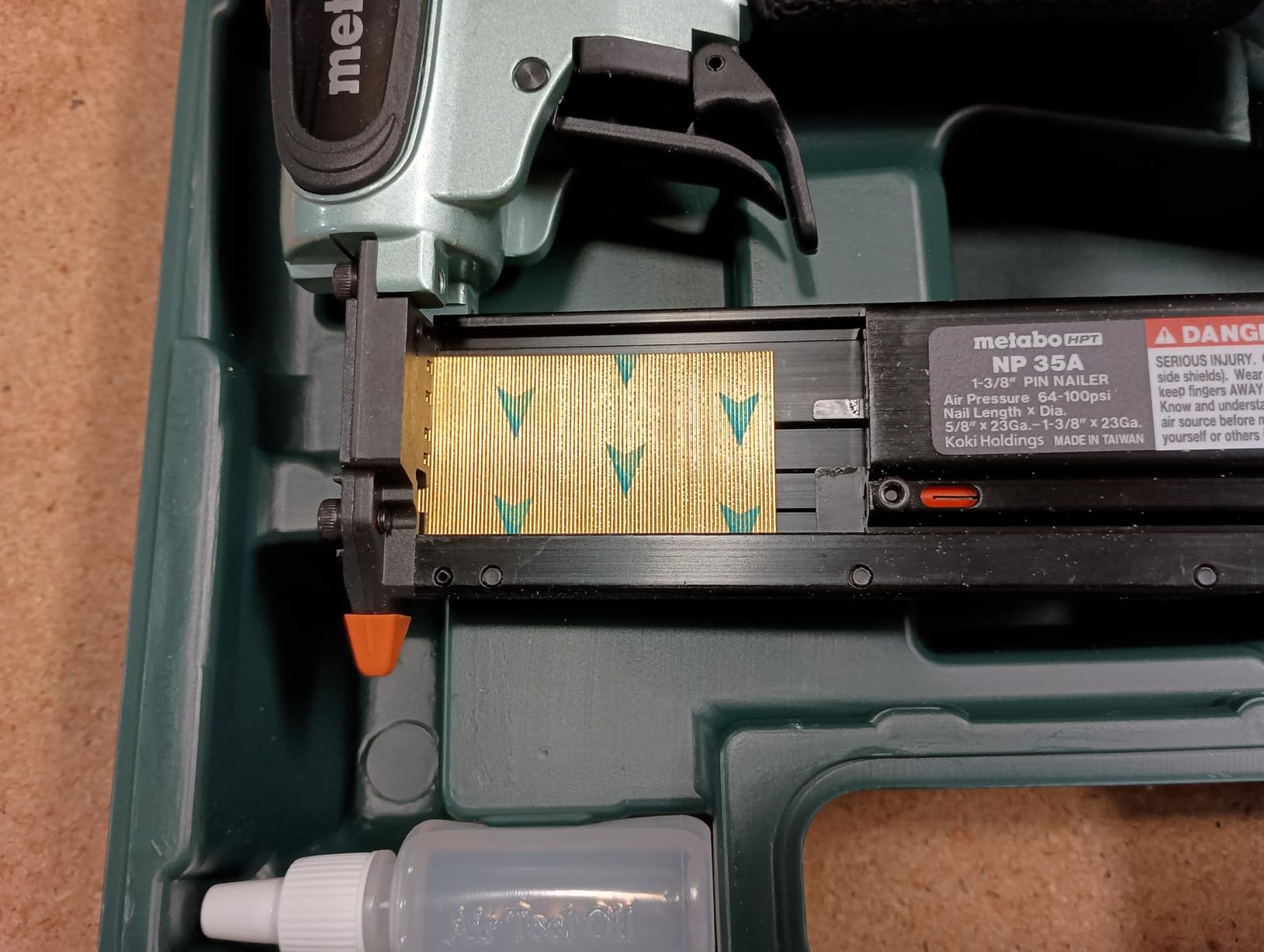
The NP35A is the smallest tool in this roundup at 2.0 pounds, and it is the only pin nailer here. If you do cabinetry, picture frames, upholstery, or fine trim where a nail hole is a visible defect, a pin nailer is not a luxury. It is the difference between a piece that looks finished and one that does not.
Twenty-three gauge pins are headless, so the hole they leave is small enough to fill or ignore. This gun covers five pin lengths from 5/8 inch up to 1-3/8 inches, and the magazine adjusts for length automatically rather than making you swap parts for a different pin size.
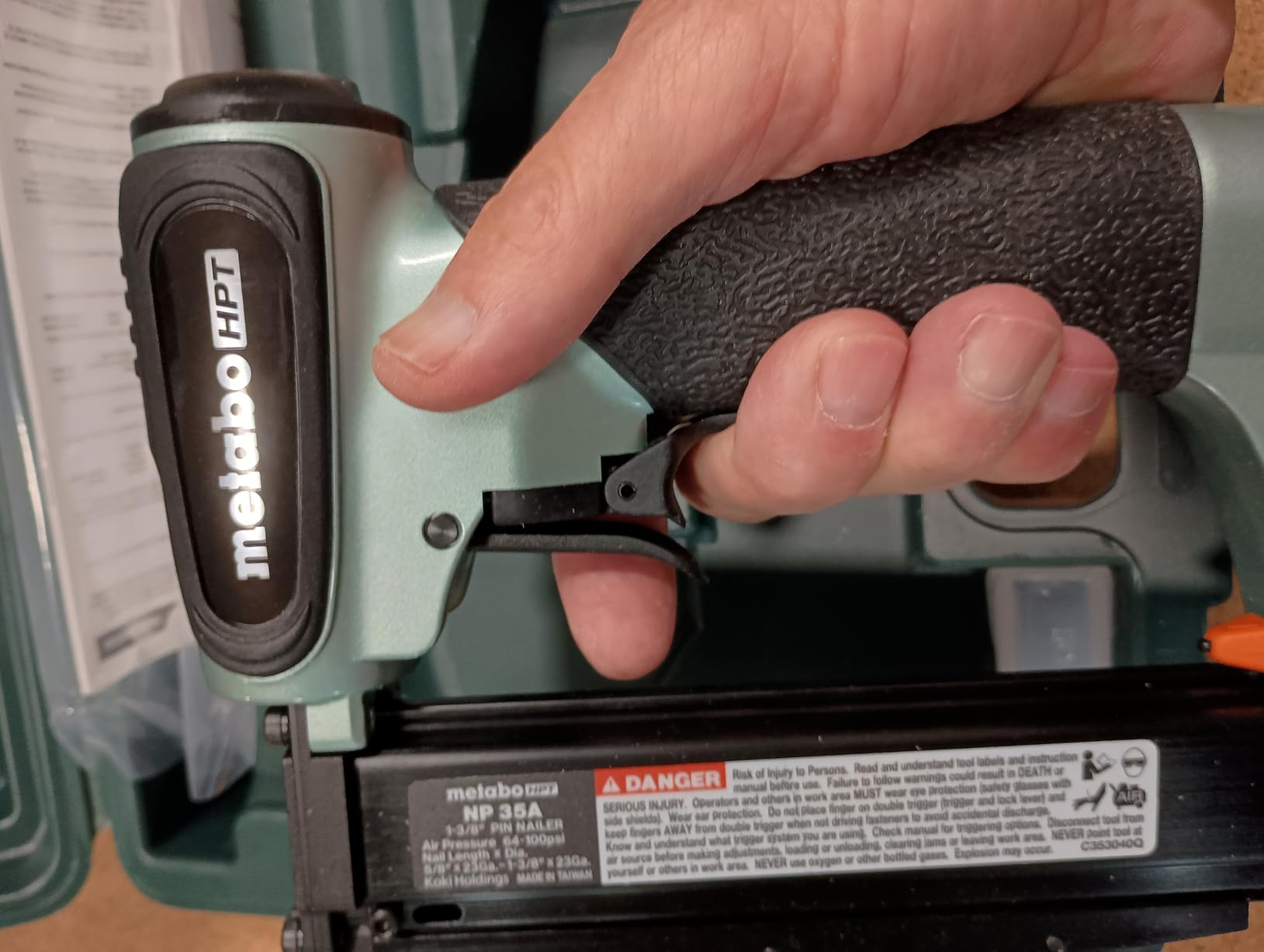
The dual trigger is the safety design. It requires two actions to fire, and while owners consistently describe it as taking some practice, that is a fair trade for a tool whose whole purpose is placing a fastener a fraction of an inch from finished surfaces. The no-mar tip on the nose and the rear exhaust both protect the workpiece from the two things that ruin fine work.
The box is unusually complete: a carrying case, two no-mar tips, safety glasses, a fitting, and a hex wrench, all under a 5 year warranty. For a specialty tool that is a generous package.
Who the NP35A suits
It suits cabinet installers, picture framers, upholsterers, and anyone doing trim on furniture or finished panels. It is also the right tool for light-duty household jobs where a hammer risks splitting a thin panel and a brad nailer leaves a hole you can see.
The 2.0 pound weight means it does not fatigue the hand on long batches of small work, which is the normal use pattern for a pin nailer.
Where it stops being the right answer
Headless 23 gauge pins have minimal holding power. They are not structural, they will not hold a load, and they are the wrong fastener for anything that needs to resist movement over time.
It is pneumatic, so a compressor is required, and a small number of owners report internal seal failures and misfires. If you want the same hole quality with no compressor at all, this category is genuinely thin, and that is worth knowing before you buy.
7. Metabo HPT NR90AES1 Framing Nailer – Best Nail Gun for Framing
Metabo HPT Framing Nailer, 21° Plastic Collated 2-3.5in, NR90AES1
21 degree plastic collated framer
2 in to 3-1/2 in nails
7.5 lb
5 year warranty
Pros
- Lightweight 7.5 lb body reduces fatigue on overhead framing
- Users report long runs of nails with no jams
- Handles ring shank and hot-galvanized nails
- Selective actuation switch and tool-less depth adjustment
- Good maneuverability in tight spaces
Cons
- No rafter or sky hook is included
- Heavier than some competing framers
- Requires a compressor and hose
The NR90AES1 is the framing gun I would buy. It ranks first in the power framing nailer category on listing data, and 7.5 pounds is the number that matters most. Framing is overhead work, often over your head, and a lighter framer is a framer you can still use at hour six of a day on a roof deck.
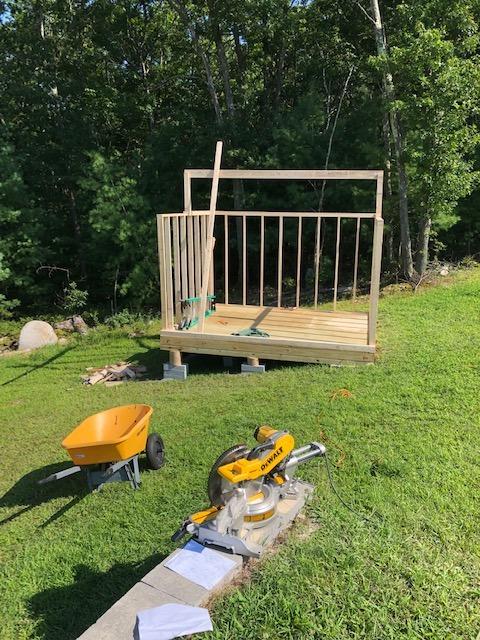
It drives 21 degree plastic-collated nails from 2 inches to 3-1/2 inches, which covers walls, floors, trusses, subfloor, roof decking, and wall sheathing. That is essentially the residential framing list, in one tool.
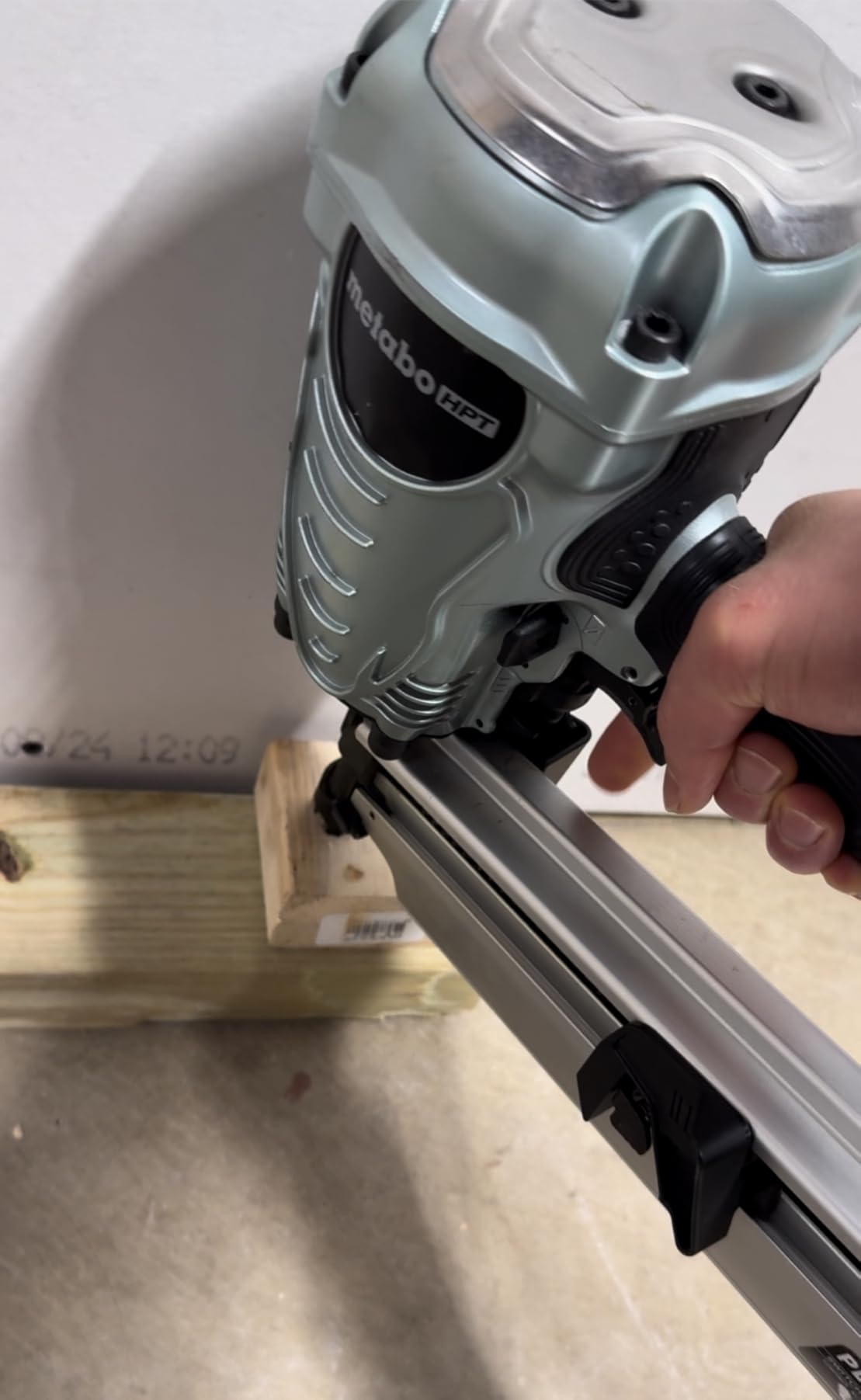
Owners describe long runs with no jams and no misfires, and they specifically call out that it feeds ring shank, hot-galvanized, and smooth nails without complaint. That matters because a framer that chokes on the hardened nails used for treated lumber will stop you mid-run and cost more time than the tool saved.
Depth is a tool-less adjustment, and the selective actuation switch lets you run sequential for accuracy or contact for speed as the work changes. It meets US pneumatic nailer safety standards, and the 5 year warranty is longer than most rivals in this category.
Who the NR90AES1 suits
It suits a framer or a serious renovator doing walls, floors, subfloor, and roof decking, and it suits anyone who wants the lightest framed-house nailer on this list. The 7.5 pound figure compares favorably against the alternatives below.
It also suits a first-time framer, because a 5 year warranty and a jam-free reputation are cheaper than replacing a tool you have grown to trust mid-build.
Where it stops being the right answer
It does not include a rafter or sky hook, and that is the near-universal complaint in owner feedback. For roof work you will be buying an aftermarket hook, so factor that into your plan.
It is 21 degree plastic-collated only, so it will not fire a coil nail, and it is pneumatic. A framing nailer also demands far more air volume than a brad or pin nailer, so a small pancake compressor will not cut it.
8. NuMax SFR2190 Framing Nailer – Best Nail Gun for High-Volume Framing
NuMax SFR2190 Pneumatic 21 Degree 3-1/2″ Framing Nailer
21 degree full round head framer
2 in to 3-1/2 in nails
Hardened steel drive blade
8.6 lb
Pros
- Largest review base of any pick in this roundup
- One-piece hardened steel drive blade
- Anti-dry-fire protects internal components
- Dual mode trigger for sequential and bump firing
- Tool-free depth wheel and no-mar safety tip
Cons
- Heaviest framer here at 8.6 lb and tiring for overhead work
- 21 degree plastic collated nails only
- 1 year warranty is shorter than most rivals
The SFR2190 has more than 7300 ratings behind it, the largest owner base of any tool in this roundup. For a tool you might own for a decade, that is worth more than any spec sheet, because it means failures and long-term reliability are well documented rather than anecdotal.
It is a 21 degree plastic-collated full round head framer, driving 2 inch to 3-1/2 inch nails at 0.113 inch to 0.131 inch diameter. Full round head nails are the code-safe choice for visible structural work, and the anti-dry-fire mechanism protects the internals when a magazine runs past the end of the strip.
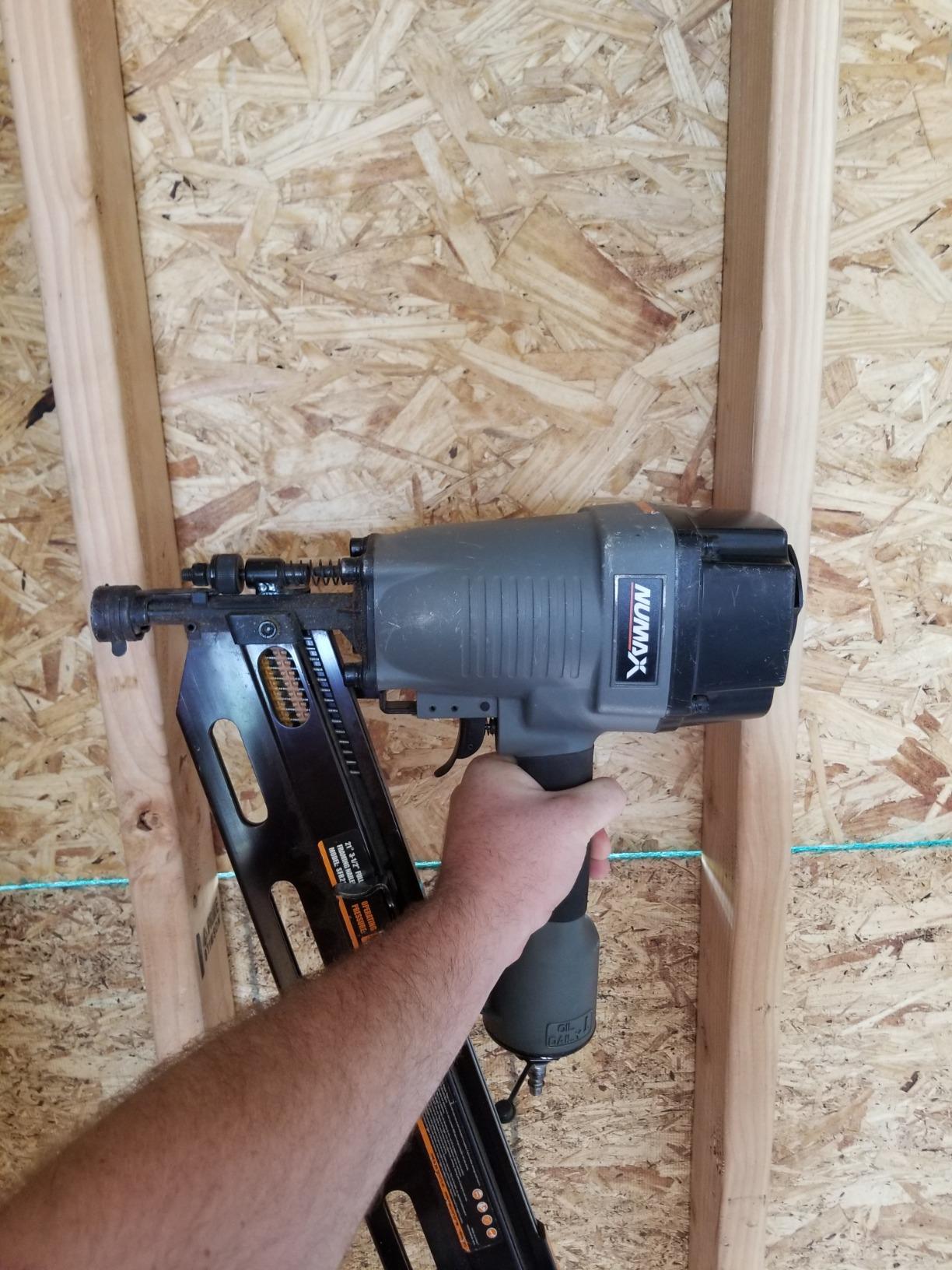
The one-piece hardened steel drive blade is the durability story. On a high-volume framing schedule, the drive blade is the part that wears first, and building it as one hardened piece rather than a stack of parts removes the failure mode that ends nailers early.
The dual mode trigger, the tool-free depth wheel, the no-mar safety tip, the comfort grip, and the 360 degree exhaust are all standard good practice, but they are all here, which is more than several competing tools manage.
Who the SFR2190 suits
It suits a production framer running multiple rooms a day, and it suits anyone who wants the most proven pneumatic framer available. The depth of owner feedback means you can research a specific failure before you buy rather than after.
It is also a reasonable choice for a homeowner who expects to frame once, because you are buying a tool with a very large installed base and inexpensive consumables.
Where it stops being the right answer
At 8.6 pounds it is heavier than the lighter framer above, and that gap is most noticeable working overhead. It is also 21 degree plastic-collated only, capped at 3-1/2 inches, so it will not take a full coil nail.
The warranty is the shortest in this category, at 1 year with 30 days on wearable parts, against 5 years on several rivals. If you keep a framer, that is the trade you are making.
9. Makita AN924 Framing Nailer – Best Nail Gun for Dense Lumber
Makita AN924 21º Full Round Head 3-1/2″ Framing Nailer
21 degree full round head framer
2 in to 3-1/2 in nails
Large air chamber
Aluminum magazine
Pros
- Large capacity air chamber drives into tough lumber
- Fast nail driving speed for high volume
- Top-loading solid aluminum magazine accepts a wide nail range
- Air fitting hex wrench oil and glasses included
Cons
- Heaviest tool in this roundup at 11.8 lb
- Lowest average rating among these ten picks
- 3 year warranty is shorter than the 5 year rivals
The AN924 is the power pick. Where the framers above balance weight against drive strength, this one leans hard into drive strength, and the reason is the large capacity air chamber. When you are driving into old-growth lumber, laminated stock, or anything with real density, that chamber is what decides whether the nail goes in on the first pull.
It accepts nail diameters from 0.113 inch up to 0.148 inch, which is the widest range in this roundup. That flexibility matters if you move between dimensional lumber and heavier stock on the same job.
The top-loading solid aluminum magazine is a durability choice. Aluminum will not flex or tear the way a thin stamped steel magazine can after a season of dropping the tool off a ladder, and top-loading makes loading faster when you are refilling a collated strip at the end of a wall.
The faster driving speed is worth noting for anyone on a schedule, because nail cycle time compounds across a house. Oil, an air fitting, a hex wrench, and safety glasses are all in the box, which is more than most framers include.
Who the AN924 suits
It suits someone framing into dense or tough material where drive power is the priority and weight is not. On restoration work, heavy timber, or a long run of hardwood blocking, that is a real category rather than a marketing distinction.
It also suits a buyer who trusts the Makita name on a heavy pneumatic tool and wants the parts and consumables ecosystem to match.
Where it stops being the right answer
At 11.8 pounds it is the heaviest tool in this roundup by a wide margin, and it carries the lowest average rating among these ten at 4.5 stars. On overhead framing, that weight is the first thing owners mention and the first thing they regret.
The 3 year limited warranty is also shorter than the 5 year terms on the Metabo framing guns here, and like them it is 21 degree plastic-collated only.
10. BOSTITCH BTFP12233 18 Gauge Brad Nailer Kit – Best Precision Nail Gun for Trim
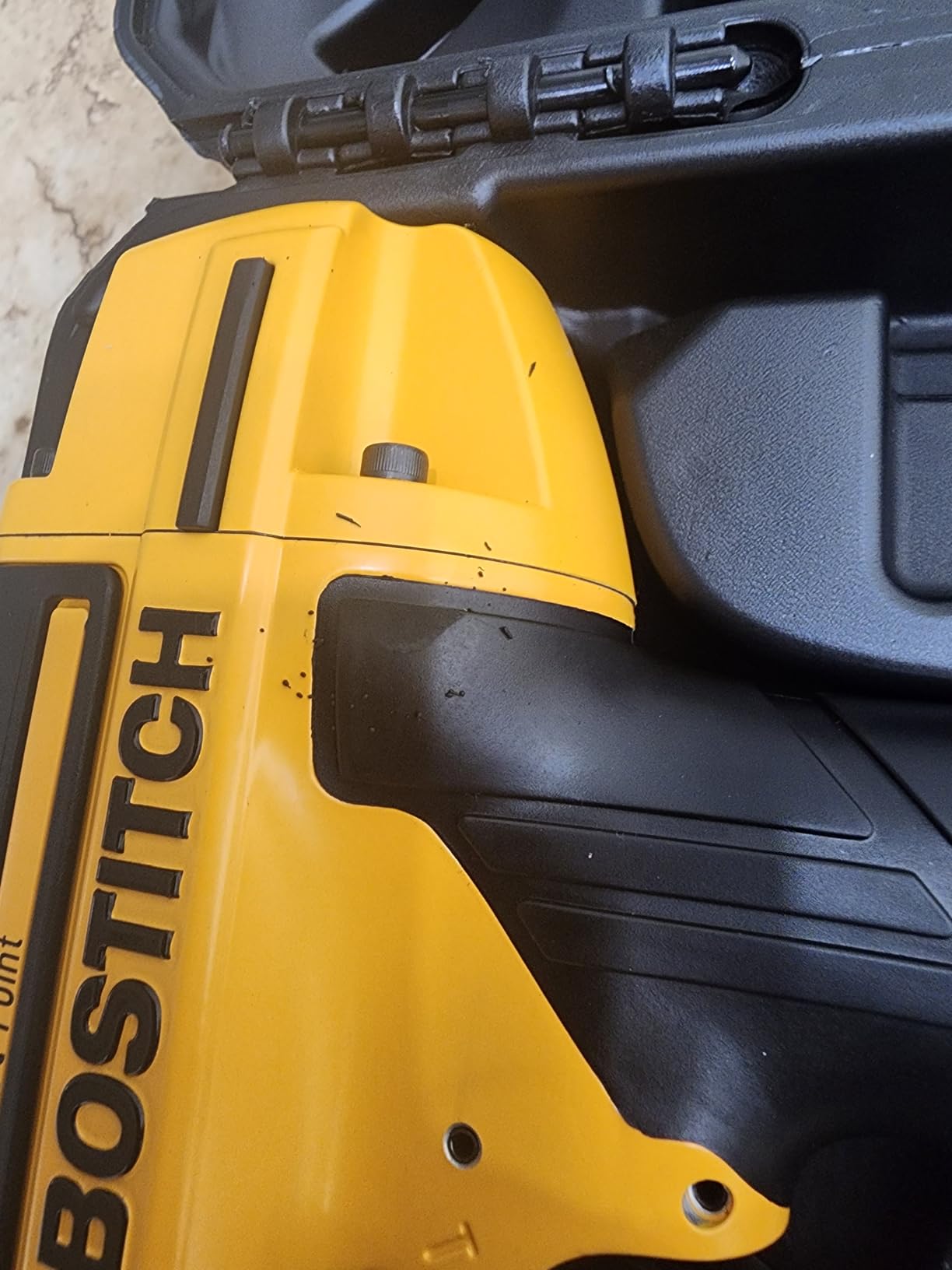
BOSTITCH Brad Nailer Kit, 18GA, Smart Point, Pneumatic (BTFP12233)
18 GA pneumatic brad nailer
5/8 in to 2-1/8 in nails
Smart Point nose
Oil-free operation
Pros
- Smart Point nose places nails without compressing the contact trip
- Oil-free operation removes any risk of oil staining
- Dial-A-Depth control for precise countersinking
- Tool-free jam release
- 7 year limited warranty with case and spare tips
Cons
- Pneumatic so a compressor and hose are required
- 5.16 lb is heavier than most competing 18 gauge brad nailers
- Limited to 18 gauge nails up to 2-1/8 in
The BTFP12233 carries a 4.8 star average across more than 2600 ratings, with 86 percent of those at five stars, and it also has the longest warranty in the group at 7 years. Those three numbers together are the reason it sits at the end of this list instead of the top: it is an excellent tool, but it is an excellent pneumatic tool, and pneumatic costs you a compressor.
Smart Point Technology is the feature that separates it. A conventional brad nailer needs you to compress the safety contact trip before the gun will fire, which means squeezing the nose down to start the shot. Smart Point lets you place the nose and fire without that compression, and owners repeatedly describe it as faster on repetitive placement work.
Oil-free operation is the second feature that matters for finish work. Any oil in the air stream can land on a painted or stained surface and stain it, and this gun removes that risk entirely. Dial-A-Depth gives you a proper countersink control, and the selectable trigger covers both sequential and contact modes.
The rear air exhaust and the belt hook with an integrated pencil sharpener are the kind of detail that shows up on a job site. The box includes the nailer, a fitting, a carrying case, and extra no-mar tips.
Who the BTFP12233 suits
It suits a finish carpenter or a serious DIYer who places a lot of visible brad nails and wants accurate, repeatable placement. If you are doing picture frames, face frames, cabinet parts, or light trim, the Smart Point nose makes repetitive work noticeably less fiddly.
It also suits a buyer who intends to keep the tool for a long time, because a 7 year warranty on a pneumatic tool is a meaningful signal about how the brand expects it to age.
Where it stops being the right answer
At 5.16 pounds it is heavier than most competing 18 gauge brad nailers, and the lighter models in this roundup are meaningfully lighter for a full day of overhead trim. It tops out at 2-1/8 inches, so it still will not cover heavier 15 or 16 gauge work.
And like every pneumatic gun here, it is not a purchase on its own. Without a compressor in the garage, the DEWALT cordless brad nailer at the top of this list is the better decision.
If You Only Buy One Nail Gun, Buy This One
The honest answer depends on one thing: whether you own a compressor. If you do not, buy the DEWALT DCN680B cordless brad nailer. It covers the trim, casing, and cabinetry range that most people need first, and it works the moment you put a 20V MAX battery on it.
If you already own a compressor, buy the DEWALT DWFP12231. It is proven, it is light, it is simple, and it does 18 gauge brad work that covers most of what a homeowner or remodeler ever needs.
Only add a second tool when a project forces your hand. A 16 gauge gun arrives when baseboards start sinking an 18 gauge nail. A framer arrives when you start nailing sheathing. A pin nailer arrives when you build furniture. Buying all three at once is the most common first-timer mistake we see.
How to Choose a Nail Gun in 2026
Work through these decisions in order. The order matters, because each step constrains the next one, and buyers who start at the price end up buying a tool that cannot do the job.
Pneumatic vs cordless vs corded electric
Pneumatic nailers are the traditional choice. They are fast, they are repairable, and they are cheap relative to cordless tools, but they need a compressor, a hose, and enough air volume to match the tool. Corded electric nailers plug into a wall and sit between the two on power but are limited to lighter fasteners.
Here is the real split: small nailers such as brad and pin guns draw little air volume, and people on woodworkingtalk.com note that a small pancake compressor will run them fine. Framing nailers are different. They demand sustained air volume, and a small tank will leave you waiting between shots on a full wall.
Cordless wins on mobility and setup, loses on sustained drive power into hard material, and wins decisively for interior finish work. If your project is inside a finished house, cordless is the answer more often than the marketing suggests.
Battery platform: you are buying an ecosystem
The single most decisive question in the forums is not about the nailer at all: it is whether you already own batteries for a platform. Owners pick the nailer that matches the batteries they already have, and they are right to. A 20V MAX pack you already own changes the effective cost of a cordless nailer more than any spec on the listing.
That means the brand decision is a long-term commitment rather than a one-tool purchase. If your household runs DeWALT 20V MAX, the cordless picks here cost you the price of a tool. If you run Milwaukee, Makita, or Ryobi, you will be buying into a new platform to add one nailer, and the tool-only packaging makes that explicit.
Nail gauge explained
Higher gauge number means a thinner nail, which is the part that confuses new buyers more than anything else. An 18 gauge brad is thin and long, suited to trim and cabinetry. A 15 gauge nail is short and thick, suited to baseboards and heavier finish. Framing nails are thicker again and much longer.
Buy the nailer that matches the material, not the one that sounds most powerful. Driving a 15 gauge nail into a thin molding will split it, and driving an 18 gauge brad into a thick baseboard will not hold it. When a project covers a range, a 16 gauge gun is the compromise most people end up keeping.
Magazine style: coil vs stick
Stick or collated magazines hold nails glued to a strip. They are the norm for residential finish and framing work, and every nailer in this roundup is a stick magazine tool. Coil magazines hold nails on a wire, which allows longer, heavier nails and higher capacity, but that is commercial equipment rather than a home-shop purchase.
Within stick magazines, the key question is the angle. The Metabo HPT NT65MA4 uses a 15 degree angled magazine that reaches tight corners but only accepts angled nails. Most other 15 gauge finish nailers take straight-collated nails. Check your nail supply before you commit.
Round head vs clipped head and building codes
Clipped head nails are the faster choice because the heads nest close together and waste less material, but they are restricted or prohibited for structural work in several jurisdictions. Full round head nails are the code-safe option, and two of the framing guns here fire full round head nails specifically.
Before using clipped heads on anything load-bearing, check your local building code. This is one of the few places in this guide where a wrong choice is a legal problem rather than a quality problem.
Depth adjustment and actuation modes
Depth control decides whether a nail sits flush or sinks below the surface. Every tool in this roundup offers some form of it, and the ones with a detented or tool-free adjustment are the ones you will keep: a depth setting that drifts over an afternoon is worse than one that takes thirty seconds to set properly.
Sequential actuation fires one nail per trigger pull. Contact or bump firing fires as long as the safety contact is held down. Every pick here with a selectable actuation switch lets you use both, which is why that feature is worth paying for on a general-purpose tool.
Air compressor sizing for pneumatic nailers
Two numbers matter: PSI and CFM. PSI is pressure, and every pneumatic nailer here runs in a similar band, so pressure is rarely the deciding factor. CFM is air volume, and that is what determines whether the tool keeps up on a long run.
Match the tank to the tool rather than the other way around. A pancake compressor is genuinely adequate for a brad or pin nailer. For a framing nailer, use a portable tank, keep the hose short, and set the regulator to the tool’s specified operating pressure rather than maximum pressure, because over-pressure does not drive nails harder, it just wears the tool.
What we checked on every nail gun
We scored every tool on magazine capacity and reload speed, power source, weight and balance, drive power, jam-clearing design, depth control, and what comes in the box. Two criteria consistently separated the winners: a tool-free jam release, because a jam that requires disassembly costs more than the feature saves, and a usable depth adjuster, because that is what keeps a finish nailer from splitting molding.
On safety, every nail gun on this list fires only when its contact trip is depressed against the work, and eye and hearing protection are not optional. Most injuries with nailers happen to hands and fingers at the nosepiece, so keep the free hand clear of the drive axis and do not work at angles where the nose is hidden from your view.
Which Nail Gauge for Which Job
The gauge-to-project mapping below is the decision most buyers get wrong, so here it is in one place. Match the gauge to the material and the job, then match the nailer type to the gauge.
23 gauge pins – Lengths from 5/8 inch to 1-3/8 inch. For cabinetry, picture frames, upholstery, fine trim, and light craft work. Headless, so the hole is nearly invisible. Never structural. Use a pin nailer, and accept that the holes need filling on visible surfaces.
18 gauge brads – Lengths from 5/8 inch to about 2 inches. For casing, baseboards in softwood, cabinet parts, and general trim. The most versatile and most commonly owned gauge. Use a brad nailer. Expect it to sink into thick hardwood.
16 gauge finish nails – The middle ground for baseboards, thicker casing, and doors where 18 gauge is too light. Use a straight or angled finish nailer. This is the compromise gauge people end up keeping alongside a brad nailer.
15 gauge finish nails – Lengths from 1-1/4 inch to 2-1/2 inch. For baseboards, stair parts, heavy trim, and cabinet rails in hardwood. Angled collated style is common. On r/Carpentry this is regularly called the best all-around gun because these are the smallest nails you can trust in structural trim.
Framing nails – Lengths from 2 inches to 3-1/2 inch, at 21 degree or coil. For walls, floors, trusses, subfloor, roof decking, and sheathing. Use a framing nailer with a compressor capable of sustained air volume, and check building code requirements for head style.
Frequently Asked Questions
What brand of nail gun is best?
There is no single best brand, but there is a best answer for each situation. If you already own DeWALT 20V MAX, Milwaukee M18, Makita 18V LXT, or Ryobi ONE+ batteries, buy the cordless nailer that matches your platform and the cost drops dramatically. If you own a compressor, the value in this roundup sits with the pneumatic brad and framing guns. Platform fit matters more than any spec sheet.
What are the top 5 nail guns?
Our five strongest picks are the DEWALT DCN680B cordless brad nailer for most homes, the DEWALT DWFP12231 pneumatic brad nailer for value, the BOSTITCH BTFP12233 for precision placement, the Metabo HPT NR90AES1 for framing, and the Metabo HPT NP35A for pin nails and fine carpentry. Each covers a different job, so the order depends on your project rather than a ranking.
Should I buy a 16 or 18 gauge nailer?
Buy 18 gauge for casing, cabinetry, and general trim, where the thin long brad is the right fastener. Buy 16 gauge for baseboards, thicker casing, and door trim where 18 gauge sinks too deep or lacks holding power. If you can only own one, 18 gauge covers more jobs and is easier to get right, and you can always add a 16 gauge finish nailer later.
What is the best nail gun for home use?
The best nail gun for home use is the DEWALT DCN680B if you do not own a compressor, because it works with no hose, no tank, and no setup. If you already have a compressor, the DEWALT DWFP12231 is the better value and the most reviewed tool in this roundup. Either way, 18 gauge is the correct starting gauge for a household tool collection.
Do nail guns need an air compressor?
Only pneumatic nail guns do. Cordless nailers run on a battery and need nothing else, and corded electric models plug into a wall. Pneumatic guns need a compressor and a hose, and framing guns additionally need enough sustained air volume that a small pancake tank will leave you waiting between shots.
How do I know which nail gun to buy?
Work through four decisions in order. First, what material and job, which sets the gauge. Second, whether you own a compressor, which sets pneumatic or cordless. Third, whether you already own brand batteries, which decides the cordless platform. Fourth, the nail length range and weight for your project. Buying in that order prevents the most common mistake, which is choosing on price first.
Are nail guns dangerous?
They are powerful enough to cause serious injury, and most nailer injuries happen to hands and fingers at the nosepiece. Every gun here requires its contact trip to be pressed against the work before it fires, but keep your free hand out of the drive path, never look down the barrel from the side, and wear eye and hearing protection on every shot. A no-mar tip does not make the tool safe, it only protects the wood.
How do I clear a jammed nail gun?
Disconnect the power first: unplug the air line or remove the battery. Then open the nose or use the tool-free jam release lever, and pull the stuck nail straight back with pliers rather than twisting, because a twisted nail can bend and damage the driver. On cordless models, the integrated stall release lever resets the blade in place without disassembly. Check depth settings before reloading, since an overdriven setting causes most repeat jams.
Final Verdict: The Best Nail Guns in 2026
The best nail guns for 2026 come down to one question you can answer before you spend anything: do you own a compressor? If not, the DEWALT DCN680B is the pick, and the DEWALT DCN660B covers the heavier 16 gauge finish work when you are ready for a second gun. If you do own one, the DEWALT DWFP12231 handles trim for the money, and the Metabo HPT NR90AES1 covers framing without weighing you down.
Everything else on this list is a specialist worth adding later, not a better first purchase. Start at 18 gauge, keep the depth adjustment dial in your hand, and buy the gauge your material needs rather than the one that sounds toughest.