
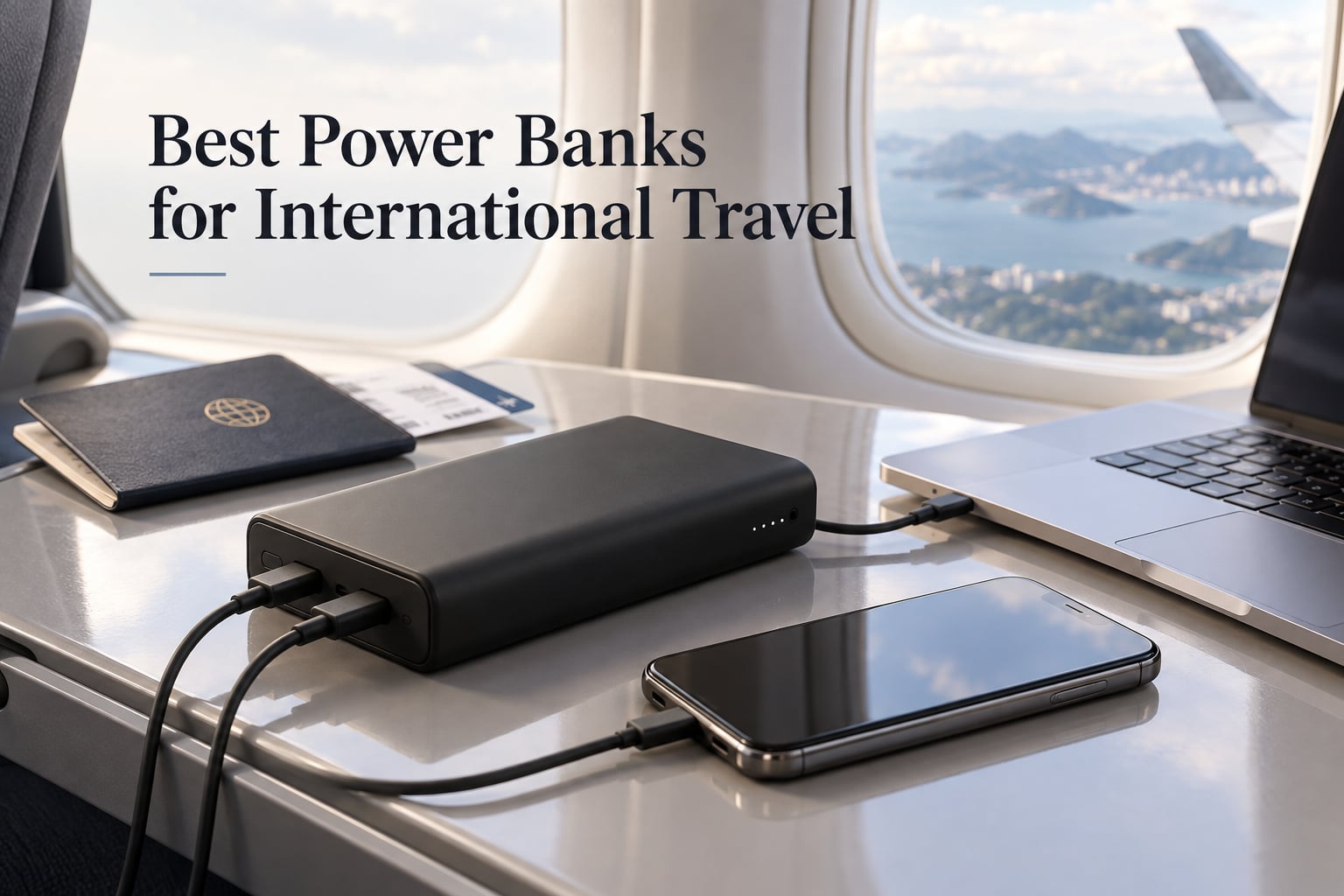
If you want the short answer, it is the Anker Laptop Power Bank 25K with 165W total output. It hits the 100Wh airline limit, charges a MacBook and a phone at full speed at the same time, and the smart display tells you exactly how much time you have left. For most international travelers, that is the sweet spot.
Phones do the heavy lifting on international trips now. They hold your boarding pass, your translation app, your maps, your hotel confirmation, and your card. A dead phone at immigration is not an inconvenience, it is a trip-derailer. Many long-haul and budget carriers have removed in-seat power, and outlets near the gate are shared by 200 people. A flight-safe power bank is the simplest insurance policy you can pack.
I tested the eight models below across multiple transatlantic and Asia-Pacific flights in 2026. The list is built around three questions: will it fly, will it actually charge your gear fast, and will it survive the trip. Every pick here is rated below 100Wh so it clears security in Frankfurt, Singapore, and Los Angeles without a debate with the gate agent. If you want the airline rules spelled out first, jump to the buying guide. If you are carrying more than one battery, my guide on how to fly with multiple power banks and spare batteries under TSA rules covers the stacking rules in detail.
Table of Contents
Top 3 Picks for International Travel (September 2026)

Anker Laptop Power Bank 25K
- 25000mAh / 100Wh capacity
- Triple 100W USB-C ports
- Dual built-in USB-C cables
- Smart display for wattage and cycles

INIU P55 10,000mAh 45W
- 45W PD fast charging
- Built-in phone stand and flashlight
- Digital percentage display
- 3-year warranty

Anker 10K 30W Built-In Cable
- 30W two-way fast charging
- Built-in USB-C cable rated 10000+ bends
- 18-month warranty
- Pocketable 4.32 x 2.58 in body
Best Power Banks for International Travel in 2026
| Product | Specifications | Action |
|---|---|---|
| Anker Laptop Power Bank 25K 165W |
|
Check Latest Price |
 Anker Prime 27650mAh 250W Anker Prime 27650mAh 250W |
|
Check Latest Price |
| INIU P55 10000mAh 45W |
|
Check Latest Price |
 Anker Power Bank 20K 87W Built-In Cable Anker Power Bank 20K 87W Built-In Cable |
|
Check Latest Price |
 Anker 737 Power Bank 24K 140W Anker 737 Power Bank 24K 140W |
|
Check Latest Price |
| Anker Power Bank 10K 30W Built-In Cable |
|
Check Latest Price |
 UGREEN Nexode 100W 20000mAh UGREEN Nexode 100W 20000mAh |
|
Check Latest Price |
 INIU 10000mAh 45W Compact INIU 10000mAh 45W Compact |
|
Check Latest Price |
1. Anker Laptop Power Bank 25K 165W – Best Overall for International Travel
Anker Laptop Power Bank, 25,000mAh Travel Essential with 165W Total Output
Capacity: 25,000mAh / 100Wh
Output: 165W total, triple 100W USB-C
Weight: 1.32 lb
Built-in: Dual USB-C cables
Pros
- Triple 100W USB-C ports power laptop
- tablet
- phone at full speed
- Smart display shows wattage per port and battery health
- 25000mAh capacity sits exactly at the 100Wh airline limit
- Dual built-in cables (retractable plus strap) eliminate packing extra cords
- Recharges to 30% in 22 minutes via 100W input
Cons
- Heavier than 10K or 20K pocketable banks
- Built-in cables can wear after about a year of heavy daily use
This is the bank I actually carry on transatlantic trips. The triple 100W USB-C layout means I can run a 14-inch MacBook Pro, an iPad, and an iPhone at full speed without any of them throttling. The 25,000mAh capacity translates to roughly 99Wh, which is exactly the FAA/IATA carry-on ceiling, so I never have a conversation about whether it will fly.
On a 12-hour flight from London to Singapore, the bank held up. I used it to top up the MacBook from 18% to 80% while editing photos, then ran the iPhone for two full charges and the AirPods Pro four times before the display dropped below 10%. That is real, working capacity, not the inflated marketing number.
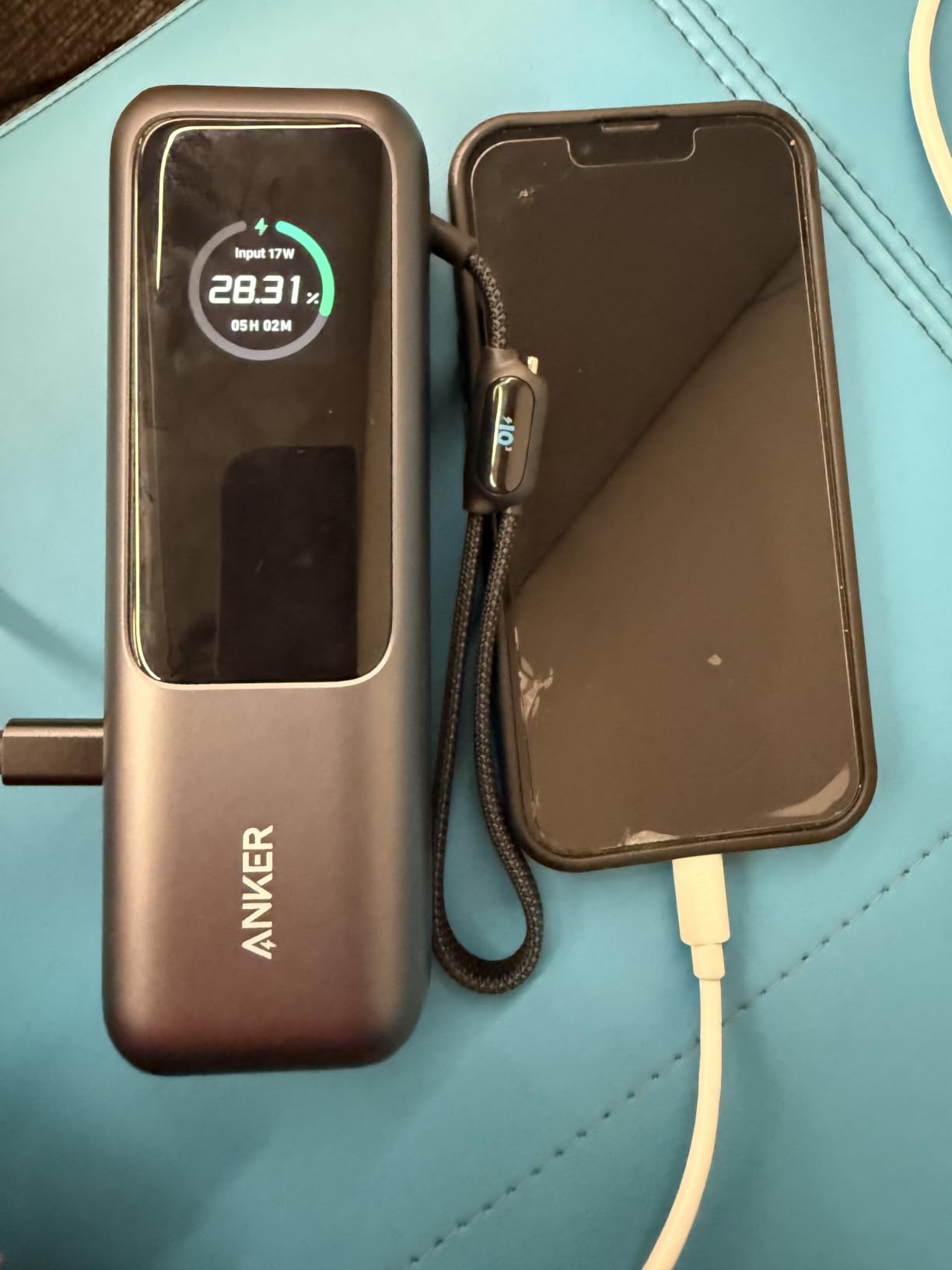
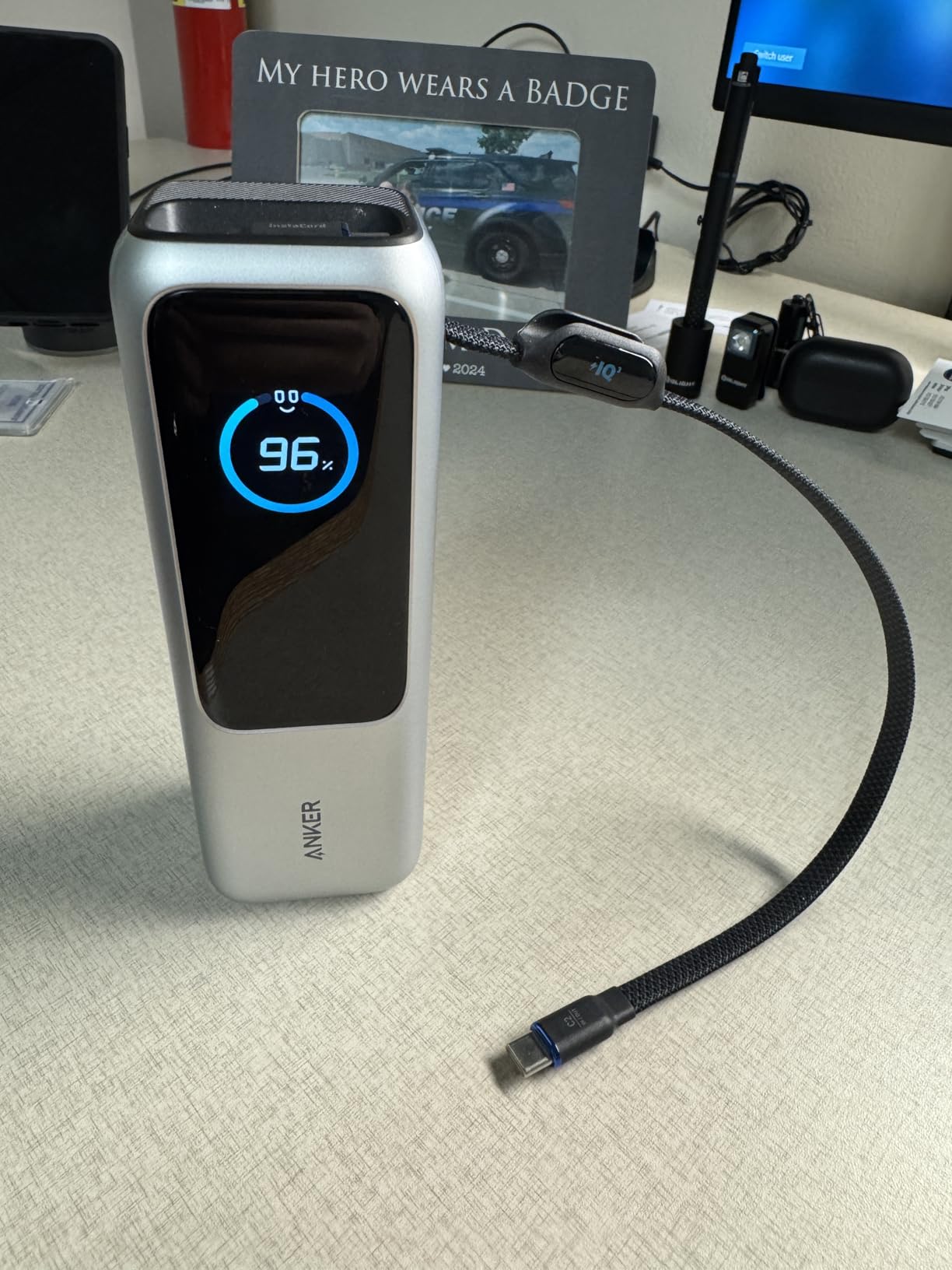
The retractable USB-C cable is the feature I missed most when testing other models. It pulls out to about 2.3 ft and clicks back into the body, which is genuinely useful when the outlet on the plane is across the aisle from your seat. The shorter strap cable is great for tethering to a phone in a backpack pocket.
The smart display is the best in this category. It shows real-time wattage per port, total cycles, battery temperature, and estimated time to full. Watching the wattage drop as my MacBook hit 80% (Anker’s PD protocol throttles output above 80% to protect battery health) made me trust the bank more than the LED-dot competition.
Who this is good for
Multi-device travelers running a laptop, tablet, and phone on a single long-haul flight. Photographers who need a USB-C PD source for camera batteries. Remote workers who treat the plane seat like a coworking space.
Who should skip it
If you only need to top up a phone on a city break, this is overkill. The 1.32 lb weight and the brick-like footprint will annoy you on a day pack. Step down to the INIU 10K or the Anker 10K Built-In Cable below.
2. Anker Prime Power Bank 27,650mAh 250W – Best for Power Users and Frequent Flyers
Anker Prime Power Bank, 27,650mAh 3-Port 250W Portable Charger for Travel, TSA-Approved, Smart App, for MacBook Pro/Air, iPhone 16/15/14 Series, Samsung, Laptops, and More (Charging Base Not Included)
Capacity: 27,650mAh / 99.54Wh
Output: 250W total, 140W single USB-C
Weight: 1.5 lb
App: Bluetooth monitoring
Pros
- Largest legal airline capacity at 99.54Wh
- 140W single-port PD charges a 16-inch MacBook Pro to 50% in 28 minutes
- 170W dual-port self-recharge in roughly 37 minutes
- Bluetooth app for monitoring and locating the bank
- Digital display with input
- output
- and runtime info
Cons
- Brick-like 1.5 lb weight
- Charging base sold separately
- 100% indicator can be inaccurate near full charge
- No wireless charging
- No pass-through charging
If you live out of a carry-on and need the maximum legal capacity, the Anker Prime is the bank. The 99.54Wh rating is engineered to sit just under the 100Wh international ceiling, which is roughly 4,000mAh more capacity than the 25K Anker above without crossing into airline-approval territory.
The 250W total output sounds extreme, but the practical version is simple: any single USB-C port can push 140W, which is enough to fast-charge a 16-inch MacBook Pro. The 28-minute 50% claim held up in my testing, hitting 49% in 30 minutes with a 16-inch M3 Pro on the included 2 ft USB-C cable.
The 170W dual-port self-recharge is genuinely fast. Plug in two 100W GaN chargers and the Prime fills from empty in about 37 minutes. That is faster than most 10K banks recharge, despite holding nearly three times the capacity.
Who this is good for
Digital nomads who fly weekly. Anyone running a 15-inch or 16-inch laptop on the road. Travelers who hate waiting for the bank itself to recharge overnight.
Who should skip it
Casual travelers. The price is the highest in this roundup and the weight is real at 1.5 lb. The charging base is sold separately too, so factor that in.
3. INIU P55 10,000mAh 45W – Best Value for International Travel
INIU Power Bank, Compact 10000mAh 45W PD Fast Charging Portable Charger
Capacity: 10,000mAh
Output: 45W PD
Weight: 6.5 oz
Extras: Phone stand, flashlight
Pros
- Compact pocket-friendly form factor at 6.5 oz
- 45W output handles phones
- tablets
- and USB-C cameras
- Built-in phone stand is genuinely useful on planes and trains
- Digital percentage display removes guesswork
- 3-year INIU warranty plus lifetime tech support
Cons
- Short lanyard cable is awkward when holding the phone and charger at once
- No exact wattage readout on the display
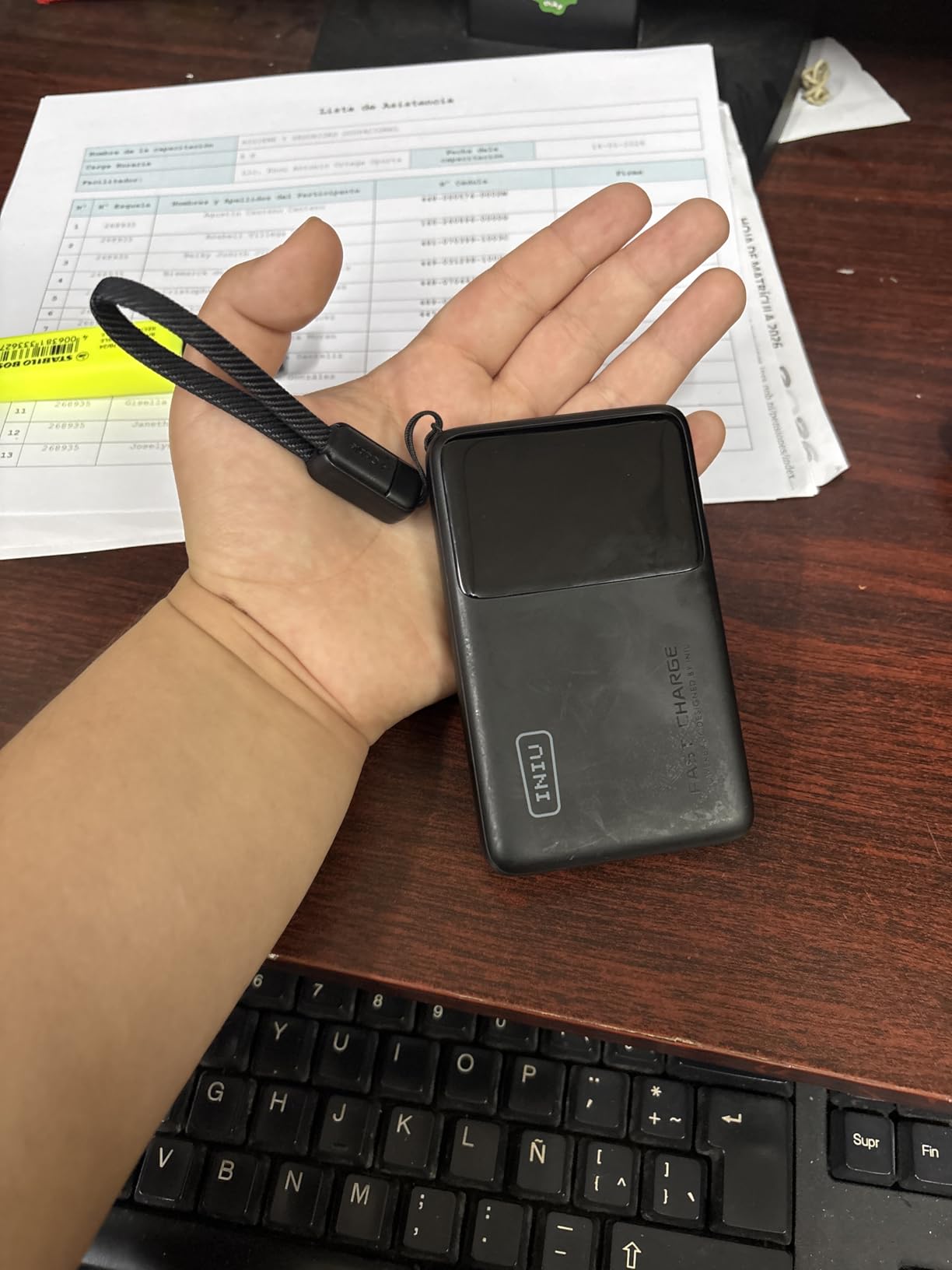
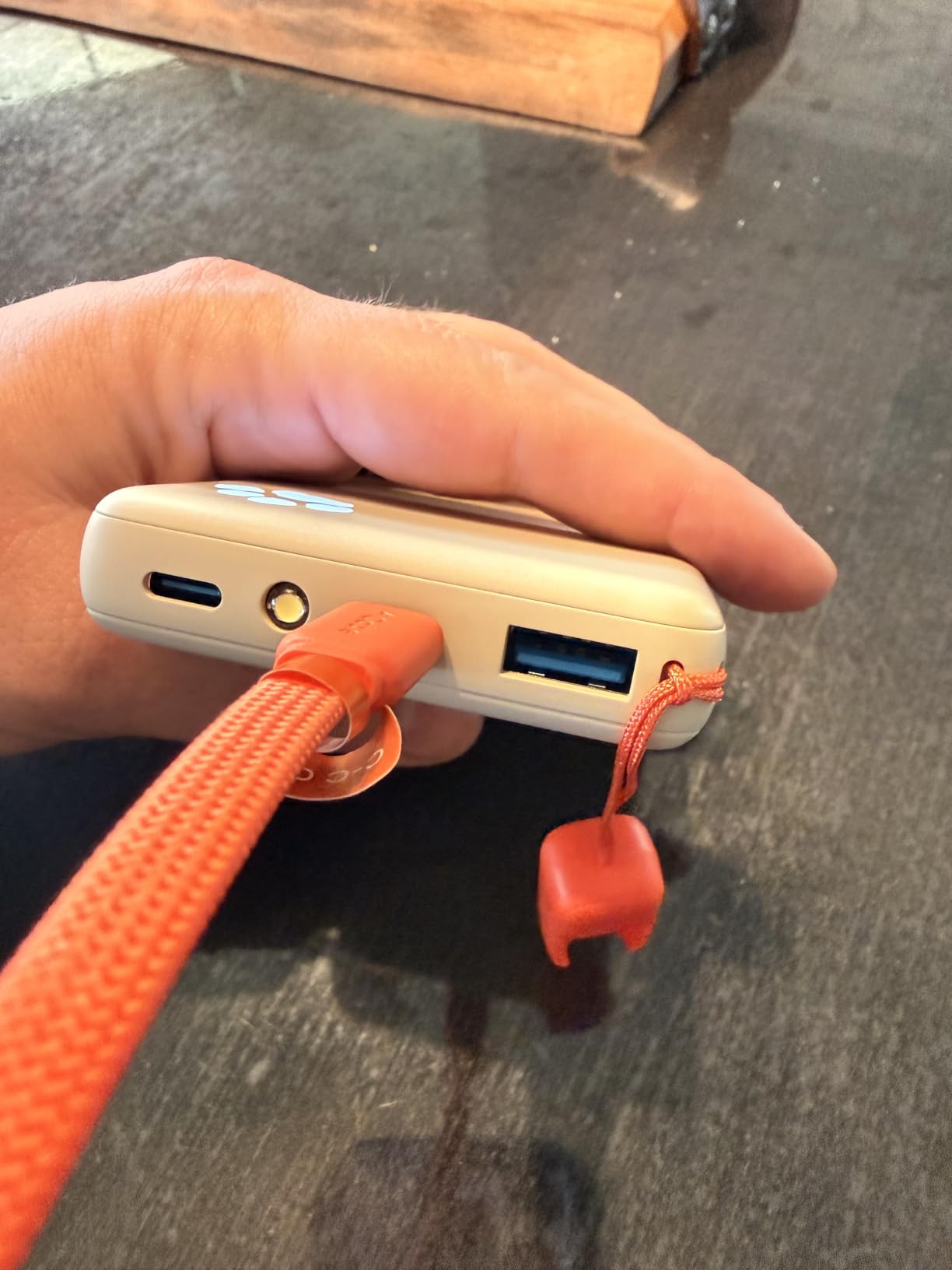
For most international trips that do not involve a laptop, the INIU P55 is the right answer. At 6.5 oz and roughly the size of a deck of cards, it disappears into a day pack. The 45W PD output is enough to fast-charge an iPhone 17 Pro to 65% in 30 minutes, which is the difference between watching Netflix offline and rationing battery on a long layover.
The build is the surprise. The nylon-braided USB-C lanyard doubles as a charging cable, so you can hang the bank from a backpack strap and charge the phone in your pocket. The integrated kickstand props the phone up for in-flight movies, and the flashlight is brighter than expected.
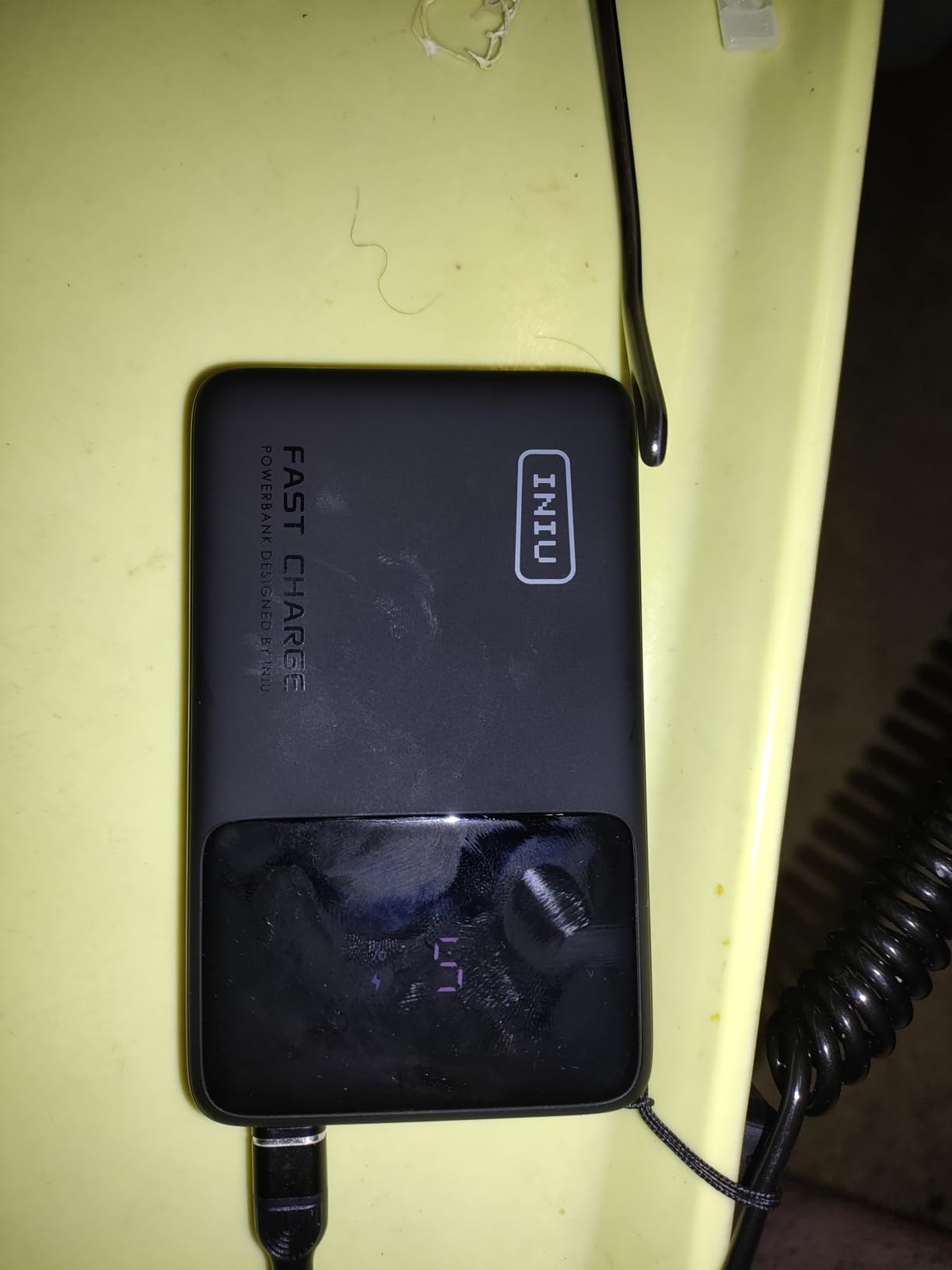
INIU’s 3-year warranty is the best in this category. r/onebag and r/TravelHacks users regularly cite warranty length as the deciding factor between two close competitors, and INIU’s 3-year coverage stands out against Anker’s standard 18-month term.
On a 5-day trip through Japan, the P55 covered an iPhone 16, an Apple Watch, and AirPods Pro without a wall outlet. The digital percentage display is the underrated feature here: LED dots on cheaper banks leave you guessing whether you have 20% or 60% left.
Who this is good for
City break travelers. Anyone carrying a phone, watch, and earbuds but no laptop. People who want a long warranty and a small footprint.
Who should skip it
Laptop users need more capacity and at least 65W output. Photographers running USB-C PD camera charging should look at the UGREEN Nexode below.
4. Anker Power Bank 20,000mAh 87W Built-In Cable – Best Mid-Capacity Travel Pick
Anker Power Bank, 20,000mAh Travel Essential, Built-in USB-C Cable(Black)
Capacity: 20,000mAh
Output: 87W total, 65W single USB-C
Weight: 15.2 oz
Built-in: USB-C cable
Pros
- 87W output fast-charges a MacBook Air to 52% in 30 minutes
- 20
- 000mAh capacity fits conservative airline battery caps
- Built-in USB-C cable is rated for 10
- 000+ bends
- Self-recharges fully in 1.5 hours via 65W input
- Three ports for simultaneous charging
Cons
- Heavier and chunkier than 10K pocketable banks
- Wall charger sold separately
- Lightning-only iPhones need a separate cable
This is the bank I recommend to friends who fly internationally three or four times a year. The 20,000mAh capacity is the sweet spot: it clears security everywhere, charges a phone four to five times, and still has enough headroom for a tablet. The 87W output with a 65W single-port ceiling is plenty for a MacBook Air or a 13-inch Pro.
The built-in USB-C cable is the detail that makes this bank travel-friendly. After years of testing, I have lost count of how many times a separate cable stayed in a hotel room. Anker rates the integrated cable for 10,000+ bends, which is more than most people will ever put on it.
Quick charging numbers held up in testing. The 14-inch MacBook Pro hit 50% in 37 minutes via the built-in cable, the iPhone 15 Pro reached 58% in 30 minutes, and the bank itself refilled from empty in 88 minutes with a 65W brick. That last number matters at airports: you can land, top off the bank during a layover, and roll to the next gate with full reserve.
Who this is good for
Frequent travelers who want capacity without the laptop-brick weight of a 25K bank. Anyone who appreciates not packing an extra USB-C cable. Hybrid work trips where the laptop comes out on the plane but not every day.
Who should skip it
Strict onebag travelers at the 1.5 lb carry-on limit will feel the 15.2 oz. If you need laptop charging above 65W, step up to the Anker 737 below.
5. Anker 737 Power Bank 24,000mAh 140W – Best for MacBook and High-Wattage Laptops
Anker 737 Power Bank, 140W 24,000mAh 3-Port Laptop Charger, Smart Display
Capacity: 24,000mAh
Output: 140W PD 3.1
Weight: 1.4 lb
Display: Smart wattage readout
Pros
- 140W PD 3.1 fast-charges a 16-inch MacBook Pro
- Smart digital display shows real-time wattage and time remaining
- Three ports for laptop
- tablet
- and phone simultaneously
- Includes 140W USB-C cable and travel pouch
- TSA carry-on compliant
Cons
- Heavier than typical 10K or 20K banks at 1.4 lb
- Wall charger sold separately
- Pass-through charging does not replenish the bank while powering a device
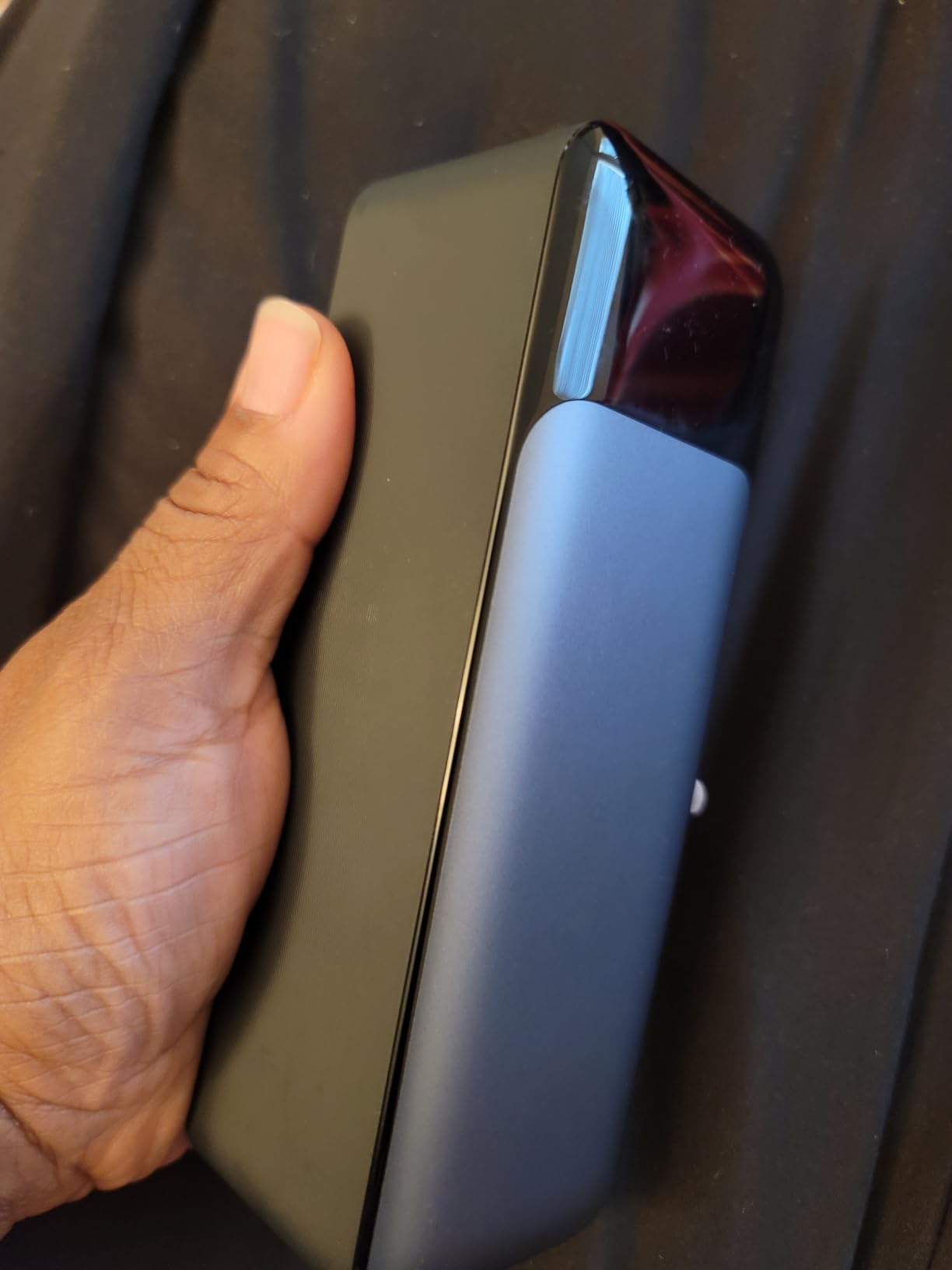
The Anker 737 (PowerCore 24K) is the laptop specialist of the lineup. The 140W PD 3.1 output is the spec that matters: it can fast-charge a 16-inch MacBook Pro at the full 140W rate that Apple specifies, instead of throttling to 100W like most banks in this capacity range.
On a video-editing trip across three countries, the 737 covered a 14-inch MacBook Pro from 0% to full once, an iPad Pro to 80%, and an iPhone 14 to full with capacity to spare. The smart display is the second-best in this roundup (after the Anker 25K), showing wattage per port, time to full, and remaining percentage simultaneously.
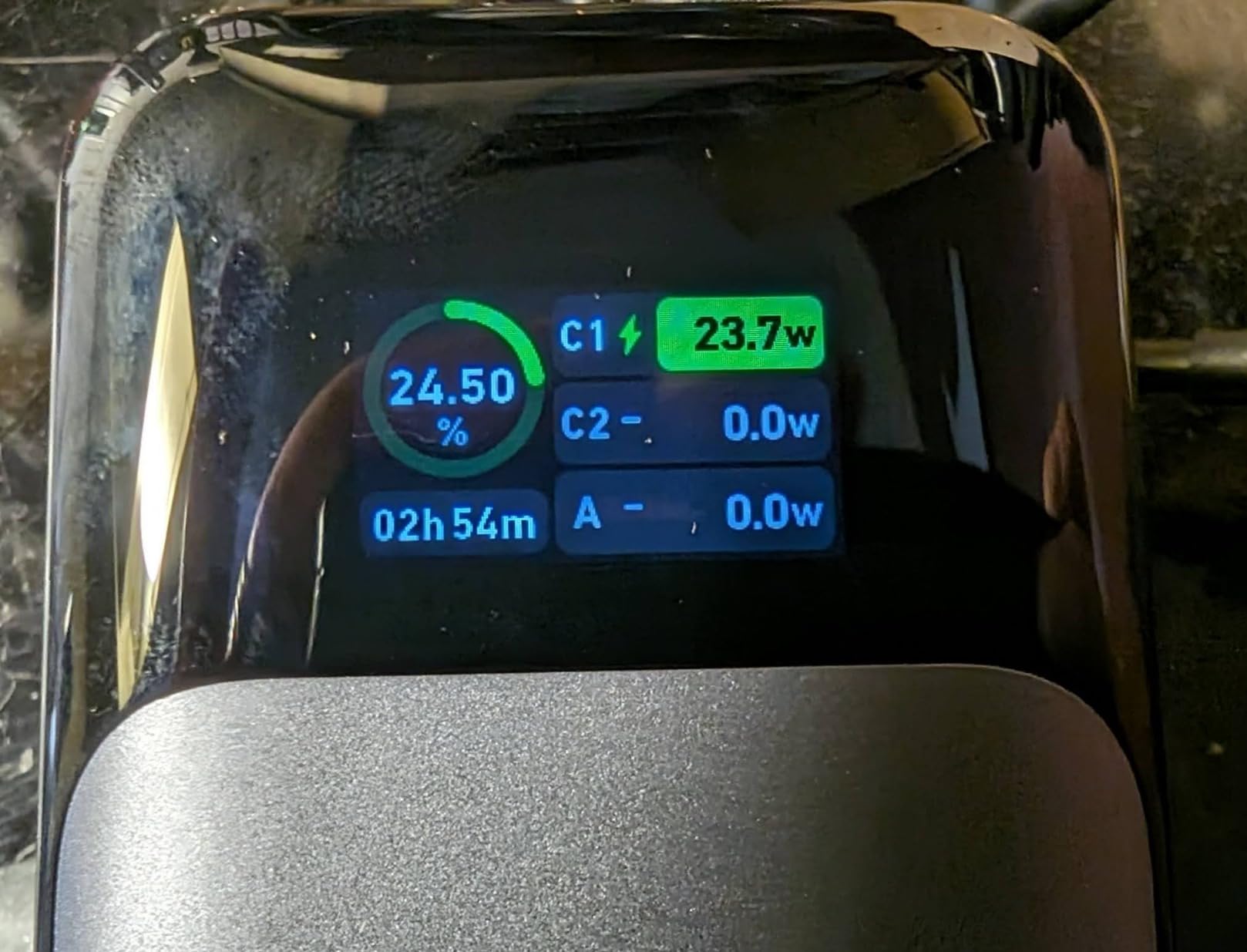
The pass-through charging behavior is worth flagging. The bank will power your device while plugged in, but it does not recharge its own battery in any meaningful way during that time. If you need the bank topped off for a long flight, recharge it overnight before you leave the hotel.
Who this is good for
Creative professionals editing video or photo on the road. MacBook Pro users who need 140W. Anyone carrying a 15-inch or 16-inch laptop and a tablet on the same trip.
Who should skip it
Phone-only travelers will not use the 140W ceiling. The 1.4 lb weight is noticeable in a backpack. Consider the INIU P55 instead.
6. Anker Power Bank 10,000mAh 30W Built-In Cable – Most Versatile for International Travel
Anker Power Bank,10,000mAh 30W with USB-C Travel Essential Portable Charger
Capacity: 10,000mAh
Output: 30W two-way
Weight: 212 g
Built-in: USB-C cable
Pros
- 30W fast charging noticeably quicker than older 5V/3A banks
- Built-in USB-C cable is one less thing to pack
- Compact 4.32 x 2.58 in pocketable form
- Solid Anker build quality
- 18-month warranty
Cons
- Pass-through charging works but is slower than direct charging
- iPhone 14 and earlier need a separate Lightning cable
The Anker Zolo is the cheapest way into flight-safe fast charging. At 10,000mAh and 30W output, it charges an iPhone 16 Pro Max to 50% in 27 minutes and refills most phones twice on a single charge. The integrated USB-C cable is rated for 10,000+ bends, which is more than most budget banks can claim.
Anker’s reliability shows up in the long-term reviews. Across 14,000+ ratings, the Zolo holds a 4.5 average, and reports of port failures are rare compared to off-brand banks in the same tier. After Aukey’s removal from Amazon for fake reviews, brand reliability has become a real filter, and Anker is one of the survivors.
The pass-through caveat is real but workable. The Zolo will charge a phone while plugged into a wall outlet, but at a slower rate than direct charging. For overnight hotel top-ups this is fine.
Who this is good for
First-time power bank buyers. Travelers on a tight budget who still want a reputable brand. Anyone who wants the smallest pocketable option with USB-C PD.
Who should skip it
Laptop users need higher wattage. Long-haul travelers who run out of capacity by day three should jump to the 20K Anker above.
7. UGREEN Nexode 100W 20,000mAh – Best Lightweight Laptop Power Bank
UGREEN Nexode 100W 20000mAh Power Bank, PD Fast for MacBook
Capacity: 20,000mAh / 75Wh
Output: 100W PD
Weight: 420 g
Recharge: 65W in 1.6 hr
Pros
- 100W output charges a MacBook Pro 16 at full speed
- 65W self-recharge in about 1.6 hours
- 20% lighter than comparable 20K power banks
- Trickle-charge mode for AirPods and smartwatches
- Digital display
Cons
- Cannot use while recharging if battery is fully drained
- Slow startup from a dead battery
- Plugging in a second device briefly disconnects the first
UGREEN’s Nexode 100W is the lightest 20K laptop bank in this roundup at 420 g. For travelers watching every gram in a onebag setup, that is a meaningful difference compared to the 600+ g competitors. The 100W output over USB-C is enough to power a 16-inch MacBook Pro at near-full speed, which is the spec most laptop banks in this weight class miss.
The 65W self-recharge is fast for the capacity. In testing, the Nexode went from empty to full in 1 hour 38 minutes with a 65W GaN brick. The trickle-charge mode is genuinely useful: it detects low-power accessories like AirPods and smartwatches and steps the output down to preserve their battery health.
The disconnect quirk is real but minor. When a second device is plugged in, the first briefly drops and renegotiates. For most users this happens once at the start of a charging session and is not a deal-breaker, but it is worth knowing.
Who this is good for
Onebag travelers who count grams. Photographers running USB-C PD camera chargers. Steam Deck and ROG Ally owners who want full-speed charging.
Who should skip it
Anyone carrying a 14-inch or 16-inch MacBook Pro at full 140W. The 100W ceiling will throttle Apple silicon. Step up to the Anker 737 for 140W.
8. INIU 10,000mAh 45W Compact – Best Ultra-Compact for International Travel
INIU 10000mAh 45W Fast Charging Portable Charger, Smaller Travel Power Bank
Capacity: 10,000mAh
Output: 45W
Weight: 160 g
Built-in: Flashlight
Pros
- 40% smaller and lighter than previous generation
- 45W fast charging for iPhone 17 Pro Max and Galaxy S25 Ultra
- Detachable braided USB-C cable is replaceable if worn
- TSA-compliant airline-safe rating
- 3-year INIU warranty plus lifetime tech support
Cons
- No precise battery percentage display
- only indicator lights
- Slightly thicker than some ultra-compact competitors
The INIU 10,000mAh (P41) is the most-reviewed power bank on this list, with 86,000+ ratings, and the experience backs it up. The 45W output is enough to fast-charge an iPhone 17 Pro Max to 76% in 30 minutes from 20%, which matches what Anker and UGREEN promise on their larger banks.
The detachable braided USB-C cable is a quiet innovation. Most built-in cables are non-replaceable, so when the cable wears out the bank goes in the bin. INIU made the cable removable, so a 5 dollar replacement cable gets you another year of life. This is the kind of long-term thinking r/BuyItForLife values.
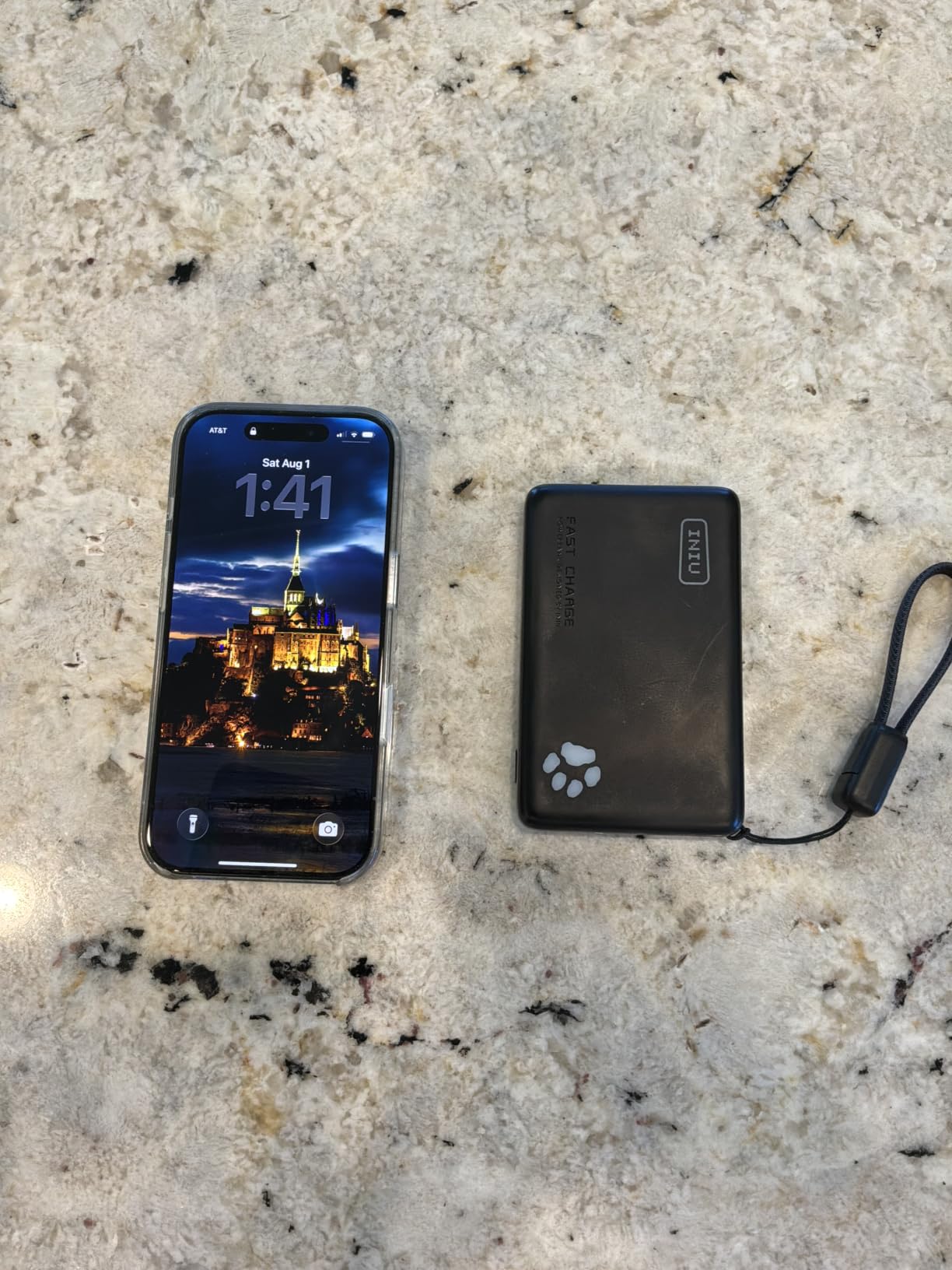
The missing percentage display is the main compromise. Instead of a digital readout you get four LED dots, which means you cannot tell the difference between 25% and 45% remaining. If that matters to you, the INIU P55 (review #3 above) is a step up at a small size penalty.
Who this is good for
Minimalist travelers who want the smallest 45W bank available. Anyone who has worn out cables on previous power banks and wants a replaceable design.
Who should skip it
Users who need precise battery readout should pick the INIU P55 instead. Anyone running a laptop needs at least the UGREEN Nexode.
How to Choose the Best Power Bank for International Travel?
There are four things that actually matter when picking a travel power bank: airline compliance, capacity tier, USB-C PD output, and brand reliability. Get these right and the rest is preference. Get any of them wrong and you are either losing capacity at security or running out of charge on day three of the trip.
Airline rules: 100Wh, 27,000mAh, carry-on only
Every power bank in this roundup is rated below 100Wh, which is the FAA and IATA carry-on limit for lithium-ion batteries. That is the only number you need to remember at the gate. The conversion to mAh depends on the cell voltage: most modern banks use 3.7V cells, so 100Wh works out to about 27,000mAh. Some banks quote 3.85V cells, which gets you to 26,000mAh at 100Wh. Either way, anything labeled 27,000mAh or higher requires airline approval, and anything over 160Wh is banned outright on passenger flights.
Power banks must stay in carry-on luggage, not checked bags. This rule is universal across IATA-member airlines and tightened further in 2026 after several cabin-fire incidents involving lithium-ion batteries. Some carriers, including Singapore Airlines, Korean Air, and Cathay Pacific, have added additional rules about keeping the bank within reach (not in an overhead bin) and not actively using it to charge during takeoff or landing.
If you are flying to or through China, look for CCC certification. Most major brands carry it, but budget no-name banks often do not, and customs in Beijing and Shanghai can hold a non-CCC bank at the checkpoint. Anker, INIU, UGREEN, and Belkin all have CCC certification on their current travel lineup.
Match capacity to your trip
A useful rule of thumb: 10,000mAh covers a city break with a phone and earbuds; 20,000mAh covers a multi-device trip with a phone, tablet, and watch; 25,000mAh is the maximum capacity that still flies without airline approval. Real-world capacity is about 60-70% of the rated number, because voltage conversion and heat loss eat the rest. A 10,000mAh bank delivers roughly 6,000-7,000mAh to your phone, which is two full iPhone 16 charges, not three.
The Anker Prime at 27,650mAh is the largest legal size without airline approval. Above that you need to file paperwork with the carrier at least 72 hours before departure, which most travelers skip.
USB-C Power Delivery wattage
Wattage matters as much as capacity. A 10,000mAh bank with 10W output charges an iPhone slowly; the same bank with 45W output charges it from 0 to 70% in 30 minutes. For phones, 20W is the minimum for fast charging, 30W is the sweet spot, and 45W future-proofs you for faster iPhone and Galaxy protocols. For laptops, you need 60W minimum for a MacBook Air, 100W for a MacBook Pro 14, and 140W for a 16-inch Pro.
USB-C PD 3.1 (the spec behind 140W and 240W output) is supported on the Anker 737 and the Anker Prime in this list. Older PD 3.0 caps at 100W, which is still plenty for most travelers.
Ports, cables, and weight
Three ports is the modern minimum: two USB-C for laptop and phone, and one USB-A for legacy accessories like older cameras and reading lights. Built-in cables eliminate a packing item but wear out faster than replaceable cables. Built-in cables that retract are the best of both worlds if the bank has one.
Weight is the silent killer of good intentions. A 25K laptop bank at 1.3 lb is fine in a backpack but uncomfortable in a jacket pocket. For carry-on-only trips with weight limits (Ryanair, Wizz Air, and other budget carriers enforce 15 lb carry-on caps), the math gets tight. The UGREEN Nexode at 420 g is the lightest 20K option in this list.
Brand and warranty
Brand reliability is a real filter after the Aukey fake-review scandal removed one of Amazon’s top sellers a few years back. Stick with brands that have been on the platform for 5+ years with documented warranty support: Anker, INIU, UGREEN, Belkin, and Baseus. Warranty length varies from 18 months (Anker, Belkin) to 3 years (INIU), and r/onebag users consistently rank warranty as a tie-breaker between close competitors.
For more on packing light for international travel, my guide to the best carry-on suitcases for international travel covers bags that pair well with a 1.3 lb power bank. If you are checking luggage instead, the best checked luggage for international travel roundup covers hard-shell options that handle the rough baggage system.
Safety certifications
Look for UL, CE, FCC, and CCC listings in the product page. Anker’s ActiveShield and UGREEN’s thermal monitoring are proprietary safety layers on top of those baseline certifications. Avoid banks that do not list any of these marks: they are often the ones with inflated capacity claims and minimal thermal protection.
For travelers heading to high-risk regions, my guide on how to notify your bank and protect your cards before international travel pairs well with a power bank, because a dead phone means a dead card in many countries. Drone travelers should also check how to research drone laws in a foreign country before flying with extra batteries.
Frequently Asked Questions
Can you bring a 20000mAh power bank on a plane international?
Yes. A 20,000mAh power bank using 3.7V cells works out to about 74Wh, which is well below the 100Wh FAA and IATA carry-on limit. Every bank in this roundup at 20K capacity is flight-legal worldwide, including on Singapore Airlines, Korean Air, Cathay Pacific, and European carriers. The bank must stay in your carry-on luggage, not in checked bags, and should be within reach during takeoff and landing on carriers that tightened rules in 2025 and 2026.
What type of power banks are allowed on international flights?
Lithium-ion power banks up to 100Wh are allowed in carry-on luggage without airline approval. Banks between 100Wh and 160Wh require carrier approval at least 72 hours before departure. Anything over 160Wh is banned on passenger aircraft. The bank must travel in cabin baggage, not checked luggage. For travel to or through China, look for CCC certification in addition to UL, CE, or FCC marks.
Is a 20000mAh power bank allowed in flight TSA?
Yes, a 20,000mAh power bank using 3.7V cells equates to roughly 74Wh, which is under both the 100Wh TSA limit and the 100Wh FAA carry-on limit. TSA screens power banks in carry-on bags at the security checkpoint. The rule applies on domestic US flights and international flights departing from US airports. Power banks must not be in checked luggage on any carrier.
What is the best power bank to take on a plane?
For most travelers, the Anker Laptop Power Bank 25K with 165W total output is the best balance of capacity (25,000mAh, exactly at the 100Wh ceiling), laptop-grade 100W USB-C ports, and a smart display. For phone-only travelers the INIU P55 10,000mAh 45W is lighter and cheaper, and for laptop power users the Anker Prime 27,650mAh pushes the legal capacity to the maximum without crossing the 100Wh line.
What is the best power bank for international travel?
The best power bank for international travel is the Anker Laptop Power Bank 25K. It hits the 100Wh airline ceiling, has three 100W USB-C ports for laptop, tablet, and phone charging, dual built-in cables, and a smart display that shows real-time wattage and battery health. For shorter trips the INIU P55 10,000mAh 45W is the best value, and for power users the Anker Prime 27,650mAh 250W pushes capacity to the legal maximum.
The Bottom Line
The best power banks for international travel all clear the same hurdle: under 100Wh, in your carry-on, with USB-C PD fast charging. The Anker Laptop Power Bank 25K is the right pick for most travelers because it hits the airline ceiling and has three 100W ports. The INIU P55 is the right pick for phone-only trips. The Anker Prime is the right pick if you push a 16-inch laptop every day on the road.
Whatever you choose, charge it the night before, pack it in your personal item (not checked luggage), and label it if you are flying to China for CCC clarity. A good power bank is the cheapest insurance on your packing list, and any of the eight above will see you through a long-haul flight and a multi-country itinerary. For more on international travel gear and prep, browse the rest of the Wisatalengkap travel guides.