
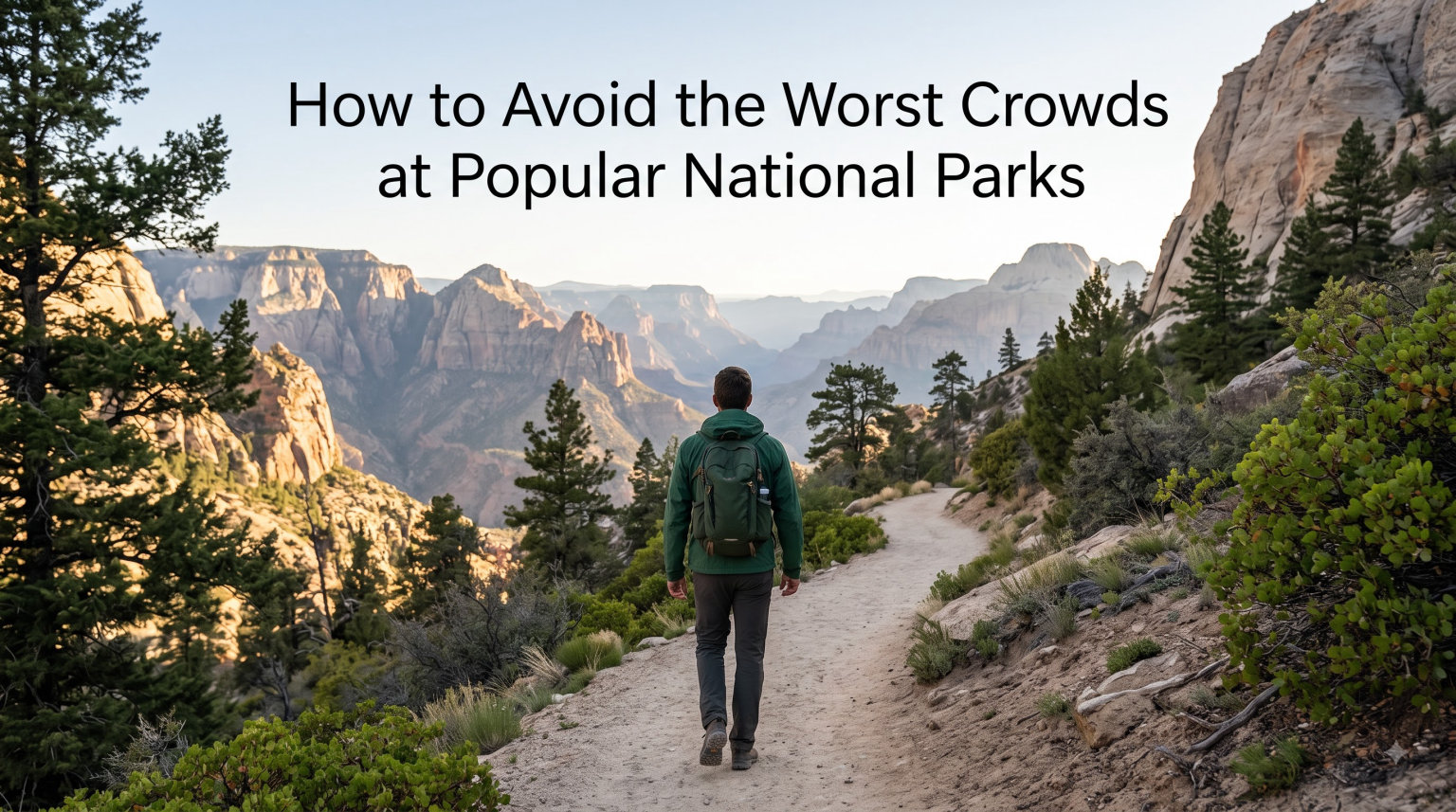
I learned this lesson the hard way at Zion National Park on a Saturday in July. After sitting in a shuttle line for two hours, watching tour buses unload at every stop, and squeezing past 40 people on the lower half of Angels Landing, I knew I needed a different approach. Since then, I’ve spent over 200 days exploring America’s busiest parks, and I’ve refined a system that lets me enjoy them with a fraction of the crowds. This guide shares exactly how to avoid national park crowds using timing, route selection, and a few tricks most visitors never try.
National parks hit a record 325.5 million visits in 2026, and the most popular destinations feel it every weekend. The good news is that with a little planning, you can still find solitude in these wild places. Let’s walk through what actually works.
Table of Contents
Why National Parks Are More Crowded Than Ever
National parks are crowded because more people than ever want to experience them, and most of those visitors arrive at the same time and place. National Park Service data shows visitation has grown by roughly 15% over the past decade, while staffing and infrastructure have struggled to keep up.
Reddit threads in r/nationalparks echo the same frustration from regular visitors. One commenter put it bluntly: parks have gotten almost unbearably crowded in the past 5-8 years. Summer weekends and holiday weeks concentrate that traffic into just a few days.
The pattern is predictable. Most visitors arrive between 10am and 2pm, park in the main lot, walk to the famous viewpoint that appears on every brochure, and leave. If you reverse that pattern, you share the park with a fraction of the people. Only about 2% of Yellowstone visitors hike more than a half-mile from their cars, so even a short walk changes everything.
Arrive Before Sunrise to Beat the Crowds
The single most effective way to avoid crowds at national parks is to arrive before sunrise. I aim to be at the trailhead or main viewpoint by 6:00am in summer and 7:30am in shoulder seasons. By 9am the parking lots start filling, and by 11am you’re competing with tour buses.
Here are the specific arrival windows that work for the busiest parks:
Zion National Park: Catch the first shuttle at 6:00am or hike the Canyon Overlook Trail from the parking lot before 7:00am.
Yellowstone: Be at major geyser basins by 7:00am, before the Old Faithful crowds arrive around 10am.
Yosemite: Enter via the Arch Rock entrance before 8:00am to avoid the backups at Tunnel View.
Grand Canyon: Watch sunrise at Mather Point, then walk the Rim Trail while the tour buses are still loading at Bright Angel Lodge.
Early arrival also gives you better wildlife sightings and softer light for photography. I’ve had elk walk right past me at sunrise in Rocky Mountain when the same trails were jammed by midday.
Use Alternative Entrances and Backdoor Routes
Most visitors only know the main entrance, which is exactly why it feels crowded. Every major park has quieter entry points, and locals use them for good reason. In Yosemite, far fewer people approach from the east, and the Tioga Pass entrance drops you straight into the high-country meadows without the valley traffic.
Yellowstone has five entrances, but 70% of visitors enter through the South or West gates. The Northeast Entrance via Cooke City is one of my favorites, and you can often drive straight to Lamar Valley without seeing another car. Glacier National Park has a similar split: the Going-to-the-Sun corridor jams up, but the Two Medicine and Many Glacier areas stay peaceful well into August.
Tips for choosing an alternative entrance:
Check a map before booking lodging so your drive-in avoids the busiest gate.
Call the park ranger station for current road and construction updates.
Plan to arrive early even at quieter entrances, since word tends to spread among repeat visitors.
Hike Lesser-Known Trails and Walk Past the Crowds
Once you’re in the park, walk past the crowds. Even at the Grand Canyon, walking half a mile along the Rim Trail drops visitor density dramatically. At Yosemite, the crowds cluster near the base of Yosemite Falls, but a short detour onto the Upper Yosemite Falls trail empties out within 15 minutes.
Topographic maps are a secret weapon here. The official park brochure only shows the marquee attractions, but a USGS quad map reveals a network of lesser-known trails branching off the main routes. I always download a topo map on my phone before losing signal.
A few underused trails to consider:
Zion: The Watchman Trail is far quieter than the Riverside Walk and offers great light in late afternoon.
Acadia: The Beehive Trail and the quiet eastern side of Jordan Pond see a fraction of the Cadillac Mountain crowds.
Olympic: Hurricane Hill in the off-season, plus the coastal trails at Rialto and Second Beach outside peak hours.
Time Your Visit: Best Days, Months, and Seasons
If your schedule has any flexibility, timing is the cheapest crowd-avoidance tool available. Weekdays are roughly 40-60% less crowded than weekends at most parks, with Tuesday and Wednesday the calmest days. Mondays often see weekend overflow, and Fridays bring the next wave.
The shoulder seasons (late April to mid-May, and September through mid-October) give you summer weather with thinner crowds. I’ve walked through Mariposa Grove in Yosemite on a mid-October morning and barely seen anyone, while the same grove in July was bumper-to-bumper.
A rough seasonal crowd calendar for busy parks:
Peak (June to mid-August): Expect 80-100% of maximum crowds. Reserve lodging 6-12 months ahead.
Shoulder (April-May, September-October): 40-60% crowds, mild weather, my favorite time to go.
Off-peak (November to March): 10-30% crowds, but check weather and road closures. Snow tires are often required.
Explore Evenings and Sunset Hours
Most visitors leave the park by 5pm, which makes sunset one of the most underused crowd windows. I like to plan my day around sunrise and sunset, then rest during the midday peak. By the time the shuttle lines empty out and the tour buses pull away, the parks transform.
Sunset at Mesa Arch in Canyonlands draws its own crowd, but most other viewpoints empty quickly. In Arches, the Windows section is busy at golden hour but peaceful by 7:30pm in summer. Bring a headlamp and check sunset times before you go.
Evening exploration also helps with timing the popular spots. If a trail like Angels Landing or the Mist Trail feels too packed in the morning, head back at 6pm when foot traffic drops sharply.
Consider Underrated National Parks and State Park Alternatives
If you’ve tried all the tricks at the big-name parks and still want more solitude, swap to a less crowded national park. These tend to deliver the same scenery with one-tenth the visitors:
North Cascades (Washington): Glacier-carved peaks without the lines at Mount Rainier.
Great Basin (Nevada): Bristlecone pine groves and dark skies, visited by fewer than 150,000 people per year.
Isle Royale (Michigan): A remote island with wolves and moose, reachable only by boat or seaplane.
Black Canyon of the Gunnison (Colorado): Steep canyon walls with the crowds of a state park.
State parks can also be national park alternatives worth considering. Michigan’s Porcupine Mountains, Vermont’s Smugglers’ Notch, and Virginia’s Shenandoah offer national-park-quality scenery with small-town driving and easy parking.
FAQs
How early should I arrive at a national park to avoid crowds?
Arrive at least 60-90 minutes before sunrise in summer, or by 7:30am in shoulder seasons. At Zion and Yellowstone specifically, being at the trailhead by 6:00am typically gives you 90% fewer encounters than a 10am start.
What are the least crowded national parks in the United States?
Some of the least crowded national parks include Isle Royale in Michigan, Great Basin in Nevada, North Cascades in Washington, and Black Canyon of the Gunnison in Colorado. Each sees under 200,000 annual visitors while offering dramatic scenery.
Are national parks getting too crowded?
Yes, visitation hit record levels in recent years. National Park Service data shows more than 325 million visits annually, with popular parks like Zion, Yellowstone, and Yosemite feeling the impact most heavily. Strategic timing and route planning are now essential for a quality visit.
What is the best month to visit national parks without crowds?
Late September through mid-October is the best window for most parks. Crowds thin out after Labor Day, weather stays mild, and wildlife is active. Late April to mid-May is a strong secondary option before summer peak season arrives.
Final Thoughts on Avoiding National Park Crowds
Learning how to avoid the worst crowds at popular national parks comes down to three habits: arrive before sunrise, walk past the main viewpoint, and visit during shoulder season whenever you can. Each one of those shifts cuts your encounters with other visitors in half.
If you only do one thing differently this year, set your alarm 90 minutes earlier and watch the park wake up. That’s been the most rewarding change in my own trips, and it’s the one piece of advice I wish someone had given me before that first crowded Zion summer.