
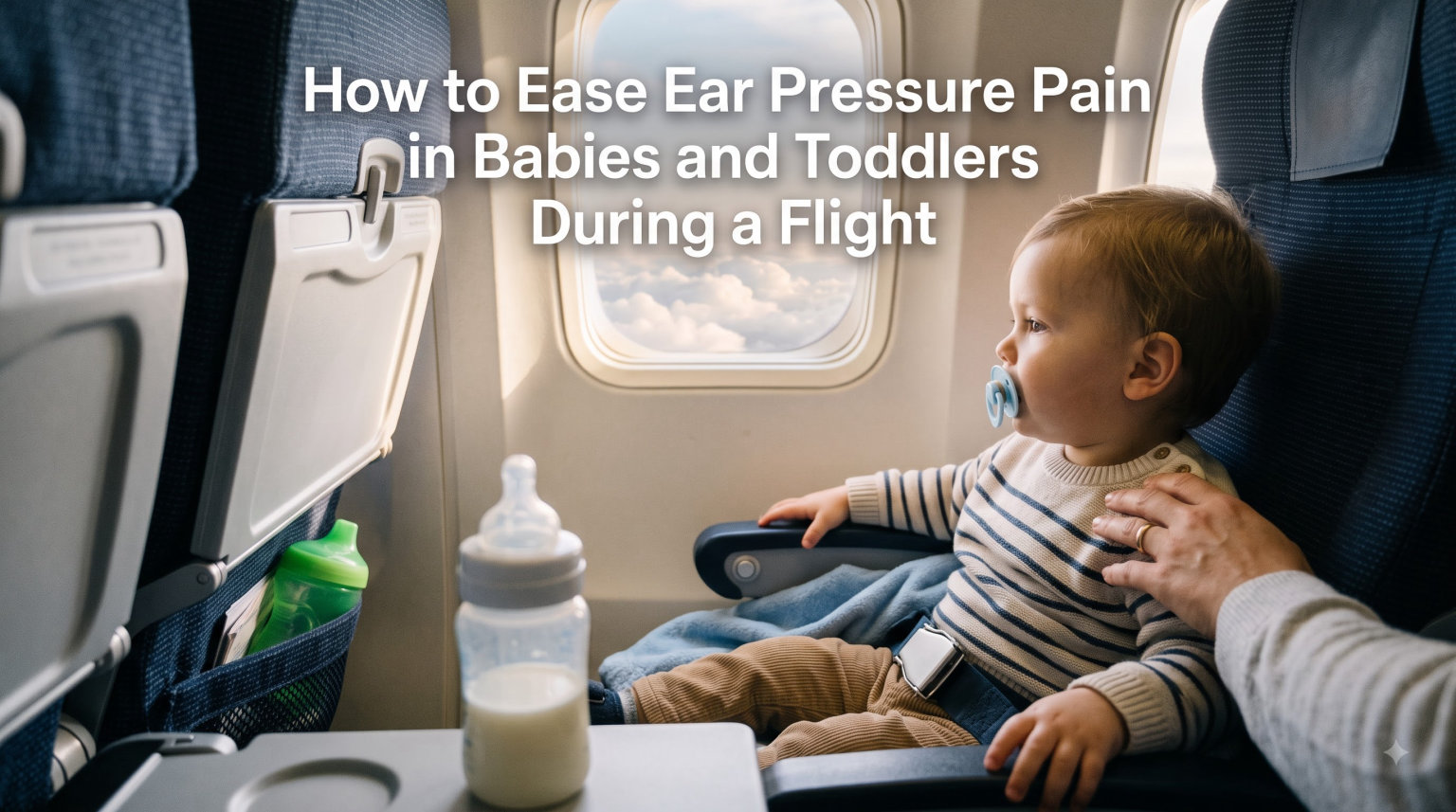
I still remember the first time my daughter screamed through an entire descent on a flight from Jakarta to Bali. She was eight months old, completely red-faced, and I felt helpless.
That was the flight that made me research everything pediatricians and ear specialists say about babies and ear pressure on planes. I have since flown with my kids on more than thirty flights, and I have pulled together what actually works.
If you are about to fly with a baby or toddler, this guide is for you. I have collected pediatric advice, real parent experiences from forums, and the small details that make a huge difference mid-flight.
Here is the quick answer most parents want first: baby ear pain after flying usually fades within minutes to a few hours after landing. In most cases, any discomfort is completely gone within 24 hours. If it lasts longer than that, especially with fever or ear tugging, it is worth a call to your pediatrician to rule out an ear infection.
Now let us walk through exactly how to prevent and treat ear pressure pain, broken down by age, flight phase, and what to do when the plane is back on the ground.
Table of Contents
What Causes Ear Pressure Pain During a Flight
Ear pressure pain during a flight, often called airplane ear or ear barotrauma, happens when the air pressure inside the middle ear cannot keep up with the rapid pressure changes in the airplane cabin.
During takeoff, cabin pressure drops quickly as the plane climbs. During landing, it rises just as fast as the plane descends toward thicker air. Your middle ear is a small, air-filled space behind the eardrum, and it needs to equalize with the cabin pressure to stay comfortable.
A tiny tube called the Eustachian tube connects the middle ear to the back of the throat. When you swallow, yawn, or chew, this tube opens briefly and lets air move in or out. That small pop or shift you feel is pressure equalizing. When the tube cannot open fast enough, the eardrum stretches inward or outward and you feel that familiar ache.
Cabin pressure changes are most aggressive during the last 30 minutes of descent and the first 15 minutes after takeoff. This is why most ear pain happens during those windows, not in the middle of the flight.
Why Babies and Toddlers Feel Ear Pain More Than Adults
Babies and toddlers feel ear pain on planes more intensely than adults because their Eustachian tubes are smaller, more horizontal, and more easily blocked than fully developed adult tubes.
Adults can deliberately swallow, yawn, or do the Valsalva maneuver to pop their ears on command. Babies cannot. They rely entirely on natural actions like sucking, swallowing during feeds, and crying to open those tiny tubes.
Add congestion from a cold, allergies, or even teething mucus, and the tubes stay stubbornly closed. Pressure builds, the eardrum stretches, and your little one lets you know about it in the loudest way possible.
Another factor is positioning. Babies who lie flat for long stretches have a harder time draining their middle ear. Upright holds during descent can make a noticeable difference, which is why flight attendants and pediatricians both suggest keeping little ones sitting up when the pressure is changing most.
Practical Remedies by Age Group
There is no single remedy that works for every age. I have broken the best techniques down into the windows parents ask about most, since what works for a three-month-old is very different from what works for a two-year-old.
Under 6 Months: Pacifier, Bottle, and Breastfeeding
For babies under six months, sucking is the most reliable way to open the Eustachian tube. The repetitive swallowing motion that comes with feeding is exactly what you want during pressure changes.
Start a feed, bottle, or pacifier about 15 minutes before descent begins and keep it going through touchdown. The continuous swallowing motion is what does the work, not the milk itself. Even small sips count.
If your baby refuses to eat, a pacifier alone often helps. Hold your baby upright during the descent, since a reclined position can worsen pressure buildup in tiny ear canals.
If your baby starts to cry, do not panic. Crying actually forces the Eustachian tube open, which is one reason pediatricians say a crying baby often feels better faster. Comfort them, but recognize that those tears may actually be helping.
For newborn flyers especially, the American Academy of Pediatrics suggests waiting until at least two weeks old before flying, which gives the immune system and ear structures a small head start.
6 to 12 Months: Snacks, Sips, and Sucking
Between six and twelve months, you have more tools in your kit. Soft puffs, yogurt melts, or a small piece of banana can keep your baby swallowing through descent, which often lasts longer than parents expect.
A sippy cup with water or formula works well, especially since most babies this age enjoy holding the cup themselves. That independence can also be a great distraction. If your baby still uses a pacifier, keep it as a backup in case the snacks lose their appeal.
One thing I learned the hard way after a rough flight from Singapore: short feeds are not enough. On a 45-minute descent, a baby who only nurses for three minutes will likely still feel pressure as the cabin continues to compress.
Plan for longer feeding windows or repeat snacks every few minutes through the descent. Some parents find that offering small sips in quick succession works better than one long drink.
1 to 3 Years: Chewing, Talking, and Distraction
Toddlers are old enough to follow simple instructions, which opens up more options. Chewing gum is the classic remedy, but most pediatric dentists suggest waiting until age four to avoid choking risk.
Instead, offer a soft snack during descent. Crackers, fruit strips, or a lollipop for toddlers who can handle hard candy safely all encourage the swallowing motion you need.
Talk to your toddler about what is happening. Saying things like, “We are going down now, so let us pretend to chew a giant sandwich,” turns pressure relief into a game. Singing, yawning on purpose, and drinking through a straw also help because they all trigger the same muscle movements that open the Eustachian tube.
For toddlers who love screen time, a short video or story can keep them swallowing through drinks without even realizing it. Pair it with a sippy cup of water and you have a winning combination.
7 In-Flight Techniques That Actually Work
After talking to dozens of parents and reading every pediatric source I could find, these seven techniques consistently come up as the most effective for calming ear pain during a flight.
- Feed or use a pacifier at takeoff and landing. Start 15 minutes before descent and keep it going through touchdown for babies under 12 months. The swallowing motion is the goal.
- Wake your baby for descent. A sleeping baby cannot swallow on cue. Waking them up gently 20 minutes before landing lets you start the feeding routine in time for the pressure peak.
- Use saline spray beforehand. A few drops of saline in each nostril 30 minutes before boarding can loosen mucus and help the Eustachian tubes stay clear throughout the flight.
- Hold your baby upright. Sitting upright helps drainage and keeps pressure from pooling in the head and ears. Avoid reclining the seat during descent if possible.
- Offer sips or snacks often. Even on shorter flights, frequent small swallows work better than one big drink. Plan on offering something every few minutes during descent.
- Try the Valsalva maneuver for older kids. Pinch the nostrils closed and have your child gently blow through the nose. Never do this forcefully and never with a baby, since it can damage tiny ear structures.
- Let them cry if needed. This is the one parents hate hearing, but crying opens the Eustachian tube naturally. Comfort them, but do not feel guilty if they wail through the last ten minutes of descent.
Pre-Flight Preparation Checklist
Most ear pain can be prevented before you ever board. Use this checklist the morning of your flight to give your baby or toddler the best shot at a comfortable journey.
- Clear congestion early. Saline spray, a nasal aspirator, or a steamy bathroom session 30 to 60 minutes before heading to the airport helps drain the sinuses and Eustachian tubes.
- Pack two of everything. Bottles, pacifiers, snacks, and sippy cups. Dropped pacifiers mid-descent are a rite of passage, but backups save the day and reduce panic.
- Time feeds around the descent. Check your flight details and plan to be mid-feed 15 minutes before the estimated landing time. Set a phone alarm if needed.
- Ask your pediatrician about decongestants. For older toddlers, a dose of children’s decongestant 30 minutes before landing can help open the airways. Only use this if your doctor has approved it.
- Bring a comfort item. A favorite blanket, small stuffed animal, or even a parent’s worn t-shirt can distract a fussing toddler long enough for the pressure to equalize.
- Dress in layers. Cabin temperature can swing, and a comfortable baby is one less thing to worry about while you focus on pressure management.
- Book early morning flights when possible. Babies tend to be calmer in the morning, and shorter total travel days mean less accumulated fatigue, which makes pressure feel worse.
Post-Flight Care: What to Do If Ear Pain Lingers
If your baby is still fussy after landing, the pain has not fully disappeared. It usually means the Eustachian tubes are still adjusting to the new ground-level pressure.
Continue offering feeds or sips for the next hour or two. A warm compress held gently over the outer ear can soothe aching eardrums and feels comforting. A short nap in an upright carrier or stroller also helps drainage.
Steam works wonders too. Run a hot shower and sit in the bathroom with your child for ten minutes. The moist air helps loosen any remaining congestion in the middle ear.
Most ear discomfort from flying resolves within 24 hours. If your child is still tugging at their ears, running a fever, or crying in pain a full day later, schedule a visit with your pediatrician to rule out an ear infection or, in rare cases, a perforated eardrum from the pressure change.
When to Delay the Flight or Call a Doctor
Sometimes the safest choice is to postpone travel. I know that is not what anyone wants to hear when flights are booked and bags are packed, but it matters.
Reschedule if your baby has an active ear infection, has had ear surgery within the past two weeks, or has a severe cold with thick congestion. Flying with any of these makes ear pain much worse and can even damage the eardrum.
Talk to your pediatrician before flying if your child has had recurrent ear infections, has ear tubes, or has any condition affecting the sinuses or airways. A quick checkup the week before your trip can save a lot of mid-air misery and give you peace of mind.
Also be cautious if your child has had a recent cold, even one that seems to have cleared up. Residual mucus in the Eustachian tubes can still cause problems in the air. A day or two of saline spray and observation before flying is often worth the wait.
Frequently Asked Questions
How long do babies’ ears hurt after flying?
Most babies’ ear pain fades within minutes to a few hours after landing. In most cases, any discomfort is completely gone within 24 hours. If pain or fussiness lasts longer than a day, especially with fever or ear tugging, see your pediatrician to rule out an ear infection.
How to unclog ear pressure from flying?
The fastest way to unclog ear pressure after flying is to encourage swallowing, yawning, or chewing. For babies, continue feeding or using a pacifier. For toddlers, offer sips of water, soft snacks, or a chewy snack. A warm compress over the ear and an upright position also help drainage. If pressure persists for more than a few hours, see a doctor.
How can I protect my baby’s ears during a flight?
Protect your baby’s ears during a flight by feeding or using a pacifier during takeoff and especially during descent, when pressure changes fastest. Keep your baby upright, use saline spray beforehand to clear congestion, and wake them up about 20 minutes before landing so you can start feeding in time. Pack backups of bottles and pacifiers in case one falls.
Final Thoughts on Flying with Little Ears
How to ease ear pressure pain in babies and toddlers during a flight comes down to three things: feed them through the descent, keep them upright, and start early.
Most parents only need a bottle, a pacifier, and a calm approach. If you remember nothing else, remember this: the descent is where the pressure hits hardest, so be ready to feed or offer sips before the wheels go down, not after.
A little planning goes a long way. Pack extra supplies, time your feeds around the descent, and trust that any crying is doing more good than harm. With the right preparation, your baby can fly comfortably and you can enjoy the trip instead of dreading it.
Safe travels, and may your next flight be a quiet one.