
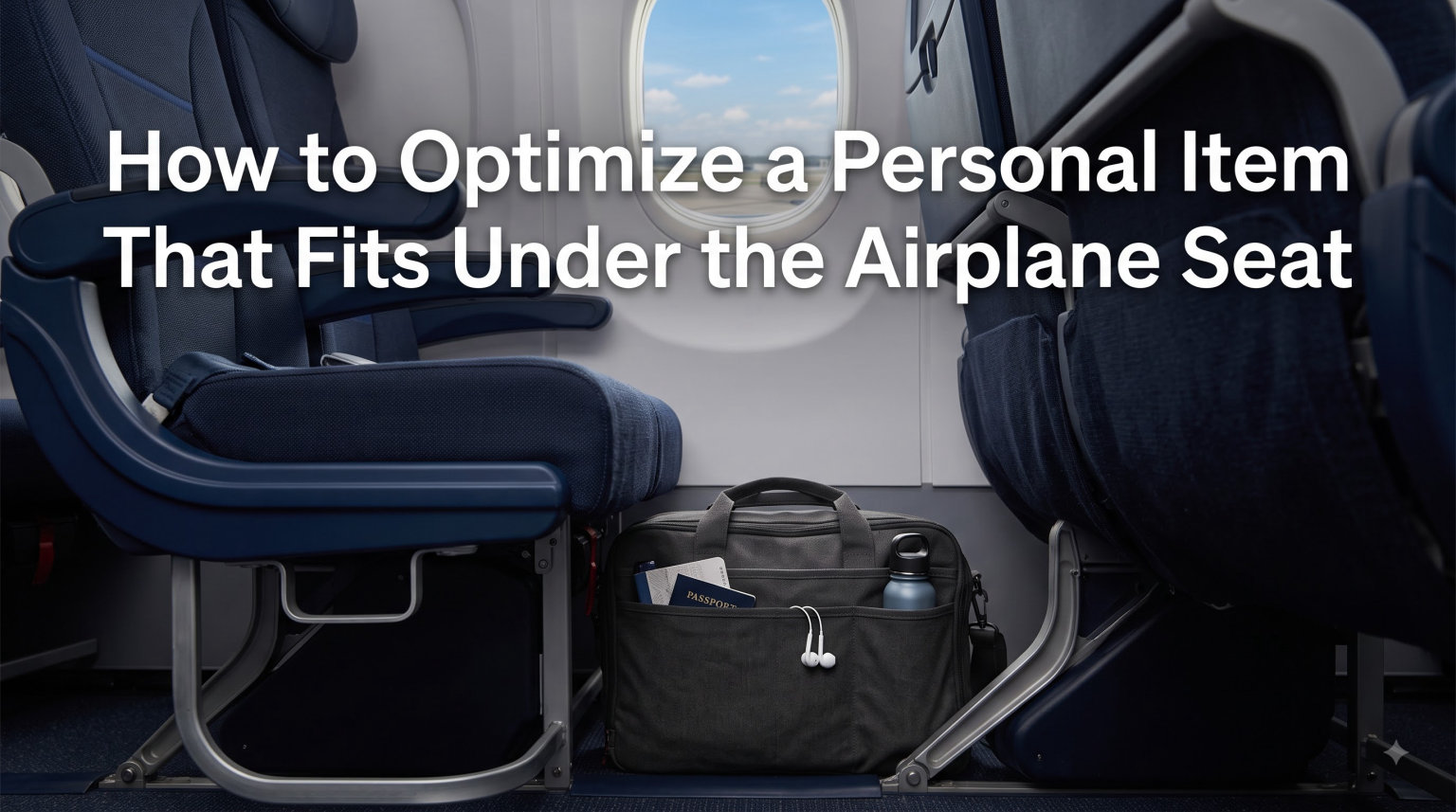
Flying with only a personal item that fits under the airplane seat saves money, speeds up boarding, and keeps your essentials within arm’s reach. Whether you’re a backpacker in Bali, a business traveler heading to Singapore, or a budget flyer exploring Europe, mastering the art of the under-seat bag is one of the smartest travel skills you can build.
After a decade of onebag travel and dozens of flights with Indonesian carriers like Garuda Indonesia and Citilink, I’ve learned that the secret isn’t buying a smaller bag. It’s knowing exactly what your airline allows, picking the right bag shape, and packing with intention. This guide shows you exactly how to optimize a personal item that fits under the airplane seat, so you skip checked bag fees and never worry about overhead bin space again.
Table of Contents
What Is a Personal Item and Why It Matters for Air Travel
A personal item is a small bag the airline allows in addition to your carry-on, designed to slide under the seat in front of you. Most airlines limit it to roughly 18 x 14 x 8 inches (45 x 35 x 20 cm), but exact limits vary by carrier and route.
The personal item matters because budget airlines like AirAsia, Lion Air, and Citilink often include it free while charging for every other piece. On basic economy fares with full-service carriers, you usually get one personal item included. Knowing the difference between a personal item and a carry-on can save you between 150,000 IDR and 2,000,000 IDR per round trip.
Your personal item also keeps valuables, medications, electronics, and in-flight comfort items close. A well-packed under-seat bag means you can grab your noise-cancelling headphones, snacks, and passport without standing up or opening the overhead bin mid-flight.
Airline Dimension Requirements for Personal Items
Every airline sets its own size limits for personal items, and these dimensions change based on aircraft type, route, and fare class. The table below shows the most common personal item size limits for major international carriers and Indonesian airlines, so you can plan your packing strategy before you fly.
| Airline | Max Personal Item Size | Weight Limit | Notes |
|---|---|---|---|
| American Airlines | 18 x 14 x 8 in (45 x 35 x 20 cm) | No weight limit | Must fit under seat in front of you |
| United Airlines | 17 x 10 x 9 in (43 x 25 x 22 cm) | No weight limit | Basic economy includes personal item only |
| Delta Air Lines | 18 x 14 x 8 in (45 x 35 x 20 cm) | No weight limit | Same limits for domestic and international |
| Southwest Airlines | 18.5 x 13.5 x 8.5 in | No weight limit | One personal item included free |
| JetBlue | 17 x 13 x 8 in (43 x 33 x 20 cm) | No weight limit | Most generous free baggage policy in US |
| Frontier Airlines | 18 x 14 x 8 in (45 x 35 x 20 cm) | 35 lbs (15.8 kg) | Strict gate enforcement on budget fares |
| Spirit Airlines | 18 x 14 x 8 in (45 x 35 x 20 cm) | No weight limit | Personal item free, carry-on costs extra |
| Ryanair | 15.7 x 9.8 x 7.9 in (40 x 25 x 20 cm) | No weight limit | Smaller than most, plan carefully |
| EasyJet | 15.7 x 11.8 x 7.9 in (40 x 30 x 20 cm) | No weight limit | Under-seat free on all fares |
| Emirates | 18 x 14 x 8 in (45 x 35 x 20 cm) | 15 lbs (7 kg) | Weight enforced on most fares |
| Singapore Airlines | 16.5 x 13 x 7 in (42 x 32 x 18 cm) | 10 lbs (4.5 kg) | Strictest weight enforcement in Asia |
| Garuda Indonesia | 40 x 30 x 20 cm | 7 kg | Domestic flights usually allow carry-on + personal item |
| Citilink | 40 x 30 x 15 cm | 7 kg | Strict sizer used at boarding gate |
| Lion Air | 40 x 30 x 20 cm | 7 kg | Free for all fares, but size strictly enforced |
| AirAsia Indonesia | 40 x 30 x 10 cm | No weight limit | One of the tightest personal item limits in Asia |
| Batik Air | 40 x 30 x 20 cm | 7 kg | Similar to Lion Air family rules |
Notice that Indonesian budget airlines tend to be stricter on weight (usually 7 kg) and slightly tighter on dimensions than US carriers. If you’re flying domestic in Indonesia with Citilink or AirAsia, your bag must genuinely fit the sizer at the gate, so compression matters.
How to Measure Your Bag Correctly Before You Fly
To measure your personal item, lay the empty bag flat and measure height, width, and depth at the widest, tallest, and deepest points, including any wheels, handles, and bulging pockets. Most airlines publish dimensions in linear inches or centimeters, and you need to fit all three numbers within the limit.
Use a soft tape measure for accuracy. If the bag looks puffy after packing, measure again because soft bags can compress to fit, while rigid bags cannot. I always measure packed and ready-to-fly because that’s what the gate agent sees.
Tip: bring a small printable sizer or check the airline’s published sizer image online. Print it at 100% scale, hold your packed bag next to it, and you’ll know within seconds whether you pass the gate check.
Best Types of Bags That Fit Under the Airplane Seat
Soft-sided backpacks are the best overall choice for under-seat personal items because they compress easily, fit odd-shaped cargo spaces, and survive being stepped on by other passengers. Duffel bags with no rigid frame are second best for weekend trips, while wheeled underseat bags work well for travelers who carry heavier loads.
I’ve flown with a 25-liter soft backpack on Garuda, Citilink, and AirAsia Indonesia for two years straight. The flexibility means gate agents rarely flag it, even when it’s visibly full. Hard-shell suitcases and rigid totes are the worst options because they don’t compress and will fail any tight sizer test.
For Indonesian travelers heading to tropical destinations, I recommend a water-resistant soft backpack with a dedicated laptop sleeve. It handles humidity, sudden rain showers, and the cobblestone streets of Yogya or Ubud without falling apart.
Bag Type Comparison
Soft backpacks win for compression and gate checks. Duffels win for weekend trips with clothes. Wheeled underseat bags win for older travelers or those carrying medical equipment. Rigid totes and hard cases are best avoided entirely.
Smart Packing Strategies to Maximize Under-Seat Space
The single best packing strategy for an under-seat personal item is to wear your bulkiest items onto the plane, including jacket, boots, and hat, freeing valuable bag space for essentials. Layering for the flight also helps you adapt to changing cabin temperatures.
Packing cubes transform chaotic bags into organized systems. Use one cube for tops, one for bottoms, and one for underwear and socks. They compress clothes flat and let you find items without unpacking the entire bag at security.
Compression bags or dry-sack style pack cubes can reduce your clothing volume by up to 40%. For a 5-day Bali trip, I fit everything into a 25-liter bag using two medium packing cubes and one small electronics pouch.
The 5-4-3-2-1 Packing Method
Pack 5 tops, 4 bottoms, 3 underwear, 2 pairs of socks, and 1 pair of shoes for any week-long trip. This formula forces you to plan a mix-and-match wardrobe and prevents overpacking. Add 1 swimsuit for tropical destinations.
Essential Items in Outer Pockets
Keep passport, boarding pass, phone, wallet, and medications in easily accessible outer pockets. Store in-flight comfort items like headphones, snacks, and a refillable water bottle in the top or side pocket so you never need to open the main compartment mid-flight.
Tips for Passing Gate Checks Every Time
To pass every gate check, choose a soft bag, pack it to compress easily, and avoid visibly bulging pockets or external straps. The most-cited strategy from r/OneBag travelers is to pick a bag that can be gently “stomped” into the airline’s sizer if needed.
One experienced Reddit user shared this trick: bring a small secondary purse alongside your main personal item so the gate agent has options if the main bag is borderline. They can place the smaller purse in the seatback pocket while your main bag stays under the seat.
Wear your bulkiest items through the airport. Heavy jackets, boots, and hats take up significant bag space, but they cost nothing extra to wear. I always board Garuda Indonesia flights wearing my sneakers and jacket, then store them in the overhead bin once seated.
Pack in-flight essentials in a small pouch that fits the seatback pocket. A 1-liter packing cube with headphones, lip balm, eye mask, and snacks means you never disturb your under-seat bag during the flight.
Common Mistakes to Avoid With Personal Items
The biggest mistake travelers make with personal items is treating the listed dimensions as flexible. They are not, especially on Indonesian budget carriers. Citilink and AirAsia gate agents use metal sizers, and oversize bags get gate-checked with surprise fees.
Another common mistake is bringing a rigid bag. Hard cases, framed totes, and rolling bags with hard shells do not compress. If the flight is full and the gate agent is strict, you will be forced to check your bag and pay the fee.
Avoid overstuffing your bag before you leave home. If your bag looks visibly puffy at the airport, it will look even puffier after security rescreening. Repack at the hotel before heading home, or carry a foldable tote for dirty laundry and souvenirs.
Climate-Specific Packing Tips for Tropical Destinations
For tropical destinations like Bali, Lombok, or Thailand, pack quick-dry fabrics, lightweight merino wool, and one pair of breathable walking shoes. Humidity and sweat will soak anything cotton within hours, so synthetic or merino options are far better for small bags.
Indonesian weather ranges from hot and humid on the coast to cool and rainy in the highlands. Bring one light rain shell that compresses to the size of your fist. It weighs less than 200 grams and saves you from soaked clothes on a sudden Bogor downpour.
If you’re traveling for diving, surfing, or hiking, check whether your gear can be rented at the destination. Bringing a 3mm wetsuit or 10-foot surfboard in your personal item is impossible. Most Indonesian dive shops rent full kits for less than 200,000 IDR per day.
Frequently Asked Questions About Under-Seat Personal Items
What size personal items can fit under an airplane seat?
Most airlines allow a personal item of about 18 x 14 x 8 inches (45 x 35 x 20 cm), but limits vary. United Airlines is smaller at 17 x 10 x 9 inches, while Garuda Indonesia and Lion Air allow 40 x 30 x 20 cm. Always check your specific airline’s published dimensions before packing.
What’s better for under seat personal items, a backpack or duffel?
A soft backpack is best for most travelers because it compresses, fits irregular spaces, and passes strict gate checks. Duffels work well for weekend trips with mostly clothing. Wheeled bags and rigid totes should be avoided because they do not compress into tight sizers.
How strict are Indonesian airlines about personal item size?
Citilink, Lion Air, and AirAsia Indonesia are very strict at the gate and use metal sizers. Garuda Indonesia is moderately strict. Bags that are visibly oversize are usually gate-checked with fees starting around 200,000 IDR. Always measure your bag packed and ready to fly.
Can I bring a laptop bag and a personal item on the same flight?
Some airlines like American and Delta allow a small personal item plus a laptop bag as a combined under-seat carry. Budget carriers like AirAsia and Citilink allow only one item, so your laptop must fit inside your main personal item. Check your airline’s specific rules to avoid extra fees.
How do I pack for a week with only a personal item?
Use the 5-4-3-2-1 method: 5 tops, 4 bottoms, 3 underwear, 2 pairs of socks, 1 pair of shoes. Add packing cubes, wear bulky items through the airport, and choose quick-dry fabrics. Most travelers can comfortably fit a 5 to 7-day wardrobe into a 25-liter soft backpack.
Final Thoughts on Optimizing Your Personal Item
Optimizing a personal item that fits under the airplane seat comes down to three habits: know your airline’s exact dimensions, choose a soft compressible bag, and pack with the 5-4-3-2-1 method. These small habits save hundreds of dollars per trip and make every flight faster and less stressful.
Next, measure your current bag against the table above, decide if you need an upgrade, and run a 30-day test pack before your next flight. You’ll be surprised how much fits when you stop treating your personal item like a mini suitcase and start treating it like a precision tool.