
Three hours into a cross-country drive, the snacks are crushed under a duffel bag, the phone charger has vanished somewhere between the seats, and nobody can find the sunscreen. Sound familiar? Every road tripper has lived through this chaos, and it almost always traces back to one thing: poor car packing.
Learning how to pack a car for road trip organized travel can be the difference between a smooth adventure and a stressful one. When everything has a designated spot, you spend less time digging and more time enjoying the drive. The right packing system also keeps loose items from becoming dangerous projectiles if you hit the brakes suddenly.
In this guide, I will walk you through every step of loading your vehicle so that gear stays organized from your driveway to your final destination. We will cover pre-trip planning, proven packing strategies, forum-tested organization hacks, and safety tips that most guides skip entirely.
Table of Contents
Pre-Trip Planning: Map Out Your Packing Strategy
Organization starts before you touch a single bag. The biggest mistake people make is tossing everything into the trunk the morning of departure and hoping for the best. A little planning goes a long way toward a clutter-free car.
Start by laying out everything you plan to bring at least two days before your trip. Seeing all your gear in one place helps you cut the excess and group similar items together. Most experienced road trippers agree that we overpack by about 30 percent on average, so be ruthless about what actually makes the cut.
The 3-3-3 Rule for Road Trips
The 3-3-3 rule is a simple guideline for daily provisions: pack 3 meals, 3 snacks, and 3 drinks per person per day. This keeps your food supply measured and prevents the overpacking problem that leaves no room for anything else.
I used this rule on a five-day trip through the Southwest last summer, and it cut my snack pile in half while still keeping everyone fed and happy. You can adjust the numbers based on how remote your route is, but having a baseline formula stops you from throwing random items into a cooler.
Create a Road Trip Checklist Before Loading
Write down a road trip checklist grouped by category: clothing, food, emergency supplies, documents, electronics, and comfort items. Check each group off as you load it, and you will never arrive at a campsite realizing you forgot the tent stakes.
A checklist also helps you assign bags by category so that each container has a clear purpose. When bags have jobs, passengers know exactly where to look when they need something.
The Essential Road Trip Checklist
Having a system for what to bring matters just as much as how you pack it. The key is prioritizing access so the things you reach for most often are never buried at the bottom of a pile.
The 5-4-3-2-1 Packing Rule
The 5-4-3-2-1 rule is a clothing packing formula designed to prevent overpacking while keeping enough outfits for variety. It breaks down to 5 tops, 4 bottoms, 3 dresses or layers, 2 pairs of shoes, and 1 jacket or accessory per person.
Our team has tested this formula on trips ranging from weekend getaways to two-week cross-country drives, and it works because it forces intentional choices. You can mix and match within those numbers, and laundry stops along the way handle the rest.
Categorize Your Essentials by Access Priority
Sort everything into three tiers based on how often you need it. Tier one items are things you reach for constantly: snacks, water, phone chargers, sunglasses, and trash bags. These belong within arm’s reach of the driver or front passenger.
Tier two covers items you need at stops but not while driving: meals, extra clothing layers, toiletries, and entertainment. These go in the back seat or an easily reachable part of the trunk. Tier three is everything you only need at your destination, like camping gear, bulk luggage, and sleeping bags, which can be packed deepest in the vehicle.
Do not forget the paperwork. Keep your license, registration, insurance, and a paper map in a dedicated folder in the glove box. Digital backups are great, but a dead battery can leave you stranded without your hotel reservation or route notes.
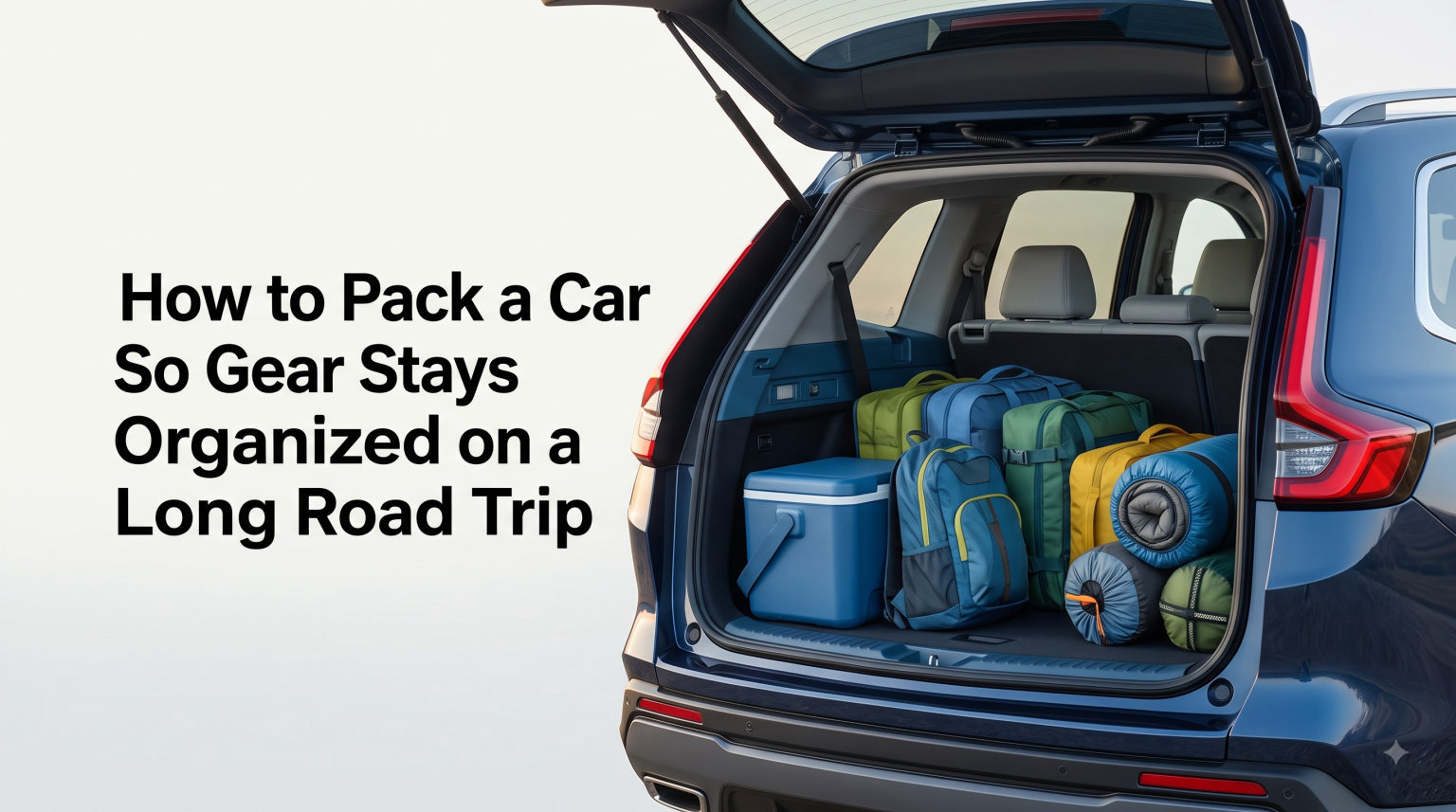
How to Pack a Car So Gear Stays Organized on a Long Road Trip
The loading order is where most people go wrong, and it is the single biggest factor in keeping gear accessible for the entire journey. Pack in layers from bottom to top and back to front, and you will rarely need to unpack anything to reach what you need.
Step 1: Load the Heaviest Items First and Lowest
Place your heaviest gear on the floor of the trunk or cargo area, pushed as far forward as possible. This keeps your vehicle’s center of gravity low, which improves handling and reduces the risk of heavy items shifting during sudden stops.
Coolers filled with ice, large camping equipment, and heavy duffel bags all belong here. Distribute weight evenly between the left and right sides so the car does not pull to one side on long highway stretches.
Step 2: Build a Foundation Layer with Flat Bins
Once the heavy items are placed, fill the gaps between them with flat storage bins or soft bags. This creates a stable platform for the next layer and prevents items from sliding around. I always pack a few medium-sized soft duffel bags because they conform to odd spaces better than rigid suitcases.
Suitcases are actually one of the worst choices for road trip packing because they waste space and create rigid walls that block access. Soft bags, packing cubes, and collapsible containers let you use every cubic inch of your cargo area.
Step 3: Pack Tier Three and Tier Two Items in Sequence
On top of your foundation, place tier three items you will not need until arrival. Then layer tier two items on top of those, positioned toward the rear of the trunk where you can reach them without unloading everything else.
If you are using a trunk organizer or storage bins with handles, position them so the handles face the back of the car. This lets you pull them out quickly at rest stops instead of wrestling with them from an awkward angle.
Step 4: Reserve Easy-Access Zones for Tier One Items
The final step is setting up your tier one zone. This is where road trip packing tips really pay off, because these are the items that prevent chaos during the drive. Assign the front seat footwell, center console, door pockets, and a small bag on the passenger seat for snacks, chargers, wet wipes, and trash bags.
When everything has a designated home before you pull out of the driveway, passengers will return items to their spots instead of tossing them wherever. That single habit keeps the car organized for the entire trip.
Car Organization Hacks That Actually Work
These hacks come straight from road trip communities on Reddit, camping forums, and experienced travelers who have logged thousands of miles. I have tested every one of them, and they solve the most common packing frustrations.
Binder clips are the most versatile tool in your car. Use them to close chip bags, clip receipts to the sun visor, bundle charging cables so they stop tangling, and even secure a trash bag to the headrest for a makeshift garbage can. A pack of large binder clips costs almost nothing and solves a dozen problems.
Shower caddies corral small items in the back seat. Hang one from the headrest or tuck it between the front seats to hold snacks, sunglasses, and small supplies. The compartments keep things from sliding around and make everything visible at a glance.
Clear storage bins let you see what is inside. When you pack gear in opaque bags, you end up opening five different ones to find a single item. Clear bins solve this instantly, and stackable versions maximize your vertical space in the trunk.
Back seat organizers keep passengers self-sufficient. These fabric organizers hang over the front seat backs and give kids or rear passengers pockets for tablets, water bottles, headphones, and toys. Everyone manages their own items, which cuts down on requests to the driver.
A collapsible trash can prevents the floor mess. One of the biggest complaints on road trip forums is trash piling up on floors and under seats. A small pop-up trash bin that collapses flat when not in use catches wrappers, napkins, and empty bottles before they scatter.
Mint tins and small containers hold loose items. Repurpose empty mint containers to store spare change for tolls, hair ties, pills, or small hardware like tent stakes. Label them and stack them in a console organizer for quick access.
Snack and Food Management Without the Mess
Food organization deserves its own section because snacks are the number one source of car mess on long trips. The key is containing food in designated zones so wrappers and crumbs never spread throughout the vehicle.
Pre-portion snacks into small containers or zip bags before the trip instead of bringing full-size packages. Bento-style boxes work well for creating mixed snack packs that each passenger can grab without opening multiple bags. Spill-proof water bottles with locking lids save seats from sticky disasters on bumpy roads.
Designate one bag or bin as the official snack station and keep it within reach. When snacks live in one place, wrappers and empty containers are more likely to end up in the nearby trash bag instead of stuffed into seat pockets.
Keeping Kids and Passengers Organized
Families face the biggest organizational challenge because kids generate chaos faster than adults can contain it. The solution is giving every passenger their own organized system and setting ground rules before departure.
Give each child a personal bag or organizer with their own snacks, entertainment, and comfort items. When kids know exactly where their things are, they stop asking the driver to find stuff, and arguments over shared items drop significantly. Backseat organizers with labeled pockets work perfectly for this.
Set a daily reset routine at every overnight stop. Spend five minutes returning everything to its designated spot so you start each morning with a clean, organized car. This single habit prevents the slow drift toward total disarray that happens over multi-day trips.
Traveling with Pets: Organization Tips
Pet travel organization is barely covered by most road trip guides, but it is a real challenge for anyone bringing a dog or cat along. A little planning keeps your pet comfortable and prevents fur, dirt, and food from taking over the vehicle.
Use a pet barrier or a secured travel crate to create a safe zone for your animal. This protects both your pet and your gear, because an unrestrained dog in a sudden stop becomes a serious hazard. Hammock-style seat covers catch fur and mud while giving your pet a comfortable surface.
Pack a dedicated pet kit with food, a collapsible water bowl, waste bags, a leash, and any medications. Store it in its own labeled bin so pet supplies never get mixed into human gear. Plan stops every two to three hours for water and exercise breaks to keep your pet calm and comfortable.
Emergency Preparedness and Safety
Safety is the most overlooked aspect of car organization, and it is where loose packing becomes genuinely dangerous. Every item in your vehicle that is not secured becomes a projectile in a sudden stop or collision at highway speeds.
Keep a well-stocked emergency car kit in an accessible location, not buried under luggage. Your kit should include a first aid kit, jumper cables, roadside flares or reflective triangles, a flashlight with extra batteries, basic tools, and a spare phone charger. Add water and non-perishable snacks in case you are stranded for hours.
Secure loose items with cargo nets, bungee cords, or straps whenever possible. Heavy objects on the rear shelf or piled high in the cargo area are especially dangerous because they can fly forward with tremendous force. If you would not want it hitting the back of your head at 70 miles per hour, tie it down or move it lower.
Keep jumper cables, a tire pressure gauge, and your spare tire accessible and in good condition. Check all of these before a long trip, because discovering a flat spare on the side of a rural highway is a scenario no one wants.
Climate-Specific Packing Advice
Different weather conditions demand different gear strategies, and most packing guides treat all trips the same. Adapting your packing to the climate you are driving through keeps you prepared without overloading the car.
For hot weather road trips, prioritize sun protection and cooling. Pack a cooler with extra ice packs, window shades for parked periods, and breathable clothing. Keep a spray bottle of water and a microfiber towel within reach for quick cool-downs during rest stops.
For cold weather trips, layering is your best space-saving strategy. Instead of packing one massive coat per person, bring thermal base layers, fleece mid-layers, and a packable shell jacket. Store blankets and warm gear in an accessible bin rather than buried in the trunk, since you may need them quickly if you break down in the cold.
For rainy or unpredictable conditions, use waterproof bags for electronics, documents, and clothing you want to keep dry. A small stash of umbrellas and rain jackets in an easy-access bin saves you from rummaging through the trunk in a downpour.
Staying Organized Throughout the Trip
Packing well on day one only matters if you maintain the system. Without discipline, even the best-packed car descends into chaos by day three. A few simple habits keep everything in order for the full journey.
Do a quick reset at every fuel stop or rest area. Take two minutes to collect trash, return items to their designated spots, and reposition anything that shifted during the last stretch of driving. These micro-resets prevent small messes from compounding into full disorganization.
Keep the trash bag visible and encourage everyone to use it immediately. When the trash bag is hidden or inconvenient, wrappers end up in cupholders, door pockets, and seat cracks. Empty it at every gas station so it never overflows.
Stick to your tier system throughout the trip. If an item moves up a tier in importance, physically relocate it to a more accessible spot. Staying flexible with your organization while keeping the system intact is what separates a clean road trip car from a disaster on wheels.
FAQs
What is the 3 3 3 rule for road trips?
The 3-3-3 rule means packing 3 meals, 3 snacks, and 3 drinks per person per day for your road trip. It provides a simple formula for provisioning so you bring enough food without overpacking. You can adjust the numbers based on how remote your route is and how often you plan to stop at restaurants or stores.
What is the 5 4 3 2 1 rule for packing?
The 5-4-3-2-1 rule is a clothing packing formula: 5 tops, 4 bottoms, 3 dresses or layering pieces, 2 pairs of shoes, and 1 jacket or accessory per person. It prevents overpacking while giving enough outfit variety for a multi-day trip. Mix and match within those numbers and use laundry stops to extend the supply.
How to organize your car for a long road trip?
Organize your car by sorting items into access tiers, loading heavy items first and lowest, using clear bins and soft bags instead of suitcases, and creating easy-access zones for frequently used items. Use hacks like binder clips, shower caddies, and back seat organizers. Maintain the system with quick resets at every rest stop.
What is the 3 3 3 rule for travel packing?
The 3-3-3 rule for travel packing means bringing 3 tops, 3 bottoms, and 3 pairs of socks and underwear per person. It is a minimalist clothing formula that works for trips of about one week when combined with laundry. For road trips specifically, many travelers use the food version of the rule instead: 3 meals, 3 snacks, and 3 drinks per day.
Conclusion
Packing a car so gear stays organized on a long road trip comes down to three principles: plan before you load, pack in a deliberate order, and maintain the system every day. When you use the tiered access system, load heavy items first and lowest, and deploy simple hacks like binder clips and clear bins, everything stays exactly where it should.
The road trip packing tips in this guide are designed to solve real frustrations that travelers face on every trip. From keeping snacks contained to securing gear against sudden stops, each strategy earns its place by making the journey smoother and safer.
Start with a checklist, lay out your gear two days early, and commit to a daily reset routine. Your future self, digging for a phone charger at a rest stop somewhere in the middle of nowhere, will thank you for it.