
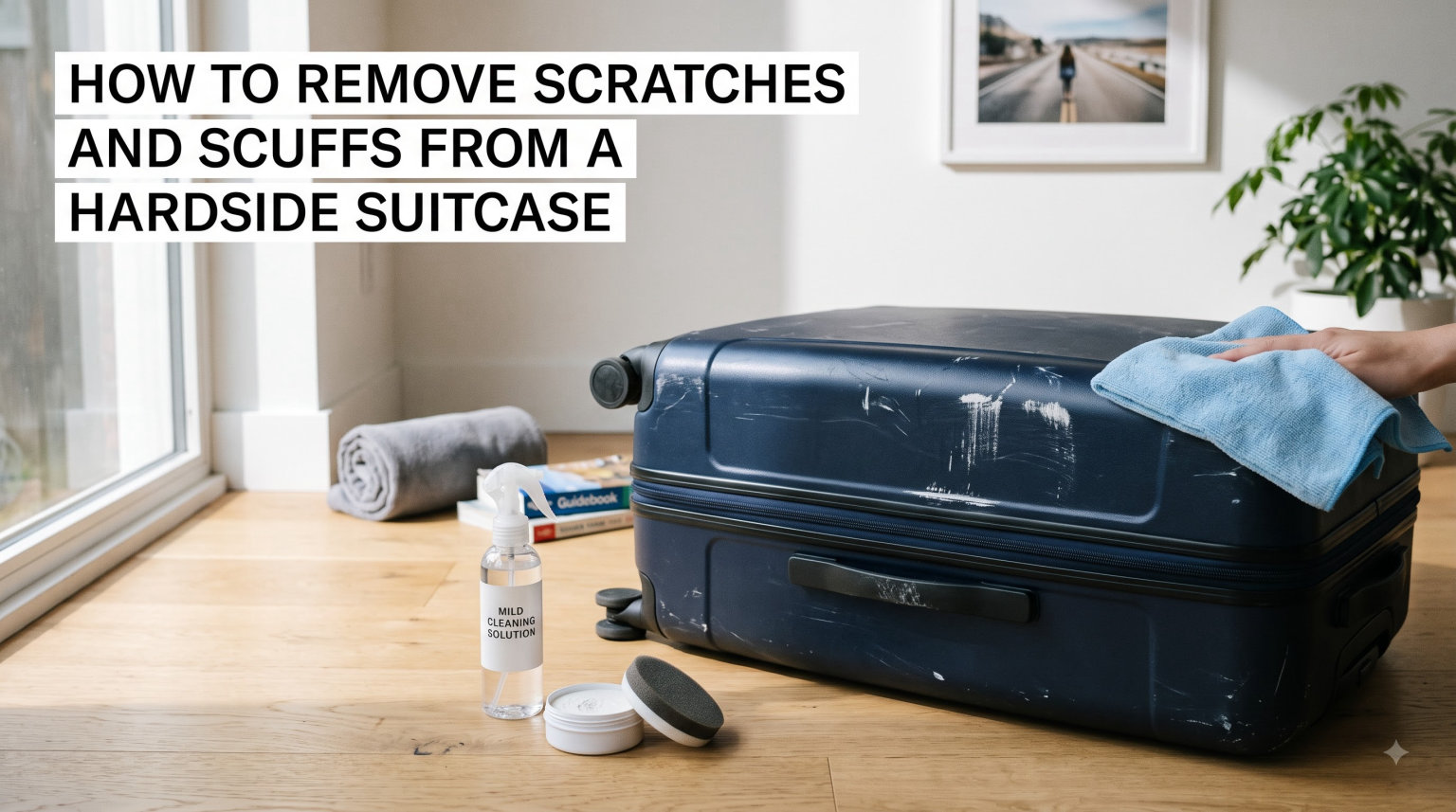
My brand new hardshell suitcase came back from its first flight looking like it had survived a boxing match. Black streaks across the front, white scuff lines along the corners, and a long scratch that ran parallel to the zipper.
I stood at the baggage claim at Soekarno-Hatta watching other travelers pull out equally battered bags, and I thought: this is just how travel works now.
It turns out I was wrong. Most of those marks were removable in under fifteen minutes with stuff I already had at home. This guide walks you through exactly how to remove scratches and scuffs from a hardside suitcase, whether you fly domestically with Garuda or check your bag on a long-haul flight.
You will learn which method works for which type of damage, what to skip if your shell is aluminum, and how to keep your luggage looking sharp on trip number twenty.
Table of Contents
Why Hardside Suitcases Scratch So Easily
Hard shell suitcases scratch easily because the materials that make them strong are also unforgiving. Polycarbonate absorbs impact but marks on contact. Aluminum shrugs off dents but shows every scrape.
Indonesian travelers face a particular set of culprits. The conveyor belts at Soekarno-Hatta and Ngurah Rai are notorious for leaving black transfer marks. Overhead bins on narrow-body domestic jets like the Boeing 737 force bags against metal latches. Taxi trunks in Bali and Jakarta are often tight enough that the door edge drags across the shell when the driver loads your bag.
TSA inspection can leave white powdery streaks from the gloves inspectors wear. Even sliding your suitcase into a hotel luggage rack can leave a mark on the bottom corner.
The good news: most of this damage is cosmetic. With the right method, your bag can look close to new without spending a rupiah on professional restoration.
Scuff Marks vs Real Scratches: Know What You Are Dealing With
Scuff marks are transfer marks from another surface. They look like streaks, smudges, or lines of discoloration, but the shell underneath is intact. These are the easiest to remove.
Real scratches cut into the surface. You can feel them with your fingernail when you run it across the mark. Light surface scratches can often be buffed out. Deep gouges usually cannot.
Before you pick a method, run your finger over the damage. If it feels smooth, you have a scuff and any of the methods below will work. If your nail catches, expect improvement but not perfection.
Method 1: The Magic Eraser (Melamine Sponge) Technique
The magic eraser method is the fastest way to remove scuffs from a hardside suitcase. A melamine sponge acts like extra-fine sandpaper, lifting transfer marks without damaging the underlying finish.
I tested this on my own suitcase after a Bali trip and removed about 80 percent of the black baggage belt marks in under ten minutes. Here is the step-by-step.
Step 1: Wipe the suitcase clean. Use a damp microfiber cloth to remove any loose dirt or dust. You do not want to grind debris into the shell while scrubbing.
Step 2: Wet the magic eraser. Run it under water and squeeze out the excess. The sponge should be damp, not dripping.
Step 3: Test on a hidden area first. Try the bottom corner or the back panel. Some glossy polycarbonate finishes can dull slightly with aggressive scrubbing.
Step 4: Rub the scuff with light pressure in small circles. Do not press hard. The melamine does the work. You should see the mark start to fade within a few seconds.
Step 5: Wipe away residue with a clean microfiber cloth. Inspect the area. Repeat if needed, but stop after five passes to avoid dulling the finish.
Warning: Magic erasers can dull high-gloss and metallic finishes. If your suitcase has a brushed or matte texture, use the gentlest pressure possible or switch to the toothpaste method below.
Method 2: The Toothpaste Buff for Surface Scuffs
White, non-gel toothpaste works as a mild abrasive that buffs out surface-level scuffs without damaging the shell. This is my go-to method when the marks are light or the suitcase has a delicate finish.
I learned this trick from a RIMOWA owner on a travel forum who swore by Colgate for keeping aluminum shells pristine. It works just as well on polycarbonate.
Step 1: Clean the area with mild soap and water. Dry it completely before moving on.
Step 2: Apply a small dab of white toothpaste to a soft cloth. About the size of a coin is enough. Gel toothpaste will not work because it lacks the mild abrasives.
Step 3: Rub the scuff in circular motions for 30 seconds. Keep the pressure light and let the paste do the work.
Step 4: Wipe clean with a damp microfiber cloth. Inspect the area. Repeat up to three times if needed.
Step 5: Buff dry with a clean section of the cloth. The area should now look noticeably better.
Tip: Baking soda mixed with a few drops of water makes a paste that works the same way if you run out of toothpaste mid-project.
Method 3: Mineral Spirits for Transfer Marks
Black baggage belt marks are stubborn because they are actual rubber transferred onto the shell. Mineral spirits dissolve that transfer without harming polycarbonate or aluminum.
This is what the airlines do not tell you, but experienced cabin crew and ground handlers have used this for years.
Step 1: Put on gloves and work in a ventilated area. Mineral spirits have strong fumes. Open a window or work outside on your balcony.
Step 2: Dampen a clean cloth with mineral spirits. Do not pour directly onto the suitcase.
Step 3: Rub the transfer mark gently. You should see the black begin to lift within seconds. Keep the cloth moving to avoid concentrating solvent in one spot.
Step 4: Wipe immediately with a clean damp cloth. This removes any solvent residue.
Step 5: Dry with a microfiber towel and inspect. Repeat once if needed, but no more than twice to avoid affecting the finish.
Note: Test on a hidden area first. Mineral spirits can affect certain printed graphics and decals. Avoid this method if your suitcase has printed artwork.
Method 4: Caring for Aluminum Shells Differently
Aluminum suitcases like RIMOWA or premium Indonesian brands require a different approach. The good news is that small scratches on aluminum often blend into a patina that many owners love. The bad news is that abrasive methods can leave obvious shiny spots that stand out.
For aluminum shells, stick to the gentlest method that works.
Step 1: Start with warm soapy water and a microfiber cloth. Many light marks lift with nothing more than this.
Step 2: Use a magic eraser only for stubborn black marks. Rub gently and limit to two passes.
Step 3: For deeper scratches, use a plastic polish designed for car headlights. Apply with a soft cloth in small circles, then buff off.
Step 4: Embrace the patina. Aluminum develops character over time. Owners in the RIMOWA subreddit often leave minor scratches alone because they show the bag has been well-traveled.
Warning: Never use toothpaste on aluminum. It can leave whitish streaks that are harder to remove than the original scratch.
Prevention Tips: Stop Scratches Before They Start
Removing scratches is satisfying, but preventing them saves time on every future trip. Here is what actually works after dozens of flights with the same suitcase.
Use a luggage cover. Stretch fabric covers protect against conveyor belt marks and TSA handling. They cost less than a meal in Kuta and pay for themselves after one round trip.
Wrap corners with painter’s tape for long-haul checked flights. This sounds excessive, but the corners take the most impact. A few pieces of tape can save the most visible areas.
Carry on when you can. Carry-on size hardside bags avoid baggage handling entirely. For domestic Indonesian flights, a well-packed carry-on handles two to three days easily.
Store your suitcase in a dust bag or pillowcase between trips. This prevents scuffs from stacking up in your closet or garage.
Avoid stacking heavy items on top of your bag at home. Storage piles cause more cosmetic damage than the flights themselves over the long term.
Photograph your suitcase before checking it. If airlines damage your bag, you have evidence for a claim. This also helps you track new marks between trips.
Your Post-Trip Suitcase Maintenance Routine
The best travelers treat suitcase care like car maintenance. A five-minute routine after each trip keeps small problems from turning into permanent damage.
Step 1: Empty and inspect within an hour of arrival. Fresh marks are easier to remove than ones that have set for weeks.
Step 2: Wipe the exterior with a damp microfiber cloth. This removes dust and surface grime before you address specific marks.
Step 3: Spot-treat any new scuffs using one of the methods above. The magic eraser handles 90 percent of cases.
Step 4: Clean the wheels. Wipe with a damp cloth and remove any hair or thread wrapped around the axles. This is the single most overlooked maintenance task.
Step 5: Open the suitcase fully and let it air dry. This prevents mildew in the lining, especially after humid Bali or Singapore trips.
Step 6: Store in a cool, dry place with the cover on. Avoid garages where heat can warp shells over time.
Follow this routine and your hardside suitcase will look newer for longer, even if you fly every month. The goal is not a perfect bag. It is a bag that reflects the trips you have taken rather than the rough handling it has survived.
FAQs
Will magic eraser take scuffs off of suitcases?
Yes, a magic eraser (melamine sponge) removes most scuff marks from hardside suitcases. Wet the sponge, squeeze out excess water, and rub the scuff with light circular pressure. Test on a hidden area first because the sponge can dull glossy or metallic finishes if you press too hard.
Does WD-40 really remove scratches?
WD-40 can hide very light surface scratches on plastic by filling them temporarily, but it does not actually remove them. The effect wears off within days. For real scratch removal, use a plastic polish or the toothpaste method instead.
Can you clean scuffs off a suitcase?
Yes, most scuffs come off with simple household items. Try a magic eraser for transfer marks, white toothpaste for light surface scuffs, or mineral spirits for stubborn black baggage belt marks. Always test on a hidden spot first.
Do hard shell suitcases scratch easily?
Hard shell suitcases do scratch more easily than soft-sided ones because polycarbonate and aluminum, while strong, show every surface contact. Most marks are cosmetic and removable with the right method. Using a luggage cover and carrying on when possible reduces the risk of visible damage.
Final Thoughts
Knowing how to remove scratches and scuffs from a hardside suitcase turns a frustrating travel moment into a quick weekend project. Most of the methods above use items already in your bathroom or kitchen, so the cost is measured in minutes, not rupiah.
Start with the gentlest approach first. Move to stronger methods only if needed. And remember that a few marks on a well-traveled bag tell a better story than a pristine one that never leaves the closet.
Your next trip is going to put fresh scuffs on your suitcase. Now you know exactly how to deal with them when you get home.