
If you want one sentence of honest advice before anything else: the best telescope for beginners is the one with the largest aperture you can comfortably carry, and in practice that means a Dobsonian reflector or an entry-level achromatic refractor rather than anything advertising 500x magnification. Below I break down seven scopes that genuinely work, from a 4.2 lb travel refractor to an 8-inch Dobsonian that gathers several times more light than its price suggests it should.
Before the list, one fork worth deciding early. Do you want to look through an eyepiece, or do you want photographs? Those are different hobbies with different hardware, and most people buy the wrong one first. A Dobsonian or refractor rewards patient nights outside; a smart telescope hands you stacked deep-sky images in minutes and is much weaker when you put your eye to the glass.
I have read through thousands of owner reviews for each of these scopes, cross-checked their specifications, and weighted the things that decide whether a first telescope gets used in year two or abandoned in the closet. Everything below reflects the seven models in this roundup only. Last updated for 2026.
Table of Contents
Top 3 Picks: Beginner Telescope Picks in 2026
These three cover the widest range of situations. The Travel Scope wins on portability and proof of concept, the AstroMaster 70AZ wins on value for anyone starting out, and the StarSense Explorer LT 114AZ wins for people who do not trust themselves to find anything in the dark.

Celestron Travel Scope 70mm
- Fully coated 70mm achromatic refractor
- 400mm focal length
- Packs into the included backpack
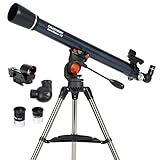
Celestron AstroMaster 70AZ
- 70mm achromatic refractor
- 900mm focal length for planetary detail
- Red dot finder and two eyepieces included

Celestron StarSense Explorer LT 114AZ
- 114mm aperture for deep-sky objects
- StarSense app pointing via sky recognition
- Includes 2x Barlow lens
The 7 Best Telescopes for Beginners at a Glance (September 2026)
Every telescope below appears here with its own ASIN so you can compare the shortlist before you commit. Aperture is the first column to read, because it decides how much light you gather and how much detail you resolve.
| Product | Specifications | Action |
|---|---|---|
| Celestron Travel Scope 70mm |
|
Check Latest Price |
| Celestron AstroMaster 70AZ |
|
Check Latest Price |
| Celestron StarSense Explorer LT 114AZ |
|
Check Latest Price |
 Sky-Watcher Skymax 102 Maksutov-Cassegrain Sky-Watcher Skymax 102 Maksutov-Cassegrain |
|
Check Latest Price |
 Sky-Watcher Heritage 150 Tabletop Dobsonian Sky-Watcher Heritage 150 Tabletop Dobsonian |
|
Check Latest Price |
 DWARFLAB Dwarf Mini Smart Telescope DWARFLAB Dwarf Mini Smart Telescope |
|
Check Latest Price |
 Sky-Watcher Classic 200 8-inch Dobsonian Sky-Watcher Classic 200 8-inch Dobsonian |
|
Check Latest Price |
1. Celestron Travel Scope 70mm – The Starter Scope That Travels
Celestron Travel Scope 70mm Beginner Portable Telescope with Backpack
70mm fully coated achromatic
400mm focal length
Manual altazimuth, 4.2 lb
Includes backpack and two eyepieces
Pros
- Sharp Moon and planet views for a small tube
- Sets up in seconds with no tools
- Backpack keeps the whole kit together
- 4.2 lb is light enough for a child to carry
- Two-year warranty
Cons
- Short 400mm focal length means very wide fields only
- Manual mount so targets drift during long sessions
- Faint deep-sky objects appear as small smudges
This is the scope I hand to anyone who wants to know whether they like astronomy before they spend serious money. It is a fully coated 70mm achromatic refractor with a 400mm focal length, and the whole kit – tube, tripod, diagonal, finder, eyepieces – goes into the padded backpack in the box. That single design decision removes almost every excuse not to take it outside.
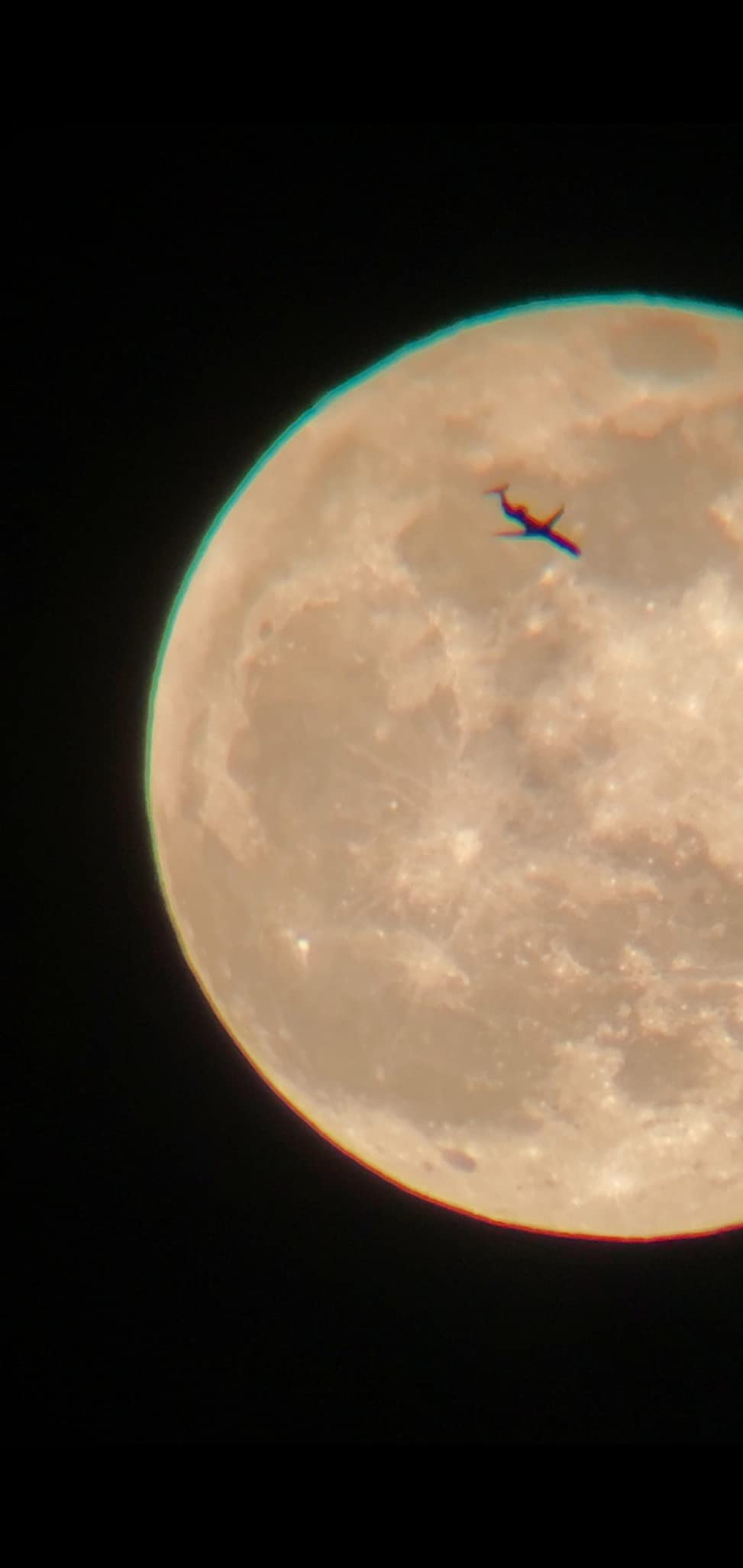
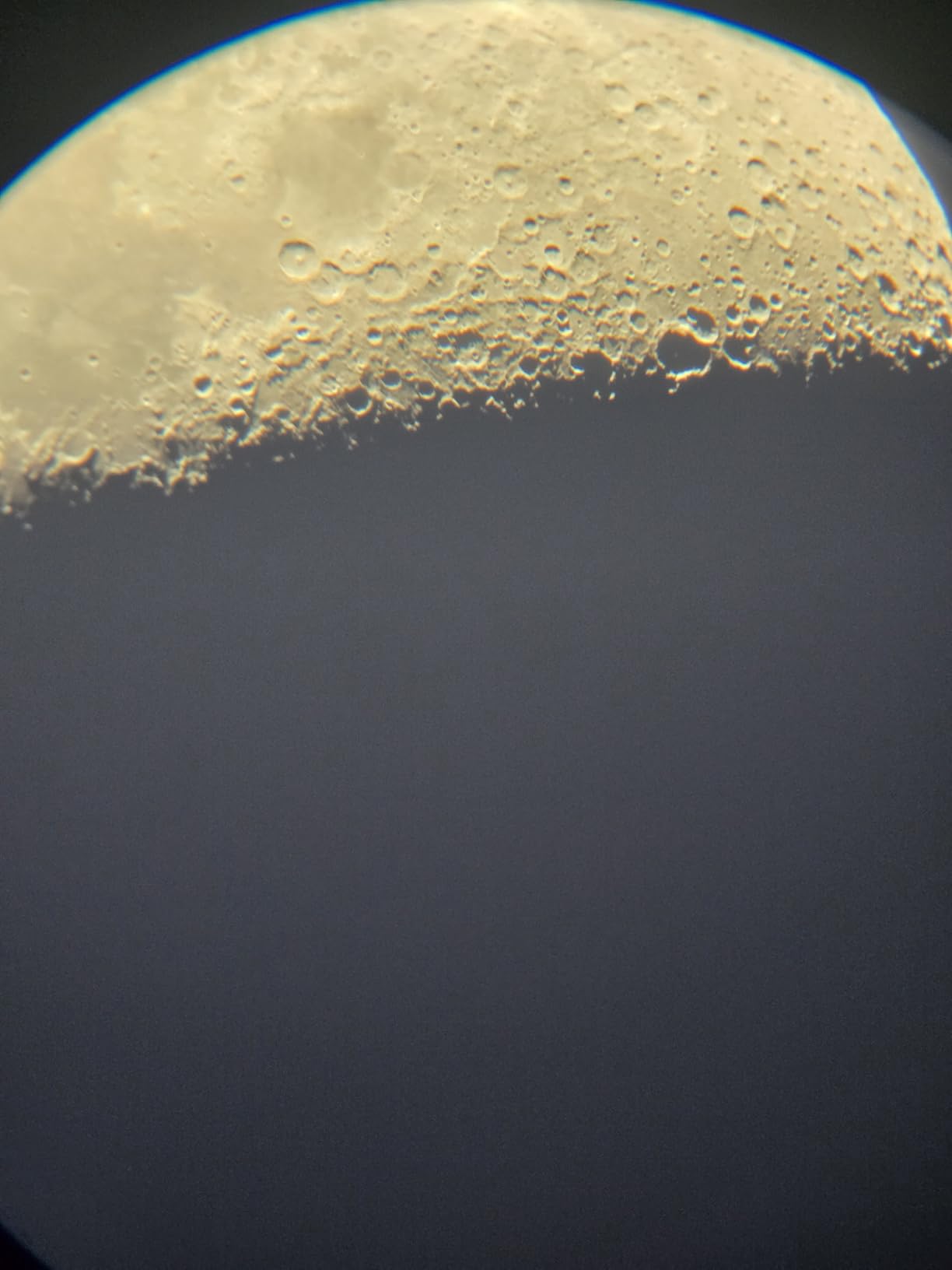
The image quality is genuinely good for the size. Owners hold crater detail along the lunar terminator, and at night the two included eyepieces give you both a wide sweep of Taurus and a closer look at Jupiter. Reviewers consistently praise the coating quality, and with nearly 14800 ratings at 4.2 stars this is the most battle-tested beginner telescope I could find.
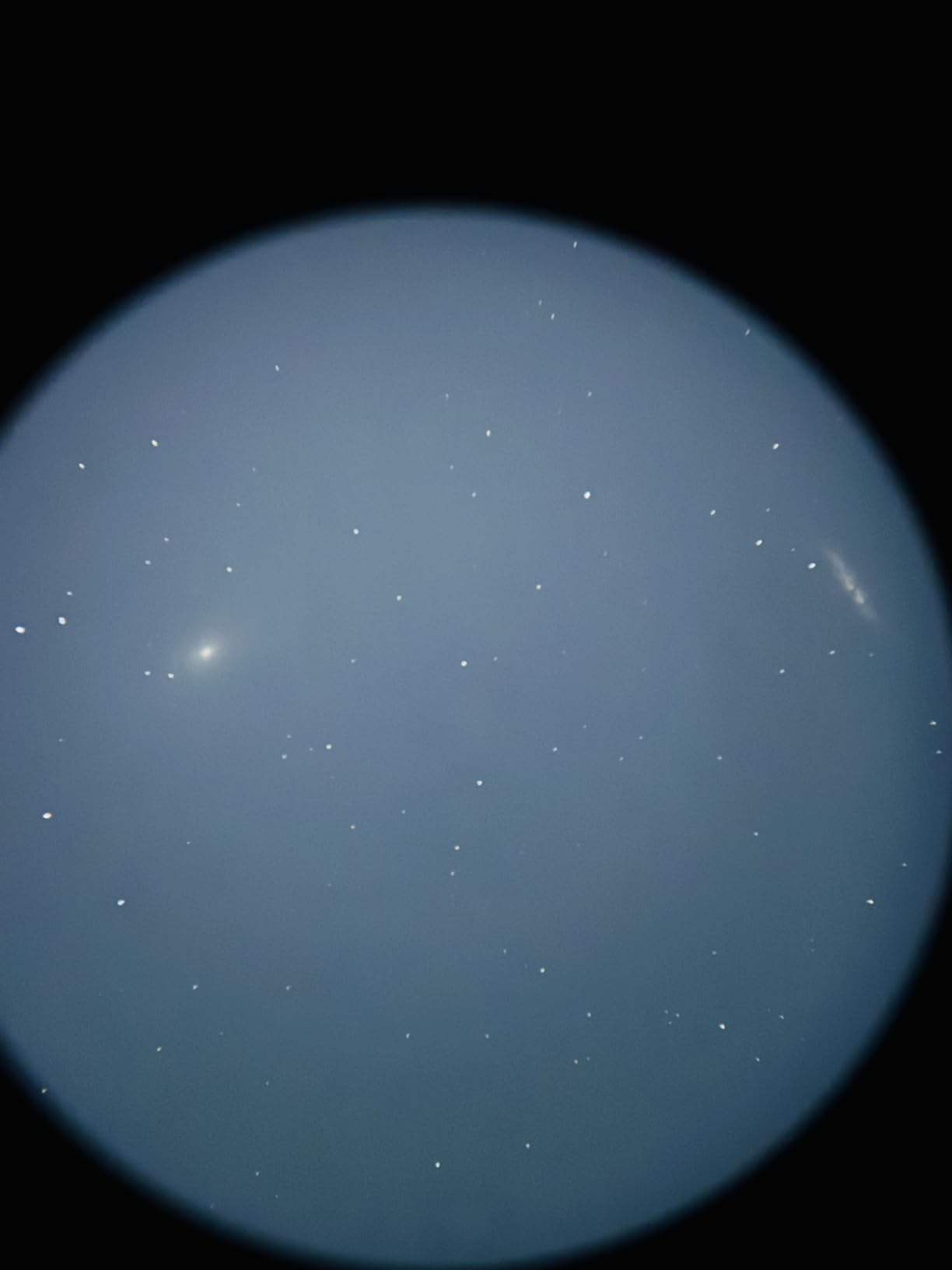
What you are giving up is light. A 70mm aperture at 400mm is a wide, bright little scope built for the Moon, bright planets and terrestrial targets. Diffuse objects like the Andromeda Galaxy or the Veil Nebula register as fuzzy patches, and if deep-sky detail is what excites you, this is not the instrument that will keep you hooked.
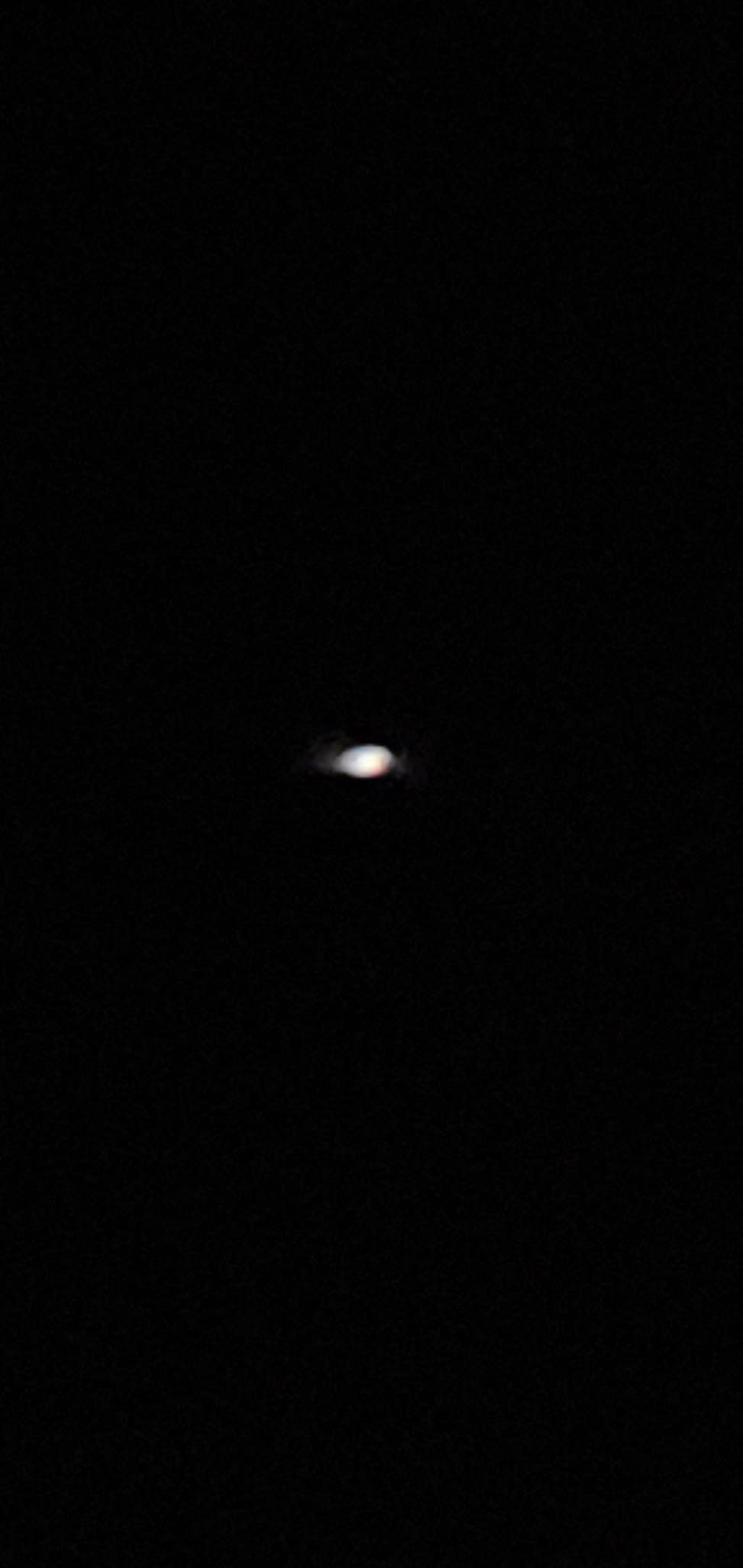
There is no motorised tracking, so at higher power the field drifts within a minute or two. That is normal for this class of mount and not a defect, but it does mean short sessions at moderate magnification suit it better than long deep-sky attempts. A pair of decent binoculars does everything this scope does and travels even more easily, which is worth remembering if you already own a decent pair.
Who this scope suits
It suits families, children over about ten, and anyone without a car or storage space. A 4.2 lb package that assembles without tools can be carried up stairs, taken to a field, or handed to a teenager who will actually use it. It also doubles as a daytime spotting scope for wildlife and distant landmarks, which extends the number of nights you might reach for it.
Who should look elsewhere
Skip it if your ambition is galaxies, if you live somewhere with a bright suburban sky, or if you want to photograph anything. Also skip it if you already own 7×50 or 10×50 binoculars – the incremental gain over glass-and-glass is small at this aperture. Buy the next step up instead and your money will go much further.
2. Celestron AstroMaster 70AZ – The Budget Pick First Telescope
Celestron AstroMaster 70AZ Refractor Telescope for Moon & Planet Viewing
70mm coated achromatic refractor
900mm focal length for planetary detail
10.8 lb with panhandle mount
Pros
- Crisp lunar and planetary views
- Visible cloud bands on Jupiter
- No calibration or alignment routine
- Under 10 minutes to set up
- Works for land viewing too
Cons
- Tripod develops vibration and altitude drift
- Included 10mm eyepiece has poor eye relief
- No tracking so astrophotography is impractical
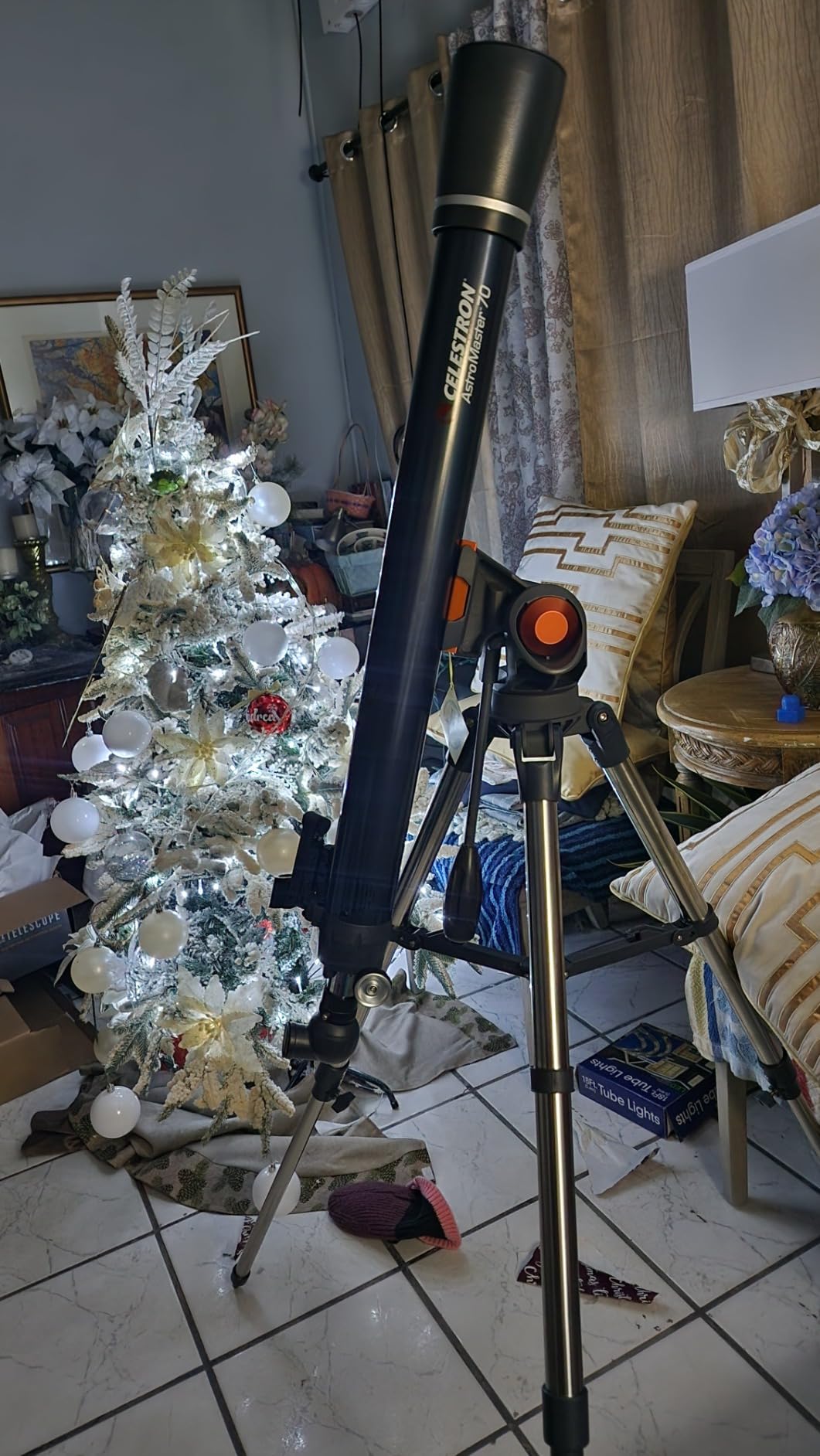
Everything you can do with the Travel Scope, you can do here with more magnification and more visible detail, and it still assembles in under ten minutes with a preassembled tripod. The 900mm focal length is more than double the Travel Scope’s, which is the difference between a wide, flat view of Jupiter and one where you can start to see the bands and a moon or two transiting.
Owners rate it 4.4 stars from close to 3800 reviews, and the reason is simple: it is a conventional refractor that needs no calibration, no app and no alignment sequence. You point, you focus, you look. For someone who has never touched a telescope, removing every possible failure point at this price is worth more than any feature list.
Two specifications matter here. The Dawes limit of 1.66 arc seconds tells you the theoretical resolving power at this aperture, and at the native magnification of 45x the view is bright and stable. The long focal ratio means you can push past 100x and still hold planetary detail, which is what makes this the pick I would describe as the classic first “proper” telescope.
The flaw everyone mentions is the tripod. Altitude backlash and vibration show up after months of use, and when a high-power planetary view shakes, beginners assume the optics are at fault. They are not. The second recurring complaint is the supplied 10mm eyepiece, which many owners replace with a 15mm Plossl for a noticeable improvement in comfort and image scale.
Who this scope suits
It suits adults and older children who want to see the Moon, Jupiter, Saturn and Venus clearly, and who value a mount they will understand without a manual. It is also the sensible pick for a gift, because the person receiving it can be productive within minutes of opening the box and does not need an app on their phone.
Who should look elsewhere
Skip it if your storage is a small apartment cupboard, because 10.8 lb on a full-height tripod is awkward in a hallway. Skip it if faint galaxies are the goal, since 70mm simply does not collect enough light. And skip it if you want to photograph the sky, because an unmotorised altazimuth mount cannot hold a target long enough for an exposure worth keeping.
3. Celestron StarSense Explorer LT 114AZ – Best App-Guided Telescope
Celestron StarSense Explorer LT 114AZ Newtonian Smartphone Guided Telescope
114mm short-tube Newtonian
1000mm focal length
10.4 lb with app-guided pointing
Pros
- StarSense sky recognition genuinely helps novices
- Sharp Moon
- planet and Orion Nebula views
- Arrives well collimated
- Light enough to carry between sites
- Barlow lens included
Cons
- Included eyepieces and Barlow are entry-level
- App can freeze or fail to lock on
- Mount is light and shaky at high power
- Red dot finder screws drift out of alignment
This is the scope for the person whose real fear is not aperture, it is standing in a dark garden unable to find anything. The StarSense app recognises the pattern of stars above you, works out where the telescope is pointing, and puts arrows on the screen until Orion Nebula is centred. For a first session with no star-hopping experience, that removes the single biggest barrier.
The optics are the real story though. A 114mm short-tube Newtonian with a spherical corrector lens gives 1000mm of effective focal length in a tube that fits on a normal tripod, and it ships collimated – one reviewer verified that using four separate methods. It holds the Moon, Jupiter, Saturn, the Orion Nebula and even the Andromeda Galaxy from a suburban backyard, which is a genuinely useful step up from a 70mm refractor.
What you trade for that convenience is simplicity. The setup sequence – phone cradle, red dot finder, then app-to-scope alignment – has more steps than any of the manual scopes here, and reviewers describe it as needing patience. The light altazimuth mount also shakes enough at high power that focusing becomes a slow, careful process, and the plastic adjustment screws on the finder are the first thing to replace.
Software reliability is the recurring theme in the reviews. Owners report the app freezing, failing to lock onto the sky, or arriving with an invalid unlock code, and a low Wi-Fi signal makes it worse. None of that is a reason to skip the scope, but it is a reason to keep a paper plan of the sky as a backup, which is a habit worth building anyway.
Who this scope suits
It suits people who have stared at star charts and could not connect them to the sky, and families with a child roughly twelve or older who is happy to work through a few alignment steps with an adult. It is also a good stepping stone: the 114mm aperture is a real jump in light gathering, and the tube can be carried to a darker site in one hand.
Who should look elsewhere
Skip it if you hate troubleshooting electronics in the dark, or if your enthusiasm runs out quickly at the first error message. Skip it if fine planetary detail is the priority, because a 1000mm focal length is short for that job. And skip it if you plan to grow into astrophotography, since this mount has no motor and no tracking capability.
4. DWARFLAB Dwarf Mini Smart Telescope – Best for Astrophotography
DWARFLAB Dwarf Mini Smart Telescope – 1.85lb Portable Astronomy Telescope
1.9 lb all-in-one smart scope
150mm focal length, Sony IMX662 sensor
EQ mode with 90 second exposures
Pros
- First stacked image in about 3 minutes
- 90 second equatorial exposures with light pollution filters
- At 1.9 lb it fits in a backpack
- Produces nebula
- galaxy and sunspot images
- Usable from indoors with a power bank
Cons
- Planets show as featureless discs
- Sensor resolution is too low for large prints
- Small targets image very tiny
- Initial Wi-Fi pairing can be finicky
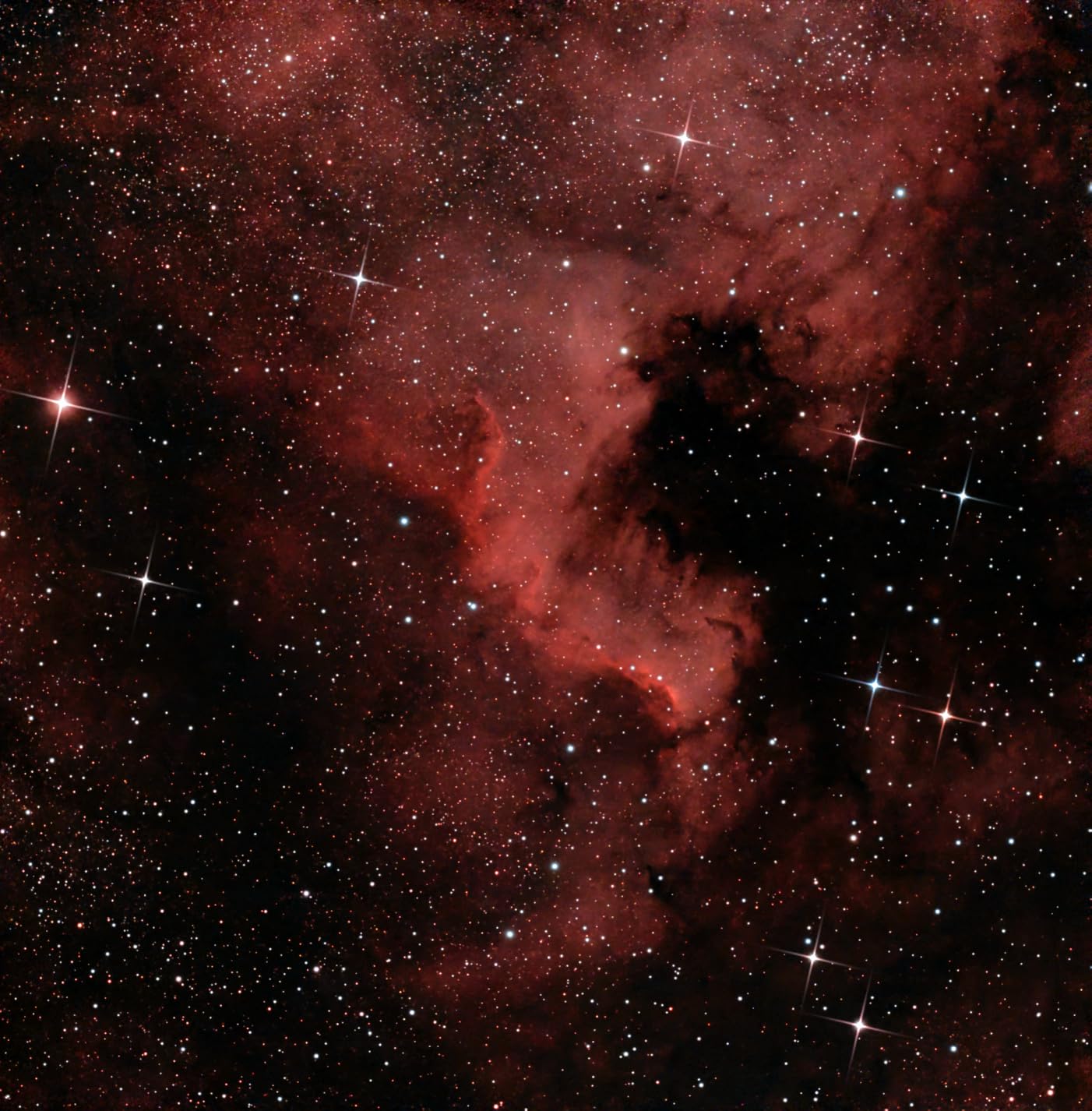
If your goal is pictures rather than views, this is the only scope in the list that treats you as a photographer from the first minute. You dock nothing, you attach nothing, and there is no eyepiece. The app plate-solves your position, slews to a target, tracks it, stacks sub-frames internally and processes the result in the cloud. Several owners, including people who had quit the hobby as too complicated, report going from box to finished deep-sky image in minutes.
The hardware is honest for what it is. It uses a Sony IMX662 sensor with 2.9 micron pixels, and in equatorial mode it takes single exposures up to 90 seconds with built-in light pollution filters, which is enough to pull nebulae and galaxies out of a badly lit backyard. A magnetic solar filter is included, so it can photograph sunspots and eclipses with a proper front-mounted filter rather than a makeshift one.
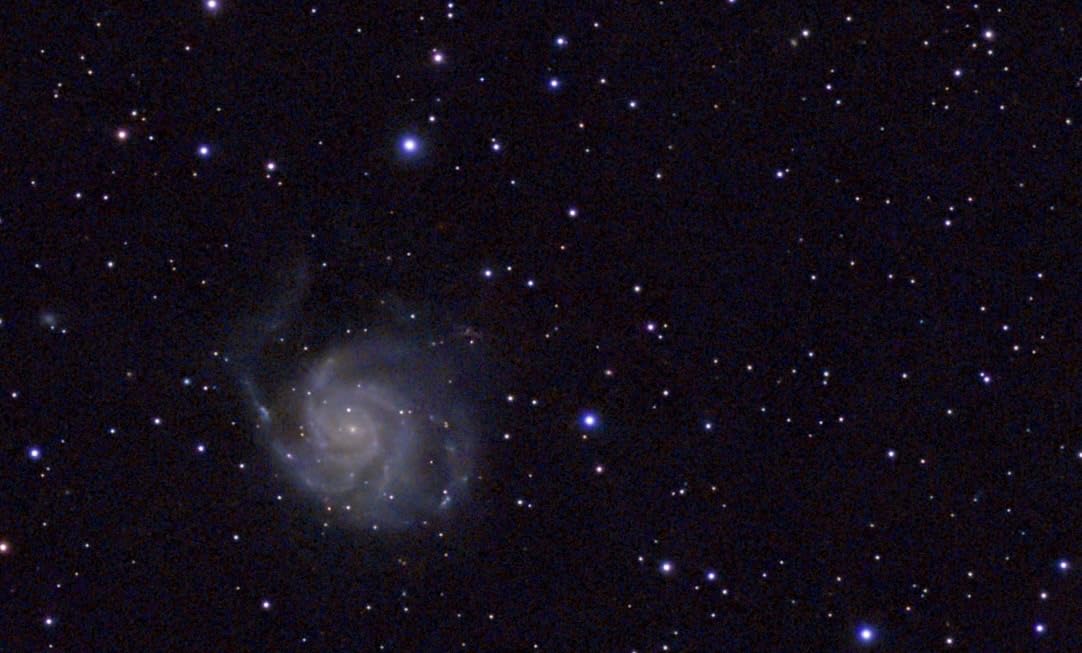
Now the tradeoff, and it is a real one. This is not a visual telescope. Reviewers are blunt that planets appear as round, featureless discs with the Galilean moons as dots of light, and the 150mm focal length means small deep-sky objects render tiny even though the sensor reports a 1016mm equivalent. Sensor resolution also caps your print size, so treat the images as screen and phone output rather than wall-sized prints.
You will also want a small tripod with a fluid head and a power bank before you get the most from equatorial mode. The field of view of 2.45 degrees is narrow, so framing needs patience, and the initial Wi-Fi connection to the scope occasionally refuses until you use your home network in the app settings.
Who this scope suits
It suits people who want to show friends photos of the Orion Nebula, anyone with no storage space or no patience for collimation, and campers who want a dark sky without hauling a 45 lb instrument. It is the only pick here that works unattended all night from indoors, and a power bank is the one accessory that transforms the experience.
Who should look elsewhere
Skip it if you want to put your eye to an eyepiece, because there is no eyepiece. Skip it if planetary detail is the goal, and skip it if you intend to print your results at large sizes. If you want both images and views, a visual scope now and a smart telescope later is a more honest plan than trying to make one device do everything.
5. Sky-Watcher Skymax 102 Maksutov-Cassegrain – Best for Planets
Sky-Watcher Skymax 102mm Maksutov-Cassegrain – Large Aperture Compound-Style Reflector Telescope
102mm Maksutov-Cassegrain
1300mm focal length
4.6 lb optical tube with dovetail
Pros
- Long focal length gives crisp planetary detail
- 94 percent reflective coatings and a baffled tube
- Industry standard Vixen dovetail
- Two eyepieces plus finder and carry bag
- Only 4.6 lb
Cons
- Optical tube only
- so a mount and tripod are extra
- No tracking so targets drift
- Long focal ratio limits resolution on small detail
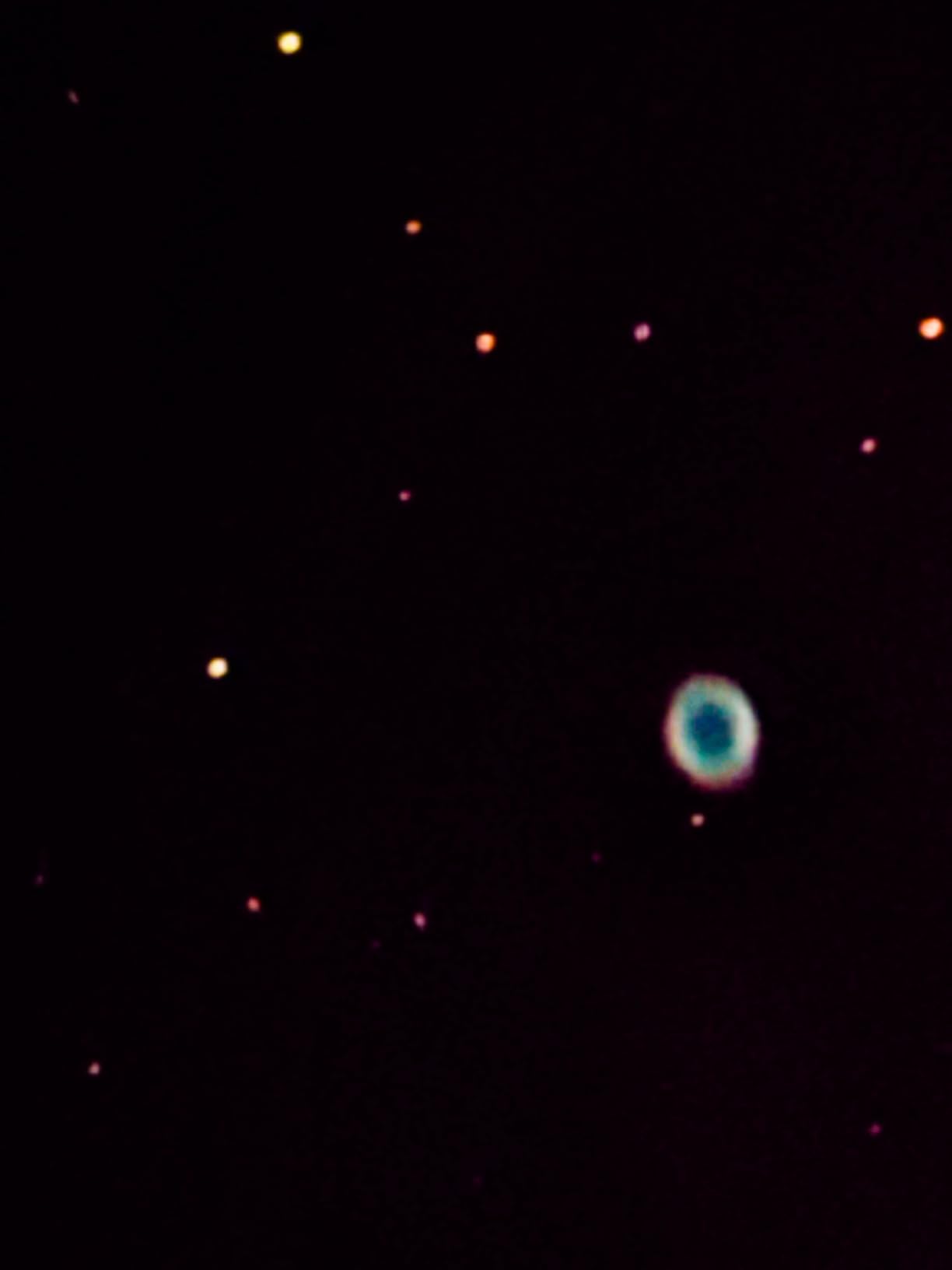
Its 1300mm focal length is the longest in the lineup, and that single fact is why it wins on planets. A Maksutov-Cassegrain folds 1300mm of focal length into a tube measuring just over 12 inches, so the magnified image scales up nicely and bright objects like Jupiter, Saturn and the Moon hold detail at powers where a short Newtonian turns to mush.
It is also the best-rated scope here at 4.5 stars. The coatings on the borosilicate primary reach 94 percent reflectivity with a quartz overcoat, and the tube is fully baffled to keep stray light from washing out faint targets. Owners repeatedly highlight the Vixen-style dovetail with 1/4-20 threads on both sides, because it bolts to virtually any photographic tripod you already own or borrow.
There is one significant catch: this arrives as an optical tube assembly only. A mount, a tripod and correctly matched eyepieces are all extra purchases, and the true system cost is meaningfully higher than the tube suggests. Anyone comparing this against a complete Dobsonian has to add those accessories before the comparison makes sense.
There is no tracking, so planetary work means occasional nudges rather than a locked target. The review base is also the thinnest in this set at just over 100 ratings, so long-term owner reports are less extensive than the popular Celestron models, and I would treat the strong scores with that caveat. At 102mm the aperture is modest, so this is a planet instrument rather than a galaxy instrument.
Who this scope suits
It suits someone who has watched Saturn through a small scope and wants the rings sharp, and it suits photographers who already own a sturdy tripod with a good head. The 4.6 lb weight and included padded carrying case make it the easiest instrument here to take to a dark site or mount on a car roof for a weekend.
Who should look elsewhere
Skip it if you want a ready-to-use package on day one, if you plan to hunt for faint galaxies, or if buying a mount and tripod separately feels like a project you will not enjoy. For a first telescope with no gear at all, the friction of the extra purchases outweighs the planetary gain.
6. Sky-Watcher Heritage 150 Tabletop Dobsonian – The Collapsible Step Up
Sky-Watcher Heritage 150 Tabletop Dobsonian Telescope – Perfect for Beginners, Easy Setup, Portable, and Fun (S11710)
150mm aperture at f/5
750mm focal length
23 lb collapsible tabletop Dobsonian
Pros
- Large 150mm aperture with a fast f/5 ratio
- Collapsible tube that holds collimation
- No electronics to learn
- Parabolic primary with durable quartz coating
- Great lunar and planetary detail
Cons
- Tabletop design needs a separate sturdy table
- 23 lb is awkward to carry far
- 1.25 inch helical focuser limits wide fields
- No tracking
- so targets drift
At 150mm this scope collects far more light than any refractor above, and the fast f/5 focal ratio keeps it sharp on the Moon and bright planets. Owners single out the parabolic primary with Sky-Watcher’s Radiant Aluminum Quartz coating as a strong performer, and roughly 72 percent of its ratings are five star.
The reason I like it is the collapsible tube. You unscrew two rings, the tube slides into itself, and it goes into a closet with the base, yet collimation survives the process. For apartment living or anyone storing gear between sessions, that single feature removes the most common reason people keep a telescope permanently assembled and therefore never use it.
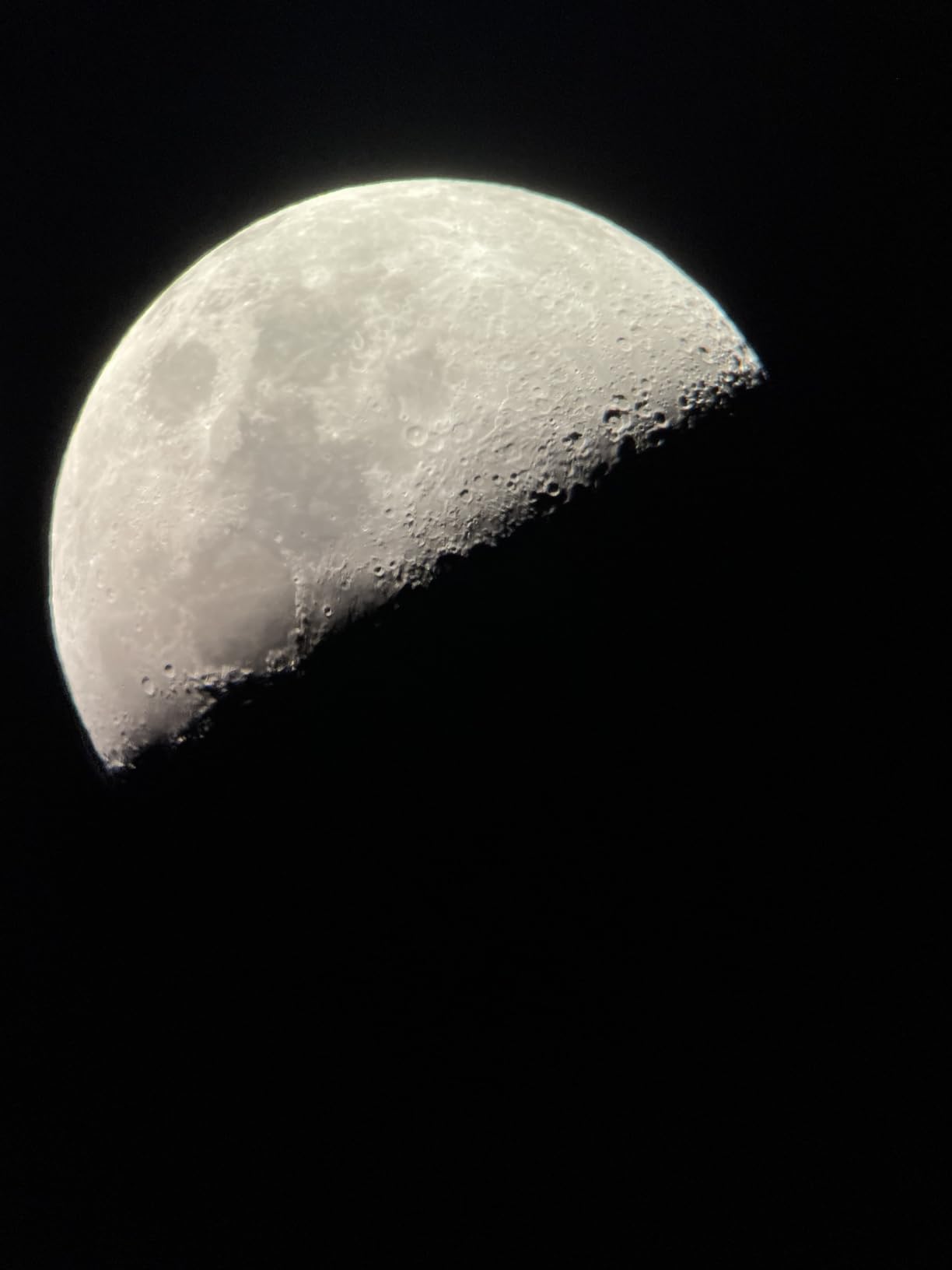
It is a tabletop design, which is not a marketing detail but a requirement. You need a solid table or stand at roughly seated eye height, and the rubber feet that damp vibration assume you have one. At 23 lb assembled it is not a walking telescope, and the 1.25 inch helical focuser will not accept the very widest eyepieces if you later want to sweep a large star field.
About 10 percent of its reviews are one star, the highest share of any product here, and the pattern is consistent: people expected the visual punch of a much larger Dobsonian and were disappointed. Nothing is broken in those reviews. The lesson is that aperture scales in area, not inches, and a 150mm scope sitting next to a marketing image of a 200mm one will always look like the smaller purchase.
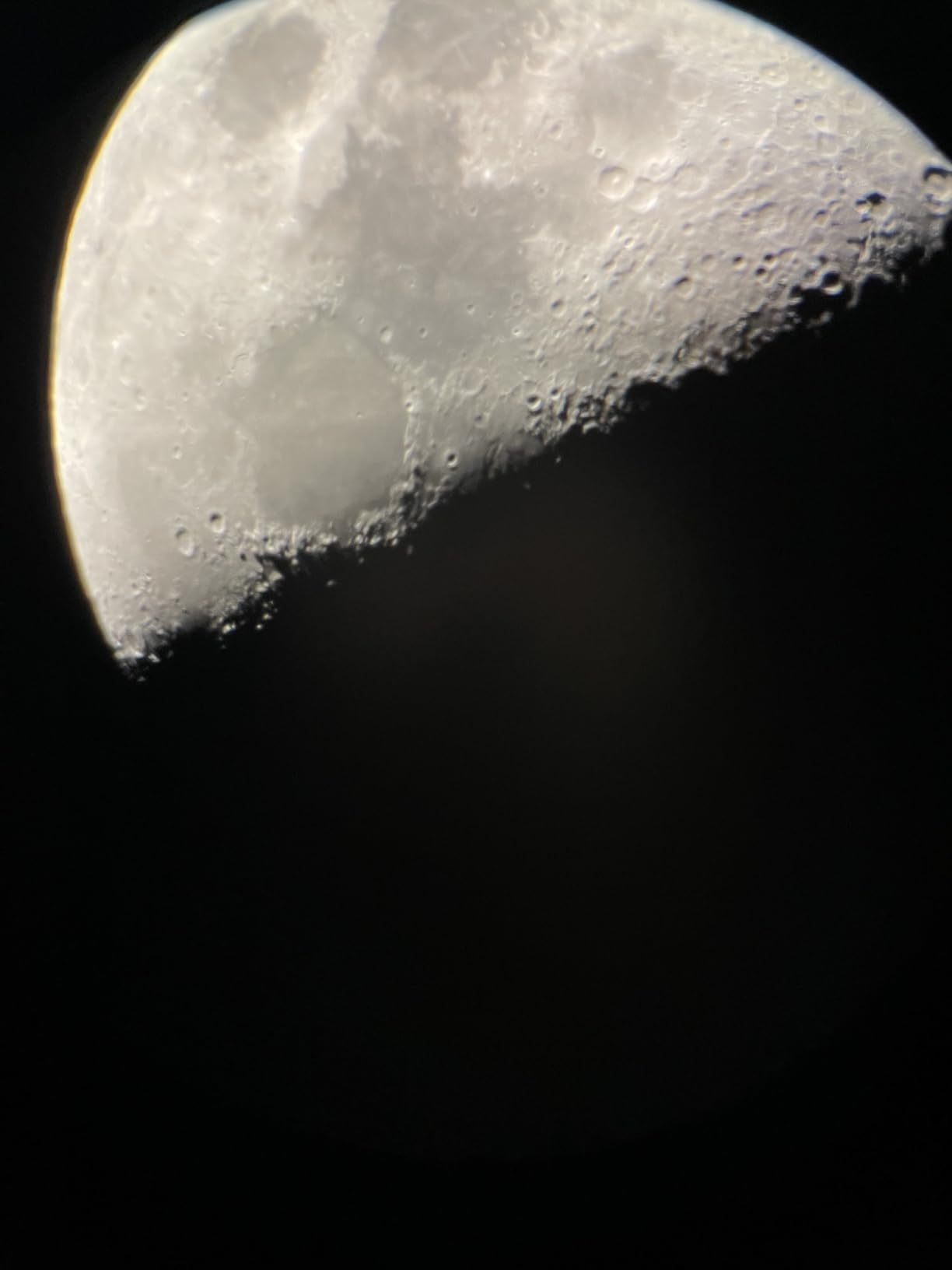
Who this scope suits
It suits visual observers who want their first genuinely capable instrument without a single cable or app, and people who can park a table in a garden, on a balcony or in a garage. It is also the natural second purchase for someone who started on a 70mm refractor and now wants to see the Orion Nebula and globular clusters properly.
Who should look elsewhere
Skip it if you have no flat surface to put it on, if stairs and small flats rule out a 23 lb object, or if you want to carry a telescope on foot to a summit. Skip it if you need fine planetary resolution at very high power, since a 750mm focal length is modest for that. If you already have a table you can dedicate, this is an easy recommendation.
7. Sky-Watcher Classic 200 8-inch Dobsonian – The Most Light Per Dollar
Sky-Watcher Classic 200 Dobsonian 8-inch Telescope – Solid-Tube – Simple, Traditional Design – Easy to Use, Perfect for Beginners, White (S11610)
203mm aperture, 1200mm focal length
2-inch Crayford-style focuser
45 lb assembled, no electronics
Pros
- 203mm aperture is the largest in this roundup
- 94 percent reflective multi-coated mirrors
- Teflon bearings and Tension Control handles
- Complete with 25mm and 10mm eyepieces and a 9x50 finder
- Zero electronics to learn
Cons
- 45 lb assembled is heavy and awkward to move
- 19 percent one-star reviews
- Manual base means no tracking
- Occasional collimation after transport
- No conventional tripod
This is the telescope that proves the aperture argument. An 8-inch reflector gathers several times the light of the 70mm refractors above it, which is the difference between a grey smudge and a recognisable nebula. The mirrors reach 94 percent reflectivity and show stars to about magnitude 14.2, so under a decent sky you are looking at thousands of objects that binoculars will never show you.
Everything about the design is aimed at simplicity. There is no power switch, no app and no alignment procedure. The 2-inch Crayford-style focuser holds 1.25 inch eyepieces through the supplied adapter, and both a 25mm and a 10mm super wide-angle eyepiece plus a 9×50 finder are in the box, so you can start the first night with nothing else to buy.
It also has the weakest score in this roundup at 3.9 stars, with 19 percent one-star reviews, and I would rather explain that than hide it. Nearly all of that criticism is about logistics rather than optics. At 45 lb assembled, split into a 20 lb tube and a 25 lb base, it is a two-person carry up stairs and a real problem in a small flat. Buyers who wanted portability or a motorised system found the friction, buyers who wanted aperture found value.
Two smaller caveats: the 1200mm focal length is short for high-power planetary work compared with a long Maksutov, and the solid tube occasionally needs collimating after being moved around. The Tension Control handles and Teflon bearings genuinely do make it easier to handle than a typical large Dobsonian, which is the design detail that matters most day to day.
Who this scope suits
It suits observers with a car, a garage or a ground floor room, and anyone whose ambition is galaxies, globular clusters and faint nebulae rather than a Moon close-up. On r/telescopes the most consistent piece of advice for years has been that an 8-inch to 10-inch Dobsonian is the best value in amateur astronomy, and this is the accessible end of that range.
Who should look elsewhere
Skip it if you live in a walk-up, if you must carry observing gear any distance on foot, or if you want photographs, since the manual base cannot track. Skip it if the 45 lb will make you avoid taking it out at all, because an unused telescope is worth nothing. The Heritage 150 above gives up some aperture and keeps most of the experience.
How to Choose Your First Telescope Without Regretting It
Most first-telescope regret comes from optimising for the wrong variable. People buy magnification numbers, or they buy the smallest thing that seems capable, or they buy something that needs a tripod taller than their ceiling. Answer these five questions instead and most of the wrong turns disappear on their own.
First, do you want views, images, or both? If images, buy a smart telescope and accept that you are not looking through an eyepiece. If views, buy a Dobsonian or refractor and accept that photographs come much later. Buying both at once is how people end up with two devices that each do half a job.
Second, where will you observe? A balcony in a bright city will never show you faint galaxies no matter what you spend, and the honest answer there is a small refractor plus dark adaption and averted vision. If you can drive twenty minutes to a dark site, aperture becomes worth far more. Third, can you carry it? Try this: pick a telescope you can lift alone and hold for a full minute. If you cannot, you will not take it out.
Fourth, how much time do you have per session? A 45 lb Dobsonian that assembles in two minutes is a better fit for a working week than a scope with a five-step alignment routine. People who observe on weekday evenings reward anything that gets them from the door to the eyepiece in a few minutes. Fifth, who observes with you? Group observing needs a wide field and a stable eyepiece, not a high power.
Aperture is the only spec that changes what you can see
Aperture is the diameter of the lens or primary mirror, and it drives both light gathering and resolving power. Because light-gathering scales with the square of the diameter, an 8-inch scope gathers roughly four times the light of a 4-inch one and 78 percent more than the size below it. That is the physics behind every recommendation on this page, and it is why the Dobsonians keep winning despite looking plain.
A good working rule is that useful magnification is roughly twice the aperture in millimetres, so a 200mm Dob tops out near 400x in practice and a 70mm refractor is comfortable around 140x. Beyond that you are magnifying empty space. The Dawes limit, listed as 1.02 arc seconds for the 114mm StarSense and 1.66 for the 70mm AstroMaster, describes the smallest angle those apertures can theoretically resolve.
Refractor, reflector or catadioptric: which design fits your targets
Refractors use a glass objective, are sealed against dust, need no maintenance and give the highest contrast per unit of aperture, but they are the most expensive way to buy light and they show colour fringing around bright objects. Reflectors use a mirror at the back, deliver the most aperture for the least money, and need occasional collimation. Catadioptrics fold a long focal length into a short tube using a corrector plate, which makes them excellent on planets and mediocre on faint wide fields.
For a beginner, the practical answer is that aperture and simplicity beat optical sophistication almost every time. A Dobsonian has no moving parts to jam, no electronics to fail and nothing to adjust beyond focus. If you want planets specifically, a longer focal length such as the Skymax 102 will show more than a short-tube Newtonian of the same aperture, and if you want the Moon, almost anything with 70mm or more will do a fine job.
Manual, PushTo or GoTo: does the electronics help or hurt?
A manual mount means you move it by hand. PushTo uses encoders in the mount to tell the app which way to push, while GoTo motors point the telescope for you after a two-star alignment. GoTo is genuinely helpful for finding faint targets you cannot see, and the drawback owners report most often is battery drain on a night of use, which is worth factoring into your planning.
Many experienced observers now use app-assisted pointing rather than full GoTo, which is exactly where the StarSense Explorer LT 114AZ sits. The consensus we kept hearing while researching this roundup, echoed repeatedly on r/telescopes, is that learning star-hopping is a normal part of the hobby and that most people stop needing the app within a season. Buy the electronics if they remove a real barrier for you, not because a box says they are advanced.
Magnification claims are marketing, not performance
Any listing advertising 500x or 1000x is quoting a number achieved with a cheap accessory eyepiece, and the image will be a dim, blurry, unsteady smear. Magnification is simply the telescope focal length divided by the eyepiece focal length, which is why two telescopes of identical aperture can produce completely different views and why the number on a box tells you nothing about quality.
Ignore magnification claims entirely and compare aperture, focal length, and the eyepieces supplied. A 70mm refractor with 400mm focal length at 100x is a legitimate view; a 70mm refractor at 500x is not. The same logic applies to included filters, where generic moon filters often add nothing but a slight colour shift, and to any promise that you will see galaxies in colour from a suburban backyard.
Collimation, storage and the one-person-carry test
Collimation means adjusting a Newtonian’s mirrors so they line up with each other. It sounds intimidating and takes about five minutes with a collimation cap or a laser unit, and most modern beginner reflectors arrive collimated well enough that you can defer it. The Sky-Watcher Heritage 150 is repeatedly praised in owner reports for being easy to collimate and for holding alignment after being collapsed.
Before you commit, do the one-person-carry test. Lift your candidate scope, carry it across the house, up a flight of stairs and back, and set it up without assistance. If that is uncomfortable, a lighter model in this list will serve you better, and you will still be using the telescope a year from now. This matters more than any specification on the product page.
What to Avoid When Buying a Telescope
These are the patterns I would walk away from, and most of them are visible in the listing itself before you buy anything.
Avoid any scope advertising magnification above roughly 500x, because the real usable range of a small refractor is far lower than the number suggests. Avoid 0.965 inch eyepieces if you can, because they are a narrow-barrel format that limits your future eyepiece choices for very little saving. Avoid department-store refractors that ship with a plastic Barlow lens and a thin moon filter, since the filter does nothing and the Barlow makes the image worse.
Avoid anything that needs collimating before you have ever looked through it, and be cautious with mounts advertised as GoTo but sold without a power supply. Be careful with the discount lenses sold as “enhanced vision” or “night vision” adapters, which simply darken the view without adding any light. And be careful buying a used scope from a brand whose parent company has ceased operations, because replacement parts and eyepieces get far harder to find.
One warning deserves its own paragraph. Never point an unfiltered telescope at the Sun, through any eyepiece or finder, at any magnification. Concentrated sunlight through an objective or a finder can cause permanent eye damage within fractions of a second. Use a certified solar filter fitted to the front of the telescope, never the eyepiece end, and only view the Sun when you are certain the filter is fitted. The magnetic solar filter included with the DWARFLAB Dwarf Mini is a front-mounted one and is used the correct way.
Finally, set a realistic expectation. From a typical suburban backyard you will see the Moon in superb detail, Jupiter with its moons, Saturn’s rings, the Orion Nebula, the Pleiades and Andromeda as a bright smudge. Galaxies like the Whirlpool need darker skies or a bigger aperture, and no telescope at any price will give you the photographs in an advertisement from a city street. Aiming at the last view is how people quit the hobby in month three.
Frequently Asked Questions
Which telescope is best to see planets for beginners?
A long-focal-length design shows planets best, because higher magnification on a shorter tube produces a dim, unsteady image. The Sky-Watcher Skymax 102 Maksutov-Cassegrain, with 1300mm of focal length, is the strongest planetary option here. For most beginners, though, the Celestron AstroMaster 70AZ at 900mm already resolves Jupiter’s cloud bands and Saturn’s rings convincingly.
How much should I spend on a beginner telescope?
How much you should spend depends entirely on aperture, not on marketing. The cheapest department-store refractors buy you plastic and moulded lenses with no resale value, and they are the one category we would tell any beginner to skip. A genuine entry band then opens up, covering usable 70mm refractors and 114mm guided Newtonians. Above that sits the band where most buyers should stop, because it holds the Heritage 150, the Skymax 102 and the entry smart telescopes.
What to avoid when buying a telescope?
Avoid magnification claims above 500x, 0.965 inch eyepieces, plastic Barlow lenses, and generic moon filters that only shift colour. Avoid scopes sold without the mount or tripod they need to work, and any listing that promises coloured galaxies from a lit backyard. Never aim an unfiltered telescope at the Sun.
What size telescope is needed to see Saturn’s rings?
A 70mm aperture is enough to see Saturn’s rings as a shape, and 100mm to 114mm makes them clearly separated from the planet with Titan visible. The rings need roughly 25x magnification per inch of aperture to resolve, so a 150mm tabletop Dobsonian shows them well. The limiting factor at small apertures is usually brightness and steadiness rather than raw resolution.
Why can’t I see anything through my telescope eyepiece?
Check four things in order. Make sure the lens cap on the objective is off and the focuser is opened far enough to bring the image into focus. Confirm the eyepiece is fully seated in the diagonal. If it is daytime, point away from a blank white wall and try a distant object, since a telescope pointed at a wall shows a dim blur. If the image appeared and then faded, dew is likely, and a dew shield or a fan solves it.
Our picks here are aimed at a specific kind of person, and you may recognise yourself in more than one. If you also enjoy the practical side of outdoor kit, our guides to camping gear for beginners and backpacking gear for beginners cover the same build-then-use-it approach, and a dark site is often reached on foot or by car. If you later decide you want long-exposure images, start with a DSLR or mirrorless camera for the tripod-mounted route rather than a visual telescope. Before you commit to a purchase, our guide to mirrorless cameras for beginners covers the same entry-level decision-making, and if your interest is more in recording than in observing, vlogging cameras for beginners is the adjacent starting point.
The Verdict for 2026
For most beginners, the Celestron Travel Scope 70mm is the right first telescope because it is the least complicated way to learn the sky, packs into a backpack and carries little risk if the hobby turns out not to suit you. If you already know you will stick with it, jump to the Celestron AstroMaster 70AZ for sharper planets, or to the Sky-Watcher Classic 200 if you have storage and can carry it.
Whichever you pick, the best telescope for beginners is the one that gets you outside under a dark sky often enough to stop wondering. Aperture matters, but habit matters more, and no magnification figure on a box will do that part for you.