
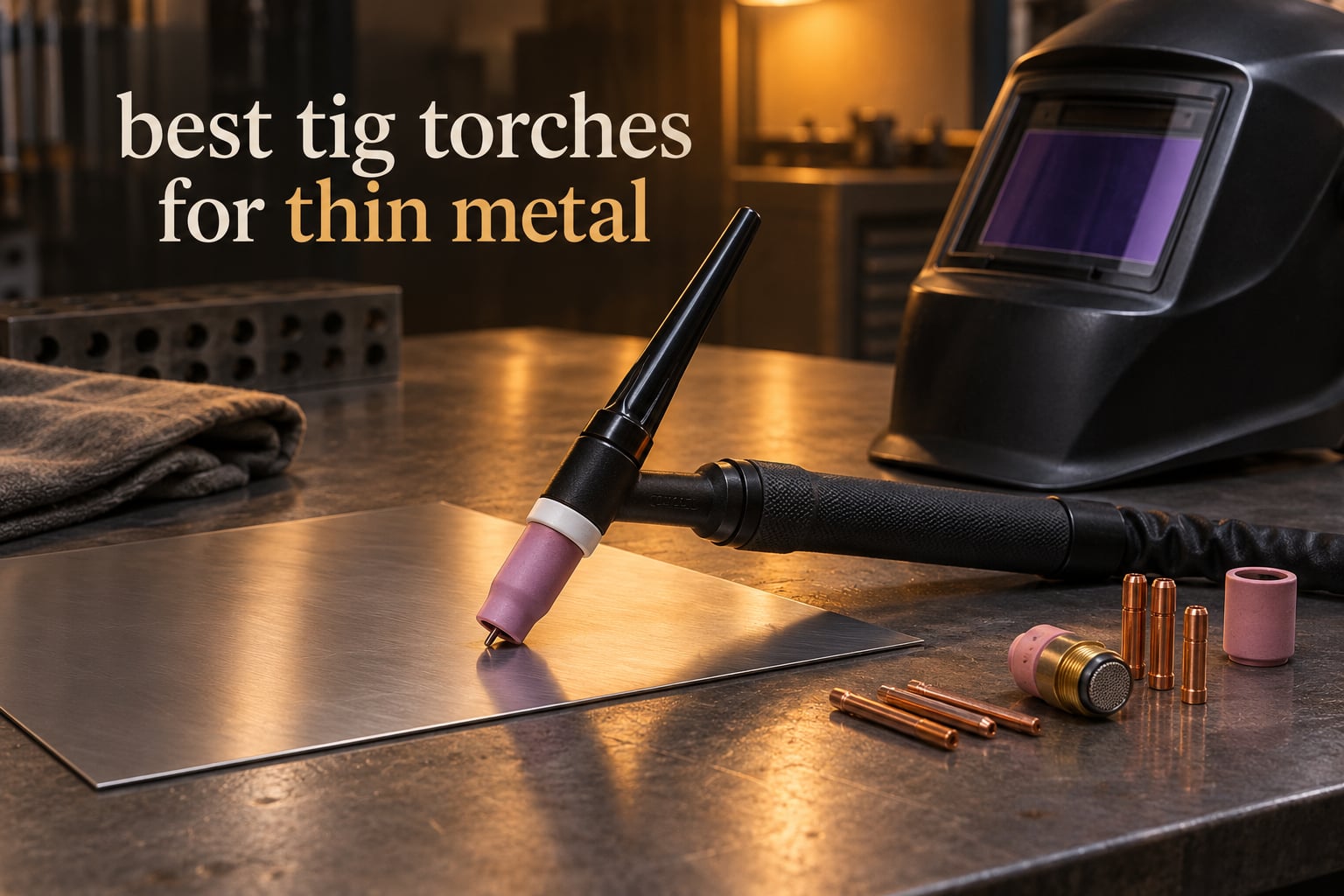
The best TIG torch for thin metal is an air-cooled 9-series or 17-series torch with a small flexible head, because on 20 to 28 gauge material the torch, not the machine, decides whether you get a clean bead or a blown hole. That is the short answer, and the rest of this guide explains which specific torches earn their place and why.
I spend most of my shop hours on thin stainless, 22 gauge aluminum trailer skin, and 18 gauge body panels, and the difference between a decent torch and a great one shows up in the first ten seconds of an arc. A bulky rigid neck blocks the puddle, a stiff cable fights your wrist, and a mismatched collet family locks you out of every gas lens you already own.
What follows is a roundup of ten torches that actually suit thin-gauge work, plus the gauge math, series decoding, and compatibility checklist that the spec sheets leave out. If you are still choosing a machine first, our tool buying guide covers the detection side of the shop; here we stay on the torch that makes the weld.
One note before we start, since it trips up almost every beginner: on thin metal, a water-cooled torch is usually the wrong purchase. Manufacturers push them because they are the premium option, and they are excellent, but the heat that needs removing on a 26 gauge seam is trivial compared with a 3/8 inch pipe. Spend that budget on a superflex cable and a set of gas lenses instead.
Table of Contents
Top 3 Best TIG Torches for Thin Metal (October 2026)
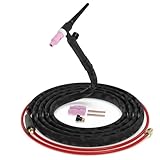
YESWELDER WP-17V 13 ft 150A
- 150A air-cooled lift TIG
- Full cup and collet kit
- 10-25mm2 quick plug

Best TIG Torches for Thin Metal in 2026
All ten torches below are air-cooled 150A or 125A units, which is exactly what thin-gauge work calls for. The differences that matter to you are head size, whether the head flexes, cable diameter, and which consumables the collet body accepts.
| Product | Specifications | Action |
|---|---|---|
| YESWELDER WP-17V 13 ft 150A |
|
Check Latest Price |
| RIVERWELD WP-17F Flex Head Body |
|
Check Latest Price |
 ARCCAPTAIN WP-17V 13 ft ARCCAPTAIN WP-17V 13 ft |
|
Check Latest Price |
 MOTOKU 17FV Flex and Valve Head MOTOKU 17FV Flex and Valve Head |
|
Check Latest Price |
 RIVERWELD WP-9F Flex Head Body RIVERWELD WP-9F Flex Head Body |
|
Check Latest Price |
 Lincoln Electric PTA-9 Lincoln Electric PTA-9 |
|
Check Latest Price |
 CK Worldwide CK17-25-RSF FX CK Worldwide CK17-25-RSF FX |
|
Check Latest Price |
 bestarc TIG17V 150A bestarc TIG17V 150A |
|
Check Latest Price |
 YESWELDER WP-17FV Flex and Valve YESWELDER WP-17FV Flex and Valve |
|
Check Latest Price |
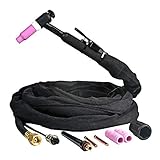 Rstar WP17 13 ft Rstar WP17 13 ft |
|
Check Latest Price |
1. YESWELDER WP-17V 13 ft 150A – Best Overall Air-Cooled Torch
YESWELDER TIG Torch, TIG Welding Torch WP-17V 13 ft 150A 10-25mm² Air
150A air-cooled lift TIG
13 ft cable
8mm2 copper conductor
10-25mm2 quick plug
Pros
- Lift-TIG arc starts suit low-amperage thin gauge work
- 8mm2 copper wire sheds heat on long seams
- Fireproof insulated jacket wipes clean
- Full set of cups collets and back caps in the box
Cons
- Fixed straight head will not angle into tight access
- 13 ft cable is short for large job-site setups
This is the torch I hand to anyone who asks for one recommendation. It carries a 4.6 rating across 600 reviews, the largest review base in this roundup, and the fit-and-forget design is exactly what a first thin-gauge project needs.
The lift-TIG gas control is the part that matters most here. A lever or button meters argon at the handle instead of routing it through a separate switch, so you can feather shielding on a 26 gauge edge without breaking your rhythm or looking away from the puddle. The 8mm2 copper conductor is oversized for the amperage you will actually run, which means the head stays cool between passes.
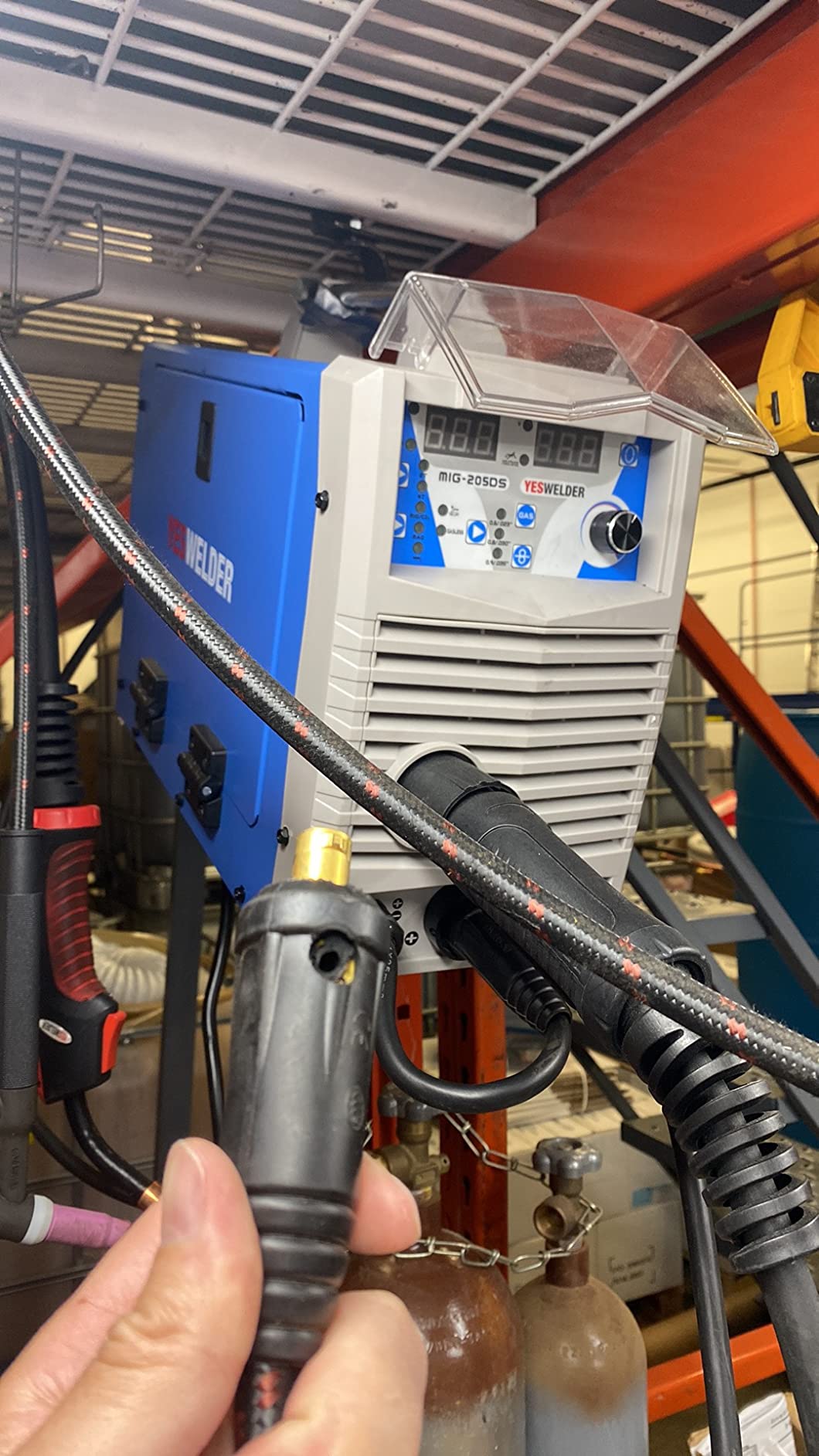
The consumable kit is unusually generous for a complete torch. You get 10N50, 10N49, and 10N48 ceramic cups plus 1/8 inch, 1/16 inch, and 3/32 inch collets, a 1/8 inch collet body, and both long and short back caps. That covers most of the thin-gauge range before you spend anything on a gas lens.
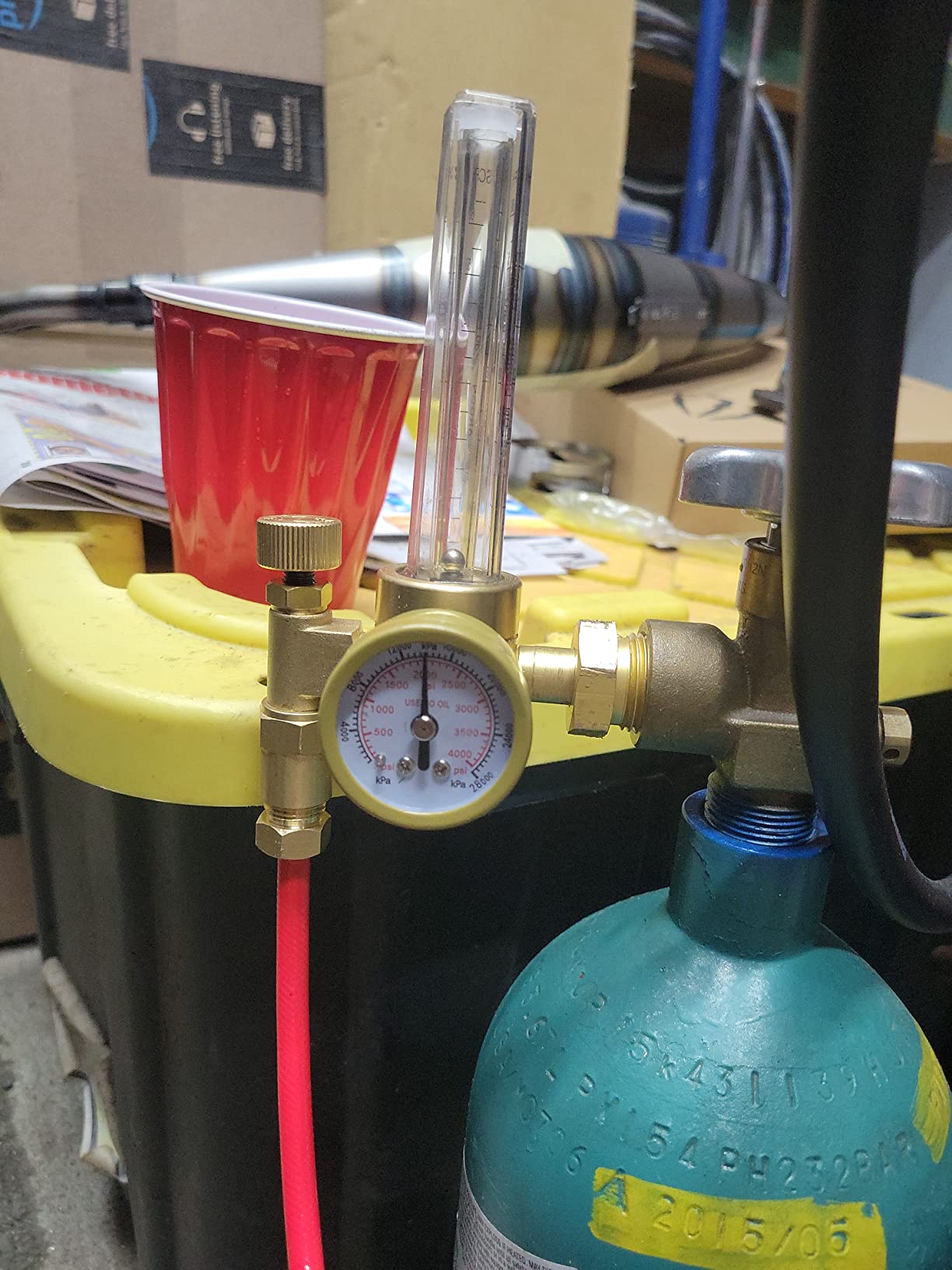
The 10-25mm2 quick plug connector is a real convenience on budget machines, and buyers report pairing it with the YESWELDER FLUX-135 PRO, MIG-140DS PRO, YWM-160, and ARC-165DS without issue. The 5/8-18 gas fitting is standard, so any argon regulator hose will reach it.
Why thin-gauge welders keep reordering this one
At 20 gauge mild steel, this torch sits comfortably at roughly 65 to 70 amps, and the extra copper capacity means the handle never becomes the thing limiting your duty cycle. Reviewers who came from a thin rubber hose report a noticeable difference in how little they feel the cable fighting them.
The lift-TIG valve also gives finer gas control than an on/off button torch, which matters when the puddle on 24 gauge stainless shrinks the moment you under-shield it. A wandering arc on thin stainless is usually a shielding problem, not a tungsten problem.
Where it falls short
The head is rigid. On a lap joint where the seam is not flat under your torch, you will be repositioning rather than angling, and that is where a flex head pays for itself. The 13 ft length is also the shortest usable reach among the complete torches here, which can leave you dragging the argon bottle around a large frame.
2. RIVERWELD WP-17F Flex Head Body – Best Angled Head Upgrade
RIVERWELD WP-17F SR-17F TIG Welding Torch Head Body with Flexible Head
150A air-cooled
Flexible torch head
Copper construction
Head body only
Pros
- Flex head bends and holds position for awkward angles
- Compact 17-series body controls thin sheet well
- Drop-in replacement for standard 17F bodies
- Very low cost per head
Cons
- Head body only so cable and consumables are separate
- One user had the torch rotate inside the handle and taped it
Read this one carefully, because it changes what you can buy. This is a head body, not a torch, and it is the cheapest legitimate way to put a proper flex head on a cable you already own.
If your machine came with a stiff straight 17, this is a 4.5-star, 383-review part that bolts straight into a standard 17F body and gives you an angled, bendable neck rated 150 amps. The copper construction and the small 17-series geometry make it a genuinely thin-gauge head, not a scaled-down 26.
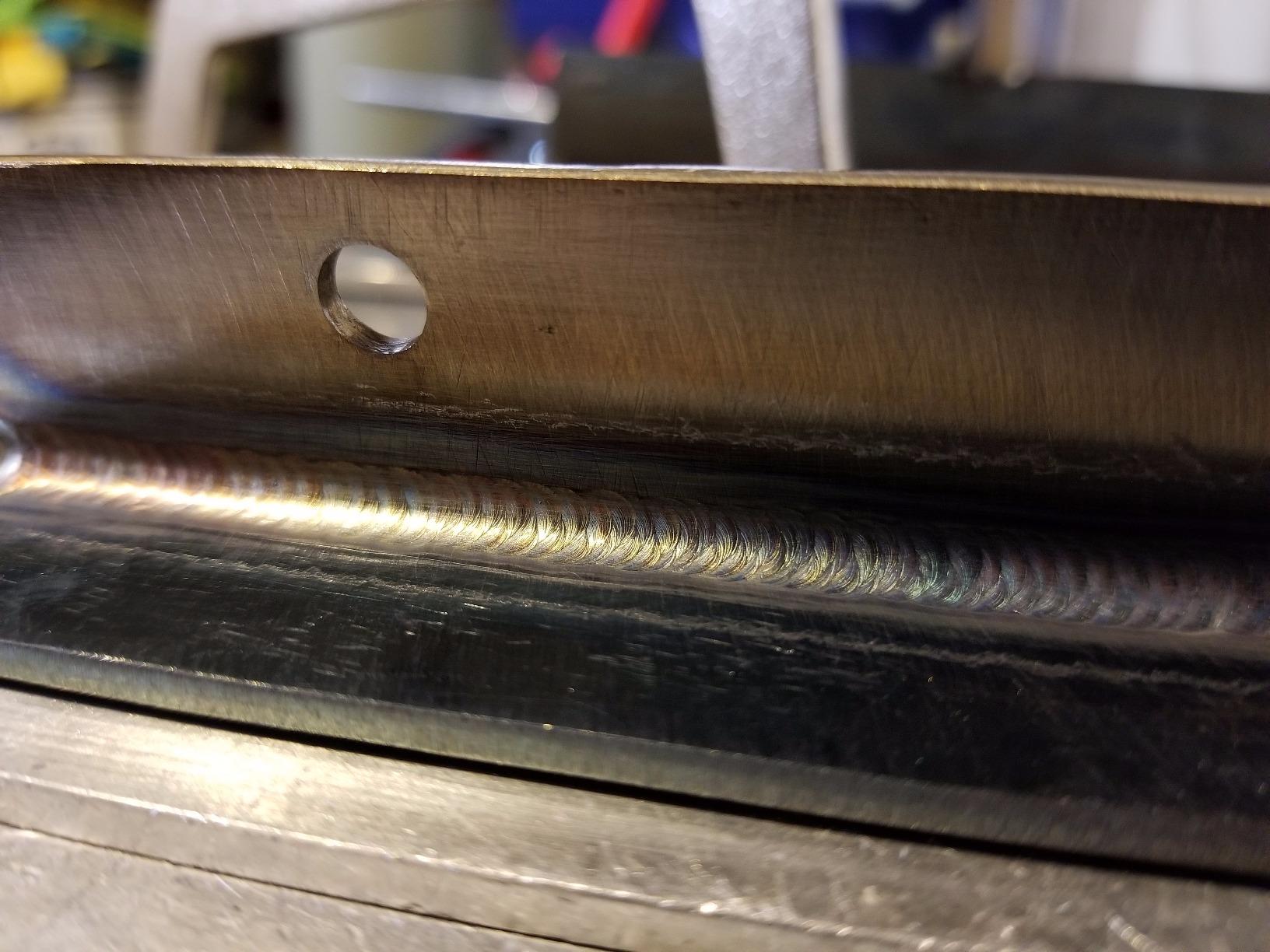
Because the flex head holds its position once bent, the torch stays aimed where you put it while you reposition your wrist. On a curved 22 gauge aluminum pan or a muffler cone, that saved angle is the difference between an even bead and a series of cold starts.
Buyers mostly treat it as a spare, which is a good sign about build quality, and the small 3.52 ounce weight keeps fatigue down during a long thin-gauge session. It also works as the angled head for any 17-series cable that has seen better days.
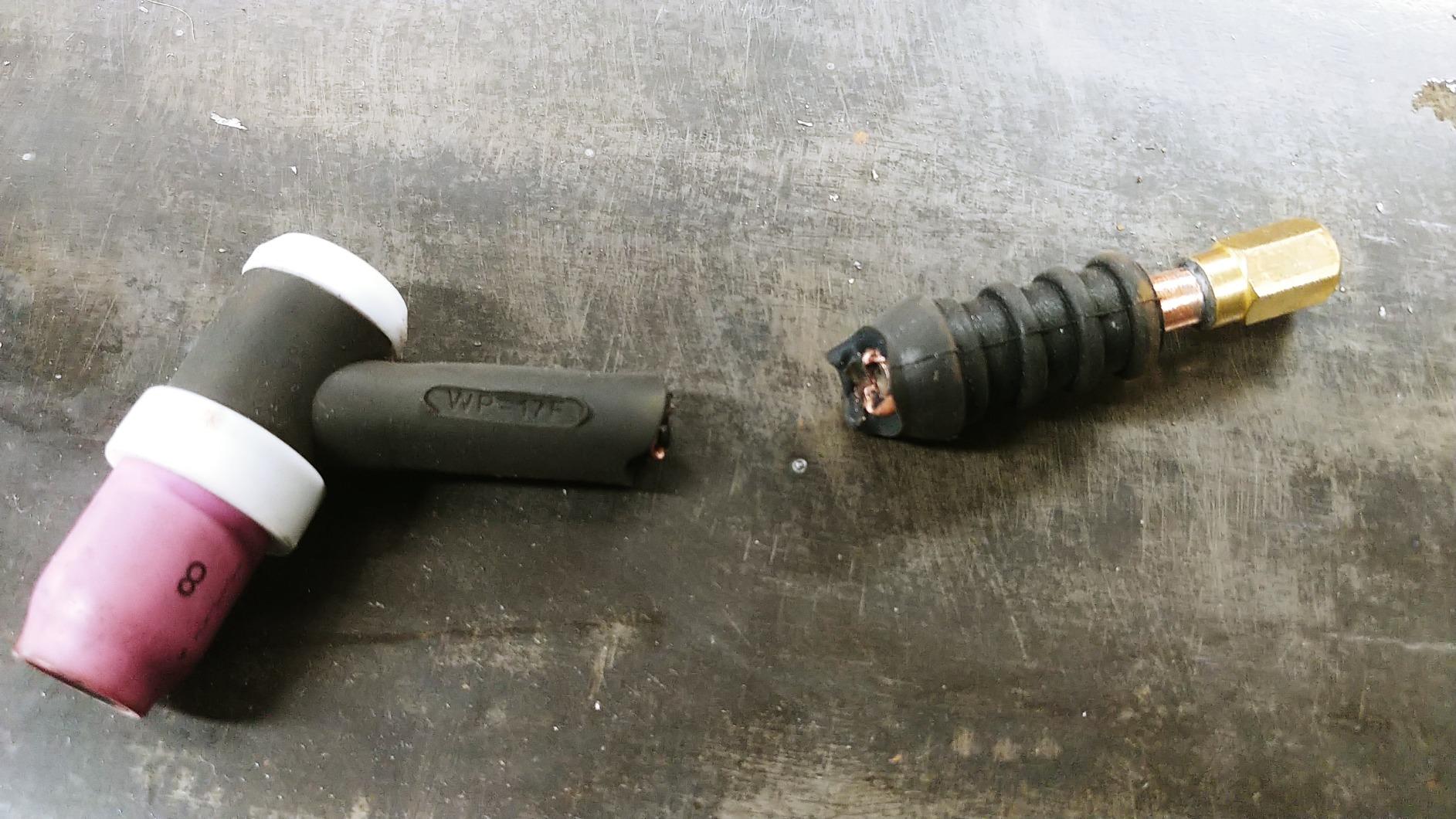
Check this before you order
Confirm your existing torch uses 17-series collets and cups, because that is the entire compatibility requirement. The dimensional drawing is 11.02 by 2.36 by 2.36 inches, so if your current body is a noticeably different diameter, this is not a drop-in.
Also budget for a cable if you do not have one. A head body plus a separate power cable, connector, collets, and cups can approach the cost of a complete budget torch, and the complete option may simply be the smarter first purchase.
When a flex head matters more than power
Flex heads win on access, not amperage. If you are welding 24 gauge or thinner at under 80 amps, the angle adjustment is worth more to you than the extra headroom, and this part delivers it for very little money. Skip it if you need a new cable anyway.
3. ARCCAPTAIN WP-17V 13 ft – Best Value Complete Torch
ARCCAPTAIN TIG Welding Gun, WP-17V Argon TIG Torch with 13 FT Red Air Hose
150A lift TIG
13 ft nylon over-braid cable
European 35-50mm2 plug
400 g ribbed handle
Pros
- 13 ft hose gives real reach without moving the argon bottle
- Nylon over-braid resists abrasion and heat
- Ribbed handle limits hand fatigue
- Back cap collet body and cup included
Cons
- European 35-50mm2 plug needs an adapter for 10-25mm2 machines
- Some buyers had to change the connector style
This is the one I recommend when the machine is European-spec or the plug style is unknown. It scores 4.5 across 324 reviews and the European 35-50mm2 connector is the most useful detail on the whole spec sheet.
Budget machines split into two families. If yours has a 10-25mm2 rear plug, a 35-50mm2 torch needs an adapter or a connector change before you can plug in, and that is the single most common complaint in the reviews here. If your welder uses the European plug, this one fits with nothing to buy.
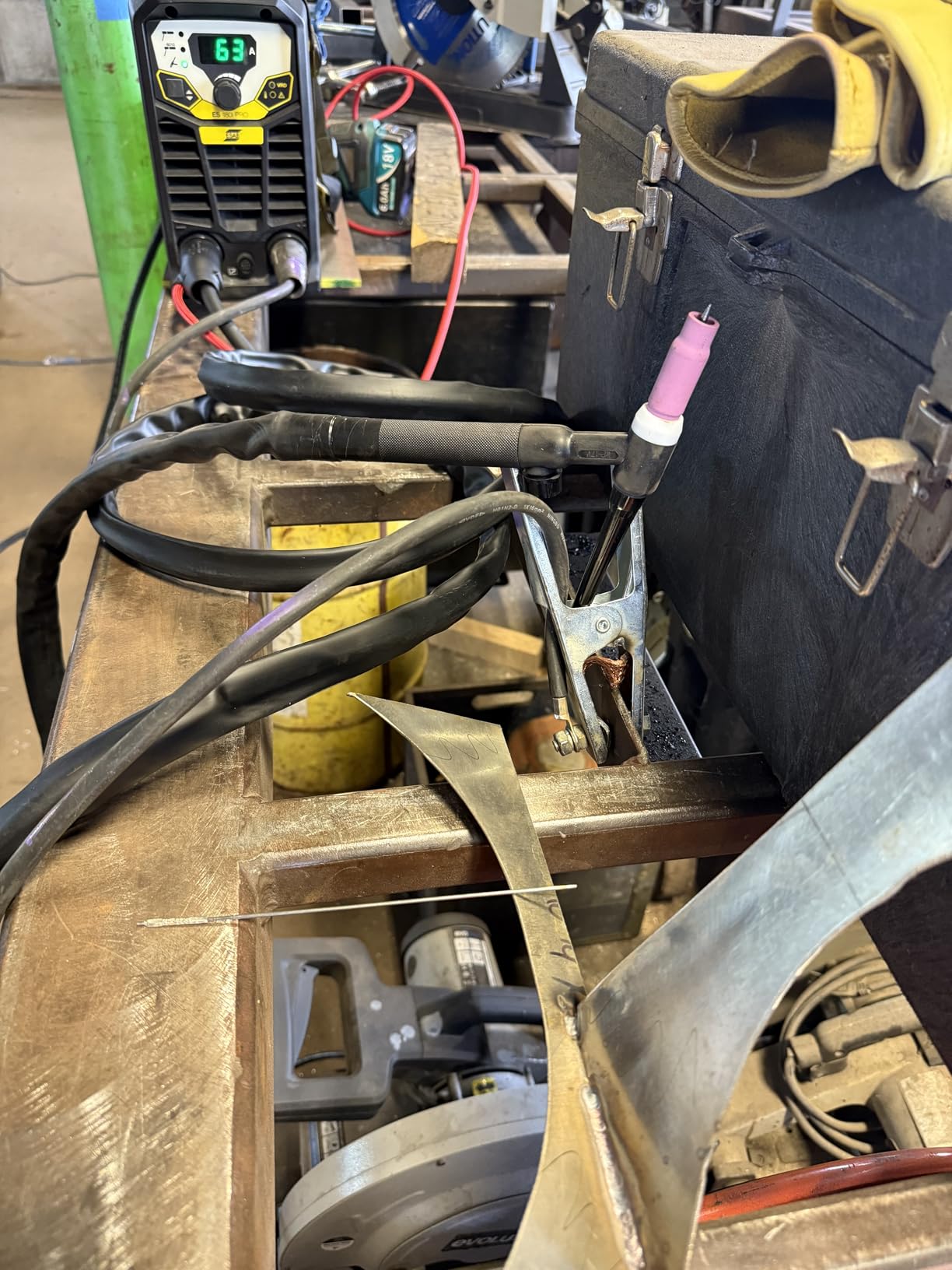
Once it is connected, the rest is well executed for the money. The 8mm2 high-purity multi-strand copper conductor is a low-resistance design, the 13 ft EPDM rubber power cable carries a nylon over-braid that stays flexible instead of taking a set, and the 5/8-18 RH gas line connection is universal.
The ribbed handle weighs 400 g, which is genuinely light for a 13 ft assembly, and on a four-hour session welding 20 gauge brackets that difference accumulates. Electrode range is 0.5 to 2.4mm, so you can carry everything from a 3/32 inch tungsten for stainless up to a larger one for occasional thicker work.
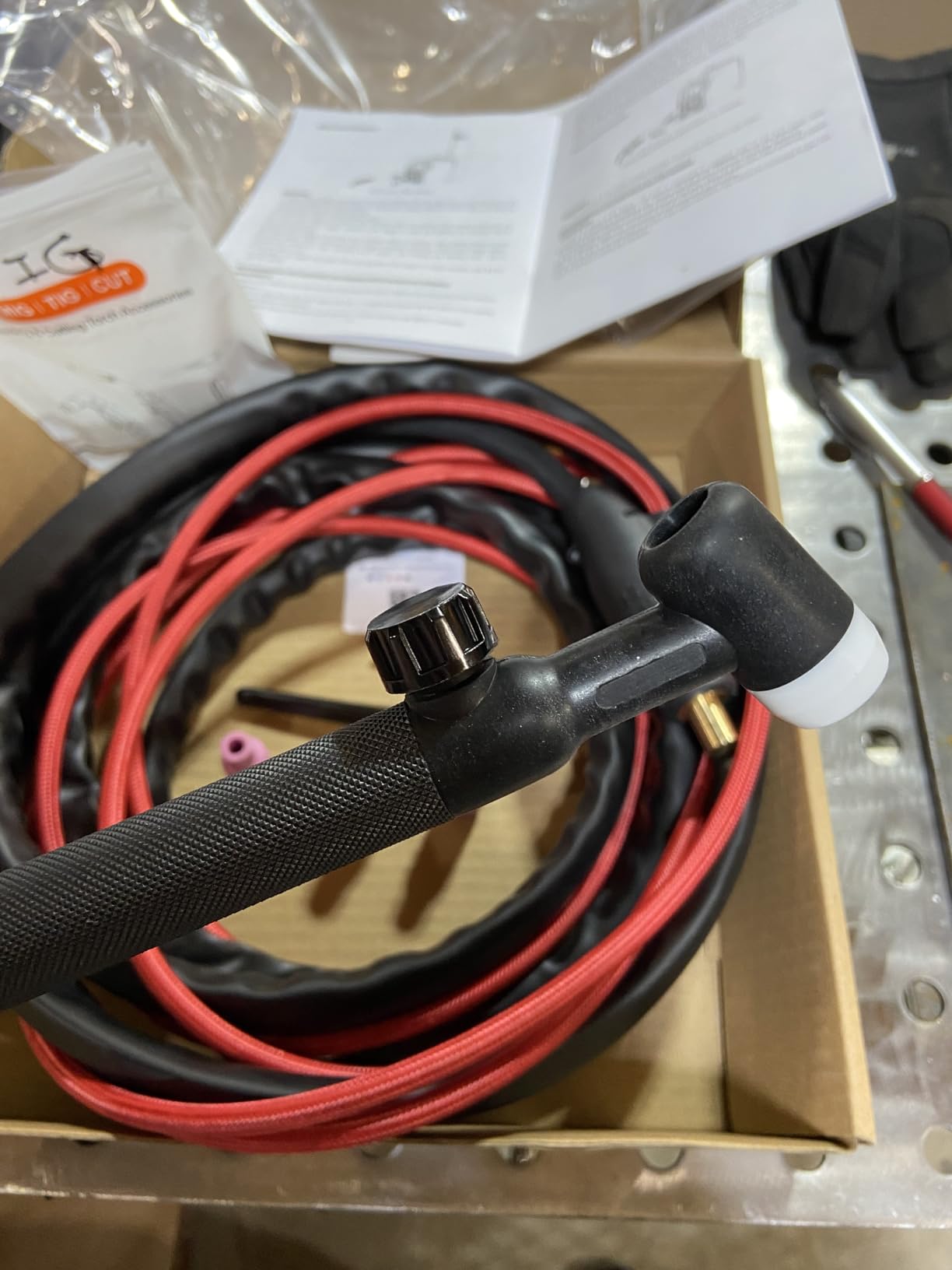
Why the connector detail decides it
Look at the rear of your welder before you order anything. Machines that ship with the European 35-50mm2 socket pair directly with this torch, while the 10-25mm2 machines that dominate the budget tier need the adapter. Getting this wrong is the number one cause of returned torches, and it costs nothing to check.
The 180 day warranty is modest but reasonable at this level, and ARCCAPTAIN machines pair with it out of the box if you own one already. The cable reach is what buyers mention most, because 13 ft genuinely changes how you set up around a frame or a long seam.
Where the value runs out
The connector mismatch is the deal-breaker for 10-25mm2 owners, and there is no universal head that solves it inside this torch. The handle is also straight, so tight-access work on a lap joint still means repositioning rather than angling the head.
4. MOTOKU 17FV Flex and Valve Head – Best Budget Gas Lens Kit
TIG Welding Torch Head Body 17FV Flex/Valve Air-Cool 150A WP-17FV
150A air-cooled
Flex head with gas valve
3/32 inch gas lens kit
5.5 ounce handle
Pros
- Flex head gives a comfortable angle on thin sheet
- Non-slip lightweight handle for long sessions
- 3/32 inch gas lens kit fits 17 18 and 26 series
- Best cheap route to gas lens coverage
Cons
- Head body only so cable and consumables are separate
- Some reviewers say the flex neck is soft and drifts
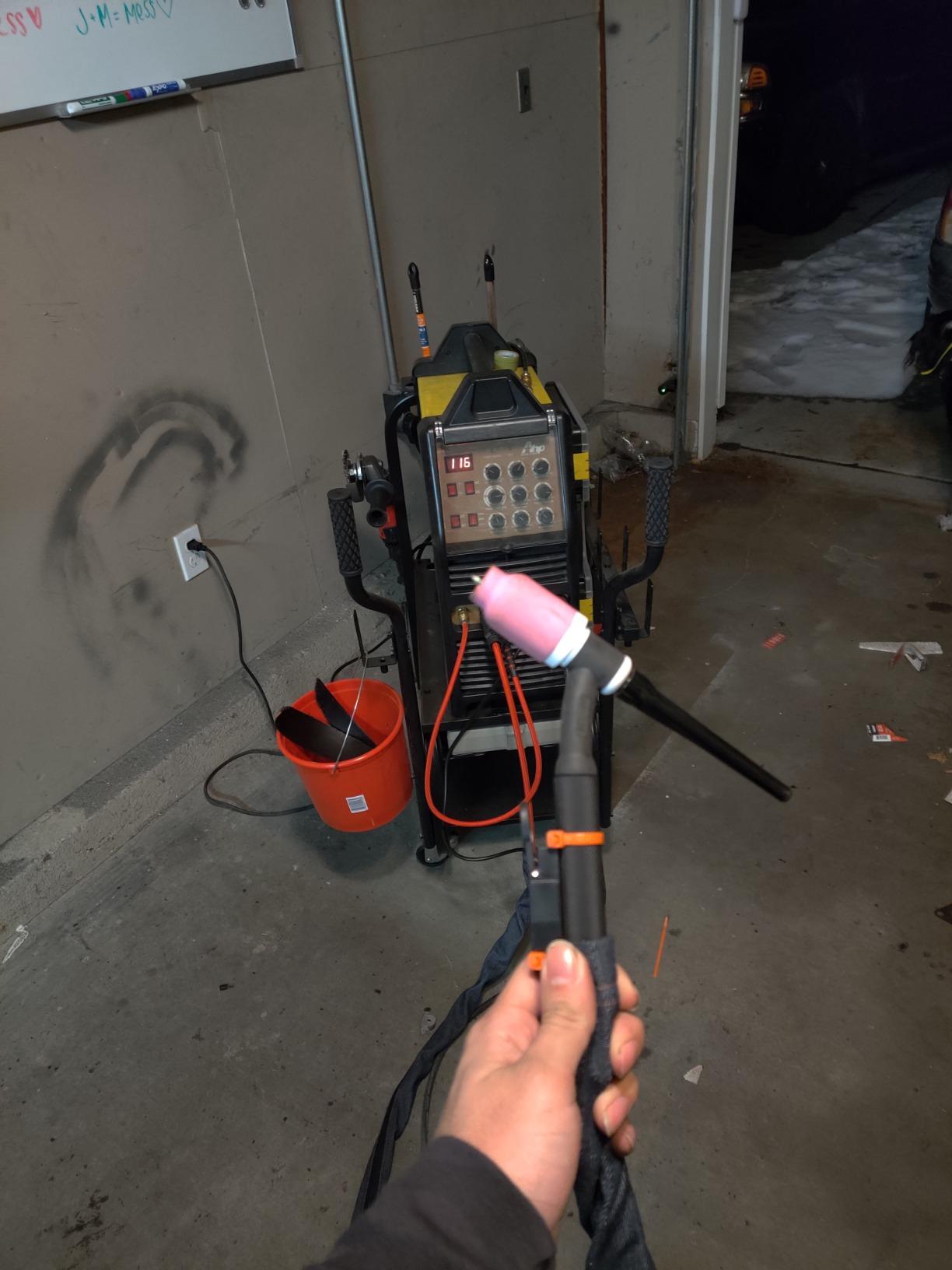
Gas lenses are the single biggest visible upgrade on thin metal, and this head is the cheapest legitimate way to get one. It holds a 4.4 rating from 226 reviews and includes a 3/32 inch gas lens kit that works across 17, 18, and 26 series bodies.
That cross-series compatibility is the practical win. On thin stainless and aluminum, a gas lens gives you a much wider cone of argon than a standard ceramic cup, which means the puddle stays bright and oxide-free without you cranking the flow and blowing the bead off a 24 gauge edge.
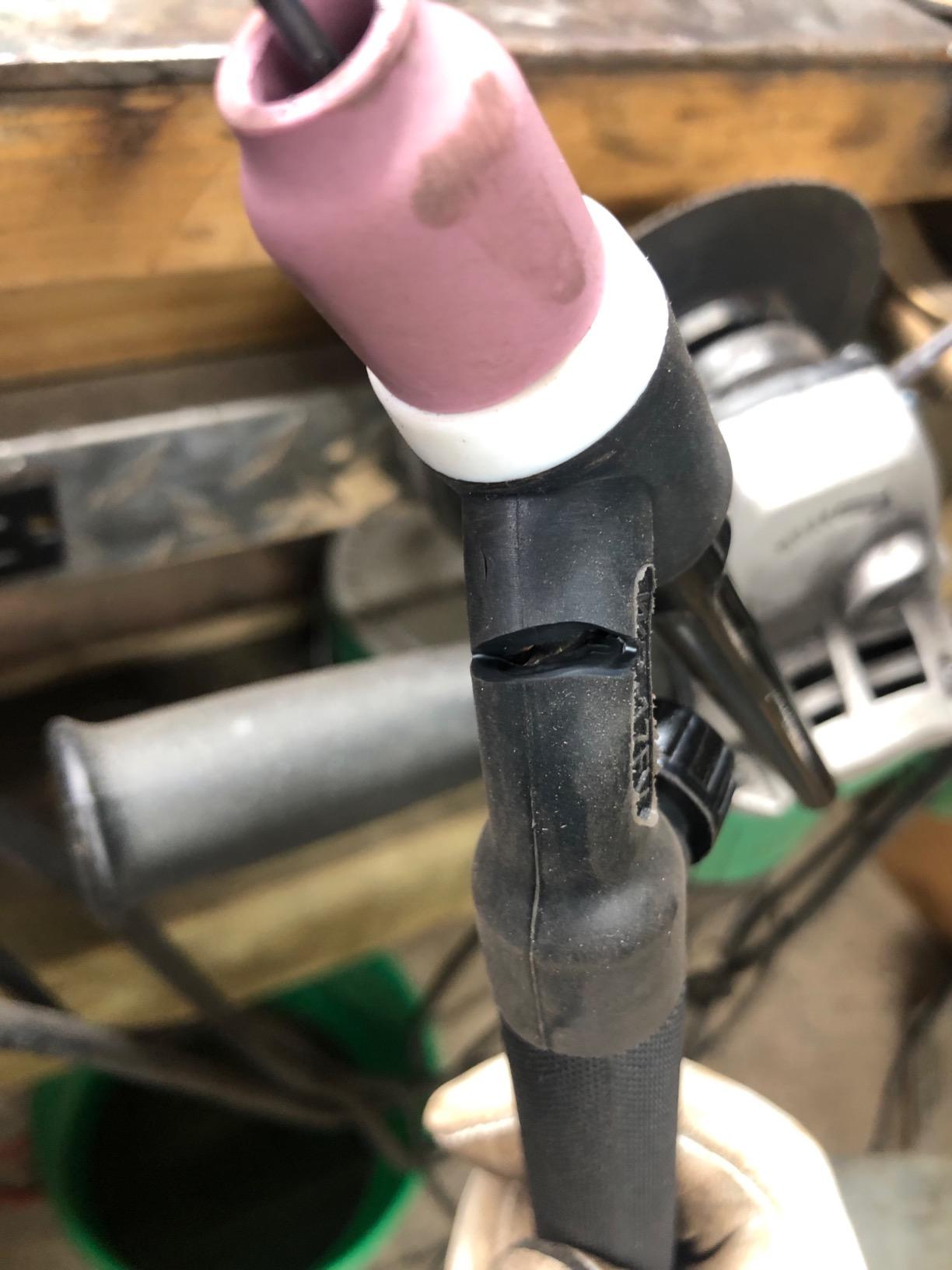
The combination of a flex head and a gas valve on one body is what makes this useful. The valve gives you metered gas control at the handle for shielding-sensitive thin work, and the flex head handles the awkward angle, so the two features that matter most for a small puddle are in a single inexpensive part.
At 5.5 ounces with a non-slip handle, it is light enough that hand fatigue stays low on long jewelry-scale sessions. Buyers commonly use it as a spare 17FV head or purely as a gas lens donor kit for a torch they already have.
Where a gas lens changes the result
Coverage width is the real gain. A number 5 cup shields a narrow column around the tungsten, while a number 6, 7, or larger lens blankets a much wider area at the same flow rate. On 26 gauge stainless that is the difference between a clean pass that needs no cleanup and one you grind afterwards.
It also widens your tungsten size options without changing the amperage, so a 3/32 inch electrode on 20 gauge stainless covers more of the seam. If you do cosmetic or food-grade stainless work, this is the head that pays for itself fastest.
Limitations to plan around
You still need a cable, connector, collets, and cups, and reviewers note the flex neck is on the soft side and can drift out of position once heated. On a long production run that matters more than on a single precision pass.
5. RIVERWELD WP-9F Flex Head Body – Best for 26 and 28 Gauge Work
RIVERWELD WP-9F SR-9F TIG Welding Torch Head Body Flexible Head
125A air-cooled
Compact 9-series head
Flexible neck
2.46 ounce slim grip
Pros
- Smaller and lighter than a 17 for very thin work
- Slim grip steadies the arc on small parts
- Reported stable arc on steel stainless and aluminum
- Works with more and less flexible hoses
Cons
- Bare head body with no collets cups or caps
- Some flex necks work-harden and crack with time
- One report of the head softening at the top of its range
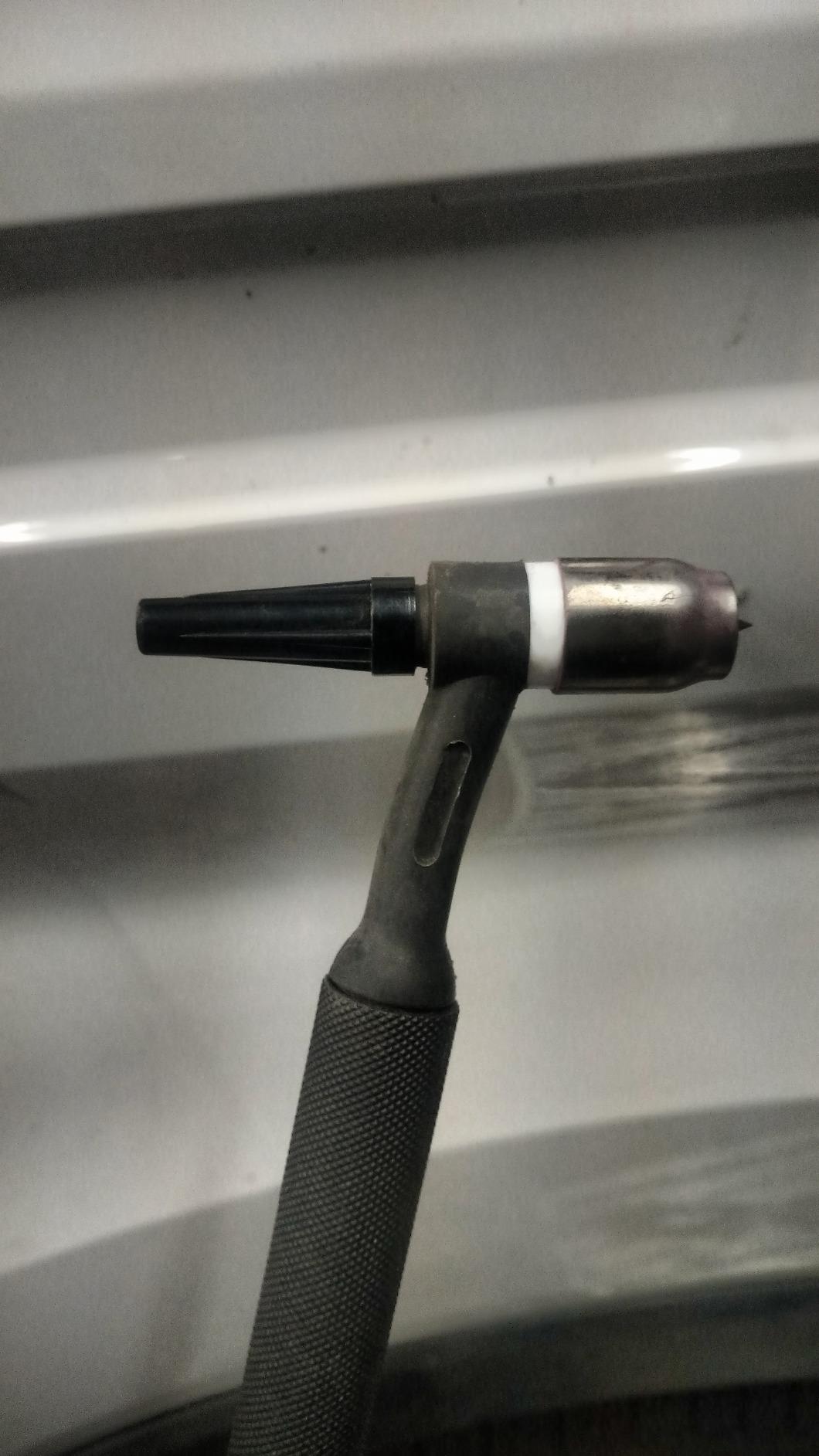
The 9 series is the smallest common air-cooled family, and this is the reason thin-gauge welders on forums keep asking about it. It is rated 125 amps and weighs 2.46 ounces, which is about two thirds the mass of a 17-series body.
On 26 and 28 gauge, and on jewelry-scale or small bracket work, that size difference is not cosmetic. A 9-series head has a smaller candle, less mass to carry heat, and a shorter reach that keeps your eye close to the puddle, so you can see a 0.020 inch edge start and stop without burning through it.
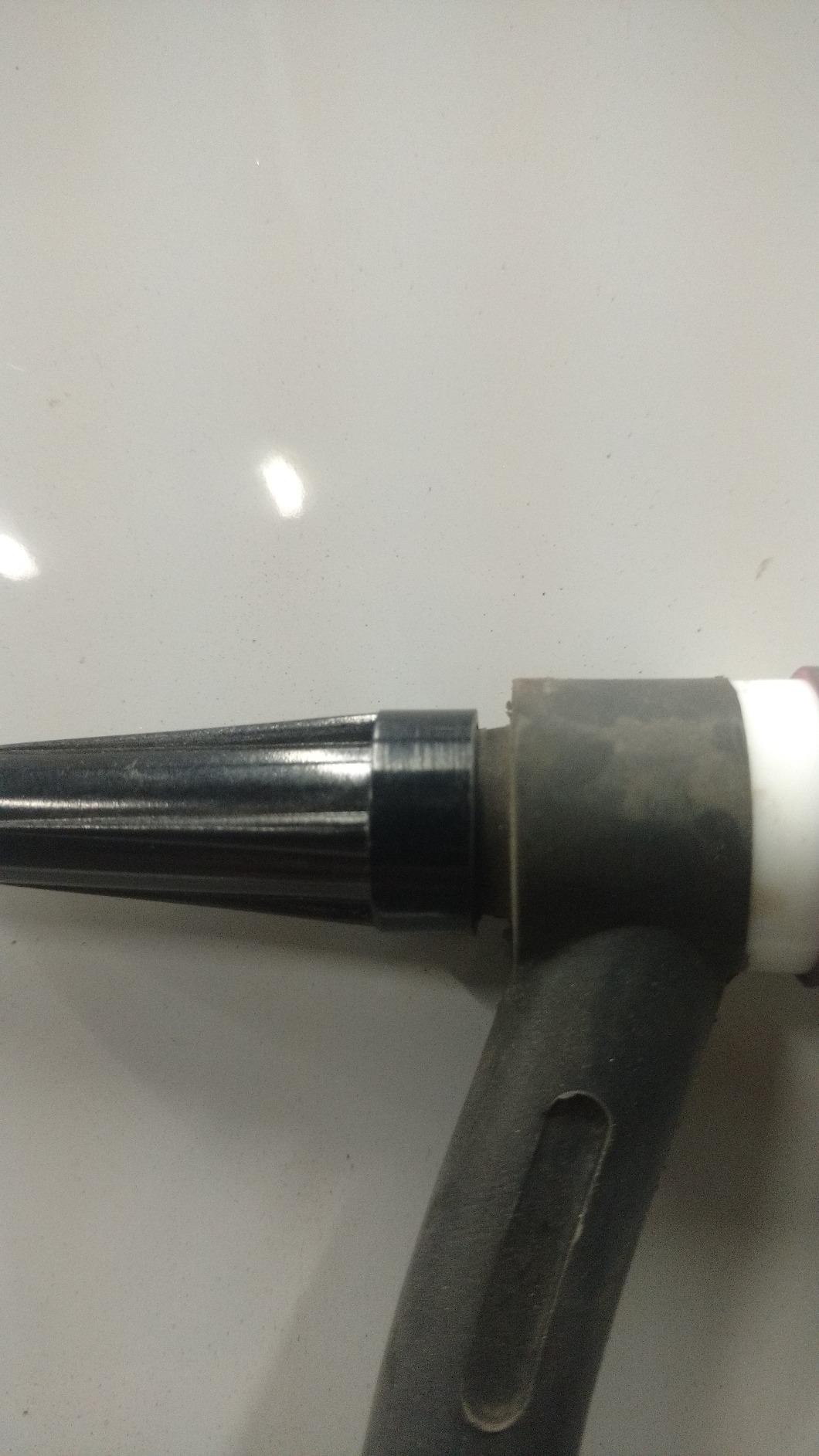
Owners welding thin sheet specifically cite the size and weight difference versus a 17 as their reason for buying it, and they report a stable arc on steel, stainless, and aluminum despite the 125 amp ceiling. At 24 gauge stainless you are running 40 to 50 amps, so the rating is never the constraint.
The copper and brass construction is appropriate for the duty, and the flexible neck makes the small head usable on curved or confined parts where a rigid 9 would fight you. It is the head I would pick for repairing a torn or rusted thin edge.
When a 9 series is the right answer
Reach for a 9-series torch when your thinnest material is 26 to 28 gauge, when you work on small parts where hand position matters more than amperage, or when you are learning and want a torch that is hard to burn through. For most fabricators doing 20 to 22 gauge regularly, a 17 gives you a bigger safety margin.
Because 9-series consumables are a separate family, check that you are happy to stock 9-series collets, collet bodies, and cups. The sizes are not interchangeable with 17-series parts, so this is a commitment to one consumable set.
What to watch
It ships as a bare head body, so budget for the cable, connector, and a full consumable set before the first arc. A few reviews report the flex neck softening or work-hardening when run hard at the top of the 125 amp range, so keep it off thick plate duty.
6. Lincoln Electric PTA-9 – Best Rigid Head With a Warranty
Lincoln Electric PTA-9 Ready to Weld TIG Torch – for Air-Cooled TIG Welding – Rigid Torch Head – 12.5 FT, 1 Piece Cable – K1782-16
Rigid 9-series head
12.5 ft one-piece cable
Knurled handle
One year warranty
Pros
- Knurled handle gives precise bead placement on thin gauge
- Backed by a one year Lincoln Electric warranty
- Plug-and-play torch swaps
- Owners report build quality above the price
Cons
- Rigid head will not bend to reach tight angles
- Some reports of missing parts or used items arriving
- Only one cup size and one end cap included
This is the warranty-backed option, and for a shop that runs thin-gauge work daily it is the least ambiguous purchase on the list. It holds 4.6 stars across 173 reviews with a one-year manufacturer warranty behind it.
The knurled handle is the standout for thin work. A textured grip gives you real tactile feedback as you feather the amperage, and on 24 gauge material where the whole job is resting a fingertip-sized puddle, that control is worth more than a flexible neck.
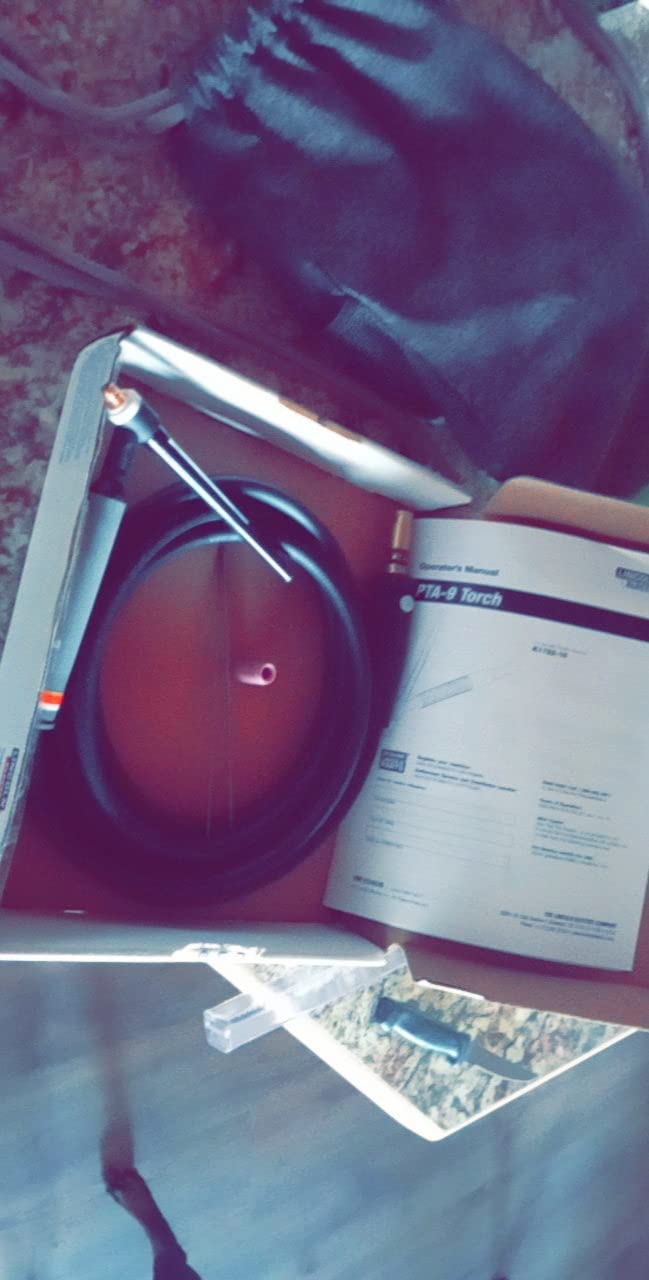
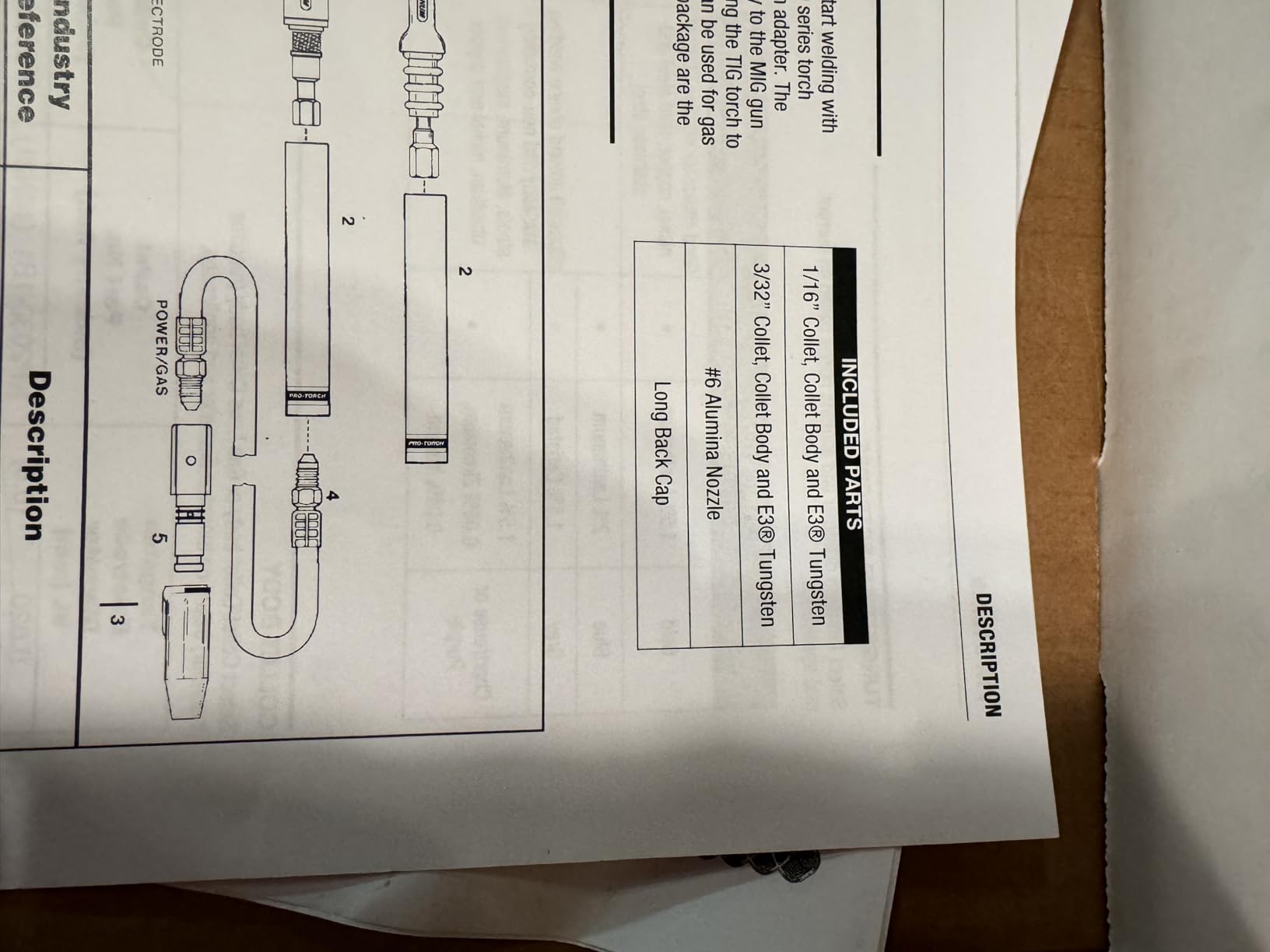
The 12.5 ft one-piece cable has no threaded joints to loosen, and the molded lip on the handle accepts a zippered cable cover, so you can protect the insulation in a hot shop. The box includes a back cap, collet, collet body, collet body cup, and connector, so you can start welding without a parts run.
One important compatibility note: this torch is listed for use with the Lincoln Electric LE31MP, so confirm your machine matches before buying. That is the kind of brand-specific fitment that catches people out with new machines in general.
Why rigidity is not always a disadvantage
A rigid head keeps a consistent arc length and electrode angle without drift, which matters for repeatability more than access. If you weld the same 20 gauge bracket fifty times, predictable geometry often beats flexibility, and the fixed head is a small part of that predictability.
Owners also describe build quality as matching torches costing several times more, which is unusual in a category where the budget tier often feels like an accessory. The 9-series size keeps the head light on 22 to 26 gauge work.
Where it disappoints
On a lap joint or a curved panel you will want the torch angled rather than repositioned, and a rigid head cannot do that. A small group of reviews also report missing parts or signs of previous wear on arrival, so inspect the consumables on the day it shows up rather than at the bench mid-job.
7. CK Worldwide CK17-25-RSF FX – Best Superflex Cable for Shop Days
CK17 Air Cooled TIG Torch Kit, Flex, 150A, 25′, 1-Pc Super-Flex, CK17-25-RSF FX
150A AC hot fill or DCSP
Flex to 40 degrees
25 ft superflex cable
100 percent duty cycle
Pros
- Superflex silicone cable stays light in any position
- Flex head holds position on out-of-position work
- Very repeatable arc versus stock budget heads
- 25 ft reach without moving the machine
Cons
- Runs warm on long continuous welds
- Only 150A rated so heavy users want the 200A version
CK Worldwide is the name that shows up most often when thin-gauge welders compare torches, and this 25 ft Super-Flex kit is the reason. The superflex silicone hose with nylon over-braid is the single biggest ergonomic upgrade in this roundup.
It runs 150 amps AC hot fill or DCSP at 100 percent duty, which matters more than the headline number. That rating describes sustained output rather than a peak burst, so a day of 18 gauge body panel work will not have you watching the handle temperature.
The flex head bends to a maximum of 40 degrees from centerline and holds its position there, so the torch stays aimed correctly on a wheel arch or a lap joint while your wrist finds a natural angle. Reviewers consistently call out the arc quality compared with stock machine-supplied heads.
Twenty-five feet is long enough to walk around a frame, a chassis, or a long muffler without relocating the machine, and the silicone cable is light enough that the length does not become a drag. For a fabricator welding thin gauge for a full shift, that is the difference between a torch you tolerate and one you enjoy holding.
Where the flex cable pays off
Cable stiffness is the hidden cause of inconsistent beads. A stiff hose pushes back against your wrist, and on thin material that push becomes heat you did not ask for. The superflex construction removes nearly all of that, which is why the arc quality comments on this torch are so consistent.
Reviews also note that lighter, thinner-gauge welders get on with it particularly well, since the low mass suits a torch you are holding up rather than resting on a bench. If you already own 17-series consumables, this head uses the same family.
Considerations before buying
The flex head can run warm on long continuous welds, so keep an eye on handle position during a marathon seam. It is also a 150 amp unit, and fabricators who regularly double up on thicker plate report wanting the 200 amp version instead, which is the correct choice for them and the wrong one for you.
8. bestarc TIG17V 150A – Best Budget All-Rounder
Bestarc TIG Welding Torch, TIG17V 150Amp Air-Cooled Lift Tig Torch
150A air-cooled
140A DC at 35 percent duty
13 ft cable
10-25mm2 plug
Pros
- Low resistance conductor dissipates heat well
- Ribbed handle reduces fatigue on long sessions
- Detachable gas hose routes to machine or flowmeter
- 10-25mm2 plug fits most MIG and TIG welders
Cons
- Straight head on this variant with no angle adjustment
- A few owners report the torch rotating in the handle
When the goal is one complete torch that covers thin work without overpaying, this is the pick. It carries a 4.5 rating from 151 reviews and a 10-25mm2 quick connector that suits most budget machines.
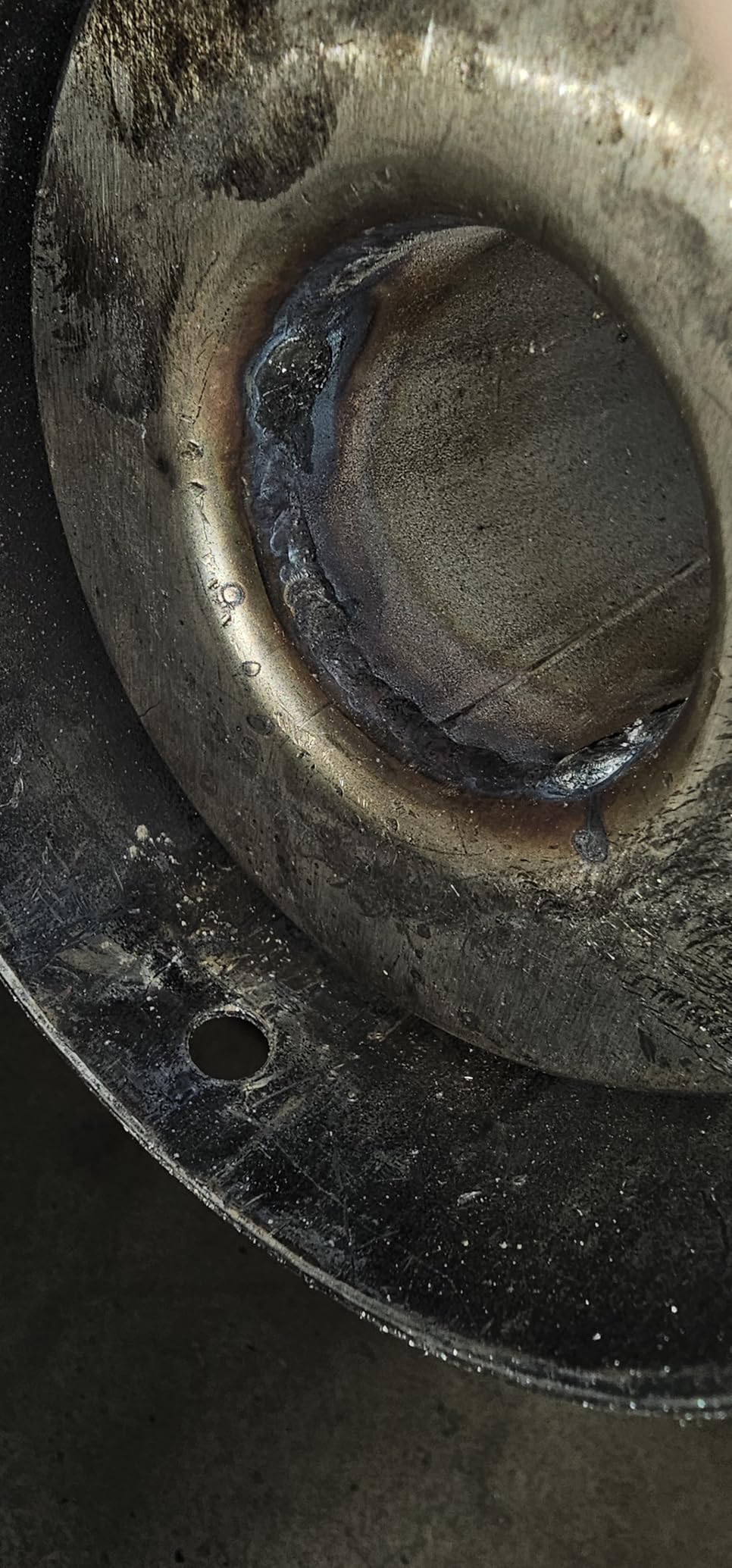
Read the duty cycle honestly before you buy: 140 amps DC at 35 percent duty and 125 amps AC at 35 percent duty. For 20 to 24 gauge work you will be well under both figures, and the flame-retardant PVC sheath with high-purity copper wire keeps the temperature down at those levels.
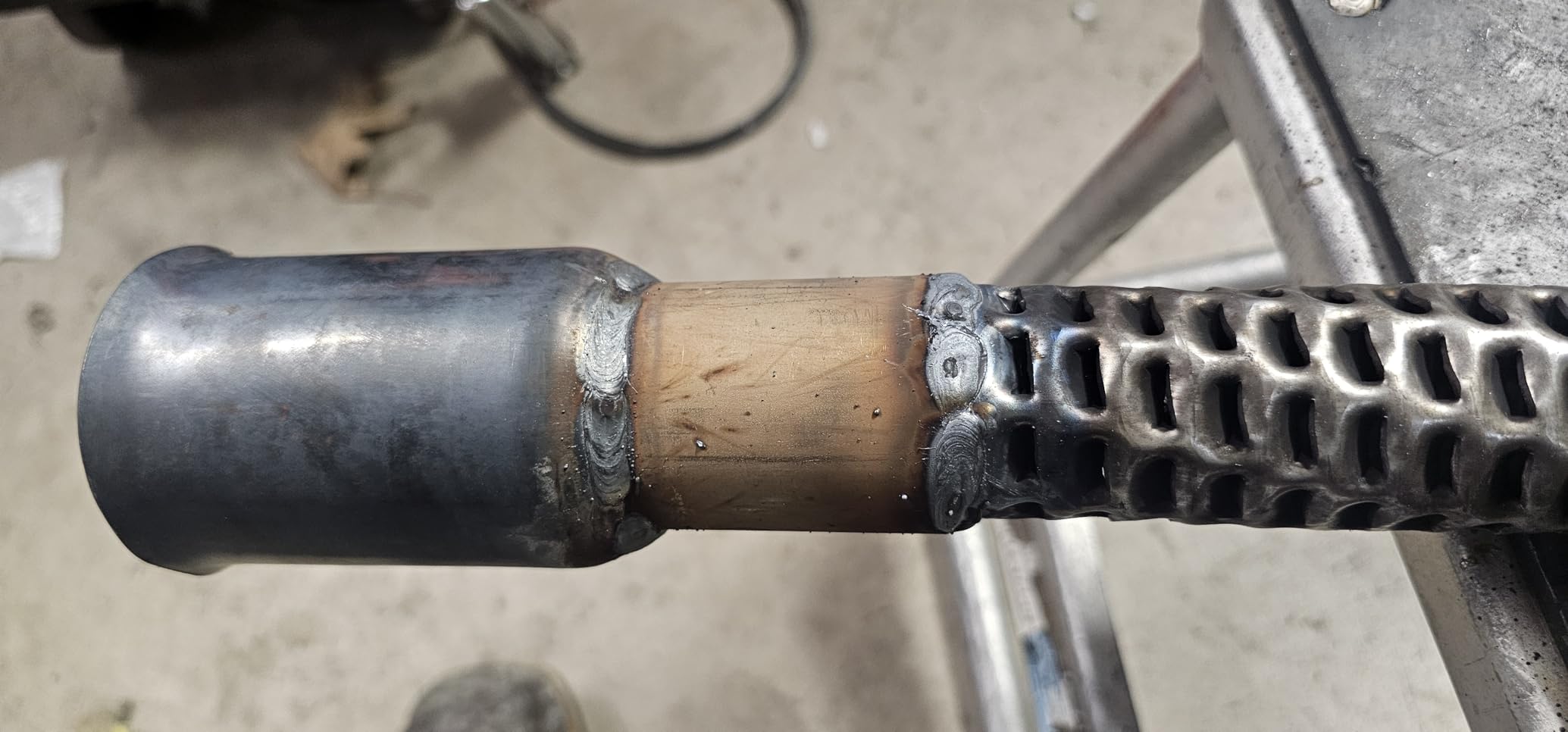
The detachable gas hose is an underrated feature. You can run it to the machine or straight to a flowmeter, which is genuinely useful when you want to verify your argon coverage on a 26 gauge edge before starting a cosmetic stainless piece.
Electrode size range is 0.5 to 2.4mm and the cable is 13 ft, matching the reach of the other complete 17-series torches here. It fits the Bestarc MIG145 and most MIG welders, so it is a low-risk addition if that is your machine.
Where the budget tier holds up
The cooling story is the reason this outranks cheaper torches. A low resistance conductor with high heat dissipation is the one spec that separates a torch that stays comfortable at 100 amps from one that turns the handle into a problem, and that is exactly the band where most thin-gauge fabricators sit.
The ribbed handle is the same ergonomic feature the pricier complete torches use, and at 2.75 pounds the whole assembly stays light. If your work is 20 gauge and lighter, this is where the money stops needing to go up.
Where it stops making sense
This variant has a straight head, so tight-access and out-of-position welding means repositioning. A small number of owners also report the torch rotating slightly inside the handle during use, which is worth checking early rather than discovering mid-seam.
9. YESWELDER WP-17FV Flex and Valve – Best for Fine Gas Flow Control
YESWELDER Tig Welding Torch WP-17FV Gas-Valve Head Flexible Head Air-Cooled
Flex head with gas valve
12 ft air-cooled torch
3/8-24 RH connection
Standard TIG consumables
Pros
- Flex head and gas valve give good thin-gauge positioning
- Air-cooled design rated for extended service life
- Uses standard TIG consumables so spares are easy to stock
- A welding instructor rates it with Lincoln Miller and CK torches
Cons
- One report of the body melting inside after hours of student use
- Another found gas leaks at the thumb valve and grounding joint
- No setup instructions in the box
This is the pick for anyone who wants a thumb valve rather than a push button. The 17FV flex-and-valve layout gives you metered gas flow at the handle, and that is the control you want when a 26 gauge edge keeps oxidising unless the shielding is exactly right.
It is a 12 ft air-cooled complete torch using standard TIG consumables, which is the practical detail that matters. Spares are easy to source, so a shop running this torch is not locked into a proprietary parts family.
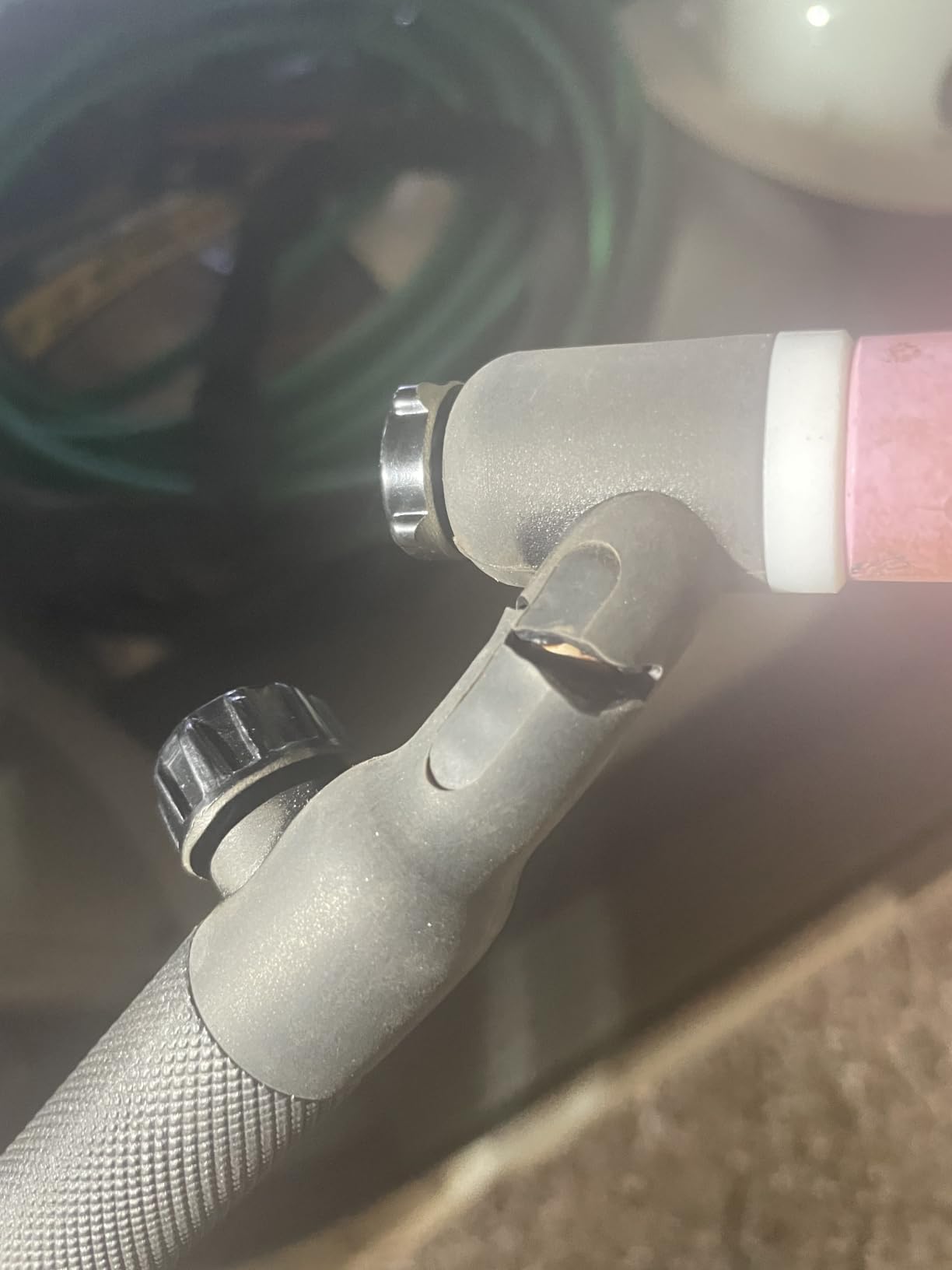
The flex head handles the angle and the valve handles the shielding, and together they cover the two variables that ruin thin-gauge cosmetic welds. The power and gas connection is 3/8-24 RH, and a 105Z57 adapter is included, which covers the common rear-threaded torch posts on budget machines.
One reviewer is a welding instructor who rates it alongside Lincoln, Miller, and CK torches for consistent daily use, and that is a more useful signal than a marketing claim. Most buyers also report it runs without overheating sooner than costlier air-cooled options.
Valve or push button, and why it matters here
A push button is faster, which is what you want on long structural seams. A valve meters gas smoothly, which is what you want on thin material where the difference between 8 and 12 liters per minute decides whether the puddle stays bright or turns grey and fuzzy. If your work is cosmetic stainless or fine aluminum, the valve is the better control.
The flex neck also lets you hold the tungsten angle at about 70 degrees in a spot a straight head cannot reach, which improves edge control on a lap seam in 20 gauge material.
Reported problems to watch
A small group of reviews report the torch body softening from the inside after hours of continuous student use, and another found gas leaks at the thumb valve and the threaded electrode grounding joint. If you buy this for a training room running full days, budget for periodic leak checks at those two points.
10. Rstar WP17 13 ft – Best M16 Replacement Assembly
WP17 TIG Welding Torch Air-Cooled 13 Feet Cable
150A DC and 120A AC
13 ft cable
M16 by 1.5 thread connector
Two-pin trigger socket
Pros
- Reinforced gas line resists tearing on older replacement hoses
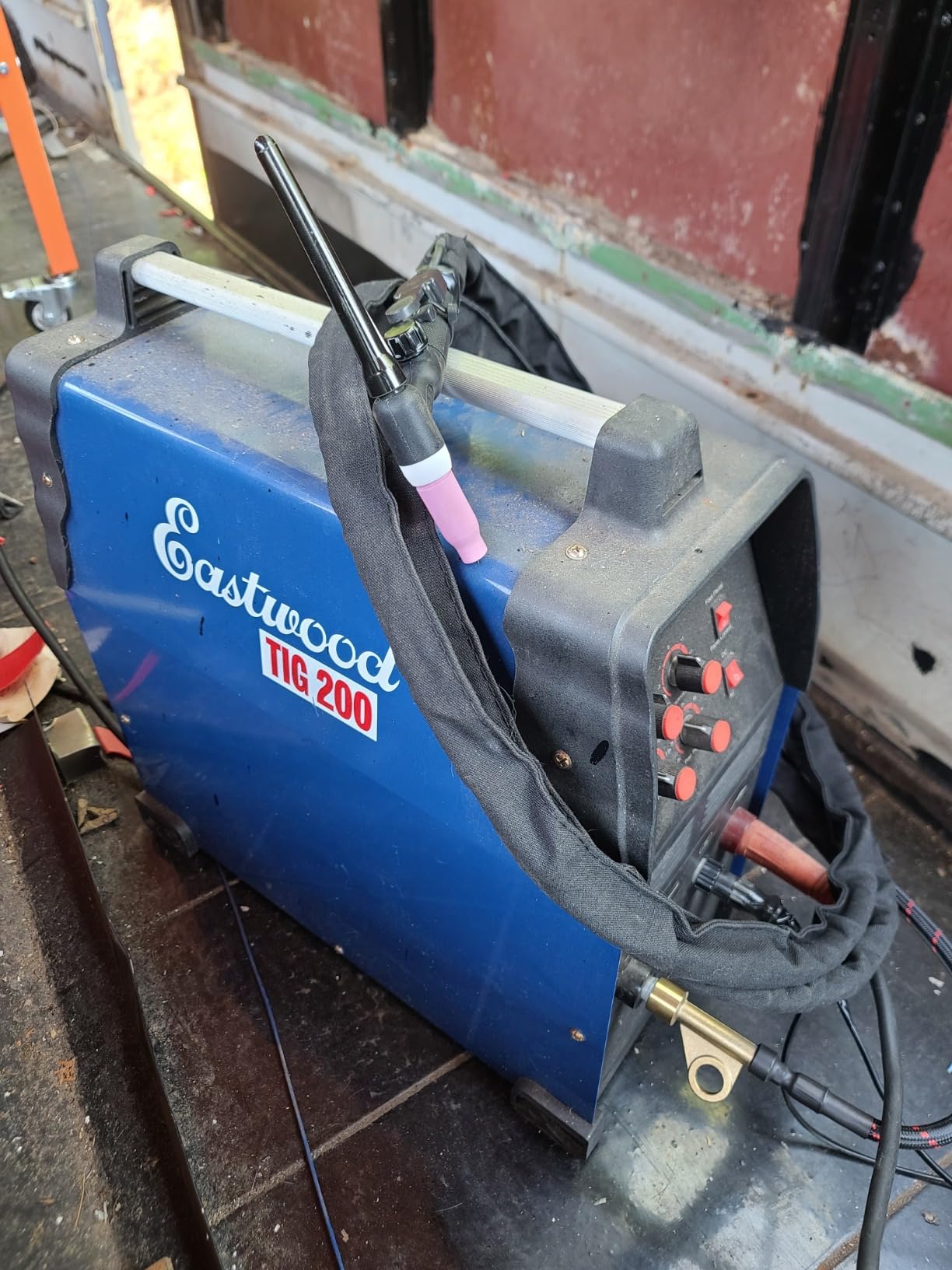
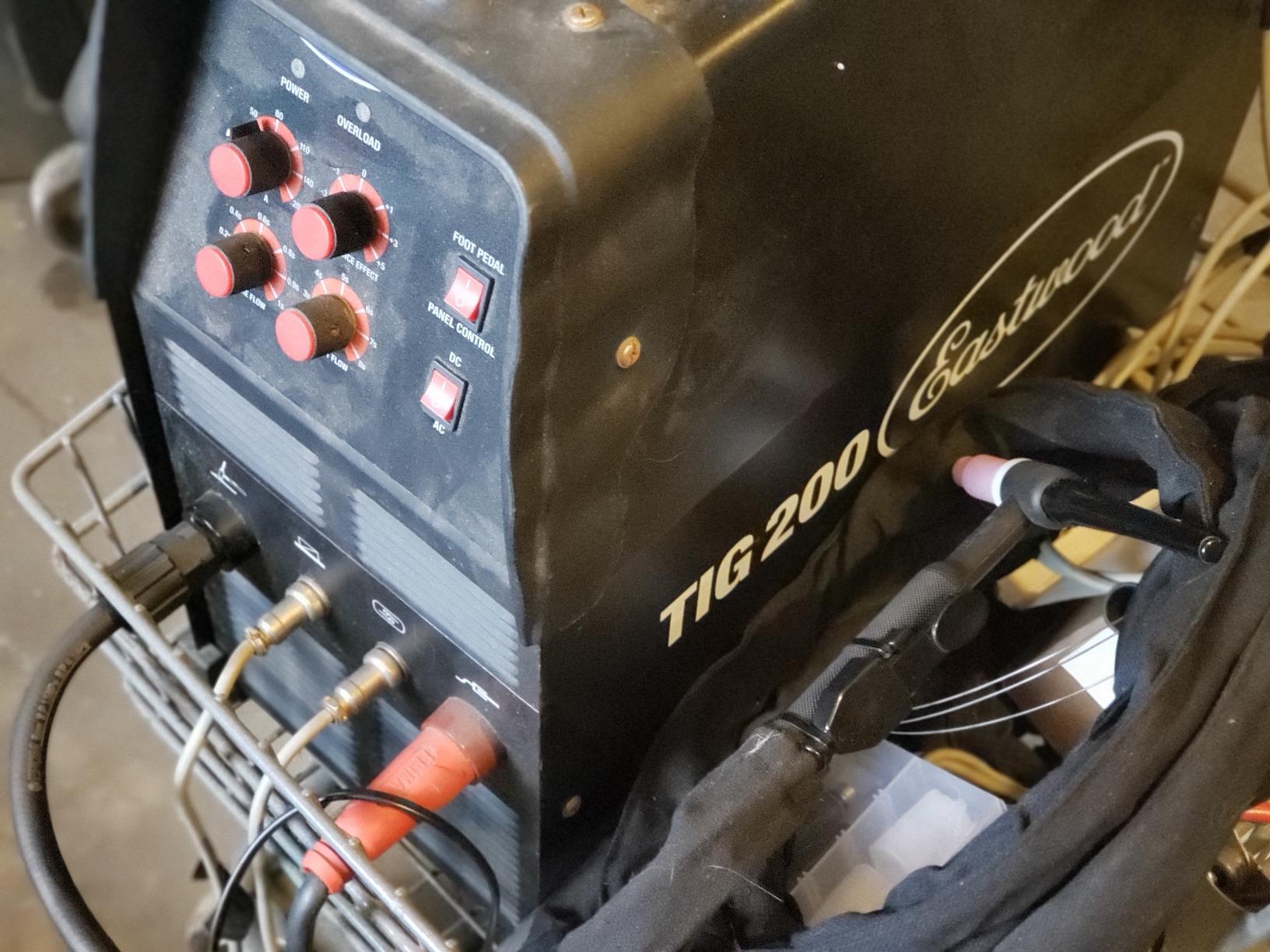
- Direct fit for common welder rear plugs including the Eastwood TIG 200
- Reported light and comfortable for long sessions
- Extra tungsten cups and caps included
Cons
- M16 by 1.5 interface will not fit machines with a different rear plug
- Cable cover has no zipper and thin material though it handles heat
- Lowest average rating in this group at 4.3 stars
This is a replacement assembly rather than an upgrade, and it fills a specific gap: a machine with an M16 by 1.5 torch post and a two-pin trigger socket. If that describes your welder, the compatibility is solved in one purchase.
It is rated 150 amps DC and 120 amps AC across a 13 ft, 4 meter cable, and the electrode range runs from 0.02 inch to 3/32 inch. That covers the full thin-gauge spectrum from 28 gauge work up to light 16 gauge stainless.
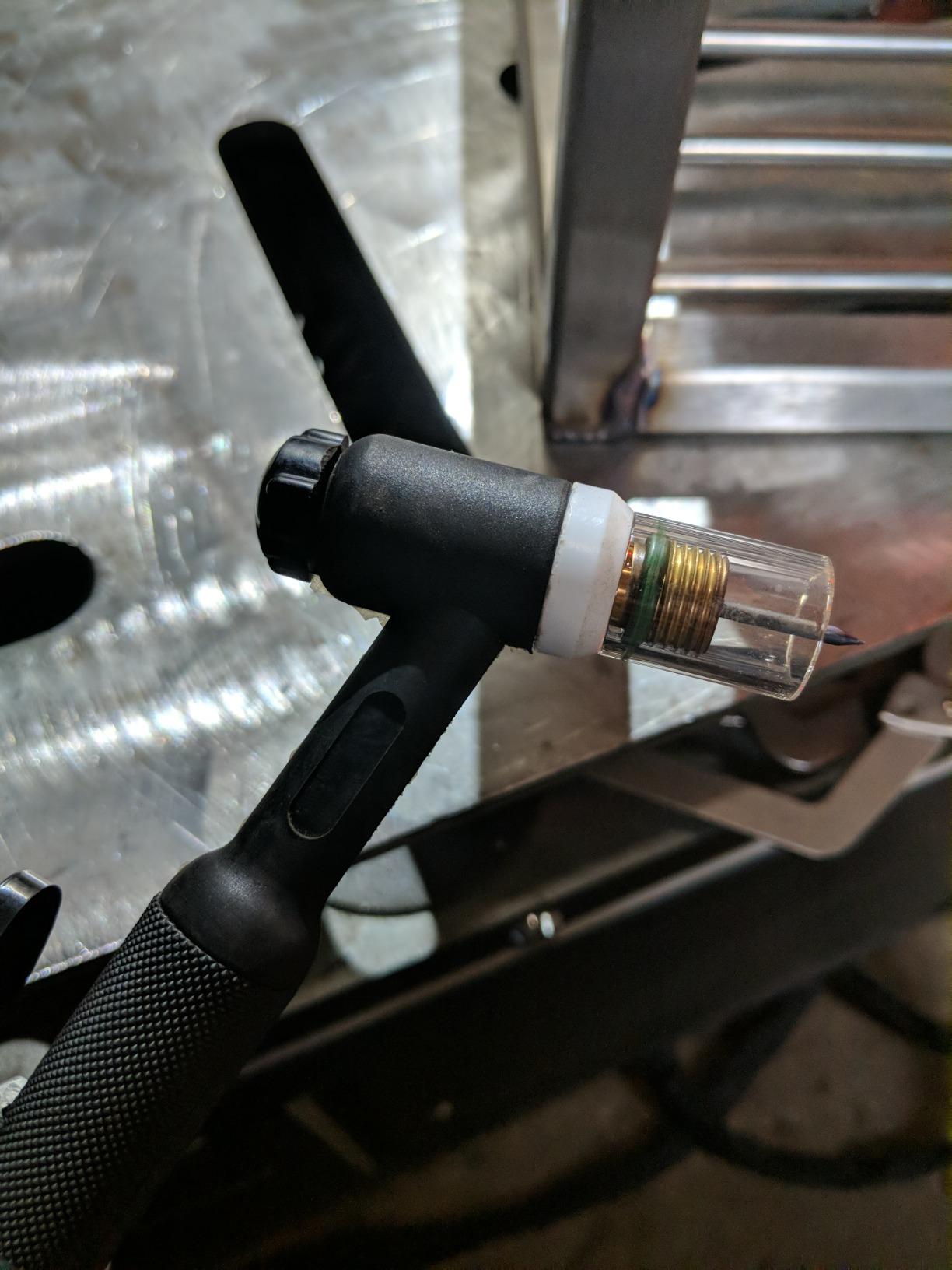
The reinforced gas line is the quiet improvement here. Gas hose tearing is the most common reason original torches fail, and this assembly was built to address it, which matters if you have already replaced one for that reason.
Reviewers also note it fits several common welder rear plugs directly, including the Eastwood TIG 200, and that it is light and comfortable for long beginner sessions. The package includes extra tungsten, cups, and caps, so you can start without a separate consumables order.
Getting the connector right
The M16 by 1.5 threaded connector with a two-pin socket is the entire compatibility question. It works with most Chinese and European welders that use that interface, and it will not fit a machine built around a different rear plug, so check your torch post before ordering.
It is also worth weighing the 4.3 rating, the lowest here, against how the reviews are distributed. A wider spread usually means the product is fine and the fitment is the variable, which is consistent with the plug compatibility theme in the reviews.
Where the cost shows
The cable cover has no zipper and thin material, though it does handle heat. On a torch that is meant to last, that is the first thing to replace, and it is a small job with a zippered cover if your machine design accepts one.
Which Torch Series for Which Gauge
Start from the material, not the torch. The workable rule of thumb used across welding communities is roughly 1 amp per thousandth of an inch of thickness, so 24 gauge steel at about 0.020 inch lands near 20 to 25 amps and 20 gauge at 0.035 inch lands near 35 to 45 amps before you add travel speed and fit-up factors.
What the number means for torch choice is this: the amperage you need on thin metal is almost always small, so a 125A or 150A air-cooled torch has more than enough capacity. Head size, neck angle, and shielding control decide the weld, not the wattage ceiling.
28 gauge (about 0.014 inch): 10 to 15 amps, use a 9 series torch.
26 gauge (about 0.020 inch): 15 to 25 amps, use a 9 series torch.
24 gauge (about 0.024 inch): 20 to 30 amps, use a 9 or 17 series torch.
22 gauge (about 0.028 inch): 30 to 40 amps, use a 17 series torch.
20 gauge (about 0.036 inch): 40 to 60 amps, use a 17 series torch.
18 gauge (about 0.048 inch): 60 to 90 amps, use a 17 series torch.
16 gauge (about 0.060 inch): 90 to 120 amps, use a 17 or 26 series torch.
Read that list as a starting point rather than a prescription. Fit-up, joint design, and how quickly you travel all shift the number, and it gives you the right family to buy rather than an exact setting to dial in.
9 vs 17 vs 26 Torch Series Explained
The number on an air-cooled torch is primarily a consumable family code, not an amperage code. Practitioners on welding forums put it plainly: the air-cooled torches are usually 9, 17, and 26, and the number tells you which collets and cups will fit. Once you understand that, the choice becomes straightforward.
9 series: about 125 amps air-cooled, the smallest head, uses 9-series collets and cups, and is the pick for 26 to 28 gauge and precision work.
17 series: about 150 amps air-cooled, the compact standard, uses 17-series consumables, and covers 20 to 24 gauge, which is most shop work.
26 series: about 200 amps air-cooled, the largest of the three, uses a 26-series consumable family, and targets 16 gauge and up.
The 9 is the compact and lightweight option, rated around 125 amps air-cooled, and it is the one thin-gauge welders pick for maneuverability. The 17 sits in the middle at 150 amps and is the default answer for most fabricators, which is why it is the family you will find most often. The 26 is the big one at 200 amps for thicker plate and production work.
Where the 17 and the 26 differ is head diameter against amperage. A 26 gives you roughly 50 more amps of headroom in a larger body, and users who own both report that the TL26 style head is about the same size as a 17 while still reaching 200 amps. If your thinnest work is 20 gauge and your thickest is quarter inch plate, that combination is genuinely useful.
For CK-specific versions, the CK17 is the flex-head air-cooled 150A unit in this roundup while the CK26 is the larger 200A head. For thin metal, the CK17 is the correct member of that family, and choosing the 26 means carrying a bigger head for amperage you do not use.
Air-Cooled vs Water-Cooled Torches for Thin Metal
You do not need a water-cooled torch for thin sheet metal. A water-cooled torch circulates coolant through the body to remove heat that a thin-gauge weld simply does not produce, and thin-gauge work is exactly where air-cooled torches are sufficient.
Water cooling earns its cost on long production runs, thick plate, and continuous duty where the head would otherwise become uncomfortable or unsafe. None of those describe welding a 24 gauge muffler tube. Several budget torch roundups recommend a water-cooled kit first without that caveat, which is why so many buyers overspend on the wrong tool.
The one exception worth noting: if you already own a water-cooled torch, there is no reason to replace it with an air-cooled one. The 150A air-cooled ratings in this roundup describe sustained output, not a short burst, so a full day at 60 amps on 18 gauge is comfortably within spec.
Gas Lens vs Ceramic Cup on Thin Gauge
A gas lens gives you a wider cone of shielding gas at the same flow rate than a standard ceramic cup. On thin material that width is the whole point, because you can protect a wide puddle without increasing flow and blowing the bead off a 24 gauge edge.
Standard ceramic cup, number 5 to number 6: narrow column of shielding around the tungsten, good visibility because the cup is small, best for thicker material and general shop work.
Gas lens, number 6 to number 11: a wide cone of shielding at the same flow rate, excellent visibility through the clear lens, best for thin stainless, aluminum, and cosmetic work.
Visibility is the other half of the argument. A lens is transparent, so you can see the puddle and the puddle edge directly, while a longer ceramic cup is an opaque cone around your line of sight. On 26 gauge you are tracking a very small target, and that optical difference matters.
The practical trap is fitment. Gas lenses are tied to a specific cup thread, and the owner complaint we see repeatedly is holding lenses that do not fit their torch. Check whether the head is a 17, 18, or 26 family before buying a lens kit, and note that the MOTOKU 17FV kit in this roundup covers all three.
Torch-to-Welder Compatibility Checklist
Nearly every returned torch in this category comes back for one of three reasons, and all three are checkable in a minute before you order anything.
First, the connector. Budget machines split between 10-25mm2 and European 35-50mm2 torch posts, and the two are not interchangeable without an adapter. The YESWELDER WP-17V and the bestarc TIG17V use 10-25mm2, while the ARCCAPTAIN WP-17V uses the European 35-50mm2 plug. Look at your machine before you choose.
Second, the trigger. Many budget welders want a two-pin torch trigger socket for 2T or 4T mode, and a torch with no trigger pigtail will run in pedal-only mode or refuse to switch. The Rstar WP17 is explicit about its two-pin socket, which is a useful level of detail most listings skip.
Third, the collet family. This is the one that gets missed. A machine shipped with a proprietary head may be labelled something like a TIG-17 while refusing standard 17-series collets, cups, and gas lenses, which locks you out of the entire consumable ecosystem at once. Verify the head accepts standard parts before you commit, and confirm the series number matches the consumables you already own.
Tungsten and Amperage Math for Thin Metal
The tungsten choice is simpler than most guides make it sound. Red-tipped 2 percent thoriated is the general choice for DC work on mild steel and stainless because it holds a hot, stable point. Blue-tipped 2 percent lanthanated is a fine DC alternative and is easier to grind. Grey ceriated handles DC and some AC. White zirconiated is the pick for AC aluminum.
On size, stay at or below the material thickness to limit heat input. A 3/32 inch electrode on 20 gauge stainless concentrates more heat into a small area than the job needs, and 1/16 inch is usually the better match for thin stainless and aluminum.
On the AC side for aluminum, square wave gives a stronger cleaning action and triangular wave gives a narrower cleaning zone with more penetration. For thin-gauge aluminum where burn-through is the risk, triangular or a square wave at reduced cleaning percentage keeps the puddle controllable.
For very thin stainless, pulse control is the real answer. A pulse cycle with a high peak and a low background current lets the arc stay hot while the average heat stays low, which is how shops hold a 24 gauge seam without warping it. The trade-off is arc noise, so it takes practice before it beats a steady DC weld.
Where amperage is genuinely tight, remember the constraint is often the machine rather than the torch. A 110V unit on a 20 amp household circuit may only give you around 125 to 140 amps of real output, so a welder with a low stable amperage floor matters more on 26 gauge than any torch specification.
Frequently Asked Questions
What size TIG torch do I need for thin metal?
A 9-series air-cooled torch for 26 to 28 gauge, or a 17-series air-cooled torch for 20 to 24 gauge, covers nearly all thin-gauge work. The series number is mainly a consumable family code, telling you which collets and cups fit. On thin metal the head size, neck angle, and shielding control decide the weld, not the amperage ceiling.
What are the differences between 9, 17 and 26 TIG torches?
A 9-series torch is the smallest and lightest, typically rated 125 amps air-cooled, and suits 26 to 28 gauge and precision work. A 17-series torch is the compact standard at about 150 amps and is the default choice for 20 to 24 gauge. A 26-series torch is the largest at around 200 amps, aimed at 16 gauge and thicker, and accepts a different consumable family.
What is the difference between 17 and 26 TIG torches?
The 26 gives you roughly 50 more amps of headroom in a slightly larger head, which helps on 16 gauge plate and above or for dual-purpose shop work. The 17 is smaller, lighter, and easier to control on thin material. They are not interchangeable: collets, collet bodies, cups, and gas lenses come in separate 17 and 26 families.
Do I need a water-cooled TIG torch for thin sheet metal?
No. Water cooling removes heat that thin-gauge welding does not produce in meaningful quantity, so an air-cooled 125A or 150A torch handles 20 to 28 gauge work easily. Water-cooled torches make sense for long production runs, thick plate, and continuous duty, not for welding thin sheet or tubing.
How do I TIG weld very thin stainless steel?
Start at roughly 1 amp per thousandth of an inch of thickness, use a 1/16 inch thoriated or lanthanated tungsten ground to a fine point, and keep the cup or gas lens close to the work. Pulse control with a low background current reduces average heat and limits warping, and post-gas flow keeps the stainless bright as it cools.
Conclusion
The best TIG torches for thin metal are air-cooled 17-series units, with a 9-series head when you drop to 26 gauge or smaller. Our top pick, the YESWELDER WP-17V, wins on the largest review base here, a lift-TIG valve for fine gas control, and a consumable kit that covers most thin gauges out of the box.
Check your connector type and collet family before you order, add a gas lens if you do cosmetic stainless or aluminum, and spend the rest of the budget on a superflex cable. That combination will outperform a more expensive torch that fights your wrist and refuses your consumables.