
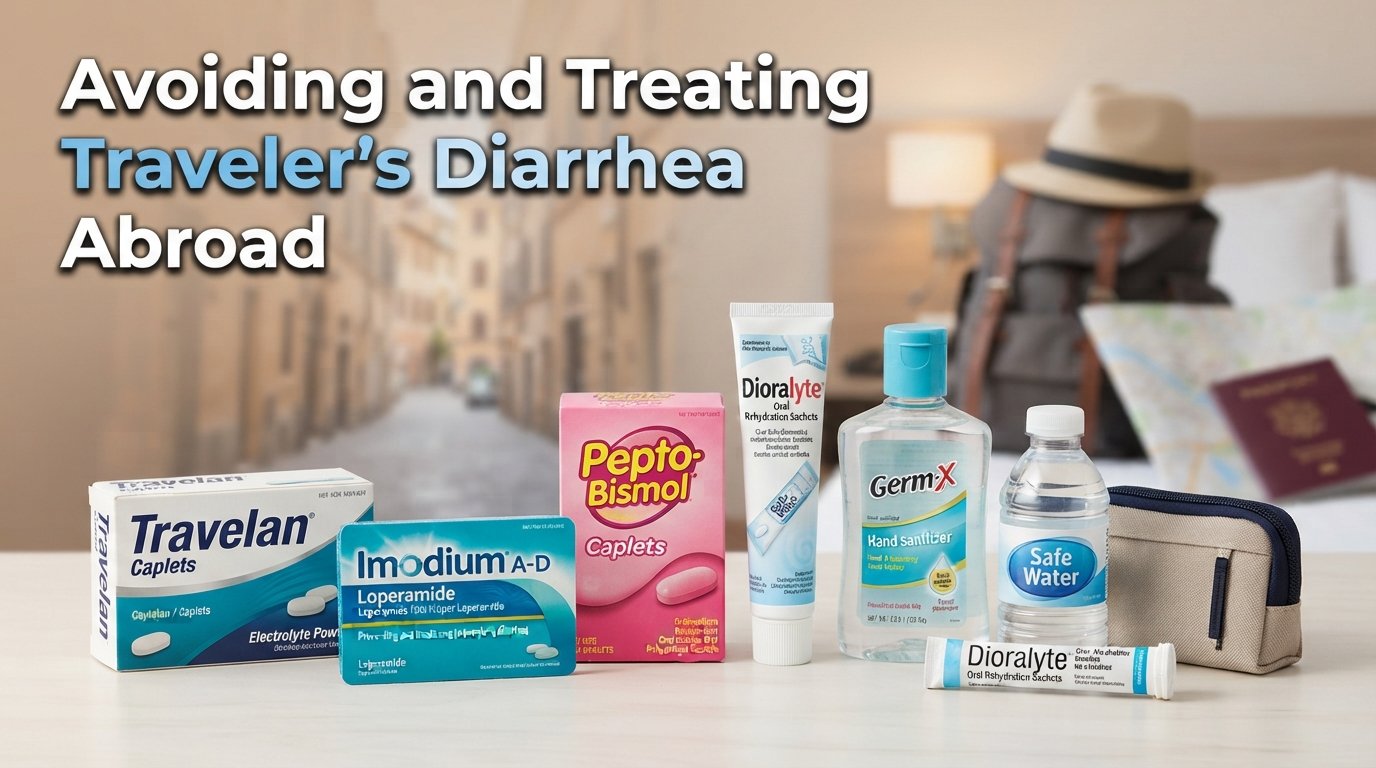
Traveler’s diarrhea is the single most predictable travel-related illness, hitting between 30% and 70% of international travelers during a two-week trip, and I have watched it derail more vacations than missed flights. I have trekked through the Andes, backpacked across Southeast Asia, and eaten street food in Marrakech, and I have learned the hard way that a few smart habits before takeoff save you from spending a week in a hotel bathroom.
This guide pulls together everything our team has used across 40+ countries to keep our stomachs (and our trips) intact. You will learn what traveler’s diarrhea actually is, the pathogens that cause it, the warning signs that mean you need a doctor, and the exact prevention and treatment steps that work on the road. Whether you are heading to Mexico for a week or backpacking across Africa for a month, the rules below apply.
By the end, you will have a tested packing list, a clear food and water safety checklist, and a treatment plan you can start the moment symptoms hit.
Table of Contents
What Is Traveler’s Diarrhea and Why It Happens
Traveler’s diarrhea is a gastrointestinal infection you pick up when you eat or drink something contaminated with bacteria, viruses, or parasites abroad. The CDC defines it as three or more loose stools in 24 hours in a person who is traveling, often accompanied by cramps, nausea, urgency, or fever. It usually shows up within the first two weeks of a trip, and most cases clear up on their own within three to five days.
The reason it happens is simple: your gut microbiome is tuned to the bacteria in your home environment. The moment you land somewhere new, you encounter strains your immune system has never seen. Even small amounts of a pathogen that local residents shrug off can flood your gut with inflammation and trigger the purging response we call diarrhea.
Here are the main culprits behind traveler’s diarrhea:
Bacteria (about 80-90% of cases): Enterotoxigenic E. coli (ETEC) is the single most common cause, followed by Salmonella, Campylobacter, and Shigella.
Viruses (about 5-15%): Norovirus is the famous cruise-ship offender, but it also spreads through contaminated ice, salad, and shellfish.
Parasites (less than 10%): Giardia and Cryptosporidium cause longer-lasting diarrhea and are usually linked to untreated water.
Attack rates climb above 30% in most of Latin America, Africa, the Middle East, and South and Southeast Asia. The CDC’s Yellow Book classifies those regions as high-risk destinations. Within Europe, the difference between France and, say, rural Turkey is huge, so always check the specific country before you go.
Symptoms and How to Recognize Traveler’s Diarrhea
Traveler’s diarrhea is more than just a sudden need for the bathroom. The classic pattern is sudden-onset loose stools paired with abdominal cramps, often before you even realize something is wrong. Most cases are mild, but the symptoms can stack up quickly and leave you dehydrated faster than you expect.
Common symptoms include:
Three or more loose or watery stools in 24 hours
Abdominal cramps and bloating
Urgent need to use the bathroom
Nausea and occasional vomiting
Low-grade fever (below 101°F or 38.3°C)
Loss of appetite and general weakness
Headache from dehydration
More serious signs that point to a bacterial or parasitic infection include blood or mucus in the stool, a fever above 102°F, and diarrhea that lasts more than seven days. Diarrhea from parasites like Giardia often sticks around for weeks and may cause greasy, floating stools that smell unusually bad.
Traveler’s diarrhea is different from food poisoning in a few ways. Food poisoning usually hits within hours of a single suspect meal and fades within 24 hours. Traveler’s diarrhea tends to creep in toward the end of your first week abroad, lasts longer, and is often tied to repeated exposure to contaminated water or food. Both dehydrate you, but traveler’s diarrhea is the one that can quietly ruin a whole trip.
How to Avoid Traveler’s Diarrhea Before and During Your Trip
Preventing traveler’s diarrhea comes down to controlling what goes into your mouth and prepping your body to fight off the rest. The CDC’s Yellow Book reports that simple food and water precautions can cut your risk by up to 60%. I have followed these rules for a decade and have skipped serious stomach issues in places like Delhi, Lima, and Cairo.
Food Safety Rules That Actually Work
Food safety abroad is not about starving yourself. It is about making smart choices. The phrases I live by are “boil it, peel it, cook it, or forget it,” and “hot food hot, cold food cold.” Anything that sits at room temperature for more than a few hours is fair game for bacteria.
Follow these rules at every meal:
Eat only food that is cooked and served hot. Steam coming off the plate is a good sign.
Avoid raw vegetables and salad greens unless you washed them yourself in safe water.
Skip unpeeled fruit and fruit you did not peel with clean hands.
Steer clear of buffet food sitting out for more than two hours, especially in hot climates.
Pass on raw or undercooked meat, seafood, and eggs. Sushi and rare steak are top risks.
Choose dairy from sealed containers only. Unpasteurized milk is common in rural areas.
Eat street food from busy vendors with high turnover. Empty stalls mean food is sitting longer.
Water Safety Rules
Contaminated water is the most common cause of traveler’s diarrhea, and the danger is not always obvious. Ice cubes, salad washed in tap water, and even a quick mouth rinse after brushing your teeth can be enough to make you sick.
Here is how to stay safe around water:
Drink only sealed bottled water or water you have filtered or boiled yourself.
Avoid ice in drinks unless you are sure the water was treated.
Skip tap water for brushing teeth. Use bottled water instead.
Stay away from fountain drinks and reconstituted juices made with tap water.
Use bottled or filtered water for coffee and tea if you are unsure about local sources.
Carry a portable water filter for backcountry trips where bottled water is unreliable.
Wipe down cans or bottles before opening them, since the outside may be contaminated.
Pre-Trip Prep That Lowers Your Risk
The work you do before you leave matters as much as the food choices you make on the ground. I always book a travel medicine consultation four to six weeks before any international trip, especially if it is my first time in a high-risk region.
Smart pre-trip prep includes:
Visit a travel clinic for destination-specific vaccines and prescriptions.
Ask about bismuth subsalicylate (Pepto-Bismol) prophylaxis. Taking 2 tablets four times daily can reduce TD risk by up to 60%, but it is not suitable for everyone.
Start a probiotic two weeks before departure. Saccharomyces boulardii and Lactobacillus rhamnosus GG have the best evidence for prevention.
Pack a travel health kit with oral rehydration salts, antidiarrheals, and any antibiotics your doctor prescribes.
Bring hand sanitizer and use it frequently. Alcohol-based gels with at least 60% alcohol work best.
For people with serious medical conditions, discuss a stand-by antibiotic prescription with your doctor.
How to Treat Traveler’s Diarrhea: Hydration, OTC Meds, and Antibiotics
Even with perfect prevention, traveler’s diarrhea can still catch you. Treatment comes down to three priorities: replace the fluids you are losing, calm the symptoms, and clear the infection if it is severe. Skip any one of these and your recovery will drag on longer than it should.
Hydration Comes First
Dehydration is the real danger of traveler’s diarrhea, not the loose stools themselves. Every time you empty your gut, you lose water and electrolytes your body needs to function. Replacing those fluids is the single most important step in treatment.
Best options for hydration include:
Oral rehydration salts (ORS) like Pedialyte or WHO-ORS packets. These contain the exact sodium, potassium, and glucose ratio your gut needs to absorb water.
Safe bottled water with a pinch of salt and a small amount of sugar as a backup if you cannot find ORS.
Clear broths and soups for both hydration and sodium replacement.
Diluted sports drinks like Gatorade (mix 50/50 with water for better absorption).
Coconut water in areas where it is freshly opened and trusted.
Avoid alcohol, caffeine, and very sugary drinks until you recover. They pull water out of your gut and make dehydration worse. If you cannot keep liquids down for 24 hours, get medical help immediately. Severe dehydration is a medical emergency, especially in children and older adults.
Over-the-Counter Medications
OTC medications are the second pillar of treatment. They will not cure the infection, but they can control the symptoms so you can still get on a plane, attend a wedding, or join a tour. Always ask your doctor before using them, especially if you have a fever or blood in your stool.
Two products dominate the travel health kit:
Loperamide (Imodium): An anti-motility agent that slows your gut and gives you time to rehydrate. The standard adult dose is 4 mg (2 tablets) after the first loose stool, then 2 mg after each subsequent loose stool, up to 8 mg per day. Stop after 48 hours. Do not use it if you have a high fever or blood in your stool.
Bismuth subsalicylate (Pepto-Bismol): Treats mild diarrhea, nausea, and cramps. The adult dose is 2 tablets or 30 mL every 30 minutes, up to 8 doses in 24 hours. It also works as a preventive when taken before meals in high-risk destinations.
Activated charcoal tablets are a popular natural alternative in some backpacker circles, but the evidence is mixed. Use them only as a backup if you have no other option.
Antibiotics for Moderate to Severe Cases
For moderate to severe traveler’s diarrhea (four or more loose stools per day, fever, or blood in the stool), antibiotics are the fastest path to recovery. A single dose can shorten symptoms from three days to about 24 hours. Doctors usually prescribe them as a stand-by travel medication, so you can start treatment the moment symptoms hit.
The most common options are:
Azithromycin (Zithromax): 1,000 mg as a single dose or 500 mg once daily for three days. First choice for Southeast Asia and for pregnant travelers.
Ciprofloxacin (Cipro): 500 mg twice daily for three days. Still works in many regions but resistance is rising in South and Southeast Asia.
Rifaximin (Xifaxan): 200 mg three times daily for three days. Works well for non-invasive bacterial diarrhea and stays mostly in the gut.
Always finish the full course your doctor prescribes and avoid antibiotics if a virus is the likely cause (your doctor can help you decide). Taking antibiotics when you do not need them fuels resistance and can trigger C. diff, a serious gut infection.
Diet During Recovery
What you eat makes a real difference in how fast you bounce back. The old “BRAT” diet (bananas, rice, applesauce, toast) is still recommended for the first 24 hours, but you can add more variety as symptoms calm down.
Stick to these foods until you feel better:
Plain white rice, boiled potatoes, and toast
Bananas for potassium
Boiled chicken or fish (no skin or fat)
Plain crackers and dry cereal
Yogurt with live cultures (if dairy is safe)
Stewed apples and other low-fiber fruits
Stay away from dairy (other than yogurt), fried food, spicy dishes, raw vegetables, alcohol, and high-fiber foods until you have a full day of normal stools. Caffeine and very sugary drinks also slow recovery.
Home Remedies and Natural Options
Natural remedies can support standard treatment but rarely replace it. They are useful when you are in a remote area or want to stretch your OTC supply.
Common options include:
Oral rehydration drink (homemade): 1 liter of safe water, 6 teaspoons of sugar, and half a teaspoon of salt. Sip slowly throughout the day.
Ginger tea: Soothes nausea and cramps.
Peppermint tea: Relieves abdominal cramps.
Plain charcoal biscuits: Marketed for travelers in many countries, though evidence is weak.
Heat packs on the abdomen: Help with cramps but do not treat the infection.
When to See a Doctor for Traveler’s Diarrhea
Most cases of traveler’s diarrhea clear up in three to five days without medical care. Knowing when to stop self-treating and find a doctor is just as important as starting treatment early. Dehydration is the most common reason travelers end up in the ER, and catching it early avoids that trip.
See a doctor right away if you have any of these warning signs:
Blood, mucus, or worms in the stool
Fever above 102°F (38.9°C)
Six or more loose stools in 24 hours
Signs of severe dehydration: dark urine, dizziness, dry mouth, rapid heartbeat, sunken eyes
Diarrhea lasting more than seven days
Severe abdominal pain or persistent vomiting
Symptoms in infants, young children, pregnant women, or older adults
Diarrhea in anyone with a chronic illness (diabetes, IBD, HIV, etc.)
Most international clinics and hospitals in tourist areas have English-speaking staff. Use your hotel concierge, the local US embassy, or a service like the International Association for Medical Assistance to Travelers (IAMAT) to find a vetted provider. Your travel insurance hotline can also point you to approved clinics.
When you see a doctor abroad, share your travel dates, countries visited, foods and drinks consumed, and any medications you have taken. They may request a stool sample to identify the pathogen and choose the right antibiotic. Bring a list of your current medications and any allergies to avoid dangerous interactions.
Travel Tips: Packing Checklist and Surviving Flights and Hotels
Smart packing is the difference between a minor inconvenience and a trip ruined by traveler’s diarrhea. I never board an international flight without a small travel health kit, and I have a few tricks for handling symptoms on planes, in airports, and in hotels.
Travel Health Kit Checklist
Pack these items in your carry-on and main luggage:
Oral rehydration salts (2-3 packets per traveler per week)
Loperamide (Imodium) in original packaging
Bismuth subsalicylate (Pepto-Bismol) tablets or chewables
Stand-by antibiotic prescribed by your travel doctor
Thermometer to monitor fever
Alcohol-based hand sanitizer (60%+ alcohol)
Wet wipes for surfaces and hands
Water filter bottle for high-risk destinations
Probiotic capsules for daily use during the trip
Small bottle of bleach or iodine drops for emergency water treatment
Anti-nausea medication like dimenhydrinate or meclizine
Doctor’s note and prescription copies for any controlled medications
Managing Symptoms on Flights and in Airports
Airplane bathrooms are tiny, and turbulence is unpredictable. If you feel diarrhea coming on before a long flight, take loperamide 30-60 minutes before boarding. Choose an aisle seat near the bathroom if you have a history of traveler’s diarrhea, and bring extra toilet paper and wet wipes in your carry-on since airlines often run out.
Stay hydrated, but stick to sealed bottled water and avoid alcohol and carbonated drinks during the flight. If you must eat, pick dry, low-fiber options like crackers. Wash your hands frequently and use sanitizer before eating anything. Pack a “go bag” with a change of clothes, plastic bags, and wipes in case of an accident. Most flight attendants are understanding and will let you wait for the bathroom.
Hotel Quarantine Strategies
When traveler’s diarrhea hits hard, your hotel room becomes your recovery zone. Order bottled water and plain food to your room from room service. Keep the room cooler to reduce sweating, and place extra towels near the bed for accidents. If you can, request a room closer to the elevator for faster bathroom access.
Continue hydrating, take your medication as directed, and avoid eating anything heavy for the first 24 hours. If symptoms are not improving after 48 hours, call the front desk and ask them to recommend a local doctor. Many hotels have a doctor on call or a list of trusted clinics nearby.
Finding Medical Help Abroad
Knowing where to get help before you get sick can save hours of panic. Before any international trip, save a few key contacts in your phone:
Your travel insurance hotline and policy number
US or local embassy or consulate for emergencies
International Association for Medical Assistance to Travelers (IAMAT) for vetted English-speaking doctors
Local emergency numbers (911 works in some countries, but most have a separate number)
Hotel concierge or host contact who can help translate
Use Google Translate to save key phrases in the local language, including “I need a doctor,” “I have diarrhea,” and “Where is the nearest hospital.” Many pharmacies abroad also offer over-the-counter help and can recommend a doctor if needed.
Budget-Friendly Food Safety Tips
You do not need a five-star hotel to eat safely abroad. Local markets and street vendors often have the freshest food. The trick is choosing vendors with high turnover, watching the food being cooked at high heat, and sticking to options you can peel or that are served steaming.
Here are a few ways to eat well on a budget without risking your stomach:
Cook with your accommodation. Many hostels and guesthouses have shared kitchens where you can prepare your own food.
Buy sealed bottled water in bulk from supermarkets rather than at tourist spots.
Eat at busy local markets instead of empty restaurants.
Carry your own spoon, fork, and chopsticks in case the restaurant washing is suspect.
Bring reusable cutlery and a small bottle brush for backpacking trips.
Try local cooked specialties from vendors who only make one dish and make it well.
FAQs
How to not get travelers diarrhea while traveling abroad?
The best way to avoid travelers diarrhea is to follow food and water safety rules. Drink only sealed bottled water or water you have boiled or filtered yourself. Avoid ice, raw vegetables, unpeeled fruit, and food that has been sitting out at room temperature. Eat only food that is cooked and served hot, and choose dairy from sealed containers. Wash your hands often with soap and safe water, or use an alcohol-based hand sanitizer with at least 60% alcohol. Pre-trip measures like bismuth subsalicylate (Pepto-Bismol) and probiotics can also lower your risk by up to 60%.
Should I let traveler’s diarrhea run its course or take Imodium?
For mild cases (1 to 3 loose stools per day with no fever or blood), letting it run its course while staying hydrated is fine. For moderate cases (4 or more loose stools per day, severe cramps, or important plans like a flight), taking loperamide (Imodium) can help you rehydrate and stay functional. Do not take Imodium if you have a fever above 101°F, blood in your stool, or have been sick for more than 48 hours. In those cases, see a doctor for possible antibiotic treatment.
How do I prepare my stomach for international travel?
Start preparing your stomach for international travel at least two weeks before departure. Begin taking a probiotic with Saccharomyces boulardii or Lactobacillus rhamnosus GG daily. Visit a travel medicine clinic to ask about destination-specific vaccines and a stand-by antibiotic prescription. Discuss bismuth subsalicylate (Pepto-Bismol) prophylaxis with your doctor, which involves taking 2 tablets four times daily during high-risk periods. Pack a travel health kit with oral rehydration salts, antidiarrheal medications, and a thermometer. Research local food and water safety conditions at your destination so you know what to look out for.
How long does it take for traveler’s diarrhea to stop?
Most cases of traveler’s diarrhea resolve on their own within 1 to 3 days, with the majority of travelers feeling better within 5 days. With antibiotic treatment, symptoms often improve within 24 hours. Diarrhea from parasites like Giardia can last 2 to 4 weeks and may require a longer course of antibiotics. If your symptoms last more than 7 days, or you have a fever, blood in the stool, or signs of dehydration, see a doctor as soon as possible.
What are the first signs of traveler’s diarrhea?
The first signs of traveler’s diarrhea are sudden abdominal cramps, an urgent need to use the bathroom, and loose or watery stools. Many people also feel nausea, bloating, and mild fatigue before the first loose stool. In some cases, a low-grade fever (below 101°F) develops alongside other symptoms. Symptoms typically begin 6 to 24 hours after exposure to the contaminated food or water.
Should I go to the ER for traveler’s diarrhea?
Go to the ER for traveler’s diarrhea if you cannot keep fluids down for 24 hours, show signs of severe dehydration (dizziness, rapid heartbeat, dark urine, sunken eyes), have a fever above 102°F, or pass blood in your stool. Other warning signs include severe abdominal pain, six or more loose stools in 24 hours, or diarrhea in an infant, elderly person, or anyone with a chronic illness. If you are unsure, call your travel insurance hotline or local emergency services for guidance.
What is the fastest way to cure traveler’s diarrhea?
The fastest way to cure traveler’s diarrhea is to combine hydration, antidiarrheal medication, and antibiotics when needed. Start drinking oral rehydration salts immediately to replace lost fluids and electrolytes. Take loperamide (Imodium) 4 mg followed by 2 mg after each subsequent loose stool (up to 8 mg per day) to slow symptoms. If your case is moderate to severe (4 or more stools per day, fever, or blood), start a stand-by antibiotic like azithromycin 1,000 mg (single dose) or ciprofloxacin 500 mg twice daily for three days. Most travelers feel better within 24 hours of starting this combination.
What drinks help with traveler’s diarrhea?
The best drinks for traveler’s diarrhea are oral rehydration salts (ORS), clear broths, diluted sports drinks, and safe bottled water. Coconut water is a good option if it is freshly opened and trusted. Avoid alcohol, caffeine, very sugary drinks, and unpasteurized juices until you recover. A homemade rehydration drink (1 liter of safe water, 6 teaspoons of sugar, and half a teaspoon of salt) is a useful backup if you cannot find ORS packets.
Final Thoughts on Managing Traveler’s Diarrhea Abroad
Traveler’s diarrhea is common, but it does not have to derail your trip. The travelers I know who rarely get sick all follow the same playbook: they watch what they eat and drink, they pack a small travel health kit, and they start treatment the moment symptoms hit instead of hoping they will pass.
Before any international trip, especially to high-risk regions like Southeast Asia, Africa, or Central America, book a travel medicine consultation, pack oral rehydration salts, and know where to find a good clinic at your destination. With the right preparation, you can focus on the adventure and leave the bathroom breaks for the sightseeing photos.
Travelers who go prepared almost always come home with great stories. Travelers who do not usually come home with great stories too, but they tell them from a hotel bathroom instead of a mountaintop.