
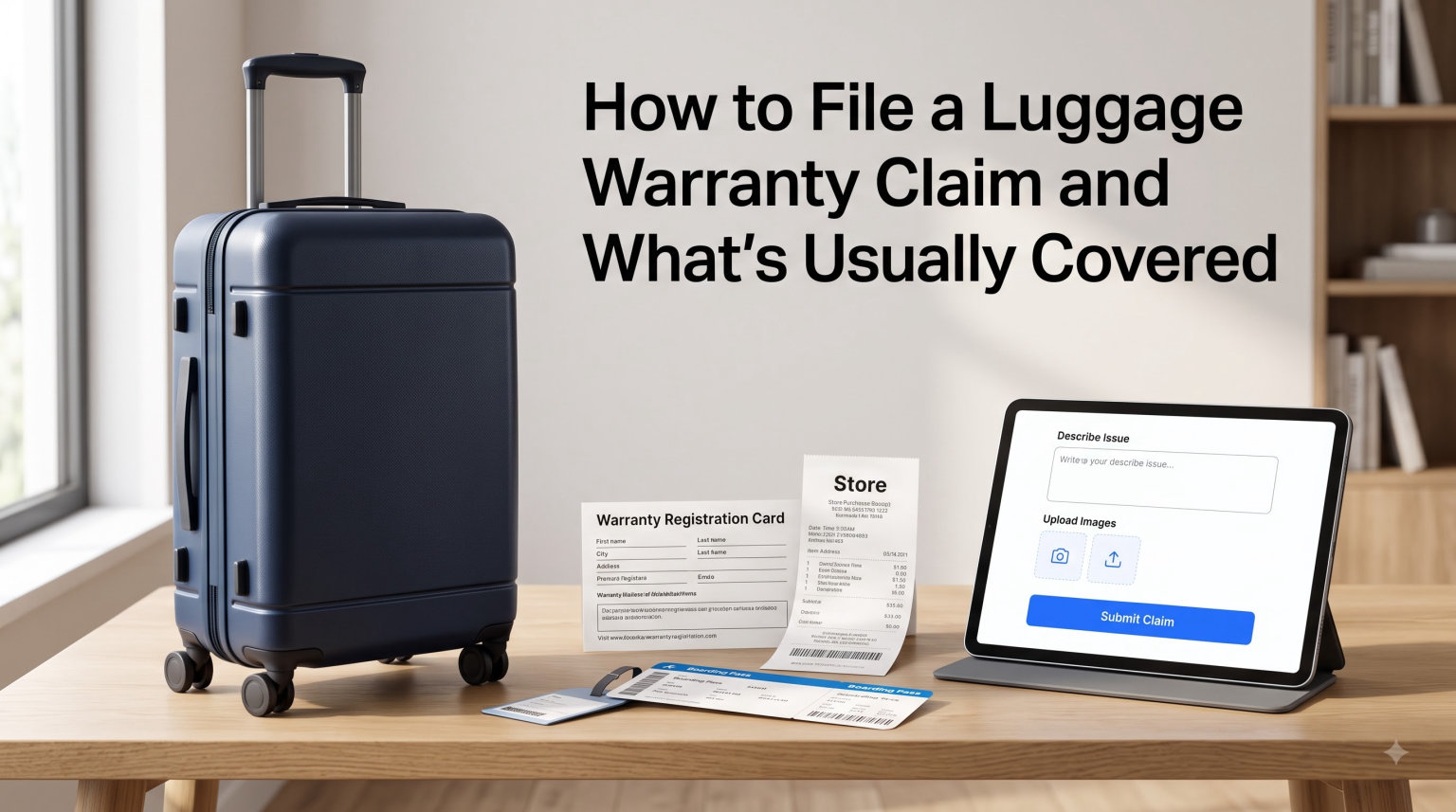
Nothing kills the post-vacation glow faster than pulling your suitcase off the carousel and finding a cracked shell, a busted wheel, or a handle that won’t extend. I have been there more times than I care to admit. The good news is that most quality luggage comes with some form of warranty coverage, and knowing how to file a luggage warranty claim can save you hundreds of dollars on repairs or a full replacement.
Here is what I have learned after years of traveling, researching manufacturer policies, and talking to frequent flyers on travel forums: the warranty process is not nearly as complicated as brands sometimes make it look. The key is understanding what your warranty actually covers, gathering the right documents, and filing your claim the correct way the first time.
In this guide, I will walk you through every step of filing a luggage warranty claim, what is typically covered, what is excluded, and how to tell the difference between a manufacturer defect and airline-inflicted damage. I will also share real traveler experiences and answer the questions people ask most often about luggage warranties in 2026. By the end, you will know exactly what to do the next time your bag takes a beating.
Table of Contents
What Is a Luggage Warranty?
A luggage warranty is a guarantee from the manufacturer that covers defects in materials and workmanship for a specific period after purchase. Think of it as the brand’s promise that your suitcase was built correctly and should hold up under normal use. If something goes wrong due to how the bag was made, not how it was handled, the manufacturer agrees to repair or replace it.
This is different from travel insurance, which covers loss, theft, and damage that happens during your trip. A warranty covers the bag itself and its components. It is also separate from airline compensation, which applies when an airline damages or loses your luggage during a flight.
I always tell people to read the warranty terms before buying luggage, not after something breaks. The fine print reveals exactly what you are entitled to and what hoops you will need to jump through. Some brands offer generous lifetime coverage, while others limit protection to a few years and exclude common issues like cosmetic wear.
Understanding these differences upfront helps you set realistic expectations and avoid frustration when it is time to file a claim.
Types of Luggage Warranties: Limited vs Lifetime
Luggage warranties fall into two main categories: limited warranties and lifetime warranties. Knowing which type your bag carries determines what you can expect when something breaks.
Limited Warranties
A limited warranty is the most common type offered by mainstream luggage brands. It covers manufacturing defects and workmanship issues for a set period, usually between one and ten years depending on the manufacturer. The word “limited” means the coverage comes with specific restrictions and exclusions.
Most limited warranties cover problems like faulty zippers, broken telescoping handles, wheel malfunctions, and stitching that comes undone. They typically do not cover damage caused by airlines, normal wear and tear, accidents, or misuse. Some brands also require you to register your product or pay for shipping when sending the bag in for repair.
Samsonite and Travelpro are well-known brands that offer limited warranties ranging from three to ten years depending on the product line. The coverage is solid for genuine defects, but you need to keep your receipt and file within the warranty window.
Lifetime Warranties
A lifetime warranty sounds straightforward, but the definition of “lifetime” varies by brand. Some manufacturers define it as the expected useful life of the product, which could be seven to ten years. Others truly mean coverage for as long as you own the bag.
Briggs and Riley, Victorinox, and Osprey are known for honoring lifetime warranties that cover functional damage, including some issues caused by airlines. These brands often repair rather than replace, which means you keep your original bag but get it fixed for free. Travelers on Reddit frequently praise Briggs and Riley for repairing wheels, handles, and even shell damage at no charge.
The catch with lifetime warranties is that they usually still exclude cosmetic damage, normal wear, and abuse. Reading the specific terms for your brand is essential because “lifetime” does not always mean what you think it does.
Which Type Should You Look For?
If you travel frequently or invest in premium luggage, a strong lifetime warranty is worth seeking out. For occasional travelers, a solid limited warranty of five years or more is usually sufficient. The most important factor is not the warranty length but whether the brand has a reputation for actually honoring claims.
What Is Usually Covered Under a Luggage Warranty
Luggage warranties generally cover manufacturing defects, which means problems caused by how the bag was made rather than how it was used. Understanding what falls into this category helps you predict whether your claim will succeed before you even file it.
Here are the most common issues covered under a typical luggage warranty:
Broken or malfunctioning zippers: If the zipper teeth separate, the pull breaks off, or the zipper fails to close properly due to a manufacturing flaw, most warranties will cover the repair or replacement.
Damaged or stuck telescoping handles: Handles that refuse to extend, retract, or lock into place because of a defect in the internal mechanism are usually covered.
Wheel malfunctions: Wheels that crack, fall off, stop spinning, or wobble excessively due to poor construction fall under warranty coverage on most bags.
Stitching and seam failures: If the seams come apart or the stitching unravels under normal use, this points to a workmanship defect that warranties typically address.
Shell or frame defects: Cracks, splits, or structural failures that occur without significant external impact may be covered, especially on hard-shell suitcases.
Lock failures: Built-in TSA combination locks that stop working or jam due to internal defects are often included in warranty coverage.
The common thread here is that each issue stems from a problem with how the luggage was designed, assembled, or manufactured. If you can point to a defect rather than rough handling, you have a strong case for coverage.
What Is NOT Covered: Common Exclusions
Just as important as knowing what is covered is understanding what luggage warranties exclude. I have seen travelers get frustrated when their claims are denied, only to discover that the damage was never eligible in the first place.
Airline damage: This is the biggest exclusion and the source of the most confusion. If an airline handler tosses your bag and cracks the shell or rips off a wheel, that is the airline’s responsibility, not the manufacturer’s. You need to file with the airline instead.
Normal wear and tear: Scuffs, scratches, faded colors, and minor abrasions from regular travel are not considered defects. Warranties cover failures, not the natural aging of materials.
Accidents and misuse: Dropping your bag down stairs, overpacking it until the zipper bursts, or using it as a seat all count as misuse and are excluded from coverage.
Cosmetic damage: Dents, paint chips, and surface scratches that do not affect functionality are almost never covered, even on premium brands with lifetime warranties.
Unauthorized repairs: If you attempt to fix the bag yourself or take it to an unauthorized repair shop and cause additional damage, the warranty may become void.
Damage from transport services: Shipping companies, taxi drivers, and cruise line baggage handlers can all damage luggage. This falls outside manufacturer warranty coverage.
Being realistic about these exclusions saves you time and disappointment. If your damage falls into one of these categories, you are better off pursuing airline compensation, travel insurance, or a DIY repair.
How to File a Luggage Warranty Claim: Step-by-Step
Filing a luggage warranty claim does not have to be overwhelming. Follow these steps and you will give yourself the best chance of a quick, successful resolution.
Step 1: Locate Your Proof of Purchase
Find your original receipt, order confirmation email, or credit card statement showing the purchase. Without proof of purchase, most brands will not process your claim. I keep a digital folder for every piece of travel gear I buy specifically for this reason.
Step 2: Check Your Warranty Coverage Period
Review the warranty terms that came with your luggage or look them up on the manufacturer’s website. Confirm that your bag is still within the coverage window and that your specific issue is included. This quick check can save you from filing a claim that is doomed from the start.
Step 3: Document the Damage Thoroughly
Take clear, well-lit photos of the damage from multiple angles. Include close-ups of the specific broken part and wider shots showing the overall condition of the bag. Write a brief description of when you first noticed the issue and how it occurred under normal use.
Step 4: Find the Manufacturer’s Claim Process
Visit the brand’s website and look for a warranty, claims, or customer service section. Most manufacturers now offer online claim forms where you upload your photos and proof of purchase. Brands like Away have streamlined this process with dedicated claims portals.
Step 5: Submit Your Claim With All Required Documents
Fill out the claim form completely and attach every required document. Missing information is the number one reason claims get delayed. Double-check that your photos are clear, your receipt is legible, and your contact information is correct.
Step 6: Pay Attention to Shipping Requirements
Some brands require you to ship the damaged bag to a repair center at your own expense, while others cover round-trip shipping. Find out what your manufacturer requires before you box anything up. Keep your tracking number until the claim is fully resolved.
Step 7: Follow Up If You Do Not Hear Back
If you have not received a response within the brand’s stated timeframe, follow up by phone or email. Polite persistence goes a long way. Have your claim number ready and reference the date you originally submitted everything.
Step 8: Review the Resolution
Once your claim is approved, the manufacturer will either repair the bag, send a replacement, or offer store credit. Review the resolution carefully and confirm that the repair or replacement meets your expectations before closing out the claim.
Proof of Purchase: What You Need to Keep
Proof of purchase is the single most important document for any warranty claim. Without it, manufacturers have no way to verify when and where you bought the bag, and most will deny your claim outright.
Acceptable forms of proof typically include a store receipt, an online order confirmation email, or a credit card statement showing the transaction. Some brands also accept warranty cards that were filled out and registered at the time of purchase.
One of my favorite tips from travel forum veterans is to keep a copy of your receipt inside the suitcase itself. Tape an envelope to the interior lid or slip it into a document pocket. That way, if you are traveling and something breaks, you always have proof of purchase with you no matter where you are.
Registering your product on the manufacturer’s website after purchase is another smart move. Some brands use registration to extend or activate warranty coverage, and having your purchase on file speeds up the claims process later.
How to Document Damage for Your Claim
Good documentation can make the difference between an approved claim and a denial. Manufacturers cannot inspect your bag in person during the initial review, so your photos and written description are all they have to go on.
Take at least five to seven photos of the damage. Include wide shots showing the whole bag, medium shots showing the damaged area in context, and close-up shots focused on the specific broken component. Make sure the lighting is bright and the images are sharp.
If the damage is functional rather than visible, such as a handle that will not lock, record a short video demonstrating the problem. Videos are incredibly persuasive because they show the defect in action and leave no room for ambiguity.
Write a clear, factual description of what happened. State when you first noticed the issue, that it occurred during normal use, and that there was no impact, drop, or airline handling involved. Avoid emotional language and stick to the facts.
Keep copies of everything you submit. If the manufacturer asks follow-up questions or requests additional documentation, having your originals on hand makes it easy to respond quickly.
How Long Does a Luggage Warranty Last?
Warranty duration varies significantly by brand and product line. Knowing how long your coverage lasts helps you file claims on time and avoid missing the window.
Most limited warranties run from one to ten years. Entry-level brands often offer one to two years of coverage, while mid-range manufacturers like Samsonite typically provide three to ten years depending on the product line. Premium brands tend to offer longer terms.
Lifetime warranties, as mentioned earlier, are offered by companies like Briggs and Riley, Victorinox, and Osprey. These theoretically last as long as you own the bag, though you should always check the specific definition of “lifetime” in the warranty terms.
Some warranties start from the date of purchase, while others begin from the date of manufacture. This distinction matters because if a bag sits in a warehouse or on a store shelf for a year before you buy it, a manufacture-date warranty could already be partially expired. Always keep your purchase receipt to prove the actual sale date.
Registration can also affect duration. A few brands offer extended coverage if you register your product within a certain timeframe after purchase. Check the manufacturer’s website to see if registration is required or offers benefits.
Airline Damage vs Manufacturer Warranty: The Key Distinction
This is the most misunderstood aspect of luggage warranties, and getting it wrong can cost you hours of wasted time. Manufacturer warranties cover defects. Airlines cover damage they cause during transport. These are two completely separate systems.
If your suitcase arrives at baggage claim with a cracked shell, a missing wheel, or a torn handle, the airline did that. You need to file a damage report with the airline at the airport, not a warranty claim with the manufacturer. Most airlines require you to report damage within 24 hours for domestic flights and within seven days for international flights.
On the other hand, if your zipper fails six months into owning the bag, or a wheel starts wobbling after normal use with no rough handling involved, that points to a manufacturing defect. In that case, you file a warranty claim with the brand.
The confusion arises because some damage is ambiguous. A handle that snaps could be a weak part or could be from an airline yanking it too hard. My advice is to file with the airline first if the damage happened during a flight, because that path is faster and the airline is the responsible party. If the airline denies your claim or the damage was clearly pre-existing, then turn to the manufacturer warranty.
A few premium brands like Briggs and Riley blur this line by covering airline damage under their lifetime warranty. If you own one of these bags, read the terms carefully because you may have more coverage than you realize.
Airline Liability Limits and Compensation
When an airline damages or loses your luggage, their financial responsibility is capped by law. Understanding these limits helps you set realistic expectations for compensation.
For domestic flights in the United States, the Department of Transportation sets the maximum airline liability for lost, delayed, or damaged baggage. As of 2026, airlines can be held liable up to a set maximum per passenger on domestic routes. You must file a written claim with the airline, and they will assess the depreciated value of your bag and its contents.
For international flights, the Montreal Convention governs liability. The maximum compensation is significantly higher than domestic limits and is calculated in Special Drawing Rights, a currency unit used by the International Monetary Fund. The exact dollar amount fluctuates with exchange rates.
Keep in mind that airlines depreciate the value of your luggage based on age and wear. A five-year-old suitcase will not be valued the same as one you bought last month. This is why some travelers prefer to pursue a manufacturer warranty or travel insurance claim instead, especially for higher-value bags.
Always file your airline damage report before leaving the airport if possible. Having an official record from the baggage service office strengthens your claim and prevents the airline from arguing the damage happened elsewhere.
How Long Does a Warranty Claim Take?
Processing times vary widely by brand, and setting the right expectations helps you avoid unnecessary stress while you wait. In my experience and based on traveler reports, most claims take anywhere from a few days to several weeks.
Premium brands with efficient online portals, such as Away, often respond within three to seven business days of receiving your claim. Their streamlined process is one reason travelers consistently recommend them for hassle-free warranty service.
Mid-range brands like Samsonite and IT Luggage can take longer. IT Luggage claims have been reported to take up to 28 business days to process, which is something to keep in mind if you are choosing between brands.
Several factors affect how long your claim takes. Claims with clear photos and complete documentation move faster. Claims during peak travel seasons may take longer due to higher volume. Shipping times add days if you need to send the bag to a repair center, and repair complexity affects turnaround once the bag arrives.
If your claim is taking longer than the brand’s stated timeframe, do not hesitate to follow up. A polite email or phone call referencing your claim number often speeds things along.
What to Do If Your Claim Is Denied
A denial is not the end of the road. Many claims get approved on appeal or through escalation, especially when the initial decision was based on incomplete information.
First, ask for the specific reason your claim was denied. Manufacturers are required to tell you why, and understanding the exact basis for denial helps you address it. If they said the damage was caused by airlines, but you have evidence it was a manufacturing defect, you can counter with additional photos or a written explanation.
Second, request to speak with a supervisor or escalate to a higher tier of customer service. Front-line representatives sometimes apply policy rigidly, while supervisors have more authority to make exceptions or offer goodwill resolutions.
Third, file a complaint with the Better Business Bureau or your state’s consumer protection agency. Brands take these complaints seriously because they affect public reputation, and many resolve BBB complaints favorably to maintain good standing.
Finally, consider travel insurance or credit card purchase protection as alternative paths. Many premium travel credit cards offer extended warranty or purchase protection benefits that kick in when manufacturer warranties fall short.
DIY Repair vs Filing a Warranty Claim
Not every broken luggage issue warrants a full warranty claim. Sometimes a quick DIY fix gets you back on the road faster, especially if you have a trip coming up soon.
Brands like Away offer DIY repair kits for common issues like broken wheels and zipper pulls. These kits come with instructions and replacement parts, letting you fix minor problems at home without shipping your bag anywhere. This is a great option when the repair is straightforward and you need your luggage quickly.
For more complex issues like internal handle mechanism failures or shell cracks, professional repair or replacement through the warranty is usually the better route. Attempting these repairs yourself risks voiding the warranty or causing additional damage.
Consider the value of your time as well. If a claim requires shipping your bag across the country and waiting weeks for repair, a small investment in replacement parts might be worth it for the convenience. For expensive premium luggage, though, always use the warranty to preserve the bag’s value and integrity.
Real Traveler Experiences With Luggage Warranties
Forum discussions reveal which brands genuinely stand behind their warranties and which ones make the process painful. Real experiences are often more revealing than marketing claims.
Briggs and Riley consistently earns praise on Reddit for honoring its lifetime warranty. Multiple travelers report getting wheels, handles, and even shell damage repaired for free, sometimes years after purchase. The brand repairs rather than replaces, which means you keep your familiar bag.
Away receives mixed but mostly positive feedback. One traveler reported their Away bag lasted seven years and survived 500 trips before a wheel issue appeared, and Away replaced it without question. However, some users noted Away changed its warranty terms in 2026, causing confusion for longtime customers.
Samsonite draws criticism more often than praise. Travelers describe a difficult claims process with slow responses and frequent denials. If you own a Samsonite bag, be prepared to be persistent and document everything thoroughly.
Osprey and Victorinox also receive strong marks for warranty fulfillment. These brands are frequently recommended on Buy It For Life forums for travelers who want bags that truly last and warranties that genuinely work.
The takeaway from these experiences is clear: a warranty is only as good as the brand behind it. Researching real customer experiences before you buy can save you significant headaches down the road.
Frequently Asked Questions
Is a luggage warranty worth it?
Yes, a luggage warranty is worth it if you travel frequently or invest in premium luggage. Quality suitcases cost hundreds of dollars, and warranty coverage can save you significant money on repairs or replacements for manufacturing defects. Brands like Briggs and Riley, Away, and Osprey have strong reputations for honoring claims, making their warranties genuinely valuable for frequent travelers.
What is the average payout for lost luggage?
For domestic US flights, airline liability for lost luggage is capped at the DOT maximum per passenger. For international flights under the Montreal Convention, compensation can be significantly higher and is calculated in Special Drawing Rights. Airlines assess the depreciated value of your bag and its contents, so payouts vary based on what was lost and how old the items were.
Is it worth claiming for a damaged suitcase?
Yes, it is worth claiming for a damaged suitcase if the damage affects functionality or the bag is relatively new. For airline-caused damage, file at the airport baggage office within 24 hours for domestic flights. For manufacturing defects, file a warranty claim with the manufacturer. Even older bags may qualify for repair or partial compensation.
What is the 20 minute baggage claim rule?
The 20 minute baggage claim rule refers to a DOT initiative requiring airlines to refund baggage fees if checked bags are not delivered to the carousel within 20 minutes of the aircraft parking at the gate. This applies to domestic US flights and gives passengers a clear recourse for delayed baggage delivery.
What is the maximum claim for lost luggage?
For domestic US flights, the maximum airline liability per passenger is set by the Department of Transportation and is adjusted periodically. For international flights covered by the Montreal Convention, the maximum is significantly higher and is based on Special Drawing Rights. Check current limits with your airline or the DOT website, as these figures update regularly.
What does the Samsonite 10 year warranty cover?
The Samsonite warranty typically covers manufacturing defects in materials and workmanship for the specified warranty period, which can be up to 10 years on certain product lines. Covered items include zipper failures, handle mechanism defects, wheel malfunctions, and stitching issues. It does not cover airline damage, normal wear and tear, cosmetic damage, or misuse.
Conclusion
Knowing how to file a luggage warranty claim gives you confidence the next time your suitcase takes a hit. The process comes down to understanding what your warranty covers, keeping your proof of purchase, documenting damage clearly, and filing through the correct channel whether that is the manufacturer or the airline.
Remember the key distinction: manufacturer warranties cover defects, while airlines cover transport damage. File with the right party, include thorough documentation, and follow up if you do not hear back. Choose luggage from brands with proven track records of honoring their warranties, and you will protect your travel investment for years to come.
The next time you shop for luggage, read the warranty terms before you buy. A strong warranty from a brand that actually honors claims is one of the best travel investments you can make.