
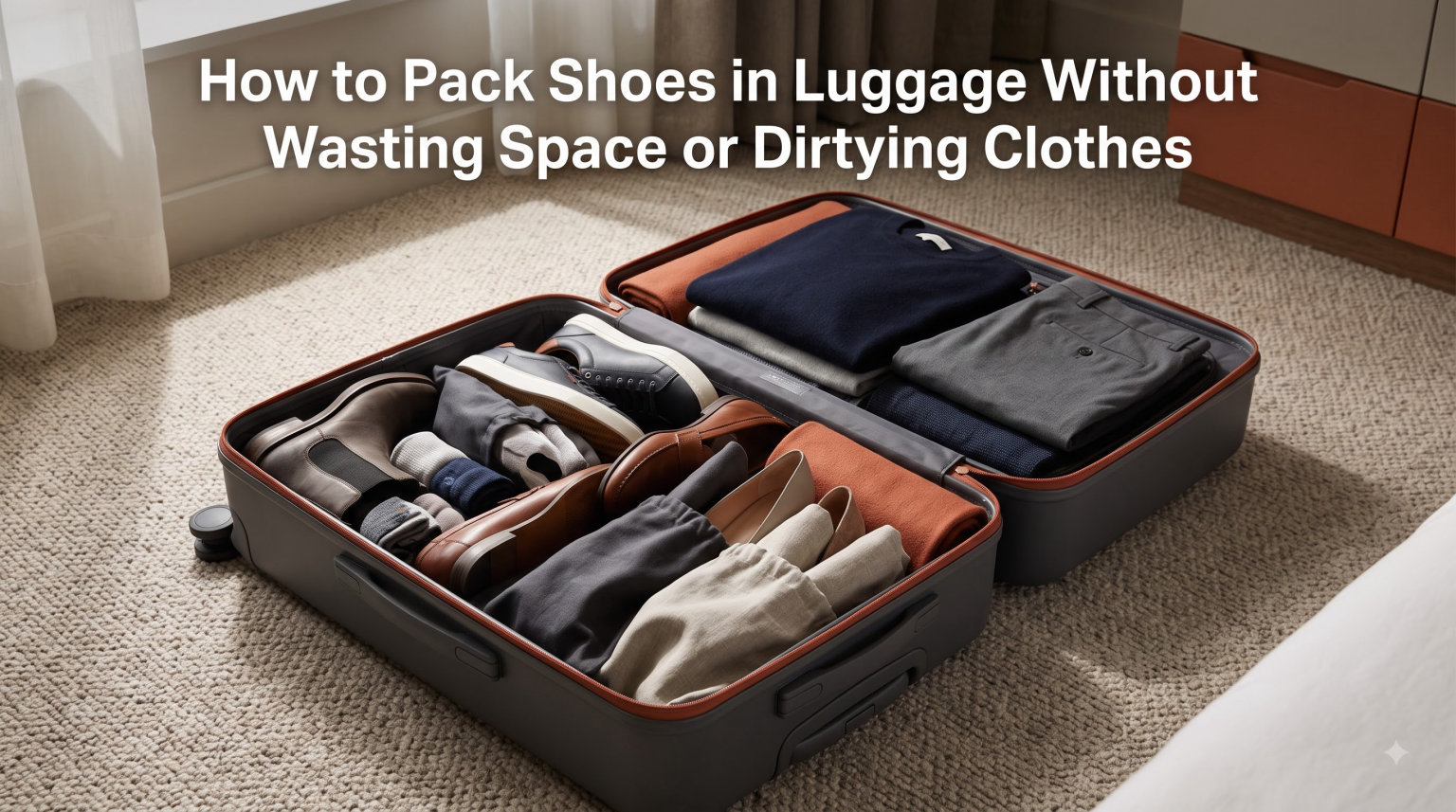
I have been on enough trips to know that shoes can make or break your luggage game. One time I tossed muddy sneakers straight into my suitcase and arrived at my hotel with dirt streaked across every shirt I owned. That was the last time I ignored how I pack shoes in luggage.
Shoes are the bulkiest, dirtiest, and most awkwardly shaped items you will ever stuff into a bag. But with a few smart techniques, you can protect your clothes, save serious space, and keep your footwear in great shape. This guide walks through every step, method, and trick I have picked up from years of travel and frequent flyer forums.
You will learn a step-by-step packing process, three distinct space-saving methods, shoe-type-specific tips, TSA considerations that no competitor covers, and odor control strategies for long trips. Whether you are packing for a weekend getaway or a two-week international adventure, these tips will work for any suitcase.
Table of Contents
Why You Need to Pack Shoes the Right Way
Shoes carry dirt, bacteria, and debris from every surface you walk on. When they touch your clean clothes directly, you risk stains, odors, and even bacterial transfer. Proper packing creates a barrier between dirty soles and fresh fabric.
Shoes also eat up a massive chunk of suitcase space if you do not plan around them. A pair of boots can swallow half your bag if you just drop them in. Smart packing turns that dead space into usable storage.
Weight distribution matters too. Heavy items placed incorrectly can make your suitcase tip over or exceed airline limits. Positioning shoes along the bottom or walls keeps your bag balanced and easier to roll.
Finally, shoes are expensive. Dress shoes, heels, and quality sneakers can cost hundreds of dollars. Tossing them unprotected into a checked bag invites scuffs, creases, and crushed shapes that ruin your investment.
How to Pack Shoes in Luggage: Step-by-Step Method
The most reliable way to pack shoes in luggage follows five steps: clean, stuff, wrap, position, and fill gaps. Here is exactly how to do each one.
Step 1: Clean Your Shoes Before Packing
Grab a damp cloth or wipe and clean the soles and exterior of every pair. Remove dried mud, pebbles stuck in treads, and any loose dirt. This single step prevents most of the mess that transfers to clothes.
Let the shoes dry completely before packing. Wet shoes inside a sealed suitcase create a damp environment where bacteria and mold thrive. Even ten minutes of air drying makes a difference.
Step 2: Stuff Shoes to Hold Their Shape and Save Space
Empty shoe interiors are wasted space. Stuff each shoe with socks, underwear, scarves, or even rolled-up t-shirts. This keeps the shoe from collapsing under pressure and uses every cubic inch efficiently.
Frequent travelers on Reddit’s r/onebag community swear by this trick. One user noted that stuffing two sneakers with socks and underwear frees up enough space for an extra outfit. The shoe holds its shape and you carry fewer separate items.
For dress shoes or heels, consider using shoe trees if you have room. They prevent creasing and maintain the structured look of formal footwear during transit.
Step 3: Wrap Each Shoe in a Protective Cover
Even after cleaning, wrapping your shoes is non-negotiable. A barrier between the shoe and your clothes catches any remaining dust and prevents scuff marks from shoe-on-shoe contact.
Use whatever you have available: plastic grocery bags, shower caps over the soles, dedicated shoe bags, or cloth covers. The goal is full coverage, especially on the bottom of the shoe where dirt concentrates.
Shower caps work surprisingly well for covering just the soles. The elastic band wraps around the shoe and the plastic keeps dirt contained without adding bulk.
Step 4: Place Shoes at the Bottom of Your Suitcase
Lay your suitcase flat and position wrapped shoes at the bottom, near the wheels. This creates a stable base and keeps the heaviest items low, which improves weight distribution and makes the bag easier to roll.
Arrange shoes heel to toe with soles facing outward, pressed against the sidewalls of the suitcase. This mirrors how shoes sit in a shoe box and maximizes interior space for your clothing layer on top.
If your suitcase has a zippered bottom compartment, that is the ideal spot for shoes. It isolates them from your clothes entirely and some bags even have antimicrobial lining built in.
Step 5: Fill Gaps Around Shoes With Soft Items
Once shoes are positioned, you will notice gaps and odd spaces around them. Fill these with socks, underwear, belts, or rolled scarves. This technique prevents shoes from sliding during transit and wastes zero space.
Think of it like a game of Tetris. Every small gap is an opportunity to tuck something in. Soft items also act as cushioning, protecting both your shoes and your clothes from impact damage.
Three Packing Methods That Actually Save Space
Beyond the basic five-step process, there are three specific methods frequent travelers use. Each works better for different bag types and shoe quantities.
Method 1: Soles Facing Outward Along the Walls
Stand each shoe upright along the inner walls of your suitcase with the soles pressed against the fabric. Arrange them heel to toe so they nest together like puzzle pieces. This is the most space-efficient layout and works especially well for sneakers and casual shoes.
This method keeps the dirtiest part of the shoe against the lining rather than your clothes. It also creates a flat surface in the center of the bag where you can stack folded clothing.
Method 2: Zippered Compartment Packing
If your luggage has a separate zippered compartment, use it exclusively for shoes. This physically separates your footwear from everything else, eliminating any risk of dirt transfer. Many hard-shell suitcases are designed with this feature specifically for shoes.
This is the method I recommend for travelers carrying dress shoes or heels that need maximum protection. The compartment keeps them from being crushed by heavier clothing layers.
Method 3: Packing Cubes for Shoes
Dedicated shoe packing cubes are mesh or fabric containers designed to hold one or two pairs. They compress slightly, protect surrounding items, and keep everything organized. You can find cubes sized for everything from sneakers to tall boots.
Even if you do not own dedicated shoe cubes, regular packing cubes work. Just place wrapped shoes inside a cube and zip it shut. The cube creates a clean boundary between your shoes and clothing layers.
Shoe Protection Options: What to Wrap Your Shoes In
You do not need fancy gear to protect your shoes. Here are the most popular covering options, ranked by practicality.
Plastic grocery bags or produce bags are the most common choice among budget travelers. They are free, lightweight, and disposable. Reddit users in r/onebag specifically recommend thin produce bags because they take up almost no space.
Shower caps are perfect for covering just the soles. The elastic holds them in place and they cost almost nothing. Keep the ones from your last hotel stay.
Dedicated shoe bags are the premium option. They are typically made of nylon or cotton, washable, and designed to fit specific shoe sizes. If you travel frequently, they are worth the small investment.
Cloth shoe covers appeal to eco-conscious travelers because they are reusable and machine washable. Some even have antimicrobial treatments that help control odor.
Packing paper, the kind used for gift wrapping, adds a layer of cushioning for delicate shoes like leather dress shoes or embellished heels. Wrap each shoe individually like a present.
Tips for Packing Different Types of Shoes
Not all shoes pack the same way. Here is how to handle the most common types.
Sneakers and Running Shoes
Stuff them fully with socks and underwear to use the generous interior space. They are durable, so you do not need heavy wrapping. A simple plastic bag suffices. Position them at the bottom of the suitcase since they are usually the heaviest pair.
Dress Shoes
Use shoe trees or stuff with tissue paper to prevent creasing. Wrap each shoe individually in a soft cloth or packing paper to prevent leather scuffs. Never stack dress shoes on top of each other. Lay them side by side in a zippered compartment for maximum protection.
Heels
Heels are the most fragile shoe type. Stuff the toe box with tissue paper to maintain shape. Wrap the heel and embellishments in padding to prevent snapping or scratching. Pack them in the center of your suitcase surrounded by soft clothing for cushioning.
Boots
Boots take up the most space, so wear your bulkiest pair on the plane to avoid packing them. If you must pack boots, stuff the shafts with rolled clothing to prevent them from collapsing flat. Lay them along the bottom of the suitcase with the soles facing outward.
Flip-Flops and Sandals
These are the easiest shoes to pack. They are flat, lightweight, and flexible. Slide them into side pockets or tuck them into small gaps between larger items. They need no special wrapping.
TSA and Air Travel Shoe Packing Tips
TSA does not have specific rules about shoes in your luggage, but a few practical tips make air travel smoother. Shoes packed in carry-on bags may need to be removed during additional screening if your bag is selected for a manual check. Keep them easily accessible near the top of your bag.
Avoid packing shoes with dense, thick soles in carry-on if possible. These can sometimes trigger X-ray anomalies that lead to bag searches. For checked bags, you have more freedom with shoe placement and quantity.
If you are traveling internationally, be aware that some countries have stricter agricultural inspections. Clean your shoe soles thoroughly to remove any soil or plant matter, as customs agents may inspect footwear for contaminated dirt.
Keeping Shoes Fresh: Odor Control on the Go
Shoes trapped in a sealed suitcase for hours can develop noticeable odors. A few simple tricks keep things fresh. Tuck a dryer sheet inside each shoe before packing. The sheets absorb moisture and leave a clean scent.
Baking soda sachets or unused tea bags work as natural odor absorbers. Slip one into each shoe and leave it there for the entire trip. Both are inexpensive and available anywhere.
Give shoes time to breathe. When you arrive at your destination, take them out of the suitcase and let them air out overnight. Never store damp or sweaty shoes inside a closed bag for extended periods.
Common Shoe Packing Mistakes to Avoid
Even experienced travelers make these errors. Here are five mistakes to watch out for.
Skipping the cleaning step is mistake number one. Even shoes that look clean carry invisible dirt and bacteria on their soles. A thirty-second wipe down prevents stained clothes later.
Packing too many shoes is another common error. The 3 shoe rule keeps things simple: pack one pair for walking, one pair for dressier occasions, and one backup pair. Anything beyond that wastes valuable luggage space.
Leaving shoes unstuffed wastes interior space and lets them lose their shape under pressure. Always fill the inside with something.
Placing shoes on top of clothes instead of underneath them guarantees dirt transfer and uneven weight distribution. Shoes belong at the bottom.
Forgetting to wear your bulkiest pair on the plane is a final mistake. If you are flying with boots or heavy sneakers, wear them instead of packing them. This single choice can free up 20 to 30 percent of your suitcase space.
FAQs
What is the 3 shoe rule?
The 3 shoe rule means packing no more than three pairs of shoes for any trip: one comfortable pair for walking, one dressier pair for nicer occasions, and one backup or activity-specific pair. This guideline prevents overpacking and saves significant luggage space.
What is the 5 4 3 2 1 rule for packing?
The 5 4 3 2 1 rule is a minimalist packing formula: pack 5 tops, 4 bottoms, 3 pairs of shoes, 2 dresses or dressy outfits, and 1 set of accessories or outerwear. It gives you enough variety for a one to two week trip without overpacking.
Why do smart people avoid packing shoes inside their luggage?
Smart travelers know that shoes take up valuable space, add weight, and carry dirt and bacteria. Many wear their bulkiest pair on the plane, use dedicated shoe compartments, or pack shoes in separate shoe bags to keep their main luggage clean and spacious.
Can you pack shoes in carry-on luggage?
Yes, you can pack shoes in carry-on luggage. TSA allows shoes in both carry-on and checked bags. Keep shoes easily accessible in case your bag needs additional screening, and avoid packing shoes with very dense soles that may trigger X-ray anomalies.
What are the 5 biggest packing mistakes to avoid?
The five biggest packing mistakes are: skipping shoe cleaning before packing, overpacking too many pairs, leaving shoes unstuffed so they lose shape, placing shoes on top of clothes instead of at the bottom, and forgetting to wear your bulkiest shoes on the plane.
Wrapping Up: Pack Smart, Travel Clean
Learning how to pack shoes in luggage without wasting space or dirtying clothes comes down to five simple moves: clean, stuff, wrap, position, and fill gaps. Follow the step-by-step method, choose the packing method that fits your bag, and always protect your footwear before it touches your clothes.
Remember the 3 shoe rule, wear your bulkiest pair on the plane, and tackle odor with dryer sheets or tea bags. These habits have saved me from ruined outfits and crushed shoes on more trips than I can count. Pack smart on your next adventure and your clothes, your shoes, and your back will all thank you.
1 thought on “How to Pack Shoes in Luggage Without Wasting Space (September 2026)”