
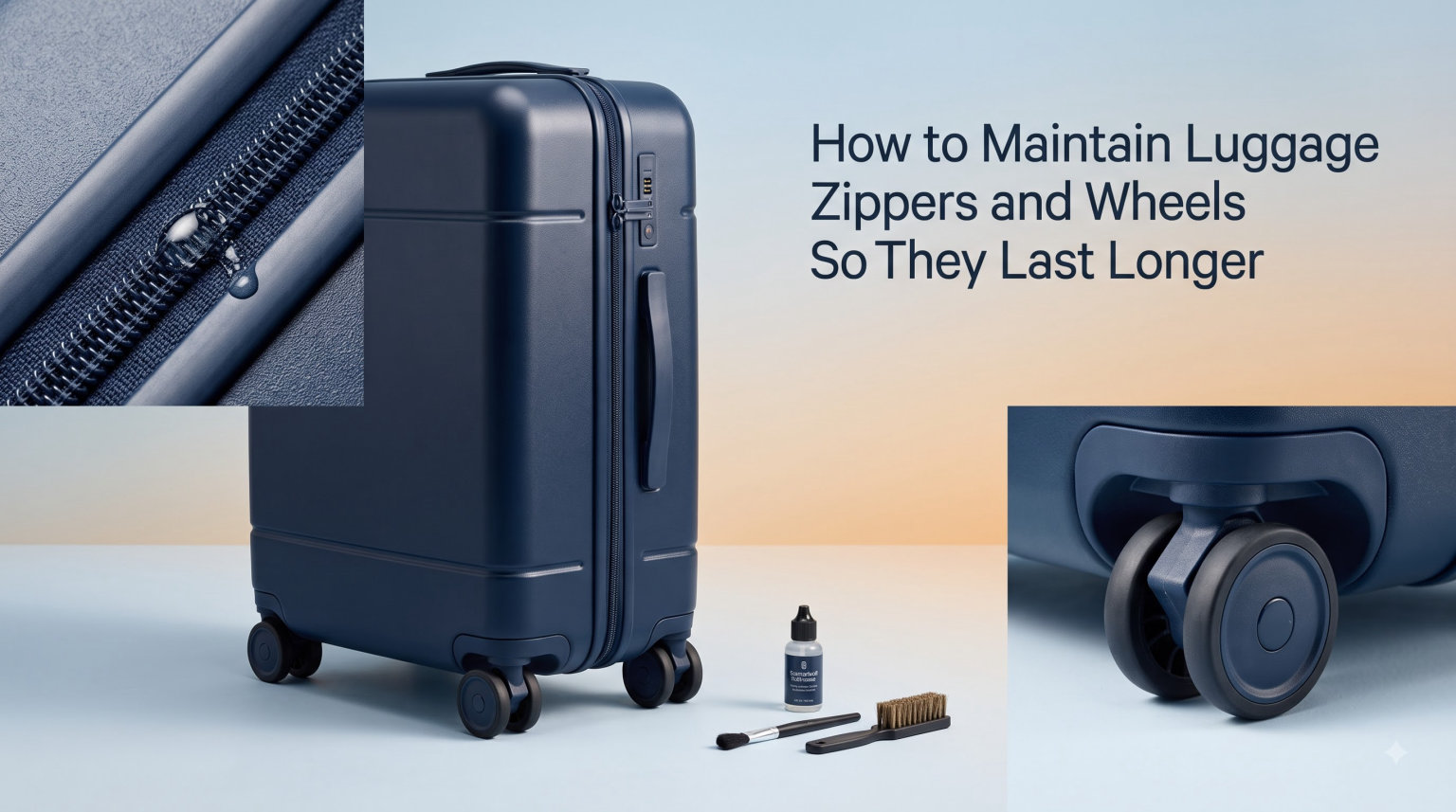
Replacing a good suitcase every couple of years gets expensive fast, and most of the time the body of the bag is perfectly fine. The parts that actually fail are the zippers and wheels, and both of them respond well to regular care. When you learn how to maintain luggage zippers and wheels so they last longer, you can easily add three to five years to the life of a quality suitcase.
I have been traveling for work and leisure for over a decade, and I have made every luggage maintenance mistake in the book. Zippers that split open mid-trip, wheels that squeaked through quiet airport terminals, and spinner wheels that flat-spotted from neglect. After talking with luggage repair professionals and frequent flyers on forums like r/ManyBaggers and r/BuyItForLife, I put together a maintenance routine that actually works.
This guide walks you through everything from daily habits to deep cleaning, lubricant selection, and DIY repairs. You will learn the exact tools, the step-by-step processes, and the common mistakes that ruin luggage faster than baggage handlers ever could. By the end, you will have a simple routine that keeps your bags rolling smoothly and zipping cleanly trip after trip.
Table of Contents
How to Maintain Luggage Zippers and Wheels: Why It Matters
Luggage maintenance matters because the two most-used components, zippers and wheels, take the brunt of everyday wear and tear. Every time you open your bag, the zipper teeth flex and the slider pushes against them. Every time you roll through an airport, the wheels grind against concrete, carpet, and whatever debris is stuck to the terminal floor.
The cost of ignoring maintenance adds up quickly. A quality Travelpro or Samsonite suitcase runs between $150 and $400. If you replace it every three years because of a failed zipper or worn-out wheels, that is a significant expense over a lifetime of travel. A few minutes of cleaning and a $10 can of silicone spray can push that replacement cycle to eight or ten years instead.
Baggage handling data tells the story plainly. Industry reports consistently show that damaged wheels, torn zippers, and broken handles rank among the top categories of luggage damage reported by airlines. While you cannot control how baggage handlers treat your checked bags, you can control whether your zippers and wheels are in top condition before they ever hit the carousel.
The good news is that luggage maintenance is not complicated or time-consuming. Most tasks take under ten minutes and use supplies you probably already have at home. The harder part is building the habit, which is why I include a quick checklist at the end of this guide.
Understanding Your Luggage Components
Before you can maintain your zippers and wheels properly, you need to know what type you are working with. Different materials and mechanisms need different care approaches, and using the wrong lubricant or cleaning method can actually cause more damage.
Zipper Types You Will Encounter
Most modern luggage uses one of three zipper types: coil zippers, metal tooth zippers, or molded plastic (VISLON) zippers. Coil zippers are the most common on softside luggage because they are flexible and self-healing when the teeth realign. Metal zippers show up on premium and vintage bags, and they are durable but prone to corrosion if not maintained. VISLON zippers, made of molded plastic teeth on a tape, are popular on hardside luggage and resist water well.
Knowing your zipper type helps you pick the right lubricant. Coil zippers respond well to graphite or wax. Metal zippers benefit from a light oil or silicone. VISLON zippers mostly need cleaning rather than lubrication since the plastic teeth slide smoothly on their own.
Wheel Types and Materials
Luggage wheels come in two main styles: inline skate wheels and spinner wheels. Inline skate wheels are typically paired in sets of two and roll forward and backward only. Spinner wheels, usually in sets of four or eight, rotate 360 degrees and let you push the bag in any direction. Spinner wheels are more convenient but more complex, with more moving parts and bearings that can collect debris.
The wheel material matters too. Most quality spinner wheels use polyurethane or rubberized compounds over a plastic core. Cheap wheels are solid plastic with no rubberized coating, and they wear down and crack much faster. Forum users on r/BuyItForLife frequently mention that rubber wheel covers last about three years with regular travel and significantly extend the life of the underlying wheels.
Some premium brands use Hinomoto wheels, a Japanese manufacturer known for smooth, quiet, and durable spinner wheels. If your luggage has Hinomoto wheels, they are worth maintaining carefully because replacements can be hard to source.
How to Maintain Luggage Zippers So They Last Longer
Zipper maintenance comes down to three things: keeping the teeth clean, lubricating the slider path, and preventing stress damage from overpacking. I have found that about 80 percent of zipper problems stem from the slider mechanism, not broken teeth. That means most zipper failures are preventable with basic care.
Cleaning Your Luggage Zippers
Dirt, sand, and fabric lint build up in zipper teeth over time and create resistance every time you open or close the bag. Cleaning your zippers takes two minutes and should be part of your post-trip routine.
Start by running a soft-bristled toothbrush along the zipper teeth to dislodge loose debris. Brush in the direction of the teeth, not against them, to avoid bending anything. For stubborn grime, dampen the brush with warm water and a drop of mild dish soap. Wipe the zipper dry with a clean cloth afterward, because moisture left on metal zippers can cause corrosion.
If your zipper has visible salt residue from beach trips or airline deicing chemicals, rinse it more thoroughly. Salt is corrosive to metal components and can cause a zipper to seize up if left untreated.
Lubricating Stuck or Stiff Zippers
A zipper that resists or catches is telling you it needs lubrication. The right lubricant depends on your zipper material, and there are several household options that work well. My go-to method is running a graphite pencil tip lightly along the teeth, then working the slider back and forth a few times to distribute the graphite. Graphite is dry, so it does not attract dust the way oil does.
For coil zippers, beeswax or an unlit candle works beautifully. Rub the wax along the teeth, then zip and unzip several times to spread it evenly. The wax smooths the slider path and repels water. Bar soap works the same way if you do not have beeswax on hand.
Avoid thick greases and petroleum-based lubricants on zippers. They attract dirt, stain the fabric around the zipper, and can degrade the zipper tape over time. Silicone spray is acceptable for metal zippers in small amounts, but graphite and wax are cleaner options for regular maintenance.
Preventing Zipper Damage During Travel
The number one cause of zipper failure is overpacking. When a bag is stuffed beyond its intended capacity, the zipper runs under constant tension. Every time the bag is squeezed in an overhead bin or tossed onto a baggage carousel, that tension stresses the teeth and the slider.
Travelpro and other major brands specifically warn against overstuffing because it strains zippers and seams, increasing the risk that something ruptures during transit. Pack to about 80 percent of your bag’s stated capacity and use packing cubes to distribute weight evenly. This keeps pressure off the zipper line and makes the slider glide more smoothly.
Another simple preventative step is keeping your zipper closed when the bag is not in use. An open zipper lets the slider sit at the end of the tape where it is most vulnerable to bending. Closed zippers also keep dust out of the teeth during storage.
Fixing a Stuck Zipper Slider
If your zipper is stuck or the teeth are separating behind the slider, the problem is almost always the slider itself, not the teeth. The slider can loosen over time and stop pressing the teeth together tightly enough. You can often fix this by gently squeezing the back plate of the slider with pliers, just a millimeter or two, to tighten its grip on the teeth.
Be careful not to squeeze too hard or you will crack the slider. Squeeze a little, test the zipper, and repeat if needed. This single fix resolves a huge percentage of zipper separation issues and costs nothing if you already own a pair of pliers.
How to Maintain Luggage Wheels So They Last Longer
Wheel maintenance is the area where most travelers see the biggest improvement. Squeaky, gritty, or sluggish wheels make every trip more annoying, and they are surprisingly easy to fix. The process involves cleaning out debris, lubricating the bearings, and inspecting for wear.
Tools You Need for Wheel Maintenance
You do not need a special toolkit. Here is what I keep on hand: a flathead screwdriver or butter knife for prying out debris, a pair of tweezers for hair and fibers, an old toothbrush, a damp microfiber cloth, and your chosen lubricant. A can of compressed air helps blow dust out of tight bearing gaps.
For lubricant, silicone spray is my top recommendation for luggage wheels. It is clean, does not attract dust, and works on both plastic and rubberized wheel surfaces. I cover lubricant selection in detail in the next section.
Step-by-Step: Cleaning Luggage Wheels
Turn your suitcase upside down so the wheels are accessible. Start by removing any large debris stuck in the wheel housings. Hair, thread, and carpet fibers wrap around wheel axles and are the most common cause of sluggish spinning wheels.
Use tweezers to pull out hair and fibers, turning each wheel as you go to expose more of the axle. If fibers are tightly wrapped, use a flathead screwdriver to lift them off the axle. This step alone fixes most slow or sticking spinner wheels.
Next, brush each wheel with a dry toothbrush to remove dust and grit from the tread surface and the gaps between the wheel and the housing. If the wheels are visibly dirty, wipe them down with a damp microfiber cloth and mild soap. Let them dry completely before applying any lubricant, because water trapped in the bearings can cause rust on metal axle components.
Finish by spraying compressed air into the bearing gaps to dislodge any remaining fine dust. Spin each wheel by hand to check that it rotates freely. If a wheel still catches after cleaning, it likely needs lubrication or has a damaged bearing.
How to Lubricate Luggage Wheels
Lubricating your wheels is the step that makes the most noticeable difference. After cleaning, apply a small amount of silicone spray to the axle area where the wheel meets the housing. Spin the wheel several times to distribute the lubricant, then wipe away any excess with a cloth so it does not collect dust.
How often should you lubricate suitcase wheels? For frequent travelers who fly monthly or more, every two to three months is ideal. For occasional travelers, lubricating once before a big trip and once during a seasonal deep clean is sufficient. If you hear squeaking or feel resistance, that is your cue to lubricate regardless of the schedule.
Avoid over-lubricating. Too much spray flings off the axle and onto the wheel tread, where it picks up dirt and actually makes the wheel grittier over time. A short one-second burst per wheel is plenty.
Lubricant Comparison: Silicone vs WD-40 vs Graphite
Choosing the right lubricant is one of the most common questions travelers have, and there is a lot of conflicting advice online. Here is a breakdown based on what actually works for luggage wheels.
Silicone spray is the best overall choice for luggage wheels. It lubricates without attracting dust, works on plastic and rubber, and does not degrade wheel materials over time. It is the option recommended by luggage brands like Delsey and eumeworld, and it is what I use on all my bags.
WD-40 is popular but not ideal as a long-term wheel lubricant. Standard WD-40 is a solvent and water displacer, not a true lubricant. It will temporarily quiet a squeaky wheel, but it evaporates quickly and can actually strip away existing lubrication in the bearings. If you only have WD-40, use it to clean the axle area first, then follow with a proper lubricant.
WD-40 does make a silicone spray variant that is suitable for luggage wheels, so if you like the brand, look for the silicone version specifically rather than the standard blue can.
Graphite powder works for metal-on-metal bearing surfaces but is messy and less effective on the plastic and rubber components found in most luggage wheels. Powdered graphite also makes a black mess on light-colored luggage. I reserve graphite for zipper teeth and use silicone for wheels.
Light machine oil, like the kind used for sewing machines, can work in a pinch but attracts dust and can stain fabric. Stick with silicone spray for the cleanest, most effective results.
Fixing Squeaky Luggage Wheels
Squeaky wheels are caused by friction between the axle and the bearing surface. The fix is straightforward: clean the wheel thoroughly, apply silicone spray to the axle, and spin the wheel to work it in. If the squeak persists after cleaning and lubricating, the bearing is likely worn out and the wheel needs replacement.
Sometimes a squeak comes from the wheel housing rubbing against the wheel itself rather than the axle. Check for cracks or warping in the housing and file down any rough plastic edges with a nail file or fine sandpaper.
How to Prevent Luggage Wheels from Disintegrating
Wheel disintegration is the nightmare scenario for luggage owners. The rubberized coating cracks, chunks break off, and eventually the wheel is a rough, flat-spotted plastic disc that drags instead of rolls. This happens faster than most people expect, but it is largely preventable.
The main cause of wheel disintegration is UV exposure and dry rot combined with rough surfaces. Storing luggage in hot, sunny areas like a car trunk or attic accelerates rubber breakdown. Keep your luggage in a cool, dry, dark place between trips to slow this process dramatically.
Rubber wheel covers are a smart investment if you travel frequently. Forum users report that these slip-on covers last about three years with regular travel and prevent the underlying wheel from direct contact with rough surfaces. They are inexpensive and easy to replace, making them a sacrificial layer that protects the permanent wheels.
Avoid dragging your bag over rough terrain like cobblestones, gravel, or cracked pavement when possible. These surfaces chew up wheel treads quickly. Lift your bag over the worst patches instead of rolling through them.
The Black Tape Trick for Luggage Wheels
You may have seen travelers wrapping black electrical tape around their luggage wheels and wondered why. The tape acts as a temporary protective layer over worn wheel treads, reducing noise and providing a bit of extra grip. It is a quick fix for wheels that are starting to wear but are not yet ready for replacement.
This is not a permanent solution, but it can extend the life of your wheels by a few months while you source replacements. Wrap the tape smoothly and replace it when it starts to peel or wear through.
Common Luggage Maintenance Mistakes to Avoid
Some maintenance habits do more harm than good. Here are the mistakes I see most often, along with why they damage your luggage.
Overpacking Your Suitcase
Never overstuff a bag. Overstuffing strains zippers and seams, increasing the risk that something ruptures during transit. A bulging suitcase puts the zipper under constant tension, and the first time a baggage handler drops it, the zipper can blow open and scatter your belongings across the tarmac.
Pack to about 80 percent capacity and use compression bags or packing cubes to manage bulk without stressing the zipper. If you regularly need more space, buy a larger bag rather than forcing a smaller one past its limits.
Using the Wrong Lubricant
Standard WD-40, cooking oil, and heavy grease are the three worst things you can put on luggage wheels or zippers. WD-40 evaporates and leaves residue that attracts dirt. Cooking oil goes rancid and smells terrible. Heavy grease collects grit and turns into an abrasive paste that wears down components faster than no lubricant at all.
Stick with silicone spray for wheels and graphite or wax for zippers. These are purpose-appropriate, clean, and widely available for under $15 total.
Ignoring Early Warning Signs
A slightly sticky zipper or a faint wheel squeak is easy to ignore, but these are early warnings that a component needs attention. Addressing small issues takes minutes. Ignoring them leads to total failures that happen at the worst possible moment, like a zipper splitting in the hotel lobby before checkout.
Make it a habit to zip and unzip your bag fully before every trip and spin each wheel by hand. If anything feels off, fix it before you travel.
Neglecting Post-Trip Cleaning
The period right after a trip is when your luggage is dirtiest, and it is also when most people shove the bag into a closet and forget about it. Dirt, salt, and debris left on zippers and wheels harden over time and become much harder to remove later. A quick five-minute wipe-down after each trip prevents buildup and keeps maintenance manageable.
DIY Repair: When to Fix vs Replace
Not every problem requires a new suitcase. Many zipper and wheel issues are fixable at home or by a professional repair service for a fraction of the replacement cost. The decision comes down to the type of damage, the quality of your luggage, and your comfort with DIY repairs.
Signs Your Zippers Need Replacement
If tightening the slider does not fix a separating zipper, the slider itself may be worn out or a tooth may be missing. Missing teeth near the start of the zipper are usually tolerable, but missing teeth in the middle of the track mean the zipper needs to be replaced. Zipper replacement is a professional job unless you have sewing skills and access to replacement zipper tape.
Luggage repair professionals can replace zippers affordably, and many users on r/fixit report paying between $30 and $60 for a full zipper replacement on a quality bag. That is far cheaper than replacing a $300 suitcase.
Signs Your Wheels Need Replacement
Wheels need replacement when they have flat spots, large cracks, chunks missing from the tread, or when the bearing is seized and will not spin freely even after cleaning and lubricating. A wheel that wobbles on its axle also needs replacement because the axle or housing is damaged.
Replacement wheels are available online for many popular luggage brands. Some bags have wheels bolted in place and can be swapped with basic tools. Others use riveted assemblies that require professional service. Check your bag’s warranty first, because brands like Travelpro and Samsonite often cover wheel defects.
Is It Worth Replacing Wheels on a Suitcase?
If your suitcase is a quality brand in good overall condition, replacing the wheels is almost always worth it. A set of replacement spinner wheels costs $20 to $50, and professional installation adds another $30 to $60. Compare that to $150 to $400 for a new quality suitcase, and the math favors repair.
If your bag is a budget model, heavily worn, or has multiple failing components, replacement may be more cost-effective. As a general rule, if the repair cost exceeds half the price of a comparable new bag, replace instead of repair.
Luggage Storage Tips Between Trips
How you store your luggage between trips has a big impact on how long your zippers and wheels last. Poor storage conditions cause dry rot, dust buildup, and component warping that shortens your bag’s lifespan significantly.
Always clean your luggage before storing it. Wipe down the exterior, clean the zippers, and remove debris from the wheels. Storing a dirty bag means the grime sets in and becomes much harder to remove later. A quick clean takes five minutes and prevents long-term damage.
Store your luggage in a cool, dry location away from direct sunlight. Attics and garages experience extreme temperature swings that dry out rubber wheel components and make plastic brittle. A closet or under-bed storage area is ideal. Avoid leaving luggage in a hot car trunk for extended periods.
Store bags with zippers closed to keep dust out of the teeth and protect the slider. For wheels, consider propping the bag so the wheels are not bearing weight during long storage periods. Some travelers place their bags on a shelf wheels-up to keep pressure off the bearings.
If you nest smaller bags inside larger ones to save space, place a soft cloth between them to prevent scratches. Never store anything heavy on top of your luggage, as this can warp the frame and damage the wheels and wheel housings.
Quick Maintenance Checklist for Frequent Travelers
Building a maintenance routine is what separates travelers whose luggage lasts a decade from those who buy new bags every two years. Use this checklist to stay on top of your zipper and wheel care.
Before Every Trip
Zip and unzip every compartment fully to confirm smooth operation. Spin each wheel by hand and listen for squeaks or grinding. Check that no wheels wobble on their axles. Tighten any loose screws on wheel housings or handles with a screwdriver.
After Every Trip
Wipe down the exterior with a damp cloth. Brush zipper teeth with a dry toothbrush to remove debris. Remove hair and fibers from wheel axles with tweezers. Let the bag air out for 24 hours before storing to prevent mold and odors.
Seasonal Deep Maintenance (Every 3 to 6 Months)
Clean zippers thoroughly with soap and water, then lubricate with graphite or wax. Deep-clean wheels with a toothbrush and compressed air, then apply silicone spray to axles. Inspect all wheels for cracks and flat spots. Inspect zipper sliders and tighten if needed. Check the overall bag for loose threads, seam damage, or frame warping.
FAQs
What is the best lubricant for luggage wheels?
Silicone spray is the best lubricant for luggage wheels because it lubricates without attracting dust, works on both plastic and rubberized surfaces, and does not degrade wheel materials over time. Apply a short burst to each wheel axle, spin the wheel to distribute it, and wipe away excess. Avoid standard WD-40 and heavy greases, which attract dirt and wear out components faster.
Can you use WD-40 on luggage wheels?
Standard WD-40 is not recommended for luggage wheels because it is a solvent and water displacer, not a true long-term lubricant. It will temporarily quiet a squeaky wheel but evaporates quickly and can strip existing lubrication from the bearings. If you want a WD-40 product, use their silicone spray variant instead, which is formulated for ongoing lubrication.
How to prevent luggage wheels from disintegrating?
To prevent luggage wheels from disintegrating, store your luggage in a cool, dry, dark place away from UV light and extreme heat, which cause rubber dry rot. Avoid rolling over rough terrain like cobblestones and gravel. Use rubber wheel covers as a sacrificial protective layer, and clean and lubricate wheels regularly with silicone spray to keep the rubberized coating flexible.
What kind of oil do you use on suitcase wheels?
Light silicone spray is the ideal lubricant for suitcase wheels. If you need an oil specifically, a light machine oil like sewing machine oil can work in small amounts, but it attracts more dust than silicone spray. Avoid thick oils, cooking oil, and petroleum grease, all of which collect grit and damage wheel bearings over time.
How to lubricate wheels on luggage?
To lubricate luggage wheels, first clean out all debris and hair from the axles using tweezers and a toothbrush. Turn the suitcase upside down, apply a one-second burst of silicone spray to the axle area where each wheel meets its housing, and spin the wheel several times to distribute the lubricant. Wipe away any excess with a cloth to prevent dust buildup.
Why put black tape on luggage wheels?
Travelers wrap black electrical tape around luggage wheels as a temporary protective layer over worn wheel treads. The tape reduces noise, provides extra grip, and extends the life of wheels that are starting to show wear but are not yet ready for full replacement. It is a short-term fix, not a permanent solution.
Is it worth replacing wheels on a suitcase?
Yes, replacing wheels on a quality suitcase is almost always worth it. A replacement spinner wheel set costs $20 to $50, and professional installation adds $30 to $60, which is far less than the $150 to $400 cost of a new quality bag. If your luggage is a budget model or has multiple failing components, replacing the whole bag may be more cost-effective.
How often should you lubricate suitcase wheels?
Frequent travelers who fly monthly or more should lubricate their luggage wheels every two to three months. Occasional travelers should lubricate once before a big trip and once during a seasonal deep clean. Any time you hear squeaking or feel resistance when spinning the wheels, lubricate them regardless of the schedule.
Conclusion
Learning how to maintain luggage zippers and wheels so they last longer is one of the simplest ways to save money and avoid travel headaches. The core routine comes down to cleaning debris from wheels and zippers after every trip, lubricating wheels with silicone spray and zippers with graphite or wax, storing your bags properly, and addressing small problems before they become failures.
You do not need expensive tools or a lot of time. A toothbrush, tweezers, a can of silicone spray, and a few minutes per trip will keep a quality suitcase rolling and zipping smoothly for years beyond its expected lifespan. Start with the post-trip checklist, build the habit, and your luggage will thank you on every journey.